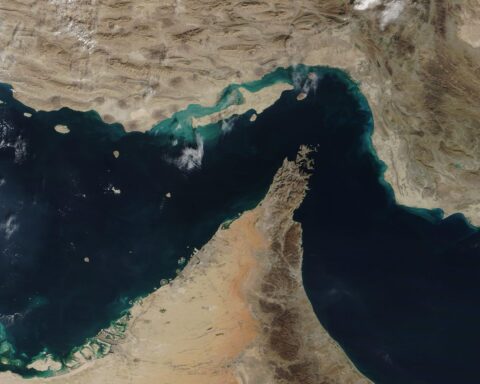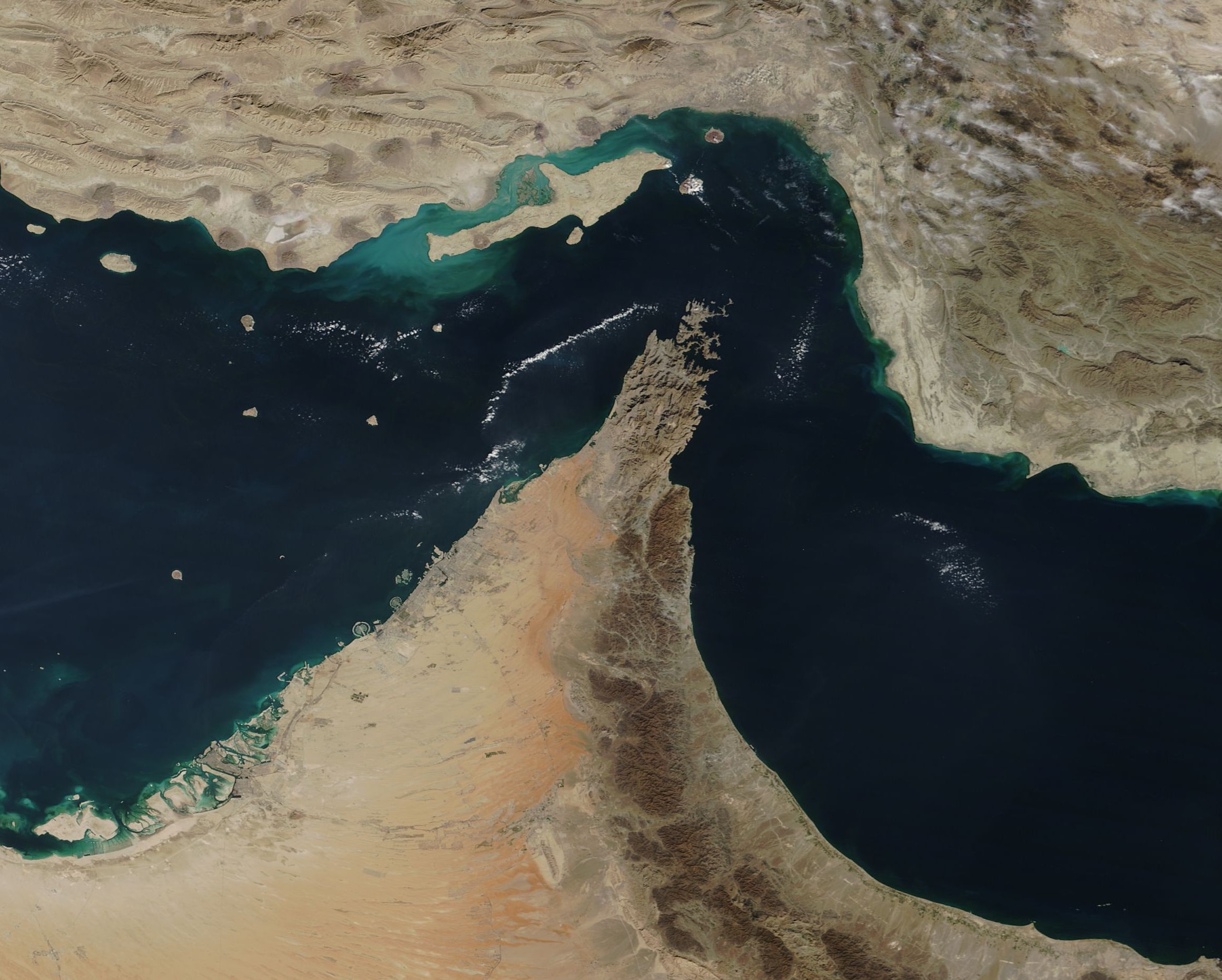

DHAHRAN — Goldman Sachs raised its fourth-quarter 2026 Brent crude forecast to $90 per barrel on Sunday, up from $83 two weeks ago and $60 before the war, after pushing its assumption for Hormuz Strait normalisation from mid-May to end-June. The revision, driven by what analysts Daan Struyven and Yulia Zhestkova Grigsby called “the largest oil supply shock in recorded history,” sets a quarterly price path of $100 in Q2, $93 in Q3, and $90 in Q4 — numbers Wall Street will read as bullish and Riyadh will read as a sentence.
The $90 Q4 figure sits $18 to $21 below Saudi Arabia’s PIF-inclusive fiscal break-even of $108 to $111 per barrel, according to Bloomberg Economics. Even Goldman’s Q2 peak of $100 lands $8 to $11 short. The bank’s own war-adjusted Saudi deficit estimate — 6.6 percent of GDP, roughly $73 billion — was calculated when Q4 Brent sat at $83. At $90, the arithmetic improves marginally. It does not come close to solving.
Table of Contents
The 9.6 Million Barrel Deficit
Goldman’s April 27 note quantifies a market that has inverted from surplus to crisis in under eight weeks. The global oil market swung from a 1.8 million barrel-per-day surplus in 2025 to a 9.6 million bpd deficit in Q2 2026, the largest demand-supply gap in documented oil market history. Middle East production losses total 14.5 million bpd. Global inventories are drawing down at 11 to 12 million bpd in April alone, a rate Goldman’s own analysts acknowledge cannot continue without triggering physical shortages.
“Extreme inventory draws are not sustainable, even sharper demand losses could be required if the supply shock persists longer,” Struyven and Grigsby wrote. The IEA’s numbers run parallel: 13 million bpd offline, 2026 global demand revised to shrink by 80,000 bpd — a full reversal from the agency’s prior growth projection — and March supply down 10.1 million bpd with inventories falling 85 million barrels. IEA Executive Director Fatih Birol, speaking April 23, did not qualify his assessment: “We are facing the biggest energy security threat in history.”
The deficit explains the price. WTI closed at $96.03 on April 27, up 1.73 percent intraday. Brent’s Q2 trajectory toward $100 reflects not speculation but arithmetic — when nearly 10 million barrels per day of physical supply are missing, price does the rationing that policy cannot. ING analysts noted on the same day: “The lack of progress means the market is tightening every day, requiring oil prices to reprice at higher levels.” Goldman’s own upside scenario, published via Bloomberg on April 9, warns that if Hormuz remains closed one additional month beyond baseline, Q3 reaches $120 and Q4 hits $115.
Why Is $90 Worse Than $80 for Saudi Arabia?
The paradox requires two numbers that Goldman itself supplies and a third it does not.
The Middle East briefing 3,000+ readers start their day with.
One email. Every weekday morning. Free.
Goldman’s war-adjusted Saudi fiscal deficit of 6.6 percent of GDP — approximately $73 billion — was modelled at the bank’s prior Q4 forecast of $83 per barrel. The $7 increase to $90 narrows the gap but does not close it, because the deficit is a function of both price and volume. Saudi Arabia’s March production fell to 7.25 million bpd, according to the IEA, down from 10.4 million bpd in February — a 30 percent crash that represents the sharpest single-month output collapse in the kingdom’s modern history.
Tim Callen, former IMF mission chief for Saudi Arabia, has noted that the Saudi fiscal position “depends on both oil prices and production” — the volume constraint negates price gains. Rachel Ziemba of Ziemba Insights frames the bind more directly: volumes are down while spending needs have likely increased. The IMF’s central-government-only break-even sits at $86.60 per barrel. Bloomberg Economics, which includes PIF spending obligations, places the full-cost threshold at $108 to $111. At Goldman’s Q4 forecast of $90, Saudi Arabia clears the IMF number by $3.40 and misses the Bloomberg number by $18 to $21.
The volume problem compounds the price shortfall. Saudi Arabia’s notional OPEC+ quota for May is 10.2 million bpd. Actual output sits at 7.25 million bpd — a gap of nearly 3 million bpd that no quota adjustment can fill because the barrels cannot physically reach the market. The Khurais field remains offline at 300,000 bpd with no restoration timeline announced. The East-West Pipeline’s Yanbu terminal operates at a loading ceiling of 4 to 5.9 million bpd against a pipeline capacity of 7 million bpd, and even that ceiling assumes no further Houthi interdiction of Red Sea routing.
The $90 price is a fiscal anaesthetic. At Goldman’s pre-war Q4 forecast of $60, the crisis would have been acute enough to force structural adjustment — spending cuts, project deferrals, emergency borrowing. At $120 (Goldman’s own upside scenario), the revenue would fund the war and keep Vision 2030 on life support. At $90, neither trigger fires. Saudi Arabia raised $12 billion in international bonds in January 2026, part of a full-year debt issuance program of approximately $37 billion. PIF construction contracts have already collapsed 58 percent, from $71 billion to $30 billion, according to KPMG’s 2026 Saudi Budget Report. The money is going to keep the lights on, not to build NEOM. What that fiscal stress means for Vision 2030’s own ten-year KPI scorecard is assessed in Vision 2030 at Ten: 93% of Targets Met, but the Treasury Still Runs on Oil.
OPEC+ Adds 206,000 Paper Barrels
OPEC+ approved a 206,000 bpd output increase for May on the same day Goldman published a note pricing the market at 9.6 million bpd in deficit. The increase is the third consecutive monthly addition of 206,000 bpd — totalling 618,000 paper barrels since March — none of which have entered the physical market. Monica Malik, chief economist at ADCB, has observed that if Saudi Arabia could export 7 million bpd, its fiscal position would strengthen considerably. The conditional matters: it cannot.
The gap between OPEC+ paper allocations and physical reality has become a standing feature of the war economy. Saudi Arabia’s May quota of 10.2 million bpd exceeds its actual March output by roughly 3 million bpd. The 206,000 bpd increment adds to a number Riyadh is already producing 3 million barrels below. The quota increase functions as institutional theatre — a signal to markets that supply discipline persists, delivered into a market where the binding constraint is not willingness to pump but the physical ability to ship.
Goldman’s note does not address OPEC+ quota compliance because there is nothing to comply with. The 9.6 million bpd deficit exists regardless of what OPEC+ declares on paper. The IEA’s Birol identified the only variable that matters: “The cure is opening up the Strait of Hormuz.” On strategic reserve releases — the other policy lever governments have reached for — he was blunt: “This is only helping to reduce the pain, it will not be a cure.” The mechanics of why the 206,000 bpd vote was structurally irrelevant before the ink dried — and what OPEC’s credibility loss means for the post-war pricing regime — are examined in OPEC+’s paper-barrel fiction: the May quota vote the market treated as symbolic.
Can Goldman’s End-June Timeline Hold?
Goldman’s central forecast rests on Hormuz normalising by end-June, a six-week delay from the bank’s prior mid-May assumption. The shift reflects what the analysts called “slower Gulf production recovery,” but the constraint is political, not mechanical. The double blockade architecture — the US controlling Arabian Sea entry since April 13, the IRGC controlling Gulf of Oman exit since March 4 — means vessels now require approval from both sides to transit. Bloomberg reported April 26 that only 45 transits have occurred since the April 8 ceasefire, 3.6 percent of the pre-war baseline.
Iran’s Foreign Ministry declared Hormuz “completely open” on April 24. The IRGC seized the MSC Francesca, an 11,660 TEU container ship, and the Epaminondas, a 6,690 TEU vessel, on April 22 — two days before the declaration. Ghalibaf, the parliament speaker and former IRGC Aerospace Force commander, formally linked reopening to US blockade removal on X the same day. Iran’s parliament is advancing a 12-article Hormuz sovereignty law sponsored by legislators Ahmadi and Rezayi Kouchi that would codify IRGC transit authority as domestic statute.
Goldman’s end-June assumption is therefore contingent on one of three scenarios: the US lifts its blockade unilaterally, Iran abandons its sovereignty linkage, or a third-party framework resolves both simultaneously. None of these has a visible pathway. Maritime intelligence firm Windward’s assessment — “The strait has not reopened — it is in a supervised pause” — describes the operational reality Goldman’s timeline must overcome. The bank’s analysts acknowledge the asymmetry: “The economic risks are larger than our crude base case alone suggests because of the net upside risks to oil prices, unusually high refined product prices, products shortages risks, and the unprecedented scale of the shock.”
Citi Research, publishing a competing forecast, places Q2 Brent at $110, Q3 at $95, and Q4 at $80 — more bearish on the recovery, with Hormuz normalisation assumed by end-May. The divergence between Goldman’s end-June and Citi’s end-May illustrates how much of the oil price forecast is now a political bet, not a supply-demand model. Goldman itself prices the stakes: if its timeline slips one additional month, Q3 reaches $120 and Q4 hits $115, repricing every downstream contract in the process.
Demand Destruction: Already Spent
Goldman estimates demand destruction at 1.7 million bpd in Q2 2026 but only 0.1 million bpd for the full year, a distribution that carries a specific implication: the global economy has already absorbed most of the demand adjustment it is willing to make. The consumers, factories, and airlines that cut consumption in March and April are not going to cut further at $90 to $100 Brent. The price mechanism’s ability to ration demand has largely been exhausted.
This matters for Saudi fiscal planning because it means Goldman’s Q4 $90 is not a floor that demand destruction can push lower — it is a plateau sustained by the deficit itself. If Hormuz reopens on Goldman’s timeline, the 9.6 million bpd deficit narrows rapidly and prices fall toward the pre-war range. If it does not reopen, demand destruction accelerates and prices spike above $115 before collapsing consumer spending further. Neither scenario delivers a stable $108 to $111 window where Saudi revenue matches expenditure at current production volumes. The mine clearance timeline alone — six months post-deal according to US Navy estimates, with only two Avenger-class minesweepers in theatre — means Goldman’s “normalisation” is a legal and diplomatic event, not a physical one.
The IMF projects Iran’s economy will shrink 6.1 percent in 2026 with 68.9 percent inflation, and the US blockade has cut roughly 70 percent of Iran’s export revenues, according to CNBC reporting from April 23. Iran’s economic pain is acute but it has not produced the political concession Goldman’s timeline requires. Goldman’s Q4 $90 assumes a resolution that neither side has the domestic mandate to deliver, priced into a market that has already exhausted its capacity to adjust through demand. The granular evidence of this divergence — physical crude at $148.87 versus Brent futures at $97 on April 13, a $47 spread that represents the market’s verdict on Hormuz reopening — is documented in Physical Crude at $150 While Futures Say $97: The Market’s Verdict on Hormuz Is Already In, which also explains why Goldman’s convergence assumption may run in the wrong direction.
Background
Goldman’s Brent forecast has tracked the war’s escalation in real time. The bank’s pre-war Q4 2026 projection sat at $60 per barrel. By March, after the outbreak of hostilities, it rose to a full-year average of $85. A mid-April revision placed Q4 at $83 for Brent and $78 for WTI. The April 27 note represents the fourth upward revision in two months, each triggered by the failure of the prior resolution assumption.
The Goldman peace-scenario analysis published April 26 by this outlet examined the bank’s $80 “sloppy peace” case and found it equally problematic for Saudi fiscal sustainability. The current revision raises the floor without changing the structural conclusion: Saudi Arabia’s war-era fiscal model does not work at any price Goldman considers probable. Revenue is a function of a smaller numerator multiplied by a price that remains below break-even — and each successive Goldman revision has confirmed, rather than resolved, that bind.
Frequently Asked Questions
How does Goldman’s $90 Q4 forecast compare to other banks?
Citi Research forecasts Q4 Brent at $80, assuming Hormuz normalisation by end-May — $10 below Goldman and with a more aggressive resolution timeline. JPMorgan’s pre-revision Q4 estimate sat near $85. The spread between Goldman’s $90 and Citi’s $80 reflects a fundamental disagreement about whether Hormuz reopens in May or July, making the Q4 number a proxy for geopolitical conviction rather than supply modelling. Neither forecast reaches Saudi Arabia’s PIF-inclusive break-even of $108 to $111.
What happens to Saudi Arabia’s debt programme if Q4 Brent lands at $90?
Saudi Arabia’s 2026 debt issuance target is approximately $37 billion, of which $12 billion was raised in January. At $90 Brent and 7.25 million bpd production, the revenue shortfall against PIF-inclusive spending widens the deficit Goldman estimated at 6.6 percent of GDP. The kingdom would need to accelerate borrowing into a market where Gulf sovereign spreads have widened 40 to 60 basis points since February, according to JPMorgan fixed income data. PIF construction contracts have already been cut 58 percent, from $71 billion to $30 billion, suggesting the spending side is adjusting faster than the revenue side.
Why did Goldman shift its Hormuz timeline from mid-May to end-June?
The bank cited “slower Gulf production recovery,” but the underlying drivers are political. Iran’s parliament is advancing a 12-article sovereignty law codifying IRGC transit authority over Hormuz. The US CENTCOM blockade, imposed April 13, carries no announced expiry. Goldman’s six-week delay reflects an implicit assessment that neither the Islamabad process nor bilateral channels will produce a framework before late June — and the bank’s own upside scenario prices the consequence of being wrong at $115 to $120 Q4 Brent.
Could OPEC+ actually deliver its 206,000 bpd increase?
Not from Saudi Arabia. The kingdom’s May quota is 10.2 million bpd; March production was 7.25 million bpd. The 206,000 bpd increment would require Saudi output to rise to 10.4 million bpd — a level it last achieved in February before the Hormuz closure removed its primary export route. Khurais field remains offline at 300,000 bpd. The Yanbu bypass terminal caps Red Sea exports at 4 to 5.9 million bpd. The quota increase could theoretically be filled by UAE or Iraqi production, but both face their own Hormuz-related export constraints. The 618,000 bpd total of three monthly increases remains entirely on paper.
What is the mine clearance timeline once a deal is reached?
US Navy estimates place the clearance operation at approximately six months post-agreement for the standard shipping lanes, covering roughly 200 square miles. The US decommissioned its four Avenger-class mine countermeasure ships from Bahrain in September 2025, leaving only two in the current theatre. The 1991 Kuwait benchmark — smaller area, more ships — took 51 days. Goldman’s end-June “normalisation” therefore means a diplomatic agreement by end-June, not physical reopening. Full Hormuz throughput at pre-war levels of 7 to 7.5 million bpd would not resume until late 2026 or early 2027 under any realistic clearance scenario. Saudi Arabia’s position as sole OPEC price anchor — now without the UAE’s institutional ballast and still operating at 70% of its pre-war quota — is examined in Saudi Arabia Inherits an OPEC It Cannot Operate.