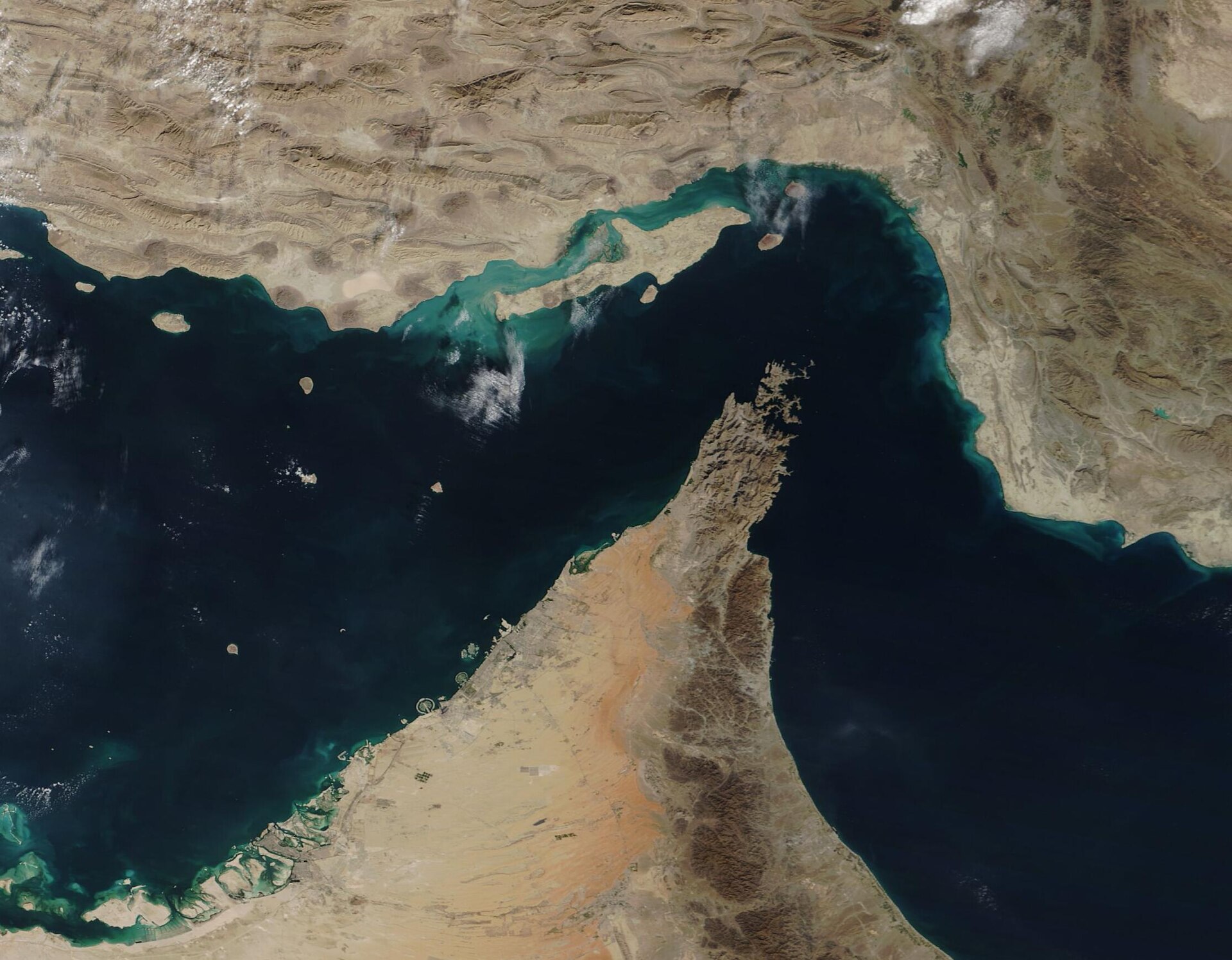
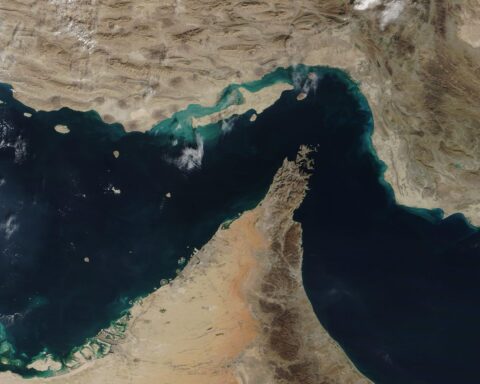
DHAHRAN — OPEC+ voted on April 5 to raise its May production quota by 206,000 barrels per day — a figure that represents less than 2% of the 12–15 million barrels per day currently removed from global markets by the Hormuz blockade. Saudi Arabia alone is producing 2.95 million barrels per day below its existing quota, which means the Kingdom’s share of the new increment — roughly 62,000 bpd — amounts to 2.1% of a gap it already cannot close.
The vote was not a supply decision. It was a press release dressed as policy, and every trading desk from Singapore to Houston treated it accordingly. Brent barely flinched because the market had already priced what OPEC+ cannot bring itself to say: the cartel has lost control of its own production, and no quota architecture can paper over a war that has physically disconnected the world’s largest oil-exporting region from its buyers.
What follows is an anatomy of the fiction — who benefits from it, who pays for it, and why the gap between OPEC+’s paper barrels and the world’s actual supply may be the most consequential lie in energy markets since the 1997 Asian crisis misjudgment.
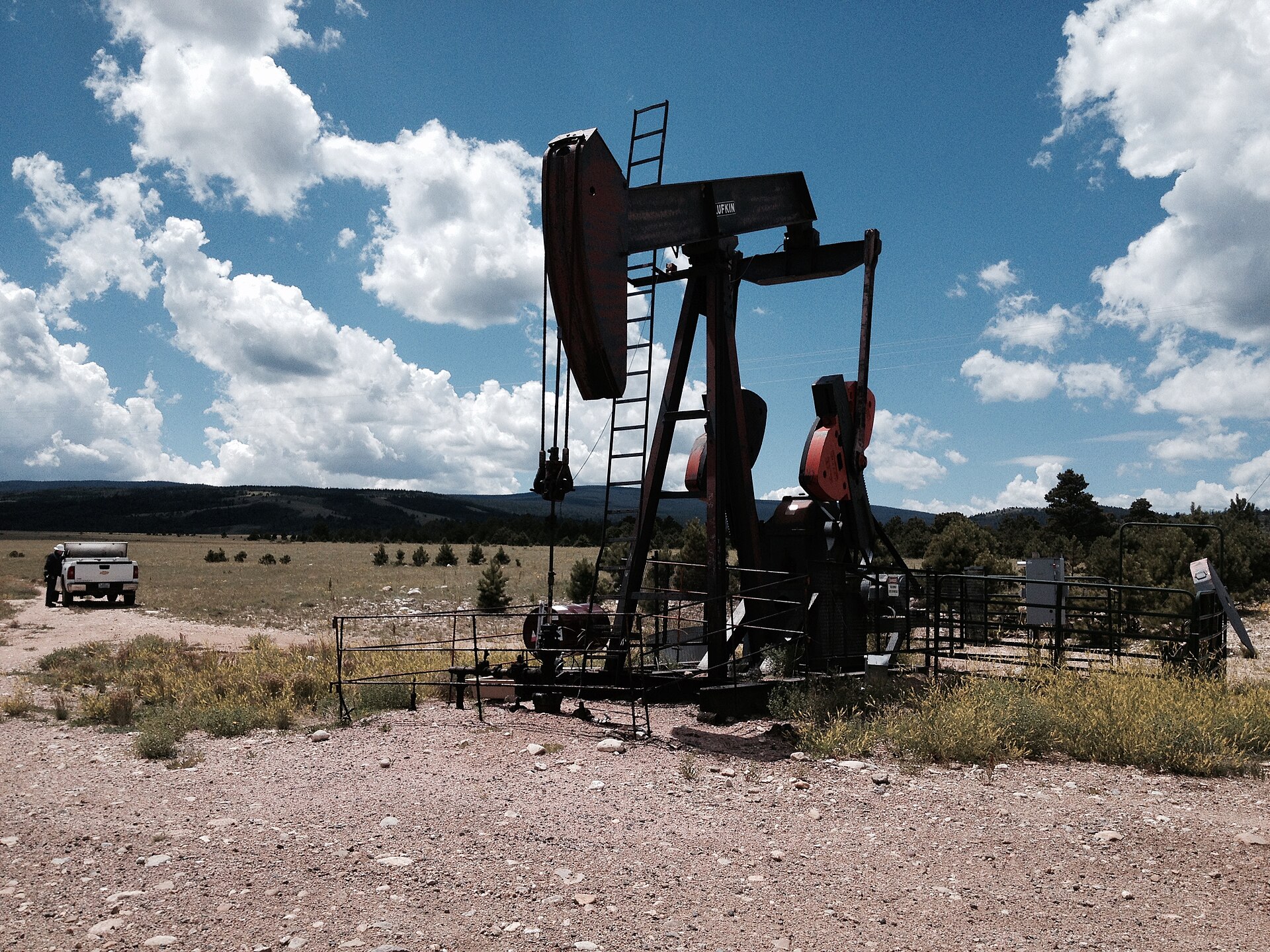
Table of Contents
- The Scale of the Paper-Barrel Gap
- Who Benefits From the Fiction?
- Why Can’t Saudi Arabia Fill Its Own Quota?
- The Pre-War Compliance Fiction
- How Did the Market Respond to the Vote?
- The Forward Curve: Citi’s $150 and JPMorgan’s Straitjacket
- America’s Accidental Inheritance
- What Happens to OPEC+ After the War?
- 1997 in Reverse
- FAQ
The Scale of the Paper-Barrel Gap
The numbers are not ambiguous. Total OPEC+ production fell to 35.24 million barrels per day in March 2026 — a decline of 7.98 mb/d in a single month. OPEC countries participating in the output deal dropped to 15.49 mb/d, a shortfall of 7.3 mb/d against their own agreed quotas. The IEA, in language it has never previously used, called the disruption the “largest in history,” exceeding the 1973 Arab oil embargo’s approximately 5 mb/d by a factor of two to three.
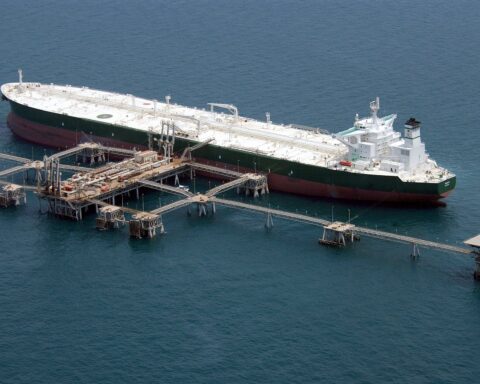
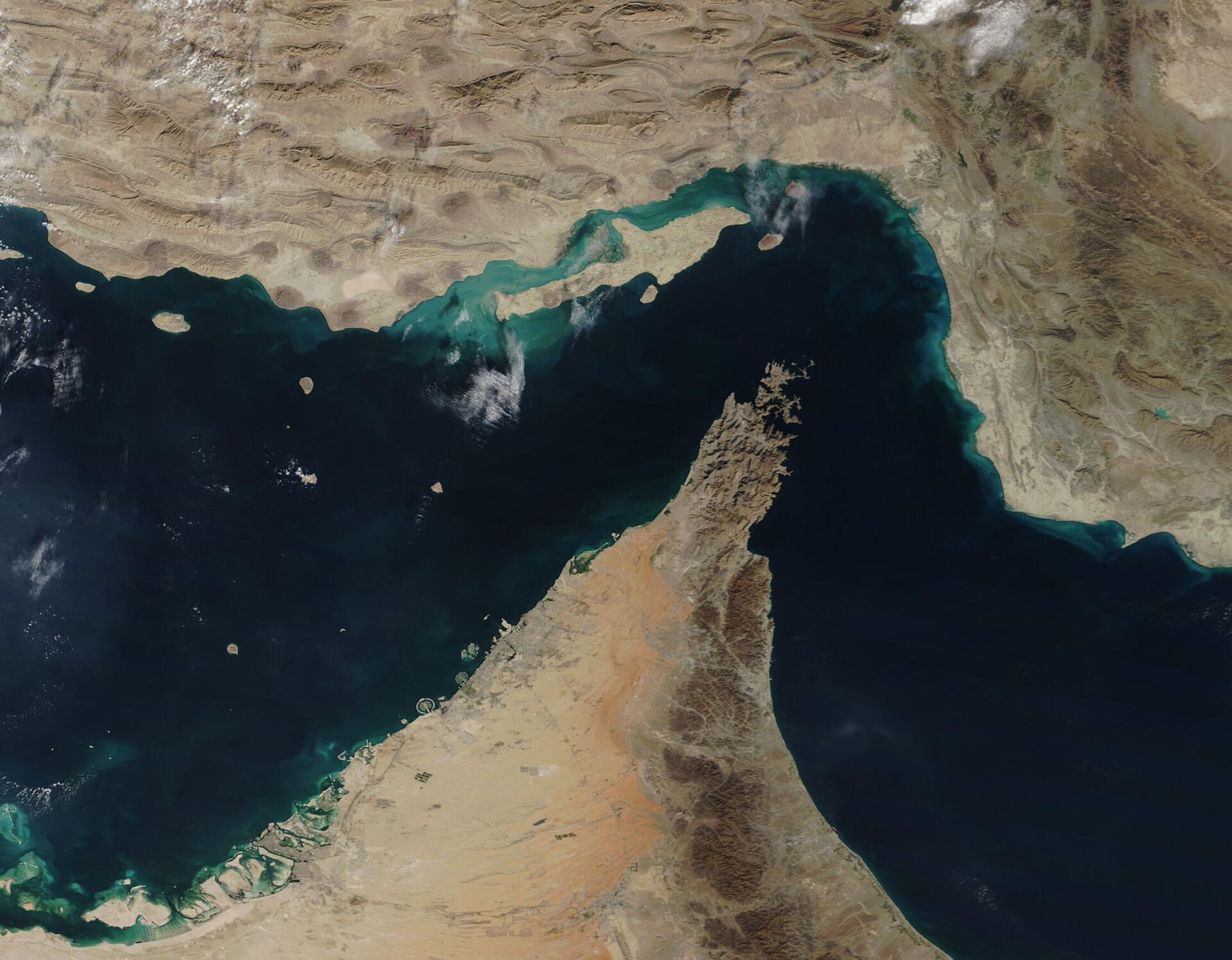
Against that backdrop, the May increment of 206,000 bpd is not rounding error — it is smaller than rounding error. It is the equivalent of raising the speed limit on a highway that has been physically demolished. The barrels exist only in a communiqué issued from a virtual meeting room, and they will remain there because the infrastructure required to deliver them — tanker routes through Hormuz, loading terminals on the Arabian Gulf coast, pipeline capacity that was struck by IRGC missiles on April 8 — does not currently function.
The IEA’s April Oil Market Report documented global supply falling 10.1 mb/d to 97 mb/d in March, with cumulative supply losses exceeding 360 million barrels that month alone and 440 million barrels projected for April. In sixty days, the world will have lost approximately 800 million barrels of supply — more than the entire US Strategic Petroleum Reserve held at its 2023 post-drawdown low.
The Middle East briefing 3,000+ readers start their day with.
One email. Every weekday morning. Free.
| OPEC+ Member | Feb 2026 Output (mb/d) | Mar 2026 Output (mb/d) | Decline (mb/d) | Decline (%) |
|---|---|---|---|---|
| Saudi Arabia | 10.40 | 7.25 | -3.15 | -30% |
| Iraq | 4.16 | 1.57 | -2.59 | -61% |
| Kuwait | 2.58 | 1.19 | -1.39 | -53% |
| UAE | 3.39 | 2.37 | -1.02 | -44% |
| Russia | ~9.57 | ~9.17 | -0.40 | -4% |
Iraq’s collapse is the starkest: from 4.16 mb/d to 1.57 mb/d, a 61% crash that effectively removed a mid-sized oil nation from the market overnight. Kuwait lost more than half its output. The UAE, which had spent years lobbying for a higher baseline quota, saw 44% of its production disappear — an irony that would be comic if it weren’t measured in billions of dollars of lost revenue per week. The IEA projects these shut-ins rising to 9.1 mb/d in April — meaning the gap between OPEC+’s paper quotas and physical reality is still widening, not closing.
Who Benefits From the Fiction?
Every fiction has beneficiaries, and this one has at least four. Russia’s is the most transparent. Moscow’s March crude output came in at approximately 9.17 mb/d against a quota target of 9.574 mb/d — 407,000 bpd below its own ceiling, a shortfall caused not by Hormuz but by Ukrainian drone strikes that forced an additional 300,000–400,000 bpd offline by April. Russia’s contribution to the May increment is 62,000 bpd it cannot deliver. But Russian oil export revenues hit $19 billion in March, a surge driven by the same Hormuz crisis the quota vote pretends to address, and Moscow’s Urals crude averaged $94.50/bbl — up 67% month-on-month.
For Russia, the vote is free. It costs nothing to agree to produce barrels you were never going to pump, and the optic of cartel solidarity lets Moscow maintain its seat at a table where the high-price environment serves its war budget. The Kremlin gets fiscal windfall and institutional credibility simultaneously, which is a trade any finance minister would take.
Iraq and the UAE gain quota cover of a different kind. Before the war, Iraq’s compliance with OPEC+ quotas stood at a miserable 62% — Baghdad was routinely overproducing by 250,000–300,000 bpd and ignoring Riyadh’s complaints. Kazakhstan was worse, at 55% compliance. The war has collapsed the distinction between voluntary overproduction and forced under-production, and that collapse is useful. When Hormuz reopens — whenever that is — Iraq can resume pumping at pre-war levels and claim it is “restoring” quota rather than exceeding it, a semantic trick that the pre-war compliance data would have made impossible.
Saudi Arabia’s benefit is the most subtle and the most important: the bond market narrative. Aramco set its June Official Selling Price for Arab Light at +$3.50/bbl over the Oman/Dubai benchmark, a $16/bbl downward reset from May’s war-premium of +$19.50. That reset signals to capital markets that Riyadh expects normalization — a message reinforced by a quota vote that implies supply management rather than supply absence. The fiction is addressed not to oil traders, who can read a tanker-tracking screen, but to fixed-income investors pricing Saudi sovereign debt.
Why Can’t Saudi Arabia Fill Its Own Quota?
Saudi Arabia’s OPEC+ quota stands at approximately 10.2 mb/d. Its March production was 7.25 mb/d. The gap — 2.95 mb/d — represents roughly $318.6 million per day in ghost revenue at $108/bbl Brent. The May increment adds 62,000 bpd to Saudi Arabia’s allocation, which is arithmetically irrelevant: it amounts to 2.1% of the existing shortfall, the equivalent of turning on a garden hose to fight a refinery fire.
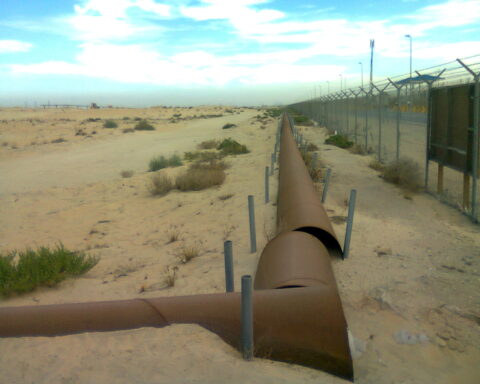
The constraint is physical, not political. Saudi Arabia’s East-West Pipeline to Yanbu on the Red Sea coast can handle between 4 and 5.9 mb/d, against pre-war Hormuz throughput of 7–7.5 mb/d. That structural gap of 1.1–1.6 mb/d cannot be resolved by a quota vote, a ministerial communiqué, or a phone call to Aramco’s operations center. It is a pipeline with a fixed diameter, and no amount of institutional signaling changes the volume of crude it can carry.
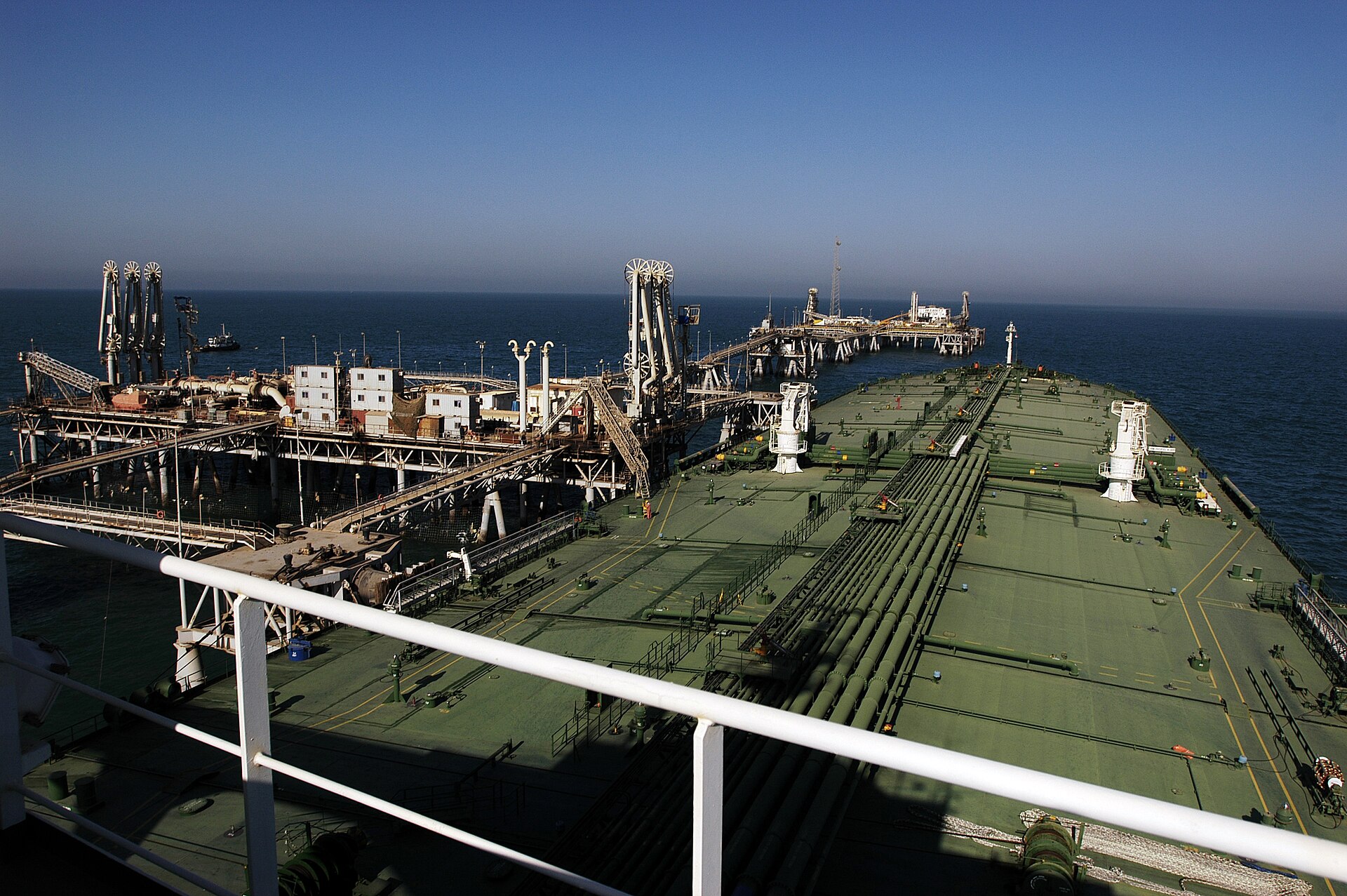
Khurais, which produced approximately 300,000 bpd before the IRGC struck the East-West Pipeline pumping station on April 8, remains offline with no restoration timeline announced. The Yanbu loading terminal is operating near its practical ceiling. And the double blockade — CENTCOM controlling the Arabian Sea entry since April 13, the IRGC controlling the Gulf of Oman exit since March 4 — means that even barrels Saudi Arabia could theoretically produce from its Eastern Province fields have nowhere to go by sea through the Gulf.
Goldman Sachs has calculated a war-adjusted Saudi fiscal deficit of 6.6% of GDP, against the official projection of 3.3%. The Kingdom’s fiscal break-even oil price sits between $108 and $111/bbl when PIF commitments are included — and Brent has been trading at or below $90-94 for much of April, which means every barrel Saudi Arabia does sell is being sold at a loss relative to its budget.
The Pre-War Compliance Fiction
The uncomfortable truth about OPEC+’s quota system is that it was already fictional before the first missile hit. Iraq at 62% compliance. Kazakhstan at 55%. Russia 407,000 bpd below its own quota — though in Moscow’s case, the shortfall was caused by sanctions-related logistics and drone strikes rather than deliberate overproduction. The system worked on the assumption that members would cheat by small, manageable amounts, and that Saudi Arabia — as the cartel’s de facto central bank — would absorb the difference by cutting its own output.
The war has destroyed that mechanism. Saudi Arabia cannot absorb anything because it cannot produce to quota. The swing producer has lost its swing, and without it, the entire compliance architecture collapses into a series of numbers on a spreadsheet that no member can or will deliver. Energy Aspects, the London-based consultancy, described the May quota increase as purely “academic” — a word that energy consultants use when they mean “meaningless but too polite to say so.”
“Only work when crude oil from the Middle East region can be shipped out. Otherwise, it is a ‘paper increase.’”
— Lin Boqiang, Director, China Center for Energy Economics Research, Xiamen University (Global Times, April 2026)
OPEC+ delegates, speaking to Reuters on condition of anonymity, said the increase was intended as “a signal that OPEC+ stands ready to act once conditions improve.” That formulation is revealing. It concedes that conditions have not improved, that the barrels cannot flow, and that the vote is a statement of intent rather than a supply action — which is precisely the definition of a paper barrel. The cartel is not managing supply; it is managing perception, and the audience is not the oil market but the diplomatic community monitoring ceasefire negotiations.
How Did the Market Respond to the Vote?
With a shrug. Bloomberg’s headline on April 5 led with “symbolic.” Reuters described the increase as existing “almost entirely on paper.” Investing.com had “paper” in its headline before the vote was even cast. The market had priced the fiction before OPEC+ confirmed it, which is itself a data point about the cartel’s credibility: when traders pre-discount your supply decision as performative, you have lost the ability to move prices with announcements.
Brent crude was trading around $90–94/bbl in the days following the vote, well below the $108–111 Saudi break-even and far below the Citi bull-case scenario of $150/bbl. The price action reflected a market caught between two opposing forces: the physical reality of the largest supply disruption in history pulling prices up, and recession fears plus potential ceasefire pulling them down. The OPEC+ vote registered as noise in a signal dominated by Hormuz transit data, CENTCOM blockade enforcement, and IRGC seizures of commercial vessels.
Osama Rizvi, an energy analyst covering the OPEC+ decision, captured the market consensus with unusual bluntness: “OPEC’s efforts, for now, will fall flat,” noting that “no additional supply — whether from a 400 million barrel release by the IEA or increased OPEC output — can offset what the world is losing via Hormuz.” Helima Croft of RBC Capital Markets warned that any market impact “would be limited precisely because of that logistical wall.” Jorge Leon of Rystad Energy went further, warning that “even the agreed increase was potentially insufficient to prevent a price rally” — a statement that understates the absurdity, since the agreed increase is physically undeliverable.
The Forward Curve: Citi’s $150 and JPMorgan’s Straitjacket
The price forecasts tell the story the quota vote tried to obscure. Citi, in an April 26 note, laid out three scenarios with probabilities attached. The base case, at 50% probability: Brent at $110/bbl in Q2, declining to $95 in Q3 and $80 in Q4 as Hormuz gradually reopens. The bull case, at 30% probability: a $150/bbl peak driven by Hormuz disruption extending through end of June. The “super bull” scenario: $160–180/bbl sustained if the Strait remains closed beyond June. “With both sides still far apart on their red lines,” Citi wrote, “we see the risks as skewed to the upside.”
JPMorgan coined the term “Hormuz Straitjacket” to describe the constraint, warning that oil prices could exceed $150/bbl if the blockade persists into mid-May — which, given that both sides have now made reopening conditional on the other side’s concessions, is looking increasingly likely. Goldman Sachs, typically the most conservative of the three, set a central-case Q4 2026 Brent target of $90/bbl, assuming Hormuz reopens by end of June, with an upside case of $115–120/bbl if disruption persists. Even Goldman’s base case implies that OPEC+’s May quota increase will have zero impact on price formation for the next six months.
| Forecast | Scenario | Probability | Brent Peak/Range | Key Assumption |
|---|---|---|---|---|
| Citi | Base | 50% | $110 (Q2), $95 (Q3), $80 (Q4) | Gradual Hormuz reopening |
| Citi | Bull | 30% | $150 peak | Disruption through end-June |
| Citi | Super Bull | — | $160–180 sustained | Strait closed beyond June |
| JPMorgan | Bull | — | >$150 | Blockade through mid-May |
| Goldman Sachs | Central | — | $90 (Q4) | Hormuz reopens end-June |
| Goldman Sachs | Upside | — | $115–120 | Disruption persists |
The gap between these forecasts and OPEC+’s 206,000 bpd increment is not just large — it is categorical. The forecasters are modeling a world in which physical supply determines price. OPEC+ is issuing communiqués in a world where institutional choreography determines perception. These are two different markets, and only one of them buys oil.
America’s Accidental Inheritance
While OPEC+ votes on paper barrels, the United States has quietly assumed the functions of a swing producer — not through OPEC+ membership or production quotas, but through the instruments it actually controls: Strategic Petroleum Reserve releases, sanctions flexibility via OFAC general licenses, and the sheer scale of US crude exports. This is not a role Washington sought or designed for, but it is the role the Hormuz crisis has imposed.
The irony is structural. Saudi Arabia lost its swing-producer crown to a war it wanted — or at minimum, a war whose early trajectory it tried to shape through private lobbying for US ground forces and regime change. The United States, which spent two decades trying to achieve “energy independence” as a strategic objective, now finds itself as the only major producer with both spare capacity and functioning export infrastructure. US crude exports have become the marginal barrel in a market where OPEC+’s marginal barrel is trapped behind a naval blockade.
But the rescue is not coming. Fortune reported on April 25 that US shale producers are refusing to respond to high prices, citing Trump administration policy unpredictability and financing constraints. The rig count has not surged. Capital discipline, the mantra of the post-2020 shale industry, holds even at prices that would have triggered a drilling frenzy in 2014. The market is discovering that neither institution — OPEC+ nor US shale — is willing or able to fill the Hormuz vacuum, which is why every major bank’s price forecast has “upside risk” in the footnotes.
What Happens to OPEC+ After the War?
One independent analyst has argued that the 2026 strikes represent “the culmination of a systematic destruction of OPEC’s Middle Eastern core, deliberately eliminating the cartel’s ability to exercise pricing power globally.” The prediction: OPEC loses its coordinating capacity entirely by 2026–2028 as its most significant members become unable to maintain cartel discipline. That may overstate the institutional risk. OPEC has survived the 1986 price crash, the 1997 Asian crisis, the 2014 shale revolution, and the 2020 COVID collapse. But it has never survived a scenario in which its core members physically cannot produce.
The credibility damage from paper-barrel votes is cumulative and difficult to reverse. Each communiqué that announces supply increases the cartel cannot deliver erodes the market’s willingness to treat OPEC+ announcements as price-relevant information. Once traders learn to ignore you, earning their attention back requires demonstrating control over actual barrels — and that demonstration is impossible as long as Hormuz remains functionally closed.
The post-war reconstruction of OPEC+’s credibility will require something the cartel has never done: acknowledging that its quota system was fictional even before the war. Pre-war compliance was tolerated because Saudi Arabia’s spare capacity provided a credible backstop. When Hormuz reopens and Saudi production recovers, the first quota meeting will face a question the cartel has spent years avoiding: does anyone actually comply with these numbers, and if not, what exactly is the institution for?
1997 in Reverse
In November 1997, OPEC voted to raise production quotas by 2 mb/d on the assumption that booming Asian demand would absorb the extra supply. The Asian financial crisis was already underway — Thailand’s baht had collapsed in July, Indonesia was heading for default — but OPEC’s demand models had not caught up. Prices crashed 40% between October 1997 and March 1998, eventually reaching $10/bbl. The credibility damage lasted years and contributed directly to the creation of the OPEC+ framework with Russia in 2016, an institutional admission that OPEC alone could no longer manage global supply.
The 2026 situation is the precise inverse: OPEC+ is voting quota increases it cannot deliver because of a supply blockade, rather than a demand collapse it failed to see. But the institutional logic is identical. Quota votes detached from physical reality destroy price-signal credibility, regardless of whether the detachment is caused by overestimating demand or underestimating the impact of a war. In both cases, the cartel voted as if the world it imagined existed, and in both cases, the market’s indifference to the vote was the verdict.
The 2020 COVID collapse offers a second parallel. The March 2020 OPEC+ breakdown — when Saudi Arabia and Russia fought a brief price war that sent WTI briefly negative — demonstrated that cartel cohesion is conditional on members having actual supply to manage. When physical constraints dominate, whether from demand destruction or supply disruption, quota architecture becomes theatre. The 2026 vote is the third iteration of this lesson, and it may be the one that sticks, because this time the physical constraint — a military blockade of the world’s most important oil chokepoint — is not something OPEC+ can negotiate away at its next meeting.
Iran, for its part, has not bothered to comment on the OPEC+ vote. First Vice President Mohammad Reza Aref’s formulation — “One cannot restrict Iran’s oil exports while expecting free security for others” (IRNA, April 2026) — and Deputy Parliament Speaker Ali Nikzad’s admission that Iran “realized if we place our foot on the throat of the Strait of Hormuz and Bab al-Mandab, 25% of the world’s economy would be affected” (ISNA, April 2026) make clear that Tehran views transit disruption as its primary instrument. OPEC+’s paper quotas do not register in that calculus, which is perhaps the most damning assessment of all: the cartel’s own members have rendered it irrelevant, and its adversary does not consider it worth acknowledging.
FAQ
How does the 206,000 bpd May increase compare to OPEC+’s total April production shortfall?
The May increment of 206,000 bpd equals 2.8% of the 7.3 mb/d gap between OPEC+ quotas and actual March production. To close the existing shortfall at this pace — assuming no further disruptions — OPEC+ would need to approve 35 consecutive identical monthly increases, placing the theoretical catch-up date in early 2029. The April shortfall is projected to widen to 9.1 mb/d (per IEA April OMR), which would push that timeline even further out.
Could OPEC+ members actually deliver the 206,000 bpd increase if they wanted to?
No. Of the eight members who approved the increase, five (Saudi Arabia, Iraq, Kuwait, UAE, and Oman) face physical production or export constraints from the Hormuz blockade. Russia faces drone-strike disruptions that cut an additional 300,000–400,000 bpd in April beyond its existing shortfall. Only Algeria, which contributes a small share of the increment and exports primarily via Mediterranean terminals, has both the production capacity and the export infrastructure to deliver its portion.
What is Russia’s financial incentive to participate in the paper-barrel vote?
Beyond the March revenue windfall, Russia has a structural motive that the body of the OPEC+ communiqué obscures: Moscow needs cartel legitimacy to protect its post-war market access. If OPEC+ fractures under the weight of this crisis, Russia loses its primary institutional shield against a coordinated Western effort to cap its crude price below production cost. Participating in a paper vote preserves the forum itself — which, for Russia, is worth more than the 62,000 bpd it was never going to produce anyway.
What happens to the OPEC+ quota system when Hormuz eventually reopens?
The most likely outcome is a prolonged period of “compliance ambiguity” in which members restart production to pre-war levels and retroactively claim alignment with quotas that were expanded during the closure. Iraq and Kazakhstan, which were already the worst violators before the war, will have the strongest incentive to overproduce under cover of “restoration.” Saudi Arabia will face pressure to reassert its swing-producer role, but Goldman Sachs’ $90/bbl Q4 central case — $18 below the Kingdom’s fiscal break-even — suggests that doing so would deepen an already unsustainable deficit.
Is the IEA’s 400-million-barrel strategic reserve release a meaningful alternative?
Not at the scale of the current disruption. Even a coordinated IEA release of 400 million barrels — the largest in the organization’s history — would cover approximately 27–33 days of the supply shortfall at March’s 12–15 mb/d disruption rate. The US SPR currently holds approximately 370 million barrels, which limits America’s individual contribution to any coordinated release. The deeper problem is structural: SPR releases address volume, not logistics. The Hormuz blockade does not create a shortage of oil in the ground; it creates an inability to move oil already produced. Releasing strategic reserves into a market where tanker routes and loading terminals are physically compromised does not resolve the chokepoint — it adds barrels to a queue that cannot clear.
The UAE’s withdrawal rendered this production increase structurally void before it took effect, as Abu Dhabi’s 18,000 bpd OPEC+ share ceased to exist within the framework on the same day the increase was scheduled to begin. The post-war price architecture that leaves Riyadh structurally disadvantaged — sole anchor in a smaller cartel, still 30% below its own quota, with Iran exempt from compliance — is examined in Saudi Arabia Inherits an OPEC It Cannot Operate.