
DHAHRAN — Saudi Arabia has begun cutting oil production for the first time since the Iran war erupted on 28 February, Bloomberg reported on Sunday, as the near-complete blockade of the Strait of Hormuz fills the Kingdom’s storage tanks faster than Aramco can reroute crude to alternative export routes. The production cuts follow similar reductions by the United Arab Emirates, Kuwait and Iraq, marking the most significant forced supply disruption since the 1990 Iraqi invasion of Kuwait. The dramatic oil price crash following Trump’s declaration that the war was very complete added a new dimension to Saudi Arabia’s production calculus.
The IEA subsequently confirmed in its March Oil Market Report that global oil supply had plunged by 8 million barrels per day — the largest disruption in the history of the global oil market.
The move signals a stark new phase in the economic fallout from the ten-day-old conflict. While Saudi Arabia’s oil revenue has soared alongside prices that smashed past $110 per barrel last week, the physical inability to ship crude out of the Persian Gulf has created a paradox: the world’s largest oil exporter is drowning in its own product. Arab producers around the Persian Gulf collectively have just over 100 million barrels of storage capacity remaining, roughly one-third of their total, according to energy data firm Kayrros. At current production rates, that cushion could disappear within weeks.
Table of Contents
- How Much Production Has Saudi Arabia Cut?
- The Storage Crisis Forcing Aramco’s Hand
- Why Is the Strait of Hormuz Still Closed?
- Kuwait, UAE and Iraq Face the Same Problem
- Can the East-West Pipeline Save Saudi Exports?
- Oil Prices Surge Past $110 as Supply Shrinks
- What Happens to OPEC’s April Output Increase?
- Global Energy Markets Brace for Extended Disruption
- Frequently Asked Questions
How Much Production Has Saudi Arabia Cut?
Saudi Arabia produced approximately 10.1 million barrels per day in January 2026, according to data from the Joint Organisations Data Initiative (JODI). The Kingdom had been planning to increase output modestly, with OPEC+ agreeing in its most recent meeting to add 206,000 barrels per day across the coalition starting in April, according to CNBC.
Aramco has not disclosed the precise volume of its production cuts. Bloomberg, citing unnamed sources familiar with the situation, reported that Saudi Arabia “started reducing oil production” on Sunday as storage constraints became acute. The reductions affect multiple oil fields feeding the Kingdom’s eastern terminals, where the bulk of Saudi crude has historically been loaded onto tankers bound for Asia and Europe through the Strait of Hormuz.
The cuts represent a sharp reversal for a country that has spent the past year gradually unwinding voluntary OPEC+ production restraints. Saudi Arabia had been producing below its capacity of more than 12 million barrels per day under a series of agreements designed to support global oil prices. The Kingdom’s production target for April was set at 10.2 million barrels per day, with a planned increment of 62,000 barrels per day, according to Enerdata.
The Middle East briefing 3,000+ readers start their day with.
One email. Every weekday morning. Free.
A senior Aramco official, speaking on condition of anonymity to Reuters, described the situation as “temporary and operationally driven” rather than a strategic decision. But energy analysts warned that “temporary” could stretch into weeks or months depending on the duration of the Hormuz blockade and the pace of the ongoing conflict between the United States, Israel and Iran.
The Storage Crisis Forcing Aramco’s Hand
The production cuts are driven by a basic physical constraint: Saudi Arabia is running out of places to put its oil. The Kingdom’s crude storage infrastructure was designed to smooth short-term fluctuations in supply and demand, not to absorb the output of a 10-million-barrel-per-day producer that suddenly cannot ship most of its product. The financial implications of these operational constraints became clearer when Aramco reported Q4 2025 earnings on March 10, revealing the paradox of surging revenue amid declining export volumes.
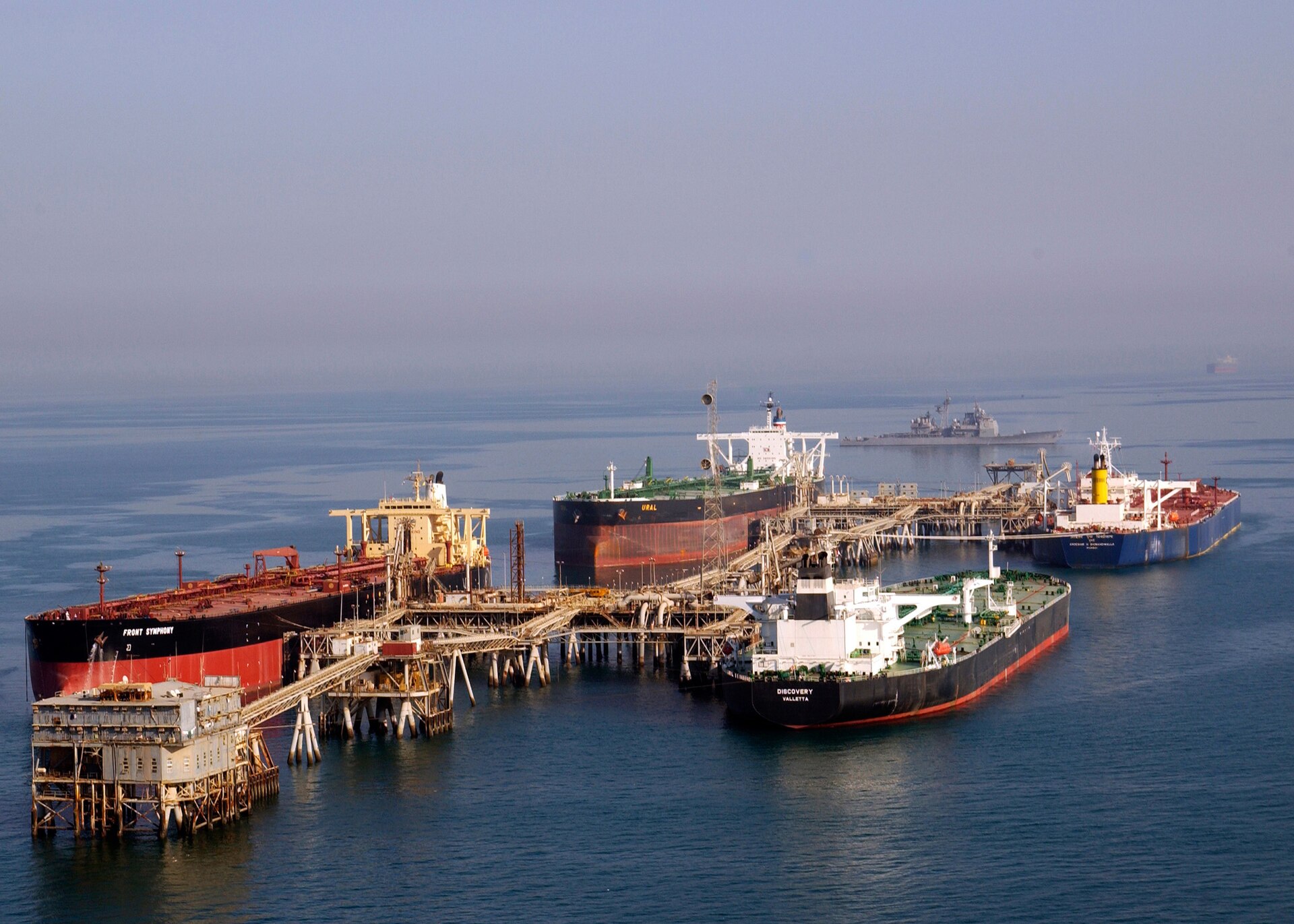
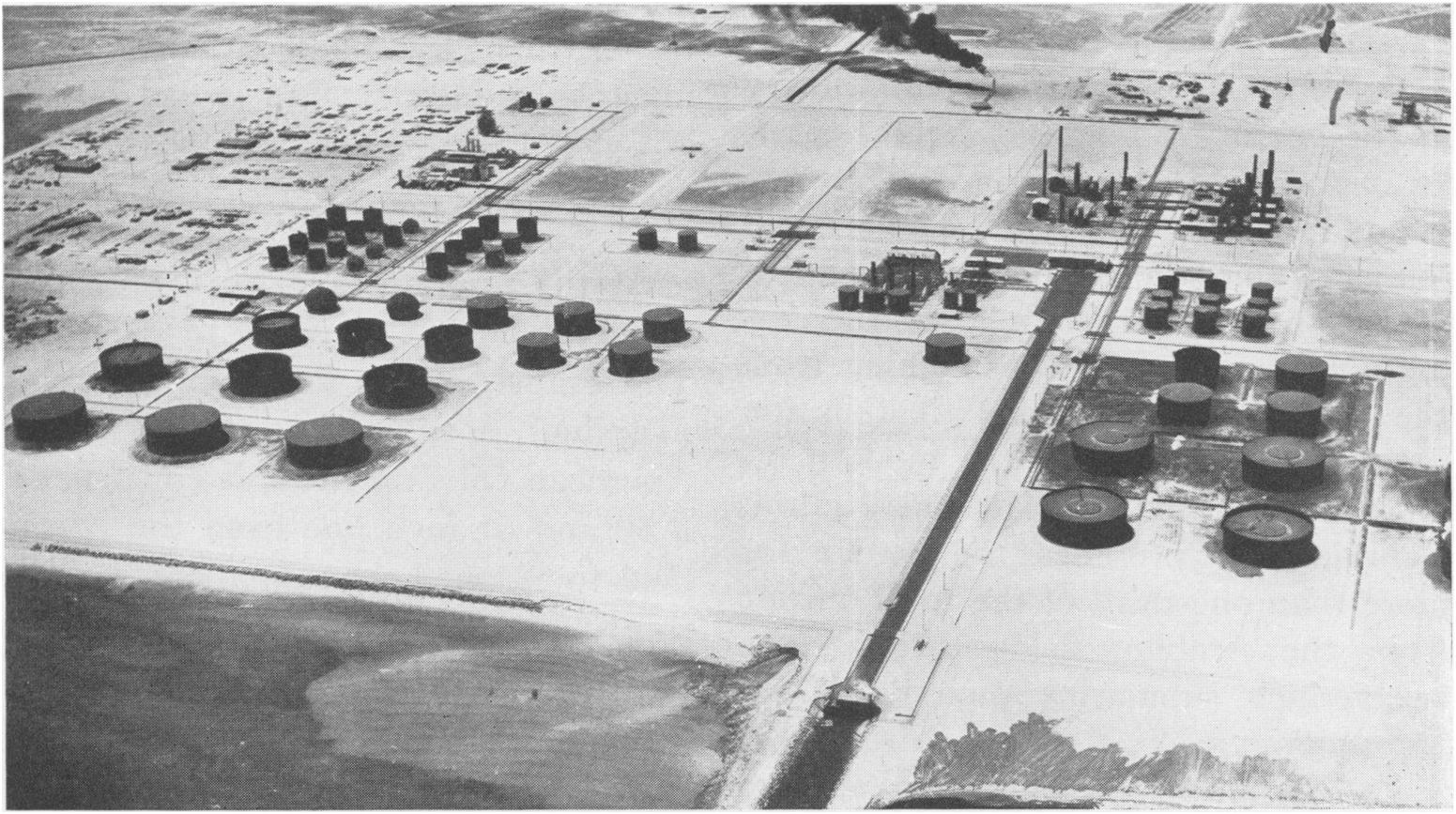
The Ras Tanura terminal, Saudi Arabia’s largest and historically the world’s busiest oil-loading port, has a storage capacity of approximately 33 million barrels and an average handling capacity of 3.4 million barrels per day, according to the U.S. Energy Information Administration. Under normal operations, crude flows through these tanks quickly, loaded onto supertankers that carry it through the Strait of Hormuz to customers in Asia, Europe and the Americas.
But with tanker traffic through Hormuz effectively halted since the first week of March, the second tanker war has turned Ras Tanura’s storage tanks from a waypoint into a dead end. Bloomberg reported on 4 March that Saudi Arabia’s Ju’aymah terminal on the eastern coast “was quickly running out of spare capacity.” By 9 March, the problem had spread across Aramco’s entire eastern infrastructure.
Kayrros, the Paris-based energy data firm that tracks global oil storage using satellite imagery, reported that Gulf Arab producers collectively had approximately 100 million barrels of storage capacity remaining as of early March, representing roughly one-third of their total. That figure includes Saudi Arabia, the UAE, Kuwait and Iraq. At pre-war production rates of roughly 20 million barrels per day combined, the remaining storage would fill within five to seven days without some combination of production cuts and alternative export routes.
| Country | Pre-War Output (bpd) | Current Status | Alternative Export Route |
|---|---|---|---|
| Saudi Arabia | 10.1M | Cutting production; rerouting via East-West Pipeline | Yanbu (Red Sea) — limited to ~2M bpd loading |
| UAE | 3.5M | Managing offshore production levels | Fujairah pipeline — 1.5M bpd capacity |
| Kuwait | 2.6M | Force majeure declared on oil and refinery products | None |
| Iraq | 4.3M | Output cut to 1.7-1.8M bpd | Turkey pipeline (limited, intermittent) |
Why Is the Strait of Hormuz Still Closed?
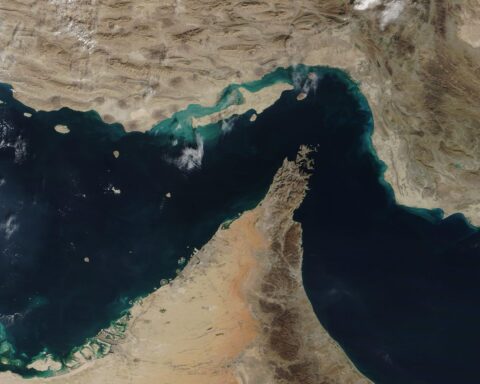
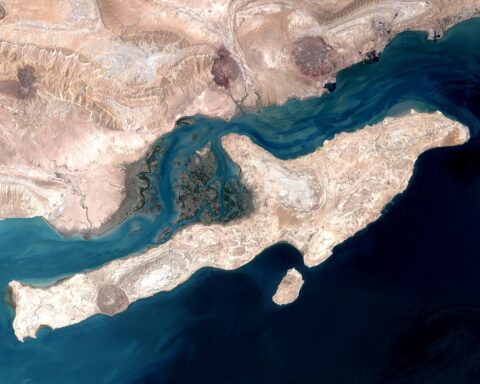
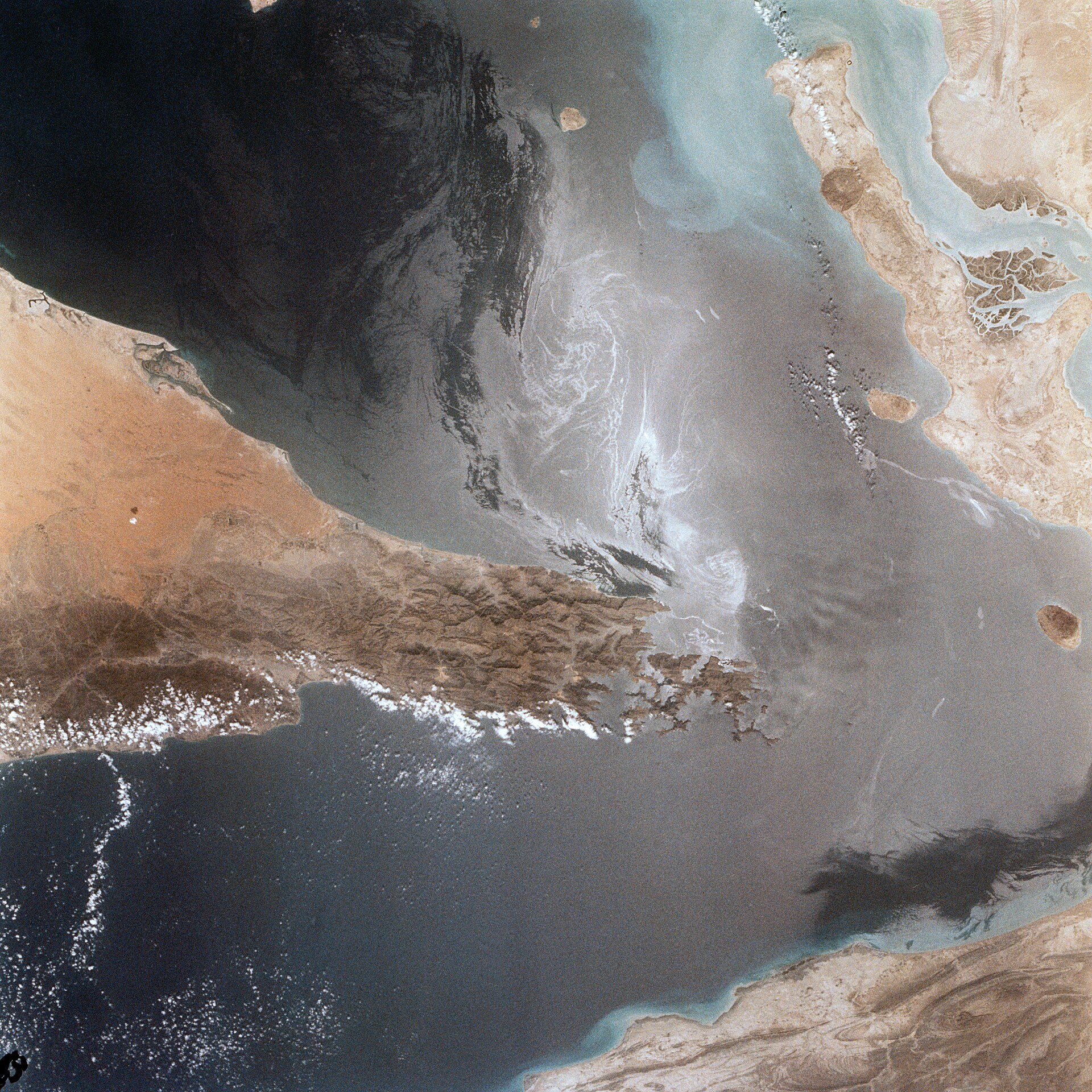
The Strait of Hormuz, a 33-kilometre-wide waterway between Iran and Oman, handles roughly 21 million barrels of oil per day under normal circumstances, according to the EIA, making it the single most important chokepoint in the global energy system. Iran has effectively closed the strait since the war began on 28 February, when the United States and Israel launched joint strikes that killed Supreme Leader Ali Khamenei.
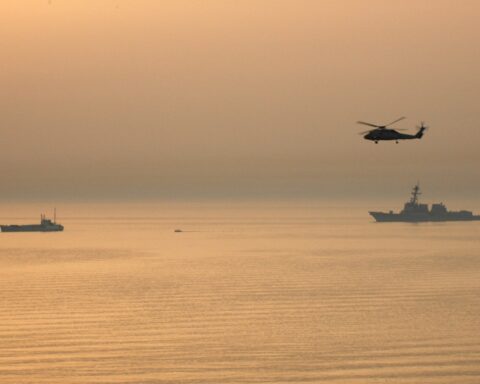
Ship owners and insurers have halted tanker transits through the strait because of the direct threat of Iranian military action. Iran’s Islamic Revolutionary Guard Corps Navy (IRGCN) has deployed fast-attack boats, anti-ship missiles and sea mines in the narrow waterway, according to U.S. Central Command. At least two commercial vessels were damaged in the first week of March, Reuters reported, and insurance premiums for Persian Gulf transits have surged to levels that make voyages economically unviable.
The U.S. Navy has deployed three carrier strike groups to the region, including the USS Harry S. Truman, which arrived in the Gulf of Oman in mid-February, and a third carrier deployed after Iran struck Saudi oil fields. But clearing the strait of mines and reopening commercial shipping would require a major naval operation that could take weeks, according to retired U.S. Navy Vice Admiral Kevin Donegan, a former commander of the Fifth Fleet, speaking to CNBC.
Iran’s new Supreme Leader, Mojtaba Khamenei, named by the Assembly of Experts on 8 March after his father’s assassination, has shown no inclination to lift the blockade. Tehran ruled out an immediate ceasefire on Sunday, CNBC reported, with Iran’s Foreign Ministry spokesman declaring that “the aggressor states must withdraw their forces and compensate for the destruction before any discussion of de-escalation.”
Kuwait, UAE and Iraq Face the Same Problem
Saudi Arabia is not the only Gulf oil producer forced to shut wells. Kuwait, the UAE and Iraq have all announced production cuts in the past week as their own storage reaches capacity.
Kuwait Petroleum Corporation declared force majeure on sales of oil and refinery products on 7 March, Bloomberg reported, effectively releasing the state-owned company from its contractual obligations to deliver crude to buyers. Kuwait produced approximately 2.6 million barrels per day in January, making it OPEC’s fifth-largest producer. The country has no alternative export route that bypasses the Strait of Hormuz.
Abu Dhabi National Oil Company (Adnoc) in the UAE said it was “managing offshore production levels to address storage requirements,” according to a company statement reported by Bloomberg. The UAE has a partial escape valve: Adnoc operates the 1.5-million-barrel-per-day Habshan-Fujairah crude oil pipeline, which carries oil from Abu Dhabi’s fields to the port of Fujairah on the Gulf of Oman, bypassing the Strait of Hormuz entirely. But Fujairah’s capacity handles less than half of the UAE’s 3.5-million-barrel-per-day output.
Iraq has been hit hardest. Iraqi production has dropped from approximately 4.3 million barrels per day before the conflict to between 1.7 and 1.8 million barrels per day, Fortune reported, a reduction of nearly 60 percent. Iraq’s southern export terminal at Basra accounts for roughly 85 percent of the country’s oil revenue, and all shipments from Basra must transit the Strait of Hormuz. Iraq’s only alternative, the Kirkuk-Ceyhan pipeline to Turkey, has been operating intermittently due to disputes between Baghdad and the Kurdistan Regional Government.
The combined Gulf production cuts are removing an estimated 6 to 8 million barrels per day from the global market, according to JP Morgan, representing the largest supply disruption since the 1990-91 Gulf War. “This is not a voluntary OPEC production cut,” Christyan Malek, JP Morgan’s head of global energy strategy, told Bloomberg. “This is physics and geography forcing the biggest producers in the world to shut down wells.”
Can the East-West Pipeline Save Saudi Exports?
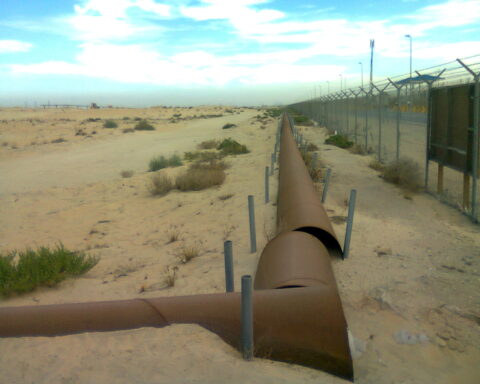
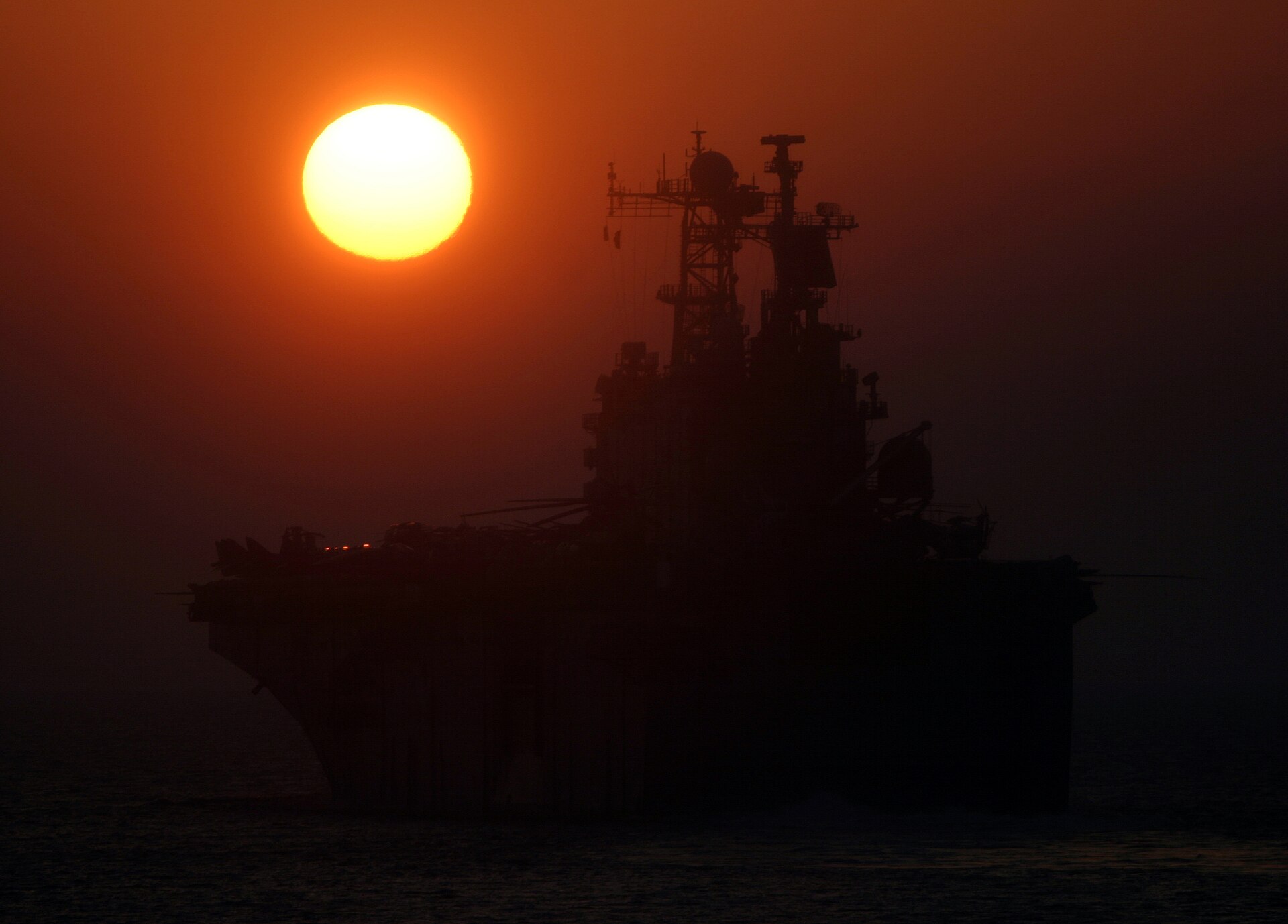
Saudi Arabia’s primary tool for maintaining some oil exports is the East-West Crude Oil Pipeline, a 1,200-kilometre artery that runs from the eastern oil fields to the port of Yanbu on the Red Sea coast. The pipeline has a transmission capacity of approximately 5 million barrels per day, which can be expanded to 7 million barrels per day through debottlenecking, according to Global Energy Monitor.
Aramco has been pushing crude through the pipeline at an accelerated rate since the Hormuz closure. Bloomberg tanker-tracking data showed that five supertankers loaded oil at Yanbu in the first nine days of March, triple the average recorded in February. Al Arabiya reported on 6 March that Saudi Arabia had “diverted millions of oil barrels” to the Red Sea to maintain global supplies.
But the pipeline and Yanbu terminal face significant constraints. While the pipeline itself can handle 5 to 7 million barrels per day, Yanbu’s actual loading infrastructure historically limits operations to approximately 2 million barrels per day maximum, according to industry estimates. That represents less than 20 percent of Saudi Arabia’s total pre-war output, meaning the East-West Pipeline can mitigate but not solve the export crisis.
Egypt has offered its Sumed pipeline, which connects the Red Sea port of Ain Sukhna to the Mediterranean terminal at Sidi Kerir, as an additional bypass for Saudi crude heading to European markets, Pipeline Technology Journal reported. The 320-kilometre pipeline has a capacity of approximately 2.5 million barrels per day. Saudi officials have not publicly responded to the offer.
JP Morgan analyst Christyan Malek noted that Saudi Arabia’s vast storage capacity and the East-West Pipeline give the Kingdom “a structural advantage over every other Gulf producer.” But he cautioned that even Saudi Arabia “cannot indefinitely produce at 10 million barrels a day if it can only export 2 to 3 million.” The math, he said, “forces production cuts within days, not weeks.”
Oil Prices Surge Past $110 as Supply Shrinks
Global oil prices have responded dramatically to the Gulf production crisis. Brent crude traded above $110 per barrel on Monday, having surged from $73 per barrel in late February, according to Bloomberg. The OPEC reference basket price averaged $83.07 per barrel for March, but the most recent trading sessions have pushed spot prices far higher.
The price surge reflects the scale of the supply disruption. Before the war, Gulf producers shipped approximately 21 million barrels per day through the Strait of Hormuz, accounting for roughly one-fifth of global oil consumption. Even with alternative export routes partially offsetting the loss, the net removal of 6 to 8 million barrels per day from the market has created the tightest supply conditions in more than three decades.
Saudi Aramco’s share price has risen 14 percent since the war began, according to Tadawul data, as investors priced in higher revenue from elevated oil prices. The wider global picture is far grimmer: equity markets have lost more than $6 trillion in value as stagflation fears grip investors from Tokyo to Wall Street. But the Kingdom’s actual oil revenue trajectory is more complex. Higher prices per barrel are being offset by lower export volumes, and the question of whether the war has genuinely enriched Saudi Arabia depends on how long the Hormuz closure persists.
For Saudi consumers and businesses, the domestic impact has been limited. The Kingdom’s internal fuel prices are subsidised and regulated. But the broader economic effects of the war, including the strain on Crown Prince Mohammed bin Salman’s three-front challenge of managing military defence, diplomatic engagement and economic stability simultaneously, are mounting daily.
What Happens to OPEC’s April Output Increase?
OPEC+ agreed in its most recent meeting to resume production increases in April, with the coalition planning to add 206,000 barrels per day to global supply, CNBC reported. Saudi Arabia’s share of that increase was 62,000 barrels per day, which would have raised the Kingdom’s target to 10.2 million barrels per day.
The planned increase now appears impossible to implement. Saudi Arabia is cutting production, not raising it, and most Gulf members of OPEC+ face the same storage constraints. “The April production increase is a fiction,” Helima Croft, head of global commodity strategy at RBC Capital Markets, told Reuters. “You cannot increase output when you have nowhere to put the oil and no way to ship it.”
Russia, the other co-leader of the OPEC+ alliance, faces a different set of circumstances. Russian crude exports do not transit the Strait of Hormuz and are shipped primarily from Baltic, Black Sea and Pacific ports. Moscow has signalled it intends to proceed with its own output increase in April, according to Energy Intelligence, potentially capturing market share from its Gulf partners while they are forced to cut.
The dynamic creates an uncomfortable tension within OPEC+. Saudi Arabia and its Gulf allies are involuntarily reducing output, pushing prices higher and benefiting Russia, which can continue producing at full capacity. “The strategic irony is that the war Iran started to punish American allies is now enriching Russia, which is ostensibly Iran’s partner,” a Gulf diplomat told Al Arabiya on condition of anonymity.
Global Energy Markets Brace for Extended Disruption
Energy analysts and governments are preparing for the Gulf production crisis to last weeks or months rather than days. The conflict shows no signs of immediate resolution. Iran has named Mojtaba Khamenei as its new Supreme Leader, a hardliner with deep ties to the IRGC, according to NPR, signalling continuity in Tehran’s war posture. The United States has ordered non-emergency diplomatic staff to leave Saudi Arabia, the first such evacuation order since the war began.
The International Energy Agency has not yet activated its emergency oil-sharing mechanism, under which member nations agree to release strategic petroleum reserves to compensate for supply disruptions. The United States holds approximately 400 million barrels in its Strategic Petroleum Reserve, the largest government-held stockpile in the world, according to the EIA. President Trump has not indicated whether he intends to authorise a release. G7 energy ministers have since announced plans to discuss releasing up to 400 million barrels from strategic reserves in a Tuesday meeting coordinated by the IEA.
Asian economies, which receive roughly two-thirds of Gulf oil exports under normal conditions, are facing the most acute supply pressure. Japan, South Korea, India and China have all signalled concern about the disruption. Japan and South Korea, which import virtually all of their oil, have begun drawing down commercial inventories, Reuters reported. The two nations face a potentially permanent reorientation of their energy procurement if the blockade persists beyond their strategic reserve windows.
Saudi Arabia’s diplomatic channel to Iran, which Bloomberg reported on 6 March has been deployed with increasing urgency to seek de-escalation, has not produced results. Crown Prince Mohammed bin Salman is managing a situation in which Saudi Arabia simultaneously needs the war to end — to reopen Hormuz and resume full oil exports — while benefiting from the elevated prices it has caused.
For now, the Kingdom’s wells are being shut incrementally, its eastern storage tanks are filling toward capacity, and the world’s most important oil exporter is sending what crude it can through a pipeline that was designed as a backup, not a primary artery. The question of whether Saudi Arabia can defend its oil infrastructure from Iranian attack has given way to a more fundamental one: whether it can export its oil at all.
The storage crisis deepened further on March 11 when Iran threatened to block all Gulf oil exports even through alternative Red Sea routes, just as the Pentagon declared its most intense day of bombing. Oil markets swung between $80 and $90 a barrel in response to the dual escalation.
Frequently Asked Questions
Why is Saudi Arabia cutting oil production?
Saudi Arabia is cutting oil production because the Strait of Hormuz, through which the Kingdom ships most of its crude, has been effectively closed by Iranian military action since the war began on 28 February 2026. With tanker traffic halted and storage tanks filling toward capacity, Aramco has no choice but to reduce output at its eastern oil fields until alternative export routes can absorb the surplus or the strait reopens.
How much oil does Saudi Arabia normally export through the Strait of Hormuz?
Saudi Arabia typically ships the majority of its approximately 10 million barrels per day of crude oil production through the Strait of Hormuz from eastern terminals including Ras Tanura and Ju’aymah. The strait as a whole handles roughly 21 million barrels per day from all Gulf producers, representing about one-fifth of global oil consumption, according to the U.S. Energy Information Administration.
Can the East-West Pipeline fully replace Hormuz exports?
The East-West Pipeline from Saudi Arabia’s eastern oil fields to the Red Sea port of Yanbu has a transmission capacity of 5 to 7 million barrels per day. However, Yanbu’s loading infrastructure can handle approximately 2 million barrels per day maximum, meaning the pipeline alone cannot fully compensate for the loss of Hormuz-routed exports.
Which other Gulf countries have cut oil production?
Kuwait declared force majeure on oil sales on 7 March. The UAE is “managing offshore production levels” through Adnoc. Iraq’s output has fallen from 4.3 million to between 1.7 and 1.8 million barrels per day, a nearly 60 percent reduction. Combined Gulf production cuts total an estimated 6 to 8 million barrels per day, according to JP Morgan.
How long could the production cuts last?
The duration depends on when the Strait of Hormuz reopens to commercial shipping. Clearing Iranian mines and restoring safe passage could take weeks even after a ceasefire, according to retired U.S. Navy officials. Iran’s new Supreme Leader, Mojtaba Khamenei, has ruled out an immediate ceasefire, suggesting the disruption could extend well beyond March 2026.
The political standoff over the strait has escalated sharply, with Trump threatening to “take over” the waterway and Iran’s IRGC vowing to burn any ship that transits. The Trump-Iran Hormuz confrontation now represents the most dangerous flashpoint in the conflict.
Despite these production cuts, Saudi Arabia moved with extraordinary speed to redirect what output it could through the East-West Pipeline. The full account of the pipeline pivot that moved seven million barrels to the Red Sea shows how Aramco’s eleven-day infrastructure transformation reshaped the Kingdom’s export geography even as storage constraints forced output reductions.