
TEHRAN — Iran’s new supreme leader has not been seen in public since the war began, though he issued his first written statement on March 12 vowing to continue the fight. Mojtaba Khamenei, the 56-year-old son of the assassinated Ayatollah Ali Khamenei, was confirmed wounded by Iranian state television on March 9, 2026 — barely 24 hours after the Assembly of Experts named him the Islamic Republic’s third supreme leader. The men who installed him — the commanders of the Islamic Revolutionary Guard Corps — are now running the war — a dynamic covered in detail in the Iran War Update for Tuesday — the economy, and the state itself, with or without a supreme leader capable of exercising authority. The IRGC’s Ahmad Vahidi, an Interpol-wanted former Quds Force founder who took command after his predecessor was killed in the opening US-Israeli strikes on February 28, is the most powerful man in Iran. The question confronting Riyadh, Washington, and every capital with missiles flying overhead is whether anyone in Tehran can actually order these generals to stop.
The implications for Saudi Arabia are immediate and severe. The Kingdom’s three-front war — military, diplomatic, and economic — depends on the assumption that Iran has a decision-making centre that can negotiate, de-escalate, or accept a ceasefire. If the IRGC’s decentralized command structure has made Tehran’s generals operationally autonomous, then every ceasefire proposal on the table may be addressed to a government that no longer controls the men firing the missiles. The formal activation of Iran’s Mosaic Defense has confirmed that fear, splitting the IRGC into 31 autonomous provincial commands that answer to no central authority.
Table of Contents
- What Does It Mean That Iran’s New Supreme Leader Is Wounded and Invisible?
- Who Is Ahmad Vahidi, the Interpol Fugitive Running Iran’s War?
- How the IRGC Engineered a Succession to Guarantee Its Own Power
- The Mosaic Doctrine and the Generals Who Answer to No One
- The Wartime Power Matrix — Who Actually Controls What in Iran
- The IRGC’s $50 Billion Shadow State
- Why the IRGC’s Drone and Missile War Against Saudi Arabia Will Not Stop on Its Own
- The Revolution That Became a Dynasty — and Then Lost Its Dynasty
- What the IRGC Takeover Means for Saudi Arabia’s Strategic Calculus
- Can Anyone in Tehran Actually Agree to a Ceasefire?
- The Proxy Networks and Whether the IRGC Can Still Coordinate Them
- What Happens If Mojtaba Khamenei Dies?
- When Revolutionary Guards Seize the State — Historical Parallels and Warnings
- How Does a War End When No One Controls the Army?
- Frequently Asked Questions
What Does It Mean That Iran’s New Supreme Leader Is Wounded and Invisible?
Iranian state television described Mojtaba Khamenei as “janbaz” — a term meaning wounded by the enemy — in what state media has called the “Ramadan war.” The confirmation came on March 9, roughly 24 hours after the Assembly of Experts formally elected him as Iran’s third supreme leader. The nature and severity of the wound remain officially unconfirmed. Israeli intelligence assessments, reported by the Times of Israel, indicate that Mojtaba was likely injured in the same February 28 airstrike that killed his father, mother, wife, and sister at the supreme leader’s compound in Tehran.
The absence is remarkable. In the 10 days since the war began, the man constitutionally responsible for Iran’s highest political, religious, and military authority has not appeared on camera, not issued a written statement, and not addressed the nation. Compare this to his father, who appeared on state television within hours of major crises throughout his 35-year tenure, including during the 2009 Green Movement protests, the 2019 fuel price riots, and the 2020 assassination of Qassem Soleimani.
Under Article 110 of Iran’s constitution, the supreme leader holds exclusive authority over declaring war and peace, commanding the armed forces, appointing the head of the judiciary, and confirming the president’s election. Article 57 establishes the principle of velayat-e faqih — guardianship of the jurist — which places ultimate sovereign authority in a single religious figure. A wounded, absent supreme leader creates a constitutional vacuum that no other institution is designed to fill. The broader theological implications of this crisis — including the erosion of religious authority on both sides of the Sunni-Shia divide — are reshaping the religious foundations of the Iran-Saudi conflict in ways that will outlast the war itself.
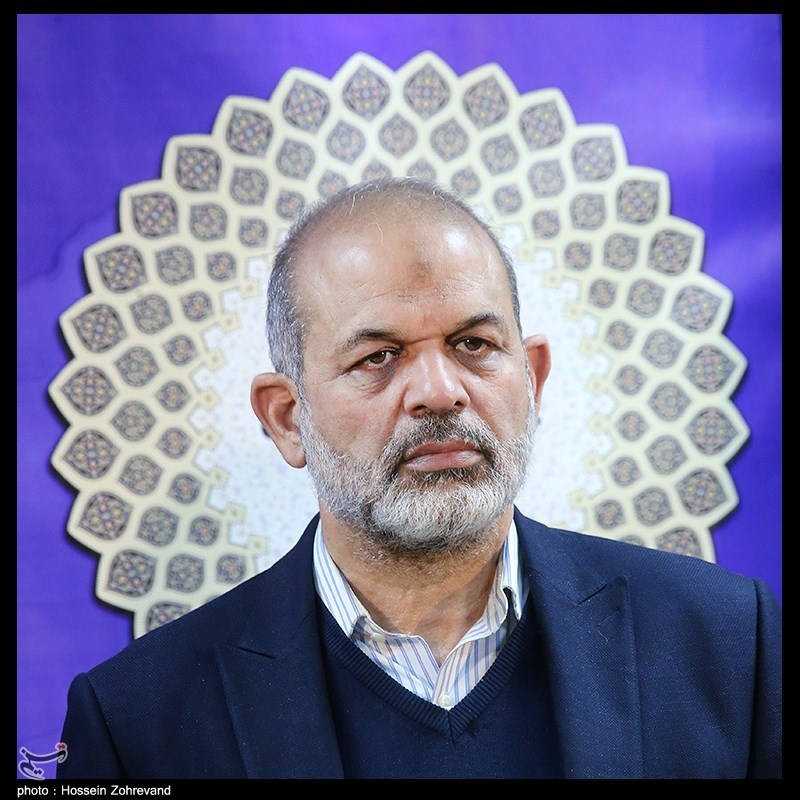
Who Is Ahmad Vahidi, the Interpol Fugitive Running Iran’s War?
Ahmad Vahidi is the most consequential military commander most Western audiences have never heard of. Born in 1958 in Shiraz, he joined the Revolutionary Guards a year after the 1979 revolution and rose through the intelligence directorate during the Iran-Iraq War. His trajectory through Iran’s security establishment reads like a blueprint for institutional capture of the state.
The Middle East briefing 3,000+ readers start their day with.
One email. Every weekday morning. Free.
Vahidi founded the Quds Force — the IRGC’s elite external operations arm — and served as its first commander from 1988 to 1997. The unit he built would later be led by Qassem Soleimani and become the primary instrument of Iran’s proxy warfare across the Middle East. According to the Council on Foreign Relations, the Quds Force under Vahidi’s leadership established the operational template for arming and directing Hezbollah, and expanded Iran’s covert activities across Lebanon, Iraq, and Latin America.
That Latin American connection proved consequential. In July 1994, a car bomb killed 85 people at the Asociación Mutual Israelita Argentina (AMIA) Jewish community centre in Buenos Aires. Argentina’s criminal court ruled in April 2024 that the attack had been planned by Iran and executed by Hezbollah. Interpol issued a red notice for Vahidi’s arrest in connection with the bombing. He remains on Interpol’s wanted list.
Despite the international warrant, Vahidi’s career advanced. He served as deputy minister of defence from 2005, then as minister of defence under President Mahmoud Ahmadinejad from 2009 to 2013, overseeing Iran’s ballistic missile programme during a period of rapid expansion. In August 2021, President Ebrahim Raisi appointed him interior minister, giving him control of Iran’s internal security apparatus, police forces, and the machinery used to suppress the 2022 Mahsa Amini protests.
When Major General Mohammad Pakpour was killed in the opening US-Israeli strikes on February 28, 2026, Vahidi was named IRGC commander-in-chief on March 1 — making an Interpol-wanted bombing suspect the head of the world’s largest state-sponsored paramilitary force, during a war that directly threatens Saudi Arabia’s population centres.
How the IRGC Engineered a Succession to Guarantee Its Own Power
The IRGC did not merely benefit from Mojtaba Khamenei’s elevation. It orchestrated it. According to Iran International, the Revolutionary Guards pressured the Assembly of Experts to hold an emergency online session on March 3 and pushed aggressively for Mojtaba’s selection. At least eight members of the 88-member Assembly boycotted the session, describing what they called “heavy pressure” from the Guards to impose a predetermined outcome.
The IRGC’s logic was transparent. Mojtaba Khamenei had cultivated a symbiotic relationship with the Guards over two decades. According to Al Jazeera, he wielded significant behind-the-scenes power during his father’s tenure, influencing presidential elections and coordinating the suppression of the 2009 Green Movement protests through IRGC channels. The Guards backed a candidate who owed them everything — and who, wounded and invisible, could owe them nothing more than a title.
A senior Iranian analyst told Euronews on March 9 that “Mojtaba cannot replace his father — the IRGC holds all the cards.” The assessment captures the structural reality. Ali Khamenei spent 35 years building a network of personal relationships with IRGC commanders, seminary leaders, and intelligence chiefs that allowed him to balance competing power centres. Mojtaba has no comparable network. His authority, such as it is, derives entirely from the IRGC’s willingness to pretend it exists.
The irony is stark. The Islamic Republic was founded in 1979 on the explicit rejection of hereditary monarchy. The revolutionaries who toppled the Shah denounced dynastic power as un-Islamic, morally corrupt, and constitutionally illegitimate. Forty-seven years later, the son has taken the father’s throne at the summit of an anti-monarchical theocracy — installed not by religious merit or popular mandate, but by the very military institution the revolution created to protect itself from exactly this kind of power consolidation.
The Mosaic Doctrine and the Generals Who Answer to No One
The most dangerous aspect of the IRGC’s wartime posture is not its missile arsenal or drone fleet. It is the deliberate decentralization of command authority that was implemented precisely for this scenario — a war in which senior leadership might be killed.
Former IRGC chief Major General Mohammad-Ali Jafari designed what became known as the “mosaic defence” doctrine over 20 years ago, after studying the rapid collapse of Saddam Hussein’s centralized Iraqi military in 2003. The lesson the Guards drew was unambiguous: a military that depends on orders from the top will shatter when the top is destroyed. The IRGC rebuilt itself so that provincial and sector commanders could continue operating on “general instructions given in advance,” according to Radio Free Europe, rather than waiting for real-time direction from Tehran.
Deputy Defence Minister Reza Talaeinik described the system on Iranian state television on March 4. Each figure in the IRGC command structure has named successors spanning three ranks — a “triple-rank redundancy” that ensures leadership losses do not freeze operations. The Jerusalem Post reported that the IRGC had decentralized its command structure specifically to survive US and Israeli decapitation strikes, distributing authority across geographic sectors rather than concentrating it in Tehran.
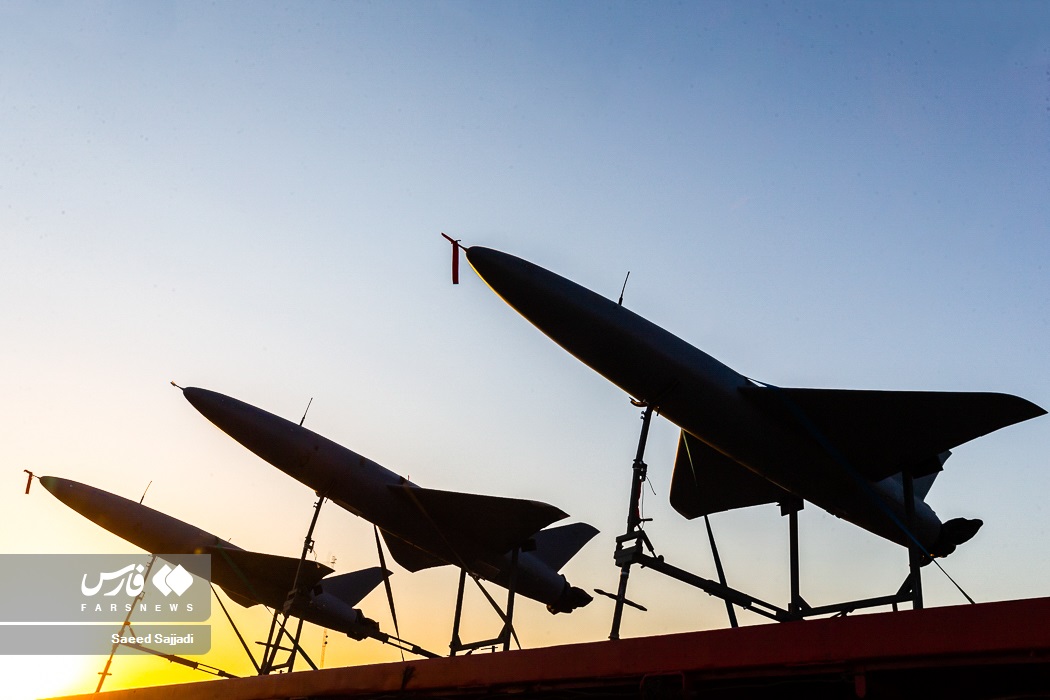
The operational consequence is profound. Mid-ranking IRGC officers across Iran — in provincial commands, missile bases, drone launch sites, and naval installations along the Persian Gulf coast — possess pre-delegated authority to continue operations even if the entire senior leadership is killed. Experts interviewed by Radio Free Europe warned that this decentralization dramatically increases the risk of uncoordinated strikes, navigation errors, and unintended escalation. A local commander with pre-authorized launch authority and incomplete intelligence could trigger a crisis that no one in Tehran intended.
For Saudi Arabia, which has intercepted more than 200 drones and missiles since March 1 according to the Saudi Defence Ministry, the implications are chilling. Even if Mojtaba Khamenei could order a ceasefire from his hospital bed, it is far from clear that every IRGC sector commander would receive, acknowledge, or obey the order. The mosaic was built to fight without a head. It may now be incapable of stopping on command.
The Wartime Power Matrix — Who Actually Controls What in Iran
The conventional depiction of Iranian power — a pyramid with the supreme leader at the apex — has never been less accurate than it is in March 2026. Authority in wartime Iran is distributed across multiple institutions, each with overlapping jurisdictions and competing interests. The following matrix maps the five pillars of state power against the institutions that actually control them. The deepening legitimacy crisis within Iran’s theocracy has further accelerated this diffusion of authority away from the supreme leader’s office.
| Power Domain | Constitutional Authority | Actual Controller (March 2026) | Status |
|---|---|---|---|
| Military command (offensive operations) | Supreme Leader | IRGC / Ahmad Vahidi | IRGC autonomous; Supreme Leader wounded and absent |
| Military command (conventional defence) | Supreme Leader via Armed Forces General Staff | Artesh (regular army) + IRGC coordination | Artesh subordinate to IRGC in practice |
| Foreign policy / diplomacy | President (Masoud Pezeshkian) | President’s office, but constrained | Pezeshkian has called for peace; IRGC has rejected ceasefire |
| Economic resources (wartime) | Parliament / Government | IRGC via Khatam al-Anbia + black market | IRGC controls $30-50 billion annual economic activity |
| Religious legitimacy | Supreme Leader | Vacant / contested | Mojtaba lacks his father’s scholarly credentials |
| Proxy network coordination | Supreme Leader via Quds Force | IRGC Quds Force (successor commander unknown) | Houthis have not formally entered war; Hezbollah degraded |
| Internal security / dissent suppression | Interior Ministry | IRGC Basij + Intelligence Ministry | Active; protests suppressed in multiple cities |
| Nuclear programme (remnants) | Supreme National Security Council | IRGC / Atomic Energy Organisation | Primary facilities destroyed; dispersed capabilities uncertain |
The matrix reveals a striking pattern. In six of eight power domains, the IRGC exercises actual control regardless of constitutional authority. The president controls diplomacy in principle but cannot override the military’s operational decisions. Religious legitimacy — historically the supreme leader’s primary source of authority — is effectively vacant, as Mojtaba has neither his father’s seminary credentials nor any public presence to project clerical authority. The only domain where the IRGC faces a genuine counterweight is foreign policy, where President Pezeshkian has publicly called for peace talks — a position the Guards have contradicted through continued missile strikes on Gulf states.
The IRGC’s $50 Billion Shadow State
Military power is only one dimension of the IRGC’s institutional dominance. The Guards operate what Fortune has called “a sprawling business empire that dominates the economy,” with an estimated annual economic turnover of $30 billion to $50 billion, according to a March 2026 analysis by AInvest drawing on data from the Clingendael Institute and the Gulf International Forum.
The Khatam al-Anbia Construction Headquarters, the IRGC’s principal commercial arm, is Iran’s largest engineering and development contractor. Originally established to manage reconstruction after the Iran-Iraq War, it now controls the construction of pipelines, dams, roads, urban transportation networks, and telecommunications infrastructure. Its operations employ tens of thousands of people and generate billions in annual revenue.
The scale of IRGC economic penetration became clear during the Ahmadinejad presidency, when more than $120 billion in state assets were transferred to ostensibly private entities, many of which were IRGC-controlled. The single largest transaction on the Tehran Stock Exchange in history — the $7.8 billion sale of 51 per cent of the Telecommunication Company of Iran to the Mobin Trust Consortium in September 2009 — went to an IRGC-affiliated buyer.
| Sector | IRGC Entity | Estimated Value | Significance |
|---|---|---|---|
| Construction / Infrastructure | Khatam al-Anbia | $12+ billion in contracts | Iran’s largest contractor; builds pipelines, dams, roads |
| Telecommunications | Mobin Trust Consortium | $7.8 billion (2009 acquisition) | Controls 51% of Iran’s telecoms |
| Oil and gas | Various IRGC-linked firms | Billions in extraction contracts | Controls significant upstream and downstream assets |
| Smuggling / black market | IRGC Navy / border forces | Billions annually (Janes estimate) | Alcohol, narcotics, weapons, tobacco |
| Banking / finance | IRGC-linked foundations | Multiple banks and funds | Circumvent sanctions via informal networks |
The Clingendael Institute estimated that IRGC-affiliated foundations accounted for more than half of Iran’s GDP by 2013. Even if that figure has declined with Iran’s economic contraction under sanctions, the Guards’ economic weight means they are not merely a military force that can be ordered to stand down. They are an economic system with employees, contractors, and dependents whose livelihoods are tied to the IRGC’s institutional survival. War has historically been good for the Guards’ budget. Peace — and the potential for reform that peace might bring — is an existential threat.
Why the IRGC’s Drone and Missile War Against Saudi Arabia Will Not Stop on Its Own
Since March 1, 2026, the IRGC’s Aerospace Force has launched sustained waves of ballistic missiles, cruise missiles, and one-way attack drones at targets across Saudi Arabia, the UAE, Qatar, Bahrain, and Kuwait. The Saudi Defence Ministry reported intercepting three ballistic missiles near Prince Sultan Air Base on March 6, destroying 16 drones targeting the Shaybah oil field, and neutralizing multiple drone swarms approaching Riyadh, including two that targeted the US Embassy compound on March 3.
The campaign reveals the IRGC’s operational autonomy in practice. President Pezeshkian has publicly called for peace. The supreme leader, if he is conscious, has said nothing. Yet the strikes continue daily. The Aerospace Force answers to the IRGC command structure, not to the elected civilian government, and under the mosaic doctrine, individual launch units possess pre-delegated authority to execute operations based on standing orders.
Three structural factors make a unilateral IRGC ceasefire unlikely without external compulsion:
- The IRGC views retaliation for the supreme leader’s assassination as a religious obligation, not a policy choice subject to cost-benefit analysis. Stopping now would delegitimize the Guards’ foundational narrative as defenders of the revolution.
- The decentralized command structure means that even if senior commanders agreed to halt operations, communicating and enforcing a ceasefire across dispersed provincial commands would take days — days during which autonomous units could launch additional strikes.
- The economic incentives favour escalation. Higher oil prices — which have exceeded $110 per barrel — benefit Iran’s remaining export capacity while simultaneously pressuring the global economy in ways the Guards believe will force Western concessions.
The Revolution That Became a Dynasty — and Then Lost Its Dynasty
The Islamic Republic’s founding mythology rests on the rejection of hereditary rule. The 1979 revolution overthrew the Pahlavi dynasty with the explicit theological argument that sovereignty belongs to God and is exercised through the guardianship of the most qualified jurist — not through bloodlines. Ayatollah Ruhollah Khomeini, the revolution’s founder, was selected as supreme leader on the basis of his jurisprudential credentials and role in the revolutionary movement, not because his father held the position.
When Ali Khamenei succeeded Khomeini in 1989, the precedent was maintained — at least formally. Khamenei was a relatively junior cleric whose appointment required the Assembly of Experts to lower the scholarly qualifications for the position. But he was not Khomeini’s son. The principle of meritocratic selection, however diluted, survived.
Mojtaba’s appointment shattered that principle entirely. The National Council of Resistance of Iran described it as “the open conversion of Velayat-e Faqih into hereditary rule: the son taking the father’s place at the summit of an anti-monarchical dictatorship that had once claimed to bury dynastic power forever.” Maryam Rajavi, president-elect of the NCRI, called it “the enthroning of Mojtaba Khamenei as the hereditary monarchy of the Vali-e Faqih.”
That the hereditary supreme leader is now wounded, invisible, and unable to exercise authority adds a layer of tragic irony. Iran sacrificed its revolutionary principles to install a dynasty — and the dynasty collapsed within days. The man who was supposed to provide continuity cannot even appear on television. The Guards who engineered his selection now govern without him, which is precisely what they intended. The supreme leader’s title provides religious cover. The IRGC provides actual power. The arrangement works for the Guards whether Mojtaba recovers or not.
What the IRGC Takeover Means for Saudi Arabia’s Strategic Calculus
Saudi intelligence officials have spent decades building institutional knowledge of Iran’s decision-making structure. The Kingdom’s diplomatic backchannel to Tehran, which Bloomberg reported on March 6 has been activated with “greater urgency,” was built on the assumption that messages would reach a decision-maker capable of acting on them. The IRGC’s effective seizure of operational authority invalidates much of that assumption.
Crown Prince Mohammed bin Salman faces a strategic environment that has deteriorated in three specific ways since Mojtaba’s wounding was confirmed:
First, the negotiating counterpart has changed. Saudi Arabia’s diplomatic messages to the supreme leader’s office are now being received by a wounded man who may lack the physical capacity to respond — and whose responses, even if delivered, may be overridden by the IRGC. The civilian president, Pezeshkian, has shown willingness to negotiate but lacks authority over the military institutions conducting the war.
Second, the escalation calculus has shifted. Under Ali Khamenei, Iran’s retaliation was typically calibrated — designed to inflict pain without triggering regime-ending responses. The decentralized IRGC structure, operating under standing orders and local commander discretion, lacks this calibration mechanism. The risk of an unintended escalation — a missile striking a densely populated Saudi neighbourhood rather than a military facility — has increased substantially.
Third, the timeline for conflict resolution has extended. Wars end when political leaders decide the costs exceed the benefits and negotiate a settlement. If Iran’s political leadership (the president) lacks military authority, and its military leadership (the IRGC) has no incentive to stop, then the war continues until one side is physically incapable of fighting or an external actor imposes a halt.
| Option | Mechanism | Probability of Success | Key Risk |
|---|---|---|---|
| Diplomatic channel to Pezeshkian | Backchannel via Oman, direct calls | Low — president cannot order IRGC to stop | False sense of progress; attacks continue |
| Diplomatic channel to IRGC via intermediaries | China, Russia, Qatar back-channels | Moderate — IRGC has rational interests | IRGC fragmented; no single interlocutor |
| Kinetic degradation of IRGC launch capacity | US/Saudi strikes on launch sites, C2 nodes | High short-term; uncertain long-term | Mosaic doctrine ensures regeneration |
| Economic pressure on IRGC assets | Sanctions, asset freezes, trade interdiction | Low in wartime — sanctions already maximal | IRGC smuggling networks bypass sanctions |
| Wait for internal Iranian political resolution | Pezeshkian asserts civilian authority | Very low — requires military subordination | Indefinite timeline; Saudi casualties continue |
Can Anyone in Tehran Actually Agree to a Ceasefire?
The answer, as of March 9, is genuinely uncertain — and that uncertainty is itself the most dangerous dimension of the crisis. China has dispatched a peace envoy to Riyadh. Turkey has offered to mediate. The G7 has called for immediate de-escalation. Iran’s own president has signalled openness to talks. None of it has produced a ceasefire, because none of these efforts have addressed the fundamental structural problem: the people who want to stop the war do not control the weapons, and the people who control the weapons do not want to stop.
Under Iran’s constitution, only the supreme leader can declare war and peace. A wounded, absent Mojtaba Khamenei technically retains this authority, but exercising it requires the capacity to communicate orders, the institutional infrastructure to transmit them, and — most critically — the personal authority to make them stick. Ali Khamenei built that authority over 35 years. His son has none of it.
President Pezeshkian, elected in 2024 on a reformist platform, has consistently advocated for restraint since the war began. He publicly called for a ceasefire on March 4, according to Al Jazeera, and his foreign minister has engaged in diplomatic contacts with European and Gulf counterparts. But the Iranian presidency has never controlled the IRGC. Even under the relatively powerful presidency of Hassan Rouhani, the Guards conducted foreign military operations — in Syria, Iraq, and Yemen — without meaningful presidential oversight.
The paradox is acute. A ceasefire requires consent from the IRGC. The IRGC has explicitly rejected an immediate ceasefire while attacks on Iran continue. The attacks on Iran continue because there is no ceasefire. Breaking this cycle requires either a military fait accompli — the destruction of the IRGC’s launch capability — or the emergence of a political authority inside Iran that the Guards will obey. Neither condition is close to being met.
The Proxy Networks and Whether the IRGC Can Still Coordinate Them
The Quds Force, the IRGC’s external operations arm, has historically coordinated Iran’s network of proxy forces across the Middle East — Hezbollah in Lebanon, the Houthis in Yemen, Shia militias in Iraq and Syria, and Hamas in Gaza. The current war has tested this network’s resilience in ways that reveal both the IRGC’s strategic depth and its operational limitations.
The Houthis present the most consequential variable for Saudi Arabia. As of March 9, the Houthis have not formally entered the war. Iran International reported internal debate within the movement, with hardliners pushing for military intervention alongside Iran and pragmatists arguing that the Trump-Houthi ceasefire signed in May 2025 granted the movement more strategic gains than war ever did. The Quds Force’s ability to activate the Houthis depends on surviving command links and on the Houthis’ own cost-benefit calculation — which may no longer align with Tehran’s interests now that the Iranian regime is fighting for survival.
Hezbollah, degraded by Israeli operations throughout 2024 and early 2025, has limited offensive capacity. Iraqi Shia militias have launched rockets at US bases in Iraq and Syria but have not opened a sustained front against Gulf states. The proxy architecture that Ali Khamenei and Qassem Soleimani spent decades constructing remains partially intact, but the command-and-control links that made it function as a coordinated network have been degraded by the deaths of senior Quds Force officers and the disruption of communications infrastructure.
What Happens If Mojtaba Khamenei Dies?
The question that no one in Tehran or Riyadh wants to ask aloud is the one that matters most. If Mojtaba’s wounds prove fatal, or if a subsequent Israeli strike completes what the February 28 attack began, the Islamic Republic will face its second supreme leader succession crisis in less than two weeks — during an active war, with its military infrastructure under sustained bombardment, and its constitutional mechanisms already strained to breaking point.
The Assembly of Experts would theoretically reconvene to select a new supreme leader, but the pool of viable candidates has narrowed dramatically. The most frequently cited alternatives — former judiciary chief Ebrahim Raisi (killed in a helicopter crash in 2024), former IRGC commander Hossein Salami (current status uncertain after the February 28 strikes), and senior cleric Ahmad Khatami — either lack the military connections to satisfy the IRGC or lack the theological credentials to satisfy the clerical establishment.
A more likely scenario, according to analysts at the International Crisis Group, is the formalisation of what already exists informally: a Supreme National Defence Council dominated by IRGC commanders, with Ahmad Vahidi as the de facto head of state in all but title. Iran’s constitution provides for a three-member interim leadership council comprising the president, the judiciary chief, and a senior cleric in the event the supreme leader becomes permanently incapacitated. But the IRGC has shown throughout this crisis that constitutional provisions matter only insofar as the Guards choose to respect them.
For Saudi Arabia, Mojtaba’s death would paradoxically simplify one dimension of the crisis while complicating another. It would eliminate the pretence that a civilian supreme leader commands the military, forcing the international community to acknowledge the IRGC as Iran’s actual governing authority and any ceasefire negotiations to occur directly with the Guards. But it would also remove the last constitutional fig leaf that allows the IRGC to claim it acts under legitimate religious authority — potentially fracturing internal IRGC cohesion between commanders who see themselves as soldiers of the revolution and those who see themselves as soldiers of the state.
| Scenario | Probability | Timeline | Implication for Saudi Arabia |
|---|---|---|---|
| Mojtaba recovers, resumes titular authority | Moderate | Weeks to months | Status quo maintained; IRGC retains operational control behind restored figurehead |
| Mojtaba dies; Assembly selects another cleric | Low | Days (emergency session) | Another figurehead; IRGC institutional power unchanged |
| Mojtaba dies; no succession — IRGC rules openly | Moderate-High | Immediate | Clarity on interlocutor; ceasefire talks with IRGC directly; but Guards have no incentive to negotiate |
| Internal IRGC fracture between factions | Low but consequential | Weeks | Most dangerous scenario — factional commanders may escalate to consolidate internal position |
When Revolutionary Guards Seize the State — Historical Parallels and Warnings
The IRGC’s wartime dominance of the Iranian state is not unprecedented in the history of revolutionary regimes. Three historical parallels illuminate the dynamics at play and the likely trajectory.
Pakistan’s military has intervened in civilian governance four times since independence, each time justifying the intervention as necessary during a period of national security crisis. The Inter-Services Intelligence (ISI) directorate, like the IRGC, built an economic empire alongside its military functions, and used its control of nuclear weapons and cross-border operations to establish veto power over civilian foreign policy. The Pakistani parallel suggests that once a military-intelligence institution achieves this level of structural dominance, civilian authorities rarely reclaim lost ground without a catastrophic military defeat that discredits the generals.
Egypt’s military, which has controlled an estimated 25 to 40 per cent of the economy since the Nasser era, provides a template for how military economic empires perpetuate military political power. The Egyptian armed forces’ economic interests made them stakeholders in regime stability, not mere instruments of state policy. The IRGC’s economic empire creates an identical dynamic — the Guards have institutional incentives to preserve the system that enriches them, regardless of whether that system serves Iran’s broader national interests.
The Soviet Union’s final years offer perhaps the most instructive warning. When the Communist Party’s political authority collapsed, the Soviet military and intelligence services became the de facto governors of a nuclear-armed state without clear political direction. The resulting period — during which tactical nuclear weapons were dispersed across multiple Soviet republics without centralized command authority — remains the closest historical analogue to the current situation in Tehran: a state with destructive capability but without clear political authority over how that capability is used.
The IRGC was built to survive the death of any leader. It was never designed to accept orders from the leader who survived.
Senior Gulf intelligence official, speaking to Reuters on condition of anonymity, March 8, 2026
How Does a War End When No One Controls the Army?
Every major war in modern history has ended through political negotiation between leaders who commanded both the authority to concede and the institutional power to enforce compliance. The Armistice of 1918 held because Germany’s military leaders accepted civilian authority to surrender. The Korean War ceasefire endured because both Kim Il-sung and the UN Command could order their forces to hold positions. Even the chaotic end of the Vietnam War required a political decision by Saigon’s government to capitulate.
Iran in March 2026 lacks the prerequisites for any of these models. The political leader who wants peace — President Pezeshkian — does not command the military. The military leader who commands the war — Ahmad Vahidi — has no mandate or incentive to negotiate peace. The constitutional authority who bridges both roles — the supreme leader — is wounded and invisible. The result is a war that continues not because any rational actor has decided continuation serves Iran’s interests, but because no one possesses the institutional authority to make it stop.
Three paths to resolution remain theoretically possible, each with severe limitations. The first is military exhaustion: the physical destruction of the IRGC’s launch capacity to the point where continued operations become impossible. US and Israeli airstrikes have degraded significant IRGC infrastructure, but the mosaic doctrine and dispersed launch sites across Iran’s vast territory mean complete elimination would require a sustained air campaign of weeks or months. The second path is external mediation that satisfies the IRGC’s institutional interests — a settlement that preserves the Guards’ domestic power, economic empire, and organisational integrity. China’s peace envoy in Riyadh may be exploring this approach, but it requires the United States to accept IRGC survival as a precondition, which the Trump administration has shown no willingness to do. The third path, and the one history suggests is most probable, is an informal cessation of hostilities — a gradual reduction in attacks without a formal agreement, as IRGC commanders individually calculate that further strikes invite retaliation that threatens their personal survival. This is how the Iran-Iraq War wound down in practice: not through a decisive political decision, but through the accumulation of individual commanders’ exhaustion.
Saudi Arabia’s defence establishment, which has brought in Ukrainian drone defence teams and pressed Washington for accelerated Patriot and THAAD ammunition deliveries, is preparing for the third scenario. The Kingdom’s strategy appears oriented toward surviving a prolonged, decaying conflict rather than achieving a clean diplomatic resolution — an acknowledgment that the men running Tehran today are not the men anyone knows how to negotiate with.
Frequently Asked Questions
Who is actually in charge of Iran right now?
The Islamic Revolutionary Guard Corps, under new commander Ahmad Vahidi, exercises effective control over Iran’s military operations, economic resources, and internal security apparatus. Supreme Leader Mojtaba Khamenei is wounded and has not appeared publicly. President Masoud Pezeshkian controls diplomatic channels but lacks authority over the IRGC’s military operations, creating a divided command structure with no clear central authority.
Is Mojtaba Khamenei still alive?
Iranian state television confirmed on March 9 that Mojtaba Khamenei is alive but wounded, using the term “janbaz” (wounded by the enemy). Israeli intelligence assessments indicate he was likely injured in the February 28 airstrike that killed his father. He has not appeared on camera, issued a statement, or addressed the nation since the war began, raising questions about the severity of his condition and his capacity to govern.
What is the IRGC’s mosaic defence doctrine?
The mosaic defence doctrine is a decentralized command structure developed by former IRGC chief Mohammad-Ali Jafari after studying the 2003 collapse of Iraq’s centralized military. Under this system, provincial and sector commanders possess pre-delegated authority to continue operations based on standing orders, without requiring real-time direction from Tehran. Each command position has named successors spanning three ranks, creating redundancy designed to survive leadership decapitation strikes.
Can President Pezeshkian order a ceasefire?
Under Iran’s constitution, only the supreme leader has authority to declare war and peace. President Pezeshkian has publicly called for ceasefire talks and engaged diplomatic contacts with European and Gulf counterparts, but the Iranian presidency has never controlled the IRGC’s military operations. Even the relatively powerful presidency of Hassan Rouhani could not override Guards’ foreign military operations in Syria, Iraq, and Yemen.
The question of who truly holds power in Tehran has only grown more urgent. As of March 17, Mojtaba Khamenei has not appeared in public since his appointment, raising doubts about whether Iran has a functioning supreme leader at all.
What does the IRGC’s takeover mean for Saudi Arabia?
The IRGC’s effective seizure of power complicates Saudi Arabia’s strategic position in three ways: the Kingdom’s diplomatic backchannel to the supreme leader’s office now reaches a wounded man unable to act, the decentralized IRGC command increases the risk of unintended escalation against Saudi civilian areas, and the timeline for conflict resolution extends because the institution controlling the weapons has no incentive to stop fighting.
The IRGC’s operational independence was further demonstrated on March 10, when the Aerospace Force commander pledged to launch only one-ton warheads even as President Pezeshkian claimed Iran had halted attacks on Gulf states — a contradiction Saudi Arabia immediately challenged.
How large is the IRGC’s economic empire?
The IRGC controls an estimated $30 billion to $50 billion in annual economic activity across construction, telecommunications, oil and gas, banking, and smuggling operations. IRGC-affiliated foundations accounted for more than half of Iran’s GDP according to the Clingendael Institute, and the Guards control Iran’s largest engineering contractor (Khatam al-Anbia) and acquired 51 per cent of the national telecoms company for $7.8 billion in 2009.