RIYADH — The American missile defense architecture protecting Saudi Arabia and its Gulf neighbours is degrading faster than the Pentagon can repair it. Iranian precision strikes have destroyed at least two AN/TPY-2 radars — the eyes of the THAAD system — while interceptor stockpiles have fallen to levels that analysts describe as critically low, forcing Washington into the dangerous calculus of stripping missile batteries from South Korea to plug widening gaps in the Middle East.
Two weeks into Operation Epic Fury, the shield that was supposed to make the Gulf impregnable is thinning. Saudi air defenses intercepted dozens of Iranian drones and ballistic missiles over the Eastern Province and al-Kharj, but a projectile still struck a residential area near Prince Sultan Air Base, killing two civilians and wounding twelve. The failures underscore a troubling pattern across Saudi Arabia’s fifteen-nation defensive coalition — impressive on paper, degrading under sustained fire. The intercepts were real. So were the failures. And the arithmetic of attrition — $4 million interceptors chasing $35,000 drones — is a war the United States cannot afford to fight indefinitely.
Table of Contents
- Iran Is Destroying the Eyes of America’s Missile Shield
- What Is the AN/TPY-2 Radar and Why Does Its Loss Matter?
- How Many Interceptors Does the United States Have Left?
- The $4 Million Missile Chasing a $35,000 Drone
- What Does Radar Degradation Mean for Saudi Arabia?
- The THAAD Redeployment Dilemma
- Can South Korea Afford to Lose Its Missile Shield?
- Iran’s Counter-Sensor Warfare Doctrine
- Why Can’t the Pentagon Just Build More Interceptors?
- Gulf Missile Defense Degradation Matrix
- The Shield Was Never Designed for This War
- What Comes After the Shield Fails?
- Does the White House’s 4-6 Week Timeline Hold?
- How Are Gulf Allies Responding to the Defense Gap?
-
The limitations of missile defense were underscored on 12 March when Iranian missiles penetrated Bahrain’s air defense network and struck a fuel storage facility on Muharraq Island, igniting a major fire near Bahrain International Airport despite the kingdom having intercepted 281 missiles and drones since the war began.
The same day exposed both the scale of the Iranian onslaught and the strain it places on defenders. Saudi Arabia’s Royal Saudi Air Defense Forces intercepted 31 drones and three ballistic missiles targeting Riyadh’s Diplomatic Quarter on March 12 — the largest single-day interception over the capital since the war began — yet the volume of incoming fire continued to test the very interceptor stockpiles this article documents as critically depleted.
Frequently Asked Questions
Iran Is Destroying the Eyes of America’s Missile Shield
The most consequential Iranian strikes of the war have not been the ballistic missile salvos launched at oil refineries or the drone swarms targeting ports. They have been the precision attacks on AN/TPY-2 radar systems — the sensor backbone of the entire US missile defense network in the Middle East.
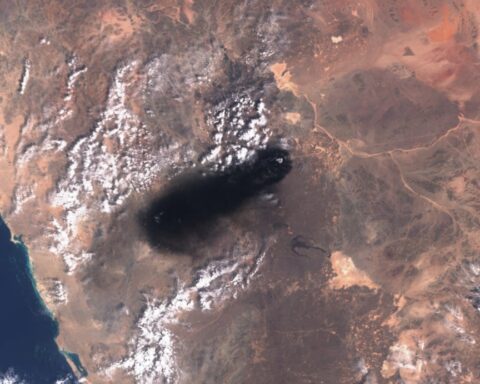
Satellite imagery analysed by CNN confirmed that an AN/TPY-2 radar at Muwaffaq Salti Air Base in Jordan was destroyed in the opening days of the conflict, with two impact craters measuring approximately four metres in diameter visible at the site. A second AN/TPY-2 system at Al-Ruwais in the UAE was confirmed destroyed shortly after, according to Bloomberg reporting — a strike that compounded the UAE’s mounting military crisis, where 941 drones and 189 missiles have forced the shutdown of ADNOC’s Ruwais refinery and left Mohammed bin Zayed weighing whether to strike Iran directly. Iran claimed to have struck four THAAD radar systems across the region within 24 hours, though independent verification exists for at least two confirmed destructions.
The Middle East briefing 3,000+ readers start their day with.
One email. Every weekday morning. Free.
Each AN/TPY-2 radar costs approximately $243 million, according to US defence procurement data. The loss of two represents nearly half a billion dollars in destroyed hardware — but the strategic cost dwarfs the financial one. These radars are the primary sensor for the THAAD system, capable of detecting and tracking ballistic missiles at ranges exceeding 1,000 kilometres. Without them, the interceptors they guide become functionally blind.
The United States operates only eight THAAD batteries worldwide, according to Lockheed Martin. Only nine AN/TPY-2 radars exist globally. Losing two in the space of days created what the Jerusalem Post’s defence analysts termed a “massive interception gap” that could take years to fill through new production.
What Is the AN/TPY-2 Radar and Why Does Its Loss Matter?
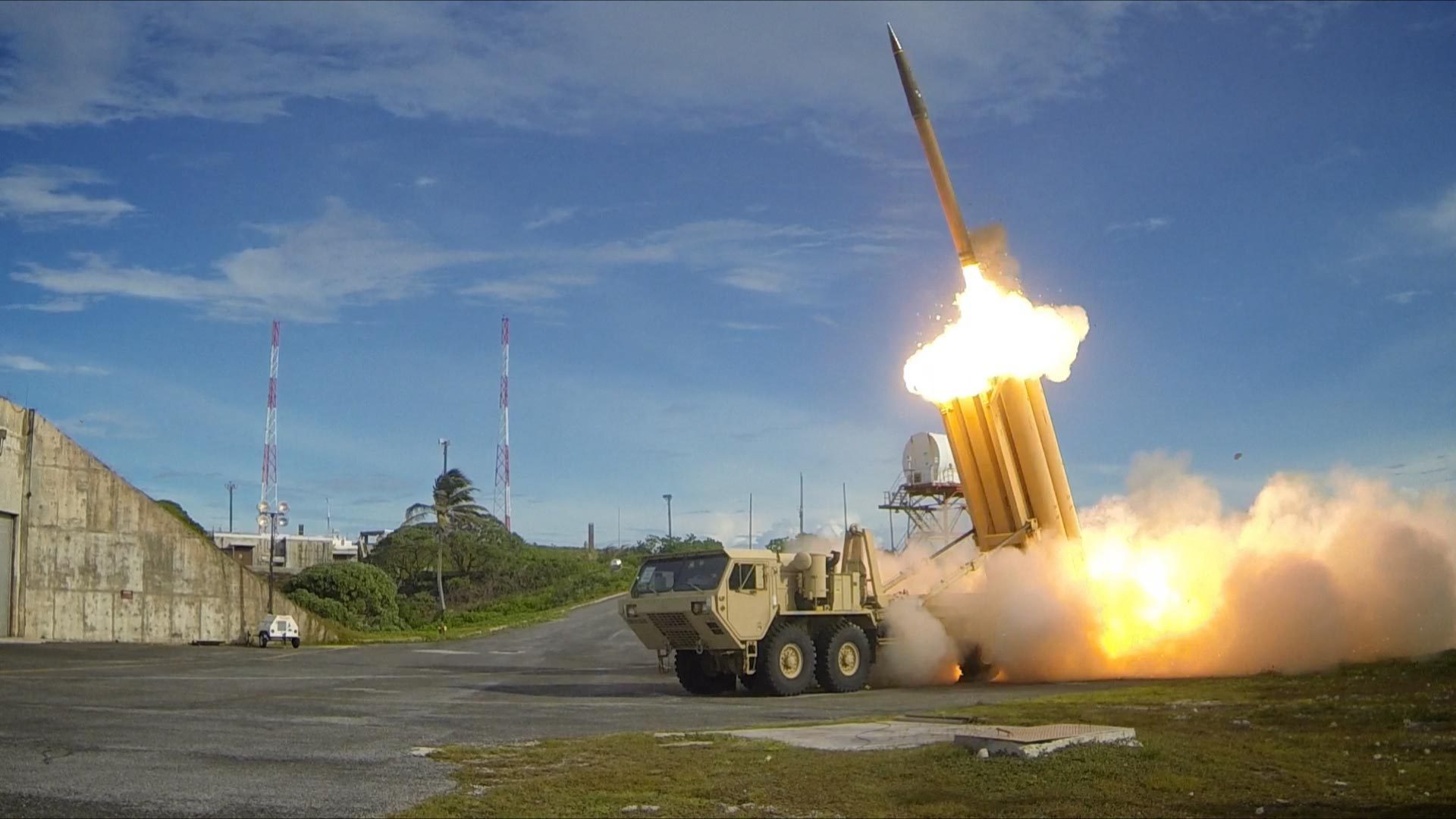
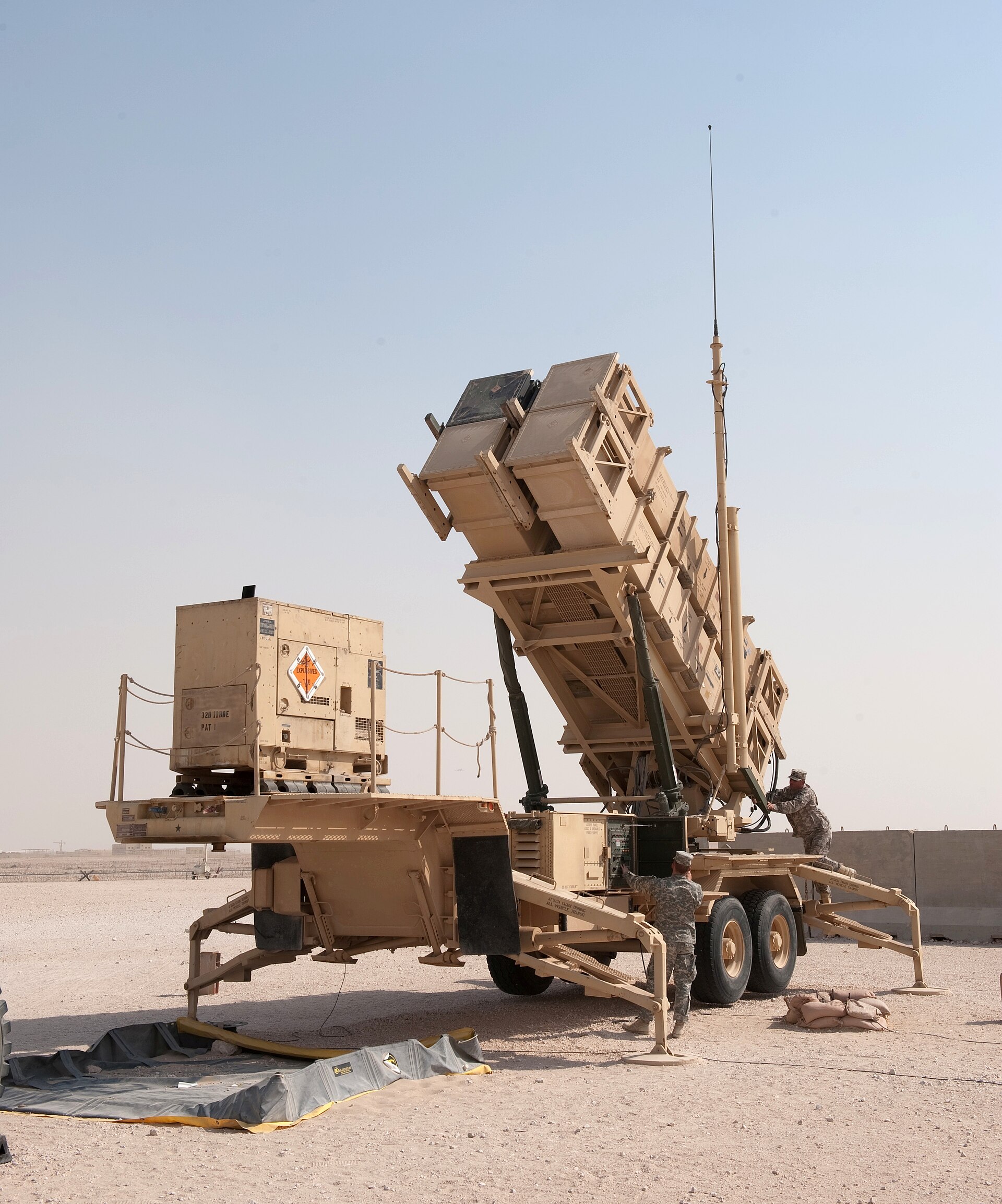
The AN/TPY-2 is a transportable X-band radar manufactured by Raytheon (now RTX) that serves as the primary sensor for THAAD missile defense. It operates in two modes: forward-based mode, where it acts as an early-warning sensor detecting missile launches at extreme range, and terminal mode, where it provides the precise tracking data needed to guide THAAD interceptors to their targets.
In practical terms, the AN/TPY-2 is the nervous system of American ballistic missile defense in the Gulf. A THAAD battery without its radar can still physically launch interceptors, but it loses the ability to independently detect, track, and engage incoming threats with the precision required for a kinetic kill at hypersonic closing speeds. The system must then rely on external sensor data from Aegis destroyers or other networked radars — a degraded mode of operation that reduces reaction time and lowers the probability of intercept for each engagement.
The radar’s destruction shifts the mathematical balance of every subsequent Iranian salvo. Where a fully functional THAAD battery with its own AN/TPY-2 might achieve a per-missile intercept probability exceeding 90 percent, a battery relying on remote sensor feeds operates with reduced confidence. Against a salvo of twenty missiles, even a modest reduction in per-missile kill probability translates into significantly more warheads reaching their targets.
| Location | Status | Mode | Notes |
|---|---|---|---|
| Muwaffaq Salti Air Base, Jordan | Destroyed | Terminal | Confirmed via satellite imagery (CNN, March 5) |
| Al-Ruwais, UAE | Destroyed | Terminal | Confirmed destroyed (Bloomberg, March 6) |
| South Korea (Seongju) | Being redeployed | Terminal | Components transferring to Middle East |
| Guam | Operational | Forward-based | Pacific deterrence mission |
| Israel | Operational | Terminal | Deployed during 2025 conflict |
| Japan (Shariki) | Operational | Forward-based | North Korea surveillance |
| Turkey (Kurecik) | Operational | Forward-based | NATO BMD mission |
How Many Interceptors Does the United States Have Left?
The vulnerability of these forward-deployed radar and defense assets has been underscored by events in Turkey. On March 13, air raid sirens sounded at Incirlik Air Base after a third Iranian ballistic missile approached the NATO facility, raising questions about whether forward radar stations like Kurecik face similar risks.
The interceptor stockpile crisis predates the current war. During the twelve-day conflict between Israel and Iran in June 2025, the United States expended approximately 25 percent of its entire THAAD interceptor inventory — more than 150 missiles fired from a single battery deployed to defend Israel, according to CNN reporting citing US officials. That left an estimated 450 interceptors in the global inventory at the start of 2026.
The March 2026 conflict has burned through substantially more. The Center for Strategic and International Studies estimated the value of interceptors expended in the first 100 hours of fighting at approximately $1.7 billion. With THAAD interceptors costing roughly $12 million each and PAC-3 MSE missiles running approximately $4 million apiece, the mathematics of attrition are stark. The strain will only intensify as Hezbollah’s coordinated 200-rocket barrage on 12 March forces Israel to divert air defence assets to its northern front.
Arms Control Wonk, a respected nonproliferation analysis outlet, estimated that the US Army likely has approximately 200 or fewer THAAD interceptors remaining — down from roughly 600 at the start of 2025. At current consumption rates, that stockpile measured in days of sustained combat, not months.
The production pipeline offers no quick relief. The US procured only 11 new THAAD interceptors last fiscal year and was expected to receive just 12 more in the current budget cycle, according to Department of Defense estimates. A framework agreement signed with Lockheed Martin in January 2026 aims to quadruple annual production from 96 to 400 interceptors — but this is a seven-year ramp. New missiles procured today will not arrive in volume until 2027 or 2028 at the earliest, according to Breaking Defense.
The supply chain pressure has intensified as Israel reported running critically low on ballistic missile interceptors, placing both Tel Aviv and Riyadh in direct competition for the same finite production line at Lockheed Martin’s Camden, Arkansas facility.
The types of interceptors required to shoot down ballistic missiles are expensive and difficult to produce in mass quantities. The Middle East burned through more than 800 PAC-3 MSE interceptors in three days. Lockheed Martin produced a record 600 across all of 2025.
Military Times, March 2026
The $4 Million Missile Chasing a $35,000 Drone
The cost asymmetry between Iranian offensive weapons and American defensive interceptors represents a structural problem that no production surge can solve. A single Shahed-136 one-way attack drone costs Iran between $30,000 and $50,000 to manufacture. The Patriot PAC-3 MSE interceptor used to shoot it down costs approximately $4 million. For every dollar Iran spends manufacturing a Shahed, coalition forces spend between $20 and $28 to intercept it.
At scale, the arithmetic is ruinous. Iran launched an estimated 689 drones at the UAE alone in the opening days of the war, according to the Foundation for Defense of Democracies. Saudi forces intercepted multiple drone waves over the Eastern Province, al-Kharj, and Riyadh. Each successful interception was a tactical win and a strategic loss — one more irreplaceable missile expended against a weapon Iran can produce by the hundreds in its underground factories.
The economics have driven urgent improvisation. Ukraine deployed custom-built first-person-view interceptor drones to US bases in Jordan, costing between $2,500 and $5,000 each — a fraction of a Patriot missile, according to Al Jazeera reporting. These nimble systems provide a cost-effective layer of low-altitude drone defense, but they cannot engage ballistic missiles. The drone threat and the ballistic missile threat require fundamentally different — and differently priced — solutions.
The CSIS analysis of Iran’s drone campaign in the Gulf identified this cost asymmetry as the defining feature of the conflict’s air war. The foundation’s researchers noted that Iran’s willingness to absorb tactical drone losses — 645 of 689 drones launched at the UAE were intercepted — reflects a strategy designed not to achieve a high hit rate but to exhaust the defender’s magazine. A 6.4 percent penetration rate across 689 drones still means 44 confirmed impacts. And each of those 645 successful interceptions consumed an interceptor that Iran had forced the coalition to spend.
Fortune’s analysis of the interceptor stockpile question captured the dilemma succinctly: Iran’s missile barrage was testing “whether the US has enough interceptors” — not whether those interceptors work. The technology performs. The industrial base behind it cannot keep pace with the consumption rate that Iran’s low-cost weapons impose.
| Iranian Weapon | Unit Cost | Interceptor Used | Interceptor Cost | Cost Ratio |
|---|---|---|---|---|
| Shahed-136 drone | $35,000 | PAC-3 MSE | $4,000,000 | 114:1 |
| Shahed-136 drone | $35,000 | Ukrainian FPV interceptor | $5,000 | 7:1 |
| Fateh-110 ballistic missile | $300,000 | PAC-3 MSE | $4,000,000 | 13:1 |
| Emad ballistic missile | $1,500,000 | THAAD interceptor | $12,000,000 | 8:1 |
| Khoramshahr MIRV | $5,000,000 | Multiple THAAD/Arrow | $36,000,000+ | 7:1 |
The table reveals a consistent pattern: regardless of the weapon system, the defender pays between seven and 114 times more than the attacker per engagement. This is not a bug in American missile defense architecture — it is a structural feature of all active defense systems against mass-produced offensive weapons. But it means that Iran can bleed the coalition’s interceptor stockpile at a rate that production cannot sustain.
What Does Radar Degradation Mean for Saudi Arabia?
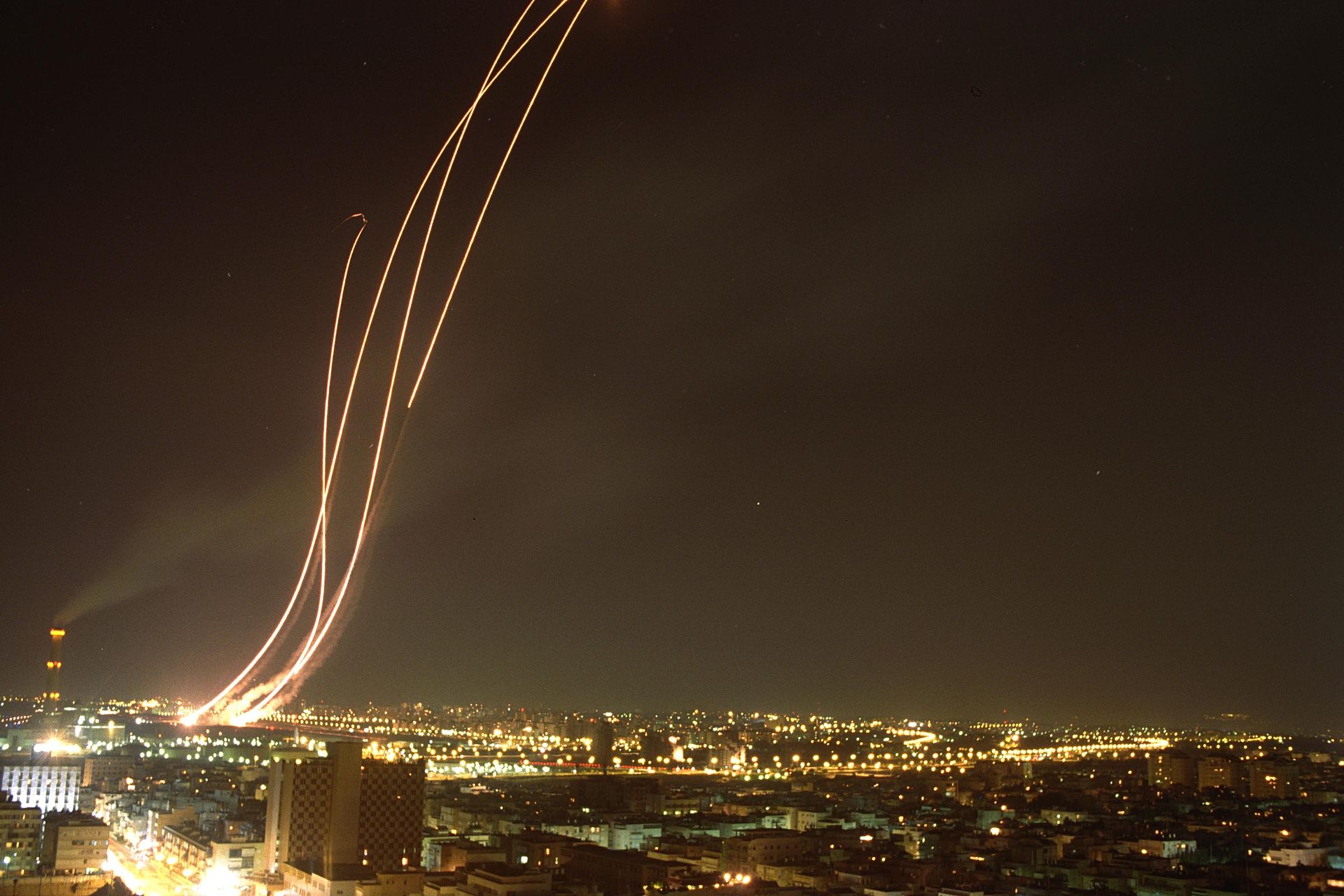
Saudi Arabia sits beneath the most expensive air defense umbrella ever assembled outside the continental United States. The Kingdom operates its own Patriot PAC-2 and PAC-3 batteries, supplemented by American-operated THAAD systems and Aegis-equipped destroyers offshore. During the opening days of the Iran war, this layered system performed creditably — Saudi Arabia’s Ministry of Defense reported intercepting six ballistic missiles targeting Prince Sultan Air Base and six drones heading toward the Shaybah oilfield, according to Arab News.
The broader picture is less reassuring. A projectile struck a residential area in al-Kharj, approximately 80 kilometres south of Riyadh and adjacent to Prince Sultan Air Base, killing two people and wounding twelve. The strike demonstrated that even a high intercept rate — Saudi forces claimed between 85 and 90 percent against ballistic missiles — still allows lethal leakage when the incoming volume is high enough.
The lethal leakage problem is compounded by a more fundamental failure of civilian protection. Despite spending an estimated $80 billion on air defence systems over the past decade, Saudi Arabia has built no public bomb shelters and no civilian protection infrastructure of the kind that Israel, South Korea, or Switzerland maintain as standard. When interceptors miss, 35 million people have nowhere to go.
The destruction of AN/TPY-2 radars in Jordan and the UAE directly affects Saudi Arabia’s security. These systems did not just protect the countries hosting them — they formed nodes in a networked sensor architecture that provided early warning and tracking data across the entire Gulf theatre. A THAAD radar in Jordan could detect Iranian missile launches and relay tracking information to batteries in Saudi Arabia minutes before the weapons arrived. With those nodes eliminated, the remaining sensors must cover wider areas with less precision, creating gaps that Tehran can exploit.
Saudi Arabia has been training operators for its own THAAD batteries — it completed training for a fourth battery in the United States in early 2026, according to Army Recognition. But training crews and fielding a battery are different things. The Kingdom’s arms diversification strategy recognises that dependence on a single supplier — the United States — creates a vulnerability that adversaries can target. Iran is proving that thesis in real time.
The THAAD Redeployment Dilemma
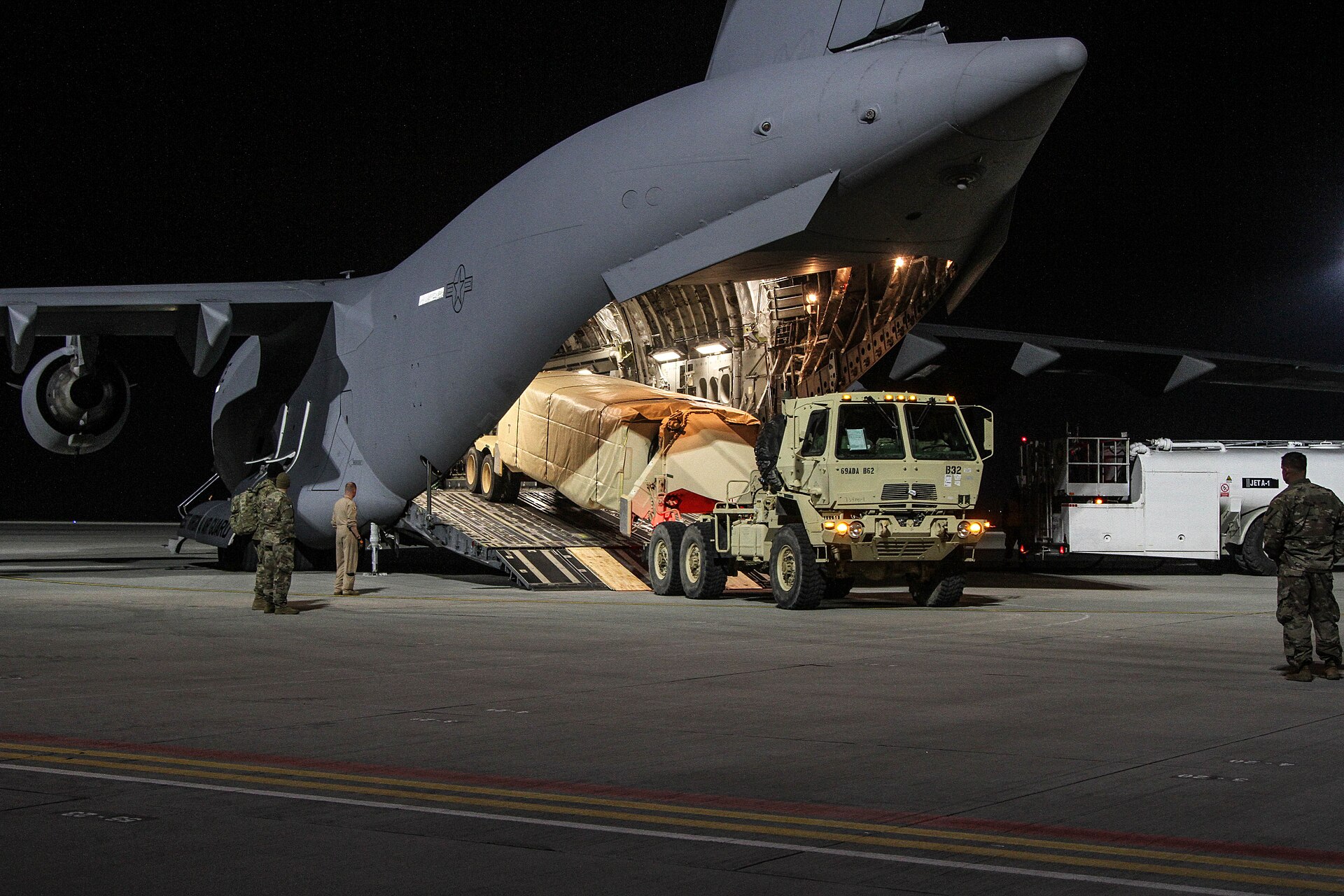
On March 10, the Washington Post reported that the Pentagon had begun transferring components of a THAAD battery from South Korea to the Middle East. The move, confirmed by Defence News and Stars and Stripes, represents a stark acknowledgement that the United States does not have enough THAAD systems to meet simultaneous demands in two theatres.
The redeployment was driven by immediate operational need. With at least two AN/TPY-2 radars destroyed in the Gulf and interceptor stocks falling, the Pentagon needed replacement hardware. South Korea hosts one of only eight active THAAD batteries, positioned at Seongju to defend against North Korean ballistic missiles. Pulling components from the peninsula to fill gaps created by Iranian strikes amounts to robbing one critical defence to patch another.
CNBC reported that the Pentagon is also transferring Patriot PAC-3 batteries from Osan Air Base in South Korea to the Middle East. The combined withdrawal of THAAD and Patriot assets from the Korean Peninsula strips layers from the very architecture designed to protect 28,500 American troops and 51 million South Korean citizens from North Korean missile attack.
The decision illuminates a fundamental constraint: the United States maintains a global missile defense posture sized for peacetime deterrence, not for simultaneous active conflicts. When Iran began systematically destroying sensor nodes and consuming interceptors faster than they could be replaced, the Pentagon discovered that its missile defense architecture lacks the depth to absorb sustained combat losses without cannibalising other commitments.
Can South Korea Afford to Lose Its Missile Shield?
South Korean President Lee Jae Myung publicly opposed the redeployment during a cabinet meeting, stating that Seoul had “expressed opposition” to US forces relocating air defences from the divided peninsula. The Korea Times reported widespread alarm among South Korean defence officials about a “high-altitude defense gap” created by the THAAD withdrawal.
The concern is specific and technical. THAAD intercepts threats at altitudes between 40 and 150 kilometres — a band that no South Korean domestic system can currently cover. Seoul’s indigenous L-SAM interceptor, designed to fill this exact gap, is not expected to enter service until 2027. In the interim, the Korean Peninsula faces a measurable degradation in its ability to intercept North Korean medium-range ballistic missiles at high altitude.
North Korea has conducted more than twenty missile launches in 2026 alone, according to the Korea Times, including systems with hypersonic manoeuvring capabilities and submarine-launched variants designed to complicate interception. Pyongyang’s accelerating test tempo makes the timing of the THAAD withdrawal particularly sensitive.
The legal reality constrains Seoul’s options. The 1953 Mutual Defense Treaty grants Washington full operational control over American deployments in South Korea, leaving Seoul with diplomatic consultation rights but no veto. President Lee acknowledged this directly: South Korea “cannot stop Washington,” according to Defence Security Asia reporting. The admission underscored an uncomfortable truth about the bilateral alliance — American security guarantees are ultimately contingent on American strategic priorities, and those priorities now point toward the Gulf.
As Newsweek framed it, Iran scored a strategic victory by forcing the United States to weaken its Pacific posture. Tehran did not need to threaten South Korea directly — it simply needed to destroy enough American hardware in the Middle East to trigger a reallocation from Asia. The growing Korean dimension of Saudi Arabia’s air defense adds another layer of irony: as South Korea loses American missile shields to protect the Gulf, Saudi Arabia is simultaneously buying Korean-made air defense systems to reduce its dependence on American ones.
Iran’s Counter-Sensor Warfare Doctrine
The systematic targeting of AN/TPY-2 radars reveals a deliberate Iranian strategy that defence analysts have described as counter-sensor warfare. Rather than attempting to overwhelm missile defences through sheer volume of fire — the approach Iran used in its April 2024 attack on Israel — Tehran has shifted to a more economical doctrine: blind the sensors, then exploit the gaps.
The logic is elegant and ruthless. A THAAD interceptor costs $12 million. The AN/TPY-2 radar it depends on costs $243 million and takes years to produce. By targeting the radar instead of trying to saturate the interceptors, Iran can neutralise an entire battery’s autonomous engagement capability with a single successful strike. The drone or cruise missile used to destroy the radar may cost $100,000 — a 2,430-to-1 return on investment.
This represents a doctrinal evolution from Iran’s 2025 approach. During the June 2025 twelve-day war, Iran fired massive barrages designed to overwhelm through volume. The strategy consumed enormous quantities of Iranian missiles while allowing US and Israeli defences to demonstrate impressive intercept rates exceeding 95 percent. Tehran learned the lesson: attacking interceptors head-on plays to the defender’s strength. Attacking sensors plays to the attacker’s.
The Jerusalem Post’s defence analysis noted that this shift toward “precision counter-sensor warfare” illustrates Tehran’s prioritisation of “blinding surveillance and tracking systems rather than merely overwhelming interceptors through missile saturation.” It is a strategy that exploits the fundamental architectural vulnerability of networked missile defence: the sensors are fewer, more expensive, and harder to replace than the interceptors they serve.
For Saudi Arabia, the implications are direct. The multi-warhead missiles that Iran has developed compound the sensor problem. If Iran can degrade the tracking network sufficiently, even modest salvos of manoeuvring warheads become substantially harder to engage. The Kingdom’s Pakistani air defence reinforcements add capacity but cannot replace the lost AN/TPY-2 sensor coverage.
Why Can’t the Pentagon Just Build More Interceptors?
The interceptor production bottleneck is not a funding problem — it is a physics and manufacturing problem. THAAD interceptors use a kinetic kill vehicle that must achieve precision measured in centimetres at closing speeds exceeding Mach 8. The manufacturing tolerances required for the infrared seeker, the divert and attitude control system, and the solid rocket motor are extreme. Each interceptor is essentially a hand-built precision instrument, not a mass-produced munition.
Lockheed Martin’s January 2026 framework agreement with the Department of Defense aims to quadruple THAAD interceptor production from 96 to 400 per year. The plan requires a new Munitions Acceleration Center in Camden, Arkansas, with expanded production lines using advanced manufacturing, robotics, and digital technologies. Even under the most optimistic timeline, volume production will not arrive before 2028.
The PAC-3 MSE situation is marginally better. Lockheed Martin produced a record 600 PAC-3 MSE interceptors across all of 2025, according to the Military Times. The Middle East consumed more than 800 in three days of fighting. The deficit between consumption and production — roughly 200 interceptors in three days versus 600 per year — captures the scale of the problem.
| System | Annual Production (2025) | Consumed (June 2025, 12 days) | Consumed (March 2026, est. 14 days) | Replenishment Timeline |
|---|---|---|---|---|
| THAAD | 96 | ~150 | ~200 (est.) | 3-8 years |
| PAC-3 MSE | 600 | ~400 | ~800+ (est.) | 2-3 years |
| SM-3 (Aegis) | ~36 | ~50 | Unknown | 4-6 years |
The structural imbalance between production rates and combat consumption means the United States is fighting this war with a wasting asset. Every interceptor fired is one that cannot be replaced for years — and one fewer available for the global stockpile crisis now threatening NATO and the defense of Taiwan. Every radar destroyed is one that cannot be rebuilt for longer. This is the attritional reality that Iran’s strategy is designed to exploit — and it is working.
Raytheon completed the first AN/TPY-2 radar with upgraded gallium nitride components in September 2024, offering twice the detection range of the original gallium arsenide version. But upgraded radars do not help if the existing ones are being destroyed faster than new units leave the factory. The production line for AN/TPY-2 systems has historically produced approximately one to two units per year — a rate that makes every destroyed radar a multi-year gap in capability.
The Lockheed Martin Munitions Acceleration Center in Camden, Arkansas, represents the Pentagon’s long-term answer. The facility will use advanced robotics and digital manufacturing to increase output across THAAD, PAC-3, and other precision munition lines. But ground-breaking on a factory is not the same as delivering interceptors. Between the blueprint and the first missile rolling off the new line lies a timeline measured in years, not quarters — years during which the existing stockpile continues to shrink with every Iranian salvo.
Gulf Missile Defense Degradation Matrix
Understanding the layered failure requires examining each component of the Gulf missile defense architecture and how combat losses have affected its capability. The following framework assesses five dimensions of degradation across the system: sensor coverage, interceptor depth, cost sustainability, production resilience, and geographic coverage.
| Dimension | Pre-War Status (Feb 28) | Current Status (March 12) | Degradation Level | Recovery Timeline |
|---|---|---|---|---|
| AN/TPY-2 sensor coverage | Full networked coverage across Gulf, Levant, and Arabian Peninsula | Two radars destroyed; one redeploying from Korea; gaps over Jordan and UAE | Severe | 2+ years |
| THAAD interceptor depth | ~450 (post-2025 war) | ~200 or fewer (est.) | Critical | 3-8 years at current production |
| PAC-3 interceptor depth | ~2,500 (est.) | ~1,700 or fewer (est.) | Significant | 2-3 years |
| Cost sustainability | Sustainable for limited engagements | Unsustainable; $1.7B in first 100 hours | Critical | Structural (no fix) |
| Geographic coverage | Gulf, Levant, Korea, Pacific, Europe | Gulf prioritised; Korea degraded; Pacific strained | Severe | Dependent on conflict duration |
The matrix reveals that the degradation is not isolated to any single component. Sensor losses compound interceptor shortages, which compound cost pressures, which compound geographic reallocation. Each dimension of failure amplifies the others, creating a cascading erosion of capability that cannot be addressed by fixing any single element in isolation.
The most alarming column is “Recovery Timeline.” Sensor and interceptor recovery is measured in years, not months. This means the degraded posture visible today will persist well beyond any ceasefire. Even if the war ended tomorrow, the US missile defense architecture in the Gulf would remain weakened through at least 2028 — a window during which Saudi Arabia and its neighbours would face elevated vulnerability to any future Iranian provocation.
The Shield Was Never Designed for This War
The conventional narrative frames Iran’s success against US missile defences as a failure of technology — radars that should have been hardened, interceptors that should have been stockpiled in greater numbers, production lines that should have been expanded years ago. This narrative misses the more fundamental problem: the American missile defense architecture in the Gulf was never designed for a sustained, high-intensity conflict against a state adversary with thousands of ballistic missiles and tens of thousands of drones.
THAAD and Patriot were conceived during the Cold War and refined for a very different threat environment — a limited number of ballistic missiles fired by a state adversary (Iraq, North Korea) in a short, decisive conflict. The system was sized for deterrence and for brief, intense engagements where air superiority could be established quickly enough that ground-based defences would only need to absorb the opening salvo. Nobody in the Pentagon’s force-planning establishment designed a missile defense architecture to sustain two weeks of continuous combat against an adversary firing 480 ballistic missiles on a single day.
The cost-exchange ratio problem is not a failure of American engineering — it is an inherent feature of all active missile defense against mass-produced offensive weapons. The fundamental physics are unfavourable: an interceptor must be faster, more manoeuvrable, and more precise than the weapon it targets, which inevitably makes it more expensive to produce. This asymmetry cannot be engineered away. It can only be managed through layered defences that include cheap, expendable interceptors for low-end threats (drones) and expensive precision interceptors for high-end threats (ballistic missiles).
The war has exposed that this layered approach was never fully implemented. The Ukrainian drone interceptors rushed to Jordan demonstrate that cheap counter-drone solutions exist but were not pre-positioned. The Chinese combat drone deal Saudi Arabia signed reflects a recognition that the Kingdom cannot rely solely on American-made solutions. The lesson is not that American missile defence failed — it is that the concept of operations assumed a war that would be over before the magazines ran dry.
A detailed assessment of how $100 billion in pre-war Gulf defense spending prepared the region for the wrong war shows that nine of nine planning assumptions — from threat type to interceptor sustainability to supply chain resilience — proved wrong when tested against Iran’s actual strategy.
What Comes After the Shield Fails?
If the missile defense architecture continues to degrade at its current rate, the Gulf states face three possible futures — none of them comfortable. The first is an accelerated push toward sovereign missile defense capability, with Saudi Arabia, the UAE, and Qatar investing tens of billions in domestically operated systems that do not depend on American sensor networks or American interceptor stockpiles. The second is a negotiated end to the conflict that freezes Iran’s offensive capability at its current degraded level before the defensive shield erodes further. The third — and the scenario that keeps Gulf defence planners awake — is a protracted war of attrition in which Iran’s low-cost weapons gradually exhaust the high-cost interceptors protecting the region’s critical infrastructure.
The sovereign defence path is already underway. Saudi Arabia signed a $5 billion deal to manufacture Chinese Wing Loong-3 combat drones in Jeddah, as House of Saud reported. The Kingdom is training crews for its own THAAD batteries. It is evaluating South Korean Cheongung-II medium-range systems that cost a fraction of Patriot equivalents. The UAE has invested heavily in Israeli-designed systems including the Barak-8. Qatar has been evaluating THAAD battery deployment, according to Janes reporting from DIMDEX 2026.
But sovereign capability takes time. Saudi Arabia cannot field its own integrated sensor-to-shooter network before 2030 at the earliest, according to defence industry analysts. In the interim, the Kingdom remains dependent on American systems that are being consumed faster than they can be replenished — a dependency that Iran is actively working to exploit.
The negotiation path faces its own obstacles. Iran’s demand for reparations and guarantees as preconditions for any ceasefire suggests Tehran believes time is on its side. Every day the war continues, the defensive shield weakens. Iran’s missile production, though degraded by strikes, has not been eliminated. Underground facilities continue to assemble weapons at reduced rates, meaning that while Iran’s current offensive capability has declined by 92 percent from its peak, it retains the industrial capacity to regenerate faster than the United States can rebuild its defensive stockpile.
The attrition scenario is the one that most concerns the Atlas Institute for International Affairs, which published an analysis arguing that the 2026 Iran war demonstrates “the urgent need for US enhanced missile defense upgrades.” The institute’s assessment noted that the current architecture was designed for a fundamentally different threat than the one it is now facing — a conclusion that validates the contrarian argument above but offers little comfort to the Gulf states living under the thinning shield today.
Does the White House’s 4-6 Week Timeline Hold?
The White House stated that coalition forces need four to six weeks to meet the objectives of Operation Epic Fury: destroying Iran’s missile production capability, eliminating its navy, permanently denying nuclear weapons capability, and weakening its proxy networks, according to the Times of Israel liveblog. Two weeks into the campaign, the air war has struck more than 5,000 targets, but the stated objectives remain distant.
Iran’s ballistic missile launch rate has fallen approximately 92 percent from its day-one peak — from 480 launches on February 28 to roughly 40 on March 9, according to Jerusalem Post analysis. This suggests that US and Israeli strikes have substantially degraded Iran’s launch infrastructure. But degradation is not destruction, and Iran’s missile fire rate, while diminished, has not reached zero.
The air campaign’s sustainability faces its own constraints. Al Jazeera’s analysis noted that while prepositioned assets may enable the current tempo for two weeks, a protracted campaign would generate “significant logistical strain on the US Air Force and Navy, with escalating financial and operational costs.” The interceptor depletion crisis adds another dimension: even if the air campaign can sustain its strike tempo, the defensive shield protecting the bases from which those strikes are launched is thinning simultaneously. The crash of a KC-135 Stratotanker in western Iraq on 12 March — the fourth crewed U.S. aircraft lost in the war — underscored the operational strain on the aerial refueling fleet that keeps the entire air campaign airborne.
Richard Haass, writing at one week into the conflict, framed the dilemma precisely: the government in Tehran has not collapsed despite coalition claims of devastating strikes. If the objectives require regime change or capitulation — rather than merely military degradation — then four to six weeks of air strikes may prove insufficient. And every additional week of conflict draws down the interceptor stockpile further, weakening the shield that protects the Gulf states bearing the war’s economic burden.
The timeline creates a paradox for Saudi Arabia. The longer the war continues, the more degraded the missile shield becomes. But the war’s objectives — destroying Iran’s ability to threaten the Kingdom with missiles in the future — can only be achieved by continuing. Riyadh is caught between a weakening present and a promised but uncertain future, dependent on an air campaign it does not control and a missile shield it cannot repair. The paradox cuts even deeper at the basing level: the American installations that were supposed to deter Iranian aggression have instead become the primary magnets drawing it, transforming Prince Sultan Air Base and other US facilities from shields into targets.
How Are Gulf Allies Responding to the Defense Gap?
The degradation of American missile defence has triggered a scramble across the Gulf Cooperation Council. Each member state is pursuing its own combination of stopgap measures and long-term investments, producing a patchwork response that lacks the coordination of the American-led architecture it is intended to supplement.
Saudi Arabia’s response has been the most comprehensive. The Kingdom’s Defence Ministry is pursuing a three-track strategy: reinforcing existing American-made Patriot batteries with additional interceptor purchases, diversifying toward Korean and potentially Chinese systems, and accelerating domestic manufacturing capacity. The broader arms diversification drive predates the current war but has been dramatically accelerated by it.
Pakistan deployed air defense troops and equipment to Saudi Arabia under the bilateral defence pact invoked as the war began, according to multiple reports. These reinforcements include Pakistani-operated Chinese HQ-9 air defence batteries — a system that operates independently of American sensor networks and uses Chinese-manufactured interceptors not subject to US production constraints. The deployment represents the first time non-American, non-Western air defence systems have been integrated into the Gulf’s defensive architecture in an active combat role.
The UAE, having lost an AN/TPY-2 radar at Al-Ruwais, has leaned on its Israeli-made Barak-8 and South Korean M-SAM partnerships. Emirati forces demonstrated interception of 161 out of 174 ballistic missiles in the war’s opening phase — a rate of 93 percent that, while impressive, still allowed 13 missiles to reach their targets. The UAE’s approach emphasises redundancy: multiple overlapping systems from different manufacturers, ensuring that no single supply chain failure can disable the entire defensive architecture.
The common thread across all Gulf responses is a decisive turn away from single-source American dependency. The war has proven what defence analysts have argued for years — that relying on one country’s industrial base for critical defensive systems creates a vulnerability that adversaries can exploit simply by consuming interceptors faster than they can be produced. The irony of Russia arming Iran while remaining Saudi Arabia’s OPEC+ partner adds geopolitical complexity to an already fraught procurement environment.
| Country | American Systems | Non-American Systems (New/Expanded) | Domestic Production |
|---|---|---|---|
| Saudi Arabia | Patriot PAC-3, THAAD (in training) | Korean Cheongung-II, Chinese Wing Loong-3 drones, Pakistani HQ-9 | $5B drone factory (Jeddah), SAMI joint ventures |
| UAE | Patriot PAC-3, THAAD | Israeli Barak-8, Korean M-SAM, IRIS-T SLM (German) | EDGE Group counter-drone systems |
| Qatar | Patriot PAC-3 (THAAD under evaluation) | French SAMP/T under discussion | Limited |
| Bahrain | Patriot PAC-3 | None announced | None |
| Kuwait | Patriot PAC-2 | Upgrade to PAC-3 pending | None |
The limitations of the air defence architecture at Prince Sultan were thrown into sharper relief on 14 March when the Wall Street Journal reported that Iranian missiles had damaged five KC-135 Stratotanker aircraft on the ground at the base, confirming that saturation attacks can penetrate even the most heavily defended installations in the Gulf. The threat to these bases is no longer limited to Iranian missiles alone — Iraqi militias launched 21 attacks on US installations in a single day, targeting the ground infrastructure that keeps the shield operational.
Frequently Asked Questions
How many AN/TPY-2 radars has Iran destroyed?
At least two AN/TPY-2 radars have been confirmed destroyed through satellite imagery analysis — one at Muwaffaq Salti Air Base in Jordan and one at Al-Ruwais in the UAE. Iran claimed to have struck four THAAD radar systems across the region within 24 hours, though independent verification exists for two. Each radar costs approximately $243 million, and only nine exist globally.
Why is the US moving THAAD from South Korea to the Middle East?
The Pentagon began transferring THAAD components from South Korea on March 10 because Iranian strikes destroyed radar systems in the Gulf that need replacement. With only eight THAAD batteries worldwide and production timelines measured in years, the only option for rapid replacement is redeployment from other regions. South Korea publicly opposed the move but cannot block it under the 1953 Mutual Defense Treaty.
How many THAAD interceptors does the US have remaining?
Analysts estimate approximately 200 or fewer THAAD interceptors remain from a pre-2025 inventory of roughly 600. The United States expended approximately 150 during the June 2025 twelve-day war with Iran and has consumed a significant additional quantity in the March 2026 conflict. Current production is 96 per year, with plans to quadruple to 400 per year by 2028.
What is the cost asymmetry between Iranian weapons and US interceptors?
A Shahed-136 drone costs Iran approximately $35,000 while the Patriot PAC-3 MSE interceptor used against it costs $4 million — a ratio of 114 to 1 in Iran’s favour. Even against ballistic missiles, the ratio favours the attacker: an Emad missile costing $1.5 million requires a THAAD interceptor costing $12 million. CSIS estimated coalition forces spent $1.7 billion on interceptors in the first 100 hours of fighting.
Can Saudi Arabia defend itself without US missile defense support?
Saudi Arabia operates its own Patriot batteries and is training crews for THAAD systems, but the Kingdom currently lacks the independent sensor architecture and interceptor depth to defend against a sustained Iranian barrage without American support. Riyadh is diversifying through Korean Cheongung systems, Chinese drone manufacturing, and Pakistani reinforcements, but building sovereign missile defence capacity is a project measured in years, not months.