
WASHINGTON — President Donald Trump called on China, France, Japan, South Korea, the United Kingdom, and other nations to send warships to the Strait of Hormuz on Saturday, publicly demanding a multinational naval coalition to break Iran’s two-week blockade of the world’s most critical energy chokepoint. The appeal, posted on Truth Social, marks the first time Washington has formally requested rival and allied navies alike to share the burden of securing commercial shipping through the strait, where tanker traffic has dropped by approximately 70 percent and more than 3,000 vessels remain stranded, according to vessel-tracking data compiled by Bloomberg.
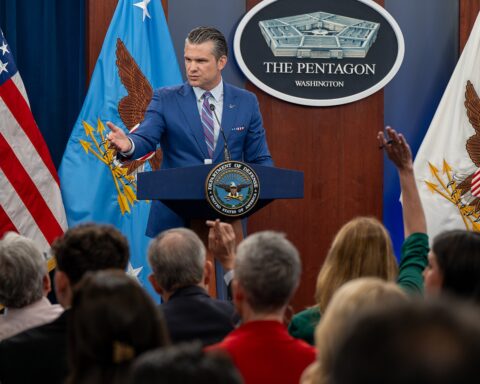
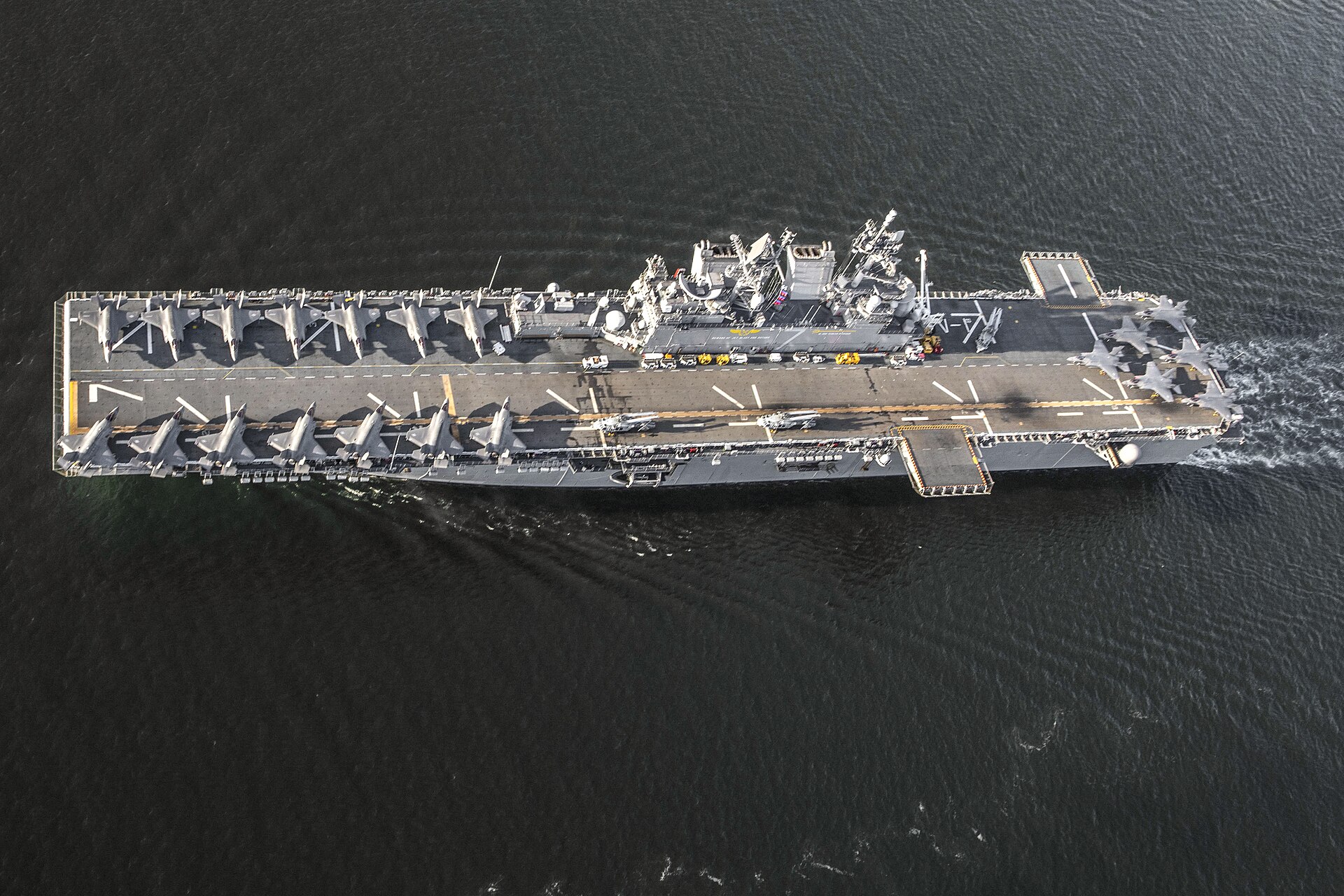
“Many Countries, especially those who are affected by Iran’s attempted closure of the Hormuz Strait, will be sending War Ships, in conjunction with the United States of America, to keep the Strait open and safe,” Trump wrote. He added that “the United States will be bombing the hell out of the shoreline, and continually shooting Iranian Boats and Ships out of the water” to ensure the waterway remains open. The statement came hours after Defense Secretary Pete Hegseth confirmed that the USS Tripoli, an amphibious assault ship carrying 2,200 Marines and multiple F-35B stealth fighters, had been ordered to the Middle East from its base in Japan.
The coalition gambit carries enormous stakes for Saudi Arabia. Trump subsequently threatened NATO with a “very bad future” and signalled he may delay the Xi summit if allies failed to act. The Kingdom’s oil exports through Hormuz have ground to a halt since Iran’s Islamic Revolutionary Guard Corps Navy began warning ships away from the strait on March 1, forcing Riyadh to divert crude through the East-West Pipeline to the Red Sea port of Yanbu. That pipeline can carry approximately five million barrels per day, but Saudi Arabia normally exports more than seven million barrels daily, leaving the Kingdom facing a revenue shortfall measured in billions of dollars each week the blockade persists. Even the Red Sea route now faces jeopardy after the Houthis declared “Hour Zero” and threatened to close the Bab al-Mandab.
Table of Contents
- What Did Trump Say About the Hormuz Coalition?
- Which Ships Is the Pentagon Sending?
- The Strait of Hormuz at a Standstill
- Why Did Trump Name China in His Coalition Call?
- France Leads Europe’s Naval Response
- What Does the Blockade Mean for Saudi Arabia’s Oil Exports?
- Japan and South Korea Face an Energy Emergency
- Frequently Asked Questions
What Did Trump Say About the Hormuz Coalition?
Trump’s Truth Social post on March 14 named six countries by name — China, France, Japan, South Korea, the United Kingdom, and unspecified other nations — as participants in a coalition to keep the Strait of Hormuz open to commercial shipping. The post did not specify which governments, if any, had agreed to send naval forces, and the White House provided no additional details about the diplomatic status of the proposal.
The message represented a significant escalation from Washington’s earlier position. On March 3, Trump had announced that the United States would offer insurance for Gulf shipping and provide naval escorts for tankers transiting the strait, a pledge that the Pentagon subsequently acknowledged it lacked the capacity to fulfill without pulling warships from other theaters. The shift toward demanding multinational participation suggests the administration has concluded that American naval forces alone cannot reopen the waterway while simultaneously conducting combat operations against Iranian military targets.
Trump’s language was unusually confrontational even by his standards. The phrase “bombing the hell out of the shoreline” referred to ongoing U.S. strikes against Iranian coastal missile batteries and IRGC Navy fast-attack craft bases along the northern shore of the strait. Reuters reported on Saturday that U.S. Navy aircraft had struck five Iranian coastal defense sites near Bandar Abbas and Qeshm Island in the previous 24 hours, targeting anti-ship missile launchers and surveillance radars.
The Middle East briefing 3,000+ readers start their day with.
One email. Every weekday morning. Free.
No government named in the Truth Social post issued an immediate response. A spokesperson for the French Ministry of Armed Forces said Paris would “coordinate with allies on the protection of freedom of navigation” but did not commit to a specific Hormuz deployment. Beijing’s Foreign Ministry had not commented as of Saturday evening. Japan’s Chief Cabinet Secretary said Tokyo was “closely monitoring the situation” and declined to confirm whether warships would be dispatched. That reticence has since been rewarded by Tehran: Iran offered Japan safe passage through the Strait of Hormuz on March 21, in a move that undercuts the very coalition Trump was trying to assemble.
Which Ships Is the Pentagon Sending?
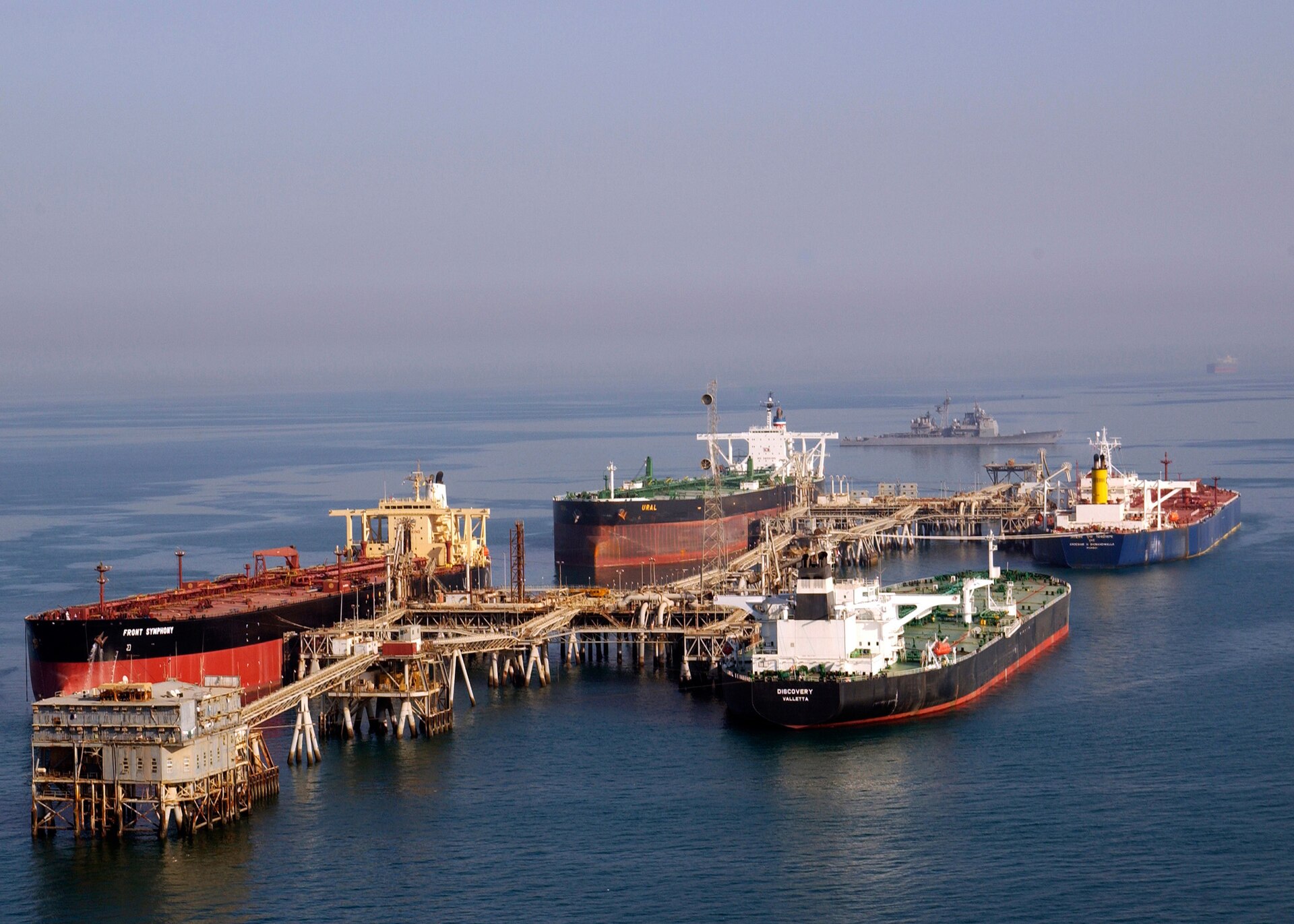
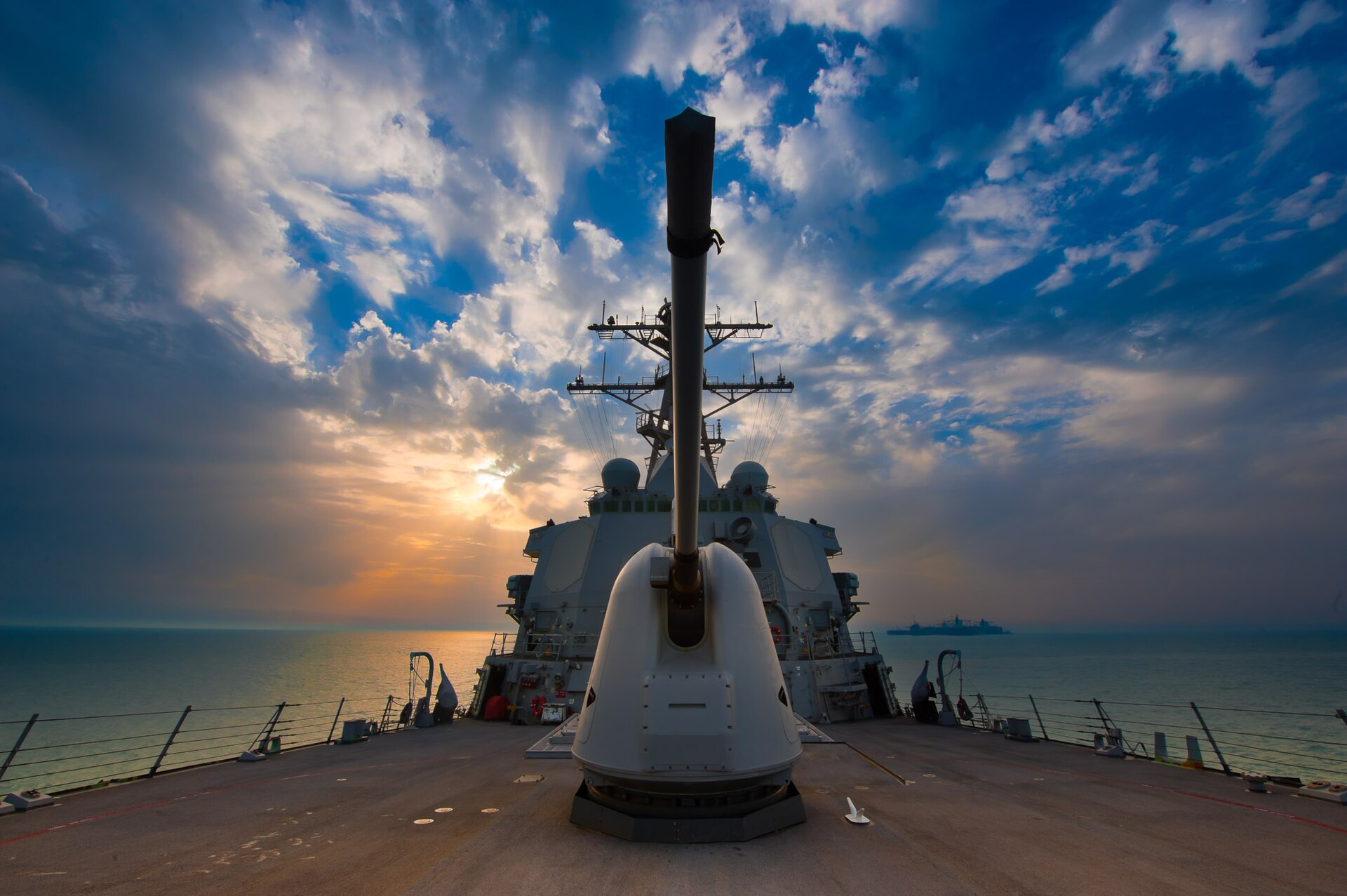
The USS Tripoli (LHA-7) and its embarked 31st Marine Expeditionary Unit are heading to the Middle East from Japan, the Pentagon confirmed on March 13. The Tripoli Expeditionary Strike Group includes the amphibious assault ship itself, the guided-missile cruiser USS Robert Smalls, and the guided-missile destroyer USS Rafael Peralta. The entire formation carries approximately 2,200 Marines, multiple F-35B Lightning II stealth fighter jets, and attack helicopters capable of anti-surface warfare operations, according to the U.S. Naval Institute.
The deployment pulls the Tripoli ESG directly from the Western Pacific, where the 31st MEU is typically based in Okinawa and the ship is homeported in Sasebo, Japan. Fortune reported that the redeployment reduces American naval presence near Taiwan at a moment when China has increased military activity around the island, a tradeoff that underscores the strain the Iran war is placing on U.S. global force posture. The Pentagon had already shifted Marines and F-35s from Japan for the Iran campaign earlier in the month.
U.S. Central Command requested the additional force package to expand options for military operations against Iranian targets along the strait, Stars and Stripes reported. The Marines aboard the Tripoli are trained for amphibious landings, a capability that could be relevant if Washington decides to seize Iranian-held islands in the strait — a scenario military analysts at the Center for Strategic and International Studies have described as operationally feasible but politically fraught.
That scenario is no longer hypothetical. As the coalition concept evolved from a social media demand into a concrete military framework, reports emerged that Washington is now actively planning a Kharg Island seizure using the Tripoli’s Marines as the ground force, supported by the multinational Hormuz Coalition Trump had been assembling.
The Tripoli joins a significant American naval presence already in the region. The U.S. Fifth Fleet, headquartered in Bahrain, has been augmented since late February with additional destroyers and patrol craft. However, a senior defense official told Al Jazeera on March 12 that the U.S. military was still “not ready” to escort commercial oil shipments through the strait, citing the complexity of providing continuous convoy protection while Iranian mines, fast boats, and shore-based missiles remain threats.
The Strait of Hormuz at a Standstill
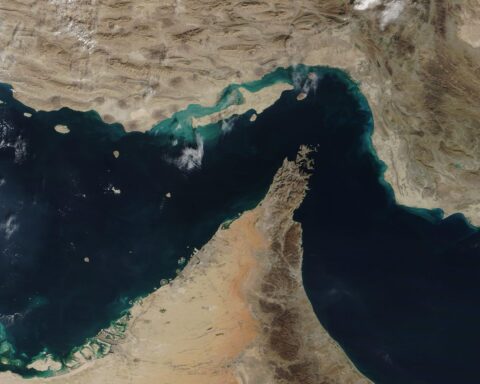
Commercial maritime traffic through the Strait of Hormuz remains effectively frozen. Bloomberg’s vessel-tracking data showed no confirmed commercial transits in either direction over the 24 hours preceding Trump’s coalition announcement, continuing a pattern that has persisted with only scattered exceptions since the first week of March. More than 3,000 ships and 20,000 sailors remain trapped in the Persian Gulf, unable to exit through the strait.
The blockade, while not formally declared by Tehran, functions as one in practice. Iran’s IRGC Navy issued warnings on March 1 that passage through the strait could not be guaranteed, and subsequent attacks on commercial vessels — including at least three cargo ships hit by Iranian anti-ship missiles — forced insurers to suspend coverage for Gulf-bound shipping. Lloyd’s List reported that war-risk premiums for vessels entering the Persian Gulf now exceed 10 percent of hull value, a prohibitive cost that has deterred even the most risk-tolerant shipping operators.
The strait carries approximately 20 million barrels of oil per day under normal conditions, representing roughly 20 percent of global seaborne crude trade, according to the U.S. Energy Information Administration. The disruption has removed approximately eight million barrels per day from global markets, the largest supply disruption in the history of the oil industry, NBC News reported.
Iran has, however, allowed selective passage. Two Indian-flagged LPG carriers — the Shivalik and Nanda Devi, carrying a combined 92,712 metric tons of liquefied petroleum gas — were permitted to cross the strait on March 14 after Indian Prime Minister Narendra Modi spoke with Iranian President Masoud Pezeshkian. Iran’s ambassador to India, Mohammad Fathali, said the passage was allowed “because we believe that Iran and India are friends,” according to India TV News. A Turkish vessel was also granted passage earlier in the week following diplomatic intervention from Ankara. Iran’s selective enforcement transforms the blockade into a diplomatic tool, rewarding nations that have maintained dialogue with Tehran while punishing those aligned with the U.S.-led military campaign.
Why Did Trump Name China in His Coalition Call?
The inclusion of China in Trump’s coalition demand was the most diplomatically provocative element of the announcement. Beijing has maintained careful neutrality in the Iran conflict while simultaneously protecting its own energy interests. China deploys naval forces near the strait — the destroyer Tangshan, frigate Daqing, and supply ship Taihu from its Djibouti base — ostensibly for the “Maritime Security Belt 2026” exercises with Russia and Iran, according to Modern Diplomacy.
China is the single largest consumer of oil transiting the Strait of Hormuz. Approximately 40 to 50 percent of China’s seaborne oil imports pass through the waterway, and Beijing receives an estimated 1.25 million barrels per day of Iranian crude, Iran International reported. Tehran has reportedly allowed Chinese-flagged vessels preferential passage, in contrast to the near-total halt imposed on Western and Gulf-state shipping.
Trump’s gambit puts Beijing in an awkward position. China’s energy dependence on the Gulf means it has a direct interest in reopening the strait, but joining a U.S.-led naval coalition would infuriate Iran and jeopardize the Chinese-Iranian relationship that delivers discounted crude to Chinese refineries. CNBC reported on March 9 that China’s strategic petroleum reserves and growing pipeline infrastructure — including the Central Asia-China gas pipeline and the China-Myanmar oil pipeline — give Beijing more insulation from a Hormuz disruption than Japan or South Korea, reducing the immediate pressure to act.
Chinese state media had not responded to Trump’s Truth Social post as of Saturday evening. But China did pressure Iran earlier in March to keep Hormuz open, with senior Chinese diplomat Wang Yi telling his Iranian counterpart that the closure “harms the interests of all parties, including Iran’s own,” Iran International reported on March 3.
France Leads Europe’s Naval Response
France has already committed the most significant European naval deployment to the region. On March 9, the French Navy announced it would send 10 additional warships to the Middle East, including the aircraft carrier FS Charles de Gaulle (R91), eight frigates, and two Mistral-class amphibious helicopter carriers, according to USNI News. Two of those frigates were assigned to EUNAVFOR Operation Aspides, the European Union’s military mission to protect merchant shipping, originally focused on the Red Sea but now expanding its mandate to include Hormuz escort duties.
Defense News reported on March 12 that France’s deployment represents the largest concentration of French naval power in the Mediterranean and Gulf regions since the 2011 intervention in Libya. The Charles de Gaulle carries Rafale M fighters equipped with SCALP cruise missiles and Exocet anti-ship missiles, giving France an independent strike capability in the region.
The United Kingdom’s response has been more constrained. London deployed HMS Dragon, a Type 45 destroyer, to the eastern Mediterranean, along with helicopters equipped with counter-drone capabilities. But Foreign Policy noted on March 9 that the Royal Navy had withdrawn its last frigate from the Gulf region in 2025, admitting there were “simply not enough” ships to meet operational requirements. A British destroyer, alongside additional frigates from Greece, Italy, the Netherlands, and Spain, rounds out the European coalition force, but their positioning in the Mediterranean means they would need days to transit to the Strait of Hormuz itself.
What Does the Blockade Mean for Saudi Arabia’s Oil Exports?
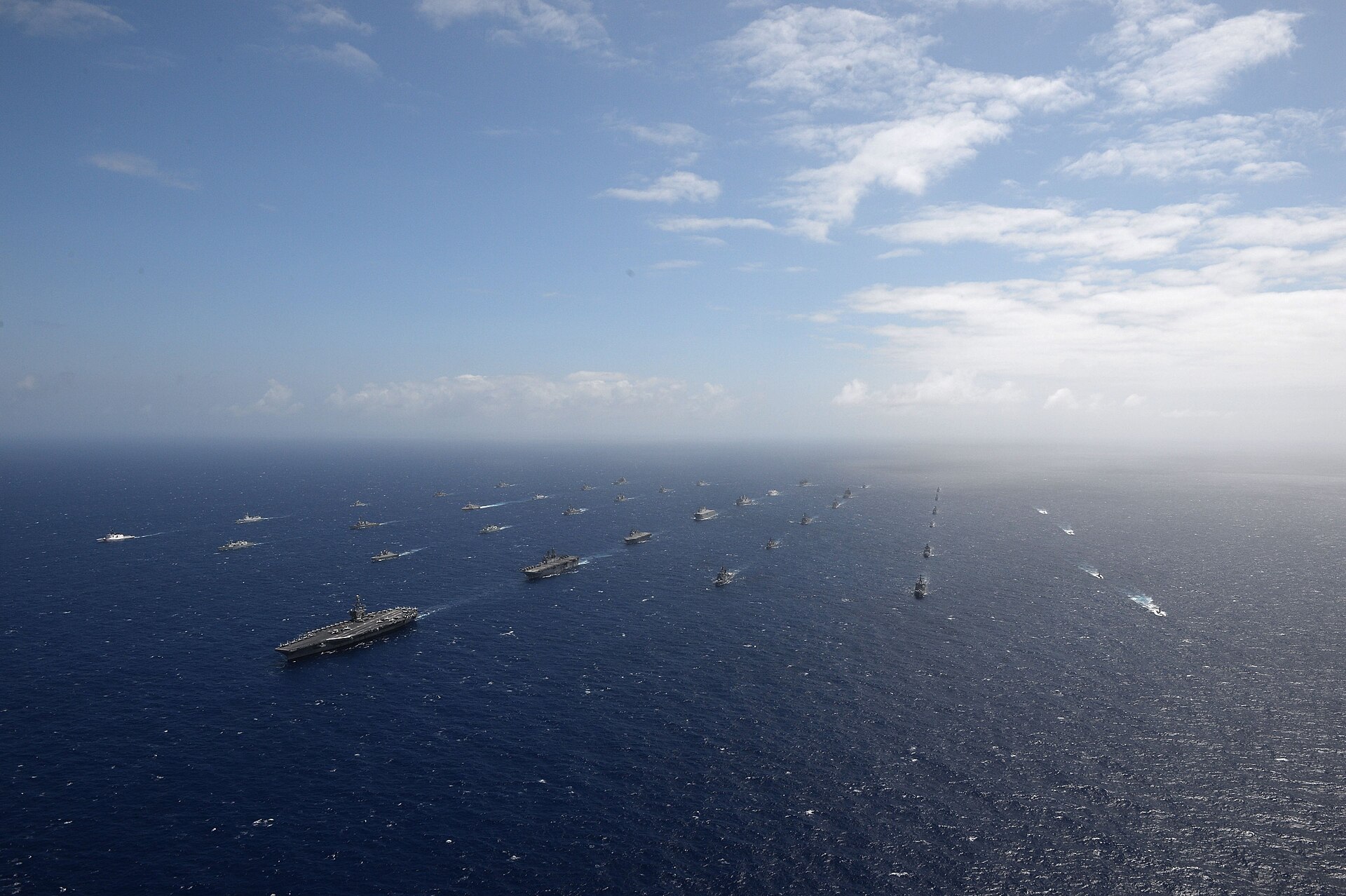
Saudi Arabia has been forced to execute the most dramatic rerouting of oil exports in the Kingdom’s history. With Hormuz effectively closed, Saudi Aramco has diverted crude to the Red Sea port of Yanbu via the East-West Crude Oil Pipeline, boosting flows through that route by 330 percent to approximately 2.47 million barrels per day, the Daily News Egypt reported on March 5.
The pipeline’s maximum capacity is approximately five million barrels per day, which means Saudi Arabia can eventually restore roughly 70 percent of its export volume through the alternative route. But the Kingdom normally ships more than seven million barrels daily, and Bloomberg reported on March 9 that Saudi Aramco had already begun cutting production by as much as 2.5 million barrels per day as onshore storage facilities approached capacity. The revenue implications are severe: at current prices above $100 per barrel, every million barrels per day of lost exports costs the Kingdom approximately $100 million daily.
A multinational coalition that successfully reopened Hormuz would directly benefit Saudi Arabia’s fiscal position. The Kingdom has maintained a careful posture throughout the conflict, absorbing Iranian drone and missile attacks while avoiding direct military retaliation against Tehran. Riyadh’s restraint has been interpreted by analysts as a calculated decision to avoid escalating the conflict while relying on the United States and its partners to neutralize the Hormuz threat.
Saudi Arabia’s broader economic concerns extend beyond oil. The Iran war has disrupted the Kingdom’s non-oil economy as well, affecting the flow of imported goods, construction materials for Vision 2030 megaprojects, and food supplies for 35 million residents during Ramadan.
Japan and South Korea Face an Energy Emergency
Of all the nations Trump named, Japan and South Korea have the most urgent stake in reopening the strait. The Middle East supplies 75 percent of Japan’s oil imports and approximately 70 percent of South Korea’s, according to data from the Zero Carbon Analytics research group. Japan receives 10.9 percent of all crude oil and condensate flowing through the Strait of Hormuz, while South Korea receives 12 percent.
Both countries rank among the world’s most energy-import-dependent economies. Japan sources 87 percent of its total energy from fossil fuel imports, and South Korea sources 81 percent, making them acutely vulnerable to supply disruptions. South Korea also sources 14 percent of its liquefied natural gas from Qatar and the UAE, supplies that must transit the strait.
| Country | Share of Hormuz Oil Flows | Gulf Oil as % of Total Imports | LNG Dependency on Gulf | Naval Assets Available |
|---|---|---|---|---|
| China | 26% | 40-50% | ~15% | 3 warships near strait |
| Japan | 10.9% | 75% | 6% | 154-ship navy, JMSDF |
| South Korea | 12% | 70% | 14% | 155-ship navy, ROKN |
| France | ~3% | ~15% | ~5% | 10+ warships deployed |
| United Kingdom | ~2% | ~10% | ~8% | 1 destroyer deployed |
| United States | ~5% | ~10% | Minimal | Carrier group + ESG |
Japan’s constitutional constraints complicate any military commitment. Article 9 of the Japanese constitution limits the use of force to self-defense, and deploying Japan Maritime Self-Defense Force warships to an active combat zone near the Strait of Hormuz would face intense domestic political opposition. Japan did send minesweepers to the Persian Gulf after the 1991 Gulf War under Operation Gulf Dawn, but that mission occurred after hostilities had ended.
South Korea faces similar constraints. The Republic of Korea Navy has 155 active warships, including modern Aegis destroyers, but Seoul has been cautious about foreign military deployments outside the Korean peninsula. Neither Tokyo nor Seoul has confirmed any plan to send warships in response to Trump’s demand.
The reluctance of Asian energy importers to contribute military assets to a Hormuz coalition underscores a central tension in the crisis: the nations most economically damaged by the blockade are not the same nations willing or able to use force to end it. That gap between economic interest and military commitment is precisely what Trump’s public pressure is designed to close.
Some nations may bypass Washington’s coalition framework altogether. Iran’s Foreign Minister Abbas Araghchi has demanded that Gulf states expel American forces as a precondition for de-escalation, offering an alternative path that avoids military confrontation at the strait but requires a fundamental break with the U.S. security architecture. Within forty-eight hours of the coalition call, the muted international response confirmed that no country was willing to send warships to fight for a waterway that American choices had closed.
Frequently Asked Questions
Has any country confirmed sending warships to Hormuz in response to Trump’s call?
As of March 14, no government named in Trump’s Truth Social post has publicly confirmed it will send warships specifically in response to his demand. France had already committed 10 additional warships to the region independently, and China maintains a small naval presence near the strait from its Djibouti base, but neither framed their deployments as part of a Trump-led coalition. Japan and South Korea have not announced any naval deployments.
How many ships are currently trapped in the Persian Gulf?
Approximately 3,000 commercial vessels and 20,000 sailors are stranded in the Persian Gulf, according to vessel-tracking data compiled by Bloomberg. Most are oil tankers, LNG carriers, and container ships that entered the Gulf before Iran’s IRGC Navy issued warnings prohibiting passage through the Strait of Hormuz beginning March 1. Some vessels have anchored outside the strait to avoid the danger zone.
Can Saudi Arabia export oil without the Strait of Hormuz?
Saudi Arabia can export a reduced volume of crude through the East-West Crude Oil Pipeline, which connects eastern oil fields to the Red Sea port of Yanbu. Flows through this route have increased by 330 percent to approximately 2.47 million barrels per day. The pipeline’s maximum capacity is about five million barrels per day, meaning Saudi Arabia can eventually restore roughly 70 percent of its normal export volume. However, the Kingdom has already begun cutting production as onshore storage approaches capacity.
Why did Trump include China in the coalition demand?
China is the single largest consumer of oil transiting the Strait of Hormuz, with 40 to 50 percent of its seaborne oil imports passing through the waterway. Trump’s inclusion of Beijing was likely intended to pressure China to use its diplomatic leverage with Iran to end the blockade, or alternatively to share the military burden of keeping the strait open. China receives approximately 1.25 million barrels per day of Iranian crude and has so far maintained a neutral stance in the conflict.
What is the USS Tripoli and why is it significant?
The USS Tripoli (LHA-7) is an America-class amphibious assault ship capable of carrying F-35B stealth fighters, attack helicopters, and a Marine expeditionary unit of approximately 2,200 Marines. Its deployment to the Middle East from Japan adds significant strike and amphibious capability to U.S. forces in the region. The Tripoli Expeditionary Strike Group also includes the guided-missile cruiser USS Robert Smalls and the guided-missile destroyer USS Rafael Peralta.