KUWAIT CITY — Kuwait arrested four Iranian Revolutionary Guard officers who infiltrated Bubiyan Island by sea on May 1, opening fire on Kuwaiti soldiers and wounding one before being detained — the first confirmed physical incursion by IRGC personnel onto GCC sovereign territory during the active ceasefire period. Kuwait’s Ministry of Interior announced the arrests on May 12, an 11-day silence broken one day after President Trump declared the ceasefire on “massive life support.”
The four men — two colonels, a captain, and a first lieutenant — confessed during interrogation to being IRGC members tasked with executing “hostile acts against the State of Kuwait,” according to the Interior Ministry statement. Two accomplices, including an IRGC navy captain, escaped during the confrontation. The island they targeted is not empty scrubland. Bubiyan hosts a $4.1 billion Chinese-built mega-port, a US Marine contingent with HIMARS batteries, and controls the only navigable approach to Iraq’s sole deep-water port at Umm Qasr. An IRGC infiltration cell landing there puts Iranian boots on ground that three major powers consider strategically non-negotiable.
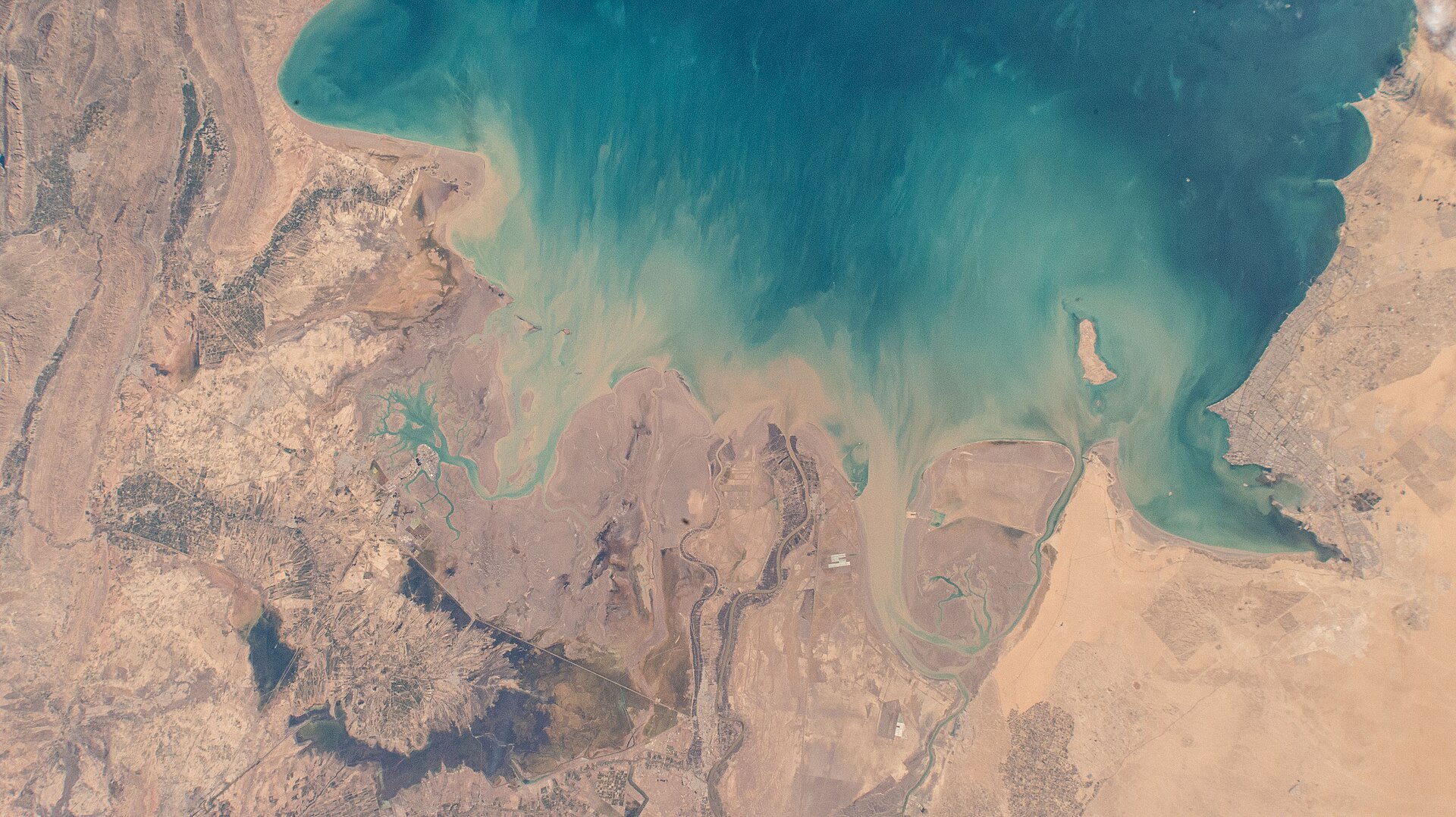
Table of Contents
The Four Officers and the Two Who Got Away
The Interior Ministry named all six members of the infiltration team, an unusual level of detail that itself carries a message. The four in custody are Colonel Amir Hussein Abd Mohammed Zara’i, Colonel Abdulsamad Yadallah Qanwati, Captain Ahmed Jamshid Gholam Reza Zulfiqari, and First Lieutenant Mohammed Hussein Sehrab Faroughi Rad. The two who escaped are navy Captain Mansour Qambari and boat captain Abdulali Kazem Siamari.
The ranks matter. Two full colonels on a six-man fishing boat is not how you run a surveillance mission or a low-level sabotage job. Colonels plan operations and command units — they do not typically get assigned to rubber-dinghy landings unless the mission requires officers with authority to make decisions on the ground. The team arrived aboard what the Interior Ministry described as a fishing vessel “specially chartered to carry out hostile actions against Kuwait,” suggesting the boat was procured specifically for this operation rather than being a vessel of opportunity.
When the team encountered Kuwaiti armed forces on the island, they opened fire, wounding a Kuwaiti soldier described as performing “his national duty.” The firefight and subsequent arrests of four members suggest this was not a soft probe — the operatives were prepared for, and initiated, armed contact. That two escaped, including the navy captain, indicates the team had an extraction plan that partially worked.
Why Bubiyan? The Island That Controls Three Countries’ Access
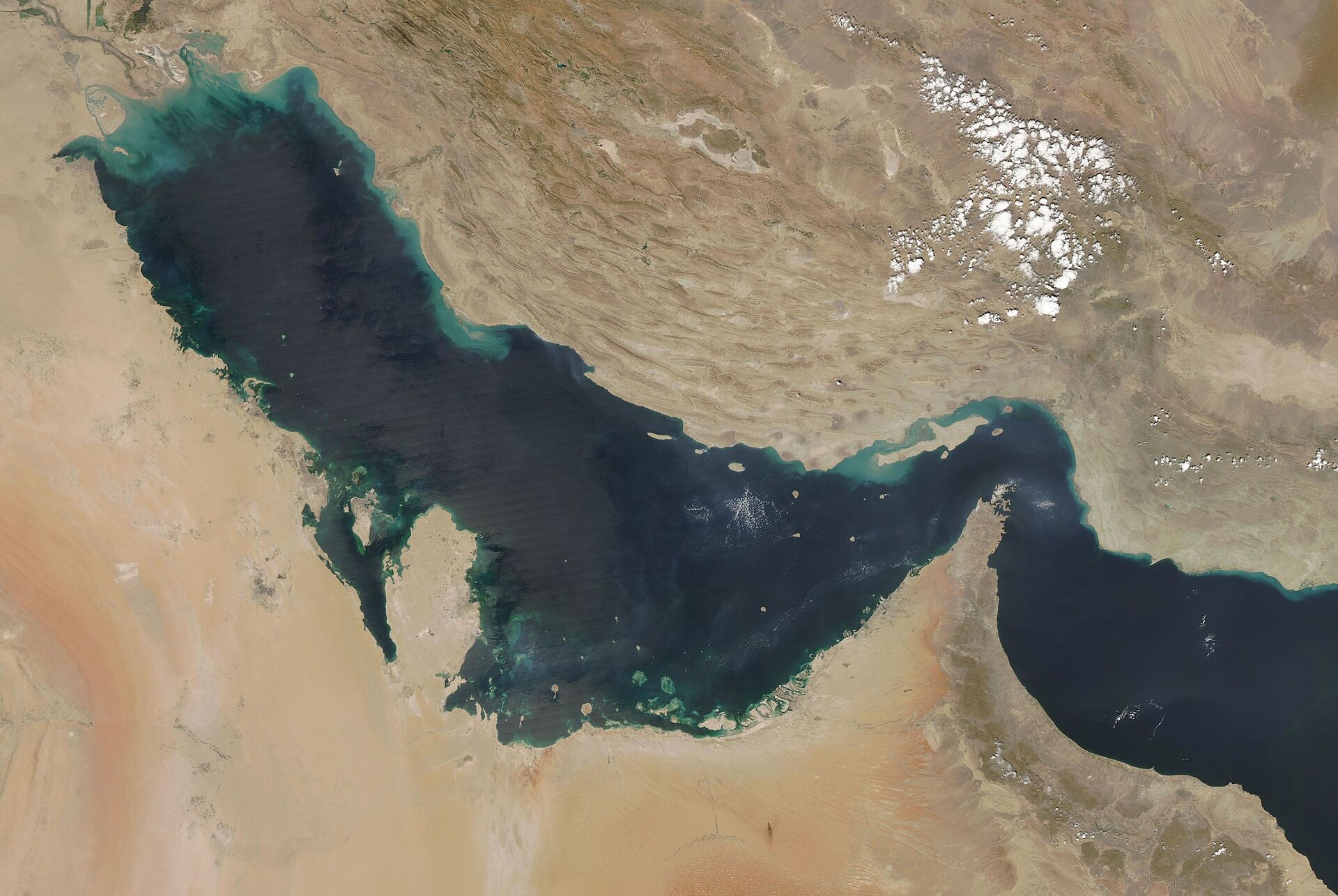
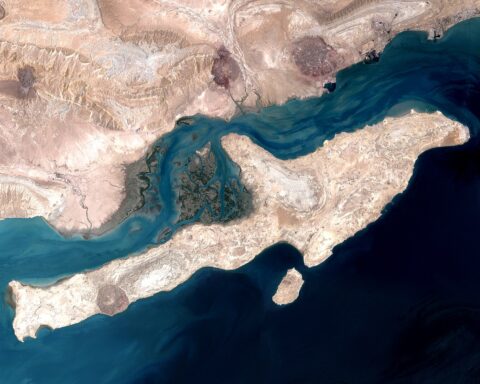
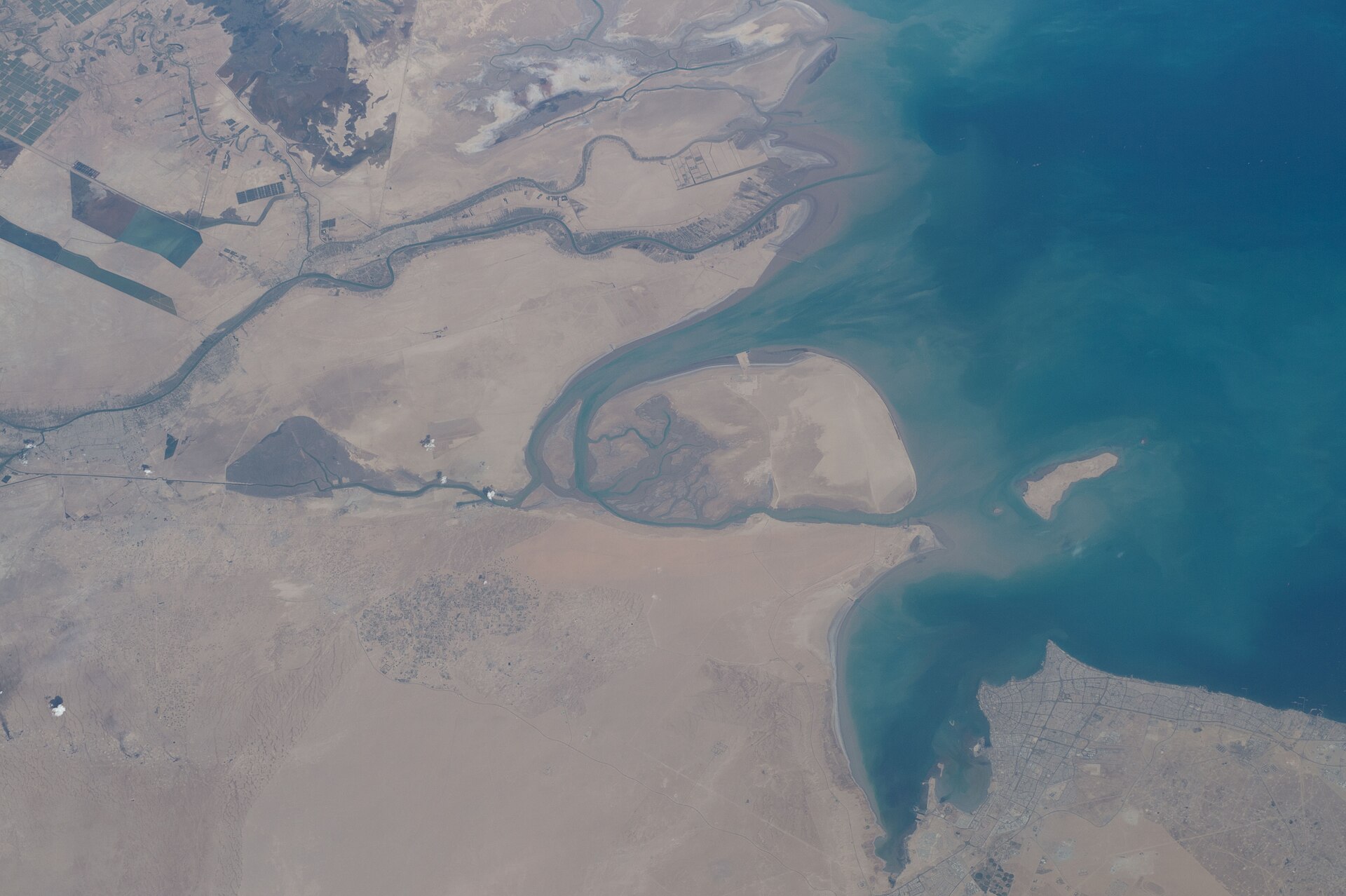
Bubiyan Island is 863 square kilometres of flat terrain in the northwest corner of the Persian Gulf, and nearly every inch of it matters to someone. The island sits at the mouth of the Shatt al-Arab and controls the Khor Abdullah waterway — a narrow 103-kilometre channel that provides the only maritime access to Umm Qasr, Iraq’s sole deep-water port. Any force that controls Bubiyan controls whether Iraqi crude leaves by sea from the southern export terminal at Fao.
The Middle East briefing 3,000+ readers start their day with.
One email. Every weekday morning. Free.
Three distinct installations make the island a convergence point for rival strategic interests. The first is Mubarak Al-Kabeer Port, a $4.1 billion megaproject built by China Communications Construction Company under Beijing’s Belt and Road Initiative, with planned capacity exceeding eight million TEU containers when it reaches full operation at the end of 2026. As Gulf News noted on May 12, the IRGC targeting an island housing China’s largest Gulf infrastructure investment — announced just before Trump’s travel to Beijing for a meeting with President Xi Jinping — adds an uncomfortable China dimension to the diplomatic fallout.
The second is the US military presence. After Camp Arifjan in mainland Kuwait was repeatedly struck by Iranian missiles during March and April, US forces relocated a Marine contingent, surveillance facilities, and HIMARS fire battery positions to a temporary facility on Bubiyan designated Camp Al-Adiri, according to US News/World Report and EADaily reporting in early April. The National noted that Bubiyan’s dual role as a Chinese commercial hub and an American military position makes it “a potential flashpoint in the US-Iran conflict.” The IRGC has already demonstrated it considers Bubiyan a legitimate target — its Khatam al-Anbiya Central Headquarters publicly claimed kinetic strikes against US positions on the island with drones and ballistic missiles in late March and April 2026, targeting what it described as satellite equipment, munitions stores, and HIMARS operator positions.
The third layer is the Khor Abdullah shipping lane itself. Iraq submitted new maritime maps in early 2026 redefining its claims in the waterway, according to Shafaq News, and any disruption to navigation through the channel would effectively close Iraq’s only route for seaborne crude exports from the southern fields. That an IRGC navy captain was among the six-man team — and was one of the two who escaped — suggests a maritime or port-related objective may have been part of the mission profile.
Why Did Kuwait Wait 11 Days?
The infiltration happened on May 1. Kuwait said nothing until May 12. The timing of the silence — and its end — tells its own story.
Between May 1 and May 12, Kuwait navigated one of the most sensitive diplomatic passages of the entire conflict. On May 5, Kuwait denied the United States access to its bases and airspace during Operation Project Freedom, a decision that put Kuwait on the opposite side of Washington for seventy-two hours before restrictions were lifted around May 7-8. Announcing during that window that it had arrested IRGC officers who had shot a Kuwaiti soldier would have complicated an already fraught American relationship and risked being interpreted as a justification for the very US military operations Kuwait was trying to block.
The announcement came instead on May 12 — one day after Trump publicly declared the ceasefire on “massive life support.” That sequence suggests Kuwait chose to break its silence at the moment when the ceasefire framework was already visibly failing, when the political cost of disclosure had shifted. Announcing IRGC arrests while the ceasefire appeared viable would have made Kuwait the state that torpedoed negotiations. Announcing them after Trump had already pronounced the framework near-dead transforms the disclosure from a diplomatic grenade into evidence for a case already being made.
Kuwait’s Deputy Foreign Minister Hamad Suleiman al-Mashaan summoned Iran’s ambassador and delivered a formal protest note that invoked Article 51 of the UN Charter — the self-defence clause. “Kuwait strongly condemns this hostile act,” al-Mashaan said, demanding Iran “immediately and unconditionally cease unlawful hostile acts,” according to Times Kuwait and Al Arabiya. Article 51 invocations are not routine diplomatic complaints. They are formal reservations of the right to use force, the legal predicate for military action if a state chooses to pursue it. Kuwait is not threatening war, but it is placing a legal marker that future decision-makers can pick up.
Rogue Cell or Deliberate Provocation?
Two interpretive frames compete to explain why four IRGC officers were wading ashore on a Kuwaiti island during a ceasefire. The first is deliberate provocation — a calculated move by the IRGC to wreck the negotiating framework, or at minimum to demonstrate that Iran’s reach extends to physical presence on GCC territory regardless of whatever diplomats agree to in Islamabad or Doha. The second is a rogue cell operating below or outside the authorization ceiling that has defined Iran’s internal command dysfunction since the war began.
The authorization ceiling problem is well documented. President Pezeshkian publicly accused IRGC figures Vahidi and Abdollahi of wrecking the ceasefire from within, naming them on April 4 as the men who deviated from the negotiating delegation’s mandate. Article 110 of the Iranian constitution gives the president zero authority over the IRGC — that power belongs exclusively to the Supreme Leader, and Mojtaba Khamenei’s extended absence from public view has left the command structure operating without its constitutional apex. The IRGC’s decentralized autonomy means that operational units — particularly naval and Quds Force elements — can execute missions that may never have been formally authorized at the political level.
The rank structure of the Bubiyan team, however, complicates the rogue-cell reading. Two colonels on a six-man infiltration team suggests a mission approved at a level senior enough to assign field-grade officers to a high-risk clandestine landing on foreign sovereign territory. Rogue operations tend to be run by junior officers or contracted proxies — not by colonels whose capture creates exactly the kind of diplomatic exposure that a rogue planner would want to avoid. The Interior Ministry’s decision to publish full names and ranks may itself be designed to force Tehran into a position where it must either claim the officers — acknowledging the operation — or disown them, admitting loss of command control.
Iran has done neither. As of May 12, no statement from IRNA, PressTV, Tasnim, or the IRGC has acknowledged or denied the Bubiyan arrests, according to Iran International monitoring and multiple regional outlets. The silence follows a pattern — when the IRGC struck Bubiyan kinetically with missiles and drones in April, Khatam al-Anbiya publicly claimed those operations. The regime appears to distinguish between direct kinetic strikes it is willing to own and clandestine infiltrations it is not. That asymmetry only works when the clandestine missions stay clandestine. Four officers in Kuwaiti custody with names, ranks, and signed confessions cannot stay clandestine.
Qatar, Kuwait, and the GCC Infiltration Pattern
Bubiyan is not an isolated incident. In March 2026, Qatar arrested ten suspects across two IRGC-linked cells — seven assigned to spy on military and vital facilities, three tasked with sabotage — marking the first time Doha publicly accused the IRGC of directing operations on its territory, according to Al Jazeera and Qatar News Agency reporting. Kuwait’s arrests make it the second GCC state to announce the detention of IRGC operatives on its soil during the active conflict, and the first to report armed engagement — the Qatar cells were surveillance and sabotage teams detained before they could act.
The geographic spread matters. Qatar sits on the southern shore of the Gulf, Kuwait on the northwestern corner. IRGC cells operating on both flanks of the GCC’s coastline suggests a campaign rather than opportunistic probes — a systematic effort to establish physical presence across the Gulf’s Arab littoral states for intelligence collection, sabotage pre-positioning, or both. GCC Secretary General Jasem Mohamed Albudaiwi used language that reflects this reading in remarks carried by Asharq al-Awsat on May 12.
“These hostile Iranian policies are a direct threat to the security and stability of the region and are a systematic attempt to destabilize regional peace and undermine the foundations of collective security. Such actions are in clear violation of the principles of international law, the United Nations Charter, and the principles of good neighbourliness.”
Jasem Mohamed Albudaiwi, GCC Secretary General, May 12, 2026
The word “systematic” does diplomatic work — it frames the infiltrations not as individual incidents but as a coordinated Iranian strategy, which in turn makes a collective GCC response more politically defensible. The GCC Jeddah Consultative Summit on April 28 had already issued a “categorical rejection” of Iranian Hormuz closure and called for “intensifying military integration.” Kuwait subscribed to that declaration just two weeks before publicly announcing it had IRGC prisoners in custody.
There is a historical echo that sharpens the escalation. In 2015, Kuwaiti courts charged 23 suspects in what became known as the “Abdali Cell” — an IRGC-Hezbollah network caught smuggling explosives and firearms into the country, with members who had received militant training in Lebanon. Kuwait upheld a death sentence for the cell’s mastermind in 2016, according to Al Jazeera and Al Arabiya. The Abdali Cell operated through proxy networks and cutouts. The Bubiyan team comprised uniformed IRGC officers carrying their own identities, arriving by chartered vessel with orders from IRGC command. The operational signature has escalated from covert proxy work to direct military infiltration.
What Does This Mean for the Ceasefire?
The ceasefire was already failing before Kuwait’s announcement. Trump’s “massive life support” declaration on May 11 reflected a framework that had been structurally unsound since the Islamabad walkout, when the gap between what Iran’s diplomats could offer and what the IRGC would permit became publicly visible. The Bubiyan infiltration does not kill the ceasefire — but it does something potentially more damaging. It demonstrates that even during a nominal ceasefire, the IRGC is willing to put uniformed officers on GCC soil with orders to conduct hostile operations.
Iran’s response went further than a denial. On May 13, Foreign Minister Araghchi posted on X replacing the officers’ military ranks with the word “citizens,” describing Kuwait’s security operation as an “unlawful attack,” and reserving Iran’s “right to respond.” The move converted a captured-espionage episode into a hostage-diplomacy frame — analysed in Araghchi Calls Captured IRGC Colonels “Citizens”: Iran’s Bubiyan Hostage Frame — and put a forward-projecting clock on Kuwait that a condemnation statement cannot stop.
For the ceasefire’s mediators — Pakistan, which has positioned itself as the framework’s sole enforcement mechanism, and the broader multilateral structure involving Turkey, Egypt, and Oman — the Bubiyan incident creates a credibility problem that cannot be papered over. A ceasefire is a commitment to refrain from hostile acts. Armed IRGC officers shooting at Kuwaiti soldiers on Kuwaiti territory is, by any definition, a hostile act. The fact that it occurred on May 1, during the nominal ceasefire period, means either the ceasefire does not bind the IRGC or the IRGC does not consider clandestine infiltration to be covered by the ceasefire’s terms. Neither reading is survivable for a framework that depends on the IRGC being a party to the agreement.
Xinhua’s coverage offered a telling signal of how Beijing is processing the incident. China’s state news agency headlined its report “Kuwait alleges 4 infiltrators arrested…belong to Iran’s IRGC” — the word “alleges” carefully preserving distance from a claim that, if confirmed, would mean Iran sent military officers to attack an island housing China’s largest Gulf infrastructure investment. Beijing has $4.1 billion sunk into Mubarak Al-Kabeer Port, projected to be operational by year’s end. The IRGC infiltrating the island where that investment sits forces Beijing into a position where its security partnership with Tehran and its commercial interests in the Gulf are in direct tension.
That tension matters because Kuwait’s announcement landed just before Trump’s summit with Xi in Beijing, according to Gulf News. If the ceasefire collapses entirely, China faces a choice between defending Iran diplomatically and protecting a port project that employs Chinese workers, uses Chinese capital, and bears the Belt and Road brand. The Bubiyan file is one more weight on a scale that Beijing has been trying to avoid tipping since the war began. Kuwait’s formal diplomatic response arrived the following day: on May 13, the Deputy Foreign Minister summoned Iran’s ambassador, invoking Article 51 and UNSCR 2817, but stopping short of recalling its envoy or convening a GCC emergency session — the measured escalation template Kuwait has followed since February 28. See Kuwait Summons Iran’s Ambassador Over Bubiyan Infiltration — and Stops There.
Background
Bubiyan Island has been contested territory in Gulf geopolitics for decades. Iraq invaded Kuwait partly to gain control of Bubiyan and neighbouring Warbah Island in 1990, viewing them as obstacles to Iraqi naval access to the open Gulf via Khor Abdullah. After liberation, Kuwait fortified its claim with infrastructure — the Mubarak Al-Kabeer Port project, launched under a partnership with CCCC, transformed the island from a military outpost into a commercial gateway intended to compete with established Gulf ports.
The IRGC’s naval operations in the northern Gulf have a long pedigree. During the 1987-88 Tanker War, IRGC Navy units mined shipping lanes close to Kuwait beginning in May 1987. The SS Bridgeton was mined on July 24, 1987, on the first US Earnest Will convoy. The USS Samuel B. Roberts struck an Iranian mine on April 14, 1988, triggering Operation Praying Mantis — the largest US naval engagement since the Second World War. The IRGC’s current maritime posture in the Gulf draws on institutional memory from that period, including mine warfare and the exploitation of commercial shipping patterns for military advantage.
Kuwait’s relationship with the United States during the current conflict has been uneven. While Kuwait hosts significant US military infrastructure and subscribed to the GCC’s collective security declarations, its May 5-7 denial of US base and airspace access during Operation Project Freedom demonstrated that Kuwait is attempting to maintain a degree of separation from direct US combat operations against Iran. The Bubiyan infiltration makes that balancing act considerably harder to sustain — it is difficult to argue for neutrality when an IRGC colonel is sitting in your interrogation room.
FAQ
How many IRGC officers infiltrated Bubiyan Island and how many escaped?
Kuwait’s Interior Ministry says six men crossed by boat. Four were captured: Colonels Zara’i and Qanwati, Captain Zulfiqari, and First Lieutenant Faroughi Rad. Two escaped: navy Captain Qambari and boat captain Siamari. Kuwait has not publicly disclosed whether the two escapees made it back to Iranian waters or remain in Kuwaiti territory.
What is the legal significance of Kuwait invoking Article 51?
Article 51 of the UN Charter preserves a state’s “inherent right of individual or collective self-defence if an armed attack occurs.” By invoking it in its formal protest, Kuwait is establishing a legal record that it considers the Bubiyan incursion an armed attack under international law. This creates a foundation that Kuwait — or GCC allies acting collectively under the April 28 Jeddah framework — could cite to justify future defensive measures without requiring a separate UN Security Council authorization.
Could the infiltration have targeted Mubarak Al-Kabeer Port specifically?
The Interior Ministry described the operatives’ mission as “hostile acts against the State of Kuwait” without specifying whether the port, the US military facility, or the Khor Abdullah shipping channel was the primary objective. The port’s construction site, US Camp Al-Adiri, and the waterway monitoring infrastructure are all located on Bubiyan, meaning any operation on the island could feasibly target one or all three. The presence of an IRGC navy captain among the team suggests a maritime or port-related objective may have been part of the mission profile.
How does this compare to the 2015 Abdali Cell case?
The Abdali Cell involved proxy operatives — Kuwaiti nationals and Hezbollah-linked individuals — smuggling weapons and explosives through covert networks. The Bubiyan team comprised uniformed IRGC officers operating under their real identities and ranks, arriving by chartered vessel with orders from IRGC command. The shift from proxy infiltration to direct military infiltration represents a qualitative escalation in Iran’s willingness to put its own uniformed personnel at risk on GCC territory.
Could the Bubiyan operation have happened without senior Iranian authorization?
The structural answer from Iran-watcher analysis is that it could and might have. The IRGC operates with significant operational autonomy under Article 110, which gives the Supreme Leader rather than the president command authority over the Guards. With Mojtaba Khamenei absent from public view since March 9 and access to him reportedly filtered through an IRGC military council, the authorization chain has gaps wide enough for a mid-senior officer team to operate without formal sign-off from anyone in the elected government. The two-colonel rank structure, however, argues against a purely rogue operation — field-grade officers on a clandestine mission implies authorization from someone with the authority to risk their capture.