
TEHRAN — Iran formally launched the Persian Gulf Strait Authority on May 5, 2026, a uniformed bureaucracy with a domain name (PGSA.ir), a contact email ([email protected]), and a transit-permit regime that converts Hormuz from international waterway into a vetted toll plaza. The same evening, President Trump suspended Project Freedom — the US Navy escort program designed to break exactly this — after just two days and two escorted vessels.
The timing is the story. Six days before US-Iran negotiators meet in Oman for a fourth round, Tehran has stood up the legal-administrative scaffolding it intends to point to after any deal. PGSA is not a pressure tactic to be bargained away. It is the institution Iran wants negotiators to inherit.
Table of Contents
- What PGSA Actually Is
- The Larak Corridor: Geography as Legal Argument
- Why Launch It Six Days Before Oman?
- The Legal Architecture Behind the Email Address
- $1 a Barrel, Paid in Yuan
- Project Freedom Collapses on the Same Evening
- The Authorization Ceiling Pezeshkian Cannot Cross
- Background: From Selen to PGSA
- FAQ
What PGSA Actually Is
The Persian Gulf Strait Authority went live on Iranian state social media on May 5 with a logo reading “Persian Gulf Strait Authority — Islamic Republic of Iran” and a single public address: [email protected]. Vessels approaching Hormuz now receive an unsolicited email from that address, instructing them to “adjust themselves to this framework” before a transit permit will be issued.
The submission requirements read like a customs declaration. According to Lloyd’s List, vessels must hand over their IMO number, ownership details, cargo manifest, destination, and crew list to approved intermediaries, who route the data to the IRGC Navy’s Hormozgan Provincial Command for “sanctions screening” and “geopolitical vetting.” Approved ships receive a clearance code and specific routing instructions. Rejected ships do not transit.
IRGC Spokesman Brig. Gen. Hossein Mohebbi made the enforcement architecture explicit on May 4, the day before launch. “Any maritime movement running counter to principles declared by the Navy would face serious risks,” he told PressTV. The IRGC, he warned, would “forcefully stop” any vessel violating the new protocols.
PressTV called it “a sovereign governance system” providing “a verifiable single window.” The language is procurement-software vocabulary applied to a chokepoint that carries roughly a fifth of the world’s seaborne oil.
The Middle East briefing 3,000+ readers start their day with.
One email. Every weekday morning. Free.
The Larak Corridor: Geography as Legal Argument
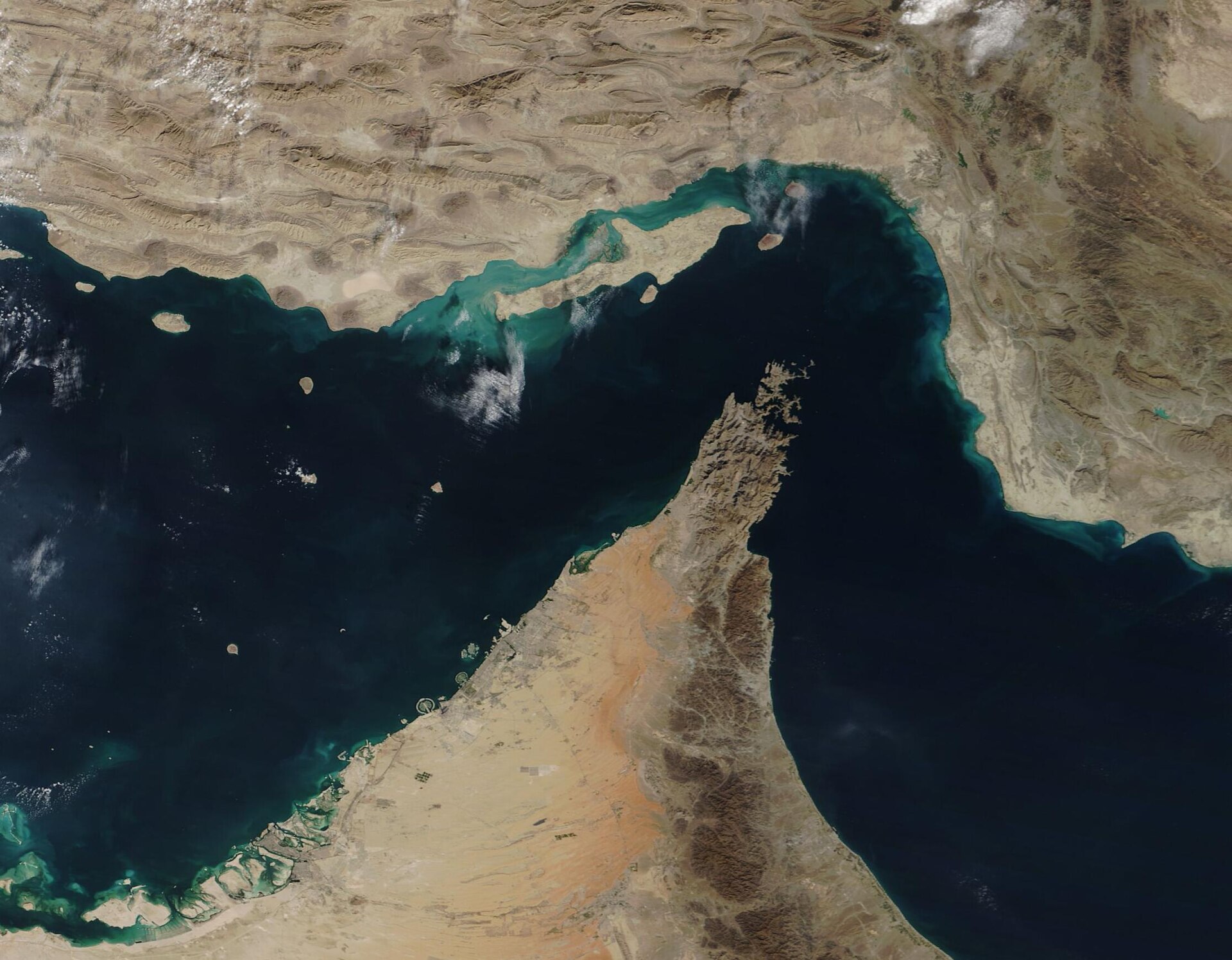
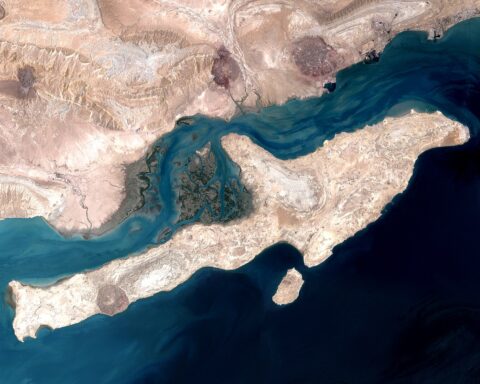
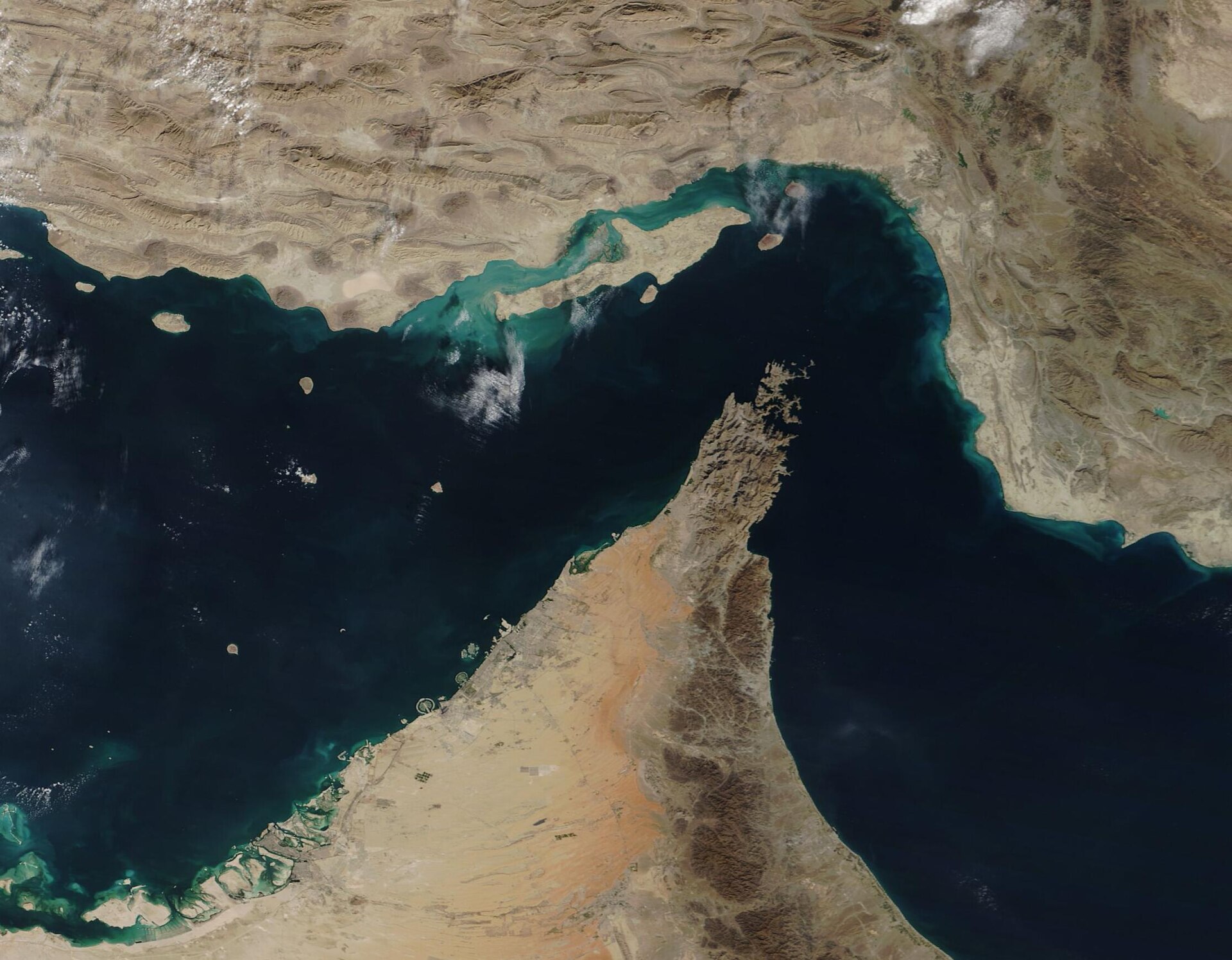
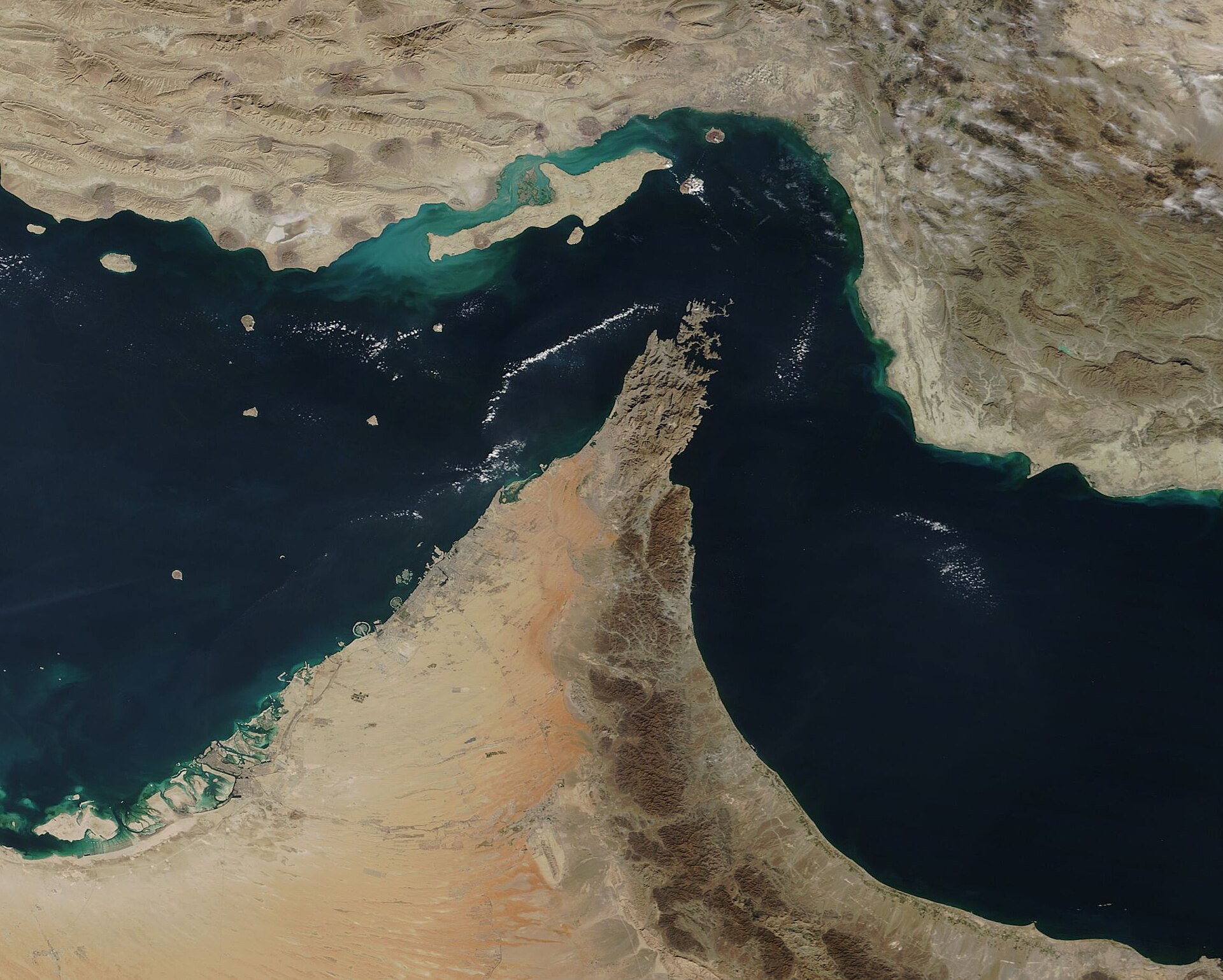
Every PGSA-authorized transit now runs through a corridor between Qeshm and Larak islands inbound, and just south of Larak outbound — both routes entirely inside Iran’s 12-nautical-mile territorial sea. Maritime Executive and Lloyd’s List confirm zero vessels have used the normal international corridor since March 15, 2026. The “international” strait, in operational terms, no longer exists.
This is not navigational accident. Under the UN Convention on the Law of the Sea, vessels in an international strait enjoy transit passage — a right that “shall not be impeded” and which coastal states cannot make conditional on prior authorization. Vessels in territorial waters fall under innocent passage, where coastal-state authority is broader and prior-authorization arguments are at least colorably defensible under domestic law.
By rerouting all traffic through Iranian territorial waters, the IRGC has converted Hormuz from one legal regime into the other. FM Abbas Araghchi laid the doctrinal foundation in March 2026: Iran applies the innocent passage regime. Iran’s 1993 domestic maritime law codifies this, and Tehran treats itself as a “persistent objector” to transit passage as customary international law.
Safia K. Southey, writing for EJIL:Talk, called the move what it is. “A state that creates the navigational peril and then monetizes safe passage through it is turning control over access into a revenue mechanism,” she wrote. “Iran’s project is an attempted revision of the legal nature of the strait itself.”
Why Launch It Six Days Before Oman?
The fourth round of US-Iran talks is scheduled for May 11, 2026 in Oman. PGSA went live on May 5. The five-day sequence behind it — Khamenei directive April 30, IRGC Navy enforcement pledge May 1, OFAC sanctions alert May 1, Mohebbi forceful-stop warning May 4, PGSA launch May 5 — brackets the negotiation window with completed administrative architecture.
On Persian Gulf Day, April 30, Ayatollah Khamenei ordered “new management” of the Strait of Hormuz and declared Iran “will be the vanguard of the new regional and global order.” Foreigners with “ominous” plots, he said, have no place in the region “except at the bottom of its waters.” The IRGC Navy responded the next day in completed-action grammar: “The equations and rules governing the new management of the Persian Gulf have been set, and will be enforced, based on the historic directive of the Leader.”
“Have been set.” Not proposed, not negotiated, not contingent. PressTV ran a companion piece titled “Iran’s new blueprint for management of Strait of Hormuz in post-American regional order” — explicitly framing PGSA as a feature of a permanent architecture, not a temporary bargaining chip. The narrative is locked in before negotiators sit down.
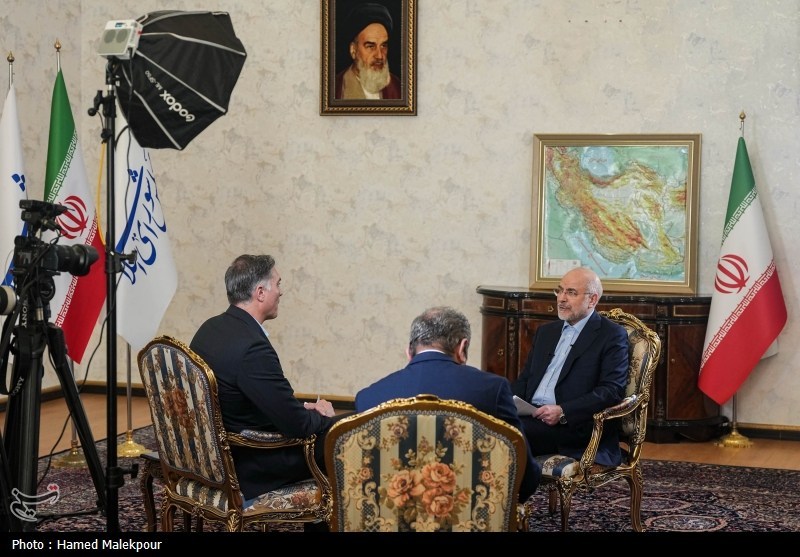
Parliamentary Speaker Mohammad Ghalibaf, the IRGC Aerospace Force veteran who carries Khamenei’s confidence into legislative business, said the quiet part out loud. “We know well that the continuation of the status quo is intolerable for America, while we are just getting started,” he told Splash247. The logic of “just getting started” is not the logic of a side preparing concessions.
The Legal Architecture Behind the Email Address
PGSA is the executive arm of a 12-article statute moving through Iran’s parliament. The “Law on Establishing Iran’s Sovereignty over the Strait of Hormuz” was ratified by the National Security and Foreign Policy Committee on April 21, 2026, and now awaits the full chamber. The bill’s substantive provisions are designed to survive any negotiated settlement.
Israeli vessels are banned under any circumstances. Vessels from “hostile” nations require Supreme National Security Council approval. Ships flagged from countries deemed to have “damaged Iran” are denied passage until compensation is paid. All transit fees must be denominated in Iranian rial. Shipping documents must use the term “Persian Gulf.” The IRGC retains seizure authority for non-compliance, and approximately 20% of cargo value is confiscable as penalty.
For a Very Large Crude Carrier hauling 2 million barrels at $112/bbl Brent, a 20% confiscation comes to $44.8 million. The economics of non-compliance are not designed to be marginal.
Deputy Speaker Ali Nikzad described the law’s authorization chain to GlobalSecurity in language worth reading carefully: “This law does not only address the conditions of the Islamic Republic of Iran, but also takes into account the rules of international law and the rights of the neighboring countries.” Authorization, he confirmed, flows from the Leader to the Armed Forces. Not through the elected presidency. Not through the foreign ministry. Through Khamenei to the IRGC.
$1 a Barrel, Paid in Yuan
The toll structure has been public since March: $1 per barrel of cargo, capped at $2 million per vessel, payable in Bitcoin, USDT, or Chinese yuan. At least two vessels have confirmed payment in yuan, according to Lloyd’s List and Iran International. PGSA institutionalizes a payment regime that has been operating informally for two months.
The compliance numbers tell the story of a chokepoint that already capitulated. Lloyd’s List counts 26 confirmed transits via the controlled Larak corridor since March 13, with zero confirmed transits via the normal international route since March 15. Roughly 90% of recent transits are vessels with direct Iran affiliation. The non-Iranian fleet is, in operational terms, gone.
Volume collapse on this scale lines up with what IEA Director Fatih Birol called “the biggest energy security threat in history” — 13 million bpd of crude either offline or rerouted. Saudi Yanbu, the East-West Pipeline terminus on the Red Sea, can absorb roughly 5.9 million bpd against pre-war Hormuz throughput of 7-7.5 million. The structural gap is the price floor under everything.
The OFAC sanctions alert issued May 1 made the legal exposure for shippers precise. US and non-US persons are warned against any payment to Iran or the IRGC for transit, including via “charitable donations” channeled through the Iranian Red Crescent, Bonyad Mostazafan, or Iranian embassy accounts. The accounting evasion routes were named because they are already in use.
Manny Levitt, a sanctions trade attorney quoted by Lloyd’s List, told the maritime industry what every shipowner now faces: toll payments could violate UK and EU sanctions frameworks and create liability “under separate US anti-terrorism-related statutes.” Claire McCleskey, a sanctions specialist, kept it shorter. “The IRGC remains a Foreign Terrorist Organization, as designated by the US State Department.” Every $2 million transit fee is a payment to a designated FTO.
Project Freedom Collapses on the Same Evening
Trump’s US Navy escort program — Project Freedom — was launched May 4 to break the IRGC’s de facto control of the Larak corridor. On Day 1, the Navy escorted 2 merchant vessels. On the evening of May 5, hours after PGSA went live, Trump suspended the program. Bloomberg and Safety4Sea reported the pause as indefinite.
The 1988 precedent runs through every editorial on this question, but the asymmetry is the point: Operation Earnest Will reflagged 11 Kuwaiti tankers and ran 127 escort missions over 14 months, against an Iran with no legal-administrative architecture, only mines and Boghammars. Project Freedom escorted two merchant ships and folded in 48 hours, against an Iran that now has an email address and a clearance-code system.
Martin Kelly, Head of EOS Marine Advisory in Dubai, identified the operational squeeze for the escort model. “Iran has demonstrated it retains the capability to detect, ID and target shipping with AIS off,” he told Splash247. The dark-fleet workaround that gets Iranian crude to China cannot be flipped to protect Western-flagged hulls. Going dark increases insurance, not safety.
PressTV’s headline on the morning of May 6 was “Iran activates new Strait of Hormuz transit system as US blockade ends in failure.” The narrative is being written into the historical record in real time. France’s response — deploying the Charles de Gaulle carrier group through the Suez as Iran escalated its targeting of CMA CGM vessels — and what that deployment means for the PGSA’s coercive logic, is covered in Iran Has Struck Two French Ships in 17 Days. The Charles de Gaulle Just Entered the Suez.
The Authorization Ceiling Pezeshkian Cannot Cross
President Masoud Pezeshkian, Foreign Minister Araghchi, and the negotiating team flying to Oman on May 11 do not control PGSA. They cannot suspend it, modify it, or trade it. The structural problem that collapsed the April ceasefire is the structural problem now: Iran’s IRGC chain of command runs through Khamenei to the Armed Forces, bypassing the elected government entirely.
Article 110 of the Iranian constitution makes the Supreme Leader the commander of the armed forces. Article 176 places the Supreme National Security Council under his ratification authority. The 12-article Hormuz law explicitly routes authorization through “the Leader to the Armed Forces.” Pezeshkian’s signature on a deal in Oman has zero force over PGSA’s enforcement architecture.
This was the warning embedded in MP Mohammad Reza Rezayi Kouchi’s April 21 framing of the law: ships “must coordinate their passage with Iranian authorities and pay charges in Iranian rial for the services they receive.” Not “may” — must. Not “during this crisis” — as standing law. The IRGC’s earlier mine-chart declaration of Hormuz as a danger zone ran on the same authorization track.
Mark P. Nevitt, Commander JAGC (ret.) and associate professor at Emory Law, identified three specific UNCLOS violations in the architecture for Just Security: obstruction of transit passage under Article 37, illegal discriminatory fees under Article 26, and the false Montreux Convention analogy under Article 35. Iran’s response to all three is structurally the same: domestic law overrides, the Leader has spoken, the law is in parliament. There is no civilian authority left to negotiate the issue away.
Background: From Selen to PGSA
The PGSA launch is the institutional capstone of an enforcement regime that has been running physically for ten weeks. The international corridor was operationally empty by March 15. On March 24, 2026, the container feeder MV Selen (6,800 dwt) was formally turned back by IRGC patrol — the first vessel rejected under what was then an unwritten transit framework. By April 21, the legal scaffolding was through committee.
The crypto-scam interlude in mid-April hardened the case for institutionalization. With no legitimate channel and no published rules, scammers impersonating Iranian officials began demanding Bitcoin and USDT from stranded vessels. Greek maritime security firm Marisks issued an industry warning after at least one vessel paid and was then fired upon. PGSA partly cleans up that ambiguity by replacing extortion with a formal permit office. The toll is real, the email is real, the routing is real — and the IRGC keeps the money.
UAE oil executive Sultan al-Jaber summarized the regional cost in IBTimes UK on May 6: “When Iran holds Hormuz hostage, every nation pays the ransom.” He called the regime “economic terrorism.” The framing matters because the Gulf states, not Washington, are the constituency Tehran is trying to convert. PGSA presents tolls as a fait accompli, daring GCC capitals to either pay and normalize or escalate alone.
The 1936 Montreux Convention analogy Tehran has invoked — Turkey’s Bosphorus regulatory authority — falls apart under examination, because Montreux is a specific multilateral treaty negotiated and ratified by the powers concerned. No equivalent governs Hormuz. Iran is asserting Montreux-equivalent powers without the multilateral consent that made Montreux possible. PGSA is the unilateral instrument by which Iran intends to manufacture that authority retroactively.
FAQ
Does PGSA only target Western-flagged vessels?
No. The 12-article law’s discrimination tiers apply to any vessel from a “hostile” or “compensation-pending” nation, but the routing requirement applies universally. Even Iran-affiliated vessels — which make up roughly 90% of recent Larak corridor transits — must submit IMO numbers, manifests, and crew lists for processing. PGSA’s design is comprehensive registry, not selective harassment. The discrimination layer determines fees and approval probability; the registration layer is mandatory for everyone.
Can the IRGC actually enforce a permit regime against a 200,000-ton supertanker?
The enforcement model is not boarding under fire. It is denial of safe passage through mined or contested water unless the clearance code is presented. Lloyd’s List reporting on those 26 confirmed transits indicates vessels are presenting credentials at corridor entry points, not engaging in standoffs. Insurance markets reinforce the system: Lloyd’s of London hull and P&I underwriters increasingly require evidence of compliant routing before issuing war-risk cover for Hormuz transits. The IRGC does not need to stop every ship; it needs to make the alternative uninsurable.
What happens to the toll revenue?
The 12-article law allocates revenue to defense spending and welfare programs. At $1/barrel and Hormuz pre-war throughput of 17-20 million bpd, full compliance would generate $6-7 billion annually for the IRGC budget. Current depressed throughput at the Larak corridor — call it 1 million bpd implied by 26 transits in 50+ days — generates closer to $365 million annualized. Either figure is meaningful against Iran’s reported $12.4 billion military budget. The crypto-payment infrastructure (Bitcoin, USDT, yuan) is designed to operate outside the dollar system entirely. The PGSA’s jurisdictional footprint expanded further on May 12, when the IRGC announced a 500-kilometer operational crescent stretching from Jask to Siri Island — a tenfold enlargement of the claimed enforcement zone that brings open Gulf of Oman waters, where no strait-passage rights exist, under the same managed-access architecture.
Is PGSA legally recognized by any other country?
No country has formally recognized PGSA as a legitimate maritime authority. Oman, despite hosting the negotiations, has consistently rejected toll authority — Transport Minister Said al-Maawali stated in 2026 that “no tolls can be imposed for crossing Hormuz.” China, the largest economic beneficiary of compliant transits and the recipient of yuan-denominated fees, has not made a formal recognition statement, but at least two Chinese-linked vessels have paid, which functions as de facto recognition. Recognition by silence is the architecture’s near-term goal.
Could a US-Iran deal at Oman dissolve PGSA?
Not without rewriting Iran’s domestic legal architecture. The 12-article law, once passed by the full chamber, becomes statutory. Khamenei’s April 30 directive carries higher authorization weight than any executive-branch agreement under Article 110 of the Iranian constitution. Even if Pezeshkian’s negotiating team agreed to suspend transit fees, the IRGC retains operational authority over enforcement and the Supreme Leader retains directive authority over the IRGC. A deal could nominally restore “free passage” while PGSA continues issuing permits as a matter of “domestic regulatory” routine. That gap — between negotiated text and standing institution — is exactly what the launch sequence was designed to create. PGSA’s launch on May 5 coincided with the IRGC’s cruise missile strike on the CMA CGM San Antonio — the second CMA CGM vessel hit in 18 days — and the suspension of Project Freedom in under 48 hours. The San Antonio strike, France’s deployment of the Charles de Gaulle, and what both mean for the MOU are covered here. The PGSA’s 40-question Vessel Information Declaration, published days later, reveals the full architecture of that gap — why the PGSA questionnaire makes the Muscat MoU’s open-Hormuz promise operationally impossible. The specific rule architecture the IRGC built to make that gap permanent is documented here.