
RIYADH — Israel informed the United States this week that it is running critically low on ballistic missile interceptors, according to U.S. officials cited by Semafor, raising urgent questions about the shared Western air defense supply chain that Saudi Arabia depends on for its own survival. Sixteen days into the Iran war, the two largest consumers of American-made interceptors are burning through munitions faster than the U.S. defense industrial base can replace them, and Riyadh is discovering that its billion-dollar missile shield runs on a production line it does not control.
The strain on interceptor supply chains worsened further on March 16 when Israel launched a ground offensive in southern Lebanon, forcing the IDF to split its air defense assets between Iranian ballistic missiles from the east and Hezbollah rockets from the north.
The disclosure, which Israeli officials have publicly denied but which prompted an emergency $826 million defense procurement authorization in Tel Aviv within hours of the report, exposes a vulnerability that no Saudi defense planner anticipated when the Kingdom signed its most recent $9 billion Patriot missile package. Saudi Arabia and Israel draw from the same finite pool of PAC-3 MSE interceptors manufactured by Lockheed Martin at a single facility in Camden, Arkansas, and the Iran war has placed both nations in direct competition for a weapons stockpile that was never designed for simultaneous high-intensity combat on two fronts.
Table of Contents
- What Did U.S. Officials Say About Israel’s Interceptor Shortage?
- How Fast Is Saudi Arabia Burning Through Interceptors?
- The Production Bottleneck at Camden, Arkansas
- THAAD Interceptors Face the Same Squeeze
- Iran’s $35,000 Drone Against the $4 Million Interceptor
- Why Beijing Is Watching the Interceptor Drain
- Saudi Arabia’s Search for Alternatives
- What Happens If the Interceptors Run Out?
- Frequently Asked Questions
What Did U.S. Officials Say About Israel’s Interceptor Shortage?
The Semafor report, published on March 14, cited multiple U.S. officials familiar with Israeli military communications who said Tel Aviv had conveyed to Washington that its stockpile of ballistic missile interceptors had fallen to critically low levels. The report specified that Israel’s Arrow and David’s Sling systems, which form the upper tiers of the country’s multi-layered air defense architecture, had consumed interceptors at a rate that exceeded pre-war planning assumptions.
The Israel Defense Forces denied the report within hours. A senior IDF official told the Times of Israel that “there is no shortage of interceptors” and that no such assessment had been communicated to American counterparts. Israel Hayom went further, citing Israeli security officials who described the Semafor report as possible Iranian disinformation intended to signal weakness.
The denials, however, were undercut by the Israeli government’s own actions. On March 15, the Knesset approved an emergency transfer of NIS 2.6 billion, approximately $826 million, to the Defense Ministry for what officials described as “urgent and essential defense procurement,” according to Haaretz. The timing suggested that regardless of whether Israel had formally used the word “critically low” in conversations with Washington, the interceptor consumption rate had triggered a financial emergency response.
The Middle East briefing 3,000+ readers start their day with.
One email. Every weekday morning. Free.
Since February 28, Iran has fired hundreds of ballistic missiles and cruise missiles at Israeli territory in retaliatory barrages, with some strikes incorporating cluster munition warheads that force defenders to expend multiple interceptors per incoming threat. Each intercept by the Arrow system costs an estimated $3 million to $3.5 million, and the David’s Sling interceptor carries a price tag of roughly $1 million per round, according to the Congressional Research Service. Even if Israel entered the war with robust stockpiles, the sustained tempo of Iranian launches would mathematically erode them within weeks.
How Fast Is Saudi Arabia Burning Through Interceptors?
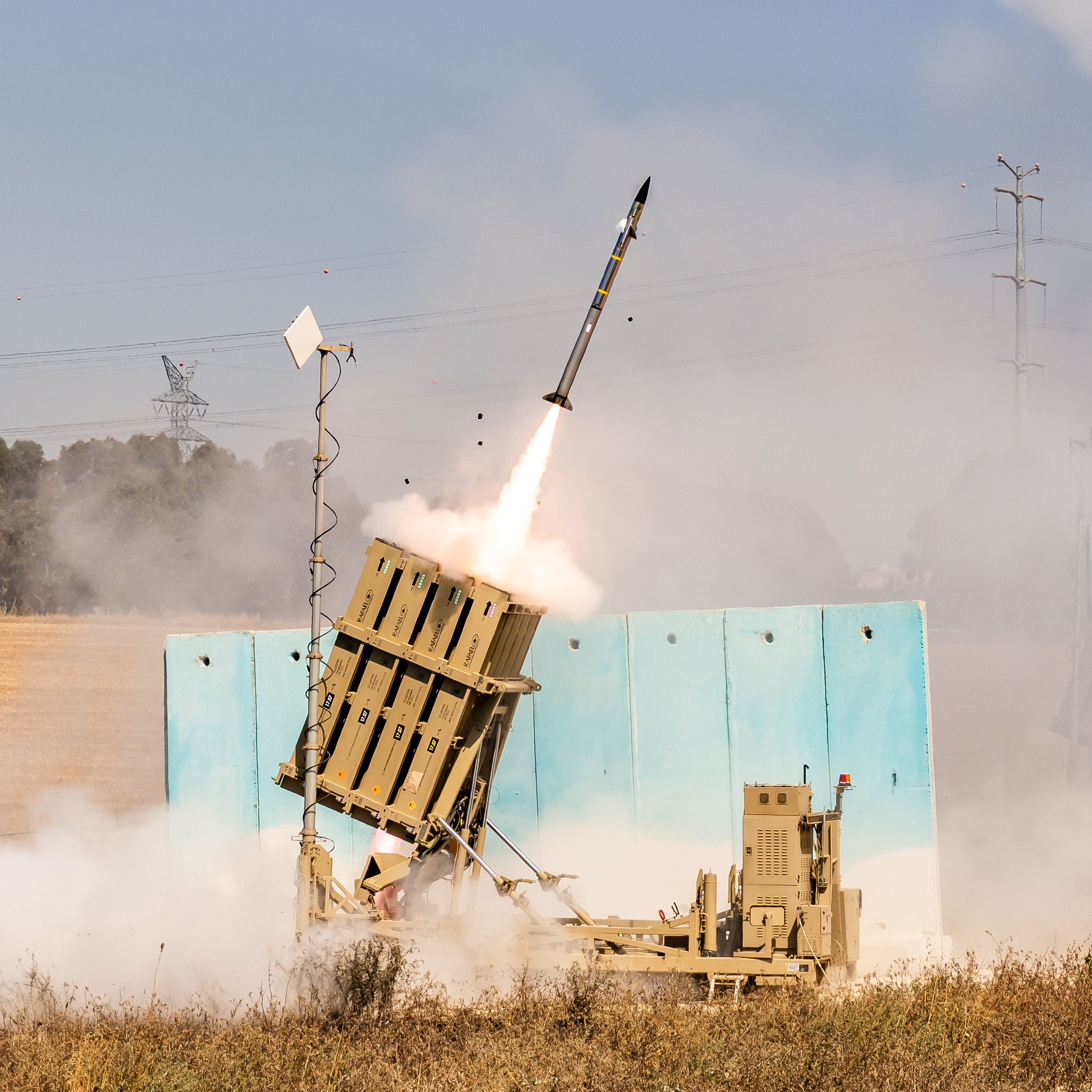
Saudi Arabia’s interceptor consumption has been equally ferocious. The Kingdom has intercepted more than 400 aerial threats since February 28, according to statements from the Saudi Defence Ministry, including ballistic missiles, cruise missiles, and waves of one-way attack drones targeting military bases, oil infrastructure, and populated areas across Riyadh, the Eastern Province, and al-Kharj governorate.
The U.S. Army expended over 800 anti-ballistic missiles from Patriot long-range air defense systems during just the first five days of the war, according to Military Watch Magazine, a figure that encompasses American batteries deployed across the Gulf region alongside Saudi-operated systems. At a cost of approximately $4 million per PAC-3 MSE interceptor, the five-day bill for Patriot ammunition alone reached $2.4 billion, the publication reported.
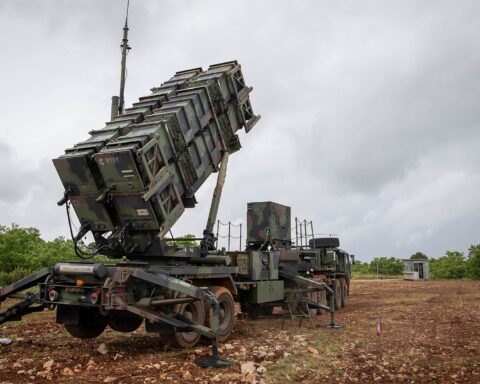
Saudi Arabia operates six Patriot battalions with 108 M902 launchers, fielding a mix of older PAC-2 GEM-T rounds and the more capable PAC-3 hit-to-kill interceptors, according to the International Institute for Strategic Studies. The Kingdom signed a procurement package for 730 PAC-3 MSE interceptors, but Defense Express estimated that at the rate of 300 to 450 interceptors consumed in the war’s first eleven days, the entire stockpile would be depleted in approximately 18 to 27 days of sustained combat at current intensity.
The problem is compounded by the fact that Saudi Arabia and Israel are not the only customers in the queue. The United States maintains its own Patriot batteries in the Gulf, including at Prince Sultan Air Base in al-Kharj, which has been struck repeatedly by Iranian missiles. Every interceptor fired by a U.S. battery in defense of Saudi territory is one fewer interceptor available for the U.S. military’s own global posture, a fact that has not been lost on strategists tracking the broader implications of the war.
The Production Bottleneck at Camden, Arkansas
The interceptors that Saudi Arabia, Israel, and the United States are expending at wartime rates all trace back to a single production facility. Lockheed Martin manufactures the PAC-3 MSE at its plant in Camden, Arkansas, where the company delivered 620 interceptors in 2025, a record that represented a 20 percent increase over the previous year, according to a Lockheed Martin press release.
Six hundred and twenty missiles per year. The Iran war consumed more than that figure in its first two weeks across all theaters.
In January 2026, just weeks before the war began, the Pentagon and Lockheed Martin announced a seven-year framework agreement to triple PAC-3 MSE production capacity from approximately 600 to 2,000 interceptors per year, with the target date for reaching full capacity set at the end of 2030. Breaking Defense reported that the agreement was designed to address growing demand from both the U.S. military and allied nations, but it was conceived for a peacetime expansion timeline, not a wartime emergency.
| Metric | Figure | Source |
|---|---|---|
| 2025 annual production | 620 interceptors | Lockheed Martin |
| Target annual production (by 2030) | 2,000 interceptors | Pentagon / Lockheed Martin |
| First 5 days of Iran war (all theaters) | 800+ interceptors fired | Military Watch Magazine |
| First 11 days (est. Saudi/Gulf only) | 300–450 interceptors | Defense Express |
| Cost per PAC-3 MSE round | ~$4 million | Congressional Research Service |
| Saudi pending order | 730 interceptors | DSCA notification |
| Production backlog for Saudi Arabia | 360 interceptors | Asia Times |
The mathematics are stark. Even at the accelerated 2030 target of 2,000 interceptors per year, Lockheed Martin would need more than five months of full production to replace what the Iran war has consumed in 16 days. At the current 2026 production rate of roughly 650 per year, replenishment will take considerably longer. Kelly Grieco, a senior fellow at the Stimson Center, told Asia Times that the United States and its allies are “using [munitions] faster than we can replace them.”
A 360-interceptor backlog for Saudi Arabia alone is already constraining replenishment, according to the same report. New orders placed today would not reach the Kingdom for months, possibly years, depending on where Saudi Arabia falls in the production queue behind the United States, Israel, and other allied nations including Germany, Poland, and Japan that have ordered Patriot systems in recent years.
THAAD Interceptors Face the Same Squeeze
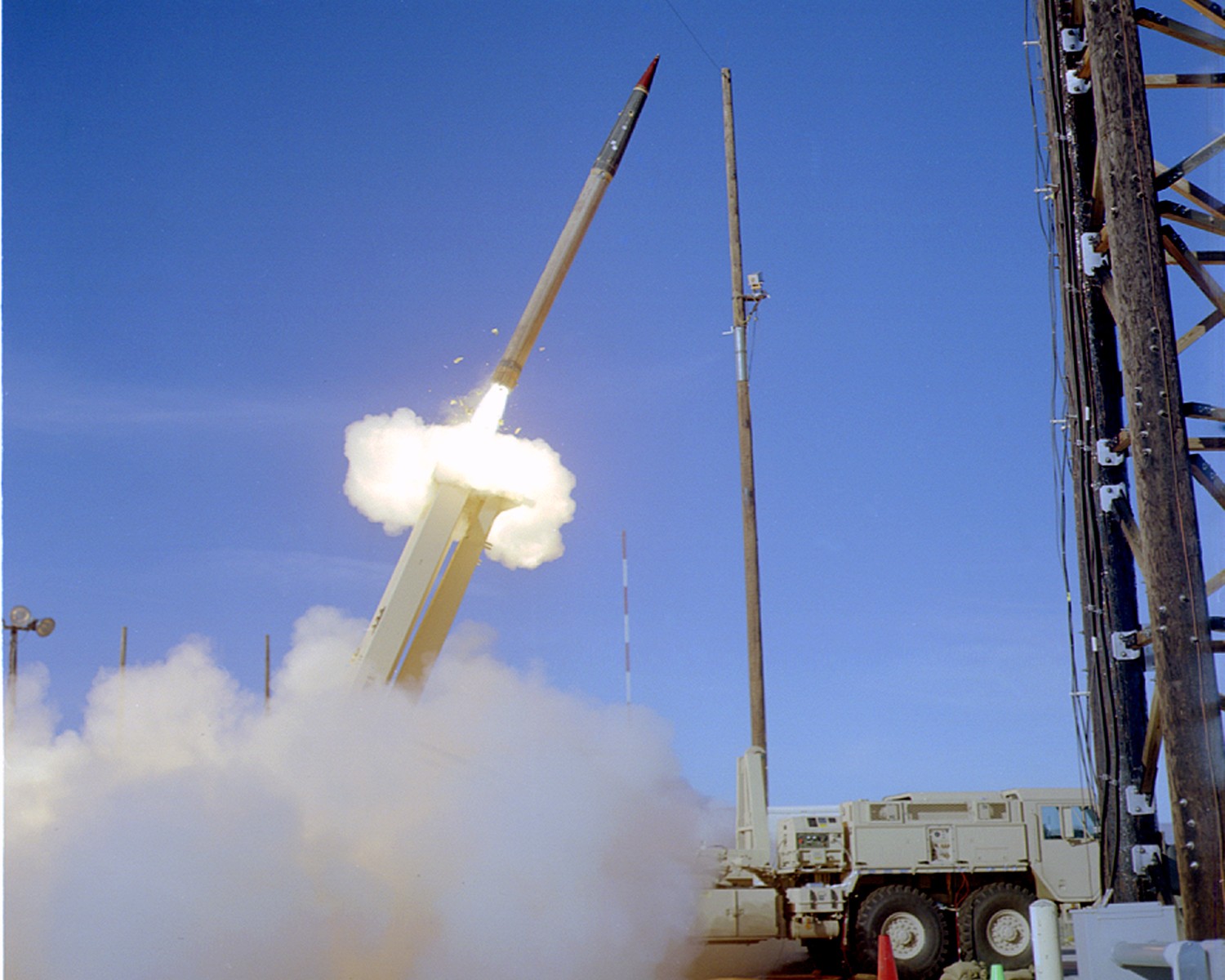
The supply chain crisis extends beyond Patriot to the Terminal High Altitude Area Defense system. Saudi Arabia operates one THAAD battery, and additional U.S.-operated THAAD systems are deployed across the Gulf region. Each THAAD interceptor costs $12.77 million according to Pentagon fiscal year 2025 documents, and the total U.S. delivered stockpile stood at 534 interceptors as of December 2025, according to Asia Times.
CNN reported in July 2025 that the United States used approximately 25 percent of its THAAD interceptor inventory during the June 2025 Israel-Iran conflict, consuming roughly 92 rounds valued at $1.17 billion. The current war, which has already lasted more than twice as long as the June 2025 exchange with no ceasefire in sight, is projected to consume approximately 215 THAAD interceptors over four weeks at the current tempo, according to Asia Times estimates. That would represent more than one-third of the entire global stockpile.
THAAD production was even more constrained than Patriot until recently. The production rate in fiscal year 2025 was just 12 interceptors per year, according to the Congressional Research Service. Lockheed Martin and the Pentagon signed an agreement to quadruple capacity from 96 to 400 interceptors per year, as reported by The Hill, but reaching that target will take years of factory expansion.
For Saudi Arabia, the THAAD arithmetic is particularly alarming. The Kingdom’s single battery came under direct operational pressure when Iran targeted its AN/TPY-2 radar system with specific strikes designed to degrade Saudi Arabia’s ability to track ballistic missiles at altitude. If Saudi Arabia needs to replace THAAD rounds, it will be competing with the U.S. military for a production line that until recently produced just one interceptor per month.
Iran’s $35,000 Drone Against the $4 Million Interceptor
The interceptor shortage is driven not just by the pace of Iranian attacks but by the radical cost asymmetry between attack and defense. Iran’s Shahed-136 one-way attack drones cost an estimated $20,000 to $50,000 to manufacture, according to the Royal United Services Institute. Saudi Arabia and its allies are engaging these threats with interceptors that cost 80 to 200 times more per unit.
The Globe and Mail reported that the economic war of attrition has become one of the defining features of the conflict. Iran can produce hundreds of Shahed drones per month at its Isfahan and Kermanshah facilities, while the Western defense industrial base requires years to meaningfully increase interceptor output. The Heritage Foundation warned before the war that high-end interceptors “would likely be exhausted within days of sustained combat,” a prediction that has proven uncomfortably accurate.
Saudi Arabia recognized this problem before the war began. The Kingdom explored low-cost drone interceptor systems from Ukraine and signed a $5 billion deal for Korean Cheongung air defense systems in an effort to diversify away from exclusive dependence on American munitions. But those systems were not yet operational when the first Iranian missiles arrived on February 28, leaving the Kingdom reliant on the very supply chain now under strain.
Why Beijing Is Watching the Interceptor Drain
The strategic implications of the interceptor shortage extend far beyond the Middle East. Asia Times reported that Chinese military planners are closely monitoring the rate at which U.S. missile stockpiles are being depleted in the Iran war, calculating what the consumption means for American deterrence capacity in the Pacific.
The Vertical Launch System inventory across the U.S. Navy, estimated at 17,000 rounds, would be insufficient for “even one full fleet reload” in a Taiwan contingency, according to the analysis. Systemic failure was projected within 30 to 60 days of sustained Pacific combat even before the Iran war began drawing down stockpiles. Every Patriot, THAAD, and SM-3 interceptor consumed over the Persian Gulf is one fewer round available for the defense of Taiwan, Japan, or South Korea.
For Saudi Arabia, the China dimension carries a more immediate risk. If Washington concludes that the Iran war is degrading Pacific deterrence, pressure will mount to limit interceptor transfers to the Gulf. The Kingdom could find itself facing an ongoing Iranian missile threat with a depleting stockpile and an American ally increasingly reluctant to replenish it. The 360-interceptor Saudi backlog already signals that Riyadh is not at the front of the production queue.
President Trump told the Financial Times on March 16 that he expects China to “help too because China gets 90% of its oil from the Straits,” referring to his demand for international naval support to reopen the Strait of Hormuz. The remark underscored the extent to which the Iran war has entangled Middle Eastern security with Pacific strategic competition, a dynamic that complicates Saudi Arabia’s defense planning in ways that were inconceivable before February 28.
Saudi Arabia’s Search for Alternatives
The interceptor crisis has accelerated Saudi Arabia’s search for air defense solutions outside the American supply chain. The war has broken Washington’s monopoly on Saudi arms procurement, and the interceptor shortage has made the diversification case unanswerable.
South Korea emerged as a major beneficiary. Saudi Arabia signed a $5 billion agreement on March 11 to co-produce Chinese combat drones in Jeddah, and the Kingdom’s interest in South Korea’s Cheongung II medium-range air defense system intensified after the system demonstrated a 96 percent intercept rate in combat conditions during the war’s opening days, according to Korean defense officials. Ukraine offered Saudi Arabia drone defense teams and electronic warfare systems that had been battle-tested against the same Shahed drones Iran was launching at Riyadh.
The full scope of this Ukrainian technology transfer — from Wild Hornets’ Sting interceptors to TAF Industries’ Merops AI drones — is now reshaping Gulf air defense procurement at a pace that legacy Western manufacturers cannot match.
The Israeli interceptor shortage report added urgency to these diversification efforts. If Israel, which co-produces some of its own interceptors through Israel Aerospace Industries, cannot maintain adequate stockpiles, a nation that is entirely dependent on imports for its missile defense has even less margin for error. The Tomer company, which manufactures Arrow missile engines in Israel, doubled its production capacity and staffing over the past two years, according to Breaking Defense, but Saudi Arabia has no equivalent domestic production capability.
The Kingdom’s longer-term response involves building domestic missile production capacity through SAMI, the Saudi Arabian Military Industries conglomerate. But that is a decade-long project. In the near term, Saudi Arabia remains tethered to a production line in Arkansas that is running at roughly one-third of what the war demands.
What Happens If the Interceptors Run Out?
The operational consequences of interceptor depletion would be severe. Saudi air defense commanders would face a triage calculation, deciding which incoming threats to engage and which to allow through. High-value targets such as Aramco facilities, desalination plants, and densely populated areas would receive priority coverage, while military installations and less critical infrastructure would be left exposed.
The Iran war has already provided a preview of what happens when air defense coverage thins. On March 14, an Iranian ballistic missile struck Prince Sultan Air Base in al-Kharj and damaged five U.S. Air Force refueling aircraft on the ground, according to the Wall Street Journal. On March 9, a projectile struck a residential compound in al-Kharj, killing two civilians and injuring twelve. These incidents occurred despite Saudi Arabia’s air defense network operating at peak capacity, raising the question of what the casualty toll would look like if interceptor availability declined by 30, 50, or 70 percent.
Defense analysts point to a cruel irony in the interceptor arithmetic. The war that demonstrated Saudi Arabia’s air defense competence, with Saudi forces successfully destroying hundreds of incoming threats, simultaneously demonstrated the system’s Achilles heel. Intercepts are not free. They are a finite, expensive, and slowly replenished commodity, and Iran has shown it can sustain a volume of fire that drains them faster than any supply chain on Earth can replace them.
With Israel’s emergency defense spending authorization, the Knesset signaled that the interceptor crisis has reached a political threshold. The question for Saudi Arabia is whether the Kingdom will receive the same priority treatment from Lockheed Martin and the Pentagon, or whether Riyadh will find itself waiting behind Tel Aviv, Washington, and a growing list of European and Asian customers for a weapon it cannot do without.
The interceptor shortage is one dimension of a broader financial crisis. Each PAC-3 MSE round costs $4.1 million, and the Pentagon has already spent billions replacing expended munitions. A full analysis of the $16 billion war cost and its strategic consequences reveals how this expenditure rate is reshaping Gulf alliance politics in MBS’s favour.
The interceptor depletion timeline has accelerated further since this analysis was written. On March 17, Iran launched one hundred drones at Eastern Province oil fields in a single day, quadrupling the previous daily average and compressing the window before Saudi Arabia exhausts its current Patriot missile stocks.
Frequently Asked Questions
How many interceptors has Saudi Arabia fired since the Iran war began?
Saudi Arabia has intercepted more than 400 aerial threats since February 28, according to Saudi Defence Ministry statements. The U.S. Army fired over 800 Patriot interceptors across the Gulf region in the war’s first five days alone, according to Military Watch Magazine. Exact Saudi-specific figures remain classified, but defense analysts estimate the Kingdom has consumed between 300 and 450 PAC-3 MSE rounds in the conflict’s first 16 days.
Why can Lockheed Martin not produce interceptors faster?
Lockheed Martin’s Camden, Arkansas facility produced 620 PAC-3 MSE interceptors in 2025, a record output. The company signed a framework agreement in January 2026 to triple production to 2,000 per year, but the expansion target is 2030. Missile production requires specialized components, precision manufacturing, and extensive testing that cannot be accelerated on wartime timescales without years of prior investment in factory capacity, workforce training, and supply chain development.
Is Israel really running low on interceptors?
U.S. officials told Semafor on March 14 that Israel informed Washington it was critically low on ballistic missile interceptors. The IDF publicly denied the report. However, within hours of the Semafor story, Israel’s government approved an $826 million emergency defense procurement authorization, suggesting the situation was serious enough to trigger an extraordinary fiscal response. Israel entered the current war already depleted from the June 2025 conflict with Iran, during which the U.S. used approximately 25 percent of its THAAD inventory.
What does the interceptor shortage mean for Saudi Arabia’s air defense?
Saudi Arabia and Israel share the same U.S.-manufactured interceptor supply chain, drawing from the same PAC-3 MSE and THAAD production lines. With both nations consuming interceptors at wartime rates and production capacity at roughly one-third of demand, Saudi Arabia faces the prospect of a declining missile shield if the war continues beyond April. A 360-interceptor backlog for the Kingdom already indicates that replenishment is not keeping pace with consumption.