
TEHRAN — On or around May 10, Major General Ali Abdollahi walked into a meeting with Mojtaba Khamenei and delivered a full readiness briefing on every branch of Iran’s armed forces — IRGC, regular army, law enforcement, border guards, Ministry of Defense, Basij. What came back from the other side of that table were new operational directives for war. Not guidance. Not principles. Directives — “new guiding measures to pursue military operations and firmly confront adversaries,” in the language Fars News chose to publish, which is itself a choice worth reading carefully.
This is the first confirmed command act by Mojtaba Khamenei as supreme leader during wartime. For sixty-two days since his father’s assassination, the analytical question that has defined this war’s diplomatic ceiling was whether anyone in Tehran possessed both the constitutional authority and the operational willingness to make binding military decisions. US and Israeli intelligence assessed that IRGC generals were making choices for a leader too injured to function. Time magazine published “The Men Who Run Iran” on May 6 — four days before this meeting — and excluded Mojtaba from the list of functional decision-makers. The Soufan Center, as recently as April 20, concluded there was “no clearly identifiable overarching authority in Iran capable of resolving the internal debate.”
The May 10 meeting doesn’t resolve the debate about who runs Iran. It resolves a more consequential question: whether anyone above the operational commanders is willing to issue new orders, in writing, during a war. Someone just did. And the man he issued them to — Abdollahi — is the same commander President Pezeshkian publicly accused of wrecking the ceasefire thirty-six days earlier.
Table of Contents
The Authorization Ceiling Was Always a Vacuum
Since early March, every diplomatic initiative aimed at Iran has run into the same structural problem: nobody could guarantee delivery. Pakistan’s Asim Munir brokered a ceasefire on April 8 that Iran’s own military violated within hours — 31 drones and 16 missiles fired at Saudi energy infrastructure while the ink was still metaphorically wet. Vance flew to Islamabad, sat across from Ghalibaf, and walked out when it became clear that the man at the table could not bind the men with the launchers. Every intermediary — Oman, Qatar, Pakistan, Turkey — reported the same phenomenon: Iranian diplomats would agree to frameworks that Iranian commanders would then ignore.
The reason was structural, not personal. Iran’s foreign minister, Hossein Amir-Abdollahian’s successor Abbas Araghchi, articulated it with unusual candor in March: “Our military units are now, in fact, independent and somewhat isolated, and they are acting based on general instructions given to them in advance.” Those pre-issued instructions — whatever they contained — were the last operational guidance from Ali Khamenei before his death. They could not be updated, because the man who replaced him was either too injured to function, too new to command authority, or both.
This was the authorization ceiling. Not a refusal to negotiate — a structural incapacity to deliver on any negotiation. Ahmad Vahidi, the IRGC commander-in-chief, told his officers that “under wartime conditions, all critical and sensitive leadership positions must be selected and managed directly by the IRGC until further notice.” Abdollahi ran the joint operational command. Zolghadr controlled the SNSC. Pezeshkian had Article 110 of the constitution staring him in the face — the clause that gives the president precisely zero authority over the armed forces. The ceiling wasn’t a metaphor. It was the absence of a functioning supreme commander issuing new orders to a military that had been running on autopilot since February 28.
The Middle East briefing 3,000+ readers start their day with.
One email. Every weekday morning. Free.
What happened on May 10 is that the autopilot was switched off. Whether you believe Mojtaba is genuinely commanding or merely rubber-stamping — and reasonable analysts disagree — the institutional form of supreme-leader-issues-military-directives has now been performed, documented, and broadcast through every state media channel. The vacuum has a name in it now. The problem is what that name chose to do with it.
Who Is Mojtaba Khamenei — Constitutionally and Actually?
Mojtaba Khamenei is fifty-seven years old and has spent his entire adult life avoiding exactly this job while simultaneously positioning himself to do it. Born in 1969, he operated for decades as what Al Jazeera described as “a powerbroker with deep connections to the IRGC” — no public speeches, no sermons, no government titles, no constitutional role. His 2009 function during the Green Movement protests was purely operational: a leaked IRGC intelligence report identified his “crucial role in commanding the violent suppression of Iranian civilians,” and protesters chanted “Mojtaba, may you die, and not see the leadership” in the streets of Tehran. They were seventeen years early.
On March 9, 2026 — hours after an Israeli strike killed his father, his mother, his wife, and one sister — the Assembly of Experts announced him as supreme leader. Iran International reported the IRGC “orchestrated” the selection, bypassing the normal deliberative process. No formal incapacitation finding under Article 111 was ever invoked, because there was no interregnum: one supreme leader was killed, another was named the same day. The constitutional process that was meant to provide orderly succession — the temporary leadership council of president, judiciary chief, and Guardian Council faqih — never activated.
His health status remains contested. Western intelligence describes him as “gravely injured,” governing by audio conference, unable to appear publicly. Iran International reported IRGC generals “effectively ruling Iran, sidelining” him. The Jerusalem Post, citing US and Israeli sources, stated bluntly: “Mojtaba Khamenei not functioning as leader, IRGC commanders make choices for him.” No photograph or video of the May 10 meeting with Abdollahi was released — only text through Fars, IRNA, and IRIB. Breitbart’s headline captured the skeptical read: “Iran Claims Missing ‘Supreme Leader’ Commanding Armed Forces.”
But constitutional legitimacy in Iran does not require physical visibility. It requires the institutional form — the directive issued, the commander briefed, the state media announcement. Ali Khamenei governed for thirty-five years with minimal public appearances during crises. What matters operationally is not whether Mojtaba was in the room or on a secure audio link, but whether the men receiving the orders treat them as binding. Abdollahi’s language after the meeting — pledging “with full obedience” to defend “the ideals of the Islamic Revolution…until the last breath and to the death” — is the language of a commander who has received orders he intends to follow, or at minimum intends to be seen following.
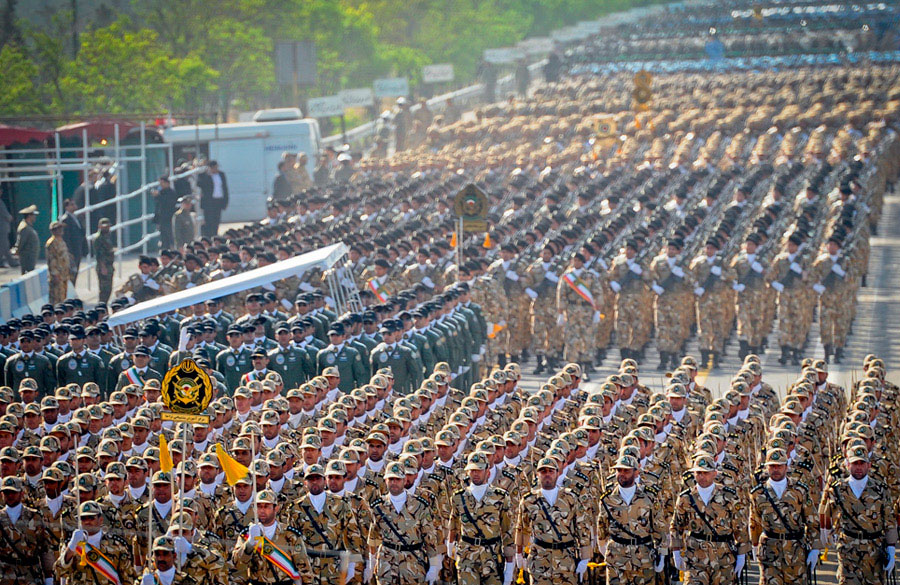
Why Did Mojtaba Meet the Man Pezeshkian Accused?
On April 4, President Masoud Pezeshkian did something no sitting Iranian president had done before: he named specific military commanders as responsible for destroying the peace process. He accused both Ahmad Vahidi and Ali Abdollahi of “acting unilaterally and driving escalation through attacks on regional countries” and stated their policies had destroyed any remaining chance of a ceasefire. This was not bureaucratic frustration — it was a constitutional crisis compressed into a single accusation. The president was publicly stating that the men running the war were beyond his control and actively sabotaging the diplomacy he was constitutionally responsible for conducting.
Thirty-six days later, Mojtaba Khamenei met with one of those two men and issued him new operational directives. Not a reprimand. Not a reassignment. Not a summons to explain himself. Operational guidance for continuing the war. The inversion is total: Pezeshkian accused Abdollahi of unilateral escalation in April; the supreme leader rewarded him with direct access and fresh orders in May. If you are a diplomat sitting in Islamabad or Doha trying to construct a ceasefire framework, this is the sequence that tells you your counterparty’s internal politics have been settled — and not in your favor.
Understanding why requires understanding what Abdollahi actually commands. The Khatam al-Anbiya Central Headquarters is not the Khatam al-Anbiya Construction Headquarters — the IRGC’s sanctioned economic empire of 812 companies and 25,000 engineers that builds dams and petrochemical plants. Western reporting frequently confuses the two because they share a name. The KCHQ is the operational wartime joint command, established in 1983 during the Iran-Iraq War, separated from the General Staff as a permanent standing command in 2016. Its function is coordination between the IRGC and regular army during active conflict — joint operation planning, strategic reserve management, the integration of disparate military branches into coherent offensive and defensive postures.
| Commander | Status | Cause | Date |
|---|---|---|---|
| Gholamali Rashid | Killed | Israeli strike, 12-Day War | 2025 |
| Ali Shadmani | Killed | Israeli strike, 12-Day War | 2025 |
| Ali Abdollahi | Appointed | Emergency wartime succession | June 17, 2025 |
| Abolghasem Babaeian (Chief of Staff) | Assassinated | Targeted killing | March 7, 2026 |
Abdollahi is the third KCHQ commander in rapid succession — both predecessors killed by Israel. His chief of staff was assassinated three weeks before the war began. He commands the single institution that translates supreme leader directives into joint military action across all branches. When Mojtaba issues him “new guiding measures to pursue military operations,” those measures flow downward through the entire Iranian military apparatus. This is not a meeting with a political ally. It is the constitutional commander issuing orders to the operational commander — the one link in the chain that, until May 10, appeared to be missing.
What Do the Directives Actually Mean?
Iranian state media did not publish the content of Mojtaba’s directives — only their existence and their framing. Fars described them as “new guiding measures to pursue military operations and firmly confront adversaries.” IRNA used “new directives to the Iranian Armed Forces, aimed at strengthening their combat readiness and decisively dealing with the aggressive enemies.” IRIB framed them as continuing the “remarkable victories” of the “Third Imposed War (Ramadan War)” — the regime’s chosen name for the current conflict, embedding doctrinal continuity into the language itself.
That doctrinal-continuity framing is analytically important. The directives were explicitly presented as building on “previous directives issued during the Third Imposed War,” which means Mojtaba is asserting retroactive authority over decisions already taken — not merely issuing prospective guidance. He is claiming, through state media, that the war’s conduct to date was under his authority all along. Whether that is factually true is less important than the institutional signal: the chain of command is being narratively closed, backdated to cover the period Western analysts identified as a vacuum.
Iran’s fighters possess strong combat morale, comprehensive defensive and offensive readiness, well-developed strategic plans, and all necessary weapons and equipment required to counter enemy threats. Any strategic miscalculation, aggression, or military encroachment by the United States and the Zionist regime would be met with a rapid, powerful, and high-intensity response.
Major General Ali Abdollahi, briefing to Mojtaba Khamenei, May 10, 2026 (via Purewilayah/IRIB)
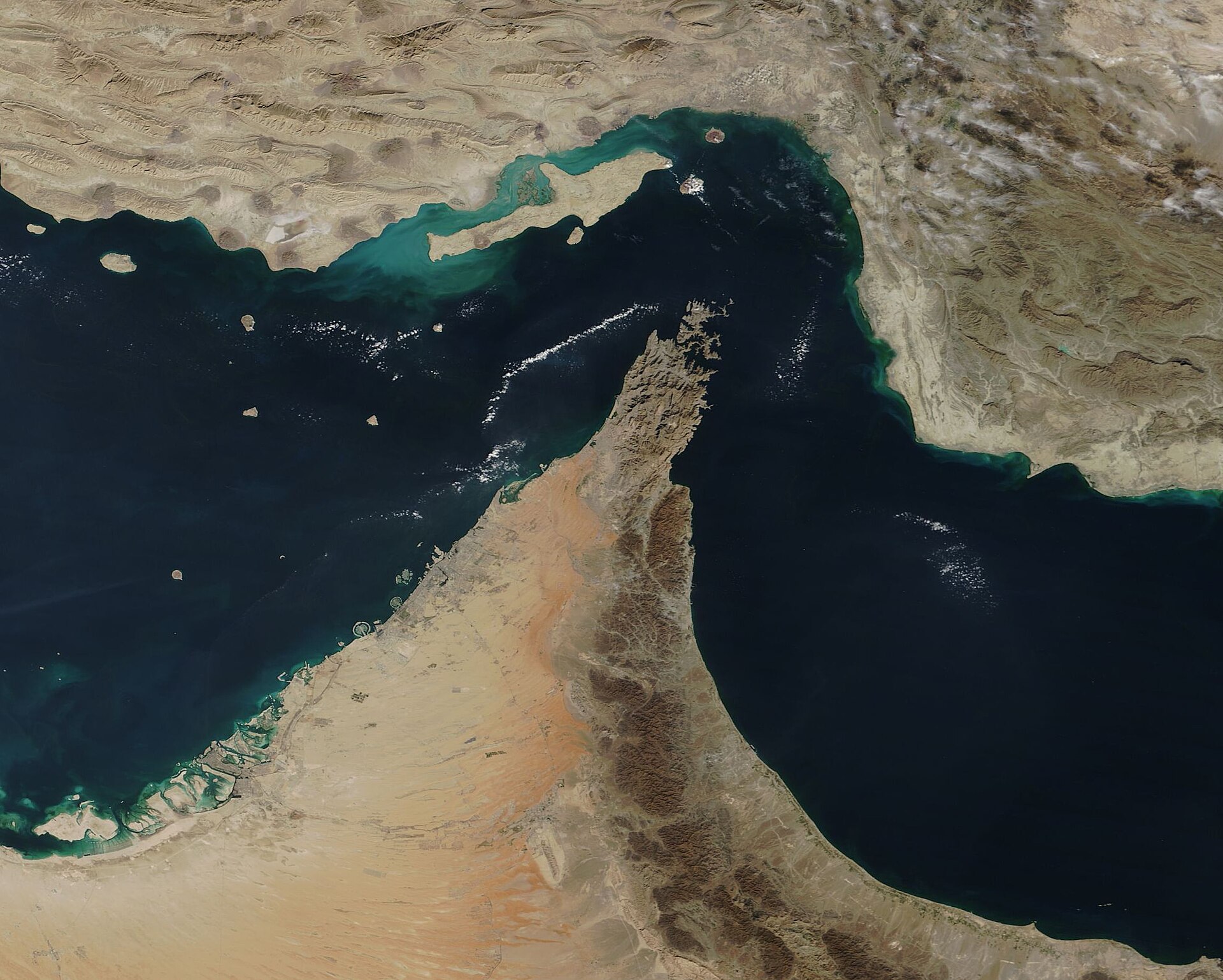
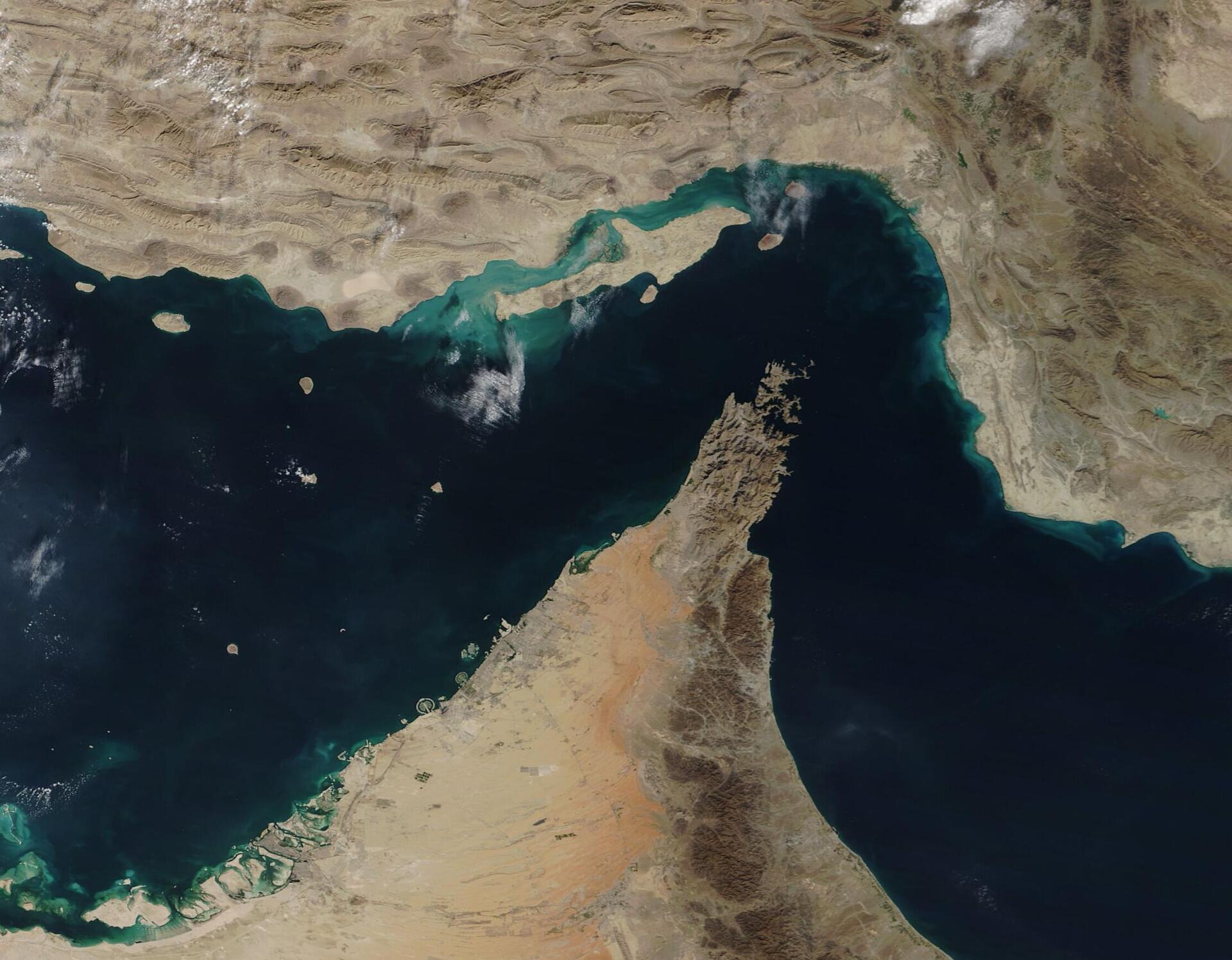
The material foundation for Abdollahi’s maximalist readiness language arrived three days later, courtesy of the New York Times. On May 13, US intelligence assessments revealed that Iran had restored 30 of its 33 missile sites along the Strait of Hormuz to operational status, retained approximately 70 percent of its pre-war missile stockpile, maintained roughly 70 percent of mobile launchers in functional condition, and kept approximately 90 percent of underground missile facilities “partially or fully operational.” Trump called it “Fake News” and said anyone who “thinks Iran has reconstituted its military is either delusional or a mouthpiece.” The Pentagon’s acting press secretary, Joel Valdez, declined to comment on intelligence assessments. The Hajj calendar convergence with the anticipated strike window sharpened on May 17, when Saudi Arabia’s moon-sighting committee fixed the Day of Arafah on May 26 — the same period Mojtaba’s new directives now govern; that Hajj calendar convergence is examined in full in the adjoining report.
| Category | Status | Pre-War Baseline |
|---|---|---|
| Hormuz missile sites operational | 30 of 33 | 33 |
| Pre-war missile stockpile retained | ~70% | 100% |
| Mobile launchers functional | ~70% | 100% |
| Underground facilities operational | ~90% | 100% |
The sequencing tells the story. May 10: Mojtaba issues readiness directives. May 10-11: Trump declares the ceasefire on “massive life support” — “your loved one has approximately a one percent chance of living.” May 13: US intelligence confirms Iran retains the material capacity to execute whatever those directives contain. The readiness briefing Abdollahi delivered was not aspiration — it was inventory. And the directives Mojtaba issued were not into a void — they landed on a military apparatus that, according to America’s own intelligence community, still has the missiles to back them up.
How Does This Change Saudi Arabia’s War?
Saudi Arabia is fighting this conflict in three simultaneous and contradictory postures — co-belligerent, ceasefire advocate, and mediation host — and the clarification of Iran’s command structure makes all three harder to sustain. Reuters reported on May 12 that Saudi Arabia launched covert air strikes on Iranian soil in late March 2026, the first known direct Saudi military action against Iran in history. Four sources — two Western officials, two Iranian officials — confirmed the strikes, though specific targets were not identified. The Saudi foreign ministry issued what Reuters characterized as a non-denial denial: “We reaffirm Saudi Arabia’s consistent position advocating de-escalation, self-restraint and the reduction of tensions.”
The strikes worked, in the narrow sense that Iranian attacks on Saudi Arabia dropped from over 105 drone and missile launches in the final week of March to just 25 in the first week of April — a 76 percent reduction. But they also established Saudi Arabia as a legitimate military target under any Iranian doctrine of self-defense, which is precisely the framework the May 10 directives appear designed to reinforce. Abdollahi’s language about responding to “any strategic miscalculation, aggression, or military encroachment” does not distinguish between American and Saudi aggression. For a military command that struck Saudi infrastructure during a nominal ceasefire on April 7-8 — as detailed above — the bar for “miscalculation” is whatever the KCHQ decides it is on any given morning.
The Saudi problem is now temporal. Before May 10, Riyadh could reasonably calculate that Iranian escalation was decentralized — field commanders operating on pre-issued instructions with no one above them to either authorize or restrain new operations. That calculation supported a strategy of careful deterrence: hit Iran covertly, reduce the tempo, maintain deniability, avoid triggering a centralized response because no centralized authority existed to trigger. After May 10, that logic inverts. There is now a named authority issuing new operational orders to the man who coordinates all Iranian military branches. A Saudi covert strike that in March produced de-escalation might in June produce a directive specifically naming Saudi targets — issued from the top, coordinated across branches, backed by the missile inventory the US intelligence community has now confirmed Iran still holds.
| Date | Event | Source |
|---|---|---|
| Late March 2026 | Saudi covert air strikes on Iranian soil (first known direct action) | Reuters, 4 sources |
| March 25-31 | 105+ Iranian drone/missile attacks on Saudi Arabia | Reuters/Saudi MoD |
| April 1-6 | ~25 Iranian attacks (76% reduction post-Saudi strikes) | Reuters |
| April 7-8 | 31 drones + 16 missiles at Saudi energy infrastructure during ceasefire | Saudi Civil Defense |
| May 10 | Mojtaba issues operational directives to Abdollahi/KCHQ | Fars/IRNA/IRIB |
MBS has spent this war building a bypass architecture — the East-West Pipeline to Yanbu, the OPEC+ production pause, the careful management of fiscal reserves against a $108-111 per barrel break-even — that was designed to outlast a decentralized Iranian threat. A centralized one is a different mathematical problem. The 5.9 million barrels per day that Yanbu can handle is adequate against sporadic harassment. It is not adequate against a coordinated campaign specifically targeting the pipeline’s pumping stations, which Iran already hit once on April 8, under exactly the commander who just received new orders from the supreme leader.
Araghchi’s Diplomatic Track Is Now Structurally Dead
Consider the position of Abbas Araghchi. Iran’s foreign minister told the Soufan Center in March that military units were “independent and somewhat isolated, acting based on general instructions given to them in advance.” That was a diplomatic signal — a way of telling interlocutors that the foreign ministry could not guarantee military compliance because nobody was issuing new orders. It was, in its way, an invitation: help us construct a framework that gives someone the authority to issue those orders, and we can deliver a ceasefire.
That invitation is now void. Someone has issued new orders. They were not diplomatic orders. They were not orders to stand down, de-escalate, or prepare for a settlement. They were orders to “pursue military operations and firmly confront adversaries” — language that is structurally incompatible with any ceasefire framework currently on any table in any capital. Araghchi’s problem is no longer that he cannot bind the military. It is that the military has been explicitly bound — by the supreme leader, in documented directives — to a posture that contradicts everything Araghchi’s diplomacy is trying to achieve.
Hamidreza Azizi, writing in Time on May 6 — four days before the meeting — described Iran’s power structure as “a more thoroughly militarized system, but not a military junta in any conventional sense.” The distinction mattered because it left theoretical space for a non-military actor to reassert civilian primacy. What the May 10 meeting demonstrates is that the non-military actor with the constitutional authority to override the generals — the supreme leader — has instead chosen to align with them. The ceiling hasn’t been removed. It has been reinforced from above, by the one person whose job was to remove it.
Every offer currently circulating — the Pakistan-brokered framework, the 20-year enrichment moratorium the US proposed, whatever Araghchi discussed with the Saudi foreign minister on April 13 — now runs upward into a command structure that has already issued operational orders. A diplomatic proposal that requires Iran to stand down its military posture must now explicitly override a supreme leader’s directive. That is not a diplomatic ask. That is a constitutional one — and it is the same structural problem the US blockade was designed to circumvent by raising costs rather than seeking permission.
Iran’s constitution vests sole military authority in the supreme leader under Article 110. No intermediary, no foreign minister, no president can accept terms that contradict what Mojtaba has ordered. They literally lack the legal authority to do so.
Trump, who on May 10 compared the ceasefire to a patient with “approximately a one percent chance of living,” may have been more accurate than he intended. The patient didn’t die of external causes. It died because the one person with the authority to keep it alive walked into a room with the military’s operational commander and issued orders to escalate instead.
FAQ
Was the Mojtaba-Abdollahi meeting confirmed to be in person?
No. Iranian state media — Fars, IRNA, and IRIB — all reported the meeting occurred and that directives were issued, but released no photograph, video, or detail about the format. Western intelligence describes Mojtaba as governing by audio conference with doctors restricting access. The meeting may have occurred via secure link rather than face-to-face, though the institutional form — commander briefing supreme leader, supreme leader issuing orders — functions identically regardless of medium. The absence of visual proof is consistent with Iran’s approach to Mojtaba’s public presence since March 9, where text communiqués through state media have been the sole format for all leadership communications.
What is the difference between the Khatam al-Anbiya Central Headquarters and the Construction Headquarters?
They share a name but are entirely separate entities. The Central Headquarters (KCHQ) is the operational wartime joint command, established 1983 and separated from the General Staff in 2016, with Ali Abdollahi as its current commander. The Construction Headquarters — formally designated KAA and known internally as GHORB — is the IRGC’s sanctioned economic empire, commanded by Seyed Hosein Housh Sadat and operating more than 800 registered companies employing tens of thousands of staff across infrastructure, railways, and petrochemical sectors. Western media conflates the two because both carry the “Khatam al-Anbiya” title, which translates as “Seal of the Prophets” — a Quranic reference to Muhammad that Iranian institutions apply broadly as an honorific.
Can Pezeshkian constitutionally override Mojtaba’s military directives?
No. Article 110 of Iran’s constitution vests supreme command of the armed forces exclusively in the supreme leader. Article 176 places the Supreme National Security Council — which determines defense and security policies — under the supreme leader’s oversight, with the president serving only as chairman without independent authority. The president’s sole military role is ceremonial: signing international treaties after approval by the Majlis. Pezeshkian demonstrated this impotence publicly on April 4 when he could only accuse Vahidi and Abdollahi by name without any mechanism to remove, reassign, or order them. Even the SNSC secretary — Zolghadr, who was installed under IRGC pressure — answers to the supreme leader, not the president.
How does Iran’s current Hormuz missile capability compare to pre-war levels?
The CIA concluded in a May 7 assessment, reported by the Washington Post, that Iran could “outlast Trump’s Hormuz blockade for months” at current supply rates. The New York Times published the underlying numbers on May 13: 30 of 33 coastal sites restored, approximately 70 percent of pre-war stockpile and launchers retained, 90 percent of underground facilities functional. The mine-clearance problem compounds this: the US has only two Avenger-class mine countermeasure ships in the Gulf theater — four were decommissioned at Bahrain in September 2025 — and clearing the strait after any deal would require an estimated 51 days based on 1991 Kuwait benchmarks.
What happened to the nuclear talks after the May 10 directives?
Trump rejected Iran’s counter-proposal on the same day as the Mojtaba-Abdollahi meeting, calling it “TOTALLY UNACCEPTABLE” and “a piece of garbage.” Iran had proposed a phased framework — transmitted via Pakistan — demanding an end to war on all fronts, sanctions lifting, end of the naval blockade, compensation for war damage, and sovereignty over Hormuz affirmed, with nuclear talks deferred to later stages. The US had proposed a 20-year enrichment moratorium and surrender of 440.9 kilograms of 60 percent enriched uranium. Two US officials told Axios that Trump is “leaning toward taking some form of military action against Iran to increase pressure” — with one adding “he will tune them up a bit.” Neither side has formally declared the ceasefire collapsed, but Gen. Dan Caine, Chairman of the Joint Chiefs, told reporters Iran has attacked US forces “more than 10 times since the ceasefire’s start.” The authorization ceiling that prevented any Iranian actor from accepting a deal now has a new expression: on May 17, Iran struck Barakah Nuclear Power Plant with a drone, the first attack on an operating Gulf atomic facility, as examined in Iran Hit Barakah Nuclear Plant. No Gulf Reactor Has a Shield Now.
The formal toll mechanism Iran was building toward — the PGSA permit system, Azizi’s May 16 announcement, and Aref’s sovereignty declaration — is reported in Iran Announces Formal Hormuz Toll Mechanism — 74 Days After the IRGC Already Built One. The legal architecture and OFAC trap facing European shipowners are examined in full there.