
Table of Contents

WASHINGTON — Admiral Brad Cooper, the commander of U.S. Central Command, told the Senate Armed Services Committee on May 14 that American forces had “eliminated more than 90 percent of Iran’s once-massive inventory of over 8,000 naval mines” through more than 700 airstrikes on Iranian naval mine targets. Three days earlier, Aramco CEO Amin Nasser told investors on a Q1 earnings call that the oil market would not normalize until 2027 if the Strait of Hormuz remained disrupted past mid-June. Between those two statements lies a gap that no percentage can close.
Cooper’s testimony painted Operation Epic Fury in maximalist terms: 38 days, 13,500 strikes, 10,200 sorties, 161 Iranian naval vessels destroyed across 16 classes, and more than 85 percent of Iran’s ballistic missile, drone, and naval defense industrial base damaged or destroyed. “In 38 days, we rolled back 40 years of Iranian military investment,” Cooper told senators. Iran’s navy, he said, would take “a generation” to rebuild.
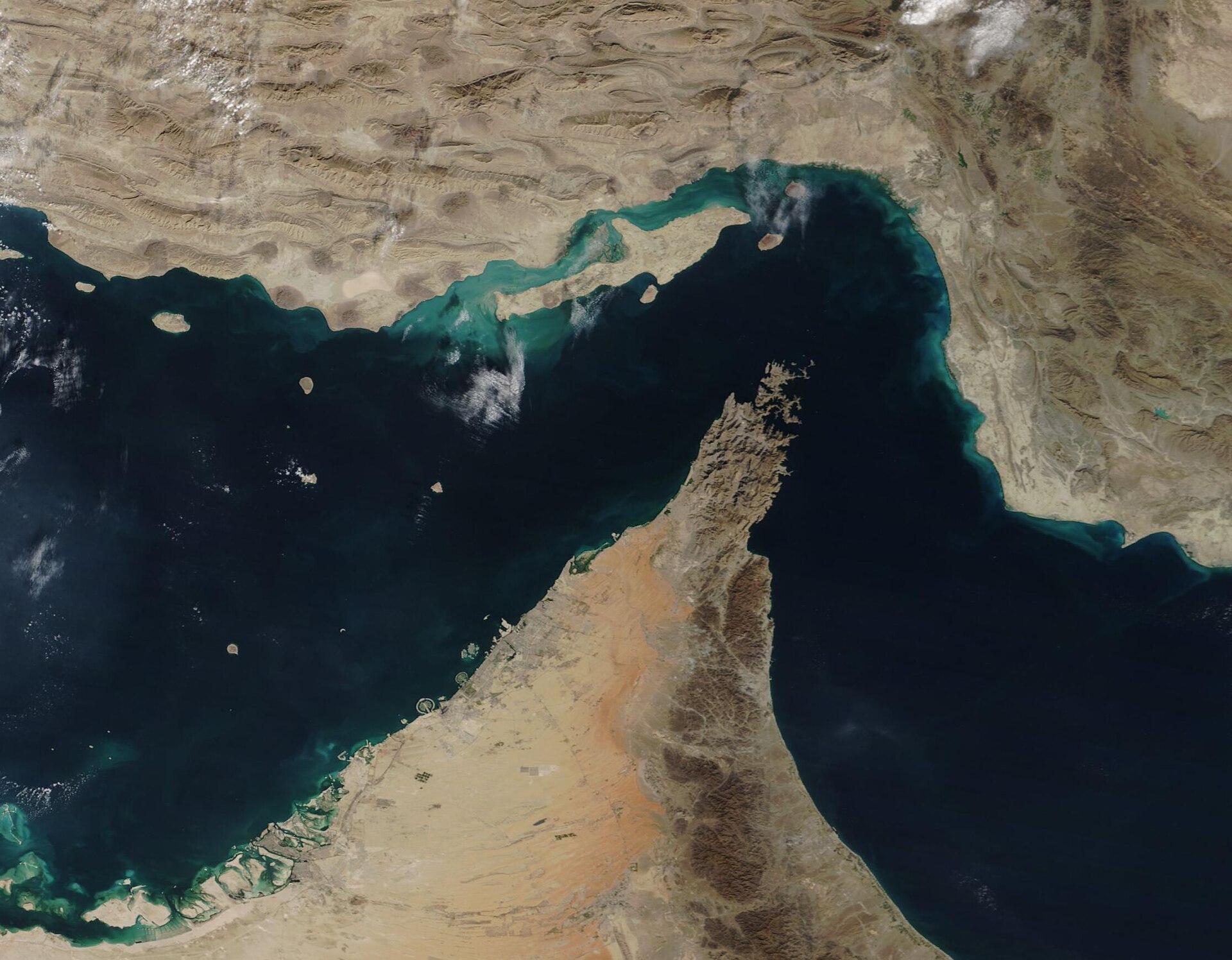
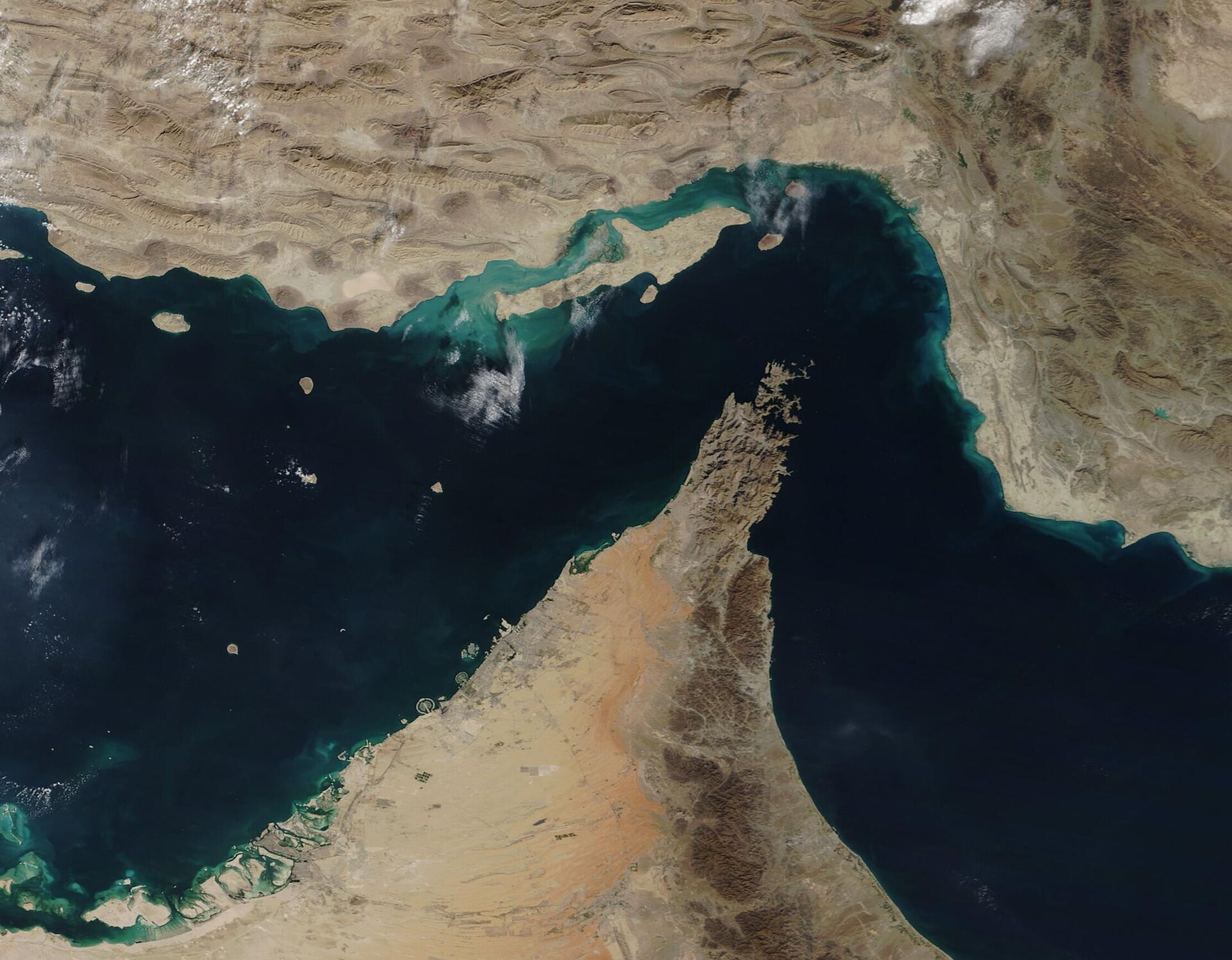
The Strait of Hormuz remains closed. Total transits since the April 8 ceasefire stand at 45 — 3.6 percent of the pre-war baseline of roughly 138 vessels per day. Some 170 million barrels of crude sit on 166 tankers. Another 1,550 ships carrying 22,500 mariners are stranded across the theater. Bloomberg’s headline after Cooper’s testimony captured the paradox: “US Airstrikes Remove Bulk of Iran’s Naval Mines, Strait of Hormuz Remains Closed.”
The 90 Percent That Wasn’t Swept
Cooper’s 90-percent figure requires parsing. The destruction came through airstrikes on mine-storage warehouses and mine-laying vessels, not through underwater mine-clearance operations. CENTCOM confirmed the elimination of “more than 90 percent of Iran’s large mine-laying vessels and mine-storage warehouses.” Navy Lookout, a British defense analysis outlet, noted that Cooper “did not disclose how many [mines] had been laid in the strait versus destroyed in storage or on vessels.”
The distinction matters operationally. Destroying a mine in a warehouse in Bandar Abbas is an airstrike on a fixed target with known coordinates. Locating and neutralizing a mine sitting on the seabed of a shipping lane — particularly a GPS-guided remote-deployment mine with no positional record in any surrendered database — is an entirely different problem. Iran has not surrendered. No mine-field coordinates have been handed over. No map exists.
The 1991 Kuwait mine-clearance operation, the standard historical benchmark, involved roughly 1,290 Iraqi mines concentrated in a defined field. Iraqi officers surrendered the coordinates. The U.S. deployed USS Avenger, three MSO-class minesweepers, and MH-53 helicopter squadrons. The operation took 51 days under permissive conditions with full positional data. None of those conditions apply in 2026.
The Middle East briefing 3,000+ readers start their day with.
One email. Every weekday morning. Free.
How Many Mines Are Actually in the Strait?
U.S. officials told CBS News in late March that “about a dozen” mines were physically present in the strait. By April 21, the Pentagon briefed the House Armed Services Committee that Iran had placed “20 or more” mines, including types deployed remotely using GPS technology that make detection, in the Washington Post’s phrasing, “significantly more difficult.” The GPS-guided variants include the Maham 3 and Maham 7, limpet-type mines that can be repositioned after initial deployment.
The numbers moved in one direction. Axios reported on April 23 that Iran deployed additional mines after the April 7 ceasefire, prompting President Trump to order the Navy to “shoot and kill” Iranian mine-laying boats. Cooper’s 90-percent figure is a snapshot of Iran’s pre-war inventory. It does not account for post-ceasefire mining activity. The mine threat is not a fixed quantity being drawn down; it is a contested, dynamic environment in which new mines appeared after the United States declared the original stock destroyed.
The Pentagon’s own classified briefing to HASC on April 22 estimated that complete mine clearance could take six months, with operations unlikely to begin before the end of hostilities. The Pentagon subsequently walked this back, calling it “cherry-picked leaked information.” Cooper, in his May 14 testimony, said the U.S. had “sufficient mine clearing capacity, through a variety of systems.” He did not name the systems or provide a timeline.
One Ship, Zero Helicopters, and a Prototype
The systems Cooper declined to name face a well-documented readiness problem. On September 25, 2025, the U.S. Navy decommissioned the last four Avenger-class mine countermeasures ships from Bahrain — USS Devastator, USS Sentry, USS Dextrous, and USS Gladiator. In August 2025, the MH-53E Sea Dragon mine countermeasures helicopter detachment was shut down from the Arabian Gulf. The Navy retired its dedicated mine-hunting fleet five months before it needed it.
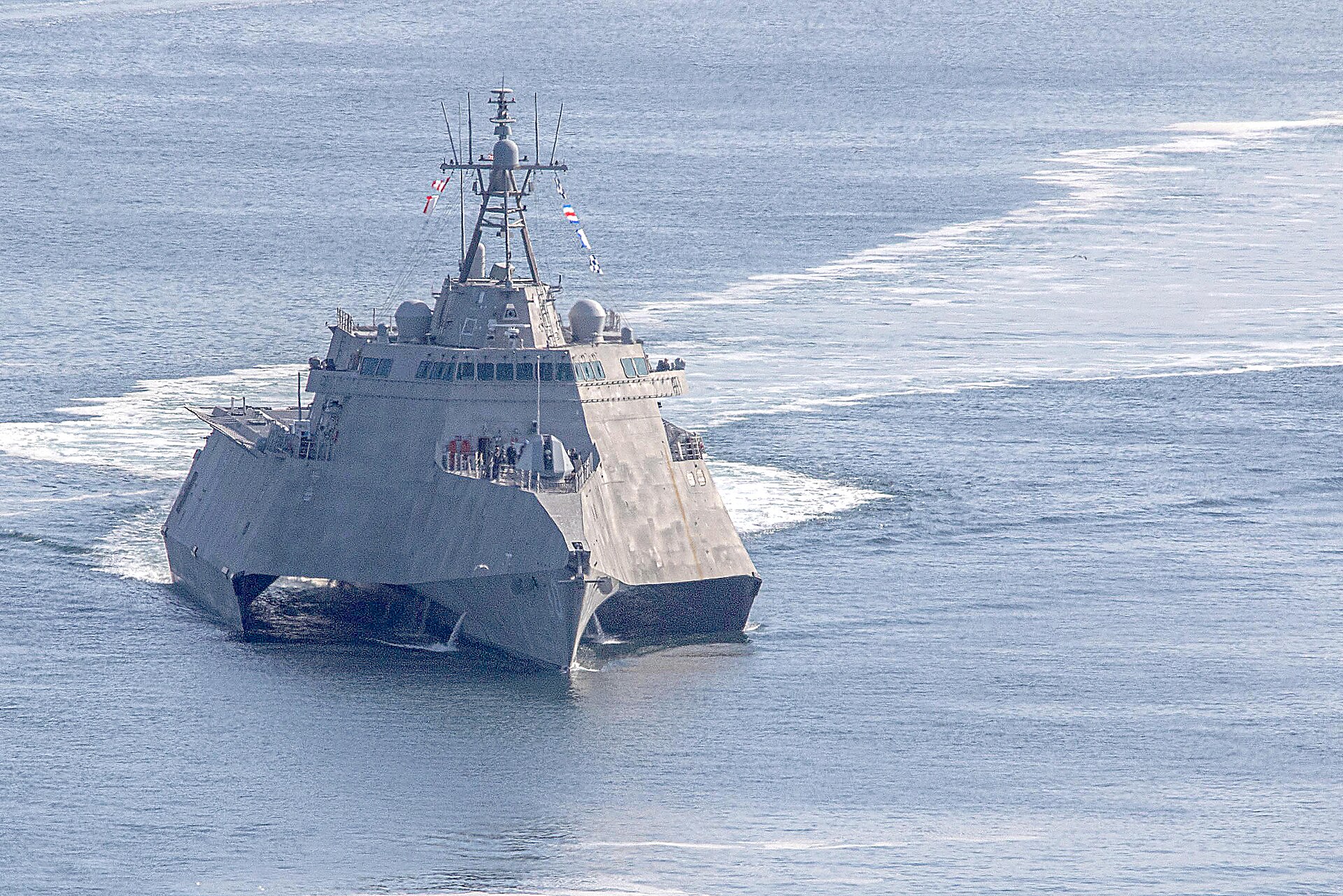
The replacement: three Independence-class littoral combat ships fitted with mine countermeasures mission packages — USS Canberra (LCS-30), USS Santa Barbara (LCS-32), and USS Tulsa (LCS-16). Of these, only USS Canberra was immediately available for tasking as of May 2026. USS Santa Barbara and USS Tulsa were in Southeast Asia for scheduled maintenance, according to DefenseScoop.
The primary unmanned system is the Knifefish, a General Dynamics-built UUV designed to detect, classify, and identify buried mines and mines in high-clutter seabed environments. USNI Proceedings, in an April 2026 article titled “The Crisis in Mine Countermeasures,” reported that the Knifefish was experiencing “significant growing pains.” The same article concluded: “The current conflict has exposed the yawning gap in U.S. MCM capability.”
The 1991 benchmark deployed four dedicated minesweepers, three helicopter squadrons, and full mine-field coordinates. The 2026 force structure brings one LCS, a prototype UUV with acknowledged teething problems, and no coordinates at all. Cooper told senators Iran’s fast boat presence had dropped from “20 to 40” to “two or three” during recent transits. That is a measure of surface interdiction, not of what sits on the seabed.
Does Mine Clearance Reopen Saudi Exports?
Even if every mine in the Strait of Hormuz were neutralized tomorrow, Saudi Arabia’s export throughput would not return to pre-war levels. The constraint is not solely the strait. It is the production and loading infrastructure behind it.
Saudi crude production in March stood at 7.25 million barrels per day, according to the IEA — down from 10.4 million bpd in February, a 30-percent drop that represents the largest single-month production decline in the kingdom’s history. The Khurais field, which contributed 300,000 bpd, remains offline with no publicly announced restoration timeline. MEED reported ongoing repair work but no completion date.
The East-West Pipeline, struck by IRGC forces on April 8 — the day the ceasefire nominally took effect — has been restored to its 7 million bpd design capacity. But the pipeline terminates at Yanbu on the Red Sea coast, and Yanbu’s port loading infrastructure has an effective ceiling. Argus Media pegged Yanbu’s actual crude export throughput at 4 to 5.9 million bpd, creating a structural gap of 1.1 to 3 million bpd below what the pipeline can deliver.
| Metric | Pre-War (Feb 2026) | Current (Mar–May 2026) | Gap |
|---|---|---|---|
| Saudi crude production | 10.4M bpd | 7.25M bpd | −3.15M bpd |
| Hormuz throughput | 7–7.5M bpd (Saudi share) | ~0 (closed) | −7–7.5M bpd |
| East-West Pipeline throughput | ~5M bpd (actual, pre-strike) | 7M bpd (restored to design) | +2M bpd |
| Yanbu port loading ceiling | N/A (secondary) | 4–5.9M bpd | −1.1–3M bpd vs pipeline |
| Khurais field | 300K bpd | Offline | −300K bpd |
| Weekly supply loss (market) | — | 100M barrels/week | Per Aramco CEO |
Nasser, on the May 11 earnings call, said Aramco could reach its maximum sustainable capacity of 12 million bpd “in less than three weeks if needed.” That is production capacity, not export throughput. The bottleneck is not the wellhead. It is the double blockade at Hormuz — U.S. forces controlling the Arabian Sea entry since April 13, the IRGC controlling the Gulf of Oman exit since March 4 — combined with the physical loading limits at Yanbu. Both must be resolved before Saudi exports approach pre-war volumes, and neither is a mine-clearance problem.
The market has already lost more than one billion barrels of supply since the strait closed, according to Nasser. The net loss, after accounting for redirected Yanbu exports and strategic reserve releases, stands at roughly 880 million barrels. Nasser’s own deadline — mid-June — gives the market approximately four weeks before the disruption extends into 2027.
The Insurance Gate No Admiral Can Open
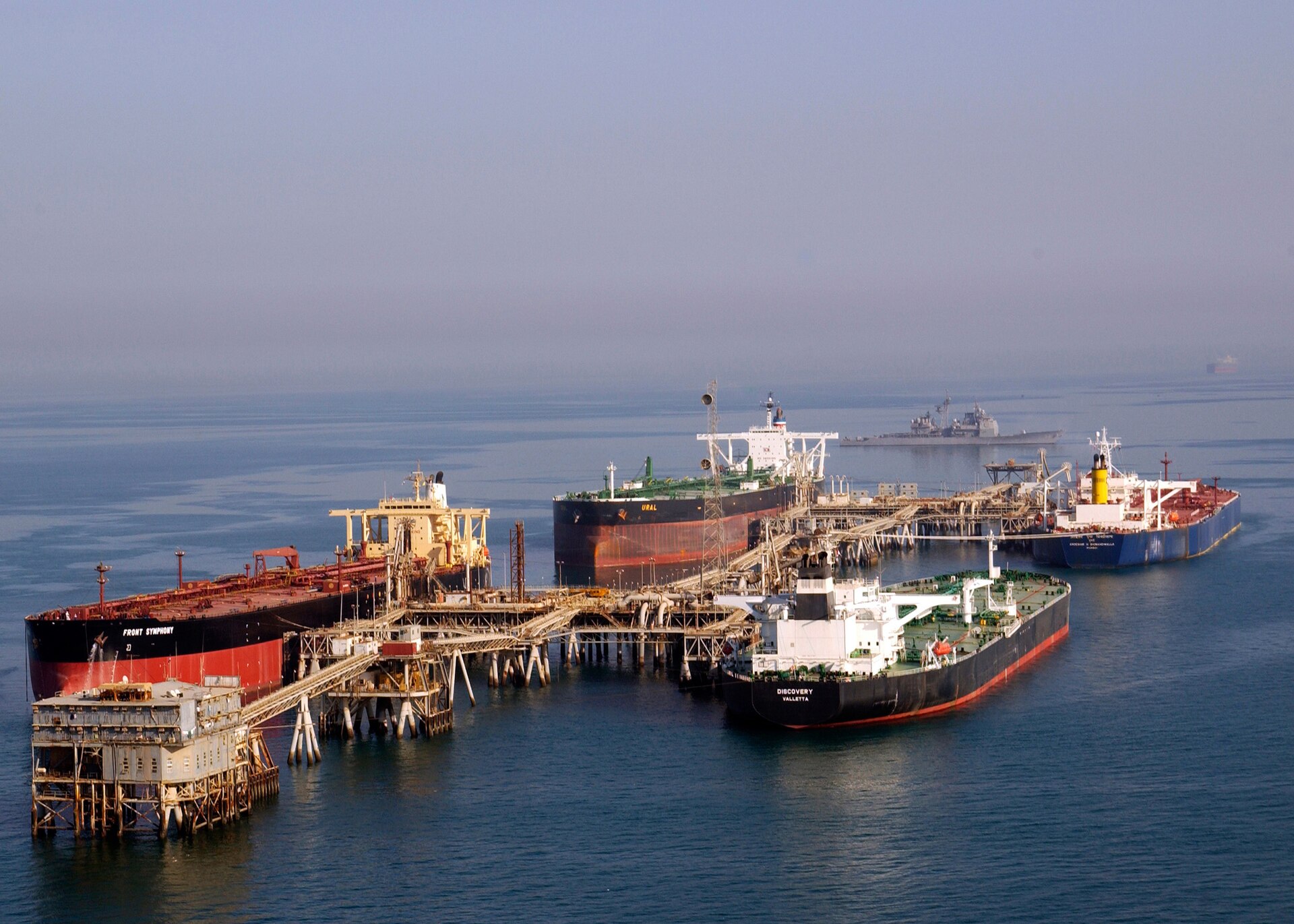
The entity that will determine when Hormuz reopens for commercial traffic is not CENTCOM. It is Lloyd’s Joint War Committee. Within 48 hours of the February 28 strikes, the JWC redesignated the entire Arabian Gulf as a conflict zone. On March 3, the Listed Areas expanded to include Bahrain, Djibouti, Kuwait, Oman, and Qatar. P&I clubs — Gard, Skuld, NorthStandard, the London P&I Club, the American Club — issued 72-hour termination notices on existing war risk extensions, effective March 5.
The replacement coverage arrived at rates that functioned as a commercial blockade. War risk premiums surged from 0.2 percent of hull value to between 1.5 and 3 percent, with U.S.-, British-, and Israeli-linked vessels charged up to 5 percent — a 25-fold increase at the top of that range. For a VLCC valued at $150 million, a 3-percent premium adds $4.5 million per voyage.
As of the Joint Maritime Information Centre’s Update 041 on May 5, daily transits through Hormuz stood at five to six vessels, against a historical average of 138.
Maritime insurers told Al Jazeera that “any risk of mines remaining will deter insurers and halt traffic.” Insurance Business Magazine reported that a ceasefire alone would not reopen the insurance market. The threshold is not an admiral’s testimony that 90 percent of inventory was destroyed. The threshold is Lloyd’s certifying that the residual mine risk is low enough to price. Unmapped mines, unexploded ordnance, and debris fields create what the Irregular Warfare Journal, in a May 13 analysis, called “residual war risk” — a premium surcharge that attaches to formerly contested waters for years, not weeks.
“The Iranian ability to stop commerce has been dramatically degraded through the straits, but their voice is very loud, and those threats are clearly heard by the merchant industry and the insurance industry.” — Admiral Brad Cooper, CENTCOM Commander, Senate Armed Services Committee, May 14, 2026
Cooper’s own language concedes the point. The merchant industry and the insurance industry hear the threats. Until those industries stop hearing them — which requires certified clearance, not inventory destruction percentages — the strait stays commercially closed regardless of what CENTCOM has achieved militarily.
Iran’s Expanding Zone
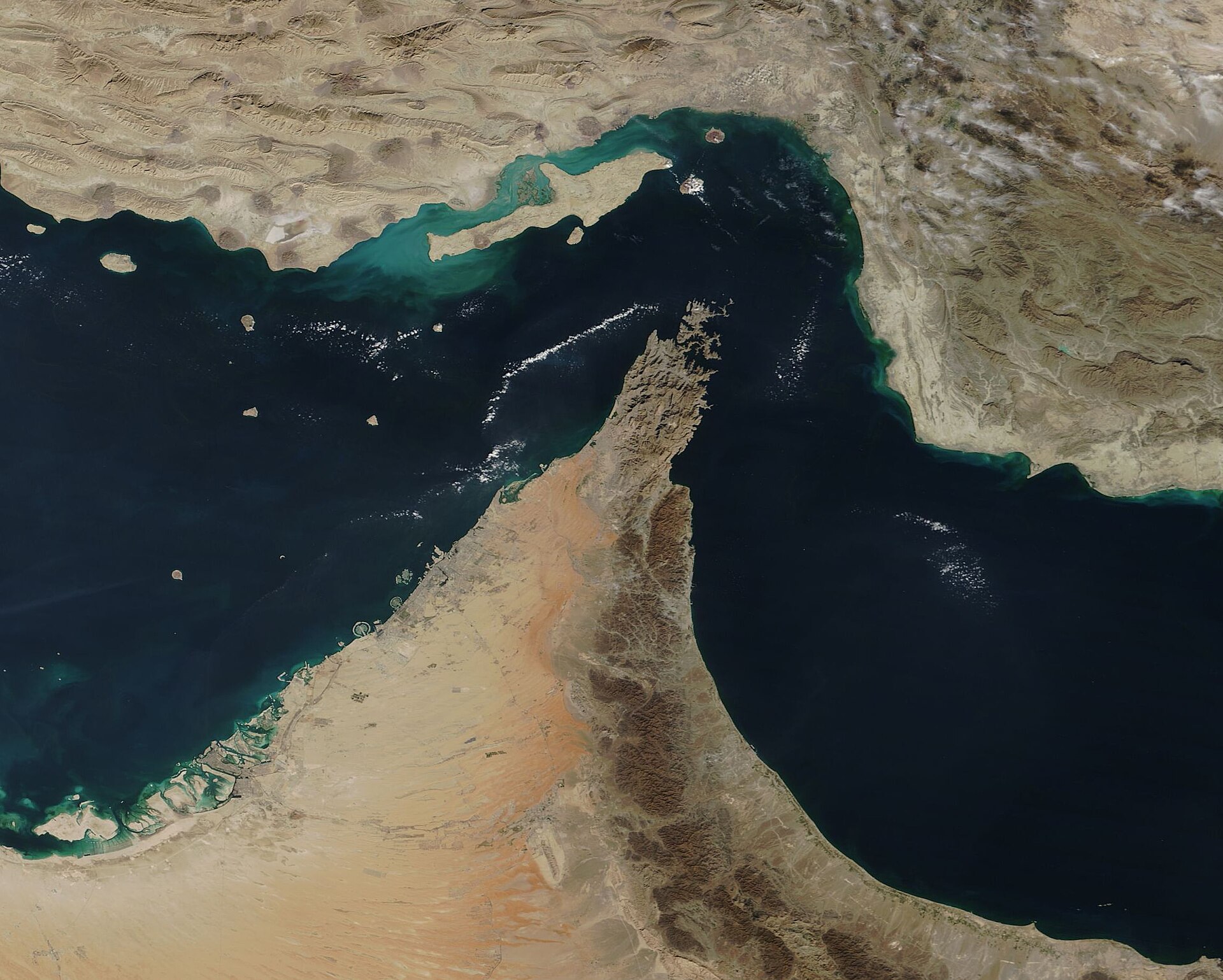
Any mine-clearance operation must now contend with geography that Iran has unilaterally redefined. On May 5, Iran launched the Persian Gulf Strait Authority, a uniformed bureaucracy with a domain name (PGSA.ir), a transit-permit regime, and toll-collection infrastructure that converts Hormuz from international waterway into a vetted toll plaza. On May 12, the IRGC announced a further expansion, defining the strait as a “vast operational area” stretching from Jask in the east to Siri Island in the west — an expansion from roughly 20–30 miles of water to 200–300 miles of coastline.
The operational implication for mine clearance is direct. A Knifefish UUV deployed from USS Canberra in the traffic separation scheme operates inside what Iran now claims as its managed security zone. The IRGC Navy’s standing position, restated through Khatam al-Anbiya Central HQ on PressTV, is that “the authorization for any vessel’s transit through this strategic waterway rests solely with the Armed Forces of the Islamic Republic of Iran.” Iran’s parliament is advancing a 12-article Hormuz sovereignty law, sponsored by lawmakers Ahmadi and Rezayi Kouchi, that would codify any clearance discussion as a sovereignty concession requiring legislative approval.
Cooper testified that Iran retained “a very moderate, if not small, capability” to conduct strikes on regional neighbors. The War Zone reported that U.S. intelligence assessments leaked to CNN and the New York Times indicate Iran may retain roughly 70 percent of its pre-war missile stockpile and 70 percent of mobile launchers, with operational access restored to 30 of 33 missile sites along the strait. The Washington Post offered a similar figure: 75 percent of pre-war mobile launcher inventories intact. Cooper dismissed these numbers as inaccurate, arguing the degradation extended beyond inventory counts to “command and control that’s been shattered” and “the lack of any ability to then produce any missiles on the back end.” A detailed examination of how Cooper’s 85 percent factory figure and the classified 70 percent stockpile figure are simultaneously accurate — and why that structural gap is the central problem for US war aims traces the distinction between production capacity destroyed and existing arsenal preserved.
The dispute between CENTCOM’s operational assessment and the intelligence community’s inventory count may take months to resolve. What does not require resolution is the commercial reality. Saudi Arabia’s co-belligerent exposure persists. The PGSA processes transit permits. The mines that were not in warehouses — the 12 to 20-plus devices physically in the water, augmented by post-ceasefire deployments — remain unswept. And the IRGC’s February 28 chart declaring the standard shipping lanes a danger zone has not been rescinded.
“The oil market won’t normalize until 2027 if Hormuz disruption persists.” — Amin Nasser, Saudi Aramco CEO, Q1 2026 earnings call, May 11, 2026
Cooper told senators that Operation Epic Fury met every objective. The IEA called the Hormuz closure “the biggest energy supply shock ever.” Both statements are true at the same time. The question confronting policymakers in Washington and Riyadh is not whether 90 percent of Iran’s mine inventory was destroyed. It is who certifies the remaining 10 percent — or 20-plus devices, or whatever post-ceasefire Iran added — as cleared, how long that takes with one LCS and a prototype UUV, and whether the answer arrives before Nasser’s mid-June deadline passes. The kinetic dimension of Hormuz closure is matched by a parallel administrative one: in May 2026, Iran extended its sovereignty architecture from tankers to fiber, asserting $15 billion in annual transit fees over the seventeen undersea cables crossing the strait — a legal and sanctions trap for Western tech firms examined in Iran’s Cable Fee Gambit and the OFAC Trap Beneath Hormuz.
Frequently Asked Questions
What types of naval mines did Iran deploy in the Strait of Hormuz?
Iran’s deployed mines include the Maham 3 and Maham 7, GPS-guided remote-deployment limpet mines that can be repositioned after initial placement. These differ from the moored contact mines in Iran’s larger inventory. The GPS-guided variants are particularly difficult to locate because they are placed on the seabed without fixed mooring cables, leaving no visible surface indicators. Traditional mine-hunting sonar optimized for moored mines performs poorly against bottom-sitting limpet types in the high-clutter seabed environment of the strait, which is one reason the Navy is relying on the Knifefish UUV — designed specifically for buried and bottom-mine detection — despite its acknowledged readiness issues.
How does the 2026 mine threat differ from Iraq’s 1991 mine deployment?
Iraq deployed approximately 1,290 mines in a concentrated field in the northern Arabian Gulf in 1991 and surrendered the coordinates upon capitulation. The U.S. cleared the field in 51 days using four Avenger-class minesweepers and MH-53E helicopter squadrons — assets that no longer exist in the theater. In 2026, Iran deployed fewer mines (12 to 20-plus confirmed) but across a wider area, using GPS-guided types with no positional record, and continued deploying after the ceasefire. Iran has not surrendered and holds no obligation to disclose mine locations. The 1991 operation also occurred in a permissive environment with no adversary naval presence; in 2026, the IRGC’s expanded PGSA zone means clearance operations would occur inside territory Iran actively claims to administer.
What would it take for Lloyd’s to remove the Arabian Gulf from its Listed Areas?
Lloyd’s Joint War Committee reviews its Listed Areas quarterly but can issue interim updates. Removal typically requires a sustained period — historically six to 12 months — of no hostile incidents, verified mine clearance by a recognized naval authority, and a formal cessation of hostilities (not merely a ceasefire). The Gulf of Aden remained on the JWC Listed Areas for over a decade after the peak of Somali piracy. For the Arabian Gulf, the continued presence of unswept mines, the IRGC’s expanded operational zone, and the absence of a formal peace agreement suggest the JWC designation will persist well into 2027 at minimum, independent of military progress.
Can Saudi Arabia increase Yanbu’s loading capacity to close the export gap?
Yanbu’s loading infrastructure includes the King Fahd Industrial Port and Aramco’s dedicated crude terminal, with a combined theoretical throughput above 5.9 million bpd but constrained by berth availability, storage tank cycling times, and the tanker queue in the Red Sea approach. Aramco has reportedly begun construction on a fourth single-point mooring buoy at Yanbu, but industry sources told MEED the project would take 12 to 18 months to complete. In the interim, the gap between the East-West Pipeline’s 7 million bpd capacity and Yanbu’s 4 to 5.9 million bpd loading ceiling represents a physical bottleneck that no policy decision can accelerate. Those operational realities were visible to markets on Thursday, when Brent crude hit $111 a barrel as the IRGC ran its Hormuz operations through the Beijing summit without pause.