
RIYADH — Sixteen days into the Iran war, Saudi Arabia has intercepted more than 300 drones and dozens of ballistic missiles at a cost that defense analysts estimate exceeds $1 billion in expended interceptors alone. Iran has spent a fraction of that sum launching them. The arithmetic is devastating, and it is rewriting every assumption about how the Kingdom must defend itself for the next generation. The most expensive military hardware on earth is being drained by some of the cheapest weapons ever mass-produced, and the country that grasps this inversion fastest will dominate Gulf security for decades.
The Iran war has become the first large-scale proving ground for a military revolution that theorists debated for years but could never test at scale: the confrontation between precision-guided autonomous systems costing tens of thousands of dollars and legacy air defense platforms costing millions. Saudi Arabia sits at the epicentre of this revolution. The Kingdom operates one of the most sophisticated integrated air defense networks outside NATO, anchored by American-made Patriot and THAAD batteries, yet the relentless pace of Iranian drone and missile salvos is exposing a structural vulnerability that no amount of spending on traditional systems can fix. The solution lies not in buying more interceptors but in building an entirely different kind of military.
The missile tracking architecture that makes those interceptions possible depends heavily on assets outside the Gulf itself. NATO’s AN/TPY-2 radar in Turkey, which has tracked every Iranian ballistic missile launch since the war began, has itself become a target — three Iranian missiles have been intercepted over Turkish airspace in what analysts believe are attempts to blind the early-warning network.
That vulnerability sharpened on March 16 when Israel launched ground operations in southern Lebanon, opening another front that drains interceptor stockpiles already stretched thin across the Gulf.
Table of Contents
- The $3 Million Missile That Kills a $35,000 Drone
- How Fast Is Saudi Arabia Burning Through Its Interceptor Stockpile?
- How Many Drones Can Iran Still Launch?
- What Are Merops AI Drones and Why Do They Change Everything?
- LUCAS and the Irony of Fighting Iran With Its Own Weapons
- Why Is Saudi Arabia Buying Korean Air Defense Instead of American?
- How Is Ukraine Teaching the Gulf to Fight Drones?
- Can SAMI Build the Defense Industry This War Demands?
- Could Lasers and Microwaves End the Interceptor Crisis?
- The Wartime Technology Effectiveness Matrix
- The Contrarian Case Against More Interceptors
- What Must Saudi Arabia’s Next Military Look Like?
- Frequently Asked Questions
The $3 Million Missile That Kills a $35,000 Drone
The fundamental equation of the Iran war is one of mathematics, not strategy. A single Patriot PAC-3 MSE interceptor costs approximately $4 million. A THAAD interceptor costs roughly $12 million. The Iranian Shahed-136 drone that these systems are designed to destroy costs between $20,000 and $50,000, according to estimates from the International Institute for Strategic Studies (IISS). When Saudi air defenses destroyed 51 drones in a single day on 13 March 2026, the Kingdom expended interceptors worth an estimated $150 million or more to defeat an attacking force that Iran assembled for less than $3 million.
This cost ratio, ranging from 60:1 to 200:1 in favour of the attacker, represents what Foreign Affairs described as a fundamental shift in the economics of modern warfare. The journal’s March 2026 analysis concluded bluntly: firing a multimillion-dollar missile at a projectile that costs $35,000 is as unwise as it is unsustainable. The Pentagon has reportedly fired approximately 400 Tomahawk cruise missiles in the first two weeks of the conflict, estimated at roughly ten percent of the total American inventory, at a cost of some $800 million. That same $800 million could purchase 23,000 LUCAS attack drones.
The Middle East briefing 3,000+ readers start their day with.
One email. Every weekday morning. Free.
The cost advantage is even more extreme in the digital domain. Iran has simultaneously prosecuted a cyber war against Saudi and Gulf infrastructure using toolkits that cost as little as $100 per month, targeting banks, airports, GPS navigation, and the industrial control systems that manage oil refineries — a theatre where the attacker-to-defender cost ratio approaches infinity.
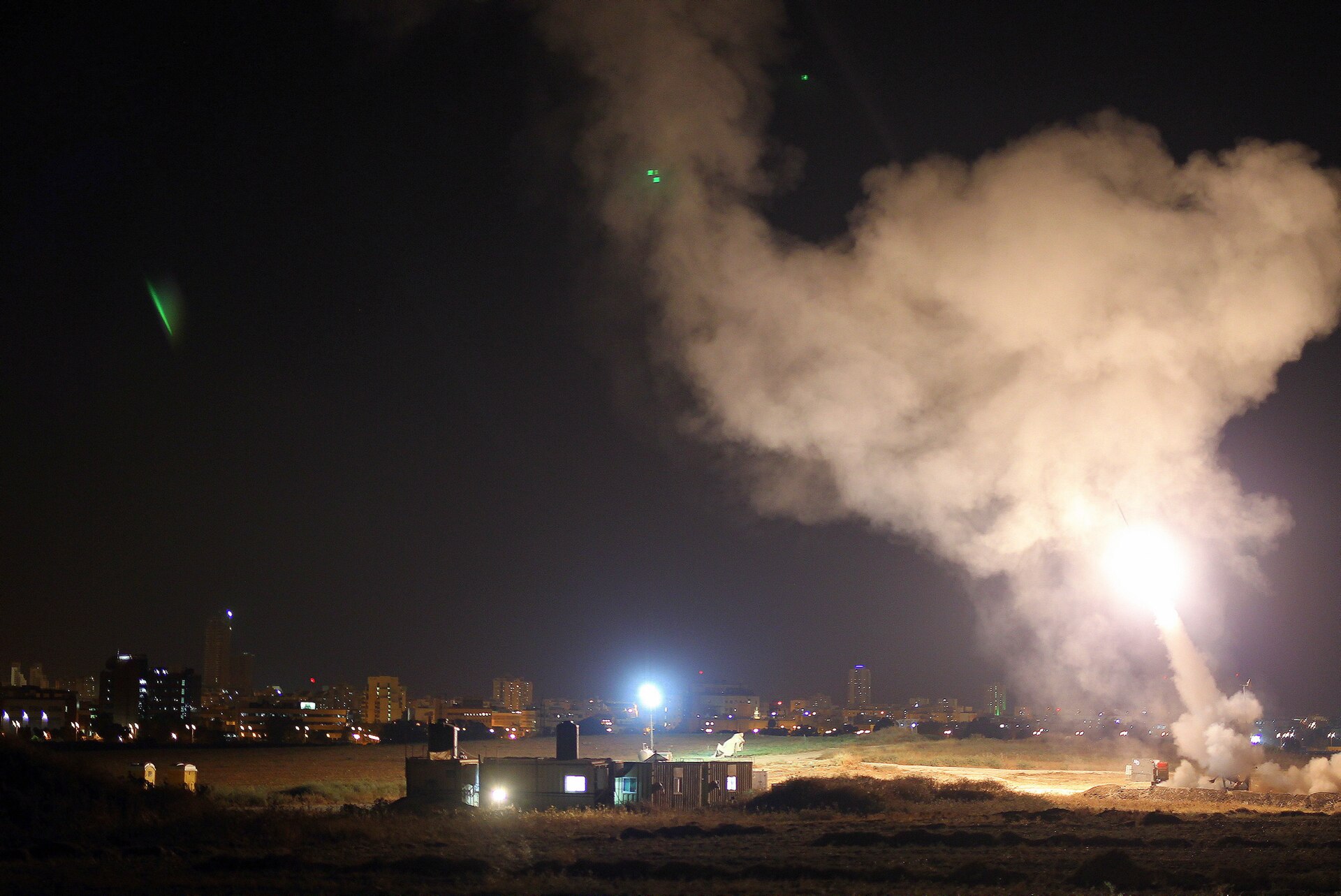
The asymmetry is not merely financial. Every interceptor Saudi Arabia fires represents months of manufacturing lead time that cannot be compressed. Lockheed Martin delivered 620 PAC-3 MSE interceptors in 2025, a 20 percent increase from the previous year and a record, according to the company. At current wartime consumption rates, the entire annual production run could be exhausted in weeks. Iran does not face a comparable constraint. Shahed production lines operate continuously at multiple dispersed facilities, with estimated capacity to produce hundreds of units per month at costs that barely register on Tehran’s wartime budget.
The lesson is stark. Cost asymmetry is not a bug in drone warfare. It is the strategy itself. Iran’s commanders understood from the outset that they could not match American and Saudi conventional firepower. Instead, they chose to make their adversaries spend themselves into a defensive crisis. Sixteen days in, the strategy is working.
How Fast Is Saudi Arabia Burning Through Its Interceptor Stockpile?
The interceptor supply crisis is not theoretical. It is happening in real time. The U.S. Military Times reported on 6 March 2026 that at the rate interceptors were being consumed, the United States would exhaust half of its entire stockpile in four to five weeks. More than 150 THAAD interceptors had been fired in the war’s first ten days, representing roughly 30 percent of the total THAAD inventory, according to ABC News, a figure defence analysts described as concerning.
Saudi Arabia’s own interceptor inventory is classified, but analysts at the Centre for Strategic and International Studies (CSIS) estimate the Kingdom holds between 600 and 1,000 Patriot interceptors across its network of batteries. If Saudi forces are expending 20 to 40 interceptors daily against Iranian drone and missile salvos, the mathematics suggest a stockpile measured in weeks, not months. The Kingdom’s reliance on American-made systems compounds the problem: replenishment depends on production lines an ocean away that are already operating at maximum capacity.
The production bottleneck is structural. In January 2026, the Pentagon and Lockheed Martin announced a historic deal to triple PAC-3 MSE production from 600 to 2,000 units annually, according to Breaking Defense. The timeline, however, is sobering. Full production capacity of 2,000 per year will not be reached until the end of 2030. For the next four years, production will ramp gradually, meaning the current war is being fought with interceptors manufactured under peacetime assumptions. Lockheed Martin CEO Jim Taiclet acknowledged the challenge, noting that expanding production requires additional workers, advanced tooling, and automation, as well as seven-year subcontracts with dozens of key suppliers.
The financial toll reinforces the urgency. The Pentagon briefed Congress that Operation Epic Fury cost $11.3 billion in its first six days, according to CBS News and The Hill, with interceptor expenditure accounting for a significant share of that figure. The Washington Post reported $5.6 billion in total munitions costs in the first 48 hours alone. These numbers dwarf any previous American military engagement on a per-day basis and underscore the fundamental unsustainability of a defensive strategy built on expensive interceptors against cheap drones.
The gap between consumption and production is the single most dangerous variable in Saudi Arabia’s defence equation. The Kingdom intercepts drones and missiles daily. The factories that build the interceptors produce them monthly. Until that gap closes, Saudi Arabia fights on a diminishing stockpile, and every Shahed that Iran launches tightens the noose.
How Many Drones Can Iran Still Launch?
Iran entered the war with what the Foundation for Defense of Democracies (FDD) estimated was a drone inventory exceeding 3,000 one-way attack platforms. The Shahed-136, the workhorse of Tehran’s aerial campaign, is a delta-wing loitering munition with a range of approximately 2,500 kilometres, a 50-kilogram warhead, and a unit cost below $50,000. Its simplicity is its genius. The Shahed uses a small two-stroke engine derived from commercial motorsport technology, satellite navigation for mid-course guidance, and a terminal optical sensor. It is, in engineering terms, a flying motorcycle bomb.
CSIS analysis of the Gulf campaign confirmed that Iran has deployed a layered strike architecture combining Shahed drones for area suppression, Emad and Ghadr ballistic missiles for high-value targets, and Soumar and Hoveyzeh cruise missiles for precision strikes against hardened infrastructure. The first week of fighting demonstrated that 2,000 Shaheds launched in mass salvos can overwhelm even the most capable air defenses, leaving a significant number of munitions free to strike their targets.
The production resilience is equally alarming. Iran manufactures Shaheds at multiple dispersed facilities, some of them underground, using commercial-grade components that are not subject to the same export controls as advanced military technology. Bloomberg reported in March 2026 that despite American and Israeli strikes targeting known production sites, Iran’s drone output had not been significantly degraded because the manufacturing process requires neither expensive materials nor sophisticated machining. A CSIS analysis of drone debris in the UAE further revealed that some Iranian drones contained components consistent with the Russian-made Geran-2, suggesting that the previously one-directional drone cooperation between Iran and Russia may have evolved into a reciprocal exchange of loitering munition technologies.
The historical parallel is instructive. In 1940, the Luftwaffe’s shift from precision bombing to area bombardment of British cities forced the Royal Air Force into an unsustainable cycle of scrambling expensive fighter aircraft against waves of cheaper bombers. The Battle of Britain was ultimately won not by outspending the attacker but by integrating radar, observer networks, and command-and-control systems that made each defensive sortie more efficient. Iran’s drone campaign mirrors this pattern at a different technological level. The question for Saudi Arabia is not how many more interceptors to buy but how to build the integrated, cost-effective defence architecture that turns attrition into advantage.
The scale of Iran’s potential arsenal makes this calculus even more alarming. Israeli intelligence assessed in January 2026 that Iran possessed approximately 80,000 combat-ready Shahed airframes, according to Defence Security Asia. Tehran has claimed a production capacity of 400 units per day, or roughly 146,000 per year. Even discounting these figures heavily, Iran’s ability to manufacture disposable drones at industrial scale vastly exceeds any adversary’s capacity to produce interceptors. The disparity is not a gap that technology alone can close. It is a structural advantage embedded in the economics of the weapons themselves.
Tehran’s calculus is simple: every drone that forces Saudi Arabia to fire a $4 million interceptor is a strategic victory, regardless of whether the drone reaches its target. The drone is the message.
The drone threat to civilian infrastructure was starkly demonstrated on 16 March when an Iranian drone struck a fuel tank at Dubai International Airport, shutting down the world’s busiest international airport for more than seven hours. That same day, an Iranian drone strike set Abu Dhabi’s Shah gas field ablaze, hitting the ADNOC-Occidental sour gas processing facility and demonstrating that even heavily defended inland energy infrastructure is vulnerable to Iran’s low-cost aerial weapons.
What Are Merops AI Drones and Why Do They Change Everything?
The most significant technological deployment of the Iran war has received remarkably little attention relative to its importance. In mid-March 2026, the United States rushed 10,000 Merops AI-powered interceptor drones to the Middle East, according to Bloomberg and Ukrainska Pravda. The Merops system, developed by California-based Project Eagle, a venture of former Google CEO Eric Schmidt, represents an entirely different philosophy of air defense: using cheap, autonomous drones to kill cheap, autonomous drones.
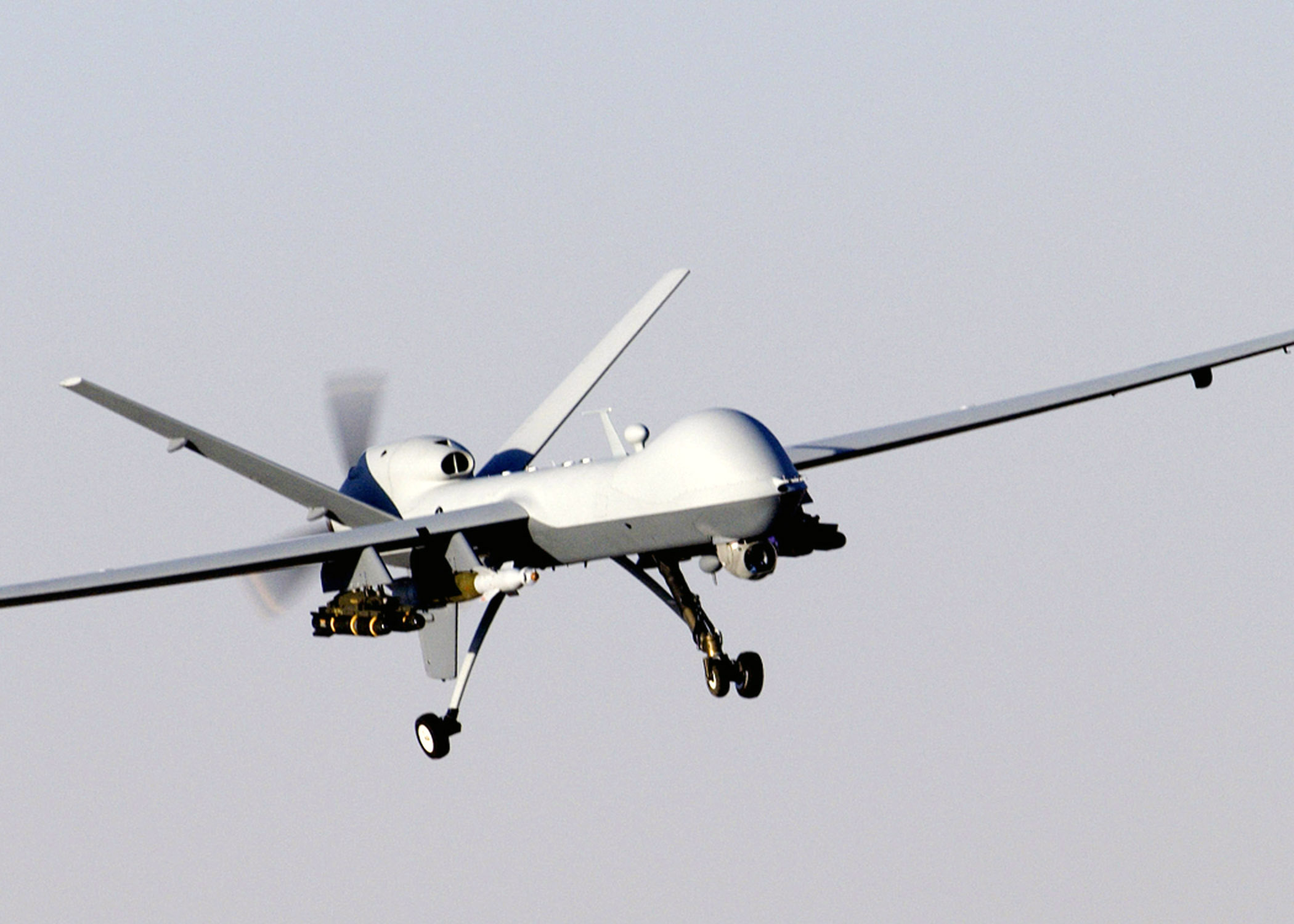
Each Merops unit consists of a command station, a radar and electro-optical sensor array, launch platforms, and a fleet of Surveyor interceptor drones. The Surveyor costs approximately $15,000 per unit, less than one percent of a Patriot interceptor, and can reach speeds of 173 to 186 miles per hour, fast enough to chase down slow-moving Shaheds. It uses autonomous navigation that functions even when GPS signals are denied or electronic warfare conditions prevail, and its AI-powered targeting system achieves lock-on and pursuit without human intervention, bypassing the electronic countermeasures that Iran has increasingly integrated into its drone swarms.
The system’s battlefield record in Ukraine provides the evidence that matters most. Deployed since mid-2024, Merops had destroyed more than 1,900 incoming Russian drones by November 2025, according to Defense Express, accounting for approximately 40 percent of all Shaheds downed over Ukraine. A four-person crew can operate a Merops unit after just two weeks of training. Poland and Romania have already deployed the system along their borders, and Denmark has declared its intent to acquire it.
The deployment of 10,000 Merops interceptors to the Gulf is a tacit admission by the Pentagon that traditional air defense interceptors cannot sustain the pace of the current conflict. At $15,000 per Surveyor drone versus $35,000 per Shahed, the cost equation flips in favour of the defender for the first time. The question is whether they arrive fast enough to matter.
For Saudi Arabia, the implications of the Merops model extend beyond the current crisis. The Kingdom requires not merely access to autonomous interceptor drones but the industrial capacity to produce them domestically. A nation that depends on emergency American shipments for its air defence operates under the same vulnerability as one that depends on imported interceptors, except that the unit costs are lower. The strategic objective must be sovereign production of AI-enabled drone interceptors, manufactured in Saudi facilities, integrated into Saudi command networks, and deployable without foreign authorisation. The Merops deployment proves the concept works. The next step is to own it entirely.
LUCAS and the Irony of Fighting Iran With Its Own Weapons
Perhaps the war’s most remarkable technological irony is that the United States is now attacking Iran with copies of Iran’s own drones. The Low-cost Uncrewed Combat Attack System (LUCAS), designated FLM-136, is a one-way attack drone developed by U.S. defence contractor SpektreWorks through the reverse engineering of captured Shahed-136 airframes. CENTCOM confirmed the unit cost at $35,000, though the Pentagon’s research and engineering office stated costs range from $10,000 to $55,000 depending on the variant.
LUCAS was first revealed publicly in July 2025 and deployed operationally to the Middle East in December 2025, according to its Wikipedia entry. Its combat debut came on 28 February 2026, the first day of the Iran war. The technical specifications are instructive: at 3 metres long and 2.5 metres wide, the FLM-136 is nearly identical in size to the Shahed-136 but dramatically lighter at 81.5 kilograms versus 200 kilograms, carrying an 18-kilogram warhead with a range exceeding 800 kilometres and an endurance of six hours.
The strategic significance extends beyond the battlefield. In May 2025, President Trump publicly praised Iranian drones as cheap to produce, as well as very good, fast, and deadly. Foreign Affairs noted the supreme irony: the United States copied Iran’s homework. But the deeper lesson, one with direct implications for Saudi Arabia, is that the age of the multi-billion-dollar weapons platform is giving way to the age of mass-produced, expendable, autonomous systems. A single B-2 Spirit bomber costs $2.1 billion. For the same price, the Pentagon could field 60,000 LUCAS drones. The numbers speak for themselves.
Why Is Saudi Arabia Buying Korean Air Defense Instead of American?
Saudi Arabia’s $3.2 billion deal for ten Cheongung-II (KM-SAM Block 2) batteries from South Korea’s LIG Nex1, announced in February 2024, has proven prescient. At approximately $320 million per battery, the Korean system costs roughly one-third of a comparable Patriot battery and one-sixth of a THAAD battery, according to Defense News. In a war defined by cost asymmetry, this price advantage is strategic, not merely economic.
The Cheongung-II’s combat debut in the UAE during March 2026 delivered results that exceeded expectations. According to Army Recognition, the system achieved a 96 percent hit rate, destroying 161 of 174 Iranian ballistic missiles and intercepting 645 of 689 drones directed at Emirati targets. These figures, if confirmed, make the Cheongung-II the most effective air defense system deployed in the current conflict by a significant margin.
The Korean option also addresses a political vulnerability that the war has exposed. The Biden administration’s restrictions on offensive weapons sales to Saudi Arabia, imposed over the Yemen war, pushed the Kingdom to diversify its defence procurement away from exclusive American dependency. South Korea, with no comparable political conditions, offers high-performance systems without the strings. The contract marks the second sale of the Cheongung-II to a Middle Eastern country following the UAE’s earlier purchase, and Saudi Arabia’s deployment of the system could accelerate a broader realignment of Gulf defence procurement away from the American monopoly that has prevailed since the 1970s.
How Is Ukraine Teaching the Gulf to Fight Drones?
In the most unlikely arms transfer of the 21st century, Ukraine, a country fighting its own war of survival against Russia — which is itself profiting enormously from the very conflict Ukraine is helping the Gulf to survive — is now exporting its most valuable wartime innovation to the wealthiest nations on earth. Teams of Ukrainian drone warfare specialists are on the ground in Qatar, Saudi Arabia, and the UAE, coordinating air defense operations against Iranian attack drones, according to the Kyiv Independent. Additional crews are reportedly working alongside American personnel to protect U.S. military bases in Jordan.
President Zelenskyy confirmed speaking with Saudi Crown Prince Mohammed bin Salman, plus the leaders of the UAE, Qatar, Bahrain, Jordan, and Kuwait within a 48-hour window between 6 and 8 March 2026. The conversations yielded what Al Jazeera described as a technology-for-funding exchange: Ukrainian expertise in defeating Shaheds, honed over three years and thousands of engagements, in return for Gulf financing and defence contracts.
Ukraine’s specific contribution centres on low-cost interception methodologies. Rather than expending multimillion-dollar missiles against cheap drones, Ukrainian forces developed networks of acoustic sensors that recognise the distinctive lawn-mower-like sound signature of the Shahed’s engine, alerting interceptor teams in real time. They pioneered the use of electronic warfare, mobile anti-aircraft guns, and cheap interceptor rockets to defeat drones at a fraction of the cost of traditional air defense missiles. A Saudi Arabian arms company has reportedly signed a deal to buy Ukrainian-made interceptor missiles, with industry sources telling The National that Riyadh and Kyiv are negotiating a separate arms agreement that could be finalised within days.
The scale of Ukraine’s drone programme underscores why its expertise commands such demand. Kyiv expects its domestic drone output to reach seven million units in 2026, according to the Atlantic Council, making Ukraine by far the world’s largest producer of military unmanned systems. Approximately 75 percent of all Russian battlefield casualties are now inflicted by Ukrainian drones. At least 11 countries have formally requested Ukrainian counter-drone expertise since the Iran war began, according to the Carnegie Endowment for International Peace, and the United Kingdom has announced plans to deploy Ukrainian specialists to help Gulf partners defend against Iranian drones. The transfer represents a structural shift. For the first time, a front-line combat nation is simultaneously fighting its own drone war and training the world’s richest militaries how to do the same. The expertise flows from the trenches of Donetsk to the skies over Riyadh.
The regional competition for Ukrainian counter-drone systems extends well beyond bilateral deals. The UAE, Qatar, Kuwait, and European NATO members have all submitted formal requests, creating a scramble for combat-tested interceptor drones that is reshaping Gulf air defense architecture from the ground up.
Can SAMI Build the Defense Industry This War Demands?
Saudi Arabian Military Industries (SAMI), the Kingdom’s national defence champion and a PIF portfolio company, entered the war with momentum. At the World Defense Show 2026 in February, SAMI showcased more than 60 national products, signed 25 strategic agreements, and positioned itself as the central industrial enabler of Saudi Arabia’s sovereign defence capabilities, according to the Saudi Press Agency. The exhibition, organised by the General Authority for Military Industries (GAMI), drew 750 exhibitors from 75 countries and attracted 100,000 visitors, a 60 percent increase from its inaugural edition in 2022.
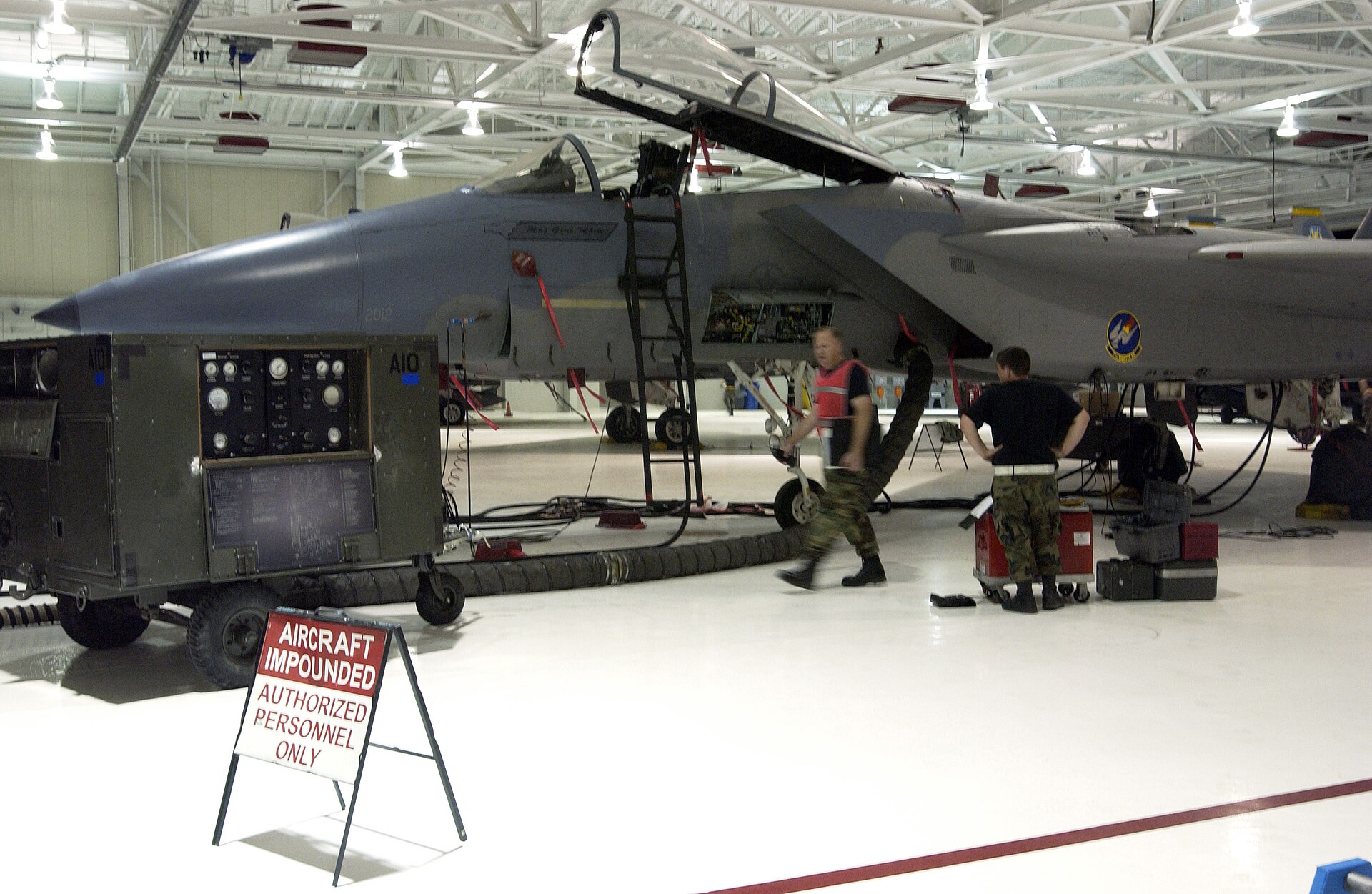
GAMI’s target of localising 50 percent of Saudi military spending aligns with the broader goals of Vision 2030. The war has transformed this target from a long-term aspiration into an urgent operational imperative. The most significant development is the reported $5 billion agreement with China to produce Wing Loong-3 advanced combat drones at a facility in Jeddah, according to Defence Security Asia. The deal encompasses not just the production facility but a comprehensive package of technology transfer, workforce training, and supply chain infrastructure. If confirmed, the programme would make Saudi Arabia one of the few nations in the Middle East capable of manufacturing advanced unmanned combat aerial vehicles domestically.
The challenge is time. Building a defence industrial base capable of producing interceptors, drones, and electronic warfare systems at scale requires years of sustained investment, engineering talent development, and supply chain maturation. The war is happening now. SAMI’s 25 strategic agreements at WDS 2026 signal intent, but converting signed memoranda into operational production lines under wartime conditions demands a level of industrial urgency that the Kingdom has never previously attempted.
Could Lasers and Microwaves End the Interceptor Crisis?
The permanent solution to the cost asymmetry problem may not be cheaper interceptors but weapons that eliminate the per-shot cost entirely. Directed energy weapons, both high-power lasers and high-power microwave systems, represent the most promising path to breaking the drone calculus because they reduce the marginal cost of each engagement to the price of electricity.
The technology is no longer theoretical. In January 2026, California-based Epirus demonstrated the first neutralisation of a fiber-optic-guided drone, a platform immune to electronic warfare jamming, using its Leonidas high-power microwave system, according to The Defense Post. The U.S. Army’s DE-SHORAD laser weapon, mounted on Stryker vehicles, has successfully destroyed every drone in multiple two-day live-fire demonstrations using BlueHalo’s 26-kilowatt LOCUST laser system. The Navy has installed the HELIOS laser weapon on an Arleigh Burke-class destroyer.
The U.S. fiscal year 2026 defence budget includes more than $3 billion specifically for counter-drone capabilities, according to GlobeNewsWire, reflecting the Pentagon’s recognition that the current interceptor paradigm is unsustainable. The global counter-UAV market, valued at $4.93 billion in 2025, is projected to reach $36.42 billion by 2035, a compound annual growth rate of 22.14 percent. Investment is flooding into the sector because the military establishments of every major power recognise the same truth: the side that solves drone defence cheaply wins.
Several of these systems are already deployed in the current theatre. The U.S. Navy installed the HELIOS laser weapon, capable of 60 to 120 kilowatts of directed energy, on an Arleigh Burke-class destroyer operating in the Persian Gulf during Operation Epic Fury, according to Army Recognition. The same class of vessel deployed the ODIN optical dazzling interdictor, which disrupts enemy drone sensors without kinetic destruction. The Army’s DE M-SHORAD Guardian system, mounting a 50-kilowatt laser on a Stryker A1 platform, achieved its first confirmed operational use in 2025. These are no longer prototypes. They are weapons in combat.
For Saudi Arabia, directed energy weapons offer a particular strategic advantage. The Kingdom’s geography, flat desert terrain with long sight lines and abundant sunlight for solar power generation, is ideally suited to fixed and mobile laser installations. GAMI has not publicly disclosed directed energy procurement programmes, but the war has almost certainly accelerated internal planning. The question is whether Saudi Arabia will buy these systems from abroad or develop them domestically through SAMI and its subsidiaries.
The Wartime Technology Effectiveness Matrix
Sixteen days of high-intensity combat have produced a natural experiment in military technology effectiveness that no peacetime exercise could replicate. Every major weapons category has been tested under conditions of sustained operational stress, and the results can be assessed across five dimensions that matter for Saudi Arabia’s future defence planning.
| System | Cost Per Engagement | Scalability | Autonomous Capability | Proven Kill Rate | Saudi Industrial Access |
|---|---|---|---|---|---|
| Patriot PAC-3 MSE | $4 million | Low (620/year production) | None (human-operated) | High vs missiles, low efficiency vs drones | Import only (Lockheed Martin) |
| THAAD | $12 million | Very Low (limited stockpile) | None | High vs ballistic missiles | Import only (Lockheed Martin) |
| Cheongung-II (KM-SAM) | ~$1 million | Medium ($3.2B for 10 batteries) | Semi-autonomous tracking | 96% in UAE combat debut | Import (LIG Nex1), potential local assembly |
| Merops AI Interceptor | $15,000 | High (10,000 deployed in weeks) | Full autonomous targeting | 40% of Shaheds downed in Ukraine | Potential licence (Project Eagle/USA) |
| LUCAS (FLM-136) | $10,000-55,000 | Very High (mass-producible) | Semi-autonomous with GPS | Offensive use (N/A for defence) | Potential domestic production |
| Directed Energy (Laser) | ~$10 per shot | Medium (early deployment) | AI-assisted targeting | 100% in demonstrations | Future procurement/development |
| Ukrainian Acoustic/EW | Minimal | Very High | Sensor-automated | Contributes to overall kill chain | Active technology transfer underway |
| Wing Loong-3 (Chinese) | ~$5 million per unit | Medium | Semi-autonomous MALE UAV | Untested in this war | Domestic production planned (Jeddah) |
The matrix reveals a clear pattern. The systems with the highest cost per engagement, Patriot and THAAD, are the least scalable and the most dependent on foreign supply chains. The systems with the lowest cost per engagement, Merops, directed energy, and acoustic/electronic warfare networks, are the most scalable and the most accessible for domestic production. Saudi Arabia’s current air defense architecture is optimised for the top of this matrix. Its future architecture must be built from the bottom up.
The Contrarian Case Against More Interceptors
The conventional wisdom among defence commentators holds that Saudi Arabia needs more Patriot batteries, more THAAD systems, and faster interceptor production lines. The evidence from the Iran war points in the opposite direction. The problem is not insufficient interceptors. The problem is that the interceptor paradigm itself is a losing proposition against an adversary with access to mass-produced autonomous weapons.
Consider the industrial economics. Lockheed Martin’s entire 2025 PAC-3 production run of 620 interceptors, the highest in the company’s history, could be consumed by Saudi Arabia alone in approximately three weeks of sustained Iranian bombardment. Tripling production to 2,000 per year by 2030, as the Pentagon’s new contract envisions, would still leave annual output below the number of drones Iran can manufacture in a single quarter. The defender is in a production race it cannot win.
The alternative is to abandon the paradigm entirely. Instead of spending $4 million to kill a $35,000 drone, Saudi Arabia should invest in systems that cost $15,000 or less per engagement: AI interceptor drones like Merops, directed energy weapons that cost pennies per shot, electronic warfare systems that disable drones without firing anything, and acoustic sensor networks that provide early warning at negligible cost. The defence industry profits from selling expensive interceptors, but the military logic points unmistakably toward cheap, scalable, autonomous systems.
This is not speculation. It is what Ukraine has already proved. Over three years of fighting Russian Shaheds, Ukrainian forces developed an integrated defence methodology that combines cheap interceptor drones, electronic warfare, mobile anti-aircraft guns, and sensor networks to defeat drone swarms at a fraction of the cost of traditional air defense. The Ukrainian Air Force’s kill rate against Shaheds has steadily improved not because Ukraine acquired more expensive missiles but because it innovated cheaper methods of destruction. Saudi Arabia must learn the same lesson, and it must learn it faster than Iran can adapt.
What Must Saudi Arabia’s Next Military Look Like?
The Iran war has compressed what should have been a decade-long military transformation into an urgent operational requirement. Saudi Arabia’s next-generation defence architecture must be built on five pillars that reflect the technological realities the war has revealed. Battlefield performance data from the first 22 days has already reshaped every arms contract in the Gulf, with Korean, Ukrainian, and Chinese systems entering markets that American suppliers once dominated unchallenged.
The first pillar is domestic drone production at scale. The $5 billion Wing Loong-3 agreement with China is a start, but Saudi Arabia needs the capacity to produce not just sophisticated MALE UAVs but also cheap, expendable interceptor drones and one-way attack platforms in the thousands. SAMI’s mandate must expand beyond assembly and maintenance into genuine manufacturing of airframes, guidance systems, and propulsion units. The Kingdom has the capital. It needs the engineering talent, and it needs it now.
The second pillar is directed energy weapons procurement and, eventually, production. Laser and microwave systems eliminate the per-shot cost that makes traditional interceptors unsustainable. Saudi Arabia should accelerate procurement of American systems like DE-SHORAD and HELIOS while simultaneously investing in domestic research through King Abdulaziz City for Science and Technology (KACST) and Saudi universities.
The third pillar is AI and autonomous systems integration. The Merops deployment demonstrates that autonomous targeting and interception is not a future concept but a current capability. Saudi Arabia must develop the software engineering capacity to integrate AI into its defence networks, create autonomous command-and-control systems, and train operators to work alongside machine decision-making. The Kingdom’s declaration of 2026 as the Year of Artificial Intelligence could not be more timely.
The fourth pillar is diversified supplier relationships. The war has demonstrated that exclusive dependence on any single arms supplier creates unacceptable vulnerability. Saudi Arabia’s emerging relationships with South Korea (Cheongung-II), Ukraine (interceptor missiles and expertise), China (Wing Loong-3), and domestic production (SAMI) must be sustained and deepened. Defense Minister Khalid bin Salman’s procurement diversification matrix maps the full scope of this multi-supplier architecture. The American defence relationship remains foundational, but it can no longer be exclusive.
The fifth pillar is an integrated sensor network. Ukraine’s acoustic monitoring arrays, which detect the distinctive sound signature of approaching drones and provide early warning at negligible cost, represent a force multiplier that Saudi Arabia can deploy across its vast territory. Combined with radar, electro-optical sensors, and satellite surveillance, a national drone detection grid would provide the situational awareness on which every other defensive capability depends.
The military that emerges from this transformation will look nothing like the force Saudi Arabia built over the previous four decades. It will be smaller in terms of legacy platforms but vastly larger in terms of autonomous systems. It will spend less per engagement but engage more frequently. It will depend less on any single foreign supplier and more on its own industrial capacity. The Iran war did not create this transformation. It made it unavoidable. And the transformation extends beyond conventional weapons: Riyadh’s nuclear ambitions after the destruction of Iran’s enrichment facilities suggest that the Kingdom’s long-term deterrent architecture may ultimately include a domestic nuclear fuel cycle.
The financial dimension of this transformation compounds its urgency. As the $16 billion cost of the Iran war falls disproportionately on Washington, MBS has positioned Saudi Arabia as the indispensable partner whose cooperation carries an escalating price tag.
The consequences of this cost imbalance became starkly visible on March 17, when Iran launched nearly one hundred drones in a single day at Saudi oil infrastructure in the Eastern Province — a fourfold increase that exposed the mathematical impossibility of defending every facility at current interception rates.
Frequently Asked Questions
How much does it cost Saudi Arabia to shoot down one Iranian drone?
A single Patriot PAC-3 MSE interceptor costs approximately $4 million, while the Iranian Shahed-136 drone it destroys costs between $20,000 and $50,000. This creates a cost ratio of 80:1 to 200:1 in favour of the attacker, making sustained drone defence financially unsustainable without cheaper interception methods such as AI drones or directed energy weapons.
What is the Merops drone system and how does it work?
Merops is an AI-powered counter-drone system developed by Project Eagle, a venture of former Google CEO Eric Schmidt. It uses autonomous Surveyor interceptor drones costing $15,000 each to chase and destroy incoming enemy drones. Deployed in Ukraine since 2024, the system has destroyed more than 1,900 Russian drones. The Pentagon sent 10,000 Merops units to the Gulf in March 2026.
Can Saudi Arabia produce its own military drones?
Saudi Arabia is building domestic drone manufacturing capability. A reported $5 billion agreement with China to produce Wing Loong-3 combat drones at a facility in Jeddah would make the Kingdom one of the few Middle Eastern nations capable of manufacturing advanced unmanned aerial vehicles domestically. SAMI signed 25 strategic agreements at the World Defense Show 2026 to accelerate defence localisation.
Why is Saudi Arabia buying Korean air defense systems instead of American ones?
Saudi Arabia’s $3.2 billion purchase of ten South Korean Cheongung-II batteries reflects both cost and political considerations. At roughly one-third the price of a comparable Patriot battery, the Korean system offers significant savings. Previous American restrictions on offensive weapons sales to Saudi Arabia also pushed the Kingdom to diversify its defence procurement beyond exclusive reliance on U.S. manufacturers.
What are directed energy weapons and could they solve the drone problem?
Directed energy weapons use concentrated electromagnetic energy, either high-power lasers or microwaves, to disable or destroy targets. They reduce the per-shot cost of drone interception to approximately $10 worth of electricity, effectively eliminating the cost asymmetry that makes traditional interceptors unsustainable. The U.S. has deployed prototype systems including the 26-kilowatt LOCUST laser and the Epirus Leonidas microwave system.
The cost asymmetry also creates a legal gap that international humanitarian law was never designed to address. Existing arms control treaties were built for expensive, state-level weapons systems, not mass-produced drone armies. The legal framework governing drone warfare has failed to keep pace with the technological reality Iran has demonstrated in the Gulf.