
WASHINGTON — President Donald Trump warned NATO allies of a “very bad future” if they failed to assist American forces in reopening the Strait of Hormuz, while signalling that a planned state visit to Beijing could be delayed unless China plays a role in securing the waterway that carries roughly 20 percent of the world’s crude oil. The remarks, delivered in a telephone interview with the Financial Times on Sunday, marked the most direct threat Trump has made against the Western alliance since the Iran war began on 28 February 2026, and they injected a fresh layer of uncertainty into diplomacy that is already straining under the weight of rising oil prices, collapsing trade routes, and a Gulf region under near-constant missile and drone fire.
The president’s ultimatum came as Iran’s foreign minister, Abbas Araghchi, declared the strait “open, but closed to our enemies,” and as roughly 1,000 oil tankers remained stranded outside the chokepoint. For Saudi Arabia, which depends on the strait for the bulk of its crude exports and on the American security umbrella for its territorial defence, Trump’s willingness to condition alliance commitments on immediate military contributions from allies raises questions about the reliability of the partnerships Riyadh has spent decades cultivating.
Table of Contents
- What Did Trump Say in the Financial Times Interview?
- Why Is Trump Threatening NATO Over the Iran War?
- Will the Trump-Xi Beijing Summit Be Delayed?
- China Pushes Back on Hormuz Pressure
- Which Countries Has Trump Asked for Help?
- Iran’s Selective Blockade and the Countries Getting Through
- What Trump’s Ultimatum Means for Saudi Arabia
- Frequently Asked Questions
What Did Trump Say in the Financial Times Interview?
Trump told the Financial Times on Sunday that the United States bore a disproportionate burden in the Iran conflict and that nations whose economies depend on oil shipments through the Strait of Hormuz had an obligation to contribute military assets. “It’s only appropriate that people who are the beneficiaries of the strait will help to make sure that nothing bad happens there,” Trump said, according to the newspaper.
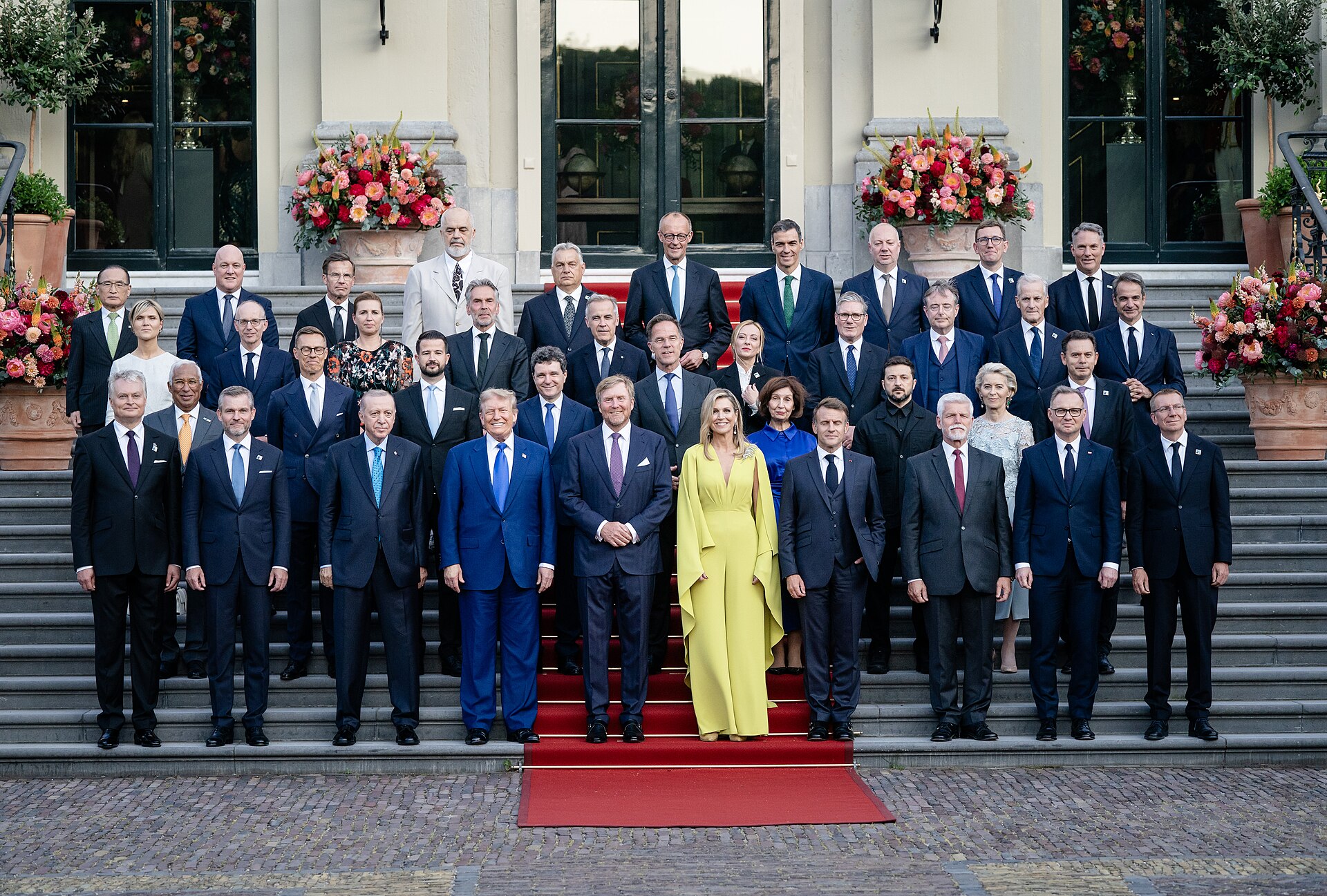
The president reserved his sharpest language for NATO. Asked whether the alliance’s future was at risk if European members failed to respond, Trump replied: “If there’s no response or if it’s a negative response, I think it will be very bad for the future of NATO.” He singled out Britain, suggesting that London had only agreed to deploy additional forces to the Gulf after American strikes had already degraded Iran’s military capacity. “They only offered after we’d already done the hard work,” Trump told the Financial Times.
On China, Trump said he expected Beijing to help secure the strait before he travelled to the Chinese capital for a summit with President Xi Jinping, originally scheduled for 31 March to 2 April. “We may delay,” he said, without specifying a new date. He framed the request in transactional terms, noting that China sourced roughly 90 percent of its oil from the Middle East and therefore had a direct interest in keeping the waterway open.
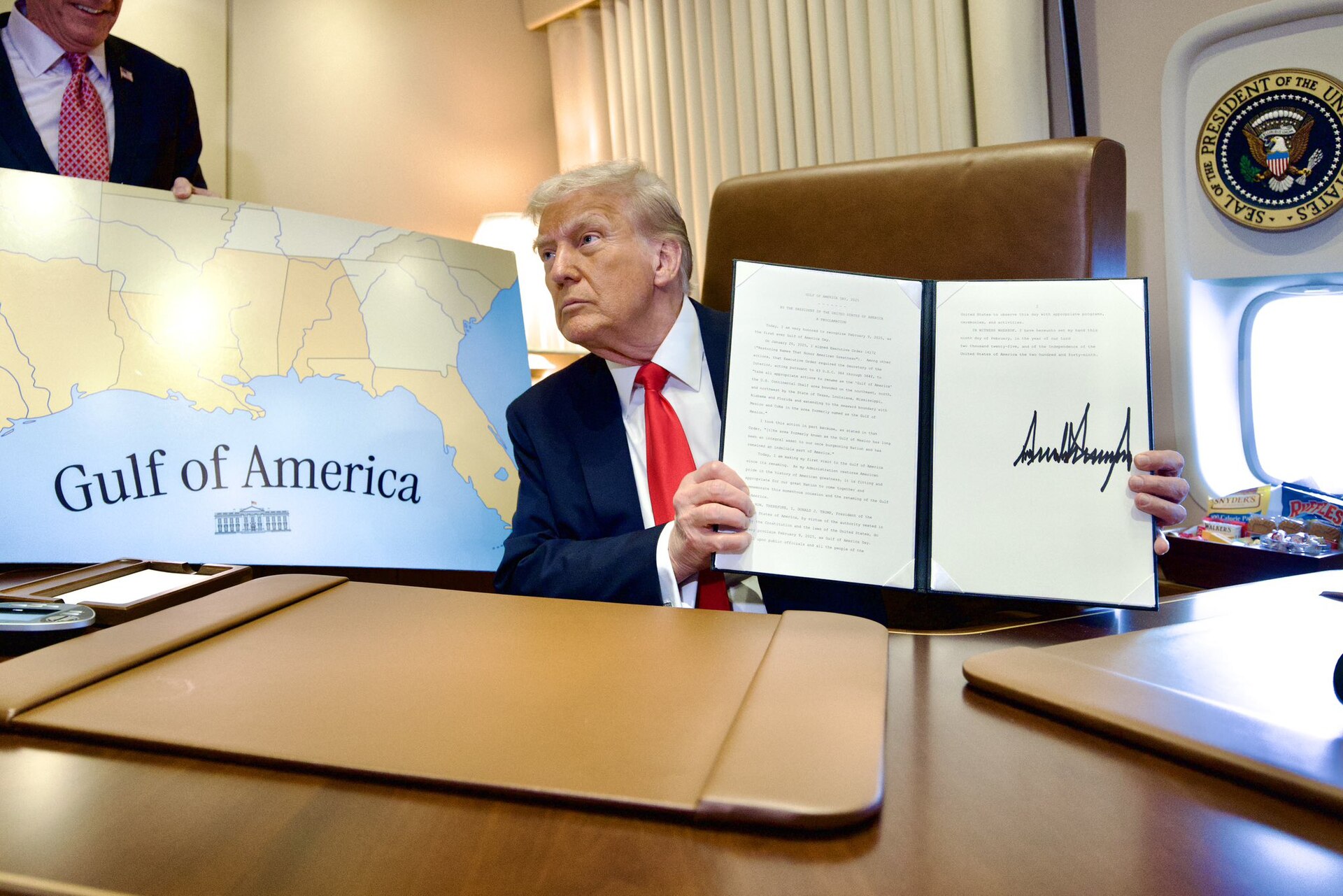
The interview also touched on Iran’s military posture. Trump claimed the United States had “totally decapitated” Iran’s conventional forces and said he was open to striking Kharg Island’s oil infrastructure again if Tehran continued its attacks on commercial shipping. The president had already ordered strikes on military targets at the island on 13 March, an operation that sent Brent crude surging past $106 per barrel.
The Middle East briefing 3,000+ readers start their day with.
One email. Every weekday morning. Free.
Why Is Trump Threatening NATO Over the Iran War?
Trump’s warning to NATO reflects a longstanding grievance, amplified by the Iran conflict, that European allies consume the benefits of American-led security architecture without shouldering proportional costs. The president has made similar arguments about NATO burden-sharing since his first term, but the Iran war has given the complaint a concrete and urgent dimension.
The United States is bearing the overwhelming majority of the military effort in the Gulf. American warships, carrier strike groups, and air assets have been conducting continuous operations since 28 February, intercepting Iranian missiles aimed at Gulf states and striking targets inside Iran alongside Israeli forces. More than 1,400 Iranians have been killed in the campaign, according to Al Jazeera, and seven American service members have died.
European contributions have been limited. Britain announced the deployment of additional fighter jets, helicopters, and a destroyer to the Gulf region after Prime Minister Keir Starmer spoke with Crown Prince Mohammed bin Salman on 6 March. But the EU has focused on energy contingency planning rather than military intervention, calling an emergency energy ministers’ meeting on 15 March without pledging combat forces.
Germany has been the most explicit in its refusal. Foreign Minister Johann Wadephul told ARD television: “Will we soon be an active part of this conflict? No.” France indicated it was working on a possible international escort mission but only “when circumstances permit” — language diplomats interpreted as contingent on a ceasefire that shows no sign of arriving.
| Country | Response | Military Assets Pledged | Status |
|---|---|---|---|
| United Kingdom | Deployed jets, helicopters, HMS destroyer after MBS call | Fighter jets, helicopters, 1 destroyer | Partial commitment |
| France | “When circumstances permit” — contingent on ceasefire | 0 | Conditional |
| Germany | Explicitly refused active participation | 0 | Refused |
| Canada | PM Carney discussed Hormuz with Starmer; no pledge | 0 | Non-committal |
| Japan | Approached by Trump; no public response | 0 | Non-committal |
| South Korea | “Cautious diplomatic language” only | 0 | Non-committal |
The pattern is consistent with what analysts have described as the failure of the Hormuz coalition concept. Despite Washington’s appeals, no country has committed the kind of sustained naval presence — destroyer escorts, minesweeping capability, aerial surveillance — needed to secure the 33-kilometre-wide passage against Iranian fast boats, mines, and anti-ship missiles.
That assessment may now be outdated. Within days of Trump’s NATO warning, the White House shifted from diplomatic appeals to operational planning, with reports indicating that the Hormuz Coalition is taking concrete shape and that Washington is weighing a ground seizure of Iran’s Kharg Island as its centrepiece operation.
Will the Trump-Xi Beijing Summit Be Delayed?
The summit between Trump and Xi had been set for 31 March to 2 April in Beijing, a meeting intended to stabilise the world’s most consequential bilateral relationship after months of tariff disputes and technology restrictions. Trump’s suggestion that the trip might be postponed introduces a new variable into already complicated US-China relations.
Treasury Secretary Scott Bessent offered a somewhat different explanation for a potential delay. Speaking to CNBC on Monday, Bessent said the meeting could be postponed for logistical reasons rather than as a diplomatic punishment, suggesting the president might choose to remain in Washington to coordinate the war effort. “The president may want to stay here to manage the situation,” Bessent said, without confirming whether the summit’s fate was genuinely tied to China’s Hormuz cooperation.
The ambiguity appeared deliberate. By leaving the reason for the potential delay unresolved, the administration preserved the threat as leverage while giving Beijing a face-saving path if the summit proceeds on schedule. Analysts at the Stimson Center noted that Trump had used similar tactics during trade negotiations in 2019, threatening to cancel meetings only to proceed after extracting concessions.
For energy markets, the uncertainty matters. A functioning US-China channel is widely seen as one of the few mechanisms capable of pressuring Iran into easing the Hormuz blockade, given Beijing’s status as Tehran’s largest oil customer and its ongoing negotiations for tanker passage through the strait.
China Pushes Back on Hormuz Pressure
Beijing responded to Trump’s pressure with a mix of studied calm and quiet defiance. Liu Pengyu, a spokesperson for the Chinese Embassy in Washington, said all parties share responsibility for “stable and unimpeded energy supply” and that China would “strengthen communication” to support de-escalation. The statement carried no commitment to military action.
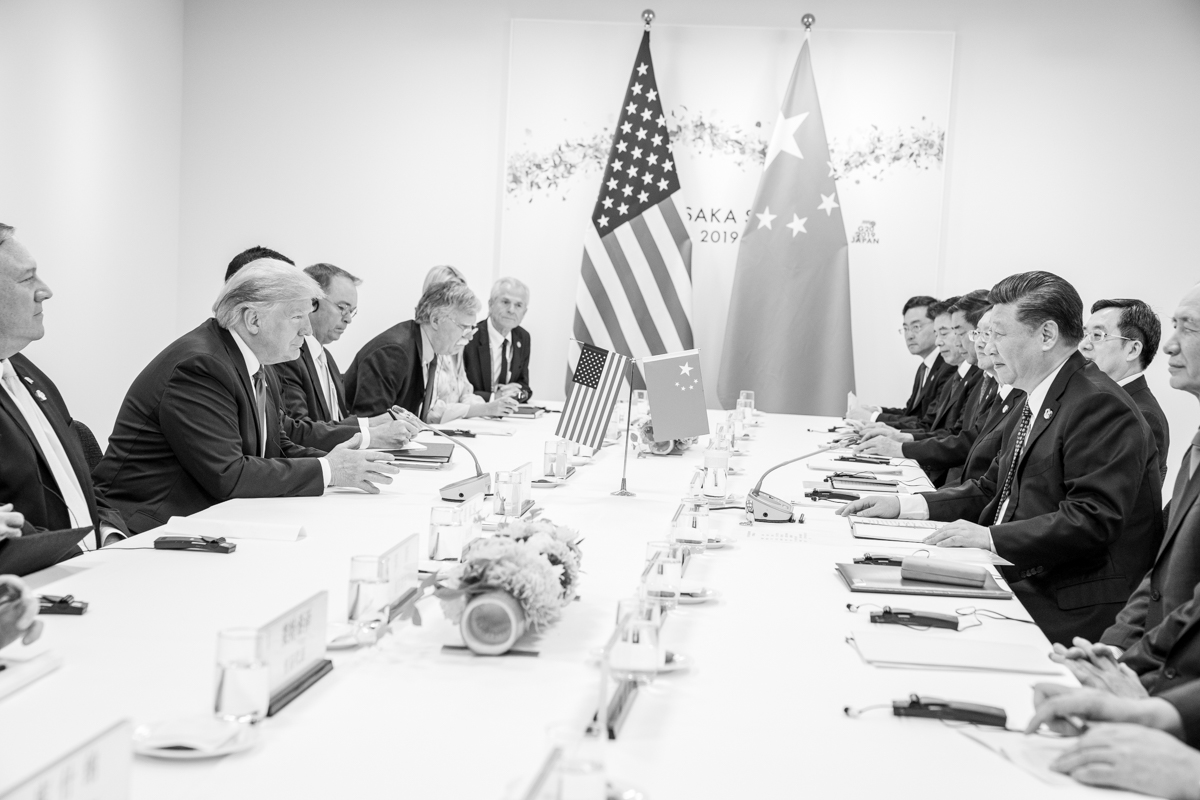
Chinese state media emphasised the country’s strategic petroleum reserves, which Beijing claims are sufficient to sustain imports for approximately 80 days without new shipments. The messaging appeared designed to signal that China was not desperate enough to accept Trump’s framing of the situation, even as roughly 45 percent of Chinese oil imports transit the Strait of Hormuz, according to Reuters.
Behind the public posture, however, China is actively negotiating with Iran. Three unnamed diplomatic sources told Reuters that Beijing was pressing Tehran to allow safe passage for crude oil tankers and Qatari liquefied natural gas carriers. Iran has shipped at least 11.7 million barrels of crude to China through the strait since the war began, according to CNBC, all on Iranian-flagged vessels operating under a de facto exemption from Tehran’s own blockade.
Reports in the South China Morning Post and the Daily News Egypt suggested Iran was considering opening the strait to tankers that conduct oil trades in Chinese yuan rather than US dollars — a proposal that, if implemented, would represent a direct challenge to the petrodollar system that underpins Saudi Arabia’s financial architecture. Chinese analysts quoted by the South China Morning Post urged caution, citing “operational feasibility limits and security risks” with such an arrangement.
US Energy Secretary Chris Wright said the administration was in “dialogue” with China and expected Beijing to be “constructive.” Barbara Slavin, an analyst at the Stimson Center, was sceptical. “China is not going to send warships into the Persian Gulf,” she told Al Jazeera. “Iranian oil is still flowing to China regardless of the blockade. Their incentive to get involved militarily is close to zero.”
Which Countries Has Trump Asked for Help?
Trump said he had demanded military contributions from approximately seven nations, though he declined to name all of them. Those publicly identified include China, France, Japan, South Korea, and Britain. India and Germany have also featured in the diplomatic exchanges, according to multiple reports.
The response has been uniformly non-committal. Trump acknowledged the lack of firm pledges in a Truth Social post on Saturday, writing that Iran had been “totally decapitated” before adding, ominously: “Whether we get support or not, but I can say this… We will remember.”
The phrase echoed language Trump used during his first term to describe European NATO members he accused of free-riding on American defence spending. But the context is different. During peacetime burden-sharing disputes, the consequences of non-cooperation were abstract. In the middle of a war that has shut down one-fifth of global oil supply, killed more than 1,400 people, and sent crude prices past $106 per barrel, Trump’s threat carries material weight.
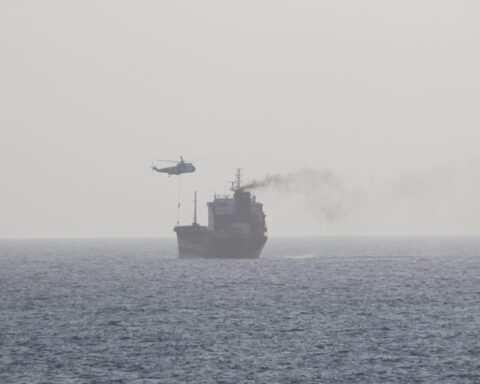
Iran’s Revolutionary Guard responded directly to the coalition talk. Brigadier-General Ali Mohammad Naini said: “Let him send his ships into the Persian Gulf if he dares.” The statement underscored the risk calculation facing any nation considering deployment. The IRGC has demonstrated its willingness to target commercial vessels, hitting more than 10 tankers since the conflict began, according to Al Jazeera. A naval escort mission would require sustained minesweeping, anti-submarine patrols, and air cover — a level of commitment that none of America’s allies has indicated they are prepared to make.
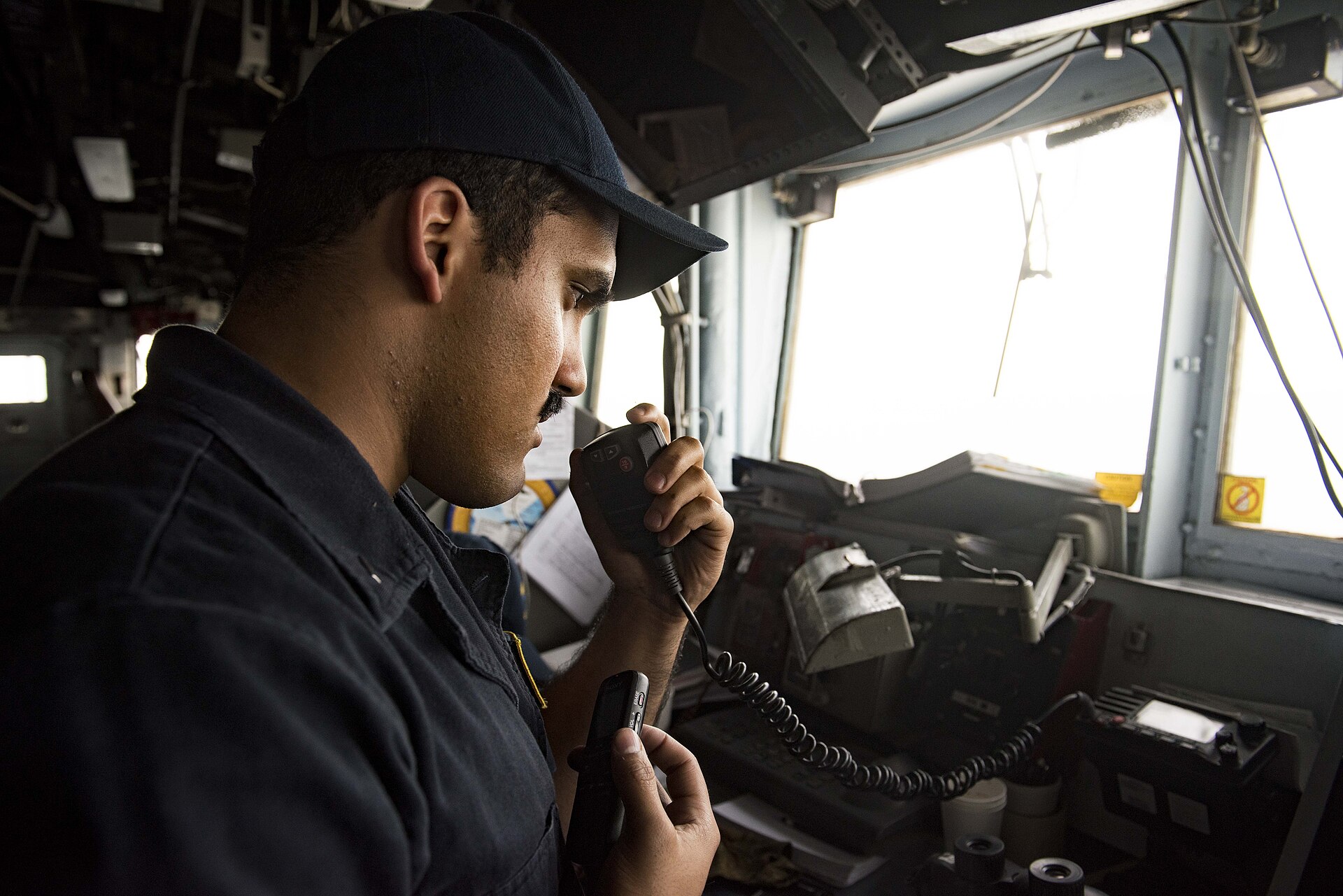
The diplomatic impasse leaves Trump’s original demand for a multinational naval force largely unfulfilled on day 17 of the war. The US Navy’s Fifth Fleet, headquartered in Bahrain, continues to operate in the Gulf with three carrier strike groups, but even American commanders have acknowledged that clearing the strait of mines and defending commercial traffic simultaneously stretches available assets.
Iran’s Selective Blockade and the Countries Getting Through
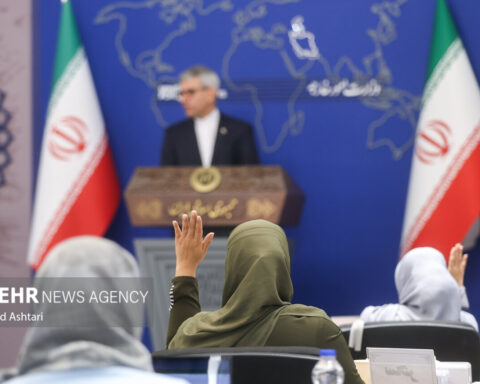
While Trump presses allies to force the strait open, Iran has quietly created a parallel system: selective passage based on diplomatic alignment. Foreign Minister Araghchi told CBS News on Sunday that Tehran had been “approached by a number of countries” seeking safe passage for their vessels, adding that “this is up to our military to decide.”
The IRGC announced on 5 March that the strait would remain closed only to ships from the United States, Israel, and their Western allies. Since then, several nations have secured transit rights through direct negotiations with Tehran.
| Country | Vessel Details | Date | Status |
|---|---|---|---|
| India | Two LPG tankers bound for western Indian ports | 15 March | Transited safely |
| Pakistan | Aframax tanker Karachi | 16 March | Transited safely |
| Turkey | One vessel of 15 awaiting clearance | Mid-March | 1 transited; 14 awaiting |
| China | Bulk carrier Iron Maiden (Cetus Maritime Shanghai) | 5 March | Transited; more in negotiation |
| France | Requested talks for passage | Ongoing | No confirmed transit |
| Italy | Requested talks for passage | Ongoing | No confirmed transit |
India’s passage was notable. Two Indian-flagged gas carriers crossed safely on Saturday morning after Iran’s ambassador to New Delhi confirmed that Tehran had granted Indian vessels a “rare exemption.” Indian External Affairs Minister S. Jaishankar said dialogue with Tehran “has yielded some results” — a diplomatic understatement for what amounted to a bilateral deal bypassing the American-led coalition entirely.
Turkey’s Transport Minister said Ankara had negotiated passage for one of 15 Turkish-owned vessels waiting near Iranian waters, with the remaining 14 still awaiting clearance. A Pakistani-flagged tanker, the Karachi, also crossed on Sunday, according to Bloomberg.
The selective blockade has created a two-tier system in global shipping. Nations willing to negotiate directly with Tehran — and by extension, distance themselves from the US-Israeli military campaign — gain access to the strait. Those that align with Washington face indefinite exclusion. The arrangement gives Iran diplomatic leverage it did not possess before the war and complicates Trump’s coalition-building effort by offering an alternative path that does not require American military support.
For Saudi Arabia, which has been rerouting oil exports through the Yanbu pipeline on the Red Sea coast, the selective blockade poses a distinct challenge. Riyadh cannot negotiate separate passage with Tehran without appearing to break ranks with Washington, its primary security guarantor. Yet every day the strait remains closed to Saudi-flagged or Saudi-bound tankers, the Kingdom bleeds revenue and market share to competitors whose ships can still transit.
What Trump’s Ultimatum Means for Saudi Arabia
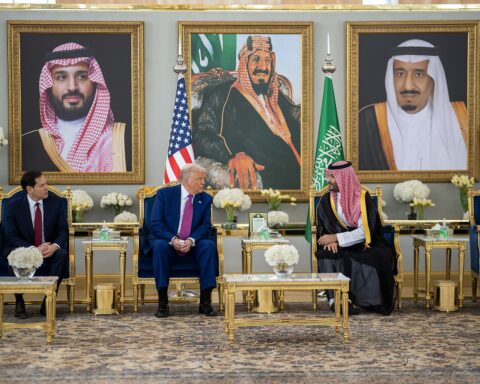
Saudi Arabia was conspicuously absent from Trump’s public list of countries asked to contribute warships. The omission reflects Riyadh’s complex position: the Kingdom is both a beneficiary of American military protection and a victim of the Iranian attacks that created the Hormuz crisis. Crown Prince Mohammed bin Salman has spoken regularly with Trump throughout the conflict, according to the New York Times, and has urged the president to continue striking Iran.
But the Financial Times interview introduces a troubling dynamic for Riyadh. If Trump is willing to condition American alliance commitments on transactional contributions from partners, Saudi Arabia’s $1 trillion investment pledge to the United States — announced during Trump’s February visit — may not be sufficient to guarantee indefinite military support. The $16 billion the war has already cost the Gulf is a fraction of the economic damage that a prolonged Hormuz closure could inflict. Meanwhile, Bessent revealed that Washington is letting Iranian tankers transit the strait — an acknowledgement that energy pragmatism is tempering the war’s maximum-pressure rhetoric.
The Kingdom’s diplomatic position is further complicated by Trump’s pressure on China. Beijing is Saudi Arabia’s largest oil customer, purchasing roughly 1.7 million barrels per day before the war. If China negotiates separate passage through the strait with Iran — potentially in yuan rather than dollars — Saudi crude exports to its most important Asian market could bypass American financial infrastructure entirely. That would undermine the petrodollar system that has anchored Saudi-American economic interdependence for half a century.
Pakistan has already deployed air defence systems and troops to Saudi Arabia under a bilateral defence pact, according to Al Arabiya, and Islamabad’s Prime Minister Shehbaz Sharif visited Crown Prince Mohammed bin Salman in Jeddah on 12 March. But Pakistan’s contribution, while symbolically important, does not address the naval and maritime security gap that Trump’s coalition was meant to fill.
Riyadh faces a narrowing set of options. The East-West pipeline to Yanbu can handle approximately 5 million barrels per day, short of the Kingdom’s pre-war export capacity. Crown Prince Mohammed bin Salman’s wartime diplomacy has made Saudi Arabia indispensable to any post-war settlement, but the immediate crisis — keeping oil flowing and the economy solvent — requires the kind of naval power that only the United States, and possibly a coalition, can provide. Trump’s interview made clear that such power comes with conditions.
Frequently Asked Questions
What did Trump say about NATO in the Financial Times interview?
Trump warned NATO allies that the alliance faces a “very bad future” if European members do not contribute military forces to help reopen the Strait of Hormuz during the Iran war. He specifically criticised Britain for only deploying forces after the United States had already degraded Iran’s military capabilities, and noted that Germany had explicitly refused to participate in any combat role.
Is the Trump-Xi Beijing summit cancelled?
The summit, originally scheduled for 31 March to 2 April, has not been formally cancelled. Trump said “we may delay” the trip, linking the potential postponement to China’s willingness to help secure the Strait of Hormuz. Treasury Secretary Scott Bessent offered a logistical explanation, suggesting Trump might stay in Washington to manage the war effort rather than travel to Beijing.
How does the Hormuz crisis affect Saudi Arabia?
Saudi Arabia depends on the Strait of Hormuz for the majority of its crude oil exports. The Kingdom has been rerouting shipments through the East-West pipeline to Yanbu on the Red Sea, but this route can handle only about 5 million barrels per day — below pre-war export capacity. Iran’s selective blockade also prevents Saudi-flagged tankers from transiting, costing Riyadh revenue and market share while nations like India and China negotiate separate passage deals with Tehran.
Which countries have secured safe passage through the Strait of Hormuz?
India, Pakistan, Turkey, and China have all secured some form of transit rights through direct negotiations with Iran. India sent two LPG tankers through on 15 March, a Pakistani tanker crossed on 16 March, and Turkey obtained passage for one of 15 vessels awaiting clearance. China has been shipping Iranian oil through the strait since the war began, with at least 11.7 million barrels transiting to Chinese ports.
Has any NATO country committed warships to reopen the strait?
Britain is the only NATO member to have deployed additional military assets to the Gulf, sending fighter jets, helicopters, and a destroyer after consultations with Saudi Arabia’s Crown Prince Mohammed bin Salman. France has discussed a possible escort mission contingent on a ceasefire, while Germany has refused outright. No country has committed to the sustained naval escort operation that reopening the strait would require. On March 17, the coalition effort collapsed entirely when every major allied navy rejected Trump’s demand for warships at Hormuz, forcing the president to reverse course within hours.