
RIYADH — The destruction of Iran’s nuclear infrastructure in the opening hours of Operation Epic Fury eliminated the Middle East’s most advanced uranium enrichment program in a single night. Within weeks, Saudi Arabia’s own nuclear ambitions — long deferred, frequently doubted, and deliberately opaque — moved from the margins of Gulf security planning to its centre. Riyadh is not building a bomb. It is building something potentially more consequential: the industrial foundation that would make a bomb possible if the Kingdom ever decided it needed one.
Saudi Arabia’s nuclear energy program has reached milestones in the past eighteen months that took the UAE a decade to achieve. A US-Saudi civil nuclear cooperation agreement was signed in November 2025. Technical specifications for the Kingdom’s first large-scale reactor have been finalised. Four international consortia are competing for a construction contract worth an estimated $20 billion. And the question of whether Saudi Arabia will enrich its own uranium — the single most proliferation-sensitive capability in the nuclear fuel cycle — remains deliberately unanswered by both Riyadh and Washington. The ambiguity is the strategy.
Table of Contents
- What Is Saudi Arabia’s Nuclear Program?
- How Did the Iran War Change the Nuclear Calculus?
- The Reactors at Khor Duweihin
- Who Will Build Saudi Arabia’s Nuclear Plants?
- Why Does Saudi Arabia Want Uranium Enrichment?
- The US-Saudi 123 Agreement and Its Missing Clause
- Can Saudi Arabia Build a Nuclear Weapon?
- Pakistan’s Nuclear Shadow Over the Kingdom
- The Nuclear Readiness Assessment
- What Stands Between Riyadh and the Bomb?
- The Regional Proliferation Cascade
- Frequently Asked Questions
What Is Saudi Arabia’s Nuclear Program?
Saudi Arabia’s nuclear program is a state-directed effort to build civil nuclear power reactors and develop the full nuclear fuel cycle, including uranium mining, conversion, enrichment, and fuel fabrication. The program is managed by the King Abdullah City for Atomic and Renewable Energy (KACARE), established by royal decree in 2010, and aims to generate 17.6 gigawatts of nuclear electricity by 2040 as part of the Kingdom’s broader energy diversification strategy under Vision 2030.
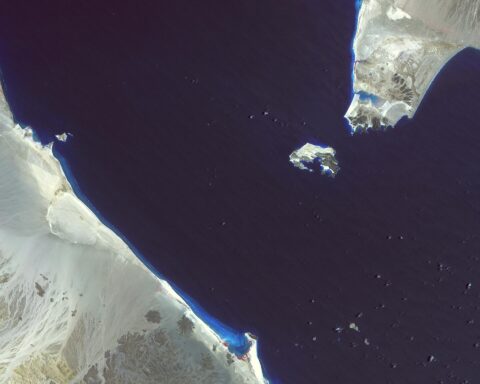
The program’s centrepiece is a planned pair of large pressurised water reactors at Khor Duweihin, a coastal site on the Persian Gulf between Saudi Arabia’s border with Qatar and the UAE. Each reactor would produce approximately 1.4 gigawatts of electrical power — enough to supply a city of roughly two million people. The project’s estimated cost ranges between $18 billion and $22 billion, depending on the vendor selected and the scope of technology transfer.
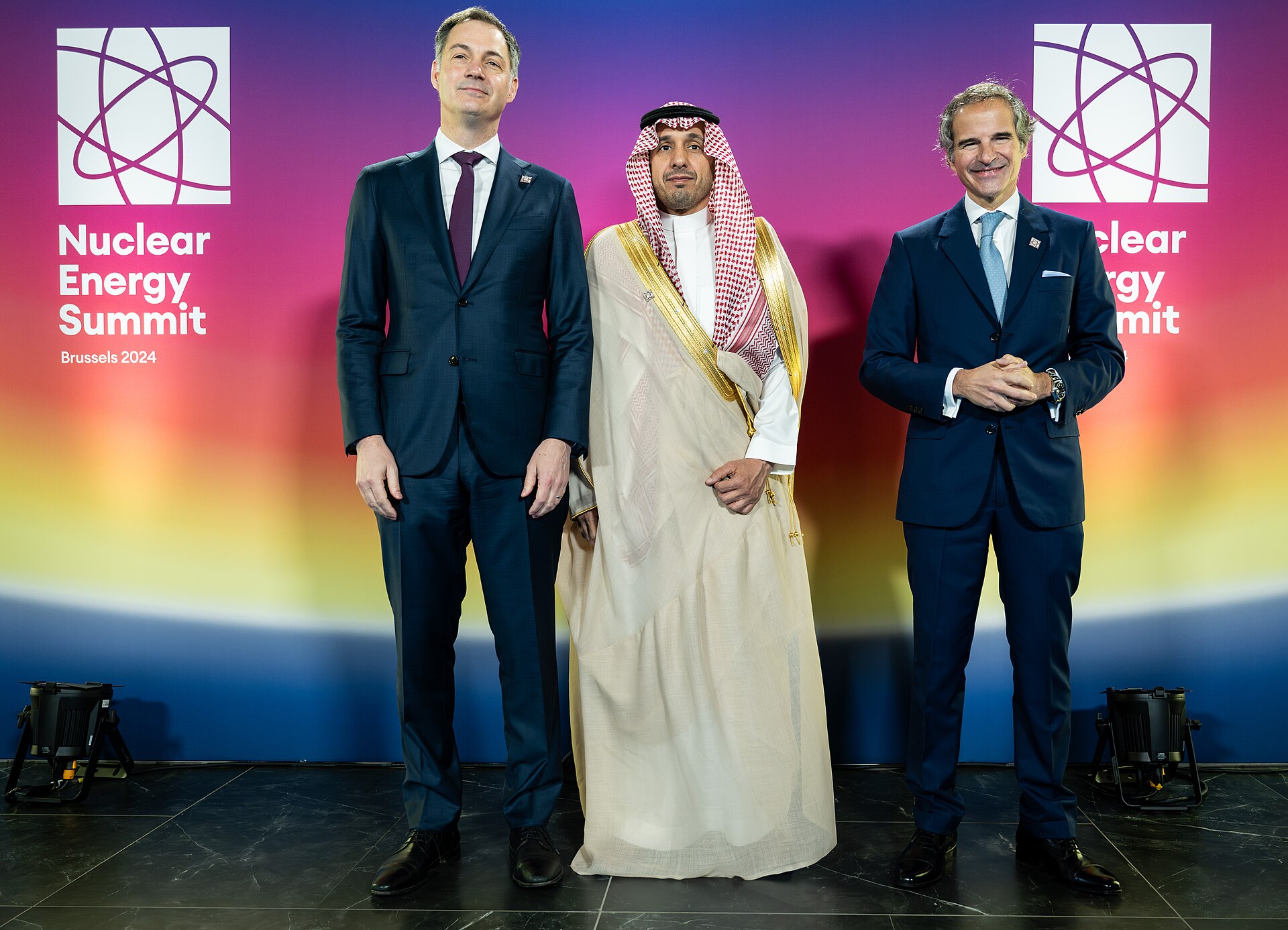
KACARE operates under the direct authority of the Royal Court, bypassing the Ministry of Energy’s normal oversight channels. Prince Mamdouh bin Saud bin Thunayan Al Saud serves as KACARE’s CEO and represented the Kingdom at the 2024 Nuclear Energy Summit in Brussels, where he met with IAEA Director General Rafael Grossi to discuss Saudi Arabia’s nuclear infrastructure development. The institutional architecture mirrors that of other strategic programmes under Mohammed bin Salman‘s oversight — centralised, fast-moving, and shielded from bureaucratic friction.
Beyond the large reactors, Saudi Arabia has engaged South Korea’s Korea Atomic Energy Research Institute (KAERI) on the SMART (System-integrated Modular Advanced ReacTor) small modular reactor design, signing a cooperation agreement worth $1 billion. The Kingdom has also invested in the front end of the fuel cycle: geological surveys have identified uranium deposits in the Arabian Shield, the ancient rock formation running through the Hejaz region, with estimated reserves of approximately 90,000 tonnes — enough to fuel a domestic reactor fleet for decades.
The Middle East briefing 3,000+ readers start their day with.
One email. Every weekday morning. Free.
How Did the Iran War Change the Nuclear Calculus?
The US-Israeli strikes of February 28, 2026, destroyed Iran’s uranium enrichment facilities at Natanz and Fordow, its heavy water reactor at Arak, and the research complex at Isfahan within the first seventy-two hours of combat operations. According to IAEA estimates cited by the Arms Control Association, Iran had accumulated approximately 128 kilograms of uranium enriched to 60 percent purity — enough, with further enrichment, for roughly five nuclear devices. That stockpile no longer exists. The centrifuge cascades that produced it have been reduced to rubble.
For Saudi Arabia, the destruction created a paradox that defines the current moment. The explicit justification for a Saudi weapons programme — MBS’s 2018 declaration that “if Iran developed a nuclear bomb, we will follow suit as soon as possible” — has lost its trigger condition. Iran does not have a bomb. Iran no longer has the facilities to build one. The case for a Saudi deterrent against an Iranian nuclear threat has, in the strictest logical sense, evaporated. The mutual nuclear targeting of Natanz and Dimona on March 22 confirmed that nuclear infrastructure has become a battlefield asset rather than a protected deterrent.
Yet the war has simultaneously accelerated every other dimension of Saudi nuclear ambition. The conflict’s broader consequences — the vulnerability of Gulf oil infrastructure to conventional attack, the fragility of the Strait of Hormuz as an energy corridor, the demonstrated willingness of Iran to strike civilian targets across six Gulf states — have reinforced the argument for energy diversification away from hydrocarbon dependence. Nuclear power, which requires no oil, no gas, and no vulnerable maritime chokepoint to deliver electricity, has become the ultimate energy security hedge.
The war has also strengthened Riyadh’s negotiating position with Washington. The US-Saudi nuclear cooperation agreement, signed weeks before the conflict began, now carries strategic weight that neither side anticipated. Saudi Arabia’s $1 trillion investment pledge to the United States, its hosting of American military bases under daily Iranian attack, and its restraint in not retaliating directly against Iran have all created political capital that the Kingdom can spend on nuclear concessions that would have been unthinkable a year ago.
The Reactors at Khor Duweihin
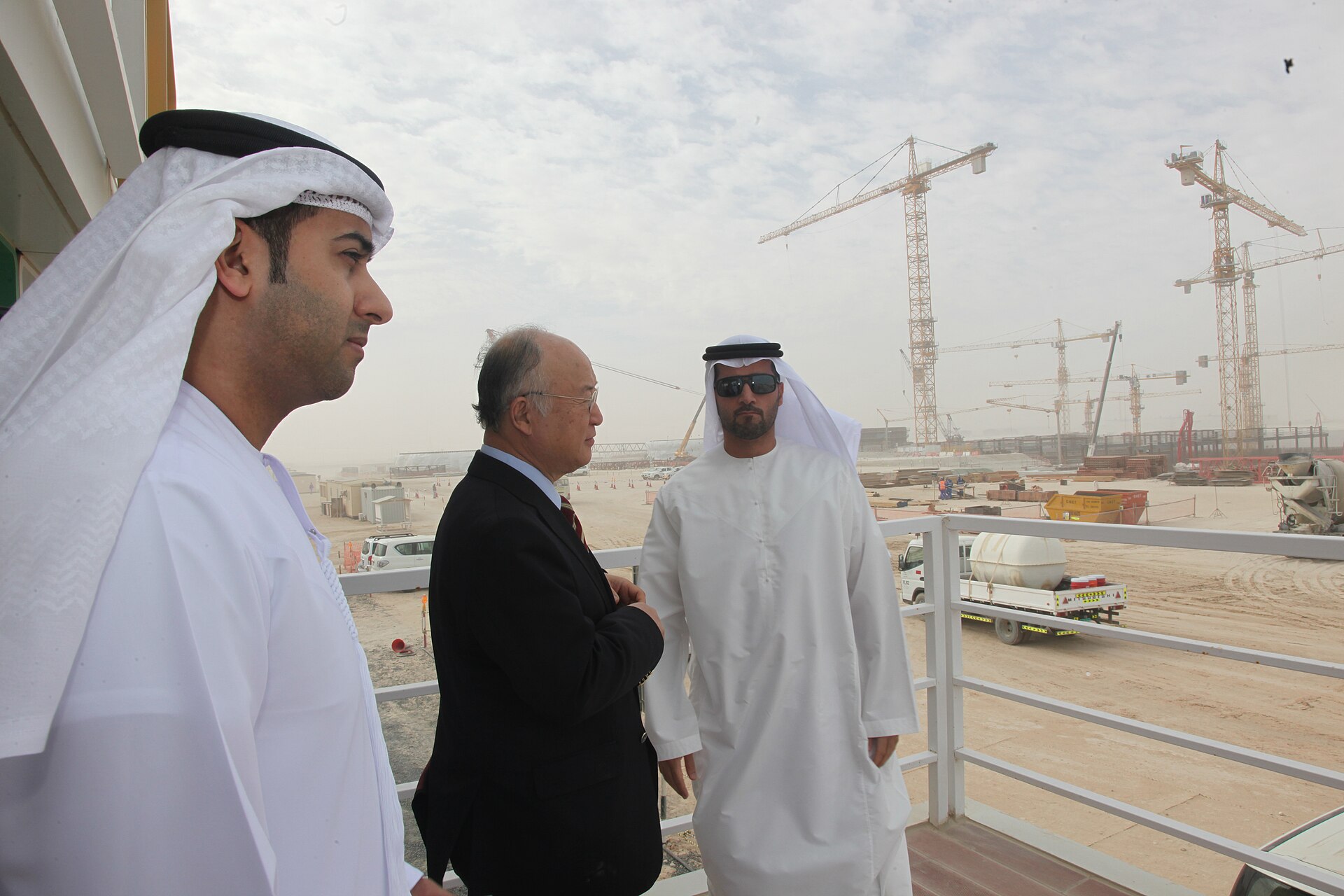
Khor Duweihin sits on the Persian Gulf coast approximately 300 kilometres east of Riyadh, in a sparsely populated stretch of coastline chosen for its access to seawater for reactor cooling, its distance from major population centres, and its proximity to the existing electrical grid serving the Eastern Province. The site selection, completed in 2019 after a multi-year evaluation of twelve candidate locations, followed IAEA guidelines requiring seismic stability, low population density, and adequate water supply.
The planned installation comprises two Generation III+ pressurised water reactors, each rated at approximately 1,400 megawatts electric (MWe). At full capacity, the two units would generate 2,800 MWe — roughly 5 percent of Saudi Arabia’s current installed generation capacity of 55,000 MWe. First concrete is targeted for the late 2020s, with commercial operation expected in the early 2030s.
The Duwayhin Nuclear Energy Company (DNEC) has been established as the project’s owner-operator, a special-purpose entity under KACARE’s supervision. In May 2025, the IAEA conducted its first Management Systems Advisory Service (IMSAS) mission to DNEC, concluding that the company had established management systems “aligned with international best practices” — a significant endorsement for an entity barely two years old.
| Year | Milestone | Significance |
|---|---|---|
| 2010 | KACARE established by royal decree | Institutional foundation for nuclear ambitions |
| 2013 | 16 reactor plan announced | Signalled scale of ambition; later scaled back |
| 2017 | National Atomic Energy Project approved | Formalised nuclear energy as state priority |
| 2019 | Khor Duweihin site selected | Fixed location for first reactors |
| 2022 | Technical bids invited from 4 vendors | KEPCO, Rosatom, CNNC, EDF entered competition |
| 2024 | Small Quantities Protocol rescinded | Saudi Arabia accepted full IAEA safeguards |
| 2025 | US-Saudi 123 Agreement announced | Unlocked American nuclear technology access |
| 2025 | IAEA IMSAS mission to DNEC | International validation of operator readiness |
| 2026 | Iran’s nuclear programme destroyed | Eliminated primary regional proliferation threat |
The project’s economics are driven by Saudi Arabia’s extraordinary domestic electricity demand. The Kingdom consumes approximately 350 terawatt-hours per year, with demand growing at roughly 3 percent annually — driven by population growth, urbanisation, and the energy-intensive desalination plants that provide 70 percent of the country’s drinking water. At current rates, Saudi Arabia burns approximately 600,000 barrels of crude oil per day for domestic power generation — oil that could instead be exported at over $100 per barrel, representing an opportunity cost exceeding $20 billion annually.
Who Will Build Saudi Arabia’s Nuclear Plants?
Four international consortia are competing for the Khor Duweihin contract, and the choice of vendor will carry geopolitical implications far beyond the energy sector. Each bidder brings distinct technology, financing arrangements, and political baggage that will shape Saudi Arabia’s nuclear trajectory for decades.
The Korea Electric Power Corporation (KEPCO) offers the APR-1400 reactor, a proven Generation III+ design that powers the four operational units at the UAE’s Barakah nuclear plant — the first commercial reactors in the Arab world. Barakah’s Unit 1 achieved commercial operation in April 2021, with Units 2, 3, and 4 following by 2024. The APR-1400’s track record in the Gulf climate, KEPCO’s willingness to transfer technology, and South Korea’s alignment with US nonproliferation standards make it the frontrunner in Washington’s preferred scenario. The reactor’s 60-year operational design life and its compatibility with US-origin nuclear fuel further strengthen the Korean bid.
China National Nuclear Corporation (CNNC) offers the Hualong One (HPR-1000), China’s flagship third-generation reactor design that began commercial operation at Fuqing Unit 5 in January 2021. The Hualong One’s primary advantage is price: Chinese financing packages typically undercut Western competitors by 20 to 30 percent, and CNNC has offered to build Khor Duweihin on a turnkey basis with Chinese state financing. The political cost, however, is significant. A Chinese-built reactor would almost certainly preclude US fuel supply and would place Saudi Arabia’s most sensitive energy infrastructure within Beijing’s technological orbit.
Russia’s Rosatom brings the VVER-1200, the reactor design currently under construction in Egypt, Turkey, Bangladesh, and Hungary. Rosatom’s financing model — state-backed loans covering up to 85 percent of construction costs — has made it the developing world’s preferred nuclear vendor. However, the geopolitical complications of Russian nuclear dependency have intensified since the 2022 Ukraine invasion, and Saudi Arabia’s warming relationship with Washington makes a Rosatom selection diplomatically awkward.
The risks of nuclear power in a conflict zone were underscored in March 2026 when a projectile struck just 350 metres from Iran’s Bushehr reactor, prompting the IAEA and Rosatom to issue emergency warnings about the 282 tons of nuclear material stored at the Gulf-coast site.
France’s EDF offers the EPR (European Pressurised Reactor), the most powerful reactor design in commercial operation. The 1,650 MWe EPR running at Finland’s Olkiluoto and France’s Flamanville are among the most capable units ever built. The EPR’s problem is its track record of delays and cost overruns: Olkiluoto-3 was 13 years late, and Flamanville’s costs tripled from an original estimate of 3.3 billion euros to over 13 billion euros. EDF remains in the competition largely because France’s nuclear export credit agency offers generous terms and because Paris has no geopolitical complications with Riyadh.
| Vendor | Reactor | Capacity (MWe) | Reference Plant | Estimated Cost | Key Advantage | Key Risk |
|---|---|---|---|---|---|---|
| KEPCO (South Korea) | APR-1400 | 1,400 | Barakah (UAE) | $18-20B | Proven in Gulf climate | Korean supply chain constraints |
| CNNC (China) | Hualong One | 1,000 | Fuqing (China) | $14-16B | Lowest price, turnkey financing | US incompatibility, geopolitical risk |
| Rosatom (Russia) | VVER-1200 | 1,200 | Akkuyu (Turkey) | $16-18B | 85% state financing | Sanctions risk, diplomatic cost |
| EDF (France) | EPR | 1,650 | Flamanville (France) | $22-26B | Most powerful design | History of delays and cost overruns |
The vendor selection has been delayed repeatedly since bids were first invited in 2022, with the deadline described by MEED as “more like a moving target, running in parallel with progress in bilateral government-to-government talks.” The Iran war has added further complexity: the Khor Duweihin site sits on the Gulf coast, within range of the Iranian missiles and drones that have struck targets across the Eastern Province since February 28. Whether the conflict accelerates or delays the vendor decision depends entirely on whether Riyadh concludes that the war validates nuclear power as an energy security necessity — or marks the Gulf coast as too vulnerable for a $20 billion reactor complex. The Bushehr precedent offers a stark preview: an analysis of the nuclear disaster scenario threatening Gulf states from Iran’s coastal reactor details how a breach of the plant’s 282-ton radiological inventory could contaminate desalination intakes across the western Gulf within hours.
Why Does Saudi Arabia Want Uranium Enrichment?
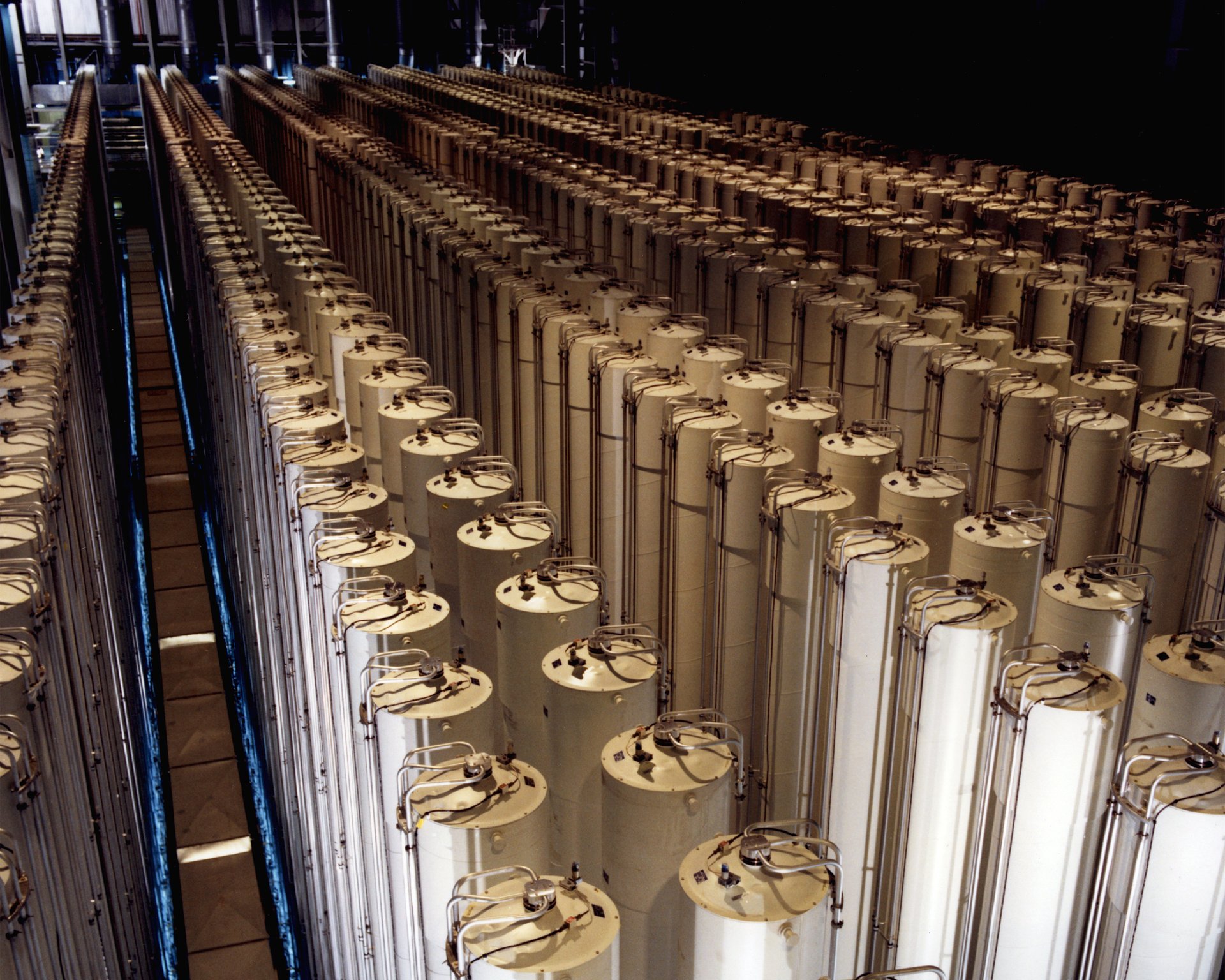
Uranium enrichment is the process of increasing the concentration of the fissile isotope uranium-235 from its natural level of 0.7 percent to the 3 to 5 percent required for reactor fuel. The same centrifuge technology that produces low-enriched uranium (LEU) for power reactors can, with further spinning, produce the 90 percent highly enriched uranium (HEU) needed for a nuclear weapon. This dual-use potential makes enrichment the most proliferation-sensitive technology in the nuclear fuel cycle — and the reason Saudi Arabia’s insistence on developing it has alarmed nonproliferation experts worldwide.
Saudi Arabia’s stated rationale is economic sovereignty. Prince Abdulaziz bin Salman, the Energy Minister, has declared that “even if we scale up nuclear power, we want to go to the full cycle — to producing the uranium, enriching the uranium, making the fuel.” The argument runs as follows: a nation that imports its reactor fuel is dependent on foreign suppliers who may attach political conditions or interrupt supply during crises. Saudi Arabia, having watched the war disrupt virtually every import corridor into the Gulf, has no interest in exchanging oil dependency for uranium dependency.
The economic case has some validity. The global uranium enrichment market is dominated by four entities: Urenco (a British-Dutch-German consortium), Orano (France), TENEX (Russia), and CNNC (China). Russia’s TENEX alone provides approximately 24 percent of global enrichment services, meaning any Western attempt to sanction Russian nuclear fuel — as has been periodically proposed since 2022 — would create supply disruptions affecting dozens of countries. Saudi Arabia, which plans to operate reactors for at least six decades, sees domestic enrichment as a hedge against precisely this kind of supply chain risk.
The geological foundations exist. Saudi Arabia’s Arabian Shield contains identified uranium deposits estimated at approximately 90,000 tonnes, according to surveys conducted by the Saudi Geological Survey in partnership with Chinese and Jordanian geological agencies. While these deposits have not been commercially developed, their existence gives the Kingdom a credible claim to end-to-end fuel cycle capability.
Nonproliferation analysts are not reassured. Henry Sokolski, executive director of the Nonproliferation Policy Education Center, has warned that allowing Saudi enrichment would “blow a hole in the nonproliferation regime” by establishing a precedent that wealthy states can acquire dual-use technology simply by citing economic arguments. The Foundation for Defense of Democracies has argued that “Washington must not relax nonproliferation standards for Saudi Arabia,” noting that enrichment capability would reduce the Kingdom’s breakout time — the period required to produce weapons-grade uranium — from years to weeks. The urgency of these concerns has intensified as Trump weighs whether to deploy ground forces to seize Iran’s surviving uranium stockpile, a decision that will directly shape the terms under which Saudi Arabia negotiates its own enrichment rights.
The US-Saudi 123 Agreement and Its Missing Clause
The Joint Declaration on Civil Nuclear Energy Cooperation, announced during MBS’s November 18, 2025, meeting with President Trump at the White House, was hailed by both governments as a breakthrough. Under Section 123 of the US Atomic Energy Act, any transfer of American nuclear technology, materials, or equipment to a foreign country requires a bilateral agreement that includes nonproliferation commitments. The US-Saudi deal, once formally submitted to Congress, would unlock access to American reactor technology, fuel supply, and the vast ecosystem of US nuclear engineering firms that dominate the global industry.
The agreement’s text, however, contains a deliberate ambiguity that has consumed Washington’s nonproliferation community. The declaration references “additional safeguards and verification measures” applied to “the most proliferation-sensitive areas of potential nuclear cooperation between the Kingdom of Saudi Arabia and the United States — enrichment, conversion, fuel fabrication, and reprocessing.” The phrasing acknowledges enrichment as a subject of cooperation rather than prohibiting it — a departure from the “gold standard” 123 agreement that the US signed with the UAE in 2009, which included an explicit prohibition on both enrichment and reprocessing.
Senator Jim Risch, then chairman of the Senate Foreign Relations Committee, and ranking member Senator Jeanne Shaheen stated separately that any 123 agreement with Saudi Arabia “should be a gold standard agreement” — meaning enrichment and reprocessing prohibitions must be included. A February 2026 report by the Arms Control Association found that the proposed deal “appears to loosen nonproliferation vows” by leaving the enrichment question to future bilateral negotiations rather than settling it in the agreement itself.
The Trump administration’s position, according to Middle East Eye and other outlets reporting on the classified annex, is that Saudi Arabia has agreed to “additional IAEA safeguards” in exchange for access to enrichment-related technologies at an unspecified future date. The formula allows both sides to claim what they need: the US can tell Congress it did not explicitly authorise enrichment; Saudi Arabia can tell its domestic audience that enrichment remains on the table.
Congressional review of the final 123 agreement — expected to be submitted in the first half of 2026 — will be complicated by the war. Legislators who might have objected to Saudi nuclear concessions in peacetime now face the political reality that Riyadh is hosting American forces under fire, has pledged a trillion dollars in US investment, and is Washington’s most important Arab ally in the largest Middle Eastern conflict since 2003. Blocking the nuclear deal risks a diplomatic rupture that few in Congress want to own.
Can Saudi Arabia Build a Nuclear Weapon?
Saudi Arabia does not currently possess the technical capability to produce a nuclear weapon. The Kingdom has no enrichment facilities, no reprocessing plants, no weapons design laboratories, and no history of nuclear weapons research that has ever been confirmed by intelligence agencies or the IAEA. Building a bomb from scratch would require mastering multiple technologies simultaneously — enrichment to weapons-grade, implosion device design, weapons engineering, and delivery system integration — a process that took Pakistan approximately 25 years and cost an estimated $10 billion in 1990s dollars.
The more relevant question is not whether Saudi Arabia can build a bomb today, but how quickly it could develop one if the political decision were made. Three factors determine the timeline: enrichment capability, weapons design knowledge, and delivery systems.
On enrichment, Saudi Arabia has none. Even if the Kingdom acquired centrifuge technology through the 123 agreement process, constructing an operational enrichment cascade, calibrating it, and producing enough HEU for a single device would take a minimum of three to five years from the decision to proceed, according to estimates by the Institute for Science and International Security. The Pakistani route — covert procurement of centrifuge designs via illicit networks — would be faster but would carry enormous diplomatic risks for a Kingdom that depends on its reputation as a responsible international actor.
On weapons design, the knowledge gap is significant. Nuclear weapons engineering requires specialised expertise in metallurgy, high-explosive lens design, neutron initiator fabrication, and nuclear testing (either physical or computational). Saudi Arabia’s scientific base, while growing under Vision 2030’s education investments, does not currently include the deep nuclear physics and weapons engineering talent pool that programmes in Pakistan, India, or Israel developed over decades.
On delivery systems, Saudi Arabia is better positioned. The Royal Saudi Strategic Missile Force operates Chinese-supplied DF-3A and DF-21 medium-range ballistic missiles capable of carrying nuclear warheads to targets throughout the Middle East. These missiles, purchased from China in the late 1980s and supplemented with newer DF-21 variants acquired around 2007, were originally designed as nuclear delivery systems. Their existence in the Saudi arsenal has long been interpreted by analysts as a hedge — missiles whose only logical purpose is nuclear delivery, purchased by a country that does not yet have nuclear warheads to deliver.
Pakistan’s Nuclear Shadow Over the Kingdom
The persistent question in nonproliferation circles is whether Saudi Arabia would need to develop its own weapon at all — or whether it could simply acquire one from Pakistan. The so-called “bomb in the basement” theory, which has circulated in intelligence communities since the 1990s, holds that Saudi Arabia funded Pakistan’s nuclear weapons programme in exchange for an implicit guarantee of nuclear protection or transfer in extremis.
The evidence is circumstantial but persistent. Saudi Arabia provided billions of dollars in financial assistance to Pakistan throughout the 1970s and 1980s, a period that coincided with Islamabad’s clandestine nuclear weapons development. King Fahd personally financed Pakistan’s F-16 fighter purchases. Pakistani nuclear scientist Abdul Qadeer Khan visited Saudi Arabia at least once in the late 1990s, though the purpose of the visit remains disputed. And Pakistani nuclear weapons are believed to exist in modular form — warheads stored separately from delivery vehicles — a configuration that would facilitate rapid transfer.
Pakistan has consistently denied any agreement to transfer nuclear weapons to Saudi Arabia. In March 2026, Prime Minister Shehbaz Sharif’s visit to Jeddah — during which Pakistan announced the deployment of air defence units and troops to the Kingdom — notably did not include any public discussion of nuclear cooperation. Pakistan’s nuclear doctrine, such as it is, treats the arsenal as directed exclusively at India, and any transfer to a third country would violate Islamabad’s NPT obligations (Pakistan is not an NPT signatory but has pledged not to transfer nuclear technology).
The more realistic scenario is not a physical weapons transfer but a knowledge transfer — Pakistani nuclear scientists and engineers, either active or retired, providing consultancy services to a Saudi programme. This model has precedent: A.Q. Khan’s proliferation network supplied centrifuge designs to Libya, Iran, and North Korea, demonstrating that nuclear knowledge moves through people rather than through state-to-state agreements. Saudi Arabia’s wealth makes it an attractive employer for nuclear talent from any country.
The Nuclear Readiness Assessment
Assessing a country’s nuclear readiness requires evaluating capabilities across multiple dimensions simultaneously. A state can possess advanced reactors but lack enrichment. It can have delivery systems but no warhead design. It can command unlimited financial resources but face diplomatic constraints that make weaponisation prohibitively costly. The following assessment scores Saudi Arabia across eight dimensions that collectively determine nuclear capability, on a scale of one (no capability) to five (fully operational).
| Dimension | Score (1-5) | Assessment | Key Constraint |
|---|---|---|---|
| Political Will | 4 | MBS has publicly stated weapons intent conditional on Iran; institutional framework in place | Conditional trigger (Iran bomb) no longer active |
| Financial Resources | 5 | Unlimited; $900M daily oil revenue at $100/barrel provides ample funding | None — cost is not a constraint |
| Enrichment Capability | 1 | No centrifuges, no enrichment facilities, no operational experience | 3-5 year minimum development timeline |
| Reactor Infrastructure | 2 | No operational reactors; first concrete at Khor Duweihin expected late 2020s | 5-8 years to operational reactor producing plutonium |
| Weapons Design Knowledge | 1 | No confirmed weapons research programme; limited domestic nuclear physics talent | Decades to develop independently; faster with external help |
| Delivery Systems | 4 | DF-3A and DF-21 ballistic missiles operational; designed for nuclear delivery | Ageing Chinese systems may need modernisation |
| Uranium Resources | 3 | ~90,000 tonnes identified in Arabian Shield; not yet commercially developed | Mining infrastructure not built |
| Diplomatic Cover | 4 | US alliance provides protection from sanctions; war has strengthened leverage | Congressional scrutiny; NPT obligations |
The aggregate picture reveals a state that has three of the eight dimensions covered at near-maximum levels — money, missiles, and diplomatic protection — while lacking the three technical capabilities that actually matter for weapons production: enrichment, reactor-produced plutonium, and weapons design. Saudi Arabia is, in nuclear parlance, a “latent” nuclear state: one that possesses the intent, resources, and strategic rationale but has not yet crossed the technical threshold.
Closing the gap between latent capability and actual capability is a function of two variables: time and political decision. The current trajectory — building civil reactors, securing enrichment technology through the 123 agreement, developing domestic uranium resources — would, if fully realised over 10 to 15 years, convert most of those technical ones and twos into threes and fours. At that point, the distance between a civilian programme and a weapons programme would narrow to a political decision rather than a technical one.
What Stands Between Riyadh and the Bomb?
The conventional wisdom, reinforced by MBS’s own rhetoric, is that Iran’s nuclear destruction makes a Saudi bomb less likely because the trigger condition has been removed. The contrarian reading — and the one that better fits the evidence — is that the Iran war has made a Saudi nuclear weapons capability more attainable, not because the justification has grown but because the constraints have weakened.
Consider the obstacles that previously prevented Saudi nuclear advancement. First, the United States explicitly opposed Saudi enrichment and conditioned arms sales on nonproliferation compliance. That opposition has softened to studied ambiguity under the 123 agreement. Second, the IAEA’s Small Quantities Protocol exempted Saudi Arabia from rigorous inspections, which paradoxically made it harder for Riyadh to develop nuclear infrastructure without raising alarms. By voluntarily rescinding the SQP in July 2024, Saudi Arabia has placed itself under comprehensive safeguards — which legitimises its nuclear activities and provides cover for capability development. Third, Saudi Arabia lacked a regional precedent: no Arab state had ever operated a commercial reactor. The UAE’s Barakah plant, fully operational since 2024, has eliminated that barrier.
The remaining constraints are real but manageable. The NPT, to which Saudi Arabia is a signatory, prohibits non-nuclear-weapon states from acquiring nuclear weapons. But the treaty’s enforcement mechanism — IAEA inspections and UN Security Council referral — has proven ineffective against determined proliferators. North Korea withdrew from the NPT in 2003 and faced limited consequences. Iran advanced its programme to near-weapons-grade enrichment while nominally remaining in the treaty. The NPT constrains states that choose to be constrained.
The US alliance is both constraint and enabler. Washington’s extended deterrent — the implicit guarantee that American nuclear weapons protect Saudi Arabia from existential threats — theoretically eliminates the need for an independent Saudi arsenal. But the war has tested this guarantee. Iranian missiles have struck Saudi territory while American forces on Saudi soil were unable to prevent every attack. The drone and missile barrages of March 2026 demonstrated that even the world’s most advanced air defences cannot provide perfect protection. If conventional deterrence has gaps, nuclear deterrence becomes more attractive.
The strongest remaining constraint is domestic. Saudi Arabia’s legitimacy rests in part on its custodianship of Islam’s holiest sites. A nuclear weapons programme would invite international opprobrium, potential sanctions, and theological questions about whether nuclear weapons are compatible with Islamic ethics — questions that Pakistan has navigated but that Saudi Arabia, with its unique religious obligations, would find more acute. The Kingdom of the Two Holy Mosques building a weapon of mass destruction is a contradiction that even MBS’s political skill might not resolve.
The Regional Proliferation Cascade
Nuclear proliferation rarely occurs in isolation. The acquisition or near-acquisition of nuclear weapons by one state triggers security anxieties in neighbours that can only be resolved by matching the capability — a dynamic known as a proliferation cascade. Iran’s destroyed programme, paradoxically, may not end the cascade but redirect it.
A nuclear-capable Saudi Arabia — defined as a state with enrichment technology and sufficient fissile material to produce a weapon within months — would trigger responses from at least three regional actors. Turkey, which hosts American nuclear weapons at Incirlik Air Base under NATO’s nuclear sharing arrangement, has periodically signalled interest in an independent nuclear capability. President Erdogan stated in 2019 that “some countries have missiles with nuclear warheads — it is unacceptable that we are told we cannot have them.” A Saudi enrichment programme would strengthen Ankara’s case.
Egypt, the Arab world’s most populous country and its historical military leader, has operated a small research reactor at Inshas since 1997 and signed a contract with Rosatom in 2017 to build its first commercial nuclear plant at El Dabaa. Egypt’s nuclear ambitions have been restrained by economic limitations rather than political will. If Saudi Arabia — Egypt’s primary Gulf patron — normalised enrichment as an Arab sovereign right, Cairo would face pressure to follow suit.
The UAE, having voluntarily accepted the gold standard prohibition in its own 123 agreement with the United States, presents a more complex case. Abu Dhabi’s decision to forgo enrichment was motivated in part by the belief that doing so would grant diplomatic advantages over Iran, which insisted on enrichment as a sovereign right. If Saudi Arabia — the UAE’s most important regional partner — secures enrichment capability despite having signed a less restrictive agreement, the Emiratis may conclude that their self-imposed restraint was a strategic error and seek to renegotiate.
| State | Current Nuclear Status | Enrichment Capability | Weapons Risk Level | Trigger Condition |
|---|---|---|---|---|
| Saudi Arabia | Planning first reactor | Seeking through 123 deal | Medium-High | Perception that conventional deterrence has failed |
| Turkey | Hosts US weapons (NATO sharing) | None | Medium | Saudi enrichment; NATO credibility doubts |
| Egypt | Research reactor; El Dabaa under construction | None | Low-Medium | Saudi normalisation of enrichment |
| UAE | Barakah operational (4 units) | Prohibited under gold standard 123 | Low | Saudi enrichment undercuts UAE restraint |
| Iran | Programme destroyed (Feb 2026) | Destroyed; rebuilding timeline unknown | High (long-term) | War ends; regime survives; rebuilds covertly |
The most dangerous scenario is not a single state’s proliferation but the cascade effect: Saudi enrichment triggering Turkish demands, which pressure Egypt, which destabilises the UAE’s restraint, which provides cover for Iran’s eventual rebuilding. The Middle East, already the world’s most volatile region, would become a zone of multiple nuclear-latent states — any one of which could sprint to a weapon under the right combination of threat perception and political pressure.
The killing of Ali Larijani — Iran’s de facto leader and the official most likely to negotiate a post-war settlement — has made this cascade more probable, not less. Without a stable Iranian government capable of committing to lasting nonproliferation guarantees, the region’s nuclear future will be determined by the security calculations of states that felt Iranian missiles strike their territory.
Saudi Arabia does not want to acquire any nuclear bomb, but without a doubt, if Iran developed a nuclear bomb, we will follow suit as soon as possible.
Mohammed bin Salman, CBS interview, March 2018
MBS made that statement eight years ago. Iran never developed its bomb — but its programme came close enough, and its conventional weapons hit Saudi territory hard enough, that the underlying logic has evolved beyond its original framing. The question is no longer whether Iran has a bomb. The question is whether any country in the region can afford not to pursue the capability when the alternative — relying on conventional defence and American guarantees — has been tested under fire and found imperfect.
Saudi Arabia’s nuclear journey began as an energy diversification project. The Iran war has transformed it into something far more consequential: a programme that will determine whether the Middle East’s nuclear future is defined by restraint or by proliferation. The reactors at Khor Duweihin, when they eventually come online, will generate electricity. Whether they also generate the plutonium and institutional knowledge that shrinks the distance between civilian and military capability depends on decisions being made in Riyadh, Washington, and Vienna today — decisions whose consequences will outlast the war that precipitated them.
Frequently Asked Questions
Does Saudi Arabia have nuclear weapons?
Saudi Arabia does not possess nuclear weapons. The Kingdom has no enrichment facilities, no reprocessing plants, and no confirmed weapons research programme. However, Saudi Arabia operates Chinese-supplied ballistic missiles designed for nuclear delivery and is actively developing civil nuclear infrastructure that could, over 10 to 15 years, provide the technical foundation for a weapons programme if the political decision were made.
What is the US-Saudi nuclear cooperation agreement?
The US-Saudi 123 Agreement, announced in November 2025, is a bilateral framework for civil nuclear energy cooperation that would allow Saudi Arabia to access American reactor technology, fuel supply, and nuclear engineering expertise. The agreement’s treatment of uranium enrichment remains ambiguous, with the text referencing “additional safeguards” for enrichment-related activities rather than prohibiting them outright, as the US-UAE agreement does.
Where will Saudi Arabia build its nuclear reactors?
Saudi Arabia’s first nuclear power plant will be built at Khor Duweihin, a coastal site on the Persian Gulf between the Kingdom’s borders with Qatar and the UAE. The plant will comprise two pressurised water reactors, each rated at approximately 1,400 megawatts electric, with first concrete expected in the late 2020s and commercial operation in the early 2030s.
How did the Iran war affect Saudi Arabia’s nuclear plans?
The destruction of Iran’s nuclear facilities in February 2026 simultaneously removed the explicit trigger for Saudi weapons acquisition — MBS’s “if they get one, we get one” condition — while strengthening every other argument for nuclear capability, from energy security to defence diversification. The war also enhanced Riyadh’s negotiating leverage with Washington, making nuclear concessions more politically achievable.
Could Pakistan give Saudi Arabia nuclear weapons?
Pakistan has consistently denied any agreement to transfer nuclear weapons to Saudi Arabia. While Saudi financial support for Pakistan’s military programmes during the 1970s and 1980s has fuelled speculation about an implicit nuclear guarantee, the more realistic proliferation pathway would involve knowledge transfer — Pakistani nuclear expertise rather than physical weapons — which is harder to detect and prevent.
What is KACARE?
The King Abdullah City for Atomic and Renewable Energy (KACARE) is the Saudi government agency responsible for developing nuclear and renewable energy, established by royal decree in 2010. KACARE operates under direct Royal Court authority and oversees the Saudi National Atomic Energy Project, including the Khor Duweihin reactor programme and uranium resource development.