
RIYADH — While Iranian missiles and drones dominate the headlines, a parallel conflict is unfolding across the Gulf’s digital infrastructure that may prove more consequential than any single strike on an oil refinery or airport. More than 600 distinct cyber attacks have been claimed against Saudi Arabia, the United Arab Emirates, Kuwait, Bahrain, Qatar, and their Western allies in the first twenty days of the Iran war, according to threat intelligence firms tracking hacktivist and state-sponsored activity across Telegram channels and dark web forums. The damage so far has been limited in comparison to kinetic strikes, yet the pattern emerging from Palo Alto Networks’ Unit 42, CloudSEK, SOCRadar, and Recorded Future threat briefs points to something far more worrying than a disorganised hacktivist campaign: a deliberate, layered cyber offensive that is probing Saudi Arabia’s most critical systems while the Kingdom’s attention is fixed on the sky.
GPS navigation for more than 1,650 commercial vessels in the Persian Gulf has been disrupted. Saudi banks, airports, and government portals have been targeted by distributed denial-of-service campaigns costing as little as $100 per month to execute. Iranian-linked advanced persistent threat groups with a documented history of destroying industrial control systems at Saudi petrochemical plants are now operating under wartime conditions, with fewer constraints and broader mandates than they have ever possessed. The invisible war is accelerating, and the Gulf’s digital defences face a stress test unlike anything they have encountered since Iran’s Shamoon malware destroyed 30,000 Saudi Aramco computers in 2012.
Table of Contents
- How Many Cyber Attacks Has Iran Launched Since the War Began?
- What Are Iran’s Most Dangerous Hacker Groups?
- Why Is GPS Spoofing the Gulf’s Most Dangerous Cyber Weapon?
- The Shamoon Legacy and the Industrial Malware That Changed Everything
- Can Iran Shut Down Saudi Arabia’s Oil Refineries With Code?
- The Digital Siege Assessment
- Why Banks and Airports Matter More Than Pipelines
- The $100 Weapon That Rivals a Missile
- Are Saudi Arabia’s Cyber Defences Stronger Than They Look?
- What Would a Full-Scale Iranian Cyber Offensive Against the Gulf Look Like?
- The War After the War
- Frequently Asked Questions
How Many Cyber Attacks Has Iran Launched Since the War Began?
More than 600 distinct cyber operations were claimed against targets aligned with the United States, Israel, and the Gulf Cooperation Council in the first two weeks of the conflict, according to a comprehensive threat assessment published by SOCRadar on March 14, 2026. The operations were coordinated across more than 100 Telegram channels, with at least 60 individual hacktivist groups and state-linked collectives mobilising within hours of the February 28 US-Israeli strikes on Iranian territory.
The speed of mobilisation was not accidental. Palo Alto Networks’ Unit 42 documented the formation of what Iranian cyber operators call an “Electronic Operations Room” on the same day that Operation Epic Fury began, establishing a command-and-control structure that mirrors Iran’s physical military hierarchy. The room assigned targets, distributed toolkits, and coordinated timing across groups that had previously operated independently.
In the first 72 hours alone, more than 100 cyber incidents were recorded across the Middle East, according to the Arabian Gulf Business Intelligence (AGBI) cybersecurity desk. The targets spanned every sector the Gulf’s economies depend on: banking, telecommunications, aviation, energy, government administration, and defence logistics. Saudi Arabia’s Riyad Bank and Al Rajhi Bank appeared on target lists distributed by DieNet, a pro-Iran hacktivist collective with operational cells across the Middle East. Kuwait’s Armed Forces and Ministry of Defence websites were claimed by the 313 Team, an Iraq-based pro-Iranian cell. Airports in Bahrain, Saudi Arabia, and the UAE were subjected to DDoS floods that temporarily disrupted passenger-facing systems.
| Metric | Figure | Source |
|---|---|---|
| Total distinct attacks claimed | 600+ | SOCRadar, March 14 |
| Active hacktivist groups | 60+ | Unit 42, March 2 |
| Telegram coordination channels | 100+ | SOCRadar |
| Cyber incidents first 72 hours | 100+ | AGBI |
| GPS interference events (to March 3) | 1,735 | Lloyd’s List Intelligence |
| Vessels affected by GPS/AIS disruption (to March 8) | 1,650+ | Windward AI |
| Devices claimed wiped (Stryker attack) | 200,000+ | Handala group |
| Downloads of compromised BadeSaba app | 5,000,000+ | Euronews |
The distinction between hacktivist noise and genuine state-sponsored capability matters enormously. CloudSEK’s threat assessment noted that most hacktivist groups produce “low to medium significance” disruption — website defacements, brief service outages, and leaked databases of questionable provenance. The real danger lies beneath this layer, in the advanced persistent threat groups that use hacktivist chaos as cover for more surgical operations against industrial control systems, telecommunications infrastructure, and military logistics networks.
The Middle East briefing 3,000+ readers start their day with.
One email. Every weekday morning. Free.
What Are Iran’s Most Dangerous Hacker Groups?
Iran’s cyber arsenal operates on two distinct tiers, and understanding the difference between them is essential to assessing the threat to Saudi Arabia’s wartime infrastructure. The first tier consists of state-directed advanced persistent threat groups with years of operational history, sophisticated toolkits, and documented access to critical infrastructure networks. The second tier comprises hacktivist collectives that operate with varying degrees of state coordination, from direct tasking to loose ideological alignment.

The most dangerous group in the Iranian cyber order of battle is APT33, also known as Elfin or Refined Kitten. Linked directly to the Islamic Revolutionary Guard Corps, APT33 has maintained persistent access to energy company networks across the Gulf since at least 2013, according to Mandiant’s threat intelligence reports. The group’s specialty is long-term reconnaissance of energy and aviation targets, with a documented capability to deploy destructive malware against industrial systems. During the current conflict, APT33’s operational tempo has increased, though specific targeting data remains classified within Western intelligence agencies.
APT34, also known as OilRig, operates under the Iranian Ministry of Intelligence and Security (MOIS) rather than the IRGC. Mandiant has documented APT34 conducting cyber-espionage campaigns against Gulf government entities, telecommunications providers, and financial institutions. The group specialises in credential harvesting and supply-chain compromise — gaining access to a target’s network through a trusted third-party vendor rather than attacking the target directly.
CyberAv3ngers, an IRGC-backed unit, represents a different category of threat. The group targets industrial control systems — the SCADA and programmable logic controllers that manage physical infrastructure such as water treatment plants, power grids, and oil processing facilities. CyberAv3ngers has exploited default passwords on Unitronics Vision Series PLCs, a class of industrial controller used widely across the Middle East, according to the US Cybersecurity and Infrastructure Security Agency (CISA).
MuddyWater, another MOIS-linked group, functions as an initial access broker — penetrating networks and establishing footholds that other Iranian groups then exploit for espionage or destructive operations. Rapid7’s threat intelligence team identified MuddyWater as one of the most active Iranian groups during the current conflict, with campaigns targeting government and defence networks across the GCC.
| Group | Affiliation | Primary Capability | Gulf Targets | Threat Level |
|---|---|---|---|---|
| APT33 (Elfin) | IRGC | Long-term espionage, destructive malware | Energy, aviation | Critical |
| APT34 (OilRig) | MOIS | Credential harvesting, supply-chain attacks | Government, telecom, finance | Critical |
| CyberAv3ngers | IRGC | Industrial control system exploitation | Water, power, oil infrastructure | Critical |
| MuddyWater | MOIS | Initial access brokering, network penetration | Government, defence | High |
| Handala | MOIS-linked | Data destruction, wiper deployment | Corporate, oil and gas | High |
| DieNet | Pro-Iran collective | DDoS, data leaks | Banks, airports, utilities | Medium |
| 313 Team | Iraq-based, pro-Iran | Website defacement, DDoS | Military, government portals | Medium |
| Cyber Islamic Resistance | Umbrella coalition | Coordinated DDoS campaigns | All GCC states | Medium |
The second tier — groups like DieNet, the 313 Team, and the broader Cyber Islamic Resistance umbrella — generates most of the attack volume but least of the strategic damage. These collectives operate primarily through Telegram, publishing attack claims accompanied by screenshots of defaced websites or brief service outages. DieNet published a structured target list covering ministries, airports, banks, telecommunications providers, and electricity and water authorities across Qatar, Bahrain, the UAE, Kuwait, and Saudi Arabia. The Sylhet Gang claimed to have compromised the Saudi Ministry of Home Affairs’ human capital management and internal management systems. Yet cybersecurity analysts at AGBI assessed that most of these attacks produced “limited operational disruption.”
The danger is not in what the hacktivists achieve independently, but in what they conceal. Every wave of low-sophistication DDoS attacks and website defacements forces Gulf cybersecurity teams to respond, consuming attention and resources that might otherwise detect the quieter, more consequential intrusions being conducted by APT33, APT34, and CyberAv3ngers simultaneously.
Why Is GPS Spoofing the Gulf’s Most Dangerous Cyber Weapon?
On the day the war began, the navigation systems of more than 1,100 commercial vessels in UAE, Qatari, Omani, and Iranian waters reported impossible positions. Ships’ Automatic Identification System transponders began broadcasting locations hundreds of miles from their actual positions, according to Lloyd’s List Intelligence. Supertankers appeared to circle over dry land. Cargo vessels plotted courses through airports. Container ships drifted through the coordinates of a nuclear power plant. The electronic fog of war had descended on the world’s most important energy chokepoint.
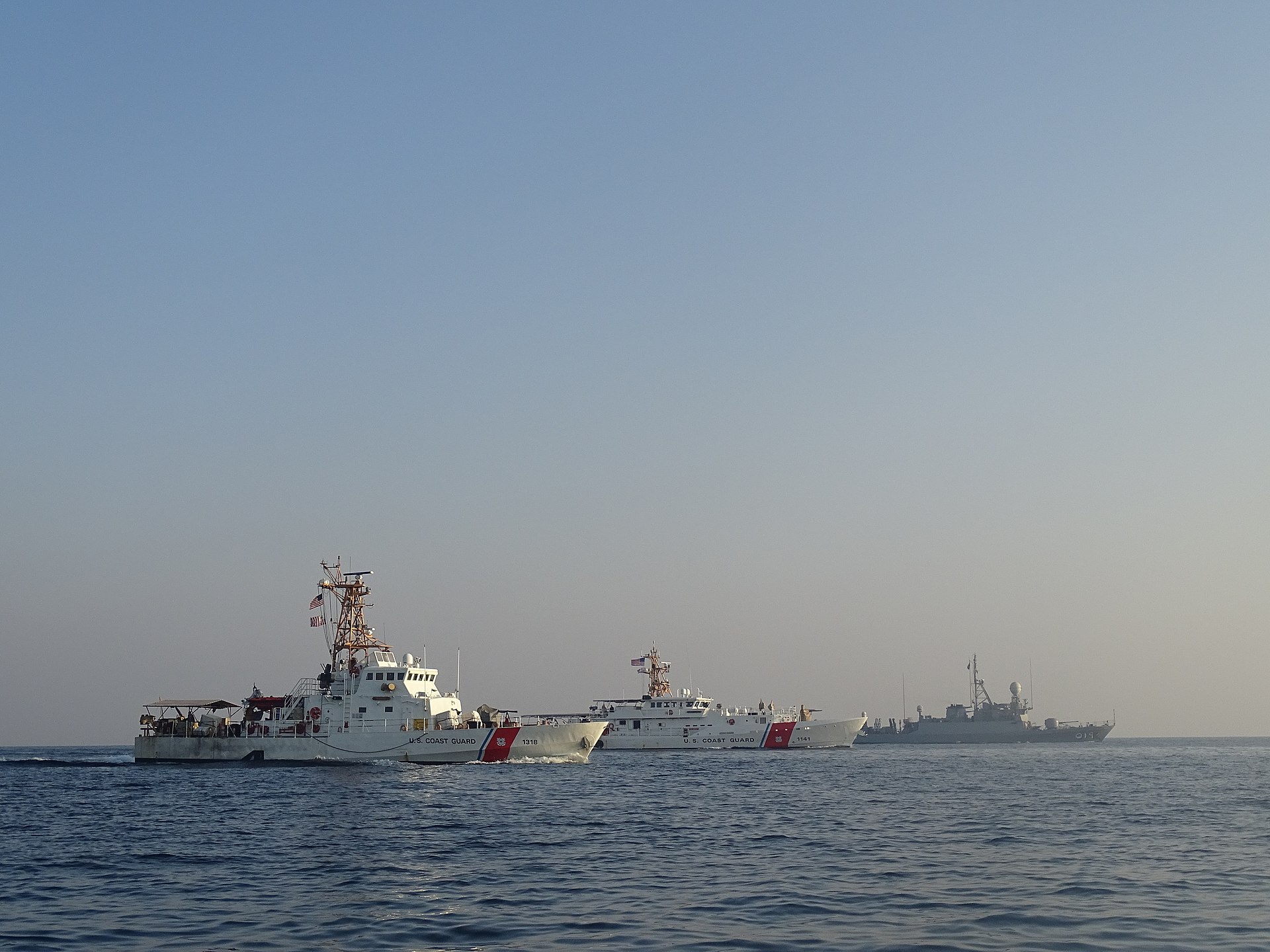
Lloyd’s List Intelligence logged 1,735 GPS interference events affecting 655 vessels between February 28 and March 3 alone — a period of just four days. Daily incidents nearly doubled over that window, rising from 350 when the conflict began to 672 by March 2. By March 8, maritime intelligence firm Windward AI reported that more than 1,650 vessels had experienced GPS or AIS interference, representing approximately half of all commercial shipping in the Persian Gulf region.
The distinction between GPS jamming and GPS spoofing is critical. Jamming simply blocks the satellite signal, leaving navigators aware that their GPS is non-functional and forcing them to rely on backup systems. Spoofing is far more insidious — it feeds false position data to the receiver, causing navigators to believe they know exactly where they are when in fact they do not. As many as 250 of the approximately 2,500 ships in the region were showing AIS irregularities, with about a third of those anomalies representing actual spoofing affecting 75 to 100 vessels at any given time, according to maritime analysts cited by Scientific American.
The operational implications for the broader Strait of Hormuz crisis are severe. Spoofed vessels cannot reliably navigate the narrow shipping lanes of the Strait, which at its tightest point is only 33 kilometres wide with designated traffic separation corridors of just six kilometres. A spoofed supertanker that deviates even slightly from the correct lane risks collision with oncoming traffic, grounding on shallow banks, or — most dangerous of all — entering Iranian territorial waters where the IRGC Navy has demanded that ships seek permission to transit.
Iran’s GPS warfare represents a force multiplier that extends the effective blockade of the Strait of Hormuz far beyond what its physical naval forces could achieve alone. Even if the US-led Maritime Shield coalition succeeds in neutralising Iran’s mine-laying vessels and anti-ship missile batteries, the electronic interference requires a fundamentally different countermeasure — one that the commercial shipping industry is poorly equipped to provide. The UK Maritime Trade Operations (UKMTO) advisory issued on March 6 classified the overall maritime risk level in the Persian Gulf as “CRITICAL,” citing electronic warfare alongside physical threats.
The Shamoon Legacy and the Industrial Malware That Changed Everything
The lineage of Iran’s current cyber campaign traces directly to August 15, 2012, when at 11:08 AM local time, every computer across Saudi Aramco’s corporate network simultaneously began displaying burning American flags. The Shamoon wiper malware had detonated, erasing files, overwriting master boot records, and rendering more than 30,000 computers unable to start. It was, at the time, the most destructive cyber attack ever conducted against a single corporation.
A group calling itself the Cutting Sword of Justice claimed responsibility, framing the attack as retaliation for Saudi Arabia’s support of “oppressive measures” in Bahrain and Syria. Attribution debates persisted for years — FireEye found Cyrillic characters and a Moscow IP address in the malware’s code, suggesting possible Russian involvement — but the consensus among Western intelligence agencies settled on Iran as the sponsor, with the operational complexity requiring state-level resources.
Aramco survived because Shamoon targeted corporate IT systems rather than the operational technology controlling oil production. The refineries kept running. The pipelines kept pumping. The separation between corporate networks and industrial control systems — the “air gap” that cybersecurity engineers treat as sacred — held. But the attack demonstrated that Iran possessed the intent and capability to strike at the heart of Saudi Arabia’s economic infrastructure through digital means.
Modified versions of Shamoon returned in 2016, targeting energy-sector organisations in Saudi Arabia and the UAE. Then came Triton — arguably the most alarming piece of malware ever discovered. In August 2017, Triton was deployed against the Safety Instrumented System controllers at a Saudi petrochemical facility, targeting the Schneider Electric Triconex systems that serve as the last line of defence against catastrophic industrial accidents. Unlike Shamoon, which destroyed data, Triton was designed to disable the physical safety mechanisms that prevent explosions, chemical releases, and equipment destruction. A code validation failure triggered an automatic shutdown that led to the malware’s discovery. Had the attack succeeded without detection, the consequences could have included physical destruction of the plant and potential loss of life.
The progression from Shamoon to Triton represents an escalation ladder in Iran’s cyber capabilities that the current war has pushed to a new level. Shamoon destroyed data. Triton attempted to destroy physical infrastructure. The current conflict has removed the peacetime constraints that previously limited when and how aggressively these capabilities could be deployed.
Can Iran Shut Down Saudi Arabia’s Oil Refineries With Code?
The question is not hypothetical. Iran has already demonstrated the capability to penetrate the industrial control systems that manage Saudi oil processing infrastructure, and the Triton incident of 2017 proved that Iranian-linked operators can reach the safety instrumented systems that represent the last barrier between normal operations and catastrophic failure. The question is whether Iran’s current wartime posture has lowered the threshold for deploying such capabilities.

Saudi Arabia operates one of the world’s largest concentrations of critical energy infrastructure. Aramco’s network includes more than 50 refineries, processing plants, and export terminals, many of them clustered in the Eastern Province along the Persian Gulf coast within range of both Iranian missiles and electronic warfare systems. The SCADA systems controlling these facilities — monitoring pressure, temperature, flow rates, and valve positions across thousands of sensors — represent an attack surface that has expanded dramatically as Saudi Arabia has modernised its industrial base under Vision 2030’s digital transformation agenda.
The CSIS analysis of Iran’s threat to Saudi critical infrastructure identified oil refineries, desalination plants, the electrical grid, SCADA systems, and shipping infrastructure as the primary targets Iran could strike through offensive cyber operations. The assessment noted that while Iran has “adopted a calibrated approach” in peacetime, an escalation in hostilities would likely lower the threshold for attacks on these systems.
That escalation has now arrived. Iran is conducting missile and drone strikes against Saudi energy infrastructure at an unprecedented rate — more than 100 drones per day at the peak of operations. Under these conditions, a simultaneous cyber attack on the SCADA systems controlling a refinery’s safety mechanisms could amplify the physical damage from a kinetic strike, turning a repairable incident into a catastrophic one. A refinery that can detect an incoming drone and initiate emergency shutdown procedures is in a fundamentally different position from one whose safety systems have been silently compromised.
Computer Weekly’s analysis of Saudi Arabia’s industrial control system security noted that the Kingdom is one of the few countries in the region with regulatory frameworks specifically addressing operational technology security, through the National Cybersecurity Authority’s Essential Cybersecurity Controls (ECC). These controls are mandatory for critical infrastructure operators. But regulatory frameworks and operational reality are different things, particularly during a war that is consuming the attention and resources of every government agency in the Kingdom.
The Digital Siege Assessment
Assessing the severity of Iran’s multi-vector cyber campaign requires a framework that accounts for both the technical sophistication of attacks and their strategic implications for the Gulf’s wartime posture. Three dimensions determine the actual threat level of any cyber operation against Saudi Arabia and its GCC partners: penetration depth, target criticality, and escalation potential.
| Attack Vector | Penetration Depth | Target Criticality | Escalation Potential | Overall Threat |
|---|---|---|---|---|
| GPS spoofing (maritime) | Deep — affects physical navigation | Critical — Hormuz shipping lanes | Extreme — could cause collisions, groundings | Tier 1 |
| ICS/SCADA intrusion (energy) | Deep — demonstrated in 2017 Triton | Critical — refineries, desalination | Extreme — potential physical destruction | Tier 1 |
| Financial system DDoS | Surface — service disruption only | High — banking, payments | Moderate — economic confidence damage | Tier 2 |
| Government portal attacks | Surface to medium | Medium — administrative systems | Low — symbolic impact | Tier 3 |
| Aviation system targeting | Medium — passenger-facing systems | High — airports, air traffic | High — safety implications | Tier 2 |
| Telecom infrastructure | Medium — network operations | Critical — military/civilian comms | High — could degrade air defence coordination | Tier 1 |
| Wiper malware (corporate) | Deep — data destruction | Medium — corporate operations | Moderate — operational disruption | Tier 2 |
| Social media / information ops | Surface | Low | Low — propaganda value | Tier 3 |
The framework reveals that the most dangerous vectors are not the most visible ones. The hacktivist DDoS campaigns that generate headlines — website defacements, brief bank outages, claims of data theft — sit at Tier 2 or Tier 3. The Tier 1 threats are quieter: GPS spoofing that could cause a supertanker collision in the Strait of Hormuz, industrial control system intrusions that could disable a refinery’s safety mechanisms, and telecommunications attacks that could degrade the coordination between Saudi air defence batteries during an incoming missile salvo.
The assessment also highlights a critical asymmetry. Iran’s internet connectivity dropped to between 1 and 4 percent of normal capacity following the US-Israeli strikes, according to Unit 42’s monitoring — effectively severing the country from the global internet. Yet Iran’s offensive cyber capabilities continued to function because the critical command-and-control infrastructure for state-sponsored groups was designed to operate through pre-positioned access points, VPN tunnels, and proxy servers located outside Iranian territory. The Electronic Operations Room coordinating the hacktivist campaign operated through encrypted Telegram channels hosted on servers beyond the reach of US Cyber Command’s disruption operations.
Iran’s cyber resilience under physical bombardment contradicts the assumption — prevalent in Western military planning — that destroying an adversary’s communications and internet infrastructure would neutralise its offensive cyber capabilities. The opposite proved true. Iran lost its defensive ability to monitor and protect its own networks while retaining much of its offensive capacity to attack others.
Why Banks and Airports Matter More Than Pipelines
The conventional analysis of cyber threats to the Gulf focuses on energy infrastructure — oil refineries, gas processing plants, pipeline networks, and export terminals. This focus is understandable given the historical precedent of Shamoon and Triton. But the current conflict has revealed that the most strategically significant cyber targets may be financial systems and transportation hubs rather than energy facilities.
DieNet’s published target lists included Saudi Arabia’s Riyad Bank and Al Rajhi Bank — two of the Kingdom’s largest financial institutions. The UAE’s Abu Dhabi Commercial Bank and First Abu Dhabi Bank were similarly targeted. Bahrain’s Batelco, the Kingdom’s primary telecommunications provider, appeared on multiple target lists. Abu Dhabi banks reportedly experienced “prolonged interruptions” during the early days of the conflict, though it remains unconfirmed whether these were caused by cyber attacks or by the broader disruption affecting the region.
The strategic logic of targeting financial infrastructure during wartime is straightforward. Saudi Arabia’s wartime economy depends on the continued functioning of banking systems to process oil revenue, pay government employees and military contractors, and maintain public confidence in the riyal’s dollar peg — a peg that is already facing its most dangerous test since 1986. A sustained disruption to banking services, even one measured in days rather than weeks, could trigger capital flight at precisely the moment the Kingdom can least afford it.
The average cost of a data breach in the Middle East reached $8 million in 2025, according to IBM’s annual Cost of a Data Breach report — nearly double the global average of $4.45 million. This premium reflects both the concentration of high-value financial institutions in the region and the relative scarcity of cybersecurity talent. During wartime, the cost calculus shifts further: breach response teams cannot be easily replaced, insurance markets are already stressed by the kinetic conflict, and the reputational damage of a successful bank hack compounds the recession pressures that Goldman Sachs has warned are bearing down on the Gulf.
Airports represent another high-value target set that extends beyond their operational importance. Kuwait International Airport was targeted by the 313 Team. Airports in Bahrain, Saudi Arabia, and the UAE were subjected to DDoS campaigns by DieNet. The disruption of airport passenger systems — check-in, boarding, flight information displays — does not prevent aircraft from flying, but it creates visible chaos that amplifies public anxiety during a conflict already marked by air raid sirens and missile interceptions over civilian areas.
BeyondTrust’s security adviser told AGBI that attacks on “energy, ports, and aviation can create unpredictable market conditions, halt exports and trigger cascading shortages.” The compounding effect of simultaneous cyber disruption across banking, aviation, and telecommunications — even at the relatively low level of sophistication that hacktivist groups can achieve — creates a perception of systemic vulnerability that can be more damaging to investor confidence and public morale than any individual attack.
The $100 Weapon That Rivals a Missile
The cost asymmetry between cyber offence and kinetic warfare represents the defining strategic equation of the Iran war’s digital front. A single Iranian Shahab-3 ballistic missile costs an estimated $1 to $2 million to produce, requires complex logistics to deploy, and can be intercepted by Saudi Arabia’s Patriot or THAAD batteries at a cost of $3 to $10 million per interceptor. A DDoS toolkit capable of launching unlimited attacks costs $100 per month, according to CloudSEK’s analysis of the commercial cybercrime market. Stolen credentials for Gulf financial institutions can be purchased for as little as $10 on dark web forums.
This asymmetry echoes the drone cost asymmetry that has defined the kinetic conflict, where Iranian Shahed drones costing $20,000 to $50,000 force Saudi Arabia to expend interceptors worth hundreds of times more. In the cyber domain, the ratio is even more extreme. Iran can sustain a campaign of hundreds of attacks per week at costs that barely register in its wartime budget, while each attack forces Gulf defenders to mobilise incident response teams, conduct forensic investigations, patch vulnerabilities, and restore services — consuming human capital that is already stretched thin by the broader conflict.
The cyber-threat intelligence market, currently valued at approximately $15 billion globally, is projected to exceed $31 billion by 2030, according to industry forecasts cited by AGBI. The Gulf states are among the fastest-growing markets for cybersecurity spending, driven by exactly the kind of threat environment that the Iran war has created. But spending on cybersecurity tools and talent takes years to translate into operational capability. The defences available today were built for peacetime threat levels.
Iran’s wartime cyber strategy exploits this gap deliberately. The 60-plus hacktivist groups that mobilised within hours of the conflict’s start serve a function analogous to swarm drone attacks in the kinetic domain: they overwhelm defensive systems with volume, creating opportunities for the more capable state-sponsored groups to operate undetected. Every cybersecurity analyst in the GCC who spends an hour investigating a DieNet DDoS claim is an analyst not available to hunt for APT33 implants in energy sector networks.
Are Saudi Arabia’s Cyber Defences Stronger Than They Look?
The prevailing narrative — that the Gulf is hopelessly vulnerable to Iranian cyber attack — requires qualification. Saudi Arabia has invested more heavily in cybersecurity governance and capability than any other nation in the Middle East, and the Kingdom’s defensive posture is significantly more robust than it was during the Shamoon era.
The National Cybersecurity Authority (NCA), established by royal decree in 2017 with a direct reporting line to King Salman, has implemented the Essential Cybersecurity Controls (ECC) — a mandatory compliance framework for all critical infrastructure operators in the Kingdom. Computer Weekly noted that Saudi Arabia is “one of the few countries in the region with a security initiative that focuses on more than just IT systems,” encompassing operational technology, industrial control systems, and the convergence of IT and OT networks that presents the greatest risk in energy and utilities sectors.
The Kingdom’s declaration of 2026 as the “Year of Artificial Intelligence” carries cybersecurity implications that extend beyond the headline. Saudi Arabia’s AI investment agenda includes machine learning systems for threat detection, automated incident response, and predictive analytics that can identify intrusion patterns across millions of network events per second — capabilities that human analysts cannot match at the scale required to defend an economy as large and digitally interconnected as the Kingdom’s.
The evidence from the first three weeks of the war supports a cautiously optimistic assessment. Despite more than 600 claimed attacks against Gulf targets, the documented operational impact has been remarkably limited. No major bank has suffered a prolonged outage. No refinery has been shut down by cyber means. No critical telecommunications system has been disabled. No airport has ceased operations due to a cyber incident. The hacktivist campaign has produced noise, headlines, and occasional service disruptions — but it has not achieved the strategic effects that a full-spectrum cyber offensive against unprepared targets would produce.
This outcome reflects both the relative unsophistication of the hacktivist tier and the effectiveness of Gulf defensive measures. But it also reflects a choice by Iran’s state-sponsored groups. APT33 and CyberAv3ngers possess capabilities far beyond what they have deployed so far. The question is not whether they can cause significant damage to Saudi critical infrastructure — the Triton incident answered that question definitively — but whether Iran’s wartime leadership has decided that the escalatory risks of a catastrophic cyber attack on Gulf energy infrastructure outweigh the tactical benefits. A successful cyber attack on a Saudi refinery that caused physical destruction or casualties could trigger a direct Saudi military response against Iran — exactly the kind of escalation that Riyadh has so far sought to avoid but which Saudi Arabia’s foreign minister has now explicitly reserved as an option.
What Would a Full-Scale Iranian Cyber Offensive Against the Gulf Look Like?
If Iran were to unleash the full spectrum of its cyber capabilities against Saudi Arabia and the GCC — removing the calibrated restraint that has characterised its approach so far — the attack would likely unfold across four simultaneous vectors, each designed to compound the others.
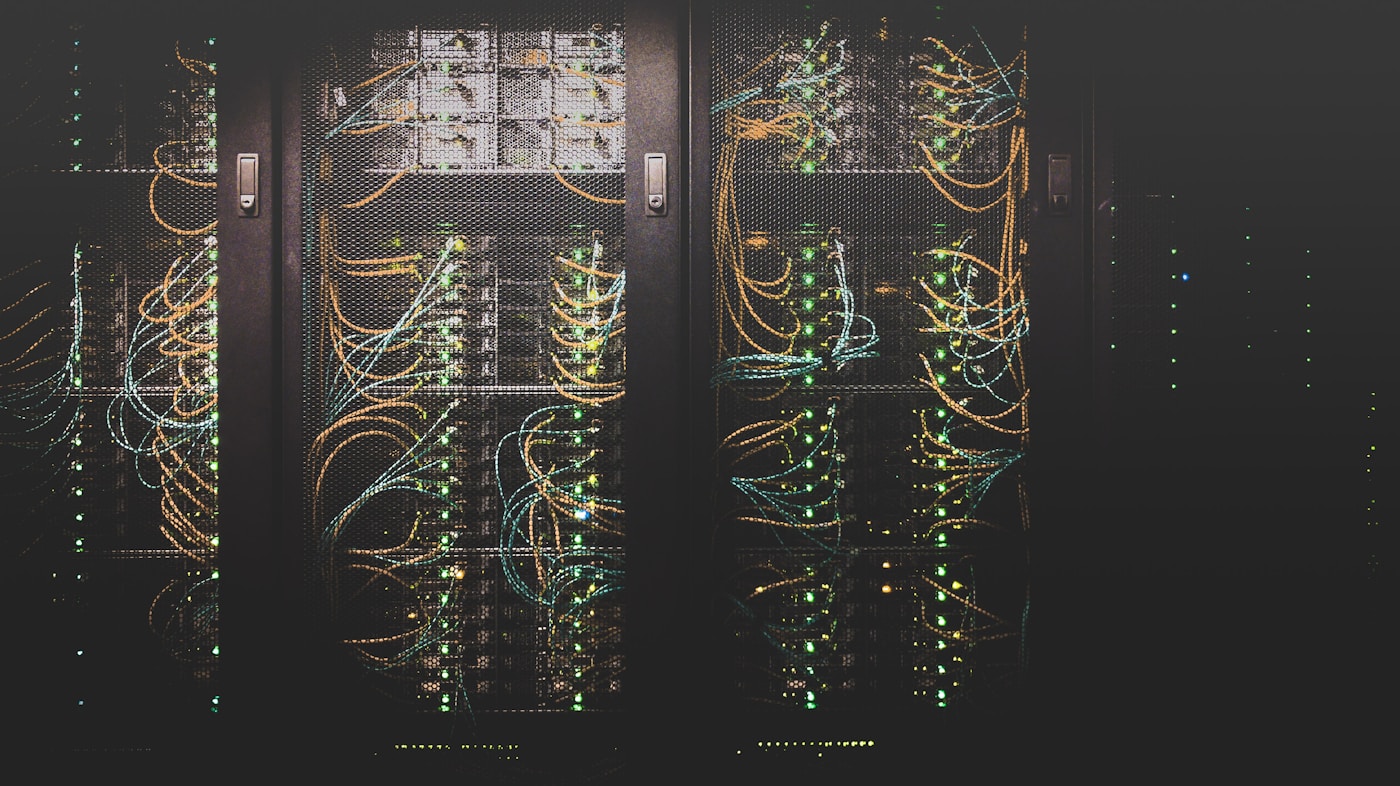
The first vector would target telecommunications and internet infrastructure. Disrupting the fibre-optic networks, submarine cables, and satellite ground stations that connect the Gulf to the global internet would degrade both civilian communications and military command-and-control. Saudi Arabia’s air defence network — the integrated system of Patriot, THAAD, and Ukrainian-supplied drone defence systems — depends on high-bandwidth, low-latency communications between radar installations, command centres, and missile batteries. Degrading those communications during an incoming missile or drone salvo could reduce the intercept rate at precisely the moment it matters most. The physical layer of this vulnerability is more exposed than most analysts appreciate: the submarine cables and data centres now stranded in the war zone carry more than 95 percent of the Gulf’s international internet traffic, and their disruption would sever the digital backbone on which both civilian and military communications depend.
The second vector would strike financial systems. Not the DDoS attacks that temporarily slow banking websites, but destructive wiper malware deployed through compromised supply chains — a technique that Iranian groups have demonstrated with the Shamoon and Handala operations. Wiping the transaction databases of major Saudi banks would create a financial crisis that compounds the wartime economic disruption, freezing credit markets, disrupting salary payments to millions of workers, and undermining confidence in the financial system that underpins the riyal’s dollar peg.
The third vector — and the most dangerous — would target the industrial control systems of energy infrastructure. Simultaneous Triton-class attacks on the safety instrumented systems of multiple refineries, coordinated with kinetic missile strikes, could cause physical destruction that requires months or years to repair. A refinery with disabled safety systems cannot execute an emergency shutdown when a missile strikes a neighbouring facility, turning what might be a contained fire into a catastrophic explosion.
The fourth vector would intensify the GPS spoofing campaign to the point where commercial shipping in the Persian Gulf becomes physically impossible. Current GPS interference already affects half the vessels in the region. A full-spectrum electronic warfare campaign — combining GPS spoofing, AIS manipulation, radar jamming, and communications disruption — could create conditions in which even military escorts cannot safely navigate the Strait of Hormuz.
| Vector | Method | Primary Target | Estimated Recovery Time | Consequence |
|---|---|---|---|---|
| Telecommunications | Fibre cut + satellite jamming + network wiper | Saudi air defence coordination | Days to weeks | Reduced intercept rates during missile salvos |
| Financial systems | Supply-chain wiper + database destruction | Banking transaction systems | Weeks to months | Credit freeze, wage disruption, riyal confidence crisis |
| Energy ICS/SCADA | Triton-class safety system compromise | Refinery safety instrumented systems | Months to years (if physical destruction occurs) | Catastrophic industrial accidents, export shutdown |
| Maritime navigation | Full-spectrum GPS/AIS/radar jamming | All commercial shipping in Gulf | Indefinite (while electronic warfare persists) | Complete cessation of Gulf maritime commerce |
This scenario has not materialised because Iran has so far chosen restraint in the cyber domain, even as it has escalated dramatically in the kinetic sphere. The restraint is not altruistic — it reflects a calculation that catastrophic cyber attacks on Gulf infrastructure would cross a threshold that brings Saudi Arabia, the UAE, and potentially other GCC states into the war as active belligerents rather than defensive targets. But escalation dynamics are unpredictable, and the further the kinetic war intensifies, the more likely it becomes that Iran’s cyber operators receive authorisation to deploy capabilities they have so far held in reserve.
The War After the War
Even when the missiles stop, the cyber threat will persist. Iranian APT groups that have established footholds in Gulf networks during the chaos of wartime will not voluntarily surrender that access when a ceasefire takes effect. The implants, backdoors, and compromised credentials accumulated during three weeks of conflict represent a strategic intelligence asset that Iran will maintain for years, providing persistent access to Saudi military communications, energy operations data, diplomatic cables, and financial intelligence.
The precedent is clear. After every previous escalation in the Iranian cyber campaign — Shamoon in 2012, the Shamoon variants of 2016, Triton in 2017 — Western threat intelligence firms continued to discover Iranian access to Gulf networks months and years later. The war has likely provided cover for the most extensive penetration of GCC networks in Iran’s history, and the full extent of that penetration will not be understood for years after the conflict ends.
Saudi Arabia’s post-war cybersecurity agenda will need to encompass three priorities that the current conflict has made urgent. First, a comprehensive audit of every critical infrastructure network in the Kingdom — energy, water, telecommunications, transportation, and finance — to identify and remediate Iranian implants. Second, an acceleration of the NCA’s regulatory agenda to mandate real-time threat monitoring across operational technology networks, not just information technology systems. Third, a regional cybersecurity architecture that enables GCC states to share threat intelligence and coordinate defensive responses at machine speed rather than diplomatic speed.
The cyber-threat intelligence market’s projected growth to $31 billion by 2030 reflects a global recognition that the boundary between physical and digital warfare has collapsed. Iran’s campaign against the Gulf has demonstrated that a nation with a relatively modest defence budget can project power across an entire region through digital means, at costs that represent a rounding error compared to its conventional military expenditure. The missiles that Saudi Arabia intercepts over Riyadh each cost millions of dollars to build and millions more to shoot down. The GPS spoofing that paralyses half the commercial shipping in the Persian Gulf costs almost nothing at all.
These actors are less disciplined than state-directed groups, potentially more reckless, and have no political constraint on civilian impact.
CloudSEK threat assessment on Iran-aligned hacktivist groups, March 2026
The war that Saudi Arabia cannot see is the war that may matter most. Not because individual cyber attacks will cause the kind of dramatic, immediate destruction that a ballistic missile delivers, but because the cumulative effect of digital degradation — eroded confidence in navigation systems, periodic banking disruptions, the quiet compromise of industrial safety mechanisms, the persistent presence of foreign intelligence services inside critical networks — creates a strategic vulnerability that persists long after the last drone is shot down. The House of Saud has invested billions in missile defence systems that can intercept objects travelling at Mach 5. The harder challenge may be defending against attacks that travel at the speed of light.
The cyber campaign is only one dimension of Iran’s covert war inside the Gulf. Physical sleeper cells and IRGC operatives have also been activated across four Gulf states, with more than 45 individuals arrested since February 28 for espionage, sabotage, and assassination plotting — a shadow war that complements the digital offensive with human intelligence on the ground.
Frequently Asked Questions
Has Iran successfully hacked Saudi Aramco during the 2026 war?
No confirmed successful breach of Saudi Aramco’s operational systems has been publicly reported during the current conflict. However, Iran previously destroyed 30,000 Aramco computers with the Shamoon wiper malware in 2012 and targeted a Saudi petrochemical plant’s safety systems with the Triton malware in 2017. Iranian-linked hacktivist group Handala has claimed to have compromised oil and gas organisations in Saudi Arabia during the current war, though these claims remain unverified by independent cybersecurity firms.
How many ships have been affected by GPS spoofing in the Persian Gulf?
Lloyd’s List Intelligence logged 1,735 GPS interference events affecting 655 vessels between February 28 and March 3, 2026. By March 8, Windward AI reported that more than 1,650 vessels had experienced GPS or AIS interference. Daily interference incidents nearly doubled from 350 at the start of the conflict to 672 by March 2, with approximately 75 to 100 vessels experiencing active spoofing at any given time, according to maritime analysts cited by Scientific American.
What is Iran’s most dangerous cyber weapon against Saudi Arabia?
The Triton malware, first deployed against a Saudi petrochemical plant in 2017, represents Iran’s most dangerous demonstrated cyber capability. Unlike data-destroying wiper malware, Triton targets the physical safety systems that prevent industrial catastrophes. CyberAv3ngers, the IRGC-backed group that targets industrial control systems, has the capability to exploit default passwords on programmable logic controllers used widely across Gulf infrastructure, according to the US Cybersecurity and Infrastructure Security Agency.
How much does it cost Iran to launch cyber attacks against the Gulf?
The cost asymmetry is extreme. CloudSEK’s analysis found that DDoS toolkits capable of launching unlimited attacks are available for $100 per month. Stolen credentials for Gulf financial institutions can be purchased for as little as $10 on dark web forums. By comparison, a single Patriot interceptor costs $3 to $4 million, and the Saudi missile each one is designed to shoot down costs Iran $1 to $2 million. Iran can sustain hundreds of cyber attacks per week at costs that barely register in its wartime budget.
Is Saudi Arabia prepared for Iranian cyber attacks?
Saudi Arabia has invested more in cybersecurity governance than any other Middle Eastern nation, with the National Cybersecurity Authority’s Essential Cybersecurity Controls providing a mandatory compliance framework for critical infrastructure operators. Despite more than 600 claimed cyber attacks in the first three weeks of the war, no major Saudi bank, refinery, or telecommunications system has suffered a prolonged outage due to cyber attack. However, the demonstrated capabilities of Iranian APT groups such as APT33, APT34, and CyberAv3ngers significantly exceed what has been deployed so far, suggesting that Iran’s state-sponsored operators are exercising deliberate restraint.
What is the biggest cyber risk to Saudi Arabia after the war ends?
The persistence of Iranian access to Gulf networks represents the most significant post-war cyber risk. APT groups that have established footholds during the wartime chaos will maintain those implants for intelligence collection long after any ceasefire. After every previous Iranian cyber escalation, Western firms continued discovering Iranian network access months and years later. A comprehensive audit of Saudi critical infrastructure networks will be required to identify and remediate compromised systems.
Iran’s cyber capabilities now extend beyond espionage and sabotage into the financial domain. Tehran’s parliament speaker has declared financial institutions holding US Treasury bonds as legitimate targets — a threat that transforms Iran’s financial warfare campaign into the conflict’s most dangerous front.