
WASHINGTON — The United States Treasury Department on March 20, 2026, issued a 30-day sanctions waiver permitting the sale of approximately 140 million barrels of Iranian crude oil already loaded on tankers at sea — the third such waiver in roughly two weeks. Treasury Secretary Scott Bessent framed the decision as economic warfare, stating the administration would “use the Iranian barrels against the Iranians to keep the price down.” The logic was elegant on paper. In practice, Washington chose to fund its enemy’s war machine to shave a few dollars off gasoline prices while its warplanes were still bombing Iranian targets. For Saudi Arabia, which has absorbed missile strikes on its infrastructure, ramped production to 10.882 million barrels per day, and pledged $1 trillion to the Trump administration, the message was unmistakable: when American consumers and Iranian revenue sit on the same side of the ledger, Riyadh gets the bill.
Table of Contents
- Why Did the United States Release 140 Million Barrels of Iranian Oil?
- How Does the Sanctions Waiver Affect Global Oil Markets?
- The Three-Week Evolution From Maximum Pressure to Maximum Contradiction
- What Does Saudi Arabia Lose From Cheaper Oil During Wartime?
- The Hormuz Paradox — Oil That Cannot Move and Oil That Must
- Can OPEC+ Survive a War Between Its Own Members?
- The Wartime Revenue Matrix
- Moscow’s Invisible Dividend
- Is Washington Funding Both Sides of the Iran War?
- The Strategic Partnership That Cannot Survive Its Own Contradictions
- What Happens When the 30-Day Waiver Expires?
- Frequently Asked Questions About the Iran Oil Sanctions Waiver
Why Did the United States Release 140 Million Barrels of Iranian Oil?
The Trump administration released 140 million barrels of sanctioned Iranian crude to prevent oil prices from breaching $120 per barrel and triggering domestic political damage. Treasury Secretary Scott Bessent explicitly stated the goal was to “use the Iranian barrels against the Iranians to keep the price down,” prioritizing short-term consumer relief over sanctions enforcement during an active military campaign against Iran.
The decision did not emerge from a vacuum. On March 16, four days before the formal waiver, Bessent told interviewers that “Iranian ships have been getting out already, and we’ve let that happen to supply the rest of the world.” That admission — that the United States had been quietly allowing sanctioned Iranian tankers to move freely — revealed the waiver as a ratification of policy already in practice, not a new strategic initiative.
The Treasury Department justified the waiver on grounds of market stabilization. Brent crude had surged to $119 on March 19 before settling at $112.19 on March 20, up 3.26% on the day. Oil had jumped roughly 50% from pre-war levels, and the administration faced projections from Goldman Sachs that Brent could surge past all-time records if disruptions persisted. Citigroup forecast $120 within one to three months, with a bull-case scenario of $150.
But the market math tells a more modest story than the administration’s rhetoric suggested. The 140 million barrels on those tankers represent approximately 1.5 days of global oil consumption, according to Energy Information Administration data on worldwide daily demand. Bessent himself acknowledged the limited timeframe, saying the strategy would work “for the next 10 or 14 days.” The question was never whether 140 million barrels could stabilize global oil markets permanently. The question was whether the political benefit of a temporary price dip was worth the strategic cost of financing Iran while bombing it.
Iran had accumulated more than 170 million barrels of crude on tankers at sea before the waiver — a floating stockpile built up precisely because sanctions had prevented their sale. Much of this oil was already discounted $11-12 per barrel below benchmark prices, a sanctions discount that reflected the risk premium buyers faced. By lifting the legal risk, Washington did not just release oil. It eliminated the discount, potentially increasing Iran’s per-barrel revenue even as more volume entered the market.
The Middle East briefing 3,000+ readers start their day with.
One email. Every weekday morning. Free.
The timing also mattered. This was the third time the administration had temporarily waived Iran sanctions in approximately two weeks. Each waiver eroded the credibility of the sanctions regime further, sending a clear signal to buyers in China and India that Iranian oil purchases carried minimal enforcement risk. For a president who had campaigned on “maximum pressure” against Iran, the March 20 waiver represented a capitulation to the very market forces that maximum pressure was designed to create.
How Does the Sanctions Waiver Affect Global Oil Markets?
The waiver injects a one-time supply pulse of 140 million barrels into a market already distorted by war, providing temporary downward pressure on prices while creating longer-term uncertainty about sanctions enforcement that encourages more Iranian oil to enter global trade channels. The net effect is a brief price correction followed by accelerated erosion of the sanctions infrastructure that kept Iranian exports constrained before the war.
To understand the market dynamics, consider the scale. Global oil consumption runs at approximately 100 million barrels per day. The 140 million barrels on Iranian tankers, if sold over the 30-day waiver window, would add roughly 4.7 million barrels per day of supply — a significant but temporary injection. The market impact depends entirely on how quickly buyers absorb the cargo and whether they interpret the waiver as a one-time event or the beginning of sustained sanctions relaxation.
Early indications suggest the latter interpretation is winning. Before the March 20 waiver, 86% of tankers transporting Iranian oil were already subject to US sanctions. That statistic reveals how deeply Iranian oil had penetrated global markets despite official restrictions. The waiver did not open a closed market; it legitimized a shadow market that was already operating at scale.
The price response was instructive. Brent crude dropped from its $119 peak on March 19 but remained elevated at $112.19 on March 20 — still roughly 50% above pre-war levels. The market correctly assessed that 140 million barrels would provide temporary relief but could not address the structural supply disruption caused by the effective closure of the Strait of Hormuz. Saudi officials privately estimated that prices could climb above $180 per barrel if disruptions lasted through late April, a projection that made the 30-day waiver look less like a strategy and more like a tourniquet applied to an arterial wound.
Goldman Sachs analysts warned that Brent could surge past record highs if the disruption persisted beyond the waiver window. Citigroup projected $120 per barrel within one to three months under baseline assumptions, with a bull-case scenario reaching $150. Neither estimate factored in the possibility of the waiver being extended, which itself would carry profound implications for the sanctions regime’s credibility.
For Asian buyers, particularly in China and India, the waiver created a buying opportunity with geopolitical cover. Iranian crude already traded at discounts of $11-12 per barrel below benchmarks, and Chinese refineries had been the primary consumers of sanctioned Iranian oil for years. The formal waiver removed any residual legal ambiguity, effectively telling Beijing and New Delhi that purchasing Iranian crude was not only tolerated but encouraged by Washington as a matter of wartime policy.
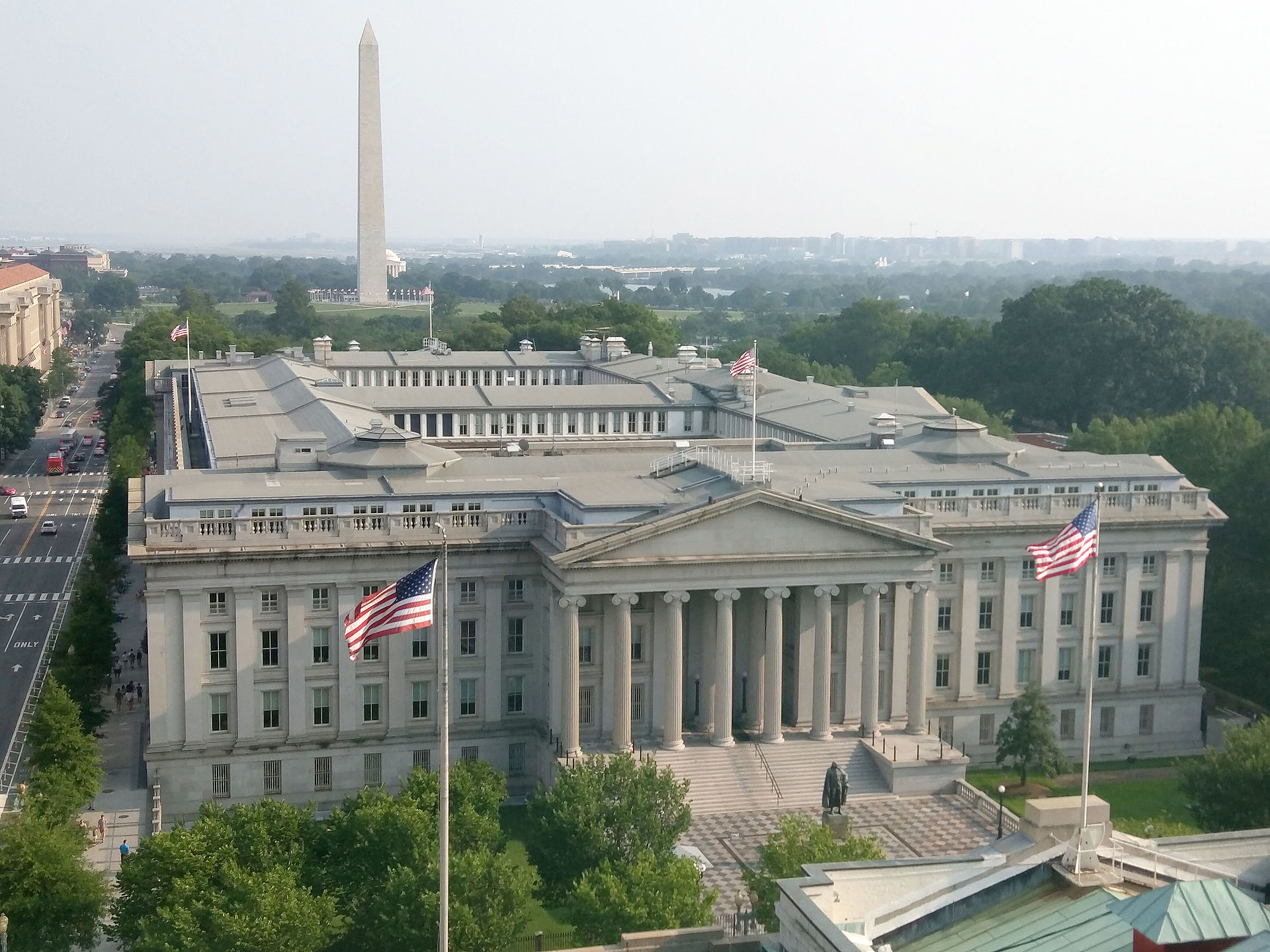
The Three-Week Evolution From Maximum Pressure to Maximum Contradiction
The transformation of American Iran policy from sanctions enforcement to sanctions suspension took exactly 21 days, a timeline that exposed how quickly wartime economics can overwhelm strategic doctrine. Tracing the sequence reveals not a deliberate policy evolution but a series of reactive decisions, each one making the next more inevitable.
The first phase began when the Iran war disrupted shipping through the Strait of Hormuz in late February 2026. Oil prices immediately surged as the chokepoint through which roughly 20% of global petroleum passes became effectively impassable to commercial traffic. The initial American response was orthodox: maintain sanctions, call on allies to release strategic petroleum reserves, and pressure OPEC+ to increase production.
The second phase arrived in early March as prices breached $100 per barrel and kept climbing. On March 13, the administration lifted sanctions on Russian oil — a decision that would have been unthinkable three weeks earlier but became necessary when Brent crude crossed the psychological $100 threshold. The Russia sanctions relief was presented as a tactical adjustment, but it established the precedent that sanctions were subordinate to pump prices.
The third phase began with Bessent’s admission on March 16 that Iranian tankers were already being allowed to transit freely. “Iranian ships have been getting out already, and we’ve let that happen to supply the rest of the world,” he told reporters. The passive construction — “we’ve let that happen” — suggested a decision made by inaction rather than deliberation, the kind of policy drift that occurs when enforcement becomes too costly to maintain.
The fourth phase was the formal waiver on March 20, which merely codified what was already happening. By this point, the administration had abandoned maximum pressure on two of its three principal sanctions targets (Russia and Iran) in the space of one week, driven entirely by the domestic political cost of high energy prices.
The contradiction at the heart of this evolution is structural, not accidental. The United States cannot simultaneously wage war against Iran’s military and industrial infrastructure while facilitating the sale of Iran’s primary revenue source. Bombing refineries while blessing crude exports is not a strategy. It is the absence of one — a condition that arises when two imperatives (military victory and cheap gasoline) are treated as compatible when they are fundamentally opposed.
Pentagon planners had targeted Iranian energy infrastructure precisely because oil revenue funds Iran’s missile program, drone fleet, and proxy networks. The destruction of refining capacity was designed to create an economic crisis severe enough to force Tehran toward negotiations. The sanctions waiver undermined that logic by ensuring Iran could still monetize its crude reserves even as its domestic refining capacity burned. As one former Treasury sanctions official noted, the waiver effectively told Iran: “We will destroy your ability to process oil but guarantee your ability to sell it.”
What Does Saudi Arabia Lose From Cheaper Oil During Wartime?
Saudi Arabia loses an estimated $500 million in daily revenue for every $10 drop in oil prices while simultaneously bearing the wartime costs of missile defense, infrastructure repair, production surge expenses, and the diplomatic humiliation of watching its American ally subsidize its Iranian adversary’s oil exports. The kingdom’s 2026 fiscal deficit, already projected at 165 billion riyals ($44 billion, or 3.3% of GDP), widens with every dollar shaved off the barrel.
The mathematics are punishing. Saudi Arabia ramped production to 10.882 million barrels per day in February 2026, an 8% increase from 10.1 million bpd in January. This production surge was itself a response to the war — an effort to compensate for lost Iranian and Iraqi supply and to demonstrate the kingdom’s role as the indispensable swing producer. But higher production at lower prices can be worse than moderate production at higher prices, and the sanctions waiver pushed the market in precisely the direction Saudi fiscal planners feared.
The kingdom’s 2025 defense budget stood at $78 billion, representing 21% of government spending and 7.2% of GDP. Those figures will certainly rise in 2026 as the war continues. The $16 billion emergency arms sale that Secretary of State Marco Rubio authorized for Gulf states under emergency bypass procedures represents immediate spending that Riyadh must finance from oil revenues that the sanctions waiver is actively depressing.
Beyond the direct fiscal impact, the waiver undermines Saudi Arabia’s strategic position as the world’s most important oil supplier. For decades, the kingdom’s geopolitical weight has rested on a simple proposition: when the world needs more oil, Saudi Arabia delivers. The sanctions waiver told the market that when the world needs more oil, Washington will release Iranian crude instead — a direct challenge to the pillar on which Saudi foreign policy rests.
Saudi Foreign Minister Prince Faisal bin Farhan’s statement on March 19 that Iran’s “patience is not unlimited” was widely interpreted as a warning to Tehran. But within the corridors of the Royal Court, the phrase carried a second meaning directed at Washington. The kingdom had pledged $1 trillion in investment commitments to the Trump administration earlier in the year. It had ramped production, absorbed missile attacks, and refrained from independent retaliation against Iran despite the political cost of restraint. The sanctions waiver was the return on that investment: a policy that simultaneously reduced Saudi oil revenue and increased Iranian oil revenue.
The fiscal squeeze operates on multiple levels. Iraqi oil exports — a significant source of supply that competed with Saudi crude in Asian markets — were halted when Baghdad declared force majeure due to the Iran war. That disruption should have been a windfall for Saudi Arabia, allowing the kingdom to capture Iraqi market share at elevated prices. Instead, the sanctions waiver filled the gap with discounted Iranian crude, denying Riyadh both the volume and price benefits it would otherwise have gained.
The scale of Iraq’s withdrawal from global markets is difficult to overstate. Baghdad’s force majeure declaration covers all foreign-operated oil fields, suspending contracts with BP, ExxonMobil, TotalEnergies, and other international operators and removing nearly 2.9 million barrels per day from a market already reeling from the Hormuz closure.
The sanctions waiver told global markets that when America needs cheaper oil during wartime, it will finance its enemy before it will pay its ally a fair price. That is not a partnership. That is a protection racket with the roles reversed.
— Senior Gulf diplomatic source, speaking on condition of anonymity, March 20, 2026
The Hormuz Paradox — Oil That Cannot Move and Oil That Must
The Strait of Hormuz presents the central physical contradiction of the sanctions waiver. The same waterway that American warships have rendered impassable to commercial tanker traffic is the corridor through which the newly unsanctioned Iranian oil must eventually travel. More than 3,000 vessels were trapped or rerouted when the strait effectively closed to commercial shipping at the war’s outset, and the US Navy’s presence has done little to restore safe passage for civilian tankers.
Saudi Arabia responded to the Hormuz closure by activating its East-West pipeline system, reviving approximately half its oil exports through the Red Sea port of Yanbu. This pipeline network — originally built in the 1980s during the Iran-Iraq War for precisely this contingency — represents one of the most significant pieces of strategic infrastructure in the global energy system. But the pipeline has finite capacity, and Yanbu itself became a target when Iranian drones struck the SAMREF refinery complex near the port.
The paradox deepens when examining Iranian export logistics. Iran’s 170-plus million barrels of floating storage were accumulated on tankers precisely because sanctions made port-to-port transactions dangerous for buyers. Many of these tankers have been at sea for months, some for over a year, serving as floating warehouses for crude that could not find a legal home. The waiver allows their sale but does not solve the physical problem of moving additional Iranian crude through a war zone.
Iran’s own export infrastructure faces severe constraints. Its primary export terminal at Kharg Island sits in the northern Persian Gulf, directly in the zone of active military operations. While the US has focused its bombing campaign on Iranian nuclear and military sites rather than oil infrastructure (a deliberate choice to preserve the crude that Washington now wants on the market), the risk of collateral damage or Iranian retaliation against its own facilities in a scorched-earth scenario cannot be dismissed.
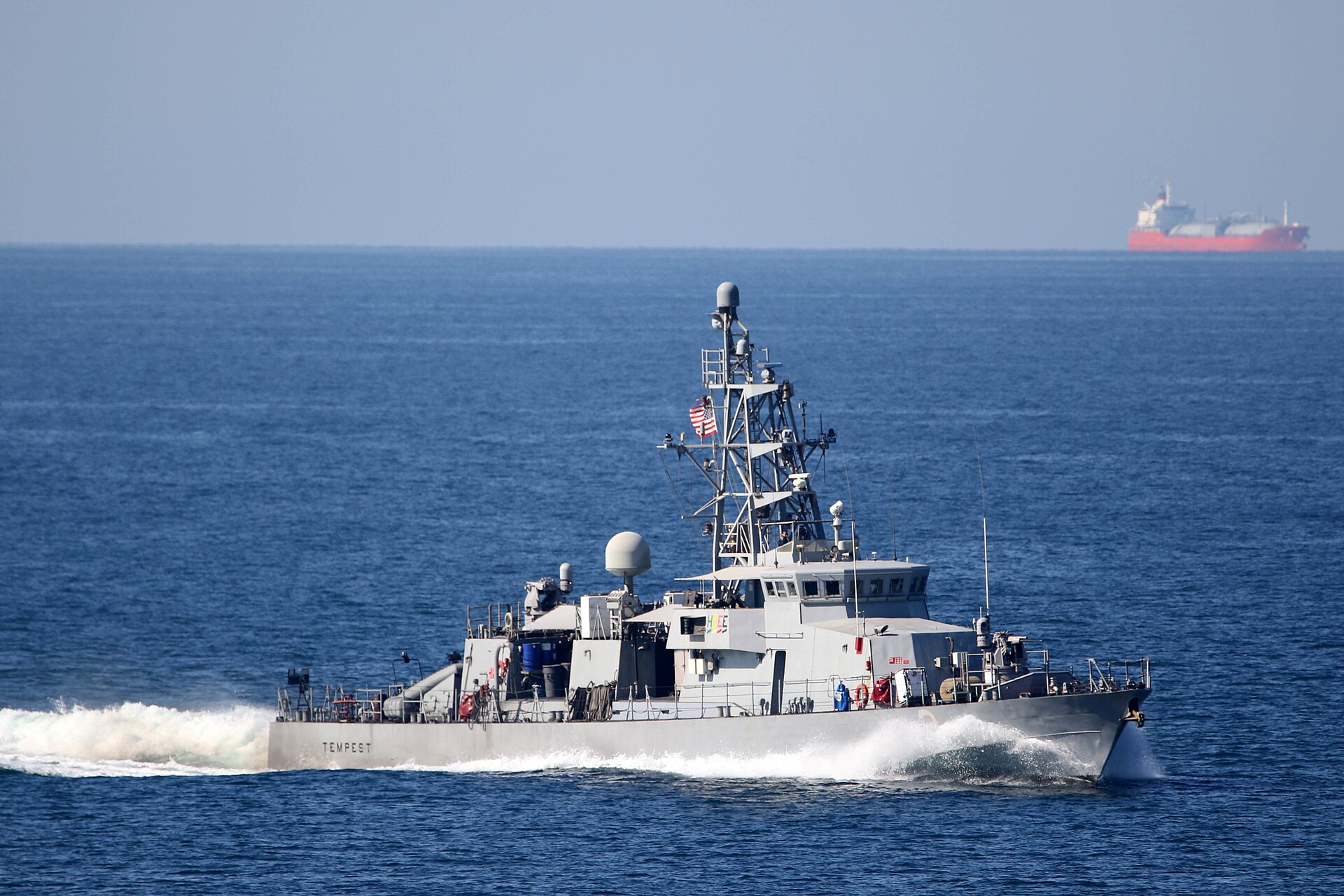
The insurance market tells its own story. War-risk premiums for tankers transiting the Persian Gulf have made standard commercial shipping economically unviable. Even with the sanctions waiver, many shipping companies refuse to send vessels into the area, and those willing to make the transit demand premiums that partially offset the benefit of additional supply reaching the market. The waiver removed a legal barrier while leaving the physical and financial barriers largely intact.
For Japan and South Korea, both heavily dependent on Gulf oil transiting Hormuz, the waiver offered theoretical relief but little practical improvement. Their supply crisis stems from the physical closure of the strait, not from sanctions enforcement. Tokyo and Seoul need tankers to pass safely through Hormuz, and no Treasury Department document can guarantee that.
The Hormuz paradox ultimately reveals the limits of financial instruments in a kinetic conflict. Sanctions are a tool of peacetime coercion. Waivers are a tool of peacetime accommodation. Neither framework adequately addresses a situation where the waterway itself is a battleground. The administration’s attempt to manage oil prices through sanctions policy while simultaneously conducting military operations in the world’s most important oil transit corridor reflects a fundamental disconnect between its economic team and its military planners — or perhaps a hope that financial engineering can substitute for strategic coherence.
Can OPEC+ Survive a War Between Its Own Members?
OPEC+ faces an existential stress test: a shooting war between Iran (a founding OPEC member) and a US-aligned coalition that includes Saudi Arabia (OPEC’s de facto leader) and is tacitly supported by Russia (the “+” in OPEC+). The cartel’s agreement to raise output by only 206,000 barrels per day in April — a fraction of the supply gap created by the war — reflects not strategic restraint but physical inability, as most Gulf producers cannot export through Hormuz regardless of their production quotas.
The organizational fiction that OPEC+ remains a functioning cartel becomes harder to maintain with each week of hostilities. Iran’s representative still technically holds a seat at the table. Saudi Arabia’s energy minister still technically coordinates with Russia’s deputy prime minister on production targets. But the quotas and compliance mechanisms that define OPEC+ operations presuppose a minimum level of cooperation among members that a war between them has destroyed.
The 206,000 bpd April increase illustrates the absurdity. Global markets lost millions of barrels per day of effective supply when Hormuz closed and Iraq declared force majeure. The OPEC+ response — adding barely 200,000 bpd — was not a policy choice but an acknowledgment that member states physically cannot deliver more oil to the market. Saudi Arabia’s production surge to 10.882 million bpd was a unilateral decision driven by wartime necessity, not an OPEC+ coordinated action.
Russia occupies a particularly complex position within the cartel framework. Moscow benefits from high oil prices driven by Gulf disruption, and the lifting of US sanctions on Russian oil on March 13 gave Russian exporters an additional advantage. Russia has no incentive to increase production to levels that would reduce prices, and every incentive to see the Gulf crisis continue. The OPEC+ alliance between Moscow and Riyadh, which was always a marriage of convenience, now faces the strain of divergent wartime interests.
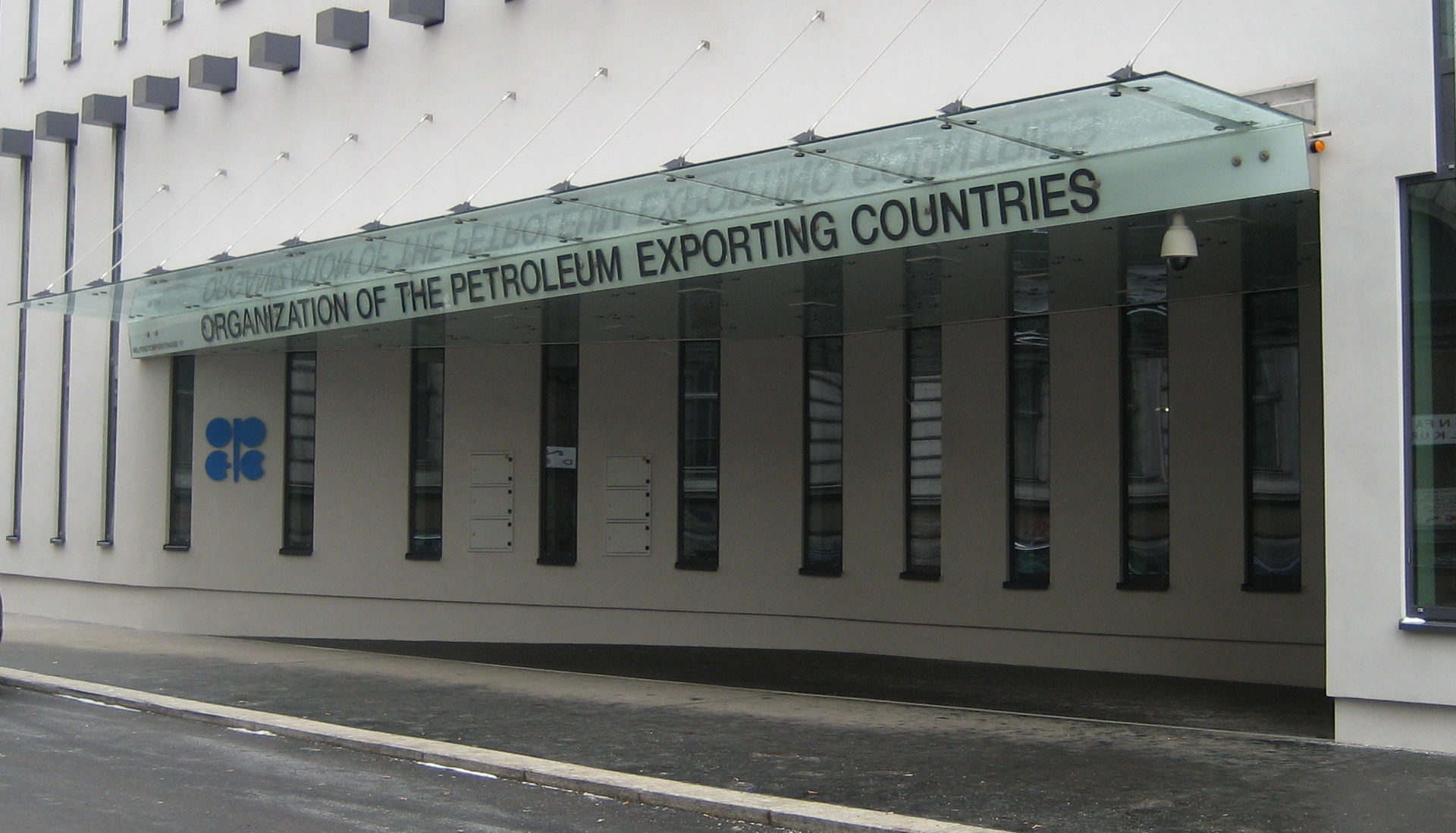
The sanctions waiver adds another layer of dysfunction. By releasing 140 million barrels of Iranian crude onto the market, the United States effectively acted as a unilateral OPEC-style supply manager — increasing available supply outside the cartel’s coordination framework. This is precisely the kind of external intervention that OPEC was created to resist. But when the external intervener is also the military patron of OPEC’s leading member, resistance becomes complicated.
The deeper question is whether OPEC+ can reconstitute itself after the war ends. The cartel survived the Iran-Iraq War of the 1980s, but that conflict occurred when OPEC’s market share was declining and members had incentives to cooperate against common external threats. The current war occurs in a different structural context, with the energy transition threatening long-term demand, US shale providing competitive supply, and the OPEC+ partnership with Russia already strained by years of quota disputes.
If the war produces a decisive outcome — the collapse of the Iranian regime or a negotiated settlement that permanently reduces Iran’s production capacity — OPEC+ might emerge smaller but more cohesive. If the war ends inconclusively, the cartel faces the prospect of reintegrating a hostile Iran whose infrastructure has been permanently degraded and whose leadership has no reason to cooperate with the Saudi-led production framework. Either scenario transforms OPEC+ into something fundamentally different from the organization that existed before March 2026.
The Wartime Revenue Matrix
Understanding who gains and who loses from the sanctions waiver requires analysis across multiple dimensions. A single-variable assessment — price impact — misses the strategic, diplomatic, and structural consequences that will outlast the 30-day waiver window. The following matrix evaluates eight principal stakeholders across four dimensions: short-term revenue impact, long-term strategic position, alliance reliability signal, and market power shift.
| Stakeholder | Short-Term Revenue | Long-Term Strategic Position | Alliance Reliability Signal | Market Power Shift |
|---|---|---|---|---|
| Saudi Arabia | Negative (−) | Negative (−) | Strongly Negative (−−) | Negative (−) |
| Iran | Positive (+) | Positive (+) | N/A (adversary) | Positive (+) |
| Russia | Mixed (±) | Positive (+) | Positive (+) | Positive (+) |
| China | Positive (+) | Strongly Positive (++) | N/A (not allied) | Positive (+) |
| India | Positive (+) | Positive (+) | Neutral (0) | Neutral (0) |
| US Consumers | Marginally Positive (+) | Neutral (0) | N/A (domestic) | Neutral (0) |
| OPEC+ | Negative (−) | Strongly Negative (−−) | N/A (multilateral) | Negative (−) |
| Global Economy | Marginally Positive (+) | Negative (−) | N/A | Negative (−) |
Saudi Arabia absorbs losses across all four dimensions. In the short term, more supply means lower prices on the kingdom’s 10.882 million bpd of production. Strategically, the waiver demonstrates that Washington will undercut Saudi market power to manage domestic energy costs. The alliance reliability signal is devastating: Riyadh invested a $1 trillion pledge and endured missile strikes, only to see its ally finance its enemy. And the market power shift is negative because the waiver establishes a precedent for using Iranian oil as a price management tool, diminishing Saudi Arabia’s role as the swing producer of last resort.
Iran gains on three of four dimensions. The short-term revenue from selling 140 million barrels of stored crude at prices above $100 per barrel — even at the $11-12 discount to benchmarks — generates billions in immediate income for a regime under maximum economic and military pressure. Iran’s estimated 2025 oil exports of approximately $60 billion provide a baseline, and the waiver ensures 2026 revenues remain substantial despite the war. Strategically, the waiver proves that Washington will soften sanctions when prices become inconvenient, a lesson Tehran will exploit in any future negotiation. The market power dimension is positive because the waiver reestablishes Iranian crude as a legitimate part of global supply.
Russia emerges as a quiet winner. The short-term revenue impact is mixed — more supply means lower prices, but Moscow had already benefited from the March 13 lifting of Russian oil sanctions. Strategically, Russia gains enormously: the spectacle of Washington weakening its own sanctions regime against two countries simultaneously validates Moscow’s long-standing argument that American sanctions are tools of convenience, not principle. The alliance signal is positive for Russia because it demonstrates to potential partners that American sanctions commitments are unreliable under economic pressure.
China captures the most significant long-term gains. As the world’s largest importer of Iranian crude, Beijing benefits immediately from the legal cover the waiver provides for purchases it was already making. Strategically, the waiver destroys any future American credibility in threatening secondary sanctions against Chinese entities that buy Iranian oil. Beijing can now point to the March 2026 waiver as evidence that Washington itself endorsed Iranian oil purchases when it served American interests.
US consumers — the stated beneficiaries of the waiver — receive the smallest benefit relative to the costs imposed on American strategic interests. The 140 million barrels represent 1.5 days of global consumption. Even if the entire volume were directed at the US market (which it will not be), the price impact would be temporary and modest against the structural supply disruption caused by the Hormuz closure.
The global economy benefits marginally in the short term from any supply addition that prevents a spike toward $150 per barrel. But the long-term signal is negative: the waiver demonstrates that the sanctions architecture underpinning global energy security is subordinate to short-term price management, creating uncertainty about which rules will be enforced and which will be suspended at the next moment of inconvenience.
Moscow’s Invisible Dividend
Russia collected two gifts from the United States in the space of one week, and neither required a single Russian diplomat to leave Moscow. On March 13, Washington lifted sanctions on Russian oil exports as crude surged past $100 per barrel. On March 20, Washington released 140 million barrels of Iranian oil that will compete with Saudi crude in Asian markets — the same Asian markets where Russian oil had been gaining share since the 2022 Ukraine war sanctions redirected Moscow’s exports eastward.
The combined effect is a restructuring of global oil trade in Russia’s favor. Before the Iran war, Russian crude sold at a discount to Brent because of sanctions risk. Iranian crude sold at an even deeper discount for the same reason. The removal of both discount pressures — Russian sanctions lifted, Iranian sanctions waived — does not equalize the market. It advantages Russia, which has intact export infrastructure and pipelines to China, over Saudi Arabia, which is fighting to export through a damaged Yanbu corridor and a closed Hormuz strait.
Moscow has maintained careful neutrality on the Iran war, avoiding public alignment with either side while privately benefiting from every dimension of the conflict. High oil prices fill Russian government coffers. The destruction of Iranian refining capacity eliminates a future competitor in petrochemical markets. The degradation of Gulf shipping infrastructure makes Russian pipeline deliveries to China and India more valuable by comparison. And the erosion of American sanctions credibility strengthens Moscow’s argument that building economic relationships outside the dollar system is a strategic necessity.
The Russia sanctions removal on March 13 also established sequential precedent. Once Washington demonstrated that it would lift sanctions on one adversary to manage oil prices, lifting sanctions on a second adversary became politically easier. The Iran waiver on March 20 would have been harder to justify if the Russia precedent had not already normalized wartime sanctions flexibility. Moscow, whether by calculation or fortune, cleared the path that Tehran then walked.
The OPEC+ dimension adds another layer. Russia remains Saudi Arabia’s nominal partner in the production coordination framework. But Russian interests now diverge sharply from Saudi interests: Moscow benefits from sustained Gulf disruption, elevated prices on the volumes it can export, and the weakening of Saudi market power that follows from the Hormuz closure. The OPEC+ alliance was always transactional. The Iran war has made the transaction asymmetric in Moscow’s favor.
Is Washington Funding Both Sides of the Iran War?
The conventional defense of the sanctions waiver holds that releasing Iranian oil hurts Tehran by depressing the price Iran receives per barrel and flooding the market with supply that reduces Iranian negotiating power. Treasury Secretary Bessent articulated this view explicitly: “We will be using the Iranian barrels against the Iranians.” The contrarian position — supported by the weight of evidence — is that the waiver helps Iran substantially more than it hurts, making the United States the de facto financier of both sides of the conflict.
Consider the revenue arithmetic. Iran had 170-plus million barrels of crude stored on tankers that sanctions had rendered unsaleable through legitimate channels. That oil was a depreciating asset — storage costs accumulate, crude quality degrades, and tanker maintenance is expensive. The waiver transformed dead inventory into liquid revenue. At $100 per barrel (after the sanctions discount), 140 million barrels generate $14 billion in gross revenue for Iran. Even accounting for transportation costs and intermediary margins, the waiver produces billions of dollars for a regime that the United States is simultaneously spending $200 billion in supplemental war funding to defeat.
The precedent effect compounds the damage. Three waivers in two weeks establishes a pattern that global oil traders will price into their models. Future sanctions threats carry less weight when the market has observed three consecutive demonstrations that enforcement yields to price pressure. China and India — which together account for the overwhelming majority of Iranian oil purchases — now have documented evidence that Washington considers Iranian oil sales acceptable when global prices are elevated. This precedent will outlast the 30-day waiver window by years.
The signal to allied countries is equally corrosive. Saudi Arabia, the United Arab Emirates, and other Gulf states accepted the strategic risk of tacit or active participation in the US-led military campaign against Iran. They did so on the assumption that Washington would maintain maximum economic pressure on Tehran as a complement to military pressure. The waiver broke that assumption. Gulf capitals now face the reality that their American ally will sacrifice sanctions enforcement — and Gulf oil revenues — to manage domestic gasoline prices.
The argument that cheaper oil hurts Iran by reducing revenue per barrel fails on its own terms. Iran’s oil was already trading at an $11-12 discount to benchmarks due to sanctions risk. The waiver reduces or eliminates that discount by removing the legal risk of purchasing Iranian crude. If benchmark prices fall by $5 due to increased supply but the sanctions discount narrows by $10, Iran’s net revenue per barrel actually increases. The waiver’s defenders focus on the headline price effect while ignoring the discount compression that works in Tehran’s favor.
Meanwhile, the flow of American military expenditure tells the other side of the ledger. The Pentagon’s $200 billion supplemental request for the Iran war represents the direct cost of military operations. The $16 billion emergency arms sale to Gulf states represents indirect costs that Gulf allies will partially finance. The total American financial commitment to defeating Iran dwarfs any revenue reduction the sanctions waiver might theoretically impose on Tehran — and the waiver actively undermines the financial pressure component of the strategy.
You cannot bomb a country’s military infrastructure at nine in the morning and cash its oil checks at noon. Either Iranian oil revenue is a threat that justifies war, or it is a market convenience that justifies waivers. It cannot be both on the same day.
— Editorial analysis
The deepest contradiction is strategic, not financial. The stated objective of the military campaign against Iran includes the degradation of Iran’s ability to fund proxy operations, missile development, and regional destabilization. Every dollar of oil revenue that reaches Tehran through the sanctions waiver partially offsets the military pressure being applied at enormous cost. Washington is effectively running two contradictory policies simultaneously: spending hundreds of billions to destroy Iran’s war-making capacity while facilitating billions in revenue that sustains it.
The historical parallel is uncomfortable but instructive. During the Vietnam War, the United States discovered that it could not simultaneously pursue military escalation and economic engagement with countries that supplied North Vietnam. The contradiction was eventually resolved by abandoning the economic strategy in favor of pure military force — a resolution that did not produce victory. The Iran sanctions waiver suggests a similar trajectory: a gradual abandonment of economic warfare tools in favor of kinetic operations alone, without acknowledging that the combination of both was supposed to be the strategy.
The Strategic Partnership That Cannot Survive Its Own Contradictions
The US-Saudi relationship has survived disagreements over Palestine, divergences over Yemen, tensions over OPEC production levels, and the murder of Jamal Khashoggi. It has survived because both parties maintained the fiction that the partnership was strategic rather than transactional — that it rested on shared interests in regional stability, counterterrorism, and energy security that transcended any single dispute.
The sanctions waiver strips that fiction bare. Saudi Arabia entered the Iran crisis as America’s most important regional partner. The kingdom pledged $1 trillion in investment commitments to the Trump administration. Crown Prince Mohammed bin Salman authorized a production surge to 10.882 million bpd to stabilize global markets. Saudi forces absorbed Iranian missile and drone attacks on critical infrastructure. And the kingdom exercised restraint against Iran despite domestic political pressure for retaliation — restraint that was specifically requested by Washington to preserve the diplomatic option.
In return, Washington released Iran’s oil.
The transactional nature of the partnership is now impossible to disguise. The $1 trillion Saudi pledge was supposed to buy American strategic commitment. Instead, it bought a relationship in which the United States treats Saudi oil revenue as a variable to be managed rather than an ally’s interest to be protected. The $16 billion emergency arms package — approved by Rubio under emergency provisions that bypassed Congressional review — looks less like alliance support and more like a sale of weaponry to a customer whose other revenue streams Washington is actively suppressing.
Prince Faisal bin Farhan’s warning on March 19 that patience “is not unlimited” carried operational implications. Saudi Arabia has options that it has thus far declined to exercise. It could reduce production unilaterally, tightening the market and driving prices higher — the opposite of what Washington wants. It could accelerate diplomatic engagement with China on oil-for-yuan trade, reducing dollar dependence. It could withhold cooperation on military basing, overflight rights, or intelligence sharing that the US military depends on for Iran operations. It could seek a separate diplomatic channel to Tehran, potentially accepting terms that would undermine American war objectives.
None of these options are attractive. All of them are now on the table in a way they were not before March 20. The sanctions waiver did not create Saudi-American tensions. It crystallized them into a specific, quantifiable grievance: Washington valued a temporary reduction in gasoline prices more than it valued its most important Middle Eastern partnership.
Trump’s threat to destroy South Pars — the massive gas field shared by Iran and Qatar — illustrated the administration’s willingness to escalate militarily. The sanctions waiver illustrated an equal willingness to de-escalate economically. The combination produces a policy that is simultaneously more aggressive and more accommodating than any coherent strategy would allow, leaving Riyadh to calculate its interests in a framework where Washington’s next move is genuinely unpredictable.
The question for the broader trajectory of the Iran war is whether the Saudi-American partnership can absorb this contradiction or whether it becomes the first casualty of an economic policy that treats allies and adversaries as interchangeable sources of supply. The history of alliances suggests that partnerships survive disagreements over tactics but fracture over disagreements about who bears the cost. The sanctions waiver answered that question definitively: Saudi Arabia bears the cost.
What Happens When the 30-Day Waiver Expires?
When the waiver expires on April 19, 2026, the administration faces a binary choice that both options make worse. Renewing the waiver permanently destroys the sanctions regime’s credibility and signals to every sanctioned nation that American enforcement is seasonal. Allowing the waiver to lapse removes supply from the market at a moment when Saudi officials project prices could climb above $180 per barrel if disruptions persist through late April.
The 140 million barrels released under the current waiver will have been substantially absorbed by the market within 30 days. Asian refineries, particularly in China and India, have both the capacity and the incentive to purchase Iranian crude rapidly during the waiver window. Once that inventory is consumed, the market returns to the same structural deficit that drove prices to $119 on March 19 — minus the floating storage buffer that previously served as an implicit emergency reserve.
The administration’s options on April 19 are constrained by the precedent it has established. Three waivers in two weeks created an expectation of continued accommodation. Oil traders will have priced in some probability of renewal, meaning that allowing the waiver to lapse would produce a sharper price spike than if no waiver had been issued in the first place. The waiver, intended as a price management tool, becomes a trap: each extension increases market dependence on Iranian supply, and each expiration produces a larger supply shock.
The war itself will determine much of the calculation. If military operations have degraded Iran’s conventional capability sufficiently to begin ceasefire discussions by mid-April, the administration may allow the waiver to lapse as part of a broader diplomatic package. If the war continues at current intensity, the domestic political cost of a gasoline price spike heading into summer driving season will likely force renewal. Either way, the decision will be driven by the same short-term price calculation that produced the original waiver, not by strategic analysis of the sanctions regime’s long-term integrity.
Saudi Arabia’s response to the waiver expiration will be critical. If Riyadh interprets the waiver as a temporary aberration — a one-time concession to extraordinary wartime conditions — the partnership can be managed. If Riyadh interprets it as a permanent shift in Washington’s willingness to prioritize domestic energy costs over alliance commitments, the kingdom’s strategic calculus will evolve accordingly. The answer depends less on what happens on April 19 than on the pattern of behavior that the three-waiver sequence has established.
Goldman Sachs and Citigroup projections suggest that the market will tighten regardless of the waiver’s status. The structural loss of Hormuz transit capacity, the force majeure on Iraqi exports, and the destruction of Iranian refining capacity have created a supply gap that 140 million barrels cannot fill for more than a few weeks. The waiver is a painkiller, not a cure. When it wears off, the underlying condition — a major war in the world’s most important oil-producing region — will still be there, and the price of managing it through financial improvisation rather than strategic planning will come due.
The world that exists after April 19 will be shaped by whether any of the war’s fundamental dynamics have changed. If the Strait of Hormuz remains closed, if Gulf oil facilities remain under threat, and if the military campaign continues without a clear path to resolution, the sanctions waiver will have accomplished nothing except demonstrating that the United States will sacrifice its own economic weapons to avoid the consequences of its own military decisions. That demonstration — not the 140 million barrels themselves — is the lasting damage.
The sanctions waiver took on additional significance on March 20 when Trump signaled that the United States was considering winding down its military operations against Iran, even as 8,000 Marines deployed toward the Gulf. The apparent contradiction between releasing Iranian oil and simultaneously pulling back military pressure raised questions about whether Washington had any coherent strategy for the Gulf energy market.
Frequently Asked Questions About the Iran Oil Sanctions Waiver
What exactly does the 30-day sanctions waiver allow?
The waiver, issued by the US Treasury Department on March 20, 2026, permits the sale of approximately 140 million barrels of Iranian crude oil that was already loaded on tankers at sea. It temporarily lifts the legal penalties that would normally apply to companies, banks, and shipping firms involved in purchasing, financing, or transporting this specific volume of Iranian crude. The waiver runs through April 19, 2026, and covers oil that Iran had accumulated in floating storage — on tankers circling at sea — because sanctions had previously made their sale too legally risky for most buyers. It does not lift the broader sanctions regime against Iran, nor does it authorize new Iranian oil production or exports beyond the specified floating storage volumes.
How much Iranian oil was stored on tankers before the waiver?
Iran had accumulated more than 170 million barrels of crude oil on tankers at sea before the waiver was issued. This floating storage accumulated over months as sanctions enforcement made it increasingly difficult for Iran to find buyers willing to accept the legal and financial risks of purchasing its crude. The 140 million barrels covered by the waiver represent the majority but not the entirety of this floating inventory. Much of the storage fleet consisted of aging tankers, some of which had been at sea for over a year. Before the waiver, 86% of tankers transporting Iranian oil were already subject to US sanctions, indicating that Iran’s oil trade was operating largely outside the formal sanctions framework even before the Treasury Department acted.
Will the sanctions waiver significantly reduce oil prices?
The price impact will be temporary and modest relative to the scale of the supply disruption caused by the Iran war. The 140 million barrels represent approximately 1.5 days of global oil consumption, according to EIA data. Treasury Secretary Bessent himself framed the impact in limited terms, saying the strategy would work “for the next 10 or 14 days.” Brent crude remained at $112.19 per barrel on the day the waiver was issued — down from its $119 peak on March 19 but still roughly 50% above pre-war levels. Goldman Sachs warned that Brent could surge past record highs if the broader supply disruption persists, and Citigroup projected $120 per barrel within one to three months under baseline assumptions, with a bull-case scenario of $150. Saudi officials privately estimated prices could exceed $180 if disruptions continued through late April.
How does the waiver affect Saudi Arabia specifically?
Saudi Arabia faces negative consequences across multiple dimensions. Fiscally, the additional supply puts downward pressure on oil prices at a time when the kingdom is spending heavily on defense ($78 billion in 2025, likely higher in 2026) and running a projected fiscal deficit of 165 billion riyals ($44 billion, or 3.3% of GDP). Strategically, the waiver undermines Saudi Arabia’s position as the world’s swing producer by demonstrating that Washington will release competing supply from adversary nations rather than rely on Saudi production increases. Diplomatically, the waiver contradicts the implicit bargain underlying the US-Saudi alliance: Riyadh pledged $1 trillion to the Trump administration, ramped production to 10.882 million bpd, absorbed Iranian missile attacks, and exercised military restraint against Iran at Washington’s request. The waiver’s message to Riyadh was that these contributions did not earn protection of Saudi oil market interests.
Is the United States effectively funding Iran’s war effort through the waiver?
The financial logic supports this conclusion. At approximately $100 per barrel after the sanctions discount, 140 million barrels generate roughly $14 billion in gross revenue for Iran. This revenue reaches Tehran at a moment of maximum economic and military strain, when the regime most needs foreign currency to sustain its war effort, import essential goods, and maintain domestic stability. Meanwhile, the Pentagon has requested $200 billion in supplemental war funding to prosecute the military campaign against Iran. The United States is therefore spending hundreds of billions of dollars to destroy Iranian military capacity while facilitating billions of dollars in revenue that partially sustains it. The administration argues that more supply means lower per-barrel revenue for Iran, but this calculation ignores the narrowing of the sanctions discount: if the benchmark price drops $5 but the sanctions discount narrows by $10 due to reduced legal risk, Iran’s net revenue per barrel actually increases.
What precedent does the waiver set for future sanctions enforcement?
The waiver establishes that American oil sanctions are contingent on domestic energy prices rather than on strategic objectives. Three waivers in approximately two weeks — combined with the lifting of Russian oil sanctions on March 13 — demonstrate that the sanctions regime’s enforcement threshold is determined by the price at the gas pump rather than by the threat assessment at the Pentagon or State Department. For countries like China and India that purchase Iranian oil, the waivers provide documented evidence that Washington considers these purchases acceptable under certain market conditions. Future sanctions threats against buyers of Iranian (or Russian) oil will carry diminished credibility because the targets can point to March 2026 as proof that enforcement is discretionary and price-dependent.
What happens to the sanctioned tanker fleet after the waiver expires?
The fleet’s status after April 19 depends on whether the waiver is renewed. If it lapses, the tankers that have not offloaded their cargo return to their pre-waiver legal status as sanctions-violating vessels. Their owners, operators, insurers, and the financial institutions that facilitate their transactions would again face the threat of US secondary sanctions. However, the practical impact may be limited: 86% of Iranian oil tankers were already sanctioned before the waiver, suggesting that much of Iran’s maritime oil trade operates outside the reach of American enforcement regardless of the waiver’s status. The more significant question is whether the waiver window allows Iran to offload enough stored crude to partially empty its floating inventory, reducing the stockpile that could serve as a future supply buffer and forcing Iran to rely on continuous exports rather than batch sales from storage.