
RIYADH — Somewhere in the vast inventory databases of the United States military, a number is shrinking that should terrify policymakers in Taipei, Kyiv, and every NATO capital east of Berlin. It is not a troop count, not a naval tonnage figure, not a nuclear warhead total. It is the number of missile interceptors available to defend the free world — and it is collapsing at a rate that no production line on Earth can match.
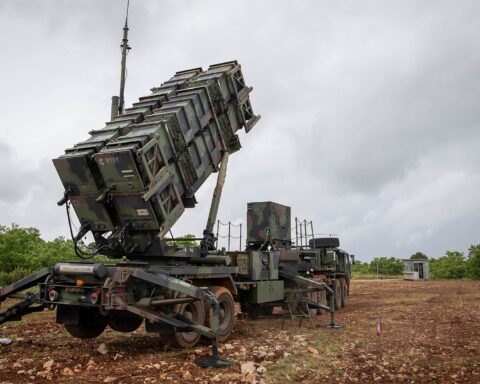
Twenty-four days into the Iran war, the United States has burned through roughly a quarter of its high-end interceptor stockpile. Saudi Arabia is intercepting dozens of Iranian-manufactured drones and ballistic missiles daily. Qatar faces Patriot interceptor depletion in four days. The UAE, in seven. Israel has informed Washington it is critically low on ballistic missile defense munitions. And a senior U.S. official, speaking with the weary candor that accompanies genuine alarm, offered perhaps the most consequential assessment of this conflict so far: “We have shot several years’ worth of production in the last few days.”
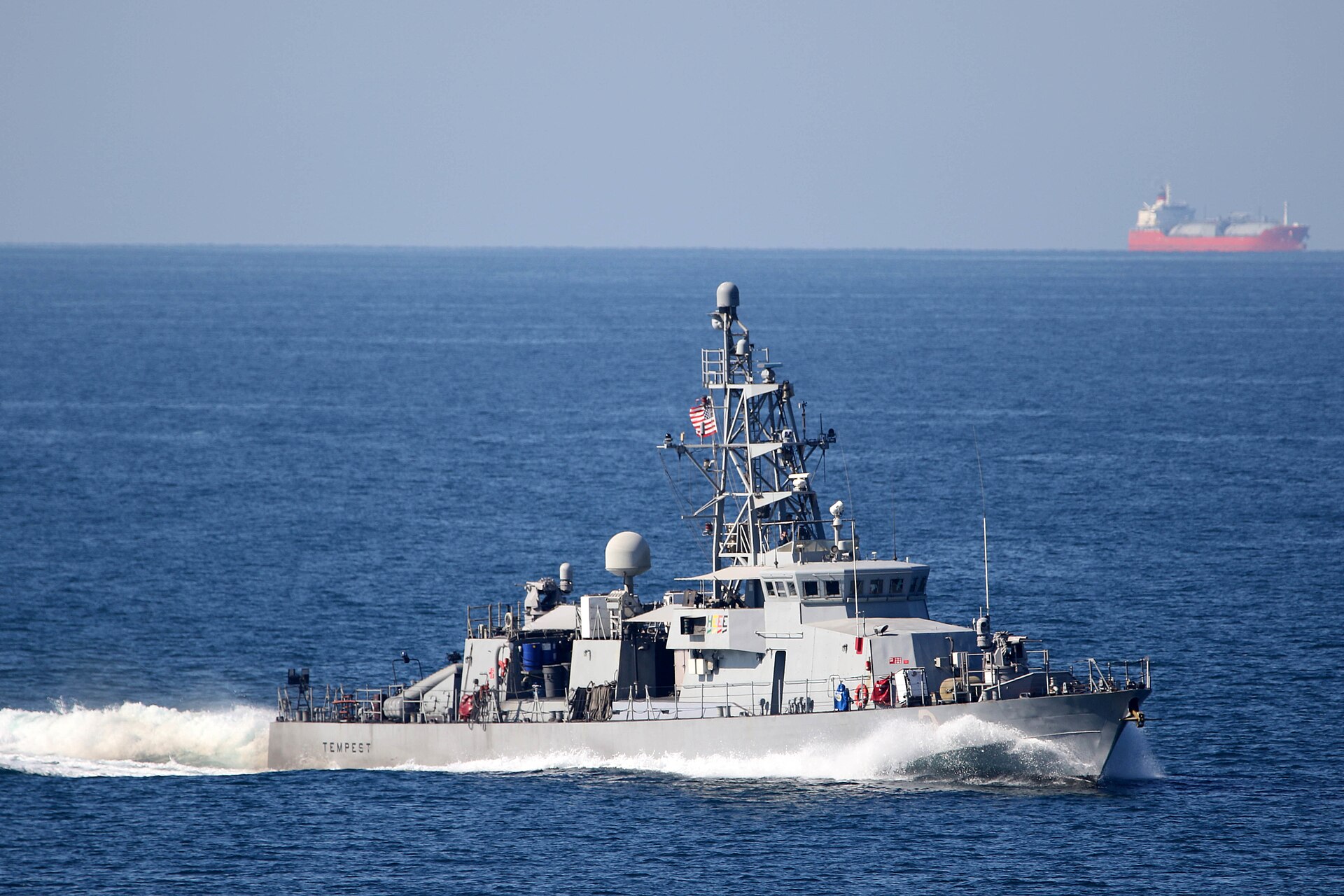
That sentence should be read not as a commentary on the Iran war, but as a strategic earthquake. Every PAC-3 MSE that detonates over Riyadh is one fewer available for the defense of Taipei. Every THAAD interceptor expended against an Iranian Emad is one subtracted from the thin shield covering Guam. Every SM-3 fired from an Aegis destroyer in the Gulf of Oman is one that will not be sailing toward the Taiwan Strait when — not if — that crisis arrives.
The industrial base that produces these weapons was never designed for simultaneous great-power confrontation and regional war. It was designed for peacetime deterrence, slow procurement cycles, and the comfortable assumption that America would never need to fight in two theaters at once while rearming a third. That assumption died somewhere over the Arabian desert, killed by a $20,000 Iranian drone that required a $10 million interceptor to stop it.
The Arithmetic of Depletion
Before the current Gulf war began, the United States had already expended significant interceptor stocks supporting Israel in earlier exchanges with Iranian proxies. Approximately 100 to 150 THAAD interceptors and 80 SM-3 missiles were consumed in those engagements — numbers that represented years of production at pre-war manufacturing rates. The Pentagon entered this conflict with an interceptor inventory that was already depleted, a fact that defense officials privately acknowledged but that never penetrated the public debate about whether to defend Gulf allies.
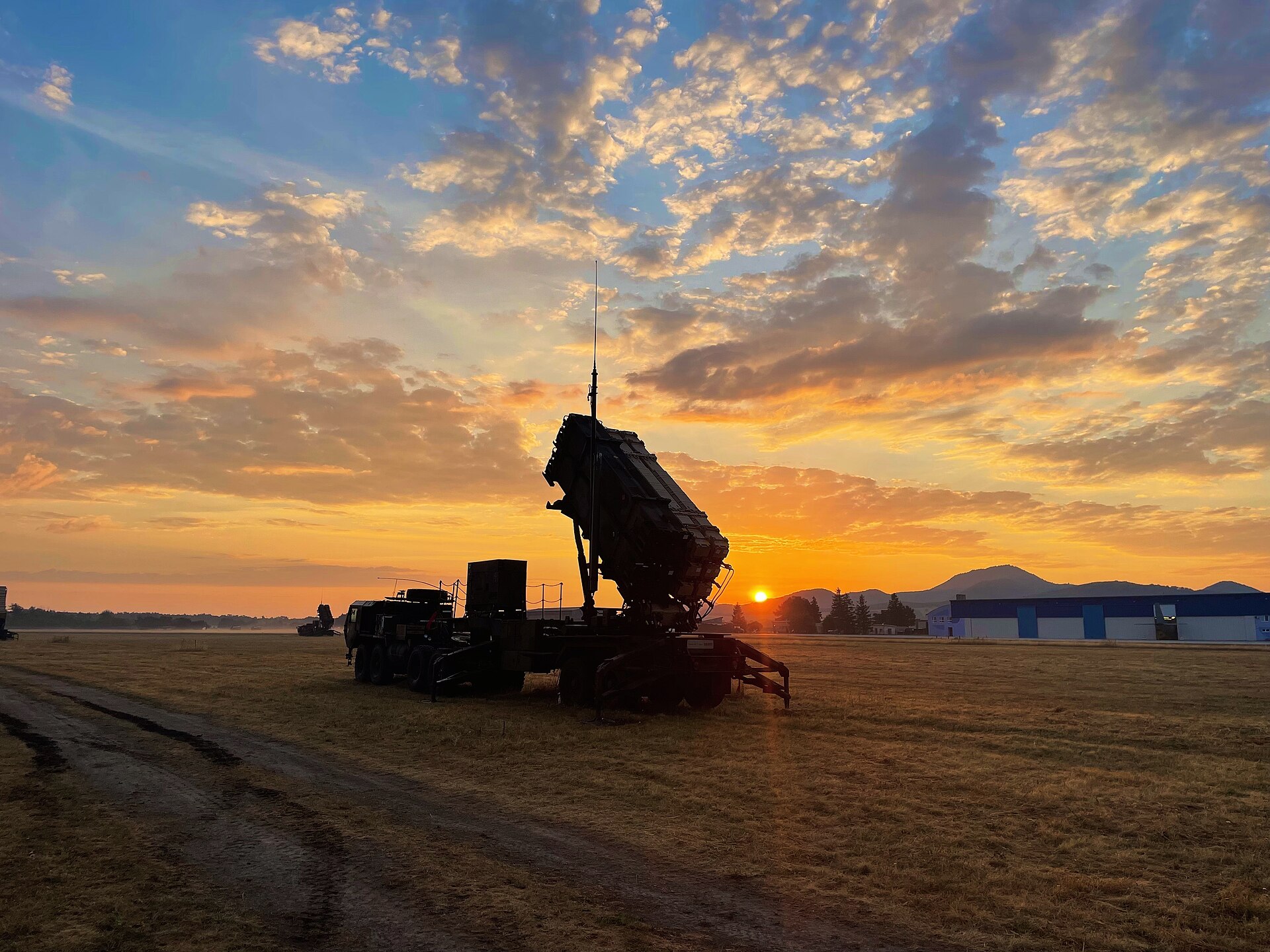
The pre-war U.S. stockpile of PAC-3 MSE interceptors — the workhorse of Patriot missile defense — stood at roughly 700 units. Lockheed Martin produced a record 620 PAC-3 MSEs in 2025, a manufacturing achievement that was celebrated across the defense industry. Yet that record year of production would not be sufficient to replace what has been consumed in less than a month of Gulf combat operations, to say nothing of the simultaneous drawdowns across other interceptor types.
The Middle East briefing 3,000+ readers start their day with.
One email. Every weekday morning. Free.
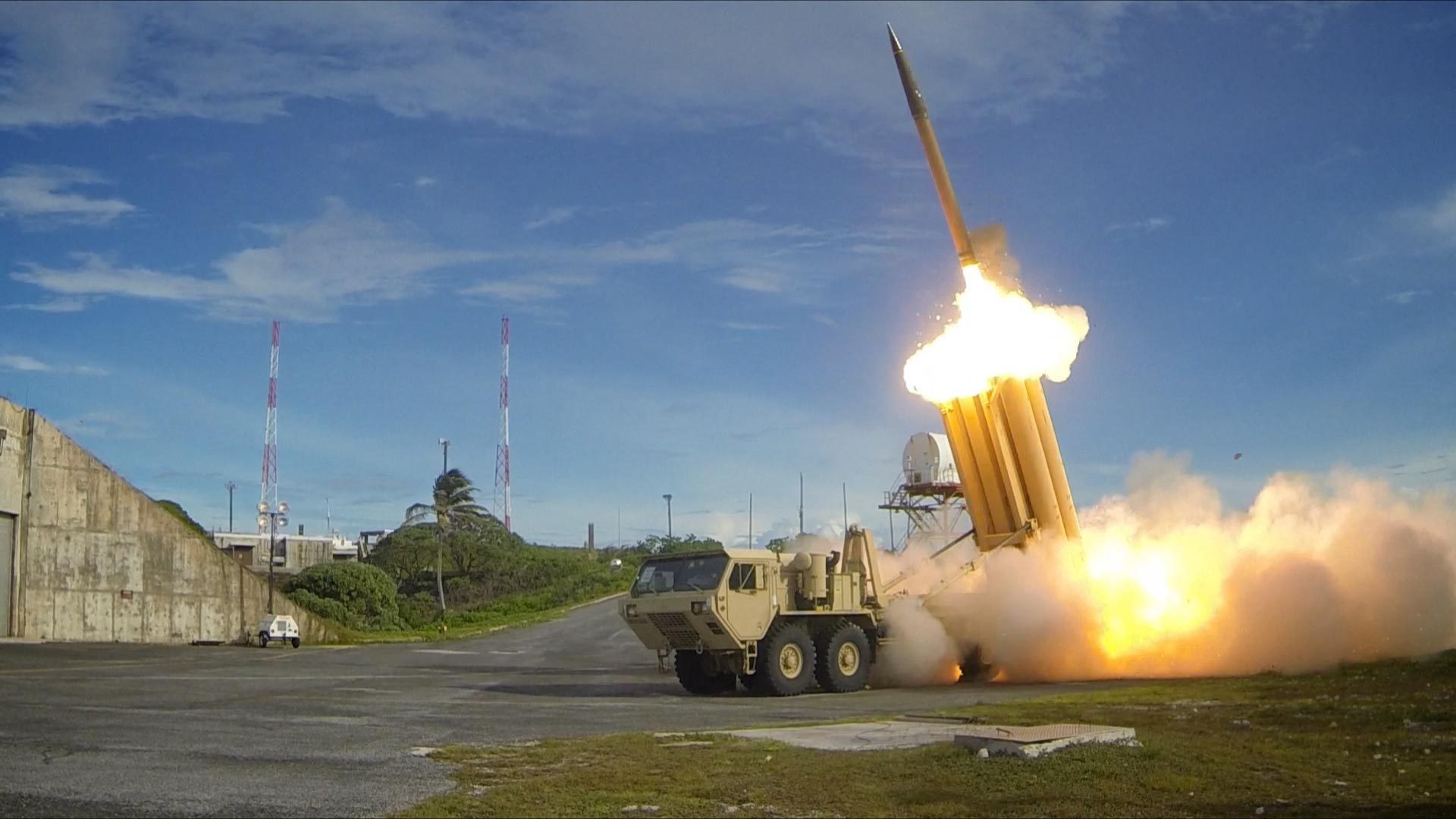
Consider the THAAD system, the crown jewel of American theater missile defense. At $12.77 million per interceptor, each THAAD round costs more than a fully loaded F-16 carries in precision-guided munitions for a typical combat sortie. The production line was turning out 96 interceptors per year before the crisis. Plans call for a fourfold increase to 400 per year, but even at that accelerated pace, replenishing the stockpile will take three to eight years — a timeline that assumes no new crises, no production disruptions, and no competing demands from Pacific Command.
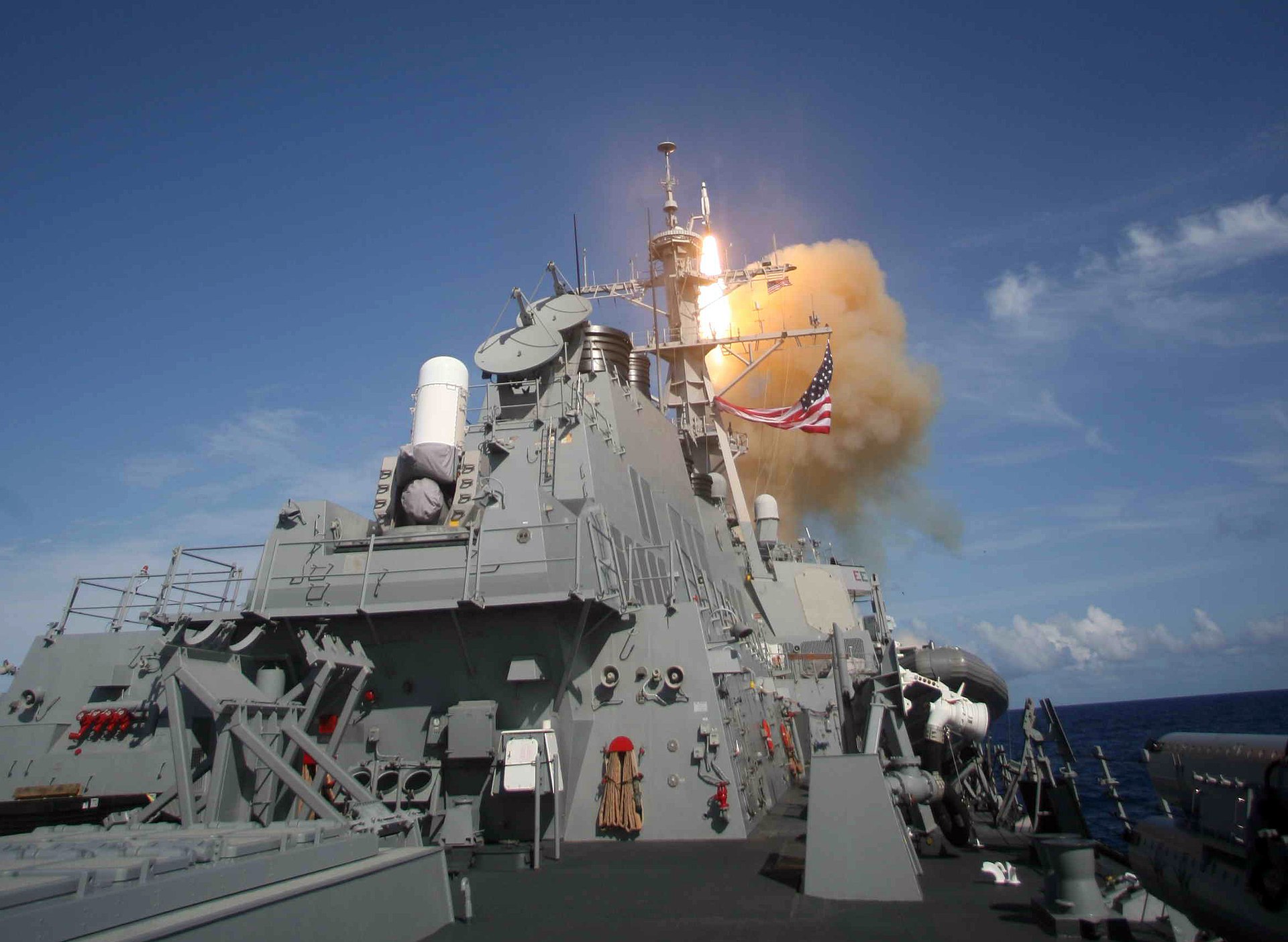
The SM-6, Raytheon’s multi-mission interceptor that serves as both an air defense and anti-ship missile, is ramping to 500 or more per year under a $908 million Navy contract, representing a two-to-fourfold increase over previous production rates. But “ramping” is the operative word. Defense production does not respond to crisis the way consumer manufacturing does. You cannot simply add a night shift to a solid rocket motor plant. The energetic materials, the guidance systems, the specialized alloys — each component has its own fragile supply chain, its own bottlenecks, its own single points of failure.
What Does the Gulf Burn Rate Actually Look Like?
The Defence Security Asia report on Gulf interceptor depletion rates paints a picture that should concentrate minds far beyond the Middle East. Qatar, which hosts Al Udeid Air Base — the largest U.S. military installation in the region — faces Patriot interceptor depletion in four days at current consumption rates. The United Arab Emirates, with its more diversified air defense architecture, has approximately seven days of interceptor stocks remaining.
Saudi Arabia presents the most dramatic case. For twenty-four consecutive days, the Kingdom has been intercepting ballistic missiles over Riyadh and other population centers. Dozens of engagements daily, each one consuming interceptors that were manufactured over months or years. The Saudi air defense network — a layered system of Patriot PAC-3, THAAD batteries, and shorter-range systems — is performing exactly as designed. It is also consuming itself in the process. The speed of the detection-to-kill chain that protects Saudi Arabia — roughly thirty seconds from satellite warning to interceptor launch — means each engagement burns through irreplaceable munitions almost before operators can register what they have fired.
The burn rate creates a cascading problem. As one theater’s stockpile depletes, it draws from regional reserves. As regional reserves deplete, they draw from global stocks. As global stocks deplete, they draw from the strategic reserve meant to deter China. Each layer of this drawdown makes the next conflict more dangerous, the next deterrent less credible, and the next ally more anxious.
We have shot several years’ worth of production in the last few days.
— Senior U.S. official, March 2026
That anonymous official’s assessment, reported widely in defense media, understates the problem. It is not merely that years of production have been consumed. It is that the production itself was never adequate for the world America chose to inhabit — a world of simultaneous commitments to Gulf security, European defense, Indo-Pacific deterrence, and homeland protection. The interceptor crisis is not a production problem. It is a strategy problem, and no amount of Lockheed Martin overtime can solve a fundamental mismatch between commitments and capacity.
The Interceptor Depletion Index
To understand the full scope of the crisis, it is useful to map interceptor availability across the five theaters that constitute America’s global defense posture. The following Interceptor Depletion Index provides a five-tier assessment of each major system’s status, from pre-war stockpile through current availability to the timeline for replenishment.
| System | Primary Theater | Pre-War Stockpile (est.) | Estimated Consumed | Current Availability (%) | Production Rate (units/yr) | Time to Replenish | Depletion Tier |
|---|---|---|---|---|---|---|---|
| PAC-3 MSE | Gulf / NATO / Indo-Pacific | ~700 | ~200-300 | 55-70% | 620 (target: 2,000 by 2032) | 1-2 years | Tier 2 — Stressed |
| THAAD | Gulf / Indo-Pacific / Homeland | ~500 | ~150-200 | 60-70% | 96 (ramping to 400) | 3-8 years | Tier 3 — Critical |
| SM-3 (Block IB/IIA) | Indo-Pacific / Gulf / NATO | ~500 | ~100-130 | 70-75% | ~125 (ramping) | 2-4 years | Tier 2 — Stressed |
| SM-6 | Indo-Pacific / Gulf | ~600 | ~80-120 | 75-80% | 500+ (target) | 1-2 years | Tier 2 — Stressed |
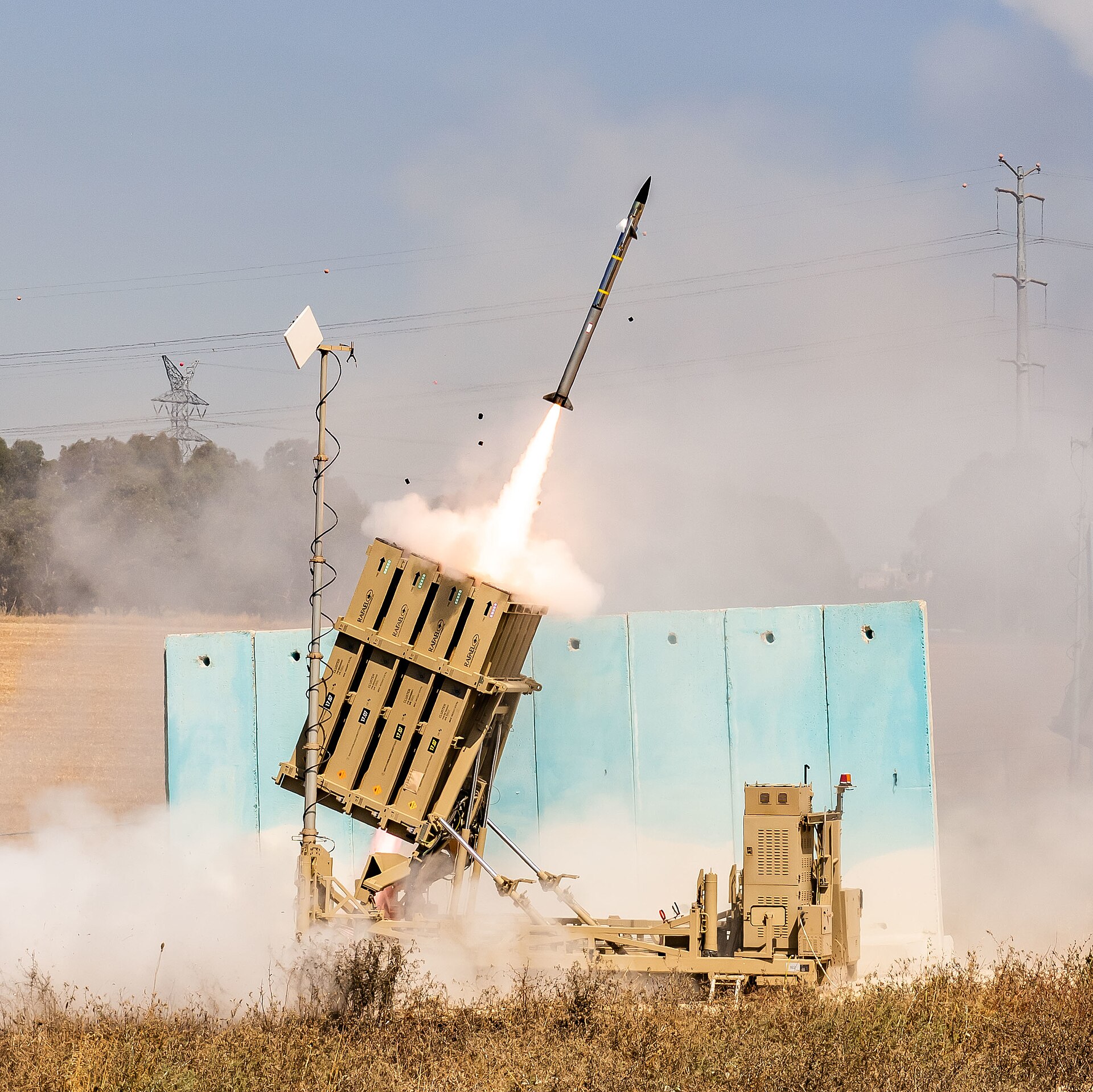
| Iron Dome (Tamir) | Israel / Gulf (limited) | ~10,000+ | ~3,000-5,000 | 50-70% | Expanding (new Arkansas factory) | 1-3 years | Tier 3 — Critical |
Tier definitions range from Tier 1 (Adequate — stockpiles above 85% with production meeting or exceeding consumption) through Tier 3 (Critical — stockpiles below 70% with production significantly trailing consumption) to Tier 5 (Depleted — operational stockpiles exhausted, combat effectiveness degraded). No system has reached Tier 5, but the trajectory for THAAD and Iron Dome interceptors points unmistakably in that direction if the Iran war continues through the spring.
The most alarming column in this table is not “Estimated Consumed” but “Time to Replenish.” Even under the most optimistic production scenarios — every contract fully funded, every supply chain bottleneck resolved, every factory running at maximum capacity — the THAAD stockpile cannot be restored to pre-war levels before 2029 at the earliest. That is three years during which the United States will conduct Indo-Pacific deterrence operations with a degraded missile shield. Three years during which Beijing will know, with mathematical certainty, that America’s ability to defend Taiwan from ballistic missile attack is compromised.
Why Can’t America Simply Build More?
The naive answer to the interceptor crisis is industrial mobilization — build more factories, hire more workers, spend more money. Congress has moved in this direction. Lockheed Martin holds a $9.8 billion contract to scale PAC-3 MSE production to approximately 2,000 units per year by 2032. Raytheon is expanding SM-6 output. The Army is quadrupling THAAD production. A new joint U.S.-Israel factory in Arkansas will produce Iron Dome Tamir interceptors on American soil for the first time, at a cost of $40,000 to $100,000 per round.
These are meaningful investments. They are also insufficient, and the reasons illuminate a deeper structural crisis in the American defense industrial base.
The bottleneck is not at the prime contractor level. Lockheed Martin and Raytheon can build assembly lines. The bottleneck is two and three tiers below them, in the small and medium-sized firms that produce the components no one outside the defense industry has heard of: solid rocket motors, energetic materials, specialized bearings, rare earth magnets, and the exotic alloys that survive the thermal and kinetic stresses of hypersonic interception.
A single illustrative case makes the point. In 2016, an explosion at a black powder manufacturing plant in Minden, Louisiana — one of a handful of such facilities in the United States — shut down American production capacity for approximately two years. Black powder is not a high-technology material. It is a commodity explosive that has been manufactured since the ninth century. Yet the loss of one plant in one small Louisiana town created a production gap that rippled through multiple weapons programs. Now imagine a similar disruption to any of the far more specialized facilities that produce the components of a PAC-3 MSE guidance system or a THAAD kill vehicle.
The rare earth problem compounds the bottleneck. China controls approximately 60 percent of global rare earth mining and over 85 percent of rare earth processing. The permanent magnets essential to interceptor guidance systems depend on neodymium and samarium, both of which flow predominantly through Chinese supply chains. Beijing has already demonstrated its willingness to restrict rare earth exports as a geopolitical weapon. In a Taiwan contingency, those restrictions would become total — precisely when interceptor production would need to surge.
The workforce problem is equally severe. The skilled technicians who assemble interceptors — workers with security clearances, specialized training, and years of experience handling energetic materials — cannot be produced on demand. Training pipelines run eighteen months to three years. The defense industry competes for this talent with commercial aerospace, energy, and technology firms that offer higher pay without the burden of security clearance processes. Every interceptor factory that Lockheed Martin opens must staff with workers who do not yet exist.
The Taiwan Equation
In war games conducted by the Center for Strategic and International Studies, the RAND Corporation, and the Pentagon’s own Joint Staff, the defense of Taiwan against Chinese amphibious assault consistently depends on one variable above all others: the ability to attrite the People’s Liberation Army Navy and its supporting missile forces before they can establish air superiority over the Taiwan Strait. That ability rests, in significant part, on the availability of SM-3 and SM-6 interceptors aboard Aegis-equipped destroyers and cruisers positioned in the Western Pacific.
Before the Iran war, U.S. Indo-Pacific Command maintained what defense planners considered a minimum credible deterrent level of these interceptors across the Seventh Fleet. That level assumed no major drawdowns from other theaters. The assumption was always fragile. It is now broken.
Eighty SM-3 missiles were expended supporting Israel in earlier exchanges. An undisclosed additional number have been consumed in Gulf operations since the war’s expansion. The Aegis destroyers currently stationed in the Gulf of Oman and the Red Sea are carrying interceptor loads that have been partially depleted by combat operations. When those ships rotate back to the Pacific — as they must, given crew endurance limits and maintenance cycles — they will arrive with magazines that are not full. And the production lines cannot fill them fast enough.
Beijing’s military planners are not fools. They read the same defense trade publications. They monitor the same satellite imagery of U.S. naval movements. They can count the Aegis launches reported in open-source intelligence. And they can perform the same arithmetic that produces the Interceptor Depletion Index: if the United States has consumed 25 percent of its high-end interceptor stockpile in a regional war against Iran, how much would remain after three months of high-intensity combat in the Taiwan Strait?
The answer, according to multiple former Pentagon officials who have run the classified war games, is: not enough. Not enough to sustain a credible air and missile defense umbrella over Taiwan, over U.S. bases in Japan and Guam, over carrier strike groups operating within range of Chinese DF-21D and DF-26 anti-ship ballistic missiles, and over the logistics chain that would sustain the entire effort. Something would have to give. Some theater would have to go undefended. Some ally would have to be told that the interceptors they were promised are firing over someone else’s capital.
Is NATO Already Defenseless?
At a classified briefing in Brussels earlier this month, European defense officials were warned that the global interceptor shortage had reached a level that directly affected NATO’s ability to defend its eastern flank. The warning was not hypothetical. It was accompanied by specific numbers — numbers that, according to officials who attended the briefing, produced visible alarm among allied defense ministers.
Europe currently possesses approximately 5 percent of the air defense capacity needed to protect NATO’s eastern border against a Russian aerospace attack. Five percent. That figure, which has been reported by multiple European defense publications, accounts for the total number of Patriot batteries, SAMP/T systems, IRIS-T launchers, and NASAMS units deployed or deployable across the alliance’s eastern members, measured against the scale of the Russian missile and drone threat demonstrated over four years of war in Ukraine.
The $100 billion in defense spending that Gulf states poured into their militaries over the past decade purchased significant air defense capacity, but it also created a dependency on American-made interceptors that now competes directly with NATO’s needs. Every PAC-3 MSE allocated to backfill Saudi stockpiles is one that will not be available to reinforce Poland’s nascent Patriot capability. Every THAAD interceptor reserved for Gulf reloads is one subtracted from the European missile defense architecture that exists, at present, largely on paper.
Germany, which operates three Patriot batteries — the largest such capability in continental Europe — has been quietly informed that its requests for additional PAC-3 MSE interceptors will face extended delivery timelines. Poland, which ordered its first Patriot systems under the Wisla program, now confronts the possibility that its batteries will arrive with incomplete interceptor loads. The Netherlands, Greece, Spain, and Romania each operate legacy Patriot systems whose interceptor stocks were already inadequate before the Iran war began.
The air defense gap is not new. European defense analysts have warned about it for years. What is new is the realization, forced by the Iran war, that the gap cannot be closed by ordering American systems, because America does not have enough interceptors to fill its own launchers, let alone Europe’s. The comfortable assumption that NATO could rely on American production capacity to backstop European defense has been revealed as a fiction — not because America is unwilling, but because America is incapable.
Ukraine and the Forgotten Interceptor War
Ukraine’s air defense needs have not diminished because the Iran war has consumed global attention and interceptor stocks. Russia continues to launch combined drone and missile strikes against Ukrainian energy infrastructure, civilian population centers, and military targets. Each strike demands interceptors — Patriot, NASAMS, IRIS-T, Gepard — that now compete with Gulf requirements for the same finite production output.
The United States is producing approximately 40,000 artillery shells per month, a 178 percent increase from pre-war levels, and that accelerated production is still not sufficient to meet Ukrainian consumption rates. The interceptor math is worse. Artillery shells are relatively simple munitions. A PAC-3 MSE is among the most complex objects manufactured by American industry — a hit-to-kill interceptor with an active radar seeker, thrust-vector control, and the ability to destroy an incoming ballistic missile through kinetic energy alone. Scaling production of such a weapon by an order of magnitude is not an industrial challenge; it is an engineering revolution that takes years to execute.
Kyiv understands this calculus with painful clarity. Ukrainian officials have watched the Gulf war consume the very interceptors they have been requesting for years. The Patriot batteries that Ukraine fought so hard to obtain — lobbying, pleading, making the case in every Western capital — now face interceptor shortages driven not by Russian aggression but by Iranian escalation half a continent away. The bitter irony is not lost on Kyiv’s war planners: Ukraine’s air defenses may ultimately be degraded not by Russian missiles but by the Iran war’s voracious consumption of the global interceptor supply.
The competition is not theoretical. It is happening now, in classified allocation meetings at the Pentagon, where officials must decide whether the next batch of PAC-3 MSEs goes to Saudi Arabia, which is under active bombardment, or to Ukraine, which is also under active bombardment, or to the Indo-Pacific reserve, which must be maintained against the possibility of Chinese action. There is no correct answer to this trilemma. There is only triage — and triage, by definition, means someone does not get treated.
Who Actually Wins This War?
The contrarian assessment of the Iran war — the one that defense industry analysts discuss privately but rarely state publicly — is this: the real winner of the Iran war is not any nation. It is Lockheed Martin. And the real loser is not Iran. It is Taiwan, which is watching its future missile shield get consumed over the deserts of Arabia.
Lockheed Martin’s stock price has risen approximately 40 percent year to date. RTX Corporation, the parent of Raytheon, has gained 110 percent since March 2023. The $16.5 billion in arms sales to Gulf allies approved since the crisis began represents a generational windfall for American defense primes — new orders that will sustain production lines and profit margins for a decade. The defense industrial base is experiencing a demand signal of historic proportions, and it is responding exactly as market incentives dictate: by accepting orders, expanding capacity, and raising prices.
None of this is sinister. Defense companies are supposed to build weapons. Governments are supposed to buy them. The market is functioning as designed. But the market is also revealing a structural truth that peacetime procurement obscured: when demand for interceptors surges across multiple theaters simultaneously, the allocation mechanism is not strategic logic but commercial contracts. The customer who pays first, orders largest, and screams loudest gets interceptors first. And right now, the loudest screams are coming from Riyadh, not Taipei.
The financial incentives explain the urgency. Defence contractor share prices have surged to record highs, congressional stock portfolios are swelling with defence holdings, and the Pentagon has requested $200 billion in supplemental war funding — a transfer of public wealth into private balance sheets that makes Wall Street the clearest winner of the Iran war.
The defense industrial base was designed to deter one war at a time. The world has decided to fight three.
— Former senior Pentagon acquisition official, March 2026
The war has also broke America’s monopoly on Saudi arms sales in ways that will reshape the global defense market. As Gulf states confront the reality of American interceptor scarcity, they are accelerating diversification toward European, South Korean, and potentially Chinese and Russian air defense systems. The monopoly that sustained American defense industry revenues and strategic leverage in the Gulf for four decades is fracturing — not because allies chose to leave, but because America could not deliver what it promised.
The Cost Asymmetry Trap
The mathematics of the cost asymmetry of drone warfare deserve their own strategic reckoning. Iran’s attack drones cost between $20,000 and $50,000 each. The interceptors used to destroy them cost between $2 million and $12.77 million each. At the high end of this exchange ratio, Iran can impose a cost of $12 million on the defense by spending $20,000 on a Shahed-series drone — a ratio of 600 to 1.
No economy, no defense budget, no industrial base can sustain a 600-to-1 cost exchange ratio indefinitely. The Iran war has demonstrated, at operational scale, what theorists have argued for a decade: that the offense-defense balance in missile warfare has shifted decisively toward the attacker. The defender must intercept every incoming threat. The attacker needs only one to get through. And each failed interception costs not only in damage sustained but in the interceptor expended on the attempt. The full economic cost of the Iran war after 26 days reveals that the interceptor paradox is only one line item in a multi-trillion-dollar ledger that no belligerent can afford.
Saudi Arabia’s layered defense architecture addresses this asymmetry by assigning cheaper interceptors to cheaper threats — using short-range, lower-cost systems against drones while reserving PAC-3 and THAAD for ballistic missiles. But Iran has responded by mixing its salvos, combining cheap drones with medium-range ballistic missiles and cruise missiles in packages designed to overwhelm the defense and force the expenditure of high-end interceptors on low-end threats. The tactic is working.
The cost asymmetry creates a perverse strategic dynamic. Every day the war continues, the aggregate value of interceptors consumed exceeds the aggregate value of the attacking munitions by an order of magnitude. Saudi Arabia’s military options against Iran include offensive strikes against launch sites, which could reduce the incoming volume. But offensive operations carry escalation risks that Mohammed bin Salman has thus far chosen to manage carefully, preferring defensive attrition to offensive escalation. That restraint is strategically rational. It is also interceptor-expensive.
Can the Industrial Base Be Rebuilt in Time?
The $9.8 billion Lockheed Martin contract to scale PAC-3 MSE production to approximately 2,000 units per year by 2032 is the most ambitious interceptor production target in American history. If achieved, it would represent more than a threefold increase from the record 620 units produced in 2025. The SM-6 ramp to 500-plus units per year, the THAAD quadrupling from 96 to 400, the new Tamir factory in Arkansas — together, these programs represent tens of billions of dollars in capital investment and a fundamental restructuring of America’s defense manufacturing capacity.
The timeline is the problem. 2032 is six years away. In those six years, the Taiwan Strait crisis that every American war planner expects could arrive at any moment. The Russian offensive against NATO that European planners fear could materialize in two to three years, according to intelligence assessments. The Iran war itself could continue for months, consuming interceptors at rates that further delay the replenishment of global stocks.
The Tier-2 and Tier-3 supplier base cannot be expanded by contract alone. Many of these firms are small, family-owned businesses operating in specialized niches. They lack the capital to expand, the workforce to staff new production lines, and the financial incentive to invest in capacity that may not be needed once the current crisis passes. Defense demand is notoriously cyclical. The companies that expanded rapidly during the Iraq and Afghanistan wars often faced painful contractions when those conflicts ended. Suppliers who remember the post-sequestration drawdown of 2013 are understandably reluctant to bet their businesses on demand signals that could reverse with a single budget resolution.
The solid rocket motor supply chain illustrates the challenge. The United States has a limited number of facilities capable of manufacturing the propulsion systems that power interceptor missiles. These facilities operate under stringent safety and environmental regulations, require specialized infrastructure, and employ workers with skills that take years to develop. Building a new solid rocket motor plant — from site selection through environmental review, construction, certification, and initial production — takes five to seven years. The crisis is now.
What Beijing Sees
The People’s Liberation Army’s strategic assessment of the Iran war almost certainly emphasizes a single data point above all others: the demonstrated inability of the American defense industrial base to sustain high-intensity interceptor consumption across multiple theaters simultaneously. This is not a secret. It is not intelligence. It is arithmetic, published in congressional testimony, defense trade journals, and the stock filings of American defense companies.
For Chinese military planners contemplating a Taiwan contingency, the Iran war provides a real-world stress test of the adversary’s defense capacity. The results confirm what PLA theorists have long argued: that America’s technological advantages in precision-guided munitions can be negated by the simple expedient of forcing those munitions to be consumed faster than they can be produced. The strategy is not new. It is attrition, the oldest form of warfare, applied to the most advanced weapons in the American arsenal.
China’s own missile inventory dwarfs the interceptor stocks available to defend against it. The PLA Rocket Force operates an estimated 1,500 to 2,000 short- and medium-range ballistic missiles capable of reaching Taiwan, plus hundreds of land-attack cruise missiles and an expanding arsenal of hypersonic glide vehicles against which no proven interceptor currently exists. In a saturation attack — the scenario that keeps Indo-Pacific commanders awake at night — the number of incoming Chinese missiles would exceed the number of available interceptors by a factor that no amount of peacetime production can close.
The Iran war has accelerated that calculus by consuming interceptors that were earmarked, at least notionally, for the Pacific theater. Beijing does not need to wait for the U.S. stockpile to reach zero. It needs only to calculate the point at which American interceptor density falls below the threshold required for a credible defense of Taiwan. That threshold is classified. But the trend line — drawn from pre-war stocks through Gulf consumption rates to post-war replenishment timelines — points in a direction that favors the offense.
The strategic window, in other words, is not closing. It is opening. And every day the Iran war continues, it opens a little wider.
The Alliance Credibility Crisis
The interceptor depletion crisis has exposed a contradiction at the heart of America’s alliance system: the same weapons that defend Riyadh defend Taipei defend Warsaw. There is no separate stockpile for each ally, no dedicated production line for each theater. There is one industrial base, one inventory, and an ever-growing list of commitments that exceeds its capacity.
Saudi Arabia’s real wartime allies have discovered this truth in the most visceral way possible — by watching interceptor stocks dwindle while Iranian missiles continue to launch. But the implications extend far beyond the Gulf. Every American ally now confronts the same question: if the United States cannot produce enough interceptors to defend its current commitments, what is the American security guarantee actually worth?
For Taiwan, the question is existential. Unlike Saudi Arabia, which has a large military establishment and the financial resources to purchase vast quantities of arms, Taiwan’s defense depends almost entirely on the credibility of American intervention. If that intervention is degraded by interceptor scarcity — if the Aegis destroyers arrive with half-empty magazines, if the THAAD batteries deploy with insufficient reloads, if the Patriot systems that defend U.S. bases in Japan and Guam are operating on reduced interceptor allocations — then the deterrent that has kept peace in the Taiwan Strait for seventy years is undermined by a war ten thousand kilometers away.
For NATO, the calculation is similar though less acute. Europe has begun, belatedly and inadequately, to build its own air defense capacity. The European Sky Shield Initiative, launched in 2022, aims to create a continent-wide integrated air defense network. But the initiative depends heavily on American systems — Patriot, THAAD, and Aegis Ashore — and therefore on American interceptor production. The fourth great oil shock triggered by the Iran war has strained European budgets at precisely the moment when defense spending needs to surge. The result is an alliance that is simultaneously more threatened and less capable of defending itself — the worst possible combination in an era of revisionist great powers.
A Strategy of Scarcity
The interceptor crisis demands a strategic response, not merely an industrial one. Producing more interceptors is necessary but insufficient. What is required is a fundamental rethinking of how the United States and its allies allocate scarce defensive resources across competing theaters — a strategy of scarcity that acknowledges the gap between commitments and capacity and makes hard choices accordingly.
The first element of such a strategy is prioritization. Not every theater can be defended equally. The Pentagon must establish a clear hierarchy of interceptor allocation that reflects strategic priorities, not political pressures. If the defense of Taiwan is the paramount strategic objective — and the logic of great-power competition suggests it must be — then Indo-Pacific interceptor reserves must be ring-fenced against drawdowns for other theaters, even when those theaters are under active attack. This is a politically painful conclusion. It means telling Gulf allies that their defense will be limited by what can be produced and allocated after Pacific requirements are met. It means telling NATO that European air defense must be built primarily on European production. It means telling Congress that the comfortable illusion of global coverage has been exposed as exactly that — an illusion.
The second element is cost imposition. The offense-defense cost asymmetry must be addressed through directed-energy weapons, electronic warfare, and other approaches that reduce the per-engagement cost of interception. The U.S. Army’s Directed Energy Maneuver-Short Range Air Defense program and the Navy’s HELIOS laser system are steps in this direction, but they remain years from operational deployment at scale. Until they arrive, the cost exchange ratio will continue to favor the attacker, and every interceptor fired will represent a strategic resource consumed.
The third element is allied production. Japan, South Korea, Australia, and the European allies must develop indigenous interceptor manufacturing capacity that reduces dependence on American production lines. Japan’s Type 03 medium-range surface-to-air missile, South Korea’s Cheongung series, and the European MBDA consortium’s Aster family all represent interceptor capabilities that can contribute to collective defense without drawing from American stocks. The political obstacles to allied production are real — technology transfer restrictions, export controls, industrial competition — but the alternative is collective vulnerability.
The fourth, and most important, element is honesty. The American public and America’s allies deserve a candid assessment of the interceptor gap and its strategic consequences. The comfortable narrative — that the defense industrial base is surging, that production is ramping, that the gap will be closed — obscures the uncomfortable truth that for the next three to eight years, the United States will be unable to meet all of its missile defense commitments simultaneously. That truth should inform alliance diplomacy, force posture decisions, and the broader strategic debate about what America can and cannot defend in an era of simultaneous crises.
Twenty-four days of war over the Arabian Peninsula have revealed what four decades of procurement decisions tried to hide: that the arsenal of democracy is finite, that its most sophisticated weapons take years to produce, and that the gap between American commitments and American capacity is measured not in dollars but in interceptors — interceptors that are being consumed, right now, faster than they can be built, over the cities and deserts of a war that is far from over.
Every interceptor fired over Riyadh is, in the most literal sense, one fewer for Taipei. The question is not whether policymakers in Washington understand this. It is whether they will act on it before the arithmetic becomes irreversible.
Britain has responded to the mounting supply pressure by deploying Rapid Sentry air defense systems and distributing additional interceptor missiles to Gulf partners, marking the UK’s most significant military commitment to the region in 15 years.
Frequently Asked Questions
How many missile interceptors has the United States consumed during the Iran war and related operations?
The United States has consumed approximately 25 percent of its high-end interceptor stockpile across all systems, including an estimated 100 to 150 THAAD interceptors and 80 SM-3 missiles used supporting Israel in earlier exchanges before the current Gulf war began. The Pentagon entered the conflict with roughly 700 PAC-3 MSE interceptors and significantly reduced stocks of other systems.
How long will it take to replenish American missile defense stockpiles to pre-war levels?
Replenishment timelines vary by system. PAC-3 MSE stocks could be restored in one to two years given Lockheed Martin’s accelerated production. THAAD interceptors, with production ramping from 96 to 400 per year, will take three to eight years to replenish. SM-3 and SM-6 stocks require two to four years. These timelines assume no further major drawdowns and no disruptions to the supply chain.
Why does the interceptor shortage affect Taiwan’s defense if Taiwan is not involved in the Iran war?
The United States maintains a single global interceptor inventory. SM-3 and SM-6 missiles aboard Aegis destroyers in the Pacific are the same systems used in the Gulf. THAAD batteries defending Guam draw from the same stockpile as those deployed in the Middle East. When Gulf operations consume these interceptors faster than they can be produced, the stocks available for Indo-Pacific contingencies decline proportionally.
What is the cost difference between Iranian attack drones and the interceptors used to destroy them?
Iranian attack drones cost between $20,000 and $50,000 each. The interceptors used against them range from $40,000 for an Iron Dome Tamir to $12.77 million for a THAAD interceptor. At the highest exchange ratio, defending against a single $20,000 drone with a high-end interceptor costs 600 times more than the attacking weapon, creating an unsustainable cost asymmetry for the defender.
What percentage of air defense capability does Europe currently have relative to its needs?
European NATO members currently possess approximately 5 percent of the integrated air defense capacity needed to protect NATO’s eastern border against a full-scale Russian aerospace attack. EU defense officials were warned of this shortfall at a classified Brussels briefing in March 2026, where the global interceptor shortage was identified as a direct constraint on European defense capacity.
Can directed-energy weapons solve the interceptor shortage?
Directed-energy systems such as high-power lasers offer a theoretically unlimited magazine and near-zero per-shot cost, which could eventually break the cost asymmetry that favors attackers. However, programs like the U.S. Army’s DE M-SHORAD and the Navy’s HELIOS remain years from operational deployment at scale. They are effective against drones and rockets but cannot yet intercept ballistic missiles, which require the kinetic kill vehicles of systems like THAAD and PAC-3 MSE.
How has the Iran war affected the global defense industry’s stock performance?
Defense industry stocks have surged since the onset of the crisis. Lockheed Martin has gained approximately 40 percent year to date. RTX Corporation, Raytheon’s parent company, has risen 110 percent since March 2023. The $16.5 billion in approved arms sales to Gulf allies and the multi-billion-dollar production contracts for interceptor expansion have created a generational demand signal for defense manufacturers. The irony is that even as coalition forces dismantle Iran’s arms factories, the war has created a permanent demand for the interceptors those factories made necessary.