
Table of Contents
- 228 Specialists and the Architecture They Walked Into
- What Does Saudi Arabia’s PAC-3 Inventory Actually Look Like Before Hajj?
- What Can a $1,500 Interceptor Do That a Patriot Cannot?
- How Did Sky Map End Up at Prince Sultan Air Base?
- Washington Said No. Then Washington Said Yes.
- The Barter Structure Nobody Is Calling a Barter
- Why Has Iran Said Nothing About 228 Ukrainian Specialists in the Gulf?
- Who Controls Saudi Airspace Now?
- Nineteen Days to Arafah
- FAQ
RIYADH — Saudi Arabia is nineteen days from concentrating 1.5 million pilgrims in Makkah with roughly 400 PAC-3 interceptors left in its magazines — about 14 percent of the inventory it held on February 28. The next delivery from Lockheed Martin’s Camden, Arkansas plant is not scheduled before mid-2027. Into this gap, 228 Ukrainian counter-drone specialists have embedded across the kingdom’s air-defense networks, operating interceptor systems that cost less than a new set of tires for an F-15 and running a command-and-control platform the Pentagon itself deployed at Prince Sultan Air Base less than a month after President Trump publicly dismissed Ukraine’s offer of help.
The structural inversion is complete. Ukraine — still absorbing Shahed-136 waves over its own cities — is now a net exporter of air-defense technology to the Gulf. Kyiv’s 10-year defense cooperation frameworks with Saudi Arabia, the UAE, and Qatar, signed between March 27 and 30, cover drone warfare, electronic warfare, air-defense interception, and maritime drones. The deals were not charity. They were the product of a PAC-3 production bottleneck that Washington created by decades of underinvestment in missile manufacturing capacity, and that the Iran war’s first 72 hours made impossible to ignore.
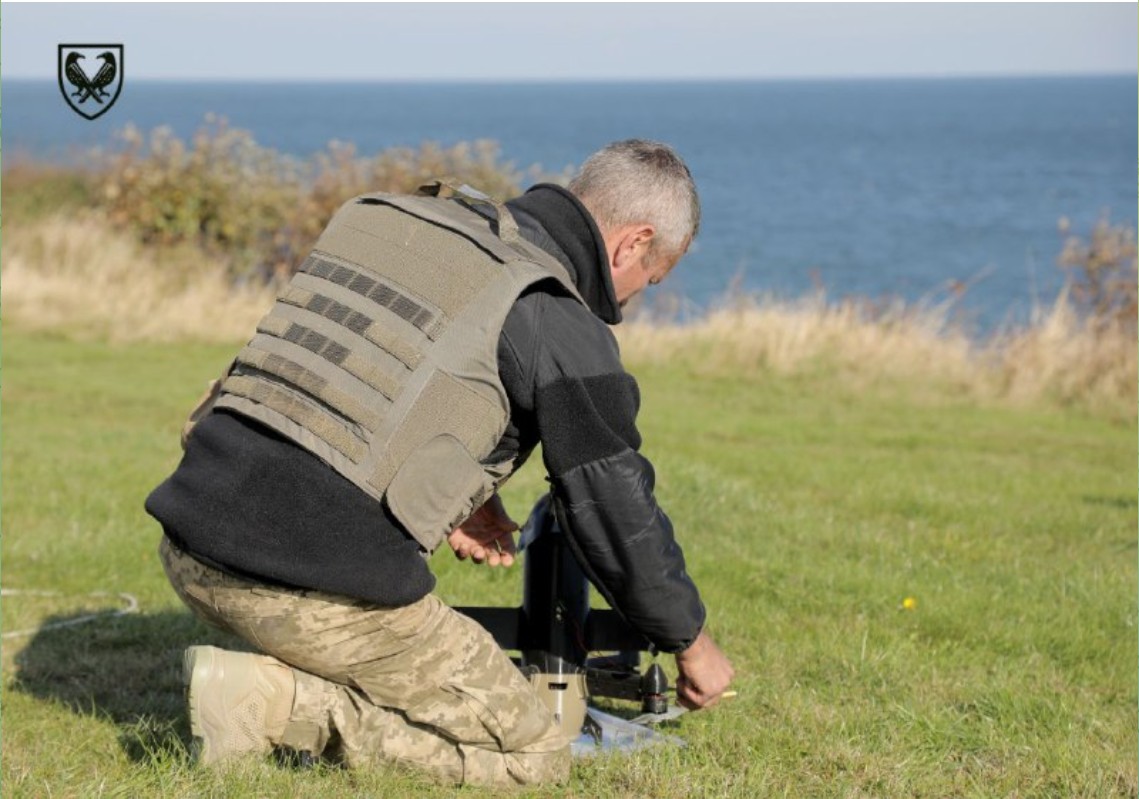
228 Specialists and the Architecture They Walked Into
The initial deployment was 201 Ukrainian military experts, confirmed by Zelenskyy on March 18. By March 20, the number had risen to 228 across Saudi Arabia, the UAE, Qatar, Kuwait, and Jordan. The Kyiv Post reported that these personnel “not only provided advice to local armed forces on interceptor drones and electronic warfare but shot down Iranian Shahed long-range drones as well.” They were not advisors in the diplomatic sense of the word. They were operators.
The Jamestown Foundation’s April analysis noted that the specialists spent over a week inside Saudi air-defense networks assessing vulnerabilities before the formal 10-year agreements were signed. That sequence matters. Zelenskyy did not arrive in Riyadh on March 27 with a brochure. He arrived with a week’s worth of diagnostic data on Saudi Arabia’s intercept gaps — information his teams had gathered while embedded alongside Saudi and American personnel at operational air-defense batteries.
A Saudi Arabian arms company had already signed a separate deal to purchase Ukrainian-made interceptor missiles before the broader framework was announced, according to the Kyiv Independent. The March agreements formalized what was already operational fact on the ground.
What Does Saudi Arabia’s PAC-3 Inventory Actually Look Like Before Hajj?
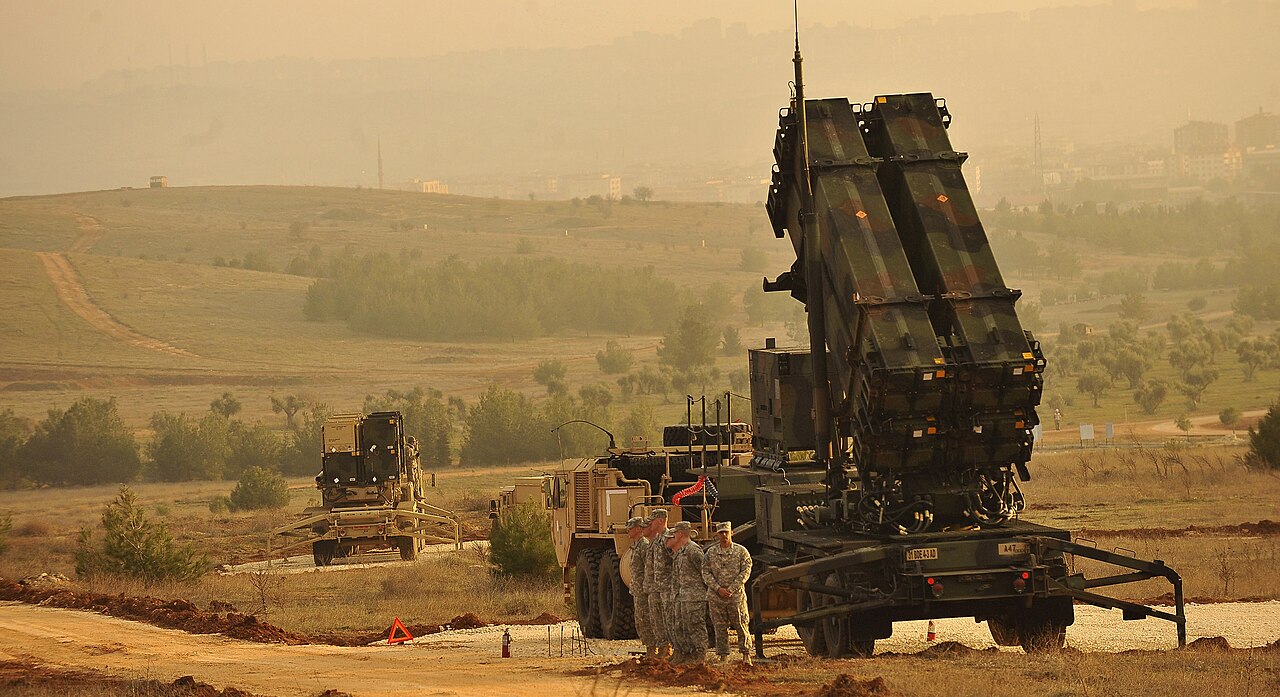
The arithmetic is not ambiguous. Saudi Arabia entered the war with an estimated 2,800 PAC-3 MSE rounds. The Saudi Ministry of Defense confirmed 894 intercepts between March 3 and April 7 — 799 UAVs, 86 ballistic missiles, 9 cruise missiles. The estimated current inventory stands at approximately 400 rounds, about 14 percent of the pre-war stock.
The Middle East briefing 3,000+ readers start their day with.
One email. Every weekday morning. Free.
Middle Eastern nations collectively expended more than 800 Patriot missiles in the first three days alone, according to The War Zone. Those 400 remaining rounds represent the kingdom’s entire upper-tier defense against ballistic and cruise missiles — the threats that Ukrainian interceptor drones cannot address. The $9 billion, 730-round DSCA sale approved on January 30, 2026, sounds like a solution. The rounds do not yet exist. Lockheed Martin’s Camden plant produces approximately 620 PAC-3 MSE rounds per year for all global customers combined — the United States, Saudi Arabia, Japan, Germany, the Netherlands, and others. A planned ramp to 2,000 rounds annually will not materialize before 2030. Between now and the Day of Arafah on May 26, not a single additional PAC-3 round will arrive from the United States.
| Metric | Figure | Source |
|---|---|---|
| Pre-war PAC-3 MSE inventory | ~2,800 rounds | Defense Archives |
| Confirmed intercepts (March 3 – April 7) | 894 | Saudi MoD |
| Estimated current inventory | ~400 rounds (~14%) | HOS estimate |
| DSCA sale approved (Jan 30, 2026) | 730 rounds / $9 billion | DSCA notification |
| Earliest possible delivery | Mid-2027 | Lockheed Martin production schedule |
| Camden plant annual output (all customers) | ~620 rounds/year | Pentagon contract data |
| Production ramp to 2,000/year | Not before 2030 | Defense Archives |
| Patriot missiles expended, first 72 hours (all ME nations) | 800+ | The War Zone |
This is the gap Ukraine is filling — not at the PAC-3 tier, but at every layer below it. If Saudi Arabia can intercept 90 percent of incoming UAVs with $1,500 Ukrainian quadcopters instead of $4 million Patriot missiles, those 400 remaining PAC-3 rounds can be reserved for the ballistic threats that nothing else in the kingdom’s arsenal can stop.
What Can a $1,500 Interceptor Do That a Patriot Cannot?
Ukraine’s counter-drone industry scaled from prototype to mass production within months during 2025, driven by the daily operational requirement of intercepting Russian-launched Shahed-136 waves. Two systems anchor the Gulf deployment. The Sting, built by Ukrainian defense company Wild Hornets, is a quadcopter roughly 30 to 45 centimeters across. It flies at up to 342 km/h, operates to 3,000 meters altitude, carries thermal imaging and an explosive-payload dome. Unit cost: $1,000 to $2,000.
The Octopus 100, mass-produced in the United Kingdom, reaches speeds above 300 km/h at altitudes up to 4.5 kilometers with a 30-kilometer combat radius, 15-minute endurance, and a 1.2-kilogram payload. Both systems are designed for a single purpose: kinetic interception of low-and-slow loitering munitions at a cost ratio that makes the engagement economically sustainable over weeks and months rather than days.
The cost differential is not marginal. At $1,000 to $2,500 per Ukrainian interceptor across both platforms versus $4 million to $13.5 million per Patriot missile, Saudi Arabia can execute roughly 2,600 drone-on-drone intercepts for the price of a single PAC-3 round at the low-end cost of each. Ukraine has excess production capacity of approximately 50 percent in some drone categories, according to Zelenskyy. Before these systems arrived, Saudi Arabia’s five-layer defense architecture — THAAD, PAC-3, KM-SAM, laser, Skyguard — had no dedicated counter-UAS tier that could absorb sustained Shahed salvos without burning through its upper-layer inventory.
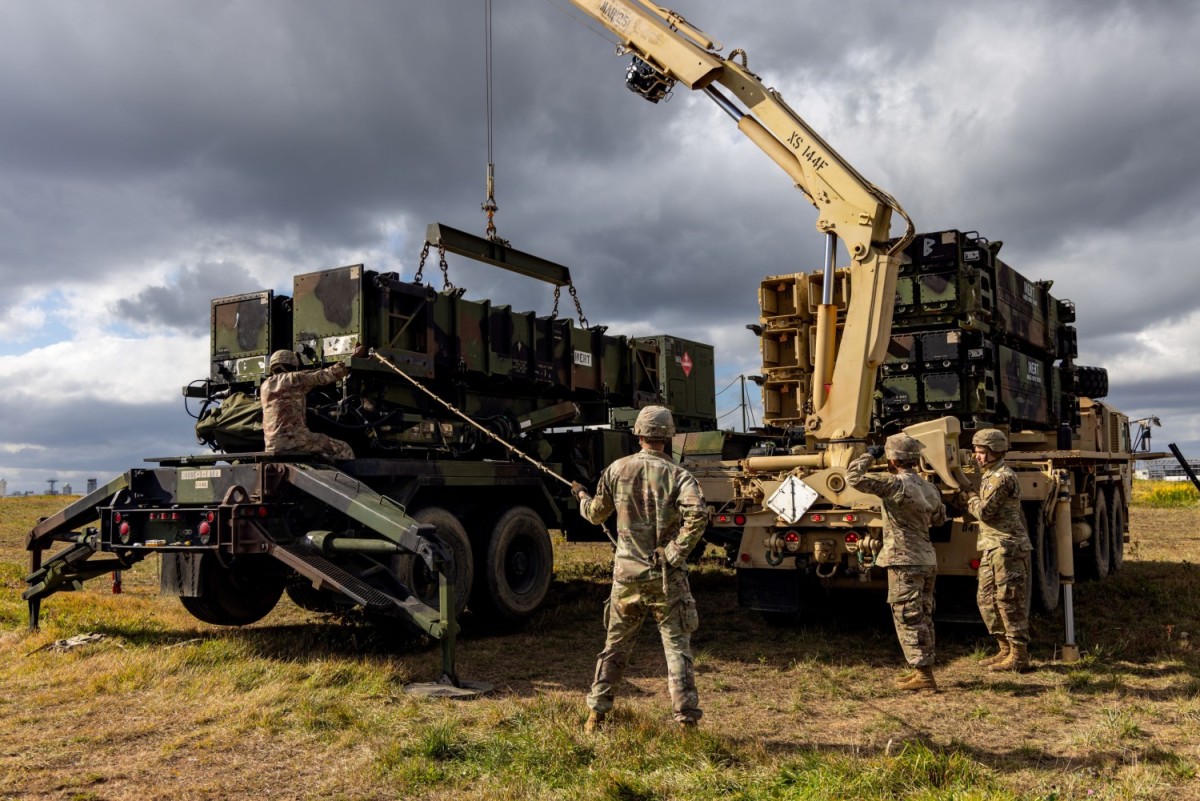
How Did Sky Map End Up at Prince Sultan Air Base?
Sky Map is Ukraine’s AI-integrated command-and-control platform. It fuses data from more than 10,000 passive acoustic and radio-frequency sensors to track targets that conventional radar struggles with — low-altitude, low-speed loitering munitions flying below the detection floor of systems designed to find ballistic missiles. The platform was developed under combat conditions against Russian-launched Iranian drones over Ukrainian cities and was refined through thousands of real intercept engagements before it was offered to the Gulf.
By late April 2026, Sky Map was operational at Prince Sultan Air Base, south of Riyadh. Ukrainian officers were on-site training both American and Saudi personnel. Al Jazeera reported on May 4 that Sky Map at PSAB operates alongside Northrop Grumman’s FAAD (Forward Area Air Defense) tracking software and RTX Coyote interceptors — a hybrid sensor-fusion architecture that merges Ukrainian battlefield AI with American hardware in a single integrated air picture.
The significance is not the technology alone. It is who controls the data layer. Sky Map’s sensor network generates the track picture that determines which threats get engaged and by which system. In a five-layer defense architecture, the platform that decides what constitutes a UAV target versus a ballistic target — and routes the engagement accordingly — holds structural authority over the entire intercept chain. That platform is now Ukrainian.
Washington Said No. Then Washington Said Yes.
Axios reported on March 10, 2026, that the United States had dismissed Ukraine’s offer of anti-Iran drone technology the previous year. The Trump administration’s position, as stated publicly, was that Ukrainian assistance “wasn’t needed.” The Euromaidanpress timeline is specific: the Pentagon deployed Sky Map at Prince Sultan Air Base less than one month after that dismissal.
The reversal was not announced. There was no press conference, no DSCA notification, no congressional briefing that entered the public record. Sky Map appeared at PSAB as operational fact. The gap between political rhetoric and operational reality — between a president saying Ukrainian help was unnecessary and his own military installing Ukrainian software at a Saudi air base hosting American forces — is the kind of contradiction that typically gets papered over in classification. In this case, Euromaidanpress, Al Jazeera, and Defense Express documented it in open source.
The Jamestown Foundation framed it as Ukraine “positioning itself as a valuable military partner by leveraging its combat-proven experience in air defense and counter-drone operations” — language that could apply to any emerging defense exporter, except that this one is simultaneously fighting the country that manufactures the drones being intercepted.
The Barter Structure Nobody Is Calling a Barter
Zelenskyy was explicit about what Ukraine expected in return. “Some [agreements] concern interceptors, some concern finance, oil, and diesel,” he told UNN. He separately confirmed that one unnamed Gulf partner had committed “a year’s supply of diesel.” Crude oil routed to European refineries is part of the package. And Kyiv’s ultimate objective — PAC-3 interceptors transferred from Gulf state inventories to Ukraine’s own Patriot batteries — sits behind the entire deal architecture as the unspoken ask.
“We are ready to help Middle East countries with our expertise and with our knowledge, and we hope that they can help with anti-ballistic missiles.”
Volodymyr Zelenskyy, March 27, 2026 — Defense News
“We hope that they can help with anti-ballistic missiles” is a diplomatic sentence that means: we want your PAC-3 rounds. The structural logic is circular and self-reinforcing. Ukraine provides cheap drone-intercept capability that allows Gulf states to conserve their PAC-3 stockpiles. Those conserved stockpiles become the pool from which Ukraine hopes to draw Patriot interceptors for its own war. The more effective Ukrainian drones are at protecting Saudi Arabia, the more plausible it becomes for Riyadh to release rounds to Kyiv.
Defense News headlined the dynamic directly: “Ukraine offers Gulf allies drone defense in bid for scarce Patriot missiles.” Fortune tracked the same logic: “Ukraine looks to leverage its help to Gulf states fighting Iran drones in exchange for interceptors.” Neither outlet noted the second-order effect — that every Ukrainian interceptor drone that destroys a Shahed over Saudi Arabia is simultaneously an argument for why Riyadh can afford to ship a PAC-3 round to Kyiv.
Ukraine was the world’s fourth-largest arms exporter in 2012, before the Donbas war collapsed its defense-industrial base. The full export ban imposed in February 2022 froze that capacity entirely. The September 2025 partial lift — permitting controlled exports of surplus production — made the Gulf deals legally possible. SIPRI’s 2025 assessment documented Ukraine’s structural shift from import-dependent to export-capable in the drone category, a transformation driven entirely by the war Russia started.

Why Has Iran Said Nothing About 228 Ukrainian Specialists in the Gulf?
Open-source searches of Tasnim, Fars, IRNA, and PressTV reveal no specific condemnation of the 228-specialist deployment or the 10-year defense cooperation agreements by name. This absence is telling because Iran’s state media apparatus has demonstrated no restraint in condemning far less consequential Western military activities in the Gulf.
The reason for the silence is structural. Iran exports Shahed drones to Russia for use against Ukrainian cities. Ukraine exports Shahed-intercept technology to the Gulf for use against Iranian drones targeting Saudi Arabia. For Tehran to publicly condemn Kyiv’s Gulf deployment would require acknowledging the supply chain that made it necessary — and that supply chain begins in Iranian factories. The CFR framed this as “The Iran Conflict Is Becoming a Russia-Ukraine Proxy War.” The Middle East Forum captured the Saudi perspective more bluntly: “Iran’s Shahed Drones Force Riyadh to Ditch Russia for Ukraine.”
Tasnim did report on May 4 that the Iranian Navy had “blocked entry of hostile destroyers into the Strait of Hormuz” — the same rhetorical framework under which Ukrainian military personnel embedded at Saudi bases would, in Iranian legal framing, constitute hostile foreign military presence in a theater of active operations. But the 228 specialists went unmentioned. The World Socialist Web Site, which tracks Iranian state media’s preferred narratives, headlined: “Ukraine announces military deals with UAE, Saudi Arabia for war on Iran.” Tehran itself declined to echo the framing.
The IRGC’s operational posture in the Strait and its drone campaigns against Gulf infrastructure have continued without rhetorical adjustment for the Ukrainian presence. Whether this reflects a calculated decision to avoid drawing attention to the Shahed-Russia pipeline, or genuine analytical uncertainty about how to frame the deployment, the effect is the same: 228 Ukrainian specialists are operating inside the air-defense networks of Iran’s primary regional adversary with no public cost from Tehran.
Who Controls Saudi Airspace Now?
Before February 28, the answer was straightforward: CENTCOM and the Royal Saudi Air Defense Forces operated a joint architecture built almost entirely on American hardware, American software, and American-trained operators. The five-layer stack — THAAD, PAC-3, KM-SAM, laser, Skyguard — ran on American sensor feeds, American battle management systems, and American logistics chains. Interoperability with the South Korean KM-SAM was the one notable exception, and even that system was integrated through US-standard Link 16 data links.
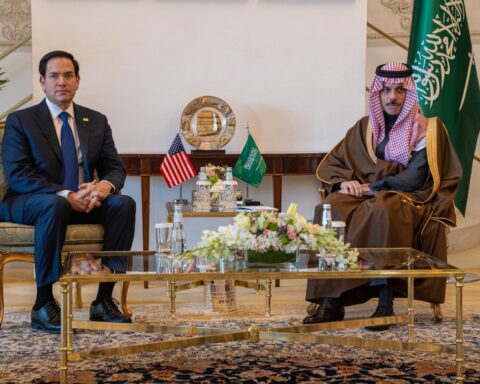
That architecture is no longer exclusively bilateral. The Sky Map deployment at Prince Sultan Air Base means Ukrainian software is now generating track data that feeds into American engagement platforms. Ukrainian operators are training Saudi and American personnel on a C2 system that neither Washington nor Riyadh developed. The Sting and Octopus interceptors operate outside the American logistics chain entirely — their supply, maintenance, and tactical doctrine are Ukrainian. Rubio’s $8.6 billion emergency arms package, which skipped Saudi Arabia, confirmed that Washington’s resupply priorities did not place the kingdom at the front of the queue.
The Jamestown Foundation’s assessment that the 10-year framework “will open a path for technological cooperation, joint defense projects, and military production” points toward something more durable than a wartime expedient. MBS has been building toward procurement diversification for years — the South Korean KM-SAM, the Turkish Bayraktar TB2s, and now Ukrainian counter-drone systems all serve the same structural purpose. Each non-American layer in the defense stack reduces the hold that any single supplier maintains over the kingdom’s security. The PIF’s $912 billion in assets under management means Riyadh can fund this diversification at scale.
For Washington, the implication is specific. The United States retains exclusive control over the upper tiers — THAAD and PAC-3 — because no alternative supplier manufactures systems at those capability levels. But the lower tiers, where the volume of engagements is highest and the ammunition consumption most acute, are now a multi-vendor environment. The Camden production bottleneck did not just create a gap in Saudi Arabia’s magazines. It created a gap in American influence over the kingdom’s defense architecture that Kyiv walked into with 228 specialists and a quad-copter that costs less than a round of ammunition for the weapon system it is designed to protect.
Nineteen Days to Arafah
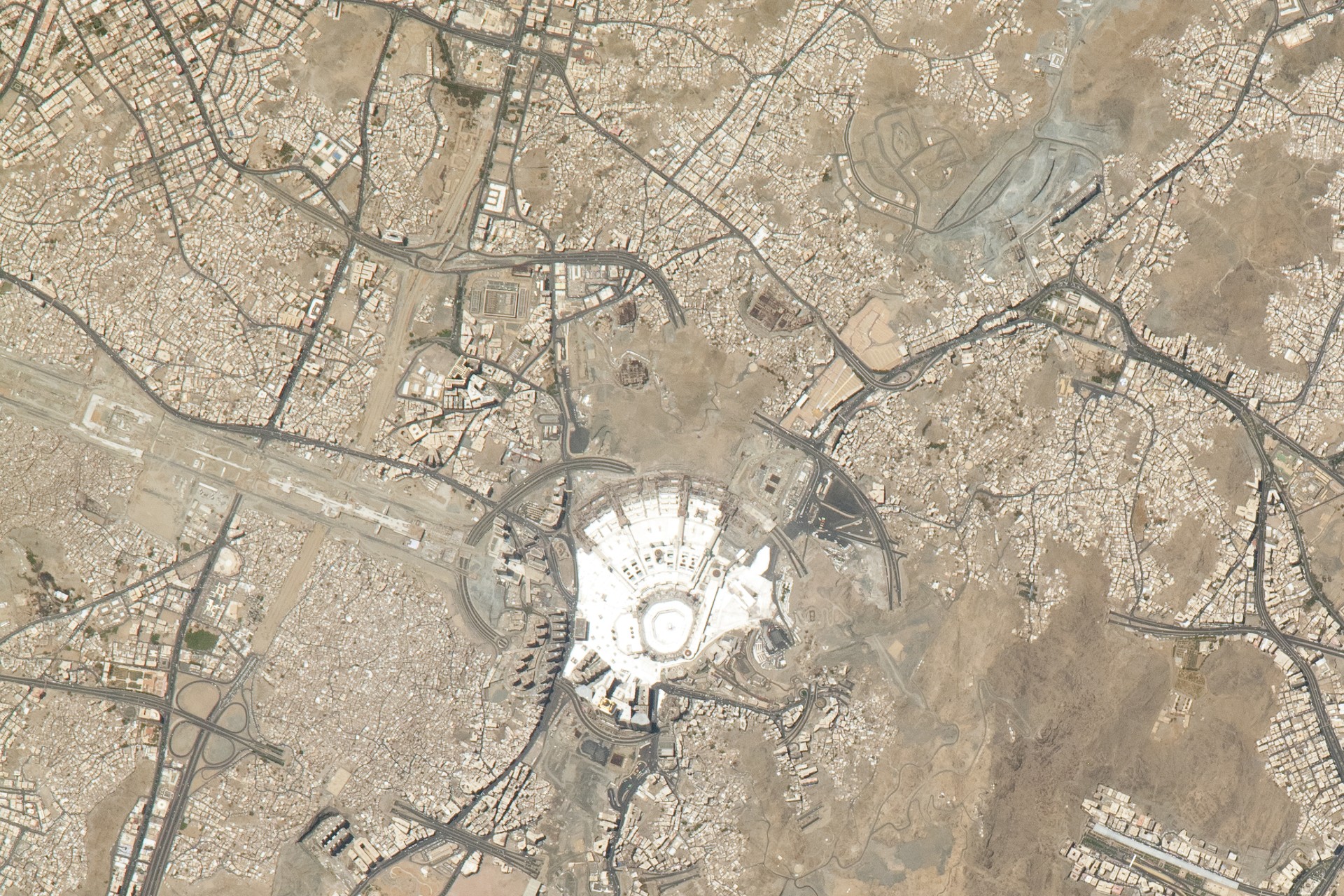
The Day of Arafah falls on May 26. Between 1.2 and 1.5 million pilgrims will be concentrated in Makkah and its surrounding ritual sites. The Saudi Ministry of Defense published launcher photographs during the pre-Hajj period but withheld interceptor inventory data — a disclosure pattern consistent with a government that wants to project capability without quantifying what remains. The OSAC advisory that the State Department issued for Hajj 2026 was America’s first-ever security warning for the pilgrimage, and its issuance tracked directly to the PAC-3 depletion numbers that Washington’s own defense-industrial base cannot remedy before the pilgrims arrive.
That five-layer architecture was built for a threat environment in which ballistic missiles were the primary concern and UAVs were a secondary nuisance. The Iran war inverted that hierarchy. Of the 894 confirmed intercepts through April 7, 799 were UAVs. The threat is mass, not precision — saturating the lower layers to exhaust the inventory that protects against the upper-tier weapons that could reach Makkah.
Ukrainian systems now occupy a new tier in that architecture. Below the Skyguard point-defense layer, the Sting and Octopus interceptors provide a high-volume, low-cost engagement capability against exactly the Shahed-class threats that consumed the majority of Saudi ammunition during the war’s first five weeks. Sky Map’s sensor fusion provides the detection layer that routes targets to the appropriate engagement tier. For the Hajj period, this means the 400 remaining PAC-3 rounds can be held in reserve for ballistic threats while Ukrainian systems absorb the drone volume that would otherwise force Saudi operators to choose between engaging a $50,000 drone with a $4 million missile or accepting the risk of a leak-through.
| Defense Layer | System | Primary Target | Unit Cost per Intercept |
|---|---|---|---|
| Upper tier | THAAD | Ballistic missiles (exo-atmospheric) | ~$12M |
| Upper-mid tier | PAC-3 MSE | Ballistic/cruise missiles | $4M–$13.5M |
| Mid tier | KM-SAM (Cheongung II) | Aircraft, cruise missiles | ~$2M–$3M |
| Lower tier | Directed-energy / Skyguard | Rockets, UAVs, mortars | Negligible per shot |
| Counter-UAS tier (new) | Ukrainian Sting / Octopus | Loitering munitions, Shahed-class UAVs | $1,000–$2,500 |
| C2 / sensor layer | Sky Map + FAAD | Track fusion, target routing | N/A (platform cost) |
The question for the Hajj window is not whether Saudi Arabia can defend Makkah. It is whether the intercept architecture can sustain a multi-day saturation campaign without burning through the PAC-3 reserve that constitutes the kingdom’s only defense against the threats that Ukrainian drones cannot reach. Zelenskyy’s specialists have given Riyadh a partial answer. Whether it is sufficient depends on decisions being made in Tehran — and in the IRGC command structure that has operated without a named Navy commander since Tangsiri’s death on March 30.
FAQ
What specific Ukrainian drone systems are deployed in Saudi Arabia?
Two primary interceptor platforms are confirmed in the Gulf deployment. The Wild Hornets Sting is a quadcopter (30–45 cm) with thermal imaging and an explosive-payload dome, capable of 342 km/h at altitudes up to 3,000 meters. The Octopus 100, manufactured in the United Kingdom, operates at 300+ km/h with a 30-kilometer combat radius and 4.5-kilometer ceiling. Additional systems referenced in Ukrainian defense reporting include the JEDI and P1-SUN platforms, though their Gulf deployment status has not been independently confirmed. All systems are designed for kinetic drone-on-drone interception rather than electronic warfare or soft-kill approaches.
Has any Gulf state transferred PAC-3 interceptors to Ukraine?
No confirmed transfer has been reported as of May 7, 2026. Zelenskyy’s public statements frame the exchange as aspirational — “we hope that they can help with anti-ballistic missiles” — suggesting negotiations are ongoing rather than concluded. The structural obstacle is that Gulf states face their own PAC-3 shortages. Saudi Arabia’s estimated 400 remaining rounds are needed for Hajj defense, and the UAE has drawn down its own stocks during sustained Iranian strikes. Any transfer would require either replacement commitments from the United States or a calculation that Ukrainian counter-drone systems have reduced PAC-3 consumption enough to create a transferable surplus — a calculation that becomes more plausible the longer the Ukrainian systems prove effective.
How does Sky Map differ from existing US air-defense radar?
Sky Map is not a radar system. It integrates data from over 10,000 passive acoustic and radio-frequency sensors — a detection methodology optimized for targets that fly below conventional radar floors. Standard military radar, including the AN/MPQ-65 that supports Patriot batteries, was designed to track fast, high-altitude ballistic objects. Shahed-class loitering munitions fly low, slow, and with minimal radar cross-sections. Sky Map’s AI-driven fusion engine creates a composite track picture from distributed passive sensors, filling the detection gap that allowed early Shahed waves to penetrate Saudi airspace before being engaged. At PSAB, it feeds into Northrop Grumman’s FAAD system, which then routes engagement commands to RTX Coyote interceptors and, presumably, to Ukrainian drone operators managing Sting and Octopus assets.
What did Ukraine export before the September 2025 arms ban lift?
Nothing, legally. The comprehensive arms export ban imposed in February 2022 — at the start of Russia’s full-scale invasion — prohibited all Ukrainian weapons exports to ensure domestic production was reserved entirely for the front. At its 2012 peak, Ukraine was the world’s fourth-largest arms exporter, with a defense-industrial base inherited from the Soviet Union that produced tanks (Kharkiv Morozov), transport aircraft (Antonov), gas turbine engines (Zorya-Mashproekt), and guided missiles (Luch Design Bureau). The September 2025 partial lift permits controlled exports of surplus production in categories where domestic capacity exceeds frontline demand — primarily drones and electronic warfare systems. The Gulf deals are the first major commercial application, and 11 additional countries have expressed interest.
Could Iran target the Ukrainian specialists directly?
Iran has not publicly acknowledged the presence of Ukrainian personnel in the Gulf, which would be a diplomatic prerequisite to threatening them specifically. The specialists are embedded within Saudi and US military facilities — Prince Sultan Air Base among them — that are already protected under the existing air-defense umbrella and fall under the legal framework of bilateral defense agreements. Targeting foreign military advisors inside a host nation’s military installations would constitute a direct attack on that nation’s sovereignty, a threshold Iran has approached with strikes on Saudi infrastructure but has not crossed with deliberate targeting of foreign personnel. The more relevant risk is indirect: a Shahed or ballistic missile aimed at a Saudi air-defense battery could strike Ukrainian operators without Tehran needing to acknowledge they were there. The interceptor deficit that creates that exposure — 400 PAC-3 MSE rounds, zero replenishment before mid-2027, and five salvo thresholds separating current inventory from exhaustion — is mapped in full in Eighteen Salvos From Empty: The PAC-3 Arithmetic Hanging Over Hajj 2026.