
RIYADH — The Iran war’s most devastating consequences are unfolding not in the Gulf but in cities most Western policymakers could not locate on a map. Bangladesh has three weeks of oil reserves remaining. Sri Lanka has imposed fuel rationing stricter than anything seen during its 2022 economic collapse. Pakistan has shuttered schools and shifted government workers to a four-day week. The Philippines, which imports 95 per cent of its petroleum from the Middle East, has watched pump prices breach 100 pesos per litre for the first time in history. Across sub-Saharan Africa, refineries from Mombasa to Durban have gone dark. The International Energy Agency has described the disruption as “the greatest global energy and food security challenge in history” — a distinction previously held by the 1973 Arab oil embargo, which looks modest by comparison. The Strait of Hormuz closure — now compounded by Iran’s demand for $2 million per ship in transit fees — has removed approximately 20 per cent of the world’s daily oil supply from the market. The IEA’s record 400-million-barrel strategic reserve release covers barely twenty days of typical Hormuz flows. And the countries with the thinnest margins — the ones least able to absorb the shock — are the ones being hit hardest.
Table of Contents
- How Did the Strait of Hormuz Closure Devastate the Global South?
- Which Countries Face the Most Severe Energy Shortages?
- The South Asian Emergency
- Why Did the IEA’s Record Oil Release Fail to Help the Poorest Countries?
- Africa’s Fuel Price Shock
- Can Southeast Asia Survive Without Gulf Oil?
- The Energy Vulnerability Index
- The Fertilizer Timebomb Nobody Is Discussing
- How Is India Navigating the Hormuz Blockade?
- The Dangerous Asymmetry of Global Energy Security
- What Does This Crisis Mean for Saudi Arabia?
- Frequently Asked Questions
How Did the Strait of Hormuz Closure Devastate the Global South?
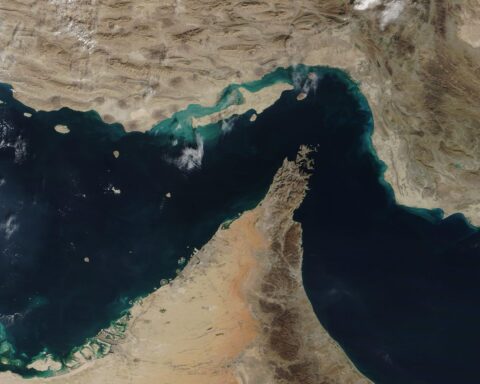
The Strait of Hormuz closure, triggered by Iran’s Islamic Revolutionary Guard Corps on 4 March 2026 in retaliation for US-Israeli strikes that killed Supreme Leader Ali Khamenei, removed roughly 20 million barrels per day of oil and significant volumes of liquefied natural gas from global markets. The disruption is the largest in the history of the global oil market, according to analyses by Rapidan Energy Group and Wood Mackenzie. Within seventy-two hours, Brent crude surged past $120 per barrel, QatarEnergy declared force majeure at Ras Laffan — the world’s largest LNG liquefaction facility — and every shipping insurer in London repriced war risk for the entire Persian Gulf. The dependency reversal that the war triggered extends to fertilizer supply, where Gulf producers control inputs that sustain agriculture across three continents.
Wealthy nations absorbed the initial shock through strategic petroleum reserves and diversified supply chains. The United States, sitting on 372 million barrels in the Strategic Petroleum Reserve and producing 13.2 million barrels per day domestically, barely felt the disruption at the consumer level. Japan and South Korea, though heavily dependent on Gulf imports, activated emergency reserves covering 200 and 90 days respectively. European nations, which had already accelerated their shift away from Russian energy after 2022, had reduced Gulf dependence to approximately 15 per cent of total crude imports.
The developing world had none of these buffers. UN estimates published on 18 March indicated oil prices had risen approximately 45 per cent and gas prices 55 per cent since late February, with fertilizer prices climbing 35 per cent. The UN Economic and Social Commission for Asia and the Pacific warned that growth across developing Asia-Pacific economies could slow to 4.0 per cent in 2026, down from 4.6 per cent in 2025 — a deceleration that translates into millions of jobs lost and poverty reduction gains reversed. Djibouti’s finance minister captured the reality succinctly: the conflict would “bring severe economic consequences for developing countries” that had no voice in starting the war and no capacity to stop it.
The fourth great oil shock differs fundamentally from its predecessors. The 1973 embargo was a political weapon wielded by oil producers. The 1979 Iranian Revolution disrupted one country’s output. The 1990 Gulf War threatened supply but was resolved within months. The 2026 Hormuz closure is a physical blockade of the world’s most critical maritime chokepoint, compounded by an active military conflict that shows no sign of resolution.
Which Countries Face the Most Severe Energy Shortages?
The countries facing the most severe energy shortages are those with high Gulf import dependency, minimal strategic reserves, limited fiscal buffers, and no domestic production to fall back on. Bangladesh, Sri Lanka, Pakistan, the Philippines, and Vietnam sit at the top of this list, with several sub-Saharan African nations — Kenya, Ghana, Senegal, Tanzania, and Rwanda — close behind. These countries import between 85 and 99 per cent of their petroleum products, hold strategic reserves measured in days rather than months, and lack the foreign exchange reserves to outbid wealthier nations for scarce alternative supply.
The Middle East briefing 3,000+ readers start their day with.
One email. Every weekday morning. Free.
A diplomatic cable cited by Newsmax on 23 March warned that both Vietnam and Bangladesh could run out of oil entirely within three weeks if the Hormuz blockade persists at current levels. The cable, attributed to a senior ASEAN diplomat, described the situation as “the most acute energy emergency since the Second World War” for nations outside the OECD club.
| Country | Gulf Import Dependency | Strategic Reserve (Days) | Emergency Measures Imposed | Risk Level |
|---|---|---|---|---|
| Bangladesh | 95% of fuel imports | 21 | Daily fuel purchase limits, universities closed early | Critical |
| Sri Lanka | ~90% of petroleum | 14 | Fuel rationing (5L motorcycles, 15L cars), 4-day school week | Critical |
| Pakistan | 99% of LNG from Qatar/UAE | 18 | 4-day work week, school closures, work-from-home | Critical |
| Philippines | 95-98% from Middle East | 30 | Fuel prices past ₱100/litre, transport subsidies activated | Severe |
| Vietnam | ~70% from Gulf | 21 | Industrial rationing, export restrictions on refined products | Severe |
| Kenya | ~85% from UAE/Gulf | 12 | Emergency procurement from Dangote refinery (Nigeria) | Severe |
| Ghana | ~80% imported | 10 | Fuel subsidies reinstated, current account crisis | Severe |
| India | 60% from Gulf (pre-war) | 9.5 (strategic only) | Gas Control Order, diversified to 70% non-Hormuz sourcing | High |
The South Asian Emergency
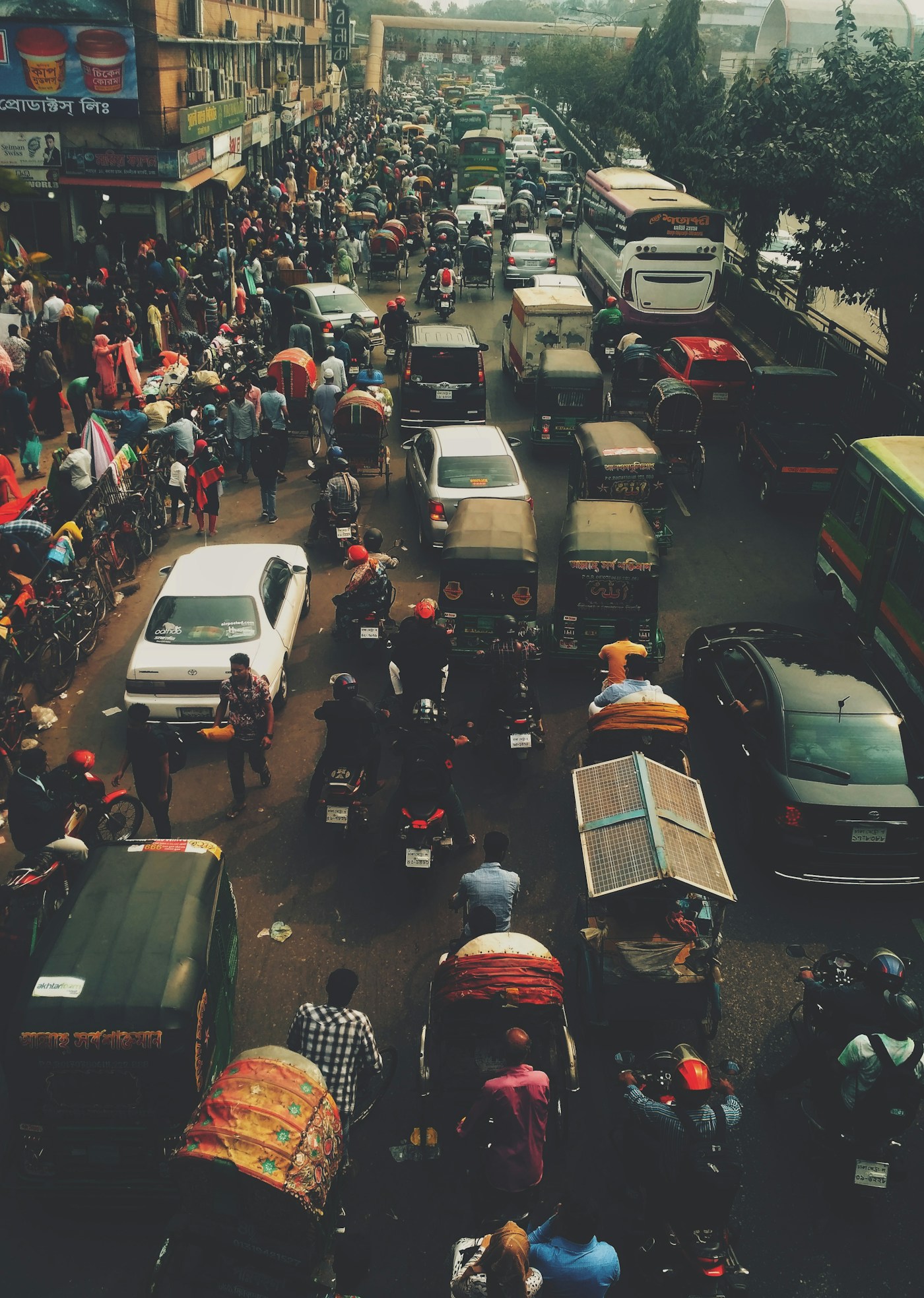
South Asia is the epicentre of the developing world’s energy crisis, and the region’s three most vulnerable economies — Bangladesh, Sri Lanka, and Pakistan — illustrate distinct failure modes of energy insecurity. Each entered the Hormuz crisis with different structural weaknesses; each is now discovering that those weaknesses are all fatal in their own way.
Bangladesh: Twenty-One Days From Darkness
Bangladesh imports 95 per cent of its fuel oil and has no meaningful domestic hydrocarbon production. The country’s total strategic reserves, even when combined with commercial stocks at depots and refineries across the country, cover approximately three weeks of normal consumption. Consumption has not been normal since the war began. The government imposed daily fuel purchase limits within the first week of the Hormuz closure and ordered universities to close early, sending millions of students home to reduce transport fuel demand. The Diplomat reported on 19 March that South Asia’s entire LNG strategy “was built for the last crisis — not this one,” noting that Bangladesh’s long-term supply contracts with QatarEnergy became worthless the moment Ras Laffan declared force majeure.
The garment sector, which generates 84 per cent of Bangladesh’s export earnings and employs roughly four million workers, is especially exposed. Textile factories depend on reliable gas-fired power generation and diesel-powered logistics. Factory owners in Chittagong and Dhaka have reported rolling blackouts of eight to fourteen hours per day, according to the Bangladesh Garment Manufacturers and Exporters Association. International buyers, including H&M and Primark, have begun diverting orders to Vietnam and India — both of which face their own energy constraints, creating a cascading supply chain disruption with no obvious winner.
Sri Lanka: The Trauma of Repetition
Sri Lanka’s 2022 economic collapse, triggered partly by fuel shortages, scarred the national consciousness. The government of President Anura Kumara Dissanayake responded to the Hormuz closure with immediate rationing: motorcycles limited to five litres per week, cars to fifteen litres, and buses to sixty litres. Schools shifted to a four-day week. Public sector operations were scaled back. Petroleum accounts for approximately a quarter of Sri Lanka’s total imports, and the country was still rebuilding its foreign exchange reserves after the 2022 crisis when the war struck.
The echoes of 2022 are everywhere. Queues have returned to petrol stations in Colombo. The rupee, which had stabilised above expectations after a painful IMF restructuring programme, has come under renewed pressure. Tourism, which had recovered to 75 per cent of pre-collapse levels, has cratered again as regional airspace disruptions and insurance costs make South Asian travel prohibitively expensive. The cruel irony is that Sri Lanka did everything the international community asked — restructured its debt, reformed its energy subsidies, diversified its trade partners — and finds itself back in crisis because of a war fought four thousand kilometres away.
Pakistan: Ninety-Nine Per Cent Dependent and Out of Options
Pakistan’s vulnerability is starkly quantified: Qatar and the United Arab Emirates supply 99 per cent of the country’s LNG imports. When QatarEnergy declared force majeure at Ras Laffan, Pakistan’s gas supply effectively ceased. The government imposed a four-day work week for public sector employees, closed schools, and instructed private companies to implement work-from-home policies. Fuel and grocery prices surged overnight, and long queues formed at petrol stations across Punjab and Sindh.
Pakistan issued a Natural Gas Control Order on 9 March under the Essential Commodities Act, prioritising domestic household supply and CNG vehicles while cutting industrial users and even critical sectors like fertilizer production and petrochemicals. The decision to reduce fertilizer feedstock during the spring planting season will have consequences that extend well beyond the current crisis. Pakistan’s wheat harvest, which feeds 230 million people, depends on timely fertilizer application. Every week of gas curtailment to fertilizer plants reduces the October harvest by measurable percentages.
Why Did the IEA’s Record Oil Release Fail to Help the Poorest Countries?
On 11 March, the thirty-two member countries of the International Energy Agency agreed to release 400 million barrels from strategic reserves — the largest coordinated draw in the agency’s fifty-year history. IEA Executive Director Fatih Birol called it “an unprecedented collective response to an unprecedented disruption.” Oil prices fell 6 per cent on the announcement. Within seventy-two hours, they had recovered and surpassed their pre-release levels. The release failed for three structural reasons, each of which disproportionately penalises developing nations.
The arithmetic alone is damning. Global oil consumption in 2026 runs at 105.17 million barrels per day. The 400-million-barrel release represents barely four days of total global consumption. Measured against the roughly 20 million barrels per day that normally transit the Strait of Hormuz, the released oil covers approximately twenty days of disrupted supply. Analysts at Rapidan Energy Group called it “a stop-gap measure that calms markets for a week and solves nothing.”
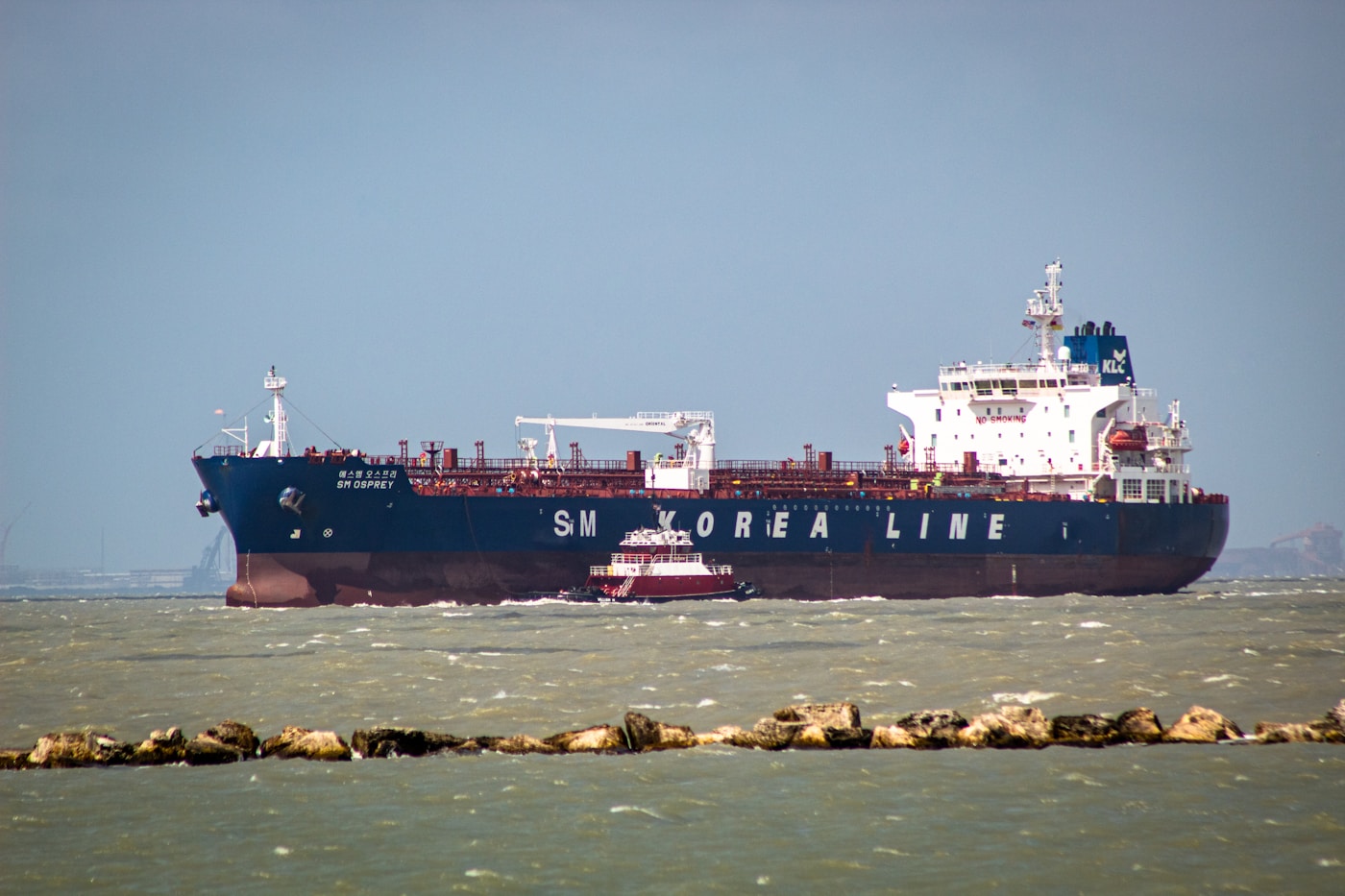
The geographic mismatch is the first structural problem. IEA strategic reserves are located overwhelmingly in the United States, Europe, Japan, and South Korea — stored in inland facilities that require time, port infrastructure, and available tanker capacity to reach the markets most affected by the shortage. Moving American crude from salt caverns in Louisiana to a port terminal in Chittagong, Bangladesh takes three to four weeks under normal conditions. Under current conditions, with war-risk insurance premiums making Gulf transit routes prohibitively expensive and alternative routes through the Cape of Good Hope adding two to three weeks to voyage times, the logistical chain stretches even longer.
The pricing mechanism is the second problem. Released reserves enter the market at prevailing prices. Wealthy importing nations with strong currencies, established trading relationships, and substantial credit facilities can acquire cargoes first. Poorer importers, often forced to buy on spot markets because they lack the creditworthiness for long-term supply contracts, compete for the same barrels at the same inflated prices. Bangladesh does not outbid Japan in a tight market.
The third problem is one of coverage. The IEA’s membership comprises the world’s wealthiest economies. Bangladesh, Sri Lanka, Pakistan, Kenya, Ghana, and the Philippines are not IEA members. They have no claim on the released reserves. The system designed in 1974 to protect the industrialised world from oil shocks was never intended to protect the world’s poorest billion from energy deprivation — and in 2026, that design flaw has become a humanitarian emergency. A full accounting of the Iran war’s economic cost after 26 days puts the global toll between $590 billion and $3.5 trillion — with the heaviest burden falling on nations that had no say in starting it.
Africa’s Fuel Price Shock
The Iran war’s energy shock has hit Africa through three simultaneous channels: higher crude prices, disrupted shipping routes, and collapsed refining capacity. The combination is producing what Bloomberg’s Africa correspondent described as a crisis where “governments are running out of options.”
Nigeria offers the most paradoxical case. As Africa’s largest oil producer, Nigeria theoretically benefits from elevated crude prices. In practice, the country’s fuel market tells a different story. The Dangote refinery, which was supposed to end Nigeria’s decades-long dependence on refined fuel imports, has been forced to raise petrol prices from ₦774 per litre in early March to ₦1,245 per litre by 21 March — a 61 per cent increase in three weeks. The refinery’s crude feedstock costs have surged alongside global benchmarks, and the naira’s continued weakness against the dollar magnifies every price movement. For the 40 per cent of Nigerians living below the poverty line, the latest price hike amounts to a food-or-fuel decision.
Kenya imports most of its oil from the United Arab Emirates, whose own Fujairah export terminal sustained Iranian drone strikes in mid-March. New stock arrivals, rerouted through longer and more expensive shipping lanes, are arriving at prices the Kenyan treasury cannot subsidise without destabilising the fiscal framework it rebuilt under IMF supervision. The Kenyan government has formally contacted Nigeria’s Dangote refinery as an alternative source — a development unthinkable six months ago and a sign of how thoroughly the war has rearranged African energy geography.
South Africa faces what energy analysts at Wits University called the “highest fuel price increase ever to be implemented in a single month,” scheduled for 1 April 2026. The increase, driven entirely by the Iran war’s impact on global crude markets, threatens to “derail the fragile economic recovery envisaged for the country in 2026.” South Africa’s transport sector, which moves goods and workers across vast distances, is acutely sensitive to fuel prices. Every rand increase at the pump cascades through the economy in higher food costs, higher commuting costs, and lower consumer spending.
Across the continent, the picture is uniform in its grimness. Importers such as Ghana, Senegal, Tanzania, and Rwanda face higher fuel and freight costs, widening current account deficits, and mounting pressure on foreign exchange reserves. Scores of refineries — many already operating below capacity due to maintenance backlogs and investment shortfalls — have shut entirely as feedstock costs exceed what their domestic markets can bear. The African Energy Chamber estimates the crisis has erased three to five years of energy access gains across the continent.
Can Southeast Asia Survive Without Gulf Oil?
Southeast Asia’s position is particularly precarious because the region’s economic miracle of the past two decades was built on cheap, reliable energy imports flowing through the Strait of Hormuz. The region’s major economies — the Philippines, Thailand, Vietnam, and Indonesia — consume far more energy than they produce, and the Gulf has been the primary supplier. The war has severed that supply line without warning and without a ready alternative.
The Philippines is the region’s most exposed economy. The country imports 95 to 98 per cent of its oil from the Middle East, and the Hormuz closure has driven domestic fuel prices past ₱100 per litre — a level that, according to Filipino energy analysts cited by Rappler, forces millions of jeepney drivers, fishermen, and smallholder farmers to choose between operating their livelihoods and feeding their families. The Philippine Information Agency noted that the Hormuz closure “affects our oil prices directly and immediately,” with virtually no buffer between global market movements and prices at the pump. On 24 March, Manila became the first country to formally respond by declaring a national energy emergency, ordering a four-day government work week and creating a cabinet-level crisis committee.
Thailand, according to MUFG Research, is among the most vulnerable Asian economies to higher oil prices due to its high import dependence and the oil intensity of its manufacturing and tourism sectors. Vietnamese manufacturers, who had been steadily absorbing production capacity displaced from China, are now rationing industrial energy use and restricting exports of refined petroleum products. The Vietnam Petroleum Association warned that the country’s remaining stocks could be exhausted in approximately three weeks — the same timeline facing Bangladesh.
The Council on Foreign Relations published an analysis on 20 March titled “The Iran War Is Causing Energy Chaos in Asia,” noting that the crisis has exposed “a fundamental asymmetry in global energy security: the countries that consume the most oil per unit of GDP are the countries least equipped to manage a supply shock.” Southeast Asia consumes roughly 6.5 million barrels per day, of which approximately 4 million barrels are imported. The region’s combined strategic reserves, where they exist at all, cover fewer than thirty days.
The Energy Vulnerability Index
The disparity in how countries are experiencing the Hormuz crisis can be measured systematically. Five factors determine a nation’s vulnerability to a Gulf energy supply disruption: the percentage of energy imported from Hormuz transit states; the number of days of strategic reserves; access to alternative supply routes and producers; the fiscal buffer available to absorb price shocks (measured as foreign exchange reserves relative to import costs); and domestic energy production capacity as a percentage of consumption.
Scoring each factor from 1 (most resilient) to 5 (most vulnerable) produces a composite index that tracks closely with the severity of each country’s current crisis. Countries scoring above 20 on the 25-point scale are in immediate danger of energy system collapse. Countries scoring between 15 and 20 face severe disruption. Countries scoring below 10 are weathering the crisis with manageable discomfort.
| Country | Gulf Dependency (1-5) | Reserve Buffer (1-5) | Alternative Access (1-5) | Fiscal Buffer (1-5) | Domestic Production (1-5) | Total Score (/25) | Status |
|---|---|---|---|---|---|---|---|
| Bangladesh | 5 | 4 | 5 | 5 | 4 | 23 | Critical |
| Sri Lanka | 5 | 5 | 4 | 5 | 5 | 24 | Critical |
| Pakistan | 5 | 4 | 4 | 5 | 3 | 21 | Critical |
| Philippines | 5 | 4 | 4 | 4 | 5 | 22 | Critical |
| Vietnam | 4 | 4 | 3 | 3 | 3 | 17 | Severe |
| Kenya | 5 | 5 | 3 | 4 | 5 | 22 | Critical |
| Ghana | 4 | 5 | 3 | 4 | 3 | 19 | Severe |
| South Africa | 3 | 3 | 3 | 3 | 2 | 14 | High |
| India | 3 | 4 | 2 | 2 | 3 | 14 | High |
| Japan | 4 | 1 | 2 | 1 | 5 | 13 | Moderate |
| South Korea | 4 | 2 | 2 | 1 | 5 | 14 | High |
| United States | 1 | 1 | 1 | 1 | 1 | 5 | Low |
The index reveals a stark global divide. The United States, which launched the strikes that precipitated the crisis, scores 5 out of 25 — functionally insulated from the energy consequences of its own war. Bangladesh and Sri Lanka, which had no role in the conflict and derive no strategic benefit from its prosecution, score 23 and 24 respectively. The correlation between vulnerability and culpability runs in precisely the wrong direction.
The index also highlights a critical distinction between Japan and South Korea on one hand and Bangladesh and the Philippines on the other. Both groups are highly dependent on Gulf energy. But Japan’s 200 days of strategic reserves, its $1.2 trillion in foreign exchange reserves, and its access to preferential supply agreements (including Iran’s extraordinary grant of safe passage to Japanese tankers) mean it experiences the crisis as an economic inconvenience rather than an existential threat. Bangladesh has none of these advantages.
The Fertilizer Timebomb Nobody Is Discussing
The global conversation about the Hormuz closure has focused almost exclusively on oil. This is understandable — oil prices are visible, volatile, and politically sensitive. But the disruption that may cause the most human suffering is not the oil shock. It is the fertilizer crisis that is building silently behind it, with consequences that will not be fully felt until the next harvest season.
The Persian Gulf produces approximately 25 per cent of the world’s urea and ammonia, the nitrogen-based fertilizers that underpin global food production. Qatar, the UAE, Saudi Arabia, and Oman operate some of the world’s largest fertilizer plants, all powered by cheap natural gas. When the Hormuz strait closed, these exports ceased alongside oil shipments. The UN estimated on 18 March that global fertilizer prices had already risen 35 per cent — and unlike oil, for which strategic reserves exist, there is no international emergency stockpile of fertilizer.
A detailed accounting of this crisis reveals the full scale of the catastrophe: the food security emergency unfolding across the developing world now threatens to undo a decade of progress in reducing global hunger, with the damage concentrated in precisely the countries that can least afford it.
The timing is catastrophic. March and April are the critical fertilizer application months for the spring planting season across South Asia, Southeast Asia, and sub-Saharan Africa. Rice paddies in Bangladesh and Vietnam, wheat fields in Pakistan and India, and maize plots across East Africa all require nitrogen input during this window. Fertilizer that arrives in June is fertilizer that arrives too late. Pakistan’s decision to curtail gas supply to its own fertilizer plants under the 9 March Emergency Gas Control Order — prioritising household heating over food security — will measurably reduce the October wheat harvest.
The real famine risk begins not during the war but six months after the last missile falls. Oil markets recover in weeks. Planting seasons do not reschedule.
Analysis based on FAO historical data on conflict-driven food insecurity
The Food and Agriculture Organization’s historical data on conflict-driven food insecurity shows a consistent pattern: energy supply disruptions during planting seasons produce harvest failures six to nine months later. The 2022 Russia-Ukraine war demonstrated this chain precisely — grain export blockades and fertilizer shortages in spring 2022 produced a food crisis across East Africa by late 2022 and into 2023. The current disruption is larger in scale and affects a wider range of agricultural inputs.
The countries most dependent on Gulf fertilizer imports overlap almost perfectly with the countries most dependent on Gulf energy imports. Bangladesh, Pakistan, the Philippines, India, and the nations of East Africa all appear on both lists. The compounding effect — energy shortages that simultaneously reduce farmers’ ability to operate machinery, irrigate fields, and transport goods to market, combined with fertilizer shortages that reduce crop yields — creates a multiplier that no single-variable analysis of the Hormuz crisis captures. The recent oil price volatility on ceasefire rumours may provide temporary relief, but fertilizer supply chains require months to rebuild even after shipping routes reopen.
How Is India Navigating the Hormuz Blockade?
India’s response to the Hormuz crisis offers a case study in how a large, moderately wealthy developing nation can partially insulate itself from a supply shock — and a warning about the limits of that insulation. India relied on the Persian Gulf for approximately 60 per cent of its petroleum imports before the war. Within two weeks, the government had reduced that figure to approximately 30 per cent by aggressively diversifying to non-Hormuz suppliers.
The centrepiece of India’s response was a US Treasury emergency waiver, issued on 6 March, authorising the purchase of stranded Russian oil cargoes to stabilise domestic fuel prices. India’s Petroleum Ministry reported that non-Hormuz sourcing had increased to roughly 70 per cent of crude imports by mid-March, up from 55 per cent before the war. Russian crude, transported via the Northern Sea Route and by rail through Central Asia, filled a significant portion of the gap. African producers, particularly Nigeria and Angola, also increased sales to India.
But India’s strategic petroleum reserves tell a less reassuring story. The Strategic Petroleum Reserve Limited holds approximately 3.372 million tonnes of crude, representing about 64 per cent of total storage capacity. This covers just 9.5 days of consumption at India’s current rate of approximately 5.5 million barrels per day. Combined with commercial stocks across all refineries and storage points, total coverage extends to roughly 74 days — adequate for a short disruption, dangerously thin for a protracted one.
The government issued a Natural Gas Control Order on 9 March under the Essential Commodities Act, establishing a priority hierarchy for gas allocation. Domestic cooking gas and CNG vehicle fuel receive full allocations. Industrial users face moderated supply. Fertilizer plants, refineries, and petrochemical facilities — all critical to the economy — face controlled reductions. India’s 1.4 billion people are not going dark in the same way Bangladesh is. But the rationing regime reflects the reality that even a nation with the world’s fifth-largest economy cannot fully escape the consequences of losing access to the Persian Gulf.
India has also deployed naval warships to escort oil tankers through alternative routes, and has been one of the most vocal advocates for an immediate ceasefire at the United Nations Security Council. Prime Minister Modi’s government calculates, correctly, that every additional week of the Hormuz closure erodes India’s fiscal position and threatens the economic growth that is the governing BJP’s primary political asset. The full scale of India’s unfolding energy catastrophe — from the evacuation of 375,000 citizens to a record-low rupee and a gas rationing order that has shut down industrial districts — reveals a crisis far deeper than the diversification statistics suggest.
The Dangerous Asymmetry of Global Energy Security
The Hormuz crisis has exposed a structural flaw in the architecture of global energy security that existed long before the first US missile struck Tehran. The international system built to manage oil supply disruptions — the IEA, strategic petroleum reserves, coordinated release mechanisms, emergency sharing agreements — was designed by and for wealthy nations. Developing countries were never part of the design process and are not part of the solution.
The IEA was founded in 1974 after the Arab oil embargo as a club of major oil-consuming industrialised economies. Its thirty-two members include the United States, Japan, South Korea, and most of Europe. Bangladesh, Sri Lanka, Pakistan, the Philippines, Kenya, Ghana, and every other country at the sharp end of the current crisis are not members. The IEA’s emergency response mechanism — coordinated strategic reserve releases — is available exclusively to member states. Non-members can observe from the sidelines as their wealthier competitors draw down reserves that were never shared.
The asymmetry extends to every dimension of the crisis. Wealthy nations hold strategic reserves measured in months; developing nations hold reserves measured in days. Wealthy nations have diversified supply chains, long-term contracts with producers, and established credit relationships with major trading houses. Developing nations buy on spot markets at whatever price the market dictates. Wealthy nations have the foreign exchange reserves to absorb a 45 per cent price increase for months or years. Developing nations exhaust their reserves in weeks, triggering balance-of-payments crises that cascade into currency collapses, sovereign debt defaults, and social instability.
| Metric | IEA Members (Avg) | Non-Members Most Affected (Avg) |
|---|---|---|
| Strategic petroleum reserves | 90-200 days | 9-30 days |
| FX reserves / monthly imports | 12-18 months | 2-5 months |
| Supply contract diversification | 4-7 major suppliers | 1-2 suppliers |
| Domestic production capacity | 30-100% of consumption | 2-15% of consumption |
| Emergency sharing agreements | Yes (IEA mechanism) | None |
| War-risk insurance access | Full Lloyd’s coverage | Limited or unaffordable |
The consequence of this architecture is that the world’s wealthiest nations can wage or endorse a war in the Persian Gulf while being substantially insulated from its energy consequences, while the world’s poorest nations bear those consequences without any voice in the decisions that produced them. The United States, which initiated the strikes on Iran, is not merely insulated — it is potentially a net beneficiary. American oil and gas producers are selling into a global market where prices have risen 45 per cent, American LNG exporters are diverting cargoes from domestic to international markets at record margins, and the dollar’s status as the global reserve currency means the US pays for its imports in a currency it prints.
The asymmetry extends to the war’s physical toll. Inside Iran itself, the air campaign has destroyed an estimated 82,000 civilian structures in twenty-five days — hospitals, schools, and residential blocks reduced to rubble. The nations now running out of fuel to power their own hospitals are, in effect, subsidising the reconstruction bill for a country whose infrastructure was destroyed by the same coalition whose energy security architecture excludes them.
This asymmetry is not new. But the 2026 crisis has made it visible in a way that previous, smaller disruptions did not. And visibility has consequences. Djibouti’s finance minister was not the only developing-world official to note that the countries suffering most from the war had “no voice in starting it and no capacity to stop it.” That sentiment, repeated in capitals from Dhaka to Nairobi, is reshaping the politics of energy security in ways that will outlast the current conflict.
What Does This Crisis Mean for Saudi Arabia?
Saudi Arabia occupies a unique position in this crisis: simultaneously a victim of Iranian aggression, a beneficiary of elevated oil prices, and the only actor with the infrastructure to partially mitigate the disruption. The kingdom’s activation of the 1,200-kilometre East-West Pipeline, rerouting crude from the Eastern Province to the Red Sea port of Yanbu, has restored approximately half of Saudi export capacity. But Yanbu’s terminal infrastructure limits throughput to roughly 4 million barrels per day, well below Saudi Arabia’s pre-war export levels of approximately 7.5 million barrels per day.
The developing world’s energy emergency creates both strategic opportunities and moral obligations for Riyadh. Crown Prince Mohammed bin Salman has spent a decade positioning Saudi Arabia as a responsible global energy supplier and a bridge between the developing and developed worlds. Vision 2030’s diversification programme was predicated partly on the argument that Saudi Arabia would remain a reliable energy partner even as it built non-oil revenue streams. The current crisis tests that proposition directly.
Several Asian and African governments have approached Riyadh bilaterally for emergency supply agreements, according to diplomatic sources cited by Arab News. India’s accelerated procurement of Saudi crude through the Yanbu route has been the most visible example, but smaller-volume discussions with Bangladesh, Pakistan, and Kenya are reportedly underway. Saudi Arabia’s capacity to divert even marginal volumes to the most desperate importers would carry outsized diplomatic significance — and would reinforce MBS’s positioning as a peacemaker and stabiliser in the post-war order.
The risk for Saudi Arabia is that the Hormuz crisis permanently damages the Gulf’s credibility as a reliable energy supplier. If developing nations conclude that Gulf energy is structurally insecure — exposed to Iranian disruption and dependent on a single maritime chokepoint — they will accelerate diversification away from Gulf producers. That process, already visible in India’s emergency pivot to Russian and African crude, would erode Saudi Arabia’s market share long after the war ends. Energy security is measured in decades, not news cycles, and the damage done by the 2026 crisis to the Gulf’s supplier reputation may prove more consequential than the immediate revenue gains from higher prices.
Frequently Asked Questions
How many countries are affected by the Strait of Hormuz energy crisis?
The Hormuz closure has affected virtually every oil-importing nation, but the most severe impacts are concentrated in approximately thirty to forty developing countries across South Asia, Southeast Asia, and sub-Saharan Africa that depend on Gulf energy imports for 70 to 99 per cent of their petroleum and LNG supply. These nations collectively represent over three billion people, the majority of whom lack access to strategic petroleum reserves or diversified supply chains that would buffer them against a prolonged disruption.
Why can’t developing countries simply buy oil from other producers?
Alternative suppliers exist — the United States, Russia, Nigeria, Angola, Brazil — but developing nations face three barriers to accessing them. Prices have risen 45 per cent globally, straining already tight budgets. Available cargoes are being purchased by wealthier nations with stronger currencies and better credit terms. And shipping routes to alternative suppliers are longer and more expensive, with war-risk insurance premiums making tanker voyages through or near the Gulf region prohibitively costly for smaller importers.
How long can Bangladesh and Vietnam survive without Gulf oil?
A diplomatic cable cited by Newsmax on 23 March warned that both Bangladesh and Vietnam could exhaust remaining oil reserves within approximately three weeks if the Hormuz blockade continues at current levels. Bangladesh imports 95 per cent of its fuel and has imposed daily purchase limits and university closures to conserve supply. Vietnam has imposed industrial rationing and export restrictions on refined products. Both countries are actively seeking emergency supply agreements with non-Gulf producers.
What is the fertilizer impact of the Hormuz closure?
The Persian Gulf produces approximately 25 per cent of global urea and ammonia exports. The Hormuz closure has halted these shipments alongside oil, driving global fertilizer prices up 35 per cent according to UN estimates. Because March and April are the critical application window for spring planting across South and Southeast Asia and East Africa, the disruption threatens to reduce harvest yields six to nine months from now. Unlike oil, there is no international strategic fertilizer reserve, and the planting season cannot be rescheduled.
Is Saudi Arabia helping affected developing countries?
Saudi Arabia has partially restored export capacity through its East-West Pipeline to the Red Sea port of Yanbu, operating at approximately 3.66 million barrels per day. Diplomatic sources indicate several Asian and African governments have approached Riyadh for emergency bilateral supply agreements. India has been the largest beneficiary, increasing purchases of Saudi crude through the Yanbu route. Smaller-volume discussions with Bangladesh, Pakistan, and Kenya are reportedly underway, though details remain confidential.
How does the 2026 energy crisis compare to the 1973 oil embargo?
The 2026 crisis is substantially larger. The 1973 embargo removed approximately 5 million barrels per day from global markets. The Hormuz closure has removed approximately 20 million barrels per day — four times the volume. The IEA has described it as “the greatest global energy and food security challenge in history.” Additionally, the 1973 crisis primarily affected industrialised Western economies. The 2026 crisis disproportionately affects developing nations that were not part of the global economy in 1973 and now depend on the same Gulf energy infrastructure that wealthy nations have had fifty years to diversify away from.