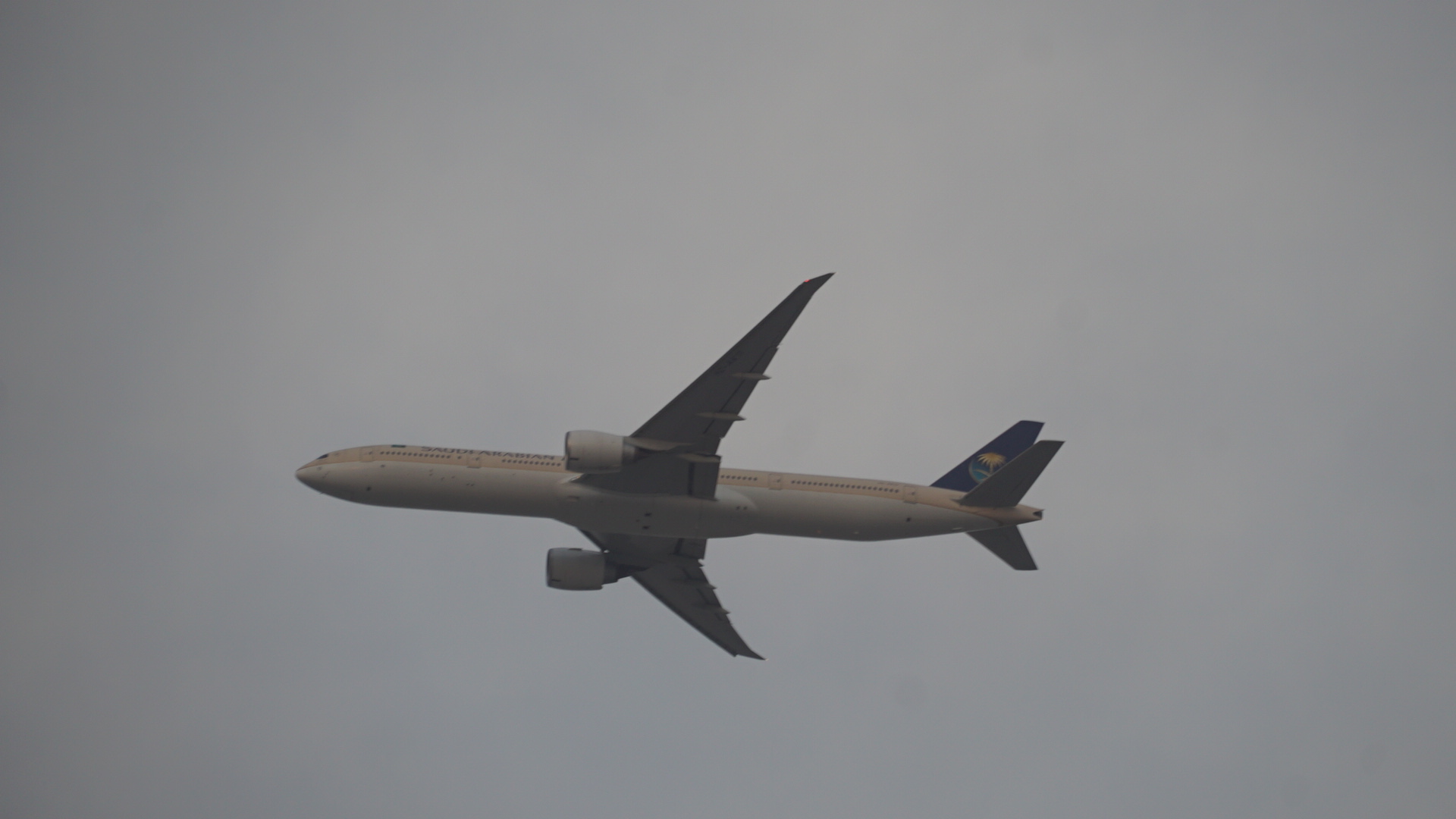

RIYADH — Saudi Arabia’s Ministry of Interior announced on Thursday that all visit, Umrah, transit, and final exit visas expired since February 26 will be extended until April 18 without penalties, offering a lifeline to tens of thousands of foreign nationals stranded across the Kingdom after four weeks of Iranian missile and drone strikes shut down much of the Gulf’s airspace. The measure, which allows travelers to depart through any international port without paying the standard SAR 50,000 overstay fine, represents the most sweeping visa relief package Saudi Arabia has issued since the early months of the Covid-19 pandemic in 2020.
The announcement came as the region’s aviation crisis deepened on day 28 of the war between Iran and a US-Israeli coalition, with more than 27,000 flights cancelled across the Middle East since late February, according to aviation tracking data compiled by OpsGroup. Carriers including Emirates, Qatar Airways, Flydubai, and Lufthansa have suspended or drastically reduced Gulf operations, leaving passengers from more than a dozen countries with no clear path home. The World Travel and Tourism Council estimated that the Middle East tourism sector is hemorrhaging between $550 million and $650 million per day in lost revenue, a figure that puts Saudi Arabia’s Vision 2030 tourism ambitions under severe strain.
Table of Contents
- What Does Saudi Arabia’s Visa Extension Cover?
- How Stranded Visitors Can Apply Through Absher
- The Airspace Crisis That Triggered the Visa Freeze
- Which Airlines Have Suspended Gulf Flights?
- The $600 Million Daily Tourism Collapse
- Can 1.8 Million Hajj Pilgrims Reach Mecca This Year?
- What Relief Are Other Gulf States Offering?
- What Happens After April 18?
- Frequently Asked Questions
What Does Saudi Arabia’s Visa Extension Cover?
Saudi Arabia’s Interior Ministry issued a directive extending the validity of four categories of visas for foreign nationals who were unable to leave the Kingdom due to the regional security situation. The extension runs until April 18, 2026 — corresponding to 1 Dhul Qi’dah 1447 in the Islamic calendar — and applies to all holders of visit visas, Umrah visas, transit visas, and final exit permits whose documents expired on or after February 26, 2026, two days before the first US-Israeli strikes on Iran.
The directive provides two options for affected travelers, according to the Saudi Gazette and Arabian Business. Visa holders who wish to remain in the Kingdom may request an extension through the Absher online platform, with their host or sponsor submitting the application after paying applicable processing fees. Those who prefer to leave may depart through any Saudi international port — including King Khalid International Airport in Riyadh, King Abdulaziz International Airport in Jeddah, and King Fahd International Airport in Dammam — without extending their visa and without incurring overstay fines.
The standard overstay penalty in Saudi Arabia is SAR 50,000 (approximately $13,300) for the first violation, with escalating consequences including deportation and re-entry bans. The waiver of these fines removes what had become a legal trap for visitors who followed every rule but found themselves unable to comply with departure deadlines through no fault of their own.
The Ministry of Interior warned that the grace period is finite. After April 18, normal visa enforcement procedures resume, and overstaying individuals will face the full range of penalties. The advisory urged all affected visa holders to regularize their status or depart before the deadline.
The Middle East briefing 3,000+ readers start their day with.
One email. Every weekday morning. Free.
How Stranded Visitors Can Apply Through Absher
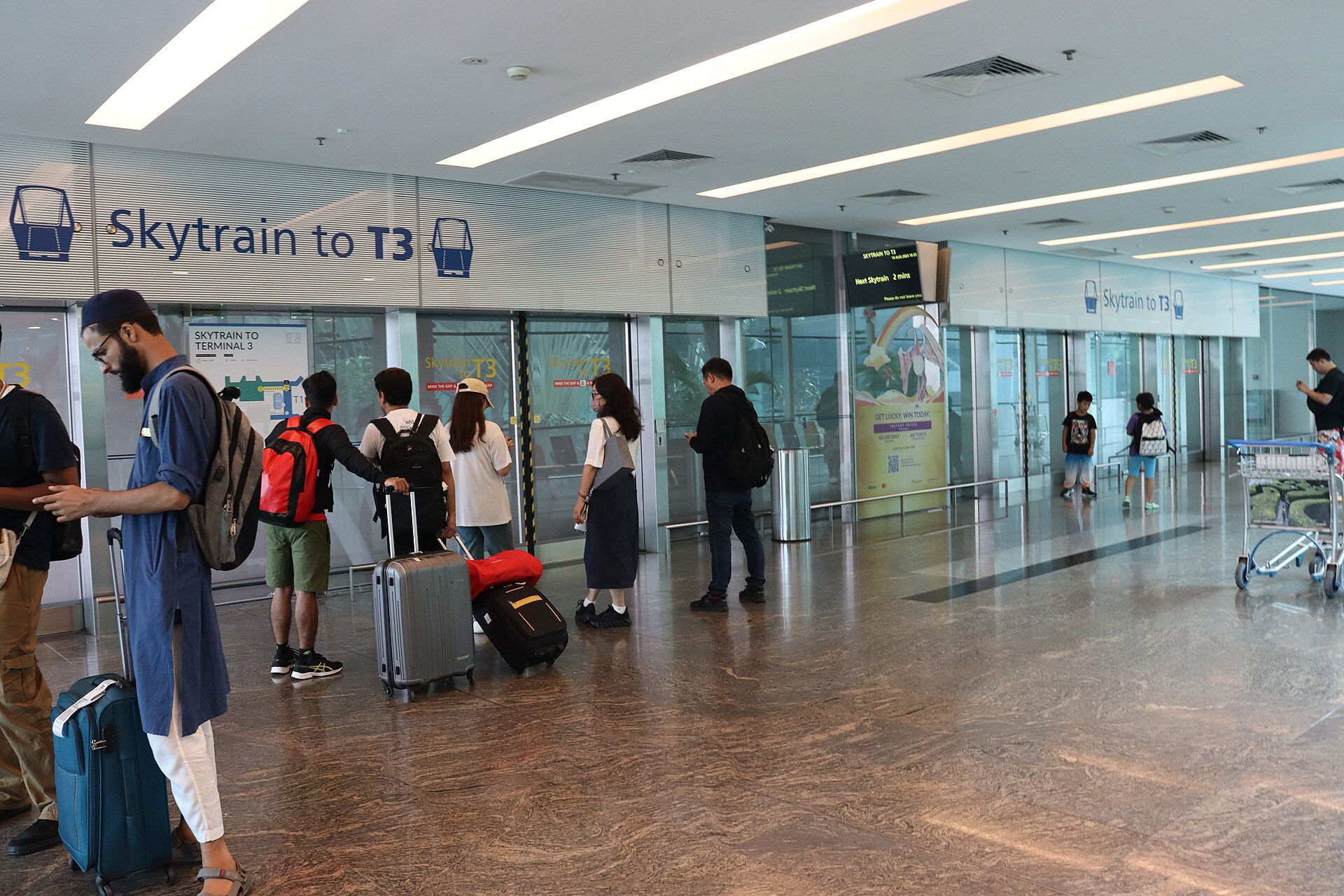
The Absher platform, Saudi Arabia’s centralized government services portal operated by the Ministry of Interior, processes all visa extension requests under the emergency directive. The platform allows Saudi hosts and sponsors to file extension applications on behalf of their guests, a requirement that has created friction for some travelers who arrived on independent tourist visas without a registered sponsor.
For visitors holding tourist e-visas issued through the Saudi Tourism Authority’s Visa on Arrival program — a cornerstone of the Kingdom’s drive to attract 100 million annual visits by 2030 — the sponsorship requirement has been partially relaxed. The Saudi Tourism Authority issued guidance on March 25 confirming that e-visa holders may apply for extensions through a simplified process on the Visit Saudi portal, though processing times have stretched beyond normal service levels due to the volume of requests.
Umrah pilgrims face a particularly complex situation. Many arrived in Saudi Arabia through organized groups coordinated by religious affairs ministries in their home countries. Indonesia’s Ministry of Religious Affairs confirmed that 59,000 Indonesian Umrah pilgrims experienced travel disruptions, according to Jakarta Globe, with some unable to return home after completing their pilgrimage due to flight cancellations. Pakistan’s Hajj and Umrah authorities reported similar difficulties affecting thousands of Pakistani nationals.
| Visa Type | Eligible If Expired After | Extended Until | Overstay Fine | Extension Method |
|---|---|---|---|---|
| Visit Visa | February 26, 2026 | April 18, 2026 | Waived | Absher (host applies) |
| Umrah Visa | February 26, 2026 | April 18, 2026 | Waived | Absher (host applies) |
| Transit Visa | February 26, 2026 | April 18, 2026 | Waived | Absher (host applies) |
| Final Exit Permit | February 26, 2026 | April 18, 2026 | Waived | Absher (host applies) |
The Airspace Crisis That Triggered the Visa Freeze
The travel crisis began within hours of the first US-Israeli strikes on Iran on February 28. Civil aviation authorities across the Middle East issued a cascade of NOTAMs — Notices to Air Missions — closing airspace over Iran, Iraq, Kuwait, and Syria. Bahrain, the UAE, and Qatar followed with heavy restrictions and intermittent full closures as Iranian retaliatory missiles and drones crossed their airspace en route to targets in Saudi Arabia, Kuwait, and Bahrain.
Saudi Arabia’s own airspace has remained nominally open, but the practical reality for commercial aviation has been severe. On March 2, the Kingdom’s General Authority of Civil Aviation reported 293 flights disrupted in a single day as Iranian missile and drone trajectories crossed established flight corridors. King Abdulaziz International Airport in Jeddah — the primary gateway for Hajj and Umrah traffic — saw 130 flights cancelled in the first week of March alone, according to Arab News.
The airspace map of the Middle East now resembles a patchwork of no-fly zones. Iran’s entire airspace is closed by NOTAM. Iraqi airspace remains shut following US strikes on Iranian proxy positions. Kuwait’s airspace has faced intermittent closures after an Iranian drone struck a fuel storage tank at Kuwait International Airport, setting the facility ablaze. Even nations not directly targeted — Oman, Jordan, and Egypt — have experienced cascading disruptions as airlines reroute away from the entire Persian Gulf basin. The cumulative toll of Saudi Arabia’s month-long aviation shutdown now exceeds 11,000 cancelled flights, with no major international carrier publishing a resumption date.
OpsGroup, the aviation intelligence service that tracks conflict-zone airspace risk, described the situation as the most extensive Middle East airspace disruption since the 1991 Gulf War. CNN reported that the closures have forced airlines operating long-haul routes between Asia and Europe to reroute south through East African airspace or north through Central Asian corridors, adding hours of flight time and thousands of dollars in additional fuel costs per flight.
Which Airlines Have Suspended Gulf Flights?
The Iran war has forced the Gulf’s aviation industry — one of the most commercially significant in global air travel — into a state of managed crisis. The three major Gulf carriers, which together move more than 150 million passengers annually under normal conditions, have slashed their schedules to fractions of peacetime capacity.
Emirates, based in Dubai, has cancelled approximately 38.5 percent of its scheduled flights since the war began, according to aviation analytics firm Cirium. Qatar Airways, operating from Doha, has suspended 41 percent of flights, with its hub at Hamad International Airport facing the dual challenge of airspace restrictions and Iranian drone trajectories passing over Qatari territory. Flydubai, the Dubai-based low-cost carrier, has grounded more than half its network.
European carriers have pulled back even further. The Lufthansa Group — which includes Lufthansa, Swiss, Austrian Airlines, and Brussels Airlines — suspended flights to Dubai and Tel Aviv until May 31, with services to Riyadh, Dammam, Abu Dhabi, Amman, Muscat, and Tehran suspended until October 24, 2026, according to The National. British Airways, Air France-KLM, and other European flag carriers have implemented similar long-duration suspensions, signaling that the aviation industry does not expect a rapid resolution to the conflict.
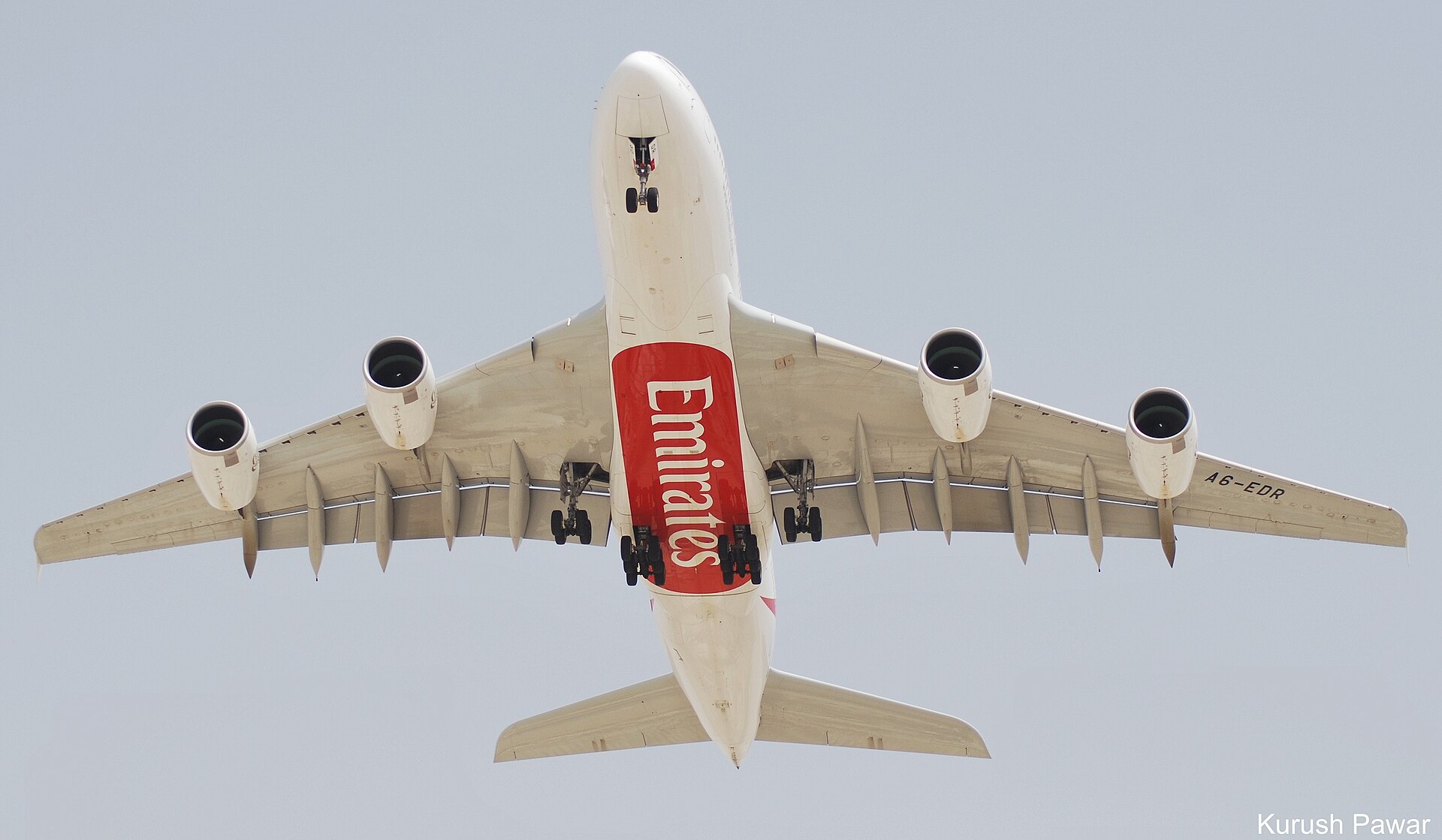
Bloomberg reported on March 25 that stranded travelers face not only cancellations but “sky-high fares and zero help,” with the few remaining seats on operational routes commanding premium prices. One-way economy tickets from Dubai to London were listed at more than $4,000 on some dates, roughly eight times the normal fare. Rescue flights organized by governments have provided some relief — CNN reported that repatriation operations have returned citizens of more than a dozen countries — but demand far exceeds available capacity.
| Airline | Base | Flight Cancellation Rate | Suspension Duration |
|---|---|---|---|
| Emirates | Dubai | 38.5% | Rolling daily assessment |
| Qatar Airways | Doha | 41% | Rolling daily assessment |
| Flydubai | Dubai | 50%+ | Rolling daily assessment |
| Etihad Airways | Abu Dhabi | ~35% | Limited schedule resumed |
| Lufthansa Group | Frankfurt | 100% (Gulf) | Until October 24, 2026 |
| Kuwait Airways | Kuwait City | 100% | Fully suspended |
| Saudia | Jeddah | ~25% | Reduced schedule |
Saudia, the Kingdom’s flag carrier, has maintained a reduced but operational schedule, benefiting from Saudi Arabia’s comparatively large and open airspace west of the conflict zone. Flights operating along the Red Sea corridor to Jeddah have been less affected than those routing through the eastern Gulf, giving the Kingdom’s western airports a logistical advantage that other Gulf hubs lack.
The $600 Million Daily Tourism Collapse
The financial toll of the aviation shutdown extends far beyond cancelled tickets. The World Travel and Tourism Council estimated that the Middle East’s travel and tourism sector is losing between €515 million and €600 million ($550 million to $650 million) per day in visitor spending, events revenue, and hospitality income, according to Euronews. Over four weeks, cumulative losses have approached $18 billion across the region, with potential full-year visitor spending losses of $34 billion to $56 billion if the conflict persists through the second quarter.
Saudi Arabia entered the war with a tourism sector that had been growing at double-digit annual rates. The Kingdom attracted 27.4 million international visitors in 2024, according to the Saudi Tourism Authority, generating SAR 156 billion ($41.6 billion) in direct tourism spending. The postponement of the World Economic Forum’s Special Meeting on Global Collaboration, which had been scheduled for Jeddah, was an early signal that Saudi Arabia’s emergence as a global business events destination has been disrupted.
Hotel occupancy rates across the Gulf have plummeted, according to Travel and Tour World. Dubai, which hosted 17.15 million international visitors in 2023, has seen occupancy at five-star properties fall below 30 percent — a level not recorded since the pandemic. The Diplomatic Watch reported that luxury hotels that were fully booked in January now sit largely empty, with group cancellations from Asian and European tour operators driving the collapse.
Inbound tourist arrivals across the Middle East could fall between 11 and 27 percent year-on-year, equating to 23 to 38 million fewer visitors in 2026, according to projections cited by multiple industry bodies. For Saudi Arabia specifically, the impact threatens to reverse the momentum that had brought the Kingdom within reach of its 2030 target of 100 million annual visitors.
Can 1.8 Million Hajj Pilgrims Reach Mecca This Year?
The most consequential test of Saudi Arabia’s ability to manage travel in wartime arrives in fewer than sixty days. The Hajj pilgrimage, the largest annual human gathering on Earth, is scheduled to begin around May 24, 2026, with Saudi authorities expecting to receive approximately 1.8 million international pilgrims through Jeddah and Medina airports over a compressed arrival window.
Saudi Arabia’s ambassador to Indonesia confirmed on March 26 that the 2026 Hajj will proceed as scheduled, with visa issuance underway and the first pilgrims expected to arrive from April 18 — the same date the emergency visa extension expires. “The Hajj is a sacred duty and Saudi Arabia will fulfill its responsibility to receive pilgrims,” the ambassador told Antara News, adding that the Kingdom has prepared contingency plans for alternative routing.
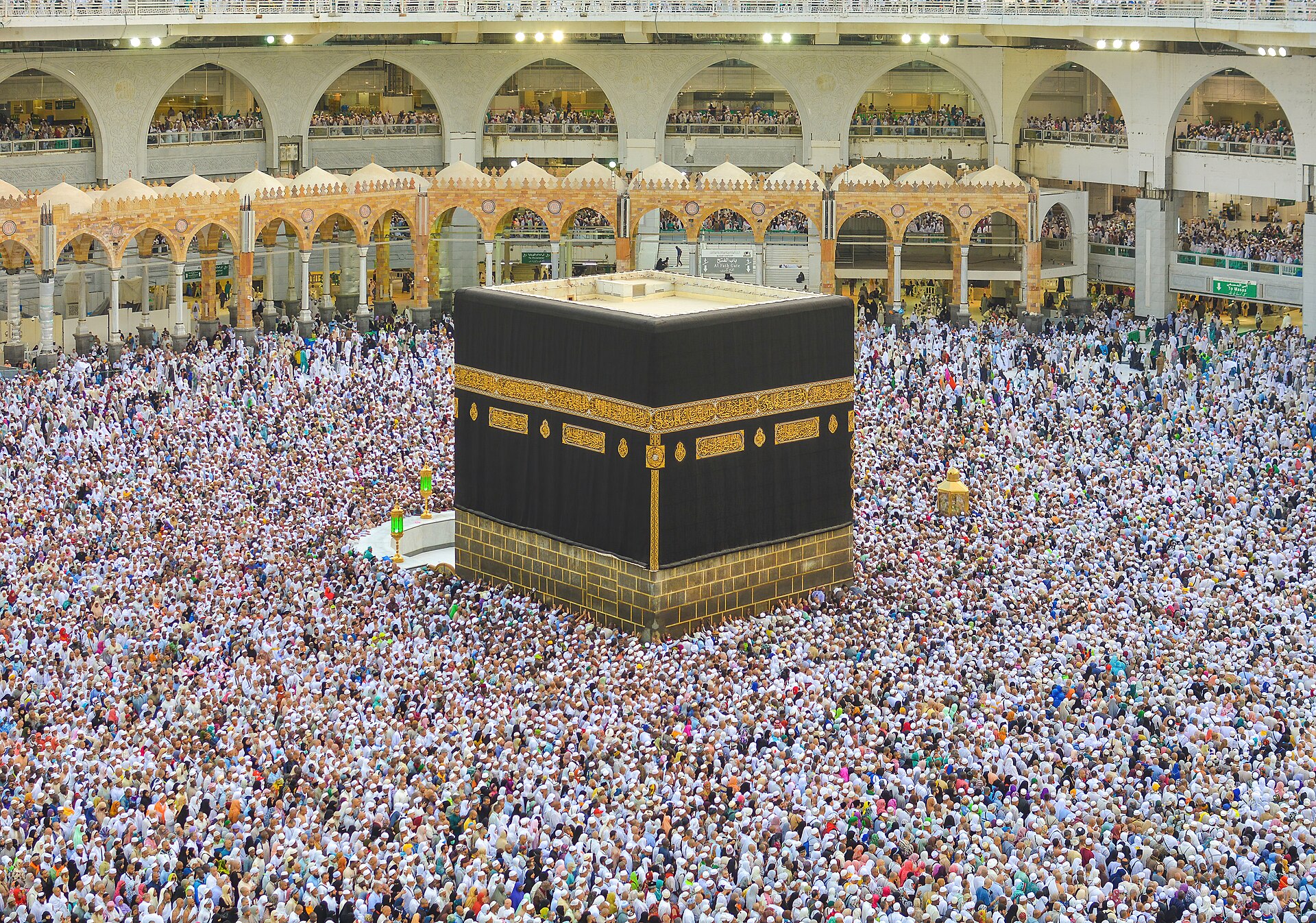
Indonesia’s Ministry of Hajj and Umrah has outlined three contingency scenarios for transporting its pilgrims — the largest single national cohort at more than 200,000 — to Saudi Arabia, according to Antara News. The first assumes a resolution of the conflict before Hajj season. The second involves rerouting flights through East African or Central Asian airspace to avoid the conflict zone. The third, which officials described as the least desirable, would involve maritime transport for some pilgrims if airspace remains too dangerous for commercial aviation.
Iran’s participation in the 2026 Hajj is effectively impossible, multiple reports confirmed. Saudi Arabia suspended visit visa processing for Iranian nationals in March, direct flights between the two countries have been cancelled since the war began, and the diplomatic infrastructure required to coordinate consular services has collapsed following Saudi Arabia’s expulsion of Iran’s military attache and four embassy staff on March 21. Nigeria’s National Hajj Commission of Nigeria warned that it was “too early to take a decision” on the 2026 Hajj, reflecting uncertainty among sending countries, according to the Tribune.
The security dimension compounds the logistical challenge. Saudi Arabia faces the task of defending the holiest sites in Islam from Iranian aerial threats while simultaneously managing the movement of nearly two million pilgrims through its western region. The Kingdom’s air defense systems, which have intercepted hundreds of drones and dozens of missiles since February 28, will face intensified demand during Hajj as the concentration of people at the Grand Mosque in Mecca and the Prophet’s Mosque in Medina creates what military planners describe as high-value soft targets.
What Relief Are Other Gulf States Offering?
Saudi Arabia is not the only Gulf state grappling with the visa crisis. The UAE’s Federal Authority for Identity, Citizenship, Customs and Port Security announced that it had finalized travel procedures for nearly 31,000 stranded passengers, according to government statements reported by Gulf News. The UAE implemented a visa amnesty for overstayers affected by the conflict, though specific terms differed from Saudi Arabia’s blanket extension.
Kuwait, whose aviation infrastructure has suffered the most direct physical damage from Iranian attacks, suspended all commercial flights from Kuwait International Airport after the drone strike on its fuel storage facility. Kuwait Airways remains fully grounded, and the country’s civil aviation authority has not announced a timeline for resuming operations. Kuwaiti authorities have coordinated with neighboring countries to arrange land border crossings for stranded travelers, with some passengers traveling overland to Saudi Arabia’s Eastern Province to access flights from Dammam.
Qatar maintained a partial flight schedule from Hamad International Airport, though Qatar Airways’ 41 percent cancellation rate has left thousands of transit passengers stranded in Doha. Bahrain International Airport has operated intermittently, with closures triggered by Iranian missile trajectories crossing Bahraini airspace.
Beyond the Gulf, the travel disruption has rippled outward. Travel and Tour World reported that the UK, Canada, Japan, the United States, South Africa, Germany, and Qatar are among the countries whose citizens have been stranded or had travel plans upended by the conflict. Multiple governments have organized repatriation flights, though capacity remains limited. India, which has an estimated nine million nationals working and living in Gulf countries, activated its Vande Bharat Mission — the emergency repatriation framework first deployed during the Covid-19 pandemic — to bring citizens home from conflict-affected areas.
What Happens After April 18?
The April 18 deadline creates a hard boundary that depends almost entirely on whether the military situation changes. President Donald Trump’s extension of the pause on strikes against Iran’s energy infrastructure to April 6 — accompanied by his assertion that peace talks are going “very well” despite Iranian denials — suggests the conflict could take several different paths over the next three weeks.
If a ceasefire or de-escalation agreement materializes before mid-April, airlines could begin restoring Gulf operations within days, though the International Air Transport Association has cautioned that rebuilding schedules and crew rotations after a month-long suspension takes weeks. If the war continues past April 6 without resolution, Saudi Arabia may face pressure to extend the visa relief period beyond April 18, particularly as Hajj arrivals begin.
The economic consequences of the war are already reshaping Saudi Arabia’s 2026 planning cycle. Goldman Sachs warned in a March 17 note that Gulf states face their worst recession in a generation, with tourism-dependent economies — including Saudi Arabia’s non-oil GDP growth projections — bearing disproportionate impact. The Kingdom’s Public Investment Fund has already redirected capital from megaproject construction to food security and essential imports, a shift that underscores the war’s reach into every corner of the Saudi economy.
For the millions of travelers, workers, and pilgrims whose lives have been disrupted by four weeks of conflict, the visa extension provides temporary certainty in an environment defined by its absence. Whether that certainty extends beyond April 18 depends on decisions being made in Washington, Tehran, Riyadh, and Jerusalem — none of which have shown signs of yielding.
Frequently Asked Questions
Who qualifies for Saudi Arabia’s emergency visa extension?
All holders of visit visas, Umrah visas, transit visas, and final exit permits that expired on or after February 26, 2026, qualify for the extension. The measure covers foreign nationals who were unable to depart Saudi Arabia due to airspace closures and flight cancellations caused by the Iran war. Affected individuals can either extend through the Absher platform via their host or depart without paying overstay fines before April 18.
How much is the Saudi Arabia overstay fine that has been waived?
Saudi Arabia’s standard overstay fine is SAR 50,000 (approximately $13,300) for the first violation, according to Saudi immigration law. Repeat violations carry escalating penalties including deportation and re-entry bans. The Ministry of Interior has waived these penalties for all visa holders whose documents expired after February 26, provided they regularize their status or depart before April 18, 2026.
Will the 2026 Hajj pilgrimage still take place?
Saudi Arabia has confirmed that the 2026 Hajj will proceed as scheduled, with the pilgrimage expected to begin around May 24 and approximately 1.8 million international pilgrims anticipated. Multiple countries are preparing contingency routing plans to transport pilgrims via East African or Central Asian airspace corridors if the Gulf remains under aerial threat. Iranian participation in Hajj 2026 is effectively impossible due to the severance of diplomatic and consular relations.
How many flights have been cancelled across the Middle East?
More than 27,000 flights have been cancelled across the Middle East since the war began on February 28, according to aviation tracking services. Emirates has cancelled 38.5 percent of flights, Qatar Airways 41 percent, and Flydubai more than half its network. Lufthansa Group has suspended all Gulf flights until at least October 24, 2026. The disruption affects routes connecting Asia and Europe that normally transit through Gulf airspace.
How much is the Iran war costing the Middle East tourism industry?
The World Travel and Tourism Council estimates that the Middle East tourism sector is losing between $550 million and $650 million per day in visitor spending and revenue. Over four weeks, cumulative losses have approached $18 billion. Full-year losses could reach $34 billion to $56 billion if the conflict persists, with inbound tourist arrivals expected to fall 11 to 27 percent — equating to 23 to 38 million fewer visitors across the region.