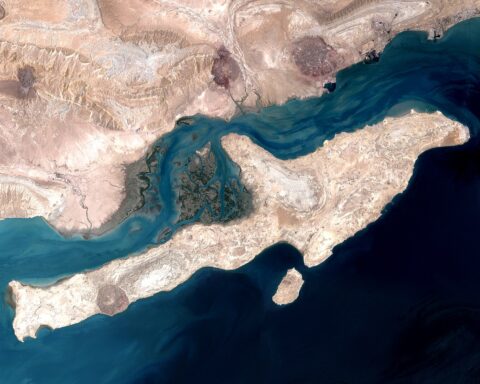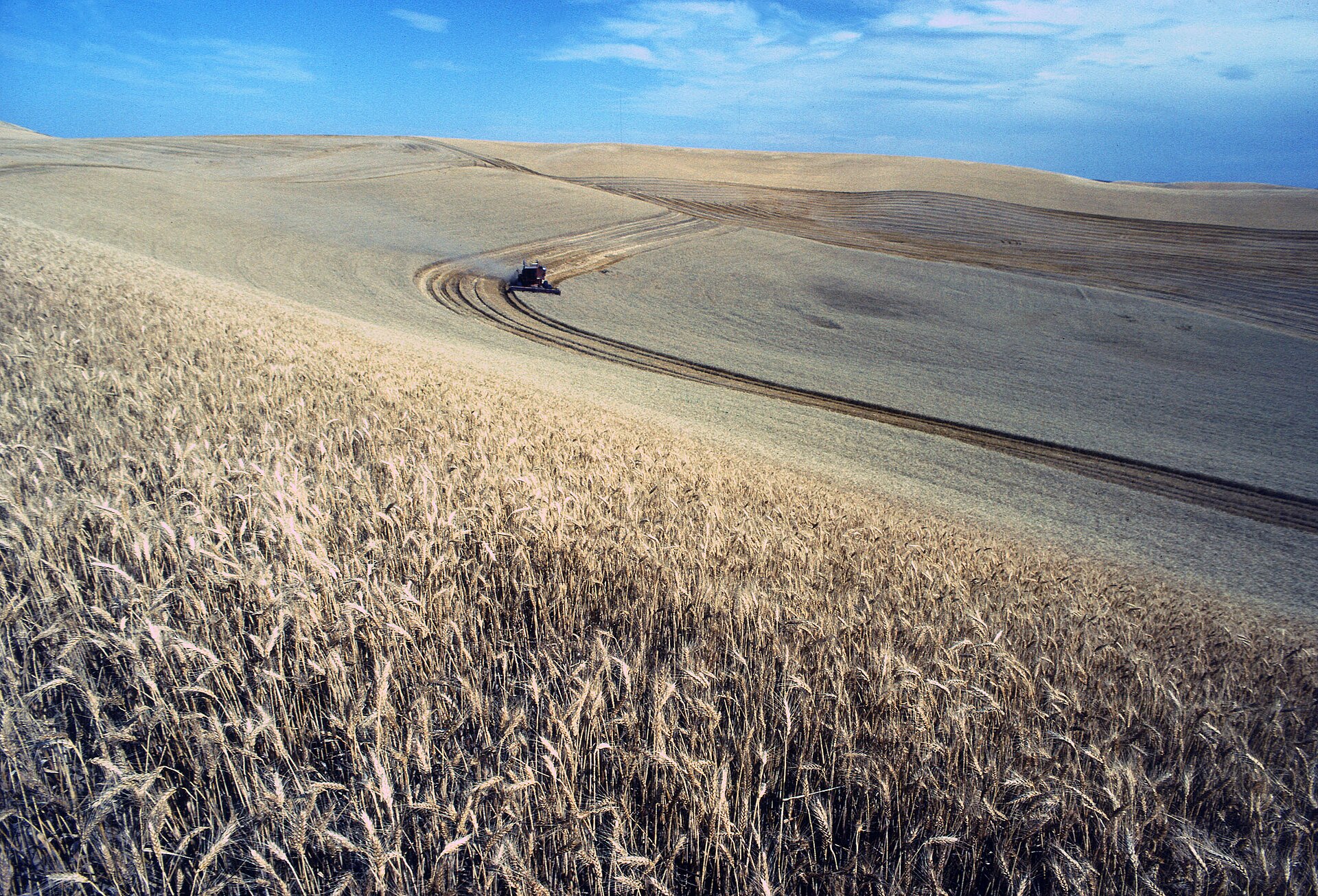

RIYADH — The Strait of Hormuz carries roughly 30 percent of the world’s seaborne fertilizer trade, and since February 28 that trade has virtually stopped. Shipping through the strait has fallen from approximately 130 vessels a day to single digits — a decline exceeding 95 percent, according to maritime tracking data. The World Food Programme warned on March 25 that 45 million more people could fall into acute food insecurity if the conflict continues, pushing the global total to a record 363 million. The missiles over Riyadh dominate the headlines. The famine they are creating does not.
One month into the Iran war, the world’s attention remains fixed on air defense intercepts, Iranian drone barrages, and oil prices that briefly touched $120 a barrel. But a parallel crisis is unfolding with far greater long-term consequences: the global fertilizer supply chain has fractured at its most critical chokepoint precisely when the Northern Hemisphere’s spring planting season demands it most. Nitrogen, phosphate, and urea shipments from the Gulf’s massive production facilities — which supply nearly half the world’s urea — cannot reach the farmers who need them. The result will not appear in tomorrow’s casualty count. It will appear in next autumn’s harvest.
Table of Contents
- How Does the Strait of Hormuz Feed the World?
- The Gulf’s Empty Shelves
- Why Is the Fertilizer Crisis Worse Than the Oil Crisis?
- What Happens to the Spring Planting Season?
- The Countries That Will Starve First
- Saudi Arabia’s Wartime Food Strategy
- Can a Ceasefire Reverse the Damage?
- The Invisible Casualty Count
- Frequently Asked Questions
How Does the Strait of Hormuz Feed the World?
The Strait of Hormuz is the world’s most important agricultural chokepoint, though almost nobody describes it that way. Approximately 20 to 30 percent of global fertilizer exports — including urea, ammonia, phosphates, and sulfur — pass through the 33-kilometre-wide channel between Iran and Oman, according to the International Food Policy Research Institute (IFPRI). That makes it the single largest transit route for the chemical inputs that modern agriculture cannot function without.
Qatar’s state-run QatarEnergy operates the world’s largest urea plant through its subsidiary QAFCO, which alone supplies 14 percent of global urea, according to the Signal Group shipping analytics firm. Saudi Arabia produces 7.8 million tonnes of fertilizer annually, primarily through SABIC and Ma’aden. The UAE, Oman, and Bahrain add further capacity. Together, the Gulf Cooperation Council nations account for roughly 46 percent of global urea supply — and virtually all of it must transit the Strait of Hormuz to reach international markets.
The arithmetic is stark. Before February 28, an average of 130 commercial vessels transited the strait daily. By mid-March, that number had collapsed to single digits, a decline the Carnegie Endowment for International Peace described as “the most severe disruption to global fertilizer supply chains since the modern agrochemical industry began.” Iran has since converted this disruption into a permanent toll regime on the Strait of Hormuz, charging $2 million per vessel in yuan and rerouting approved traffic through IRGC-controlled corridors. Maritime insurance premiums for Gulf shipping have become prohibitive, with war-risk surcharges effectively pricing out all but state-backed vessels and the Chinese tanker fleet that continues to transit under its own risk calculations.
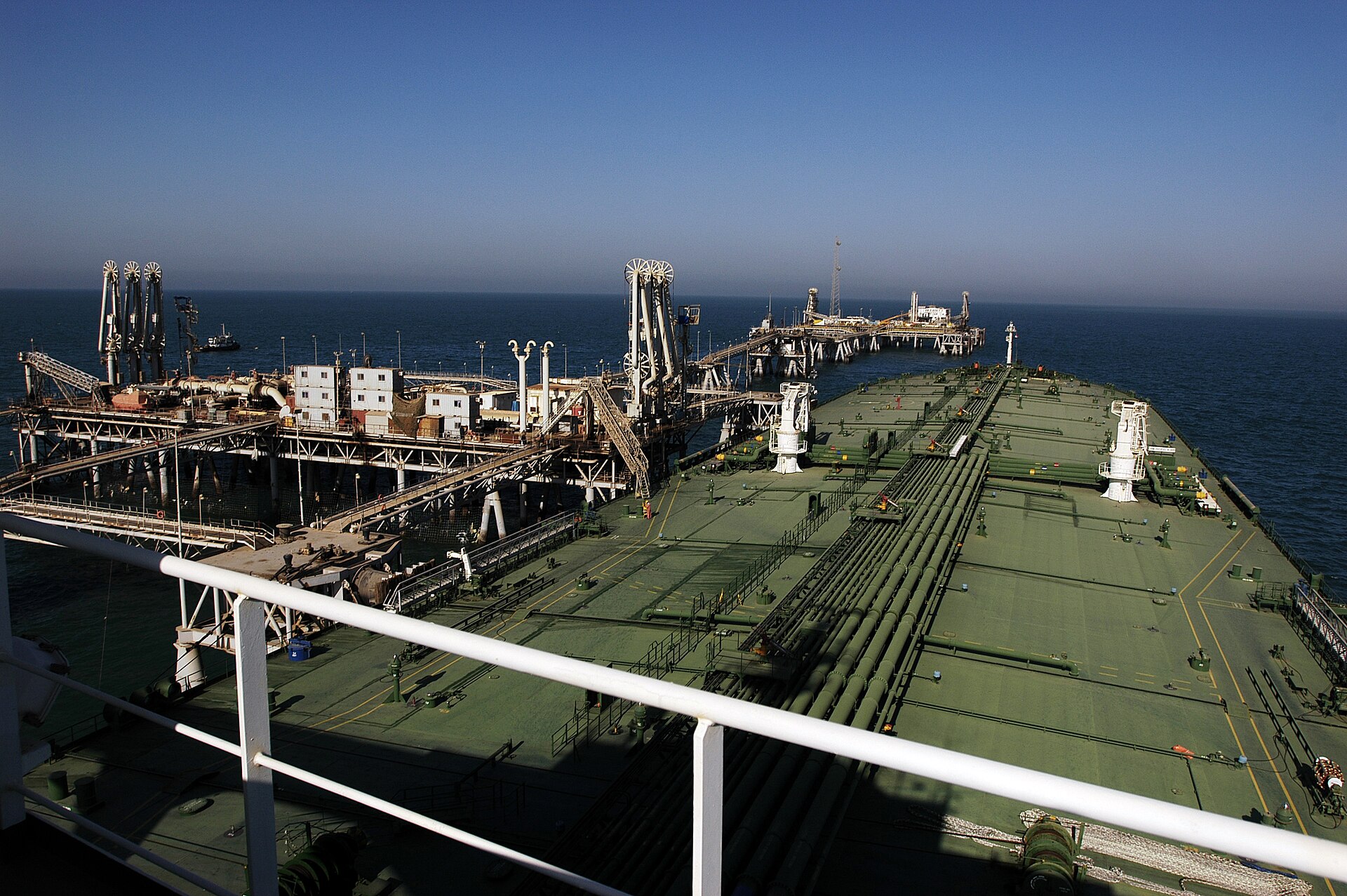
The disruption is not merely logistical. QatarEnergy halted output at its urea plant after shutting down gas production in response to Iranian missile strikes on Ras Laffan, according to Reuters reporting from March 15. Saudi Arabia’s SABIC has continued some fertilizer production but cannot export through its primary Gulf coast terminals. Only production from Yanbu on the Red Sea coast remains partially accessible — and even that port suspended oil loading operations on March 27 after Saudi air defenses intercepted an Iranian ballistic missile overhead.
The Middle East briefing 3,000+ readers start their day with.
One email. Every weekday morning. Free.
The Gulf’s Empty Shelves
The food security crisis begins at home. GCC nations import more than 80 percent of their caloric requirements through the Strait of Hormuz, according to the Food and Agriculture Organization (FAO). Qatar imports approximately 90 percent of its food by sea. The UAE sources 85 percent of its food from abroad. Saudi Arabia, the largest Gulf economy, imports over 80 percent of its food, including 3.1 million metric tonnes of wheat and 1.5 million metric tonnes of rice annually, according to the USDA Foreign Agricultural Service.
The region’s 50 million residents built their daily diets on a logistics chain that assumed permanent access to global shipping lanes. Kuwait, Bahrain, and Oman each import more than 90 percent of their food. The GCC’s combined food import bill exceeded $50 billion in 2024, according to the Gulf Food Security Association. That spending bought variety, freshness, and affordability. It did not buy resilience.
By mid-March, the FAO reported that 70 percent of GCC food imports had been disrupted. The impact reached supermarket aisles within days. Meat prices in some Gulf cities nearly doubled, according to Reuters correspondents in Doha and Dubai. Retailers like Lulu Retail — one of the region’s largest grocery chains — began airlifting staples, a logistically viable but economically unsustainable solution that added a 40 to 120 percent markup on consumer prices.
The vulnerability was always structural. The Gulf states built their modern economies on a simple exchange: export hydrocarbons, import everything else. Saudi Arabia abandoned domestic wheat production in 2016 after decades of fossil-aquifer irrigation depleted the country’s groundwater reserves. The Kingdom’s food security strategy depended on reliable imports through multiple sea routes — a calculation that assumed the Strait of Hormuz would never close. That assumption collapsed on the same day the first Iranian missiles flew. The crisis now confronts its harshest test: feeding 35 million people through a single port during Ramadan, when daily food consumption surges by more than 60 percent.
Saudi Arabia’s response has been characteristically ambitious. On March 28, the Kingdom opened a 1,700-kilometre rail freight corridor to Jordan, bypassing the Strait of Hormuz entirely by routing imports through the port of Aqaba on the Red Sea. The corridor can move an estimated 15 million tonnes of cargo annually — significant, but a fraction of the Kingdom’s total import volume. Riyadh has also activated bilateral food supply agreements with Australia, Brazil, and India, though shipping costs and transit times through alternative routes are substantially higher.
Why Is the Fertilizer Crisis Worse Than the Oil Crisis?
Oil has substitutes, however imperfect. Countries can draw down strategic petroleum reserves, accelerate renewable energy deployment, impose fuel rationing, or shift to coal and natural gas for power generation. Fertilizer has no substitute. Modern agriculture cannot produce adequate yields without synthetic nitrogen, phosphorus, and potassium inputs. A wheat field deprived of fertilizer does not produce slightly less grain — it produces dramatically less, with yield reductions of 30 to 50 percent depending on soil conditions, according to the International Fertilizer Association.
The price signal alone tells the story. Middle East urea prices surged to approximately $700 per metric tonne by late March, up from $400 to $490 before the war began — a jump of roughly 50 percent in four weeks, according to CNBC reporting on March 25 citing industry analysts. Ammonia prices increased by approximately 20 percent over the same period. U.S. Gulf DAP (diammonium phosphate) prices hit $655 per metric tonne, according to IFPRI data. Morningstar analyst Seth Goldstein warned that nitrogen fertilizer prices could “roughly double from current levels” if the strait remains closed through the second quarter.
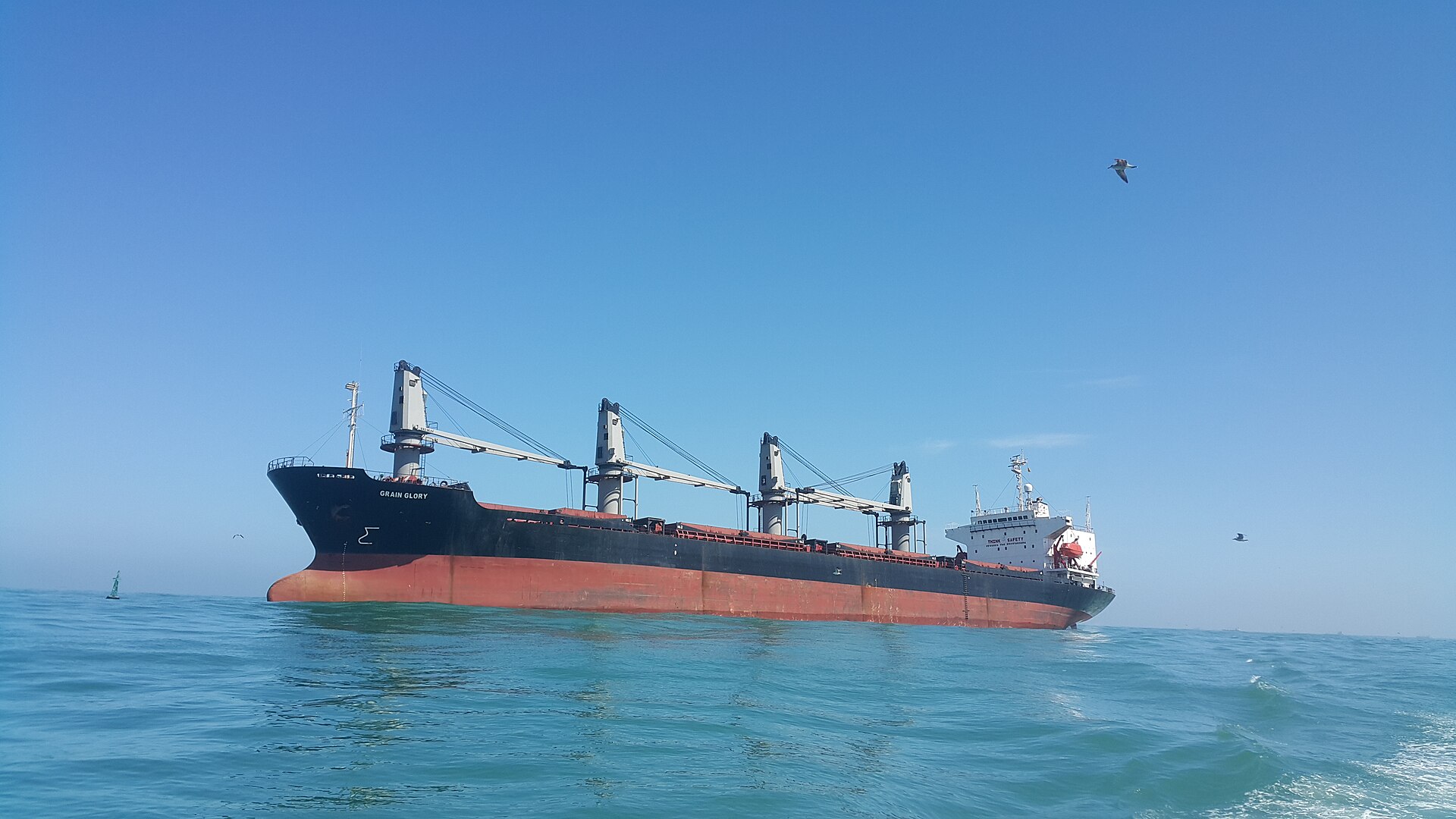
Oil disruptions, by contrast, have been partially offset by OPEC+ production adjustments. On March 1, eight OPEC+ members agreed to increase production by 206,000 barrels per day starting in April. Saudi Arabia itself raised crude output by 100,000 barrels per day to 10.4 million barrels per day in February — its highest level since the third quarter of 2022, according to the International Energy Agency. Oil prices remain elevated at roughly $108 a barrel but have pulled back from the $120 peak hit in early March. The fertilizer market has no equivalent safety valve. There is no strategic urea reserve. There is no OPEC for nitrogen.
The comparison with Russia’s 2022 invasion of Ukraine is instructive but incomplete. The Ukraine war disrupted fertilizer markets by sanctioning Russian and Belarusian potash exports and constraining Ukrainian grain shipments through the Black Sea. But alternative supply routes existed. The Hormuz closure is different in kind: it has blocked the primary export channel for an entire production cluster representing nearly a third of global seaborne fertilizer trade, with no ready alternative routing.
What Happens to the Spring Planting Season?
The timing of the Hormuz closure is its most devastating feature. The Northern Hemisphere’s main planting season runs from mid-February to early May. Farmers purchase fertilizer in the weeks before planting to ensure adequate soil nutrient levels for their crops. The war began on February 28 — precisely when those purchases peak. Any farmer who has not secured fertilizer supply by mid-April will either plant without it, plant less fertilizer-intensive crops, or reduce planted acreage.
All three outcomes produce the same result: lower yields. The World Bank estimates that a sustained 50 percent increase in fertilizer prices reduces global grain production by 4 to 7 percent, with the impact concentrated in developing countries where farmers operate on thinner margins and cannot absorb cost increases.
The impact cascades through the agricultural calendar with mathematical precision. Spring planting in North America and Europe is already underway; farmers who cannot source affordable fertilizer now will lock in lower yields for the entire 2026 growing season. The Asian planting season follows in the coming months — rice paddies in India, Bangladesh, and Thailand depend heavily on imported urea, and any shortage during their sowing window will reduce harvests that feed hundreds of millions.
| Period | Event | Agricultural Impact |
|---|---|---|
| Feb 28 | Iran war begins; Hormuz shipping collapses | Gulf fertilizer exports halt mid-peak buying season |
| Early March | QatarEnergy shuts urea plant after Ras Laffan strikes | 14% of global urea supply offline |
| Mid-March | Urea prices surge 50% to $700/MT | Farmers in developing nations priced out |
| Late March | Northern Hemisphere planting season peaks | Fertilizer gap now irreversible for 2026 crops |
| April–May | Asian sowing season begins | Rice and wheat yields at risk across South Asia |
| Sep–Nov | 2026 harvest | Yield reductions of 4–7% globally (World Bank estimate) |
“The timing of this disruption is especially bad because it falls in the middle of sowing season, or spring plantation season,” David Laborde, director of the Food and Agriculture Policy Research Institute, told NPR on March 20. “Even if the strait reopened tomorrow, the damage to the 2026 planting cycle is already partially locked in.”
The Countries That Will Starve First
The WFP’s 45-million figure is not hypothetical. It is a projection based on current food and fuel price trends, supply chain disruption data, and historical vulnerability models. The breakdown, published by the WFP on March 25, identifies specific regional impacts: approximately 17.7 million additional people in East and Southern Africa, 9.1 million in Asia — representing a 24 percent increase in regional acute food insecurity — and millions more across the Middle East and Latin America.
The countries most immediately exposed share three characteristics: high dependence on imported fertilizer, large populations of subsistence farmers, and household budgets where food already consumes the majority of income. Bangladesh sources more than half its fertilizer from the Gulf, according to the Conversation. Sudan, which is already experiencing civil war and displacement, relies on Gulf-sourced urea for what remains of its agricultural output. Kenya, Somalia, India, Pakistan, Sri Lanka, Turkey, and Jordan are all identified by IFPRI as acutely vulnerable.
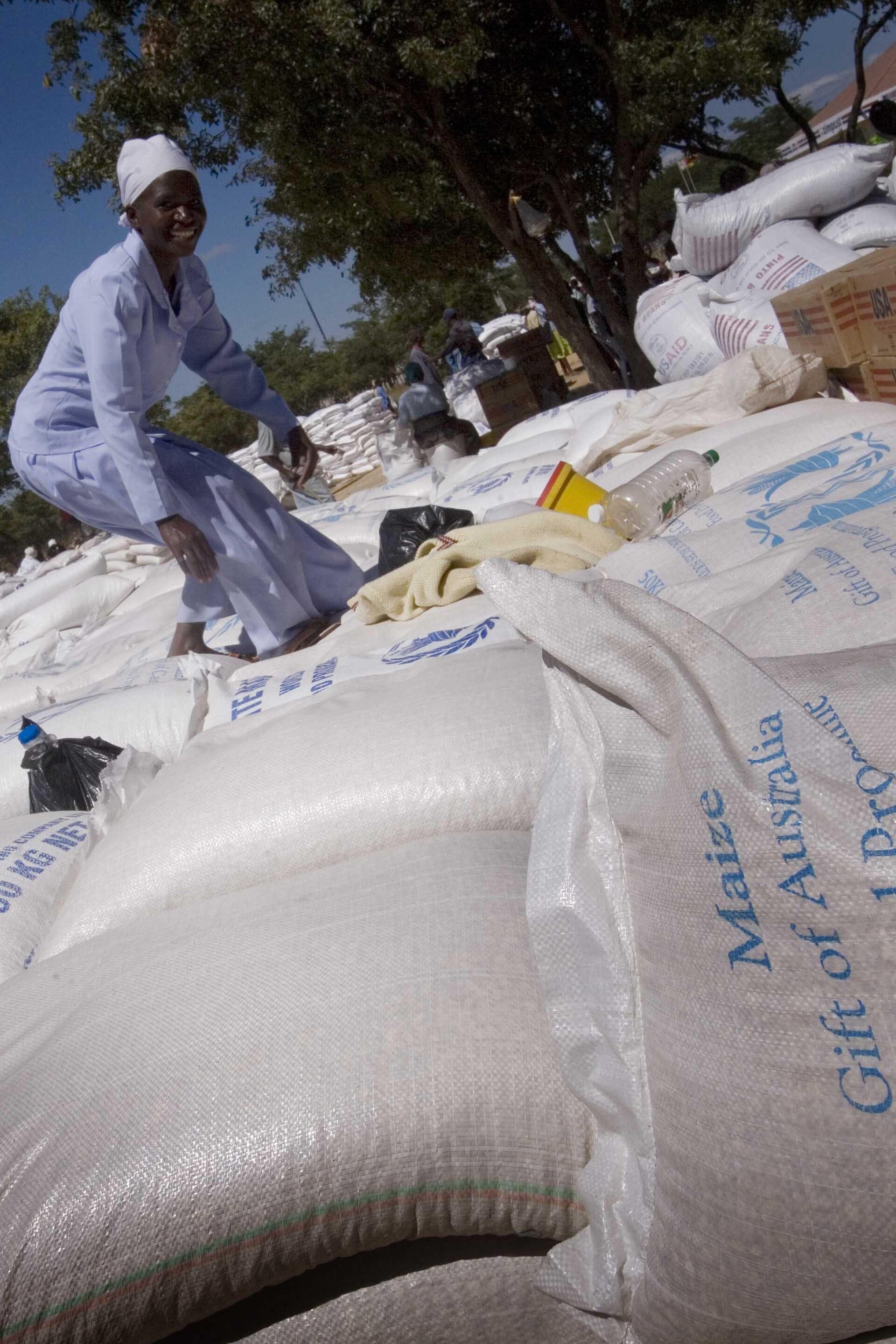
Sub-Saharan Africa faces the starkest arithmetic. Over 90 percent of the fertilizer consumed on the continent is imported, mostly from outside Africa, according to the African Development Bank. Farmers there already apply far less fertilizer per hectare than their counterparts in Asia or the Americas — an average of 17 kilograms per hectare compared to a global average of 137 kilograms, according to FAO data. Any further reduction, whether from price or availability, translates directly into reduced yields, reduced income, and reduced food availability in markets that already operate at the margin.
India’s vulnerability deserves particular attention. The country is home to 1.4 billion people and the world’s second-largest agricultural sector. India imported approximately 12 million tonnes of fertilizer in 2024, a significant share of it sourced from the Gulf. New Delhi responded to the Hormuz crisis by deploying warships to escort commercial vessels — a measure that protects oil tankers but cannot restore the volume of fertilizer trade that flowed freely before the war. Indian Agriculture Minister Shivraj Chouhan told parliament on March 22 that the government would release emergency fertilizer stockpiles, but industry analysts at ICRA estimated those reserves would last “no more than six to eight weeks at current consumption rates.”
Brazil adds a different dimension to the crisis. The country accounts for nearly 60 percent of global soybean exports and is a major exporter of corn and sugar. Brazilian agriculture depends heavily on imported fertilizer — and a sustained shortage or price surge could compel farmers to reduce application rates, triggering a drop in crop yields with cascading implications for global food commodity prices. When Brazil’s harvests shrink, the world’s grain markets tighten.
The WFP’s own operational capacity is degrading simultaneously. The agency reported on March 25 that its shipping costs had risen 18 percent since the war began, “meaning that we can buy less food or provide less cash to beneficiaries.” The organization that exists to feed the world’s hungriest people is being priced out of the market by the same conflict creating the hunger.
Saudi Arabia’s Wartime Food Strategy
Saudi Arabia entered the conflict with more food security infrastructure than any other Gulf state — and it is still not enough. The Saudi Grains Organization (SAGO) maintains strategic wheat reserves estimated at approximately six months of domestic consumption. The Kingdom has invested billions in overseas farmland — principally in Sudan, Ethiopia, and Argentina — through its agricultural investment arm, the Saudi Agricultural and Livestock Investment Company (SALIC). Those investments were designed precisely for a scenario like this.
The newly opened rail corridor to Jordan represents the most significant short-term adaptation. By routing imports through Aqaba and then overland via rail, the Kingdom can bypass the Strait of Hormuz for bulk commodities including grain, rice, and processed food. Crown Prince Mohammed bin Salman described the rail link as “strategic infrastructure that will serve the Kingdom for decades,” according to state media reports.
But the rail corridor has limitations. Its annual capacity of 15 million tonnes represents a fraction of Saudi Arabia’s total import volume. The Kingdom imported approximately $40 billion worth of food and agricultural products in 2024, according to USDA data. Rerouting that volume through Jordan, Egypt, and Red Sea ports increases transit times and costs substantially. And the Red Sea itself is not immune to disruption — the Gulf’s broader security environment remains volatile, with Houthi threats to shipping in the southern Red Sea adding another layer of risk.
The Kingdom’s fertilizer production adds complexity. As a major fertilizer producer in its own right, Saudi Arabia faces a choice: export its SABIC and Ma’aden production to earn revenue and support global food supply, or retain it for domestic agricultural use. With its own farming sector now unable to import fertilizer through Gulf ports, domestic retention may take priority — further tightening global supply.
The food crisis also threatens Mohammed bin Salman’s broader economic agenda. Vision 2030’s tourism targets — 150 million visitors by the end of the decade — depend on a hospitality sector that cannot function without reliable food supply chains. The entertainment megaprojects, the sports diplomacy initiatives, the cultural festivals that were supposed to define the new Saudi Arabia all require functioning restaurants, hotels, and catering infrastructure. War has a way of reminding governments that before ambition comes sustenance.
Saudi Arabia’s advantage over its smaller Gulf neighbours is scale. SAGO’s strategic reserves, the rail corridor, the Red Sea ports, and the bilateral food agreements provide buffers that Qatar, Bahrain, and Kuwait simply do not possess. But even Saudi resources have limits. The Kingdom’s food security architecture was designed for temporary disruptions — a hurricane in the grain belt, a port strike, a seasonal shipping delay. It was not designed for a four-week and potentially open-ended closure of the world’s most important commercial waterway during a hot war.
Can a Ceasefire Reverse the Damage?
A ceasefire would halt the military destruction but cannot undo the agricultural damage already inflicted. The spring planting window is closing. Farmers in the United States, Europe, and Central Asia who have not secured fertilizer by mid-April will have made their planting decisions for the 2026 season. Those decisions, once made, are irreversible — a field planted with reduced fertilizer input will produce a reduced harvest regardless of what happens in the Strait of Hormuz in May or June.
Even if the strait reopened tomorrow, the logistics of resuming fertilizer trade would take weeks. War-risk insurance coverage must be reinstated. Shipping routes must be de-mined and verified. Port infrastructure damaged by Iranian strikes — at Ras Laffan, at Jubail, at Yanbu — must be repaired. Fertilizer production facilities that shut down must restart. The Carnegie Endowment estimated in late March that full normalization of Hormuz shipping would require “a minimum of 60 to 90 days after a credible ceasefire.”
That timeline extends the fertilizer gap well into the second quarter — past the planting windows for most Northern Hemisphere grain crops and into the critical preparation period for Asian rice cultivation. The agricultural calendar does not wait for diplomats.
The comparison with previous supply shocks underscores the point. When Russia invaded Ukraine in February 2022, the resulting fertilizer price spike contributed to a food crisis that pushed an additional 70 million people into hunger, according to the World Bank. But the Ukraine disruption was partial — alternative sources and routes existed, and the Black Sea Grain Initiative eventually restored some Ukrainian exports. The Hormuz closure is total, and no diplomatic corridor has been proposed for fertilizer shipments.
The economic cost of the war is measured in military expenditure, oil revenue losses, and infrastructure destruction. The agricultural cost will be measured in tonnes of grain that were never grown — a subtraction that compounds across growing seasons and food supply chains with no natural recovery mechanism except time.
The Invisible Casualty Count
After 28 days of conflict, the Pentagon reports 13 American service members killed in action and nearly 300 wounded during Operation Epic Fury. Iranian civilian casualties from US and Israeli strikes are estimated in the thousands, though no verified count exists. Saudi civilian casualties from Iranian missile and drone attacks remain in the dozens, thanks to an air defense network that has maintained an 85 to 90 percent intercept rate.
The famine casualties will dwarf these numbers. If the WFP’s projection holds — 45 million more people in acute food insecurity — the death toll from malnutrition, disease among malnourished populations, and conflict over scarce food resources will accumulate over months and years, far from the Gulf and far from the media cameras trained on missile intercepts over Riyadh.
No belligerent intended this outcome. The United States and Israel launched Operation Epic Fury to destroy Iran’s nuclear program and degrade its military capabilities. Iran retaliated against Gulf states and American bases to impose costs on the coalition. Neither side designed a food crisis — it is a second-order consequence of geography, supply chain architecture, and timing. The Strait of Hormuz happened to carry the world’s fertilizer when it closed. The war happened to start when farmers needed that fertilizer most.
Iran’s own population is not spared. The Islamic Republic was already under severe economic pressure before the war, with inflation above 40 percent and food prices rising sharply under sanctions and military expenditure. Iran’s domestic agricultural sector, while more self-sufficient than the Gulf states, depends on imported seeds, pesticides, and agricultural machinery — all of which have been disrupted by the bombing campaign. IRNA, Iran’s state news agency, reported on March 24 that wheat planting in western provinces had been “severely affected” by fuel shortages and infrastructure damage. The hunger will not respect the battle lines.
That accidental quality does not diminish the scale. The energy dimensions of the war have commanded attention because oil prices affect every economy immediately and visibly. The food dimensions unfold on a slower timeline, visible first in commodity futures markets, then in farmgate prices, then in reduced plantings, then in smaller harvests, then in higher bread prices in Dhaka and Nairobi and Cairo. By the time the hunger is unmistakable, the cause will be months old and the opportunity to prevent it will have passed.
The harvest the Iran war already killed will not appear in any ceasefire agreement. No reparation fund will account for the crops that were never planted. The 45 million figure in the WFP report is not a prediction of what might happen if the war continues — it is a description of what is already underway.
Frequently Asked Questions
How much of the world’s fertilizer passes through the Strait of Hormuz?
Approximately 20 to 30 percent of global seaborne fertilizer exports transit the Strait of Hormuz, including urea, ammonia, phosphates, and sulfur. The Gulf Cooperation Council nations collectively produce about 46 percent of the world’s urea, with Qatar’s QAFCO alone supplying 14 percent. The Hormuz closure has effectively removed this entire production cluster from international markets, creating the largest single-source fertilizer disruption in modern history.
Which countries face the greatest food security risk from the fertilizer shortage?
Bangladesh, Sudan, Somalia, Kenya, India, Pakistan, Sri Lanka, Turkey, and Jordan face the most acute risks due to their combined dependence on Gulf-sourced fertilizer, large subsistence farming populations, and limited fiscal capacity to subsidize agricultural inputs. Brazil’s fertilizer-dependent soybean and corn sectors pose a secondary risk: reduced Brazilian harvests would tighten global grain markets and drive food commodity prices higher worldwide, affecting net food-importing countries across Africa and Asia.
Can alternative fertilizer sources replace Gulf production?
Not at the required scale or speed. Russia and China are the only producers with comparable nitrogen fertilizer capacity, but Russian exports remain constrained by Western sanctions imposed after the 2022 Ukraine invasion, and China has periodically restricted fertilizer exports to protect domestic supply. North African producers — particularly Morocco for phosphates and Egypt for urea — could increase output over several months but lack the immediate surplus to fill a gap representing nearly a third of global seaborne trade.
How does the 2026 fertilizer disruption compare to the 2022 Ukraine crisis?
The 2022 Ukraine crisis primarily disrupted potash exports from Russia and Belarus and constrained Black Sea grain shipments, but alternative supply routes existed and were eventually activated through the Black Sea Grain Initiative. The Hormuz closure blocks the primary export channel for an entire fertilizer production cluster with no ready alternative routing. The 2022 crisis pushed approximately 70 million additional people into hunger over 18 months, according to the World Bank. The WFP projects the 2026 disruption could push 45 million into acute hunger within months — a faster onset and more concentrated impact.
What would happen to global food prices if the Strait of Hormuz remains closed through June 2026?
Morningstar’s Seth Goldstein projects nitrogen fertilizer prices could roughly double from current levels and phosphate prices could climb approximately 50 percent. The World Bank estimates that sustained 50 percent increases in fertilizer prices reduce global grain production by 4 to 7 percent. Applied to current wheat, rice, and corn markets, that reduction would translate to consumer food price increases of 15 to 25 percent in developing countries where food already represents 40 to 60 percent of household spending, according to FAO modeling from the 2022 Ukraine crisis applied to current conditions.