RIYADH — Saudi Arabia’s 106-day strategy of diplomatic silence on US-Iran negotiations ended on Eid al-Adha — not with a Saudi statement, but with an American one that rendered the silence pointless. President Trump told his cabinet on May 27 that there would be “no sanctions, no money, no nothing” in any deal with Iran, categorically eliminating the sanctions-relief architecture that five rounds of US-Iran talks had been building toward. The statement arrived 72 hours after Axios reported a near-final deal framework that included sequenced sanctions relief, and nine days after Iran’s deputy foreign minister Kazem Gharibabadi named sanctions removal as a precondition for any agreement.
For Riyadh, the consequences are structural rather than diplomatic. Saudi Arabia remained silent through five rounds of negotiations on the assumption that a deal would close — reopening Hormuz, ending the Persian Gulf Shipping Authority’s toll regime, and stabilising oil prices above the kingdom’s fiscal breakeven. Trump’s Eid-day declaration does not threaten the deal. It eliminates the outcome that Saudi silence was purchased to protect, leaving Riyadh with a record quarterly deficit, oil falling below $95/bbl, and a post-Eid calendar in which continued MOFA silence is no longer defensible.
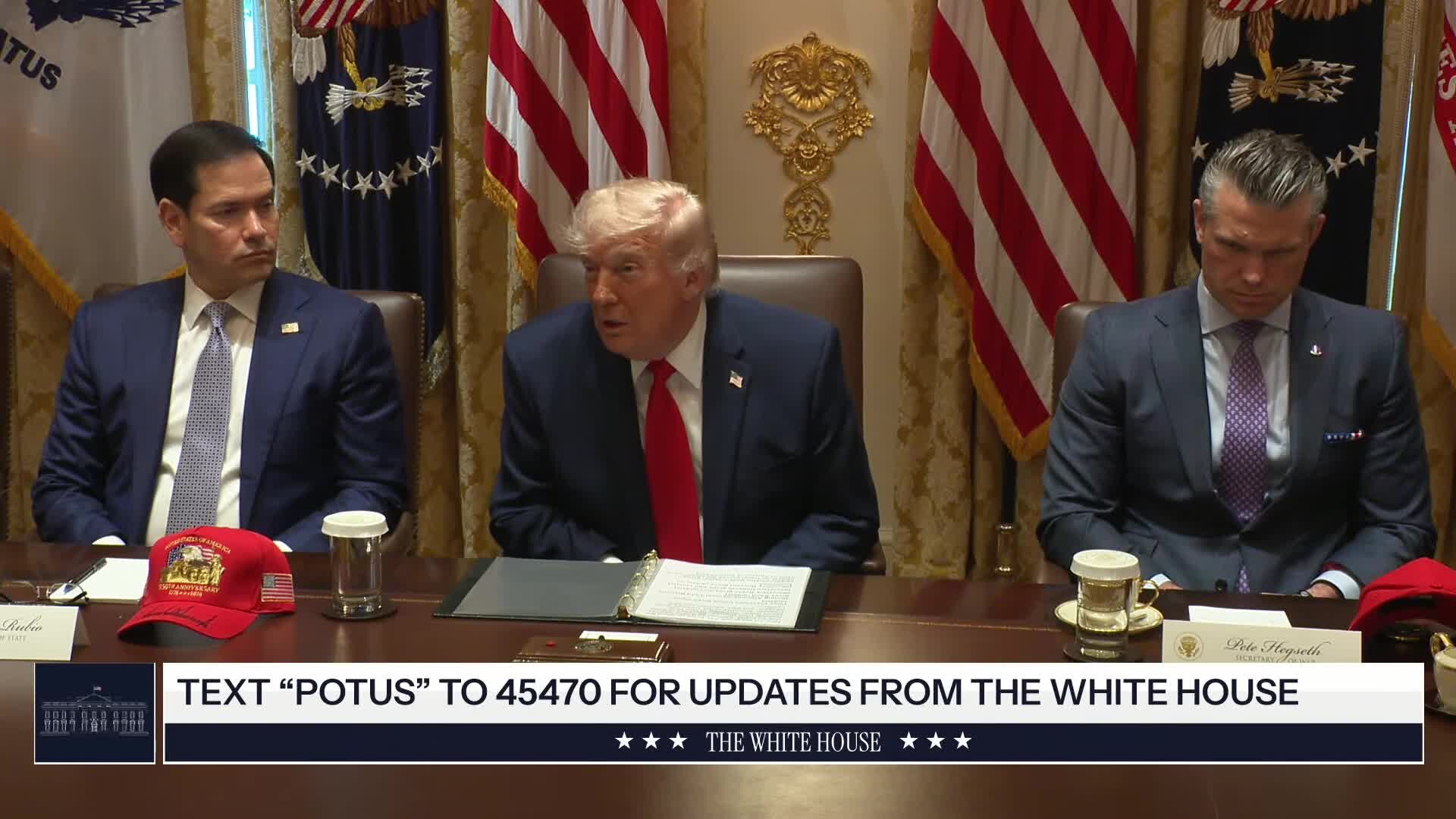
Table of Contents
- What Did Trump Actually Say on May 27?
- The 72-Hour Reversal
- Why Does ‘No Sanctions Relief’ Kill the Deal Architecture?
- The Iranian MOU Leak and the Information War
- How Does This Change Saudi Arabia’s Fiscal Exposure?
- PGSA Permanence and the Hormuz Revenue Trap
- The Nuclear Disposal Dead End
- What Happens When Saudi MOFA Silence Becomes Untenable?
- June 7 and the OPEC+ Reckoning
- Frequently Asked Questions
What Did Trump Actually Say on May 27?
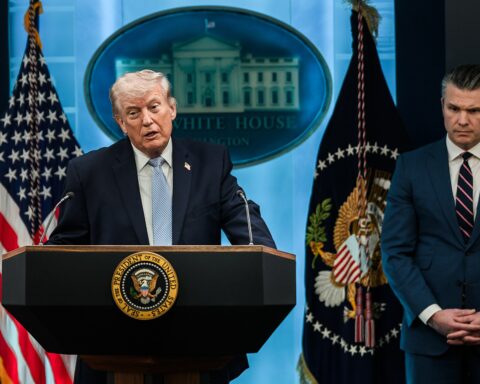
President Trump stated in his cabinet session and a PBS NewsHour interview on May 27 that there would be “no sanctions, no money, no nothing” in any Iran deal. In the NewsHour interview, he added: “Not sanctions relief, no… They’re going to give up their highly enriched uranium, not for sanctions relief. No, no, not at all.” He also ruled out transferring Iran’s HEU to Russia or China. The statements eliminate sanctions relief as a category, not as a negotiating position to be modified through further talks.
The distinction matters for anyone attempting to read this as a maximalist opening. A high demand leaves room for concession — Trump asking for more so he can settle for less. A categorical denial restructures the negotiation’s possibility space. “We’re not talking about any easing of sanctions or giving money” is not a price. It is a refusal to have the conversation about price.
Trump’s simultaneous demand that Iran’s HEU come to the United States — rather than to Russia or China, as the 2015 JCPOA arrangement allowed — closes the compromise pathway that negotiators had identified as the most plausible route to Iranian compliance.
In the same cabinet session, Trump added: “I don’t care about the midterms.” The remark, reported by CNN, signals that domestic political pressure will not accelerate his timeline. For Saudi Arabia — which needs the deal to close before its fiscal position deteriorates further — this patience is not reassuring. It is the asymmetry that has defined this negotiation from the beginning: Washington can afford to wait. Riyadh cannot.
The Middle East briefing 3,000+ readers start their day with.
One email. Every weekday morning. Free.
The same cabinet session also produced a second demand: Trump told his Cabinet that Saudi Arabia must join the Abraham Accords as a condition of any Iran deal. That demand made Saudi Arabia the closing cost of a negotiation it was never invited to join.
The 72-Hour Reversal
Three days before Trump’s cabinet meeting, a different version of the deal existed. Axios reported on May 24 what it described as the framework Trump was “close to signing” — a structure that included the unfreezing of Iranian assets and sanctions relief sequenced to Hormuz reopening. Secretary of State Rubio described it publicly as “a pretty solid thing on the table” and suggested finalisation was “a couple of days” away.
The Axios reporting was specific enough to function as a de facto leak of deal architecture. It described phased sanctions relief as a core mechanism — the instrument through which Iran would accept constraints on its nuclear programme and agree to dismantle the PGSA. That reporting was not speculative. It aligned with Rubio’s own characterisation. The May 24 framework was the baseline against which Trump’s May 27 reversal must be measured.
When Trump said “no sanctions, no money, no nothing,” he was not contradicting Iranian claims or media speculation. He was contradicting the deal his own Secretary of State was describing to press 72 hours earlier. Rubio said “a couple of days.” Three days later, the president eliminated the deal’s structural foundation.
The reversal’s significance for Saudi Arabia lies in its retroactive quality. Riyadh’s silence through Trump’s “largely negotiated” framing was calibrated to a deal that included sanctions relief. The kingdom accepted exclusion from five rounds of talks because the expected outcome — Hormuz reopening, PGSA termination, oil market stabilisation — served Saudi interests even without Saudi participation. Trump eliminated the expected outcome while Saudi Arabia was still observing Eid.
Why Does ‘No Sanctions Relief’ Kill the Deal Architecture?
Sanctions relief was the load-bearing mechanism of the US-Iran deal framework — the instrument through which Hormuz reopening, asset unfreezing, and nuclear concessions were to be sequenced and financed. Removing it does not leave a smaller deal. It collapses the architecture, because Iran’s deputy foreign minister Gharibabadi stated on May 18 that any agreement must ensure “an end to the war on all fronts and lift the naval blockade and sanctions.”
Nine days separated Gharibabadi’s precondition from Trump’s categorical elimination of it. The two positions are now mutually exclusive propositions occupying the same negotiation.
The $24 billion in frozen Iranian assets had already become the proximate deadlock before May 27. Iran demanded $12 billion at signing and $12 billion at the 60-day mark. The US insisted that Hormuz must reopen before any assets were released. When the Doha trifecta — parliamentary speaker Ghalibaf, foreign minister Araghchi, and central bank governor Hemmati — departed Qatar on May 26 without signing, the sequencing of that $24 billion was the immediate reason for non-signature.
Trump’s May 27 statement transcends the sequencing problem. He did not argue that assets should be released later rather than sooner. He argued that they should not be released at all. “No sanctions, no money, no nothing” eliminates not just the $24 billion but the concept of financial concession as a negotiating instrument.
Iran now faces three categorical incompatibilities with the US position: Araghchi’s standing demand that “zero enrichment = no deal”; the Lebanon clause that Araghchi confirmed must remain in any agreement; and the elimination of sanctions relief. Each side has described its position as non-negotiable. Three non-negotiable demands occupying the same negotiation produce no solution space.
Suzanne Maloney of the Brookings Institution has observed that Iran has “withstood more pressure than any other economy in history, and that hasn’t produced the collapse of the regime or more reasonable positions.” Trump’s categorical stance assumes that removing the incentive will produce compliance, but Iran’s programme survived the maximum pressure campaign of 2018–2021 while accelerating enrichment rather than abandoning it.
The Iranian MOU Leak and the Information War
Hours before Trump’s cabinet meeting, Iranian state television released what it described as an initial MOU draft. The document claimed three provisions: joint Iran-Oman management of Hormuz traffic; US withdrawal of military forces from Iran’s vicinity; and US lifting of the naval blockade on Iranian ports. The White House called it “a complete fabrication” and stated that “nobody should believe what Iranian state media is putting out.”
The White House did not specify which elements were false. A blanket denial that declines to identify the fabricated provisions is an information-war response, not a factual correction. It is possible that some elements of the Iranian leak reflect actual discussion points and others do not. The administration chose not to clarify, leaving the denial as comprehensive and therefore unverifiable.
The timing was precise. Iran’s leak and Trump’s categorical denial arrived on the same day — Eid al-Adha — creating a diplomatic environment in which both sides were simultaneously accusing the other of fabrication. For observers attempting to assess the deal’s status, May 27 produced not clarity but epistemic collapse: two contradictory accounts, each declared authoritative, neither independently verifiable.
For Saudi Arabia, the information war between Washington and Tehran is structurally irrelevant. Both versions of the deal — the Iranian MOU leak and the Axios-reported framework that Trump subsequently repudiated — share a common architectural feature: neither includes Saudi Arabia. Joint Iran-Oman management of Hormuz excludes Riyadh. Sequenced sanctions relief negotiated bilaterally excludes Riyadh. The question of which version is accurate does not change the kingdom’s position in either.
How Does This Change Saudi Arabia’s Fiscal Exposure?
Brent crude closed at $94.29/bbl on May 27 — down 5.31% on the day — driven by market optimism that a deal would close and reopen Hormuz. At that price, Saudi Arabia sits $14–17 below the PIF-inclusive fiscal breakeven of $108–111/bbl estimated by Bloomberg Economics. Every dollar below that threshold translates directly into additional sovereign borrowing requirements, compounding a Q1 deficit that has already exceeded full-year projections.
| Metric | Figure | Source |
|---|---|---|
| Brent close, May 27 | $94.29/bbl (−5.31%) | Benzinga / CNBC |
| PIF-inclusive fiscal breakeven | $108–111/bbl | Bloomberg Economics |
| IMF narrow breakeven | $86.60/bbl | IMF |
| Gap to PIF-inclusive breakeven | −$14 to −$17/bbl | Derived |
| Q1 2026 deficit | SAR 125.7B ($33.5B) | Saudi MOF / Newsweek |
| Q1 deficit vs. full-year budget target | 194% | Derived |
| Defence expenditure, Q1 YoY change | +26% | Saudi MOF |
| Saudi production (actual) | 6.879 mbpd | OPEC |
| OPEC+ quota (June) | 10.291 mbpd | OPEC |
| Production gap | 3.41 mbpd | Derived |
| Petroline capacity ceiling | 5.0 mbpd | Aramco |
| Hormuz-dependent volume | ~2.75 mbpd | Derived (7.76 production − 5.0 Petroline) |
The paradox is specific. Deal optimism pushes oil prices down, which hurts Saudi revenue. Deal collapse would eventually push prices back up, because Hormuz disruption supports higher crude. But in the interim, Riyadh absorbs the fiscal damage of optimism-driven price declines while holding none of the diplomatic instruments that determine whether the deal closes or collapses. The kingdom is a price-taker in a market moved by negotiations it does not attend.
The Q1 deficit of SAR 125.7 billion ($33.5 billion) had already reached 194% of the full-year budget target before Trump’s May 27 statement. Defence expenditure — up 26% year-on-year — is the primary driver, a cost directly attributable to the war that Saudi silence was supposed to help end through diplomatic resolution. The kingdom is financing a war-driven deficit with oil revenue that the war itself has suppressed below breakeven.
The Atlantic Council’s 2026 MENA outlook identified the structural dynamic before the Eid-day reversal: “Three major macro trends will shape MENA in 2026, with pressure from lower energy prices forcing governments across the region to shift from abundant fiscal cushions toward one that requires sharper prioritisation.” Saudi Arabia’s fiscal cushion has not merely thinned. It has been punctured by a war whose diplomatic resolution its largest ally just made structurally less achievable.

PGSA Permanence and the Hormuz Revenue Trap
The Persian Gulf Shipping Authority has been operational since May 18, collecting approximately $2 million per vessel in Chinese yuan or bitcoin. Iran demanded sanctions relief before discussing the PGSA’s termination. Trump’s elimination of sanctions relief as a category means, by direct implication, that the PGSA’s termination is no longer on the negotiating table. The toll regime is now permanent until a fundamentally different incentive structure emerges — and none is visible.
For Saudi Arabia, PGSA permanence creates quantifiable exposure. The Petroline — the East-West pipeline that bypasses Hormuz via Yanbu on the Red Sea — has a ceiling capacity of 5 mbpd against Saudi production of 7.76 mbpd. The arithmetic produces 2.75 mbpd of Saudi output that is Hormuz-dependent regardless of alternative routing. That volume now transits waters governed by an Iranian toll authority collecting revenue in currencies designed to evade US sanctions enforcement.
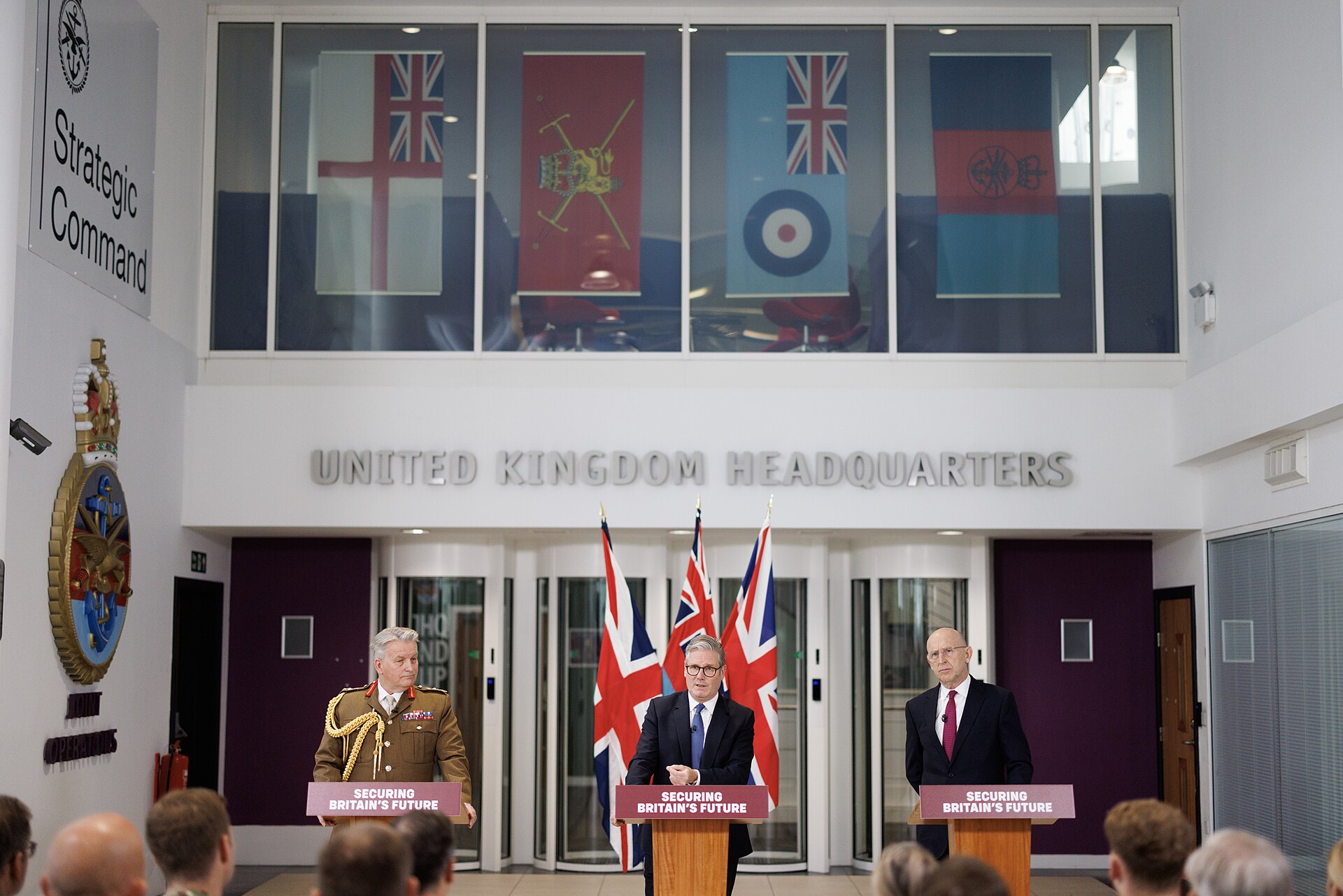
The UK-France 40-nation Hormuz coalition — announced with command authority at Northwood under Admiral Radakin — does not include Saudi Arabia in any governance layer. Neither the April 17 Paris summit attended by 51 nations nor the May 12 joint statement signed by 27 countries included Riyadh. Saudi Arabia denied US airspace for Project Freedom in early May and was subsequently excluded from both the US-led deal process and the European-led alternative. The kingdom now sits outside two separate Hormuz governance architectures while 2.75 mbpd of its oil flows through the strait they govern.
The war initially produced paradoxical benefits for Saudi Arabia — higher oil prices, Red Sea corridor traffic diverted from Suez, a wartime alibi for megaproject delays. But those benefits assumed temporariness. A Hormuz disruption that ends with a deal is a manageable crisis. A Hormuz disruption that becomes permanent because the deal architecture collapsed is a structural reordering — one in which Saudi Arabia’s revenue, routing, and institutional standing are all worse than before the war began.
The Nuclear Disposal Dead End
Trump’s insistence that Iran’s HEU come to the United States — not Russia, not China — attracted less immediate commentary on May 27 than the sanctions-relief headline but carries equal structural weight. It closes the disposal pathway that the 2015 JCPOA relied upon and that negotiators had been exploring as a potential compromise.
Under the JCPOA, Russia served as custodian for Iran’s enriched uranium stockpile — a mechanism that allowed Tehran to claim it had not surrendered sovereignty to Washington while meeting the deal’s technical requirements. Trump’s demand eliminates this face-saving architecture. Iran cannot transfer nuclear material to the country conducting air operations against its territory and describe the transaction domestically as anything other than capitulation.
Araghchi’s standing position — “zero enrichment = no deal” — was already a red line. Trump’s HEU demand extends the distance between the two positions rather than narrowing it. Mojtaba Khamenei’s Arafah Day doctrine — published one day before Trump’s cabinet meeting — declared that “nations and lands will no longer serve as shields for American bases.” The doctrinal hardening preceded the sanctions statement, creating a sequence in which Iran’s ideological position stiffened before Washington’s material position did.
For Saudi Arabia, the nuclear impasse adds a specific layer to its structural exclusion. The kingdom has no role in determining Iran’s nuclear ceiling — that negotiation occurs exclusively between Washington and Tehran. But the ceiling that emerges, or fails to emerge, determines the environment in which Saudi Arabia’s own nuclear programme develops. The Stimson Center’s Nour Eid argued in March 2026 that Saudi nuclear calculus now reflects eroding US security guarantees rather than Iran’s programme alone. Trump’s May 27 statement erodes those guarantees further — not through withdrawal from the region but through demonstrated inability to close the deal that was supposed to make Saudi nuclear restraint rational.
What Happens When Saudi MOFA Silence Becomes Untenable?
Saudi Arabia’s Ministry of Foreign Affairs has maintained institutional silence for more than eight consecutive days — issuing no formal statement on its exclusion from nuclear negotiations, the PGSA toll regime, the Lebanon clause’s implications for regional security, or the five rounds of US-Iran talks from which it was absent. Hajj and Eid al-Adha provided the last defensible calendar cover. That cover expires on May 28, and the inventory of issues requiring response has grown larger during the silence than it was before it began.
The silence was strategic, not accidental — a calculated bet that the deal would close on terms favourable enough to make Saudi non-participation tolerable in retrospect. Riyadh’s bilateral channels remained active: Crown Prince Mohammed bin Salman’s Eid call to President Pezeshkian demonstrated warmth at the head-of-state level. But bilateral warmth and multilateral exclusion are not substitutes for each other. The call produced no commitment on nuclear ceilings, no PGSA concession, no modification to the Lebanon clause, and no Saudi seat at any future negotiating round.
Post-Eid, MOFA confronts a compounding problem. On May 25-26, CENTCOM struck Iranian missile launch sites and two IRGC fast boats without consulting Riyadh — the first US military action inside Saudi Arabia’s Hajj no-escalation assumption. On May 26, Mojtaba Khamenei’s 14-page doctrine document explicitly named host states of American bases as co-belligerents. On May 27, Trump eliminated sanctions relief. Each development requires a different diplomatic response, and several require responses that conflict with each other.
Condemning Trump’s reversal aligns Riyadh with Tehran — unacceptable. Endorsing it means accepting that the deal Saudi silence was protecting is dead — also unacceptable. Ignoring it extends a silence that has already lasted eight days and is producing operational consequences: the PGSA continues collecting tolls, the fiscal gap widens, the UK-France coalition consolidates governance authority without Saudi input, and the OPEC+ JMMC approaches on June 7 with no Saudi diplomatic narrative prepared.
Newsweek reported, citing a former Saudi adviser, that “Riyadh is firmly opposed to any US or Israeli military action against Iran at this stage.” The preference is for diplomacy. But Trump’s May 27 statement eliminated the instrument — sanctions relief — that made a negotiated outcome structurally possible, and Saudi Arabia’s eight-day silence has produced no formal position on any of the three governance architectures now operating around Hormuz without its participation.
June 7 and the OPEC+ Reckoning
The OPEC+ Joint Ministerial Monitoring Committee convenes on June 7 — eleven days after Trump’s categorical reversal. Saudi Arabia will attend with a production level of 6.879 mbpd against a June quota of 10.291 mbpd, a gap of 3.41 mbpd that represents roughly a third of its June quota. The gap is not voluntary. It is the product of Hormuz disruption, PGSA interference, and the war’s operational constraints on export logistics.
Before May 27, Riyadh could have framed the production gap as temporary — a function of a conflict whose diplomatic resolution was imminent. Rubio’s “a couple of days” and Trump’s “largely negotiated” supported that framing. After May 27, the framing collapses. If the deal’s structural foundation has been removed, the production gap is not a temporary disruption with an approaching end date. It is the new baseline until either a fundamentally different deal emerges or the PGSA is dismantled through non-diplomatic means.
The JMMC forces a choice that MOFA silence has so far deferred. Saudi Arabia must either invoke force majeure — formally acknowledging that Hormuz disruption prevents quota compliance — or maintain the fiction that its production levels reflect strategic restraint. Force majeure concedes that the world’s swing producer cannot deliver its own oil to market. The alternative, presenting 3.41 mbpd of involuntary shortfall as voluntary restraint, asks every delegation at the table to ignore a deficit running at 194% of the kingdom’s annual budget target.
The interaction between oil prices and deal probability creates a specific fiscal trap. Deal optimism drove Brent to $94.29 on May 27 — below the PIF-inclusive breakeven. If that optimism fades as markets digest Trump’s categorical reversal, prices may recover on renewed disruption risk. But any recovery would be slow, contested by competing supply signals, and insufficient to close the gap to $108–111/bbl before the June 7 session. Saudi Arabia attends the JMMC in a fiscal position the deal was supposed to improve and that the deal’s architect just made worse.
The kingdom’s position after Eid is defined by a structural feature that pre-dated Trump’s cabinet meeting but that his statement made irreversible: maximum exposure across every relevant dimension and zero instruments to alter any of them. Riyadh cannot influence the US-Iran negotiation — it was excluded from all five rounds across 106 days. It cannot unilaterally reopen Hormuz — it has no role in either governance architecture. It cannot increase production through Petroline — the 5 mbpd ceiling is a physical constraint. It cannot reduce spending — defence expenditure is dictated by a war whose pace it does not set. And as of May 27, it cannot point to an imminent deal as evidence that the current pain is temporary. The JMMC meets in eleven days. MOFA has issued no formal statement in eight days. The deal framework the silence was calibrated to protect no longer includes a sanctions-relief mechanism.
Frequently Asked Questions
How does Trump’s May 27 position compare to what was offered under the 2015 JCPOA?
The JCPOA unfroze approximately $100–150 billion in Iranian assets and provided comprehensive, phased sanctions relief — the largest sanctions-reversal package in modern diplomatic history. The 2026 framework under discussion involved only $24 billion in frozen assets, an order of magnitude smaller. Trump’s categorical rejection of even this reduced figure suggests the objection is not to the amount but to the concept of financial concession. The 2015 deal was negotiated over 20 months with six world powers at the table; the 2026 process has been bilateral for 106 days with no multilateral framework and no Gulf Arab representation in any round.
Has any US lawmaker formally demanded sanctions enforcement against vessels paying the PGSA toll?
Senator Tom Cotton (R-AR) wrote directly to Treasury Secretary Scott Bessent demanding sanctions enforcement against entities paying Iran’s PGSA transit fee. The letter argued that PGSA payments — collected in Chinese yuan or bitcoin — constitute sanctions evasion under existing US law. If Treasury acts on Cotton’s demand, vessels transiting Hormuz via the PGSA would face US secondary sanctions, creating direct compliance risk for Saudi Arabia’s Asian crude customers. The majority of Aramco’s export volume flows to buyers in China, Japan, South Korea, and India — all of which must choose between paying the PGSA toll to receive Saudi oil and maintaining access to the US dollar-clearing system.
Can Saudi Arabia use the Aramco dividend to offset its fiscal shortfall?
The Aramco base dividend payable on June 9 is locked at approximately $21.89 billion for Q1 2026 — a 3.5% year-on-year increase that cannot be adjusted downward regardless of oil prices. Total expected 2026 Aramco dividends are approximately $87.6 billion. The government’s 98.5% ownership stake means almost all dividend cash flows back to the sovereign. But the dividend is a return of the state’s own equity, not new revenue. In deficit conditions, maintaining a rising dividend while simultaneously borrowing to fund government operations amounts to circular financing — paying the owner from the company’s profits while the owner borrows to cover the gap those profits cannot fill.
Does Saudi Arabia have an independent nuclear path regardless of the Iran deal’s outcome?
Nour Eid of the Stimson Center argued in a March 23, 2026 paper published via NuclearTownhall that “Saudi Arabia’s Nuclear Path Will Not Depend on Iran or the War’s Outcome.” Eid argues that eroding US security guarantees — not Iran’s programme alone — now drive Saudi nuclear calculus. A structural asymmetry reinforces the point: Iran’s nuclear ceiling is set through negotiation with Washington, while Saudi Arabia’s would be constrained by the US-Saudi 123 Agreement framework governing civilian nuclear cooperation, which contains proliferation restrictions the Iran deal does not. Crown Prince Mohammed bin Salman stated in a 2018 CBS interview that Saudi Arabia would acquire nuclear weapons “within weeks” if Iran did — the most explicit public articulation of conditional posture by a serving Saudi leader.
What did the Iranian state TV draft MOU claim that the White House denied?
The leaked draft claimed three provisions not previously reported in detail: joint Iran-Oman management of all Hormuz traffic, which would establish permanent Iranian governance authority over the strait’s commercial shipping lanes; US withdrawal of military forces from Iran’s “vicinity,” a term left geographically undefined but potentially encompassing Prince Sultan Air Base and Fifth Fleet assets in Bahrain; and a US commitment to lift the naval blockade on Iranian ports, a separate instrument from sanctions relief that would require CENTCOM operational changes. The White House’s blanket denial as “a complete fabrication” addressed the document as a whole without specifying which provisions were false. Oman’s foreign ministry issued no public statement on the joint-management claim that named it as co-administrator.