
RIYADH — Forty-eight hours after Saudi Arabia committed roughly $1 trillion in investments and accepted a $142 billion arms package at the Future Investment Initiative in Miami, the Kingdom co-signed a joint statement with seven Muslim-majority nations defending Palestinian access to Al-Aqsa Mosque and reaffirming that the 144-dunam compound is “a place of worship exclusively for Muslims.” The eight signatories — Turkey, Egypt, Indonesia, Jordan, Pakistan, Qatar, Saudi Arabia, and the UAE — condemned the longest continuous closure of the mosque since Israel captured East Jerusalem in 1967, a closure that has now stretched past thirty days and spanned the entirety of Ramadan 2026. For Riyadh, the statement is a diplomatic instrument. It is also an admission that the two pillars of Saudi regional authority — its American security partnership and its claim to Islamic custodianship — are pulling in opposite directions, and that the Iran war has made the gap between them impossible to conceal.
Table of Contents
- The Forty-Eight-Hour Gap
- What Does the Eight-Nation Joint Statement on Al-Aqsa Actually Say?
- The 1924 Split That Still Governs
- Why Did Saudi Normalization With Israel Collapse?
- The Iran War Was Supposed to Bury Palestine
- Cardinal Pizzaballa and the Ecumenical Dimension
- Building an Islamic Security Architecture While Buying American
- Can MBS Afford Normalization With 99 Percent Opposition?
- What Riyadh Is Managing — and What It Cannot
- Frequently Asked Questions
The Forty-Eight-Hour Gap
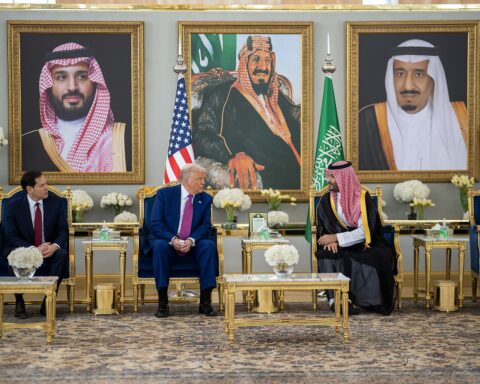
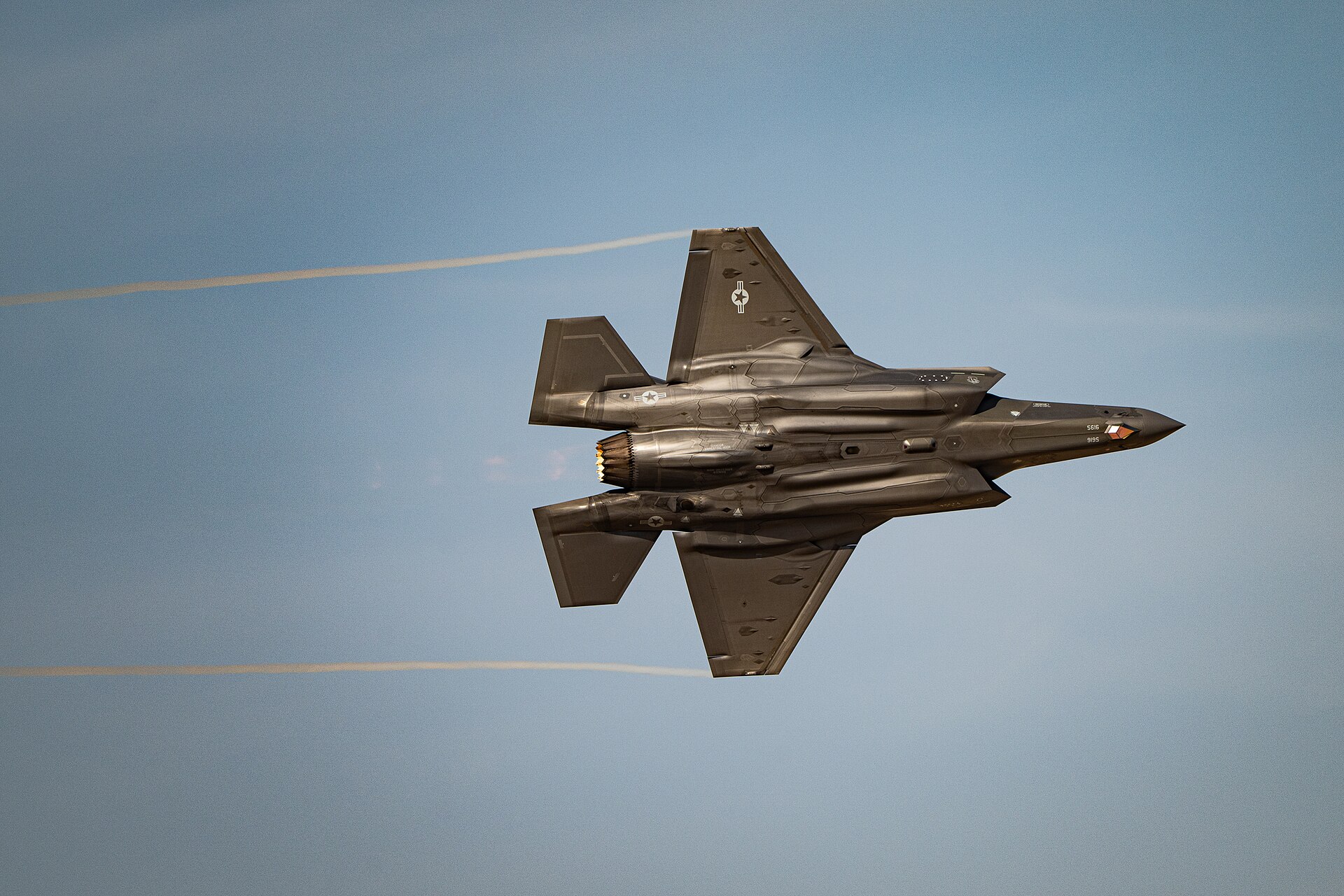
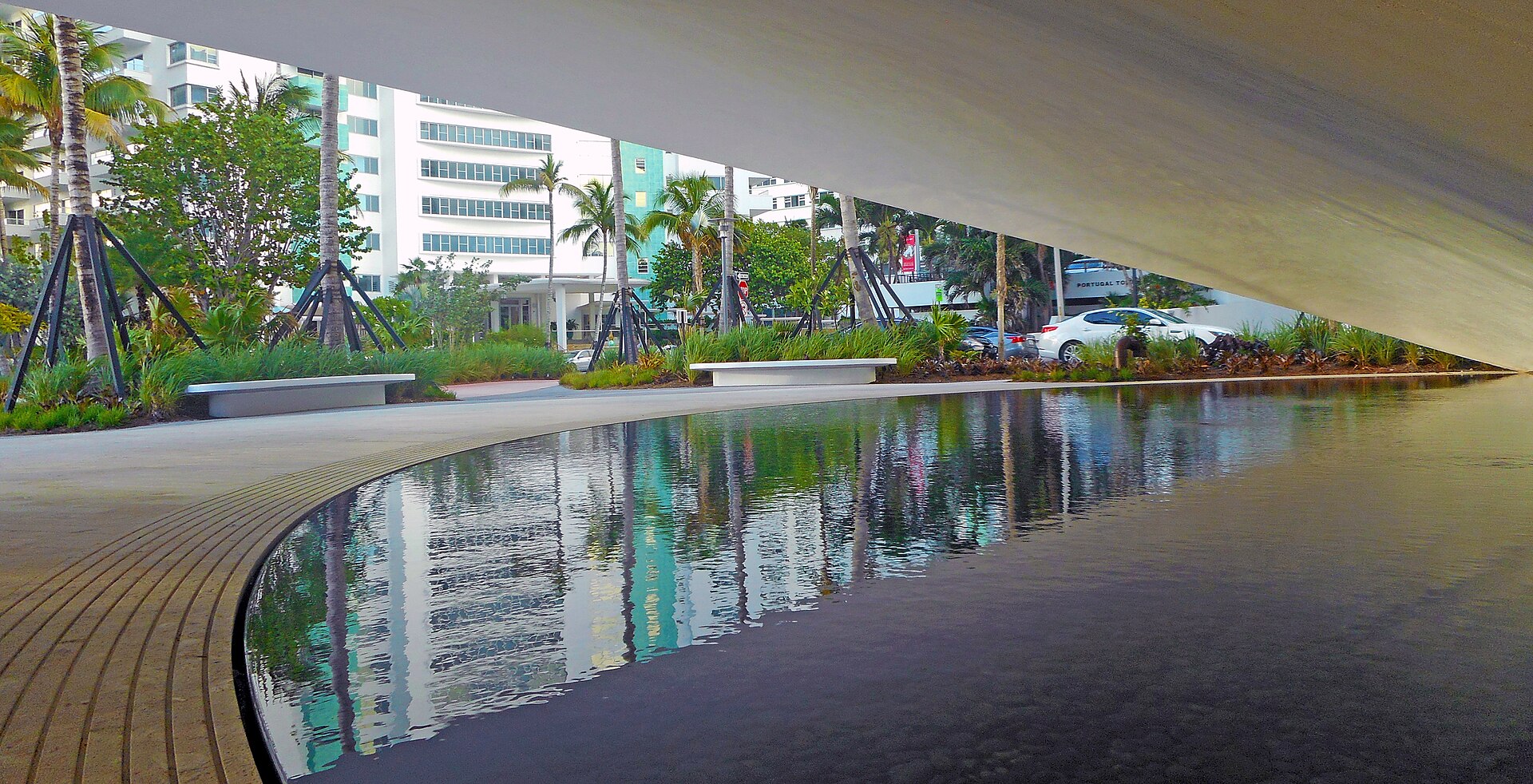
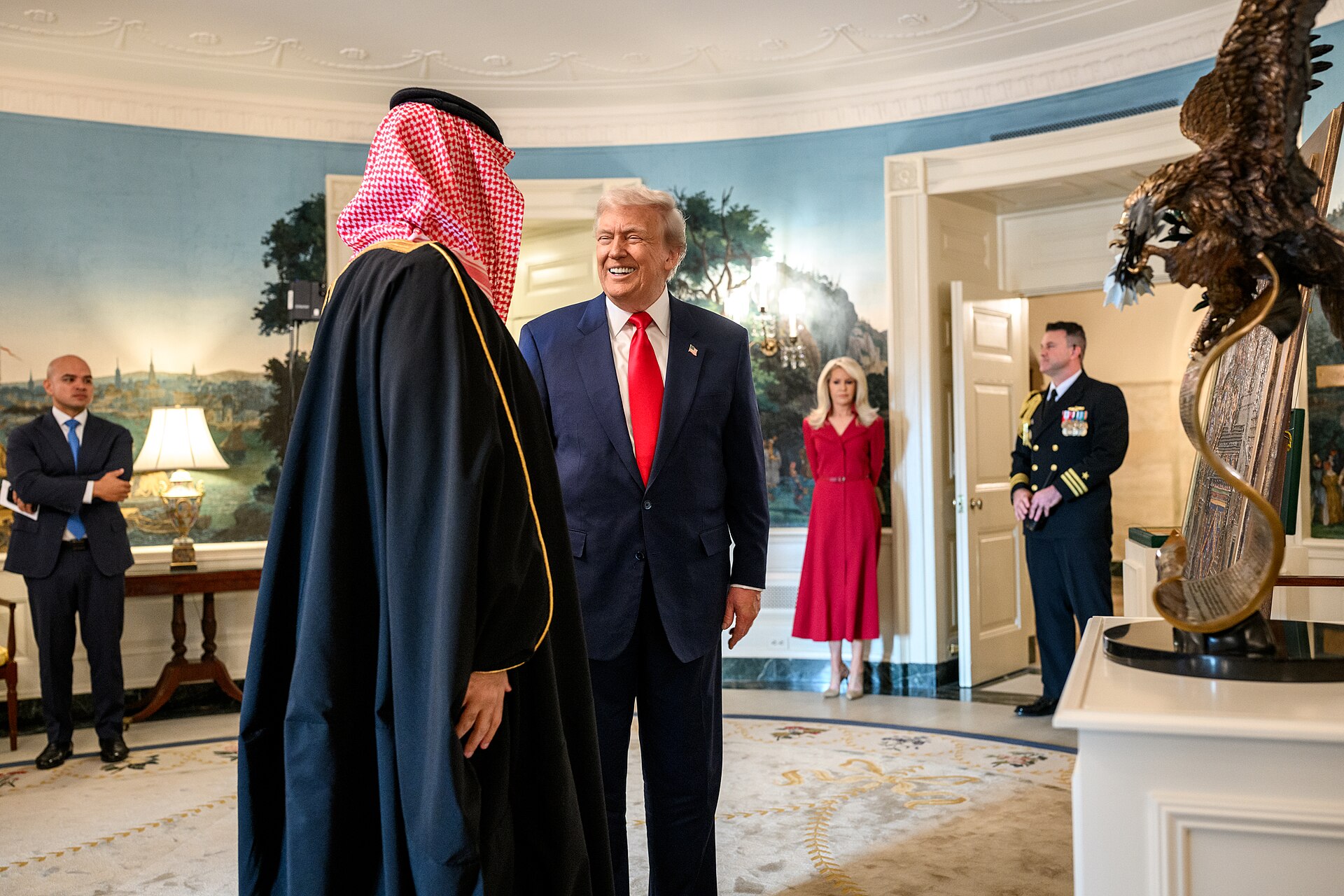
On March 28, at the Faena Forum in Miami Beach, Donald Trump stood beside Saudi officials and announced the first-ever sale of F-35 stealth fighters to the Kingdom. “For the very first time, we agreed to sell Saudi Arabia perhaps the most capable fighter jet ever built, the F-35,” Trump said, before pivoting to his preferred subject. “We did the Abraham Accords. I hope you’re going to be getting into the Abraham Accords finally.” The room — a relocated version of Riyadh’s marquee investment conference, staged on American soil for the first time because the Iran war made the original venue untenable — applauded.
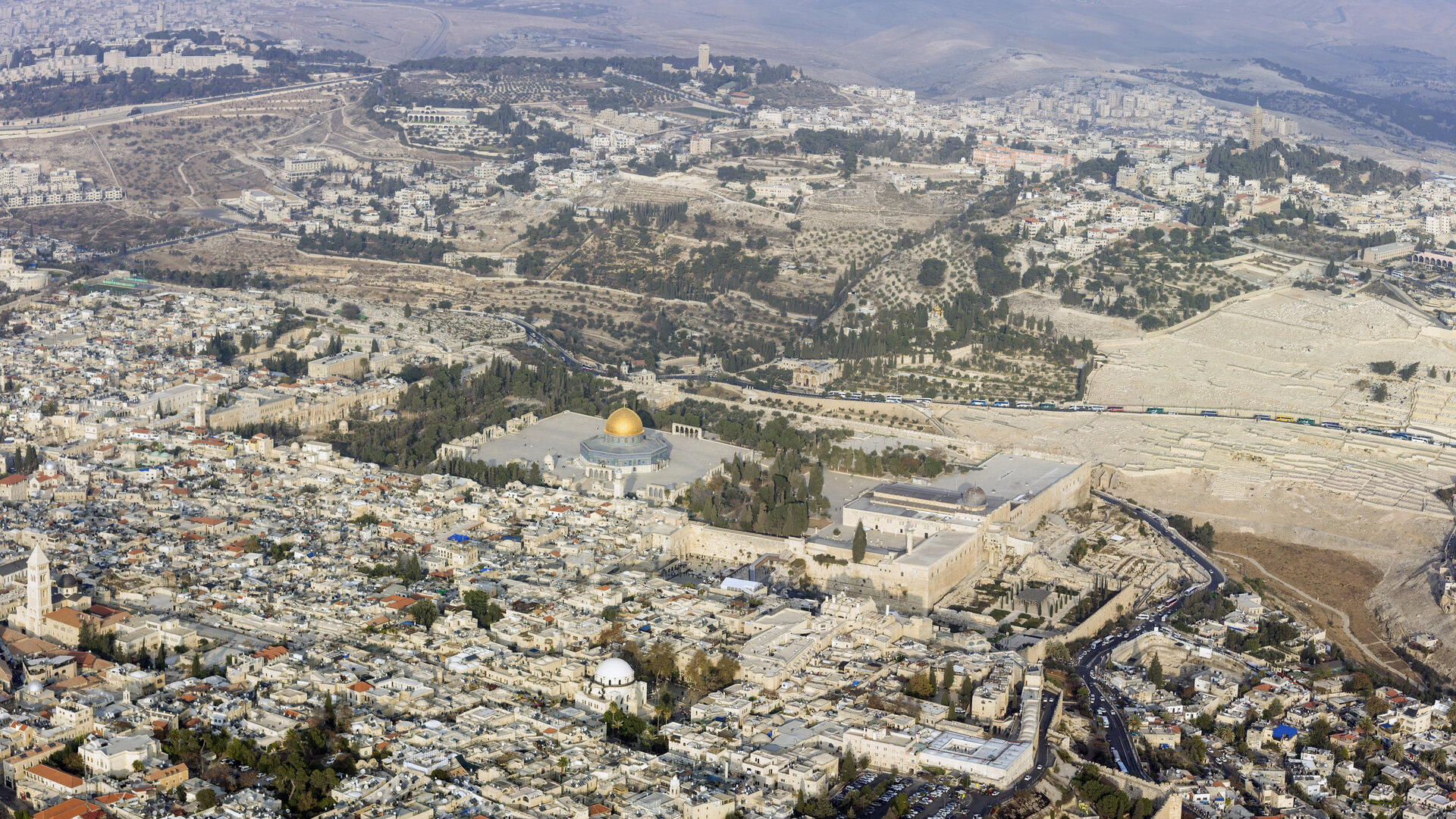
Forty-eight hours later, on March 30, Saudi Arabia’s name appeared on a joint statement with Turkey, Pakistan, Egypt, Jordan, Qatar, the UAE, and Indonesia condemning Israel’s “continued closure of the blessed Al-Aqsa Mosque” and demanding the immediate reopening of the compound to Muslim worshippers. The statement declared the Jordanian Waqf the sole legal custodial authority over the site. It defined the compound at 144 dunams — 35.6 acres — and declared it an exclusively Muslim place of worship.
Between these two documents, separated by a weekend, lies the structural contradiction that Mohammed bin Salman has managed through ambiguity for seven years and that the Iran war is now forcing into the open. One document binds Saudi Arabia deeper into an American security architecture whose architect explicitly demands normalization with Israel as the price of admission. The other binds Saudi Arabia to a coalition of Muslim states defending the third holiest site in Islam against Israeli restrictions — restrictions imposed under the same wartime emergency that the American security architecture is prosecuting.
What Does the Eight-Nation Joint Statement on Al-Aqsa Actually Say?
The March 30 statement is the second of its kind. The first, issued on March 11, condemned the twelfth consecutive day of closure. The second, nineteen days later, escalated the language — adding condemnation of the blocking of Christian access on Palm Sunday and explicitly warning against any alteration to the “historical and legal status quo” of Jerusalem’s holy sites. Both statements name the same eight signatories. Both reaffirm that the “Jerusalem Endowments and Al-Aqsa Mosque Affairs Department, affiliated with the Jordanian Ministry of Awqaf and Islamic Affairs, is the legal entity with exclusive jurisdiction” over the compound, according to Al Jazeera’s reporting on the initial March 12 text.
The language on custodianship is worth pausing over. Middle East Eye had reported, in the context of pre-war normalization negotiations, that Saudi Arabia was seeking Waqf representation in Jerusalem — a claim to a seat at the custodial table that Jordan has held since the 1924 expulsion of the Hashemites from the Hejaz. In the March statements, Riyadh explicitly names the Jordanian Waqf as the legal authority. That is either a concession or a tactical retreat, and the distinction matters less than the fact that it was made publicly, under the signatures of eight governments, during a war.
The Middle East briefing 3,000+ readers start their day with.
One email. Every weekday morning. Free.
The broader diplomatic context is even more pointed. On February 22 — four days before the first Iranian strikes — a wider coalition of fifteen nations plus the OIC, Arab League, and GCC had issued a joint statement condemning US Ambassador to Israel Mike Huckabee’s assertion that it would be “acceptable for Israel to control Arab territories, including the occupied West Bank,” according to the Turkish Ministry of Foreign Affairs. The March statements narrowed the coalition but sharpened the focus: from land to prayer, from territory to worship, from politics to something closer to theology.
The 1924 Split That Still Governs
The custodianship question is 102 years old. When Abdulaziz ibn Saud’s forces conquered the Hejaz in 1924, they expelled the Hashemite dynasty from Mecca and Medina. The Hashemites, under British patronage, pivoted to Transjordan and later to their custodianship of Jerusalem’s holy sites — a role formalized in the 1994 Wadi Araba peace treaty between Jordan and Israel and reaffirmed in a 2013 Jordanian-Palestinian agreement. King Fahd adopted the title “Custodian of the Two Holy Mosques” in October 1986, replacing the previous “His Majesty” — a deliberate branding of the Saudi monarchy’s religious legitimacy around Mecca and Medina specifically, not Jerusalem.
The result is a division of Islamic custodial authority that predates Israel, predates the Gulf states, and predates the modern Middle Eastern order entirely. The Sauds hold the Hejaz. The Hashemites hold the Haram al-Sharif. The joint statement on March 30 navigates this partition with diplomatic precision: Saudi Arabia signs as a co-equal with Jordan, not above it, and names the Jordanian institution as the legal custodian. For a monarchy that styles itself the leader of the Islamic world, this is a studied act of deference — and one that becomes harder to maintain as the political cost of the American alliance rises.
King Salman has personally called for international action against Israeli violations in Jerusalem before. The institutional memory of the Saudi state on this question is long. But the institutional memory now collides with institutional dependence on the power that enables the violations.
Why Did Saudi Normalization With Israel Collapse?
Saudi normalization with Israel collapsed because the Gaza war, the West Bank escalation, and near-total Saudi public opposition made the political cost unbearable, while the Iran war gave Riyadh direct American security guarantees that eliminated the strategic rationale for recognizing Israel in the first place.
In September 2023, Mohammed bin Salman told Fox News that normalization with Israel was “getting closer every day.” Fourteen months later, in November 2024, he stood before the Shura Council and accused Israel of committing genocide against the Palestinians. The arc from one statement to the other — from commercial pragmatism to the most charged word in international law — tracks the collapse of the normalization project under the weight of October 7 and its aftermath.
Yoel Guzansky of the Institute for National Security Studies in Tel Aviv, writing in February 2026, described the Saudi calculus bluntly: the Kingdom now identifies “more risks than opportunities in normalizing relations with Israel.” Normalization, Guzansky wrote, is “currently off the table, with any resumption contingent on developments in the Palestinian arena.” Saudi Arabia stated in February 2024 that “there will be no diplomatic relations with Israel unless an independent Palestinian state is recognized on the 1967 borders with East Jerusalem as its capital.” That position has not been formally revised.
The INSS analysis identified a paradox that makes the March 30 statement legible. Iran’s military weakness — roughly 180 of 470 missile launchers still operational, about 40 percent capacity — and the destruction of the China-brokered 2023 Saudi-Iranian detente have pushed Riyadh back into American arms. But the same American embrace reduces Saudi incentive to normalize with Israel, because the security rationale for normalization — the need for an anti-Iran partner — has been replaced by a direct US partnership. Why pay the domestic political cost of recognizing Israel when Washington is already providing F-35s, Patriot batteries, and THAAD coverage?
Bloomberg reported on February 2 that Israel was “increasingly doubtful it can normalize relations with Saudi Arabia any time soon, dismayed by what it sees as hostile moves by the kingdom to expand its defense ties and confront the UAE.” Netanyahu, on the eve of MBS’s Washington visit, formally restated his opposition to any future Palestinian state — a concession to his far-right coalition that directly undercut the normalization framework Trump was trying to assemble.
The Iran War Was Supposed to Bury Palestine
The conventional reading of the Iran war’s political consequences was straightforward: a regional conflict of this magnitude would push the Palestine question to the margins. With Iranian missiles striking Saudi infrastructure, with the Strait of Hormuz under partial blockade, with MBS navigating between escalation and collapse, the closure of Al-Aqsa would register as a minor footnote in a season of larger crises. The war, in this reading, gave Israel cover to impose restrictions that would have generated sustained international pressure in peacetime.
The Israeli police justification for the closure leans on this logic. All holy sites in Jerusalem were closed “to safeguard public safety and human life,” consistent with “nationwide restrictions on public life during the war with Iran and Hezbollah,” according to Al-Monitor. No specific threat to Al-Aqsa was cited. The closure is framed as administrative, not political — a wartime measure, not a religious one.
But the administrative framing has produced a theological fact. Al-Aqsa has now been closed for more than thirty consecutive days. Four consecutive Fridays of Ramadan have passed without Muslim prayer at the site — the first time this has happened since 1967, according to Religion News Service. Israel plans to keep the mosque sealed through Eid al-Fitr and beyond. For the 1.8 billion Muslims for whom Al-Aqsa is the third holiest site in Islam, the distinction between a security closure and a political one is academic. The mosque is shut. Ramadan prayers did not happen. The war provided the pretext. That sequence is its own argument.
Hamas’s spokesperson called the closure “a dangerous historical precedent” and “a blatant violation” of freedom of worship, adding that “the occupation has no sovereignty or legitimacy over any part of the blessed Al-Aqsa Mosque.” The statement was carried by Middle East Monitor on March 11. Whatever one thinks of the source, the sentiment it expresses is shared across the eight governments that signed the joint statement two days later — and across a much wider Islamic public that is watching Riyadh’s response with particular attention.
Cardinal Pizzaballa and the Ecumenical Dimension
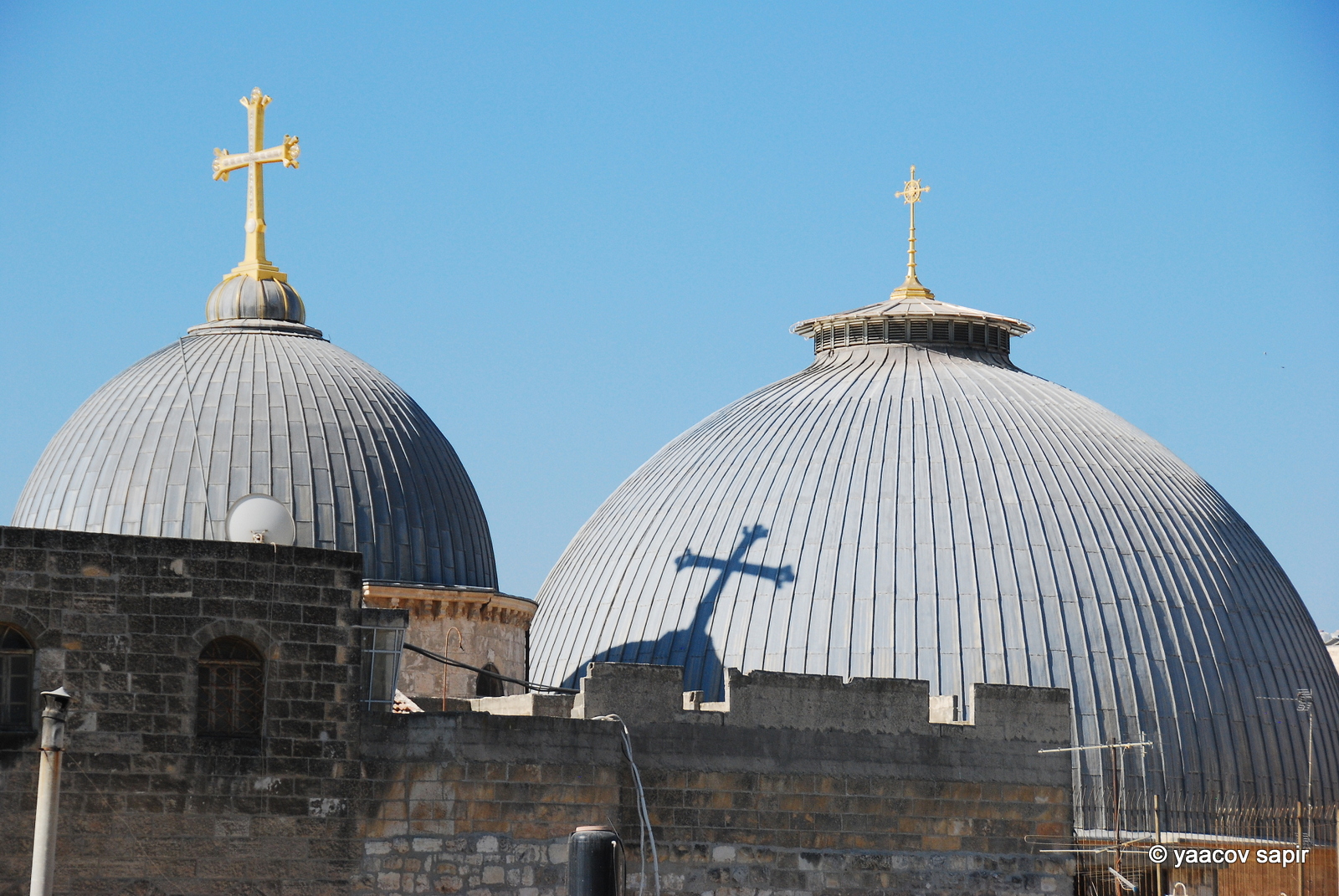
The March 30 statement added a new element absent from its March 11 predecessor: condemnation of the blocking of Christian access to Jerusalem’s holy sites. On March 29 — Palm Sunday — Israeli police physically prevented Cardinal Pierbattista Pizzaballa, the Latin Patriarch of Jerusalem, from entering the Church of the Holy Sepulchre for Mass. It was the first such prevention in centuries.
The Israeli justification cited “safety considerations, the lack of access for emergency vehicles in narrow alleys of the Old City and lack of adequate shelter.” The reversal came within hours, after Netanyahu asked “relevant authorities” to allow Pizzaballa to hold services “as he wishes,” according to CBS News. US Ambassador Mike Huckabee called the initial blocking “an unfortunate overreach already having major repercussions around the world.” Italian Prime Minister Giorgia Meloni said it “constitutes an insult not only to believers, but to every community that recognizes religious freedom.”
For the eight-nation coalition, the Palm Sunday incident was a gift. It transformed the Al-Aqsa closure from an intra-Islamic grievance into a universal religious freedom issue, bringing Vatican-aligned European leaders — including Meloni, a close Netanyahu ally — into alignment with the Muslim foreign ministers’ position. Saudi Arabia, which has spent decades positioning itself as a custodian of interfaith dialogue through the King Abdullah bin Abdulaziz International Centre for Interreligious and Intercultural Dialogue in Vienna, could cite the Christian dimension without appearing to pursue a narrowly sectarian agenda.
Building an Islamic Security Architecture While Buying American
The same month that Saudi Arabia accepted American F-35s, it was building something else entirely. In January 2026, Pakistan, Saudi Arabia, and Turkey began pursuing what Middle East Monitor described as a “regional defense pact amid fears of Israeli domination.” Turkey was advancing toward membership in the Saudi-Pakistan Strategic Mutual Defence Agreement — an arrangement that Western analysts and Arab commentators have both, with varying degrees of seriousness, called an “Islamic NATO.” These are three of the same four nations — the fourth being Egypt — that formed the Islamabad quadrilateral earlier in the crisis.
The overlap between the defense pact signatories and the Al-Aqsa statement signatories is not coincidental. Turkey, Pakistan, Saudi Arabia, and Egypt appear on both lists. So does Jordan, the custodial power. The eight-nation statement on Jerusalem reads differently when placed next to the defense architecture these same nations are constructing: it is not merely a diplomatic communique about holy site access. It is a demonstration that the coalition MBS is assembling at Jeddah and Islamabad can act collectively on the Palestine question, not just the Iran question.
The Middle East Institute’s analysis, published in 2026, placed this in structural terms: the forms of authority that matter most in the Islamic world — religious legitimacy, narrative credibility, convening power — are not commodities Washington can distribute or withhold. Saudi Arabia’s Islamic credentials, the very asset the joint statement is designed to exercise, must be earned through actions the Islamic public recognizes as authentic. Co-signing a statement on Al-Aqsa is one such action. It is also an action that runs directly counter to the normalization agenda that the F-35 sale is designed to advance.
Saudi Arabia’s capacity for simultaneous contradiction is well documented. But the contradictions have a shelf life, and the gap between the FII stage in Miami and the foreign ministers’ statement in March is the kind of gap that closes only when one commitment overtakes the other.
Can MBS Afford Normalization With 99 Percent Opposition?
A Washington Institute for Near East Policy poll conducted in August 2025 found that 99 percent of Saudi citizens viewed normalization with Israel negatively. That figure is worth sitting with. In 2020, 41 percent of Saudi respondents had approved of the Abraham Accords — a minority, but a substantial one, and one that gave MBS political room to negotiate. The 58-percentage-point swing in five years reflects the cumulative effect of the Gaza war, the West Bank escalation, and the broader regional militarization that has made Israel, in Saudi public opinion, an adversary rather than a potential partner.
MBS does not govern by referendum. The Kingdom’s political structure concentrates decision-making authority in the crown prince’s office to a degree that makes public opinion, in the short term, something closer to a mood than a constraint. But 99 percent is not a mood. It is a consensus so total that even the most insulated autocracy cannot entirely disregard it — not because the public will revolt, but because the religious establishment, the security services, the business community, and the royal family’s own extended network all contain individuals who share the view. When MBS addressed the Shura Council in November 2024 and accused Israel of genocide, he was not merely performing outrage for a domestic audience. He was recognizing that the audience had moved to a position from which normalization looks not just politically unwise but morally illegitimate.
Trump, at the same FII Miami event where he announced the F-35 sale, offered his own assessment of the relationship’s power dynamics. “He didn’t think he would be kissing my ass, he really didn’t… and now he has to be nice to me… he better be nice to me, he’s gotta be,” Trump said, referring to MBS. The White House edited the comments from its official livestream. The original remarks circulated widely in Saudi and Gulf media.
The juxtaposition needs no editorial commentary. The man selling the F-35s describes the transaction as an act of submission. The 99 percent of Saudi citizens who oppose normalization are watching the same man demand it as the price of continued protection. The joint statement on Al-Aqsa — issued forty-eight hours after Trump’s remarks — is, among other things, a public reminder that Saudi Arabia’s regional authority does not flow from Miami.
| Date | Event | Saudi Position |
|---|---|---|
| September 2023 | MBS Fox News interview | Normalization “getting closer every day” |
| October 2023 | Hamas attack on Israel | Talks suspended |
| February 2024 | Official Saudi statement | No normalization without Palestinian state on 1967 borders |
| November 2024 | MBS Shura Council address | Accused Israel of “genocide” |
| August 2025 | WINEP poll | 99% of citizens oppose normalization |
| February 2026 | Iran war begins; INSS assessment | Normalization “off the table” |
| March 28, 2026 | FII Miami; F-35 announcement | Trump demands Abraham Accords entry |
| March 30, 2026 | Joint statement on Al-Aqsa | Co-signs defense of exclusively Muslim worship site |
What Riyadh Is Managing — and What It Cannot
The Saudi position is not incoherent. It is a managed incoherence — a deliberate maintenance of contradictory commitments that allows Riyadh to operate in both the American security architecture and the Islamic political order simultaneously. The Pentagon’s ground war has already turned Saudi Arabia into a belligerent by default in the Iran conflict. The F-35 purchase deepens that entanglement for decades, locking the Kingdom into American maintenance chains, software dependencies, and spare-part logistics that create structural alignment with Washington’s strategic preferences.
Simultaneously, the joint statement on Al-Aqsa, the defense pact with Pakistan and Turkey, the Jeddah trilateral summits, and the Shura Council speech on genocide constitute a parallel track — one that positions Saudi Arabia as the convener of Islamic solidarity on precisely the issue that the American track demands be subordinated to normalization. Riyadh is not choosing between these tracks. It is running both, betting that the war provides enough distraction, enough urgency, and enough American need for Saudi cooperation to prevent Washington from forcing the choice.
The bet has a time horizon. The Iran war will end. The wartime rationale for American indulgence of Saudi ambiguity will expire with it. When it does, the F-35 contract and the $142 billion arms package will still bind Riyadh to Washington. The joint statement on Al-Aqsa will still bind Riyadh to the eight-nation coalition and the broader Islamic public. And the 99 percent of Saudi citizens who oppose normalization will still be there, watching whether the insurance policy MBS purchased in Miami comes with conditions their faith cannot accept.
“Religious authority, mass legitimacy, narrative penetration, and convening power over the Arab and Islamic worlds are not U.S. goods to be distributed. Washington cannot confer custodianship of Mecca and Medina; it cannot manufacture popular credibility across Arabic-speaking publics.”
Middle East Institute analysis, 2026
The Guzansky assessment from INSS — that Iran’s weakness reduces Saudi incentive to normalize, because the security rationale has been replaced by direct American partnership — contains an irony that the joint statement makes visible. The more Washington gives Saudi Arabia militarily, the less Riyadh needs Israel strategically. And the less Riyadh needs Israel, the freer it is to sign statements defending Al-Aqsa, building Islamic defense coalitions, and positioning itself as the custodial power that defends Muslim holy sites rather than the commercial partner that trades access to them. The American weapons that were supposed to buy normalization may be buying the opposite.
One month into the war, Saudi Arabia is absorbing Iranian strikes, hosting American forces, building an Islamic coalition, defending Palestinian prayer rights, accepting F-35s, and refusing to recognize Israel — all at the same time. The joint statement of March 30 does not resolve these contradictions. It registers them, publicly, under eight signatures, forty-eight hours after a former American president said the Saudi crown prince was kissing his ass. The statement’s most important audience is not Israel, not Washington, and not even the Palestinians. It is the Islamic public that grants Saudi Arabia the only form of authority that American arms cannot supply and American presidents cannot revoke.
Frequently Asked Questions
What is the legal basis for Jordanian custodianship of Al-Aqsa?
Jordanian custodianship of the Haram al-Sharif rests on the 1994 Wadi Araba peace treaty between Jordan and Israel, which explicitly guaranteed Hashemite custodial authority over Islamic holy sites in Jerusalem. This was reaffirmed in a 2013 Jordanian-Palestinian bilateral agreement. The custodial role traces to 1924, when the Hashemite dynasty — expelled from Mecca and Medina by the Sauds — redirected its religious legitimacy toward Jerusalem. The arrangement survived the 1967 war, the Oslo process, and every subsequent Israeli-Palestinian negotiation.
Has any Ramadan prayer been held at Al-Aqsa during the 2026 closure?
No. The closure, which began on or around February 28, 2026, has prevented all Muslim worship at the compound for the entirety of Ramadan. Israeli authorities have not granted exceptions for Friday prayers, Tarawih prayers, or any other Ramadan observance. The only personnel permitted access have been Israeli security forces and, intermittently, a small number of Jordanian Waqf administrative staff. This represents the most comprehensive denial of Ramadan access since Israel captured East Jerusalem in June 1967.
Which countries are pursuing the “Islamic NATO” defense pact?
The core signatories are Saudi Arabia and Pakistan, who hold the pre-existing Strategic Mutual Defence Agreement. Turkey began formal accession discussions in January 2026, according to Middle East Monitor. Egypt participates through the Islamabad quadrilateral format. The arrangement is distinct from the GCC’s collective defense framework and from the US-led Combined Maritime Forces. Its geographic and sectarian composition — Sunni-majority nations with large conventional militaries and nuclear or near-nuclear capabilities — distinguishes it from any existing regional defense architecture.
Did any European country formally protest the Palm Sunday blocking?
Italy’s Prime Minister Giorgia Meloni issued the strongest European condemnation, calling the prevention of Cardinal Pizzaballa from entering the Church of the Holy Sepulchre “an insult not only to believers, but to every community that recognizes religious freedom.” France’s foreign ministry issued a statement urging respect for the status quo of holy sites. The Vatican did not issue a formal diplomatic protest but expressed “deep concern” through its Secretariat of State. The European Union’s foreign policy chief called for “immediate and unconditional access” to all places of worship in Jerusalem.
What would Saudi normalization with Israel require under current Saudi conditions?
Saudi Arabia’s February 2024 statement set three preconditions: recognition of an independent Palestinian state, borders based on the 1967 lines, and East Jerusalem as the Palestinian capital. Netanyahu has formally restated his opposition to Palestinian statehood. The INSS assessment of February 2026 concluded that normalization is “off the table” absent movement on the Palestinian track. Informally, Saudi officials have also signaled that any agreement would require a civilian nuclear cooperation deal with the United States and a formal mutual defense treaty — conditions that go well beyond the Abraham Accords framework offered to the UAE and Bahrain. The F-35 approval also coincided with Saudi Arabia’s broader push toward supply-chain independence, including a 10-year defense pact with Ukraine signed in the same week.