
WASHINGTON — Donald Trump told Europe this morning to “build up some delayed courage, go to the Strait, and just TAKE IT.” He told the United Kingdom it would “have to start learning how to fight for yourself.” He said the hard part was done, Iran was decimated, and America wouldn’t be there to help anymore. While the President was typing, two Chinese mega-container ships were completing their transit of the Strait of Hormuz on a route pre-approved by the IRGC, having paid their fees in yuan through a Chinese intermediary. China’s Foreign Ministry thanked Iran publicly for the courtesy.
The world’s most important shipping lane is now a two-tier system. If you’re Chinese, Russian, Indian, Pakistani, or Malaysian, you submit your paperwork to an IRGC-linked intermediary, pay somewhere between $0.50 and $1.20 per barrel of cargo through accounts at Kunlun Bank — the Chinese institution that has processed Iran’s sanctions-busting transactions for years — and receive an authorisation code, routing instructions, and a pilot boat escort past Larak Island. If you’re American, British, European, or allied with any of the above, you get nothing. Your tankers sit at anchor with 2,000 other vessels and 20,000 stranded seafarers, waiting for a strait that Iran has no intention of reopening on the old terms.
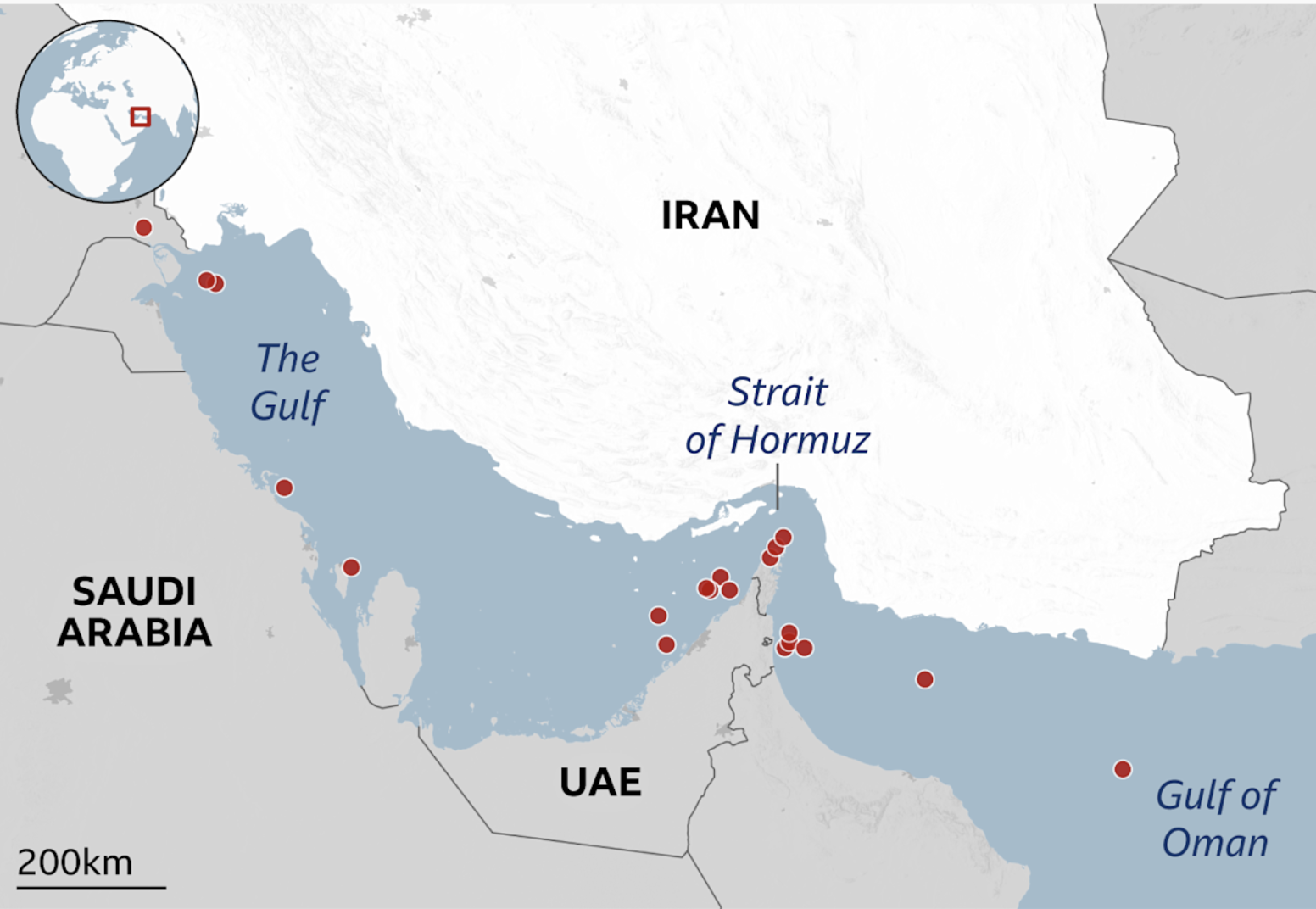
Table of Contents
The Two-Tier Strait
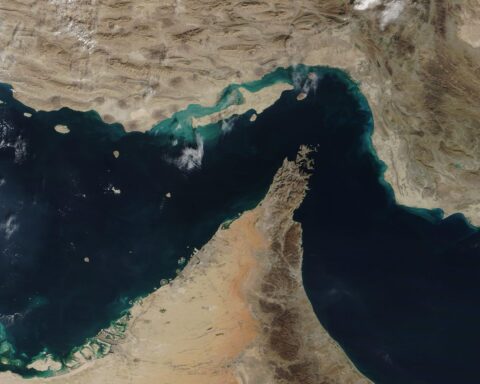
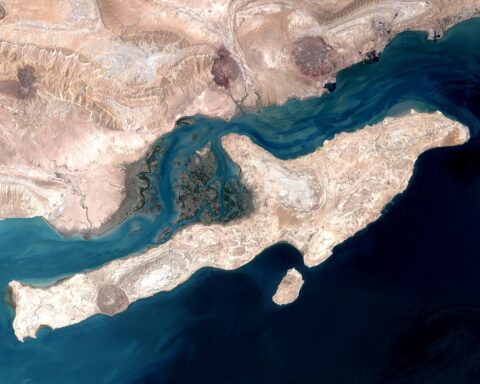
Before the war, an average of 138 vessels transited the Strait of Hormuz every day. That number is now in single digits. Commercial traffic has collapsed by more than 90%, according to MarineTraffic and Lloyd’s List Intelligence. But the strait isn’t closed — not for everyone. Iran’s Foreign Minister Abbas Araghchi announced on March 26 that ships from China, Russia, India, Iraq, and Pakistan would be permitted to transit. Thailand, Malaysia, and Bangladesh have since been added to the list. Since March 13, at least 26 vessels have used a pre-approved IRGC route around Larak Island, according to Lloyd’s List tracking data.
The sorting mechanism is openly geopolitical. Nations that refused to join or support the US-Israeli military campaign get passage. Nations that participated, funded, or hosted the operation are locked out. Iran isn’t hiding the logic — it’s advertising it. The IRGC sent a formal letter to all 176 members of the International Maritime Organization stating that “non-hostile vessels” may benefit from safe passage provided they “neither participate in nor support acts of aggression against Iran.” The language is diplomatic. The effect is a blockade with a guest list.
Iran struck a fully laden Kuwaiti supertanker, the Al-Salmi, in the port of Dubai overnight — carrying 1.2 million barrels of Saudi crude and 800,000 barrels of Kuwaiti crude, according to TankerTrackers.com. The fire was extinguished with no spill or injuries, Dubai officials confirmed. Hours later, Saudi Arabia intercepted eight ballistic missiles targeting Riyadh and the Eastern Province. The message is consistent: countries aligned with Washington face missiles, while countries aligned with Beijing get pilot boats.
The Middle East briefing 3,000+ readers start their day with.
One email. Every weekday morning. Free.
How China Sailed Through a Closed Waterway
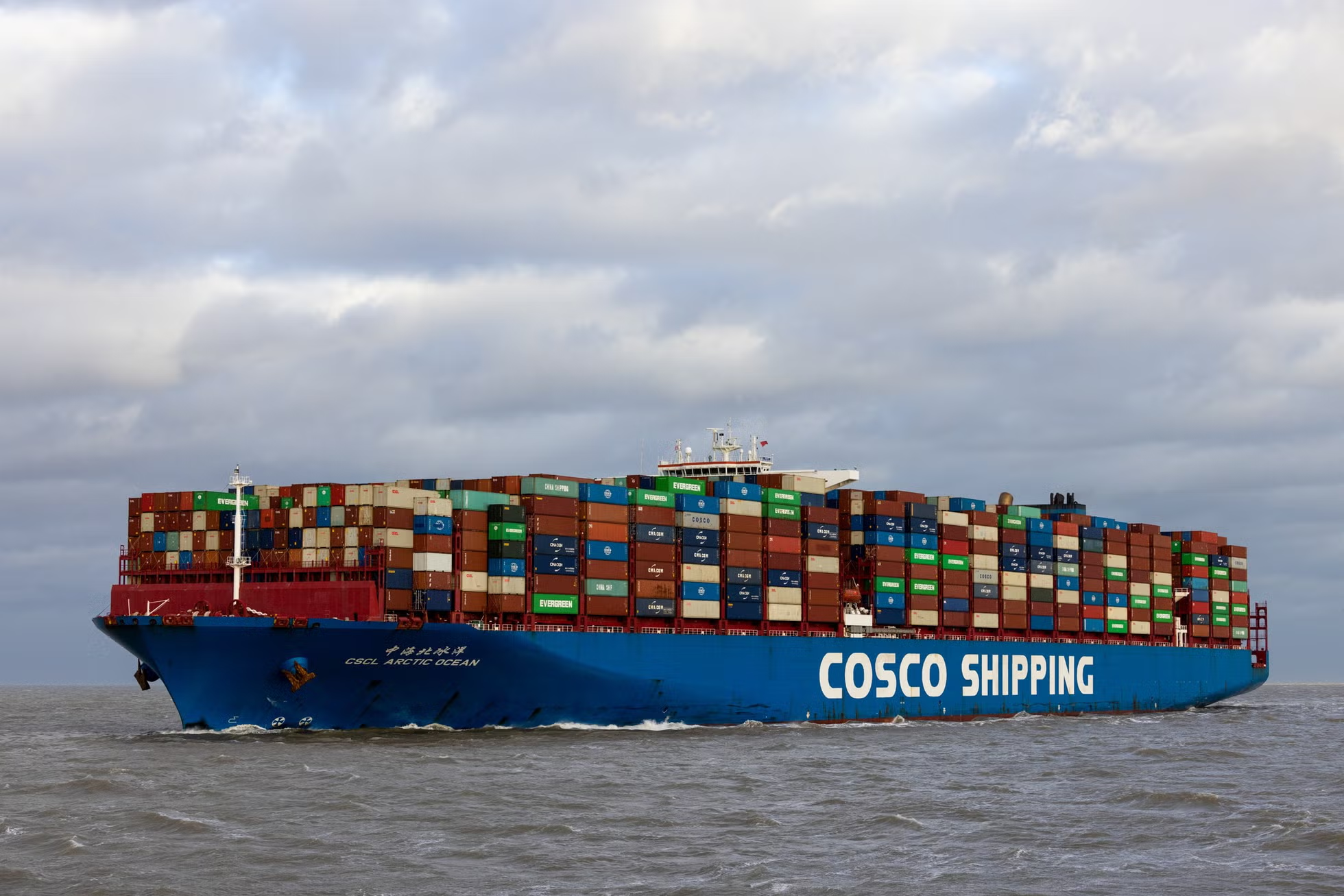
The CSCL Indian Ocean and CSCL Arctic Ocean — two ultra-large container vessels owned by China’s state-run COSCO Shipping — completed their transit of the Strait of Hormuz on Monday, according to Bloomberg ship-tracking data. They departed from waters off Dubai, signalled Chinese ownership, and took a route past Iran’s Larak and Qeshm islands that had been pre-approved by the IRGC. The 12-hour journey was the first confirmed crossing by a major container carrier since the war began on February 28.
The crossing almost didn’t happen. The same two ships had attempted the transit on March 27 and been turned back by IRGC naval warnings after reaching Larak Island. The problem, according to Lloyd’s List, was that both vessels had recently called at ports in Dubai, Dammam, and Abu Dhabi — countries Iran considers hostile. The IRGC enforced its own rule: you don’t get to service American allies and then sail under Iranian protection. COSCO apparently resolved whatever paperwork issue blocked the first attempt, because by Monday the ships were through.
On Tuesday morning, China’s Foreign Ministry spokesperson Mao Ning confirmed the transit and said Beijing “expresses appreciation for the assistance of relevant parties.” The phrasing was careful — no mention of Iran by name, no acknowledgement of the toll system, no suggestion that China had paid for passage. But the ships are through, the route is proven, and COSCO announced on March 25 that it was resuming standard container bookings from Asia to the Gulf — the first major international carrier to do so. Maersk, MSC, and Hapag-Lloyd have not followed.
What Trump Actually Told Europe to Do
Trump’s Truth Social post landed at approximately 6:30 AM Eastern on Tuesday. The full text: “All of those countries that can’t get jet fuel because of the Strait of Hormuz, like the United Kingdom, which refused to get involved in the decapitation of Iran, I have a suggestion for you: Number 1, buy from the U.S., we have plenty, and Number 2, build up some delayed courage, go to the Strait, and just TAKE IT. You’ll have to start learning how to fight for yourself, the U.S.A. won’t be there to help you anymore, just like you weren’t there for us. Iran has been, essentially, decimated. The hard part is done. Go get your own oil!”
A separate post attacked France for blocking Israeli warplanes from its airspace. Defense Secretary Pete Hegseth, at the first Pentagon briefing in nearly two weeks, reinforced the message: the Strait of Hormuz “is not just a United States of America problem.” Secretary of State Marco Rubio told Al Jazeera that US war objectives would be achieved “in weeks” and that the strait would “reopen one way or another” after the operation concludes — without specifying how, when, or for whom.
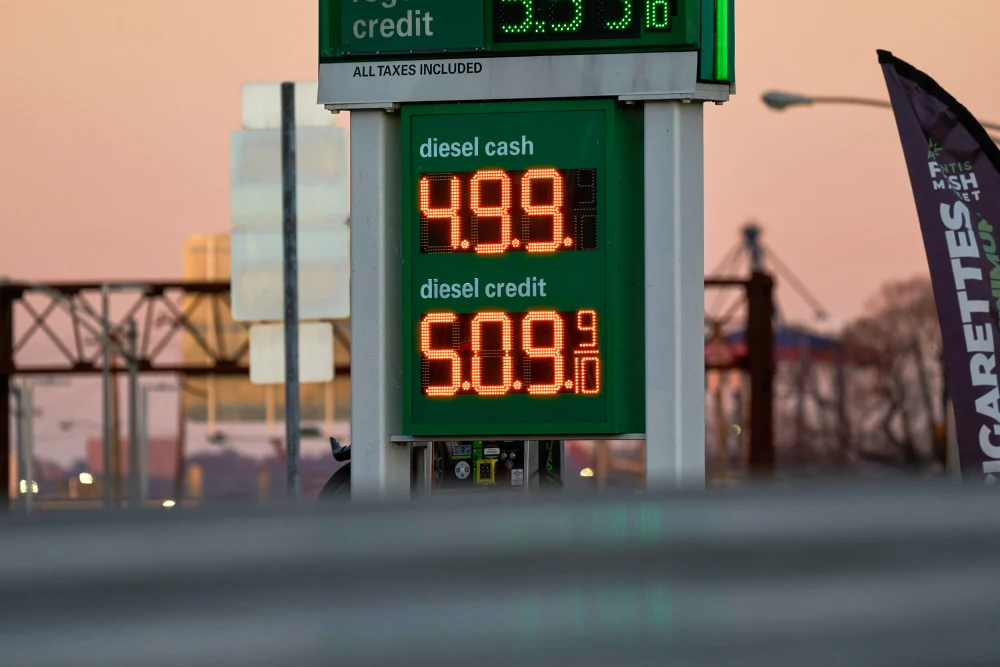
The practical context behind the rhetoric: the UK’s last known shipment of jet fuel from the Gulf is arriving this week, according to the Financial Times, citing data from Kpler and Vortexa. No additional UK-bound shipments are currently visible. Forty percent of Europe’s jet fuel supply normally transits Hormuz. US gas prices passed $4 per gallon on Tuesday, the highest since 2022. In Los Angeles County, regular gasoline hit $5.99. Oil is trading above $115 per barrel, up nearly 60% since the war started. Trump is telling Europe to solve a problem that is also his problem — but the political calculation is that American voters blame Iran, not the White House, while European voters blame whoever is in charge when the flights stop.
Where Does This Leave Saudi Arabia?
On the wrong side of the guest list. Saudi Arabia is absorbing Iranian missile strikes as a US ally, hosting American troops at bases across the Kingdom, and losing approximately $328 million per day in stranded oil exports. Eight ballistic missiles were intercepted over Saudi territory on Tuesday alone. Iran’s Foreign Minister posted on X that Tehran “respects the Kingdom of Saudi Arabia and considers it a brotherly nation” — then published a photo purportedly showing damage to a US aircraft at Prince Sultan Air Base, the facility where ten Americans were wounded two weeks ago.
Saudi Aramco tankers nominally operate under back-channel arrangements that exempt them from Iran’s toll system, according to reporting from The Middle East Insider. But the exemption is fragile and unacknowledged publicly — Riyadh cannot admit it’s negotiating private passage through a strait it insists should be open to all, and Tehran can revoke the arrangement at any time. The Yanbu reroute through the Red Sea handles 4.6 million barrels per day, but the Kingdom needs to export 7.5 million. The gap is 2.9 million barrels per day, and neither Trump’s Truth Social posts nor Rubio’s assurances contain anything resembling a plan to close it.
China, meanwhile, is Saudi Arabia’s largest oil customer. COSCO’s resumed Gulf bookings include Saudi ports. The Kingdom’s biggest buyer is transiting a strait that the Kingdom’s biggest ally has just publicly declined to reopen — using a Chinese-built payment system denominated in the currency of a country that is quietly replacing the United States as the Gulf’s most reliable commercial partner. MBS spent a decade building his relationship with Washington. The return on that investment, as of Tuesday morning, is a Truth Social post telling him to fend for himself.
“Go get your own oil!”
President Donald Trump — to the allies whose fuel supply depends on a strait the US started a war over and now won’t reopen
Why Iran Is Charging in Yuan, Not Dollars
The toll system isn’t improvised. Vessel operators seeking Hormuz passage contact IRGC-linked intermediaries 72 to 96 hours in advance, submit full documentation — IMO number, cargo manifest, destination, crew list, ownership details — and pay a fee estimated between $0.50 and $1.20 per barrel of cargo. Payment is processed in Chinese yuan through accounts at Kunlun Bank, the institution that has handled Iran-China transactions outside the SWIFT system for years. Upon confirmation, vessels receive safe passage coordinates and IRGC escort boats guide them through.
The yuan denomination is not accidental. Iran cannot use dollars — it’s been locked out of the US banking system since 2018. But the choice to build the entire toll architecture around Chinese currency, Chinese banks, and Chinese intermediaries creates something larger than a workaround. It creates a parallel financial infrastructure for the world’s most important shipping lane that operates entirely outside Western control. Every toll paid in yuan is a transaction the US Treasury cannot see, cannot sanction, and cannot stop.
Iranian lawmaker Alaeddin Boroujerdi told Iran International that collecting transit fees is a natural consequence of the war. “Now, because war has costs, naturally, we must do this and take transit fees from ships passing through the Strait of Hormuz.” At $2 million per vessel — the figure cited by multiple Iranian parliamentarians, though disputed by Iran’s embassy in India — the system could generate $600 to $800 million per month. Iran has added formal recognition of its sovereignty over Hormuz to its ceasefire demands. Tehran is not asking for the strait to go back to normal. It’s asking the world to accept that normal is whatever Iran decides it is, priced in yuan, and enforced by the IRGC.
Who Gets Through Next?
Thailand’s Prime Minister announced over the weekend that his government had reached an agreement with Iran for Thai-flagged vessels to transit Hormuz. Japan is in talks. South Korea, which imported approximately 3.8 million barrels per day through the strait before the war, has activated emergency petroleum reserves but hasn’t secured a transit deal. The “friendly nations” list is expanding — not through diplomacy with Washington, but through bilateral deals with Tehran that bypass the American-led order entirely.
Pakistan and China released a joint five-point peace initiative on Tuesday calling for an immediate ceasefire, protection of commercial shipping, and “restoration of normal passage through the strait as soon as possible.” The initiative was announced after Pakistan’s Foreign Minister Ishaq Dar met Chinese Foreign Minister Wang Yi in Beijing. Neither the US nor Iran participated. Neither Saudi Arabia nor the UAE was consulted. The two countries positioning themselves as mediators are also the two countries whose ships can already transit the strait — a coincidence that is not a coincidence.
The pattern forming here is the one Washington spent thirty years trying to prevent: a regional security architecture that doesn’t require the United States. China provides the commercial access. Pakistan provides the diplomatic channel. Iran provides the toll booth. And the countries that chose the American side — Saudi Arabia, the UAE, Kuwait — provide the $1.1 billion per day in collective revenue losses that fund everyone else’s patience. Trump told Europe to go get its own oil. China already did. The question for Riyadh is whether the Kingdom can afford to wait for an ally that just told the world it’s done helping.
FAQ
Which countries currently have transit access through the Strait of Hormuz?
Iran has designated China, Russia, India, Iraq, Pakistan, Malaysia, Thailand, and Bangladesh as “friendly nations” whose vessels may transit with IRGC coordination. South Korea and Japan are in active negotiations. All vessels flagged under US, UK, EU, or Israeli registry — or those that have recently called at ports in countries Iran considers hostile — are excluded. The list is not static; Iran has both added countries (Thailand, Bangladesh) and enforced restrictions on nominally friendly vessels (the COSCO turnback on March 27) based on recent port call history.
How much oil is China actually getting through Hormuz?
Total transit volumes remain a fraction of pre-war levels — single-digit daily crossings compared to 138 before the conflict. China is supplementing Hormuz access with overland routing, strategic reserve drawdowns, and increased purchases from non-Gulf producers. But the political significance outweighs the volume: China is demonstrating that it can access the strait when others cannot, positioning itself as the only major economy with a functioning commercial relationship on both sides of the blockade.
Can Europe actually “go get its own oil” as Trump suggested?
Not through Hormuz, and not quickly. European navies lack the force projection capability to clear and hold the strait without US support. The Royal Navy has two operational aircraft carriers but no mine-countermeasure vessels currently deployed in the Gulf. France has closed its airspace to US military flights involved in the war, making coordinated operations politically impossible. Europe’s realistic options are accelerated purchases from the US, Norway, and West Africa — all at significant premiums — and drawing down strategic petroleum reserves that cover 90 days of consumption at current rates.
Is Iran’s toll system legal under international law?
No. The UN Convention on the Law of the Sea guarantees transit passage through international straits without coastal state fees or interference. Iran signed UNCLOS in 1982 but never ratified it, and argues its sovereignty permits “security management” of the waterway. No international court has ruled on the current toll claims. Enforcement of UNCLOS transit rights depends on naval power, which in the immediate strait area currently favours Iran. Secretary of State Rubio called the system “illegal, unacceptable, dangerous to the world” on March 28 — but the US has declined to extend military operations to clear the strait, making the legal objection academic.
What does the China-Pakistan peace initiative mean for Saudi Arabia?
The five-point initiative released Tuesday positions Beijing and Islamabad as the primary mediators of a conflict whose consequences fall heaviest on Riyadh. Neither Saudi Arabia nor the UAE was involved in drafting the proposal. Both China and Pakistan already have Hormuz transit access, meaning their urgency to reopen the strait is commercial rather than existential. Saudi Arabia’s $328 million daily revenue loss does not appear in the initiative’s framework. For Riyadh, the message is clear: the countries building the post-war diplomatic architecture are the ones that can already get their oil through.