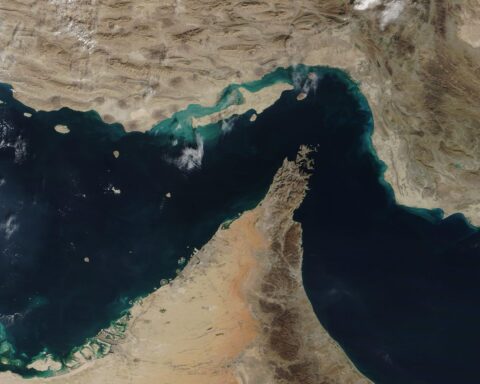
RIYADH — Seven oil ministers will convene virtually on June 7 to approve a production increase that none of them can physically deliver, for a market that has already priced in their irrelevance. Three days later, on June 9, Aramco will pay a $21.89 billion quarterly dividend out of $18.6 billion in free cash flow — at the same moment Tehran is expected to formally reject the Trump administration’s MOU proposal, removing the last diplomatic instrument that could plausibly return Brent to Saudi Arabia’s $108–$111 fiscal breakeven.
The June 7 meeting is not where the story is. It is the three-day gap between the meeting and the bill that exposes the arithmetic Riyadh cannot solve by consensus, cannot paper over with quotas, and cannot avoid by borrowing — because the National Debt Management Center is already at approximately 90% of its borrowing capacity, and Q1 alone consumed 76% of the Kingdom’s full-year deficit target. What follows is a reconstruction of what the 41st OPEC and Non-OPEC Ministerial Meeting will and will not accomplish, and what Monday means when Saturday’s communiqué has already been forgotten.
Table of Contents
- What Will June 7 Actually Decide?
- The Quota Fiction: 10.291 Million Barrels Saudi Arabia Cannot Produce
- Who Enforces Compliance When No One Complies?
- Why Does Everything Converge on June 9?
- What Would a Cut Deep Enough to Reach $108 Actually Require?
- What Happens to Saudi Revenue If Peace Breaks Out?
- Three Days, Two Crises, No Instrument
- Frequently Asked Questions
What Will June 7 Actually Decide?
The 41st OPEC and Non-OPEC Ministerial Meeting will almost certainly approve another 188,000 barrels per day production increase for July, according to delegates briefed on the agenda and reported by the Khaleej Times. This matches the June hike approved on May 3 and continues the unwinding of a 1.65 million b/d voluntary cut agreement that dates to April 2023. Seven members remain at the table after the UAE’s departure in late April: Saudi Arabia, Russia, Iraq, Kuwait, Kazakhstan, Algeria, and Oman. From July onward, they will have approximately 567,000 b/d of the original cut still to return. At 188,000 b/d per month, the full unwind completes by end of September — a neat bureaucratic timeline that bears almost no relationship to the physical reality of oil flows through the Strait of Hormuz.
The May 3 meeting was the first held without the UAE, and the communiqué did not mention Abu Dhabi’s exit. Al Jazeera described the April 5 decision — a 206,000 b/d increase for May — as “largely symbolic,” because key members could not physically increase production with Hormuz closed. That characterization applied then, when Brent was near $120. It applies now, with Brent around $94, for a different reason: the increase is real on paper and irrelevant in barrels. Saudi Arabia’s own production crashed approximately 30% to roughly 7.25 million b/d in March as Hormuz closed, according to Al Arabiya. Its June quota stands at 10.291 million b/d. The gap between what Riyadh is allowed to pump and what it can actually export is wider than the entire cut being unwound.
The communiqué will be released. It will use the phrase “orderly market management” or something structurally identical. Bloomberg has framed the meeting as a “chance to show unity after UAE’s shock exit.” The unity will be performed. The question is whether anyone outside the OPEC Secretariat still believes the performance matters, when the organization’s largest producer is operating at roughly 70% of its own quota and its second-largest member — Russia — is overproducing at 9.2–9.5 million b/d against a target of approximately 9.0 million b/d, not because it wants to undermine the agreement but because its war economy demands every barrel it can move through non-Hormuz routes.
The Quota Fiction: 10.291 Million Barrels Saudi Arabia Cannot Produce
Saudi Arabia’s position at the June 7 table is arithmetically absurd, and Prince Abdulaziz bin Salman — who described the December 2025 production mechanism as “a turning point” for market stabilization — knows it. The Kingdom’s swing-producer mechanism works by cutting its own output to tighten global supply, making Saudi cuts the marginal factor that moves prices. That mechanism requires two things: the ability to produce at or near quota, and a market where Saudi barrels are the ones that tip the balance. Neither condition holds.
The Middle East briefing 3,000+ readers start their day with.
One email. Every weekday morning. Free.
With Hormuz physically constraining Saudi exports, the Kingdom cannot reach its quota regardless of what it votes for. The approximately 7.25 million b/d actual production figure from March means Saudi Arabia is already “cutting” by about 3 million b/d, involuntarily, without any OPEC+ decision. A voluntary cut on top of an involuntary one is not market management; it is accounting decoration. The barrels Saudi Arabia is not exporting are not being withheld strategically — they are stuck, locked behind a strait that Iran controls and that the Kingdom has no seat at the table to reopen, because every road to the Iran deal runs through a man Saudi Arabia cannot reach. The table below captures the gap between OPEC+ quotas and physical reality for the four largest members:
| Country | June 2026 Quota (mb/d) | Estimated Actual Production (mb/d) | Gap | Compensation Owed (mb/d) |
|---|---|---|---|---|
| Saudi Arabia | 10.291 | ~7.25 | -3.04 (involuntary) | — |
| Russia | ~9.0 | ~9.2–9.5 | +0.2–0.5 (overproduction) | 311,000 by year-end |
| Kazakhstan | 1.468 | 1.79 (March record) | +0.322 (overproduction) | 2.63 million cumulative by June |
| Iraq | Quota level | Frequent overproduction | Chronic breach | 100,000 (smallest commitment) |
Sources: OPEC Secretariat, Argus Media, Al Arabiya, Interfax. Kazakhstan actual production figure from March 2026.
Kazakhstan’s case is the most instructive. Tengiz alone hit 901,000 b/d in March — up from a 600,000–660,000 b/d historical range — after Chevron’s Future Growth Project came online. That is a structural increase built into physical infrastructure. It cannot be reversed by a quota decision any more than a pipeline can be un-laid. Astana submitted an updated compensation plan on January 7 pledging 669,000 b/d in compensation cuts by June, but its actual compliance record makes the pledge structurally non-binding. The Astana Times framed the UAE exit as “putting OPEC+ and Kazakhstan’s oil strategy to the test” — language that reads less like concern and more like reconnaissance for the door Abu Dhabi already walked through.
Who Enforces Compliance When No One Complies?
The enforcement architecture of OPEC+ contains no formal financial penalties. This is not a gap in the system — it is the system. Compliance is voluntary and consequence-free, as Argus Media has documented repeatedly across the agreement’s three-year history. The combined compensation obligation owed by “volunteer” members stands at 4.779 million b/d by July 2026, a figure so large it functions less as a debt and more as a monument to the collective fiction that quotas are binding.
Saudi Arabia’s traditional enforcement tool was the threat of a price war — the 2020 gambit against Russia, when Riyadh briefly opened the taps and crashed Brent below $20. That tool required spare capacity and fiscal reserves deep enough to absorb the pain. In June 2026, Saudi Arabia has neither. Its spare capacity is physically inaccessible behind Hormuz. Its fiscal reserves are being drained at a rate that consumed 76% of the full-year deficit target in Q1 alone. The budget Saudi Arabia borrowed for no longer exists, and the borrowing capacity that financed the gap is approaching its ceiling.
Russia’s position is structurally different from every other member’s. Moscow is described by multiple analysts as “the main beneficiary” of the current Hormuz crisis — higher prices for the barrels it can still move through non-Hormuz routes, primarily via the Baltic and Black Sea. Its overproduction is not defiance; it is necessity. The war economy demands volume. Russia’s compensation obligation of 311,000 b/d by year-end is a number that exists in an OPEC spreadsheet and nowhere else. No mechanism exists to extract it, and no member has the standing to demand it.
Iraq’s compliance posture is even more revealing. Baghdad “frequently overproduces its quota,” per Argus Media, and committed to only 100,000 b/d in compensation cuts — the smallest commitment among overproducers. Iraq’s production is constrained not by OPEC+ discipline but by its own infrastructure limitations, which means its compliance is accidental rather than intentional. When infrastructure improves, overproduction resumes. This is the coalition Saudi Arabia will sit with on June 7: a partner that benefits from non-compliance, a partner that cannot comply, a partner that accidentally complies, and a structural defector taking notes on whether to leave entirely.
Why Does Everything Converge on June 9?
June 9 is not a symbolic date. It is the day two independent processes — one financial, one diplomatic — deliver their results simultaneously, and the combination is worse than either one alone. Aramco’s $21.89 billion quarterly dividend becomes payable, with eligibility confirmed June 1. That dividend exceeds Aramco’s Q1 2026 free cash flow of $18.6 billion by more than $3 billion — a coverage ratio of 0.85x, meaning the company is paying out more than it earns. The gap is funded from reserves and borrowing, both of which are under acute pressure.
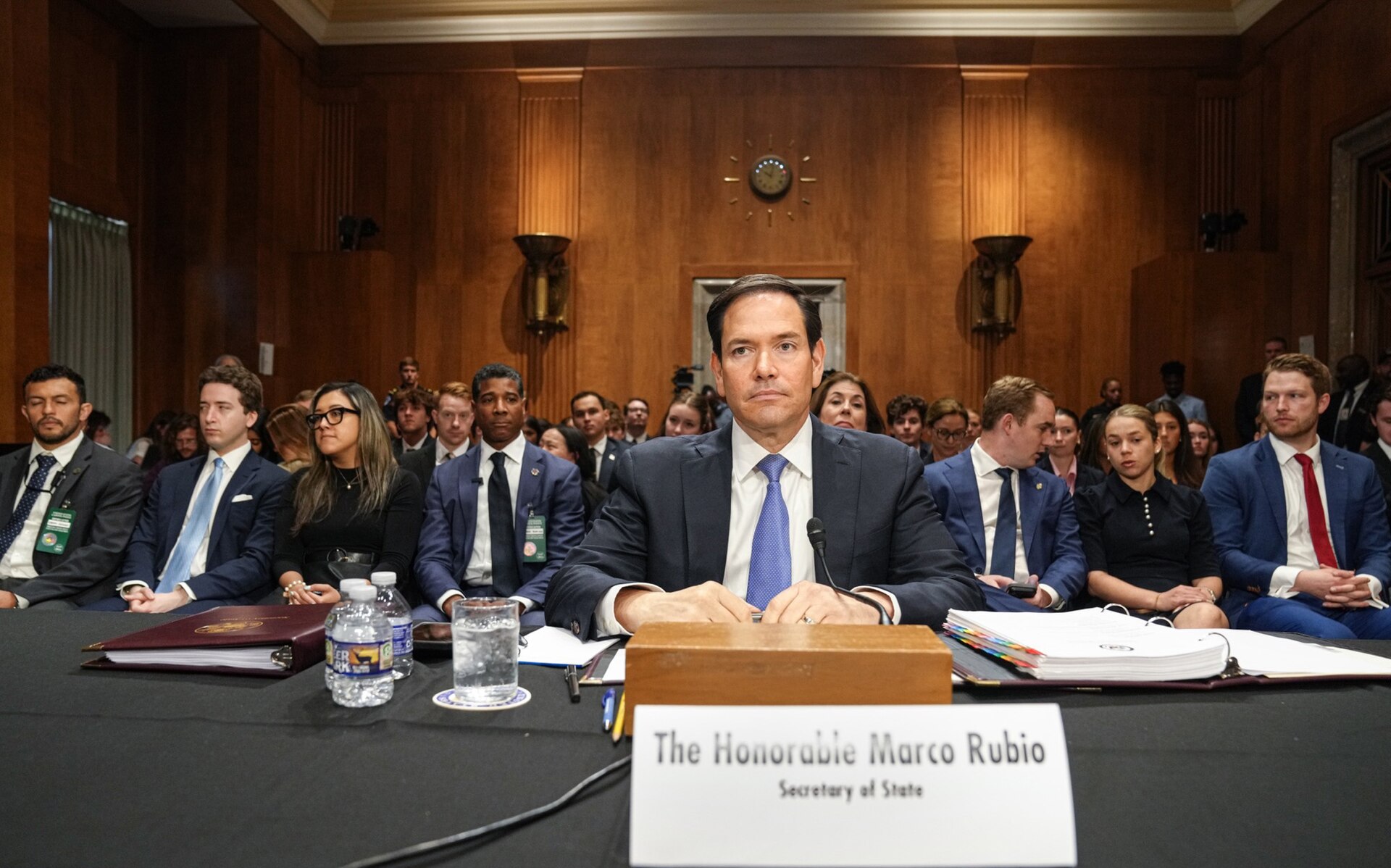
On the same day, Iran’s Foreign Ministry spokesperson Esmaeil Baghaei and a confirmed Omani counteroffer are expected to formalize what Reuters reported as Tehran “preparing to decline” the Trump administration’s MOU proposal. This is harder than the June 1 Tasnim-announced suspension; it is a formal rejection — removing the diplomatic instrument that has been the only plausible mechanism for reopening Hormuz and returning Brent to levels where Saudi fiscal math works. As Senator Rubio confirmed in SFRC testimony on June 2, Mojtaba Khamenei is “increasingly engaging” through written intermediaries, but the four US conditions for Hormuz and the structural gap between Phase 1 (Hormuz, no sanctions relief) and Phase 2 (HEU and enrichment, sanctions) make the timeline incompatible with Saudi fiscal urgency. The state-finance loop behind June 9:
| Metric | Figure | Source |
|---|---|---|
| Aramco Q2 2026 dividend | $21.89 billion | Aramco investor relations |
| Aramco Q1 2026 free cash flow | $18.6 billion | Aramco Q1 2026 earnings |
| Dividend coverage ratio | 0.85x | Calculated |
| Q1 2026 budget deficit | SAR 125.7B ($33.5B) | Saudi MoF / Saudi Gazette |
| Share of full-year deficit target consumed | 76% (in 90 days) | Calculated from SAR 165B target |
| NDMC borrowing capacity remaining | ~10% | NDMC disclosures |
| PIF cash reserves | $15 billion (six-year low) | PIF disclosures |
| Brent close (May 29) | $91.37 | Bloomberg |
| Saudi fiscal breakeven (consolidated) | $108–$111/bbl | Bloomberg Economics |
| Gap below breakeven | ~$14–$20/bbl | Calculated |
Q1 2026 revenues came in at SAR 261 billion, with oil revenues at SAR 144.72 billion — down 3% year-on-year despite higher nominal prices, because volume collapsed with Hormuz. Expenditures hit SAR 386.69 billion, up 20% YoY, driven by a 26% surge in military spending to SAR 64.7 billion in a single quarter. Finance Minister Mohammed Al-Jadaan projected a deficit of 3.3% of GDP for 2026. Goldman Sachs now estimates 6.6%. Bank of America puts it at approximately 5%. The distance between the official projection and the Goldman estimate is not a rounding error — it is the width of a fiscal crisis that the June 7 OPEC+ communiqué will not acknowledge and cannot address.
What Would a Cut Deep Enough to Reach $108 Actually Require?
The distance between Brent at approximately $94 and Saudi Arabia’s consolidated fiscal breakeven of $108–$111 is not a rounding error that OPEC+ can close with creative arithmetic. Moving Brent $14–$17 upward through supply management alone — without the geopolitical premium that is already embedded — would require removing roughly 1.5 to 2 million barrels per day from a global market currently supplied at approximately 102 million b/d. That is larger than the entire 1.65 million b/d voluntary cut agreement that OPEC+ has been unwinding since March, and it would need to come from the seven members still at the table, most of whom are already producing above their quotas.
The arithmetic is punishing. Kazakhstan would need to cut Tengiz output by at least 300,000 b/d below its current record of 901,000 b/d — effectively mothballing infrastructure that Chevron spent $48.5 billion building. Russia would need to cut 500,000–700,000 b/d from war-economy production flowing through the Baltic and Black Sea routes that have become Moscow’s financial lifeline. Iraq would need to make its first meaningful compliance commitment after years of chronic overproduction. Algeria and Oman, which together produce approximately 2 million b/d, would face proportional cuts that their budgets — both heavily oil-dependent — cannot absorb without immediate fiscal distress.
Even if every member agreed to such cuts — which they will not, because no enforcement mechanism exists and several members benefit directly from the current price-volume mix — the timeline defeats the purpose. OPEC+ decisions take effect the following month. A June 7 decision to reverse course and cut would not affect July supply until mid-July at earliest. Saudi Arabia’s fiscal clock is measured in days, not months: the June 9 dividend is three days away, the Q2 deficit will be locked in before any supply adjustment registers in Brent. The meeting’s decisions operate on a different temporal scale than the Kingdom’s fiscal emergency, which is why the communiqué will address neither the deficit nor the breakeven gap. It will address barrels, because barrels are what OPEC+ understands, even when the problem has moved to a place where barrels cannot reach it.
What Happens to Saudi Revenue If Peace Breaks Out?
The assumption embedded in Saudi fiscal planning — and in every diplomatic corridor working the Iran file — is that a deal reopens Hormuz, restores Saudi export volumes, and stabilizes Brent at or above breakeven. Wood Mackenzie’s scenario modelling suggests the opposite. Their “Quick Peace” scenario — an MOU deal that resolves the Hormuz standoff — projects Brent easing to approximately $80 per barrel by end-2026 and declining to $65 in 2027. The reason is straightforward: Goldman Sachs estimated roughly $14 per barrel of “war premium” embedded in current Brent prices. Remove the war, and you remove the premium. Peace does not deliver $108 oil. It delivers $80 oil — which is below even the IMF’s more generous $94 budget-only breakeven estimate.
This is the trap that makes the June 7 meeting cosmetic regardless of its outcome. If the MOU fails and Hormuz stays contested, Brent stays elevated but Saudi export volumes remain crushed — high price, low volume, fiscal shortfall. If the MOU somehow succeeds and Hormuz reopens, Saudi export volumes recover but Brent drops toward $80 as the war premium bleeds out — restored volume, collapsed price, fiscal shortfall. Both roads lead to the same deficit. The difference is which line item — revenue per barrel or barrels per day — delivers the damage.
Washingtonâs tolerance for the deal that triggers this trap has been accelerating: the US has drawn 58 million barrels from its Strategic Petroleum Reserve since February, compressing its diplomatic timeline and raising the administrationâs incentive to accept Phase 1 terms that serve US inventory goals while eliminating the war premium Saudi Arabia currently depends on to stay solvent.
Wood Mackenzie’s extended-disruption scenario — Brent approaching $200 by end-2026 — is the only projection under which Saudi fiscal math works purely on price. But that scenario requires sustained Hormuz closure, which means Saudi Arabia would need the very crisis that is destroying its export volumes to continue in order to benefit from the price it produces. The Kingdom cannot simultaneously be the victim of Hormuz closure (volume loss) and the beneficiary of it (price gain) when its fiscal model requires both high price and high volume. Goldman’s warning that Brent could average above $100 throughout 2026 if Hormuz remains mostly shut for another month comes with an implicit asterisk: Saudi Arabia’s share of that $100 oil is whatever it can move through Yanbu, which is insufficient to close the fiscal gap. The ceiling is structural: the Petroline hit its physical maximum of 7 million barrels per day on March 11, but Yanbu port can load only three to four million barrels under wartime conditions — a pipeline-to-port gap that no OPEC+ decision can close.
Three Days, Two Crises, No Instrument
The three-day window between June 7 and June 9 is not a gap. It is a corridor in which the institutional fiction that Saudi Arabia manages oil markets collides with the fiscal reality that oil markets are managing Saudi Arabia. The OPEC+ communiqué on Saturday will describe an orderly production increase for a market the organization no longer controls. The Aramco payment on Monday will transfer $21.89 billion to shareholders — including the Saudi state, which depends on that dividend to fund a budget that is already $33.5 billion in deficit after one quarter. The Iranian rejection on the same Monday will close the last diplomatic pathway that might have returned Brent to levels where the dividend is earned rather than borrowed.
Prince Abdulaziz bin Salman will chair the June 7 session. He has managed OPEC+ with a combination of personal authority and institutional patience that few energy ministers in the organization’s history have matched. But authority requires instruments, and the instruments available to him on June 7 are exhausted. He cannot cut Saudi production — it has already been cut involuntarily by 3 million b/d. He cannot compel Kazakhstan to reduce output — Tengiz’s 901,000 b/d is infrastructure, not policy. He cannot threaten a price war — Riyadh’s fiscal position makes a 2020-style gambit unsurvivable. He cannot promise compliance enforcement — no mechanism exists, and every member at the table knows it.
What he can do is what the organization has done at every meeting since Hormuz closed: approve the scheduled increase, issue a communiqué that projects control, and wait for diplomacy to deliver what production policy cannot. The problem with that strategy arrived on June 1, when Tasnim announced the MOU suspension, and will be confirmed on June 9, when the formal rejection removes waiting as a viable option. Saudi Arabia’s Q1 military spending — SAR 64.7 billion, up 26% — suggests Riyadh has already begun pricing in a world where diplomacy does not deliver, but the fiscal machinery required to sustain that spending is itself dependent on the diplomatic outcome. The budget is fighting the war. The war is destroying the budget. There is no external actor — not OPEC+, not the NDMC, not PIF — with the capacity to break the loop.
Between Saturday and Monday, that loop tightens. The meeting will end. The communiqué will be issued. The dividend will be paid. The rejection will arrive. And the distance between $94 and $108 — roughly $100 million per day in lost revenue at current production, compounded by 3 million b/d of volume that cannot reach any market — will remain exactly where it is, unanswered by any institution the Kingdom controls.
Frequently Asked Questions
How many OPEC+ members remain after the UAE’s exit, and who are they?
Seven members participate in the voluntary production cut agreement following the UAE’s departure on April 28, 2026: Saudi Arabia, Russia, Iraq, Kuwait, Kazakhstan, Algeria, and Oman. The broader OPEC+ alliance includes additional non-OPEC members not party to the voluntary cuts, but the June 7 decisions are made by this seven-member group. The UAE’s exit removed the only member other than Saudi Arabia with genuine spare capacity at scale — approximately 1 million b/d that Abu Dhabi had been withholding voluntarily and now intends to produce freely. Energy Minister Suhail Mohamed al-Mazrouei said the exit “was taken after a careful look at the regional power’s energy strategies,” framing it as permanent rather than tactical.
Could OPEC+ reverse the production increases and cut output instead at the June 7 meeting?
Technically, the ministers could vote to pause or reverse the unwind schedule. In practice, this would require members who are currently overproducing — Kazakhstan by 322,000 b/d, Russia by 200,000–500,000 b/d, Iraq chronically — to not only stop exceeding their existing quotas but cut below them. No enforcement mechanism exists to compel this. OPEC+’s January 4 decision to pause the February and March 2026 increments, made amid deteriorating market conditions, demonstrated the group’s willingness to delay — but delaying an increase is categorically different from imposing a new cut. The former requires members to do nothing; the latter requires them to sacrifice revenue they are already collecting. Kazakhstan’s Tengiz expansion alone represents infrastructure-driven production that cannot be dialed back by ministerial vote.
What happens to the Aramco dividend if the fiscal shortfall continues through Q2 and Q3?
Aramco’s board has signaled no intention to reduce the base dividend of $21.89 billion per quarter ($87.56 billion annualized), which was set in the post-IPO framework as a commitment to shareholders — including the Saudi government, which holds a 98.2% stake through direct ownership and PIF. Cutting the dividend would require a board decision that effectively acknowledges the state cannot afford its own company’s payout, with immediate consequences for the Aramco share price and the PIF portfolio that depends on it. The more likely near-term mechanism is continued borrowing through NDMC sukuk issuances and international bond markets. PIF issued its largest-ever single bond — $7 billion — in the same month it implemented a 20% spending cut, suggesting the borrowing pathway is already being stretched. At 0.85x coverage, each quarter of sustained shortfall adds approximately $3 billion in unfunded dividend obligations.
What is the “war premium” in oil prices, and what happens to Saudi revenue if it disappears?
Goldman Sachs estimated in April 2026 that approximately $14 per barrel of Brent’s price reflects geopolitical risk premium from the Hormuz crisis and the broader Iran-US confrontation. If a diplomatic resolution removed this premium from a base of roughly $94, Brent would settle near $80 — which is below even the IMF’s more conservative $94 budget-only breakeven and far below the $108–$111 consolidated breakeven that includes PIF domestic investment. At 7.25 million b/d actual production, each $1 drop in Brent costs Saudi Arabia approximately $7.25 million per day, or $2.65 billion per year. A $14 drop — the full war premium — would cost approximately $101.5 million per day, or roughly $37 billion annualized, nearly wiping out what remains of the fiscal margin even before accounting for the existing deficit.
Is Kazakhstan likely to follow the UAE out of OPEC+?
Kazakhstan has not formally signaled an intention to leave, but the structural indicators parallel the UAE’s pre-exit posture. Tengiz’s production surge to 901,000 b/d — driven by Chevron’s $48.5 billion Future Growth Project — represents committed capital that generates returns only at full utilization. Kazakhstan’s cumulative compensation obligation of 2.63 million b/d by June 2026 is a figure that Astana has made no credible effort to meet. The Astana Times framing of the UAE exit as testing “Kazakhstan’s oil strategy” reads as institutional positioning. The critical difference is that Kazakhstan lacks the UAE’s fiscal reserves and alternative revenue streams, making an exit more consequential domestically. But Tengiz’s production profile — infrastructure-driven, Chevron-operated, contractually committed — means Kazakhstan is functionally outside the agreement’s constraints whether or not it formally withdraws.
The fiscal backdrop to the June 7 meeting was formalised the same day by the IMF’s formal assessment of Saudi Arabia’s Hormuz-dependent recovery: the Fund’s 2026 Article IV concluding statement conditions its 2 percent GDP baseline on Hormuz normalisation, meaning the OPEC+ ministers convening June 7 are voting on quotas inside a framework whose macroeconomic assumptions require Iran to cooperate.