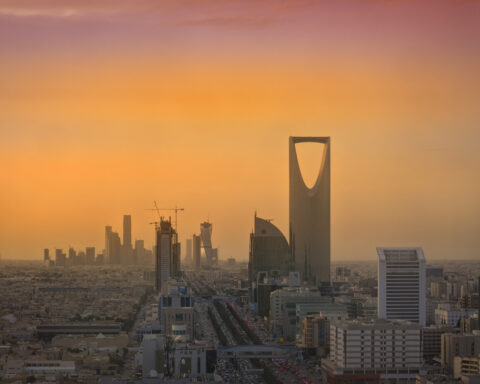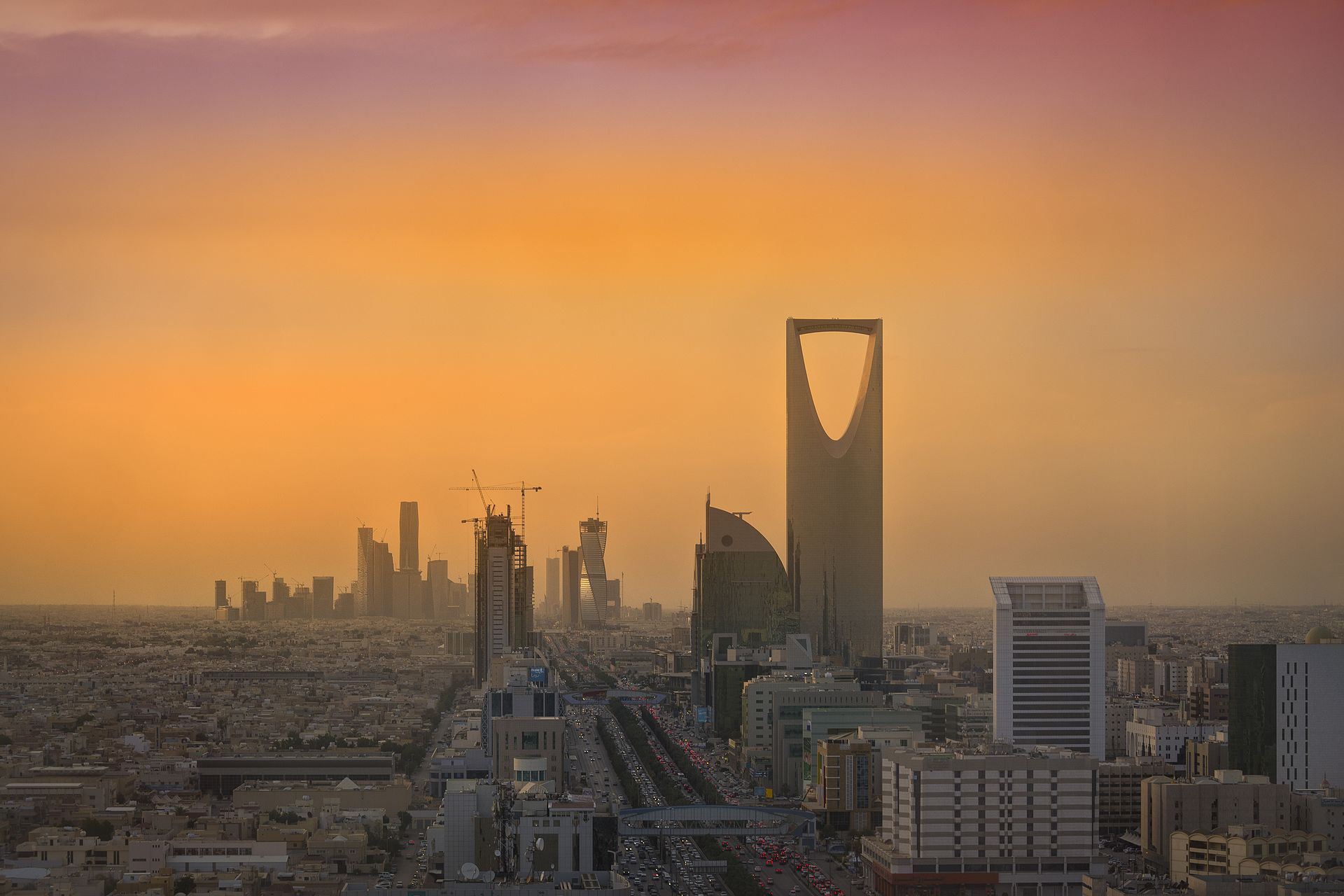

RIYADH — Saudi Arabia spent decades building the most stringent alcohol prohibition in the Gulf. It spent three years quietly dismantling it. And now, five weeks into a war that has emptied the luxury hotels where foreign guests were supposed to drink, the Kingdom is left with a liberalization designed for an audience that no longer exists. The unmarked alcohol outlet in Riyadh’s Diplomatic Quarter is open. The five-star hotel bars are being fitted out. Riyadh’s hotel occupancy has fallen more than 30 percent. The political bargain that made any of this possible — that alcohol was for foreigners, not Saudis — has been exposed to a question it was never meant to face: what happens when the foreigners leave?
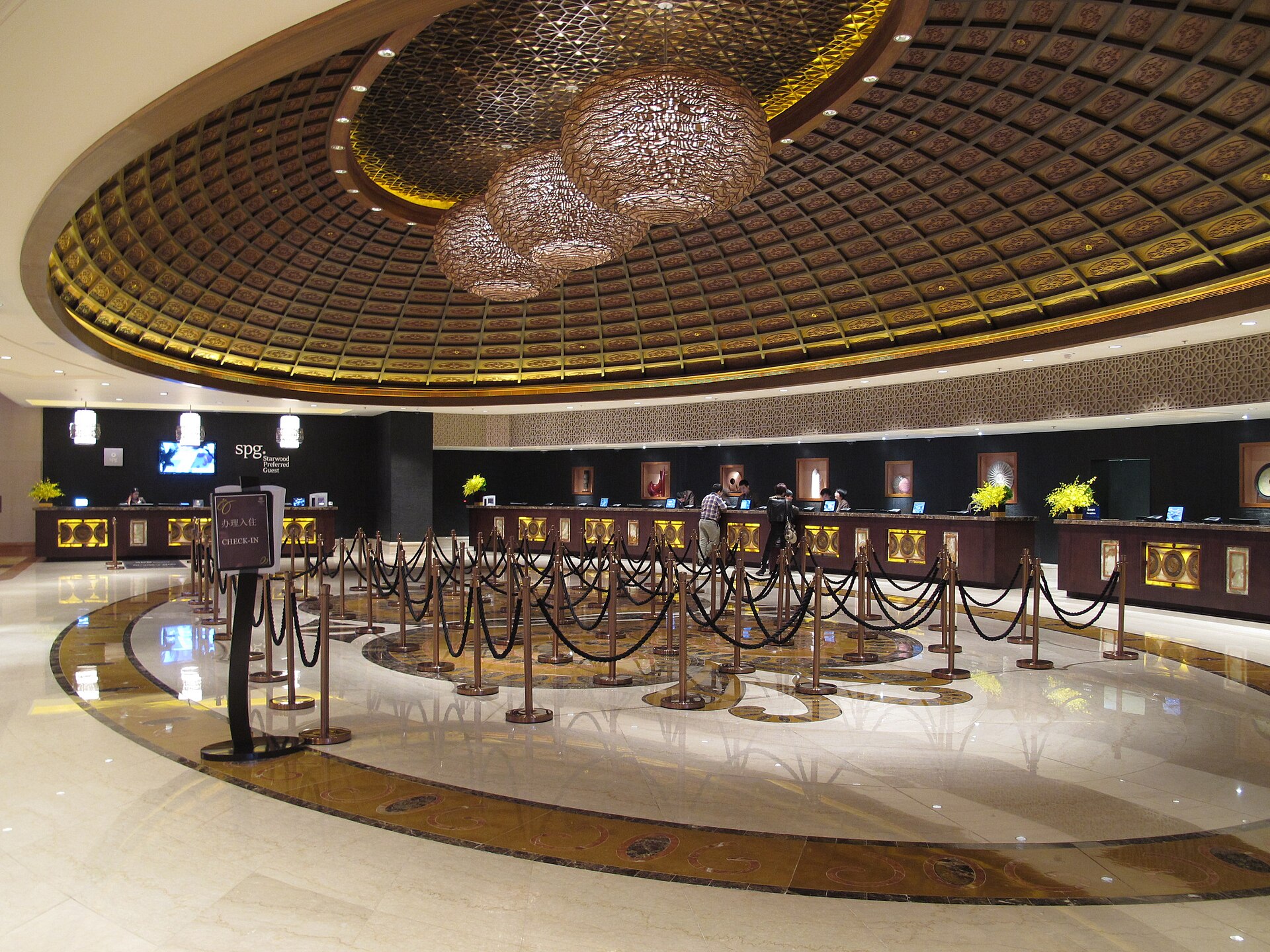
Table of Contents
- Seventy-Three Years and One Unmarked Door
- Who Was the Alcohol Reform Actually For?
- The War Emptied the Rooms
- The Conservative Bargain That Required Foreigners
- Can Saudi Arabia Reverse an Alcohol Reform It Never Officially Announced?
- The 2034 World Cup Contradiction
- What Happens to the Revenue Model Without Foreign Guests?
- The Incrementalism Trap
- Frequently Asked Questions
Seventy-Three Years and One Unmarked Door
Alcohol was legal in Saudi Arabia until September 1952, when King Ibn Saud banned it after a 19-year-old prince — Mishari bin Abdulaziz — shot dead the British Vice-Consul, Cyril Ousman, at a Jeddah party. The prince had been refused more to drink. The prohibition that followed lasted 73 years and became, over time, less a law than a feature of national identity. No other Gulf state maintained anything comparable. Bahrain, the UAE, Qatar, and Oman all regulated and taxed alcohol. Saudi Arabia simply banned it.
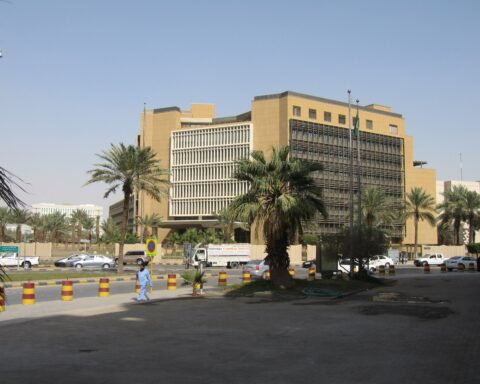
The ban began to crack in January 2024, when an unmarked outlet opened in Riyadh’s Diplomatic Quarter — accessible only to non-Muslim diplomats. No government announcement accompanied it. No regulation was published. By late 2025, access had expanded to non-Muslim expatriates earning at least SAR 50,000 per month (roughly $13,300) or holding Premium Residency status. Word spread, as Semafor reported in November 2025, “through word of mouth.”
In May 2025, trade publications reported that Saudi Arabia planned to license up to 600 tourist venues — five-star hotels, Red Sea resorts, NEOM developments, expat compounds — for wine, beer, and cider, with spirits above 20 percent ABV excluded. Within days, an unnamed Saudi official told Reuters the reports were “unfounded.” No official regulation has been gazetted. The actual operational state of Saudi alcohol liberalization, as of early 2026, remains one store in one city.
Who Was the Alcohol Reform Actually For?
The reform exists for foreign visitors at luxury venues, calibrated to meet international hospitality standards ahead of Expo 2030 and the 2034 FIFA World Cup. Saudi citizens are excluded by design. The intended beneficiary was the 29.7 million international visitors who arrived in 2025 — roughly 24 percent of the Kingdom’s total 122 million visitor count.
Some 86 million trips were generated domestically. Every official and semi-official justification follows the same logic: alcohol access is an amenity for foreign guests, not a social concession for Saudi nationals.
The Middle East briefing 3,000+ readers start their day with.
One email. Every weekday morning. Free.
Michael Ratney, former US Ambassador to Saudi Arabia, described the physical infrastructure appearing ahead of formal policy. “You would go into new restaurants, and they all had bars,” he told Food Ingredients First. “The bars didn’t have alcohol, but the infrastructure was starting to pop up.” The architecture of liberalization was built before the rules were written — a familiar pattern in the Crown Prince’s reform portfolio.
This sequencing was deliberate. Jane Kinninmont of Chatham House observed as early as 2017 that Vision 2030 “implies a degree of social liberalization to enable the growth of the entertainment and tourism industries” and “would significantly alter the various elements of the social contract(s) in Saudi Arabia.”
The War Emptied the Rooms
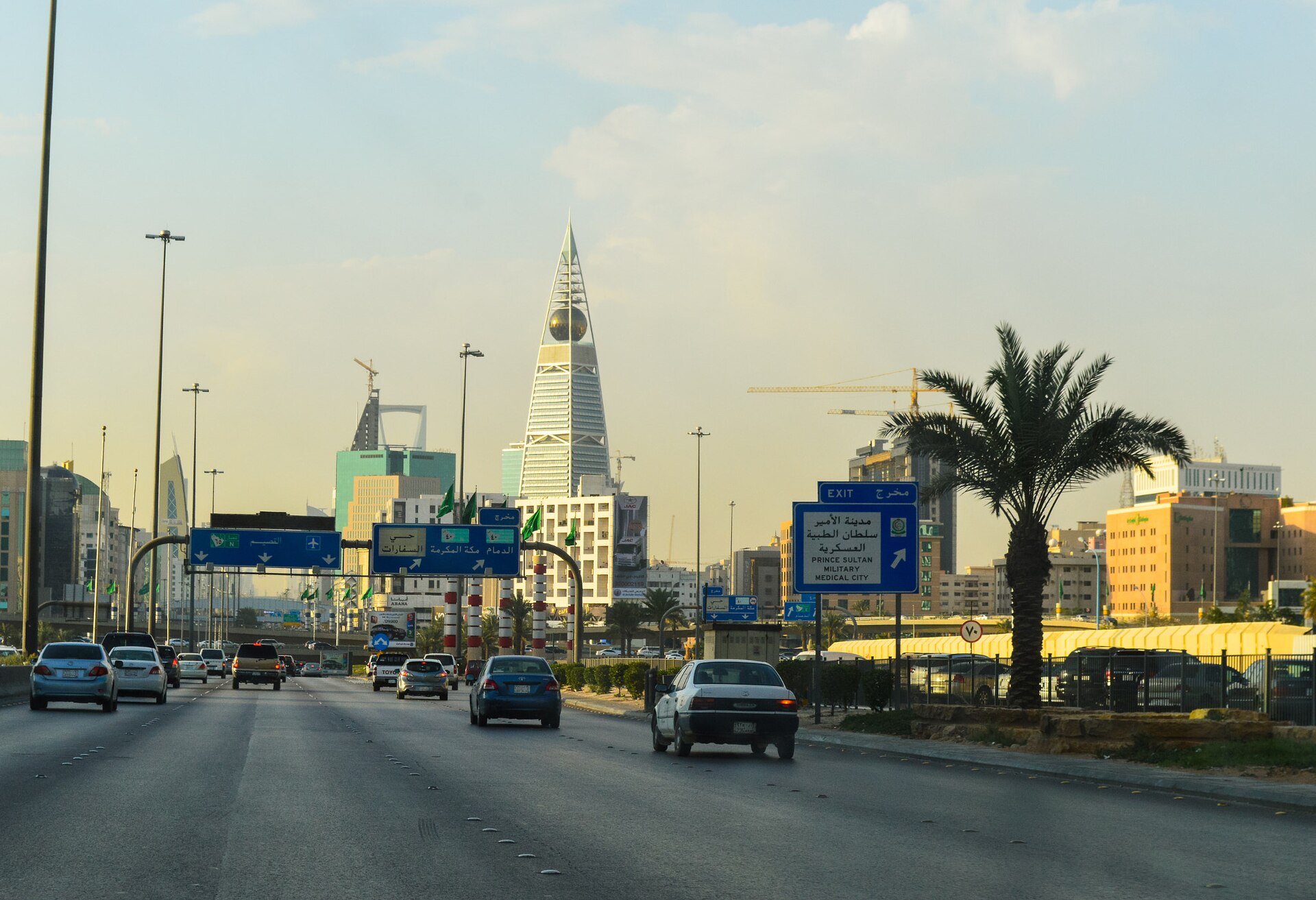
On February 28, 2026, the Iran conflict began. Within weeks, luxury hotel bookings across the Gulf collapsed. Riyadh occupancy dropped more than 30 percent from a pre-war Q1 2025 baseline of 63 percent. Saudi Arabia was described by Skift, the travel-industry publication, as “more resilient” than Dubai or Bahrain — but resilient from a baseline that was itself cratering across the region.
The scale of the tourism shock is measured daily. The World Travel & Tourism Council estimates that the Iran conflict is costing the Middle East travel sector $600 million per day in lost international visitor spending. Oxford Economics analysts Helen McDermott and Jessie Smith project inbound arrivals to the Middle East could decline 11 to 27 percent year-on-year in 2026, with total projected losses of $34 to $56 billion. “GCC nations face the largest losses,” they wrote, “because they have previously relied on perceptions of safety and stability.”
For Saudi Arabia specifically, tourism generated SR300 billion ($81 billion) in 2025. The revised Vision 2030 target — 150 million visitors by 2030, including 70 million international — was already ambitious before a regional war. Ibrahim Khaled of the Middle East Travel Alliance described Saudi Arabia before the conflict as “currently at about 10 percent” growth, the “most exciting up-and-coming destination.” That growth has reversed.
The human infrastructure has thinned alongside the bookings. Foreign direct investment fell an estimated 60 to 70 percent in Q1 2026 compared to Q1 2025. More than 5,000 American employees have left or are preparing to depart. The US Embassy ordered non-emergency evacuation on March 8, 2026. The foreign residents who might qualify for the SAR 50,000 income threshold — the same expatriates whose presence was becoming an island’s connection to the global economy — are among those leaving.
The disruption to Vision 2030’s human capital layer coincides with the first hard data on the war’s impact on Saudi Arabia’s broader private sector. Saudi Arabia’s non-oil PMI contraction in March 2026 — the first since the COVID-19 lockdowns — recorded the largest single-month collapse in the index’s 17-year history, as Hormuz-dependent import supply chains fractured and order backlogs climbed to their highest since 2018. The tourism shock visible in empty hotel lobbies is one channel; the PMI data reveals the same Hormuz transmission running through every import-dependent sector of the non-oil economy simultaneously.
The 24 percent figure deserves scrutiny. Even before the war, the large majority of Saudi Arabia’s 122 million visitor count consisted of domestic trips — Saudi citizens visiting other Saudi cities, making pilgrimages, attending domestic events. These travellers do not generate demand for alcohol at luxury hotel bars. The alcohol reform was never built for 122 million visitors. It was built for a subset of 29.7 million international arrivals, and within that subset, for the fraction staying at five-star properties. The war did not shrink Saudi Arabia’s entire tourism base. It targeted precisely the segment the alcohol policy was designed to serve.
The Conservative Bargain That Required Foreigners
Crown Prince Mohammed bin Salman’s social reforms from 2016 onward followed a pattern: each concession was framed as economic necessity or as a service for foreign visitors, never as a social right for Saudi citizens. The religious police lost arrest powers in 2016. Women attended sports events in 2017. Cinemas reopened in 2018. Women drove. Mixed-gender entertainment became legal in 2019. Each step was taken after careful neutralization of potential conservative opposition — and after the consolidation of royal authority over religious institutions that accelerated in 2017.
The Council of Senior Scholars, which had previously called alcohol “the mother of all evils,” has issued no statement on the 2024-2026 expansion. The Carnegie Endowment for International Peace characterized the silence as compliance enforced by post-2017 restructuring of religious authority under MBS.
The appointment of Sheikh Saleh bin Fawzan al-Fawzan as Grand Mufti by royal order on October 22, 2025 — coinciding with the expansion of alcohol access to premium residents — added a layer of deliberate ambiguity. Al-Fawzan, 90 years old, is a traditional Hanbali-Wahhabi scholar. He has issued no public statement on the alcohol policy.
The political deal, unspoken but legible, ran as follows: alcohol would exist behind closed doors, in luxury venues, for foreigners. Conservative critics could accept the asymmetry because its beneficiaries were not Saudi Muslims. Monocle quoted an unnamed Saudi resident who warned that allowing foreigners but not Saudis to drink “could cause outrage” — but the outrage was manageable so long as the foreigners were actually there to serve as the designated consumers.
The two-tier system — foreigners may drink, citizens may not — was the political price of the reform, not a design flaw. It was the mechanism that made conservative silence possible. MBS did not ask the religious establishment to accept alcohol. He asked them to accept alcohol for other people, in places most Saudis would never enter, consumed by visitors whose presence generated economic value. Remove the visitors, and the mechanism no longer functions.
Can Saudi Arabia Reverse an Alcohol Reform It Never Officially Announced?
Technically, yes — because the reform was never formally gazetted, there is nothing to repeal. The Diplomatic Quarter outlet could close, the 600-venue aspiration could remain aspirational indefinitely, and no published regulation would need to be withdrawn. But reversal would carry costs that inaction avoids, and continuation carries costs that reversal avoids.
The bars being fitted into five-star hotels could serve mocktails indefinitely. The informal nature of the reform makes it uniquely easy to undo — and uniquely costly to undo visibly.
The trade and hospitality sector has already priced in the reform. Wine-Intelligence, the drinks-industry consultancy, published the 600-venue forecast. Hotel operators have invested in bar infrastructure on the strength of regulatory signals, if not published regulations. Walking it back would not return Saudi Arabia to the pre-2024 status quo. It would signal — to investors, hotel chains, and the events and hospitality industry that has already contracted sharply — that the Crown Prince’s reform commitments are reversible under pressure.
Meanwhile, continuing the rollout into empty hotels signals something equally damaging: that the policy operates independent of its own stated rationale. If alcohol access exists for foreign guests at luxury venues, and the foreign guests are gone, then who is it for?
| Date | Alcohol Policy Development | Tourism/Hospitality Context |
|---|---|---|
| January 2024 | Unmarked outlet opens in Diplomatic Quarter (diplomats only) | 122M visitors targeted; 29.7M international arrivals in 2025 |
| May 2025 | Reports of 600-venue licensing plan; officially denied | 10% tourism growth; “most exciting up-and-coming destination” |
| October 2025 | New Grand Mufti appointed; no alcohol statement | Pre-war baseline: 63% Riyadh hotel occupancy (Q1) |
| November 2025 | Access expands to premium residents (SAR 50,000/month threshold) | Tourism spending reaches SR300B ($81B) for 2025 |
| February 28, 2026 | Reform continues on pre-war trajectory | Iran conflict begins |
| March 2026 | No policy adjustment announced | Riyadh occupancy down 30%+; $600M/day regional losses; 5,000+ Americans departing |
The 2034 World Cup Contradiction
The incoherence predates the war. Saudi Arabia confirmed to FIFA that alcohol will be banned at the 2034 World Cup — across all venues, hotels, and fan zones. The Saudi ambassador to the UK told reporters: “At the moment, we don’t allow alcohol, but plenty of fun can be had without it.” This statement, made in the context of World Cup hosting, is technically accurate under Saudi law and flatly contradicted by the Diplomatic Quarter outlet operating under the same sovereign authority.
The contradiction exposes the deliberate ambiguity of the reform. For international hospitality investors, alcohol availability is treated as confirmed and expanding. For domestic audiences and FIFA, it does not exist. The war has made this dual messaging harder to sustain — not because the war itself changed the alcohol policy, but because the broader economic stress of the conflict has forced a reckoning with which of the Kingdom’s commitments are real and which are performative.
The UAE’s alcoholic beverages market, by contrast, was valued at $3.5 billion in 2024 and is projected to reach $6.7 billion by 2033, according to drinks-industry research. Dubai’s alcohol regulation is transparent, taxed, and generates revenue. The Saudi approach — unmarked doors, word-of-mouth access, official denials — cannot compete on those terms and was never designed to.
Consider the World Cup timeline against the broader reform arc. Each step of the MBS reform sequence — from stripping the religious police of arrest powers to opening the Diplomatic Quarter outlet — followed a consistent logic: irreversibility through normalization. Yet on the single highest-profile international event Saudi Arabia will host in the next decade, the Kingdom committed to FIFA that none of the alcohol normalization would apply. The World Cup version of Saudi Arabia and the Diplomatic Quarter version of Saudi Arabia cannot both be accurate descriptions of the same country’s policy.
What Happens to the Revenue Model Without Foreign Guests?
The revenue model collapses. International guests — the 24 percent of Saudi visitors who are not domestic tourists — disproportionately occupy five-star hotels and spend at premium venues. The Vision 2030 demand model required sustained growth in exactly that segment. That demand has evaporated in the conflict’s first quarter.
The war has broken every assumption in that model. International arrivals to the Middle East face double-digit projected declines. Foreign direct investment into Saudi Arabia has fallen 60 to 70 percent. The broader fiscal compression facing the Kingdom — with oil prices and volumes both under pressure — leaves less capacity for the kind of government subsidy that might keep hospitality infrastructure afloat while waiting for tourists to return.
WTTC President Gloria Guevara offered the sector’s standard reassurance in March 2026: “Travel and tourism are the most resilient of sectors. History shows that the sector can recover quickly, especially when governments support travellers through hotel support or repatriation.” Recovery requires government support — and government resources are being redirected away from tourism megaprojects, not toward them.
“We estimate inbound arrivals to the Middle East could decline 11%-27% year on year in 2026 due to the conflict… GCC nations face the largest losses because they have previously relied on perceptions of safety and stability.”
— Helen McDermott and Jessie Smith, Oxford Economics, March 2026
Vision 2030’s tourism target — 10 percent of GDP, up from roughly 5 percent — was built on a peacetime growth curve. The $840 billion investment portfolio underpinning the broader Vision 2030 program is now facing what Middle East Insider described as “serious challenges.” Alcohol licensing was supposed to be a revenue-enhancing feature of luxury hospitality. It has become a political liability attached to empty rooms.
| Indicator | Pre-War (2025) | Post-Conflict (Q1 2026) | Source |
|---|---|---|---|
| Total visitors | 122 million | Not yet reported | Arab News, Gulf News |
| International visitors | 29.7 million | Projected 11-27% decline regionally | Oxford Economics |
| Riyadh hotel occupancy | 63% (Q1 2025) | Down 30%+ from baseline | Skift |
| Tourism revenue | SR300B ($81B) | $600M/day lost regionally | Saudi Gazette; WTTC |
| FDI | Baseline | 60-70% decline | Middle East Insider |
| US personnel | Full staffing | 5,000+ departing; non-emergency evacuation ordered March 8 | Middle East Insider |
The Incrementalism Trap
Monocle characterized the Saudi approach as “incrementalism: a small shop here, a narrow rule change there, each calibrated to avoid sparking wider debate.” The strategy is familiar from the broader MBS reform playbook: move quietly, avoid formal announcements, create facts on the ground that are harder to reverse than to extend.
The war has sprung the trap that incrementalism always risks. The reform moved far enough to be politically legible — conservative social media erupted after the May 2025 reports, with what Watan described as “a storm of outrage” and activists “denouncing it as a religious retreat and an erosion of the Kingdom’s Islamic identity.” Pan-Islamic critics at 5Pillars UK called it “a dangerous erosion of Islamic principles.” But the reform did not move far enough to generate the revenue or the institutional depth that might make it self-sustaining.
One store, one city, no published regulation. The 600 venues remain aspirational. The conservative backlash is real. The foreign guests are gone. And the Crown Prince cannot easily do any of the three things the situation would logically demand: accelerate (no audience), reverse (signals weakness to investors), or hold (every month of inaction in an empty hotel makes the disconnect more visible).
The deeper question is whether the war exposed a fragility that was always present or created a new one. The evidence suggests the former. A reform that depends on the continuous presence of a specific class of foreign visitor — one that cannot survive the visitor’s absence for even a single quarter — is not a reform. It is a demonstration project. The Diplomatic Quarter store was never a pilot for nationwide alcohol access. It was a signal to international hotel operators and investors that the regulatory environment was shifting. Signals, however, require an audience willing to receive them. With the one-month war balance sheet already tallied, the intended audience has other priorities.
There is a version of this story in which the war ends, tourists return, hotel occupancy recovers, and the alcohol reform quietly resumes its incremental expansion toward the 2030 and 2034 milestones. Gloria Guevara’s reassurance — that travel and tourism recover quickly with government support — is backed by historical precedent. But the post-war recovery will confront a different conservative climate. The reform’s progress during the war, however frozen, will have been visible. The two-tier system will have been scrutinized. And the question of who the alcohol is actually for will have been asked out loud, in Arabic, on platforms the Crown Prince does not control.
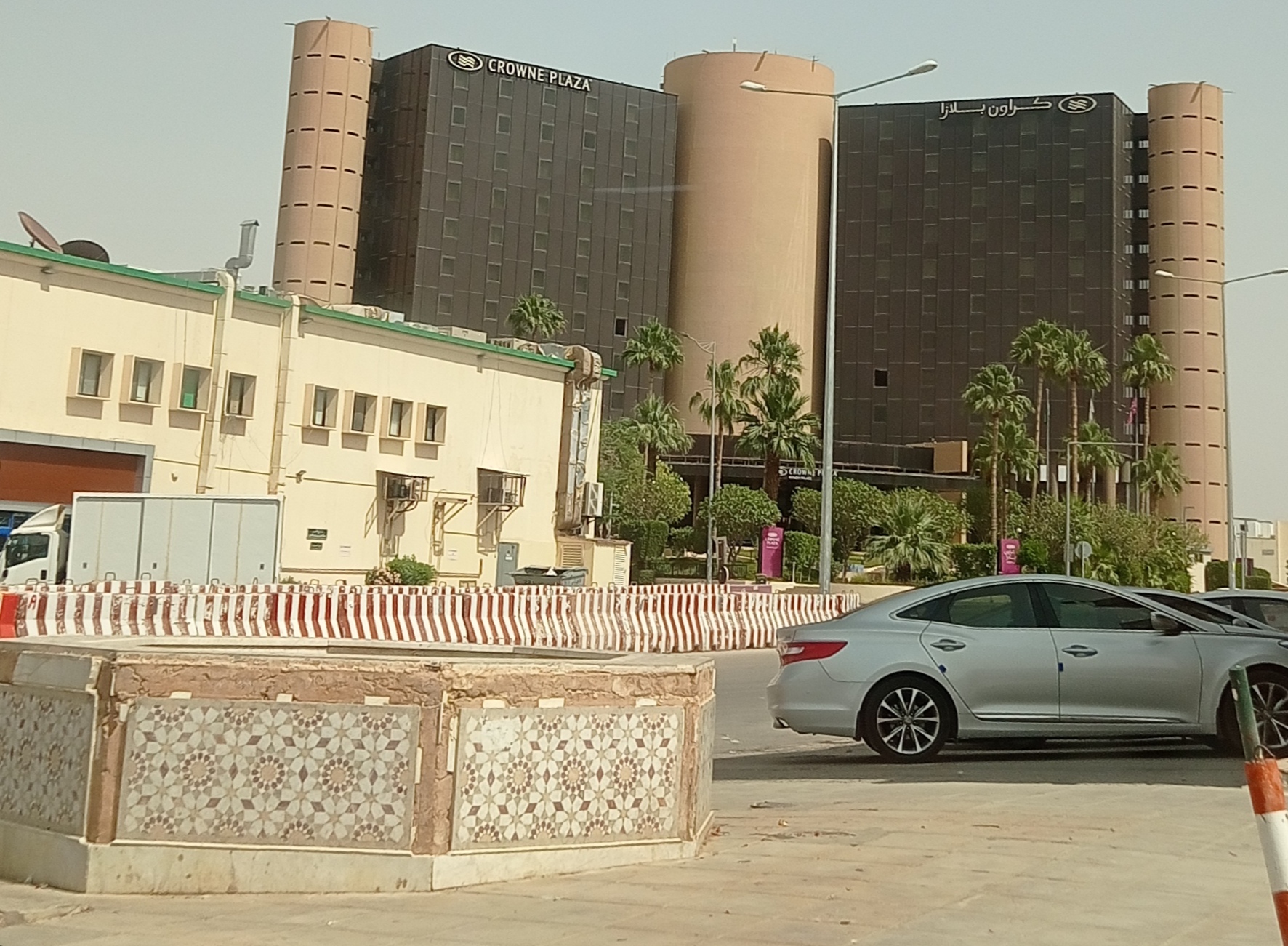
The alcohol reform was designed for a specific version of Saudi Arabia’s future — one in which 70 million international visitors arrive annually, occupy luxury hotels, and consume at premium venues. That future may still arrive. But the war has revealed how thin the margin was between a reform calibrated for foreign guests and a reform that exists for no one in particular. The bars are built. The bottles are stocked. The Kingdom’s megaproject ambitions have been tested before. What has not been tested is whether a social concession made to attract the world can survive the world’s departure.
Frequently Asked Questions
Is alcohol currently legal in Saudi Arabia?
Saudi Arabia has not formally legalized alcohol. What exists is a single unmarked retail outlet in Riyadh’s Diplomatic Quarter, initially restricted to non-Muslim diplomats (January 2024) and later expanded to non-Muslim expatriates meeting income or residency criteria (late 2025). No published regulation governs the arrangement. Spirits above 20 percent ABV are excluded from even the reported 600-venue licensing aspiration. The legal status occupies an intentional grey zone — operational but ungazetted, accessible but unadvertised. Saudi criminal law still formally prohibits alcohol possession and consumption by citizens.
How does Saudi Arabia’s alcohol policy compare to other Gulf states?
Saudi Arabia is the last Gulf Cooperation Council member to introduce any form of alcohol access. Bahrain has permitted alcohol since independence in 1971. The UAE restructured its licensing in 2023, eliminating the need for personal permits in Abu Dhabi and generating a market valued at $3.5 billion in 2024. Qatar temporarily permitted alcohol at the 2022 World Cup before restricting access again. Oman licenses hotel bars and specialty stores. Kuwait maintains a total ban alongside Saudi Arabia’s traditional stance, though Kuwait has not signaled any relaxation. The regional competitive pressure — particularly from Dubai’s transparent, taxed, revenue-generating model — is a factor explicitly cited in Saudi hospitality trade discussions.
What was the original incident that led to Saudi Arabia’s alcohol ban?
On an evening in September 1952, Prince Mishari bin Abdulaziz — 19 years old and a son of King Ibn Saud — attended a party at the home of British Vice-Consul Cyril Ousman in Jeddah. After being refused further alcohol, the prince shot and killed Ousman. King Ibn Saud subsequently imposed a nationwide prohibition. The incident was reported by the Spectator and is documented in historical accounts of Saudi-British diplomatic relations. Prince Mishari was initially sentenced to death but the sentence was commuted, and he died in 2000.
Will alcohol be available at the 2034 FIFA World Cup in Saudi Arabia?
Saudi Arabia has confirmed to FIFA that alcohol will be prohibited at all 2034 World Cup venues, hotels, and fan zones — a stricter position than Qatar’s 2022 arrangement, where designated fan zones served alcohol before a last-minute restriction at stadium perimeters. FIFA accepted the Saudi terms without public negotiation. The gap between this World Cup commitment and the ongoing Diplomatic Quarter retail operation has not been officially addressed. Whether the 2034 prohibition will extend to existing licensed venues outside the World Cup footprint remains undefined, reflecting the broader pattern of deliberate ambiguity in Saudi alcohol governance.
How many foreign visitors does Saudi Arabia receive annually?
In 2025, Saudi Arabia recorded 122 million total visitors, comprising 29.7 million inbound international arrivals and approximately 86 million domestic trips, with the balance consisting of same-day and transit visits — a ratio of roughly 24 percent international to 76 percent domestic. Total tourism spending reached SR300 billion ($81 billion). The revised Vision 2030 target calls for 150 million visitors, including 70 million international, by the end of the decade. Achieving the international target would require more than doubling the 2025 international figure in four years — a trajectory that was challenging before the Iran conflict and that Oxford Economics now projects may contract by 11 to 27 percent in 2026 alone.