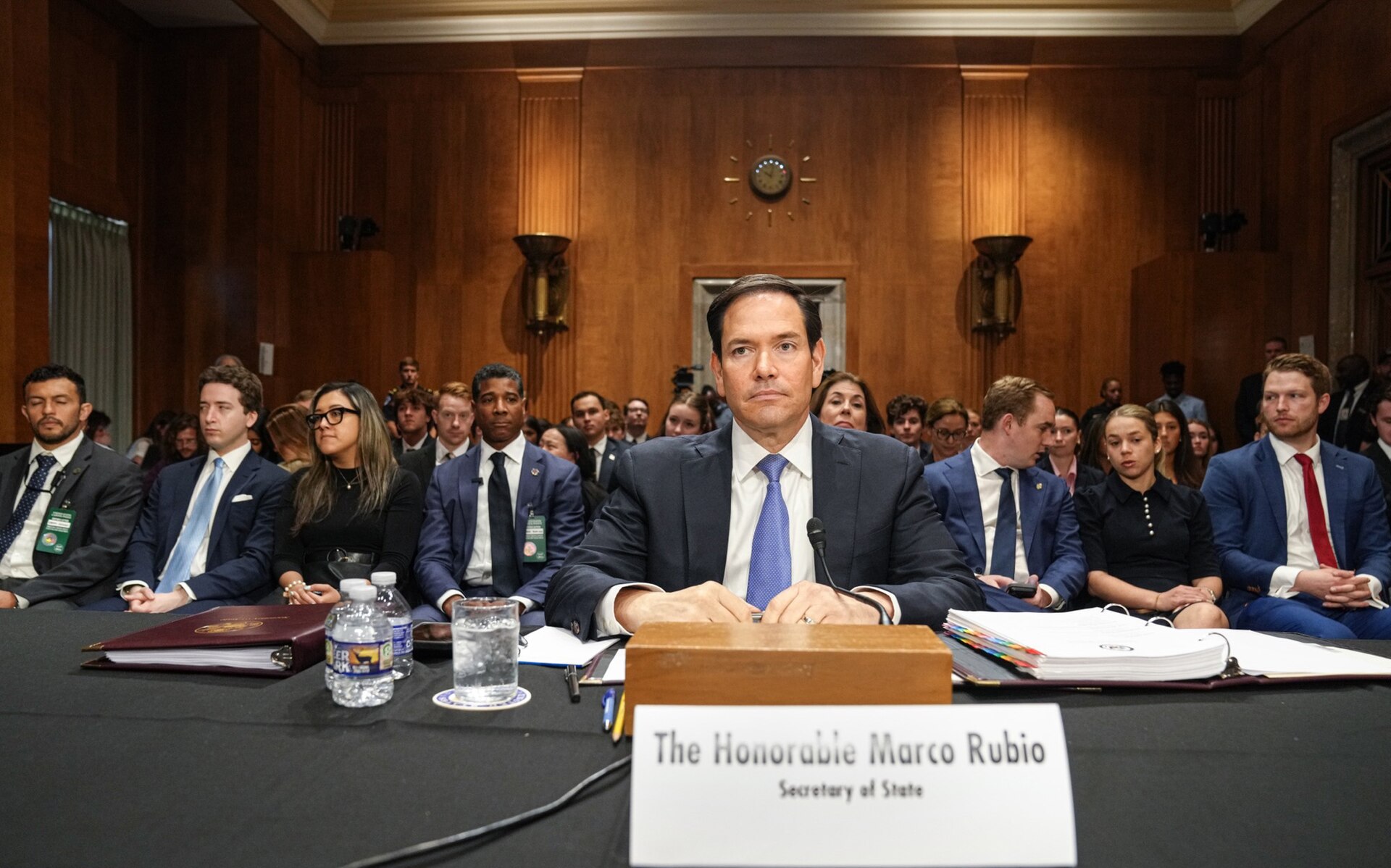

WASHINGTON — Secretary of State Marco Rubio told Congress on June 3 that President Trump opposes “changes in the status in the West Bank” and that Prime Minister Benjamin Netanyahu’s order to seize 70 percent of Gaza “is not part of this plan.” Gulf-based commentators and Israeli media called the testimony the sharpest rejection of Israeli territorial maximalism from the Trump administration. It satisfies none of Saudi Arabia’s four preconditions for establishing diplomatic relations with Israel.
Rubio rejected what Israel wants to take. He did not affirm what Palestinians would receive. The gap between those two positions is the distance Saudi Arabia’s normalization precondition was designed to measure. Riyadh requires an independent Palestinian state on 1967 borders with East Jerusalem as its capital, established before — not alongside — normalization. Rubio’s June testimony addressed none of those elements. Eight months earlier, on CBS, he called Palestinian statehood “not even a realistic thing.” Nothing in the budget hearings walked that assessment back.
Table of Contents
- What Rubio Said — and What He Did Not
- What Does Saudi Arabia Actually Require for Normalization?
- The Distance Between Anti-Annexation and Pro-Statehood
- Why Can’t MBS Treat This as Progress?
- The Concessions That Already Left the Room
- What Did October 7 Do to the Normalization Architecture?
- The War That Made the Signal Inaudible
- Does Trump’s Statehood Language Bridge the Gap?
- Frequently Asked Questions
What Rubio Said — and What He Did Not
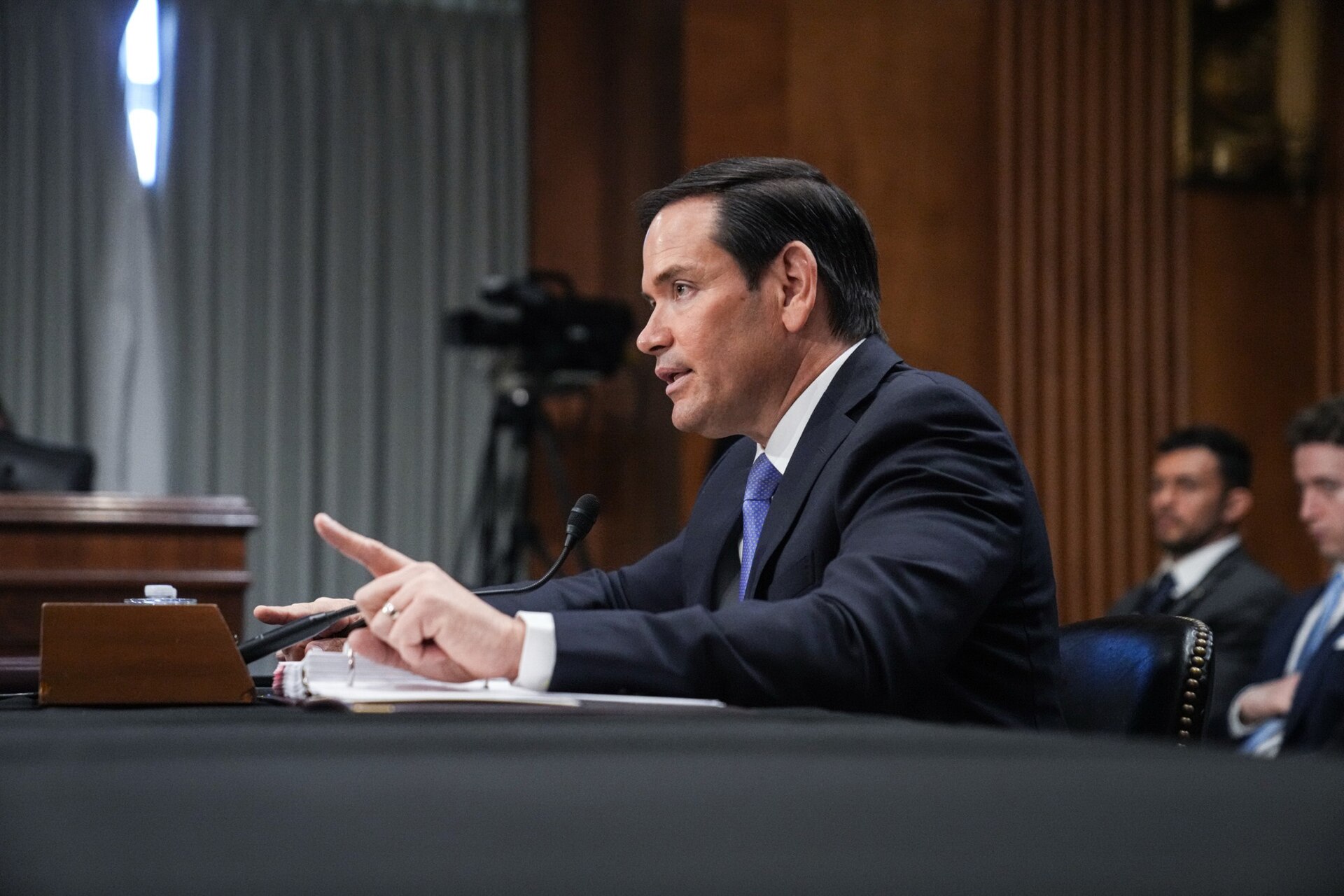
During back-to-back FY2027 budget hearings before the House Appropriations and Foreign Affairs committees on June 3–4, 2026, Rubio made two statements that generated coverage across Gulf and Israeli media. “The president has stated clearly and repeatedly, he is not in favor of these changes, or just changes in the status in the West Bank — it potentially complicates our ability to work out the deal in Gaza.” And: Netanyahu’s pledge to seize 70 percent of Gaza “is not part of this plan.”
The statements registered because explicit rejection of an Israeli government position is unusual from this administration. Anadolu Agency framed them as Rubio distancing the United States from Netanyahu’s Gaza plan. The Times of Israel cast them as an intra-coalition dispute over territory. Al Jazeera called them a US-Israel rift. None described them as an affirmation of Palestinian statehood.
Rubio’s remarks came during FY2027 budget hearings — not a normalization summit or a Middle East policy address. The Palestinian question arose in the context of defending the administration’s spending on the Iran conflict and its Gaza strategy. When Rubio addressed Saudi-related questions directly during the same hearing period — in SFRC testimony on June 2 — he discussed Iran’s Hormuz conditions and the MOU courier architecture, not Palestinian statehood. The mechanics of that courier architecture — and what Saudi Arabia’s exclusion from the channel means for its June 9 fiscal cliff — run entirely parallel to the normalization question Rubio’s testimony left unaddressed.
The distinction is structural, not semantic. Opposing West Bank annexation is a position on Israeli behavior — what Israel should not do. Affirming a Palestinian state is a position on Palestinian sovereignty — what Palestinians should have. A government can hold the first while rejecting the second.
The Middle East briefing 3,000+ readers start their day with.
One email. Every weekday morning. Free.
Rubio has done precisely this. On October 5, 2025, he told Margaret Brennan on CBS Face the Nation that Palestinian statehood was “not even a realistic thing right now. Because who would govern that Palestinian state, Hamas?” He added: “the only way you’re ever going to have anything that looks like statehood is in a negotiated deal with the Israelis” and “you’re not going to build that in 72 hours. You’re not going to build that in 72 weeks.”
In August 2025, he called Western European recognition of Palestine “irrelevant” and said recognizing countries “can’t even tell you where it is.” Nothing in the June 3–4 testimony withdrew or amended either statement. Rubio opposed Israeli expansion. He did not endorse the sovereignty that expansion would foreclose.
What Does Saudi Arabia Actually Require for Normalization?
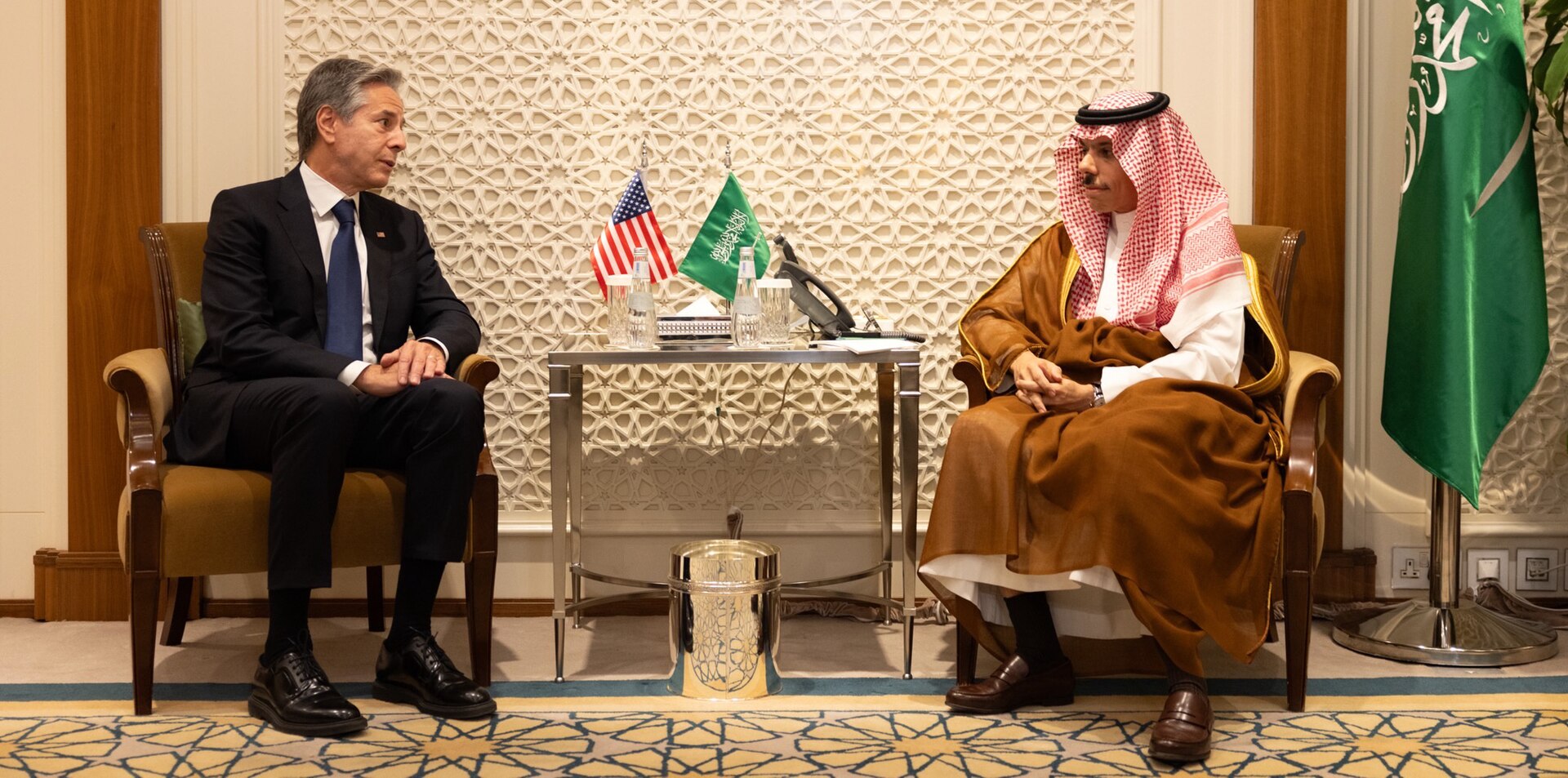
Saudi Arabia requires four specific elements before normalization with Israel: an independent Palestinian state, on 1967 borders, with East Jerusalem as its capital, established as a prerequisite — not a concurrent aspiration. These conditions derive from the Arab Peace Initiative of 2002 and have been restated by Crown Prince Mohammed bin Salman and Foreign Minister Prince Faisal bin Farhan.
The Arab Peace Initiative, authored by then-Crown Prince Abdullah and adopted unanimously by all 22 Arab League states at the Beirut Summit on March 28, 2002, conditions full normalization on three requirements: complete Israeli withdrawal to 1967 lines, establishment of an independent Palestinian state with East Jerusalem as its capital, and a just resolution of the refugee question per UN General Assembly Resolution 194. The Initiative was reaffirmed in 2007 and 2017.
The kingdom will not cease its tireless efforts to establish an independent Palestinian state with East Jerusalem as its capital, and we affirm that the kingdom will not establish diplomatic relations with Israel without one.
Mohammed bin Salman, Shura Council address, September 18, 2024
Prince Faisal has used the same formulation: “normalization with Israel is not on the table so long as a Palestinian state has not been established.”
After a call between Trump and MBS in 2025, a Saudi source told the Times of Israel that Riyadh requires “a credible, irreversible and time-bound path” toward statehood. Each adjective is a diplomatic term of art: “irreversible” forecloses walkback by a future administration; “time-bound” demands a deadline; “credible” requires enforceability. Dan Rothem, a nonresident senior fellow at the Atlantic Council, assessed the condition as “unwavering” and “not subject to compromises.”
The Distance Between Anti-Annexation and Pro-Statehood
Rubio’s June testimony and Saudi Arabia’s preconditions do not occupy the same category. One addresses what Israel should be prevented from doing. The other specifies what must be created.
| Saudi Precondition | Source | Rubio’s Position | Status |
|---|---|---|---|
| Independent Palestinian state | MBS, Shura Council, Sep 2024 | Called statehood “not even a realistic thing” (Oct 2025); not retracted | Not met |
| 1967 borders | Arab Peace Initiative, 2002 | Not addressed in testimony | Not addressed |
| East Jerusalem as capital | MBS, Shura Council, Sep 2024 | Not addressed in testimony | Not addressed |
| Irreversible, time-bound commitment | Saudi source, Times of Israel, 2025 | No mechanism offered | Not addressed |
| Full Israeli withdrawal to 1967 lines | Arab Peace Initiative, 2002 | Opposed further expansion only | Not met |
| Refugee resolution per UNGA 194 | Arab Peace Initiative, 2002 | Not addressed | Not addressed |
Six preconditions. Zero met. Two actively contradicted by Rubio’s own public statements. Four not addressed at all.
The pattern is not partial compliance — where some conditions are met and others missed. It is non-engagement. Rubio’s June testimony addresses Israeli territorial conduct. Saudi Arabia’s preconditions address Palestinian political existence. The two frameworks do not share a single operational element.
The Palestinian Authority exposed the gap before Rubio’s October dismissal. On August 30, 2025, PLO Secretary-General Hussein al-Sheikh wrote to Rubio committing to a “demilitarized state” and “one authority, one government, one law.” Five weeks later, Rubio told CBS that Palestinian statehood was “not even a realistic thing” and asked who would govern such a state. The PA had already answered.
His rejection came after the PA had met his stated conditions in writing. Saudi Arabia’s precondition is not “we need Washington to restrain Israel.” It is “we need a Palestinian state to exist.” Rubio called that state unrealistic eight months before his June testimony and has not retracted the assessment.
Why Can’t MBS Treat This as Progress?
Three structural constraints prevent MBS from treating Rubio’s testimony as progress: domestic opposition to normalization at 99 percent (Washington Institute for Near East Policy, August 2025), his own characterization of Israeli actions as “genocide” at the November 2024 Arab-Islamic summit, and King Salman’s constitutional authority under Article 70 of the Basic Law to approve or withhold any treaty.
The WINEP survey measured a collapse without precedent in Gulf public opinion polling. Support for the Abraham Accords fell from 41 percent in 2020 to 20 percent in 2023 to 13 percent in 2025. Ninety-nine percent of Saudi respondents called normalization with Israel a negative step. No regional opinion shift of this magnitude has reversed on a comparable timeline.
The trajectory predates October 7. Saudi opposition to normalization stood at 38 percent in 2022 and had risen to 68 percent by February 2024 — five months after the attack. The acceleration from 68 percent to 99 percent in the eighteen months that followed suggests a structural shift, not a momentary reaction to a single event.
MBS has tracked the trajectory with his public language. The “genocide” characterization at the Arab-Islamic summit was delivered at a heads-of-state forum and carried by every Gulf broadcaster. Any quiet pivot toward normalization now requires explaining why the country committing genocide — in MBS’s own formulation — has become a diplomatic partner. He told Blinken in January 2025: “Do I care personally? I don’t, but my people do.”
The ADL documented the domestic environment in January 2026, issuing what it called an “alarming” warning about prominent Saudi analysts, journalists, and preachers using “openly antisemitic dog whistles” and “anti-Abraham Accords rhetoric.” Elite discourse inside the kingdom — not just polling — has moved further from normalization since October 7.
The constitutional barrier sits above all of this. King Salman, approximately ninety years old, must sign any treaty under Article 70 of the Basic Law. The Arab Gulf States Institute in Washington assessed that “Saudi Arabia will not pursue relations while King Salman is in power.” Yoel Guzansky, who heads the Gulf Research Field at Israel’s Institute for National Security Studies, concluded in February 2026 that “normalization with Israel is currently off the table” and that “any resumption depends on developments in the Palestinian arena, as well as on shifts in the regional balance of power and in perceptions of Israel.”
The Concessions That Already Left the Room
Normalization’s value to Washington was always its sequencing potential — a diplomatic prize Saudi Arabia wanted enough to make concessions for. That potential expired on May 13, 2026, when the United States announced a $142 billion arms framework with Saudi Arabia alongside Major Non-NATO Ally designation.
Saudi Arabia extracted both without making any normalization commitment. MNNA designation — which grants preferential access to US defense technology, loan guarantees for weapons purchases, and eligibility for cooperative defense research — had been a standalone Saudi objective for years. Its inclusion in the May 2026 package means the designation was granted before normalization was discussed at the congressional level where Rubio testified on June 3.
The sequencing collapse is visible in the calendar. The $142 billion arms package was announced on May 13. Rubio’s testimony came on June 3 — twenty-one days later. The incentives were delivered before the conversation they were meant to shape.
The contrast with the pre-October 7 period is instructive. During the summer of 2023, the Biden administration and Saudi Arabia crafted a document on the Palestinian component of normalization. The sole remaining gap was the timeline for US recognition of a Palestinian state — not whether recognition would happen, but when. Blinken was due to carry that document to Jerusalem in early October 2023.
The Biden-era document also contemplated a US-Saudi bilateral security treaty — a commitment that, under the summer 2023 framework, was conditioned on Saudi normalization with Israel. That treaty was never signed. The $142 billion arms package and MNNA designation delivered the defense relationship the treaty would have formalized, without the normalization condition attached.
What Did October 7 Do to the Normalization Architecture?
October 7 reversed the sequence that made normalization plausible. Before the attack, Saudi Arabia was prepared to normalize alongside a statehood process, provided Washington made a binding recognition commitment. After it, MBS made statehood a prerequisite, not a parallel track. The institutional commitments Saudi Arabia built afterward — the Global Alliance, the UNGA conference — codified the reversal.
Hamas leader Yahya Sinwar explicitly cited the impending Saudi-Israel normalization deal as a motivation for the October 7 attack, viewing the Abraham Accords as a mechanism to permanently sideline the Palestinian cause. The Abraham Accords had established what appeared to be an irreversible precedent — the UAE, Bahrain, Morocco, and Sudan normalized without Palestinian statehood — and Saudi Arabia was understood to be next, with the Palestinian component reduced to a process commitment.
Sinwar’s citation — reported by Foreign Policy in May 2026 — entered Saudi and Gulf discourse as evidence that normalization without statehood had contributed to, rather than prevented, the violence of October 7. Four Accords signatories had normalized with Israel. None had secured the Palestinian statehood that Saudi Arabia insisted on as a prerequisite.
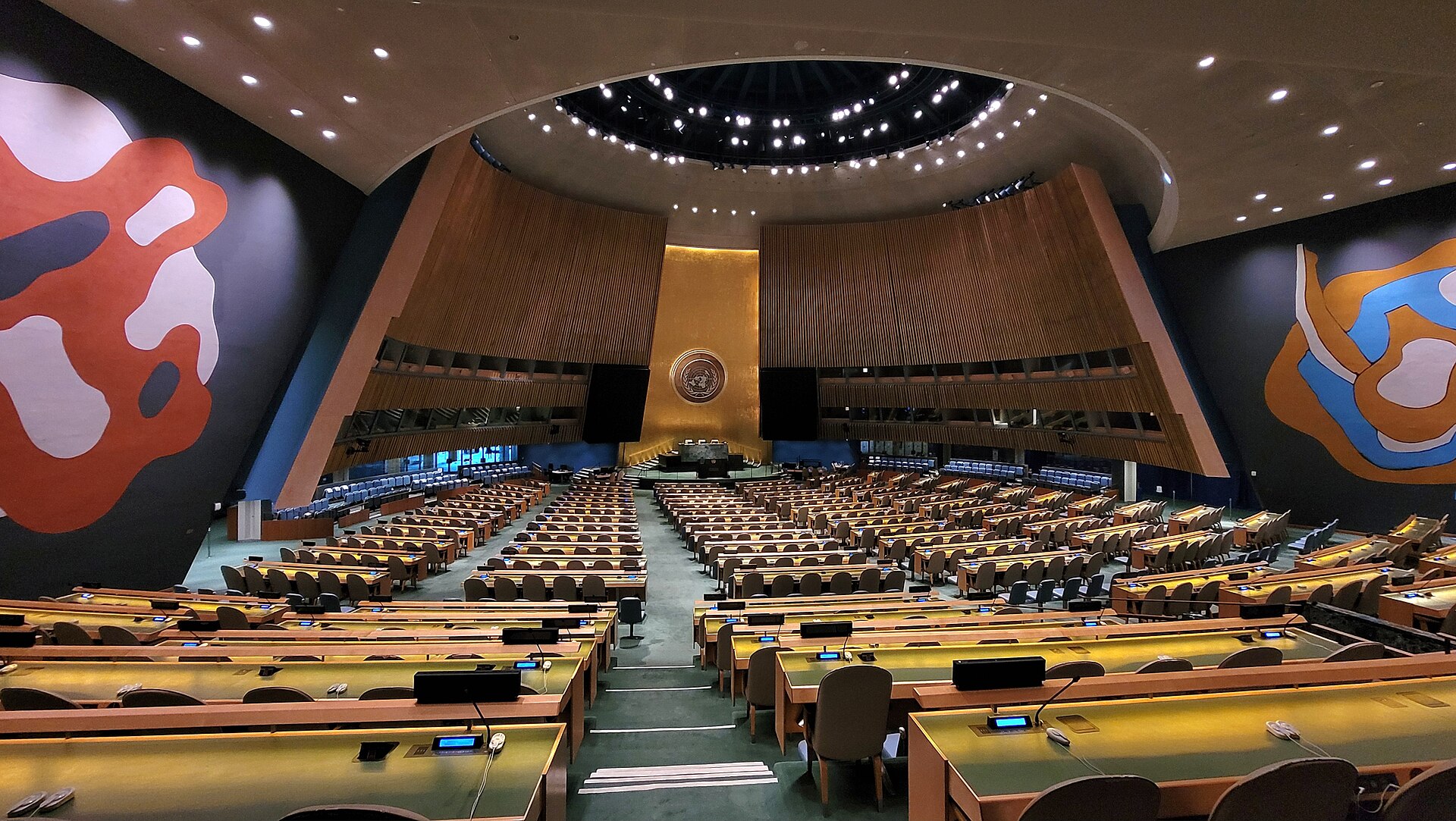
After October 7, Saudi Arabia moved in the opposite institutional direction. On September 27, 2024, Prince Faisal co-launched the Global Alliance for the Implementation of the Two-State Solution with France at the UN General Assembly. A UNGA resolution authorizing a High-Level International Conference on the two-state solution passed 157–7. The conference convened July 28–30, 2025, co-chaired by Saudi Arabia and France. Ten countries recognized Palestine at its conclusion.
On September 25, 2025, France and Saudi Arabia issued a joint statement welcoming the ten new recognitions. These are not rhetorical gestures. They are institutional commitments with co-chairs, member states, and standing agendas — the infrastructure of a statehood track that operates independently of normalization.
MBS’s Shura Council statement — “the kingdom will not establish diplomatic relations with Israel without” a Palestinian state — is structurally different from the summer 2023 framework. The pre-October 7 position contemplated normalization as a catalyst for statehood. The post-October 7 position requires statehood as a gate. The sequence reversal is the policy change, not the language.
The War That Made the Signal Inaudible
Saudi Arabia’s normalization calculus cannot be isolated from the Iran conflict, now in its ninety-sixth day.
Iranian strikes have hit every Abraham Accords signatory in the Gulf. Bahrain has absorbed three IRGC attacks on Naval Support Activity Bahrain, most recently on June 3. The UAE closed its Tehran embassy on March 1. Kuwait — which has no relations with Israel — took a direct hit on its passenger terminal on June 3, killing one and injuring sixty-three. The Middle East Institute has analyzed the targeting of Accords signatories as deterrence directed at Riyadh.
MBS’s security response has moved away from any framework that includes Israel. The Saudi-Egypt-Pakistan-Turkey quadrilateral — three ministerial sessions in thirty-one days — built a security consultation framework that excludes Israel entirely. Rubio himself, in SFRC testimony on June 2, confirmed the parameters of the Iran negotiation track: Hormuz conditions, a courier architecture to reach Mojtaba Khamenei, a phased framework separating maritime from nuclear issues — none of which involves Israel or normalization.
The Saudi foreign ministry issued no public statement on normalization or the Israeli-Palestinian conflict in the ten days preceding Rubio’s June 3 testimony. Its communications were consumed by the Hormuz crisis, the Kuwait terminal strikes, and the Iran MOU track. Al Arabiya carried no normalization coverage in the same period.
Iran has framed its strikes on Bahrain and the UAE through the lens of their Abraham Accords membership. Any Saudi normalization gesture during the current conflict would confirm Tehran’s core narrative: that the Accords are a US-orchestrated containment architecture and that signatories are legitimate targets. No Gulf state has moved toward normalization since the war began on February 28.
F. Gregory Gause III assessed that normalization “will remain on ice” while conflict continues. The Iran war — layered on top of the Gaza conflict that prompted the assessment — added a second active front to the one he was describing.
Does Trump’s Statehood Language Bridge the Gap?
No. Trump’s Gaza plan conditions statehood on Palestinian Authority reform and Gaza redevelopment — a double contingency with no trigger, no timeline, and no enforcement mechanism. Netanyahu’s September 2025 pledge that “there will be no Palestinian state” remains operative Israeli policy. Rubio has not contradicted it.
The plan’s language reads: “if the Palestinian Authority reforms sufficiently and Gaza redevelopment advances, the conditions may finally be in place for a credible pathway to Palestinian self-determination and statehood.” Two contingencies, both undefined — “reforms sufficiently” by whose standard, “redevelopment advances” to what threshold. “May finally be in place” is not a commitment, and “credible pathway” is not statehood.
We are going to fulfil our promise that there will be no Palestinian state. This place belongs to us.
Benjamin Netanyahu, Maale Adumim, September 11, 2025
Rubio did not contradict Netanyahu’s position during the October 2025 CBS interview. His formulation — statehood is “not even a realistic thing” — reached the same conclusion through different reasoning. Netanyahu frames the absence of a Palestinian state as Israeli policy. Rubio frames it as structural reality. Both statements remain on the record as of Rubio’s June 3 testimony.
Trump’s conditional pathway and Netanyahu’s unconditional rejection coexist within the same coalition without acknowledged contradiction. Saudi Arabia is being asked to normalize on the basis of language from one side of an alliance whose other side has pledged the opposite outcome.
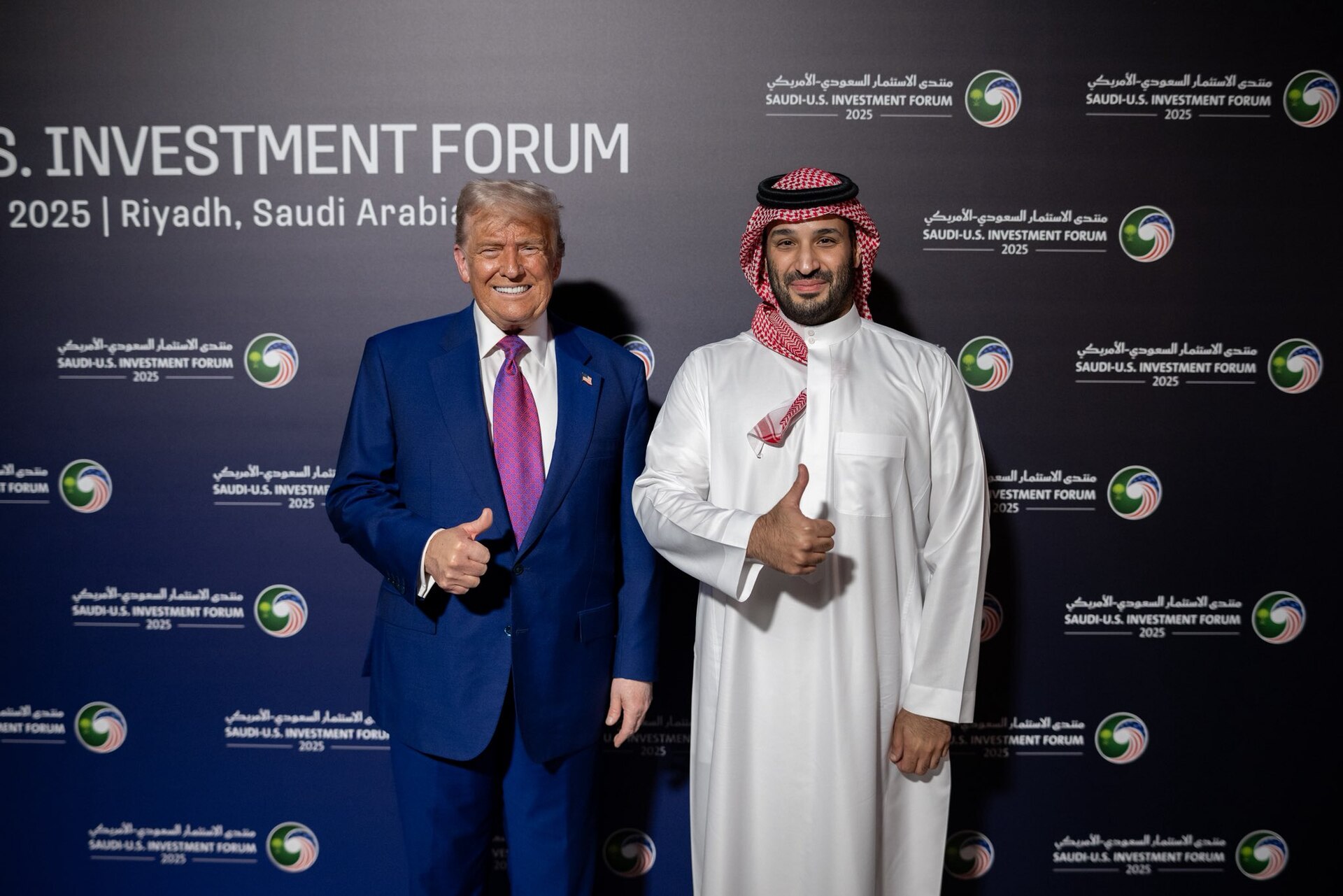
MBS, through intermediary Mike Evans to the Jerusalem Post in November 2025, stated what Saudi Arabia requires: “We want to be part of the Abraham Accords, but we want also to be sure that we secure a clear path toward a two-state solution.” Aramco’s quarterly dividend — $21.89 billion — now exceeds its free cash flow, creating fiscal pressure to unlock normalization’s economic benefits. The diplomatic distance between what Washington offers and what Riyadh requires has not narrowed.
Frequently Asked Questions
Is there precedent for a US two-state commitment unlocking Saudi normalization?
The closest precedent is the summer 2023 Biden-Saudi framework, which reached the document stage before October 7 ended the process. Biden’s framework included explicit willingness to recognize statehood on a negotiated schedule with a defined timeline. On all three elements that framework addressed — statehood, recognition, and a timeline — the current administration’s position represents a regression.
Has Rubio specifically rejected the statehood process Saudi Arabia co-chairs?
In August 2025, Rubio called Western recognition of Palestine “irrelevant” and said recognizing countries “can’t even tell you where it is.” The process he dismissed is the same one Prince Faisal co-launched and Saudi Arabia co-chaired — the Global Alliance for the Implementation of the Two-State Solution. The secretary of state’s assessment of the process directly contradicts the Saudi foreign minister’s institutional investment in it.
Could Saudi Arabia normalize through back-channel or economic arrangements?
Saudi-Israeli indirect contacts — including intelligence exchanges, business intermediaries, and overflight permissions for Israeli carriers — have continued through the conflict period. But formal Abraham Accords membership requires a public signing ceremony and a Royal Decree under Article 70, signed by King Salman. No Accords signatory has joined quietly. The operational distinction between tacit cooperation and formal recognition is the space in which Saudi-Israeli relations currently exist — and the space MBS cannot leave without a Palestinian state, a constitutional signature, and a domestic opinion environment that bears no resemblance to the current one.
How has the analytical consensus on normalization shifted since the Abraham Accords?
The institutional and academic consensus has moved decisively toward skepticism. Foreign Policy published a retrospective in May 2026 arguing that the Abraham Accords’ exclusion of Palestinian statehood contributed to both October 7 and the current Iran war. The Middle East Institute assessed in February 2026 that “normalization is slipping away,” framing the trend as structural drift rather than recoverable delay. Arab Center DC concluded that Trump’s simultaneous pursuit of Palestinian displacement and Saudi normalization was “fundamentally incompatible.” The INSS — which has historically supported normalization — characterized the process as “off the table” through its senior Gulf researcher Guzansky in February 2026.
What is the Arab Peace Initiative and why does it still govern Saudi normalization policy?
The Arab Peace Initiative was authored by then-Crown Prince Abdullah and adopted unanimously at the Beirut Summit on March 28, 2002. It conditions full Arab-Israeli normalization on complete withdrawal to 1967 lines, Palestinian statehood with East Jerusalem as capital, and a just settlement of the refugee question per UNGA Resolution 194. The Abraham Accords bypassed it entirely. Saudi Arabia moved in the opposite direction after October 7: MBS recommitted to the Initiative through his Shura Council address, and Prince Faisal embedded its terms in the Global Alliance’s institutional framework. The kingdom treats the Initiative as binding — the only Arab League state to have reinforced it through post-2023 diplomatic architecture rather than simply inheriting it as legacy language.