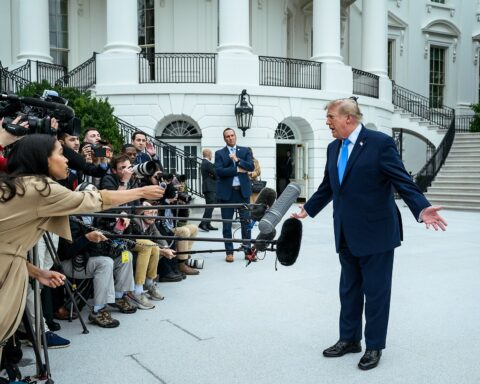
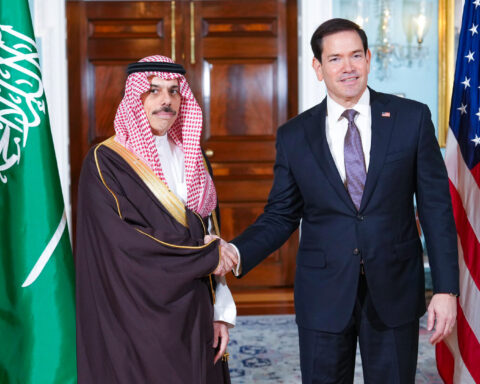
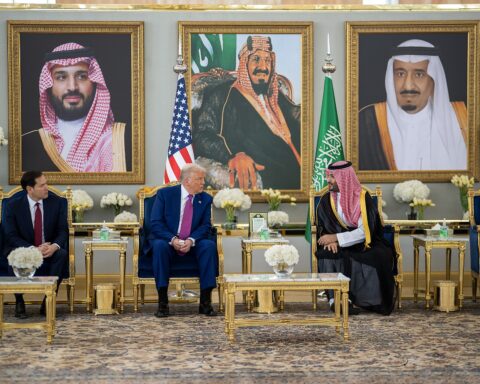
WASHINGTON — Trump told his cabinet on June 4 that an Iran deal could come “this weekend.” The pipeline through which that deal must travel runs through an intermediary who communicates exclusively in writing from an underground bunker. Saudi Arabia is not in the pipeline at all.
Hours after Trump’s cabinet appearance, Iranian Foreign Minister Abbas Araghchi told Al Mayadeen that “there is no formal negotiation process underway between Iran and the United States,” while confirming that “messages continue to be exchanged.” These are not contradictions — they are accurate descriptions of the same courier architecture from opposite institutional vantage points. Secretary of State Marco Rubio told the Senate Foreign Relations Committee on June 2 that Mojtaba Khamenei’s written responses take three to five days. Saudi Arabia’s triple fiscal event on June 9 — the Aramco dividend, IMF conditional growth forecast, and Iran’s formal MOU rejection — arrives whether or not a deal does.
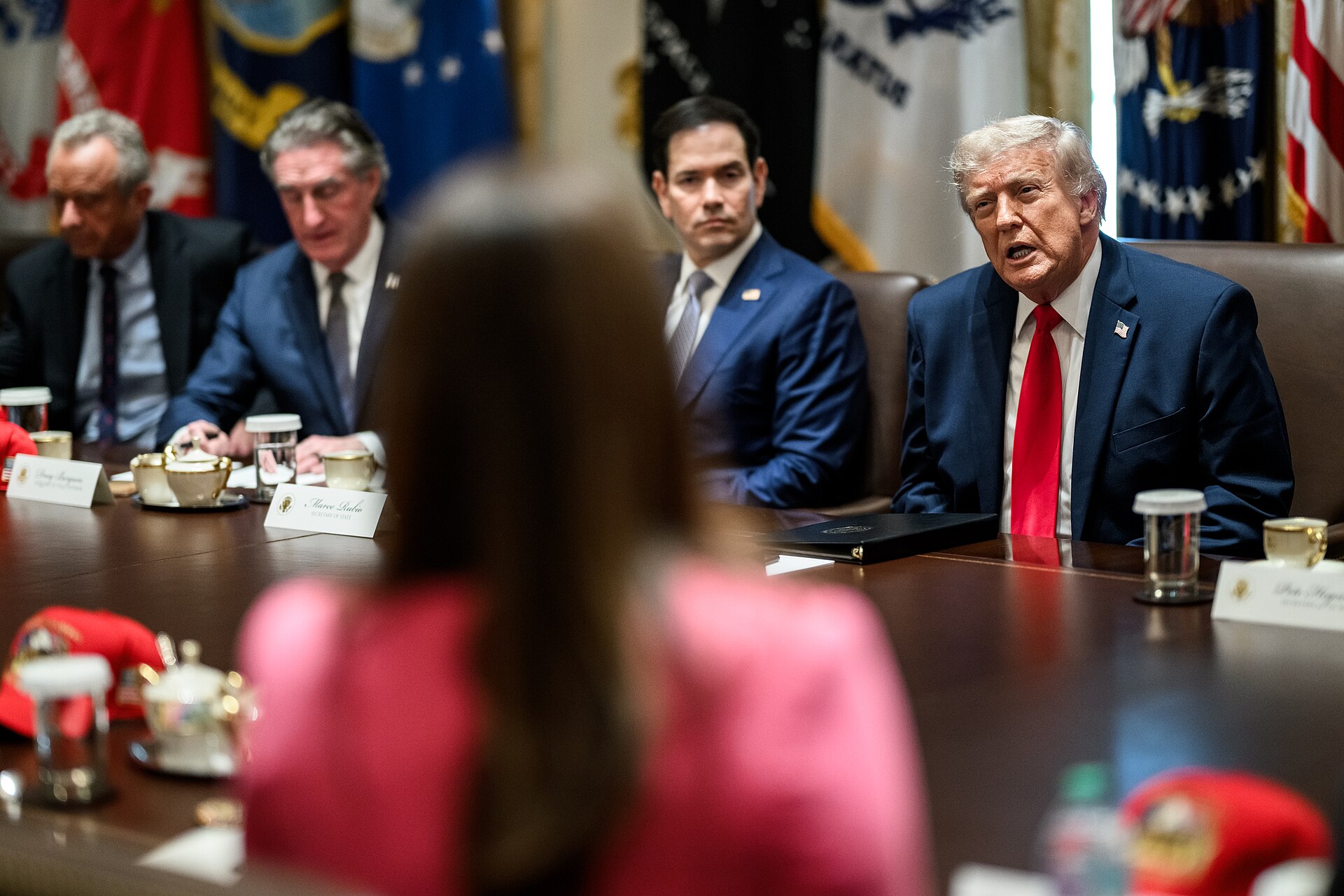
Table of Contents
- What Did Trump and Araghchi Actually Say?
- The Courier Architecture That Cannot Deliver by Sunday
- Why Does Iran Say There Are No Formal Negotiations?
- The Tasnim-Araghchi Split Is Institutional, Not Contradictory
- What Happens on June 9 Regardless of Trump’s Timeline?
- How Does a Successful Deal Make Saudi Arabia’s Position Worse?
- Saudi Arabia’s Silence Is Not Strategy
- Can Saudi Arabia Influence a Channel It Cannot Access?
- Frequently Asked Questions
What Did Trump and Araghchi Actually Say?
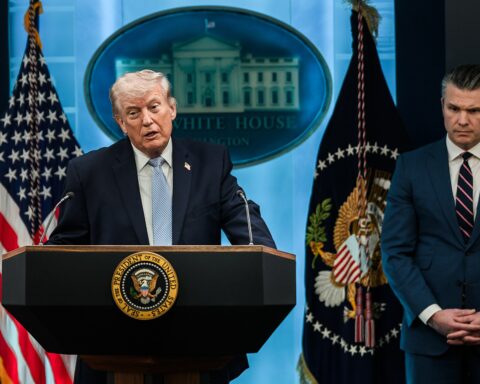
At his June 4 cabinet meeting, Trump “insisted a firm deal could precipitate ‘this weekend’” — CNN called it “a rosy picture of negotiations.” Hours later, Araghchi told Al Mayadeen there is “no formal negotiation process underway between Iran and the United States,” while confirming messages were still being exchanged and his ministry was “working on the final draft of the document.”
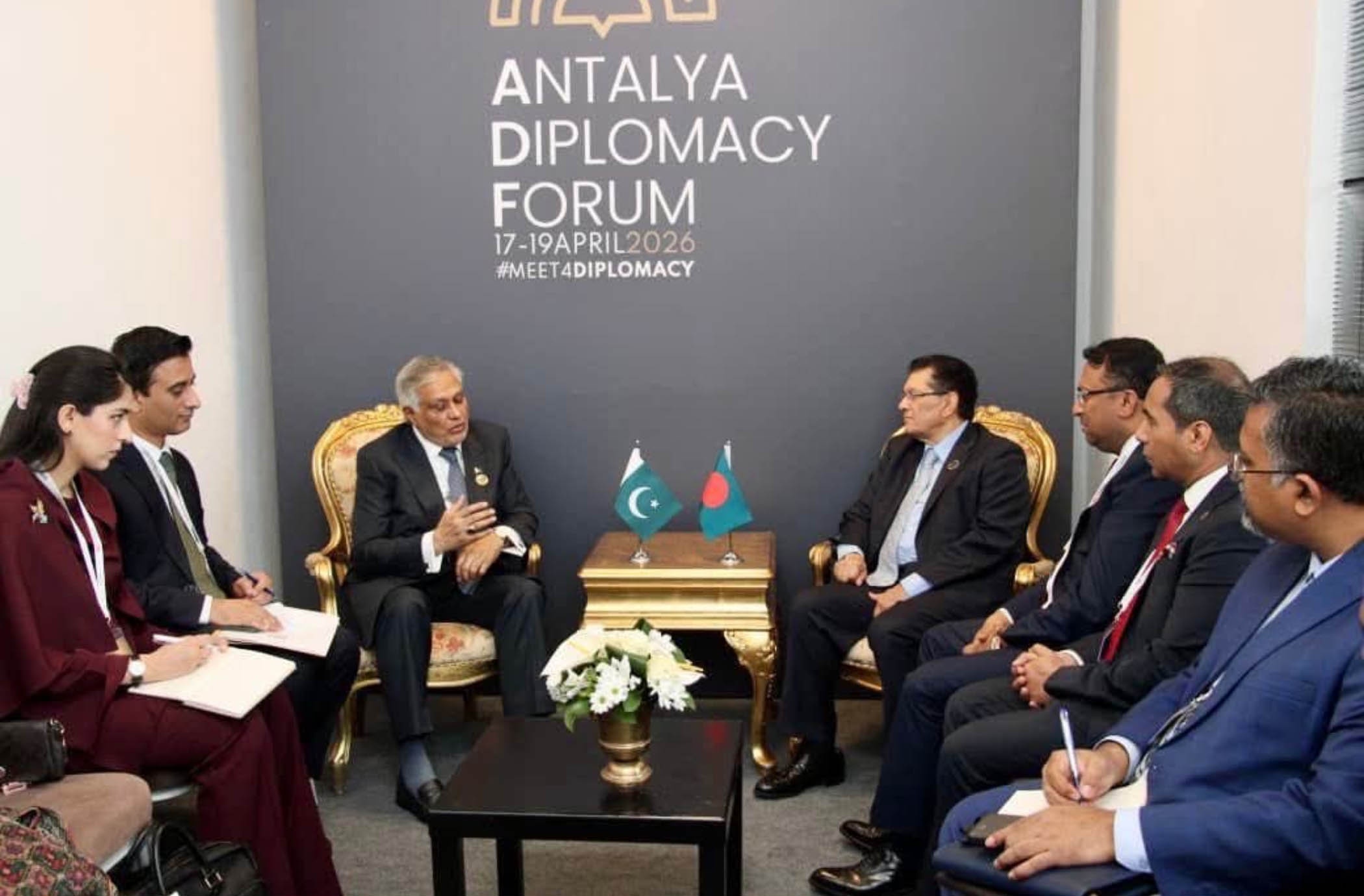
The two accounts are internally consistent — Araghchi confirmed active technical engagement while denying the formal bilateral format. The distinction matters because “formal negotiation” in Iranian diplomatic usage requires a recognized bilateral format with official institutional imprimatur: acknowledgment by both governments of the negotiation’s existence, scope, and binding authority. The courier architecture through Mojtaba Khamenei explicitly lacks every one of those elements. Trump controls the sending end and reads the pipeline as a deal approaching conclusion; Araghchi reads the receiving end and accurately notes that nothing capable of producing a binding agreement has been established. Saudi Arabia cannot see either end — it sits outside all three active Hormuz negotiation tracks, and Rubio’s June 2 testimony enumerated four US conditions for Hormuz access that were not communicated to Riyadh before being stated in open congressional session.
Araghchi’s formulation was precise in a way that went largely unreported. He said his ministry was still “reviewing” and “working on” texts — the language of preliminary staff engagement, not concluded positions. He confirmed that “our channels of communication have not been cut off,” which is categorically different from confirming that a deal is within reach. Trump’s cabinet statement assumed a pipeline that operates at executive speed; the pipeline Araghchi described operates at the speed of couriers physically moving between capitals, with a counterparty who communicates only in writing and whose minimum response cycle Rubio confirmed is measured in days, not hours.
The Courier Architecture That Cannot Deliver by Sunday
Rubio’s June 2 testimony before the Senate Foreign Relations Committee provided the most detailed public description of how the channel actually moves. Mojtaba Khamenei, the Supreme Leader’s son and the de facto decision-maker on the MOU, “is increasingly engaging at some level, although all of his communications have been in writing and through intermediaries.” Response times run three to five days. A senior US official told Axios that the counterparty is “literally in caves, not using email.”
The Middle East briefing 3,000+ readers start their day with.
One email. Every weekday morning. Free.
The pipeline path runs from a US proposal through a courier — Pakistan’s foreign ministry has served as the primary intermediary since March — to Mojtaba in an underground bunker, through internal IRGC-civilian deliberation, and back via the same courier route. Trump’s “this weekend” gives this architecture three to four days from his June 4 cabinet appearance, the absolute floor of Rubio’s confirmed response window. That floor assumes the message left Washington the same day, arrived without delay, required no internal deliberation beyond a single reading, and encountered no objection on any of the eight violated conditions.
None of those assumptions survives contact with the draft’s current state. Mehdi Khanalizadeh, an Iranian state television pundit who accompanied the Islamabad delegation, told Iran International on May 29 that the MOU draft “breaches eight of ten terms approved by Khamenei.” Israeli Defense Minister Katz confirmed on June 4 that “Israeli attacks on Hezbollah will continue” — a direct collision with Iran’s March 2026 five-point counter-proposal, which treats a comprehensive Lebanon ceasefire as a precondition for any MOU conclusion. Araghchi made the link explicit: “a ceasefire between Iran and the United States constitutes, without any ambiguity, a comprehensive ceasefire across all fronts, including Lebanon.”
Former US negotiators Abram Paley and Nate Swanson, writing for the Atlantic Council in 2026, offered a benchmark for what implementation requires even after political agreement is reached. “Signing is the easy part,” they wrote, noting that the 2023 prisoner exchange — orders of magnitude simpler than a war-ending MOU — was “nothing short of a nightmare” to execute. The courier has not returned from the previous cycle, Trump’s May 31 amendments to the MOU text on HEU timing and Hormuz language, and the president is already announcing the next cycle’s conclusion.
Why Does Iran Say There Are No Formal Negotiations?
Araghchi’s denial of formal negotiations is not a denial of communication — it is a legal and institutional distinction with direct precedent. During the 2013-2015 JCPOA process, Iran described every round as “technical consultations” until the final agreement was concluded, because acknowledging formal negotiations would have required the civilian government to take institutional ownership of a process the IRGC and Khamenei’s inner circle controlled from above.
The JCPOA itself demonstrated how far this definitional gap can stretch even with extensive direct engagement. Secretary of State John Kerry and Foreign Minister Mohammad Javad Zarif publicly contradicted each other on the agreement’s most fundamental question — Iran’s right to enrich uranium. Zarif told reporters the deal “ensures Iran’s right to enrich.” Kerry stated flatly that “there is no inherent right to enrich.” The State Department went further, describing the JCPOA as “not a treaty or an executive agreement, and not a signed document” but rather a “political commitment” — two principals, one text, irreconcilable public descriptions, reached only after more than two years of sustained direct contact that the current architecture entirely lacks.
The current process has zero direct meetings between any US and Iranian official at any level. Araghchi can claim active drafting while denying formal negotiations because the text is a staff-level technical product, not an officially commissioned negotiation document his ministry has been authorized to conclude. Iran’s FM spokesman reinforced this framing after Rubio’s June 2 testimony, stating there are “no negotiations at this stage on the details of the nuclear issue.” Fars news agency added that Trump’s characterizations “raised issues that contradict the provisions of the agreement’s text” and that “no such clause” on a toll-free Strait of Hormuz exists in the draft Iran has reviewed — a claim that directly contradicts Rubio’s enumeration of four US Hormuz conditions two days earlier.
The Tasnim-Araghchi Split Is Institutional, Not Contradictory
On June 1, Tasnim — the IRGC-linked news agency — reported that Iran had “suspended all exchanges with the US via mediators” and placed Hormuz blockade escalation and Bab al-Mandab closure on the agenda. Three days later, Araghchi told Al Mayadeen that “channels have not been cut off” and that his ministry was still drafting. Western coverage framed the divergence as contradiction, but the explanation is institutional rather than strategic — Tasnim and Araghchi were reporting on different channels operated by different power centers within the Iranian state.
Tasnim described the IRGC’s channel — the military and intelligence track through which operational decisions on Hormuz posture, strike authorization, and escalation are communicated — and that track suspended on June 1. Araghchi described the Foreign Ministry’s channel — the diplomatic track through which MOU text revisions, nuclear technical discussions, and formal correspondence travel — and that track continued operating through June 4. Both outlets reported accurately about their respective institutional portfolios, because Iranian decision-making runs two parallel pipelines operated by different power centers with different authorities, different risk tolerances, and fundamentally different definitions of what constitutes engagement with Washington.
Khanalizadeh’s statement that eight of ten Khamenei conditions are violated reflects the IRGC’s assessment of the MOU’s adequacy — an assessment that carries operational weight because the IRGC controls the Hormuz posture the MOU must address. Araghchi’s continued engagement reflects the civilian ministry’s institutional mandate to maintain diplomatic channels regardless of the IRGC’s tactical decisions. Saudi Arabia cannot arbitrate between these tracks because it has access to neither — the Kingdom’s foreign minister has not spoken to Araghchi since May 6, and Saudi Arabia has no channel whatsoever to the IRGC decision-making circle around Mojtaba Khamenei.
Lebanon functions as the mechanism through which the IRGC track exercises its veto over whatever progress the diplomatic track achieves. Iran’s March 2026 five-point counter-proposal treats a comprehensive Lebanon ceasefire as a precondition for any MOU conclusion, not a parallel negotiation or a separate diplomatic effort. Tasnim’s June 1 suspension announcement specifically cited “Israeli attacks in Lebanon” as the trigger. When Defense Minister Katz confirmed on June 4 that strikes would continue, he validated the specific condition Tasnim cited — and Israel has no incentive to resolve it, given that the June 22 Washington follow-on session on Lebanon excludes Saudi Arabia entirely.
What Happens on June 9 Regardless of Trump’s Timeline?
Three events converge on June 9, and none requires Trump’s deal to arrive first. Aramco’s Q1 2026 base dividend of $21.89 billion becomes payable against Q1 free cash flow of $18.6 billion — a $3.3 billion shortfall, the first time quarterly dividends have exceeded cash generation since 2020-21. Iranian FM spokesman Esmaeil Baghaei is confirmed to formally reject the MOU that same day, resetting the courier cycle from zero. The full account of Iran’s rejection and counter-proposal filed through Muscat — including the frozen-assets sequencing demand and Baghaei’s statement — is documented as of June 6.
The Baghaei statement — previewed through diplomatic channels, not speculation — will also confirm an Omani counteroffer, meaning the US-Iran courier cycle does not simply end on June 9 but restarts from a new Iranian baseline. That reset, combined with IMF mission chief Azim Sadikov’s June 3 assessment that Saudi GDP growth of “approximately 2% is contingent on maritime shipping through the Strait of Hormuz normalising over the coming months,” produces a triple signal on a single day: dividend shortfall, MOU collapse, and conditioned growth forecast. The Saudi government, which holds 98.5% of Aramco shares, will fund the dividend gap from reserves or additional debt at a moment when its Q1 fiscal deficit of SAR 125.7 billion already represents 76% of the full-year target.
| Event | Date | Metric | Significance |
|---|---|---|---|
| Aramco Q1 dividend | June 9 | $21.89B vs. $18.6B FCF | $3.3B shortfall — first since 2020-21 |
| IMF GDP forecast | June 3 (operative) | ~2%, conditional on Hormuz | Down from 4.5% (2025), 3.1% (Apr 2026) |
| Iran MOU rejection | June 9 | Formal rejection + Omani counter | Courier cycle resets from zero |
| Saudi Q1 deficit | Q1 2026 | SAR 125.7B (76% of full-year) | Annualised pace ~3x full-year target |
| Brent crude | June 4 | $96.97/bbl | $11-14 below $108-111 breakeven |
The IMF forecast deserves particular attention for what it structurally concedes. This is the first Article IV assessment for any Gulf state whose GDP growth baseline depends on a single named chokepoint outside the assessed country’s territorial control. The IMF is not conditioning Saudi growth on oil prices, OPEC+ compliance, or domestic reform pace — it is conditioning growth on Iran opening the Strait of Hormuz, a decision in which Saudi Arabia has no formal role and no confirmed channel of influence. Sadikov’s language — “contingent on maritime shipping through the Strait of Hormuz normalising” — is not hedging but conditionality of a kind the Fund has not previously applied to a sovereign wealth state.
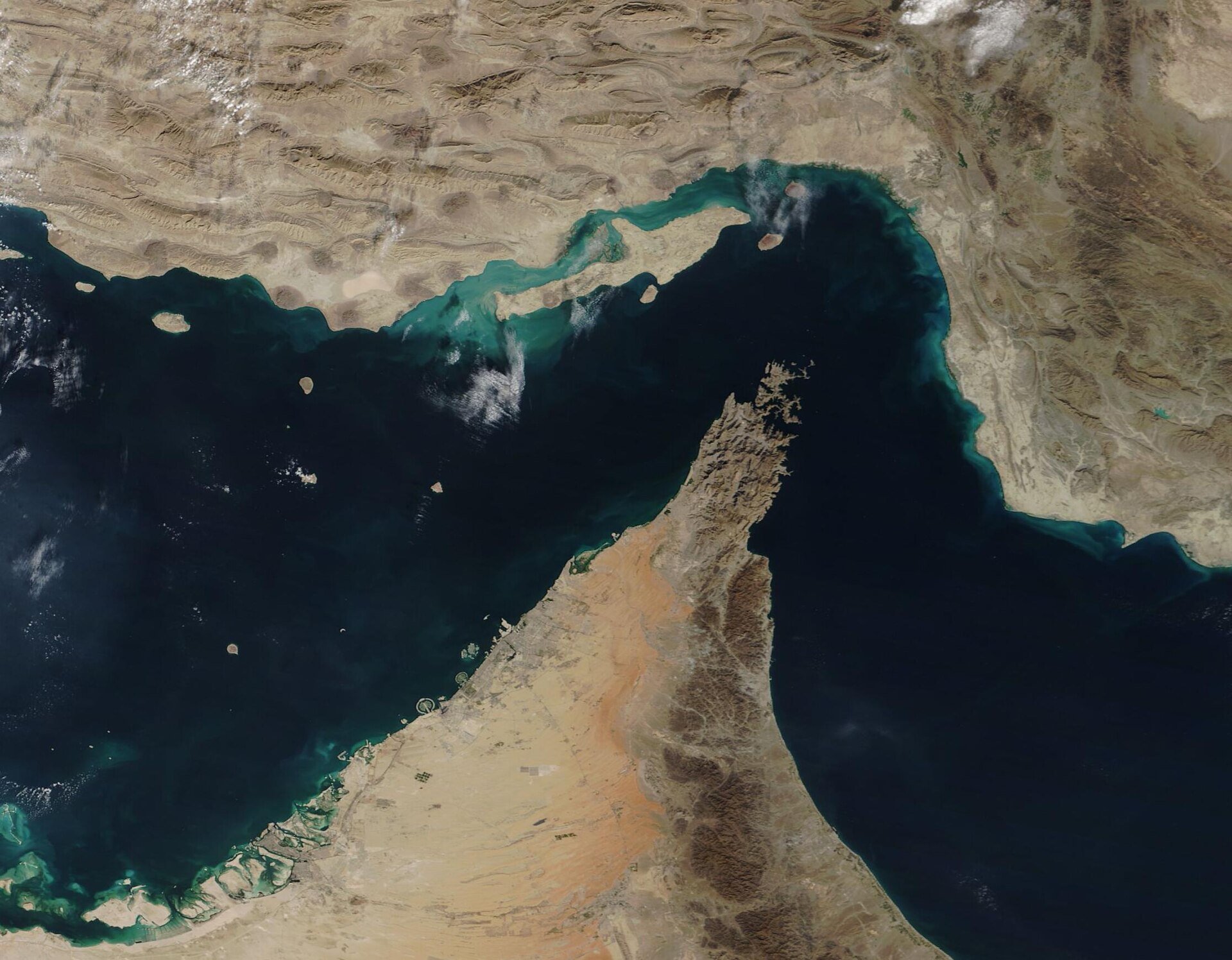
The OPEC+ meeting scheduled for June 7 — two days before the triple convergence — adds another variable the Kingdom cannot control. Kazakhstan’s persistent overproduction of 322,000 barrels per day, driven by Chevron’s $48.5 billion Tengiz expansion producing 901,000 barrels per day at an output level that cannot be throttled without physical damage to wells, has created a combined compliance debt of 4.779 million barrels per day across the cartel with no enforcement mechanism. Saudi Arabia’s quota stands at 10.291 million barrels per day against actual production of roughly 7.25 million — a Hormuz-imposed involuntary cut of 3 million barrels per day for which the Kingdom receives no production credit, no quota adjustment, and no acknowledgment from the cartel’s compliance mechanism.
How Does a Successful Deal Make Saudi Arabia’s Position Worse?
Wood Mackenzie’s “Quick Peace” scenario projects Brent at $80 by end-2026 if Hormuz opens, eliminating the $14 war premium Goldman Sachs currently estimates is embedded in prices. Saudi Arabia’s fiscal breakeven sits at $108-111. A successful deal does not close that gap — it widens it, trading wartime shortfall for a deeper peace-dividend deficit the Kingdom’s budget cannot absorb.
Iran has since reclassified Hormuz reopening not as a diplomatic concession but as a line item: Iran’s demand for $12 billion in frozen assets before any Hormuz action inverts Phase 1 sequencing entirely, making the Saudi peace-trap arithmetic even less resolvable.
At current Hormuz-constrained production of roughly 7.25 million barrels per day, the wartime gap at $96.97 on June 4 — $11-14 per barrel below the $108-111 breakeven — already translates to $80-100 million in daily fiscal shortfall. A successful deal that drops Brent toward $80 would widen the gap to $28-31 per barrel, roughly $200-220 million per day. Wood Mackenzie’s 2027 floor of $65 per barrel in the same scenario would push the shortfall past $310 million daily, triple the current wartime deficit of $80-100 million.
This is the structural trap that June 9 crystallizes. Saudi Arabia cannot advocate for a deal that collapses the war premium its budget now depends on, yet it cannot advocate against a deal when its IMF growth forecast is conditional on Hormuz opening and its most important ally is publicly promising results “this weekend.” The arms packages and Major Non-NATO Ally status were extracted May 13 without any normalization commitment or any mechanism for Saudi consultation on the Hormuz terms being negotiated in a channel Riyadh cannot access.
Saudi Arabia’s Silence Is Not Strategy
The Saudi Foreign Ministry has issued no public statement on the Iran negotiations for more than ten days as of June 4. Foreign Minister Prince Faisal bin Farhan’s last confirmed call with Araghchi was May 6 — a month before the cabinet meeting in which Trump announced results Riyadh was not consulted on. His last confirmed contact with Rubio dates to January 2026, five months before Rubio’s SFRC testimony enumerated four Hormuz conditions that directly determine Saudi Arabia’s shipping access, fiscal breakeven, and strategic position.
The Kingdom is excluded from all three active negotiation tracks touching Hormuz: the US-Iran courier channel running through Pakistan, the Oman bilateral maritime framework confirmed by PressTV on May 27, and the UK-France/Northwood coalition coordinating naval operations. It is excluded from the June 22 US-brokered Washington follow-on session on Lebanon. Its quadrilateral with Egypt, Pakistan, and Turkey — convened for precisely this kind of regional coordination — produced three ministerial sessions in 31 days, zero communiqués, zero joint statements, and zero publicly acknowledged decisions.
Al Arabiya, the Saudi state-adjacent broadcaster, has not covered Rubio’s SFRC testimony — the most detailed public US description of the deal terms, courier mechanics, and Hormuz conditions that shape Saudi Arabia’s economic future. MBS’s last confirmed diplomatic initiative touching Iran was the call to Macron on May 31, requesting French mediation on “maritime navigation security and freedom.” The Élysée issued no readout — an asymmetry indicating the call was Saudi-initiated, and that the message Riyadh needed to send to the US-Iran channel had to travel through Paris because the Kingdom has no direct route to either end of the pipeline.
Can Saudi Arabia Influence a Channel It Cannot Access?
The problem is not that Saudi Arabia lacks weight — it has production capacity, geographic position, and $142 billion in recently secured defense contracts. None of those assets can be inserted into the specific pipeline through which the deal must travel: the US-Iran courier runs through Mojtaba Khamenei via Pakistan, Oman holds a separate bilateral maritime channel, France carries messages Riyadh cannot send directly, and the UK coordinates the Northwood coalition. Riyadh has access to none of them.
Saudi Arabia’s own bilateral de-escalation track with Iran — the most direct channel the Kingdom has maintained since the Beijing Agreement restored relations in March 2023 — produced three ministerial sessions through the quadrilateral and no binding commitments. The track operates at foreign-minister level, not at the head-of-state or IRGC command level where the MOU’s terms are actually being decided. Faisal bin Farhan can speak to Araghchi, but Araghchi himself told Al Mayadeen on June 4 that his ministry is “reviewing” and “working on” a draft whose terms are set above him — by the same Mojtaba Khamenei circle that the Saudi diplomatic apparatus has no pathway to reach.
The JCPOA provides the benchmark for what a functioning negotiation architecture requires. Kerry and Zarif met eighteen times across eleven cities over more than two years, supported by technical teams with continuous access, and the resulting agreement still required eighteen months of implementation negotiation after the political framework was settled. The current architecture has zero direct meetings at any level, written-only communication through a single intermediary, and a counterparty whom Rubio describes as “increasingly engaging at some level” — language that characterizes a flow of messages, not a negotiation approaching conclusion, from a decision-maker who has not met any US official in person since February 28.
When Trump says “this weekend” and Araghchi says “no formal negotiation,” they are describing a courier channel that moves at the speed of handwritten messages carried between capitals by a third country’s foreign minister. The gap between these descriptions is not a diplomatic nuance that mediation can close — it is a structural feature of an architecture designed to prevent either side from being held to a timeline. June 9 arrives in five days, the Lebanon front that Iran requires as a precondition remains active, and Defense Minister Katz confirmed on June 4 that “Israeli attacks on Hezbollah will continue.”
Frequently Asked Questions
Has any US official met an Iranian counterpart in person during these negotiations?
No direct meeting between US and Iranian officials has occurred since the February 28, 2026 conflict began. The entire exchange has been conducted through written messages via intermediaries — primarily Pakistan’s Foreign Minister Ishaq Dar, who has physically traveled between capitals carrying proposals, and Oman’s Foreign Minister Badr al-Busaidi, who operates a parallel channel. Pakistan’s PM Sharif first publicly confirmed the courier role on May 28, roughly three months after the architecture became operational. The Omani channel carries a structural limitation that constrains its June 9 counteroffer: it operates at foreign-minister level below head-of-state authority, meaning Sultan Haitham cannot escalate commitments beyond what al-Busaidi is authorized to negotiate.
What is the PGSA toll and why can Saudi Arabia no longer pay it quietly?
The Persian Gulf Shipping Agreement toll runs approximately $2 million per VLCC transit through the Strait of Hormuz, with Saudi Arabia quietly paying for an estimated 81 days through early June at a cumulative cost exceeding $800 million. Rubio’s June 2 SFRC testimony changed the political calculus by publicly naming a “toll-free” Strait of Hormuz as one of four US conditions — the first time any US official had identified the toll mechanism in an open congressional session. Continued Saudi payment of a toll that the US Secretary of State has publicly demanded be eliminated creates a direct political contradiction that Riyadh cannot resolve through silence, and may partly explain the foreign ministry’s extended public absence from any comment on the negotiations.
Could Oman broker a compromise before June 9?
Oman is operating a bilateral maritime framework with Iran confirmed by PressTV on May 27, when Deputy Foreign Minister Bagheri Kani announced a “new framework” for Hormuz co-management focused on shipping lane protocols within Omani territorial waters. But this channel addresses maritime logistics — not the broader MOU architecture covering nuclear terms, Hormuz sovereignty recognition, Lebanon, and sanctions. The eight Khamenei conditions that Khanalizadeh identified as violated include Iran’s formal demand for Hormuz sovereignty recognition, a structural element entirely outside Oman’s authority or bilateral scope. The Omani counteroffer confirmed for June 9 represents the maximum its channel can deliver: a maritime facilitation proposal, not a resolution of the US-Iran MOU’s fundamental incompatibilities.
What would “formal negotiations” require under Iran’s constitutional framework?
Iran’s 2013 formulation required official recognition of bilateral format by the Majlis National Security and Foreign Policy Committee — not just executive authorization from the president or Supreme Leader. The current courier architecture bypasses the Majlis entirely, routing decisions through Mojtaba Khamenei’s personal advisory council, a six-to-eight-person mixed IRGC and civilian body that Rubio described at SFRC on June 2. Araghchi can simultaneously describe “working on the final draft” while denying formal talks because the draft remains a staff-level product that his ministry has not been formally commissioned to negotiate under Iran’s constitutional procedures. Any designation as “formal” would trigger Majlis reporting and oversight requirements that the IRGC decision-making circle has structured the entire process to avoid.