
RIYADH — Saudi Crown Prince Mohammed bin Salman called Bahrain’s King Hamad bin Isa Al Khalifa on June 4 and condemned what the Saudi Press Agency readout described as “brutal” Iranian attacks on Bahrain — the sharpest public language the crown prince has used since the Iran-US conflict began on February 28.
Saudi Arabia took no accompanying diplomatic action. No Iranian diplomats were declared persona non grata. No embassy staff were reduced. No cultural missions were closed. Kuwait, struck by its 951st cumulative Iranian attack the day before, had already expelled two Iranian diplomats with a 24-hour deadline.
Table of Contents
What MBS Said
The SPA readout was three sentences. MBS “denounced and condemned the brutal Iranian attacks targeting the Kingdom of Bahrain,” affirmed Saudi Arabia’s “full support and solidarity with Bahrain,” and backed “all measures taken to defend its security and stability.”
King Hamad, who had called the Iranian attacks “unjustifiable” and said he was “saddened by what happened,” received the call one day after Bahrain’s Defense Ministry confirmed its military intercepted and destroyed three missiles and a number of drones fired by Iran on June 3.
The word “brutal” was not new to Saudi officialdom on June 4. Saudi FM Prince Faisal bin Farhan had used the same word the previous day in a joint statement with Jordanian FM Ayman Safadi condemning Iranian strikes on Kuwait and Bahrain. Its elevation from ministerial to crown prince level marked a rhetorical step — the word moved up the chain. Nothing else did. Two days later, on June 6, Saudi Arabia condemned the dual-capital salvo without taking action, extending the same verbal-only pattern.
Saudi vocabulary has tracked upward since the war began: “condemns” in early weeks, “strongly condemns” through March, “heinous” at the GCC Extraordinary Ministerial Council in March, “flagrant” in Foreign Ministry statements, and now “brutal” at the head-of-state level. Each word is stronger than the last, and each has arrived without a corresponding policy change beyond the single March 21 expulsion.
The Middle East briefing 3,000+ readers start their day with.
One email. Every weekday morning. Free.
What Saudi Arabia Did Not Do
In the 24 hours between the June 3 strikes on Bahrain and Kuwait and the June 4 MBS call, Saudi Arabia’s Foreign Ministry issued one statement. It called the attacks “flagrant Iranian aggression and blatant violation of the sovereignty of the brotherly Kingdom of Bahrain and the brotherly State of Kuwait” and said “such violations undermine international efforts that aim to restore security and stability in the region.”
No diplomat was summoned. No Iranian mission staff were declared persona non grata. No cultural facility was closed. No ambassador was recalled for consultations.
Saudi Arabia’s last punitive diplomatic action against Iran was the March 21 expulsion of five Iranian diplomats — the military attaché, assistant military attaché, and three embassy staff — declared persona non grata with 24 hours to depart. Seventy-five days elapsed between that action and the June 4 call. In that window, Iranian strikes continued against Saudi territory and Gulf neighbors. Saudi Arabia’s diplomatic posture did not change.
The UAE closed its Tehran embassy entirely on March 1 — 95 days before MBS called Hamad. Kuwait expelled diplomats and shuttered Iran’s cultural mission on June 3. Saudi Arabia endorsed both actions in official statements. It replicated neither.
Why Did Kuwait Act and Saudi Arabia Did Not?
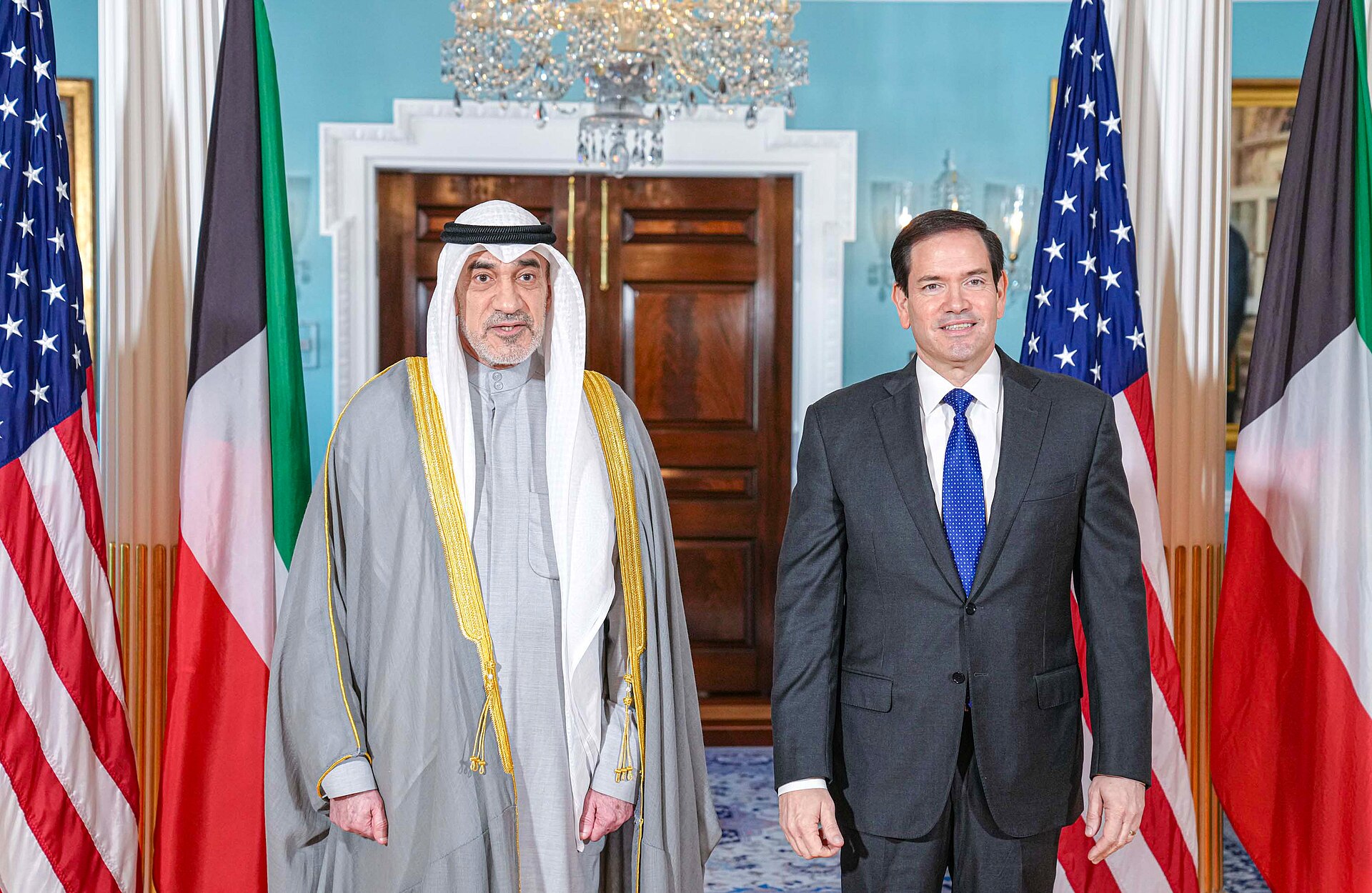
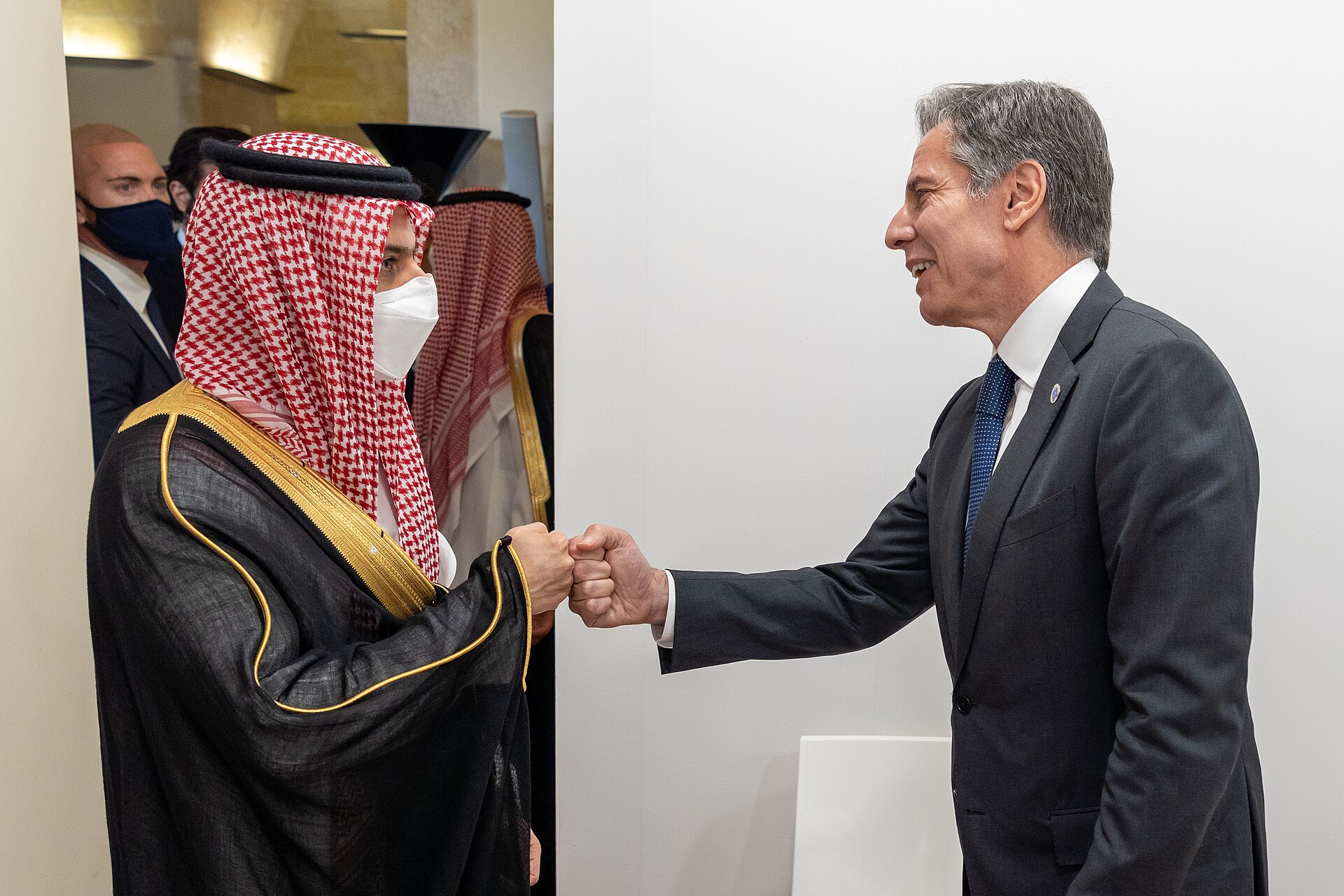
Kuwait’s response to the June 3 Terminal 1 strike was immediate and specific. Deputy FM Al-Mashaan summoned Iranian chargé d’affaires Yaqoubi Far, declared two diplomats persona non grata with a 24-hour departure deadline, and ordered Iran’s cultural mission closed. Kuwait’s foreign minister met US Secretary of State Rubio the following day.
The trigger was unambiguous: the first confirmed hit on an active civilian passenger terminal. Terminal 1 had reopened on June 1 and was struck 48 hours later. One Indian national was killed. Sixty-three were injured.
Saudi Arabia’s June 3 statement expressed “full support” for Kuwait. FM Faisal was coordinating on Pakistani mediation with Qatar the same day — a diplomatic track, not a punitive one.
The pattern holds across the conflict. When the UAE closed its Tehran embassy in March, Saudi Arabia issued a statement. When Kuwait expelled diplomats in June, Saudi Arabia issued a statement. In each case, the smaller Gulf state absorbed the diplomatic cost while Saudi Arabia provided the words.
The 2016 precedent measures the distance. On January 2, 2016, Saudi Arabia severed all diplomatic relations with Iran within a single day after protesters stormed Saudi diplomatic missions in Tehran and Mashhad. The entire Iranian mission was expelled within 48 hours. In 2026, with Iranian missiles striking GCC territory on a near-daily basis, Riyadh’s strongest punitive step has been a partial expulsion of five military-attached staff. The civilian diplomatic architecture — restored under the 2023 Beijing Agreement — remains intact.
The Kingdom reiterates its categorical rejection of these assaults, which violate Kuwait’s sovereignty and constitute a clear breach of international law and the Charter of the United Nations.
— Saudi Foreign Ministry statement, June 3, 2026 (SPA)
How Depleted Is Bahrain’s Air Defense?
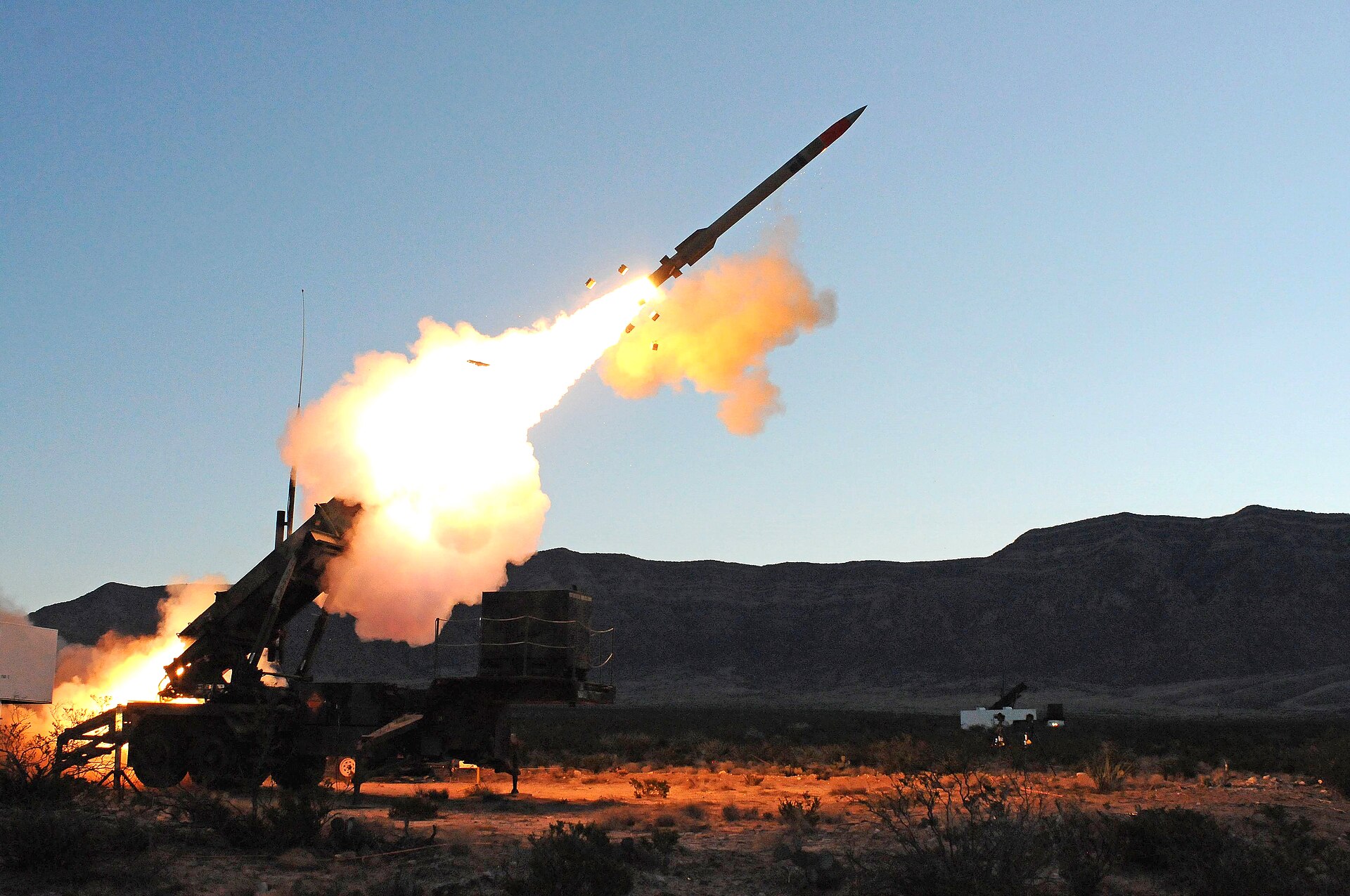
MBS told King Hamad that Saudi Arabia backed “all measures taken to defend its security and stability.” What Bahrain can actually defend depends on ammunition it does not have.
Bahrain’s PAC-3 stockpile is approximately 87% depleted, with roughly 8 Missile Segment Enhancement rounds remaining from an original inventory of approximately 60. The June 3 intercept of three missiles consumed a measurable fraction of that stockpile — each PAC-3 engagement typically requiring two MSE rounds. The third IRGC strike on NSA Bahrain tested a defense system running on its last reserves.
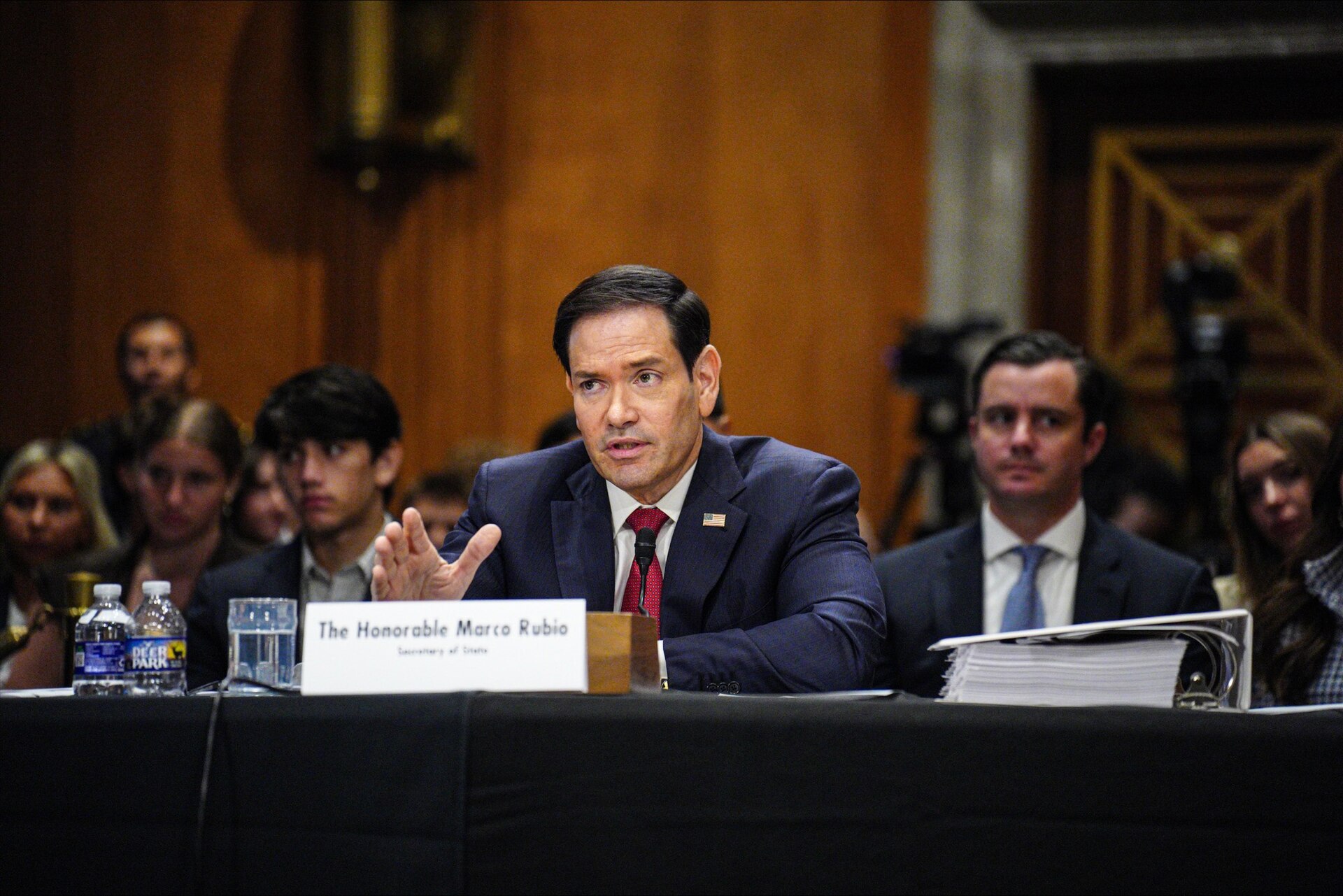
Secretary Rubio signed an $8.6 billion Section 36(b) emergency arms waiver on May 2 covering Qatar, Kuwait, UAE, and Israel. Bahrain was not included.
FR Doc 2026-10920, published June 1, added 50 PAC-3 MSE to Bahrain’s procurement account under standard Foreign Military Sales. The standard process requires 30-day congressional review and an 18-month minimum delivery timeline. Bahrain’s 8 remaining rounds must bridge to late 2027 at the earliest.
The solidarity call included no announcement of Saudi air defense asset transfers, bilateral ammunition sharing, or emergency procurement commitments.
Twenty-Nine Days Without a Call to Tehran
Saudi FM Prince Faisal’s last confirmed direct contact with Iranian FM Abbas Araghchi was May 6 — a call that explicitly discussed US-Iran negotiations. Before that, the two spoke on April 9, April 13, and April 26. Three calls in April. One in early May. Then 29 days of silence as of June 4.
Saudi Arabia’s Foreign Ministry had not issued any direct diplomatic engagement statement toward Iran for more than 10 days before the MBS call. The ministry’s output on Iran has consisted entirely of condemnation statements — reactions to events, not attempts to shape them.
The Christian Science Monitor reported on April 1 that Saudi officials were “talking to Iran on a daily basis” while simultaneously “preparing for a military response.” Whatever daily contact existed in early spring is no longer visible in the diplomatic record.
Saudi Arabia built a private de-escalation track with Iran that ran through multiple channels in March and April. That track has gone quiet. Riyadh is now excluded from all three active Hormuz negotiating tracks: the US-Iran courier channel running through Oman and Pakistan, the Oman bilateral framework confirmed by PressTV on May 27, and the UK-France/Northwood maritime coalition.
The MBS call to Hamad was a GCC solidarity call. It was not a position on any active negotiation — because Saudi Arabia is not party to one. When FM Faisal broke the fourteen-day silence with his own June 2–4 call cluster — Jordan, Bahrain, Qatar, the IAEA — the same pattern held: every contact was a solidarity instrument, none a negotiating position.
The Sakhir Declaration
The 46th GCC Summit Sakhir Declaration, adopted in Manama in December 2025, stated that “any act targeting a member country amounts to a threat against all.” Saudi Arabia endorsed it. The language was written before the first Iranian strike.
The 50th Extraordinary GCC Ministerial Council in March 2026 followed with “firm rejection and strongest condemnation” of “heinous Iranian attacks” on member states. The GCC Secretariat called the strikes “a serious violation of sovereignty, the principles of good neighbourliness, international law and the Charter of the United Nations.”
UAE presidential adviser Anwar Gargash called on June 3 for the Gulf to be “united in condemning the latest round of Iranian escalation.” United in condemning — the phrasing reflected the current GCC consensus accurately.
Saudi Arabia has assembled a security consultation framework with Egypt, Pakistan, and Turkey — three ministerial sessions in 31 days between March 19 and April 18. None produced a communiqué. The Sakhir Declaration committed signatories to mutual defense in principle. On June 4, what it produced in practice was a phone call and three sentences from SPA.
Any act targeting a member country amounts to a threat against all.
— Sakhir Declaration, 46th GCC Summit, Manama, December 2025
Background
Saudi Arabia and Iran restored diplomatic relations in March 2023 under the Beijing Agreement, brokered by China after a seven-year severance triggered by the January 2016 storming of Saudi diplomatic missions. The normalization established embassies, reopened consulates, and created a framework for regular ministerial contact.
The Iran-US conflict that began on February 28, 2026 disrupted that framework without formally ending it. Saudi Arabia’s graduated response — from statements to the March 21 expulsion to escalating language — has preserved the Beijing Agreement’s architecture while emptying it of diplomatic utility. The FM-FM calls that ran three times in April have yielded to silence.
Iran’s own framing tests that architecture directly. The IRGC has classified all GCC strikes as targeting US military facilities, not GCC sovereignty. Iran FM Araghchi claimed Kuwait bore “direct responsibility” for hosting US forces — a position that, applied consistently, would extend to Saudi Arabia’s own hosting arrangement at Prince Sultan Air Base, where US forces operate without a formal Status of Forces Agreement.
The US House voted 215-208 on June 3 to invoke the War Powers Resolution — the first WPR resolution to clear either chamber on final vote since the conflict began. The resolution is legally unenforceable under INS v. Chadha (1983), but the number is permanently citable by Tehran and permanently on the record in Riyadh.
Oman remains the only GCC state untouched by Iranian military operations and the sole complete diplomatic bridge to Tehran. Every GCC expulsion or closure — UAE in March, Saudi Arabia’s partial expulsion in March, Kuwait in June — concentrates more diplomatic weight on Muscat.
Frequently Asked Questions
Has Saudi Arabia expelled any Iranian diplomats during the current conflict?
Yes. On March 21, 2026, Saudi Arabia expelled five Iranian diplomats — the military attaché, assistant military attaché, and three embassy staff — all declared persona non grata with 24 hours to leave. This remains the only Saudi expulsion since February 28. It was limited to military-attached personnel; civilian diplomatic staff were retained. Iran’s embassy in Riyadh continues to operate at reduced capacity. By contrast, the UAE closed its Tehran embassy entirely on March 1, and Kuwait expelled two diplomats and closed Iran’s cultural mission on June 3.
What is the Sakhir Declaration’s mutual defense commitment?
The 46th GCC Summit in Manama (December 2025) produced the Sakhir Declaration, which stated that “any act targeting a member country amounts to a threat against all.” The declaration was adopted unanimously and predates the Iran-US conflict. It does not specify enforcement mechanisms, mandatory response actions, or penalties for non-compliance — leaving implementation to individual member states. The declaration’s collective defense language has been invoked in every subsequent GCC condemnation statement but has not produced coordinated punitive diplomatic action across the bloc.
Why was Bahrain excluded from the US emergency arms waiver?
The State Department has not publicly explained Bahrain’s exclusion from Secretary Rubio’s $8.6 billion Section 36(b) emergency waiver signed May 2. The waiver covered Qatar, Kuwait, UAE, and Israel — all states with formal Status of Forces Agreements governing US military presence. Bahrain hosts the US Fifth Fleet under a 1992 bilateral SOFA with approximately 9,000 US personnel, which would appear to qualify it under the same criteria. Bahrain’s subsequent PAC-3 MSE procurement was routed through standard FMS with 30-day congressional review and 18-month delivery — a timeline incompatible with 87% stockpile depletion.
What diplomatic channels does Saudi Arabia still have with Iran?
Saudi Arabia maintains an embassy in Tehran and Iran retains a diplomatic presence in Riyadh, reduced by five staff since March 21. The FM-FM call channel between Prince Faisal and Araghchi has been silent since May 6 — 29 days as of June 4. Saudi Arabia is not a participant in any of the three active Hormuz negotiating tracks: the US-Iran courier channel via Oman and Pakistan, the Oman bilateral framework, and the UK-France/Northwood maritime coalition. Pakistan has emerged as a courier between Iranian and Western interlocutors, partially displacing Oman’s traditional intermediary role, but Saudi Arabia is not on either end of the Pakistani channel.
How does Saudi Arabia’s 2026 response compare to 2016?
In January 2016, Saudi Arabia severed all diplomatic relations with Iran within one day after protesters stormed Saudi diplomatic missions in Tehran and Mashhad. The entire Iranian diplomatic mission was expelled. Seven countries followed Saudi Arabia’s lead within days — Bahrain, Sudan, Djibouti, and Somalia severed ties; UAE, Qatar, and Kuwait downgraded relations. In 2026, despite sustained Iranian military strikes on GCC territory, Riyadh’s maximum action has been a partial expulsion of five staff. No GCC state has followed Saudi Arabia’s 2026 model. Instead, the UAE and Kuwait have each independently taken stronger unilateral actions — full embassy closure and cultural mission shutdown, respectively — that Saudi Arabia endorsed but did not match.