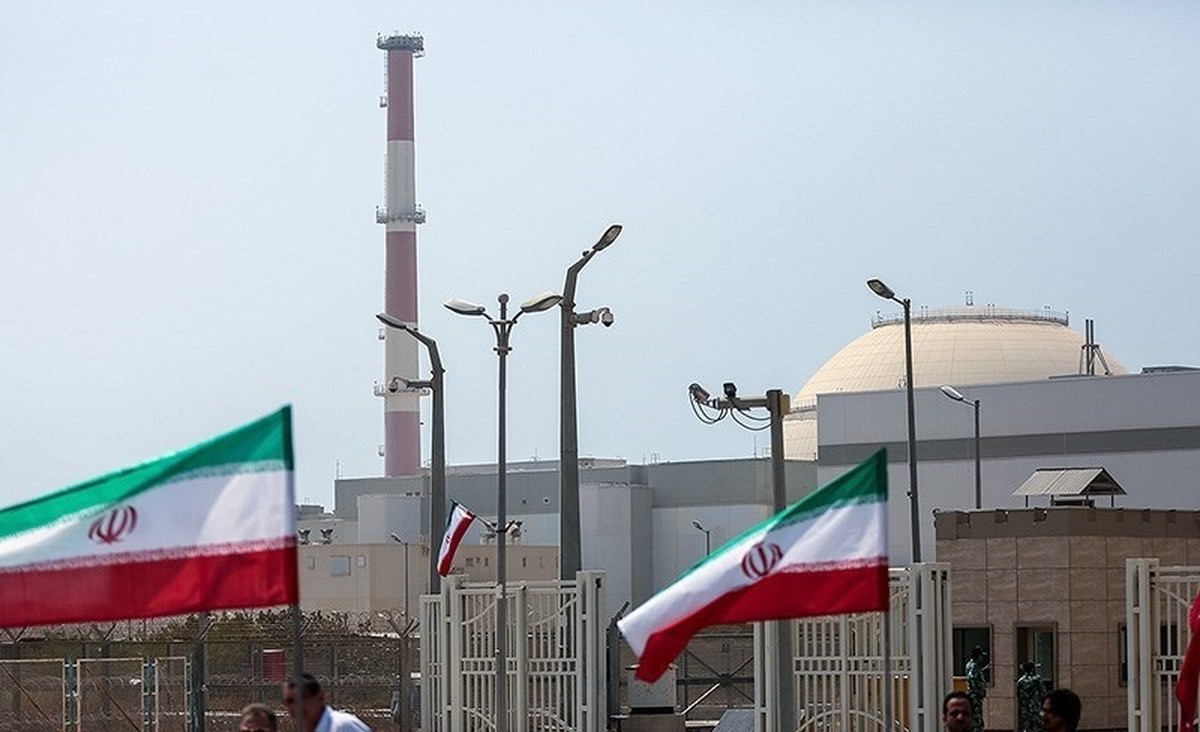
TEHRAN — A projectile struck the Bushehr Nuclear Power Plant compound for the fourth time on Friday, killing one security team member and destroying a structure 350 metres from the only operating nuclear reactor on the Persian Gulf — a 1,000-megawatt VVER-1000 pressurised light-water unit containing 72 tonnes of active fuel and another 210 tonnes of spent fuel that has been accumulating since the plant went critical in September 2011. The International Atomic Energy Agency confirmed no increase in radiation levels, but the IAEA’s director-general, Rafael Grossi, had already called Bushehr “the reddest line of all that you have in nuclear safety,” and the line has now been crossed four times in 36 days without consequence. Russia, which designed Bushehr, built Bushehr, fuels Bushehr, and supplies the technical staff who operate it, responded to the escalating strikes not by defending the plant or retaliating against the attackers but by evacuating 163 of its own personnel and asking the forces dropping ordnance to observe a ceasefire long enough for the convoy to reach the Iranian-Armenian border — communicating its route through the same diplomatic channels that connect Moscow to Washington and Tel Aviv. The patron asked the attacker for a corridor, and the attacker obliged — and that single transaction should keep every Gulf infrastructure planner awake tonight.
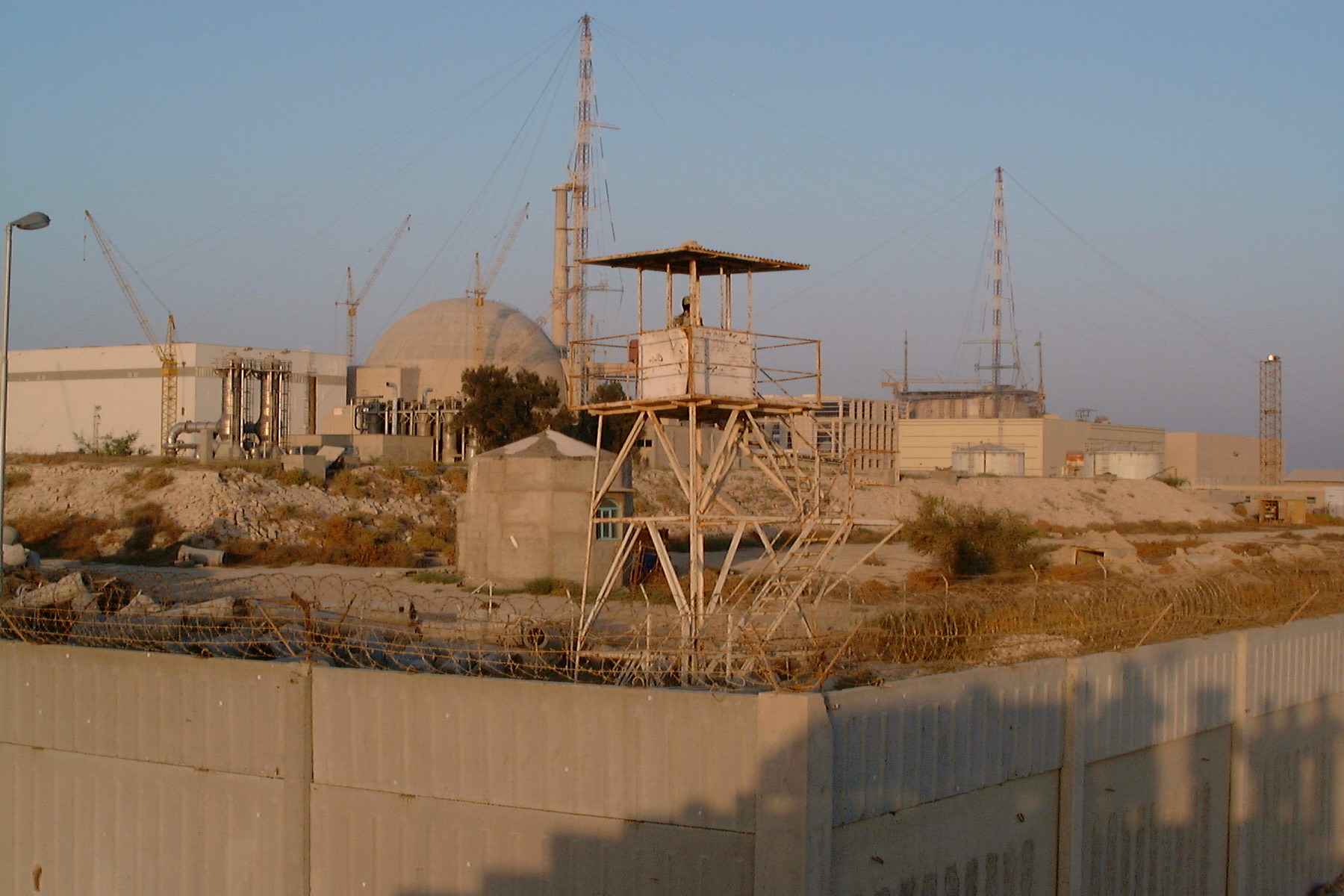
Table of Contents
- What Is the Pattern of Strikes Against Bushehr?
- Why Has Russia Evacuated the Plant It Built and Operates?
- What Does the Zaporizhzhia Double Standard Reveal?
- How Would a Bushehr Release Reach Gulf Desalination Infrastructure?
- What Is at Stake for Gulf Desalination Systems?
- Can Russia Defend the Nuclear Infrastructure It Exports?
- What Does Bushehr Mean for Saudi Arabia’s Nuclear Future?
- Frequently Asked Questions
What Is the Pattern of Strikes Against Bushehr?
Five incidents in 36 days — beginning on the opening day of the war and escalating from vicinity impacts to confirmed perimeter hits to a fatality on April 4 — have established that the Bushehr Nuclear Power Plant is either an accepted collateral zone or a deliberate pressure instrument, and no party to the conflict has faced any international penalty for the pattern.
The chronology is compact and accelerating. On February 28, the opening day of hostilities, a strike landed in the vicinity of the Bushehr complex, close enough for the IAEA to flag but distant enough that Iranian and international media initially treated it as an overshoot rather than a signal. On March 17, a projectile struck within the inner perimeter — the Institute for Science and International Security obtained satellite imagery showing a debris pattern consistent with an incoming trajectory from the north, an attribution vector that could implicate either the US-Israeli coalition or, as ISIS analysts cautioned, a stray Iranian defensive munition, an ambiguity that has received almost no attention in mainstream coverage but carries significant implications for how the strikes are understood. March 24 brought a second perimeter strike with no fatalities; March 27 saw ordnance land near a pump station integral to the reactor’s cooling system, a target whose destruction would threaten spent-fuel cooling independently of any damage to the reactor vessel itself; and April 4 produced the first confirmed fatality when blast fragments killed a member of the plant’s on-site security detail while destroying a structure that, according to reporting in The Hill, contained “vital safety equipment.”
| Date | Incident | Distance from Reactor | Casualties | Source |
|---|---|---|---|---|
| Feb 28 | Strike in vicinity (Day 1 of war) | Not confirmed | None reported | IAEA |
| March 17 | First confirmed perimeter hit; debris suggests projectile from north | ~350 m | None reported | ISIS satellite analysis; IAEA |
| March 24 | Second perimeter strike | Inner perimeter | None reported | IAEA |
| March 27 | Strike near pump station | Plant premises | None reported | Moscow Times; IAEA |
| April 4 | Structure destroyed; security team member killed by blast fragments | ~350 m | 1 killed | Al Jazeera; IAEA |
The trajectory is revealing not for the damage inflicted but for the damage tolerated. Each strike pushes closer to the reactor core, each diplomatic protest grows marginally louder but remains functionally identical — condemnation unaccompanied by consequence — and the interval between incidents has compressed from 17 days to 7 to 3 to 8, a rhythm more consistent with tactical opportunism than strategic restraint. Maria Zakharova, spokeswoman for Russia’s Ministry of Foreign Affairs, called the March 17 hit a “reckless and wholly unacceptable missile strike carried out within the inner perimeter” on March 18 and described the aggressors as “raising the stakes” and “ignoring all associated risks, including the danger of widespread radioactive contamination” ten days later, but Moscow proposed no enforcement mechanism and threatened no retaliation. The IAEA inspected and reported; the UN Security Council did not convene; and the fifth strike, when it comes, will arrive into the same institutional silence that absorbed the first four.
Why Has Russia Evacuated the Plant It Built and Operates?
Because Rosatom, the Russian state nuclear corporation that signed the Bushehr construction contract in January 1995, concluded that it could neither defend the facility militarily nor rely on diplomatic channels to prevent further strikes — and chose to preserve its personnel rather than its credibility as a nuclear patron state.
The evacuation itself told a more revealing story than any of Moscow’s diplomatic statements. On March 26, Rosatom began moving 163 Russian technical staff out of Bushehr via a route that ran through Isfahan to the Iranian-Armenian border, a multi-day overland journey through a country whose transportation infrastructure was under active aerial bombardment. To secure the convoy, Russia did not deploy military assets, did not request Iranian Revolutionary Guard Corps escort units, and did not invoke any bilateral defence commitment — it communicated the convoy route to the United States and Israel through diplomatic back-channels, according to TASS, and asked the forces striking the plant to refrain from striking the vehicles carrying the plant’s operators away from it. Up to 50 Russian volunteers reportedly chose to remain on site, a skeleton crew for a facility that would normally require hundreds of qualified nuclear engineers to operate safely at its rated capacity.
The Middle East briefing 3,000+ readers start their day with.
One email. Every weekday morning. Free.
We must understand that the reactor is operating at capacity. It contains 72 tons of fuel, and another 210 tons of spent fuel. This is a huge mass of fissile material. In the event of a strike, it would certainly be a regional-scale disaster. This is something all parties to the conflict must understand, regardless of their political affiliation.
Alexei Likhachev, CEO of Rosatom, speaking to Russian media, April 2, 2026
Likhachev made a second disclosure that painted a picture not of managed crisis but of institutional disconnection: “Unfortunately, we have lost contact with the leadership of Iran’s entire nuclear industry — they are not answering their phones or responding to emails.” A nuclear patron state that has lost phone contact with the nuclear industry it services is not managing the situation; it is documenting its own irrelevance from a safe distance. The situation at Bushehr, in Likhachev’s own framing, was “unfolding under worst-case scenario” — language that a nuclear industry executive uses not to alarm but to disclaim, establishing on the record that Rosatom warned of the consequences before the consequences arrived.
Russia’s passivity is not a function of military incapacity — Moscow maintains the capability to deploy advanced air-defence systems, to enforce exclusion zones, and to impose costs on states that threaten Russian-built assets — but of strategic paralysis born from three constraints operating simultaneously. Legally, Russia cannot enforce the Geneva Convention protections that shield Bushehr without entering a war it is not party to, a step that would transform a regional conflict into a superpower confrontation Moscow has spent three years avoiding in Ukraine. Diplomatically, Moscow responded to the bombing of its own nuclear asset by issuing a joint ceasefire call with Saudi Arabia on April 2 — aligning with Riyadh rather than acting independently, a posture that signals mediation rather than enforcement and tells Tehran that Russia’s answer to Bushehr is to seek peace alongside a Gulf monarchy. Operationally, the convoy established the ceiling: Russia’s maximum response to kinetic threats against its own nuclear facility is to ask the attackers to pause long enough for Russian citizens to leave.
What Does the Zaporizhzhia Double Standard Reveal?
The same Western governments and international institutions that sustained years of intense diplomatic pressure, emergency IAEA missions, and Security Council discussions over Russian military operations near Ukraine’s Zaporizhzhia Nuclear Power Plant have responded to four direct strikes on an operating Iranian reactor with statements of concern but no comparable institutional mobilisation — a disparity that Tehran is already weaponising to justify withdrawal from the Treaty on the Non-Proliferation of Nuclear Weapons.
Iran’s Foreign Minister Abbas Araghchi made the comparison explicit within hours of the April 4 strike: “Remember the Western outrage about hostilities near Zaporizhzhia Nuclear Power Plant in Ukraine?” The question is designed to embarrass, and it succeeds because the factual asymmetry is plain. Zaporizhzhia, Europe’s largest nuclear power plant, became the subject of continuous IAEA monitoring missions, multiple UN General Assembly resolutions, direct engagement by heads of state from France to Turkey, and front-page coverage across the Western press from 2022 onward — and at no point during the Ukraine conflict did Zaporizhzhia suffer a confirmed projectile impact on a structure within the inner reactor perimeter that killed on-site personnel. Bushehr has experienced exactly that, and the institutional response has been confined to IAEA press statements and Russian diplomatic notes that no major Western power has endorsed, amplified, or acted upon.
Araghchi added a warning calibrated specifically for Gulf audiences: “Radioactive fallout will end life in GCC capitals, not Tehran.” The geography substantiates the threat rather than undermining it — Bushehr sits on the northeastern shore of the Persian Gulf, upwind and upstream from every major desalination plant and coastal population centre in Kuwait, Bahrain, Qatar, the UAE, and Saudi Arabia’s Eastern Province — and the statement transforms the Zaporizhzhia comparison from an Iranian talking point into a structural anxiety for countries that have no role in the conflict but would bear the primary environmental cost of a containment breach. The double standard is not merely a matter of hypocrisy; for the Gulf states, it is a matter of survival, because it signals that the international norm protecting civilian nuclear infrastructure is applied selectively based on the identity of the attacker and the alignment of the victim, which means the norm cannot be relied upon to protect any future nuclear facility in the region, including the ones Saudi Arabia intends to build.
Iranian lawmakers have begun discussing withdrawal from the NPT, according to Al Jazeera reporting from March 28, a step that would represent the first NPT exit by a Middle Eastern state and would demolish whatever remained of the non-proliferation architecture in a region where Saudi Arabia has already signalled nuclear ambitions of its own. Iran’s High Council for Human Rights described the Bushehr strikes as a “grave and manifest violation of international law” on March 31, language that frames the legal predicate for such a withdrawal: a state cannot be bound by a treaty that demonstrably fails to protect it. The Zaporizhzhia precedent, which was supposed to reinforce the norm against military operations near nuclear plants, has instead revealed the norm’s contingent nature — it applies when the West chooses to enforce it, and it dissolves when the West does not.
How Would a Bushehr Release Reach Gulf Desalination Infrastructure?
Peer-reviewed hydrodynamic modelling published in MDPI Marine Sciences demonstrates that caesium-137 released from a Bushehr containment breach would reach the head of the Persian Gulf — Kuwait, Bahrain, Saudi Arabia’s Eastern Province — within 15 days, would contaminate the full western Gulf coastline within two months, and would exit the Strait of Hormuz into the Gulf of Oman thereafter, following the basin’s anticlockwise circulation with the certainty of physics rather than politics.
The contamination pathway is not speculative; it has been modelled, reviewed, and published in multiple academic journals. Dispersion simulations run by researchers and published in the International Journal of Coastal and Ocean Engineering confirm that Cs-137, the primary long-lived radionuclide released in a nuclear accident, would follow the Persian Gulf’s surface circulation northward and westward from Bushehr, reaching the shallow, poorly flushed head of the Gulf — where the coastlines of Kuwait, Bahrain, and Saudi Arabia’s Eastern Province converge — within that same fortnight. The contaminated water mass would continue southward along the western shoreline, passing Qatar and the UAE before exiting through the Strait of Hormuz roughly two months after the initial release, by which point the full length of the Gulf’s Arabian coast would have been exposed to measurable concentrations of radioactive material.
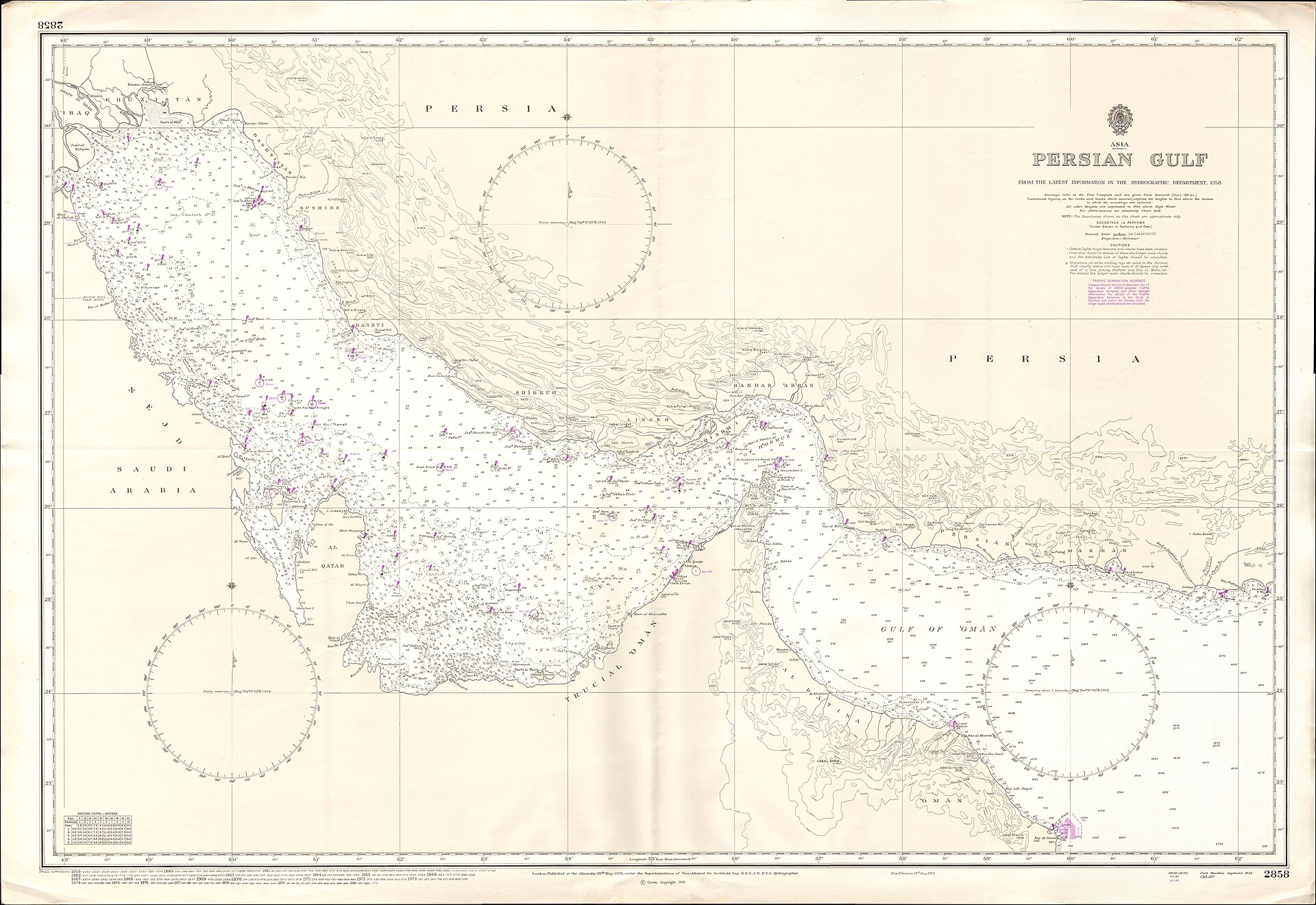
The Bulletin of the Atomic Scientists assessed in 2021 that a spent fuel fire at Bushehr — a scenario that becomes plausible if the cooling infrastructure serviced by the pump station struck on March 27 were to fail during a period of reduced staffing — could disperse radioactive material affecting Shiraz, Ahvaz, Basrah, and Kuwait City, a contamination footprint encompassing both Iranian and Iraqi population centres alongside a Gulf capital. The vulnerability is compounded by the Persian Gulf’s physical characteristics: an average depth of approximately 50 metres, a water residence time estimated at three to five years, and a surface area small enough that even a limited release would produce detectable contamination across the full basin rather than dispersing into open ocean. The Gulf is, in hydrodynamic terms, a semi-enclosed basin with a single narrow exit — the Strait of Hormuz — and contaminated water entering at Bushehr must transit past the entire Arabian coastline before reaching that exit, which means every desalination intake pipe drawing from Gulf waters sits downstream of the reactor.
What Is at Stake for Gulf Desalination Systems?
Saudi Arabia operates the world’s largest desalination capacity, with the Ras Al-Khair and Jubail complexes on the Persian Gulf coast together serving approximately 20 million people, while Kuwait derives roughly 90 per cent of its drinking water from desalination and the UAE roughly 70 per cent — all drawing intake water from a semi-enclosed sea that sits downstream of a reactor now under repeated bombardment.
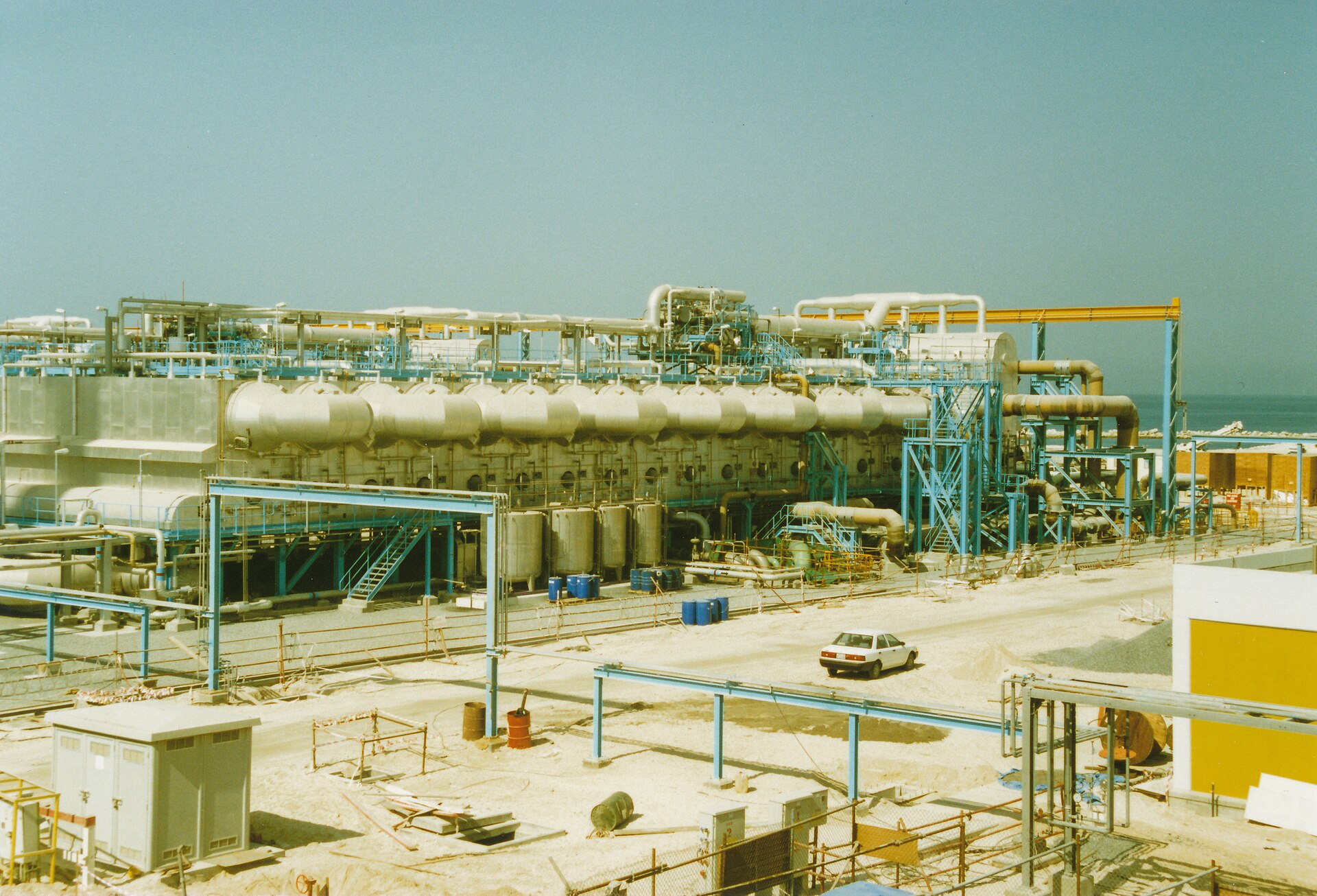
The Gulf Cooperation Council states have, through decades of investment in desalination technology, solved the problem of water scarcity in one of the planet’s most arid regions, but the solution has created a concentration of dependence that no engineering redundancy can mitigate if the feedwater itself becomes contaminated with radionuclides. Desalination plants are engineered to remove salt and biological contaminants from seawater through reverse osmosis or thermal distillation, but neither process is optimised for filtering dissolved radioactive isotopes, which behave differently from the mineral salts that constitute normal Gulf salinity. A sustained Cs-137 contamination event would not destroy the physical infrastructure of Ras Al-Khair or Jubail — the pumps would continue to function, the membranes would continue to separate — but it would render the output potentially unsafe for human consumption, and the decision to shut down intake from contaminated waters would cascade immediately into a supply crisis for the millions of people who depend on those facilities for drinking water, industrial process water, and agricultural irrigation.
| Country | Desalinated Water as Share of Supply | Key Gulf-Side Facilities | Population Served (est.) |
|---|---|---|---|
| Saudi Arabia | World’s largest producer | Ras Al-Khair, Jubail | ~20 million |
| Kuwait | ~90% | Doha, Az-Zour | ~4.5 million |
| UAE | ~70% | Jebel Ali, Taweelah | ~10 million |
| Bahrain | Majority share | Al-Dur, Al-Hidd | ~1.5 million |
| Qatar | Near-total dependence | Ras Laffan, Umm Al Houl | ~3 million |
The concentration of Gulf desalination capacity along the western Persian Gulf coastline — precisely the shoreline that contamination modelling identifies as the primary exposure zone — is a function of geography rather than planning failure, since the Arabian Peninsula’s Gulf coast is where the population centres are and where the seawater is accessible, but the result is a vulnerability with no rapid mitigation. Strategic petroleum reserves can be drawn down during a supply disruption, but there is no strategic water reserve of comparable scale for the GCC states, and the timeline for activating alternative sources — groundwater reserves that have been deliberately conserved, emergency water imports by tanker, Red Sea-side desalination at facilities like those near Yanbu that would require months to scale — is measured in weeks, not days. Araghchi’s warning that “radioactive fallout will end life in GCC capitals” is designed as political leverage to press Gulf states toward ceasefire advocacy, but the underlying physics supports the message regardless of the motive: Bushehr sits on Iran’s coast while the Gulf’s currents carry its consequences westward, which means the states bearing the greatest contamination exposure are the ones with the least influence over the military operations generating the risk.
Can Russia Defend the Nuclear Infrastructure It Exports?
The question is not whether Russia possesses the military capability to protect Bushehr — it does, through surface-to-air missile deployments, naval interdiction, or the threat of escalatory retaliation that has historically deterred attacks on Russian-linked assets — but whether the specific configuration of this war, in which Moscow maintains parallel relationships with Iran, Israel, and the United States while prosecuting its own conflict in Ukraine, permits conversion of capability into action. The answer, demonstrated across five weeks of escalating strikes, is that it does not.
Zakharova’s statements from the Foreign Ministry are worth reading in sequence because they document the progressive shrinkage of Russian ambition at Bushehr. On March 18, after the first confirmed perimeter hit, she deployed the language of condemnation: “We strongly condemn the reckless and wholly unacceptable missile strike carried out within the inner perimeter of the Bushehr Nuclear Power Plant just a few short metres away from an operational power unit.” By March 28, after the third strike, the register had shifted from condemnation to risk narration: the aggressors were “raising the stakes,” “ignoring all associated risks,” and “undermining the Treaty on the Non-Proliferation of Nuclear Weapons” — language that describes a deteriorating situation rather than promising to reverse it. By April 2, Likhachev was confirming lost contact with Iran’s nuclear leadership and characterising the situation as a “worst-case scenario” from which Rosatom had physically withdrawn its staff. The progression from condemnation to description to disconnection traces a recognisable arc — and every government that holds or is negotiating a Rosatom contract should parse the sequence with attention to what it implies about the security premium attached to Russian nuclear exports.
An accident on an operating nuclear power plant would be something very, very serious. This is the reddest line of all that you have in nuclear safety.
Rafael Grossi, Director-General of the IAEA, April 3, 2026
The implications extend well beyond Iran, because Rosatom is the world’s most active nuclear exporter, with contracts or memoranda of understanding covering reactor projects in Turkey (Akkuyu), Egypt (El Dabaa), Bangladesh (Rooppur), Hungary (Paks II), and India (Kudankulam), among others. The Bushehr precedent establishes that a Rosatom-built reactor located in or near a conflict zone will be defended by press releases and diplomatic notes rather than by military assets or enforceable security guarantees, and that the operator will evacuate when the risk to personnel exceeds the reputational cost of departure. Rosatom’s value proposition to client states has always rested on three pillars — competitive financing, integrated fuel supply, and the implicit strategic backing of a nuclear superpower — and Bushehr has shown the third pillar to be hollow, which raises the commercial question of whether the remaining two can sustain the premium that Rosatom charges over Korean, Chinese, and American competitors who never claimed to offer a security umbrella in the first place.
What Does Bushehr Mean for Saudi Arabia’s Nuclear Future?
Saudi Arabia’s civilian nuclear programme has been in development for more than a decade, managed through the King Abdullah City for Atomic and Renewable Energy, which has solicited reactor proposals from Rosatom, Korea Hydro and Nuclear Power, the China National Nuclear Corporation, and a Japanese consortium. The Kingdom signed a nuclear cooperation agreement with Rosatom in June 2015 and a separate civilian nuclear cooperation deal with the United States in November 2025, a dual-track approach designed to preserve optionality in both vendor selection and uranium enrichment rights. Every assumption underlying that programme has been altered by what has happened at Bushehr since February 28.
The first assumption was that civilian nuclear infrastructure, once built and operating under IAEA safeguards, would enjoy effective international protection from military attack — not merely the legal protection inscribed in the Geneva Conventions, which has always been a paper barrier, but practical protection derived from the catastrophic consequences of a release and the international condemnation that would follow any state targeting an operating reactor. Bushehr has demonstrated that this practical deterrence fails when the attacking states are powerful enough to absorb international criticism and the broader diplomatic community is too fragmented to mount a collective response. Four strikes, one fatality, an IAEA director-general invoking “the reddest line,” and the net institutional consequence has been zero — no Security Council resolution, no sanctions referral, no military intervention by the patron state that built the facility.
The second assumption was that a nuclear vendor relationship implied a security relationship — that Rosatom’s physical presence at Bushehr, with Russian engineers operating the reactor and Russian fuel assemblies in the core, meant Russian strategic investment in Bushehr’s survival, extending some measure of deterrence to the facility even in the absence of a formal defence pact. The evacuation of Russian staff and the communication of convoy routes to the attackers has falsified this assumption in the most public manner possible, establishing that a vendor relationship is a commercial arrangement whose obligations, when tested by kinetic reality, extend to personnel recovery rather than asset defence. Saudi Arabia’s nuclear planners must now evaluate whether any vendor — Russian, Korean, Chinese, or American — would behave differently in an analogous scenario, and the honest answer is that none has been tested under comparable conditions and none has offered contractual commitments extending to military protection of the facility.
The third assumption was that Saudi Arabia’s own strategic environment would remain stable enough that the question of military protection for nuclear plants would stay theoretical for the foreseeable future. The Iran war has overturned that assumption comprehensively — Iranian drones have struck Saudi industrial facilities including the SAMREF refinery at Yanbu, Tehran has explicitly warned that Gulf desalination and power infrastructure falls within its targeting envelope, and the absence of any ceasefire means the threat environment continues to expand rather than contract. A Saudi nuclear reactor sited on the Persian Gulf coast, the most probable location given seawater cooling requirements, would occupy the same threat geography that Bushehr now inhabits, and the Kingdom would need to answer the question that Russia has failed to answer at Bushehr: who defends the reactor when it comes under fire, and with what forces, and under what doctrine?
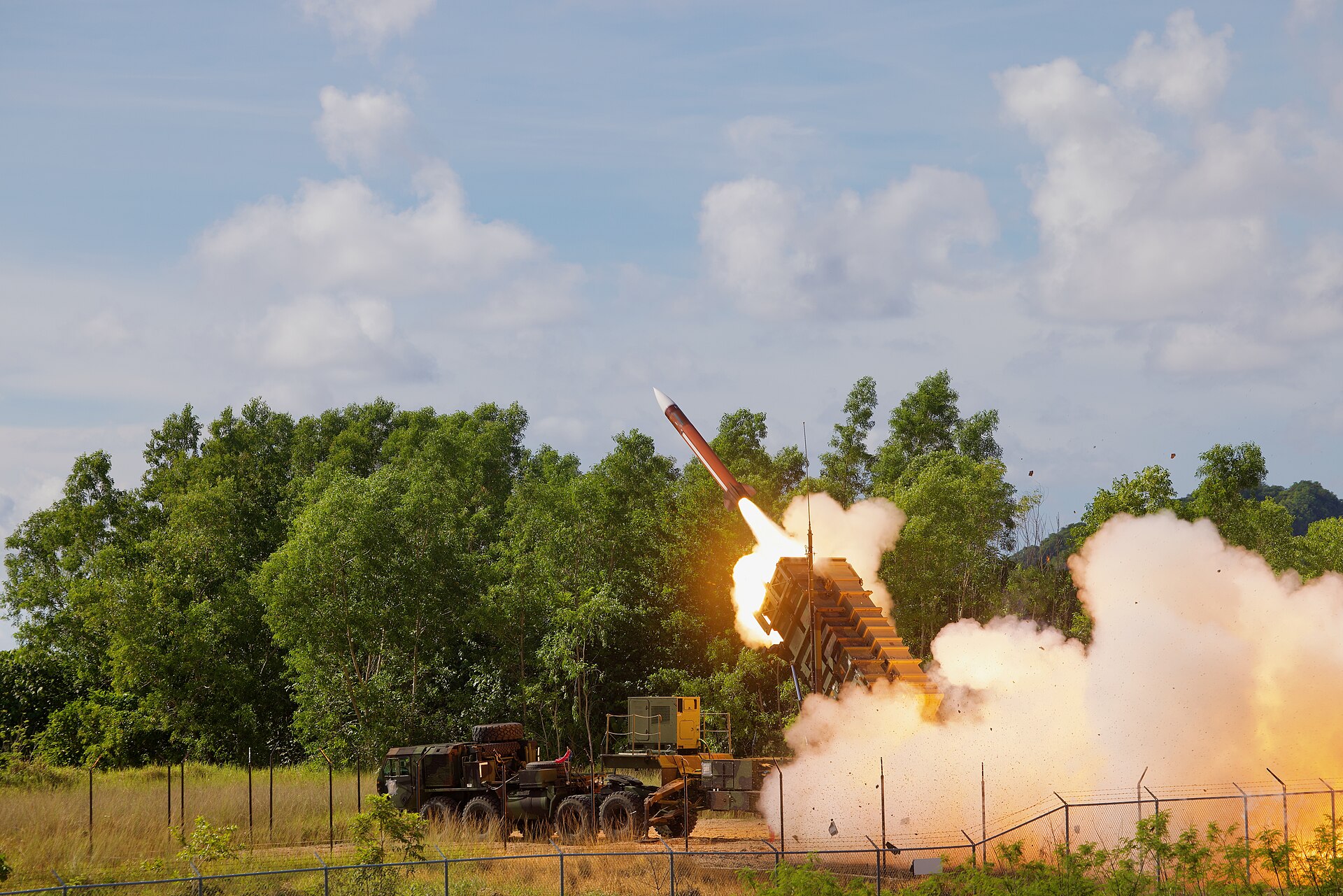
The answer may be that only Saudi Arabia itself can provide that guarantee, which means the Kingdom’s nuclear programme cannot be evaluated independently of its air-defence architecture, its missile-defence procurement pipeline, and its broader military modernisation effort. The Patriot batteries that allied nations have deployed to protect Saudi critical infrastructure are a temporary, contingent measure that depends on the political will of the providing state; a permanent nuclear reactor generating power for millions of people requires permanent, sovereign defence capability whose cost must be factored into the economics of nuclear energy in a way that no current vendor proposal accounts for. Bushehr has not ended Saudi Arabia’s nuclear ambitions — the Kingdom’s energy diversification logic remains sound — but it has demonstrated that a Gulf nuclear plant is a military target from the day it begins operation, and that the international system, as currently constituted, will not defend it.
Frequently Asked Questions
Has the IAEA formally called for a ceasefire at Bushehr?
The IAEA has issued repeated calls for restraint and dispatched inspection teams to verify radiation levels after each incident, but it has not issued a formal ceasefire demand specific to Bushehr, partly because the agency’s mandate covers nuclear safety and safeguards rather than armed conflict resolution. Grossi’s most forceful intervention has been personal diplomacy, including a planned visit to Tehran that was postponed when Iranian authorities cited deteriorating security conditions, rather than institutional action through the IAEA Board of Governors or a referral to the Security Council — a restraint that reflects the political divisions within the Board rather than any lack of urgency on Grossi’s part.
Could Bushehr’s reactor be shut down safely before a direct hit on the core?
A controlled shutdown of the VVER-1000 reactor to cold standby would require approximately 48 to 72 hours under normal conditions with a full technical crew, a timeline that the current skeleton staff of roughly 50 volunteers may struggle to execute reliably. The more dangerous concern, however, is the 210-tonne spent fuel inventory stored on site, which requires continuous active cooling for years after removal from the reactor core; even with the reactor itself shut down, a loss of cooling to the spent fuel pool — caused by a strike on cooling infrastructure or a sustained power outage — could produce a spent-fuel fire that would release significantly more radioactive material than a reactor core breach, since spent fuel sits outside the reactor’s primary containment vessel.
What alternative water sources does Saudi Arabia have if Gulf desalination is disrupted?
The Kingdom maintains limited strategic groundwater reserves in the Saq and overlying aquifers concentrated in the northern and central regions, and operates Red Sea-facing desalination facilities at Shuqaiq, Yanbu, and Jeddah that draw from uncontaminated Atlantic-origin water unaffected by Gulf conditions. However, the Red Sea facilities serve the western population corridor — Jeddah, Mecca, Medina — and lack the pipeline and distribution infrastructure to supply the Eastern Province where the bulk of petrochemical, industrial, and residential water demand is concentrated. Emergency water imports by maritime tanker would be constrained by port offloading capacity and, depending on the conflict’s trajectory, by the same Strait of Hormuz transit restrictions that have complicated oil shipments throughout the war.
Are Bushehr Units 2 and 3 still under construction?
Rosatom and the Atomic Energy Organisation of Iran had signed agreements for two additional VVER-1000 Generation III+ reactors at Bushehr, designated V-528 with approximately 974 megawatts net electrical capacity each, with Unit 2 targeted for initial criticality in 2029 and Unit 3 to follow on a staggered schedule. Construction was underway before the war began, and there has been no formal announcement of suspension by either party, though the evacuation of Russian technical staff and Likhachev’s acknowledged loss of communication with Iran’s nuclear leadership make continued construction implausible under current conditions. The project’s post-war status will serve as the clearest barometer of whether any party still considers a Russian-built nuclear plant on the Persian Gulf a viable long-term proposition.
Has any state formally claimed or been held responsible for the Bushehr strikes?
Iran has attributed all four strikes to “the US and Israel” through Foreign Minister Araghchi, PressTV, and official diplomatic correspondence, but neither Washington nor Tel Aviv has claimed or explicitly denied responsibility for the Bushehr incidents specifically, maintaining the strategic ambiguity that characterises targeting decisions throughout the campaign. No state has been referred to any international accountability mechanism, and neither the UN Security Council nor any other multilateral body has convened to assign responsibility — leaving the legal question formally open even as the physical damage accumulates. The marine contamination pathway — slower, less visible, and more durable than the atmospheric plume — represents what a Bushehr reactor breach would mean for Saudi water supply, a dimension that has received no policy response from Riyadh despite its modelled certainty. Araghchi has since made that threat explicit: Iran’s radioactive fallout threat against GCC capitals frames contamination geography itself as a strategic weapon.