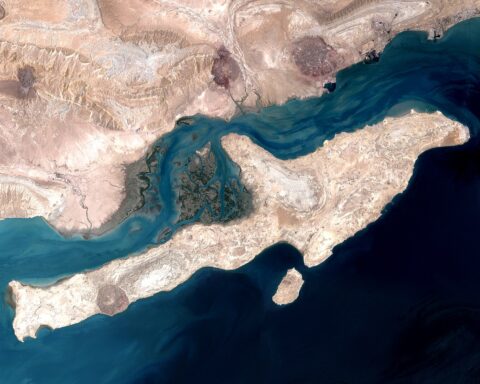
ASALUYEH — Israel struck the South Pars petrochemical complex at Asaluyeh on April 6, 2026, at approximately 2:10 p.m. local time, killing IRGC intelligence chief Maj. Gen. Majid Khademi and Quds Force Unit 840 commander Asghar Bakeri in a targeted strike wave that halted roughly 50 percent of Iran’s total petrochemical production. The strike hit the Jam and Damavand petrochemical facilities along with the Mobin and Damavand utility companies that supply electricity, water, and oxygen to the complex, according to Tasnim News Agency and Al Jazeera.
The attack — Israel’s second on South Pars after Prime Minister Benjamin Netanyahu pledged to honor President Donald Trump’s instruction not to re-strike the facility following the March 18 raid — landed while Egyptian, Pakistani, and Turkish mediators were circulating a 45-day phased ceasefire proposal that had not yet received an Iranian response. Iran later formally rejected the proposal via a 10-point letter, and Tehran retaliated by striking Haifa, killing four people in a residential building, according to CBC News and Military.com.
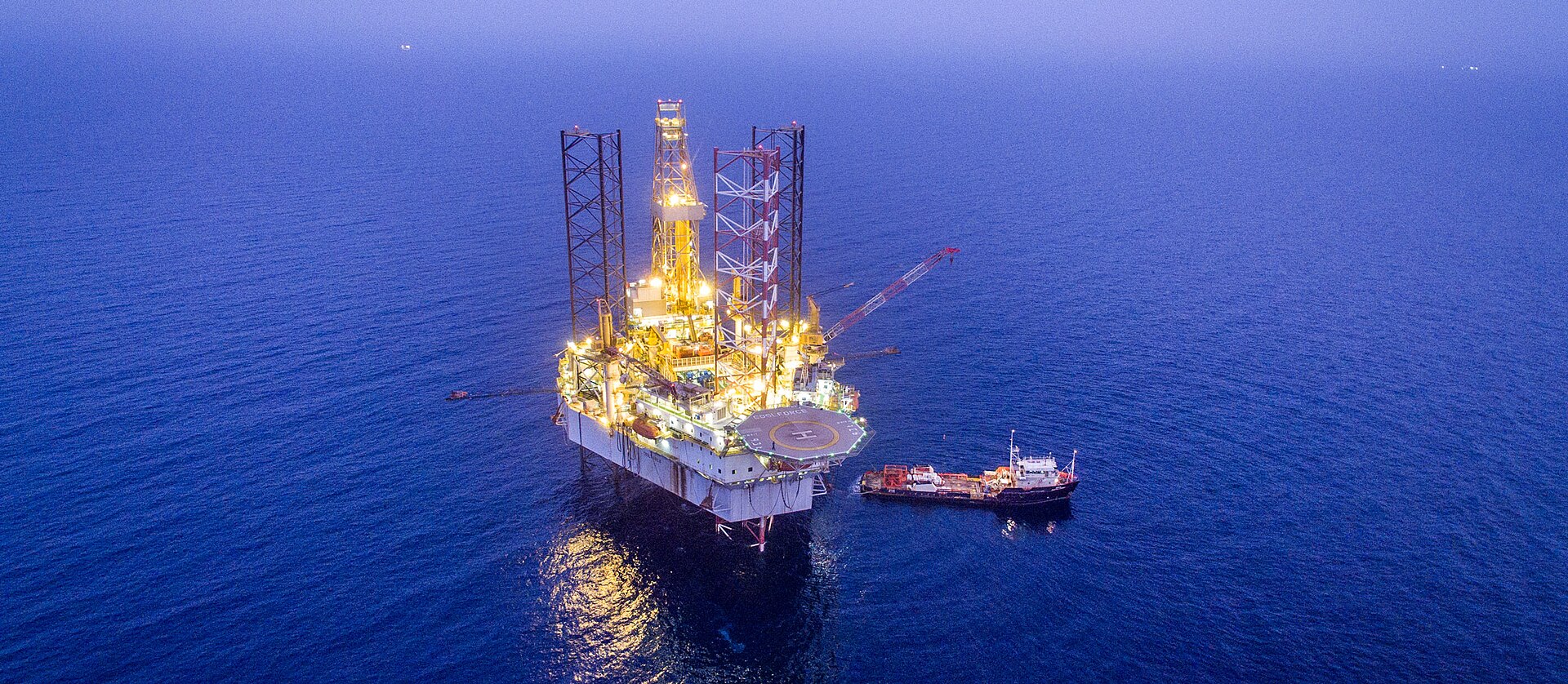
Table of Contents
What Israel Struck and Who It Killed
Israeli Defense Minister Israel Katz confirmed the operation in a public statement: “We carried out a powerful strike on the largest petrochemical facility in Iran, located in Asaluyeh, a central target responsible for about 50 percent of the country’s petrochemical production,” he said, as reported by CBC News. Output halted at two refineries with a combined capacity of 100 million cubic meters per day, according to ZeroHedge and Axios.
The combined damage from the April 6 strike and the March 18 operation has rendered approximately 85 percent of Iran’s total petrochemical production non-operational, according to the Athens Times. European gas prices rose 7 percent after the strike was confirmed, and Brent crude stood at $111.25 per barrel at 9 a.m. ET on April 6, per Fortune and the Athens Times.
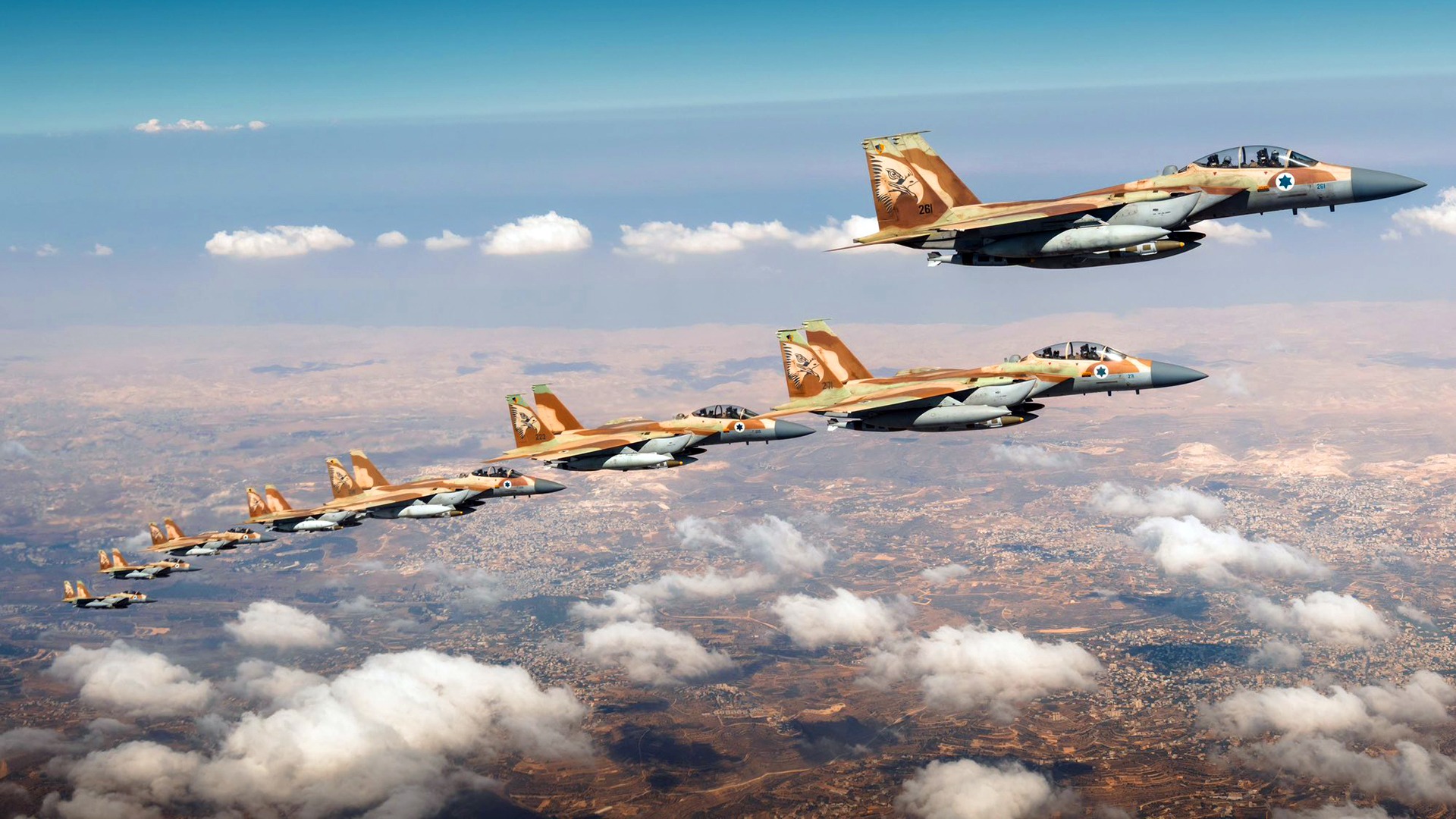
The IRGC confirmed via Fars News Agency that Khademi died in what it called “a terrorist attack by the American-Zionist enemy,” as reported by Al Jazeera. Khademi was the second consecutive IRGC intelligence chief killed by Israel in under one year — his predecessor, known as Kazemi, was killed during Operation Rising Lion in June 2025, according to Gulf News and the Jerusalem Post. Fox News reported that Khademi was “deeply involved in attempts to penetrate US systems, including efforts to breach the Pentagon, and coordinated extensively with Russia.”
Asghar Bakeri, commander of the Quds Force’s Unit 840 since 2019, was killed in the same strike wave. Unit 840 is the Quds Force’s covert-action arm, operating branches in the Netherlands, Turkey, the United States, Azerbaijan, Colombia, Lebanon, Syria, and the Palestinian territories, according to the Alma Research Center. The unit planted IEDs at Syria’s al-Malaka border fence in August and November 2020 and recruited from former Assad-regime personnel, the Alma Center documented. IDF spokesperson Lt. Col. Nadav Shoshani said Bakeri “orchestrated attacks on Israeli and American targets across Israel, Syria, and Lebanon,” adding there is “no immunity” for Iran as negotiations continue, as reported by Military.com.
The Middle East briefing 3,000+ readers start their day with.
One email. Every weekday morning. Free.
Netanyahu described the strikes as “another central arm of the Iranian terror regime severed” and called Bakeri “the mastermind of foreign operations,” according to Voice of Emirates. Katz added: “We will continue to hunt them down one by one,” per CBC News.
Did Netanyahu Break His Own Pledge to Trump?
After the March 18 South Pars strike, which damaged gas treatment plants in phases 3 through 6 and knocked out roughly 12 percent of Iran’s total gas output according to Argus Media and Iran International, Trump wrote on social media: “NO MORE ATTACKS WILL BE MADE BY ISRAEL” on South Pars. Netanyahu publicly pledged to honor that instruction, as reported by Al Jazeera on March 19 and The National on March 19, 2026.
The April 6 strike on the same complex is an explicit breach of that pledge. The Wall Street Journal had previously reported that Trump pre-approved the March 18 strike despite his public statement, per Al Jazeera’s March 19 reporting — making any similar quiet authorization for the April 6 operation a structural pattern rather than a one-time exception.
The logic behind Israel’s calculus was articulated weeks earlier by Eyal Falk, a foreign policy adviser to Netanyahu, who told NPR on March 31: “We’re negotiating with bombs. At the end of the day, as we’ve said from Day 1, they cannot have nuclear weapons.” Al Jazeera reported on March 24 that Israel pushed Trump for a “short, high-intensity operation,” fearing Washington might negotiate before Iran’s military infrastructure could be dismantled.
Israel’s decision to re-strike while a ceasefire was being circulated fits a pattern that Tehran’s formal rejection of the Trump deadline had already anticipated: no one inside Iran’s authorization structure could accept a ceasefire, but the existence of a live diplomatic channel constrained Washington’s freedom to escalate. Katz, announcing the April 6 operation, said Israel “will continue to hunt them down one by one” — language that left no room for a strike pause, per CBC News.
The Strike Fell Inside the Deadline Window
Trump’s Hormuz deadline was originally set for 9 p.m. EDT on April 6, later extended to 8 p.m. EDT on April 7, according to Fortune. The South Pars strike hit at approximately 2:10 p.m. local Iranian time — equivalent to roughly 6:40 a.m. EDT — hours before either version of the deadline was reached. The strike therefore fell squarely inside the original deadline window, when diplomatic signaling was at its most active and when Egyptian, Pakistani, and Turkish mediators were still awaiting Tehran’s reply.
The ceasefire proposal that was in transit to Tehran at the time of the strike — a two-phase framework mediated by Egypt, Pakistan, and Turkey — called for an immediate 45-day ceasefire in Phase 1, with Hormuz sovereignty recognition and Iran’s highly enriched uranium deferred to Phase 2, as previously reported. The proposal had been described as having “slim” chances by the four sources who spoke to Axios and The National.
Trump had already signaled escalation before the strike. His “Power Plant Day and Bridge Day” declaration on Truth Social, posted at 8:03 a.m. EDT on Easter, designated Iranian civilian infrastructure as target categories and set the deadline at 9 p.m. EDT on April 6. Israel’s strike preceded Trump’s own announced escalation timeline by approximately 14 hours.
The simultaneity was not lost on Iran’s military establishment. IRGC Naval Command declared that the Strait of Hormuz will “never return to its previous state” for the United States and Israel, according to Republic World. The IRGC’s selective Hormuz toll system — which has allowed gas-lane transits while blocking crude carriers — operates on a logic that South Pars strikes directly threaten, because the facility feeds the shared reservoir that Qatar draws from at North Field.
How Does South Pars Damage Affect Qatar’s North Field?
South Pars and Qatar’s North Field are geologically continuous — the same gas reservoir extends across the maritime border. When extraction pressure drops on the Iranian side, gas migrates toward the Qatari side, but the condensate yield — the valuable liquid hydrocarbons extracted alongside the gas — degrades over time as reservoir pressure imbalances develop, according to a CNN explainer and the Middle East Council on Global Affairs.
South Pars supplies 70 to 80 percent of Iran’s domestic gas and produces 730 million cubic meters per day under normal operations, per the ME Council. With 85 percent of Iran’s petrochemical capacity now offline, downstream processing of South Pars gas has effectively collapsed, reducing Iran’s economic incentive to maintain extraction rates — and with it the reservoir pressure that both sides of the border depend on.
This matters directly for Qatar because the Al Daayen LNG carrier was confirmed transiting the Strait of Hormuz at 8.8 knots toward China on the same day as the strike. The 149,613 cubic meter vessel represented the first laden Qatari LNG exit through Hormuz since the war began. China brokered the transit — not Qatar and Iran directly — and the IRGC’s gas-lane versus crude-lane asymmetry had allowed gas carriers selective passage while crude tankers remained blocked.
Mohammed Al-Hashemi, a Qatar energy expert at the ME Council on Global Affairs, warned after the March strike that “the Asaluyeh attack crosses a threshold that energy strategists have warned would transform a regional conflict into a global supply crisis.” He noted that “whereas previous strikes targeted downstream infrastructure like export terminals and storage facilities, the Asaluyeh attack hit upstream production facilities — assets that directly sustain the energy system itself.” The April 6 strike deepened exactly the upstream damage Al-Hashemi described.
The Stimson Center’s Joaquin Matamis assessed that the crisis “has shifted from a logistical bottleneck to a structural supply shock, with far more severe implications for global energy stability,” in a March 19 analysis. Iran had already halted gas exports to Iraq after the March strike, disrupting approximately 3,100 megawatts of Iraqi electricity generation, according to the ME Council. Qatar’s Ras Laffan LNG facility itself sustained an Iranian retaliatory strike after the March South Pars operation, suffering roughly 17 percent capacity reduction and an estimated $20 billion in damage, per The Conversation and the ME Council.
Iran’s Response and the 10-Point Rejection
Iranian Foreign Ministry spokesperson Esmaeil Baghaei rejected the ceasefire framework as “extremely ambitious, unusual, and illogical,” telling Al Jazeera that “negotiations are entirely incompatible with ultimatums.” Iran’s 10-point rejection letter demanded recognition of Iranian sovereignty over the Strait of Hormuz — a condition the framework had explicitly deferred to Phase 2, which made Phase 1 acceptance impossible on its face.
IRGC Armed Forces spokesman Ebrahim Zolfaghari warned: “If attacks on civilian targets are repeated, Iran’s retaliation will be on a much wider scale and losses several times greater,” according to the Middle East Monitor. Iran followed through on prior threats by striking Haifa on April 6, killing four people in a residential building, per Military.com and CBC News. Earlier on the same day, Iran had hit Saudi Arabia, Kuwait, and the UAE in a single strike window, stretching Gulf interceptor stocks across multiple fronts.
The authorization structure that prevented any Iranian official from accepting a ceasefire remained intact after the strike. IRGC Commander Ahmad Vahidi continued to block civilian oversight of war policy. On March 24, Vahidi had compelled President Masoud Pezeshkian to appoint Mohammad Bagher Zolghadr — who is under international sanctions — as secretary of the Supreme National Security Council, according to Fox News. Supreme Leader Ali Khamenei had been absent from public decision-making for 29 days as of April 6.
The killing of Khademi compounded the command disruption documented in Israel’s information warfare campaign against IRGC credibility. With the second consecutive intelligence chief eliminated, Iran’s counterintelligence apparatus faces a structural gap at a moment when Bakeri’s Unit 840 network — spanning the Netherlands, Turkey, the United States, Azerbaijan, Colombia, Lebanon, Syria, and the Palestinian territories — is being dismantled in parallel.
Background: South Pars and the March 18 Precedent
South Pars is the world’s largest gas field, shared between Iran (South Pars) and Qatar (North Field). The complex at Asaluyeh on Iran’s southern coast processes gas extracted from the field’s 24 development phases. Before the war, South Pars supplied the feedstock for Iran’s petrochemical industry — the country’s second-largest export sector after crude oil — and generated the domestic gas that heated Iranian homes and powered Iraqi electricity plants.
Israel first struck South Pars on March 18, 2026, hitting gas treatment plants in phases 3 through 6 and damaging roughly 12 percent of Iran’s total gas output, according to Argus Media and Iran International. After that strike, Trump posted his “NO MORE ATTACKS” instruction and Netanyahu pledged restraint — a pledge the April 6 operation has now voided. The Wall Street Journal subsequently reported that Trump had pre-approved the March 18 strike despite the public messaging, per Al Jazeera.
The April 6 strike escalated the pattern from downstream to deeper upstream destruction. Where the March operation took out gas treatment plants in phases 3 through 6, the April strike targeted the utility infrastructure — Mobin and Damavand — that supplies electricity, water, and oxygen to the entire complex. Katz described Asaluyeh as “a central target” and did not rule out further strikes, per CBC News.
Frequently Asked Questions
What is the strategic value of South Pars to Iran beyond energy exports?
South Pars is the feedstock source for Iran’s petrochemical sector, which before the war generated approximately $15 billion annually in export revenue, according to Iran’s Ministry of Petroleum, and employed hundreds of thousands of workers in the Asaluyeh industrial zone. The complex also provides the condensate — light liquid hydrocarbons — that Iran blends with its heavy crude to make it marketable for export. With 85 percent of petrochemical capacity now offline, Iran loses not only the direct revenue but also the ability to process its crude for sale, creating a compounding economic effect that accelerates the timeline President Pezeshkian warned about when he said the economy would “collapse in 3-4 weeks,” per Fox News reporting.
Why did Israel target Khademi and Bakeri specifically on this day?
The dual targeting reflects an Israeli doctrine of combining infrastructure strikes with command decapitation to prevent coordinated retaliation. Khademi, as IRGC intelligence chief, would have been responsible for detecting and countering Israeli penetration of Iranian air defenses and communications — his elimination degrades Iran’s ability to anticipate future strikes. Bakeri’s Unit 840 network, spanning six countries including the United States, represented Iran’s primary covert-action capability for retaliating against Israeli and American targets outside the conventional battlefield. Eliminating both on the same day as a major infrastructure strike forces the IRGC to rebuild intelligence and covert-action leadership simultaneously while managing the industrial crisis at South Pars.
Could the South Pars damage cause a permanent shift in the Iran-Qatar shared reservoir?
Petroleum engineers have warned that prolonged extraction imbalances across a shared reservoir can cause irreversible gas migration. If Iran cannot restore extraction at South Pars for months or years, the pressure differential could cause gas to migrate permanently toward Qatar’s North Field side. However, Qatar faces its own constraints: Iran retaliated against Ras Laffan after the March strike, creating a deterrence loop in which Qatar cannot visibly benefit from Iran’s South Pars losses without risking further Iranian strikes on its own LNG infrastructure. The Al Daayen transit — brokered by China, not Qatar — reflects Doha’s effort to resume exports without appearing to exploit the reservoir shift.
What happens to Trump’s deadline now that Israel struck before it expired?
The deadline, extended to 8 p.m. EDT on April 7, was designed to compel Iran toward negotiations. Israel’s strike before the deadline expired effectively pre-empted whatever diplomatic pressure the deadline might have generated. Iran’s 10-point rejection letter, filed after both the strike and the deadline announcement, cited the strikes as evidence that “negotiations are entirely incompatible with ultimatums.” The deadline now functions less as a diplomatic tool and more as a domestic political marker for Trump, who must decide whether to follow through on his “Power Plant Day and Bridge Day” escalation threats or acknowledge that Israel has already exceeded the strike parameters he publicly set.
Has Iran’s gas supply to its own population been affected?
South Pars supplies 70 to 80 percent of Iran’s domestic gas. After the March 18 strike damaged 12 percent of gas output, Iranian cities experienced rolling shortages and industrial rationing. The April 6 strike hit the Mobin and Damavand utility companies that supply electricity, water, and oxygen to the broader petrochemical complex, meaning even undamaged processing units may be unable to operate without supporting utilities. Iran’s domestic gas crisis is compounded by the halt in gas exports to Iraq — the 3,100 MW shortfall in Iraqi electricity generation has created political pressure on Baghdad to seek alternative gas suppliers, potentially from Gulf states that are themselves managing war-related energy disruptions.