
KUWAIT CITY — Iranian Fateh-110 ballistic missiles targeted Camp Arifjan on Tuesday morning — the US Army Central forward headquarters in Kuwait that stores enough prepositioned military equipment to outfit a full armoured division, coordinates American ground operations across twenty-one countries, and serves as the Defence Logistics Agency staging node through which every PAC-3 interceptor shipped to the Gulf by sea passes before forward distribution to Saudi Arabia’s batteries. CENTCOM confirmed that two missiles “missed their target or crashed en route” and that no American personnel were harmed, but the targeting choice carries more weight than the outcome. On the same morning the IRGC hit the Fifth Fleet command headquarters in Bahrain and a civilian passenger terminal in Kuwait, it fired hardened-target ballistic missiles at the logistics infrastructure that keeps the Gulf’s air defence network supplied — a production-to-battery pipeline the war has already strained past viability and that Iran, by targeting both the supply port and the staging base, is now attempting to sever at the source.
The June 3 barrage was the first time in ninety-six days of conflict that Iran simultaneously struck all three layers of American Gulf presence — command, civilian, and logistics — in a single operational package, a structure analysts had identified as Iran’s three-tier coercive architecture but that no previous day of fighting had delivered in one salvo. Camp Arifjan sits ten miles west of Shuaiba Port, Kuwait’s Military Sea Port of Debarkation — the same cluster where six US service members were killed and more than sixty wounded on March 1 in the deadliest single event for American personnel since the war began. The IRGC had explicitly named the base’s KGL defence logistics site as a target in a March 26 statement via Al Mayadeen, which means Tuesday’s missiles represent not an escalation of targets but a return to a logistics-attrition strategy Iran declared three months ago and that Saudi Arabia, with its interceptor stockpile depleted by more than eighty-five per cent and no emergency resupply waiver from Washington, cannot afford to let succeed.
Table of Contents
- What Happened at Camp Arifjan on June 3?
- The Triptych — Command, Civilian, Logistics
- What Is Camp Arifjan and Why Does Iran Keep Targeting It?
- The Pipeline That Feeds Saudi Arabia’s Interceptor Supply
- How Many Rounds Can Camden Replace?
- What Did CENTCOM Mean by ‘Missed or Crashed’?
- The Doctrine of Relative Endurance
- What Does Iran’s Logistics Strategy Mean for Saudi Arabia?
- Frequently Asked Questions
What Happened at Camp Arifjan on June 3?
Iran fired Fateh-110 ballistic missiles at Camp Arifjan, the US Army Central forward headquarters in Kuwait, on June 3, 2026, as part of a broader IRGC barrage that simultaneously struck the Fifth Fleet in Bahrain and Kuwait International Airport’s Terminal 1. CENTCOM confirmed two missiles “missed their target or crashed en route” and said no US personnel were harmed, while separately stating the missiles were “immediately defeated.” That language, as a later section examines, differs from the standard intercept claims the command has issued throughout the conflict.
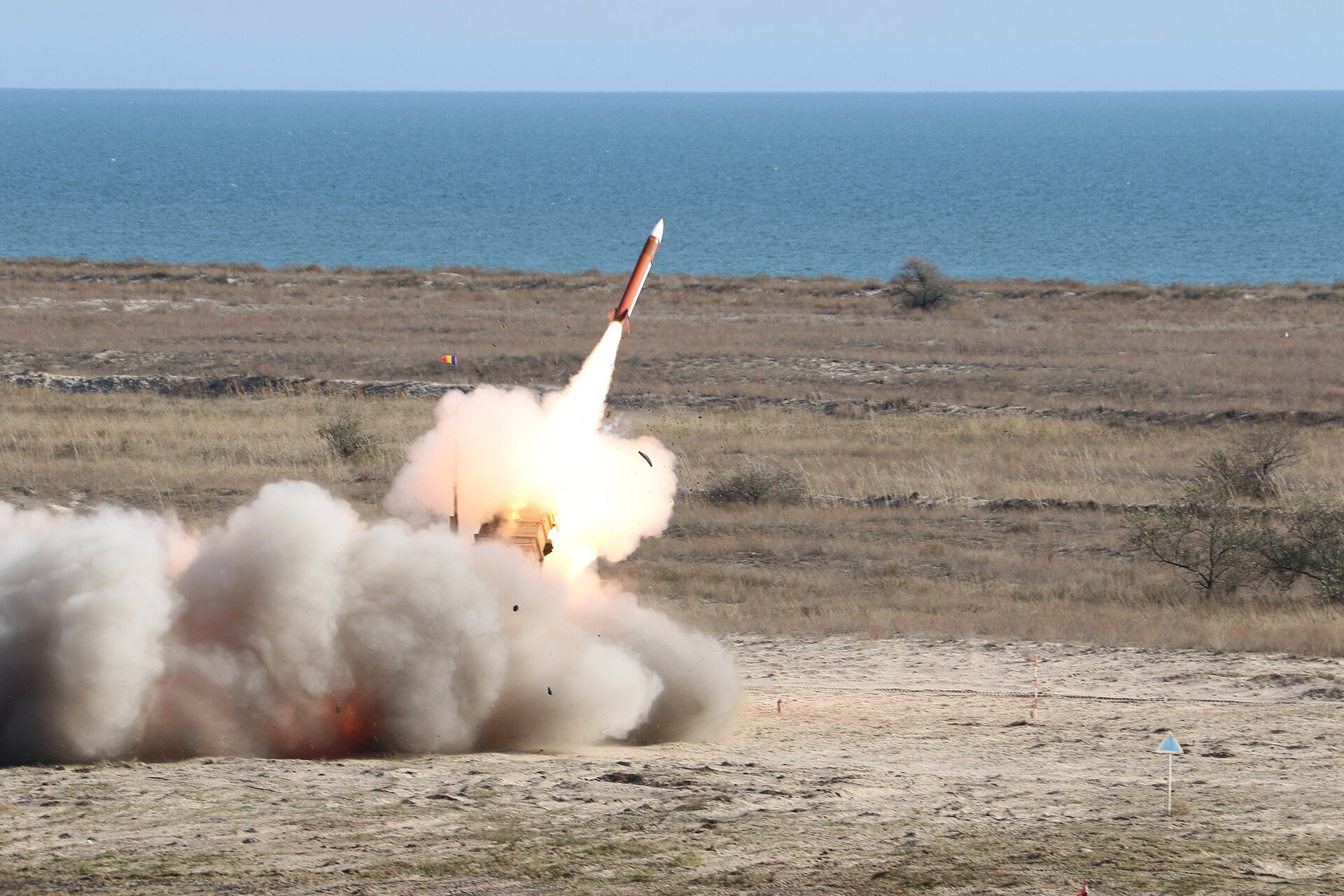
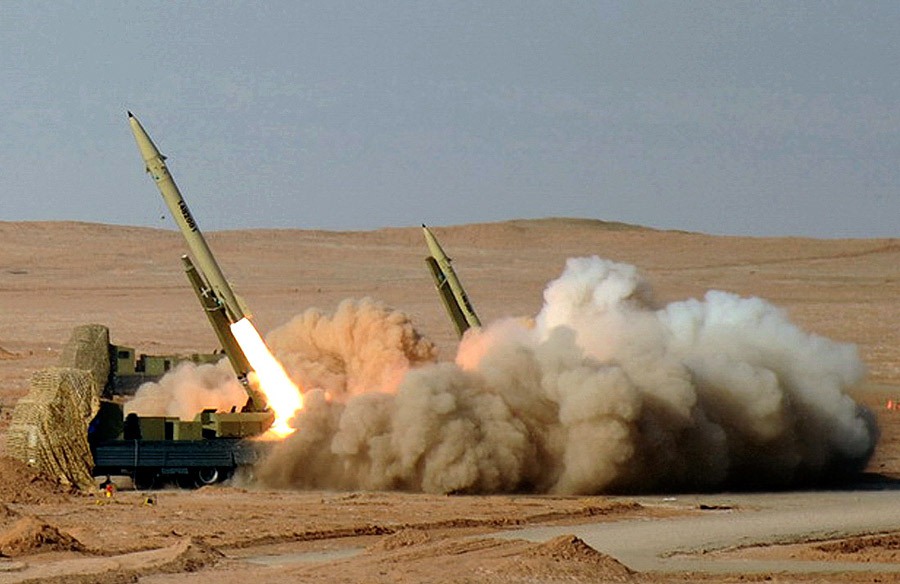
The Fateh-110 is a solid-fuel, road-mobile ballistic missile with a 300-kilometre range, a circular error probable of ten to thirty metres in its latest variant, and a 450-to-650-kilogram warhead optimised for hardened targets — a weapon selection that tells you what the IRGC was aiming at, because you do not use a hardened-target warhead on a runway or an administrative building, you use it on reinforced concrete warehouses of the kind that Camp Arifjan maintains across twenty-two facilities for Army Prepositioned Stock-5. The missile’s accuracy means the IRGC expected to place the warhead within thirty metres of a specific structure at a base stretching across dozens of square kilometres of southern Kuwait, and its range means the launch site was almost certainly inside Iranian territory — a sovereign-to-sovereign targeting decision, not a proxy or militia action, which is why CENTCOM’s language addressed “Iranian missiles” and not “Iran-backed” anything.
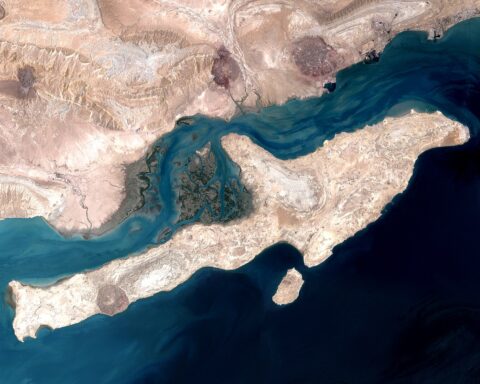
The IRGC’s own framing, published via Al Mayadeen on March 26, had identified the target by name months earlier: “The operation targeted pre-designated objectives in Arifjan and Al-Kharj, including the US defense logistics site (KGL), in response to the attack carried out on Khorramshahr from that location.” That statement established two things — that the IRGC maintains a specific target list of American logistics nodes, and that it frames strikes on those nodes as retaliatory, tying each CENTCOM sortie to a return strike on the base infrastructure from which CENTCOM operates. The June 3 missiles came two days after CENTCOM struck Iranian facilities on Qeshm Island and Goruk, placing the Arifjan attack squarely inside the retaliation loop the IRGC declared in March and that every subsequent American strike on Iranian territory has reinforced.
The Middle East briefing 3,000+ readers start their day with.
One email. Every weekday morning. Free.
The Triptych — Command, Civilian, Logistics
No previous day in the ninety-six-day conflict had delivered three distinct target classes in a single operational window. The IRGC launched ballistic missiles — Khorramshahr-4, Kheibar Shekan, and what it claimed was the Fattah hypersonic — at Naval Support Activity Bahrain, the US Fifth Fleet headquarters at Mina Salman and Juffair where approximately 9,000 American personnel serve under a 1992 Status of Forces Agreement; this was the third time Iranian missiles had targeted those facilities since the war began. Hours later, drones struck Terminal 1 at Kuwait International Airport — forty-eight hours after the passenger terminal reopened following a fifty-five-day wartime shutdown — killing one person and shutting Kuwait’s airspace for the second time since February. Fateh-110s, the hardened-target variant, were then fired at Camp Arifjan’s logistics infrastructure, completing a single morning that hit every layer of the American presence in the Gulf.
The Small Wars Journal published a framework in March titled “Iran in the Box: The Coercive Architecture of the 2026 Iran War” that describes Iranian targeting as a three-layer system: base degradation, chokepoint compression, and inner-theatre attrition. What happened on June 3 maps onto that model with a precision that suggests the IRGC is executing a doctrinal design rather than improvising escalation — the Fifth Fleet is the command layer that directs American naval operations in the Gulf, the airport is the civilian layer whose destruction compresses the economic and human viability of Gulf states hosting American forces, and Arifjan is the sustainment layer that refills the magazines. The Small Wars Journal analysis concluded that each layer of the architecture feeds into the next: what is degraded at the base layer arrives weakened at the chokepoint, and every round that does not leave Arifjan is a round that does not reach the PAC-3 battery defending the oil terminal or the airport or the desalination plant on which Saudi Arabia depends.
No competing outlet — CBC, The National, Al Jazeera, CBS News — has separated the Arifjan logistics strike from the broader June 3 salvo or analysed it as a distinct target class with independent strategic implications. The three-target structure was treated as a single event: Iran attacked again, CENTCOM responded, airports closed. That framing captures the operational fact but misses the doctrinal one, which is that Iran has now demonstrated the ability to hit all three layers simultaneously and that the logistics layer — the one that determines whether the other two can be defended next week — has been under repeat fire since March and is now absorbing ballistic missile attacks from a state that named the specific logistics facility it was aiming at.
What Is Camp Arifjan and Why Does Iran Keep Targeting It?
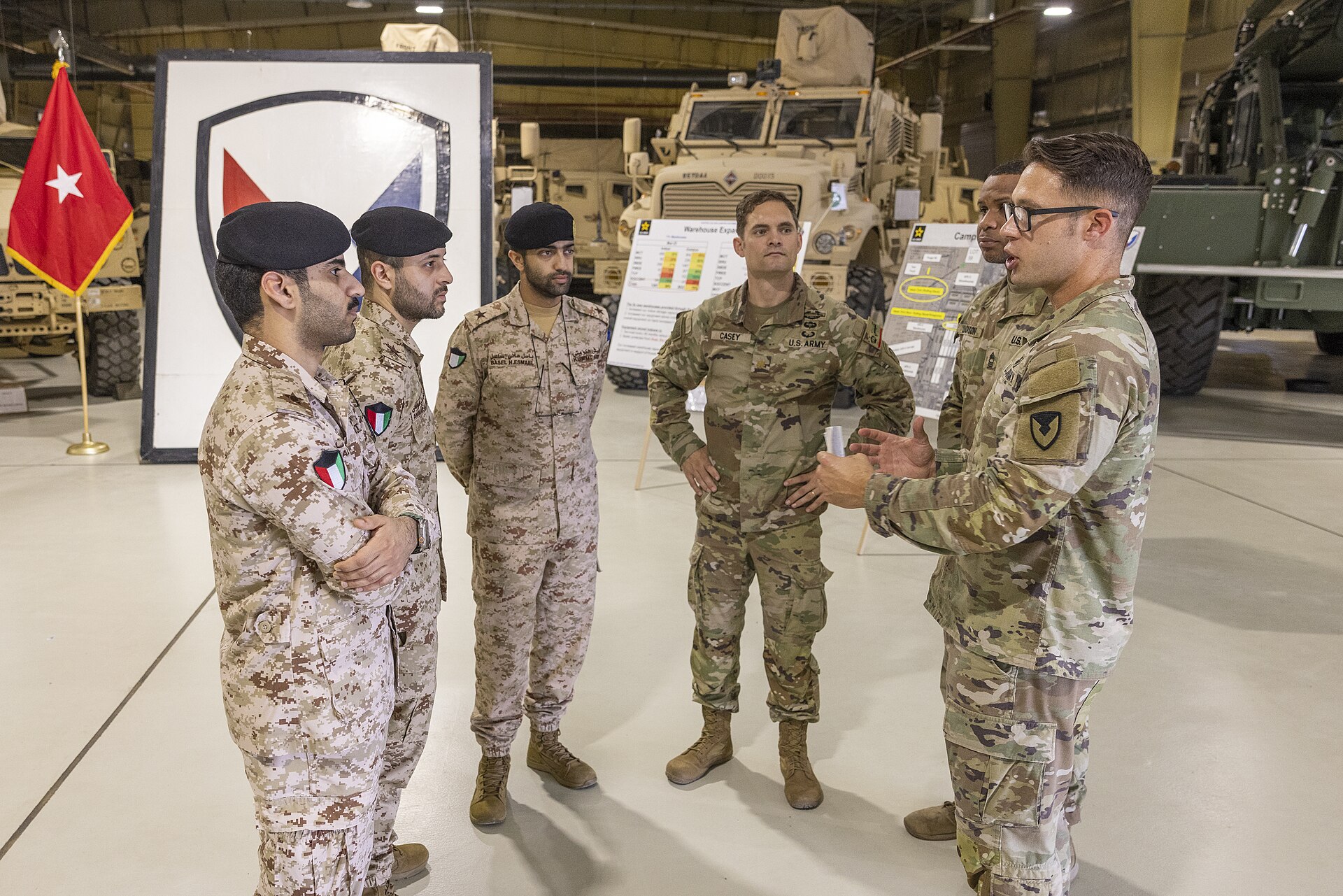
Camp Arifjan serves as the forward headquarters of US Army Central, coordinating American ground force operations across twenty-one countries in the CENTCOM area of responsibility, with a personnel capacity of approximately 10,000 and a role that extends beyond garrison command: it is the theatre-level node for receiving, storing, and distributing the equipment and ammunition that every American installation in the Gulf depends on. Army Prepositioned Stock-5 comprises 47,266 pieces of military equipment valued at $2.5 billion, stored across twenty-two facilities, according to the 401st Army Field Support Brigade’s published inventory — sufficient to equip a full armoured division without waiting for sea-lift from the continental United States. The US Army completed five new warehouses in 2022, adding 320,000 square feet of covered storage at a cost of $27 million, per CENTCOM construction records, designed to protect APS-5 rolling stock from environmental damage and, as subsequent events have demonstrated, from the exact category of strikes the IRGC has directed at the base since February.
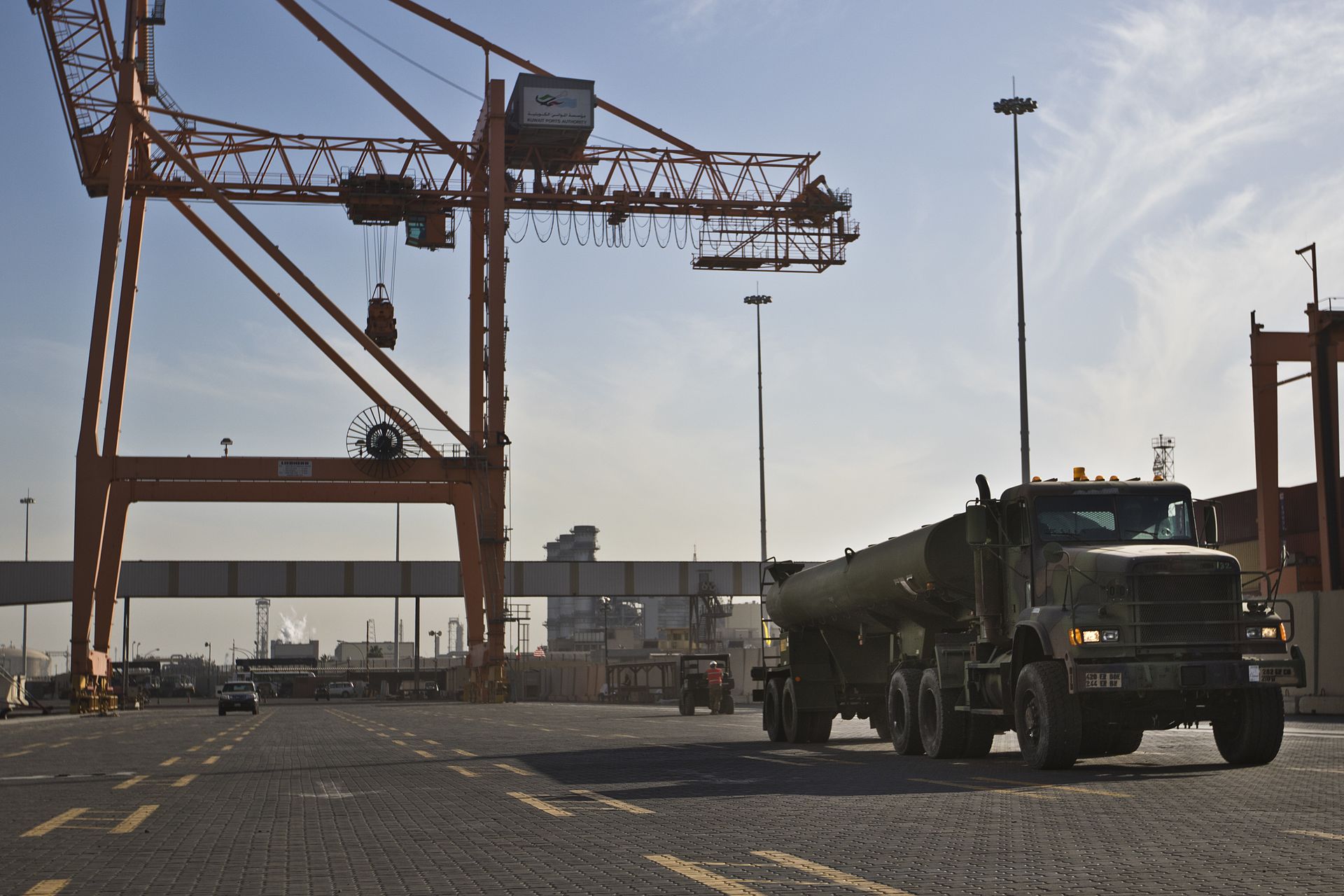
The Defence Logistics Agency operates a Disposition Services site at Arifjan that functions as the forward supply-chain node for the entire CENTCOM theatre, managing the inbound flow of materiel from the United States and the outbound distribution to forward operating locations across the Gulf. PAC-3 interceptor rounds arriving by maritime shipment enter Kuwait through Shuaiba Port — the Military Sea Port of Debarkation located approximately ten miles east of Arifjan — and are staged at the base before forward distribution to the Saudi, Kuwaiti, Qatari, and Bahraini batteries that constitute the Gulf’s layered air defence architecture. The DLA site handles not only munitions but spare parts, maintenance supplies, and the logistics tail that keeps complex systems like the Patriot battery operational in theatre, which means degrading Arifjan does not just slow the flow of interceptors — it disrupts the entire maintenance and sustainment ecosystem that determines whether existing batteries can keep firing with the rounds they already have.
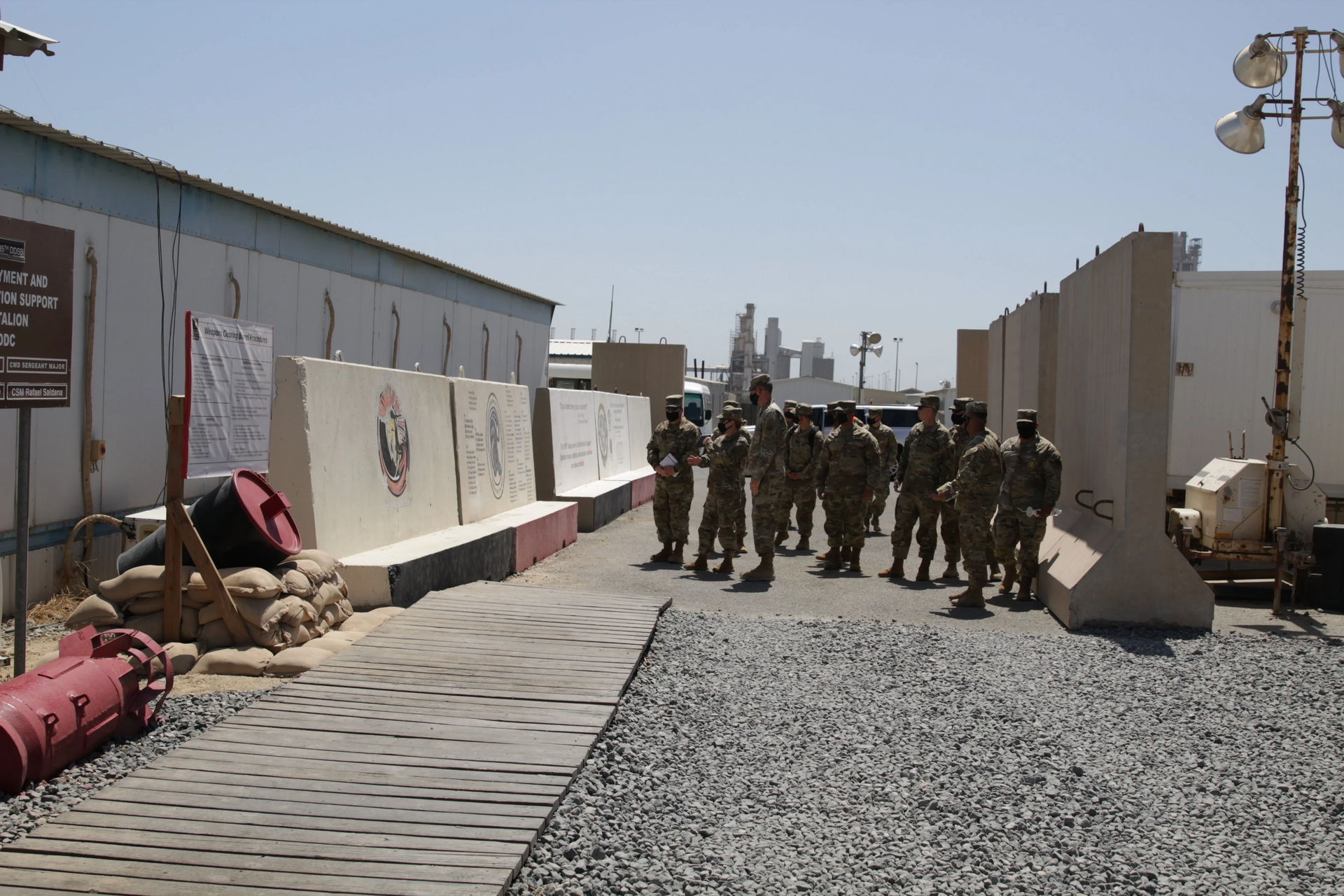
Iran has targeted the Arifjan-Shuaiba cluster repeatedly since the war began. On March 1, a drone strike on Shuaiba Port killed six US service members from the 103rd Sustainment Command and wounded more than sixty others in what CBS News reported as the deadliest single event for American personnel in the conflict — and troops later told CBS that the Army had ignored a pre-attack request for additional medical support at the base, an allegation indicating systemic force-protection gaps at a facility the IRGC had already identified as a priority target. Satellite imagery analysed by Defence Security Asia and the Times of Islamabad documented six SATCOM radomes destroyed at Camp Arifjan in earlier strikes, with the publication noting “cratered sites replacing previously intact dome structures” — damage that forced ARCENT to temporarily relocate coordination functions and that demonstrated Iran’s capacity to achieve physical effects on the base even when CENTCOM’s public statements emphasised successful defence.
The Pipeline That Feeds Saudi Arabia’s Interceptor Supply
The logistics chain connecting American production to Saudi Arabian air defence runs through a single corridor in southern Kuwait: PAC-3 MSE interceptors manufactured at Lockheed Martin’s plant in Camden, Arkansas — the sole global production site — are shipped to Shuaiba Port, transferred to Camp Arifjan for staging, and distributed forward to the Patriot batteries defending Saudi oil infrastructure, airports, military installations, and population centres. Every step of that chain is now under demonstrated Iranian fire, with the first link — Shuaiba — hit on March 1 in an attack that killed six and wounded more than sixty, and the second link — Arifjan — absorbing SATCOM-destroying strikes earlier in the campaign and ballistic missile targeting on June 3. The forward batteries themselves have consumed the overwhelming majority of Saudi Arabia’s pre-war interceptor stockpile, and the factory that builds replacements cannot produce in a year what the war burned through in its first five weeks.
The geographic compression matters because there is no practical alternative routing for theatre-scale resupply. Shuaiba is Kuwait’s designated military sea port of debarkation — the entry point for US military sea-lift into the Gulf’s northern theatre — and Camp Arifjan exists where it does precisely because of its proximity to the port, a co-location that makes the logistics chain efficient under peacetime conditions and vulnerable under the conditions that have prevailed since February. Air-lift could theoretically bypass the maritime corridor, but APS-5’s 47,266 pieces of equipment are positioned at Arifjan specifically because moving a division’s worth of armour and supplies by air is logistically prohibitive, and interceptor rounds — while smaller than main battle tanks — arrive in quantities that make sustained air resupply of PAC-3 magazines at wartime consumption rates a proposition measured in hundreds of C-17 sorties rather than a handful of emergency flights.
The March 26 Al Mayadeen statement in which the IRGC named “the US defense logistics site (KGL)” reveals something about Iran’s intelligence preparation of the battlespace that goes beyond generic military targeting. KGL is a specific contractor-operated logistics site within the Arifjan complex, and naming it by its internal designation indicates target discrimination — knowing not just that Arifjan is a base but which facility within it handles the defence supply chain — that aligns with the use of Fateh-110 variants designed for hardened, high-value infrastructure rather than area-effect bombardment. Iran is directing precision-capable weapons at specific logistics buildings it has identified by name, and the distinction between “missed or crashed en route” and a successful strike on a named logistics facility is measured in metres, not in the strategic intent that the targeting decision already reveals.
How Many Rounds Can Camden Replace?
Lockheed Martin’s Camden, Arkansas facility is the only production line on earth manufacturing PAC-3 MSE interceptors — the round that Saudi Arabia, Qatar, Bahrain, Kuwait, and the UAE all depend on for ballistic missile defence — and its annual output of approximately 650 rounds serves every customer worldwide, from Gulf states burning through wartime stockpiles to European allies building inventories against their own threat perceptions. Saudi Arabia has placed a standard Foreign Military Sales order for 730 rounds at a cost of $9 billion, but FR Doc 2026-10920, published June 1, confirms this is a standard FMS case with an eighteen-month delivery floor — meaning the first rounds from that order cannot arrive before late 2027, a timeline that presumes the Shuaiba-Arifjan corridor through which they will arrive is still functional when they ship.
The arithmetic is unforgiving. At the consumption rate of sixty-three rounds per day that characterised the war’s highest-intensity periods, Saudi Arabia’s estimated 150 remaining rounds last 2.4 days and eighty rounds last 1.3 days of full-scale defence — a stockpile that represents less than a single weekend of the kind of barrage the IRGC demonstrated it could mount on June 3. The kingdom’s pre-war inventory of approximately 2,800 PAC-3 MSE rounds represented more than four years of Camden’s total global output, and the war consumed the equivalent of nearly four years of production in under three months. Bahrain’s position is worse: approximately eight MSE rounds remain from an original sixty, an eighty-seven per cent depletion that makes the kingdom’s air defence functionally exhausted — and Kuwait’s $1.02 billion NASAMS contract with Raytheon buys a medium-range system that does not intercept the ballistic missiles the IRGC fires at hardened targets like Arifjan.
| Country | Pre-War Stock | Remaining (Late May) | Depletion | Emergency Waiver | Resupply Path |
|---|---|---|---|---|---|
| Saudi Arabia | ~2,800 | 80–150 | ~95–97% | None (no SOFA at PSAB) | Standard FMS: mid-2027 |
| Qatar | Not disclosed | Not disclosed | Not disclosed | $4.01B Section 36(b) — May 2 | Emergency: accelerated |
| Bahrain | ~60 | ~8 | ~87% | None (excluded from $8.6B tranche) | 50 MSE standard FMS: 18-month floor |
| Kuwait | Not disclosed | Undisclosed depletion | Unknown | None ($1.02B NASAMS separate system) | NASAMS: medium-range only |
Qatar is the exception that defines the rule: it received a $4.01 billion Section 36(b) emergency waiver on May 2 because it hosts Al Udeid Air Base with approximately 10,000 US troops under a formal Status of Forces Agreement — the bilateral architecture that enables Washington to fast-track emergency arms transfers without the congressional review periods that standard FMS requires. Saudi Arabia’s Prince Sultan Air Base hosts 2,700 American personnel with no SOFA, a structural gap documented in an earlier analysis as the reason Riyadh was excluded from Secretary Rubio’s $8.6 billion emergency tranche. The production constraint at Camden and the legal constraint at PSAB compound each other: even if Lockheed Martin could surge production — the company projects reaching 2,000 rounds per year by 2030 — the absence of a SOFA means the bureaucratic pathway for those rounds to reach Saudi Arabia is the standard eighteen-month FMS process, not the emergency channel that would match the timeline of a war burning through inventories faster than any conflict in the Patriot system’s history.
What Did CENTCOM Mean by ‘Missed or Crashed’?
CENTCOM’s June 3 language on the Kuwait missiles contained a formulation — “missed their target or crashed en route” — that differs from the standard intercept claims the command has issued for successful Patriot engagements throughout the conflict. When CENTCOM confirms an intercept, it typically says “intercepted” or “engaged and destroyed,” language that attributes the outcome to the defensive system and credits the Patriot battery with the kill. “Missed or crashed” attributes the outcome to the attacking missile — an implicit acknowledgment that the Patriot system may not have engaged the rounds at all, and that the Fateh-110s either suffered a guidance malfunction, a structural failure during reentry, or struck the ground at a location CENTCOM does not consider “on target.” The distinction matters because it determines whether the Gulf’s shrinking interceptor magazines were drawn down to stop these particular rounds or whether the rounds failed on their own, spending nothing from the defensive stockpile.
CENTCOM’s parallel statement — “these missiles were immediately defeated and no American personnel were harmed” — uses “defeated” rather than “intercepted,” a word that in military usage can encompass any outcome in which the attack fails to achieve its objective, including failure by the attacking weapon itself. The two formulations are compatible but not equivalent: “missed or crashed” describes what the missiles did, while “immediately defeated” describes the outcome from CENTCOM’s perspective, and the space between them is where the question of whether Kuwaiti or American Patriot batteries actually fired at the Fateh-110s lives without an answer. PressTV had published satellite imagery claiming to show damage at “at least 20 US military sites” from Iranian strikes through June 1 — a characterisation CENTCOM has categorically rejected throughout the conflict but that has been partially corroborated at Arifjan by the Defence Security Asia satellite analysis showing destroyed SATCOM radomes from earlier attacks, a record that complicates blanket acceptance of official no-damage assessments.
The Fateh-110’s solid-fuel motor is susceptible to mid-flight failures, and missile-defence analysts have documented crash-before-impact incidents with Iranian short-range ballistic missiles in previous confrontations — so CENTCOM’s phrasing is plausible on its own terms. But the information environment around the Arifjan-Shuaiba cluster has consistently lagged reality: the six service members killed at Shuaiba on March 1 were not publicly identified for days, the SATCOM radome destruction was first documented by South Asian defence media rather than by CENTCOM or Western outlets, and the CBS report that troops had requested additional medical support before the March 1 attack emerged only after the strike killed their colleagues. When CENTCOM says Tuesday’s missiles missed, the statement carries weight from a command with real-time sensor data; it also carries the context of a base where previous damage was acknowledged only after third-party satellite evidence made denial impractical.
The Doctrine of Relative Endurance
CommandEleven Intelligence, in its assessment of Iran’s operational pattern, identified the governing logic as “not built around a fixed timeline, but around relative endurance, with Tehran’s calculation that the United States faces political, economic, and military-logistical constraints that make a prolonged war increasingly costly.” That framing recasts every strike on logistics infrastructure — from the March 1 Shuaiba attack to the June 3 Arifjan targeting — as a deliberate tick on a clock the IRGC believes it can outlast. The economics are asymmetric in one dimension that matters: a Fateh-110 costs an estimated $1 to $3 million to manufacture, while a single PAC-3 MSE interceptor costs approximately $4 million, which means Iran can fire missiles at a defended logistics base and come out ahead on the cost exchange regardless of whether the missiles hit — because every defensive engagement burns a round from a magazine that the sole global production line restocks at a rate the war overtook in its first month.
Precision attacks are directed against the command, logistics, and sustainment nodes on which U.S. operations depend… Each layer feeds into the next: what is degraded at the base layer arrives weakened at the chokepoint.
CommandEleven Intelligence, 2026
The retaliation loop tightens the doctrine into an operational rhythm that neither side can exit without conceding something it has refused to concede. CENTCOM struck Iranian facilities on Qeshm Island and Goruk on June 1, and the IRGC struck Camp Arifjan, the Fifth Fleet, and Kuwait’s airport on June 3 — with the March 26 Al Mayadeen statement explicitly framing such strikes as “in response to the attack carried out on Khorramshahr from that location,” language that ties the logistics hub to the outbound sorties CENTCOM mounts from the Gulf. Each American strike against Iranian territory generates an Iranian retaliatory salvo against American basing infrastructure, each retaliatory salvo forces the Gulf’s air defence network to expend rounds that the targeted logistics pipeline is supposed to resupply, and the pipeline itself degrades incrementally with every cycle. The loop is self-reinforcing and the arithmetic is cumulative: CENTCOM strikes Iran, Iran strikes the base that supplies the interceptors that protect the base, the base burns through more interceptors, and the number that needs replacing grows while the corridor through which replacements arrive operates under fire.
The Carnegie Endowment’s Diwan journal assessed in March that Iran had rewritten its war strategy “to sustain pressure over time — militarily, politically, economically — to alter the adversary’s cost-benefit calculation rather than seeking a decisive battlefield outcome.” The observable pattern at Arifjan confirms that assessment — there has been no single catastrophic logistics strike, no depot explosion visible from orbit, but rather a persistent targeting campaign that degrades the base incrementally, forces defensive expenditure with every salvo, and makes the resupply corridor between the continental United States and the Gulf’s forward batteries marginally less reliable each time the IRGC fires. Attrition works not by destroying the thing in one blow but by making the cost of maintaining it exceed the defender’s capacity to pay, and the question Iran is forcing on Saudi Arabia is whether the kingdom can sustain the fiscal, military, and political cost of a war of endurance when its interceptor stockpile is measured in days, its fiscal deficit consumed three-quarters of the annual target in one quarter, and the logistics node on which resupply depends is absorbing ballistic missiles from a state that has named the building it wants to hit.
What Does Iran’s Logistics Strategy Mean for Saudi Arabia?
Saudi Arabia sits at the end of every supply chain the IRGC has identified as a target and receives materiel through every corridor the IRGC has demonstrated it can reach. The PAC-3 rounds that defend Riyadh’s airports, the Eastern Province’s oil infrastructure, and the military installations at Al-Kharj and Prince Sultan Air Base arrive through the Shuaiba-Arifjan pipeline — a corridor that has now absorbed at least three confirmed attack events and that Iran has named as a target category rather than an incidental battlefield contact. The kingdom cannot accelerate Camden’s production line, cannot bypass the Shuaiba-Arifjan logistics node without restructuring theatre supply chains that were designed for a threat environment that no longer exists, and cannot access the emergency waiver pathway that Qatar secured because it lacks the SOFA Washington requires for expedited transfers. Even the fiscal room to purchase supplementary air defence systems at surge pricing is constrained: Aramco’s quarterly dividend of $21.89 billion, payable June 9, exceeds the company’s free cash flow of $18.6 billion, and the state-finance loop connecting Aramco’s payout to PIF’s investment capacity to the kingdom’s military procurement is running at a loss.
The OPEC+ ministerial opens in Vienna on June 7 — four days after the strikes — with at least two member states unable to operate their own airports and Saudi Arabia absorbing the Gulf’s diverted air traffic with an interceptor supply that lasts between one and two and a half days at full-intensity consumption. Brent at $98.50 is 2.6 per cent higher on the day but still $10 to $13 short of the $108–111 breakeven the kingdom needs to cover a deficit that consumed three-quarters of its annual target in one quarter, and Goldman Sachs estimates $14 per barrel in embedded war premium — which means the day the war ends, whether by diplomacy that has already collapsed into competing texts or by exhaustion, is the day the oil price drops into a range that makes Saudi Arabia’s fiscal position worse from the opposite direction. Washington has drained fifty-eight million barrels of emergency oil reserves and shown no willingness to extend the legal architecture — a SOFA, an emergency waiver, an accelerated FMS pathway — that would give the kingdom the interceptor resupply timeline the war demands.
Iran’s three-layer targeting on June 3 leaves Saudi Arabia defending against a strategy it did not design and cannot reshape: the command layer is Washington’s to defend at NSA Bahrain, the civilian layer is Kuwait’s to absorb, but the logistics layer is the one that determines whether Saudi Arabia’s PAC-3 batteries have ammunition next week. That layer is now under systematic fire from a state that has named its components by internal designation, demonstrated physical effects on its SATCOM infrastructure, killed six Americans at its adjacent port, and on Tuesday morning fired ballistic missiles designed for hardened targets at the warehouses that stage the resupply. The sole global production line builds 650 rounds a year for every customer on earth, the only sea-lift corridor into the northern Gulf runs through the Arifjan-Shuaiba cluster, and the one emergency resupply waiver Washington has issued went to the country with a Status of Forces Agreement — which Saudi Arabia does not have and shows no indication of negotiating while its remaining interceptors drain toward zero at a rate Iran can calibrate by choosing when to fire.
Frequently Asked Questions
Was Camp Arifjan physically damaged on June 3, 2026?
CENTCOM’s official position is that two missiles “missed their target or crashed en route” and that no American personnel were harmed, language that does not explicitly confirm or deny physical impact on the base perimeter. Independent satellite imagery from earlier in the conflict documented six destroyed SATCOM radomes and cratered positions within Camp Arifjan, and PressTV published imagery claiming damage at “at least 20 US military sites” from Iranian strikes through June 1 — claims CENTCOM has rejected but that at Arifjan specifically have been partially corroborated by Defence Security Asia’s third-party analysis. Assessment of any June 3 physical damage has not been independently verified as of this publication, and the distinction between “missed” and “missed the intended building but struck elsewhere on a base covering dozens of square kilometres” has not been addressed in any official statement.
How many times has Iran targeted Camp Arifjan or its adjacent facilities?
The Arifjan-Shuaiba logistics cluster has been targeted in at least four documented episodes since the war began on February 28: the March 1 drone strike on Shuaiba Port that killed six Americans and wounded more than sixty from the 103rd Sustainment Command, at least one earlier strike confirmed by satellite imagery showing six destroyed SATCOM radomes, the explicit March 26 IRGC statement naming the KGL defence logistics site at Arifjan as a “pre-designated objective,” and the June 3 Fateh-110 ballistic missile attack. PressTV imagery from March 8 and June 1 suggests additional strikes that have not been individually confirmed by Western sources, and the IRGC’s Tasnim channel described the June 3 Kuwait target as a “US air and helicopter base” — terminology consistent with Arifjan’s rotary-wing operations but not exclusively identifying it against Ali Al Salem, which is located approximately thirty kilometres to the northwest.
Can the United States bypass the Shuaiba-Arifjan corridor for PAC-3 resupply?
Military air-lift could deliver interceptor rounds directly to Al Udeid in Qatar or to Saudi Arabia, bypassing the maritime corridor, but the APS-5 programme exists at Arifjan precisely because air-lift cannot sustain theatre-level volumes at the speed and scale that sea-lift provides — and the decision to concentrate $2.5 billion of prepositioned equipment at a single site reflects a design philosophy that prioritises rapid deployment concentration over dispersal for survivability. Rerouting the PAC-3 pipeline permanently would require standing up alternative staging facilities, renegotiating host-nation logistics agreements, establishing new port-to-base corridors, and replicating the DLA forward node that handles spare parts and maintenance supplies — work measured in months of planning and construction, not the days that Saudi Arabia’s interceptor stockpile currently covers.
Does Saudi Arabia have any air defence alternatives to PAC-3 MSE that could substitute for its depleted stockpile?
Saudi Arabia operates THAAD — the Terminal High Altitude Area Defense system — at two sites defending critical oil infrastructure, but THAAD is designed for high-altitude endo- and exo-atmospheric intercepts against medium- and intermediate-range ballistic missiles, not for the lower-trajectory short-range threats the PAC-3 MSE handles at terminal phase. The two systems are complementary layers, not substitutes: running out of PAC-3 MSE rounds leaves the lower intercept tier undefended regardless of THAAD inventory. South Korea’s L-SAM and KM-SAM represent potential diversification paths that analysts have identified, but neither system is in Saudi operational service, and procurement timelines measured in years offer no relief against a PAC-3 stockpile measured in days.
What would a successful strike on Camp Arifjan’s logistics facilities mean for Gulf air defence?
A strike that destroyed APS-5 warehouses or the DLA Disposition Services site would disrupt not only PAC-3 interceptor staging but the entire maintenance-and-sustainment chain for American and allied operations across the CENTCOM theatre, because Arifjan’s logistics function extends to spare parts, vehicle maintenance, communications equipment, and the forward supply pipeline that keeps deployed Patriot batteries and other complex weapons systems operational. The prepositioned equipment — sufficient to outfit a full armoured division — exists to avoid the ninety-to-one-hundred-and-twenty-day sea-lift timeline otherwise required to deploy heavy forces from the continental United States, and losing those stocks would create a capability gap that neither Camden’s production line nor emergency air-lift from Fort Cavazos can substitute at theatre scale within any timeline relevant to the current conflict.