
RIYADH — IAEA Director General Rafael Grossi held separate meetings with Saudi Foreign Minister Prince Faisal bin Farhan and Energy Minister Prince Abdulaziz bin Salman in Riyadh on June 3, 2026, completing the final leg of a four-country Gulf tour that included a damage assessment at the UAE’s Barakah nuclear plant following the May 17 drone strike.
The visit placed Saudi Arabia’s civilian nuclear programme on the IAEA’s active regional security agenda for the first time during the Gulf conflict. Two days after leaving Riyadh, on June 5, Grossi convened a special session of the IAEA Board of Governors in Vienna to put the Barakah attack on the international record — the first emergency Board session called over a nuclear facility strike in the Gulf war, according to the IAEA. Saudi Arabia entered that session as the state that had opened its doors to IAEA inspectors. Iran, 93 days into a self-imposed verification blackout, had shut them.
Table of Contents
What Did Grossi Find at Barakah?
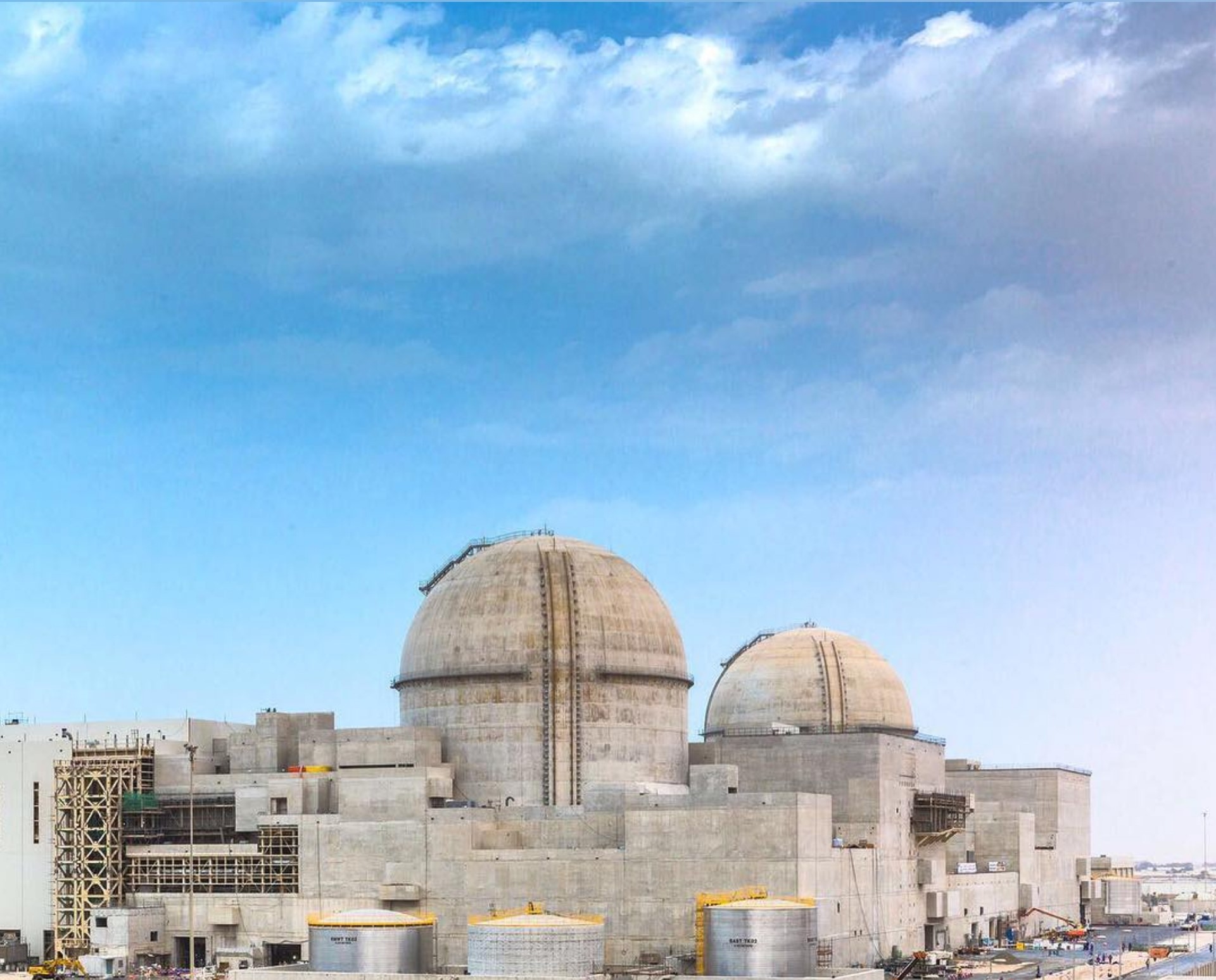
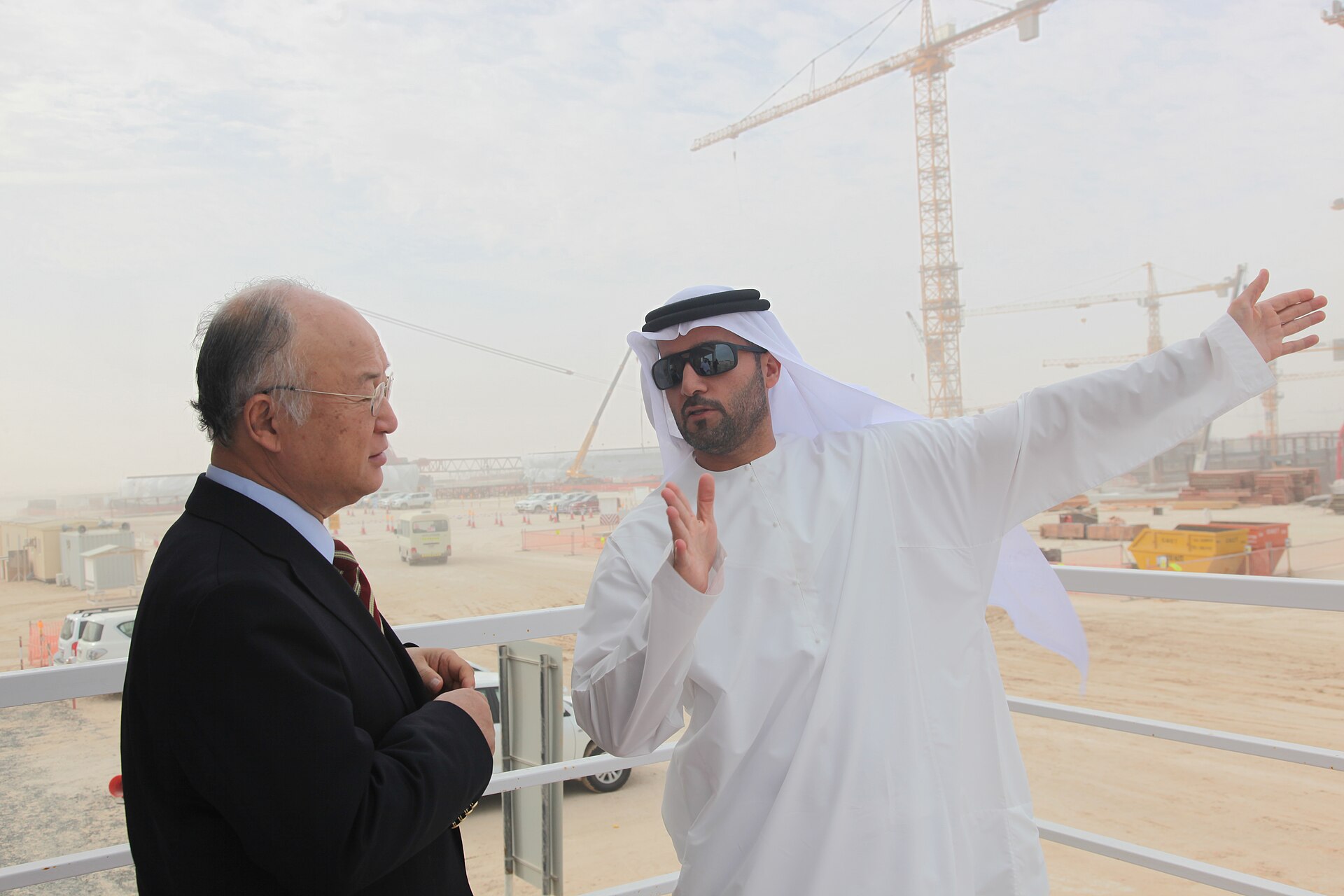
Grossi arrived at the Barakah Nuclear Energy Plant on June 2, seventeen days after the May 17 strike. Three drones had targeted the facility. UAE air defences intercepted two. The third struck an electrical generator outside the plant’s inner perimeter, temporarily forcing one reactor onto emergency diesel generators, according to Al Jazeera and The National. The plant resumed full operations within twelve hours. No radiation was released and no personnel were injured.
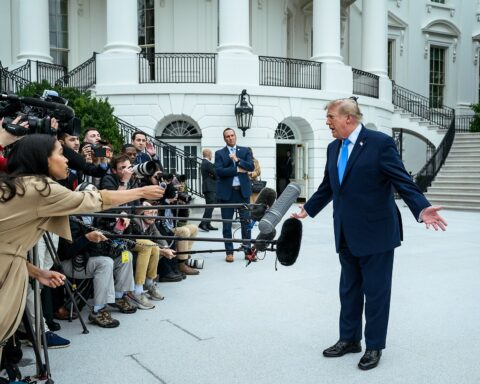
“Whoever was behind this knew exactly what they were doing,” Grossi told reporters at the site, according to Defense Post. “This is of extreme gravity.” He described the targeting of external electrical infrastructure supplying safety systems as “a very carefully targeted operation.”
The comparison he reached for was Zaporizhzhia — the Ukrainian nuclear plant under Russian military occupation since 2022. All six Zaporizhzhia reactors have been in cold shutdown since late 2022. Barakah was generating commercial power when the drone hit. “Barakah is operating,” Grossi told Euronews on June 3. “So, this makes it potentially even more dangerous.” He called the attack part of “a phenomenon that is spreading,” telling The National it was “incredibly dangerous and reckless.”
Grossi praised Abu Dhabi’s handling of the aftermath. The UAE’s decision to involve the IAEA rather than respond with military escalation reflected “statesmanship,” he said. UAE operators had applied emergency protocols “impeccably,” according to Euronews.
The Middle East briefing 3,000+ readers start their day with.
One email. Every weekday morning. Free.
Attribution remains contested. The UAE attributed the drones to militants in Iraq, not to Iran directly. Grossi did not assign blame. “There is a presumption, but it is not possible to determine with 100 per cent sureness the origin of this attack,” he told The National on June 2.
The Riyadh Sessions
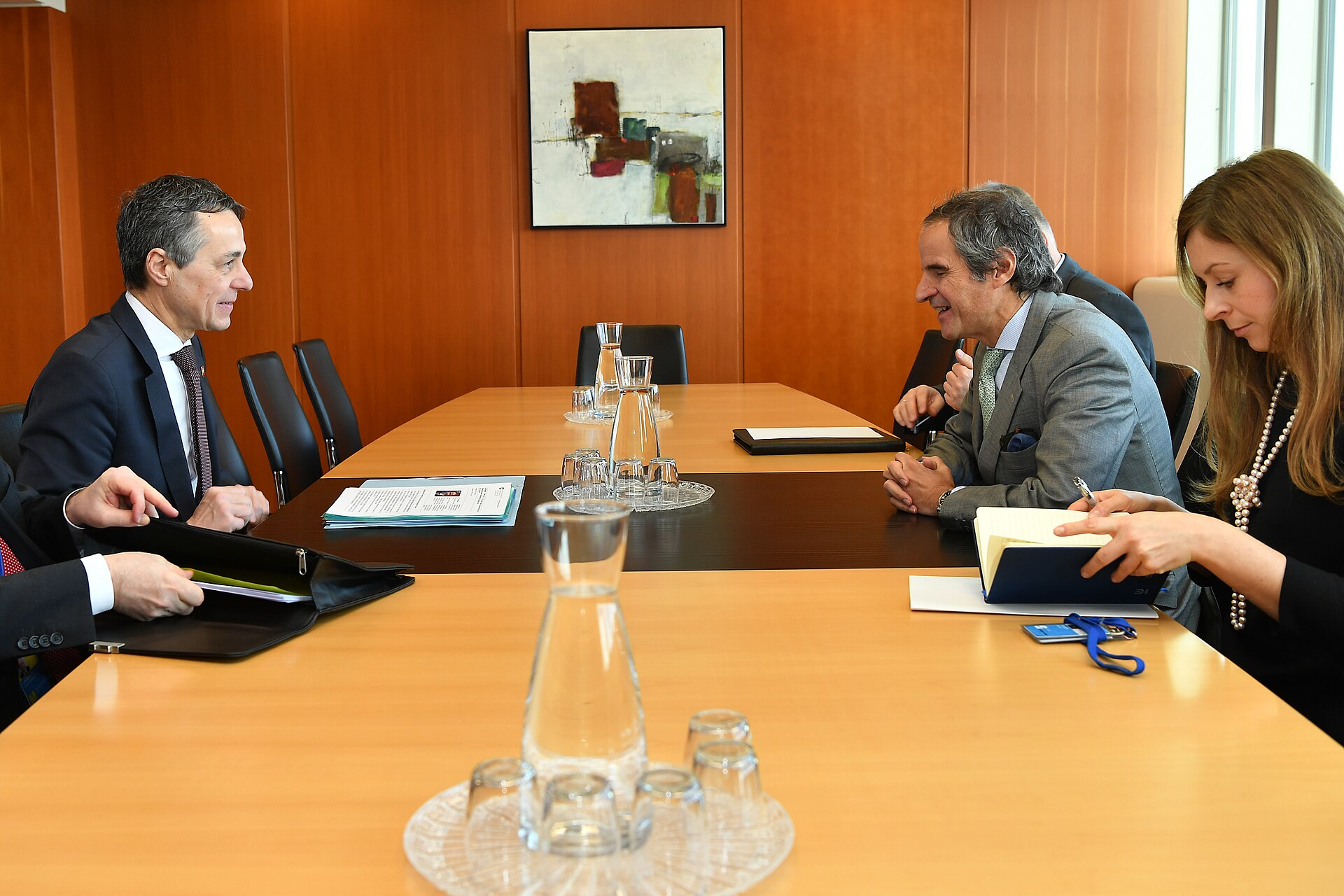
Grossi’s Gulf itinerary — Kuwait, Qatar, Abu Dhabi, Riyadh — placed the Saudi capital as the tour’s final and longest stop. “I am heading to Riyadh because several countries in the region have serious concerns,” he told AFP before departing Abu Dhabi on June 3. The four stops reflected a demand across the Gulf Cooperation Council for IAEA engagement during a conflict in which a drone struck the UAE’s only nuclear plant, Iranian missiles hit civilian airports in Kuwait and Bahrain, and Iran severed its own relationship with the Agency that monitors nuclear programmes worldwide.
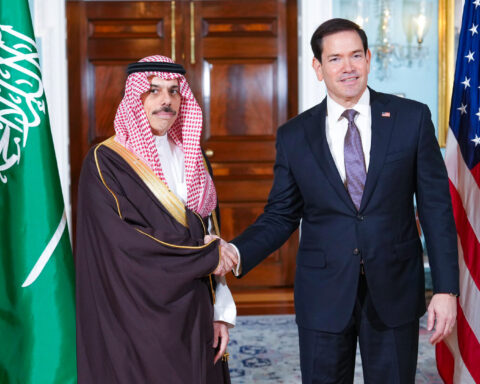
The session with Prince Faisal bin Farhan covered “cooperation between the Kingdom and the IAEA, particularly regarding nuclear non-proliferation and nuclear safety and security,” Asharq Al-Awsat reported on June 4. The meeting with Prince Abdulaziz bin Salman addressed “technical cooperation, nuclear safety and security standards, developments in Saudi Arabia’s national atomic energy program, as well as issues of mutual interest,” according to Saudi Gazette on June 3.
Neither the Ministry of Foreign Affairs nor the Ministry of Energy released detailed readouts beyond these summaries. No joint statement was issued.
The visit was Grossi’s second trip to Riyadh in under three years. In December 2023, he toured the King Abdulaziz City for Science and Technology research reactor — Saudi Arabia’s only operational nuclear facility — and told NEI Magazine that the Kingdom had taken “a very wise decision to add nuclear power to the options in this integrated energy mix.” That visit focused on technical cooperation. The June 2026 visit carried a different context: an operating nuclear plant in a neighbouring state had been hit by a drone, and the IAEA’s verification authority over Iran’s programme had collapsed three months earlier.
How Far Has Saudi IAEA Cooperation Advanced?
Saudi Arabia signed a Comprehensive Safeguards Agreement with the IAEA in 2009, placing all declared nuclear material and facilities under Agency verification. It has not signed the Additional Protocol, which would grant the IAEA authority to inspect undeclared sites, collect environmental samples, and require expanded declarations of nuclear-related research and manufacturing — the primary mechanism for detecting covert programmes.
On August 7, 2024, the Kingdom deposited its Instrument of Acceptance for the IAEA Privileges and Immunities Agreement, providing full legal protections for IAEA inspectors operating inside Saudi Arabia. Simon Henderson, the Baker Senior Fellow at the Washington Institute, called the deposit “a small diplomatic step and an indication of progress being made.”
The Saudi National Atomic Energy Programme, approved by the cabinet in July 2017 under Vision 2030, is built on four pillars: large nuclear power plants rated at 1,200 to 1,600 MWe, small modular reactors, fuel cycle self-sufficiency, and domestic uranium and thorium development. The Nuclear Holding Company, established in February 2022, serves as the programme’s developer and procurement vehicle.
Saudi Arabia’s only existing nuclear installation is a 30 kW low-power research reactor at the KACST campus in Riyadh, built by Argentina’s INVAP and used for isotope production and materials research. The step from that facility to the programme’s next phase is large. Two 1.4 GWe reactors are planned at Khor Duweihin on the Gulf coast, with four approved bidders as of July 2024: CNNC of China, EDF of France, KEPCO of South Korea, and Rosatom of Russia, according to the World Nuclear Association and the Congressional Research Service. Commercial operation is targeted for the early 2030s. Completion on schedule would make Saudi Arabia the second Gulf state after the UAE to operate commercial nuclear power.
Henderson has also flagged two potentially undeclared nuclear facilities near Riyadh and Saudi Arabia’s historical contacts with Pakistani nuclear scientist A.Q. Khan as proliferation concerns. The Additional Protocol is the instrument that would allow the IAEA to investigate such concerns, and Saudi Arabia has not adopted it.
The 123 Agreement and the Gold Standard
The US-Saudi Section 123 Agreement on civilian nuclear cooperation, formalized on May 13, 2026, governs the terms under which American nuclear technology and materials can be exported to the Kingdom. The agreement omits three provisions present in the 2009 US-UAE 123 Agreement — the deal widely cited as the nonproliferation gold standard.
| Provision | US-UAE 123 (2009) | US-Saudi 123 (2026) |
|---|---|---|
| Domestic uranium enrichment ban | Yes | No |
| Spent fuel reprocessing ban | Yes | No |
| IAEA Additional Protocol required before export licences | Yes | No |
| IAEA Comprehensive Safeguards Agreement | Yes | Yes |
Sources: Congressional Research Service, Report IF10799, March 2026; Arms Control Association, June 2026.
Sharon Squassoni of the Arms Control Association described the US-Saudi deal as a “gilded sweetheart deal” in Arms Control Today in June 2026. The three missing provisions are the requirements that give the IAEA the inspection authority it exercises in the UAE but does not hold in Saudi Arabia.
In the US Senate, the Nuclear Nonproliferation and Safety Act (S. 4243), introduced by Senators Ed Markey and Jeff Merkley, would impose gold-standard conditions on the Saudi agreement retroactively. The bill has not advanced beyond committee. The asymmetry became formally visible when the Board convened its June 8–12 session: Saudi Arabia’s IAEA Board vote on Iran’s enrichment noncompliance placed the kingdom’s yes in direct tension with the missing conditions in its own Section 123 deal.
The Grossi visit arrived at a moment when both sides of the 123 debate can point to supporting evidence. Saudi Arabia’s cooperation record — a CSA since 2009, the Privileges and Immunities deposit in 2024, two Grossi visits in three years — stands against the absence of the gold standard’s strongest safeguards. Whether the June 3 sessions addressed Additional Protocol accession is unknown. Neither side disclosed the substance of the discussions beyond the published summaries.
Why Did Grossi Call an Emergency Board Session?
Grossi convened a special session of the IAEA Board of Governors in Vienna on June 5, 2026 — two days after leaving Riyadh and three days after completing his Barakah assessment.
The Board meeting addressed two concurrent crises. The first was the physical strike on Barakah — an operating commercial reactor targeted during an active war, with Grossi’s seventeen-day-old damage assessment as the evidentiary submission. “Any attack on a nuclear power plant is simply unacceptable,” he had told The National before arriving at the site on June 1.
The second crisis predates the Barakah strike by three months. Iran terminated all IAEA access on February 28, 2026, disabling surveillance cameras and removing Agency seals from every declared nuclear facility. The IAEA confirmed a “loss of continuity of knowledge” — the Agency’s designation for an inability to verify whether nuclear material has been moved, diverted, or processed further. Iran’s unverified stockpile stands at 440.9 kg of uranium enriched to 60% purity — a quantity Grossi has stated “could allow Iran to build as many as 10 nuclear bombs, should it decide to weaponize,” according to PBS NewsHour. When the Board convened on June 8, Grossi formally entered that 440.9 kg figure into the Board record as unverified — the first time the stockpile quantity appeared in official Board proceedings since the February 27 baseline. On June 5, the IAEA’s first wartime report confirmed it still cannot verify that stockpile after the 97-day monitoring blackout — meaning Grossi’s emergency Board session opened with no verified baseline for Iran’s enriched uranium.
“We haven’t been able to inspect or to reject that the material is there and that the seals — the IAEA seals — remain there,” Grossi told the Associated Press. He warned separately that “any agreement without inspection provisions will be an ‘illusion of an agreement,’” according to Radio Free Europe/Radio Liberty — a statement directed at the US-Iran memorandum of understanding that Tehran has signaled it will formally reject.
Iran has not issued a public statement on Grossi’s Gulf tour or his Riyadh meetings as of June 5. No Iranian official has responded to the emergency Board session announcement. Iran’s stated position, outlined in IAEA document GOV/2026/8, is that IAEA access remains contingent on the resolution of the broader conflict and the status of MOU negotiations.
That contradiction sharpened on June 5: as Grossi told reporters talks were “pretty close,” Washington circulated a draft Board censure demanding immediate inspector access to facilities Iran has sealed since February 28. The censure placed Saudi Arabia’s Board seat at the centre of a vote trap — with options that carry costs regardless of which way Riyadh moves.
Frequently Asked Questions
Has the IAEA previously condemned a military strike on a nuclear facility?
The IAEA condemned Israel’s 1981 strike on Iraq’s Osirak research reactor, which prompted UN Security Council Resolution 487 affirming the right of states to develop nuclear energy for peaceful purposes. The Zaporizhzhia nuclear plant in Ukraine has been under continuous IAEA monitoring since Russia’s 2022 occupation, but all six reactors remain in cold shutdown — unlike Barakah, which was generating commercial power when it was hit. The June 5, 2026 Board of Governors session was the first convened specifically over an attack on a nuclear facility during the Gulf conflict.
What would signing the Additional Protocol require Saudi Arabia to do?
The Additional Protocol gives the IAEA the right to conduct short-notice inspections at locations beyond declared nuclear facilities, collect environmental samples to detect traces of undeclared enrichment or reprocessing, and require expanded declarations covering nuclear-related research, manufacturing, and imports. More than 140 countries have signed the protocol. Saudi Arabia, Egypt, Brazil, and Argentina are among the states that have not. Accession would give the IAEA inspection authority in Saudi Arabia equivalent to what it exercises in the UAE under the 2009 123 Agreement.
Could Saudi Arabia enrich uranium under the current 123 Agreement?
The US-Saudi 123 Agreement contains no explicit enrichment ban, unlike the US-UAE agreement signed in 2009. Saudi Arabia would still require US government consent to enrich any material derived from American technology or fuel, and would need separate IAEA safeguards on any enrichment facility. Crown Prince Mohammed bin Salman stated in a 2018 CBS interview that Saudi Arabia would pursue enrichment capability if Iran continued its own programme — a position the 123 Agreement does not legally foreclose.
How does Barakah’s reactor design affect its vulnerability?
Barakah uses four APR-1400 pressurised water reactors designed and built by KEPCO of South Korea. The containment structures are engineered to withstand the impact of a large commercial aircraft. The May 17 drone struck external electrical infrastructure outside the containment perimeter — the generators and switchgear supplying power to safety systems, including cooling pumps. This is the same category of infrastructure that Grossi identified as having been targeted at Zaporizhzhia, and the vulnerability that forced the plant onto emergency diesel backup until grid power was restored.