
BEIRUT — Hezbollah’s Secretary-General Naim Qassem did not just decline the June 4 Israel-Lebanon ceasefire. He called it “absurd, humiliating and insulting” — “a roadmap to annihilate part of the Lebanese people” — and within hours, IRGC Quds Force commander Esmail Qaani issued a parallel statement through Tasnim reinforcing the rejection on separate grounds. The coordinated repudiation transforms Lebanon from a negotiating variable in the Iran-US MOU talks into a structural block that neither side can finesse. Iran’s Foreign Minister Abbas Araghchi established on June 1 that “the cease-fire between Iran and the U.S. is unequivocally a cease-fire on all fronts, including in Lebanon. Its violation on one front is a violation of the ceasefire on all fronts.” That doctrine required a public, attributable Hezbollah rejection to remain operative — and on June 4, it received one. The formal MOU rejection expected on June 9 now sits inside a sequence that no party has the standing to interrupt. Saudi Arabia, which holds no seat on any of the three active negotiating tracks and whose Foreign Ministry issued only a pro forma SPA statement welcoming the ceasefire announcement, has no remaining diplomatic lever on the conflict costing it approximately $100 million per day.
Table of Contents
- What Qassem Said and What He Meant by “Surrender”
- Why Did Qaani Speak on the Same Day?
- The 2024 Ceasefire and When Hezbollah’s Silence Was Enough
- How Does Araghchi’s “All Fronts” Doctrine Work After June 4?
- Three Command Nodes, One Lebanon Condition
- Did the United States Lose Its Last Ambiguity on Lebanon?
- What Can Saudi Arabia Do With No Seat at Any Table?
- The June 9 Convergence
- Frequently Asked Questions
What Qassem Said and What He Meant by “Surrender”
The ceasefire terms required Hezbollah fighters to withdraw 29 kilometers north of the Blue Line while Israeli forces remained in place. No IDF withdrawal timetable was included. “Pilot zones” in southern Lebanon would fall under exclusive Lebanese Armed Forces control with no Hezbollah presence permitted. Qassem’s word for compliance with these terms was not “insufficient” or “flawed.” It was “surrender, defeat and achieving the enemy’s goals.”
His stated minimum condition: “We are concerned only with a comprehensive cessation of aggression, a cease-fire, and the withdrawal of Israel.” This is not a counterproposal. It is a set of preconditions that the ceasefire text was not designed to meet — the deal requires Hezbollah to vacate territory under active Israeli occupation while offering no mechanism for ending that occupation.
Trump claimed on June 4 that Hezbollah “did not reject” the ceasefire. Qassem’s televised statement had been public for hours when the claim was made.
Israeli Defense Minister Israel Katz stated the same day that military operations in southern Lebanon would continue despite the ceasefire announcement. The IDF had captured Beaufort Castle and crossed the Litani River on May 31 — four days before the deal was formalized. Israel issued displacement orders for seven Lebanese villages on June 1, the same day Trump first claimed a ceasefire existed. The contradiction between Washington’s ceasefire claims and Jerusalem’s operational posture had already frozen the MOU once. On June 4, it froze it again — this time with an explicit Hezbollah rejection attached.
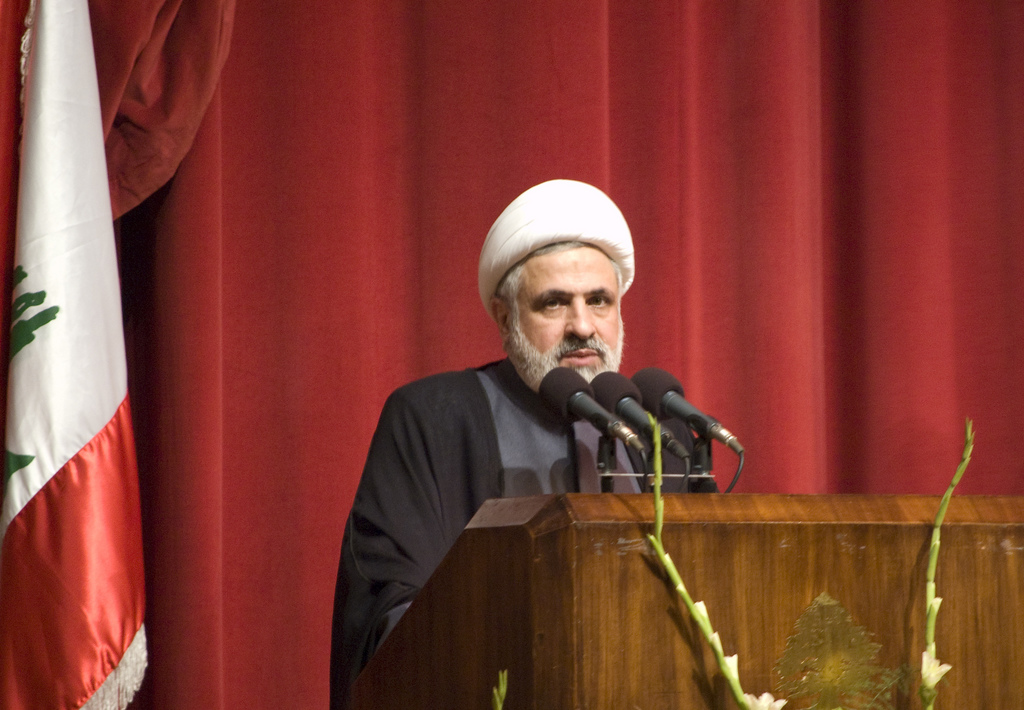
Hezbollah was not a party to the negotiations. It was named as a condition — required to disarm and withdraw from territory that the IDF was actively occupying — without being given a seat, a voice, or a date by which its occupier would leave.
The Middle East briefing 3,000+ readers start their day with.
One email. Every weekday morning. Free.
Why Did Qaani Speak on the Same Day?
Qaani’s statement, routed through Tasnim — the IRGC-linked semi-official agency, not the government’s IRNA — carried a different demand on different terms. Israel must “withdraw to the positions it held before the start of the 40-day war,” meaning pre-February 28 positions. This is Quds Force operational language, not diplomatic language. It refers to territorial lines, not negotiating frameworks.
The outlet choice matters as much as the content. When the IRGC wants to establish an institutional position distinct from the presidency or foreign ministry, it uses Tasnim. When it wants to signal alignment with a government position, it allows IRNA to carry the same text. On June 4, Tasnim carried Qaani exclusively. PressTV — the English-language state broadcaster that reports to the Islamic Republic of Iran Broadcasting authority rather than the IRGC — reprinted the statement, broadening its reach without changing its institutional origin.
Qaani added a framing claim that pre-positioned any future ceasefire inside an IRGC narrative: “If a ceasefire is reached, it will be the result of the steadfastness of the Lebanese resistance and the support of the Islamic Republic of Iran.” The formulation does two things. It denies the United States or Israel credit for any ceasefire they broker. And it establishes that only a ceasefire Hezbollah can claim as its own achievement would be accepted by Qaani’s command.
He also said something that diplomats in Riyadh and Washington will have read twice: “Supporting the resistance in Lebanon is the duty of all of us, and eliminating Israel from the region is an achievable goal for Muslims.” Anadolu Agency, Turkey’s state wire service, carried this line — extending its audience beyond the Farsi-speaking world into the Sunni information space where Saudi Arabia competes for influence.
The 2024 Ceasefire and When Hezbollah’s Silence Was Enough
The November 27, 2024 Israel-Lebanon ceasefire was signed by Israel, Lebanon, and five mediating countries including the United States. Hezbollah was not a signatory. Lebanese Parliament Speaker Nabih Berri negotiated on its behalf, with Qassem’s tacit backing. Qassem did not publicly endorse the deal. He did not publicly reject it. He was silent — and the United States treated that silence as sufficient.
The deal mandated a 60-day halt, Israeli and Hezbollah withdrawal, and a five-country US-led monitoring panel. It lasted approximately 15 months before collapsing on March 2, 2026, when Hezbollah launched strikes in retaliation for Israel’s assassination of Iranian Supreme Leader Ali Khamenei. Berri accused Israel of more than 50 violations within the first week of the original ceasefire.
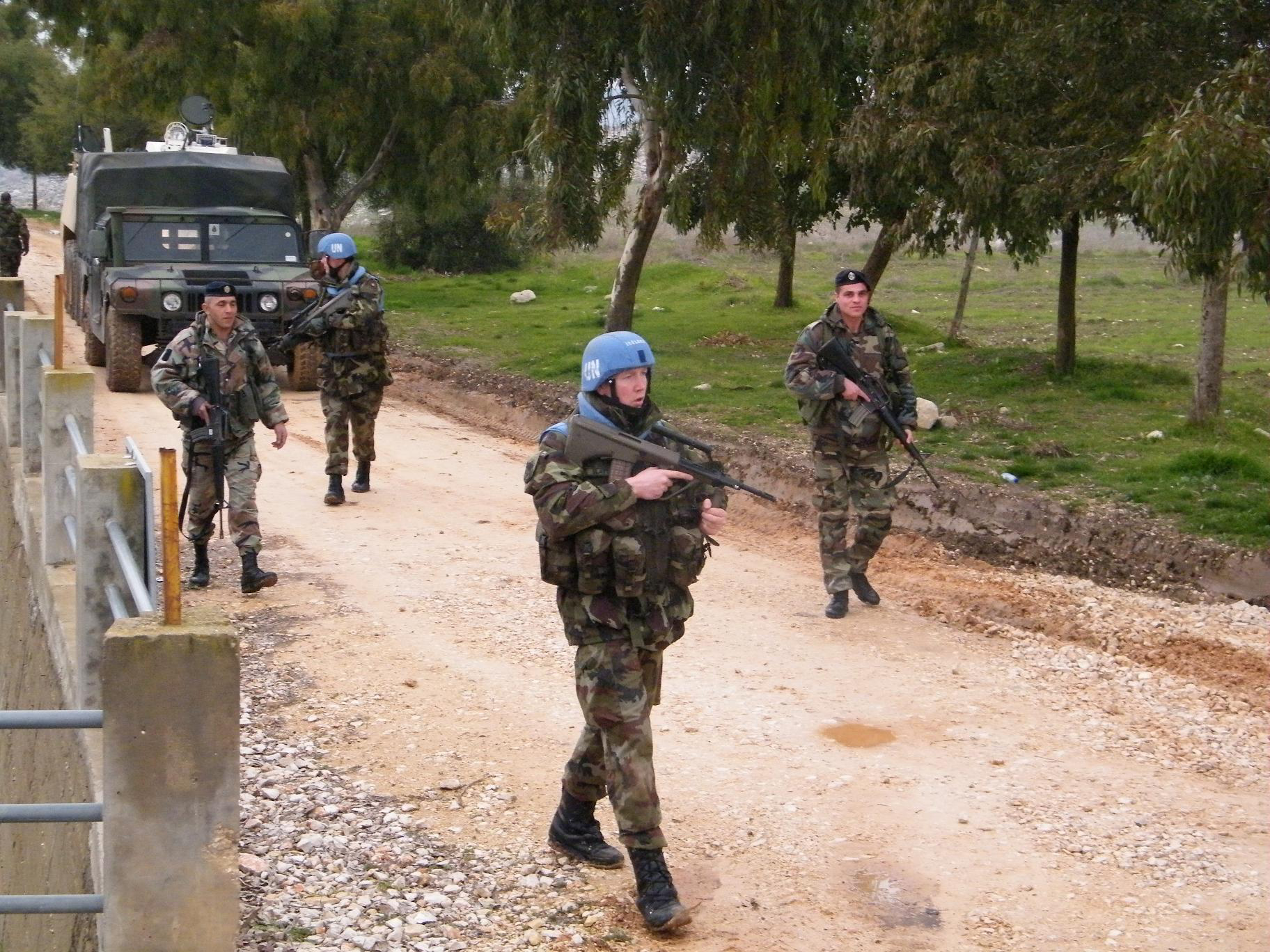
The 2024 structure created a template that US negotiators carried into 2026: Hezbollah’s non-signature could be treated as a technicality, a procedural absence that did not constitute opposition. The ceasefire held — for 15 months — without Hezbollah’s name on it. That was enough time for the template to harden into an assumption.
June 4, 2026 broke it. Qassem did not stay silent. He did not allow Berri to negotiate on his behalf. He spoke publicly, in his own name, and used the word “surrender.” The shift is not from one diplomatic posture to another. It is from acquiescence to named, vocal rejection. The United States can no longer argue that Hezbollah’s absence from the text is the same as Hezbollah’s acquiescence to its terms.
How Does Araghchi’s “All Fronts” Doctrine Work After June 4?
It now has a factual predicate it previously lacked. Araghchi’s June 1 framework — any ceasefire violation on one front violates all fronts — required Lebanon to be demonstrably unresolved. Qassem’s public rejection on June 4 supplied it.
The doctrine had a structural weakness before June 4: if Hezbollah quietly accepted a ceasefire — or if its silence could be construed as acceptance — the “all fronts” condition would have been satisfied on the Lebanon front. Washington would have had grounds to argue that the condition was met, and that Iran’s last stated objection to the MOU had been addressed.
That escape hatch required Hezbollah to remain ambiguous. Qassem closed it.
On June 4, Araghchi told Al Mayadeen TV that “no tangible progress has been achieved in the negotiation process.” The outlet choice is the message: Al Mayadeen is the pro-Hezbollah Lebanese channel, not a Western wire service. Araghchi was speaking to Dahieh as much as to Foggy Bottom. He also warned that any Israeli attack on Beirut would trigger a “full-scale resumption” of the US-Iran conflict — elevating Lebanon from a negotiating condition to a casus belli.
The sequencing across June 1 and June 4 is precise. Araghchi’s doctrine created the framework. Qassem’s rejection supplied the factual predicate. Iran did not need to reject the MOU over Lebanon — Hezbollah’s rejection did it for them, while keeping Tehran’s hands formally clean for any future reopening of talks.
This is not a diplomatic tactic that can be countered with a better offer. It is the IRGC’s internal political grammar. Araghchi’s “all fronts” doctrine could only remain coherent inside the Revolutionary Guard command structure if Lebanon was demonstrably unresolved. A quiet non-signature — the 2024 model — would have been insufficient. It could be interpreted, negotiated around, cited as evidence of incremental progress.
A public rejection by Hezbollah’s secretary-general, using the word “surrender,” using the phrase “annihilate part of the Lebanese people,” leaves no interpretive room. The IRGC did not just need Hezbollah to say no. It needed Hezbollah to say no loudly enough that no US diplomat could pretend it hadn’t.
Three Command Nodes, One Lebanon Condition
By June 4, three distinct institutional nodes of Iran’s command structure had independently locked Lebanon as a blocking precondition for any agreement with the United States.
The operational node: Qaani and the Quds Force. His demand for pre-February 28 withdrawal lines is a military position. It refers to physical territory, IDF deployments, and operational realities on the ground in southern Lebanon. It cannot be negotiated away in a text exchange between couriers. Katz’s statement that Israeli military operations would continue regardless of the ceasefire makes Qaani’s condition impossible to satisfy on the current trajectory.
The legislative node: Parliament Speaker Ghalibaf. In April, he declared negotiations with the US “unreasonable” while the Israel-Hezbollah conflict continued. Lebanon was a precondition, not a subject for parallel discussion. He cited three violations of Iran’s 10-point framework and stated the position through the Times of Israel, Naharnet, and Tribune India — a spread of outlets that ensured the statement could not be dismissed as posturing for a domestic audience.
The diplomatic node: Araghchi at the Foreign Ministry. His June 1 “all fronts” doctrine and June 4 “no tangible progress” assessment bracket the ceasefire announcement. His warning about “full-scale resumption” in the event of an Israeli strike on Beirut elevates Lebanon from a condition to a trigger — a distinction with operational consequences.

Three separate institutional voices — military, legislative, diplomatic — each articulating the same condition on different grounds, through different outlets, for different audiences. This is not a unified talking point distributed from a single authority. It is multi-node consensus built from independent institutional positions, which makes it harder to reverse than a top-down directive. No single Iranian official can walk it back without contradicting the other two. And none of the three has an institutional incentive to do so.
CSIS assessed the ceasefire as “less a resolution than a pause in a conflict whose underlying drivers remain not only intact but intensified.” That language was written about the June 4 deal’s terms. After Qassem’s rejection and the alignment of three IRGC command nodes against it, the same assessment applies to the MOU itself.
Did the United States Lose Its Last Ambiguity on Lebanon?
Yes. Washington’s MOU strategy relied on treating Hezbollah’s non-signature as non-objection — the 2024 template. That required Hezbollah to remain silent or ambiguous. Qassem’s public rejection using the word “surrender” eliminated the interpretive space the US needed to argue that the Lebanon condition was being addressed.
The strategy rested on a specific assumption: that Hezbollah could be handled the way it was handled in November 2024. Exclude it from the table, negotiate with the Lebanese government, treat non-signature as non-objection, and present the result as a resolved front. The MOU text Iran was already preparing to formally reject did not require Hezbollah’s explicit consent. It required only that Lebanon not be demonstrably on fire when the MOU was signed.
That assumption had already eroded before June 4. The 2024 ceasefire collapsed. Israel expanded operations across the Litani. Hezbollah resumed strikes. But the formal structure — Hezbollah’s procedural absence from negotiations — remained intact. As long as Hezbollah did not explicitly reject a deal, the US could maintain that the Lebanon condition was being addressed, however imperfectly.
Trump’s June 4 claim that Hezbollah “did not reject” the ceasefire reveals how dependent the US position had become on this ambiguity. The statement came after Qassem’s public rejection had been broadcast across Arabic and English-language media. It was not a misreading of the situation. It was an attempt to preserve the interpretive space that Qassem had just eliminated — to maintain, for at least one more news cycle, the fiction that Lebanon remained a solvable variable rather than a structural block.
The ceasefire text itself made the ambiguity difficult to sustain even before Qassem spoke. It required Hezbollah to withdraw from territory while offering no IDF withdrawal timetable. It established “pilot zones” with no boundary definitions, no monitoring mechanism, and no timeline. It named Hezbollah as the party required to act while excluding it from the table where the terms were set. Every structural feature of the deal was designed to produce exactly the rejection it received.
Whether Washington expected Qassem to reject the deal publicly — and built the ceasefire as a demonstration of Hezbollah’s intransigence rather than a genuine attempt at resolution — is a question the available evidence cannot answer. What the evidence does show is that the gap between Washington’s stated negotiating position and the conditions required for progress has widened with each iteration. The June 4 ceasefire is the third US-brokered framework Hezbollah has been asked to accept since February 28. Each has demanded more while offering less.
What Can Saudi Arabia Do With No Seat at Any Table?
Nothing that changes the trajectory. Saudi Arabia holds no position on any of the three active negotiating tracks, has no bilateral channel to Hezbollah or any Lebanese faction, and its Foreign Ministry’s response to the June 4 ceasefire was a pro forma SPA statement that did not mention the rejection or its MOU implications.
The three tracks are the US-Iran direct channel (now frozen), the Oman back-channel (which produced the late-May courier exchanges), and the UK-France Northwood maritime coalition managing Hormuz. FM Faisal bin Farhan broke 14 days of silence on June 2-4 with six contacts — none of which included Washington or Tehran.
The SPA statement welcomed the ceasefire announcement without addressing the rejection, the MOU implications, Araghchi’s “all fronts” doctrine, or Qaani’s pre-February 28 withdrawal demand. Faisal’s last substantive war-related public statement was at the EU Gymnich meeting in Cyprus on May 20 — 15 days before Qassem spoke.
The only documented Saudi engagement with the Lebanon situation after June 4 came via Pakistan. Foreign Minister Ishaq Dar called Faisal to “discuss Lebanon ceasefire violations” — a conversation initiated by Islamabad, not Riyadh. France carries the Hormuz message Saudi Arabia cannot send; Pakistan, it appears, carries the Lebanon message Saudi Arabia will not initiate. On June 5, Lebanese President Aoun provided Riyadh with a third message it could not send itself — accusing Iran on CNN of using Lebanon as a bargaining chip, from the Baabda Palace, in terms no Gulf foreign ministry could have deployed without triggering the sectarian framing Tehran deploys to absorb such accusations.
The fiscal pressure behind Saudi silence is not abstract. Brent crude sat at $95.25 on June 5, against a Saudi fiscal breakeven of $108-111 per barrel — a gap of $13-16 per barrel that translates to roughly $100 million per day in foregone revenue at current production levels. The Q1 2026 budget deficit reached SAR 125.7 billion, or 76 percent of the full-year target in three months. Military spending hit SAR 64.7 billion in Q1, up 26 percent year-on-year. Peace costs more than war for Saudi Arabia in the narrow fiscal sense — the war premium sustaining Brent above $90 collapses if Hormuz normalizes, but so does the revenue shortfall if it doesn’t.
Aramco’s $21.89 billion quarterly dividend — payable June 9 — exceeds its $18.6 billion Q1 free cash flow for the first time since 2020-21. The IMF’s June 3 Article IV consultation made Saudi recovery explicitly “contingent on Hormuz normalising.” The IMF conditionality, the dividend overshoot, and the expected formal MOU rejection all converge on the same date. Saudi Arabia has no lever to move any of them.
The June 9 Convergence
Four days separate Qassem’s rejection from the date on which the Iranian formal MOU rejection is expected. That window is not empty — the June 7 OPEC+ meeting sits inside it, the first since the UAE exit reduced the group to seven core members — but the trajectory is now fixed.
Iran suspended MOU text exchanges on June 1, following Israeli operations in Lebanon. The suspension was a freeze, not a formal rejection. Reuters reported on June 2 that Iran was “preparing to decline” — language harder than suspension, softer than the rejection Qassem just demonstrated is coming. The 72-hour courier window that would have allowed Mojtaba Khamenei to respond to Trump’s amended text has elapsed. Eight of the Supreme Leader’s ten stated conditions for any agreement with Washington have been violated by the unamended draft, according to Khanalizadeh’s analysis in Iran International.
Hezbollah’s June 4 rejection does not cause the June 9 formal rejection. It makes it structurally impossible for Iran to avoid. Even if the Oman channel produced a last-minute compromise — and there is no evidence it is active — Araghchi’s “all fronts” doctrine now has a factual basis that did not exist on June 3. Lebanon is not resolved. Hezbollah said so, publicly, by name. Iran cannot sign an MOU whose foundational condition — a ceasefire on all fronts — has been contradicted by its own proxy’s secretary-general on international television.
The convergence on June 9 now includes: Iran’s formal MOU rejection, removing the last diplomatic framework for Hormuz normalization. Aramco’s $21.89 billion dividend payment, exceeding quarterly free cash flow by $3.29 billion. The IMF’s Article IV recovery conditionality, which links Saudi fiscal stabilization to a Hormuz outcome that no party is now negotiating. And the IAEA’s 102nd day without access to Iranian nuclear facilities, with 440.9 kilograms of 60 percent enriched HEU unverified since February 28. The IAEA’s first wartime report, released June 5, confirmed it still cannot verify Iran’s nuclear stockpile after 97 days of monitoring blackout — eliminating the verification baseline that Phase 2 nuclear talks would require.
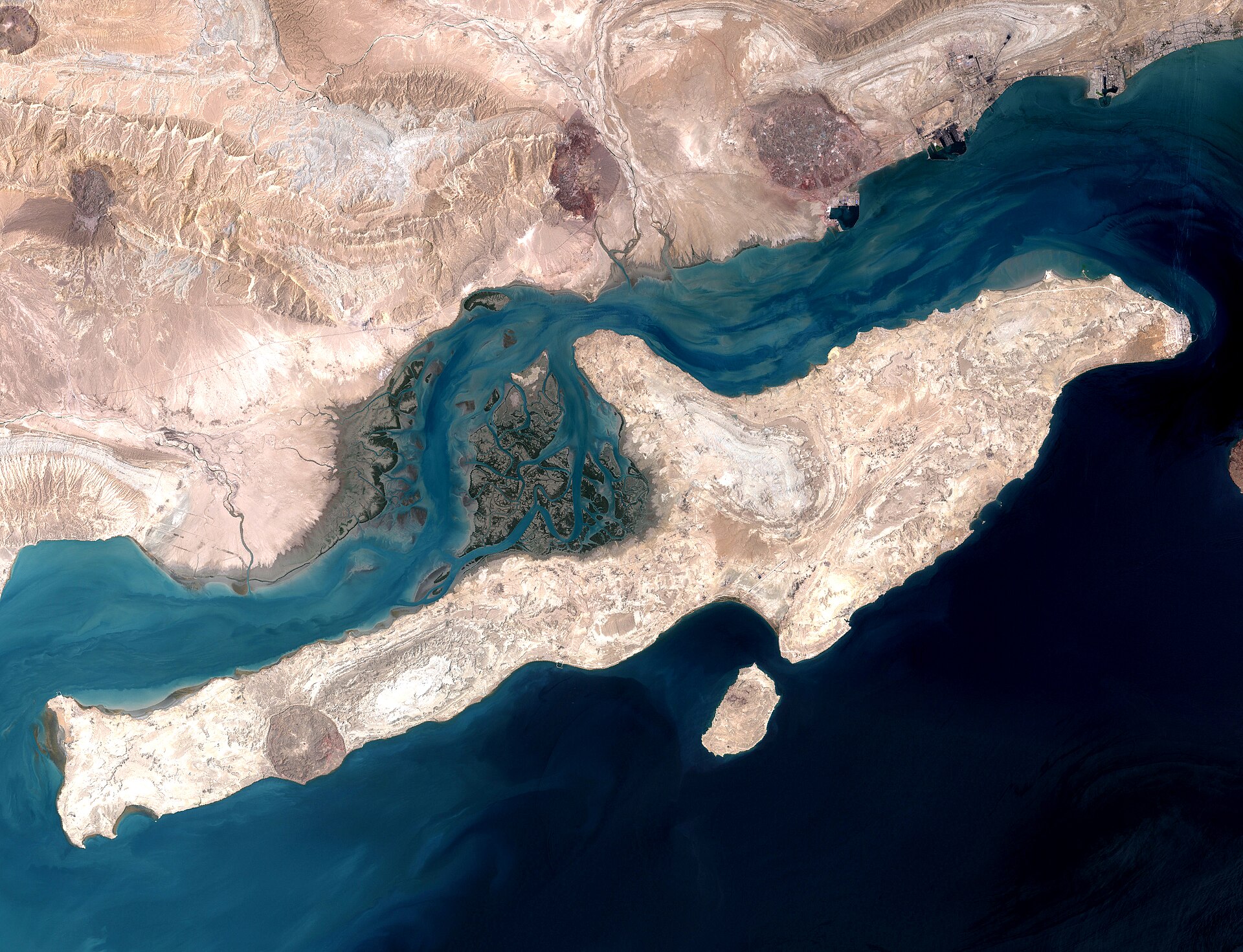
Saudi Arabia’s position on June 9 is the same as its position on June 4 — spectator to a process it cannot influence, paying the costs of a conflict it did not enter, unable to price either its continuation or its resolution. The difference is that on June 3, there was still a theoretical path through the MOU to Hormuz normalization. On June 4, Qassem closed it. He used the word Araghchi needed. And he said it where Qaani could hear.
Frequently Asked Questions
Could Pakistan broker a compromise between Iran and the US on the Lebanon condition?
Pakistan has served as a courier between Washington and Tehran on the MOU — Islamabad replaced Oman as the primary intermediary after Foreign Minister Dar’s April shuttle diplomacy. But Pakistan’s structural limitation is that it has no bilateral channel to Hezbollah or any Lebanese faction. Dar’s June 4 call to Faisal discussed “ceasefire violations” but Pakistan was not party to the original November 2024 ceasefire negotiations, was not among the five monitoring countries (US, France, UK, Italy, Germany), and its courier role to Tehran does not extend to Qassem’s command structure in Dahieh. The Islamabad track that produced the April Pakistan-brokered ceasefire attempt reached Araghchi and Vahidi but never engaged Qaani or Qassem directly. As long as Lebanon remains a Quds Force operational condition — not just a Foreign Ministry diplomatic one — Pakistan’s channel does not reach the decision-maker whose position must change.
Has Hezbollah publicly rejected a US-brokered ceasefire before?
In the 2006 war, Hezbollah initially resisted UNSC Resolution 1701 before accepting it after 34 days of conflict and heavy Israeli bombardment of Beirut’s southern suburbs. In November 2024, Hezbollah neither formally accepted nor formally rejected the US-brokered ceasefire — Qassem approved it tacitly through Speaker Berri’s negotiations, and the group’s non-signature was treated as procedural rather than substantive. June 4, 2026 is the first occasion on which a Hezbollah secretary-general has explicitly, publicly, and by name rejected a US-brokered ceasefire, using the word “surrender” in the rejection statement and describing the deal as a plan to “annihilate” Lebanese people. The escalation from tacit acquiescence (2024) to public maximalist rejection (2026) is not a change in degree. It is a change in kind that eliminates the interpretive ambiguity the 2024 model relied on.
What happens to the PGSA toll if the MOU formally dies on June 9?
The Persian Gulf Security Arrangement — Iran’s framework for regulating commercial transit through the Strait of Hormuz — imposes approximately $2 million per VLCC transit. Saudi Arabia has been quietly paying this toll for 81 days as of June 4. Iran’s Phase 1 negotiating position sequences Hormuz normalization (including PGSA dissolution or modification) before Phase 2 nuclear talks. If the MOU is formally rejected on June 9, Phase 1 never initiates, and there is no negotiating framework in which PGSA terms can be discussed. The toll becomes Iran’s indefinite revenue extraction mechanism from Gulf shipping — an ongoing charge with no expiration, no negotiating forum, and no party empowered to demand its removal.
Why did Araghchi choose Al Mayadeen for his June 4 statement?
Araghchi’s choice of Al Mayadeen TV — the Beirut-based, pro-Hezbollah satellite channel founded by Ghassan Ben Jeddou in 2012 — for his “no tangible progress” statement on June 4 was a deliberate audience selection. Al Mayadeen’s viewership is concentrated among Hezbollah’s support base in Lebanon, Shia communities in Iraq and Bahrain, and the broader “axis of resistance” media ecosystem. By delivering the message through Al Mayadeen rather than IRNA, Press TV, or a Western outlet, Araghchi signaled to Hezbollah’s constituency that Iran’s diplomatic assessment and Qassem’s operational rejection were aligned. Iranian officials have used Al Mayadeen for similar audience-targeted messaging before — Araghchi gave the channel an extended interview during the April 2026 ceasefire talks. The practice mirrors Qaani’s use of Tasnim rather than IRNA: the outlet is the first line of the message.
What is Saudi Arabia’s legal exposure if the June 9 convergence occurs as projected?
Saudi Arabia faces no direct legal exposure from the MOU’s collapse — it is not a party to the agreement. Its exposure is fiscal and institutional. The IMF’s Article IV conditionality — recovery “contingent on Hormuz normalising” — does not carry enforcement mechanisms but affects sovereign credit assessments, bond pricing, and institutional investor confidence. Saudi Arabia’s National Debt Management Center has accessed approximately 90 percent of its authorized borrowing capacity. The combination of a dividend that exceeds cash generation, an IMF assessment that conditions recovery on an outcome no one is negotiating, and a military budget growing at 26 percent year-on-year creates a fiscal trajectory that rating agencies will review at the next scheduled assessment, regardless of what happens in Beirut or Vienna.