DHAHRAN — Brent crude fell as much as 6.2 per cent on Monday, touching $97.10 a barrel — its first break below $100 this month — after President Donald Trump declared a memorandum of understanding to reopen the Strait of Hormuz had been “largely negotiated.” West Texas Intermediate tracked the move, trading near $91.76. The sell-off, from Friday’s close of $103.94, came as three senior Iranian officials — parliamentary speaker Mohammad Bagher Ghalibaf, Foreign Minister Abbas Araghchi, and Central Bank Governor Abdolnaser Hemmati — arrived in Doha for what multiple outlets described as advanced-stage deal negotiations.
For Saudi Arabia, the price signal lands on a fiscal position already in severe distress. The kingdom ran a $33.5 billion deficit in the first quarter of 2026 — the largest quarterly shortfall ever recorded by the Ministry of Finance — while Brent averaged above $107. The breakeven price embedded in the government’s budget assumes production volumes Saudi Arabia has not achieved since Iran closed Hormuz on March 31. At 6.879 million barrels per day, roughly 31 per cent below pre-war output, each dollar of Brent decline strips approximately $2.5 billion from annualised revenue.
Goldman Sachs projected a full-year Saudi deficit of $80 to $90 billion when prices were above $100. Brent is no longer above $100. At $91 on May 29, Saudi Arabia’s fiscal gap has widened to $17–20 per barrel — and a signed Iran deal returning Brent to the $65–80 range would triple the deficit without restoring the export volumes needed to compensate for lower unit revenue.
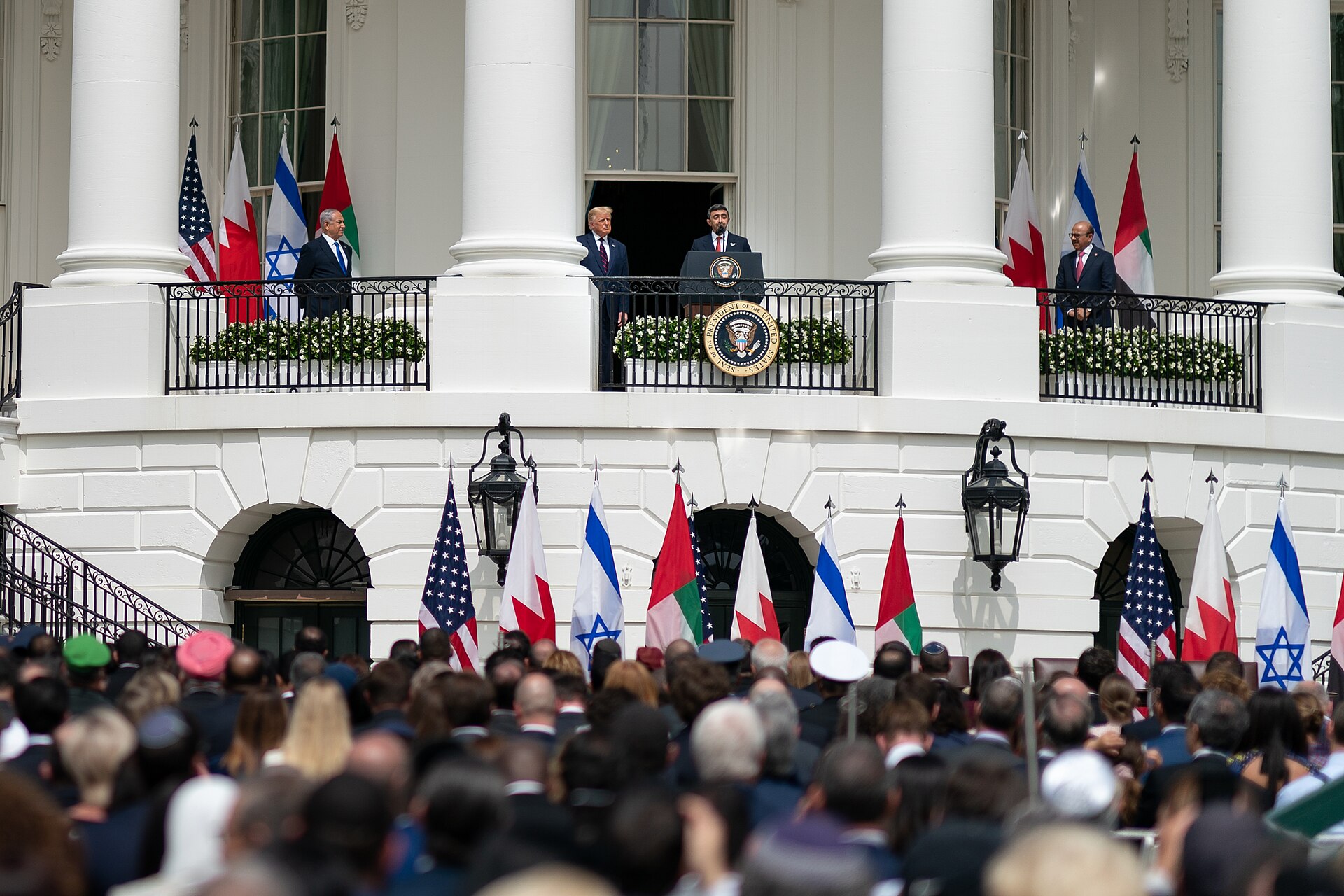
The fiscal exposure deepened further when Trump conditioned the Iran deal on Saudi Arabia joining the Abraham Accords — a demand that made the kingdom the closing cost of a negotiation it was never invited to join.
Table of Contents
The Session
Monday’s intraday low of $97.10 represented a $6.84 drop from Friday’s settlement — the sharpest single-session move in weeks. Oil had been softening from its $117 April peak as ceasefire speculation built, but the trajectory had been gradual: $112 to $104 over the preceding two weeks, tracking incremental deal optimism after Aramco CEO Amin Nasser publicly set a mid-June reopening threshold on CNBC on May 11. Monday’s move was different in character — concentrated, front-loaded, driven by a presidential statement the market read as confirmatory.
Trump’s signal came via Truth Social late Friday: the deal was “largely negotiated, subject to finalization.” By Monday, he had recalibrated. “I’m not going to rush into it,” he told reporters. “It isn’t even fully negotiated yet. It could take several days.”
The Middle East briefing 3,000+ readers start their day with.
One email. Every weekday morning. Free.
Secretary of State Marco Rubio, speaking from India, called the framework “still a work in progress.” Iran’s Foreign Ministry said Tehran “could not necessarily say an agreement was close.” NBC News, citing Iranian officials, reported no deal was “imminent” despite progress.
The market moved on the opening signal and did not wait for the caveats. JPMorgan, in a note circulated Monday, projected Brent to average $97 per barrel through the rest of 2026 if Hormuz reopens by early June — a forecast now aligned with the spot price. Under that scenario, Saudi Arabia’s primary revenue stream would sit at or below breakeven for the remainder of the fiscal year.

What the IMF Breakeven Means at 6.879 Million Barrels a Day
The IMF’s central-government fiscal breakeven of $86.60 per barrel assumes Saudi Arabia pumps at or near its OPEC+ quota of 10.291 million barrels per day. Actual output in April was 6.879 million barrels per day — a 3.412-million-barrel-per-day gap the kingdom cannot close while Hormuz remains obstructed and the East-West Pipeline’s Yanbu corridor operates at its 5-million-barrel-per-day ceiling. The breakeven was calculated for a country producing 50 per cent more oil than Saudi Arabia is currently shipping.
Saudi oil revenue in the first quarter totalled SAR 144.72 billion — down 3 per cent year-on-year despite Brent averaging above $107 — because the volume collapse offset the price premium. Military spending surged 26 per cent year-on-year to SAR 64.7 billion. The first-quarter deficit: SAR 125.7 billion ($33.5 billion), consuming 76 per cent of the full-year deficit target in 90 days.
| Metric | Value | Source |
|---|---|---|
| Brent intraday low, May 25 | $97.10/bbl | Bloomberg |
| Brent close, May 22 | $103.94/bbl | CNBC |
| Saudi Q1 2026 deficit | $33.5 billion | MoF |
| Q1 Brent average | ~$107+/bbl | Bloomberg |
| IMF breakeven (central govt, quota volumes) | $86.60/bbl | IMF |
| Bloomberg Economics breakeven (incl. PIF) | $108–111/bbl | Bloomberg Economics |
| Saudi actual production, April | 6.879 mbpd | OPEC / MoF |
| OPEC+ June quota | 10.291 mbpd | OPEC |
| Goldman Sachs projected full-year deficit | $80–90 billion | Goldman Sachs (Dec 2025) |
| JPMorgan Brent forecast (Hormuz reopens June) | ~$97/bbl avg | JPMorgan |
Goldman Sachs, in its December 2025 budget analysis, projected Saudi Arabia’s full-year deficit at 6.0 to 6.6 per cent of GDP — roughly double the government’s official 3.3 per cent target. Bloomberg Economics has calculated a separate breakeven that includes PIF’s spending commitments: $108 to $111 per barrel. By that measure, Saudi Arabia has not been above breakeven at any point during the conflict at current production volumes.
The Endorsement and the Price
On May 20, Saudi Foreign Minister Prince Faisal bin Farhan publicly praised Trump’s Iran diplomacy, expressing “high appreciation” for the president’s decision to “give diplomacy a chance” and citing the restoration of Hormuz freedom of navigation as a priority. Saudi Arabia had not merely accepted the deal framework — it had endorsed the negotiating process itself, five days after Trump quietly retreated from his demand that Iran surrender its highly enriched uranium stockpile.
Five days after Bin Farhan’s endorsement, that same diplomacy produced the sharpest oil price drop of the month.
A deal that reopens Hormuz returns crude flows to pre-war levels — the outcome Saudi Arabia publicly supports and the outcome that erodes Saudi revenue. The kingdom cannot oppose deal progress without contradicting its own foreign minister, and supporting it means accepting the price consequences. Compensating through higher output is not possible — production sits 3.4 million barrels per day below quota, constrained by geography and Iranian interdiction. The threat component did not ease on Arafah Day: IRGC spokesman Brigadier General Shekarchi warned on May 26 that Iran would strike targets “beyond the region” — language explicitly covering Saudi oil infrastructure — if Washington or Israel escalated. What Iran means by ‘beyond the region’ documents the full scope of that doctrine.
The bind extends beyond Monday’s session. If negotiations succeed — the outcome Bin Farhan endorsed — Hormuz reopens, production recovers toward quota, but Brent settles near JPMorgan’s $97 average through year-end. If negotiations stall, Brent may recover some of the week’s losses, but Saudi production remains pipeline-constrained and below quota.
Can OPEC+ Defend a Price Saudi Arabia Cannot Pump?
OPEC+’s Joint Ministerial Monitoring Committee meets on June 7. In normal market conditions, Saudi Arabia would have the option of signalling a voluntary production cut to support prices. Those conditions do not apply.
Saudi Arabia’s June quota stands at 10.291 million barrels per day. It is producing 6.879 million. The gap is not a policy choice — it is the physical consequence of Hormuz remaining closed to Saudi-flagged tankers. There is no cut to announce. Saudi Arabia is already producing below any plausible OPEC+ reduction scenario.
“The market will normalise only in 2027 if Hormuz does not open within a few weeks from today.”
— Amin Nasser, Aramco CEO, CNBC, May 11, 2026
If the Iran deal closes before June 7, the return of approximately 5 million barrels per day of Gulf crude to seaborne markets would create its own downward price pressure, independent of cartel policy. If the deal does not close, Saudi Arabia remains locked below quota with no mechanism to influence the benchmark. Nasser’s mid-June threshold — driven by tanker fleet repositioning lags and Asian refinery restocking cycles — is twelve days away.
Saudi Arabia’s Hormuz exposure goes beyond quota arithmetic: the 40-nation UK-France coalition now building the post-war governance framework for the strait excluded Riyadh from its command structure entirely, leaving the kingdom dependent on an architecture it had no hand in designing.
Parallel to the deal negotiations, the IRGC reported 33 vessels transited Hormuz in the 24 hours ending Monday morning under Persian Gulf Shipping Authority authorisation, up from 25 the prior day. The toll architecture — which charges approximately $2 million per VLCC transit while exempting Russian, Chinese, Indian, Iraqi, and Pakistani vessels — is normalising as permanent infrastructure regardless of whether any memorandum is signed.

Aramco, Dividends, and the PIF Pipeline
Aramco reported first-quarter net profit of $32.5 billion, up 25 per cent year-on-year — a headline driven by the Brent premium, not by volume growth. The base dividend remains $21.9 billion per quarter, paid predominantly to the government and the Public Investment Fund, which together hold approximately 98 per cent of shares. In 2024, Aramco distributed $124 billion in total dividends, up from $98 billion the prior year.
At $97 Brent and current production levels, the sustainability of that payout comes under direct pressure. AGSI analysts concluded earlier this year that Aramco was “unlikely to be able to sustain its current dividend payout absent a strong rebound in oil revenue.” Monday’s session moved the rebound further away.
The downstream effects run through PIF’s $70-billion-per-year domestic investment target, which depends on Aramco dividends, sovereign transfers, and debt issuance. PIF raised $7 billion in bonds last week at spreads that priced in effective sovereign guarantee — a signal that the fund’s $15 billion in cash, against over $900 billion in assets under management, cannot independently sustain its capital programme. Saudi construction awards have already contracted from $71 billion to $30 billion in the current fiscal environment. First-quarter GDP showed private non-oil growth of just 0.2 per cent.
The fiscal architecture is circular: Aramco revenue funds PIF transfers and government spending; PIF funds Vision 2030 projects designed to reduce dependence on Aramco revenue. The revenue problem is not limited to price: Chinese nominations for Saudi crude fell to roughly 600,000 b/d in June — half of April levels — while India, Japan, and South Korea each cut loadings 30-35 per cent as Aramco’s war-era pricing exposed the kingdom to Asian buyer substitution it cannot reverse through the East-West Pipeline alone.
Background
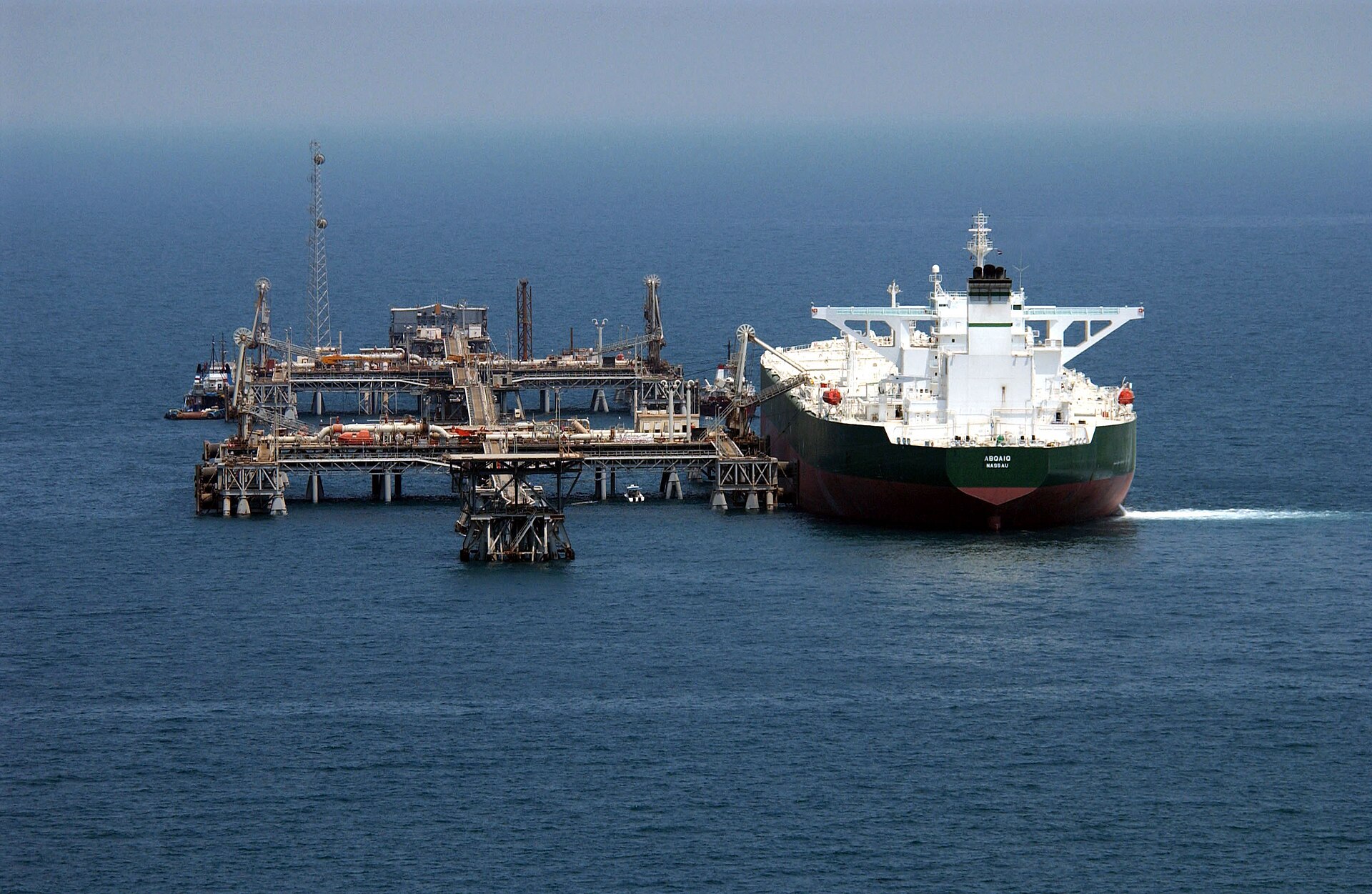
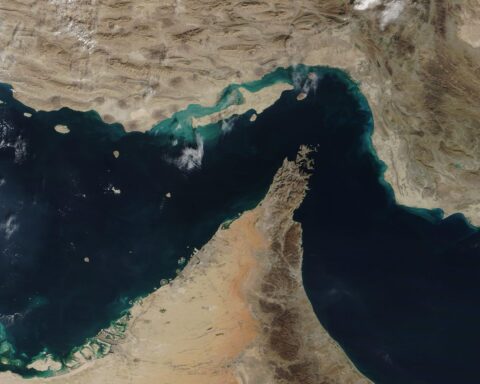
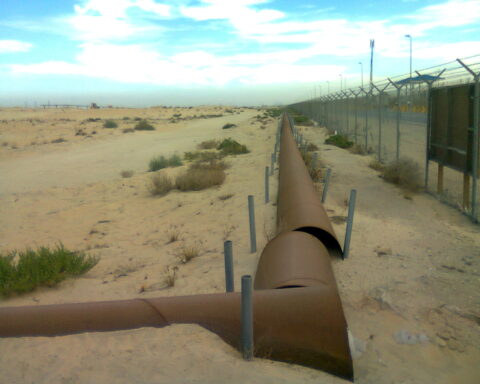
Iran closed the Strait of Hormuz on March 31, 2026, in response to US-led naval operations in the Persian Gulf. The closure halted an estimated 8 million barrels per day of crude and 2 million barrels per day of condensate and natural gas liquids from countries dependent on the corridor — Saudi Arabia, the UAE, Iraq, and Kuwait among them. Saudi Arabia rerouted exports through its East-West Pipeline to Yanbu on the Red Sea, but the corridor’s 5-million-barrel-per-day capacity created a hard ceiling on output.
Negotiations between the United States and Iran have proceeded through multiple rounds since April, most recently through Pakistani and Qatari mediation. A memorandum of understanding covering ceasefire terms, Hormuz freedom of navigation, and a separate track for nuclear discussions has been circulated in at least three versions but remains unsigned. Iran’s parliamentary speaker, foreign minister, and central bank governor were in Doha as of Monday.
Hajj pilgrimage rites are underway — Arafah Day falls on May 26, Eid al-Adha on May 27 — historically a period of reduced regional escalation risk. The 2015–2016 oil price collapse offers a partial precedent. When Brent fell to roughly $27, Saudi Arabia recorded a $97.9 billion deficit — 15 per cent of GDP — and responded with 14 per cent spending cuts, $26 billion in borrowing, and planned bond issuance. That crisis was driven by price alone. The current pressure combines a falling price with a 3.4-million-barrel-per-day volume collapse — a simultaneous shock without modern precedent.
As of Monday, the Saudi Ministry of Foreign Affairs had not publicly commented on the deal framework, the PGSA toll regime, or the price decline. Bin Farhan’s May 20 remarks remain Riyadh’s most recent public position on the negotiations.
The fiscal pressure is compounded by a connectivity disruption that has no quick fix: KLM suspended Riyadh and Dammam flights through July 12 under an EASA conflict zone bulletin, extending a grounding that has kept European carriers out of Saudi Arabia since the Iran war shut Gulf airspace in March 2026.

Frequently Asked Questions
What is the PGSA toll structure, and which countries are exempt?
The Persian Gulf Shipping Authority, established by the IRGC on May 5, charges approximately $2 million per VLCC transit through a combination of cryptocurrency and yuan-denominated payments. Russia, China, India, Iraq, and Pakistan are exempt — a list that maps onto the countries that voted against or abstained from the April 7 UN Security Council resolution on Hormuz freedom of navigation. The exemption structure creates a two-tier pricing regime that gives Iran’s political allies preferential access while Gulf Arab exporters and Western-flagged shipping bear the full cost.
How does the UAE’s fiscal position compare to Saudi Arabia’s under $97 oil?
The UAE’s fiscal breakeven is estimated at $50 to $55 per barrel — roughly half Saudi Arabia’s central-government figure and well below Monday’s Brent price. UAE GDP grew 5 per cent in the most recent quarter. Abu Dhabi’s position has been further strengthened by its exit from OPEC on May 1, freeing ADNOC to produce toward its 4.85-million-barrel-per-day capacity without quota constraints. Two Gulf neighbours, the same oil price, fundamentally different fiscal exposures.
What happens to oil prices if Hormuz reopens in early June?
ADNOC CEO Sultan Al Jaber has placed full market normalisation no earlier than the first quarter of 2027 even under immediate resolution — more pessimistic than Nasser’s “only in 2027” framing. The reason is structural: over 600 vessels have been displaced from normal trade routes, and the return of approximately 5 million barrels per day of Gulf crude to seaborne markets creates a short-term oversupply pulse before Asian refinery restocking cycles absorb the surplus. JPMorgan, working from a more optimistic early-June reopening scenario, projects Brent to average $97 per barrel through year-end — a figure that is now also the spot price.
Could Saudi Arabia cut Aramco’s dividend to preserve fiscal space?
Aramco’s base dividend is structurally distinct from its performance-linked distributions. The base payout has been treated as inviolable since the 2019 IPO — a commitment made explicit during the listing to attract sovereign wealth investors. Cutting it would likely trigger a re-rating of Aramco’s equity, which trades at a valuation premium partly justified by dividend predictability, and would directly reduce capital available to PIF. Aramco has already reduced its performance-linked guidance; the base rate has not moved. A further dimension of the fiscal pressure emerged on May 25: Iran’s parliament speaker arrived in Doha with a $12 billion frozen-assets demand, establishing a financial precondition that — if met — would redirect liquidity that Qatar’s own banks currently hold under OFAC supervision, adding a Gulf-intermediary financial channel to the pressure Saudi Arabia cannot control.
That precondition went unresolved: Iran’s delegation left Doha on May 26 without signing any agreement, with Brent bouncing back above $100 as deal optimism faded — the departure and its market implications are covered in Iran Left Doha Without Signing. On Eid al-Adha, Trump told his Cabinet he does not care about the US midterms — removing the one deadline Iran’s negotiators believed was compressing Washington into concessions, and extending the deadlock that Saudi Arabia’s balance sheet cannot absorb indefinitely. Trump’s statement and its fiscal implications for Riyadh are documented here.
The oil-price optimism that briefly pulled Brent below $100 reversed course when Trump announced on May 27 that there would be “no sanctions, no money, no nothing” in any Iran deal — eliminating the relief mechanism Saudi Arabia’s fiscal model was counting on. The structural consequences for Riyadh are documented here.
The structural permanence of that fiscal trap was underlined on May 27, when Ali Akbar Velayati — Senior Adviser to Supreme Leader Mojtaba Khamenei — declared the Strait of Hormuz the “real guarantor” of any nuclear deal, converting what Saudi Arabia’s fiscal model required to be a transitional squeeze into a permanent feature of the post-war architecture. The full analysis of Velayati’s framing and its implications for the kingdom’s balance sheet is here.