
US Names Iran’s Maham-3 and Maham-7 Mines in Hormuz as Clearance Operation Begins
WASHINGTON — US intelligence and CENTCOM have publicly identified two specific Iranian mine variants — the Maham-3 moored influence mine and the Maham-7 seabed bottom mine — deployed in the Strait of Hormuz, marking the first time Washington has attached designations to the underwater threat that has choked global shipping since late February. On April 11, USS Frank E. Petersen Jr. (DDG 121) and USS Michael Murphy (DDG 112) transited the strait, the first American warships to do so since Operation Epic Fury began on February 28, as a mine-clearance campaign using MH-60S helicopters and unmanned underwater vehicles entered its active phase.
The shift from generic warnings about Iranian mines to named hardware with known specifications changes the operational picture in measurable ways. The Maham-7, a copy of the Italian SEI S.p.A. Manta mine first exhibited in 2015, carries a hull geometry engineered to scatter incoming sonar — the primary detection method used by every US clearance system now operating in the strait. Analysts tracking the operation have revised the clearance timeline from the original 51-day benchmark, drawn from the 1991 Kuwait experience, to 60–90 days for 50 percent throughput restoration, and that estimate assumes Iran stops laying mines, which US officials say has not happened.
Table of Contents
What Are the Maham-3 and Maham-7?
US intelligence assessed “at least a dozen” Maham-3 and Maham-7 mines in the strait as of March 23, according to CBS News, which cited one official describing “fewer than a dozen” — a discrepancy that reflects genuine uncertainty about what sits on the seabed rather than conflicting sources. CENTCOM confirmed the variant names publicly for the first time on that date, according to Defense News and CBS News reporting. Gen. Dan Caine, Chairman of the Joint Chiefs, told CBS News that US forces had “hunted and killed” more than 120 Iranian vessels and 44 mine-laying craft since the conflict began.
The Maham-3 is a moored influence mine: 383 kilograms total weight, carrying a 120-kilogram warhead, measuring 0.8 meters in diameter and 1.324 meters in height, according to naval analyst H.I. Sutton’s Covert Shores database. It uses low-frequency acoustic sensors as its primary trigger, with optional directional acoustic and magnetic fusing, and operates at depths up to 100 meters. The Maham-7 is smaller at 220 kilograms but more technically sophisticated — a seabed bottom mine deployable from surface vessels or helicopters at depths between 10 and 300 feet, equipped with three acoustic/subsonic sensors and a three-axis magnetic array, according to the same Covert Shores database. Its provenance is traceable: Iran reverse-engineered the Italian SEI S.p.A. Manta multi-influence shallow-water mine, which Sutton and the Maritime Executive have documented as first appearing at Iranian defense exhibitions in 2015.
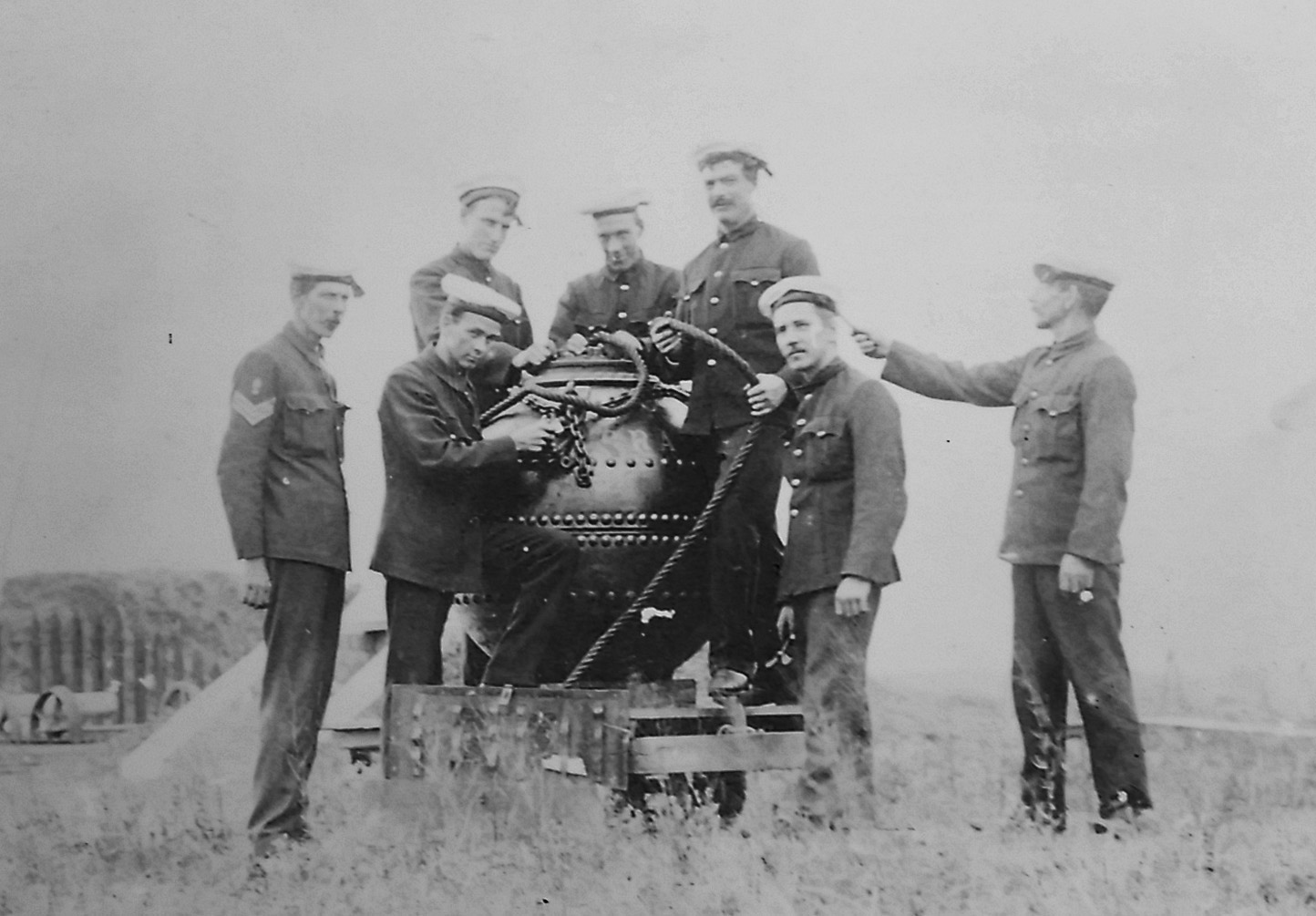
The distinction between these variants and the mines Iran has used historically is not academic. The M-08 contact mine that struck USS Samuel B. Roberts (FFG-58) on April 14, 1988, was a design dating to the First World War — a sphere with protruding horns that detonated on physical impact. It cost approximately $1,500. Repairs to the Roberts ran to $89.5 million. Contact mines can be swept with paravane wire cutters, a technique essentially unchanged since 1914.
The Maham-3 and Maham-7 are influence mines — they respond to the magnetic signature and acoustic noise of a passing vessel without requiring contact. Wire sweeping is useless against them. Each mine must be individually detected, classified, identified, and neutralized, a sequence the US Navy calls the DCIN pipeline.
The Middle East briefing 3,000+ readers start their day with.
One email. Every weekday morning. Free.
A 2019 Defense Intelligence Agency report estimated Iran’s total mine stockpile at 2,000 to 6,000 weapons. The number confirmed in Hormuz — roughly a dozen — represents a fraction of that inventory, but US officials told DefenseScoop on April 11 that Iran “cannot locate all the mines they placed and lack the capacity to remove them.” The mines are, in operational terms, orphaned ordnance that Iran itself cannot account for.
The April 11 Transit and Iran’s Denial
CENTCOM confirmed on April 11 that DDG 121 and DDG 112 transited the strait, with Admiral Brad Cooper, the CENTCOM commander, stating: “Today, we began the process of establishing a new passage, and we will share this safe pathway with the maritime industry soon to encourage the free flow of commerce.” The transit was the first by US warships since the conflict began 43 days earlier, a period during which daily vessel passages through the strait dropped from a pre-war average of 129 to fewer than 10, with more than 800 ships trapped and over 70 empty VLCCs idling off Singapore waiting for a corridor to open.
Iran responded on two tracks simultaneously. The Islamic Republic of Iran’s Khatam al-Anbiya Central Headquarters — the IRGC’s combined operations command — issued a formal denial that any transit had occurred: “The claim by the CENTCOM commander regarding the approach and entry of American vessels into the Strait of Hormuz is strongly denied,” Al Jazeera reported on April 11. Iran’s military spokesperson added that “the initiative for the passage and movement of any vessel is in the hands of the Armed Forces of the Islamic Republic of Iran.” At the same time, Al Jazeera reported that state media broadcast a radio recording in which IRGC operators demanded the USS Frank E. Petersen “change course and return to the Indian Ocean immediately,” warning the destroyer would “become a target” — a communication that implicitly confirmed the ship was where CENTCOM said it was.
The dual response — denial and threat issued within the same news cycle — fits a pattern. The IRGC Navy declared “full authority to manage the Strait” on April 5 and again on April 10, even as the Islamabad ceasefire talks were underway. The DDG transit directly challenged that claim. Maria Sultan of the South Asian Strategic Stability Institute told Al Jazeera on April 11: “If Iranians do not give a safe passage, it’s impossible for the American military fleet to move freely in the Strait of Hormuz.” The transit appears to have been precisely the kind of contested passage designed to test whether that assertion held.
Why These Mines Degrade the US Detection Pipeline
The mine-clearance operation now under way depends on a detection chain: sonar systems aboard unmanned underwater vehicles and helicopters scan the seabed, producing images that analysts use to distinguish mines from rocks, debris, and the seabed itself. The process relies on what John Femiani, a professor of computer science at Miami University who studies sonar imagery, described to The Conversation as “highlights paired with acoustic shadows” — the bright return from the mine’s surface and the dark shadow it casts on the seabed behind it. The Maham-7’s hull geometry was engineered to scatter incoming sonar waves rather than reflecting them cleanly, degrading both the highlight and the shadow that analysts need for classification.
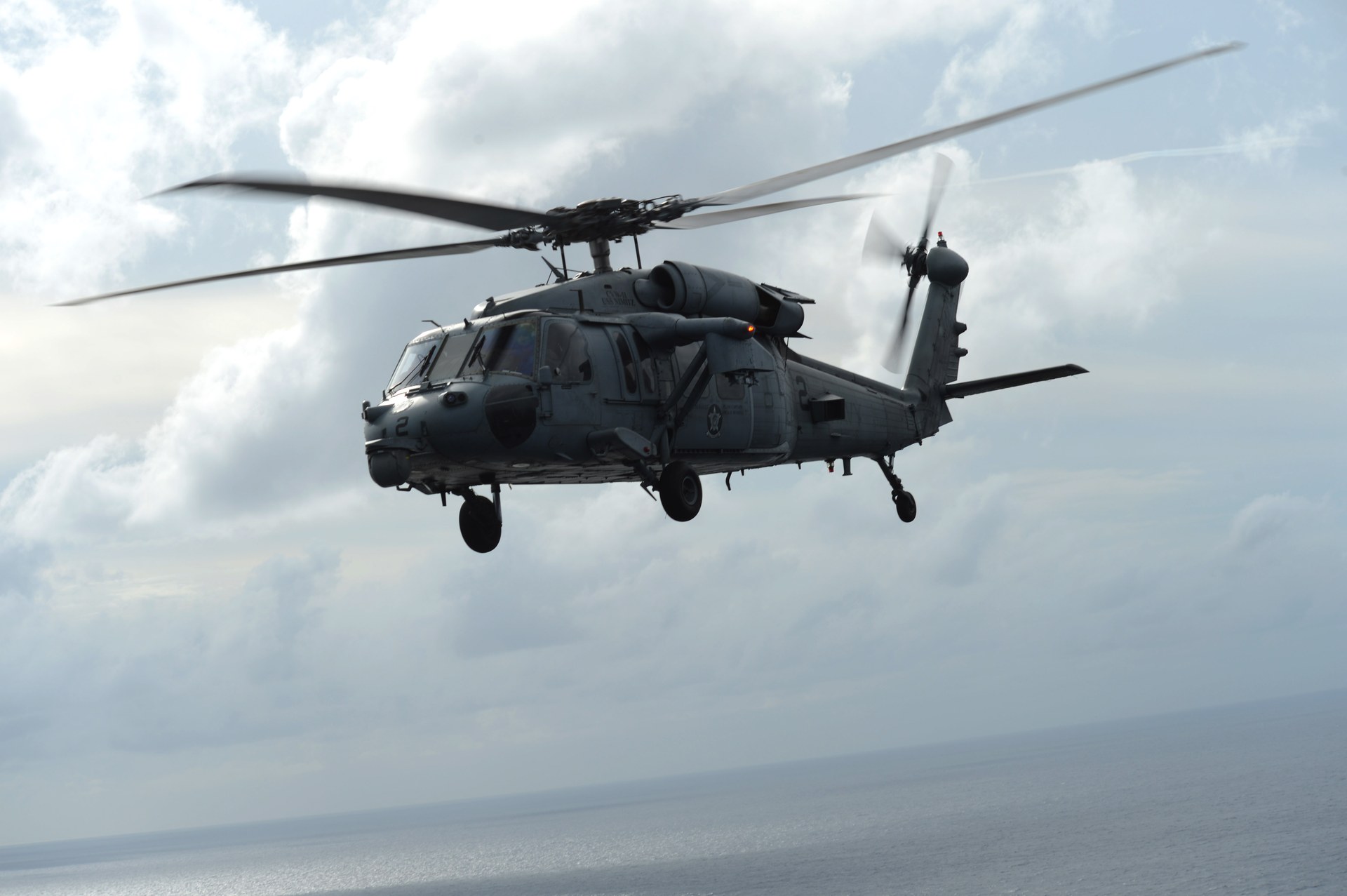
This is not a theoretical vulnerability. The Mk 18 family of UUVs and the MH-60S helicopter’s AN/ASQ-235 Airborne Mine Neutralization System are the primary detection and clearance tools CENTCOM has deployed to Hormuz, according to DefenseScoop and Army Recognition reporting from April 11. The AN/ASQ-235 lowers a torpedo-sized tube carrying expendable destructor vehicles — effective against moored or floating mines like the Maham-3, where the mine is suspended in the water column and presents a clear sonar target. Against a Maham-7 sitting on the seabed, designed specifically to confuse the sonar returns that the destructor operator needs to guide the vehicle, the system’s effectiveness is an open question in contested conditions.
The Knifefish UUV, built by General Dynamics and declared at initial operating capability in 2023, is also part of the deployed package, according to DefenseScoop. It was designed for launch from Littoral Combat Ships and specifically intended for mine detection in cluttered shallow-water environments. Its April 2026 deployment to Hormuz is its first use in a contested operational environment — previous employment was limited to exercises. Whether the Knifefish’s low-frequency broadband sonar can reliably classify a Maham-7 against the acoustic clutter of the Hormuz seabed has not been validated outside controlled settings.
The two destroyers that transited on April 11 carry the AN/SQQ-89 combat suite, which Army Recognition noted on April 11 is optimized for anti-submarine warfare, not mine detection. The “specialized high-definition sonar required for detailed seabed mapping” is absent from both hulls. The DDGs can escort and provide force protection for the MCM operation, but they cannot contribute to the mine-hunting itself.
MCM Assets and What Is Missing
CENTCOM has structured the clearance effort in three phases, according to Naval News: Phase 1, area securing; Phase 2, detailed survey with unmanned systems; and Phase 3, creation of a verified safe corridor that can be shared with commercial shipping — the “new passage” Admiral Cooper referenced. The operation is now in the overlap between Phase 1 and Phase 2, with UUVs conducting seabed sonar mapping while MH-60S helicopters provide both mine neutralization and surface coverage.
| System | Type | Primary Role | Limitation Against Maham-7 |
|---|---|---|---|
| MH-60S / AN/ASQ-235 | Helicopter / airborne neutralization | Moored and floating mine clearance | Destructor guidance depends on clean sonar return; Maham-7 hull scatters signal |
| Mk 18 Mod 2 Kingfish | UUV | Seabed sonar mapping and classification | Side-scan sonar degraded by Maham-7 geometry |
| Knifefish | UUV (General Dynamics) | Low-frequency broadband mine detection | First contested deployment; unvalidated in Hormuz conditions |
| DDG 121 / DDG 112 | Arleigh Burke-class destroyer | Force protection and escort | AN/SQQ-89 is ASW-optimized; no mine-detection sonar |
What the table does not show is what is absent. As previously reported, the US Navy decommissioned its four Avenger-class mine countermeasure ships from Bahrain in September 2025 — dedicated wooden-hulled MCM vessels with low magnetic signatures designed precisely for this mission. No replacements were in theater when the war began five months later. The Belgium-Netherlands rMCM program delivered advanced mine-clearing toolboxes in March 2026, according to the Foreign Policy Research Institute, but those systems have not been committed to Hormuz. Gen. Joseph Votel, the former CENTCOM commander, told the Maritime Executive that “a serious mining effort by Iran could really complicate and slow things down,” extending reopening timelines beyond what the Kuwait precedent suggested.
That revised 60-to-90-day estimate carries a conditional that makes the number almost academic: it assumes Iran stops laying new mines. White House spokesperson Anna Kelly told CBS News that “the Department of War has destroyed over 40 minelaying vessels,” and Gen. Caine put the figure at 44. But US officials have acknowledged that Iran continues mining operations, and a stockpile of 2,000 to 6,000 mines can absorb the loss of 44 delivery platforms without exhausting either inventory or improvised alternatives.
Britain’s Contribution and Its Limits
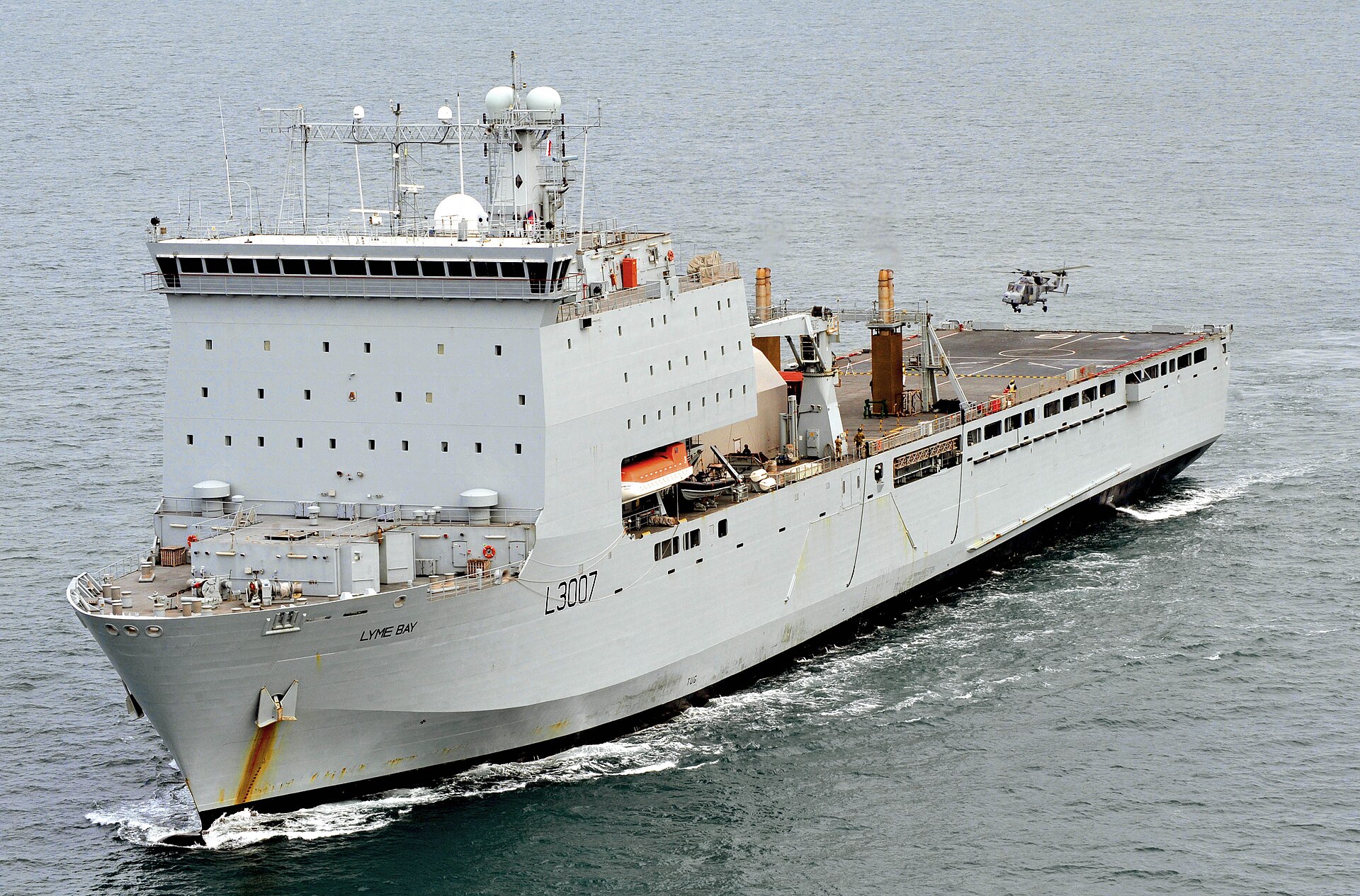
The Royal Navy is preparing RFA Lyme Bay, a 580-foot Bay-class landing ship dock, as a mothership for autonomous mine-clearing systems at Gibraltar, according to Anadolu Agency and Navy Lookout. Gen. Sir Gwyn Jenkins, the Vice Chief of the Defence Staff, stated that “the service is combining traditional seamanship with advanced autonomous technology to keep people safe and seas secure,” according to Army Recognition. The autonomous systems aboard would add detection capacity that the US package currently lacks — the kind of persistent, low-signature underwater survey vehicles that complement rather than duplicate the MH-60S and Knifefish capabilities.
The constraint is political rather than technical. RFA Lyme Bay will not deploy during active hostilities, according to reporting from Anadolu Agency. The ceasefire that took nominal effect on April 8 has not held cleanly — post-ceasefire Gulf intercepts included 28 drones over Kuwait and 31 missiles plus 6 additional strikes on Bahrain, and Iran’s own statements have framed the ceasefire as a pause rather than a termination. Whether RFA Lyme Bay’s deployment threshold has been met is a judgment call that London has not yet made publicly.
HMS Stirling Castle, a dedicated unarmed mine-hunting mothership purpose-built for the role, remains in the United Kingdom. The National reported on April 3 that it was assessed as unsuitable for a high-threat environment — an acknowledgment that a ship designed exclusively for mine clearance cannot operate in the waters where mine clearance is most needed.
Iran’s 10-point peace framework includes, at Point 7, a requirement for IRGC “coordination” over Hormuz as a condition of any treaty. Mine clearance conducted without IRGC consent — which is what the current US-led operation amounts to — has been framed by Tehran as a potential casus belli. The CENTCOM operation proceeds on the assumption that Iran’s objection is rhetorical, but the mines themselves are not.
Background and Context
The Strait of Hormuz carried approximately 21 million barrels of oil per day before February 28 — roughly 21 percent of global petroleum consumption. Since the war began, that flow has dropped to a fraction of pre-war volume, with Saudi Arabia rerouting exports through the East-West Pipeline to the Red Sea port of Yanbu, which has an effective ceiling of 5.9 million barrels per day against a pre-war Hormuz throughput of 7 to 7.5 million bpd. The structural gap of 1.1 to 1.6 million barrels per day cannot be closed by pipeline alone.
Iran’s mine warfare capability has been a known variable in Gulf contingency planning for decades. The 1988 encounter between USS Samuel B. Roberts and an M-08 contact mine — one of an estimated 126 Iran laid in the central Persian Gulf that year — triggered Operation Praying Mantis, the largest US naval engagement since the Second World War. The current mining effort is qualitatively different: the Maham series represents a generation of influence mines that require individual identification and neutralization rather than area sweeping, and the Maham-7’s sonar-scattering design represents a specific counter to Western MCM doctrine. The 1991 Kuwait mine clearance, which took 51 days to clear a smaller area with contact and moored mines, has served as the baseline benchmark for Hormuz, but the mine types, area, depth profiles, and the fact that mining has not stopped make the comparison increasingly strained.
The Littoral Combat Ship was intended to fill the Avenger gap through a dedicated mine countermeasures mission package, but the program’s troubled development history left the capability undelivered at the scale required. The Knifefish UUV was designed as part of that LCS-based future — it arrives in Hormuz not aboard an LCS but adapted to available platforms, with no operational validation in the environment it was built to address.
Frequently Asked Questions
How does a moored influence mine differ from a seabed bottom mine in clearance terms?
A moored mine like the Maham-3 is anchored to the seabed by a cable and floats at a set depth in the water column, making it visible to both side-scan sonar and visual identification from surface or airborne platforms. Clearance teams can use cable-cutting techniques or directed charges delivered by the AN/ASQ-235’s destructor vehicles. A seabed bottom mine like the Maham-7 sits directly on the ocean floor, often partially buried in sediment, and must be distinguished from natural features through sonar imaging alone. The clearance rate for bottom mines in mixed-sediment environments like Hormuz — where sand, rock, and coral debris create persistent false contacts — runs roughly three to five times slower than for moored variants, according to historical MCM data from NATO exercises.
Why did the US Navy retire its Avenger-class MCM ships five months before the conflict?
The four Avenger-class ships based in Bahrain (MCM 1 through MCM 4 rotational deployments from the Fifth Fleet) were decommissioned as part of the Navy’s planned transition to unmanned mine countermeasures. The decision followed years of maintenance challenges — the wooden hulls, designed to minimize magnetic signatures, required specialized upkeep that competed for drydock time. The replacement capability was to come through the LCS mine countermeasures mission package and standalone UUV deployments. The timing was a force-planning decision made in a pre-war threat environment; by the time the Maham mines were confirmed in Hormuz, the dedicated hulls had been struck from the naval register.
What is the SEI S.p.A. Manta mine that the Maham-7 copies?
The Manta is a shallow-water multi-influence bottom mine manufactured by the Italian firm SEI S.p.A. (Sistemi Elettronici Industriali), designed for coastal defense in depths of 3 to 100 meters. It uses combined acoustic, magnetic, and pressure sensors to discriminate between target vessel classes, allowing it to ignore small craft and detonate beneath larger ships. The design’s signature feature is a low-profile fiberglass hull shaped to reduce sonar cross-section. Iran is believed to have obtained the technology through intermediaries; the Maham-7 was first observed at Iranian defense exhibitions in 2015, with dimensions and sensor configurations closely matching the Manta’s published specifications. The Manta is rated to 100 meters depth; the Maham-7 copy is assessed at a slightly shallower 91 meters (300 feet), consistent with Iranian modifications to the original design.
Could commercial shipping use the DDG transit corridor immediately?
Admiral Cooper’s statement referenced sharing a “safe pathway with the maritime industry soon,” but the corridor the two destroyers used on April 11 has not been declared safe for commercial traffic. DDGs draw approximately 31 feet; a laden VLCC draws 66 to 72 feet, exposing it to seabed mines at depths the destroyers passed over safely. The MCM operation must survey and clear the full depth profile of any corridor before commercial insurers — whose war-risk premiums for Hormuz transit already exceed $500,000 per voyage, according to Lloyd’s Market Association war-risk notices — would underwrite passage. Phase 3, the verified safe corridor, has not been reached.
What role does the Belgium-Netherlands rMCM program play?
Belgium and the Netherlands jointly developed a replacement mine countermeasures capability — the rMCM program — that delivered its first advanced toolboxes in March 2026, according to the Foreign Policy Research Institute. The system centers on a dedicated MCM vessel operating autonomous underwater and surface vehicles with high-definition synthetic aperture sonar, precisely the capability gap in the current US Hormuz package. Neither Belgium nor the Netherlands has committed these assets to the strait. The political calculus involves NATO Article 5 considerations, as the Hormuz operation is a US-led bilateral effort rather than an alliance mission, and deployment would require parliamentary authorization in both countries.