
KUWAIT CITY — Kuwait’s Ministry of Defence confirmed on May 28 that its air defense systems intercepted nine missiles — seven ballistic and two cruise — along with 26 drones in a single 24-hour period, the most concentrated barrage the country has absorbed since the opening week of the conflict.
The numbers mark a category change from what was reported hours earlier: a single Zolfaghar ballistic missile, the first post-ceasefire ballistic missile fired at a GCC state, intercepted before dawn. That was a ceasefire violation. What followed — eight additional missiles and 26 one-way attack drones arriving in waves — was a sustained, multi-vector air campaign against a country that has repeatedly stated it is not a belligerent in this war. CENTCOM characterized the engagement as an “egregious ceasefire violation.” The IRGC said it was a warning, and that next time would be “more decisive.”
Table of Contents
- Nine Missiles, Twenty-Six Drones, Twenty-Four Hours
- Refinery Fires, Power Outages, and a Military Camp
- Why Does the IRGC Say It Attacked an American Base, Not Kuwait?
- Where Is the GCC Joint Defense Agreement?
- Can Kuwait’s Air Defenses Sustain This Pace?
- Saudi Arabia Has Not Spoken for Ten Days
- Background and Context
- Frequently Asked Questions
Nine Missiles, Twenty-Six Drones, Twenty-Four Hours
Kuwait’s General Staff confirmed the intercepts through the Defence Ministry, categorizing the inbound threats as three distinct types: ballistic missiles, cruise missiles, and one-way attack drones. The seven ballistic missiles represent the largest single-day BM count directed at Kuwait since early March. The two cruise missiles indicate Iran deployed assets typically reserved for hardened or high-value targets. The 26 drones are consistent with the Shahed-pattern one-way attack platforms used in earlier waves against GCC states.
The opening Zolfaghar BM was launched at approximately 0120 GMT on May 28, according to IRGC statements carried by Tasnim News Agency. The follow-on package of eight additional missiles and 26 drones arrived in subsequent waves over the next several hours, according to Kuwait’s Defence Ministry and corroborating reports from Gulf News and Sharjah24.
This was Day 90 of the conflict. The ceasefire, brokered in April, has not held. The US-Iran memorandum of understanding remains unsigned after five rounds of negotiations spread across 106 days. Round 6 has no confirmed venue or date.
Refinery Fires, Power Outages, and a Military Camp
Not everything was intercepted.
The Middle East briefing 3,000+ readers start their day with.
One email. Every weekday morning. Free.
The Mina al-Ahmadi refinery, Kuwait’s largest at 346,000 barrels per day of capacity, sustained drone penetration. Fires were reported in multiple operational units. Argus Media reported this was at least the third strike on the facility in two weeks. Kuwait Petroleum Corporation confirmed it was maintaining operational continuity, though it did not specify which processing units were affected or at what capacity the refinery was running.
Six power transmission lines were knocked out of service from falling debris — a consequence of successful interceptions rather than direct targeting, according to Kuwait’s electricity ministry. The pattern has repeated across multiple engagement cycles: intercepted warheads and drone fragments fall on infrastructure that the intercepts were meant to protect.
A military camp was struck by a combination of ballistic missile fragments and drone impacts, injuring 10 soldiers, the Defence Ministry confirmed. No fatalities were reported from the May 28 engagement specifically.
Kuwait’s cumulative toll now stands at 10 killed — four soldiers and six civilians — and more than 103 wounded since the conflict began on February 28. Kuwait is the second most targeted GCC state in the war.
IndexBox, in a May 2026 assessment, characterized Iran’s strikes on Gulf states as “limited attacks… in what appears to be an effort to maintain pressure on the United States amid ongoing negotiations.” On May 28, Iran struck a Kuwaiti refinery for the third time in two weeks, knocked out six power transmission lines, and wounded 10 Kuwaiti soldiers at a military camp.
Why Does the IRGC Say It Attacked an American Base, Not Kuwait?
The Islamic Revolutionary Guard Corps claimed responsibility for the May 28 strikes in a statement time-stamped 0120 GMT, framing the operation as retaliation against “the US airbase from which American forces launched strikes on Bandar Abbas.” The IRGC added: “This response is a serious warning so that the enemy knows that aggression will not go unanswered, and if repeated, our response will be more decisive.”
A second IRGC statement, carried on ABC7’s live conflict blog, stated: “We are men of war, and you will witness our power on the battlefield — not in hollow statements or on social media pages.”
The framing erases Kuwait as a sovereign actor. In the IRGC’s operational grammar, Kuwait does not exist as a country being attacked. It exists as a surface on which the United States has placed assets — assets Iran claims the right to destroy regardless of the host nation’s position.
Kuwait’s Emir Mishal Al-Ahmad Al-Jaber Al-Sabah addressed this gap directly, in remarks carried by Al Arabiya English: “a neighboring Muslim country, which we consider a friend, and to which we did not allow the use of our land, airspace, or waters for any military action against it.”
The gap between Kuwait’s stated position and the IRGC’s targeting logic is not rhetorical. It is physical. CENTCOM’s strikes on Iran’s Bandar Abbas drone control station were conducted without consulting Saudi Arabia; whether Kuwait was consulted has not been publicly addressed. What is confirmed is that Iran struck Kuwait’s territory, Kuwait’s refinery, Kuwait’s power grid, and a Kuwaiti military camp. The IRGC’s claim that it targeted only American assets is contradicted by every category of confirmed damage.

This is not the first time Iran has treated Kuwaiti sovereignty as transparent. On May 12, Kuwaiti forces foiled an IRGC infiltration attempt on Bubiyan Island, Kuwait’s largest island near the Iraqi border, capturing four operatives after a firefight that wounded one Kuwaiti soldier. Iran’s Foreign Ministry claimed the operatives had “accidentally entered Kuwaiti waters due to a navigation system failure.” The four were identified as IRGC naval officers by Kuwait’s Interior Ministry.
Where Is the GCC Joint Defense Agreement?
The GCC formally invoked its Joint Defense Agreement on March 1, after Iranian strikes hit all six member states on the opening day of the conflict. The agreement, signed in December 2000, states that an attack on any member state constitutes an attack on all.
The invocation produced a statement. It did not produce a joint military command, a coordinated intercept operation, or a deployment of the Peninsula Shield Force’s 40,000 troops.
For the May 28 sustained engagement, there was no collective GCC response. GCC Secretary General Jasem Mohamed Al-Budaiwi had condemned Iran’s “treacherous approach” seeking to “destabilise regional security” on May 10. That statement, like the March invocation, was declaratory. The Washington Institute has characterized the GCC defense pact as “an exercise in ambiguity.”
The verdict that the GCC is at its “weakest historically,” delivered by the UAE’s Anwar Gargash in late April, has not been challenged by any member state. Kuwait absorbed nine missiles, 26 drones, refinery fires, power outages, and 10 military casualties in 24 hours. No GCC member state announced military assistance, logistical support, or reinforcement of Kuwait’s air defenses during the engagement.
Can Kuwait’s Air Defenses Sustain This Pace?
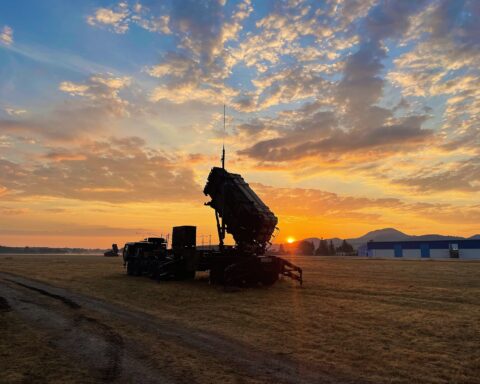
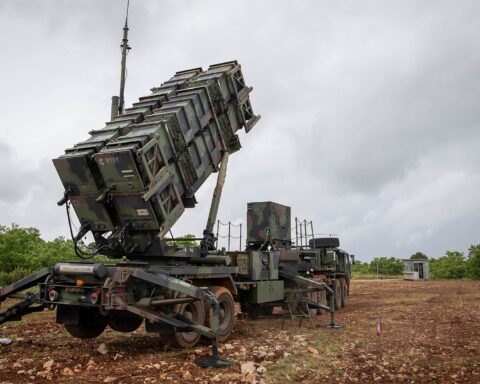
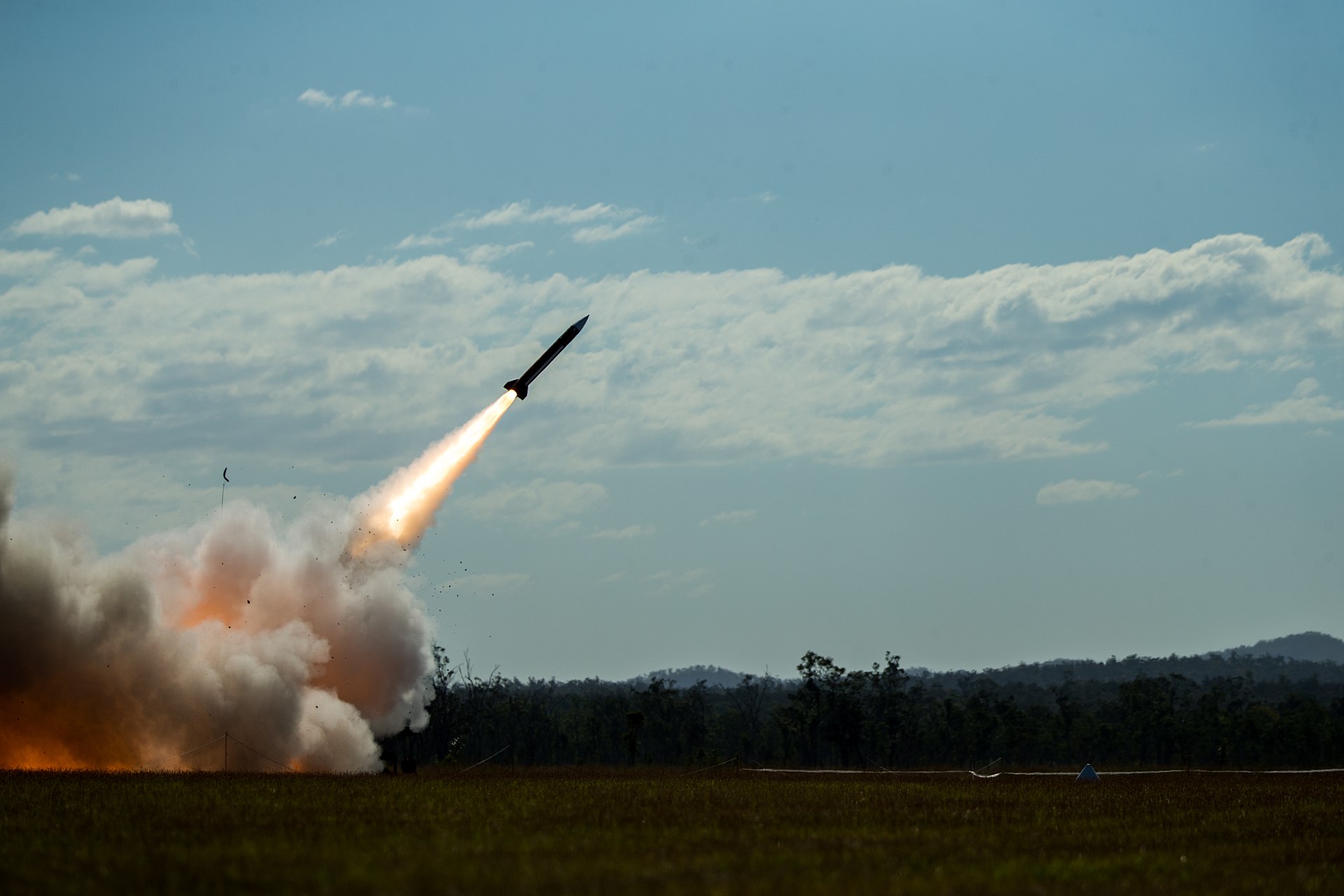
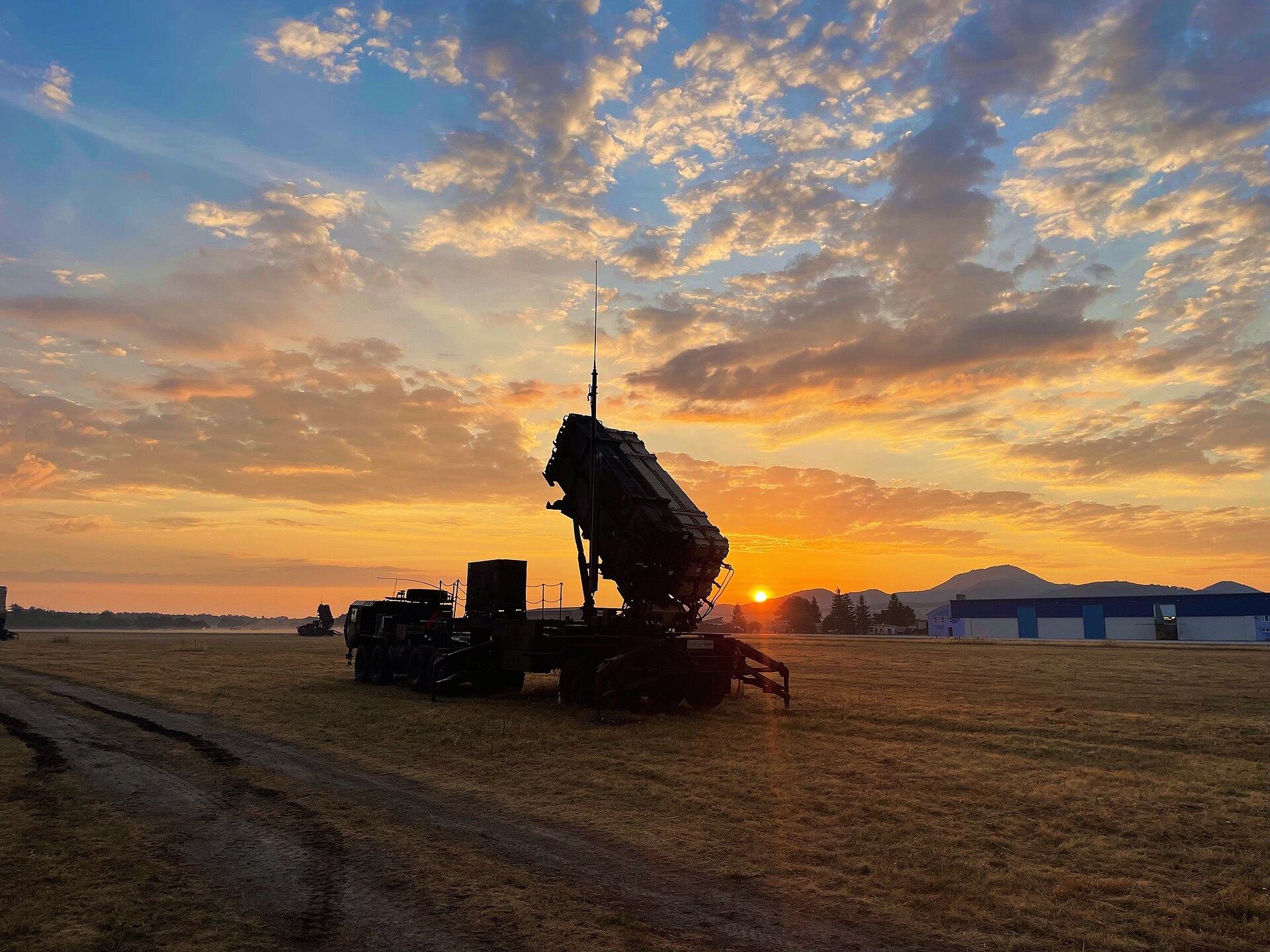
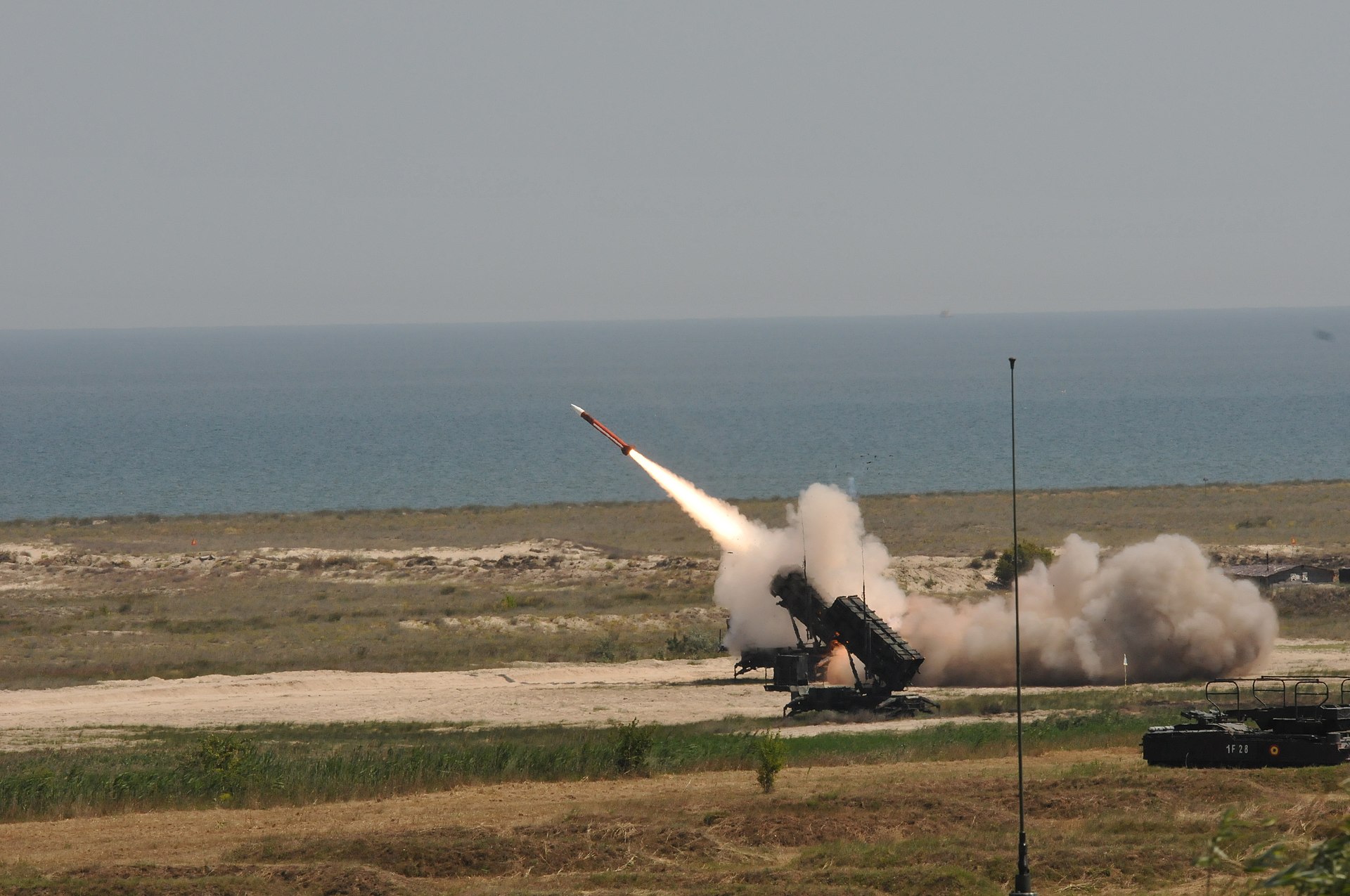
Kuwait’s ground-based air defense network combines Patriot and I-HAWK batteries — a layered configuration supplemented since 1991 by successive US foreign military sales. The Patriot system fields PAC-2 interceptors for aircraft and cruise missiles and PAC-3/PAC-3 MSE rounds for ballistic missile defense.
The United States has approved four defense packages for Kuwait in the past five months:
An $800 million Patriot sustainment and follow-on technical support package, approved by DSCA on January 14, covering spare parts, stockpile reliability testing, and maintenance support from RTX, Lockheed Martin, and KBR.
An $8 billion sale of eight LTAMDS radars — 360-degree active electronically scanned array sensors intended to replace the legacy AN/MPQ-65 — approved March 19 under emergency authority.
A $2.5 billion Integrated Battle Command System (IBCS) sale, approved May 1, linking Patriot launchers, sensors, and future radars into a single battle network.
And a $1.02 billion NASAMS contract awarded to Raytheon on May 27 — one day before the sustained engagement — for medium- to long-range air defense against aircraft, drones, and cruise missiles.
The pipeline totals more than $12.3 billion. None of the new systems were operational on May 28. Kuwait’s air defense on the day of the engagement consisted of the same Patriot and HAWK batteries that have been absorbing fire since February 28. PAC-3 MSE rounds cost approximately $5.5 million each. Kuwait took delivery of 84 rounds as part of the January sustainment package. At a rate of seven ballistic missile intercepts in a single day, interceptor depletion is arithmetic, not speculation.
Saudi Arabia faces the same arithmetic at a larger scale. Washington has issued emergency waivers under Section 36(b) of the Arms Export Control Act to fast-track Patriot resupply to Qatar, Kuwait, the UAE, and Israel — but Saudi Arabia, which has consumed more interceptors than any other country in the system’s history, was not included. The waiver gap and what it means for the Saudi air defense ceiling are examined here.
Kuwait has absorbed at least 951 Iranian strikes since the conflict began, according to open-source conflict monitoring records compiled through late March 2026. The LTAMDS radars and NASAMS launchers will require months to deliver and integrate. The air defense battle Kuwait is fighting today is being fought with the systems it had before the war started.
Saudi Arabia Has Not Spoken for Ten Days
Saudi Arabia occupies the same threat envelope as Kuwait. Prince Sultan Air Base hosts 2,500 to 2,700 US personnel with no status-of-forces agreement. PSAB has absorbed three Iranian strikes and sustained damage to AWACS surveillance aircraft and KC-135 tanker assets. CENTCOM has launched strikes from Saudi soil without prior consultation with Riyadh. The UK-France coalition governing the Strait of Hormuz left Saudi Arabia no seat at the operational table.
Saudi Arabia’s Ministry of Foreign Affairs did not issue a statement on the May 28 sustained engagement against Kuwait. It did not comment on the Mina al-Ahmadi refinery fires, the 10 injured Kuwaiti soldiers, or the IRGC’s explicit threat of escalation. The last joint Saudi-GCC condemnation that mentioned Iranian attacks on Kuwait by name was issued on March 25 — 64 days before the 24-hour air battle.
Kuwait’s own diplomatic posture, by contrast, hardened. Kuwait’s MoFA “strongly condemned” the May 28 attacks as “criminal,” employing harder language than its earlier statements. Kuwait’s Emir spoke publicly. Kuwait’s Defence Ministry published intercept numbers. Kuwait’s electricity ministry confirmed infrastructure damage.
Saudi Arabia, geographically adjacent, bound by the same GCC Joint Defense Agreement, hosting the same category of US assets that the IRGC explicitly claims the right to strike, produced no public response. The Saudi MOFA’s last statement of any kind that addressed Iranian military action in the Gulf region was issued more than ten days ago.
The silence obscures a more complicated reality. Reuters and the Wall Street Journal confirmed in May that Royal Saudi Air Force jets struck Iranian drone and missile-launch sites on Iranian soil in late March — Saudi Arabia’s first known direct military action against Iran in the modern history of the Gulf. Saudi Arabia’s shadow war against Iran — and what the exclusion thesis missed — is examined here. What the shadow war did not produce was an official acknowledgment of casualties: that disclosure came separately, through a Hajj logistics notice confirming that the Ministry of Defence had prepared camps at Mina for the families of martyrs and injured personnel — the first official Saudi government document to acknowledge war dead.
Background and Context
The conflict between the United States and Iran began on February 28, 2026, with Operation Epic Fury, followed immediately by Iranian retaliatory strikes across the Gulf. Kuwait was struck on the first day and has been struck repeatedly since.
The deadliest single event for US forces in Kuwait occurred on March 1, when an Iranian aircraft penetrated Kuwaiti airspace at low altitude and struck Camp Buehring, killing six US service members from the Army’s 103rd Sustainment Command and wounding more than 60. A concurrent drone strike hit the Port of Shuaiba near Camp Arifjan. The attack ended forty years of deterrence logic that had treated US forward basing in the Gulf as a shield for host nations rather than a magnet for strikes against them.
On May 12, Kuwait foiled the Bubiyan Island IRGC infiltration, capturing four operatives and exposing a ground-level threat vector alongside the persistent air campaign.
The ceasefire established in April has been violated repeatedly by both sides. CENTCOM struck a drone control station at Bandar Abbas on May 26-27. The IRGC’s May 28 barrage against Kuwait was framed as direct retaliation for those strikes.
The MOU talks remain stalled on four deadlocks: a $24 billion frozen-assets sequencing dispute, enrichment ceiling timelines, a Lebanon withdrawal clause, and the disposition of Iran’s highly enriched uranium. Five rounds of negotiations over 106 days have produced no signature. At his cabinet meeting on May 27, President Trump stated: “We’re not satisfied with it, but that we will be. Either that or we’ll have to just finish the job.”
The pattern continued two days later. On May 30, an Iranian Fateh-110 was intercepted over Ali Al Salem Air Base by Kuwaiti PAC-3 — but the May 30 strike that followed two days later demonstrated the limits of intercept success: debris injured five Americans and destroyed MQ-9 Reapers on the flight line. The ceasefire framework had not prevented the launch. On June 3, the same pattern extended to Bahrain: the IRGC struck US Fifth Fleet headquarters in Manama for the third time, with all three missiles intercepted but Bahrain’s PAC-3 batteries at 87 percent depletion and no emergency resupply waiver in place.
Frequently Asked Questions
What specific weapons has Iran used against Kuwait during the conflict?
Iran has deployed a range of systems against Kuwait beyond the ballistic and cruise missiles intercepted on May 28. The March 1 Camp Buehring strike was carried out by a manned Iranian F-5 fighter — or modified F-5 Kowsar variant — that flew at extremely low altitude across the Persian Gulf to evade radar detection, marking the first time a hostile manned aircraft struck a US military base in decades. One-way attack drones, consistent with Shahed-136 and similar patterns, have been used in nearly every wave. The IRGC has also deployed fast boats for mine-laying operations near the Strait of Hormuz, two of which CENTCOM destroyed near Bandar Abbas in late May. The Bubiyan Island infiltration on May 12 added a ground and naval dimension, with IRGC operatives arriving by fishing boat.
Who were the IRGC operatives captured on Bubiyan Island?
Kuwait’s Interior Ministry identified the four captured operatives as Col. Amir Hussein Abd Mohammed Zara’i, Col. Abdulsamad Yadallah Qanwati, Capt. Ahmed Jamshid Gholam Reza Zulfiqari, and 1st Lt. Mohammed Hussein Sehrab Faroughi Rad. All were identified as IRGC naval officers. Two additional operatives fled during the firefight and were not apprehended. Iran’s Foreign Ministry rejected the allegations, claiming the officers had accidentally entered Kuwaiti waters due to a navigation system malfunction. Kuwait’s Foreign Ministry called the infiltration a “flagrant violation” of sovereignty.
Has any GCC member state provided direct military assistance to Kuwait during the conflict?
No GCC member state has publicly announced the deployment of military assets, air defense reinforcements, or personnel to assist Kuwait’s defense. The Peninsula Shield Force — the GCC’s 40,000-strong joint military formation — has not been activated for the Iran conflict. The only prior PSF deployment was to Bahrain in March 2011 during the Arab Spring, when Saudi Arabia and the UAE sent troops to support the Bahraini government; that deployment was conducted under PSF operating procedures rather than a formal invocation of the 2000 Joint Defense Agreement’s collective defense clause.
How does the $12.3 billion US defense pipeline compare to Kuwait’s pre-war air defense spending?
The four packages approved between January and May 2026 — $800 million for Patriot sustainment, $8 billion for LTAMDS radars, $2.5 billion for IBCS, and $1.02 billion for NASAMS — represent an acceleration without precedent in Kuwait’s defense procurement history. The $8 billion LTAMDS sale alone was approved under emergency authority on March 19, bypassing the standard congressional notification period. The NASAMS contract was signed on May 27, one day before the sustained engagement it was designed to defend against. Kuwait’s entire pre-war Patriot inventory — five batteries acquired in the 1990s and two added in 2012 — was procured over a span of two decades. The wartime pipeline compresses a generation of procurement into five months, but delivery and integration timelines mean the systems will not be operational for months.
What is Kuwait’s diplomatic relationship with Iran outside the conflict?
Kuwait maintained diplomatic relations with Iran throughout the decades preceding the 2026 conflict and did not sever them after February 28. Kuwait was the last GCC state to recall its ambassador from Tehran during the 2016 Saudi-Iran diplomatic crisis, and it restored full ambassadorial ties before any other Gulf state. Emir Mishal’s May 28 reference to Iran as “a neighboring Muslim country, which we consider a friend” reflects a diplomatic posture Kuwait has maintained even while absorbing sustained military strikes. Kuwait’s Foreign Ministry has condemned each major attack while consistently avoiding language that would categorize Iran as an enemy state.
Kuwait’s diplomatic restraint did not prevent it from taking formal legal action: within hours of the May 28 barrage, Kuwait filed Kuwait’s formal Article 51 self-defense invocation with the UN Security Council — the first individual self-defense notice filed by a GCC member state during the conflict, and one no Gulf partner chose to co-sign.