LONDON — Iran’s Persian Gulf Strait Authority charges Chinese-linked vessels up to $2 million per transit to move Saudi crude through the Strait of Hormuz while waving Indian-flagged tankers through for free, and the result — ninety-one days into the 2026 Iran war — is the structural collapse of Saudi Arabia’s most important crude export relationship. Saudi crude exports to China have fallen by more than 60 percent since February, according to Bloomberg and OilPrice.com data, with Sinopec slashing offtake to levels that traders describe as structural market loss rather than cyclical disruption.
n
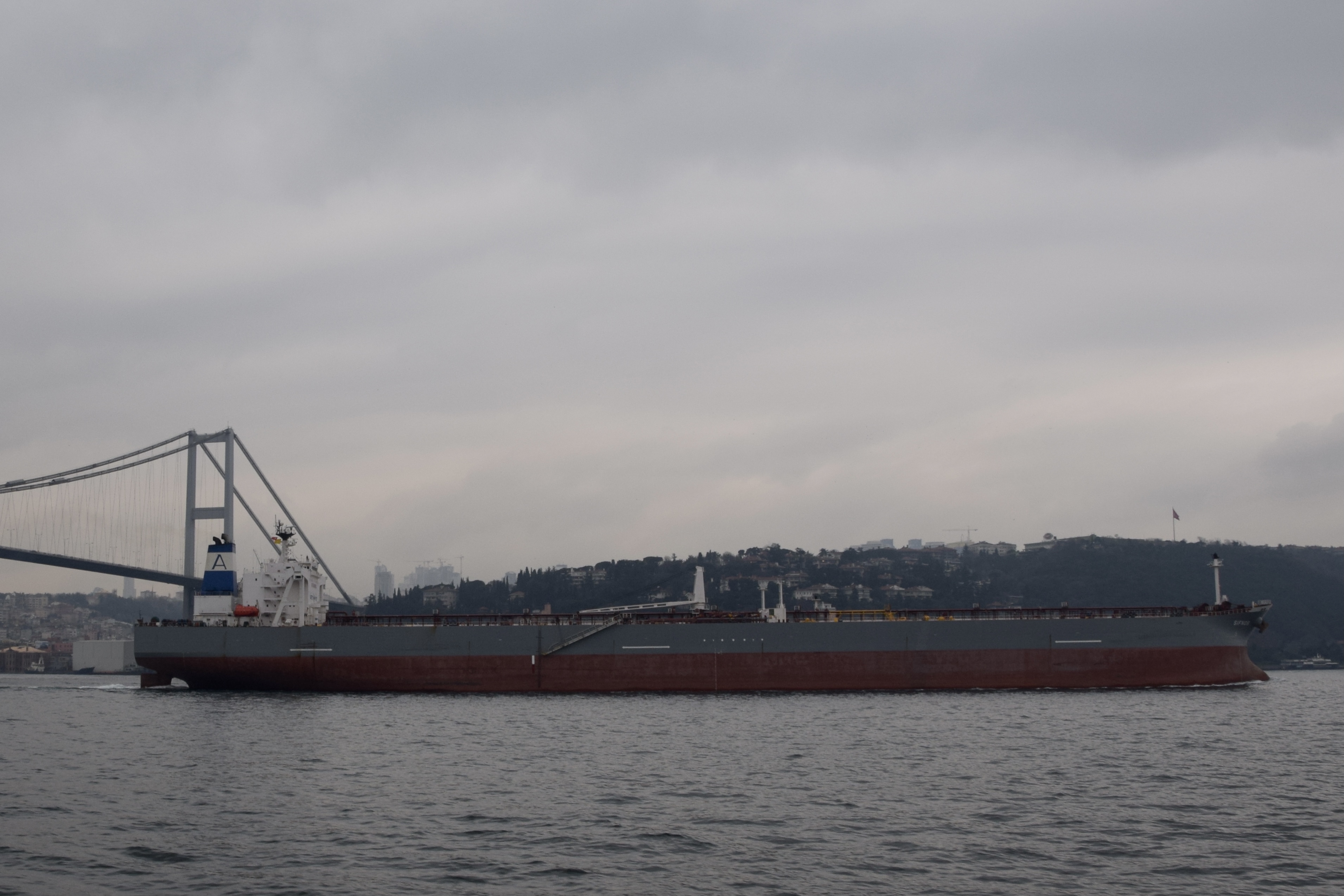
The PGSA, which went operationally live on May 18, does not run a uniform blockade. Windward AI maritime intelligence documents three distinct parallel access pathways at Hormuz: bilateral carve-outs granting free passage to India, Iraq, and Pakistan; a toll tier extracting payments in yuan or bitcoin from Chinese-linked and shadow fleet operators; and an enforcement tier where non-compliant vessels face IRGC interdiction, OFAC secondary-sanctions risk, or insurance refusal. The system is geopolitically calibrated, and the calibration has a single primary casualty — Riyadh’s fiscal stability. Saudi Arabia’s China trade was not collateral damage from a uniform closure; it was the load-bearing relationship that Iran chose to demolish while leaving India’s corridor intact, creating a revocable off-switch over Riyadh’s last functioning export artery that no coalition, pipeline, or sanctions package currently neutralizes.
The toll system moved from IRGC enforcement architecture to the US congressional record on June 2, when Secretary of State Rubio named the PGSA fee structure as one of four explicit American conditions for Hormuz reopening in Senate Foreign Relations Committee testimony. The full account of how Rubio named the toll — and why Saudi Arabia, which has paid it for eighty-one days, cannot respond to either its existence or its new diplomatic status — is here.
n
n
The Middle East briefing 3,000+ readers start their day with.
One email. Every weekday morning. Free.
Table of Contents
n
- n
- How Did Iran Build Three Compliance Lanes at Hormuz?
- Why Does India Transit for Free?
- The IRGC Already Proved the Exemption Can Be Revoked
- Saudi Arabia Solved the India Problem With a Pipeline
- What Happened to Saudi Arabia’s China Exports?
- Iran’s Off-Switch for Saudi Arabia’s Last Export Artery
- Does the OFAC Designation Force India to Choose?
- Can Saudi Arabia Survive on Yanbu Alone?
- Frequently Asked Questions
- n
n
n
n
n
n
n
n
n
n
n
n
n
How Did Iran Build Three Compliance Lanes at Hormuz?
n
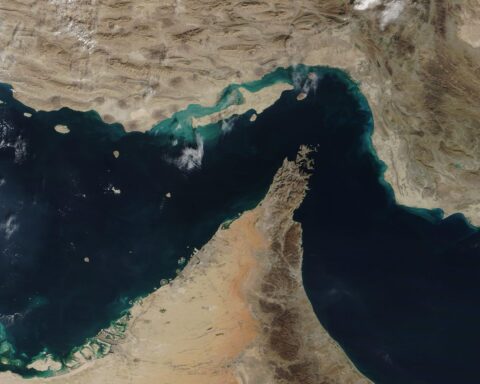
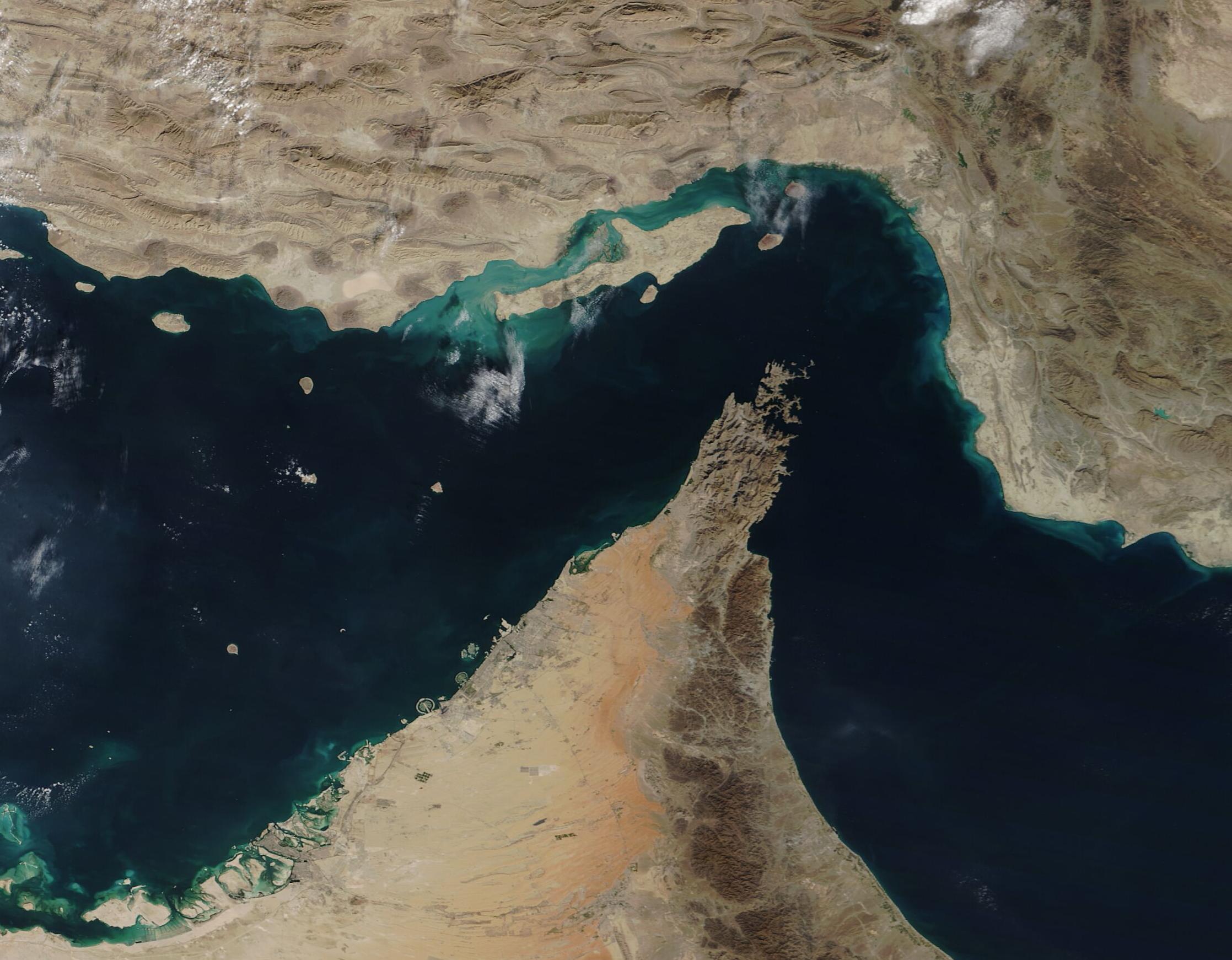
When commercial transits through the Strait of Hormuz fell from roughly 95 per day to approximately 4 — a figure the IMF’s PortWatch platform confirmed on May 24 — the assumption across Western capitals and energy trading desks was that Iran had functionally closed the waterway. The reality, documented in granular detail by Windward AI and HSToday, is more complex and considerably more dangerous. Tehran did not seal the strait; it redesigned the access rules, creating a managed-transit regime where the cost of passage depends not on deadweight tonnage or cargo manifest but on the diplomatic posture of the flag state and the geopolitical alignment of the buyer.
n
The first tier — bilateral carve-outs — covers India, Iraq, and Pakistan. Six Indian-flagged vessels transited inbound on May 18, the day the PGSA went live, moving as a coordinated cluster following diplomatic engagement between Tehran and New Delhi. Iraq secured safe passage for two VLCCs carrying approximately 2 million barrels each under a previously unreported arrangement, a concession reflecting Iraq’s 95-percent fiscal dependence on oil revenue and Iran’s interest in maintaining Baghdad’s economic stability. Pakistan’s deal covers Qatari LNG deliveries that Islamabad cannot replace from alternative sources. None of these nations pay the toll, and their passage is a diplomatic product negotiated through Iran’s Foreign Ministry rather than imposed by the IRGC’s naval enforcement arm.
n
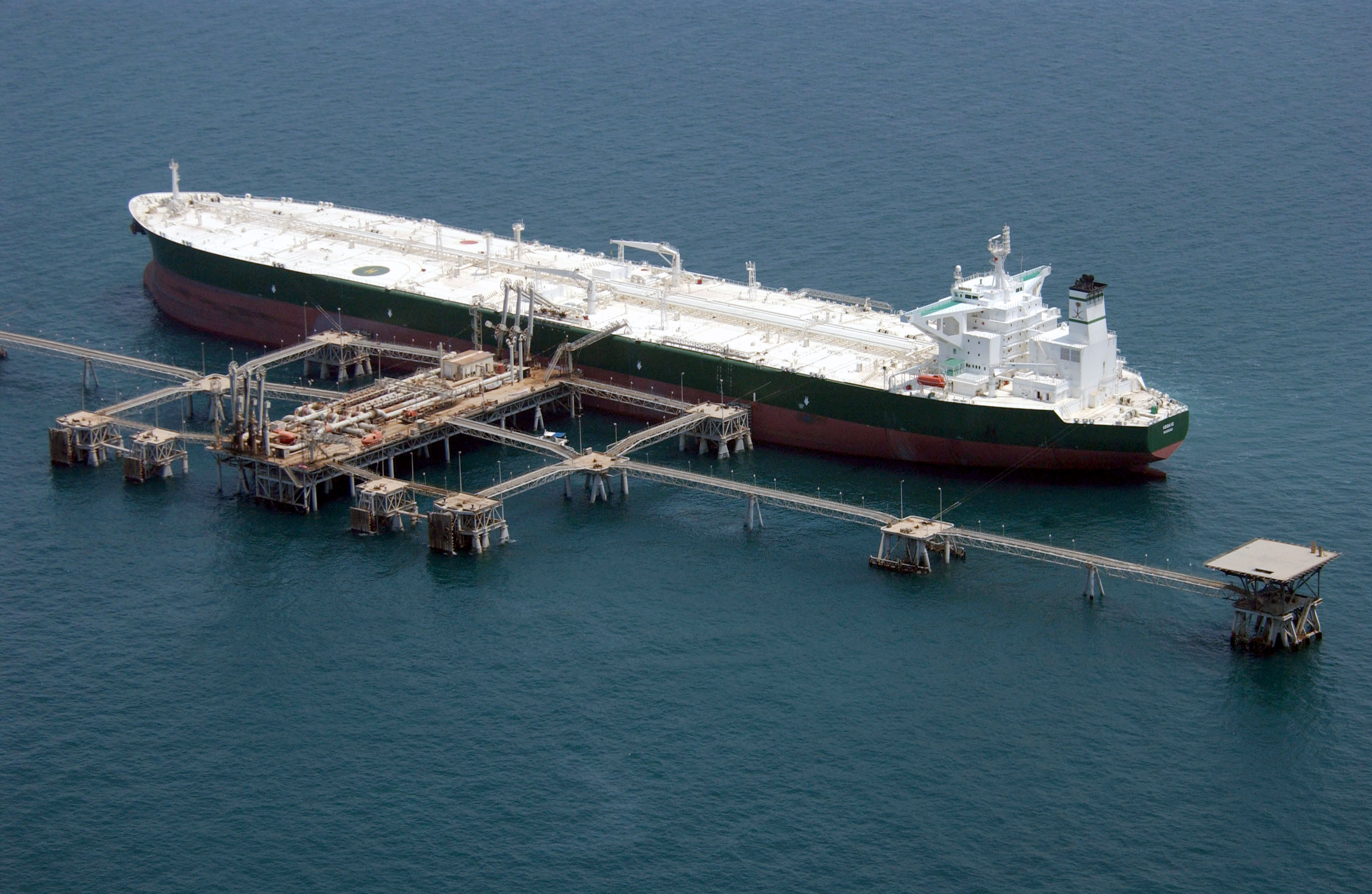
The second tier targets Chinese-linked and UAE-managed gray fleet operators — the shadow tanker ecosystem that previously ferried sanctioned Iranian and Venezuelan crude and now finds itself repurposed as the PGSA’s primary revenue stream. These vessels pay up to $2 million per transit, denominated in yuan or bitcoin, routed to accounts that Windward identifies as IRGC-affiliated. When Iran coordinated the transit of 26 vessels on May 20 alone — confirmed by Al Jazeera — the toll regime demonstrated both its revenue-generating capacity and Tehran’s ability to manage maritime traffic at volume when it chooses to do so.
n
The third tier is enforcement exposure, and it traps the largest category of potential transits in what Windward describes as “a compounding compliance dilemma: payment exposes vessels to OFAC secondary-sanctions risk, while non-payment exposes them to IRGC interdiction.” Vessels operating in dark configuration, without a bilateral arrangement, and without willingness to pay face IRGC naval interdiction as the default outcome. The UK-France Hormuz coalition, now 40 nations strong under Northwood command, can escort some of this traffic through military convoy — but the throughput is a fraction of pre-crisis volumes, and Saudi Arabia holds no seat in that coalition’s command structure despite being the state most dependent on the strait’s commercial function.
n
n
Why Does India Transit for Free?
n
India’s bilateral carve-out is rooted in a diplomatic relationship that has quietly diverged from Washington’s preferred alignment for over a year, and the divergence is deliberate on both sides. Iran’s Foreign Minister Abbas Araghchi publicly named India among the nations granted passage, and Iran’s Ambassador to India confirmed the framework’s logic on May 29, telling ANI: “Under new conditions, navigation services, security and other facilities for ships passing through Hormuz will not be free, and fees will be charged.” The ambassador declined to state that India would be among those charged — language consistent with the bilateral exemption operating entirely outside the toll regime.
n
The contrast with India’s 2019 behavior is the sharpest indicator that New Delhi’s current posture reflects a strategic calculation rather than diplomatic drift. In May 2019, under US maximum pressure sanctions, India terminated all Iranian oil imports — a compliance decision that cut imports from 620,000 barrels per day to zero within months. In 2026, India has done the opposite: New Delhi has not complied with US pressure to isolate Iran, has not condemned the PGSA, and has actively negotiated bilateral passage terms that exempt Indian-flagged vessels from the toll structure. The reversal draws on institutional memory — India operated a rupee-swap mechanism with Iran’s central bank during the 2012-2016 sanctions period, maintaining bilateral trade flows outside the dollar system through financial engineering that both governments understood as a workaround rather than a violation.
n
India’s bargaining position with Tehran has historically rested partly on the Chabahar port investment, an $85 million commitment that gave Iran reason to value New Delhi as a strategic partner beyond crude purchases. That position degraded substantially on April 26, 2026, when the US Treasury’s sanctions waiver for Chabahar expired — a decision communicated to India in October 2025, with zero allocation in India’s Union Budget 2026, according to Modern Diplomacy. What remains is softer but still operationally consequential: India’s diplomatic partner status, its refusal to condemn Iran at multilateral forums, and Tehran’s strategic need to demonstrate that the bilateral carve-out model works as advertised. Iran is publicly taking credit for enabling Indian, Iraqi, and Pakistani flows — Tasnim’s reporting on the May 20 coordinated 26-vessel transit framed it explicitly as proof of effective PGSA governance, a narrative that collapses if the carve-out’s most prominent beneficiary is seen as unreliable.
n
The IRGC Already Proved the Exemption Can Be Revoked
n
On April 19, 2026, two Indian-flagged vessels — including the MT Sanmar Herald — were fired upon by an IRGC Navy special unit in the Strait of Hormuz despite having received prior Foreign Ministry-track clearance for transit. The crew’s distress call, reported by The Hill and NBC News, captured the operational reality of Iran’s dual-track governance in a single recorded phrase: “You gave me clearance to go.” The IRGC gunboats opened fire regardless, and Iranian state media confirmed that shots were fired — though without acknowledging that the vessels had received prior FM-track authorization.
n
The incident was not a miscommunication or a rogue patrol. It was a structural feature of Iran’s constitutional design, and understanding why requires tracing the IRGC’s institutional independence to its legal foundations. Under Articles 150 and 176 of Iran’s constitution, the IRGC operates with authority independent from the Foreign Ministry — a dual-track arrangement that originates in the Iran-Iraq War and has produced friction between diplomatic and military chains of command for decades. The most revealing precedent is Javad Zarif’s leaked 2021 admission that during the JCPOA nuclear negotiations, “diplomacy paid the price for military activities” — the FM track and the IRGC track were never synchronized, and the IRGC’s constitutional independence means they never need to be. Euronews reported that the April 19 incident reflected “infighting between ‘hardliners’, who have been losing badly on the battlefield, and the ‘moderates,’” but framing the episode as factional infighting understates the institutional design at work. The IRGC Commander who has held the position since March 1, 2026, possesses what amounts to an institutional override over any commitment the Foreign Ministry makes.
n
For India’s bilateral carve-out, the Sanmar Herald incident established a precedent that maritime risk analysts have not fully absorbed. FM-track clearance does not bind the IRGC operationally, and the exemption can be overridden at the patrol level, at any time, without warning, and without violating any provision of Iran’s internal legal framework. Every Indian-flagged tanker transiting Hormuz under the bilateral arrangement now does so with the empirically confirmed understanding that the arrangement is revocable by a chain of command the Foreign Ministry does not control — and that the entity holding the override has no diplomatic stake in sustaining the carve-out’s credibility.
n
Saudi Arabia Solved the India Problem With a Pipeline
n
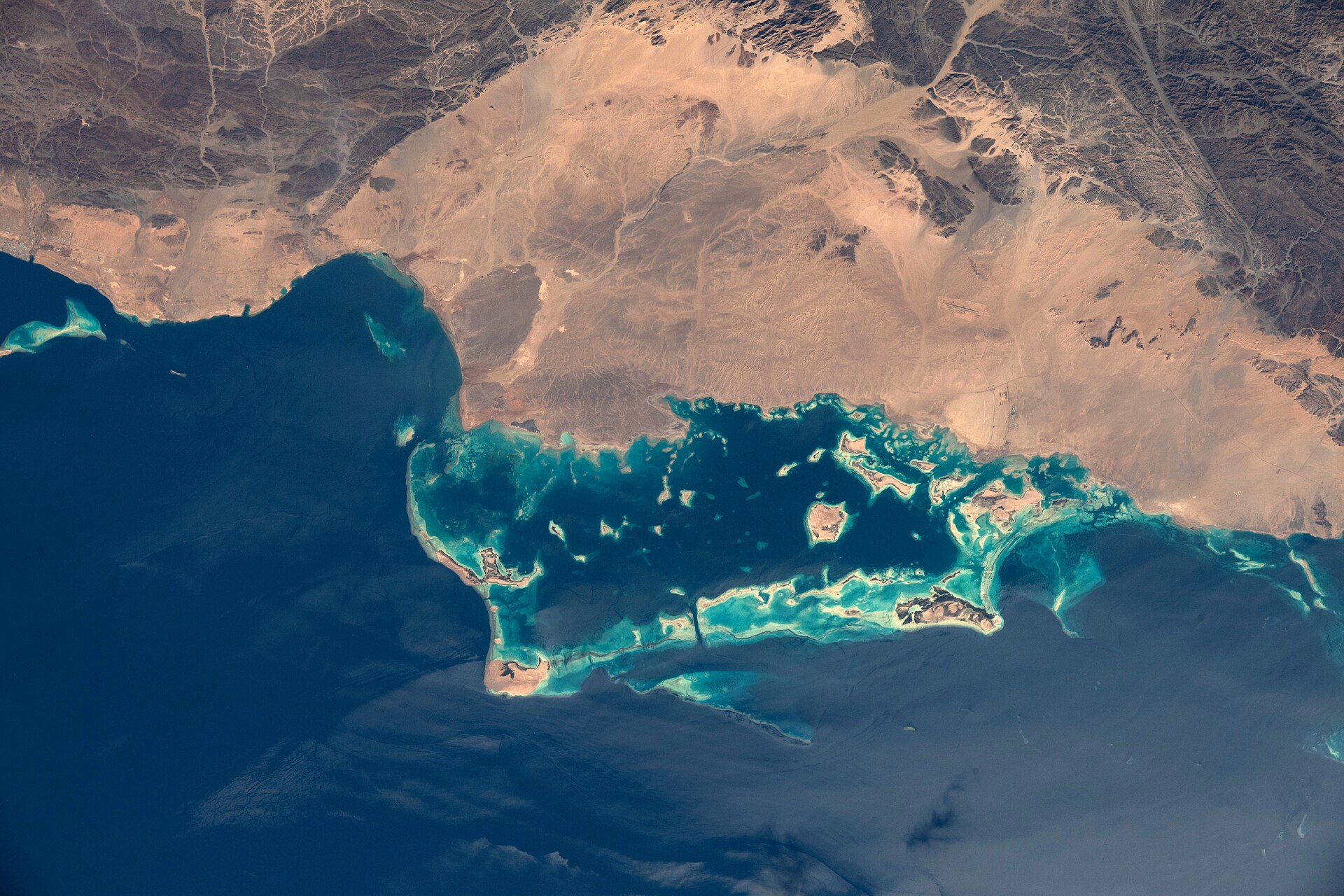
Saudi Arabia’s response to the Hormuz crisis for India-bound crude has been one of the more effective operational pivots of the war — and one of the least analyzed in terms of the vulnerability it creates. On March 19, 2026, AXS Marine tracking data showed that 89 percent of Saudi crude reaching Indian ports transited through the Strait of Hormuz. By April 28, that figure had collapsed to 11 percent. The East-West Pipeline — the Petroline connecting Saudi Arabia’s Eastern Province oilfields to the Red Sea terminal at Yanbu — absorbed nearly the entire India-bound flow, peaking at 1.43 million barrels per day in a single week during the second half of April.
n
The pivot worked on its own terms. Saudi deliveries to India held at approximately 697,000 barrels per day in April, slightly above the FY2025-26 average of 668,000 b/d according to India Briefing, meaning Riyadh did not lose its second-largest crude customer the way it lost its first. But the success of the Yanbu redirect contains a structural vulnerability that the pipeline’s capacity ceiling makes unavoidable. The East-West Pipeline has a nameplate capacity of approximately 5 million barrels per day against Saudi production of 7.76 mbpd, leaving roughly 2.5 million barrels per day of Saudi output that cannot reach any customer without transiting Hormuz — volume that currently has no outlet, no buyer willing to absorb Hormuz transit costs, and no alternative routing.
n
India’s bilateral exemption at Hormuz, in this context, is not the mechanism keeping Saudi-India crude flows alive — the pipeline is doing that work entirely. What the carve-out represents instead is a structural insurance policy held by Iran against the possibility that the Yanbu route becomes compromised. If Iranian missiles strike Yanbu’s loading facilities, if the IRGC extends maritime operations into Red Sea shipping lanes, or if the bilateral carve-out is simply revoked the way the April 19 Sanmar Herald incident demonstrated it could be, Saudi Arabia loses access to its last functioning crude export customer in a single event. The pipeline solved the routing problem while creating a concentration problem, and Iran holds the off-switch for both pathways — the strait through direct IRGC naval control, and the pipeline indirectly through the threat of kinetic escalation against Red Sea infrastructure that remains within Iran’s precision-strike envelope.
n
n
What Happened to Saudi Arabia’s China Exports?
n
The numbers describe a commercial relationship in structural freefall, not a temporary disruption awaiting resolution. Chinese nominations for Saudi crude dropped from 1.6 million barrels per day in February to approximately 600,000 b/d by June — a 62.5 percent decline over four months that represents the single largest buyer-loss event in Saudi Aramco’s export history. Sinopec, which had been lifting 10 million barrels per month from Aramco as recently as February, cut its offtake to 2 million barrels by June, according to Bloomberg. The collapse is not a pricing adjustment; it is buyer migration driven by a cost structure that makes Saudi crude permanently uncompetitive for Chinese refiners under current Hormuz conditions.
n
The mechanism is the ESPO spread — the price differential between Russia’s Eastern Siberia-Pacific Ocean pipeline crude, which reaches Chinese ports overland without touching any maritime chokepoint, and Saudi Arabia’s Official Selling Price for comparable medium-sour grades. That spread now exceeds $5.50 per barrel in ESPO’s favor, a level that oil traders identify as the permanent switching threshold: the point beyond which Chinese refiners restructure term contracts, refit refinery slates for Russian crude specifications, and lock in pipeline volumes on a multi-year basis rather than treating the shift as a temporary response to wartime disruption. ESPO imports to China rose 14 percent month-on-month in March 2026 alone, a surge reflecting refiners pulling forward Russian contracts to fill the gap Saudi crude could no longer cross.
n
Iran’s three-tier toll system did not create the ESPO pricing advantage — Russian pipeline crude was already marginally cheaper before the war — but it transformed a narrow price differential into an impassable commercial barrier. A Chinese-linked vessel paying $2 million to transit Hormuz with 2 million barrels of Saudi crude absorbs an additional $1 per barrel in toll costs alone, layered on top of war-risk insurance premiums running at approximately eight times pre-crisis levels according to Gard, Skuld, and NorthStandard data, the P&I club coverage cancellations that have stripped standard protection from Hormuz transits, and the OFAC secondary-sanctions exposure created by the PGSA’s designation on May 28. The cumulative cost of moving Saudi crude to China through Hormuz is now so high that Russian pipeline crude — which never touches a strait, never pays a toll, and never triggers a sanctions review — has become the default choice rather than the emergency alternative. Saudi Arabia’s fiscal position, already under extreme strain, cannot absorb OSP discounts large enough to offset the combined toll, insurance, and compliance costs that the PGSA imposes on every China-bound cargo.
n
Iran’s Off-Switch for Saudi Arabia’s Last Export Artery
n
The analytical error in most Hormuz coverage — including Bloomberg’s April and May reporting, Reuters’ Sinopec analysis, and Kpler’s six-week review — is treating the strait as either open or closed, a binary that obscures the far more dangerous system Iran actually built. The PGSA does not operate as a blockade. It operates as a market-segmentation tool, and the segmentation accomplishes something a uniform closure could not: it destroys Saudi Arabia’s most valuable export relationship while preserving the diplomatic relationships Iran needs to demonstrate that Hormuz remains navigable for cooperating states, undermining the legal and political case for military intervention.
n
India’s exemption is the critical piece of this design, and it functions differently from how most analysts have described it. The carve-out is not currently the mechanism sustaining Saudi-India trade flows — the Yanbu pipeline handles that entirely. What it represents instead is latent coercive capacity: Iran’s demonstrated ability to revoke Hormuz access for the last buyer keeping Saudi export revenues from total collapse. If Iran revokes India’s exemption, or if the IRGC overrides the FM-track clearance the way it did on April 19 with the MT Sanmar Herald, Indian-flagged vessels stop transiting. That would not immediately halt Saudi-India crude flows, which run through Yanbu, but it would halt Iraqi, Kuwaiti, and Qatari crude reaching India — destabilizing the regional energy supply network that Indian refiners have built around Gulf sourcing — and it would signal to New Delhi that the bilateral relationship with Tehran carries costs India has so far avoided paying.
n
The deeper vulnerability is Yanbu itself. The pipeline absorbs the India redirect but cannot absorb the 2.5 mbpd of Saudi production that remains Hormuz-dependent with no alternative route to market. The pipeline’s Red Sea terminus, while outside IRGC naval range, sits within the threat envelope of Houthi-aligned forces that Iran has historically supplied and coordinated with — forces that spent 2024 and early 2025 demonstrating precision strike capability against Red Sea commercial shipping. Iran does not need to close Hormuz to eliminate Saudi Arabia’s last export route; it needs only to threaten Yanbu credibly enough that insurers reassess Red Sea risk the way they have already reassessed Hormuz risk, triggering the same P&I club withdrawal and war-risk premium spiral that closed Hormuz without an explicit blockade order.
n
Suzanne Maloney of Brookings warned that “the Iran conflict’s energy shocks are not yet fully realized” — a judgment that becomes considerably more urgent when applied not to global oil prices but to the specific structural trap Saudi Arabia faces. Riyadh’s China trade is already gone, with ESPO pricing dynamics making recovery unlikely even if Hormuz reopens tomorrow. Its India trade survives on a pipeline that Iran can threaten kinetically and a bilateral exemption that the IRGC can revoke operationally, and the entity holding both off-switches is not bound by the diplomatic commitments of the entity that negotiated the carve-out in the first place.
n
Does the OFAC Designation Force India to Choose?
n
The US Treasury’s placement of the PGSA on the Specially Designated Nationals list on May 28, 2026, introduced a new variable into India’s bilateral arrangement — not because Indian vessels are paying the toll, but because maintaining the diplomatic infrastructure that secures the carve-out requires ongoing engagement with an entity that Washington now classifies as an IRGC-linked sanctions target. OFAC guidance explicitly warns that payments to Iran for safe passage could expose non-US firms to secondary sanctions, and while India’s exemption operates outside the payment structure, the compliance boundary between “negotiating bilateral passage terms” and “transacting with a designated entity” is not one that Indian refiners’ legal departments will find comfortable to straddle indefinitely.
n
India has not publicly condemned the PGSA designation — a silence consistent with New Delhi’s broader posture of neither endorsing nor opposing Iran’s Hormuz governance, but one that becomes harder to maintain as the SDN designation matures and compliance teams at Indian refiners and banks begin requesting formal legal opinions. An IRNA official’s warning that “countries that comply with the United States by imposing sanctions on the Islamic Republic of Iran will certainly face difficulties crossing the strait” makes the coercive logic explicit: the carve-out’s continued value depends on India’s continued non-compliance with US maximum pressure. India’s 2019 decision to cut all Iranian imports demonstrated that New Delhi will comply with US sanctions when the cost-benefit calculation favors it, and the 2026 calculation — India sources roughly 14.7 percent of its crude through Hormuz, with Iraqi, Kuwaiti, and Qatari barrels effectively unavailable without IRGC tolerance — is different but not permanently fixed.
n
For Saudi Arabia, the OFAC designation creates a paradox that Riyadh cannot resolve from its current position. The kingdom benefits from any action that pressures the PGSA, but the specific pressure the SDN designation applies falls most heavily on the bilateral carve-out system that currently allows India to receive non-Saudi Gulf crude through Hormuz — crude that competes with Saudi barrels reaching India via Yanbu. If the OFAC designation forces India to abandon the bilateral arrangement, the short-term effect is a further reduction in Gulf crude reaching Indian refiners, which should in theory benefit Saudi Arabia’s Yanbu-routed volumes by reducing competition. The long-term effect is the elimination of the last diplomatic framework managing Hormuz access outside of military escort, replacing a negotiated system — however fragile and IRGC-revocable — with pure enforcement discretion from an entity that has already demonstrated willingness to fire on vessels carrying valid clearance.
n
n
Can Saudi Arabia Survive on Yanbu Alone?
n
The fiscal mathematics leave almost no margin for the answer to be yes. Saudi Arabia’s Q1 2026 deficit reached SAR 126 billion — approximately $33.5 billion — representing 76 percent of the full-year deficit target of SAR 165 billion consumed in a single quarter. Brent crude sat at $91-94 per barrel as of May 29, a price that Goldman Sachs estimates falls $14-17 below the PIF-inclusive fiscal breakeven of $108-111 per barrel that Saudi Arabia requires to fund both its operating budget and its sovereign wealth commitments. The Aramco base dividend of $87.6 billion annually is contractual, the June 9 payment date is approaching, and revenue streams at current export volumes and prices cannot sustain it without reserve drawdowns that would mirror the $145 billion Saudi Arabia burned through during the 2015-2016 oil price crash. On May 29, Brent’s close at $91.37 pushed it below the Bloomberg $94 consolidated breakeven for the first time during the war — the precise moment analysed in detail in Saudi Arabia’s borrowing plan against a budget that no longer exists, including what the NDMC’s residual 10% of issuance capacity means against a deficit running at twice the official projection.
n
The pipeline’s capacity constraint defines the ceiling on what Yanbu can deliver. The 2.5 million barrels per day of Saudi output that has no Hormuz-free route — a figure established by the gap between 5 mbpd of nameplate pipeline capacity and 7.76 mbpd of production — represents the difference between Saudi Arabia functioning as a reduced-capacity exporter and Saudi Arabia operating at a level its fiscal commitments can sustain. Goldman Sachs projects a 6.6 percent GDP deficit for 2026 under current conditions, and the Oman channel, which could theoretically provide an alternative governance framework for Hormuz transit, remains structurally unavailable. Muscat was the sole non-signatory to the IMO’s CL 5028 circular on May 20, and Bloomberg reports ongoing Iran-Oman negotiations over a permanent toll system that would formalize rather than eliminate the PGSA’s fee structure.
n
n
The Strait is now governed administratively, with bilateral carve-outs for selected partners and coercive interdiction held in reserve for everyone else.
n
Windward AI maritime intelligence assessment, May 2026
n
The 2015-2016 comparison offers a partial but misleading comfort. Saudi Arabia survived that price crash by drawing reserves, cutting capital expenditure, and introducing VAT — but the constraint was price alone, and the kingdom could still sell every barrel it produced. The 2026 crisis is structurally different because the binding constraint is access, not price. Even if Brent recovered to $110 tomorrow, the PGSA’s toll regime would continue to make Chinese-bound Saudi cargoes uncompetitive against ESPO pipeline crude that avoids the strait entirely, and the Yanbu route can only accommodate a fraction of total production. Riyadh is not fighting a price war it has lost before; it is facing an export-capacity crisis imposed by a toll system it did not negotiate, cannot circumvent through the UK-France coalition it declined to join, and cannot dismantle through the OFAC sanctions that threaten to undermine the bilateral carve-outs keeping India’s door partially open to competing Gulf producers.
n
Frequently Asked Questions
n
How many vessels currently transit Hormuz daily under the PGSA system?
n
The IMF’s PortWatch platform recorded approximately 4 commercial transits per day as of May 24, 2026, compared to roughly 95 per day before the crisis — a 96 percent reduction in commercial throughput. However, the PGSA has demonstrated the ability to coordinate higher-volume windows, with 26 vessels transiting in a single organized passage on May 20, confirmed by Al Jazeera. The low daily average reflects Iranian management of traffic flow through scheduled convoys and bilateral coordination rather than a physical inability to process vessels — the navigational constraint is administrative and political, not geographic or hydrographic.
n
Is India actually paying for Hormuz transit under the PGSA?
n
Indian-flagged vessels do not pay the $2 million toll under the bilateral carve-out, but India’s exemption carries indirect costs that have not been widely quantified. Indian refiners have shifted sourcing heavily toward Atlantic Basin crude to reduce Hormuz dependence — pre-crisis, roughly 60 percent of India’s crude came from the Persian Gulf, a figure that fell below 35 percent by April according to Visual Capitalist and AXS Marine. The cost of replacing Gulf barrels with Atlantic Basin alternatives runs $2-4 per barrel higher on freight alone, meaning India pays a geographic premium for its nominal “free” passage that Indian downstream consumers absorb through fuel-price adjustments that the Modi government has so far managed through excise-duty reductions rather than retail pass-through.
n
Could Saudi Arabia reroute China-bound crude through Yanbu instead of Hormuz?
n
The Red Sea connects to China via the Suez Canal and the Strait of Malacca, making Yanbu-to-Shanghai technically feasible but commercially prohibitive under current market conditions. The route adds 15-20 days of transit time versus the direct Hormuz-to-China routing, layering approximately $3-5 per barrel in additional freight and time-charter costs onto every cargo. Combined with the ESPO spread already exceeding $5.50 per barrel in Russia’s favor, the Yanbu-to-China route would require Saudi Arabia to discount its OSP by $8-10 per barrel to compete — a discount that would undercut Saudi pricing across every other destination and accelerate the fiscal deterioration that Q1 figures have already revealed to be running at roughly three times the sustainable quarterly pace.
n
What happens to the bilateral carve-outs if the US-Iran MOU is signed?
n
The MOU’s draft text, as described by Axios, envisions “unrestricted” Hormuz passage — language that would theoretically eliminate the PGSA’s three-tier system entirely. The practical obstacle is that the PGSA’s distributed institutional structure has no single withdrawal mechanism analogous to the JCPOA’s Article 36 dispute resolution process. Iran has built operational infrastructure — fee collection accounts denominated in yuan and bitcoin, IRGC naval patrol rotations, bilateral diplomatic arrangements with three sovereign states — that does not disappear with a signature. The MOU remains unsigned after 106 days and five rounds of negotiation, with the $24 billion frozen-assets sequencing deadlock, the enrichment timeline, and the Lebanon clause all unresolved, and even if signed, the PGSA’s apparatus would likely persist during any implementation period as Tehran’s insurance policy against US non-compliance.
n
Has Iran publicly acknowledged that Hormuz operates on a three-tier system?
n
Not in those terms, and the gap between Iran’s public framing and its operational practice is itself analytically revealing. PressTV, Tasnim, and IRNA frame the PGSA as a uniform governance authority providing “navigation services” for a published fee, while simultaneously publicizing the coordinated passage of Indian, Iraqi, and Pakistani vessels as evidence of responsible Hormuz management — without acknowledging that those same vessels pay nothing while Chinese-linked tankers pay $2 million per transit. The three-tier characterization comes from external maritime intelligence providers, primarily Windward AI and HSToday, which documented the differential treatment through vessel-tracking data, AIS transponder analysis, and payment-flow monitoring. PressTV’s May 28 response to the OFAC designation — “sanctions won’t help the US gain waterway control” — implicitly confirmed the PGSA’s institutional permanence without addressing the selectivity of its enforcement.
On May 29, Iran’s Foreign Ministry spokesman Baqaei extended the PGSA’s doctrinal architecture by declaring that Hormuz “had nothing to do with the US” and that Tehran was engaging only Oman to determine the Strait’s governance — a statement that rebrands the PGSA from a wartime toll measure to a permanent bilateral governance instrument, closing off the US-Iran negotiating track as a mechanism for ending the fee regime.
nn