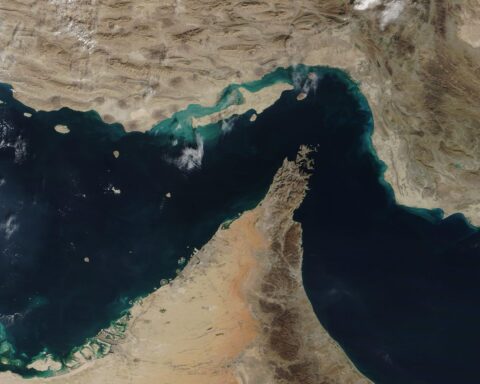
DHAHRAN — Saudi Arabia’s crude exports to its four largest Asian buyers are collapsing at a pace that pricing adjustments alone cannot reverse. Chinese nominations for June have fallen to roughly 600,000 barrels per day — half of April levels and barely a third of February’s 1.6 million b/d — while India, Japan, and South Korea have each cut loadings by 30 to 35 percent over two months. Sinopec, the kingdom’s single largest customer, slashed monthly offtake from 10 million barrels in February to 2 million in June.
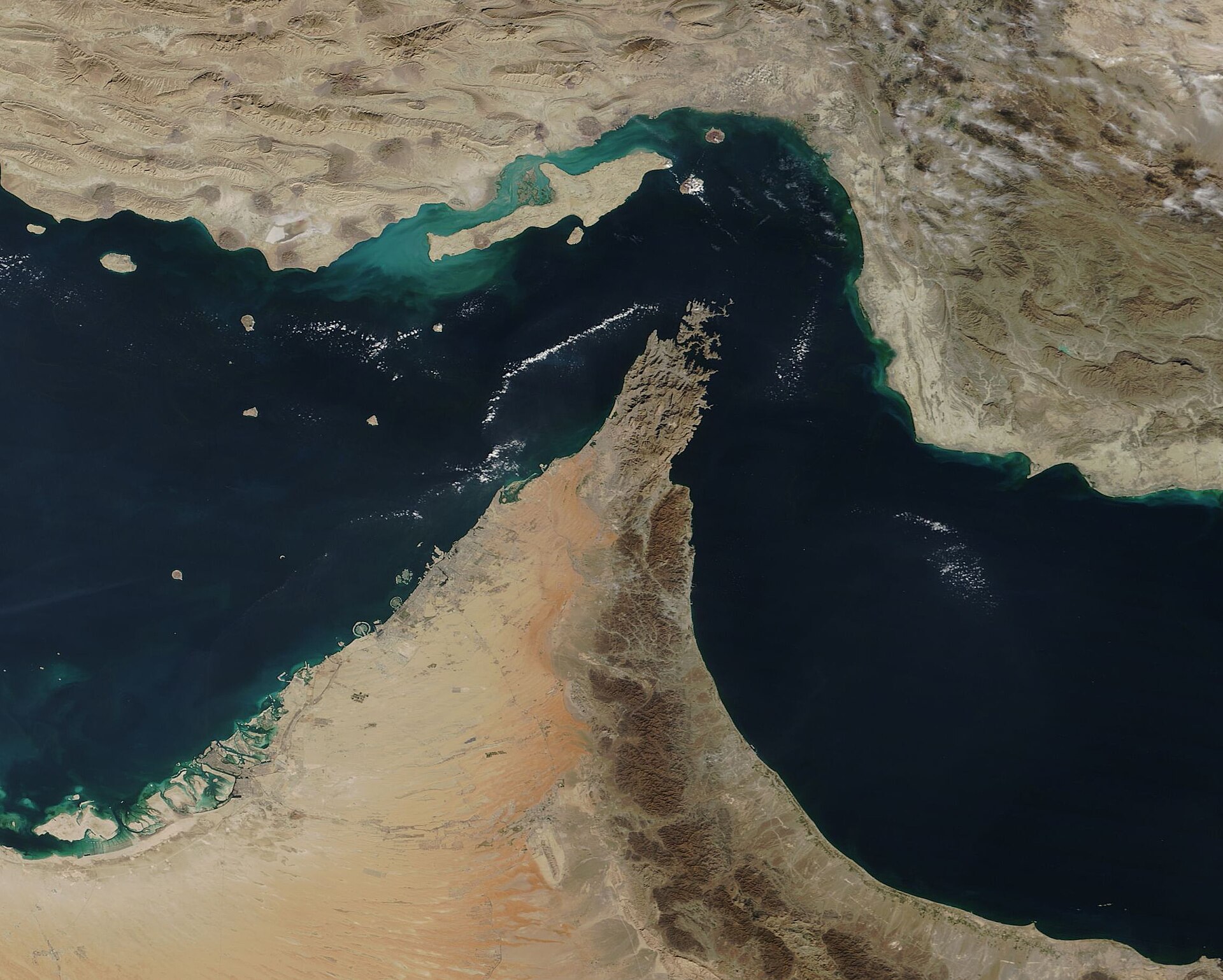
The standard explanation — war disruption, Hormuz risk, transit uncertainty — no longer holds. Aramco’s East-West Pipeline hit full capacity on March 10, rerouting the bulk of Saudi exports through Yanbu on the Red Sea. The logistics problem is solved. What remains is a pricing crisis that compounds with each month Asian refiners spend standardizing on cheaper Russian, Iraqi, and Emirati grades — and a fiscal trap that prevents Aramco from cutting Official Selling Prices deep enough to reverse the exodus.
Table of Contents
- The Scale of the Collapse
- Why Did Sinopec Cut Saudi Nominations by 80 Percent?
- The East-West Pipeline Paradox
- What Does the ESPO Spread Mean for Saudi Market Share?
- The Three-Constraint Bind
- Can Aramco Cut OSPs Without Breaking the Budget?
- Who Is Filling the Gap Saudi Arabia Left?
- The Irreversibility Problem
- The Aramco Dividend Cascade
- Frequently Asked Questions
The Scale of the Collapse
The numbers are not ambiguous. Bloomberg reported on May 11 that Saudi crude exports to China — the kingdom’s largest single customer — are projected at roughly 600,000 b/d for June, down from approximately 1.2 million b/d in April and 1.6 million b/d in February. The trajectory is not a seasonal dip. It is a halving repeated across consecutive months.
Kpler tanker-tracking data shows the deterioration extends across all major Asian buyers. South Korean loadings from Saudi Arabia in May are projected at approximately 530,000 b/d, a 32 percent decline from April’s 780,000 b/d. Indian imports have fallen to roughly 450,000 b/d, down 33 percent from April. Japan — once a pillar of Saudi crude demand at 1.0 to 1.2 million b/d before the war — booked only two Saudi cargoes for May, equivalent to approximately 130,000 b/d.
The decline is sharpest in absolute terms with China, but buyers across four countries — with different refining configurations and different political relationships with Riyadh — are all cutting against the same OSP schedule in the same quarter.
| Buyer | Feb 2026 (b/d) | Apr 2026 (b/d) | May/Jun 2026 est. (b/d) | Change |
|---|---|---|---|---|
| China | ~1,600,000 | ~1,200,000 | ~600,000 (Jun) | -63% (Feb–Jun) |
| South Korea | — | ~780,000 | ~530,000 (May) | -32% (Apr–May) |
| India | — | ~670,000 | ~450,000 (May) | -33% (Apr–May) |
| Japan | 1,000,000–1,200,000 (pre-crisis) | — | ~130,000 (May) | -87% vs. pre-crisis |
The IEA’s April Oil Market Report documented a 3.6 million b/d fall in Chinese seaborne crude imports from all origins between February and April — what the agency called “the largest demand shock to Asian crude markets since the COVID collapse.” Japan lost 1.9 million b/d across all suppliers over the same period; South Korea 1 million b/d; India 760,000 b/d. The total Asian import pool is shrinking. Saudi Arabia is losing share within it.
The Middle East briefing 3,000+ readers start their day with.
One email. Every weekday morning. Free.
“Almost every major Saudi buyer — China, Japan, South Korea, India and Taiwan — is cutting nominations for the months ahead.”
Kpler tanker-tracking assessment, May 2026
Why Did Sinopec Cut Saudi Nominations by 80 Percent?
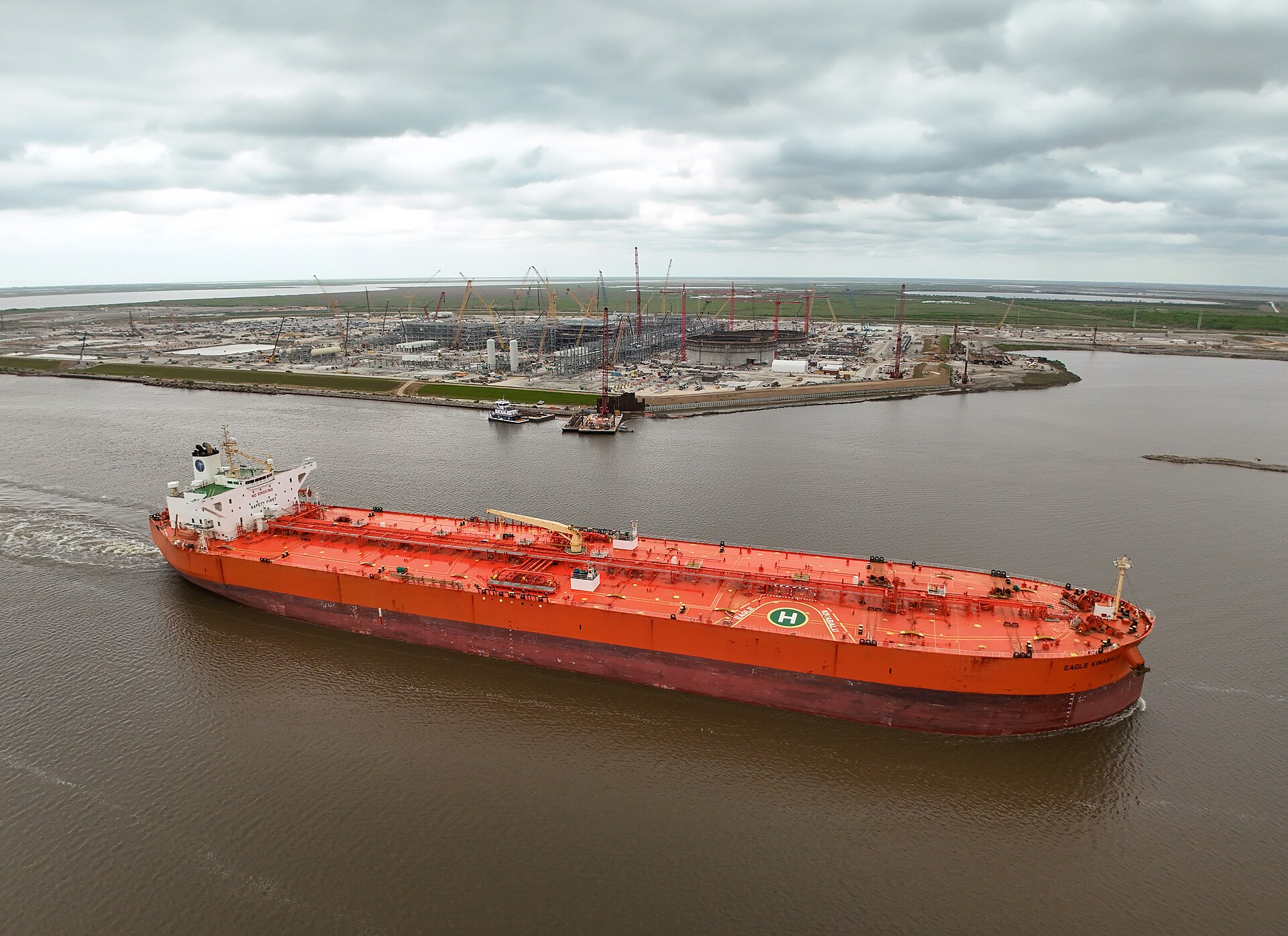
Sinopec cut nominations because the price no longer justifies the barrel. Arab Light’s June 2026 Official Selling Price for Asia sits at $15.50 per barrel above the Oman/Dubai average — down $4.00 from May’s record $19.50 premium, yet still five to six times the $2–3 norm that prevailed through 2023 and 2024.
A Bloomberg headline on April 6 captured the pricing architecture’s origin: “Saudis Raise Oil Price to Record Premium as War Riles Markets.” The premium was built on disruption — the assumption that Hormuz risk, insurance surcharges, and transit uncertainty would keep buyers locked in regardless of differential. For the first two months of the US-Iran conflict, that assumption held. Aramco’s Q1 2026 net income reached $33.6 billion, up 26 percent year-on-year, on the strength of those elevated differentials.
Then the East-West Pipeline reached capacity. Once Saudi crude began loading at Yanbu in full volume, the disruption premium lost its physical basis. Buyers were no longer paying for Hormuz risk — they were paying for a pricing structure set when that risk was real. Reuters reported that industry sources expected Aramco to “trim June OSP to Asia from record highs as spot premiums retreated and demand cooled following weeks of supply disruptions caused by the US-Iran conflict.” Aramco did trim. By the time it did, Sinopec had already reduced its offtake by 80 percent, and Rongsheng Petrochemical — China’s largest independent refiner — had cut from 7 million barrels in February to 1 million in June.
The East-West Pipeline Paradox
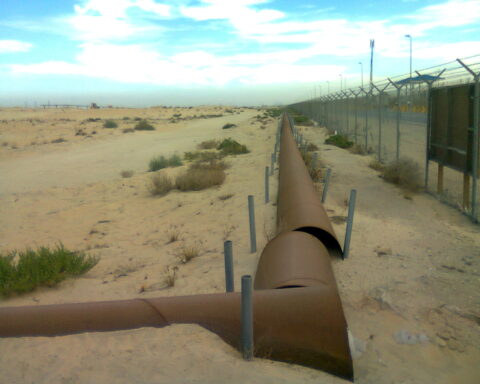
Aramco CEO Amin Nasser confirmed on March 10 that the East-West Pipeline — running 1,200 kilometers from Abqaiq in the Eastern Province to Yanbu on the Red Sea — would reach “full capacity in the next couple of days.” S&P Global reported the ramp to 7.0 million b/d was complete by March 11.
The pipeline solved Saudi Arabia’s wartime logistics. Domestic refineries adjacent to the Yanbu terminal complex absorb roughly 2.0 million b/d of pipeline throughput; an additional 700,000 to 900,000 b/d in refined products moves through Red Sea product terminals. That leaves approximately 4.0 to 4.1 million b/d available for crude exports — near the effective crude-loading limit of the Yanbu terminal infrastructure. Approximately 2.5 million b/d of Saudi production remains Hormuz-dependent, a residual exposure but a fraction of the pre-pipeline vulnerability.
The bottleneck has shifted from the pipeline to the port. Yanbu’s effective crude-loading capacity is approximately 4.0 million b/d against a nominal 4.5 million b/d — the pipeline can pump more crude than the terminal complex can ship. The crude-export constraint at Yanbu means Saudi Arabia cannot simply replace lost Hormuz-route volumes barrel-for-barrel through the Red Sea corridor.
The constraint is structural rather than temporary: expanding Red Sea export capacity requires either upgrading Yanbu’s terminal infrastructure or building new port capacity further north — which is precisely what NEOM’s Red Sea port at Oxagon was designed to do, and why DataVolt’s $5 billion data-centre commitment and the Port of NEOM’s multimodal corridor have continued advancing even as the rest of the megaproject contracts.
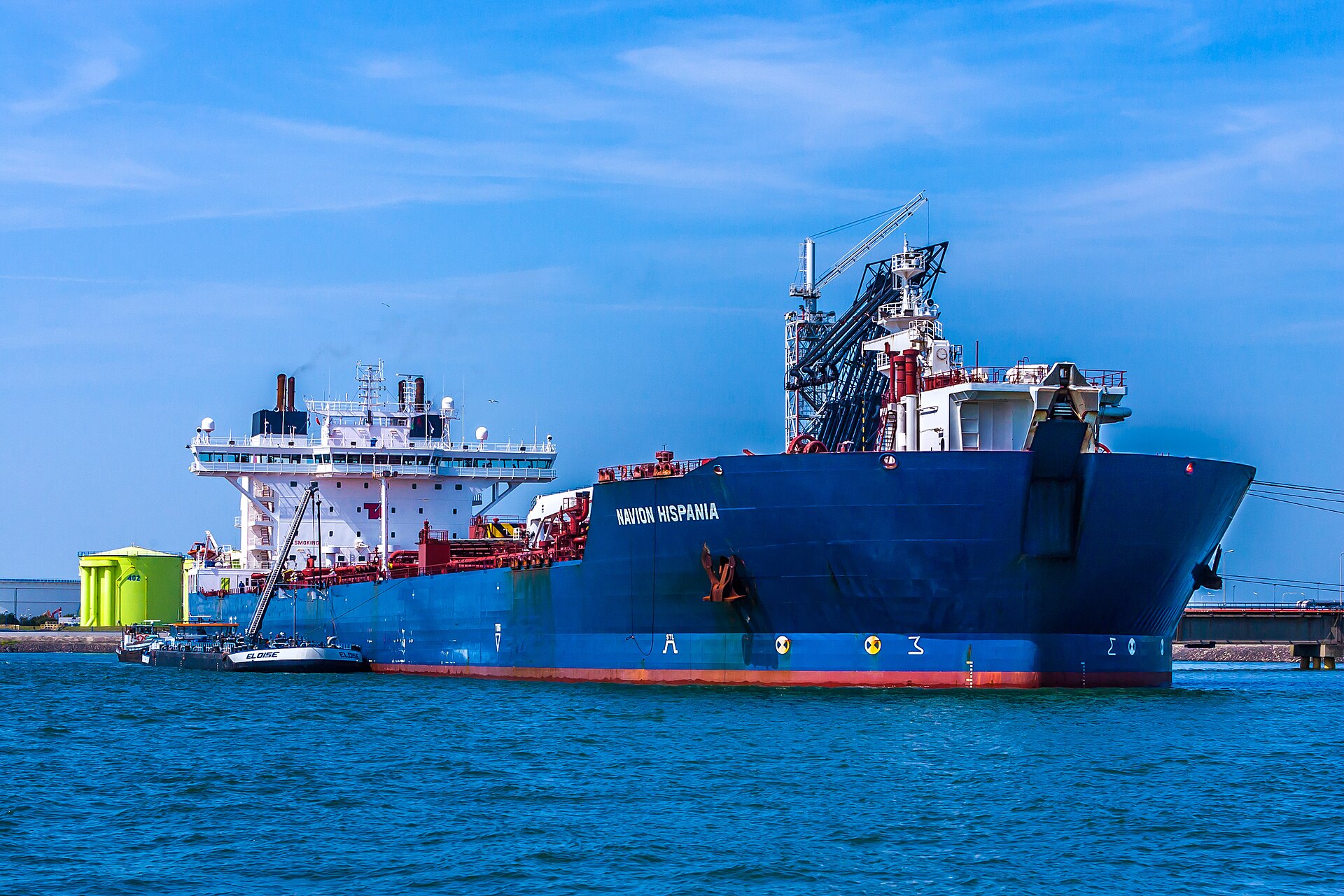
The paradox is in what the pipeline did not solve. Once Yanbu became the primary loading point, the disruption premium embedded in Aramco’s Asian OSPs lost its physical rationale. When Hormuz was the only route, the premium reflected real risk. When Yanbu handles the majority of crude exports, the premium reflects a pricing decision. The nominations data from Sinopec and Rongsheng confirms Asian procurement teams have reached the same conclusion.
The timing is precise. The pipeline reached capacity in early March. Sinopec’s nominations began declining the same month. By April, the spread between Arab Light’s delivered cost and competing grades had crossed the threshold that S&P Global’s historical analysis identifies as the semi-permanent switching point for Asian refiners: $5 to $7 per barrel.
What Does the ESPO Spread Mean for Saudi Market Share?
The spread between Arab Light and Russia’s ESPO Blend exceeded $5.50 per barrel in ESPO’s favor in April 2026, after adjusting for index differences. S&P Global’s historical analysis identifies that range as the threshold at which Asian refinery procurement teams stop spot-buying alternatives and begin restructuring their entire crude slates.
ESPO crude arrives at China’s northeast coast via pipeline to Kozmino port, loading VLCCs with zero Hormuz or Red Sea exposure. The Centre for Research on Energy and Clean Air reported Chinese ESPO imports rose 14 percent month-on-month in March 2026, reaching the second-highest volume since February 2022. Indian imports from Russia surged 148 percent month-on-month in the same period.
“India and China are now locked in competition over crude supplies, mainly from Russia and, to a lesser extent, Saudi Arabia.”
CNBC, April 23, 2026
The competitive repositioning extends beyond price. ESPO crude loads at Kozmino in Russia’s Far East and reaches Chinese and South Korean ports in a fraction of the time required for a Saudi cargo loaded at Yanbu and routed through the Red Sea, the Suez Canal, and across the Indian Ocean to East Asia. For refiners managing working-capital cycles and just-in-time crude inventory, the transit-time advantage compounds the per-barrel discount. South Korean refiners at Ulsan and Yeosu face the same calculation that Chinese buyers in Shandong and Dalian have already acted on.
The phrase “to a lesser extent” in CNBC’s framing would have been unthinkable eighteen months ago. In March 2020, during the last Saudi price war, S&P Global observed that “Asia finds Saudi crude much cheaper than Russian ESPO as Aramco launches price war.” Six years later, the pricing positions are inverted. The ESPO advantage has persisted for three consecutive months — April, May, and into June — and is widening as Aramco maintains differentials that Asian buyers are no longer willing to absorb.
The Three-Constraint Bind
Aramco’s pricing is trapped between three constraints that cannot be resolved simultaneously.
The first is fiscal. Saudi Arabia’s Q1 2026 deficit reached SAR 126 billion — approximately $33.5 billion — equal to 194 percent of the full-year deficit target. Bloomberg Economics estimates the fiscal breakeven oil price at $108 to $111 per barrel. Brent closed at $96.30 on May 28. Every dollar Aramco cuts from its Asian OSP narrows revenue against a breakeven already $12 to $15 above spot. The Iran deal that would resolve the transit crisis would worsen the pricing crisis: an MOU-driven Brent collapse to $65–80 would triple Saudi Arabia’s already-acute fiscal deficit while Aramco remains volume-constrained by Hormuz-dependent export geography.
The second is the PGSA. Iran’s Persian Gulf Shipping Authority has been collecting approximately $2 million per vessel transit since May 18 — a toll Saudi Arabia is excluded from governing and has denounced as illegal. Cutting OSPs to win back Asian buyers who are simultaneously paying the PGSA transit fee would effectively subsidize the cost of a toll that partially funds Iranian operations. The pricing geometry runs in one direction: Aramco’s discount, if offered, flows through the same supply chain as Iran’s collection. The mechanics of how Iran structures that toll system — charging million per transit for Saudi crude while exempting Indian cargoes through a separate rate tier — are documented in Iran’s three-tier Hormuz toll system and its effect on Saudi-Asia crude flows.
The third is OPEC+. Saudi Arabia’s June production increment is 62,000 b/d, bringing the target to 10.291 million b/d. Cutting OSPs to defend market share while OPEC+ holds production ceilings creates volume pressure within the quota — barrels priced to move but capped by a ceiling Riyadh has publicly championed. Saudi Arabia cannot flood the market to compensate for lower unit revenue without breaking the production framework it spent two years constructing.
| Constraint | Metric | Current Value |
|---|---|---|
| Fiscal breakeven | Brent price required | $108–111/bbl (Bloomberg Economics) |
| Current Brent | May 28 close | $96.30/bbl |
| Q1 deficit | SAR 126B (~$33.5B) | 194% of annual target |
| PGSA toll | Per vessel transit | ~$2 million (since May 18) |
| OPEC+ June target | Saudi production ceiling | 10.291 million b/d (+62K b/d) |
| Arab Light OSP (Jun, Asia) | Premium over Oman/Dubai | +$15.50/bbl (vs. 2023–24 norm of $2–3) |
The bind is self-reinforcing. High OSPs preserve per-barrel revenue but accelerate volume loss. Volume loss reduces total revenue even at elevated differentials. The Q1 deficit — accumulated in three months against a full-year target designed for a world without war — leaves no room for the aggressive discounting that reversed Saudi market-share losses after the 2014 price war.
Can Aramco Cut OSPs Without Breaking the Budget?
Not without consequences that cascade through the government’s entire fiscal architecture. The Q1 net income of $33.6 billion was earned on the same elevated OSPs that are now destroying Asian market share.
The base dividend tells the fuller story. Aramco declared $21.9 billion for Q1, up 3.5 percent year-on-year, implying an annual floor of $87.6 billion. That base funds both the Saudi government budget and distributions to the Public Investment Fund, which holds a 16 percent stake. Tim Callen of the Arab Gulf States Institute warned that “lower Aramco dividends to hit government budget and PIF” — a warning issued before the Asian nomination collapse accelerated. That dividend pressure compounds a borrowing crisis already in progress: by May 29, with Brent at $91 and the NDMC’s programme 90% complete against a deficit running at twice the planned rate, Saudi Arabia’s consolidated fiscal breakeven had been breached for the first time since the war began.
Domestic energy consumption compounds the pressure. Saudi fuel oil imports reached 360,000 b/d in May, 86 percent above year-ago levels, as domestic gas co-production fell during the war. Saudi Arabia is burning roughly 1 million b/d of fuel oil and crude for power generation — barrels that consume production capacity within the OPEC+ ceiling without generating export revenue.
Aramco’s $4.00 rollback — from +$19.50 to +$15.50 — was described by industry analysts as aggressive. At a 2023–2024 norm of $2 to $3, the current premium remains roughly five times the level at which Saudi crude was competitively positioned against ESPO, Basrah, and Murban grades. Closing that gap would require cuts on the order of $10 to $12 per barrel — a revenue sacrifice the fiscal position does not permit.
Who Is Filling the Gap Saudi Arabia Left?
Russia, Iran, Iraq, and the UAE are collectively absorbing the market share Saudi Arabia is vacating, each through a distinct mechanism and none requiring Hormuz transit. Russia’s ESPO pipeline delivers to Kozmino port on the Pacific coast; the UAE’s Murban goes through Fujairah on the Gulf of Oman; Iraq routes through the Turkish Mediterranean pipeline system.
Russia’s advantage is structural. ESPO crude loads onto VLCCs at Kozmino with zero Middle Eastern transit exposure and reaches Chinese northeast-coast ports faster than a Saudi cargo loaded at Yanbu and routed through the Red Sea and Suez. The March volume surges documented by CREA — plus the transit-time and working-capital advantages — compound the per-barrel discount in ways that OSP arithmetic alone understates.
Iran’s shadow fleet continued supplying Chinese independent refiners throughout the conflict. Iranian crude discharges in China reached 1.38 million b/d in 2025 before declining to 1.13 to 1.20 million b/d in early 2026 under intensified US enforcement. The US Treasury sanctioned approximately 40 shipping firms and a major Chinese refinery in May 2026 — but BRICS Pay infrastructure continues to insulate the financial architecture of the Iran-China crude trade from secondary sanctions pressure. Deep-discounted Iranian crude remains the preferred feedstock for China’s independent refiners — the so-called “teapots” — which operate outside the state procurement system and respond to price differentials faster than state-owned counterparts.
The UAE’s departure from OPEC on April 28 freed 1.35 million b/d of quota that can now be priced to capture share. Murban crude bypasses Hormuz entirely via Fujairah. Iraqi Basrah grades reach Asian markets through the Mediterranean at lower differentials. The combined supply constellation offers Asian refiners lower prices and, in most configurations, shorter or risk-free transit routes.
The Irreversibility Problem
The 2014 price war is the closest precedent, and its lesson is unfavorable. When Saudi Arabia chose volume over price to combat US shale, Brent fell below $30 per barrel by early 2016. The strategy failed on its own terms — US shale producers emerged leaner, Saudi Arabia burned through reserves, and the fiscal deficit reached approximately 15 percent of GDP. The less-examined consequence played out in Asia: market-share losses proved sticky. Saudi Arabia required extended cycles of aggressive discounting to partially recover volumes, and it never fully recaptured its pre-disruption share in several key markets.
The current dynamic is more severe because the switching is driven by pricing and specifications simultaneously. Asian refinery procurement teams that standardize on ESPO configurations or Iraqi and Emirati grade specifications face technical switching costs — adjusted refinery yields, recalibrated catalytic cracking parameters, renegotiated term contracts — that persist independently of the price differential. S&P Global’s historical analysis identifies the $5 to $7 per barrel range as the threshold at which switching becomes semi-permanent. The current Arab Light premium over ESPO exceeds that threshold by a factor of two to three.
The institutional dimension reinforces the technical one. Chinese state-owned refiners operate on annual procurement plans approved through multiple layers of internal review. Once a crude-slate shift is approved and implemented, reversing it requires a new approval cycle — a process that takes months to initiate and months to execute. Both Rongsheng and Sinopec have already moved through that cycle. What their nomination trajectories represent is not a pricing protest but a completed procurement restructuring.
The commercial stakes are highest at the term-contract level. The nominations now declining are being cut within existing 2026 contracts — buyers are voluntarily forgoing contracted volumes and absorbing whatever penalties apply rather than lifting barrels at current OSPs. When Q4 2026 negotiations begin for 2027 term agreements, the volume baselines will reflect May and June levels, not February’s. Rongsheng’s 1 million barrels per month becomes the opening position, not the 7 million it committed to twelve months earlier.
The Aramco Dividend Cascade
In 2025, Aramco’s total dividend was cut roughly one-third to approximately $84.5 billion, costing PIF — which holds a 16 percent stake — at least $6 billion in lost income. PIF reserves stood at approximately $15 billion, a figure AGSI analysts described as constraining the fund’s ability to anchor its seed-capital model for Vision 2030 investments.
The December 2024 PIF board meeting — convened before the war, before the export collapse — approved a minimum 20 percent reduction in spending across its portfolio of more than 100 companies, with a 15 percent capital-spending cut acknowledged separately. Tim Callen at AGSI offered a summary that has aged faster than intended: “Previous ambitions were too lofty.” The NEOM contractions that followed — more than $8.45 billion in terminated contracts since late March — predated the Asian export crisis now compressing the revenue base that was supposed to finance the remaining portfolio.
The Q1 earnings figure is both the headline and the problem. The performance-linked dividend cut of approximately 30 percent for the June 9 payout is the first visible consequence of that tension. If second-half 2026 Asian contracts are renegotiated at the lower nomination levels now prevailing, even the base dividend — the $87.6 billion annual floor underwriting both the government budget and PIF distributions — faces pressure entering fiscal year 2027.
The base dividend was designed for an export environment in which 7-plus million b/d moved to buyers absorbing $2-to-$3 premiums. That environment no longer exists. The four largest Asian customers are collectively lifting roughly half the barrels they took four months ago, at a differential five times the historical norm, having already completed the procurement restructurings that make reversal expensive and slow. If June’s nomination levels become the 2027 contract baseline — and the switching-threshold literature suggests they will — the $87.6 billion annual floor is not a floor at all. How that floor is structured, and what happens when Aramco’s quarterly free cash flow falls below the dividend it must pay, is the subject of Aramco’s Dividend Is Now Larger Than Its Cash Flow.
Frequently Asked Questions
What is the projected full-year Saudi fiscal deficit for 2026?
Goldman Sachs estimates a fiscal deficit of 6.6 percent of GDP for 2026, which at current economic output would approach $80 to $90 billion. At Q1’s annualized pace, the deficit could reach approximately $130 billion — roughly four times the full-year target of approximately SAR 65 billion ($17.3 billion) set in the December 2025 budget. These projections do not yet account for the Asian export-volume decline that began accelerating after Q1 closed. If June’s nomination levels become the baseline for the second half of the year, the revenue shortfall will widen the Goldman estimate further, particularly given the Brent forward curve’s decline below Saudi Arabia’s fiscal breakeven range through the end of 2026.
When is the next OPEC+ decision that could affect Saudi production?
The OPEC+ Joint Ministerial Monitoring Committee meets on June 7, 2026. Saudi Arabia’s actual production sits well below its 10.291 million b/d quota ceiling, a gap reflecting wartime logistics constraints, the Yanbu port bottleneck, and domestic consumption that now absorbs roughly 1 million b/d for power generation. The June 7 session is expected to address whether additional monthly step-ups beyond the 62,000 b/d June increment will proceed. For Riyadh, the meeting presents an unresolvable dilemma: advocating supply restraint protects per-barrel revenue but concedes market-share losses already underway to Russia and the UAE, both of which are operating outside the OPEC+ framework.
Could a signed US-Iran deal reverse the Asian export decline?
A deal that lifts Hormuz restrictions would remove the PGSA toll and reduce insurance surcharges, lowering delivered costs for all Gulf exporters including Saudi Arabia. But it would simultaneously strip the last physical justification for Aramco’s elevated OSP — the residual disruption premium still embedded in the $15.50 differential. A sanctions-relief scenario would also release Iranian crude volumes onto the Asian market at scale. Iran’s pre-enforcement discharges to China averaged 1.38 million b/d in 2025; full relief could push that figure higher, adding supply to a market already rejecting Saudi barrels on price. Saudi Arabia has been excluded from all five rounds of US-Iran negotiations and has no mechanism to influence post-deal pricing terms.
Has Saudi Arabia lost Asian market share before, and how long did recovery take?
The 2014 episode took roughly eighteen months to partially reverse — and was never fully reversed, as detailed above. The 2020 price war offers a different precedent: Saudi Arabia cut OSPs to negative territory for several weeks, briefly making Arab Light the cheapest grade in Asia, and recovered volumes within two quarters. The 2020 recovery was possible because the fiscal position allowed sustained discounting and no competitor had a structural transit-free routing advantage. Neither condition holds in 2026. ESPO’s pipeline-to-Kozmino architecture cannot be replicated by Aramco through any pricing intervention, and the fiscal breakeven gap eliminates the negative-OSP option that worked in 2020.
Why pipeline rerouting is insufficient to compensate for the Hormuz closure — and how the mechanism that closed the strait operates independently of any military order — is the subject of The Invisible Blockade: How Hormuz Closed Without Anyone Ordering It Shut.