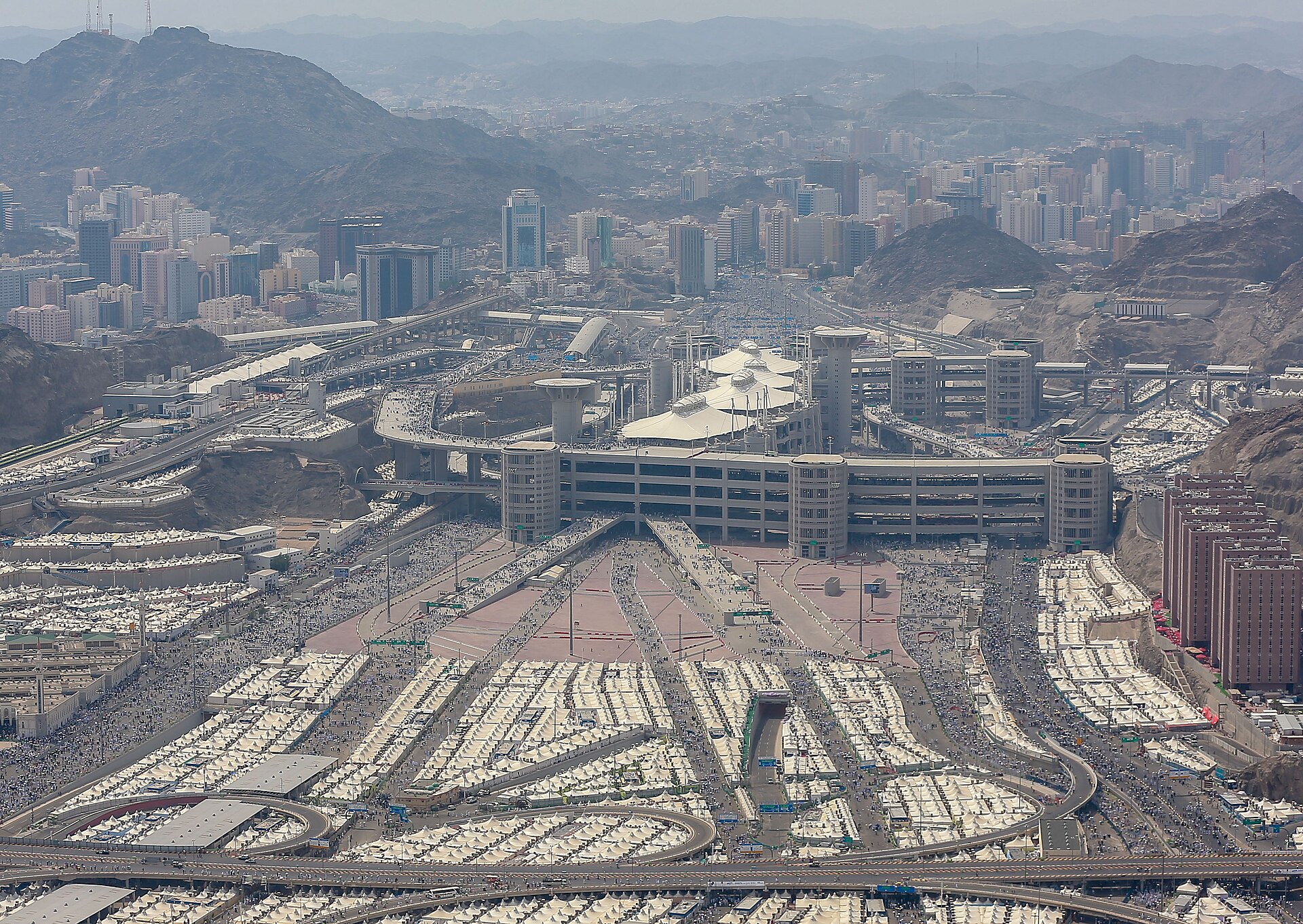
JEDDAH — Saudi Arabia’s Ministry of Defence confirmed that its servicemen have died in the 2026 Iran war — not through a press conference, a casualty release, or a statement from the Royal Court, but through a Hajj logistics notice announcing that “camps with the latest specifications” had been prepared in Mina for the families of “martyrs and injured personnel.” The disclosure, buried in routine operational coverage of the Kingdom’s pilgrimage preparations, is the first official Saudi government document to acknowledge casualties from a war the Kingdom has never declared, never named, and never assigned a number to — published under the authority of Defence Minister Prince Khalid bin Salman and the Director of the Joint Staff, in a tent city where 1.7 million pilgrims performed their rites under around-the-clock PAC-3 air defence coverage for the first time in modern Hajj history. One valley away, Crown Prince Mohammed bin Salman held his Eid al-Adha reception at the Mina Palace and thanked his generals for service “clearly evident during the crises the region is experiencing,” without naming the crises, the adversary, or the dead.
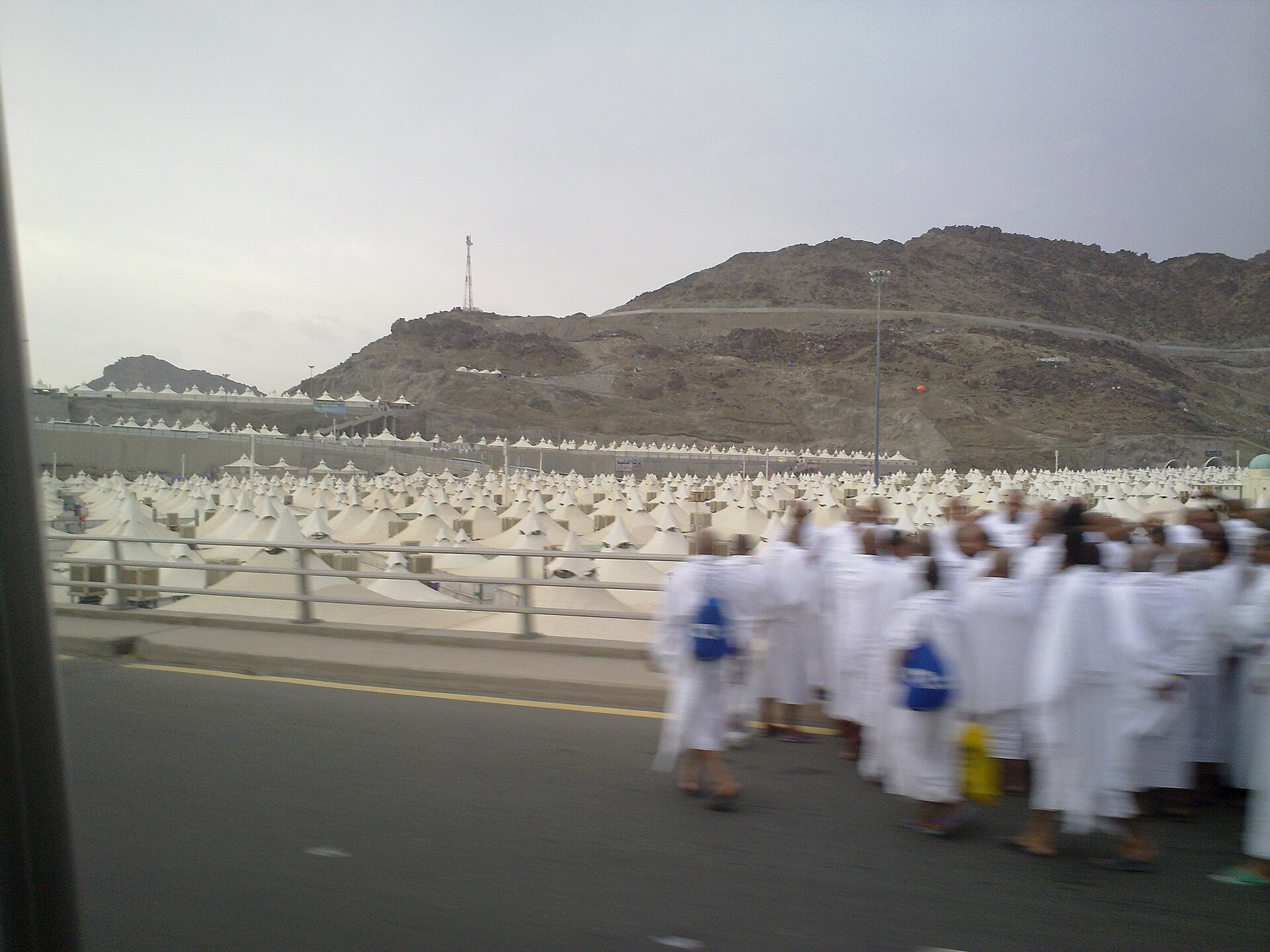
Table of Contents
- What Did the Ministry of Defence Actually Announce?
- The Genre of Disclosure
- Why Does Saudi Arabia Have No Casualty Framework for the Iran War?
- The Custodian’s Register
- What Happened at the Mina Palace?
- The Yemen Template
- Who Counts the Saudi Dead?
- The Symmetrical Silence
- 1987: The Precedent Beneath the Precedent
- Frequently Asked Questions
What Did the Ministry of Defence Actually Announce?
Two versions of the same announcement circulated in late May 2026, differing in specificity but converging on a single fact. Saudi Gazette reported that the Ministry of Defence’s Hajj operational plan “hosts employees, children of Saudi and Yemeni martyrs and wounded, and pilgrims from more than 20 countries,” with “camps with the latest specifications” prepared in Mina to “ensure the best services so these individuals can efficiently perform their rituals.” Gulf News was more explicit: “Saudi Arabia will host members of its armed forces as well as families of martyrs and injured personnel from Saudi, Yemeni and coalition forces involved in Operations Decisive Storm and Restoring Hope in specially equipped camps in Mina.”
The Gulf News version names the Yemen operations — Decisive Storm and Restoring Hope — because those operations have names. They were launched in March 2015 with a formal announcement, a coalition command structure, and a Saudi-assigned operational title. The 2026 Iran war has none of these things. Yet the institutional vocabulary is identical: the same word — “martyrs” — applied to the dead from a conflict that has no operational designation, no formal casus belli, and no legal existence under Saudi domestic law.
“Camps with the latest specifications have been prepared in Mina to ensure the best services so these individuals can efficiently perform their rituals.” — Saudi Ministry of Defence, Hajj 2026 operational plan
The announcement was attributed to the office of Prince Khalid bin Salman as Defence Minister, and the Hajj Supervisory Committee was chaired by the Director of the Joint Staff of the Armed Forces — the Kingdom’s highest-ranking uniformed officer. The Committee manages the military’s role in the world’s largest annual security operation, not press releases for marginal hospitality programmes. The document that carries their authority is, by any reading, an official acknowledgment — and the only one Saudi Arabia has produced for the dead of a war it has been fighting while pretending not to be at war.
The Genre of Disclosure
The question this editorial asks is not whether Saudi servicemen have died — the Ministry of Defence’s own logistics document confirms they have — but what kind of political reality requires a religious hospitality notice as its evidentiary vehicle. Saudi Arabia did not issue a statement from the Ministry of Defence’s public affairs directorate. It did not publish a casualty roll. It did not hold a press conference. It did not issue condolence telegrams through the Royal Court, as it has done for killed commanders during the Yemen intervention. It issued a Hajj itinerary.
The Middle East briefing 3,000+ readers start their day with.
One email. Every weekday morning. Free.
This is a genre problem, not a communications failure. The Hajj logistics notice belongs to a register of Saudi governance that predates the modern state: the Custodian of the Two Holy Mosques’ obligation to facilitate pilgrimage. The King’s Guests Programme — through which martyr families receive their Hajj invitations — is administered by the Ministry of Islamic Affairs, not the Ministry of Defence or the Ministry of Foreign Affairs. The channel is inherently de-politicised in its institutional framing, which is precisely what makes it suitable for politically explosive content. A war Saudi Arabia cannot declare produces dead it cannot announce, and the only institutional space that can hold both the fact of sacrifice and the absence of legal acknowledgment is the space reserved for the Custodian’s religious duties.
The programme has precedent for this function. In 2023, King Salman issued a royal order to host 2,000 pilgrims from families of those martyred in Yemen’s Decisive Storm — 1,000 Saudi families, 1,000 Yemeni. In 2024, the same framework hosted 1,000 pilgrims from families of martyrs and injured in Gaza. In 2026, the programme expanded to include 2,500 pilgrims from 104 countries, of whom 1,000 were Sudanese family members of those killed or wounded in the Yemen operations. Each extension widened the channel, and the 2026 Mina camp announcement pushes it into territory none of its predecessors had to navigate: a war that is happening now, on Saudi soil, with Saudi dead — and no name.
Why Does Saudi Arabia Have No Casualty Framework for the Iran War?
Article 61 of the Basic Law of Governance states: “The King may declare the state of emergency, general mobilization, and war. The Law shall set forth the provisions thereof.” King Salman has not issued such a decree. Article 62 permits “urgent measures” in the face of threats — the implicit operative provision — but urgent measures create no legal architecture for the consequences of war: no entitlement structure for martyr families, no official recognition of belligerency, no legal category under Saudi law for “killed in the Iran war,” because the Iran war does not formally exist in Saudi law.
This is not an oversight; it is a structural choice. Saudi Arabia entered the 2026 conflict through a series of escalating acts — opening Taif air base to coalition strike operations, launching Royal Saudi Air Force sorties against Iranian drone and missile-launch sites, deploying PAC-3 batteries that have fired approximately 2,400 rounds against 894 incoming threats — while maintaining the legal posture of a country that has not gone to war. The MEMRI Inquiry and Analysis published on March 2, 2026, documented the Kingdom’s shift from neutrality to an existential-threat framing of Iran, but observed that this shift was expressed through media commentary and formulaic MOFA language, not through formal legal instruments. Senior Saudi journalist Abd Al-Rahman Al-Rashed posted an illustration of a gravestone inscribed “The Islamic Republic: 1979–2026” while the government he writes for has said nothing official about its own dead.
The gap between act and acknowledgment has a specific constitutional geometry. The King holds war-declaration authority under Article 61. The Crown Prince holds de facto executive power. No decree means no formal war, which means no casualty framework, which means no obligation to count, name, or publicly mourn the dead — unless you route the acknowledgment through a channel that exists outside the military-legal apparatus entirely. The Mina camp is that channel.
The Custodian’s Register
King Fahd formally adopted the title “Custodian of the Two Holy Mosques” in 1986, replacing the regal “His Majesty.” The timing was not incidental: Ayatollah Khomeini had spent the better part of a decade arguing that the House of Saud was morally and operationally unfit to govern Islam’s holiest sites, and the 1979 Grand Mosque seizure — which required French GIGN commandos to resolve — had demonstrated a gap between title and capacity that Iran was eager to exploit. The Custodian designation was a counter-argument in a single word: the King’s primary function was not sovereignty but stewardship, and stewardship was a religious duty that transcended politics.
That counter-argument created a political register that has proved remarkably durable. The Custodian can do things the King cannot, because the Custodian operates in a vocabulary of religious obligation rather than state authority. Hosting martyr families for Hajj is an act of Custodial piety — an expression of the King’s care for those who sacrificed in defence of the holy sites and the Kingdom. It is not a military acknowledgment and carries no implication of a declared war, because the Custodian’s obligations exist independently of the state’s legal posture. The dead are acknowledged not as casualties of a war but as objects of royal religious patronage, invited to perform Hajj by the grace of the man responsible for the holy sites themselves. This is the register that makes the wartime Hajj structurally navigable for Riyadh.
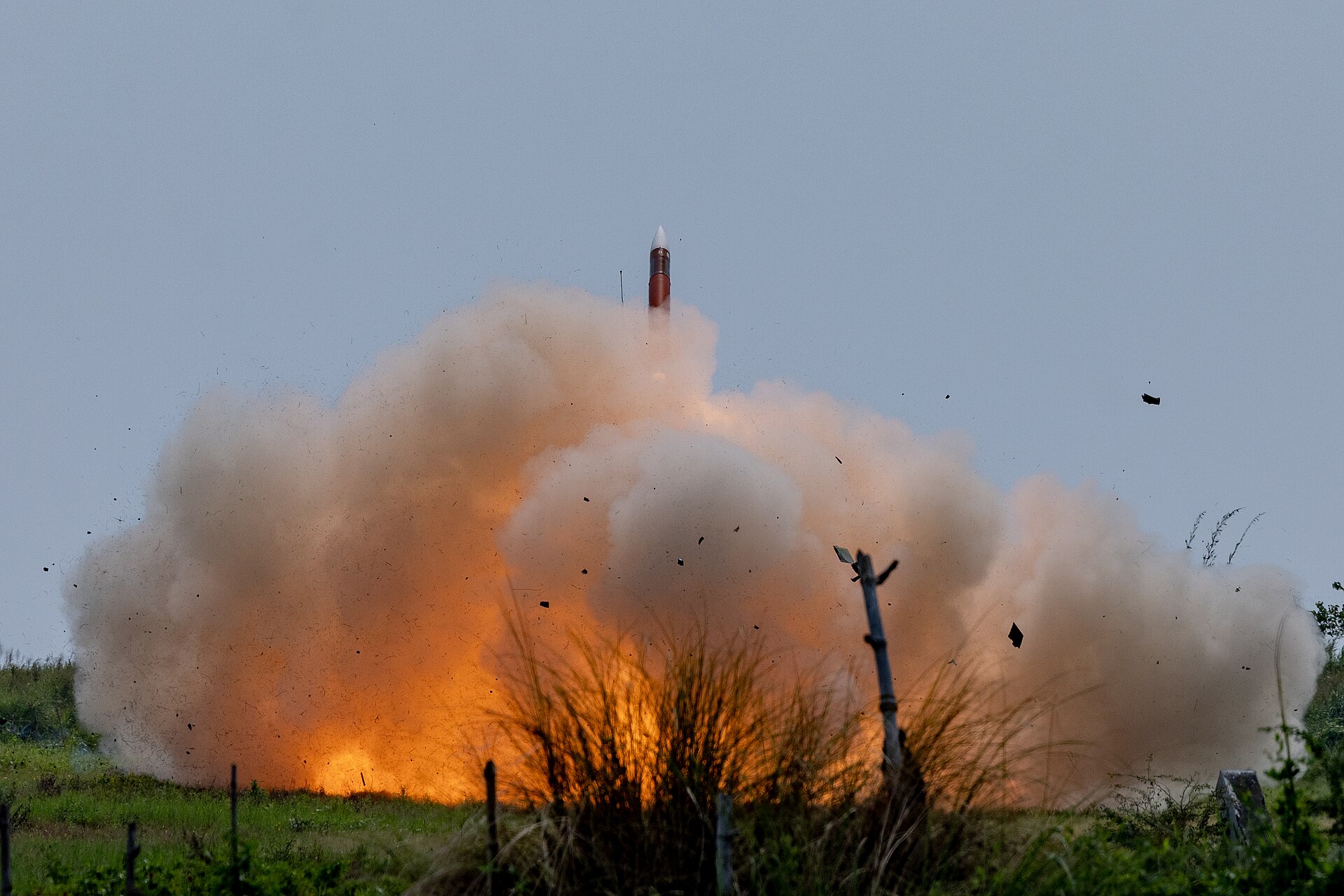
The 2026 Hajj added a layer no previous iteration had to manage. For the first time in modern pilgrimage history, PAC-3 air defence batteries operated around the clock during Hajj, with the Ministry of Defence’s air defence forces describing themselves as “an eye that never sleeps, its mission is the safety of Muslim pilgrims.” Around 400 interceptor rounds remained from a pre-war inventory of 2,800 — an 86 percent drawdown over the conflict’s first 90 days. The Custodian was hosting martyr families in Mina while actively defending the holy sites from the same adversary that created those martyrs, using an interceptor stockpile whose rate of depletion raised its own question: whether the Custodian could fulfil his protective obligation through a second Hajj season.
What Happened at the Mina Palace?
On May 28–29, 2026, Crown Prince Mohammed bin Salman held his annual Eid al-Adha reception at the Mina Palace on behalf of King Salman. Attendees included “commanders of the military sectors” who had participated in the Hajj security operation. MBS thanked “members of the military and security sectors” for “ensuring the safety and security of pilgrims” and praised their role in “protecting Saudi Arabia amid regional tensions” — a phrase he supplemented with the more revealing formulation that their service was “clearly evident during the crises the region is experiencing.” That language, reported in full by Al Arabiya, represented the first royal acknowledgment that Saudi Arabia’s military was engaged in active combat operations beyond routine security — while remaining carefully bounded by the absence of a named adversary, a named war, or a named loss.
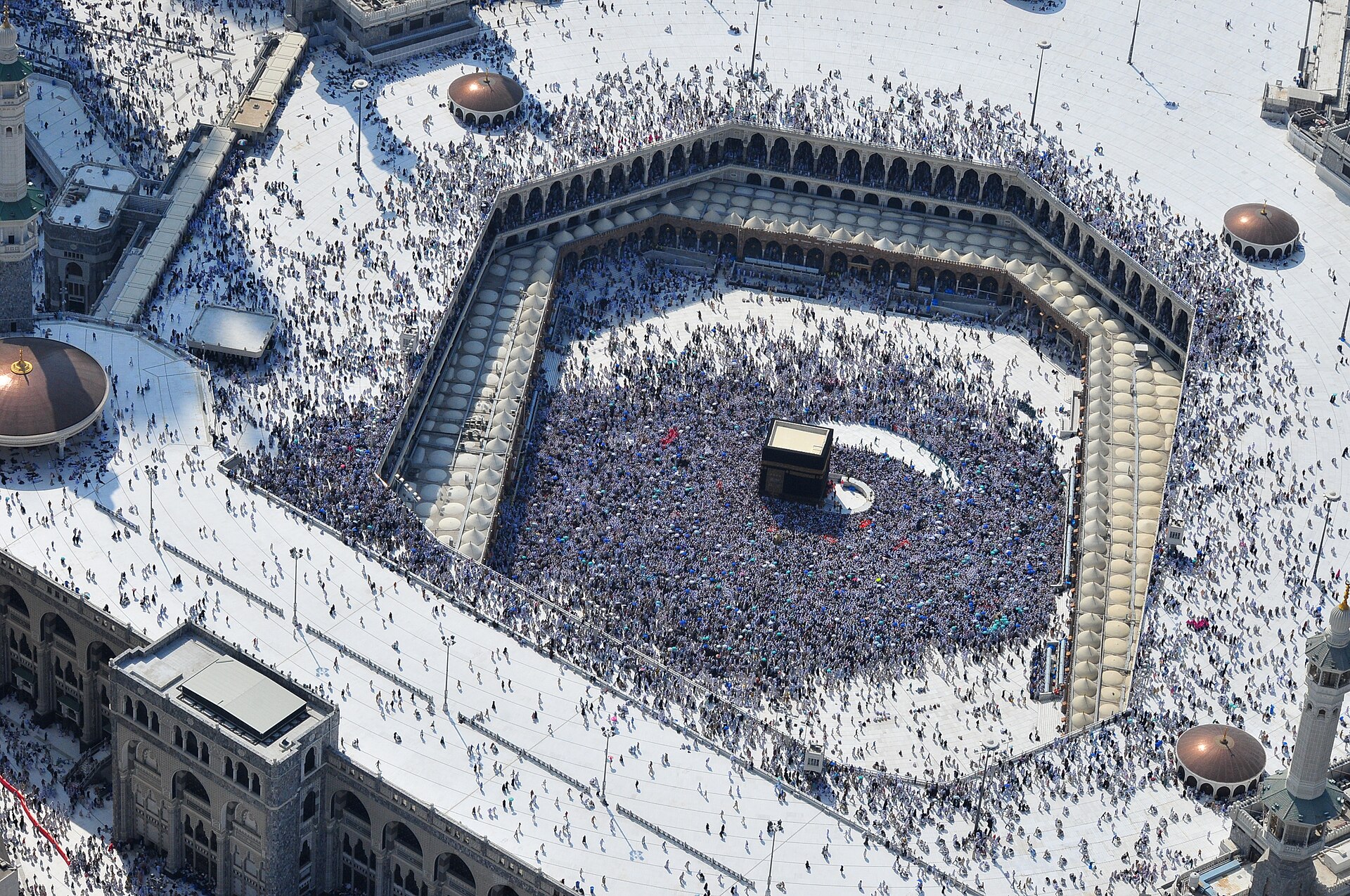
One valley away from the reception, the families of those who had died in the same crises were performing their pilgrimage rites in Ministry of Defence camps fitted with “the latest specifications.” The spatial proximity is not coincidental. Mina is a confined geography: the tent city, the Jamarat Bridge, and the Mina Palace sit within a single kilometre of each other. The Crown Prince’s reception and the martyrs’ camp occupied the same ceremonial space during the same 48-hour window — one acknowledging the living commanders of a war with no name, the other acknowledging the dead from the same unnamed war, neither event speaking the word that connected them.
The Mina Palace is itself a politically loaded venue. The Crown Prince’s use of it to address military commanders on Eid — the culmination of Hajj — places the military acknowledgment inside the Custodian’s ceremonial architecture. This is not the Royal Court in Riyadh or the Ministry of Defence in the capital. It is the Custodian’s seat in the holy precincts, where the King’s stewardship role provides a register that bypasses normal state-communication channels and their attendant legal obligations.
The Yemen Template
Saudi Arabia’s handling of casualties from the Yemen intervention, which began with Operation Decisive Storm in March 2015, established the institutional template now being applied to the 2026 Iran war. Throughout eleven years of operations in Yemen, Riyadh systematically avoided publishing consolidated official casualty figures for its own forces. Individual deaths were acknowledged through local media tributes, social media condolences from provincial governors, and — most institutionally — through the Custodian’s Guests Programme, which invited martyr families to perform Hajj at the King’s expense. The 2023 royal order hosting 2,000 pilgrims from Yemen-operation martyr families is the most explicit example of this channel in action.
The Yemen template works because the Yemen intervention had a name. Operations Decisive Storm and Restoring Hope gave the conflict an institutional identity that allowed the bureaucracy to process its consequences — designating martyr families, calculating entitlements, issuing invitations — without requiring the political leadership to engage in the kind of public casualty accounting that democratic belligerents face. The 2026 Iran war lacks even this minimal architecture. There is no operation name to attach to the dead, no formal coalition structure (despite Saudi Arabia’s participation in strikes from Taif alongside US forces), and no legal instrument establishing the conflict as an event that produces entitled survivors. The death of Hadi on May 28 — the man whose 2015 letter to the Arab League and UN gave Decisive Storm its legal foundation — underscores how different 2026 is: Saudi Arabia’s legal permission to fight died before Hadi did, and no one has issued a replacement.
The Gulf News version of the 2026 Mina camp announcement navigates this gap by anchoring the new cohort to the old framework: “families of martyrs and injured personnel from Saudi, Yemeni and coalition forces involved in Operations Decisive Storm and Restoring Hope.” Read carefully, this language does not explicitly state that the 2026 Mina camp includes families of those killed in the Iran war — it uses the Yemen operations as institutional cover, extending the established programme to accommodate a new category of dead without specifying which conflict produced them. The Saudi Gazette version is slightly more expansive — “children of Saudi and Yemeni martyrs and wounded” — but equally silent on the source of the casualties. The disclosure is real. The specificity is deliberately absent.
| Conflict | Legal Basis | Operation Name | Casualty Count Published | Disclosure Channel |
|---|---|---|---|---|
| Gulf War (1991) | UNSCR 678 mandate | Desert Storm (coalition) | Yes — official figures released | Military communiqués, MOD statements |
| Yemen (2015–present) | No formal declaration | Decisive Storm / Restoring Hope | No consolidated figure | Local media tributes, Hajj hospitality invitations |
| Iran War (2026) | No decree under Art. 61 | None | No — “notably sparse” (Wikipedia) | Hajj logistics notice, Custodian’s Guests Programme |
Who Counts the Saudi Dead?
Wikipedia’s casualty table for the 2026 Iran war records “3 killed and 29 injured in strikes against Saudi Arabia” — with no breakdown between military and civilian casualties, no official Saudi government source cited, and a methodology note observing that Saudi casualty figures are “notably sparse” compared to coverage of other belligerents. The 29 injured figure appears to derive from reporting on the March 27 Iranian strike on Prince Sultan Air Base, which destroyed AWACS serial 81-0005 and damaged at least ten KC-135 tankers — an attack the IRGC described as targeting “US military assets,” not Saudi ones, even though Saudi air defence batteries were actively engaged and the base sits on Saudi sovereign territory.
The absence of a Saudi casualty count is not a gap in reporting; it is a feature of the disclosure architecture. No Saudi government body has published aggregate figures. No Ministry of Defence press conference has addressed combat losses. The MOFA has been silent on military matters for over ten consecutive days as of late May 2026, with no public attribution of Iranian attacks by name in formal ministry statements and no press conference on Saudi combat casualties. The only official document that confirms Saudi dead is the Mina camp announcement — and it confirms them as a category (martyrs’ families receiving Hajj hospitality), not as a number.
This creates an information vacuum that external sources fill imperfectly. Western reporting on the PSAB strikes focused on US casualties and US equipment losses — the E-3 Sentry, the KC-135 fleet — because the US Department of Defence confirmed its own numbers. The Saudi servicemen manning the Patriot batteries that night do not appear in the casualty tables of either side. They exist in the public record only as an inference: if there are martyr families being hosted in Mina camps, there are martyrs — but how many, from which units, killed in which engagements, Saudi Arabia has not said and shows no institutional mechanism for saying.
The Symmetrical Silence
Iran’s silence on Saudi casualties is as structurally deliberate as Riyadh’s own. Iranian state media — IRNA, Tasnim, Fars News — have consistently framed their strikes on Saudi territory as targeting “US airbases” and “coalition energy infrastructure,” a formulation that strips Saudi Arabia of belligerent status. The IRGC’s communiqués on the PSAB strikes described the facility as a US military installation. When the IRGC struck Camp Buehring in Kuwait on May 28, it described the target as a “US airbase,” not a Kuwaiti one. The pattern is consistent: Iran refuses to name its Gulf adversaries as adversaries, because doing so would complicate the diplomatic track and because elevating Saudi Arabia to the status of principal co-belligerent would activate legal and diplomatic consequences Tehran prefers to avoid.
The result is a symmetry of mutual convenience. Saudi Arabia does not publish its casualty figures because doing so would require a formal war framework it has deliberately avoided constructing. Iran does not amplify Saudi casualties because doing so would legitimize Saudi co-belligerency — elevating Riyadh from a US-adjacent target to a principal adversary, which gains Tehran nothing at a negotiating table where five rounds of talks have produced no signature in 106 days. Mojtaba Khamenei’s 14-page Arafah Day doctrine — declaring that “nations and lands will no longer serve as shields for American bases” — targeted US military presence on Gulf soil without naming Saudi casualties as a consequence, because naming them would concede that Iran is at war with Saudi Arabia rather than with the United States.
The 30,000 Iranian pilgrims who entered Saudi Arabia for Hajj 2026 — the lowest quota utilisation since normalisation, at 34 percent of the 87,550-pilgrim allocation — serve as a further expression of this architecture. Iran authorised their travel “in accordance with the command, approval, and viewpoint” of the Supreme Leader. Their presence on Saudi soil during wartime is both a gesture of restraint and a constraint: the Custodian’s obligation to protect them runs concurrently with the Custodian’s obligation to honour the families of those killed by Iranian weapons, in the same compressed Mina geography, during the same five days. The pilgrimage does geopolitical work that five rounds of nuclear talks in 106 days have not.
1987: The Precedent Beneath the Precedent
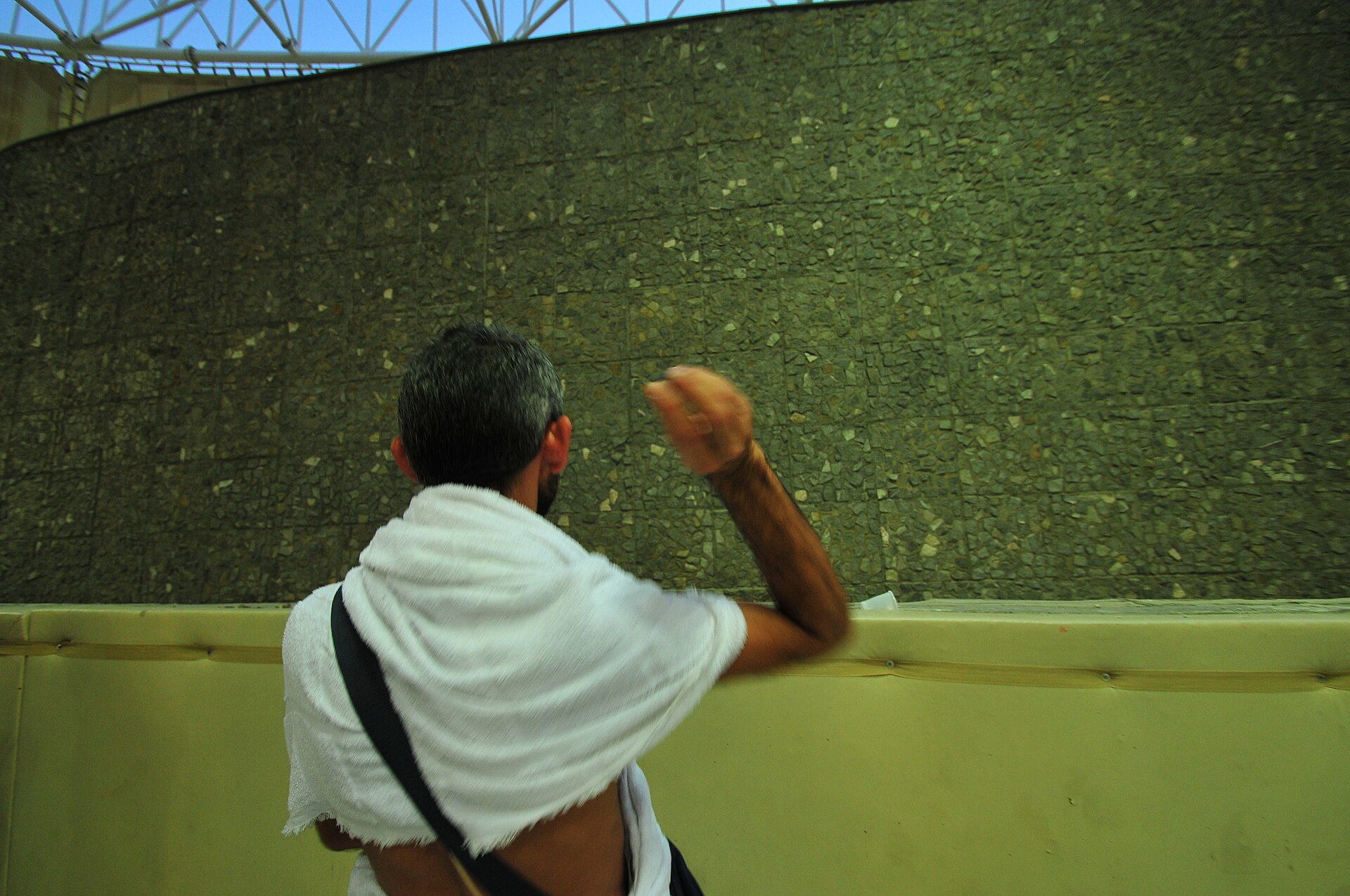
The 1987 Mecca incident killed 402 people — 275 Iranian pilgrims, 85 Saudi security personnel, and 42 nationals of other countries — during a political demonstration by Iranian pilgrims that escalated into a confrontation with Saudi security forces. Saudi Arabia severed diplomatic relations with Tehran. Iran’s Hajj quota was slashed from 150,000 to 45,000. Khomeini banned his own citizens from performing Hajj for three years, from 1988 to 1990, and relations were not restored until 1991. The incident demonstrated two things that remain operative forty years later: Hajj is the physical space where Saudi-Iranian confrontation becomes unavoidable, and the Custodian title is the instrument through which the consequences are absorbed.
Fahd had adopted the Custodian title only a year before the 1987 incident — a fact usually presented as coincidental but more accurately understood as preparatory. The Iran-Iraq War was in its sixth year. Khomeini’s campaign to delegitimise Saudi governance of the holy sites was at its peak. The title change was a pre-emptive institutional repositioning: if the challenge was to Saudi Arabia’s religious legitimacy, the response would be couched in religious vocabulary rather than royal prerogative. The register Fahd created in 1986 is the same register that makes the 2026 Mina camp announcement possible — a channel in which the dead are honoured through Custodial piety rather than military accounting, and in which the King’s obligations to the families of the fallen are framed as religious duty rather than the legal consequence of a war his government has chosen not to declare.
In 1991, Saudi Arabia fought under a UN Security Council mandate with a formal coalition command structure, a recognised casus belli, and international legitimacy that made casualty acknowledgment straightforward. There was no genre problem: it was a war Saudi Arabia could name, and its dead could be named within it. In 2026, the Kingdom fights a war that its own Basic Law does not recognise as existing, against an adversary that does not acknowledge Saudi Arabia as a belligerent, and its dead are processed through the same Hajj hospitality framework that hosts pilgrims from 104 countries — martyrs’ families and foreign guests alike, all guests of the Custodian, all performing rites in a valley where the air defence batteries overhead have 400 rounds left.
Frequently Asked Questions
How many Saudi servicemen have been killed in the 2026 Iran war?
No official Saudi figure exists. Wikipedia’s casualty table records “3 killed and 29 injured in strikes against Saudi Arabia,” but this is sourced from external reporting rather than Saudi government data and does not distinguish between military and civilian casualties. The 29 injured figure may correspond to US personnel wounded at Prince Sultan Air Base on March 27, not Saudi casualties, meaning the actual Saudi military death toll from 90 days of war may be significantly higher than the public record suggests. The Mina camp announcement confirms the existence of a martyr-family cohort — people whose relatives died in service — without providing any aggregate number, and Arab News reported that the Saudi Interior Ministry “confirms sustained care, loyalty to martyrs’ families during Hajj,” indicating a programme of sufficient scale to warrant its own institutional acknowledgment.
Has Saudi Arabia ever officially named the 2026 conflict with Iran?
No. Unlike the Yemen intervention, which was launched under the designated name “Operation Decisive Storm” in March 2015 and later transitioned to “Operation Restoring Hope,” the 2026 conflict has no Saudi-assigned operational title. The March 2026 MOFA statement referenced “brazen and cowardly attacks” and reserved “the right to respond with military force,” but this language operates under Article 62’s “urgent measures” provision, not Article 61’s war-declaration authority. The six-nation joint declaration of March 26, 2026, invoked Article 51 of the UN Charter — the self-defence provision — but self-defence is a legal posture, not a named operation, and no subsequent Saudi document has assigned a title to the conflict that would allow its casualties to be administratively categorised.
Why are Iranian pilgrims performing Hajj during a war with Saudi Arabia?
Iran’s Supreme National Security Council authorised 30,000 pilgrims to travel to Saudi Arabia for Hajj 2026, “in accordance with the command, approval, and viewpoint” of Supreme Leader Mojtaba Khamenei — the lowest utilisation of the 87,550-pilgrim quota since Saudi-Iranian diplomatic normalisation in 2023. The presence of Iranian citizens on Saudi soil during active hostilities serves multiple strategic functions: it signals that Iran does not intend to target the Hejaz, it places a duty of care on the Saudi Custodian that constrains military escalation options, and it maintains a diplomatic channel through the physical fact of shared sacred space. Kurniawan Arif Maspul, writing for Middle East Monitor, characterised the 2026 pilgrimage as functioning “as a de facto non-aggression pact, creating what could be described as a temporary sacred security architecture across the Gulf” — a framing that captures how the Hajj’s religious architecture does geopolitical work that neither government’s diplomatic apparatus has managed.
What is the Custodian of the Two Holy Mosques’ Guests Programme?
The programme — administered by the Ministry of Islamic Affairs, not the Ministry of Defence or MOFA — invites pilgrims to perform Hajj at the King’s expense under his Custodial authority. It has operated for decades as a tool of Saudi soft power, hosting pilgrims from countries with limited means. Since at least 2015, it has also served as the primary channel through which Saudi Arabia acknowledges martial sacrifice: the 2023 cohort included 2,000 pilgrims from Yemen-operation martyr families, the 2024 cohort included 1,000 from Gaza martyr families, and the 2026 cohort included 2,500 from 104 countries. Crucially, the programme’s religious framing — guests of the Custodian, not dependents of a war ministry — means that participation creates no legal entitlement, no formal recognition of belligerent status, and no obligation for the state to disclose how many of the Custodian’s guests are there because the Custodian’s government got their family members killed.
Did MBS acknowledge Saudi war dead at the Mina Palace reception?
Not in those terms. At his Eid al-Adha reception on May 28–29, 2026, MBS thanked “members of the military and security sectors” for service “clearly evident during the crises the region is experiencing” — language that acknowledges military engagement beyond routine Hajj security without naming the dead, the adversary, or the war. The Royal Court issued no separate condolence protocol for war dead, no telegram naming fallen commanders, and no statement from the King’s office acknowledging casualties — each of which would constitute an official record. What the reception produced was an oral acknowledgment in a ceremonial venue, reported through Al Arabiya, that could not be cited in a legal instrument and created no bureaucratic obligation to account for the fallen by name or number.