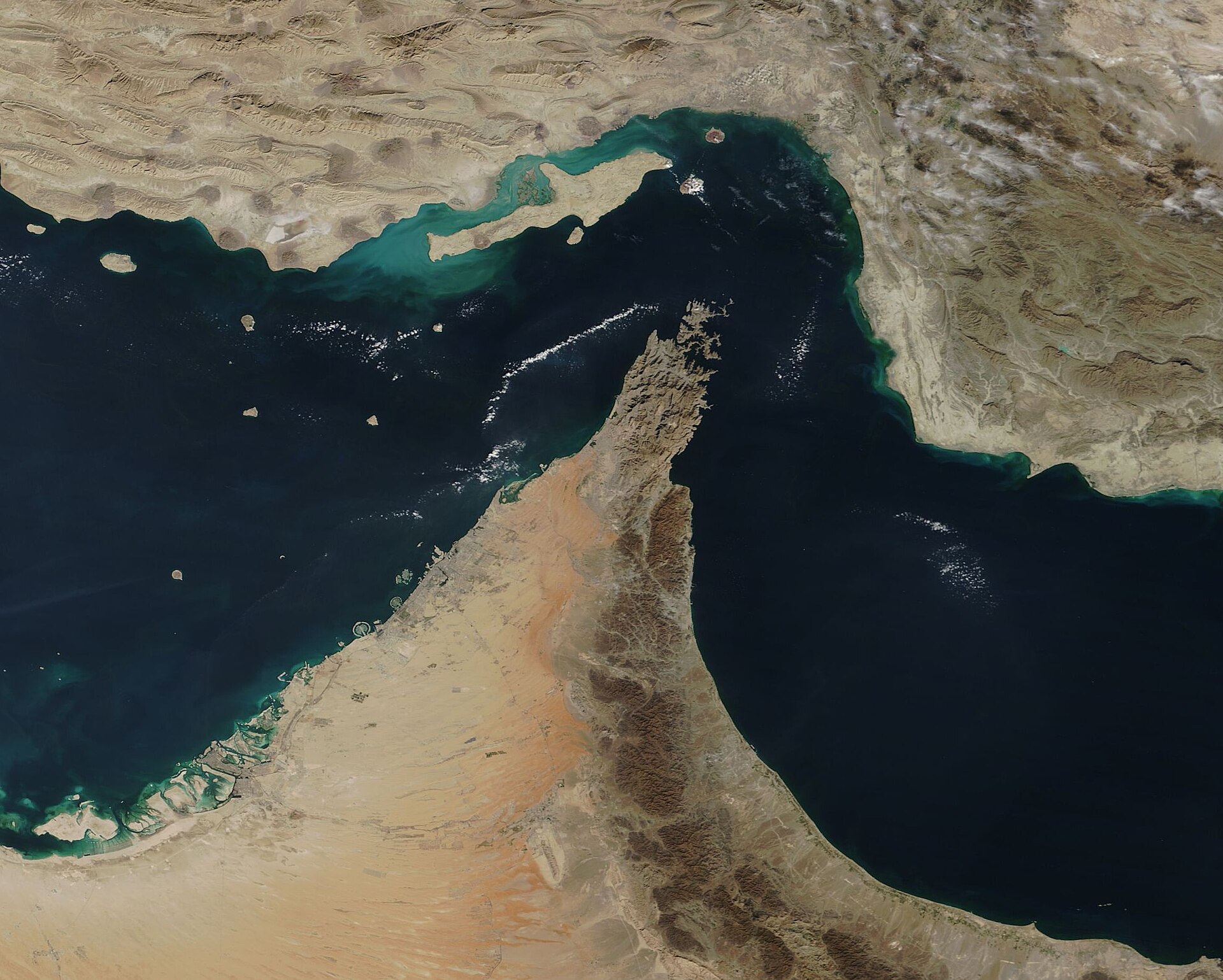
LONDON — The April 17 Paris summit on the Strait of Hormuz produced something its forty-one participating nations did not advertise and its two absent parties — Washington and Tehran — cannot easily dismiss: a competing legal architecture for who governs passage through the world’s most contested waterway. The summit’s chair statement committed signatories to coordinated mine clearance, joint information-sharing with the shipping industry, and diplomatic pressure through the United Nations for unimpeded transit — all framed not as a military operation but as a collective responsibility flowing from established international law. A multinational military planning summit at UK Permanent Joint Headquarters, Northwood, is scheduled for the week following, converting the political declaration into an operational mandate.
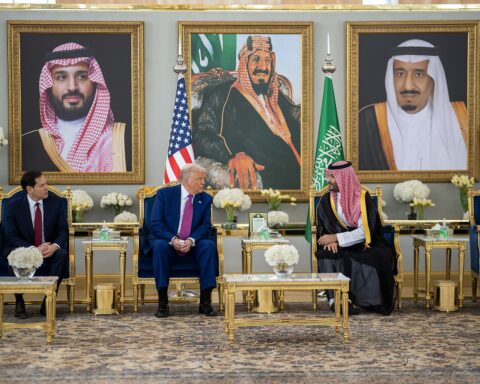
Two frameworks now claim jurisdiction over the same twenty-one miles of water. The European coalition treats mine clearance as an obligation arising from UNCLOS transit passage rights — a legal entitlement belonging to all states, enforceable by any coalition willing to act. The Trump administration’s “joint venture” proposal, floated on April 8, treats Hormuz transit as a bilateral commercial arrangement between Washington and Tehran, implicitly conceding that Iran holds authority to charge for passage. Saudi Arabia, which needs the mines cleared more urgently than any other state, signed neither framework. The kingdom pressed Washington privately through Arab officials to end the US blockade, according to the Wall Street Journal on April 14 — three days before a summit it declined to attend.
Table of Contents
- What Did the Paris Summit Actually Produce?
- The Northwood Succession
- Why Does Europe Hold the Mine-Clearance Advantage?
- The Self-Undermining Paradox of the US Toll Proposal
- Can Saudi Arabia Endorse Either Framework?
- The Ceasefire Expiry and the Deployment Condition
- Iran’s Mines, Iran’s Admission, and the Hague Convention
- What Happens When Two Legal Architectures Govern the Same Strait?
- Frequently Asked Questions
What Did the Paris Summit Actually Produce?
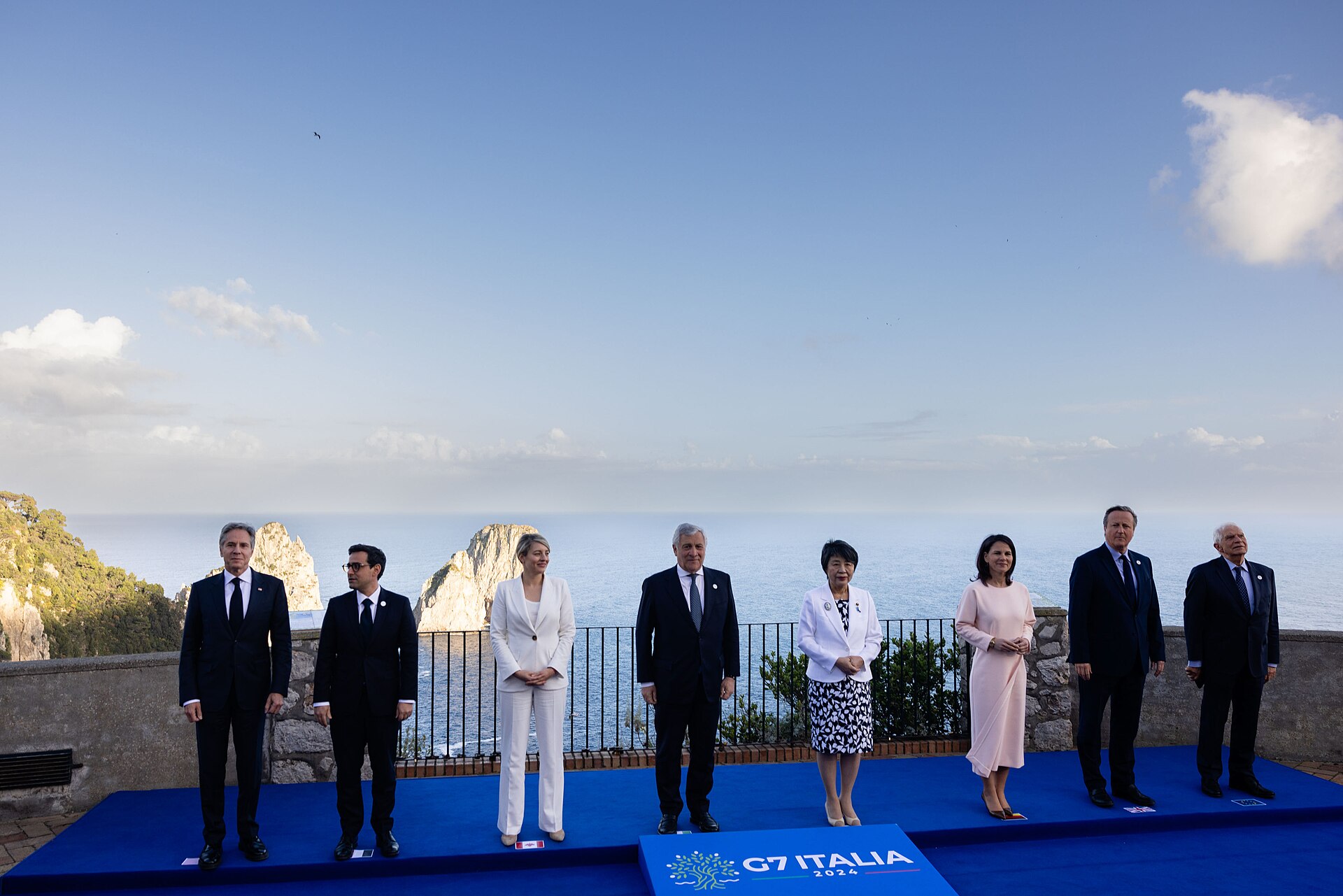
The summit brought together forty-one nations under the “Strait of Hormuz Maritime Freedom of Navigation Initiative,” co-chaired by French President Emmanuel Macron and British Prime Minister Keir Starmer. German Chancellor Friedrich Merz and Italian Prime Minister Giorgia Meloni attended in person. The United States, Iran, and Israel were explicitly excluded as “belligerent” parties — a designation that carried legal weight beyond diplomatic etiquette, because it positioned the coalition as a neutral enforcement mechanism rather than a party to the conflict.
The chair’s statement committed signatories to four areas: diplomatic pressure through the UN for unimpeded transit passage; exploration of coordinated economic measures and sanctions against parties obstructing navigation; work with the International Maritime Organization to free trapped vessels; and joint information-sharing arrangements with the global shipping industry. Macron framed the planned military component as “strictly defensive” and limited to non-belligerent countries, to be deployed “as soon as conditions allow,” according to AFP reporting from the Elysee.
“The unconditional and immediate reopening of the Strait is a global responsibility, and we need to act to get global energy and trade flowing freely again,” Starmer said at the summit, per the UK government’s official press release. The language was precise. “Global responsibility” is not a military alliance. It is a claim about the nature of the legal obligation itself — that transit passage rights belong to the international community and their enforcement is not the prerogative of any single belligerent.
The full signatory list, expanded from the March 19 joint statement, included the UK, France, Germany, Italy, the Netherlands, Japan, Canada, South Korea, Australia, New Zealand, and twenty-eight other nations. Bahrain and the UAE signed. Saudi Arabia and Kuwait did not. The coalition’s breadth — spanning NATO members, Asian maritime powers, Caribbean flag states, and two Gulf monarchies — made it harder to dismiss as a European vanity project. Panama and the Marshall Islands, whose flags fly on a plurality of the world’s commercial fleet, lent the coalition a practical authority that purely European signatories could not.
The Middle East briefing 3,000+ readers start their day with.
One email. Every weekday morning. Free.
The Northwood Succession
The summit’s most consequential output was not the chair’s statement. It was the announcement that a multinational military planning summit would follow at UK Permanent Joint Headquarters, Northwood, in north London, during the week after April 17. Lord Coaker, Minister of State at the UK Ministry of Defence, confirmed the Northwood planning session in the House of Lords on April 13. “The Government’s approach is to try to ensure that we bring together a co-ordinated, independent and multinational plan,” Lord Coaker told peers.
Northwood is where this transitions from declaration to deployment order. PJHQ is the UK’s operational command centre for overseas military operations — the facility that ran the logistics for Britain’s contributions to every Gulf deployment since 1990. Moving the next meeting there signals that mine-clearance planning has shifted from foreign ministries to defence staffs. The political summit set the legal framework; Northwood will assign vessels, designate operating areas, and establish rules of engagement.
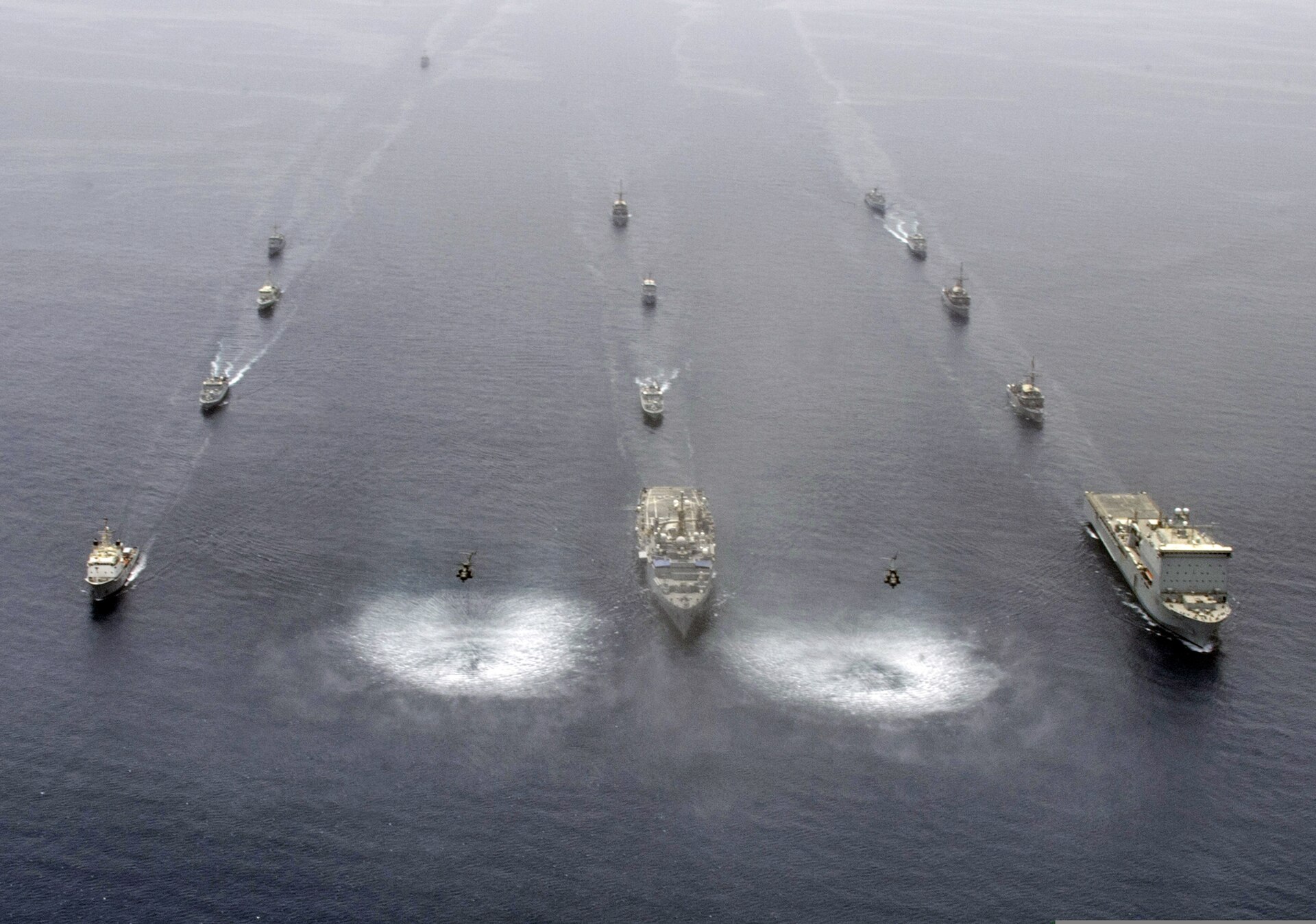
The UK has already committed specific assets. RFA Lyme Bay carries autonomous mine-hunting drones — Harrier surface systems and Iver4 underwater vehicles — and the joint UK-France Adventure minehunting system, built by Thales, was delivered on April 3, according to NavalNews. Germany, Spain, Italy, Japan, Australia, and South Korea have joined the operational framework while explicitly rejecting the US blockade. Lord West of Spithead, a former First Sea Lord, told the House of Lords: “We are very good at mine-hunting. Our — very badly funded at the moment — Navy is actually an expert at mine-hunting.”
The parenthetical was not false modesty. It was a statement about comparative advantage. The UK’s mine-countermeasures capability exists because the Royal Navy never stopped investing in it, even as budgets contracted. The same cannot be said of the US Navy.
Why Does Europe Hold the Mine-Clearance Advantage?
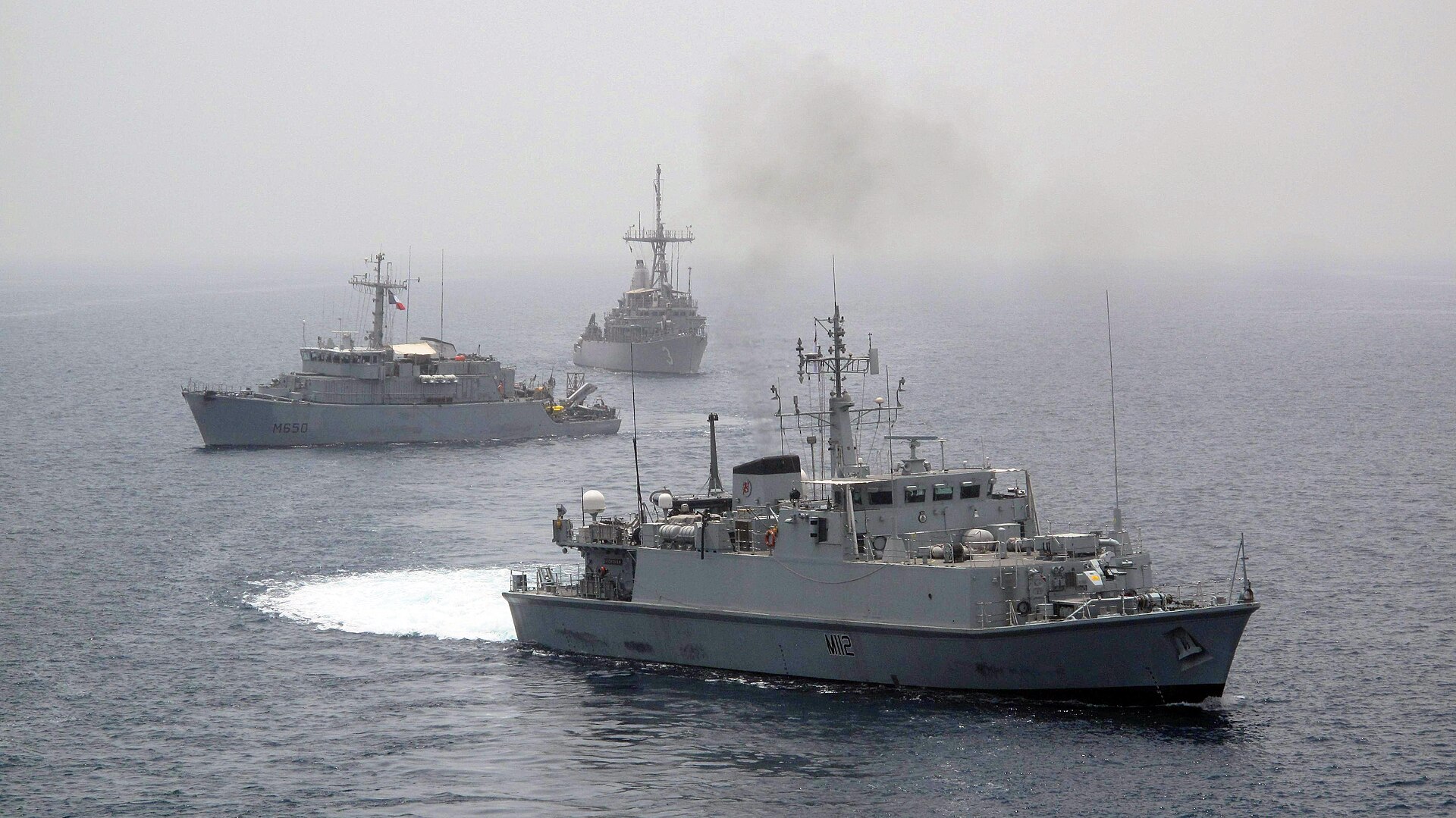
Europe collectively holds 150 to 170 active minesweepers, according to Mark Nevitt, a retired Navy JAG commander and associate professor of law at Emory University, writing in Just Security. Japan alone operates twenty dedicated mine countermeasure vessels. The US, by contrast, decommissioned four Avenger-class MCM ships from Bahrain in September 2025 — the same ships that would have been the natural first responders to an Iranian mining campaign. The US Navy now has two Avengers (USS Pioneer and USS Chief, both transiting from Sasebo) and three Littoral Combat Ships with troubled MCM mission packages available for Hormuz duty.
The numbers tell a story the summit’s architects understood. The US built its Gulf posture around power projection — carrier strike groups, guided-missile destroyers, air superiority. Mine clearance was treated as a secondary capability, outsourced to allies or to a ship class the Navy was already planning to retire. When Iran mined the Strait, the US found itself holding the wrong end of a capability mismatch. CENTCOM began mine clearance operations on April 11 with USS Frank E. Peterson (DDG-121) and USS Michael Murphy (DDG-112) — Arleigh Burke-class destroyers pressed into service as mine-clearance escorts, not mine hunters. Admiral Brad Cooper stated the US was “creating a new safe passage that will be shared with the maritime industry.” The destroyers could protect minesweepers. They could not replace them.
Mark Bock, Thales’s US Navy business vice president, told Military Times that simultaneous autonomous search-identify-destroy mine clearance capability “doesn’t exist today.” Admiral Daryl Caudle, Chief of Naval Operations, put it more directly: “Mine search and destruction is slow, deliberate work.” Bryan Clark of the Hudson Institute estimated clearance could take “two or three weeks” — an optimistic floor. The 1991 Kuwait benchmark, the standard military planning reference, saw a multinational coalition clear approximately 200 square miles of minefield in fifty-one days using purpose-built MCM ships in uncontested waters. Hormuz conditions — active IRGC threat, contested waters, Iranian admission that it has lost track of some mines it planted — make fifty-one days a floor, not a ceiling.
The European coalition’s mine-clearance advantage is not just numerical. It is doctrinal. NATO navies have trained together on MCM operations for decades. The UK-France Adventure system represents integrated bilateral capability of a kind the US does not have with any partner for this specific mission. When Northwood convenes, the planners around the table will be drawing on a common operational language that the US — excluded as a belligerent — cannot participate in shaping.
The Self-Undermining Paradox of the US Toll Proposal
On April 8, President Trump told ABC News’s Jonathan Karl: “We’re thinking of doing it as a joint venture. It’s a way of securing it — also securing it from lots of other people. It’s a beautiful thing.” The proposal envisioned the US and Iran jointly administering Hormuz transit, with Iran collecting a toll — reportedly one dollar per barrel, roughly two million dollars per VLCC transit. The proposal’s internal contradictions were immediate and structural.
The European Commission’s response was categorical. Paula Pinho, the Commission’s chief spokesperson, stated on April 9: “International law provides for the freedom of navigation, which means what? It means no payment or toll whatsoever.” The Commission argued that UNCLOS prohibitions on transit charges have “become customary law worldwide” even without US or Iranian ratification — a legal position that the Paris summit’s chair statement subsequently codified into a forty-nation consensus.
The paradox runs deeper than a policy disagreement between allies. CENTCOM’s own operational framing treats Hormuz transit as an exercise of established legal rights. When USS Frank E. Peterson and USS Michael Murphy transited the Strait on April 11, the IRGC issued a “last warning” radio call. The US response, per CENTCOM, was that the transit was conducted “in accordance with international law” — meaning transit passage under UNCLOS Articles 37 through 44, which provide that passage through international straits is continuous, expeditious, non-suspendable, and applicable to all vessels including warships. Article 26 prohibits charges on foreign ships “by reason of passage alone.”
If the US endorsed a joint venture toll with Iran, it would validate the premise that Hormuz passage requires Iranian authorization and is subject to commercial negotiation. That premise is precisely what CENTCOM’s transit passage operations, the EU’s legal rejection, the Paris summit’s mandate, and seventy years of US Freedom of Navigation program operations all contradict. Mark Nevitt, writing in Just Security, framed it precisely: “Transit passage rights belong to the world, and no State may extinguish it through mining, coercion, or toll collection.” He called Iran’s arrangement “an illegal ‘Tehran toll booth’” and noted: “There is no ‘Strait of Hormuz Convention,’ and Iran cannot conjure one through unilateral assertion.”
The 1857 Copenhagen Convention offers a precedent the Trump proposal’s architects appear not to have consulted. Denmark collected Sound Dues on ships transiting the Danish Straits for four centuries. The dues were abolished multilaterally — not bilaterally — because the international community concluded that no single state could charge for transit through an international waterway. The principle was not negotiated away. It was extinguished.
Can Saudi Arabia Endorse Either Framework?
Saudi Arabia’s absence from both the forty-one-nation signatory list and the April 17 summit is the structurally revealing fact that neither Bloomberg’s coverage of transatlantic friction nor Foreign Policy’s analysis of European military limitations addressed. The kingdom needs the mines cleared. Its pre-war Hormuz throughput was seven to seven-and-a-half million barrels per day. Its East-West Pipeline bypass to Yanbu has an effective ceiling of 5.9 million barrels per day — a structural gap of 1.1 to 1.6 million bpd that cannot be closed without Hormuz reopening. Every day the Strait remains mined costs Saudi Arabia revenue it cannot recover through alternative routes.
Yet Riyadh signed neither framework. The Wall Street Journal reported on April 14 that Saudi Arabia pressed the US privately — through Arab officials — to end the Hormuz blockade and return to negotiations with Iran, citing fear of Houthi closure of Bab el-Mandeb as a secondary chokepoint threat. This came three days before the Paris summit Saudi Arabia did not attend. Vali Nasr, professor at Johns Hopkins SAIS, observed: “Saudi Arabia is voicing a broader international concern that U.S. blockade is a dangerous escalation. It further closes all trade in the Persian Gulf, could lead to more violent conflict there but also lead to disruption of trade in the Red Sea.”
The kingdom’s constraints are architectural. Endorsing the European coalition would mean co-sponsoring a framework that explicitly excludes Washington — Saudi Arabia’s security guarantor and the provider of the Patriot batteries defending Saudi cities. Five days before a potential Iran nuclear deal, that signal would be read in Washington as distance at the worst possible moment. Endorsing the US “joint venture” toll would mean accepting the premise that Iran holds commercial authority over Hormuz transit — a concession that would validate every IRGC claim about sovereign control of the Strait, including the Khatam al-Anbiya declaration that Iran holds sole authority to authorize vessel transit.
The UK Sky Sabre batteries deployed to Saudi Arabia in late March 2026 — the same UK that co-chaired the summit Washington could not attend — made the triangulation physically visible. British air defence systems protect Saudi cities while British diplomats build a Hormuz framework the Saudis cannot publicly join. UK-Saudi trade stands at sixteen-and-a-half billion pounds annually, with a target of thirty billion by 2030. The PIF-UKEF memorandum of understanding covers $6.8 billion. Bahrain signed the coalition statement. The UAE signed. Saudi Arabia’s two closest GCC allies endorsed a framework their senior partner could not. Saudi Arabia’s structural reasons for that refusal — and why it chose the Antalya ceasefire track over Paris on the same day — are examined in detail here.
The Ceasefire Expiry and the Deployment Condition
The Paris summit’s military component contains a condition that neither the communique’s drafters nor the participating nations control. Macron specified that the multinational mission would deploy “as soon as conditions allow” — language that explicitly means after a sustained ceasefire, not before or during active hostilities. The ceasefire expires on April 22. The Northwood planning summit is scheduled for the week after April 17. If the ceasefire collapses, the Northwood mission has no deployment window.
The deployment condition also creates a perverse incentive structure. Iran’s most effective response to the European coalition is not military. It is simply to let the ceasefire lapse. No ceasefire means no deployment window. No deployment means no mine clearance. No mine clearance means the Strait remains functionally closed under conditions Iran controls — without Tehran needing to fire another missile or lay another mine. A detailed examination of all three trigger conditions and the legal constraints each imposes on coalition action is in Forty Nations Came to Paris for Hormuz. None Can Open It.
The timeline is not merely tight. It is structurally dependent on actors outside the coalition. Iran’s position on ceasefire extension remains unclear — the Islamabad Accord contains no extension mechanism, as the Soufan Center has noted. The three thousand two hundred ships and twenty thousand seafarers trapped or affected by the Hormuz closure cannot wait for a ceasefire that may not hold. Hormuz throughput has dropped from 138 ships per day pre-war to six to fourteen per day in April 2026, with fifty of seventy-two recent transits forced through the IRGC-controlled Larak Island corridor.
Retired British Rear Admiral Jon Pentreath told Al-Monitor: “Even the threat of a minefield is enough to stop ships, especially commercial ships.” The insurance markets have already priced this in. Commercial vessels will not transit a strait where mines are confirmed present, positions are unknown, and the mining state has admitted it cannot render them harmless — regardless of what any coalition declares about legal rights. The gap between legal entitlement and commercial willingness is the space in which the Northwood mandate must operate.
Iran’s Mines, Iran’s Admission, and the Hague Convention
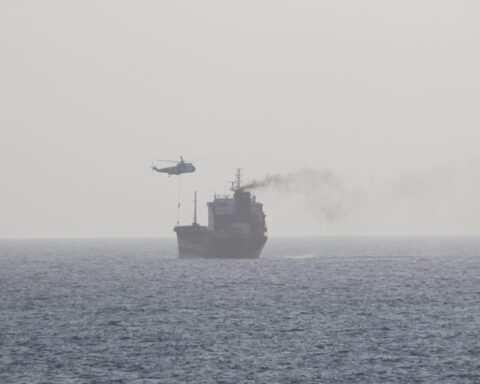
Iran’s mining of the Strait violates the 1907 Hague VIII Convention on three separate counts, according to Nevitt’s analysis in Just Security: no mine mapping was provided to other states, no notification was given to mariners, and Iran has acknowledged an inability to render the mines harmless, citing “technical limitations.” Al Jazeera reported on April 13 that Iran has lost track of some mines it planted — a fourth dimension of the crisis that transforms mine clearance from an engineering problem into a probability exercise.
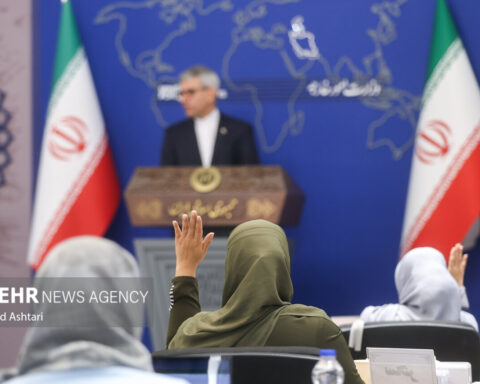
The Khatam al-Anbiya Central Headquarters stated on April 12 that “the authorization for any vessel’s transit through this strategic waterway rests solely with the Armed Forces of the Islamic Republic of Iran” and that “no American military vessel had received permission to pass.” PressTV framed the April 11 US destroyer transit as “a failed US naval operation specifically designed to test Iran’s naval forces while influencing negotiations in Islamabad.” The IRGC’s position contradicts UNCLOS transit passage provisions — but Iran has not ratified UNCLOS. Neither has the United States.
Iran’s broader framing of the European coalition revealed the doctrinal tension. Tehran warned that maritime security in the Gulf “must be ensured collectively by all regional actors” — a formulation that implicitly claims a regional veto over non-regional military operations. The French foreign minister, Jean-Noel Barrot, responded that “the blockade of the Strait of Hormuz has major consequences for the global economy” — an implicit rejection of the regional-actors-only frame. The Paris summit’s legal basis rests on the argument that transit passage rights are universal, not regional, and their enforcement cannot be conditioned on the consent of the state violating them.
Nevitt’s conclusion was direct: “A coordinated, multinational mine clearance operation at scale” is “the only path back to a Strait that is free, open, and lawful.” The Northwood mandate is the first operational attempt to convert that legal assessment into a military plan. Whether it can execute depends on the ceasefire condition — and on whether forty nations can sustain political consensus through a planning process that the United States cannot join and Iran will actively resist.
What Happens When Two Legal Architectures Govern the Same Strait?
The competing frameworks are not merely different policy preferences. They rest on incompatible legal premises about who holds authority over Hormuz transit. The European coalition’s architecture treats passage as a pre-existing right under customary international law — a right that Iran’s mining violated and that collective action can restore. The Trump “joint venture” treats passage as a commodity that can be priced and sold — an arrangement between two parties that implicitly accepts Iran’s authority to grant or deny transit.
These premises cannot coexist. If the US endorses a toll arrangement, it concedes the principle the European coalition was formed to defend. If the European coalition clears the mines, it renders the toll arrangement moot — there is no toll booth if the Strait is open and uncontrolled. The two architectures are therefore not parallel tracks that might converge. They are structurally adversarial, even though the states pursuing them are nominal allies.
Operation Earnest Will, the largest US naval convoy operation since World War II, offers the closest historical parallel — and the differences are instructive. In 1987-88, the US reflagged Kuwaiti tankers and escorted them through the Strait against Iranian attack. France, the UK, Italy, and the Netherlands each deployed minesweepers, creating the first major multinational MCM coordination in the Gulf. The legal framework was unified: all parties agreed that Iranian mining was unlawful and that convoy escorts were a legitimate response. The tanker Bridgeton hit a mine on its first escorted voyage, but the coalition held because the legal premise was shared.
In April 2026, no shared legal premise exists. The US position oscillates between transit passage enforcement (CENTCOM) and commercial toll negotiation (the White House). The European position is internally coherent but operationally contingent on a ceasefire the coalition cannot guarantee. Iran’s position is that it holds sovereign authority over the Strait — a claim the mining campaign was designed to demonstrate rather than merely assert. And Saudi Arabia, whose economy depends on the outcome more than any other state’s, watches from a position of maximum dependency and minimum formal influence, hosting the air defence batteries of one framework’s co-chair while privately lobbying the other framework’s architect to change course.
The March 19 joint statement cited UN Security Council Resolution 2817 and “freedom of navigation, including under UNCLOS” as the legal basis for collective action — the first formal multilateral invocation of UNCLOS against Iran’s Hormuz campaign. That statement now has forty-one signatories. The Northwood planning summit will determine whether those signatures translate into vessels, operating areas, and rules of engagement — or whether the coalition’s legal architecture remains, like the Strait itself, mined and impassable.
Frequently Asked Questions
What is the Northwood military planning summit and when will it take place?
UK Permanent Joint Headquarters at Northwood, north London, is the operational command centre for British overseas military operations. The Northwood planning summit is scheduled for the week following the April 17 Paris summit. It will convert the political commitments made in Paris into an operational military plan — assigning specific vessels, designating mine-clearance operating areas, and establishing multinational command arrangements. Northwood previously coordinated UK contributions to every major Gulf deployment since 1990, including Operation Telic in 2003.
Has any European mine-clearance force previously operated in the Strait of Hormuz?
During Operation Earnest Will in 1987-88, France, the UK, Italy, and the Netherlands each deployed minesweepers to the Gulf independently of the US convoy operation, creating the first multinational MCM coordination in the region. Belgium and the Netherlands jointly deployed a mine countermeasures squadron during the 1991 Gulf War clearance operation. The UK maintained a continuous mine-countermeasures presence in the Gulf through the UK Mine Countermeasures Force until the mid-2000s, when the mission was reduced but not eliminated.
Why were the US, Iran, and Israel excluded from the Paris summit?
The Elysee classified all three as “belligerent” parties in the Iran conflict. The exclusion was legally strategic: by limiting the coalition to non-belligerent states, the summit positioned its planned military mission as a neutral enforcement action under international law rather than an extension of any party’s war aims. This distinction matters under the law of neutrality — a mine-clearance operation conducted by non-belligerents carries different legal status than one conducted by a party to the conflict, affecting questions of proportionality, self-defence, and Iranian options for response.
Could Iran legally attack a European mine-clearance mission?
Under the San Remo Manual on International Law Applicable to Armed Conflicts at Sea, neutral vessels conducting mine clearance in international straits during an armed conflict occupy a legally ambiguous position. Iran could argue the clearance operation constitutes assistance to a belligerent (the US), but the coalition’s explicit exclusion of all belligerents and its invocation of UNCLOS transit passage rights — rather than any alliance obligation — is designed to foreclose that argument. The “strictly defensive” framing and the “non-belligerent” participant restriction are legal architecture, not diplomatic niceties.
What happens to Hormuz shipping insurance if the ceasefire collapses?
Lloyd’s Joint War Committee added the Persian Gulf to its Listed Areas in February 2026, triggering war-risk premiums that have since added an estimated $500,000 to $900,000 per voyage for vessels transiting the region. A ceasefire collapse would prompt immediate upward reclassification, pushing premiums beyond the threshold at which smaller operators and flag-of-convenience carriers stop trading the route entirely. This market withdrawal would constrict Hormuz traffic independent of any military threat — removing vessels from the corridor regardless of what any coalition declares about legal rights to transit.