
Aramco Said Days. The Finance Minister Said Months.
DHAHRAN — On April 17, 2026, Saudi Aramco told the market it could restore oil production “within days” of the Strait of Hormuz reopening. On the same day, Saudi Finance Minister Mohammed Al-Jadaan told the same market that some countries “would need more time, depending on the extent of the damage they suffered” — and that the situation “would remain very fragile until a durable de-escalation was achieved.” Both statements were released within hours of each other. Both cannot be true at the same time.
Brent crude crashed 12.95% on the news, shedding $12.87 to close at $86.52 — its largest single-day fall since April 8. The market priced in a supply recovery before a single barrel has moved through the strait. Before a single mine has been cleared. Before Khurais, which has been offline for six weeks with no announced restoration timeline, has produced a drop. The “days” claim was not a technical assessment. It was a credit signal dressed as an operations briefing, written for bond investors who hold $4 billion in Aramco paper issued in January — and it worked, briefly, on the wrong audience.
[toc]
What Aramco actually said — and who it was talking to
Aramco’s April 17 statement did not include a date, a facility name, or an output target. It said production could be restored “within days” of the strait reopening. That formulation borrows directly from the playbook Aramco used after the September 2019 Abqaiq-Khurais drone attack, when CEO Amin Nasser promised full restoration of 5.7 million barrels per day within days — and delivered, roughly, in two weeks.
But Nasser himself has been conspicuously more careful in 2026. At the height of the crisis in March, he withdrew from CERAWeek in Houston to manage operations directly. His public statement was not “we’ll be back online in days.” It was: “The resumption of sea transportation in the Strait of Hormuz is absolutely critical.” That’s a precondition, not a promise. He was telling the market what needed to happen before Saudi output could even begin to recover — not when it would.
The gap between Nasser’s March language and Aramco’s April 17 language is the tell. Between those dates, Aramco issued a $4 billion bond in January 2026 that drew $21 billion in orders, with spreads tightening to 60 basis points over Treasuries on the three-year tranche. Negative new issue premiums on three of four tranches — meaning investors paid more than fair value to hold Aramco debt. That paper needs confidence. Saudi Arabia’s $58 billion 2026 borrowing plan needs confidence. The “days” claim supplies it.
The Middle East briefing 3,000+ readers start their day with.
One email. Every weekday morning. Free.
The oil market, however, heard something different. It heard 3 million barrels per day flooding back into a market already pricing Brent at $86.52 — more than $21 below Saudi Arabia’s fiscal break-even of $108–111 per barrel. The market heard cheap crude. The bond market heard operational resilience. Same sentence, two audiences, two incompatible conclusions.
Why did Brent fall nearly 13% in one session?
The answer is not that the market believes Aramco’s timeline. The answer is that the market was already short on conviction and long on fear premium, and Aramco’s statement — combined with Iran’s FM Abbas Araghchi declaring Hormuz “completely open for all commercial vessels for the remaining ceasefire period” — gave algorithmic and speculative positioning the catalyst to unwind.
Brent fell $12.87 in a single session. WTI fell $13.50 — a 14.26% collapse to $81.19. These are not moves driven by fundamentals. Fundamentals would require actual barrels flowing through actual sea lanes past actual mine-cleared corridors. None of that has happened. What happened was a removal of the maximum-disruption scenario from the pricing models, which had been holding Brent above $99 for weeks on the assumption that Hormuz would stay closed through the ceasefire expiry on April 22.
Tamas Varga of PVM Oil Associates captured the fragility: “Traffic could be halted once again in the strait, if an agreement about Iran’s nuclear ambitions and lifting of the U.S. sanctions remains elusive.” Giovanni Staunovo at UBS was even more cautious: “Now we need to see if the number of tankers crossing the Strait increases substantially.” Both analysts are saying the same thing — the market moved on words, not on tankers.
The structural problem is that Aramco’s statement rewards the market for pricing in a recovery that does not yet exist. Every dollar Brent falls toward $80 widens the gap between Saudi Arabia’s actual fiscal needs and its oil income. At $86 Brent, every additional dollar lost costs Saudi Arabia roughly $3.3 billion per year in revenue. The kingdom is now $21–25 per barrel below its fiscal break-even, and its own statement is making that gap wider.
Can Saudi Arabia physically restart within days?
No. Not in any sense that matches the market’s interpretation. The “days” formulation requires three things to be true simultaneously: the strait is clear of mines, damaged facilities are operational, and export infrastructure can handle restored volumes. None of these conditions is met.
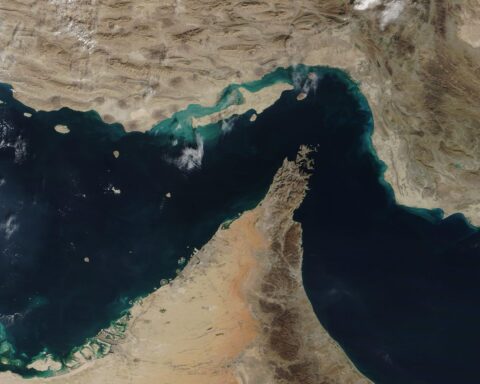
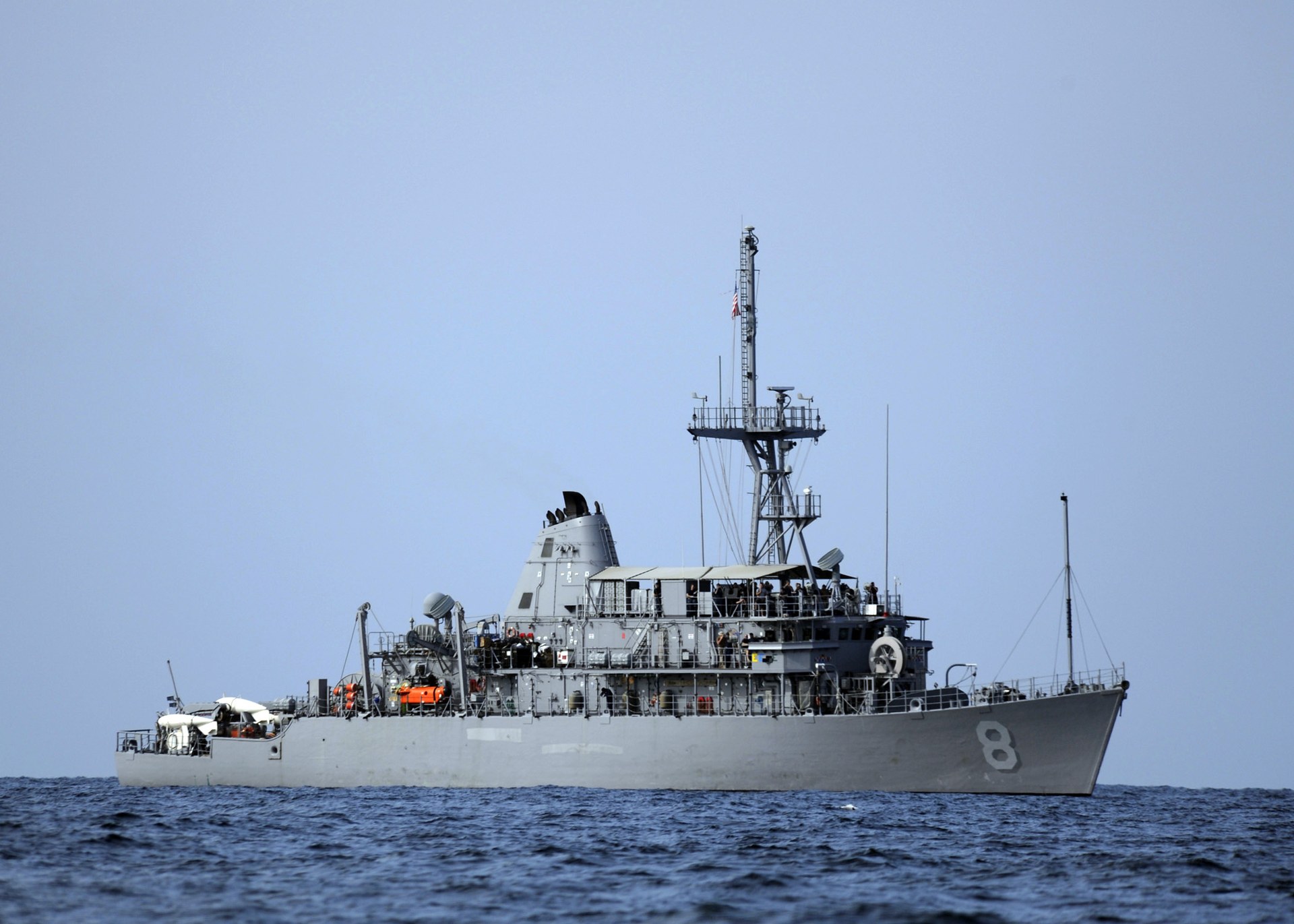
Start with the mines. The IRGC has deployed between 2,000 and 6,000 mines across the strait, in three categories. Contact mines — the M-08, cheap and plentiful — sit on or near the surface. Bottom influence mines, including the Iranian-made Maham-2, use acoustic, magnetic, and pressure triggers and cannot be swept by surface vessels. Chinese-supplied EM-52 rocket-propelled mines operate at depths up to 200 metres and launch upward when triggered. The Maham-2 and EM-52 require either unmanned underwater vehicles or helicopter-based detection — and the US retired its entire fleet of MH-53E Sea Dragon mine-hunting helicopters in August 2025, one month before decommissioning all four Avenger-class mine countermeasures ships from their forward base in Bahrain.
The 1991 Kuwait mine clearance — the closest historical parallel — took 51 days to clear 200 square miles with the full US MCM fleet, allied coalition assets, and total air superiority. In April 2026, the US is relying on USS Pioneer and USS Chief, both transiting from Sasebo, Japan, and three Littoral Combat Ships whose mine countermeasures packages have been, in the Navy’s own assessment, “plagued with problems, in some cases making them combat ineffective.” France, Belgium, and the Netherlands announced a European MCM coalition on April 17 — the same day as Aramco’s statement — but it is not yet operational. The 51-day benchmark now requires upward revision, not compression into “days.”
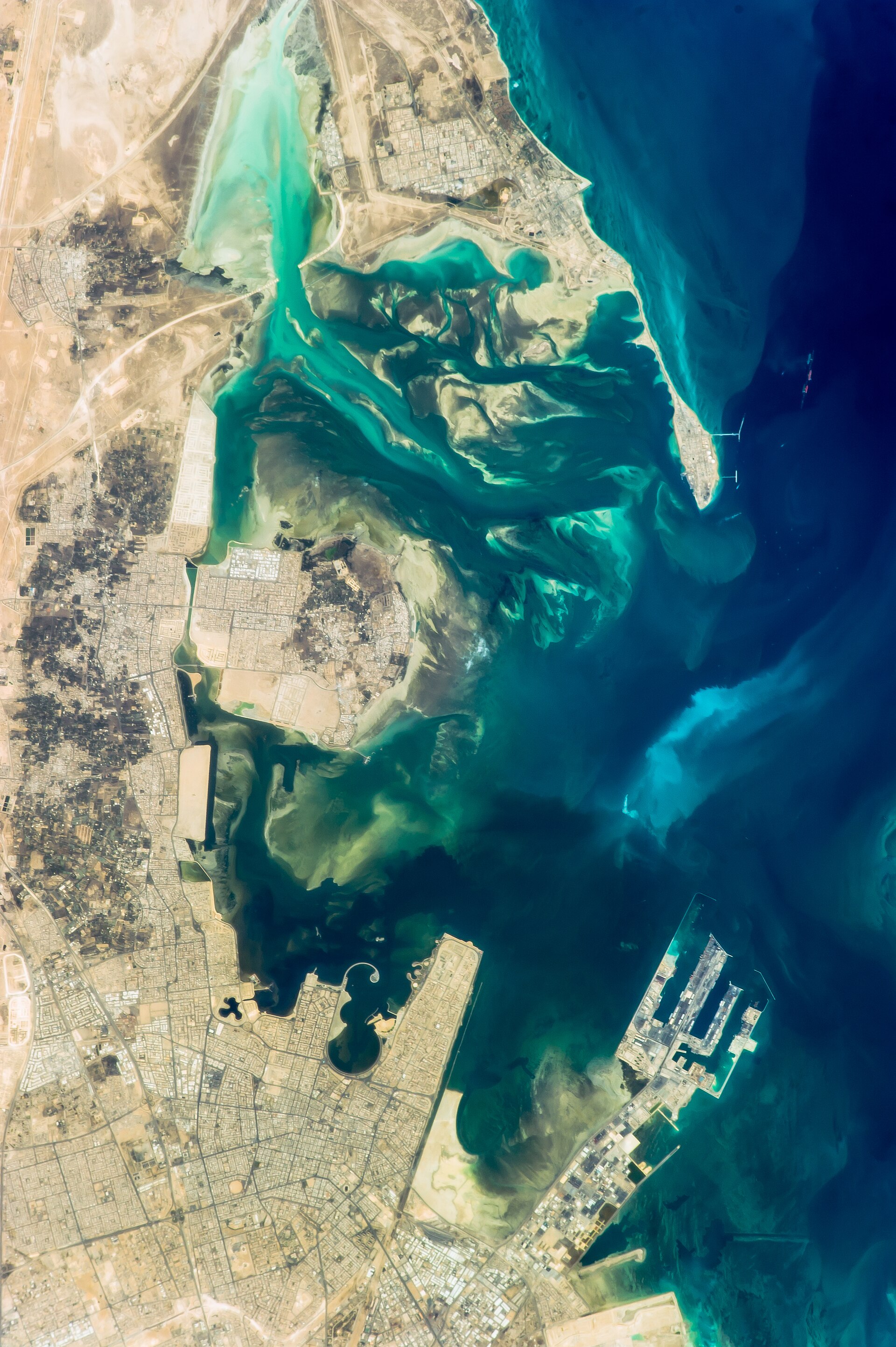
Then there is the production itself. Manifa, the 300,000 barrel-per-day field built on 27 artificial islands connected by a 41-kilometre causeway in water five to ten metres deep, reportedly came back online around April 12–13. But Manifa’s shallow-water causeway architecture sits in exactly the depth range where Iranian contact and influence mines are most effective. Sustained production from Manifa requires sustained mine-free access — not a one-time reopening, but continuous clearance operations in waters the IRGC Navy still claims authority to “manage.”
Khurais — also 300,000 barrels per day, Arab Light grade — remains offline with no announced restoration timeline. In 2019, when Abqaiq-Khurais was hit by drones and cruise missiles, Aramco announced a restoration timeline within 24 hours. In 2026, after six weeks, there has been no equivalent announcement. The silence is the data point.
What happens if Saudi Arabia does restore 3 million barrels per day?
Then the kingdom crashes its own revenue. This is the trilemma that Aramco’s statement — deliberately or not — obscured.
Saudi Arabia’s OPEC+ quota for April is 10.2 million barrels per day. Its actual March production, according to the IEA’s April Oil Market Report, was 7.25 million — a 3.15 million barrel-per-day collapse from February’s 10.4 million. That 30% drop is what the IEA called “the largest disruption on record.” If Aramco restores the 2.95 million barrels per day it needs to reach its quota ceiling, those barrels enter a market already falling. At current consumption patterns and with Iranian volumes still uncertain, analysts project that full Saudi restoration would push Brent toward $75–80.
At $75 Brent, Saudi Arabia would be $33–36 below its PIF-inclusive fiscal break-even. Goldman Sachs already estimates the war-adjusted 2026 deficit at 6.6% of GDP — $80–90 billion against an official projection of $44 billion. Every additional dollar per barrel lost deepens a deficit that the kingdom is trying to finance with the same credit markets Aramco’s statement was designed to reassure.
The OPEC+ April 5 decision illustrates how far the cartel is from a supply restoration framework. The agreed increase was 206,000 barrels per day — less than 2% of the volume disrupted by the Hormuz closure. Gulf officials told Reuters after that meeting that “it would take months to resume normal operations and reach production targets even if the war stopped and Hormuz reopened immediately.” Months. From the same countries whose national champion just said days.
OilPrice.com’s analyst consensus headline captures the view from outside Riyadh: “Middle East Oil Output May Take Two Years to Recover.” Rystad Energy’s Audun Martinsen was more specific: “The Gulf region’s recovery will be defined less by financial capital and more by structural constraints…others could remain offline for years.” Saudi Arabia has the financial capital. What it lacks is a physically open, mine-cleared, continuously accessible export corridor — and a price environment that can absorb 3 million new barrels without cratering the revenue those barrels are supposed to generate.
Why Al-Jadaan’s comment is the real statement
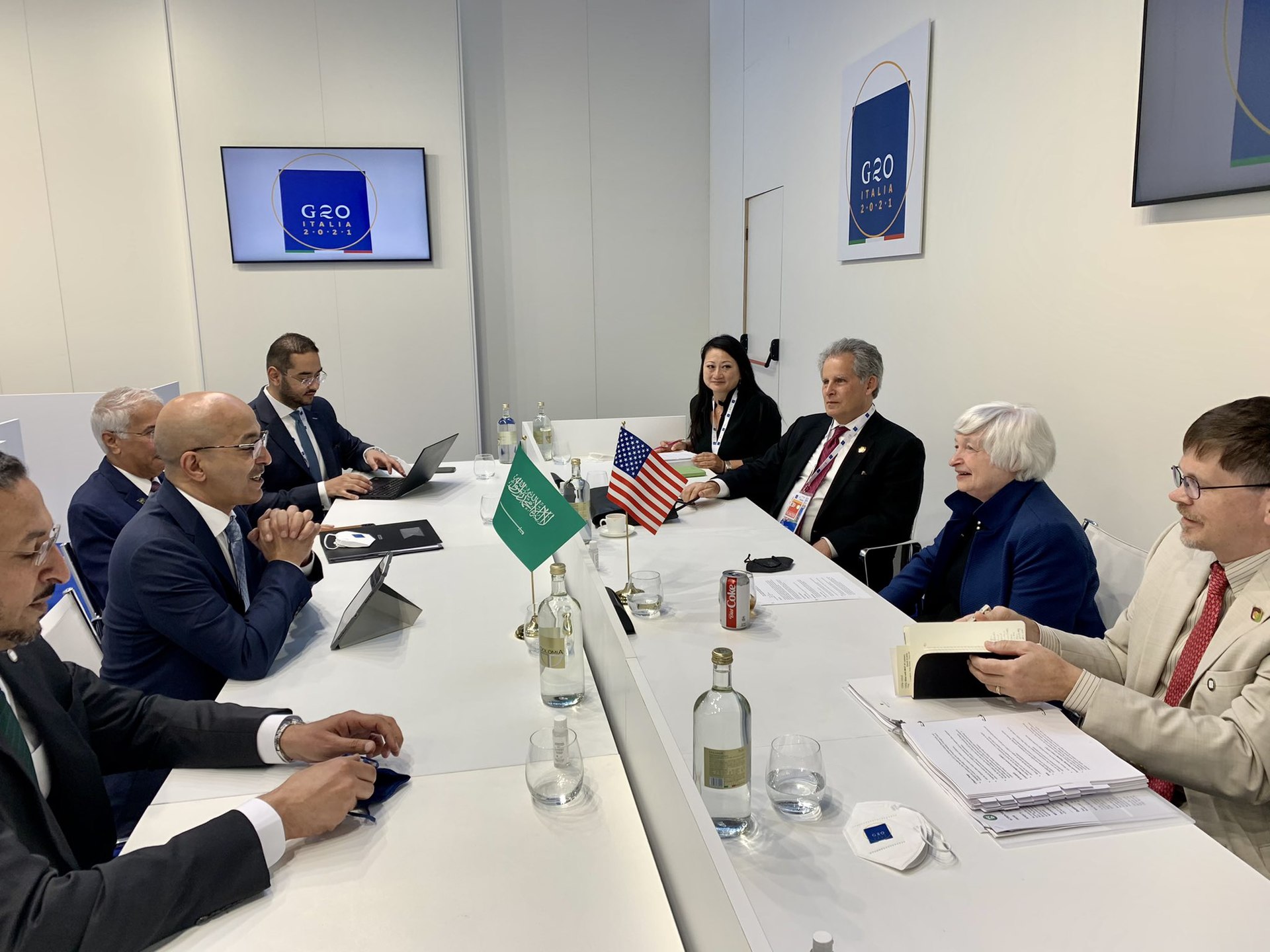
Mohammed Al-Jadaan is not an oil man. He is the finance minister — the man responsible for the $58 billion borrowing programme, the man who presents the budget to investors, the man whose credibility is measured in basis points on sovereign debt. When Al-Jadaan contradicts his own government’s flagship company on the same day that company makes a market-moving claim, the contradiction is the message.
Al-Jadaan said two things. First: “Certain countries would be able to restore their production capabilities quickly, but others would need more time, depending on the extent of the damage they suffered.” This is not a contradiction of Aramco if you read it charitably — Saudi Arabia could be the country that restores quickly, and Iraq or Kuwait could be the ones needing time. But the formulation “depending on the extent of the damage they suffered” applies to Saudi Arabia, too. Khurais has suffered damage. The extent has not been disclosed. Al-Jadaan knows this.
Second: the situation “would remain very fragile until a durable de-escalation was achieved.” The ceasefire expires on April 22 — five days after Al-Jadaan made this statement. There is no extension mechanism. Iran’s FM Araghchi explicitly conditioned Hormuz access to “the remaining ceasefire period.” Al-Jadaan is telling the bond market — his market — that nothing is stable, nothing is guaranteed, and the “days” claim should be read with that fragility priced in.
If Aramco’s statement was written for the S&P credit analysts, Al-Jadaan’s was written for the sovereign wealth fund managers who actually read the footnotes. Both are performing for cameras — only one within the bounds of verifiable reality.
The 2019 precedent that doesn’t apply
The September 14, 2019 Abqaiq-Khurais attack is the single most important frame through which markets interpret Saudi production disruptions. Eighteen drones and seven cruise missiles struck the world’s largest oil processing facility and a major field, knocking 5.7 million barrels per day offline — roughly 5% of global supply. Aramco announced restoration within days. The actual timeline was approximately two weeks. Oil prices spiked 15% on the Monday open and retreated within a month. The lesson the market absorbed: Saudi Arabia fixes things fast.
That lesson is inapplicable to 2026 for four structural reasons. In 2019, the damage was to surface processing infrastructure — stabilisation towers, separators, pipes. Repair crews drove to the site the same afternoon. In 2026, one of the two offline fields (Khurais) has undisclosed damage, and the other (Manifa) sits on a shallow-water causeway surrounded by a body of water the IRGC has mined. Access is the constraint, not repair capacity.
In 2019, the sea lanes were open. Aramco’s restored barrels could reach tankers, reach ports, reach buyers within 48 hours of restart. In 2026, Hormuz — through which Saudi Arabia moved 7–7.5 million barrels per day before the war — has averaged only 3.8 million barrels per day through the entire conflict, according to the IEA. Even with Araghchi’s April 17 opening declaration, transit still “needs to be coordinated with Iran’s IRGC,” according to a senior Iranian official. That coordination requirement is functionally the same approval architecture Iran has sought to impose throughout the crisis. Open is not open when the gatekeeper still holds the key.
In 2019, there was no mine threat, no ceasefire expiry, and no OPEC+ quota trap. The barrels came back into a market priced at $60–62 and briefly spiked — then returned. In 2026, the barrels would come back into a market already falling, widening a fiscal break-even gap already north of $21 per barrel. Bringing back supply crashes the price that makes the supply worth producing. The 2019 restoration was operationally heroic and financially costless. The 2026 restoration, if it happens, would be operationally constrained and financially punishing.
Ole Hvalbye at SEB Research noted one detail that strips away any remaining illusion of speed: European markets “remain tight for a while, since it takes roughly 21 days for ships to move from the Gulf to Rotterdam.” Even if every mine were cleared tomorrow and every barrel were pumped today, Europe doesn’t see that crude for three weeks. Asia, somewhat sooner — but Asian buyers are precisely the market where Saudi Arabia has already lost share, with Kpler data showing Asia-bound exports down 38.6% in March.
How does the OPEC+ quota trap work?
Saudi Arabia has 2.95 million barrels per day of spare capacity between its actual March output (7.25M bpd) and its OPEC+ quota ceiling (10.2M bpd). Normally, spare capacity is power — the ability to flood or restrict at will. In April 2026, that spare capacity is a trap.
If the kingdom restores toward its quota ceiling, those barrels enter a market already falling. The current price is already $21–25 below the PIF-inclusive fiscal break-even. The $50 gap between physical crude and futures that existed during the height of the crisis has narrowed dramatically — meaning the war premium that kept Saudi revenue viable is evaporating. Restoring 3 million barrels per day accelerates that evaporation. Goldman’s war-adjusted deficit projection deepens with every barrel that pushes Brent lower.
If the kingdom holds output below quota, it preserves the price but contradicts the “days” claim that just moved the market. Bond investors who read “days to restart” as confidence in operational readiness will read sustained output restraint as evidence that the damage was worse than disclosed. The $4 billion January bond, with its 60 basis point spread, was priced on the assumption that Aramco is Aramco — that it bounces back. Voluntarily not bouncing back reintroduces credit risk.
If the kingdom admits it doesn’t know when Khurais comes back, or that Manifa’s shallow-water causeway is vulnerable to re-mining, or that Hormuz clearance timelines are measured in weeks and months rather than days — then it tells the truth, but the truth is not what either audience wants to hear. Bond markets want resilience. Oil markets want scarcity. Admitting constraint satisfies neither.
The April 5 quota increase — a figure so small it barely registers against the 3.15 million barrel disruption — suggests the cartel already knows this. That increase was a political gesture, not a supply signal. It said: we are not panicking, but we are also not pretending the infrastructure is ready for full restoration. The Gulf officials who told Reuters “months” were saying what Aramco’s April 17 statement refused to say.
What the ceasefire expiry means for the “days” claim
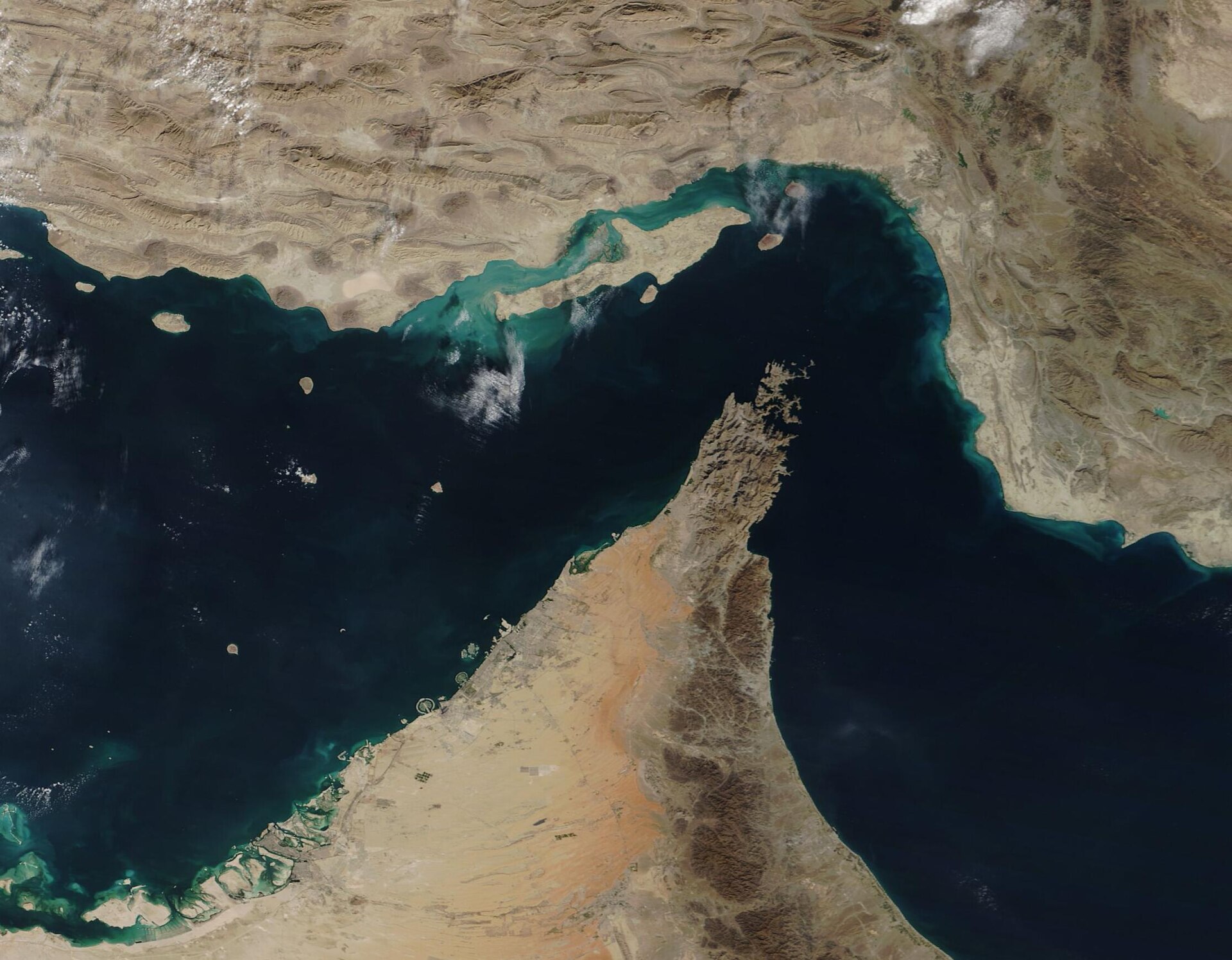
The ceasefire expires on April 22, 2026 — five days after Aramco’s statement. Araghchi’s “completely open” declaration is explicitly conditioned on “the remaining ceasefire period.” There is no extension mechanism in the Islamabad Accord. The Soufan Center has assessed this. An unnamed Iranian official stated plainly: if the US naval blockade of Iranian ports persists, Tehran will consider it a ceasefire violation and “will re-close the strait.” President Trump, on the same day, said the blockade “will remain in full force” until a peace deal.
These two positions are incompatible. The US says its blockade stays. Iran says if the blockade stays, Hormuz closes. The ceasefire runs out in five days with no renewal framework. Aramco told the market production restarts in “days.” The math does not work unless one of these positions collapses — and none of the actors involved has shown any willingness to move.
Even if the ceasefire is extended informally — a handshake, a phone call between Munir and Araghchi, a quiet agreement to hold positions — the structural uncertainty remains. Mine clearance is a physical process that cannot be shortened by diplomatic agreement. The European MCM coalition announced by Macron and Starmer at their April 17 summit — a “defensive multilateral mission” — is a commitment to begin, not a deployment in place. The 51-day Kuwait benchmark for mine clearance was achieved with assets that no longer exist. Whatever the actual timeline, it starts from “forming a coalition” in April, not from “sweeping a channel” in April.
Aramco’s “days” claim was issued into a five-day window before the ceasefire expires, into a maritime environment where mine clearance hasn’t begun, into a diplomatic framework where both sides have publicly stated positions that guarantee conflict if maintained. The statement was not about when production restarts. It was about what Aramco needs the next credit rating cycle to believe.
Two statements, one kingdom, no coherent answer
Saudi Arabia has $58 billion in financing needs for 2026. It has a fiscal break-even that Bloomberg puts at $108–111 per barrel, PIF obligations included. It has March production of 7.25 million barrels per day against a quota of 10.2 million. It has Brent at $86.52 and falling. It has a strait that its own ally — the United States — is simultaneously blockading and declaring open. It has a ceasefire that expires in five days with no renewal mechanism.
Into this, Aramco said “days.” Al-Jadaan said “fragile.” Both answers are rational responses to different audiences. Aramco’s is aimed at the credit analysts who set spreads on $4 billion in outstanding bonds and the investors who will need to absorb the next tranche of Saudi sovereign issuance. Al-Jadaan’s is aimed at the fiscal planners, the sovereign wealth counterparts, the people who need to know that Saudi Arabia is not about to flood a falling market with crude it can’t afford to sell at current prices.
Rystad Energy estimated a $25 billion infrastructure repair bill across the Gulf. Saudi damage, Rystad assessed, was “moderate-to-minor” compared to Qatar and Bahrain. But Martinsen’s qualifier was the important one: recovery “will be defined less by financial capital and more by structural constraints — equipment and labour shortages, not money.” Saudi Arabia has money. What it doesn’t have is a mine-free export corridor, a functioning Khurais, a price environment that rewards restoration, or a ceasefire that lasts past Tuesday.
On April 17, Aramco and the Saudi Finance Ministry told two different truths to two different rooms. The bond market heard that the kingdom bounces back. The oil market heard that cheap crude is coming. Neither heard what the other was told. Both acted on what they heard. And somewhere between the two — between “days” and “fragile,” between $86.52 and $108, between a promise and a mine chart — sits the barrel count that will determine whether Saudi Arabia’s 2026 deficit is $44 billion or $90 billion. That number hasn’t been set yet. The strait hasn’t been cleared yet. But the market has already decided.
Frequently asked questions
How long did Saudi Arabia take to restore production after the 2019 Abqaiq attack?
Aramco promised full restoration within days of the September 14, 2019 strike and delivered in approximately two weeks — restoring 5.7 million barrels per day of processing capacity. The market’s confidence in that timeline drew partly from the fact that Aramco CEO Amin Nasser announced a specific restoration target within 24 hours of the attack. In 2026, after six weeks of Khurais offline, Nasser has issued no equivalent announcement — a silence that inverts the 2019 precedent more completely than any other single data point.
How many mines has Iran deployed in the Strait of Hormuz?
Western intelligence estimates place Iran’s deployed mine inventory at 2,000–6,000 across three categories: M-08 contact mines, Maham-2 bottom influence mines using acoustic, magnetic, and pressure triggers, and Chinese-supplied EM-52 rocket-propelled mines effective at depths up to 200 metres. The Maham-2 and EM-52 variants cannot be cleared by conventional surface sweeping — they require unmanned underwater vehicles or helicopter-based detection systems. The 1991 Kuwait benchmark of 51 days for 200 square miles assumed a full US MCM fleet in place. In April 2026, USS Pioneer and USS Chief are still transiting from Sasebo, Japan, and the three Littoral Combat Ships whose mine packages the Navy’s own assessments have described as “combat ineffective” cannot reliably substitute for the decommissioned assets.
What is Saudi Arabia’s fiscal break-even oil price in 2026?
Bloomberg’s PIF-inclusive calculation places the Saudi fiscal break-even at $108–111 per barrel for 2026, accounting for both government budget spending and Public Investment Fund capital deployment. With Brent at $86.52 after the April 17 crash, Saudi Arabia sits $21–25 below break-even. The distinction between the official government budget break-even (lower, around $90–96) and the PIF-inclusive figure matters because Vision 2030 capital deployment depends on PIF dividends that require oil above $108. Below that threshold, the kingdom faces a choice between Vision 2030 project drawdowns and debt issuance — which is why Aramco’s bond credibility is inseparable from the production restart narrative.
When does the current ceasefire expire?
The Islamabad Accord ceasefire expires on April 22, 2026 — five days after Aramco’s “days to restart” statement. The Soufan Center has assessed that the accord contains no procedural framework for extension or renewal. Iran’s FM Araghchi explicitly conditioned the Hormuz opening to “the remaining ceasefire period,” and an unnamed Iranian official stated that if the US naval blockade of Iranian ports persists, Tehran will consider it a ceasefire violation and re-close the strait. President Trump stated the same day that the blockade “will remain in full force.” The enforcement architecture compounds the problem: Pakistan, the accord’s nominal broker, has no authority over IRGC naval operations, and the ceasefire’s sole extension mechanism would require a fourth signatory — such as Oman — that has not been approached.