
DHAHRAN — Saudi Arabia’s crude shipments to China will fall to approximately 20 million barrels in May 2026, down from 40 million barrels in April and roughly 53-58 million barrels in March — a 50 percent month-on-month collapse and the lowest volume on record — after Aramco’s record +$19.50 per barrel Arab Light premium to Asia, set when Brent traded near $109 on April 6, collided with a spot market that has since cratered to $91-96 per barrel. Bloomberg, Kpler, and Reuters data confirmed the halving on April 13, but the damage extends well beyond a single month’s loading schedule: Sinopec and Rongsheng Petrochemical, two of Aramco’s largest Chinese term buyers, have both significantly reduced May nominations, and the Rongsheng cut is particularly notable because Aramco holds a $3.4 billion equity stake in the company and a 20-year supply agreement covering up to 480,000 barrels per day — an investment made in 2023 specifically to prevent the scenario now unfolding.
The numbers describe a pricing trap with no clean exit. In March, Aramco offered Arab Light at zero premium to the Oman/Dubai average — the lowest differential since December 2020 — and Chinese buyers responded with a multi-year high in liftings, PetroChina and Rongsheng among them. Two months later, the same buyers are walking away from the most expensive Saudi crude in the history of the OSP system, and they have alternatives that make the decision straightforward: Russian ESPO Blend, delivered to Chinese ports, sits approximately $16-22 per barrel below Arab Light’s effective delivered cost; Iranian crude, flowing at 1.6 million barrels per day to China in March despite the war, adds roughly $0.80 per barrel in IRGC transit fees — a rounding error against the Saudi premium. When the cheapest barrel in your market is $17-22 below yours, you do not need a geopolitical theory to explain why your customers are leaving.
Table of Contents
- From Zero Premium to Record Premium in 60 Days
- How Much Volume Has Saudi Arabia Actually Lost in China?
- Why Didn’t the Rongsheng Equity Stake Prevent the Cut?
- The Competitor Math: ESPO, Iran, and the $22 Delivered Gap
- Can Aramco Cut the June OSP Without Signaling Fiscal Distress?
- The Term Contract Architecture Under Stress
- China Market Share: A Structural Decline Predating the War
- What Does the Volume Loss Mean for Saudi Fiscal Math?
- The May 5 Decision and Its Three Bad Options
- Frequently Asked Questions
From Zero Premium to Record Premium in 60 Days
The trajectory of Aramco’s Asian OSP since January 2026 reads like a case study in wartime pricing distortion. From November 2025 through March 2026, Aramco cut the Arab Light differential to Asia four consecutive times, reaching parity with the Oman/Dubai average — effectively a zero premium — for the first time since December 2020. The logic was market-share defense: Russia’s ESPO Blend had been undercutting Saudi grades by $7-10 per barrel at Chinese ports since 2022, Iranian crude was flowing to Shandong teapot refineries at deep discounts under the radar of official customs data, and Saudi Arabia’s share of Chinese crude imports had already slipped from 17 percent in 2024 to 14 percent, a structural erosion that predated any military conflict.
The zero-premium strategy worked exactly as designed. March 2026 liftings surged to approximately 53-58 million barrels — the highest Saudi volume to China since March 2023 — with PetroChina and Rongsheng Petrochemical specifically increasing cargoes, according to Baird Maritime citing Kpler data. The price signal was clear: at parity, Saudi crude could compete with Russian and Iranian alternatives, and Chinese refiners responded by pulling barrels that their economics could justify. The four-month experiment demonstrated that Saudi market share in China is not structurally lost. It is price-contingent, recoverable when the differential closes, and forfeit when it widens.
Then the war premium arrived. Iran’s strikes on Saudi oil infrastructure beginning in late February, the IRGC strike on the East-West Pipeline pumping station on April 8, and the Hormuz transit disruption that cut daily vessel passages from 138 to 15-20 pushed Brent from $75 in late February to $109 by early April. Aramco’s May OSP, announced April 6, reflected that spike: +$19.50 per barrel above Oman/Dubai, a $17 single-month increase from the April loading differential of +$2.50. Bloomberg’s pre-announcement survey of refiners and traders had anticipated a premium as high as $40, meaning Aramco deliberately left roughly $20.50 on the table — a restraint play that, in any other month, would have been received as generous pricing by Asian buyers.
The restraint was overtaken by the ceasefire-driven price collapse within 48 hours. WTI lost $18.64 in the April 8 session. Brent fell from above $109 to intraday lows near $91, unwinding roughly $18 of war premium in days. The May OSP, locked in at $109 Brent, now faces a spot market trading $13-18 below the price at which the premium was calibrated — and the resulting gap is the widest in the history of Aramco’s pricing system.
The Middle East briefing 3,000+ readers start their day with.
One email. Every weekday morning. Free.
How Much Volume Has Saudi Arabia Actually Lost in China?
The headline figure — 40 million barrels in April to 20 million in May — understates the swing because it uses April as the baseline. The more revealing comparison is against the March surge: approximately 53-58 million barrels at zero premium, collapsing to 20 million barrels at +$19.50. That is a 62-66 percent volume reduction in two months, driven entirely by price — no sanctions on Saudi crude, no diplomatic rupture between Riyadh and Beijing, no policy directive restricting Saudi imports. The buyers simply calculated the cost of the premium against available alternatives and nominated accordingly.
Bloomberg’s April 13 reporting identified Sinopec and Rongsheng Petrochemical as the named buyers that “significantly reduced May liftings,” a formulation that covers everything from a 30 percent cut to a near-complete withdrawal. The broader picture is equally stark: Saudi crude exports to Asia overall fell 38.6 percent in a single month, from 7.108 million barrels per day in February to 4.355 million bpd in March, according to Kpler — and that decline occurred before the May OSP was even announced. The May loading figures, when final volumes are tallied, are likely to show Asian exports below 4 million bpd for the first time since the depths of the 2020 demand collapse.
The January-February baseline tells the story of a supplier that was already losing ground. Saudi shipments to China averaged approximately 45-48 million barrels per month in those two months — healthy by historical standards but well below the peaks of 2019-2020, when Aramco was fighting Russia for Chinese market share through aggressive discounting. The March surge to 53-58 million barrels demonstrated what zero premium could achieve. The May collapse to 20 million demonstrates what a record premium destroys. The relationship between price and volume is not complex; it is mechanical, and the mechanism has now produced the worst outcome in the modern history of the Saudi-Chinese crude trade.
Why Didn’t the Rongsheng Equity Stake Prevent the Cut?
Aramco’s $3.4 billion acquisition of a 10 percent stake in Rongsheng Petrochemical in July 2023 was presented at the time as a structural hedge against exactly the kind of market-share loss now materializing. The deal included a 20-year supply agreement under which Aramco would provide up to 480,000 barrels per day to Rongsheng’s Zhejiang Petroleum and Chemical Co. refinery — an 800,000 bpd mega-complex in Zhoushan that represents one of the largest single refining destinations for Saudi crude on earth. The investment thesis was straightforward: embed Saudi molecules into Chinese refining infrastructure deeply enough that switching costs would deter defection to Russian or Iranian alternatives.
The thesis did not survive the May OSP: Rongsheng has reduced May liftings despite the equity relationship, despite the 20-year supply commitment, and despite the fact that Aramco holds a board seat giving it direct visibility into Rongsheng’s procurement decisions. The explanation is not disloyalty; it is arithmetic. At +$19.50 per barrel, Arab Light delivered to Zhoushan costs approximately $109-112 per barrel in total, depending on freight, while ESPO Blend delivered to the same port costs roughly $93-96. Even accounting for the quality differential — Arab Light is a medium sour grade at 33° API, ESPO a lighter sweet crude at 34.8° API with lower sulfur content — the price gap overwhelms the refinery’s optimization models, and ZPC’s management has no fiduciary obligation to overpay for feedstock simply because a minority shareholder produces it.
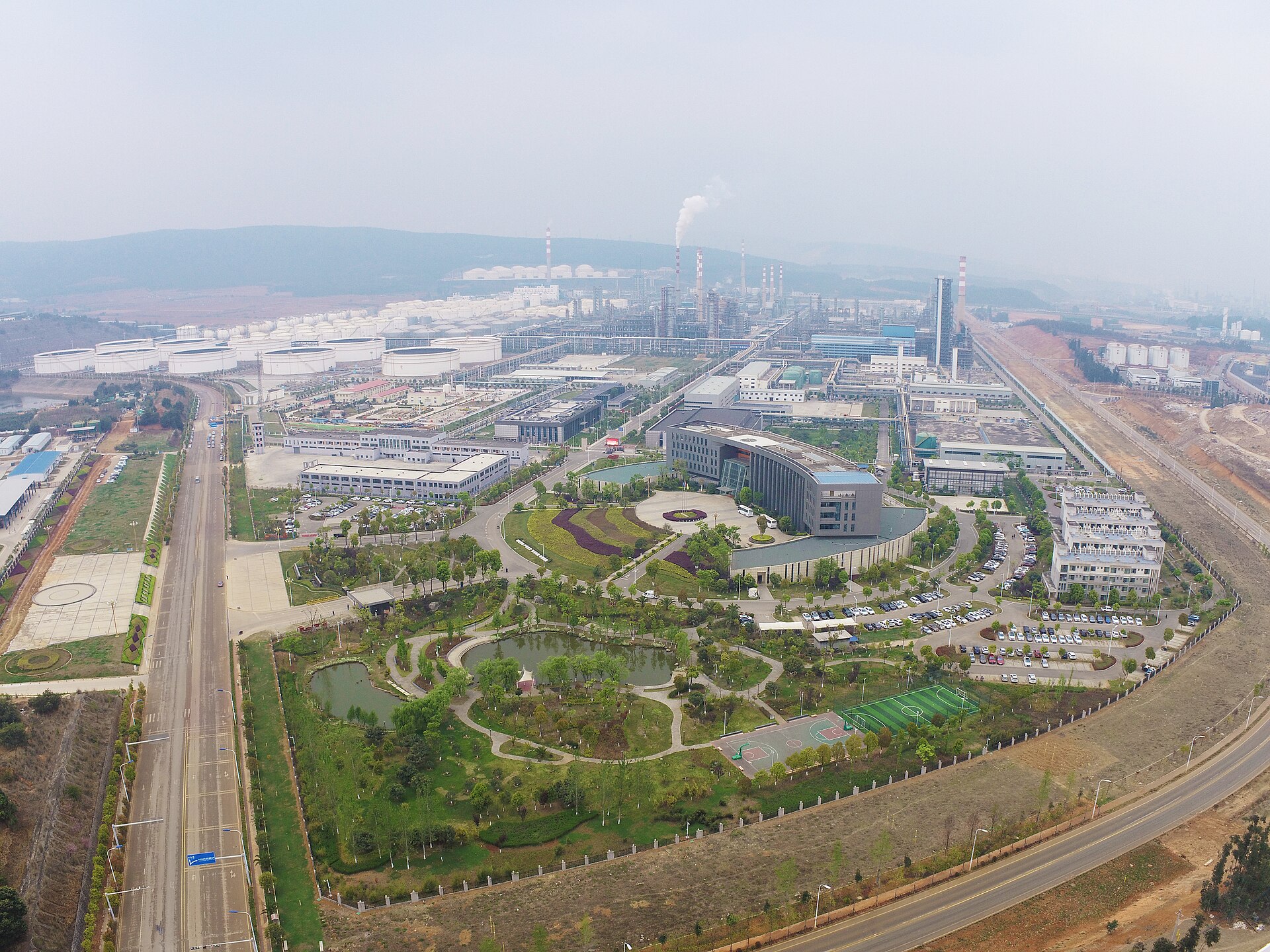
The Rongsheng cut also exposes a structural weakness in Aramco’s downstream integration strategy. Equity stakes create alignment of long-term interest but do not override short-term procurement economics, particularly when the price differential is measured in tens of dollars per barrel rather than cents. Aramco’s other major downstream investments in Asia — the $7 billion SATORP refinery in Jubail (joint venture with TotalEnergies) and the $15 billion Ras Al Khair integrated refining complex — are wholly or majority Aramco-owned facilities that must process Saudi crude by design. Minority equity stakes in independent Chinese refiners carry no such captive-volume guarantee, and the May nominations have demonstrated the difference between owning capacity and influencing procurement.
The Competitor Math: ESPO, Iran, and the $22 Delivered Gap
The suppliers filling the gap Saudi Arabia is vacating are not difficult to identify. Russia’s ESPO Blend, loaded at the Kozmino terminal on the Pacific coast and delivered to Chinese ports without transiting Hormuz, has undergone a remarkable pricing transformation since the war began. In March 2026, ESPO traded at a $7-10 per barrel discount to ICE Brent at Chinese ports — already attractive enough that Russia supplied roughly 20 percent of China’s crude imports in 2025, the highest share since 2013. By April-May, ESPO flipped to a $2-3 premium above Brent, a $9-13 per barrel swing driven by surging Chinese demand as buyers shifted away from Gulf-routed cargoes. Even at its new premium, ESPO remains approximately $16-22 per barrel cheaper than Arab Light at the May OSP on a delivered basis — a gap so wide that, as one unnamed trader told Baird Maritime, “if there is no feedstock, the quality doesn’t really matter.”
Iranian crude presents an even more aggressive competitive offer, despite the war. China absorbed 1.6 million barrels per day of Iranian crude in March 2026, the highest monthly volume since November 2025, according to Kpler’s Muyu Xu — a flow that proceeds entirely outside official Chinese customs statistics, which record zero Iranian imports. The crude moves through ship-to-ship transfers, renamed vessels, and AIS transponder manipulation, landing primarily at Shandong province’s independent “teapot” refineries, which process approximately 90 percent of Iranian oil reaching China. The IRGC’s $2 million per VLCC transit fee — established as part of the Hormuz franchise architecture — adds roughly $0.80 per barrel to the effective cost of Iranian crude, an increment so marginal that it barely registers against the $17-22 advantage over Arab Light.
The inventory picture further reduces Chinese urgency to pay Saudi premiums. Kpler’s Muyu Xu estimated in early April that approximately 165 million barrels of Iranian crude were stored in floating and onshore facilities outside the Persian Gulf — equivalent to roughly four months of China’s Iranian import needs at current run rates. China’s own Strategic Petroleum Reserve, with approximately 1.3-1.4 billion barrels of capacity, provides an additional buffer: the Chinese Energy Ministry authorized state refiners Sinopec and CNPC to draw up to 1 million barrels per day from reserve stocks, a decision that directly competes with incremental Saudi term liftings for refinery intake slots. When buyers have four months of cheap Iranian crude in storage, a million barrels per day of SPR drawdown authorization, and a Pacific-delivered Russian alternative at $16-22 below your price, the commercial case for lifting Arab Light at +$19.50 is not merely weak. It does not exist.
Can Aramco Cut the June OSP Without Signaling Fiscal Distress?
The June OSP announcement, due approximately May 5, will require Aramco to resolve a pricing contradiction that has no precedent in the company’s history. The implied correction needed to restore Arab Light’s competitiveness against ESPO and Iranian alternatives at current spot levels is approximately $18-20 per barrel — a cut that would bring the differential from +$19.50 back toward the +$0.00 to +$1.50 range where Chinese buyers were willing to lift record volumes in March. No single-month OSP adjustment of that magnitude has ever been issued by Aramco or, based on available records, by any major national oil company. The largest recent correction was the $2 cut applied in December 2024, when Aramco reduced Arab Light to Asia to +$1.70 in what S&P Global described as “a nod to weak Asian market conditions.” The scale of correction now required is roughly ten times that figure.
The fiscal signaling problem is acute because Saudi Arabia’s budget is constructed on oil revenue assumptions that the OSP directly affects. The IMF pegged the kingdom’s central government fiscal breakeven at $86.60 per barrel in December 2025 — a figure that excludes PIF capital expenditure. Bloomberg Economics’ consolidated estimate, which includes PIF’s revised 2026-2030 outlays, sits at $108-111 per barrel. At Goldman Sachs’ post-ceasefire Q2 2026 Brent forecast of $90 — cut from $99 on April 9 — Saudi Arabia is already $18-21 below PIF-inclusive breakeven. An aggressive June OSP cut would not change the underlying Brent price, but it would reduce the effective revenue per barrel on term-contract sales at the precise moment when the kingdom is running a deficit that Goldman estimated at $80-90 billion on a PIF-consolidated basis, versus the official $44 billion projection.
The alternative — holding the June differential at an elevated level to preserve nominal pricing authority — carries its own fiscal cost. As detailed on April 14, every barrel deferred from term contracts to spot reduces Aramco’s realized price to the Dubai benchmark rather than the premium-laden OSP, meaning that volume loss at high OSP differentials can produce lower total revenue than volume retention at lower differentials. The arithmetic is straightforward: 20 million barrels at +$19.50 generates the same OSP revenue as 39 million barrels at +$10. But the 19 million barrels of lost volume go to Russian and Iranian competitors, and the market-share loss compounds across months in ways that a pricing correction later cannot fully reverse.
The Term Contract Architecture Under Stress
Aramco’s term-contract system — the mechanism through which approximately 60-70 percent of the company’s crude is sold — was designed for a world of moderate price volatility and limited buyer optionality. Monthly OSP differentials adjust by single-digit increments, buyers nominate volumes weeks in advance, and Aramco retains the right to adjust allocations by ±10 percent. The implicit bargain is stability: buyers accept a premium over spot in exchange for guaranteed supply security, and Aramco accepts marginally lower peak revenue in exchange for predictable volume flows. The system has governed the world’s largest crude oil trade for four decades, and it has never been tested by a $17 single-month differential increase followed by an $18 spot price collapse within the same nomination cycle.
The 2018 episode provides the closest precedent, and its scale makes the current situation look incomparably worse. When Aramco raised the May 2018 Arab Light OSP to Asia by $0.10 per barrel — one tenth of one dollar — Sinopec’s trading arm Unipec cut nominations by 40 percent. S&P Global Commodity Insights described the cut as “unusual and would only be allowed in special circumstances,” noting that standard contracts permitted monthly variation of only ±10-15 percent. If a dime triggered a 40 percent volume cut, the current $17 increase has produced buyer behavior that the contract architecture was never engineered to accommodate.
Asian buyers have already signaled that the system itself needs revision. Bloomberg reported in March 2026 that Chinese refiners specifically lobbied Aramco to reprice term contracts against ICE Brent futures rather than the Oman/Dubai benchmark — a structural change that would align Saudi pricing with the reference used by European and some Indian buyers, reducing the basis risk that contributed to the May blowout. Aramco has not granted this request in 40 years of term-contract history, and there is no indication it will do so for June. But the request itself marks a shift in the power dynamic: when buyers begin demanding changes to the pricing architecture rather than simply reducing volumes within it, the architecture’s durability is no longer a matter of Aramco’s preference alone. The price signals driving that pressure — specifically the $49 gap between physical crude and Brent futures that crystallised on April 13 — are the subject of The $50 Crude Gap Saudi Arabia Has to Fix Before May 5.
China Market Share: A Structural Decline Predating the War
The May volume collapse is not an isolated wartime disruption. It is the most dramatic data point in a multi-year trend that began when Western sanctions on Russian crude after the 2022 Ukraine invasion created a structural price advantage for Russian grades in Asian markets. Russia’s share of Chinese crude imports rose from roughly 15 percent in 2021 to approximately 20 percent by 2025 — the highest since 2013 — while Saudi Arabia’s share declined from 19.1 percent in 2013 to 17 percent in 2024 and 14 percent in 2025. The war has accelerated a trajectory that was already established: Saudi Arabia was losing China before a single missile struck Ras Tanura.
The Shandong teapot refinery ecosystem illustrates why the erosion is structural rather than cyclical. These independent refineries — approximately 40 facilities with a combined capacity of roughly 4 million barrels per day — process the majority of Iranian and discounted Russian crude reaching China. They operate at narrow margins (54.58 percent of capacity in early March 2026, projected to fall to 50 percent in April, according to Hydrocarbon Processing) and are structurally unable to absorb Saudi crude at OSP premiums that add $15-20 per barrel to their feedstock cost. As Natixis chief Asia-Pacific economist Alicia Garcia-Herrero told Al Jazeera, “teapot refineries have lost access to low-cost crude and face high replacement prices” — a characterization that applies specifically to the sanctioned Iranian barrels being intercepted, not to a hypothetical Saudi price increase that the teapots could not absorb even if they wanted to.
Alejandro Reyes of the University of Hong Kong captured the systemic design behind China’s supply diversification: the country’s crude procurement architecture is “intentional at the system level,” built on “optionality, redundancy and some plausible deniability.” Saudi crude is one input among many in a system that was constructed to prevent dependence on any single supplier. The OSP premium has now made Saudi Arabia the most expensive input in that system, and the system is functioning exactly as designed — routing barrels away from the highest-cost source toward the lowest.
What Does the Volume Loss Mean for Saudi Fiscal Math?
The revenue impact of the May volume halving depends on whether the lost barrels are replaced by spot sales to other buyers or simply not produced. At May’s nominal OSP — Arab Light at approximately $109-112 delivered to Asia — 20 million barrels generates roughly $2.18-2.24 billion in gross revenue, compared to approximately $4.36-4.48 billion for 40 million barrels at the same price. The $2.18-2.24 billion shortfall from China alone represents a single-month loss equivalent to roughly 2.5 percent of Saudi Arabia’s projected $88 billion annual oil revenue — a figure that assumes Brent remains near current spot levels, which is itself uncertain.
| Month (2026) | Volume to China (M barrels) | Arab Light OSP to Asia ($/bbl above Oman/Dubai) | Approximate Brent at OSP setting |
|---|---|---|---|
| January | ~45-48 | +$0.00 (parity) | ~$76 |
| February | ~45-48 | +$0.00 (parity) | ~$75 |
| March | ~53-58 | +$0.00 (parity) | ~$75 |
| April | ~40 | +$2.50 | ~$82 |
| May | ~20 | +$19.50 (record) | ~$109 |
The fiscal damage extends beyond the direct revenue loss because Saudi Arabia’s war-era fiscal position is already precarious. With the PIF-consolidated deficit estimated at $80-90 billion against an official $44 billion projection, and a PIF-inclusive breakeven at $108-111 per barrel, every dollar of effective price reduction pushes the consolidated budget deeper into deficit. The EIA’s April 2026 price path, which projects Brent averaging $88 in Q3 and $85 in Q4, implies a fiscal gap that widens through the year regardless of OSP adjustments.
The compounding problem is that China-bound volume cannot be easily redirected. Indian state refiners — IOC, BPCL, HPCL — have already demonstrated willingness to source non-Saudi crude at $6-6.50 per barrel below Brent on a delivered basis, creating an alternative supply pipeline that did not exist at this scale before the war. Japanese and South Korean term buyers face the same OSP premium and are making the same calculations. That 38.6 percent single-month decline in total Asian exports preceded the May OSP announcement, meaning the customer base that might absorb redirected Chinese volumes was already shrinking before the current pricing dislocation fully materialized.
The May 5 Decision and Its Three Bad Options
Aramco’s pricing committee will finalize the June OSP around May 5, facing a decision space with no outcomes that preserve both pricing authority and market share simultaneously. The three options, and their costs, map a trap identified as structurally inescapable on April 14: the May premium was set in a market that no longer exists, and no June correction can undo the damage without creating new problems of comparable magnitude.
Option one: aggressive correction to +$0.00 to +$2.00, restoring competitiveness with ESPO and Iranian alternatives at current spot levels. This would signal that the May premium was a wartime anomaly, validate buyer defection as a successful negotiating tactic, and establish a precedent that war-era OSPs can be reversed almost entirely within a single cycle. The volume recovery would likely be significant — March demonstrated that Chinese buyers respond immediately to competitive pricing — but the signal cost is permanent. Every future war premium, supply disruption surcharge, or elevated OSP will be evaluated by buyers against the April 2026 precedent: Aramco set a record premium, buyers walked away, and Aramco blinked within 30 days.
Option two: modest correction to +$8.00 to +$12.00, splitting the difference between current levels and competitive pricing, satisfies neither objective. The premium remains $6-10 above the level needed to compete with ESPO on a delivered basis, meaning volume recovery will be partial at best. The signal is ambiguity: Aramco acknowledges the market has moved but refuses to concede how far, leaving buyers uncertain whether further cuts will follow in July and incentivizing continued under-lifting as a hedge against a lower future price. Reid I’Anson at Kpler estimated the global market deficit at 6 million barrels per day with a required rebalancing price of $160-170 — a scenario in which holding a high OSP would be rewarded — but that scenario assumes sustained Hormuz disruption, and the ceasefire, however fragile, is suppressing precisely that premium.
Option three: hold at +$15.00 or above, defending pricing authority at the explicit cost of volume — the market-share sacrifice option, and the one with the steepest compounding penalty. Every month that Arab Light is priced $15-20 above alternatives, Russian and Iranian suppliers embed deeper into Chinese refinery optimization models, build new relationships with Shandong teapots and coastal mega-refineries, and establish logistical patterns — ESPO via Kozmino, Iranian crude via ship-to-ship transfers in the Malacca Strait — that persist after the premium normalizes. Saudi Arabia spent three years recovering market share after the 2014-2016 price war, during which it deliberately cut prices to punish US shale producers. The current premium was not a strategic choice but a war-era artifact, and its market-share consequences will take equally long to reverse.
The decision is further complicated by what Aramco does not know on May 5 — specifically, whether the ceasefire, which expires April 22, survives the Hajj security cordon sealing on April 18. If Hormuz reverts to contested transit, daily passages dropping back toward the 15-20 ships observed in early April, war premium returns to Brent and potentially validates a high June OSP after the fact; if the ceasefire holds and throughput normalizes, the same high OSP accelerates the defection already underway. Aramco must price June crude for a world that will not reveal itself until weeks after the decision is irreversible, using a system designed for months where the pricing range was measured in dimes, not in $17 single-month swings. At Goldman Sachs’ Q2 Brent projection of $90, even a full correction to zero premium would leave Arab Light at approximately $90 delivered — still above Iranian crude at $65-75 in Shandong, but finally competitive with ESPO at $93-96.
| June OSP Scenario | Differential ($/bbl above Oman/Dubai) | Implied Arab Light Delivered ($/bbl, at $90 Brent) | Gap vs. ESPO Delivered ($/bbl) | Expected Volume Impact |
|---|---|---|---|---|
| Full correction | +$0.00 to +$2.00 | ~$90-92 | Parity to -$4 | Volume recovery; signal cost high |
| Moderate correction | +$8.00 to +$12.00 | ~$98-102 | +$2 to +$9 | Partial recovery; buyer uncertainty persists |
| Minimal correction | +$15.00+ | ~$105+ | +$9 to +$12+ | Continued volume loss; market-share erosion deepens |
Frequently Asked Questions
How do Aramco’s standard term contracts handle buyer-side volume reductions of this magnitude?
Aramco’s term contracts, unlike LNG supply agreements, do not contain publicly disclosed take-or-pay minimum lifting provisions, according to S&P Global Commodity Insights. The contracts establish standing allocations based on historical lifting patterns, with Aramco retaining the right to adjust nominated volumes by ±10 percent. Buyer-side reductions beyond that range are technically permissible at the nomination stage but carry an implicit penalty: Aramco may reduce future allocations when markets tighten, effectively punishing defection during loose markets. The current 50 percent China-wide reduction dwarfs the 2018 Unipec episode — where a $0.10 increase triggered a 40 percent cut in “special circumstances,” per S&P Global — and likely reflects Aramco’s judgment that enforcing contractual volume floors during a pricing dislocation of this scale would damage buyer relationships more than the volume loss itself.
Why hasn’t Hengli Petrochemical lifted Saudi crude since early 2026, even at zero premium?
Hengli Petrochemical, which operates a 400,000 bpd refinery in Dalian, lifted zero Saudi crude for at least three consecutive months through March 2026, including the zero-premium period when other Chinese buyers surged purchases. Baird Maritime flagged the absence but did not explain it. Hengli’s refinery configuration is optimized for lighter, lower-sulfur crudes — the facility was designed around a Russian ESPO and Brazilian Tupi feedstock blend — and Arab Light’s 33° API, 1.77 percent sulfur profile may produce inferior yields relative to ESPO’s 34.8° API, 0.62 percent sulfur even at pricing parity. The implication for Aramco is that some Chinese refining capacity is structurally incompatible with Saudi grades regardless of price, representing market share that cannot be recovered through OSP adjustments alone.
Could China’s SPR drawdown authorization permanently displace Saudi term volumes?
The Chinese Energy Ministry’s authorization for Sinopec and CNPC to draw up to 1 million barrels per day from the approximately 1.4 billion barrel Strategic Petroleum Reserve is an emergency measure, not a structural procurement shift. SPR drawdowns deplete finite stocks that must eventually be replenished, typically at lower prices — meaning current drawdowns effectively defer Saudi purchases rather than eliminating them. The risk for Aramco is timing: if SPR drawdowns bridge Chinese refiners through the May-June high-premium period and prices subsequently fall, the replenishment purchases will occur at lower OSP differentials, transferring revenue from the current cycle to a future, lower-priced cycle. China’s SPR capacity is approximately 90 days of imports at current rates, providing a buffer large enough to sustain reduced Saudi liftings for two to three months before replenishment becomes urgent.
What would a shift from Oman/Dubai to ICE Brent benchmarking mean for Aramco’s pricing power?
Chinese refiners’ reported lobbying for Aramco to reprice Asian term contracts against ICE Brent futures rather than the Oman/Dubai average would fundamentally alter the pricing architecture by replacing a regional benchmark — where Aramco is the dominant price-setter — with a global benchmark over which Aramco has less influence. The Oman/Dubai average reflects Asian sour-crude supply-demand dynamics that Saudi Arabia heavily influences through its own production decisions. ICE Brent reflects a lighter, sweeter North Sea crude market that is increasingly driven by US shale production and Atlantic Basin flows. A switch would reduce Aramco’s ability to set premiums above the benchmark through supply management, narrow the premium range available in competitive markets, and align Asian pricing with the European framework where Aramco has historically accepted thinner margins. Aramco has resisted this change for 40 years, and the current buyer pressure, while unprecedented in intensity, has not produced any indication of concession.
How does the US naval blockade of Iranian ports affect the Saudi-China crude trade outlook?
The CENTCOM blockade, effective April 13, targets Iranian ports and vessels paying IRGC transit fees but does not restrict all Hormuz traffic. If enforced effectively, it would reduce Iranian crude flows to China — the primary competitive threat to Arab Light pricing in Shandong — potentially improving Saudi Arabia’s relative price position. However, the approximately four months of Iranian supply already stored outside the Persian Gulf means the blockade’s impact on Chinese-available volumes would not materialize until mid-to-late 2026 even under maximum enforcement. The blockade simultaneously constrains Saudi exports through the same waterway, reinforcing Riyadh’s dependence on the East-West Pipeline to Yanbu, which operates at a maximum effective capacity of 5.9 million bpd — structurally below pre-war Hormuz throughput of 7-7.5 million bpd.