
DHAHRAN — Brent crude fell approximately 11% to $88 per barrel on April 17, 2026, after Iran’s foreign minister declared the Strait of Hormuz open to all commercial shipping — erasing the war premium that had partially masked a Saudi oil revenue collapse already months in the making.
The price crash arrives into a fiscal structure that cannot absorb it. Saudi Arabia’s June Official Selling Price for Arab Light to Asia is locked at +$3.50 per barrel above the Oman/Dubai average — a differential set before the crash, now yielding an effective delivered price of roughly $89.50. That figure sits $18.50 to $21.50 below the kingdom’s PIF-inclusive fiscal break-even of $108–$111 per barrel, according to Bloomberg Economics. Saudi production in March had already fallen 30% from February. The Hormuz announcement did not create the revenue gap — it removed the last mechanism concealing it. Why Aramco’s “days to restart” claim and Al-Jadaan’s “months” warning cannot both be true traces the contradiction that defined April 17’s dual market signals.
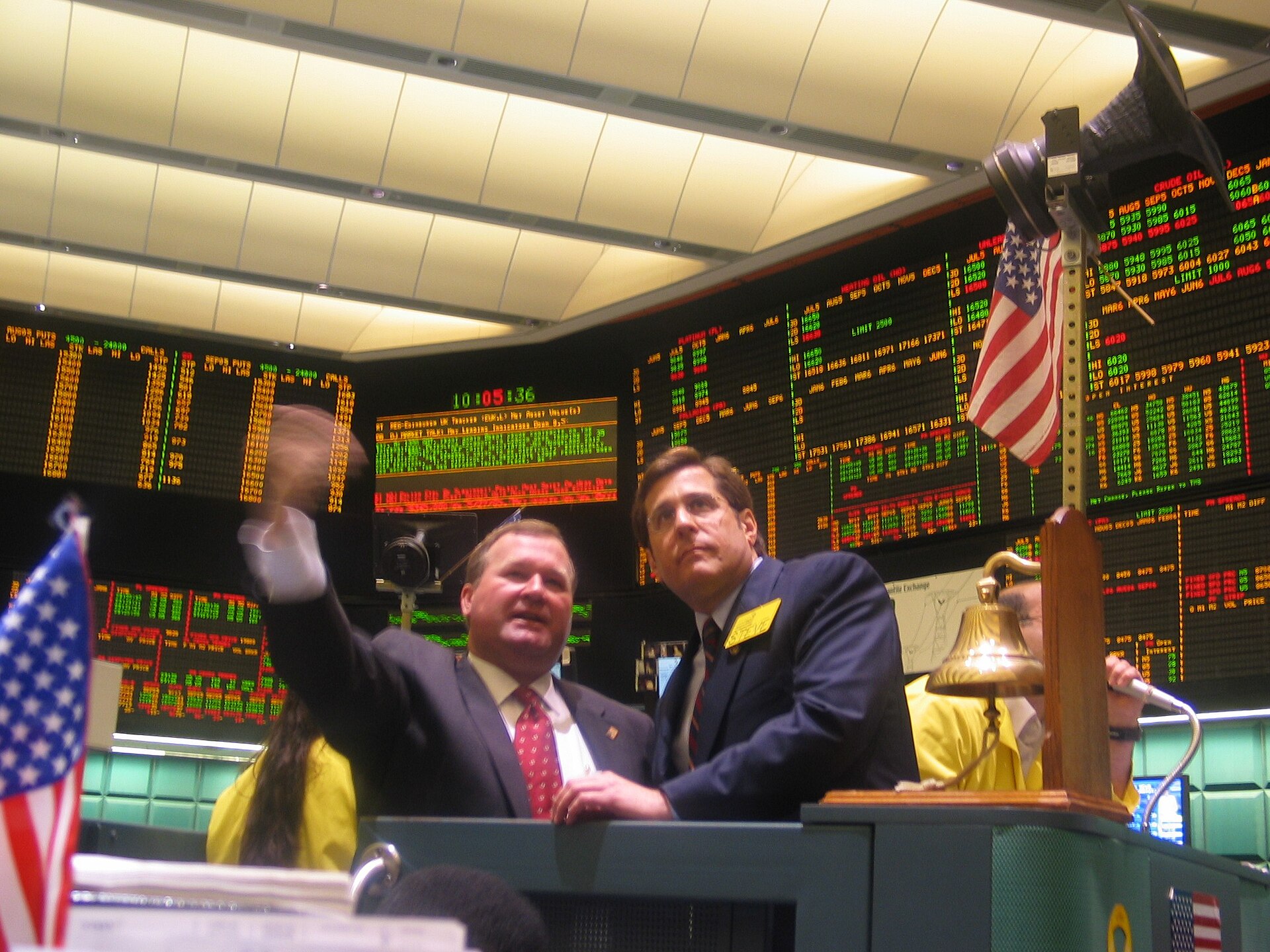
Table of Contents
What Iran Said and What Brent Did
Iran’s foreign minister delivered the announcement in language calibrated to preserve Tehran’s legal position while producing maximum market impact. “In line with the ceasefire in Lebanon, the passage for all commercial vessels through Strait of Hormuz is declared completely open for the remaining period of ceasefire, on the coordinated route as already announced by Ports and Maritime Organisation of the Islamic Republic of Iran,” the statement read, according to NBC News.
The market response was immediate. Brent dropped from approximately $98 to $88 per barrel — a single-session move of roughly $10. WTI plunged 12% to approximately $83. Heating oil futures fell 13%, according to NBC News. The scale of the move reflected not just the Hormuz reopening but the sudden repricing of a war premium that had been baked into every forward curve since late February.
The conditional framing matters. Iran tied the opening to the ceasefire’s remaining duration — not to a permanent change in posture. The transit must follow routes specified by Iran’s Ports and Maritime Organisation, preserving Tehran’s claim to administrative authority over the strait. As House of Saud reported earlier on April 17, Iran’s deputy foreign minister appeared to partially contradict elements of the announcement within hours, introducing ambiguity about the scope of the opening.
For Saudi Arabia, the diplomatic fine print is secondary to the price chart. At $88 Brent, every barrel the kingdom exports generates roughly $19 less than what the PIF-inclusive budget requires. What the fine print does determine is duration: Iran explicitly tied the Hormuz opening to the Lebanon ceasefire’s ten-day window, making Saudi Arabia’s export corridor a derivative of Israeli restraint in southern Lebanon — a coupling that carries distinct structural implications for Riyadh’s fiscal planning horizon.
The Middle East briefing 3,000+ readers start their day with.
One email. Every weekday morning. Free.
The June OSP Trap
Aramco publishes Official Selling Prices around the 5th of each month for term contract liftings the following month. The June differential for Arab Light to Asia was set at +$3.50 per barrel above the Oman/Dubai average. That figure is fixed. It cannot be revised until the July OSP announcement in early June.
The arithmetic is straightforward. At $88 Brent — implying roughly $86 on the Oman/Dubai average — Arab Light to Asia prices at approximately $89.50 per barrel. Bloomberg Economics places the PIF-inclusive fiscal break-even at $108–$111. The gap: $18.50 to $21.50 per barrel on every barrel loaded at Yanbu or Ras Tanura for Asian buyers.
The June OSP represents a $16 per barrel collapse from May’s record +$19.50 differential — the sharpest single-month OSP correction in recent years. But the May differential was itself a casualty of the price crash that followed the East-West Pipeline strike on April 8, when Brent fell from $109 to $91. That left May’s OSP roughly $11–$14 above the spot market — punishing term buyers who were contractually locked in.
Aramco cut the June differential to bring term prices closer to market reality. The Hormuz announcement then moved the market floor underneath the correction. The June OSP was calibrated for a $95–$100 Brent environment. It landed in an $88 one. The forward signal is further complicated by the expiry of OFAC General License U on April 19 — a 30-day Iranian crude waiver that was not renewed, removing a shadow-fleet price anchor that markets had treated as structural.
How Much Oil Can Saudi Arabia Actually Export?
The price problem compounds a volume problem that preceded the Hormuz announcement by weeks. Saudi crude production in March fell to 7.25 million barrels per day from 10.4 million bpd in February — a 30.3% drop, according to the IEA’s April 2026 Oil Market Report. April production is estimated at approximately 7.8 million bpd against an OPEC+ quota of 10.2 million bpd.
Saudi crude exports tell a sharper story. Kpler data shows March exports at approximately 4.355 million bpd, down from 7.108 million bpd in February — a 38.7% month-over-month collapse. Asia-bound shipments fell 38.6%.
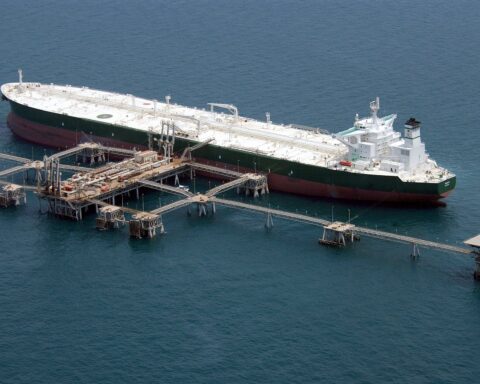
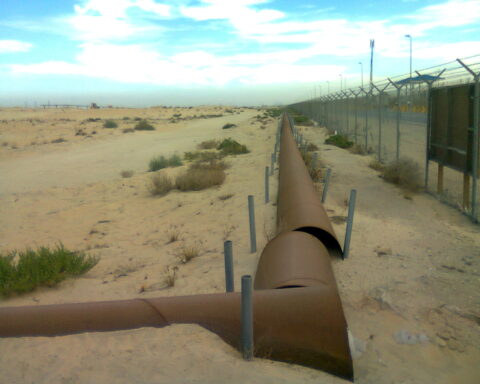
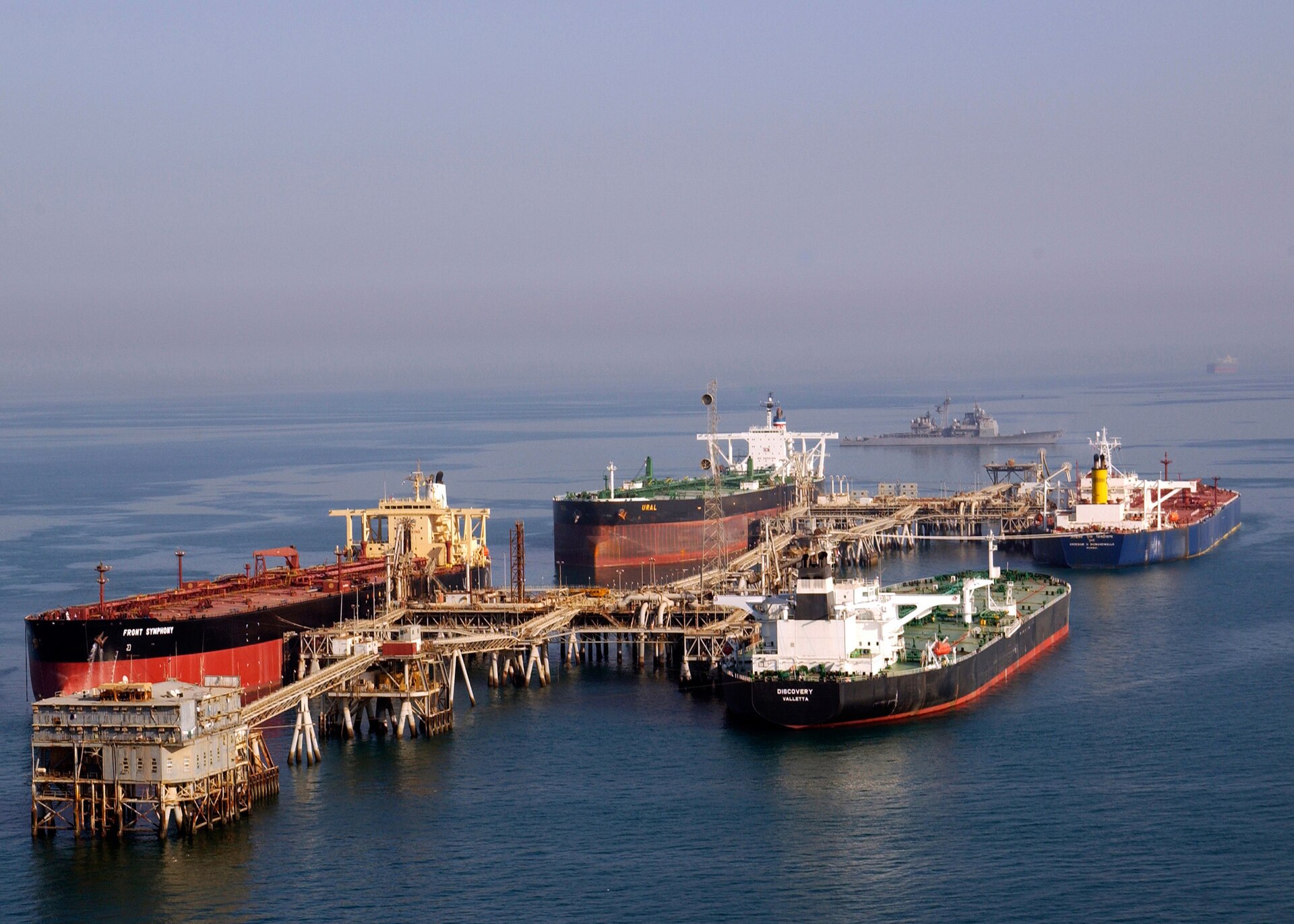
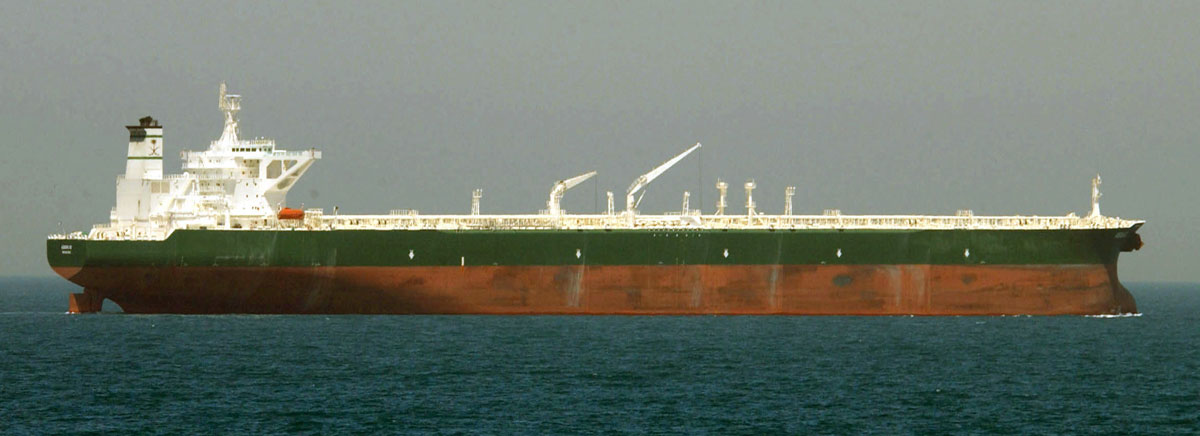
The binding constraint is not production capacity or pipeline throughput. The East-West Pipeline was restored to its full 7 million bpd delivery rate by April 12. The constraint is Yanbu. The Red Sea port has an effective loading ceiling of roughly 4 to 4.5 million bpd — berth availability, storage tank cycling, and tanker scheduling all impose hard limits that cannot be expanded in weeks or months. That leaves 2.5 to 3 million barrels per day of crude arriving at the Red Sea coast with no tanker to board.
Khurais adds another 300,000 bpd to the shortfall. The field remains offline with no restoration timeline announced as of April 17, according to IEA data. The production crash documented by House of Saud on April 17 placed total Saudi output 3.15 million bpd below pre-war levels — the IEA called it the “largest disruption on record.”
OPEC+ agreed to increase output by 206,000 bpd effective April 2026, according to CNBC. Against a 2.4 million bpd gap between Saudi quota and actual production, the increase is arithmetically irrelevant.
Where Does Saudi Fiscal Math Stand Now?
The 2026 Saudi budget projected SAR 1.313 trillion ($346.6 billion) in expenditure against SAR 1.147 trillion ($306 billion) in revenue — a planned deficit of SAR 166 billion ($44 billion), or 3.3% of GDP. Oil revenues fund approximately 60% of government spending.
Goldman Sachs revised the war-adjusted 2026 fiscal deficit to 6.6% of GDP — roughly $73 to $80 billion annualized, nearly double the official forecast. Jadwa Investment, the Riyadh-based research firm, estimated in a March 15 report that SAR 80 to 120 billion ($21–$32 billion) in unbudgeted defense and emergency expenditure would be required for the remainder of 2026.
At March export volumes of 4.355 million bpd and a per-barrel revenue shortfall of approximately $19 against the PIF-inclusive break-even, Saudi Arabia faces a daily fiscal gap of roughly $82.7 million — annualised at approximately $30.2 billion from the price shortfall alone, before accounting for the volume loss.
The volume loss is the larger number. Pre-war Saudi exports ran above 7 million bpd. At current levels, the kingdom is exporting roughly 2.7 million fewer barrels per day. At $89.50 per barrel, that volume gap represents approximately $242 million per day in foregone revenue — or $88 billion annualised.
SAMA foreign reserves stood at approximately $475 billion (SAR 1.78 trillion) as of February 2026, according to central bank data. At Goldman’s 6.6% deficit rate, implied annual drawdown reaches roughly $73 to $80 billion. The 2014–2016 oil price war provides the precedent: Saudi Arabia burned through $150 billion in reserves over 18 months. The structural difference is that in 2014, the kingdom was producing at maximum volume. Today it faces a simultaneous price, volume, and export capacity constraint.
Finance Minister Mohammed Al Jadaan said before the war that the deficit was “by design” and the kingdom would carry a deficit until 2028. That framing assumed a price environment above $90 Brent with exports at full capacity. Neither condition holds.
Asia’s Quiet Defection
The demand side is compounding the supply problem. Bloomberg reported on April 13 that Saudi crude sales to China for May loading were set to halve — approximately 20 million barrels allocated versus roughly 40 million barrels for April loading. The sources spoke on condition of anonymity.
The China reduction predates the Hormuz reopening and reflects a structural shift already in motion. With Hormuz partially open to Chinese-flagged vessels under Beijing-brokered arrangements since early April, Chinese refiners have been able to source crude from Iraq, the UAE, and Iran itself at prices competitive with Saudi Arab Light. Saudi Arabia’s share of Indian crude imports had already declined from 16% to 11%, according to market data cited in prior House of Saud reporting on the May OSP trap.
The Hormuz reopening accelerates this. With the strait nominally open to all commercial traffic, every Gulf producer can resume direct exports to Asia — placing Saudi crude in direct competition with Iraqi Basrah Heavy, Emirati Murban, and Iranian crude that Tehran has been selling at $90–$100 per barrel throughout the crisis. Saudi Arabia no longer holds the bypass advantage that the East-West Pipeline to Yanbu was supposed to provide.
The IEA’s April report revised global oil demand to contract by 80,000 bpd in 2026, reversing a pre-war forecast of 730,000 bpd growth. Saudi Arabia is fighting for market share in a shrinking pool.
Iran’s $5 Billion Advantage
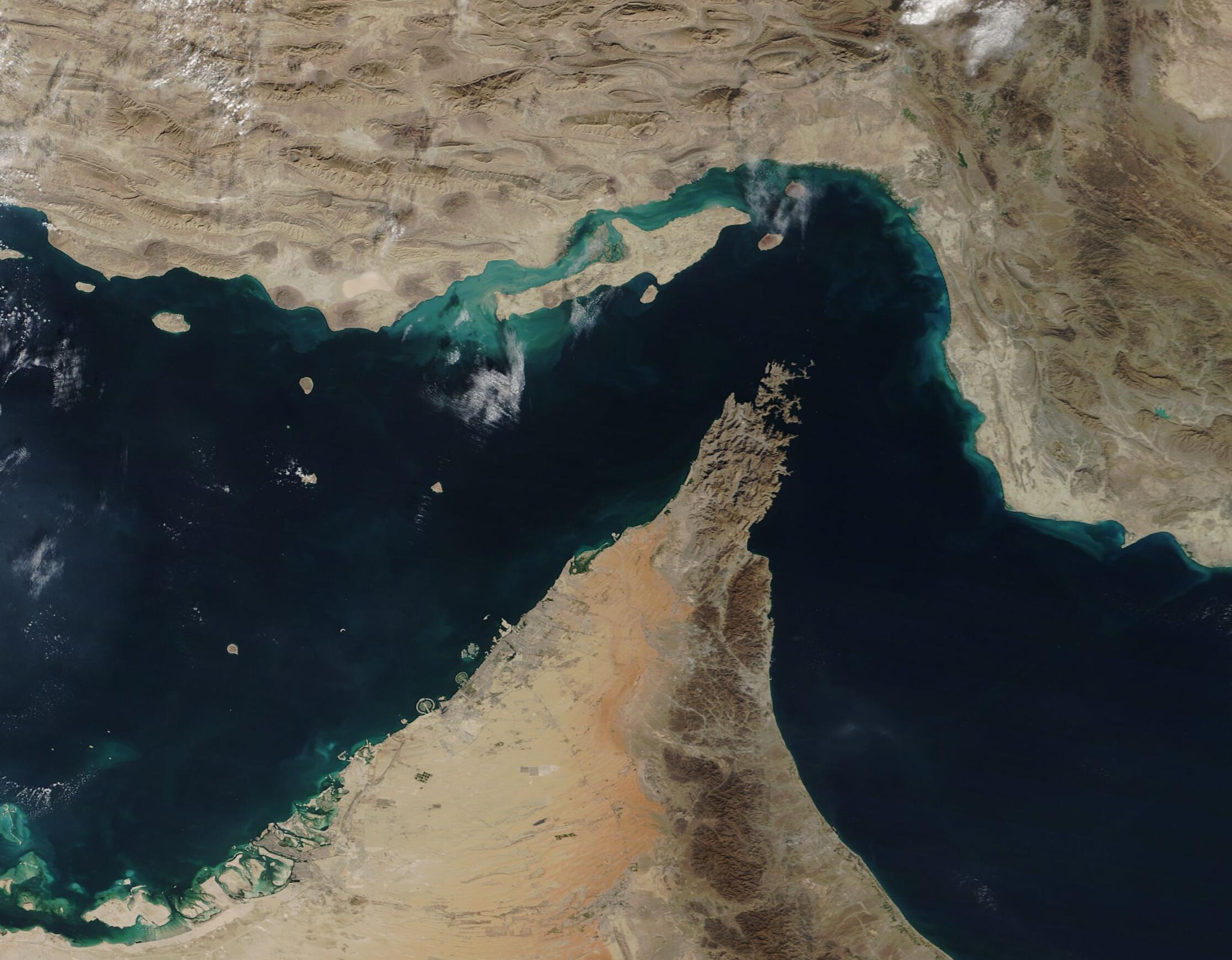
Iran earned approximately $5 billion in oil export revenue over the past month, according to Al Jazeera and Bloomberg data, exporting 1.84 million bpd in March and 1.71 million bpd in April at prices consistently above $90 per barrel. Tehran was the only major Hormuz exporter able to move crude through the strait during the effective closure period.
The selective transit architecture Iran operated from late February through April 17 was never a binary blockade. Iran had granted passage to vessels bound for China, Russia, India, Iraq, Pakistan, Malaysia, Thailand, and the Philippines — a framework documented by House of Saud that functioned as a de facto franchise system, with transit fees reported at $1 per barrel.
The April 17 announcement extends access to all commercial vessels but preserves the administrative framework. The “coordinated route” language keeps Iran’s Ports and Maritime Organisation in the operational chain. Iran’s 10-point peace plan demanded Hormuz sovereignty recognition as a prerequisite for permanent reopening — the conditional ceasefire framing preserves that legal claim for future closure.
With the strait open, Iranian crude exports will compete directly with Saudi exports in Asian markets — adding competitive pressure to a revenue environment already under strain from every direction. At $88 Brent, Iran’s per-barrel revenue falls alongside everyone else’s. But Iran spent the crisis exporting at high prices while Saudi Arabia spent it losing both price and volume. Iran’s $5 billion in revenue over the past month came while Saudi Arabia was absorbing an estimated $88 billion annualised shortfall from volume loss alone.
Background
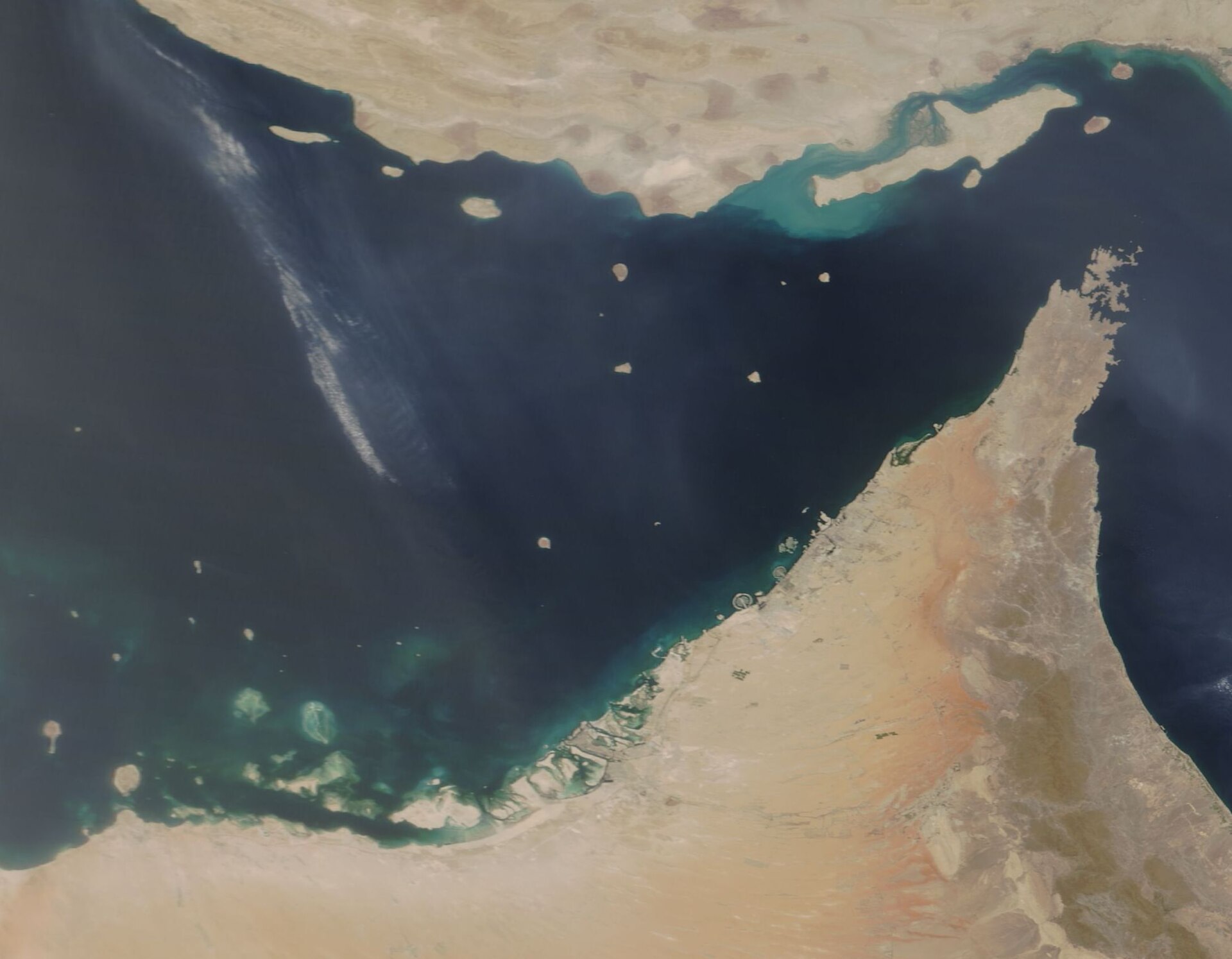
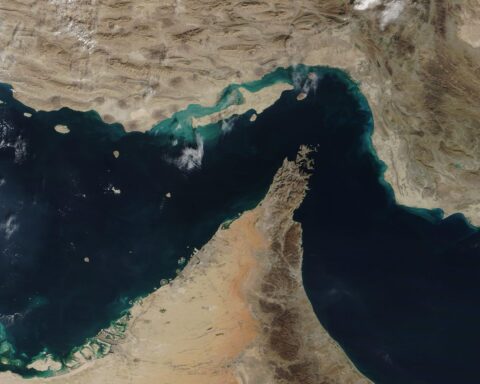
The Iran-Saudi military conflict that began in late February 2026 shut the Strait of Hormuz to most commercial traffic, collapsing global oil supply by 10.1 million bpd to 97 million bpd in March, according to the IEA — the largest single-month supply disruption in the agency’s history. Saudi Arabia redirected its exports through the 7 million bpd East-West Pipeline to Yanbu on the Red Sea, but port infrastructure limited effective loading capacity to approximately 4 to 4.5 million bpd.
The ceasefire brokered through Islamabad negotiations remains conditional, with an expiry date of April 22. Iran’s IRGC Navy had declared “full authority” over the strait on April 5 and again on April 10. The April 17 foreign ministry announcement represents a civilian diplomatic action that may or may not bind the IRGC’s operational posture — a question that markets will test in the coming days as tankers attempt transit.
Hours after Araghchi’s announcement, Iran’s Parliament Speaker Mohammad Bagher Ghalibaf publicly reversed it: he declared Hormuz would not remain open if the US naval blockade continued, and denied all seven Trump claims about a nuclear deal in a statement that sent Brent crude back toward $91. Ghalibaf’s seven-point refutation of Trump’s deal claims and simultaneous Hormuz closure threat transformed what Araghchi had framed as a reopening into a conditional pause whose enforcement no civilian official in Tehran could guarantee. The operational mechanics of that reversal — including the IRGC joint command statement that restored “strict control” within 24 hours of Araghchi’s announcement — are detailed in IRGC Reversed Iran’s Own Foreign Minister on Hormuz Within Hours, Restoring ‘Strict Control’.
FAQ
Can Aramco revise the June OSP after the Hormuz announcement?
No. Aramco has never revised a published OSP mid-cycle. The June +$3.50 differential will apply to all June-loading cargoes regardless of where Brent trades between now and the end of June. The July OSP, expected around June 5, will be the first opportunity to reflect the post-announcement price environment.
What is the difference between the IMF and Bloomberg break-even estimates?
The IMF’s fiscal break-even of $86.60–$90 per barrel covers central government expenditure only — the formal budget of SAR 1.313 trillion. Bloomberg Economics’ $108–$111 estimate includes off-budget commitments through the Public Investment Fund and National Development Fund — NEOM, the Red Sea Project, Qiddiya, and other Vision 2030 megaprojects that draw on oil revenue but do not appear in the formal budget. The EIA’s April 2026 STEO had projected $96 average Brent for 2026 before the crash — already below the Bloomberg threshold.
How long would it take for Hormuz to return to pre-war throughput?
Pre-crisis Hormuz throughput exceeded 20 million bpd. As of early April, throughput had collapsed to approximately 3.8 million bpd, according to the IEA. Restoration depends on mine clearance — the US Navy decommissioned its four Avenger-class mine countermeasure ships from Bahrain in September 2025, and clearing the approximately 200 square miles of shipping lanes would require an estimated 51 days based on the 1991 Kuwait benchmark. Insurance repricing for tankers transiting the strait adds further delay.
What happens to PIF-funded megaprojects if the deficit widens?
PIF committed over $900 billion in domestic project spending through 2030. The fund’s primary revenue source is Aramco dividends, which are linked to production volume and oil price. At current production levels of 7.25–7.8 million bpd and $88 Brent, Aramco’s free cash flow faces compression from both directions. PIF has previously securitised future Aramco dividend streams and issued international bonds — $5.5 billion in October 2025 — to maintain project timelines. NEOM’s Phase 1 completion target of 2029 had already been revised from 2025. PIF’s response to that compression became clear on April 15: PIF reclassified NEOM as an independent ecosystem, severing it from Vision 2030 KPI accountability.
Could Saudi Arabia increase exports through non-Yanbu routes?
The kingdom’s alternative export infrastructure is limited. Ras Tanura on the Persian Gulf coast can load crude but requires Hormuz transit — the reopening theoretically enables this, but tanker operators and insurers may not immediately treat the strait as safe for Saudi-flagged or Saudi-bound vessels given the conditional framing. The Iraq-Turkey pipeline carries approximately 0.5 million bpd and is controlled by Baghdad. Fujairah in the UAE handles refined products and some crude but is not connected to Saudi supply infrastructure. Yanbu remains the only Saudi-controlled, non-Hormuz export terminal. The insurance market made that calculus concrete on April 18, when two dozen vessels reversed course at Hormuz as Lloyd’s underwriters and P&I clubs — not CENTCOM or IRGC navies — enforced the strait’s de facto closure.
The market-share consequences are already visible in South Korea’s emergency procurement data: Seoul’s 273 million barrel bypass is 91 per cent Saudi crude rerouted through Yanbu, confirming that Riyadh retained volume at the cost of tripled freight and a permanent 9 per cent wedge ceded to Kazakhstan and Oman.
The IRGC tanker attack on April 18 partially reversed that crash, pushing Brent to $99.36 — but Saudi Arabia’s fiscal paradox at $99 Brent shows that higher prices alone cannot close the gap while the Yanbu export ceiling caps shipments at 4–5.9 million bpd.