RIYADH — Saudi Arabia enters the final 96 hours before the US-Iran ceasefire expires on April 22 facing three simultaneous exposure vectors — a June crude pricing decision that must be made at sub-break-even oil prices, a PAC-3 interceptor stockpile mathematically insufficient to cover the Hajj arrival window, and a fiscal deficit widening at a rate Goldman Sachs estimates at more than double the official projection. The ceasefire, brokered by Pakistan on April 8, contained no extension mechanism. Iran’s precondition for any renewal — international recognition of sovereignty over the Strait of Hormuz — is the same demand that collapsed the April 11-12 Islamabad talks after 21 hours without agreement.
The three clocks are not sequential. They run concurrently against a deadline that no party to the conflict appears willing or constitutionally able to extend. Iran cancelled the April 20 Islamabad round on April 18 — the same day IRGC gunboats fired on two Indian-flagged tankers without radio warning, reversing FM Araghchi’s declaration 36 hours earlier that Hormuz was “completely open.”
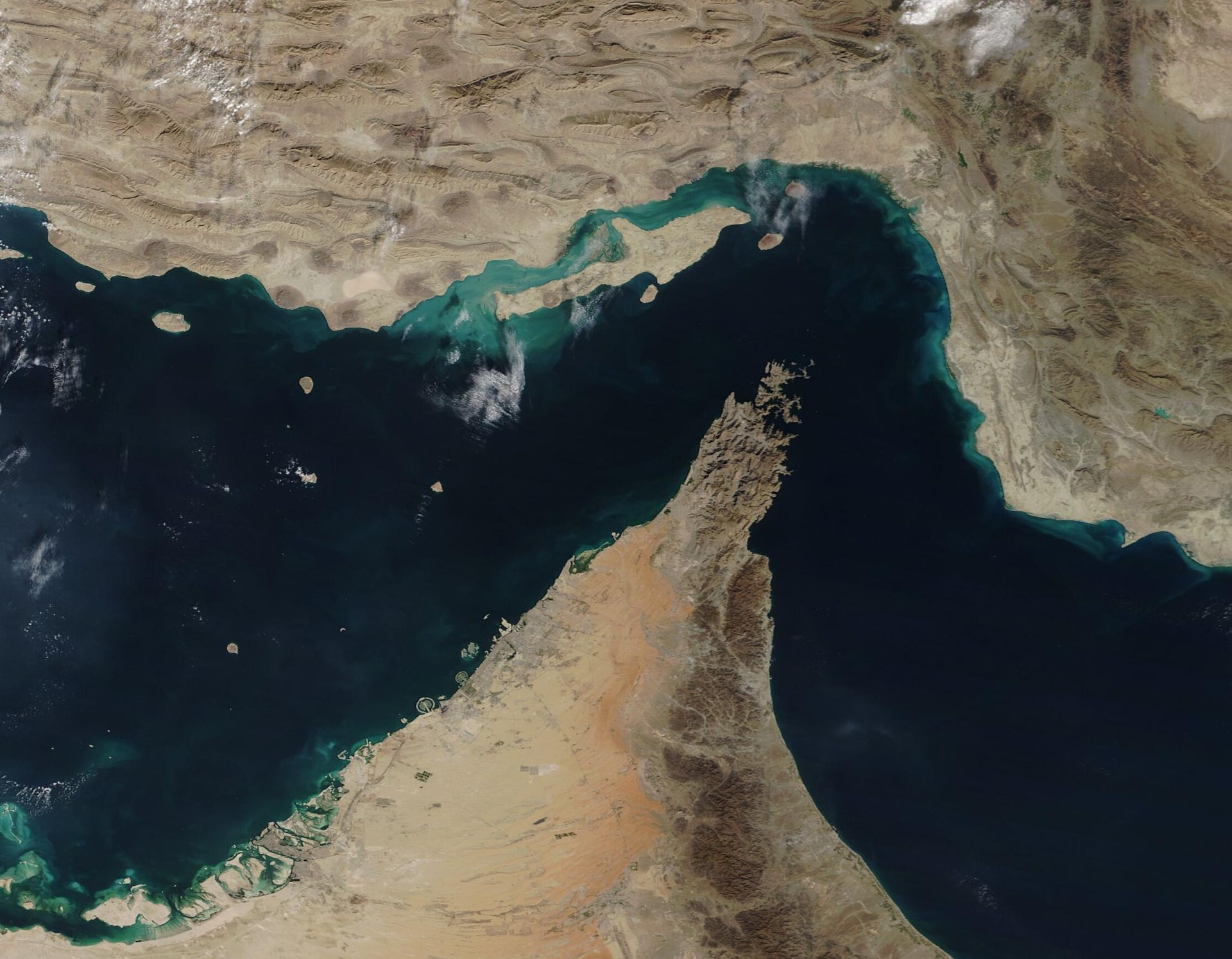
Table of Contents
- The Sovereignty Precondition That Killed Extension Before It Started
- Clock One — Can Aramco Reprice June Without Losing Asia?
- Clock Two — 400 Interceptors, 34 Days, 1.8 Million Pilgrims
- Clock Three — Where Does the Money Come From at $90 Brent?
- The Three Clocks Mapped
- Why Iran Cannot Extend Even If It Wanted To
- FAQ
The Sovereignty Precondition That Killed Extension Before It Started
Iran’s five-point counter-proposal, circulated during the Islamabad talks, requires international recognition of Iranian sovereignty over the Strait of Hormuz as a precondition for any agreement. Under the Witkoff framework negotiated by US envoy Steve Witkoff, Hormuz was explicitly deferred to Phase 2 — a final deal to follow a 45-day Phase 1 ceasefire. Iran is demanding Phase 2 language as the price of Phase 1 extension. The United States has refused to concede this in any round.
The Islamabad Accord called for a halt to hostilities, Hormuz reopening, and a 15-20 day negotiation period. It did not include a renewal clause. Pakistan FM Ishaq Dar said April 13 that talks had ended “very close” to agreement, but “very close” was before Vance walked out of the April 11-12 session — reportedly after Araghchi was “inches away” from a memorandum of understanding on enrichment. The US had proposed a 20-year enrichment moratorium. Iran countered with monitored down-blending. Neither side moved.
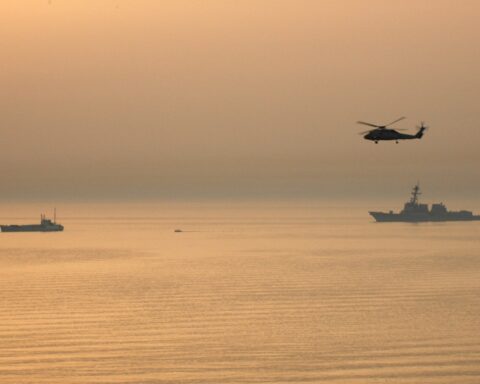
IRGC Khatam al-Anbiya commander Abdollahi stated that the US blockade — CENTCOM’s interdiction order effective April 13, which has turned back 21 vessels — “will constitute a prelude to a violation of the ceasefire.” Parliament Speaker Ghalibaf, who served as IRGC Aerospace Force commander from 1997 to 2000, stated that if the US Navy maintains the blockade, Hormuz will close. On April 18, it did. The IRGC framed the re-closure as a response to “acts of piracy and maritime theft,” declaring the Strait “will remain tightly controlled” until the US restores “full freedom of navigation for vessels travelling from Iran.”
Trump told ABC News that an extension was “most likely not necessary,” predicting “an amazing two days ahead.” Iran’s response: “No date has been agreed for another negotiation round.”
The Middle East briefing 3,000+ readers start their day with.
One email. Every weekday morning. Free.
Clock One — Can Aramco Reprice June Without Losing Asia?
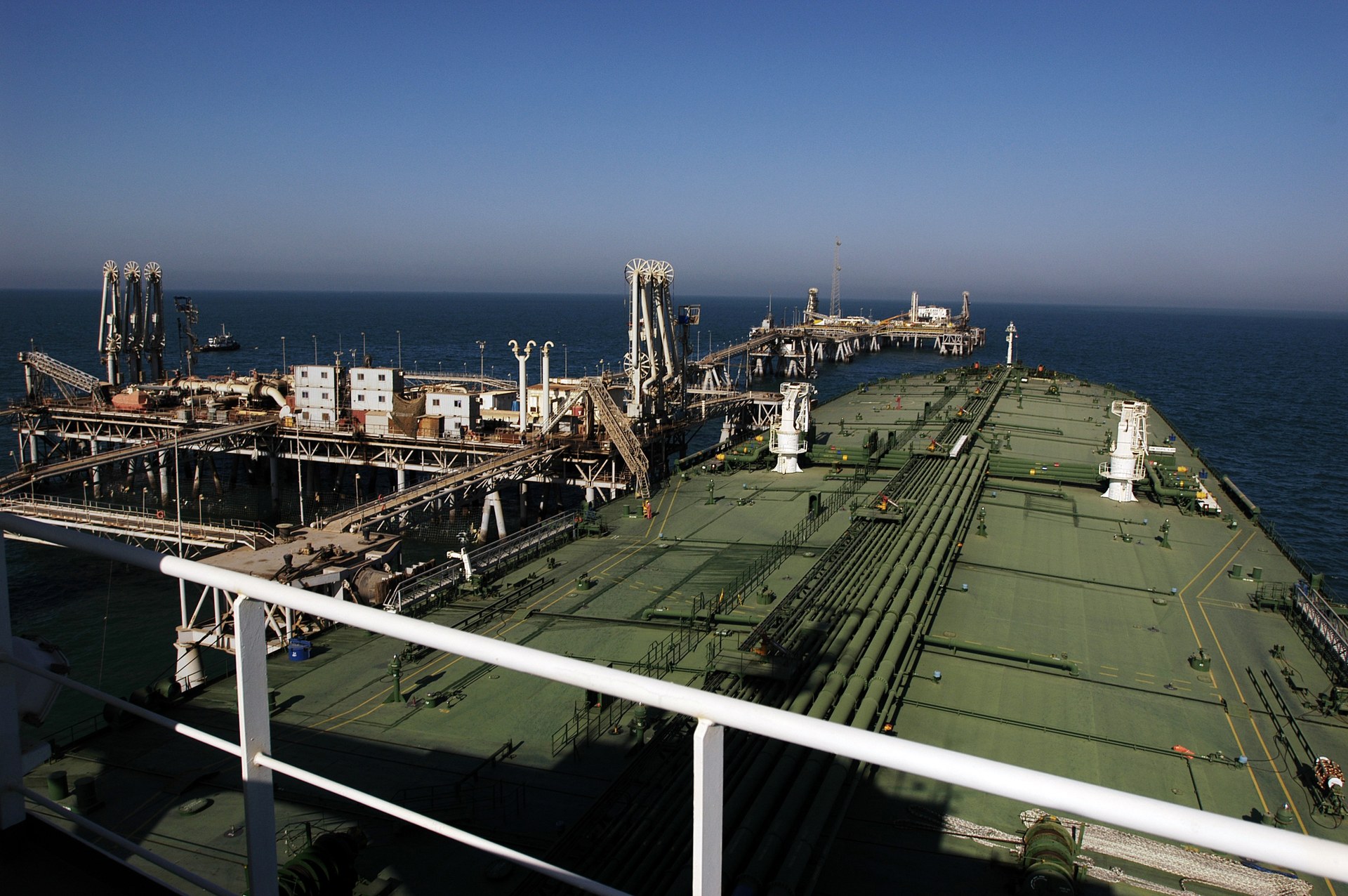
Saudi Aramco must announce its June Official Selling Price by approximately May 5 — thirteen days after the ceasefire expires. The May OSP was set at Arab Light Asia +$19.50/bbl when Brent traded at $109, the highest differential in Aramco’s history and double the previous wartime record of +$9.35/bbl set during the Russia-Ukraine crisis in May 2022.
Brent has since fallen to $90-96/bbl. On April 17, when Araghchi declared Hormuz open, Brent dropped 9.5% to $89.89 before partially recovering on the IRGC reversal. The May OSP now sits $13-19 above the spot price that justified it — a premium no Asian refiner will pay when Russian ESPO crude and Iraqi Basra Heavy are available at market-linked rates.
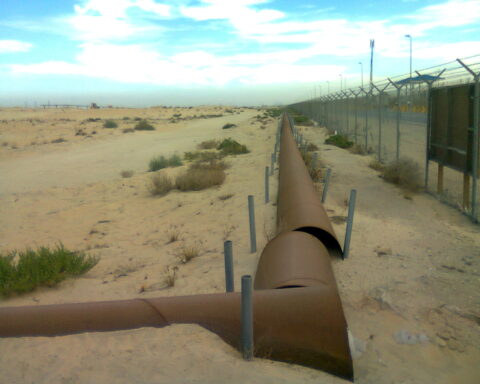
Saudi Asia exports are already down 38.6%, according to Kpler data cited by the IEA, which described the Saudi disruption as “the largest on record.” The Yanbu bypass — the East-West Pipeline rerouting exports around Hormuz to the Red Sea — has a loading ceiling of 5.9 million bpd against a nameplate pipeline capacity of 7 million bpd and pre-war Hormuz throughput of 7-7.5 million bpd. The structural gap is 1.1-1.6 million bpd even at full bypass capacity.
The June OSP binary is precise. Defend the premium: Asian buyers shift to alternative grades, and Saudi market share — already compressed from 16% to 11% of India’s imports — contracts further. Cut the premium: revenue locks in below the fiscal break-even at $90-96 Brent, and the signal to the market is that Aramco expects lower prices to persist. There is no middle path when the spread between the May OSP reference price and current spot exceeds $13/bbl.
War risk insurance compounds the pricing problem. Lloyd’s Joint War Committee added the entire Persian Gulf to its Listed Areas on March 3. VLCCs now face $7.5-14 million per voyage in war risk premiums — up more than 2,000%. The IEA estimates an additional $8/bbl in transport costs, approximately $21 billion per year in elevated shipping costs for Saudi crude alone.
Clock Two — 400 Interceptors, 34 Days, 1.8 Million Pilgrims
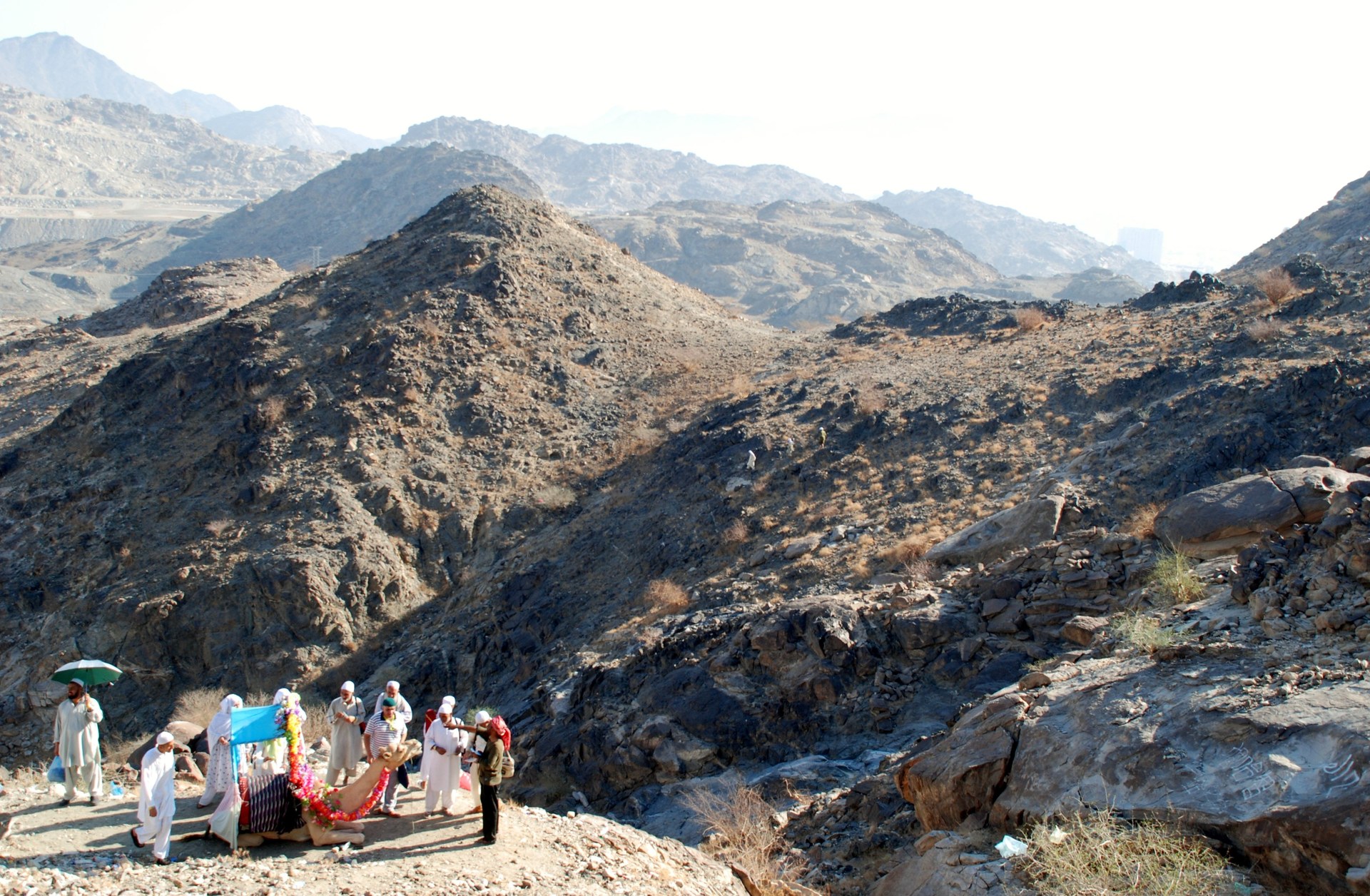
The Hajj cordon sealed on April 18 — the same day the IRGC re-closed Hormuz and fired on two Indian tankers. Pakistan’s 468 Hajj flights began the same day. Indonesia’s 221,000 pilgrims depart April 22, the day the ceasefire expires. The arrival window runs through May 21. The Day of Arafah falls on May 26 — 34 days after expiry.
Saudi Arabia’s PAC-3 interceptor stockpile stands at approximately 400 rounds, roughly 14% of pre-war inventory. Between March 3 and April 7 — 35 days of Gulf combat — Saudi and coalition air defenses recorded 894 intercepts (799 drones, 86 ballistic missiles, 9 cruise missiles), a rate of approximately 25.5 intercepts per day. During peak combat phases, consumption reached 63 rounds per day. At the sustained intercept rate, the current stockpile covers approximately 16 days of engagement.
The Hajj window is 34 days. At peak combat consumption, the stockpile lasts fewer than seven.
Resupply is not a solution within this timeline. The Lockheed Martin facility in Camden, Arkansas, produces 620 PAC-3 MSE rounds per year for all global customers. Saudi Arabia’s January 2026 Foreign Military Sales request — 730 rounds — exceeds the entire annual global production line. A new contract signed in January accelerates production to 2,000 rounds per year, but that capacity does not come online until 2030. The earliest delivery under the existing FMS case: 2028.
By mid-May, 1.8 million international and 200,000 domestic pilgrims will be on Saudi soil. The Custodian of the Two Holy Mosques title — adopted by King Fahd on October 27, 1986, in response to the 1979 Khomeini challenge and the Grand Mosque seizure — carries an implied obligation that has no cancellation mechanism. There are no Iranian pilgrims this year, which inverts the deterrence logic of the 1987 Mecca incident (402 dead, subsequent 87% Iranian quota reduction, three-year boycott). Iran has no Hajj exposure to lose. Saudi Arabia has all of it.
Clock Three — Where Does the Money Come From at $90 Brent?
The IMF pegs Saudi Arabia’s central-government fiscal break-even at $86.60/bbl. Bloomberg Economics, incorporating PIF capital commitments, places the consolidated figure at $94-111/bbl. Goldman Sachs revised its war-adjusted 2026 fiscal deficit projection to 6.6% of GDP — double the official 3.3% estimate.
At $90 Brent with 5 million bpd in effective exports, the daily revenue shortfall against the $108 PIF-inclusive break-even is approximately $90 million. Annualized: $32.9 billion. Goldman’s worst-case deficit estimate exceeds $75 billion.
SAMA foreign reserves stood at $434 billion in February 2026, down $17 billion from January in a single month. The drawdown rate is faster in absolute terms than the 2014-2016 oil price collapse, when SAMA burned $150 billion over 18 months from a peak of $732 billion. The difference: the 2014-2016 drawdown funded a fiscal adjustment. The current drawdown funds a war.
The PAC-3 FMS contract alone — $9 billion for 730 rounds that cannot arrive before 2028 — represents 2% of total foreign reserves. At the current monthly reserve depletion rate of $17 billion, SAMA would exhaust approximately $204 billion over 12 months — nearly half of remaining reserves — before the first replacement interceptor reaches Saudi soil.
The expiry of OFAC General License U on April 19 — with no renewal, as Treasury Secretary Bessent confirmed April 15-16 — removes Iranian crude from global supply. Under normal market logic, reduced supply supports prices. But CENTCOM’s blockade has already removed Iranian barrels from transit. The GL U expiry is a legal confirmation of a physical reality, not a new supply shock. Brent has not repriced upward on the news.
The Three Clocks Mapped
| Clock | Decision / Trigger Date | Current Position | Structural Constraint |
|---|---|---|---|
| June OSP | ~May 5 (13 days post-expiry) | May OSP +$19.50/bbl at $109 Brent; spot now $90-96 | Asia exports down 38.6%; ESPO/Basra Heavy competing |
| PAC-3 Stockpile | April 18 – May 26 (Hajj window) | ~400 rounds (14% pre-war) | 16 days at sustained rate; 7 days at peak; Camden produces 620/year globally |
| Fiscal Deficit | Continuous | $434B reserves, -$17B/month | Break-even $108-111/bbl; Brent $90-96; Goldman deficit 6.6% GDP |
Why Iran Cannot Extend Even If It Wanted To
The structural impossibility of extension is not only diplomatic. It is constitutional. Supreme Leader Khamenei has been absent for 44 days. A diplomatic memo reported by The Times of London described him as “incapacitated and receiving medical treatment in Qom” and “unable to be involved in any decision making.” Article 110 of Iran’s constitution reserves to the Supreme Leader alone the authority to authorize an enrichment concession or a binding Hormuz agreement. Without Khamenei, no subordinate — including President Pezeshkian — holds the constitutional authority to bind the IRGC.
Pezeshkian made this explicit on April 4, when he publicly accused SNSC Secretary Vahidi and Khatam al-Anbiya commander Abdollahi of “acting unilaterally and driving escalation through attacks on regional countries.” The accusation confirmed what analysts had theorized: the Iranian president cannot control the IRGC’s operational decisions, including the decision to fire on tankers, close Hormuz, or reject diplomatic frameworks negotiated by the foreign ministry.
The IRGC Navy commander’s post remains unfilled 19 days after Tangsiri was killed on March 30. The force is headless but operationally active — declaring “full authority to manage the Strait” on both April 5 and April 10, while Araghchi was in Islamabad negotiating.
On April 18, the IRGC escalated further: its targeting declaration extended from Hormuz transit restrictions to the entire Persian Gulf and Sea of Oman, covering all 826 anchored vessels and every Saudi Gulf terminal. The market mispricing of this basin-wide declaration — with Brent at 1.71 — runs directly into the fiscal arithmetic this article examines.
Iran holds 440.9 kg of uranium enriched to 60% as of the last IAEA access on February 28, 2026. Via IR-6 centrifuge cascade, the breakout timeline from 60% to weapons-grade is approximately 25 days. IAEA inspectors have had no access since the war began. Turkey’s President Erdogan, who has attempted to mediate, acknowledged April 15 that “while the negotiation table has not been toppled, they have reached a road bump on the nuclear issue.” He added: “There can be no negotiating with clenched fists.”
FAQ
What happens legally when the ceasefire expires on April 22 with no extension?
The Islamabad Accord contained no automatic renewal or extension clause. Expiry returns both parties to the pre-ceasefire legal status — which, for Hormuz transit, means the IRGC’s self-declared “full authority” framework and the CENTCOM blockade order both remain in force simultaneously. The Lebanon ceasefire, announced April 17, expires separately on April 27 — five days after the Iran ceasefire — creating a staggered collapse risk where one theatre reignites before the other’s truce ends.
Could Saudi Arabia source PAC-3 interceptors from other US allies instead of waiting for Camden production?
Theoretically, yes — Japan, Germany, the Netherlands, and the UAE all operate PAC-3 systems. In practice, each nation’s stockpile is sovereign inventory allocated against its own threat assessments, and any transfer would require both the selling government’s approval and US State Department sign-off under ITAR (International Traffic in Arms Regulations). No allied government has publicly offered interceptor transfers. The January 2026 FMS contract’s 730-round request — exceeding Camden’s full annual output of 620 rounds — reflects the scale mismatch between Saudi consumption rates and global production capacity regardless of sourcing path.
How does the VLCC Sanmar Herald incident affect the June OSP calculation?
The IRGC fired on the Sanmar Herald — an Indian-flagged VLCC carrying approximately 2 million barrels of Iraqi crude — on April 18 without prior radio warning. India summoned Iran’s envoy. The incident directly affects the risk premium embedded in any Asian crude purchase: if IRGC gunboats fire on tankers carrying Iraqi (not Iranian) crude in international shipping lanes, war risk insurance for all Persian Gulf loadings reprices upward. For Aramco’s June OSP, this means the delivered cost to Asian refiners includes not only the official differential but also the $7.5-14 million per-voyage war risk premium — making the total cost of Saudi crude even less competitive against Atlantic Basin and Russian alternatives that avoid Hormuz transit entirely.
What is Iran’s realistic revenue from the Hormuz toll it declared?
Zero. In 36 days of the declared toll regime, Iran issued 60 transit permits and sent 8 payment requests. No vessel has paid. The IMO Secretary-General Arsenio Dominguez called the toll “illegal.” UNCLOS Article 26 prohibits charges on vessels exercising transit passage through international straits. Academic estimates (Shokri) projected realistic annual revenue of $1-2 billion under a functioning regime — but the toll’s operational failure, combined with the CENTCOM blockade preventing Iranian-port-origin vessels from transiting, has produced a system that imposes costs on global shipping without generating revenue for Tehran.
Has Saudi Arabia ever faced a comparable convergence of military, fiscal, and religious-calendar pressures?
The closest precedent is the 1990-1991 Gulf War, when Iraq’s invasion of Kuwait coincided with preparations for the 1991 Hajj season while Saudi Arabia hosted 500,000+ coalition troops. But in 1990, Saudi Arabia had no active missile threat to the Holy Sites, oil prices spiked in its favor (Brent rose from $18 to $40/bbl), and US military assets — including Patriot batteries — were deployed at full strength on Saudi soil. The current configuration inverts each variable: the missile threat is active and sustained, oil prices have fallen below fiscal break-even, and air defense stockpiles are at 14% of pre-war levels with no resupply timeline inside the Hajj window.