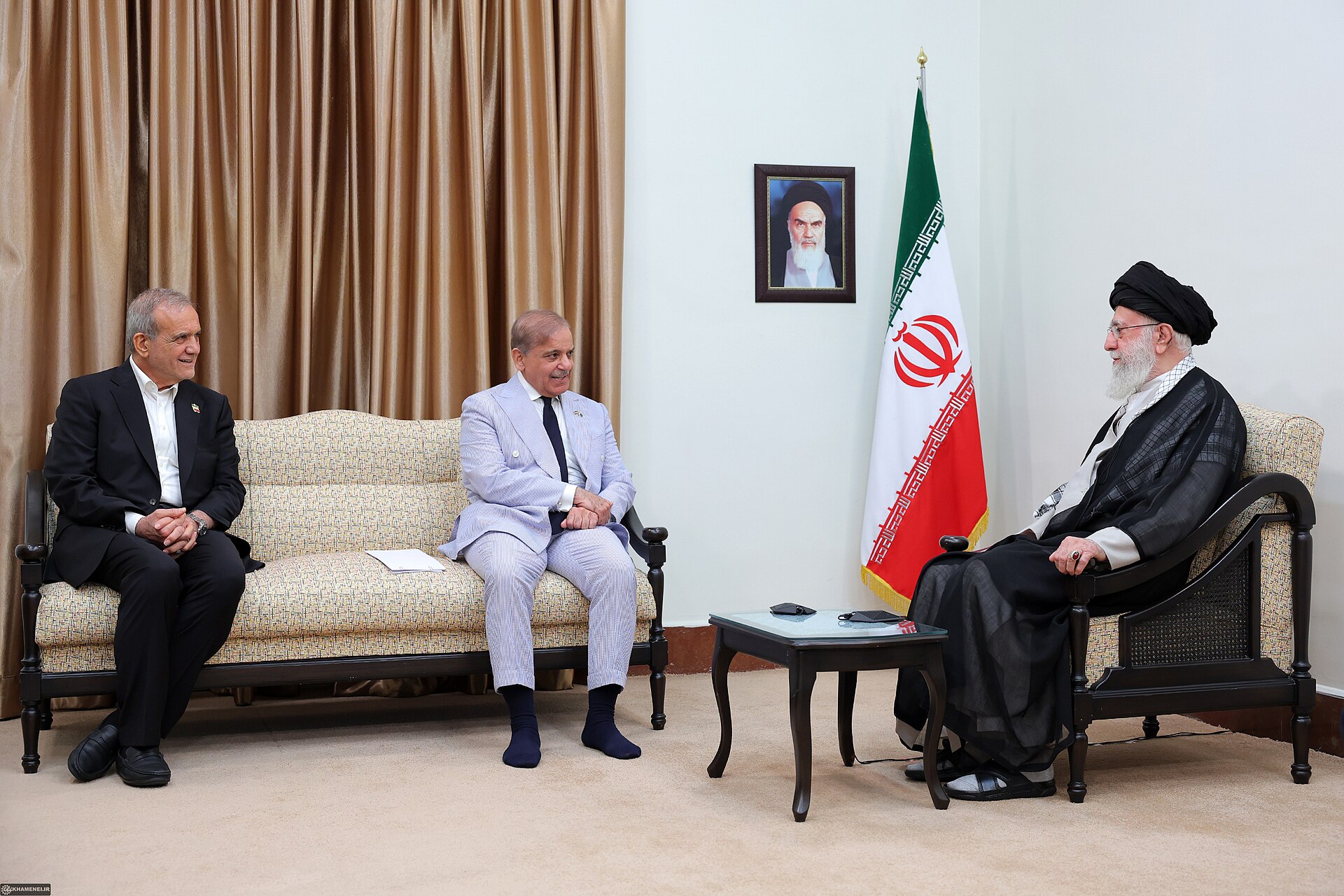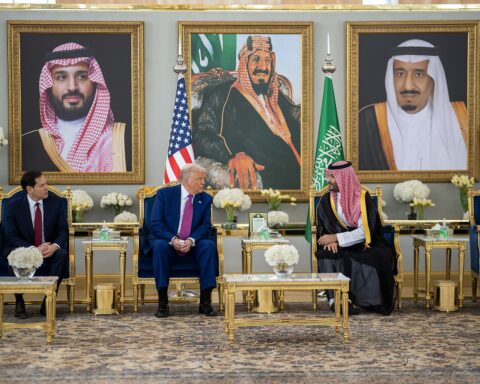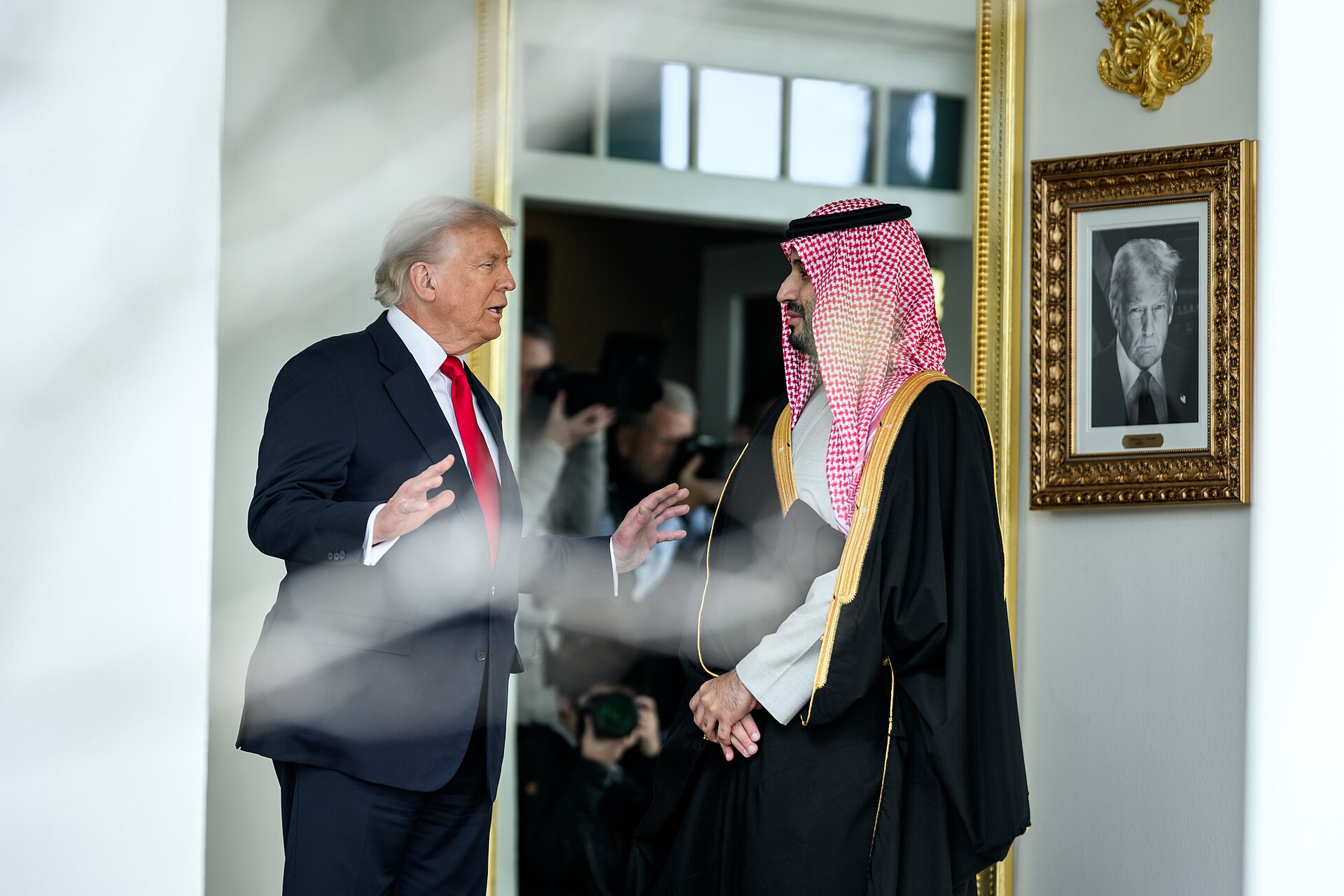

JEDDAH — Iran’s response to the ceasefire framework arrived in Saudi Arabia on April 16 — hand-delivered by Pakistan’s Prime Minister Shehbaz Sharif after a nearly two-hour meeting with Crown Prince Mohammed bin Salman. Within 72 hours, Iran’s Parliament Speaker Mohammad Bagher Ghalibaf declared that talks remained “far from the final discussion,” and Deputy Foreign Minister Saeed Khatibzadeh, speaking at the Antalya Diplomacy Forum, refused to schedule a next round. The ceasefire expires on April 22. No extension mechanism exists. Saudi Arabia — the party most exposed to resumption, most dependent on Hormuz reopening, and most financially invested in the mediating state — was not present at the Islamabad talks that produced the document Sharif carried, is not party to the framework Iran is rejecting, and has no seat at whatever table comes next.
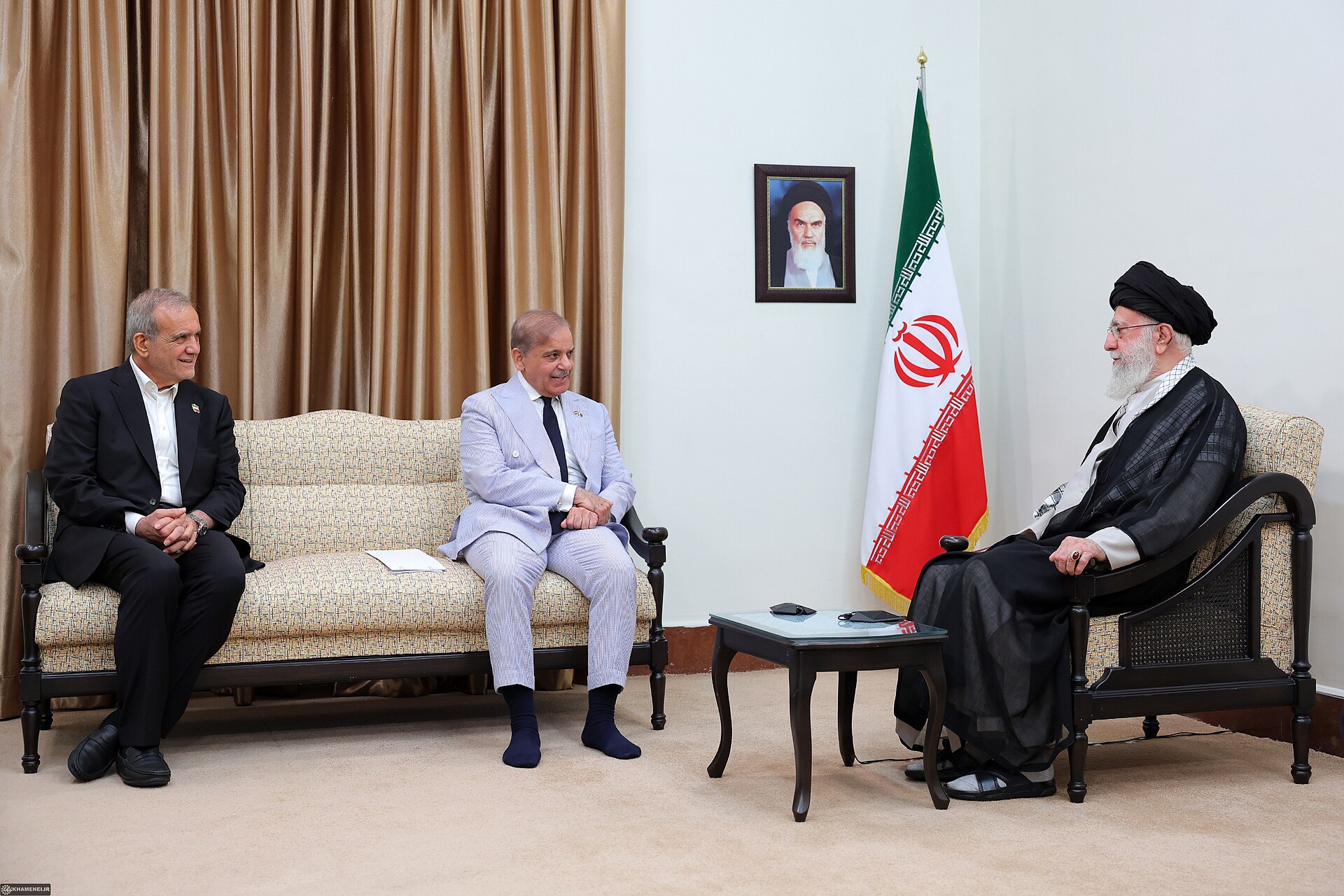
Table of Contents
- What Did Sharif Actually Deliver to Jeddah?
- Pakistan’s Three-Node Diplomatic Operation
- Ghalibaf Forecloses What Sharif Just Delivered
- Why Did Khatibzadeh Refuse to Set a Date?
- The Army Day Statement and the Missing Supreme Leader
- Has Saudi Arabia Been Here Before?
- The $11 Billion Contradiction
- Iran’s Internal Authorization Problem
- What Happens After April 22?
- Frequently Asked Questions
What Did Sharif Actually Deliver to Jeddah?
The Pakistani Foreign Ministry’s April 16 statement described Sharif’s Jeddah stop as the first leg of a three-country tour — Jeddah, then Doha, then Antalya. Sharif told MBS he “reiterated Pakistan’s firm commitment to advancing its efforts to encourage both the U.S. and Iran towards an agreement aimed at lasting peace and stability in the region.” The diplomatic language is calibrated to say nothing about what Iran actually answered.
What Iran has put on paper, relayed through multiple channels since the Islamabad talks collapsed on April 12, amounts to four non-negotiable conditions: recognition of Iranian sovereignty over the Strait of Hormuz, full war reparations, unconditional release of frozen assets, and a ceasefire that extends across all Resistance-affiliated fronts — including Lebanon. PressTV and IRNA have published these conditions openly. They are not a negotiating position. They are a set of demands that the United States has already rejected and that Saudi Arabia has no authority to accept or decline.
Sharif had previously visited Jeddah during Pakistan’s October 2019 mediation attempt between Riyadh and Tehran under Imran Khan — an effort that received, by Islamabad’s own admission, no positive response from either side. The 2026 iteration is structurally different in one respect: Pakistan now has a mutual defense treaty with Saudi Arabia signed seven months earlier. In every other respect — Saudi exclusion from the room, Iran’s refusal to grant the Gulf states a seat, Pakistan’s inability to deliver outcomes — the pattern is identical.
Pakistan’s Three-Node Diplomatic Operation
Between April 14 and April 19, Pakistan ran three simultaneous tracks. Prime Minister Sharif toured Gulf capitals and Ankara, serving as the civilian face of mediation — reassuring allies, collecting positions, distributing Iran’s response. Army Chief General Asim Munir operated in Tehran, conducting what Muhammad Faisal, a security analyst, described as “hard negotiations between the two sides to narrow gaps.” Finance Minister Muhammad Aurangzeb sat in Washington at the IMF Spring Meetings, where Pakistan’s fiscal survival depends on maintaining relationships with both the Treasury Department enforcing Iran sanctions and the Gulf states providing liquidity.
The division of labor is not incidental. Pakistan’s 27th Constitutional Amendment consolidated foreign policy and security decision-making under the military establishment. Sharif’s Jeddah visits are the civilian presentation of an operation that Munir commands. The Strategic Mutual Defence Agreement signed on September 17, 2025 — committing each country to treat aggression against the other as aggression against both — was signed by Munir, not by Sharif or any elected official.
The Middle East briefing 3,000+ readers start their day with.
One email. Every weekday morning. Free.
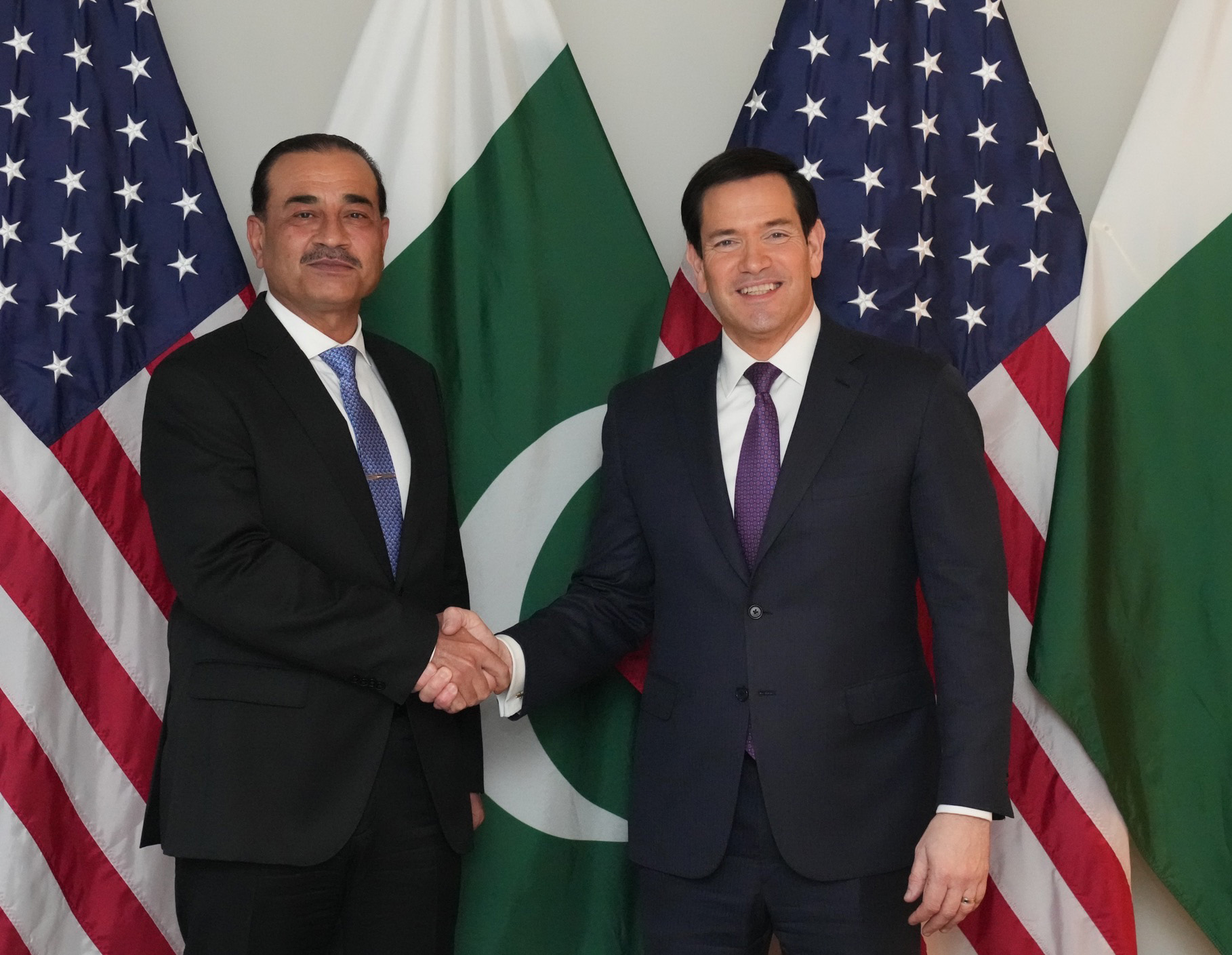
On April 16, the same day Sharif sat with MBS in Jeddah, Munir visited the headquarters of Khatam al-Anbiya Construction — the IRGC-linked conglomerate commanded by General Abdollahi. This is the same command structure that President Pezeshkian publicly accused on April 4 of wrecking the Islamabad ceasefire by deviating from the negotiating delegation’s mandate. Munir went to Abdollahi’s office. Not Araghchi’s. Not Pezeshkian’s.
Ishtiaq Ahmad, an analyst cited by Al Jazeera on April 13, described Pakistan’s position precisely: its leverage is “positional” rather than coercive — “It comes from being the only channel acceptable to both sides, not from the ability to impose outcomes.” Pakistan has served as Iran’s protecting power in Washington since March 1992, operating the Iran Interests Section out of the Pakistani Embassy for 34 years. That institutional continuity — not any improvised 2026 arrangement — is why Islamabad holds the channel.
Ghalibaf Forecloses What Sharif Just Delivered
On April 19, three days after Sharif handed Iran’s response to MBS, Parliament Speaker Ghalibaf appeared on Iranian state media and dismantled whatever optimism the letter might have carried. “We are still far from the final discussion,” he said. “There are many gaps and some fundamental points remain.” He named two specific blockers: the status of the Strait of Hormuz and Iran’s nuclear program.
Ghalibaf’s framing went further than skepticism. “We were victorious in the field,” he told Gulf News and CBS News. Iran “only accepted the temporary truce because they accepted our demands.” He tied Hormuz reopening directly to the US naval blockade: “It is impossible for others to pass through the Strait of Hormuz while we cannot.” This is not diplomatic hedging. It is a public declaration that the ceasefire Iran accepted was a concession extracted from the adversary, and that the conditions for extending it have not been met.
Ghalibaf’s biography makes his statements more than parliamentary rhetoric. He commanded the IRGC Aerospace Force from 1997 to 2000. When he says “negotiation is a method of struggle,” he is speaking from within the IRGC’s institutional vocabulary — the same vocabulary that reversed Foreign Minister Araghchi’s declaration that Hormuz was “completely open” within hours on April 17. Araghchi speaks for the Foreign Ministry. Ghalibaf speaks for the institution that overrides it.
“We are still far from the final discussion. There are many gaps and some fundamental points remain.” — Mohammad Bagher Ghalibaf, Iran Parliament Speaker, April 19, 2026
Why Did Khatibzadeh Refuse to Set a Date?
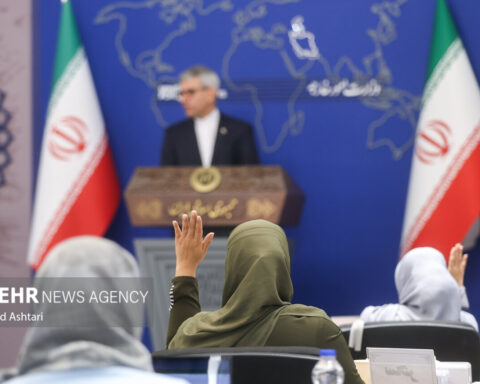
At the Antalya Diplomacy Forum on April 18, Deputy Foreign Minister Saeed Khatibzadeh was asked directly about the next round of talks. His answer was a procedural veto: “Until we agree on the framework, we cannot set a date.” He elaborated: “We do not want to enter into any negotiation or meeting that is destined to fail and could serve as a pretext for another round of escalation.”
Iran is not refusing to talk. It is refusing to schedule talks until the United States agrees to a framework — the same framework that collapsed in Islamabad when, according to Foreign Minister Araghchi, Iran encountered “US maximalism, shifting goalposts, and blockade.” Araghchi told Al Jazeera on April 13 that an “Islamabad MoU” had been near-agreed before the American side walked away. Vice President Vance’s account was different: he “made very clear what our red lines are… and they have not chosen to accept our terms.”
Khatibzadeh added a characterization of US diplomacy that, for all its dismissiveness, tracks with the observable record: “The American side tweets a lot, talks a lot. Sometimes confusing, sometimes contradictory.” On April 15, the Associated Press reported an “in principle agreement” to extend the ceasefire. White House press secretary Karoline Leavitt denied it the same day: “not true at this moment.” The contradiction between AP’s sourcing and Leavitt’s denial remains unresolved 72 hours before expiry.
For Saudi Arabia, Khatibzadeh’s procedural block is worse than a rejection. A rejection can be countered, negotiated around, or overcome with incentives. A refusal to set a date forecloses the timeline entirely — and the timeline is the one thing MBS cannot control. The Islamabad Accord was built to expire, and no mechanism exists to extend it unilaterally.
The Army Day Statement and the Missing Supreme Leader
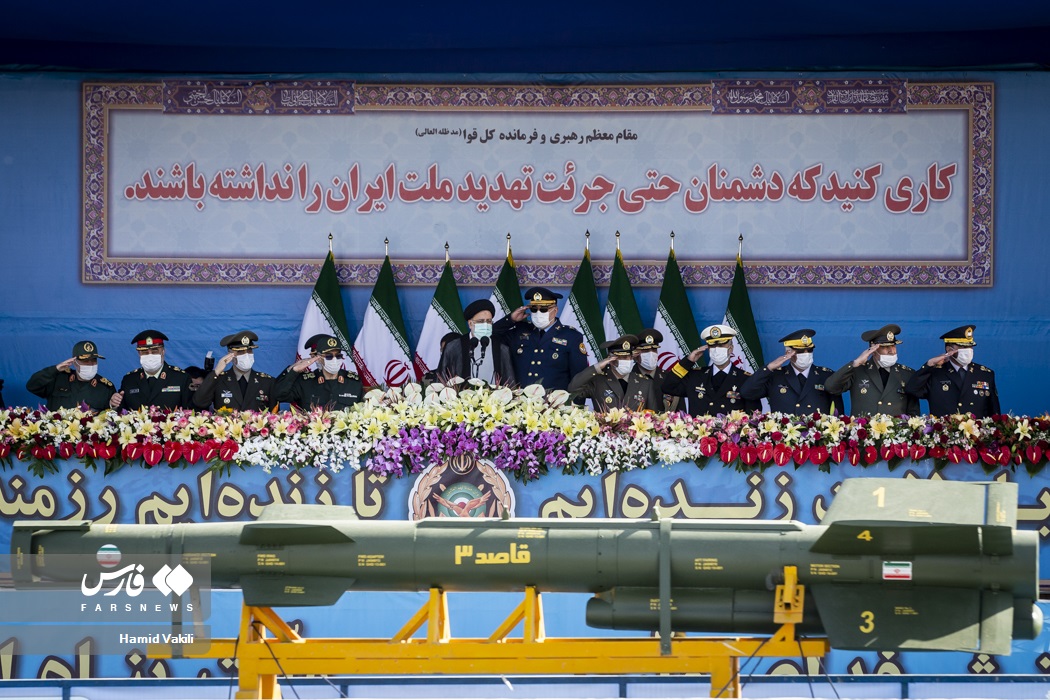
On April 18 — Iranian Army Day — Mojtaba Khamenei issued a statement hailing the armed forces for their “courageous defence” against “disbelief and arrogance.” He characterized the 40-day war as having exposed adversaries’ “weakness and humiliation.” The statement, reported by The Tribune, Israel Hayom, and Al Jazeera, framed the ceasefire not as a compromise but as a victory pause — a temporary halt from a position of demonstrated strength.
Mojtaba is issuing these statements because his father, Supreme Leader Ali Khamenei, has been absent from visible public governance for over 50 days. The last confirmed Khamenei position on the war was a demand that adversaries be “brought to their knees.” Since then, the decision architecture has operated through the Supreme National Security Council — where Secretary Vahidi, an INTERPOL red-notice holder for the 1994 AMIA bombing, controls the operational ceiling on what any Iranian negotiator can concede.
The Army Day framing matters for what Sharif delivered to Jeddah because it reveals the internal Iranian narrative under which any ceasefire extension must be justified. Iran’s negotiators cannot return to a table where they appear to be making concessions under pressure. Ghalibaf’s “victorious in the field” language and Mojtaba’s “weakness and humiliation” framing set a rhetorical floor: whatever Iran agrees to must be presentable as an adversary capitulation. The four conditions — Hormuz sovereignty, reparations, frozen assets, all-fronts ceasefire — are not starting positions.
Has Saudi Arabia Been Here Before?
Saudi Arabia was excluded from the Joint Comprehensive Plan of Action negotiations in 2013-2015 despite being the regional party most directly affected by Iran’s nuclear program. The Kingdom’s objections — that the deal failed to address Iran’s ballistic missile program and regional proxy networks — were noted and ignored. When the JCPOA collapsed under Trump’s 2018 withdrawal, Saudi Arabia bore the consequences of a deal it had no hand in shaping and a collapse it had no power to prevent.
The 2026 Islamabad framework replicates this exclusion with sharper edges. Pakistani sources confirmed to IRNA that “China, Russia, Saudi Arabia, Qatar were NOT invited” to the April 11-12 bilateral talks between the US and Iran. ACLED’s analysis characterizes Saudi Arabia as supporting negotiations with a “minimum aim” of reopening the Strait of Hormuz and securing guarantees against direct attacks on Saudi territory — objectives that require a seat at the table to enforce.
Iran’s negotiating strategy since the JCPOA has been to deal with the principal — Washington — and to treat Gulf states as subjects of the outcome rather than parties to it. The signing ceremony MBS cannot attend is not a diplomatic oversight. It is the structural position Iran assigns to Saudi Arabia: a paymaster whose preferences are transmitted through intermediaries and whose security depends on agreements negotiated by others. The Lebanon track makes this exposure concrete: MBS secured Lebanon’s inclusion in the ceasefire framework through the Trump phone call, then watched Israel impose a 10-kilometre Yellow Line inside Lebanese territory within 24 hours, with no enforcement mechanism available to Riyadh.
The Jeddah routing reinforces this architecture. Iran did not send its response to Saudi Arabia directly. It sent it through Pakistan — the state that simultaneously serves as Iran’s protecting power in Washington and Saudi Arabia’s treaty-bound military ally. The message arrives in Jeddah not as a communication between principals but as a courtesy copy, delivered by the mediator, of a position that the recipient has no standing to amend.
The $11 Billion Contradiction
Pakistan’s dual role — Iran’s diplomatic channel and Saudi Arabia’s defense partner — rests on a financial foundation that both sides can see. Saudi Arabia and Qatar have committed $5 billion in financial support to Pakistan, with disbursement due before June 2026. Pakistan’s Central Bank depends on this tranche to avoid a sovereign liquidity event. Separately, the broader Saudi-Pakistani financial relationship, including the SMDA’s associated military commitments, has been valued by analysts at approximately $11 billion in combined pledges and obligations.
On April 11, Pakistan formally invoked the SMDA for the first time, deploying approximately 13,000 troops and at least 10 fighter jets to Saudi Arabia’s King Abdulaziz airbase. This deployment was framed as defensive — and an anonymous former Pakistani general told Al Jazeera that “Pakistan can hold both roles only if deployment remains strictly defensive.” The qualifier matters. Iran’s perception of Pakistani troops on Saudi soil is not governed by Islamabad’s framing.
Paul Staniland of the Chicago Council on Global Affairs identified the structural bind: Pakistan “has a defense pact with Saudi Arabia. It doesn’t want to be in a situation where the war escalates, and it’s forced to be called to Saudi Arabia’s aid against its neighbor — and important potential business partner — Iran.” Umer Karim, a security analyst, was blunter: “This ploy may work till US-Iran talks continue, but in case hostilities restart, this strategy may collapse.”
| Commitment | Counterpart | Date | Nature |
|---|---|---|---|
| Protecting Power (Iran Interests Section, DC) | Iran | Since March 1992 | Diplomatic — 34-year channel |
| SMDA Mutual Defence Agreement | Saudi Arabia | Sept. 17, 2025 | Military — mutual aggression clause |
| SMDA First Invocation (13,000 troops) | Saudi Arabia | April 11, 2026 | Military — King Abdulaziz airbase |
| Ceasefire mediation channel | US-Iran | March-April 2026 | Diplomatic — Munir-led |
| $5B financial support (Saudi-Qatari) | Saudi Arabia / Qatar | Due before June 2026 | Financial — sovereign liquidity |
| IMF Spring Meetings (Aurangzeb in DC) | United States / IMF | April 14-19, 2026 | Financial — program compliance |
The table reads as a set of incompatible obligations. Pakistan cannot pressure Iran without losing the mediation channel that makes it indispensable. It cannot pressure Saudi Arabia without jeopardizing the financial lifeline that keeps the Pakistani state solvent. It cannot side with the United States without alienating Iran, whose diplomatic interests it has represented in Washington for over three decades. The result is a mediator that can carry letters but cannot compel answers — and a Saudi Arabia that pays for the envelope without being able to read the contents.
Iran’s Internal Authorization Problem
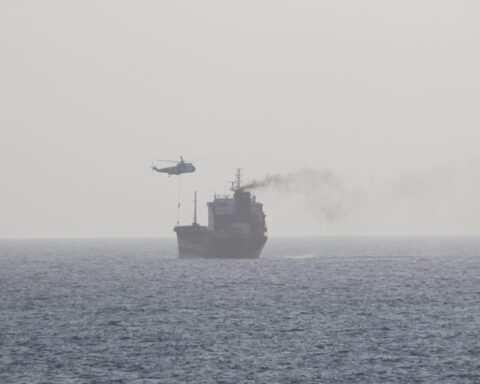
The gap between what Iran’s diplomats negotiate and what Iran’s security establishment authorizes has been the defining feature of every failed ceasefire attempt since March. Araghchi described the Islamabad MoU as nearly agreed. Ghalibaf says talks are “far from final.” Khatibzadeh refuses to schedule a next round. Lt. Col. Ebrahim Zolfaghari, speaking for the IRGC Navy on April 18, described the US blockade as “banditry and piracy” and reasserted “full authority to manage the Strait.”
These are not competing factions sending mixed signals. They are a hierarchy operating as designed. Article 110 of the Iranian constitution vests command of the armed forces in the Supreme Leader. Article 176 establishes the SNSC as the coordinating body for defense and security policy. Pezeshkian’s April 4 accusation — naming Vahidi and Abdollahi as the officials who deviated from the delegation’s mandate in Islamabad — was a public confession that the elected president has zero operational authority over the IRGC.
For Saudi Arabia, the authorization ceiling means that the letter Sharif delivered is not a position paper from a unified government. It is the output of a system in which the Foreign Ministry proposes, the SNSC disposes, and the IRGC operates independently of both. Munir’s April 16 visit to Khatam al-Anbiya — Abdollahi’s command — suggests the Pakistani military understands where decisions are actually made. The question is whether the document Sharif carried to Jeddah reflects Abdollahi’s position or Araghchi’s — and whether MBS has any way to determine which.
“Iran’s perception, not Pakistan’s intent, will determine whether trust survives.” — Former Pakistani general, speaking to Al Jazeera on condition of anonymity
What Happens After April 22?
The ceasefire expires at a moment when every stated condition for its extension remains unmet. Iran demands Hormuz sovereignty recognition; the US maintains a naval blockade. Iran demands war reparations; no mechanism for assessing or delivering them exists. Iran demands frozen asset release; US sanctions enforcement has tightened, not loosened, with OFAC General License U expiring on April 19 without renewal. Iran demands an all-fronts ceasefire including Lebanon; MBS privately pressed Trump on Lebanon inclusion and was rebuffed.
James M. Lindsay of the Council on Foreign Relations has argued that post-April 22, Iran will likely not resume fighting immediately — placing the burden of escalation on the Trump administration. The logic is asymmetric: Iran can declare the ceasefire expired without firing, forcing the US to either attack (and own the resumption) or accept a limbo in which no ceasefire is formally in effect but no hostilities have resumed. This ambiguity serves Iran’s narrative — Ghalibaf’s “victorious in the field” — while leaving Saudi Arabia in the worst possible position: exposed to attack, unable to negotiate, and dependent on a mediator whose other client just declared the talks incomplete.
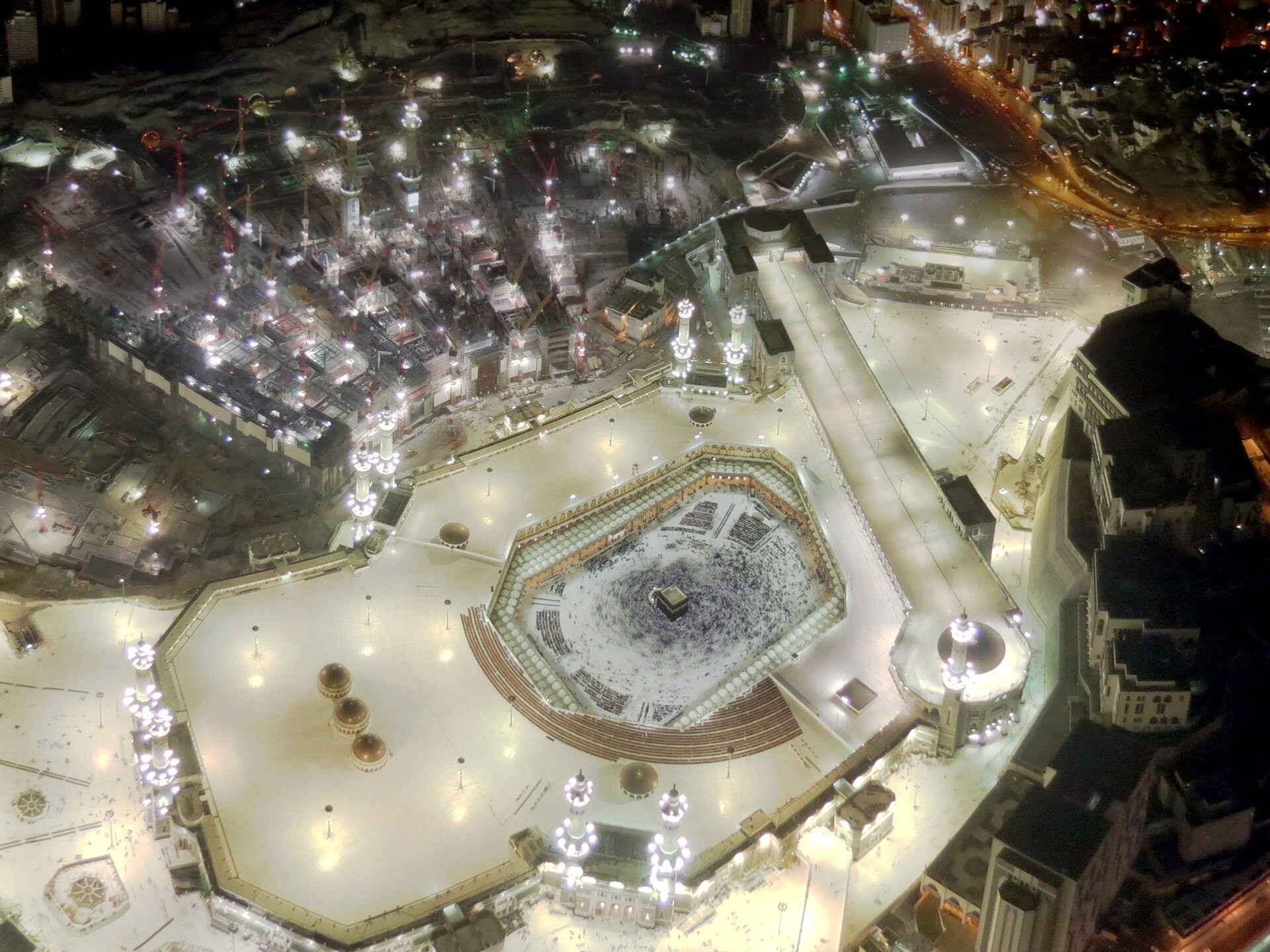
The Hajj calendar compounds the exposure. April 18 marked the sealing of the Makkah Umrah cordon. Pakistan’s 119,000 pilgrims began arriving the same day. Indonesia’s 221,000 depart on April 22 — the day the ceasefire expires. Between 1.2 and 1.5 million pilgrims will be inside Saudi Arabia’s most concentrated population centers during the period of maximum uncertainty. Iran has zero Hajj stake — its pilgrims have been barred — and therefore zero deterrence cost from escalation during the pilgrimage season.
Saudi Arabia’s fiscal position adds another layer. March production fell to 7.25 million barrels per day — down from 10.4 million in February, a 30 percent collapse. The East-West Pipeline bypass through Yanbu operates at a ceiling of 4-5.9 million bpd against a pre-war Hormuz throughput of 7-7.5 million bpd, leaving a structural gap of 1.1-1.6 million bpd that no infrastructure fix can close without Hormuz reopening. Goldman Sachs has estimated the war-adjusted fiscal deficit at 6.6 percent of GDP against the government’s official 3.3 percent projection. Saudi break-even requires $108-111 per barrel; Brent closed April 18 near $90.
Every day without a ceasefire extension costs the Saudi treasury revenue it cannot replace through alternative export routes. Every day without a seat at the negotiating table means that cost is being determined by parties — Washington, Tehran, Islamabad — whose fiscal exposure is not denominated in Saudi riyals.
Frequently Asked Questions
What specific document did Sharif carry to Jeddah?
Neither the Pakistani Foreign Ministry nor Saudi state media disclosed the contents of what Sharif delivered. Based on Iran’s publicly stated positions — relayed through IRNA, PressTV, and Araghchi’s post-Islamabad statements — the document likely consolidates Iran’s four conditions (Hormuz sovereignty, reparations, frozen assets, all-fronts ceasefire) alongside an assessment of where the Islamabad framework stands after the US-Iran walkout. Khatibzadeh’s Antalya statement that “framework” agreement must precede any scheduling suggests the document is conditional rather than conclusive — a position paper, not an acceptance. Saudi Arabia’s Foreign Minister previously called Araghchi on April 13 (the day the US blockade began), indicating a direct Saudi-Iranian communication channel exists; the decision to route the formal response through Pakistan rather than that channel is itself a signal about where Tehran places Riyadh in the hierarchy of interlocutors.
Could Saudi Arabia join the next round of negotiations?
Iran has consistently opposed Gulf state participation in bilateral US-Iran frameworks since the JCPOA era. The Islamabad format — brokered by Pakistan, attended by the US and Iran only — follows this precedent. However, Turkey’s Foreign Minister Hakan Fidan, who hosted Khatibzadeh at Antalya and has described both sides as “sincere,” has advocated for a broader multilateral format. Turkey offered to host talks in early April but was declined. The Soufan Center has noted that no extension mechanism exists within the current ceasefire text, meaning any new framework would require fresh negotiation — potentially opening a window for format changes. Whether Iran would accept Saudi participation depends on whether Riyadh offers something Tehran needs that Pakistan cannot deliver, and at present, Pakistan’s combination of diplomatic channel, military credibility with both sides, and financial dependence on Saudi money covers every function Saudi direct participation would serve.
What happens to Pakistan’s SMDA obligations if the ceasefire collapses?
The SMDA’s mutual defense clause commits Pakistan to treat aggression against Saudi Arabia as aggression against itself. With 13,000 Pakistani troops already at King Abdulaziz airbase, the commitment is not theoretical. If Iran resumes strikes on Saudi territory after April 22, Pakistan faces a binary choice: invoke mutual defense against the country whose diplomatic interests it represents in Washington, or reinterpret the SMDA’s defensive framing narrowly enough to avoid direct confrontation. The anonymous former Pakistani general’s condition — that dual roles survive “only if deployment remains strictly defensive” — would be tested immediately. Pakistan’s $5 billion Saudi-Qatari disbursement, due before June, gives Riyadh financial leverage over Islamabad’s interpretation of its own treaty, but exercising that leverage risks collapsing the mediation channel that remains Saudi Arabia’s only indirect connection to Iranian decision-makers.
Why does Iran frame the ceasefire as a victory?
Ghalibaf’s claim that Iran “only accepted the temporary truce because they accepted our demands” serves a domestic political function distinct from its diplomatic content. With Khamenei absent for over 50 days and Mojtaba Khamenei’s authority contested, the IRGC-aligned political establishment needs the war narrative to justify both the economic damage (the Central Bank has internally projected 180 percent inflation and a 12-year recovery timeline) and the SNSC’s override of civilian diplomatic authority. The “victory” framing also sets the rhetorical conditions for any future agreement: whatever Iran concedes must be presentable as something the adversary conceded first. This is consistent with Araghchi’s framing that Iran accepted the original ceasefire “in response to the brotherly request of PM Sharif” — positioning every Iranian concession as a favor to an ally rather than a response to military or economic pressure. The FDD’s “5 men running Iran” analysis excludes Pezeshkian entirely from operational decision-making, suggesting the victory narrative is authored by the same IRGC-aligned figures who control the authorization ceiling.
Is there a back-channel between Saudi Arabia and Iran outside the Pakistan framework?
Behavioral evidence suggests yes. Saudi Foreign Minister Prince Faisal bin Farhan called Araghchi on April 13 — the day the US blockade began — indicating direct communication exists at the ministerial level. Oman has historically served as a Saudi-Iranian back-channel, and Omani officials met with Iranian counterparts on April 4-5 during the Trump deadline crisis. However, these channels operate below the level at which decisions about Hormuz, the nuclear program, or ceasefire terms are made. The SNSC and IRGC command — not the Foreign Ministry — control Iran’s operational positions on all three issues. A Saudi call to Araghchi reaches the same official whose Hormuz declaration was reversed by the IRGC within hours. The channel exists. Its connection to decision-making authority is severed.