
Table of Contents
- The Decentralization Order
- What Did Iran Tell Its Iraq Militia Field Commanders?
- Mosaic Doctrine Goes External
- Why Can’t Baghdad Control the PMF Militias Launching Strikes on Saudi Arabia?
- The Ceasefire Spoiler Architecture
- Does the Islamabad Accord Cover Iraq-Launched Militia Attacks?
- The UNSCR 1701 Precedent: What Eighteen Years of Sub-Sovereign Carve-Out Produced
- The Authorization Ceiling, Inverted
- April 22: Ceasefire Expiry, Hajj Departure, IRI Suspension End
- FAQ
BAGHDAD — Iran has formally granted autonomous strike authority to its three most capable Iraqi militia proxies — Harakat Hezbollah al-Nujaba, Kataib Hezbollah, and Kataib Sayyid al-Shuhada — removing the requirement to refer operational decisions back to a central command, according to a militia official who spoke to the Associated Press on April 21, 2026. The timing is not incidental. The Islamabad Accord ceasefire expires on April 22, the Iraqi Resistance Islamiya’s two-week self-imposed suspension ends the same day, and Indonesia’s first contingent of 221,000 Hajj pilgrims departs within hours of that deadline. Iran has not lost control of its proxy layer. It has restructured it — converting the “authorization ceiling” that blocked ceasefire compliance in Islamabad into a permanent architectural feature that ensures any post-ceasefire framework faces a class of violence Tehran can disclaim but never restrain.
The Decentralization Order
The AP report of April 21, 2026, cites an anonymous militia official confirming that Iran granted field commanders “the authority to operate according to their own field assessments without referring back to a central command.” Three factions received this authority by name: Harakat Hezbollah al-Nujaba, led by Akram al-Kaabi; Kataib Hezbollah, whose leader Ahmad al-Hamidawi now carries a $15 million US bounty posted April 15; and Kataib Sayyid al-Shuhada, commanded by Abu Ala’ al-Walaie. These are not marginal outfits. The Wall Street Journal confirmed that Iraq-based, Iran-backed militias launched up to half of the nearly 1,000 drone attacks on Saudi Arabia since the war began on February 28 — a volume that contributed to the 799 drones and 95 ballistic missiles Saudi Arabia intercepted between March 3 and April 7 alone.
The decentralization message reached Iraqi Kurdish leaders days into the war, when Iranian officials told them directly: “We can’t help you with the groups in the south right now.” A senior Iraqi Kurdish government official, speaking to the AP, said Iran explained it had “devolved authority to regional Iranian commanders.” The phrasing matters. Iran did not say it had lost contact. It did not claim the militias had gone rogue. It said it had devolved authority — an administrative act, not a battlefield emergency.
Iran’s Foreign Minister Abbas Araghchi confirmed the operational logic in a statement the Soufan Center published on March 9, 2026: “Military units are now, in fact, independent and somewhat isolated, and they are acting based on general instructions given to them in advance.” Al Jazeera reported the same quote on March 10 in the context of Khamenei’s “fourth successor” directive — an instruction for officials to designate up to four replacements per senior position so that decisions could continue if top-level communication was severed. Araghchi’s language — “general instructions given to them in advance” — describes pre-authorization, not chaos. The field commanders received their mandate before the communication lines degraded, not after.
What Did Iran Tell Its Iraq Militia Field Commanders?
Iran told its Iraqi militia field commanders that they now hold autonomous strike authority — the right to plan and execute operations based on their own field assessments without seeking approval from Tehran or any central IRGC command node. This directive, confirmed by militia officials to the AP on April 21, 2026, applies to at least three named factions and was communicated to Kurdish leaders as a deliberate devolution, not a loss of control.
The distinction between “pre-authorized autonomy” and “lost control” is the analytical fault line that separates the AP’s framing from what the sourcing actually supports. The AP headline treated the shift as something “driven by pressures of war” — an adaptation forced by battlefield degradation. But Araghchi’s own words, spoken weeks before the AP report, describe a command architecture in which units received general instructions in advance and were expected to act on them independently. The Soufan Center’s March 9 IntelBrief noted that the IRGC’s Mosaic Defense doctrine — institutionalized by General Mohammad Ali Jafari between 2007 and 2019 — had already created 31 separate regional IRGC commands, each with independent stockpiles and succession chains. What happened in Iraq is the external application of an internal Iranian military doctrine that predates this war by nearly two decades.
The Middle East briefing 3,000+ readers start their day with.
One email. Every weekday morning. Free.
The Belfer Center’s 2026 assessment found that despite IRGC communications to Tehran being “severed or degraded,” the 31 autonomous regional commands continued to “function” with independent stockpiles. The Belfer framing treats this as degradation — a system straining under pressure. The evidence points elsewhere. A military that pre-positions four layers of successor commanders and equips 31 provincial headquarters with independent arsenals has not been surprised by communication disruption. It planned for it.
Mosaic Doctrine Goes External
General Jafari built the Mosaic Defense architecture after watching the Iraqi state collapse in 2003 under centralized command. The design principle was provincial self-sufficiency: each of the 31 IRGC regional commands would defend its territory independently if Tehran’s communications were severed. The doctrine was internal — designed for the defense of Iranian soil. What the April 21 decentralization order represents is the first confirmed application of Mosaic Defense logic to Iran’s external proxy network.
The AP explicitly states that Iran learned from the June 2025 twelve-day war’s “tightly centralized” operations model. That conflict — shorter, more contained, fought under a command structure that routed decisions through Tehran — exposed a vulnerability: centralized authorization created single points of failure that could be disrupted by targeted strikes on communication nodes and senior commanders. The decentralization that followed was not improvised during the February 28, 2026 war. It was already in place when the war started, a doctrinal adaptation completed in the eight months between June 2025 and February 2026.
Narges Bajoghli, a scholar of Iranian military culture, told the Christian Science Monitor on April 20 that the replacement commanders filling positions vacated by targeted killings are “younger” and “more dangerous,” having fought US and Israeli forces directly, and lacking the caution of their predecessors. The generational shift compounds the structural shift. Autonomous authority in the hands of commanders who built their careers in direct combat against the forces now seeking a ceasefire produces a different risk calculus than the same authority held by officers who remembered the costs of the Iran-Iraq War.
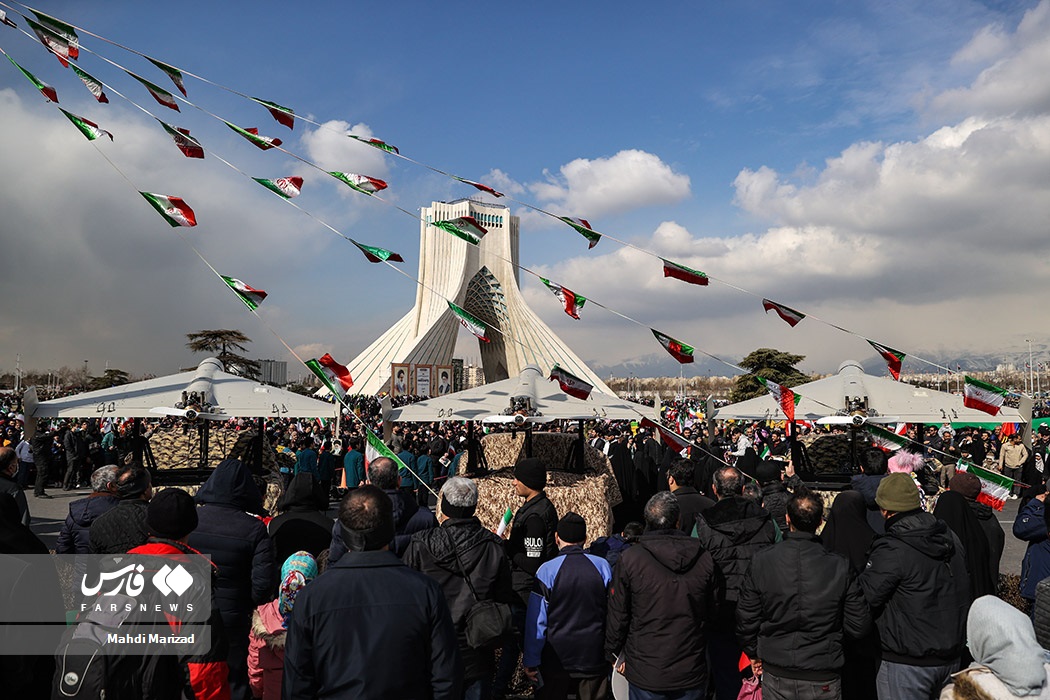
IRGC ideologue Hossein Yekta — described as close to Mojtaba Khamenei, who was elected Supreme Leader on March 7, 2026, and has been audio-only for 44 days — told Iranian state television that Iranian forces will “enter Jerusalem.” Unnamed IRGC Navy personnel, responding to Araghchi’s April 17 declaration that the Strait of Hormuz was “completely open,” said on camera: “We will open it by the order of our leader…not by the tweets of some idiot.” The contempt for civilian diplomatic authority is not subtext. It is broadcast.
Why Can’t Baghdad Control the PMF Militias Launching Strikes on Saudi Arabia?
Baghdad cannot control the Popular Mobilization Forces because the PMF’s hard-line factions operate under Iranian command authority while drawing salaries from the Iraqi state budget — a structural arrangement that gives Iraq financial liability for violence it cannot direct. The PMF comprises approximately 60 to 70 brigades with roughly 230,000 personnel and a $3.5 billion annual budget funded by Baghdad, according to the Foreign Policy Research Institute’s Mina al-Lami and Bilal Wahab’s March 2026 analysis.
Prime Minister Mohammed Shia al-Sudani authorized the PMF on March 24 to “respond to attacks on its bases” — language that provided state cover for militia operations without granting Baghdad any operational control over targeting decisions. The authorization was a political survival mechanism, not a command-and-control instrument. Mahdi al-Kaabi, spokesperson for Harakat Hezbollah al-Nujaba, made the arrangement explicit in his April 21 statement to the AP: “To put it bluntly, we are allies of the Islamic Republic.” He added: “It’s true we’re not affiliated with the government or the prime minister, but we respect the law and the constitution.” The two sentences, placed side by side, describe a militia that answers to Tehran while claiming Iraqi legal legitimacy — a formulation designed to make Baghdad responsible for actions it did not order.
Renad Mansour, director of the Iraq Initiative at Chatham House, assessed that the Iraqi government is “unable to have sovereignty over its territory” and that regional nations now view Iraq as “fragile and fragmented.” Saudi Arabia’s response reflected that assessment directly. On April 12 — four days after the April 8 ceasefire — Riyadh formally summoned Iraqi Ambassador Safia Taleb al-Suhail, demanding accountability for drone launches from Iraqi territory. The United States moved in parallel: Deputy Secretary of State Tommy Bigot affirmed on April 21 that “the United States will not tolerate any attacks targeting its interests and expects the Iraqi Government to take all necessary measures immediately to dismantle Iran-aligned militia groups.” Washington sanctioned seven commanders from four hard-line militia groups in April 2026.
The demands — dismantle the militias, prevent the launches, hold commanders accountable — presuppose a sovereign capacity that Iraq does not possess. Phillip Smyth, a researcher on Shiite armed groups, told The New Region that the militias likely issued their ceasefire pauses “after pressure by the Iraqi government,” adding that “Baghdad is in a dire position.” Muhanad Seloom of the Doha Institute assessed that Kataib Hezbollah’s pause was tactical — the group wanted to “collect themselves after losing leaders and locations” — not a response to Iraqi government authority. The PMF’s simultaneous integration into Iraq’s state budget and subordination to Iranian command creates a legal fiction: Iraq pays for a military force it cannot command, absorbs diplomatic consequences for strikes it did not authorize, and faces international demands to dismantle organizations woven into its fiscal architecture.
| Faction | Commander | Key Capability | Status (April 21) |
|---|---|---|---|
| Harakat Hezbollah al-Nujaba | Akram al-Kaabi | Iran’s primary Iraq expeditionary force; Lebanon deployment history | Autonomous strike authority confirmed; threatened Israel resumption April 8 |
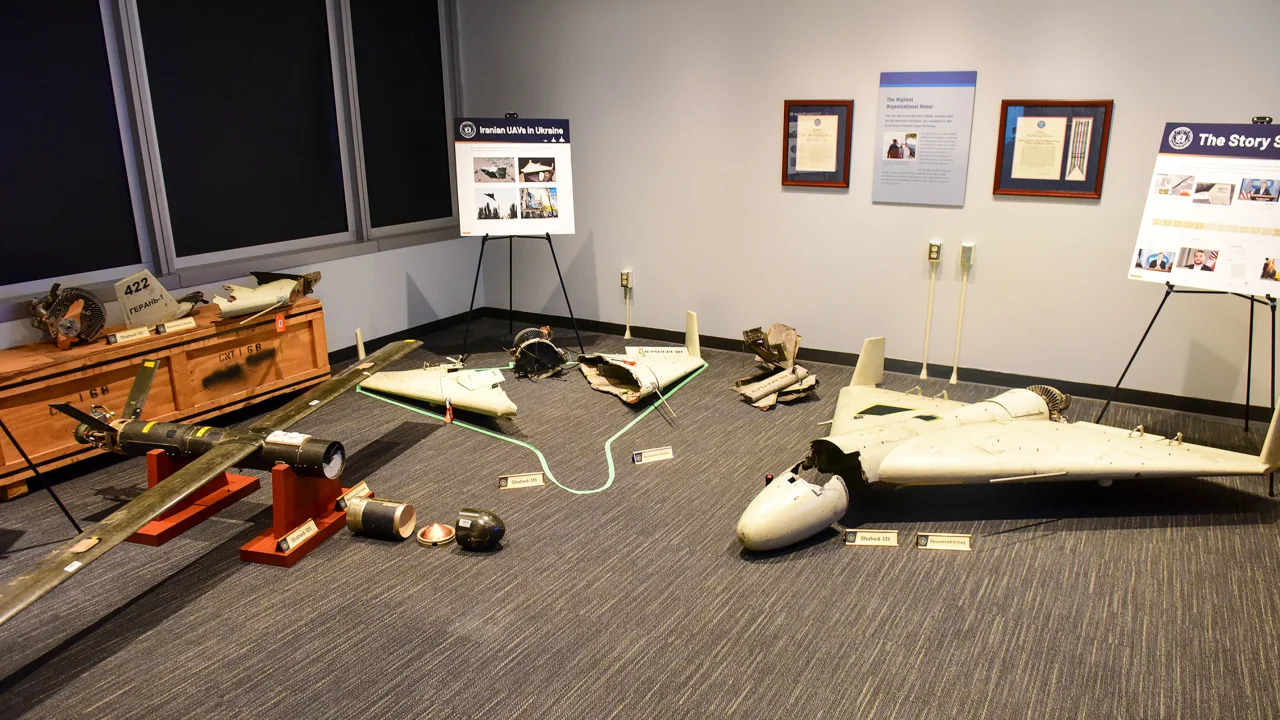
| Kataib Hezbollah | Ahmad al-Hamidawi ($15M US bounty, April 15) | Shahed-101 drone assembly at Jurf al-Sakhr base; advanced IIED/EFP production | Autonomous strike authority confirmed; “temporary US Embassy ceasefire” (own terms) |
| Kataib Sayyid al-Shuhada | Abu Ala’ al-Walaie | Cross-border operations; Saudi-targeted drone launches | Autonomous strike authority confirmed; threatened Israel resumption April 8 |
The Ceasefire Spoiler Architecture
The Belfer Center’s 2026 assessment identified a structural shift in Iran’s proxy relationships following the January 2020 killings of Qasem Soleimani and Abu Mahdi al-Muhandis. Those deaths removed what Belfer called “the organizational glue that had overridden factionalism,” after which proxies moved toward “local self-preservation over survival of the principal.” The April 21 decentralization formalizes that drift. Where Soleimani once adjudicated between factions and enforced Tehran’s strategic priorities on reluctant commanders, the current arrangement grants those commanders the authority to define their own priorities — and their own red lines for resuming hostilities.
The behavioral evidence is already visible. Within hours of the April 8 ceasefire suspension announcement, senior IRI commanders Akram al-Kaabi and Abu Ala’ al-Walaie threatened to resume strikes on Israel over Lebanon — before any Israeli violation of the ceasefire had been documented. The threat was not contingent on ceasefire breach. It was contingent on Israeli conduct in Lebanon, a theater the Islamabad Accord does not address and which the United States and Israel have explicitly refused to include in ceasefire terms. The commanders created their own trigger — one structurally outside any negotiated framework.
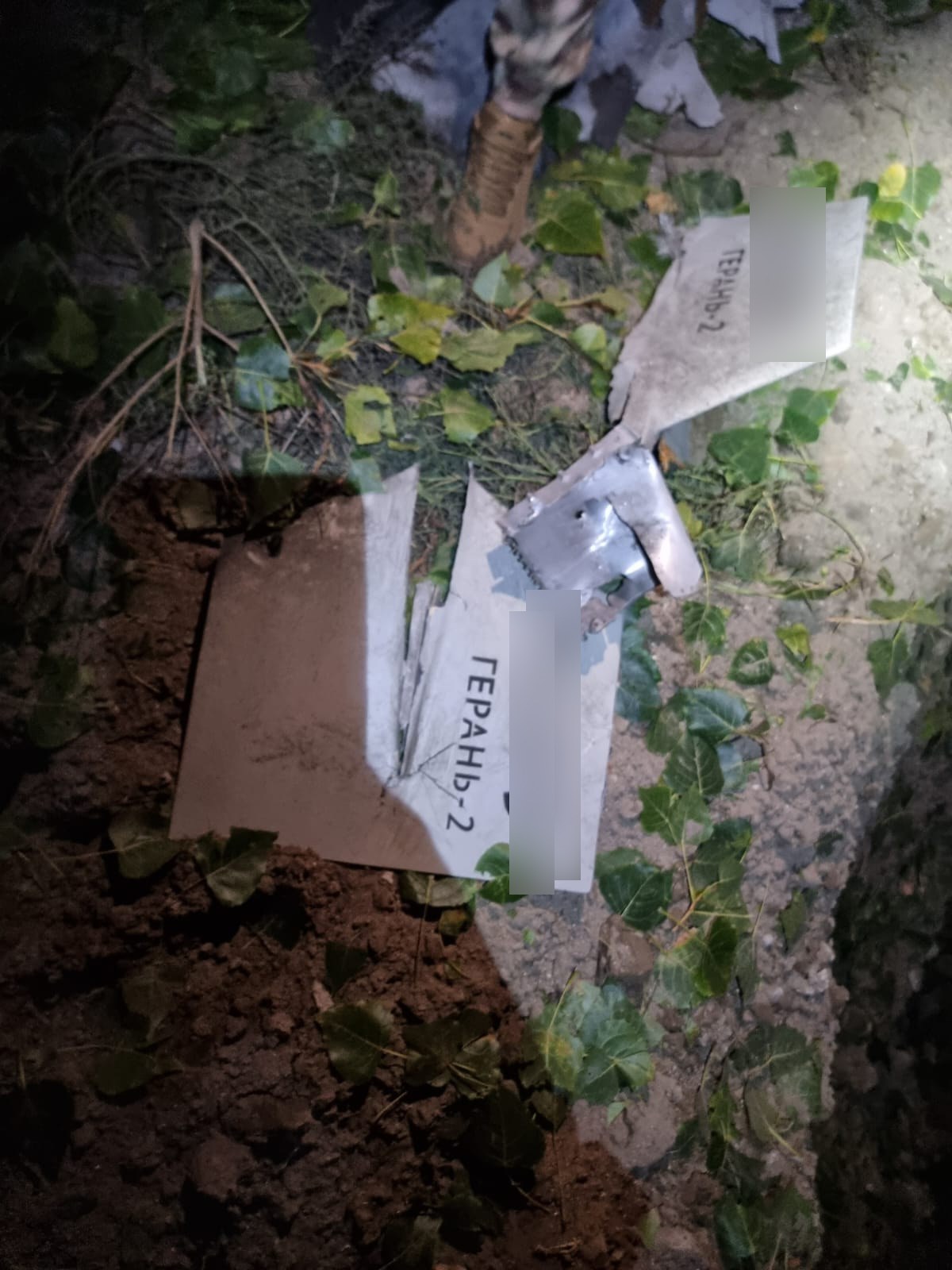
Kataib Hezbollah had already demonstrated this capacity before the formal decentralization. In March 2026, the group declared a “temporary US Embassy ceasefire” — unilaterally, on its own terms, without reference to Tehran or Baghdad. The FDD’s Long War Journal documented the announcement as evidence that KH issues its own ceasefire conditions independently of Iranian command. The April 21 order did not create militia autonomy. It ratified and formalized autonomy that was already operational, granting it institutional legitimacy within the IRGC command architecture.
The Iraqi Resistance Coordination Committee’s April 2 demands illustrate the scope of the spoiler problem. The committee demanded that Iraq close the Jordan-Iraq land border, halt oil exports to Jordan, and punish Saudi Arabia, the UAE, and Jordan — demands that no Iraqi government could fulfill without dismantling its own foreign policy. The demands were not negotiating positions. They were structural impossibilities issued as conditions, ensuring that the Iraqi government’s inevitable failure to comply would provide standing justification for continued militia operations.
Does the Islamabad Accord Cover Iraq-Launched Militia Attacks?
The Islamabad Accord contains no enforcement clause covering Iraq-launched militia attacks. The ceasefire, brokered on April 8, 2026 with Pakistan as the sole mediating and enforcement party, addresses the US-Iran military confrontation but does not extend to operations conducted by Iraqi-based militias acting under devolved Iranian authority. This gap is not an oversight — it reflects the structural impossibility of binding sub-sovereign actors who answer to a command they claim no longer directs them.
Pakistan’s role as the ceasefire’s enforcement mechanism was already structurally inadequate before the decentralization order. Islamabad serves simultaneously as Iran’s protecting power in the United States — a role it has held since 1992 — and as Saudi Arabia’s treaty ally under the September 2025 Saudi-Pakistan Mutual Defense Agreement, with a $5 billion Saudi loan maturing in June 2026. Pakistan’s Foreign Minister Ishaq Dar spoke on April 13 of “new dialogue in coming days,” but Pakistan has no diplomatic channel to Akram al-Kaabi, no leverage over Kataib Hezbollah’s operations at Jurf al-Sakhr, and no mechanism to verify whether a drone launched from southern Iraq was authorized by Tehran, by a regional IRGC commander, or by a militia leader exercising the autonomous authority Iran formally granted.
The authorization ceiling problem that collapsed the Islamabad talks has been inverted. During the negotiations, Iran’s delegation could not deliver commitments because IRGC commanders — particularly Secretary of the Supreme National Security Council Ali Akbar Ahmadian’s predecessor Vahidi — blocked civilian negotiators from making binding concessions. President Pezeshkian publicly accused Vahidi and Abdollahi on April 4 of derailing the ceasefire, but Article 110 of the Iranian constitution gives the president zero authority over the IRGC. The ceiling prevented agreement. Now, with autonomous authority formally devolved, any agreement Iran’s diplomats reach faces a second ceiling: militia commanders who are structurally authorized to ignore it.
The UNSCR 1701 Precedent: What Eighteen Years of Sub-Sovereign Carve-Out Produced
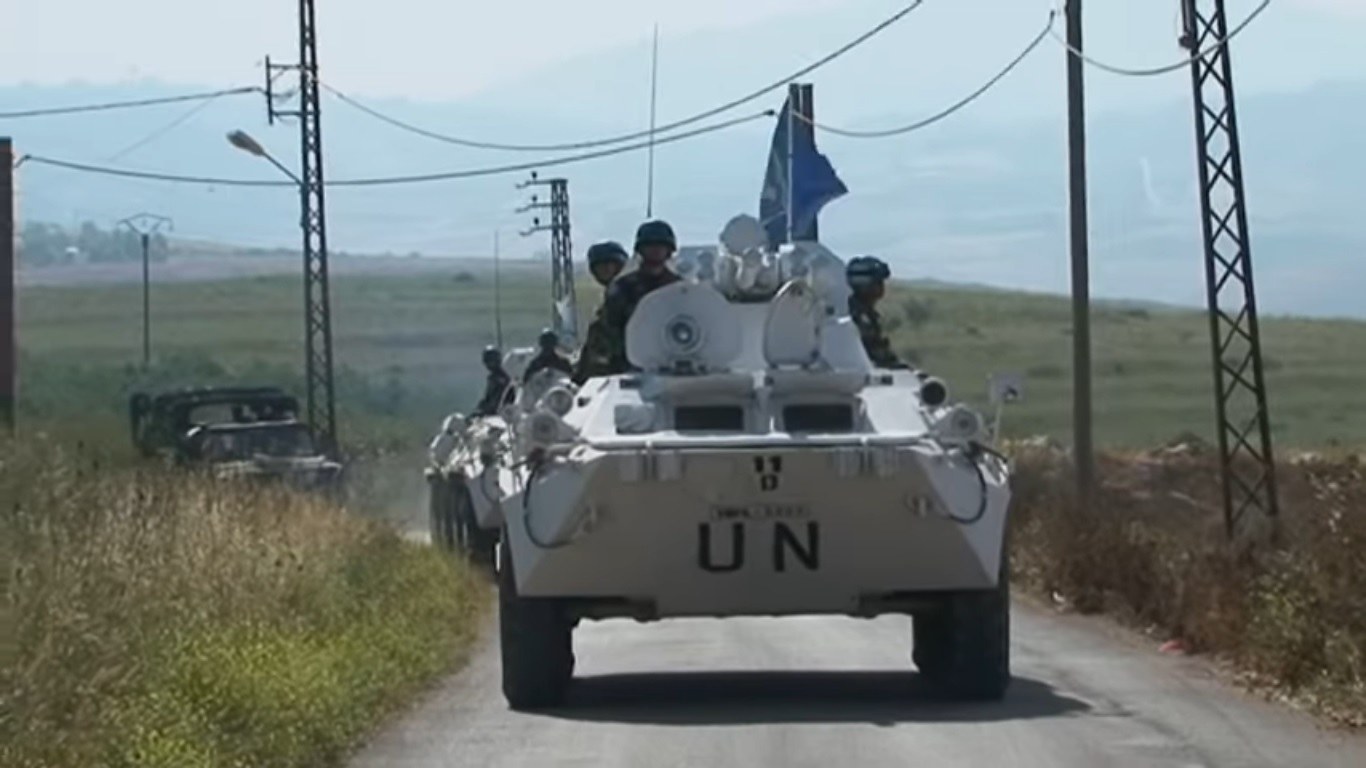
UN Security Council Resolution 1701, adopted in August 2006 to end the Israel-Hezbollah war, called for Hezbollah’s disarmament, the establishment of a buffer zone in southern Lebanon, and enforcement by UNIFIL alongside the Lebanese Armed Forces with international support. None of these provisions were implemented. Over the following eighteen years, Hezbollah grew from the force that fought the 2006 war to an organization possessing an estimated 120,000 to 200,000 rockets and missiles by 2024, according to AIPAC and UN assessments — a force that dwarfed most state militaries in the region.
The structural comparison to the Islamabad Accord is instructive not for its similarities but for the magnitude of the gap. UNSCR 1701 had UN authorization, a dedicated peacekeeping force, the Lebanese army as a nominal enforcement partner, and international diplomatic sponsorship. It failed comprehensively. The Islamabad Accord has Pakistan as its sole enforcement party, no UN component, no dedicated monitoring force, and no enforcement clause addressing sub-sovereign actors. The Iraq militia layer — responsible for up to half of the nearly 1,000 drone attacks on Saudi Arabia — is not mentioned in the accord at all.
The 1701 precedent demonstrates what happens when a ceasefire creates a sub-sovereign carve-out: the actor exempted from enforcement uses the ceasefire period to build capacity rather than demobilize. Hezbollah’s eighteen-year trajectory from a few thousand rockets to 120,000-200,000 is the empirical record of that dynamic. The Iraqi militias now entering a potential post-ceasefire period with formally autonomous strike authority, Iranian-supplied Shahed-101 drone assembly capacity at Jurf al-Sakhr, and a state-funded personnel base represent the starting conditions for a similar trajectory — with the critical difference that no international body has even attempted to establish an enforcement framework for the Iraq theater.
The Authorization Ceiling, Inverted
For eight weeks of this war, the authorization ceiling was the problem that prevented a ceasefire. Pezeshkian could not override Vahidi. Araghchi could not bind the IRGC Navy. The IRGC Navy declared “full authority to manage the Strait” on April 5 and again on April 10 while Araghchi was in Islamabad conducting negotiations premised on Iran’s ability to reopen Hormuz. The gap between what Iran’s diplomats offered and what Iran’s military institutions would permit defined every failed negotiation round — from the initial Islamabad collapse through the Vance-Ghalibaf near-miss.
The April 21 decentralization converts that ceiling from a bug into a feature. When Araghchi was unable to commit the IRGC to ceasefire terms, the problem was framed as Iranian institutional dysfunction — a negotiating partner that couldn’t deliver its own military. With autonomous authority formally devolved to militia field commanders in Iraq, Iran can now negotiate in good faith regarding its own military operations while maintaining that Iraqi-based militia strikes fall outside its command responsibility. Araghchi’s March statement about units being “independent and somewhat isolated” — cited then as evidence of battlefield degradation — is not a confession of weakness. It is the advance text of a future diplomatic defense.
Mojtaba Khamenei’s continuing audio-only absence compounds the architecture. The Supreme Leader’s silence removes the one constitutional authority capable of overriding both the IRGC and the presidency simultaneously. With Mojtaba absent, Vahidi blocking, Pezeshkian constitutionally excluded from IRGC command under Article 110, and field commanders in Iraq holding formal autonomous authority, the Iranian system has no single node that could — even in theory — order a comprehensive halt to militia operations. The Soufan Center’s framing of this as ambiguity about “whether continued strikes reflect official policy or autonomous unit actions” treats as uncertainty what the command structure reveals as design. The ambiguity is the product.
April 22: Ceasefire Expiry, Hajj Departure, IRI Suspension End
Three timelines converge on April 22, 2026. The Islamabad Accord ceasefire expires. The IRI’s two-week self-imposed suspension of operations ends. Indonesia’s first contingent of 221,000 Hajj pilgrims departs for Saudi Arabia. The convergence is not coincidental — the IRI commanders calibrated their suspension to expire on the ceasefire deadline, ensuring that the resumption of militia operations would be simultaneous with the collapse of the diplomatic framework.
Saudi Arabia enters April 22 with a PAC-3 interceptor inventory estimated at roughly 400 rounds — approximately 14 percent of pre-war stocks — after absorbing 894 intercepts between March 3 and April 7. The interceptor depletion rate during the war’s first five weeks consumed munitions faster than any resupply chain can deliver, and the presence of 1.2 to 1.5 million Hajj pilgrims beginning April 22 raises the consequence of any intercept failure from infrastructure damage to mass casualty. Michael Knights, head of research at Horizon Engage and a fellow at the Washington Institute, told the AP on April 21 that “the U.S. is still going to feel it has the freedom of action to hit Iraqi militias” — a statement that presupposes continued militia operations after the ceasefire period.
The IRI commanders’ conditions for their suspension’s expiry are deliberately anchored outside the Islamabad Accord’s scope. Al-Kaabi and al-Walaie conditioned the suspension on Israeli behavior in Lebanon — a theater the United States and Israel explicitly refused to include in ceasefire negotiations. The Islamabad Accord cannot satisfy conditions it does not address, and the commanders who set those conditions now hold formally autonomous authority to act on their own assessment of whether the conditions have been met. The structure ensures resumption regardless of the ceasefire’s fate: if the accord expires without renewal, the suspension ends simultaneously; if the accord were somehow extended, the Lebanon trigger provides independent justification for resuming operations.
| Date | Event | Implication |
|---|---|---|
| April 8, 2026 | Islamabad Accord ceasefire declared; IRI announces two-week suspension | Suspension calibrated to ceasefire expiry |
| April 12 | Saudi Arabia summons Iraqi Ambassador Safia Taleb al-Suhail | Riyadh holds Baghdad responsible for Iraq-launched drones |
| April 15 | US posts $15M bounty on KH leader Ahmad al-Hamidawi | Targeting leadership of now-autonomous militia |
| April 21 | AP confirms formal decentralization of Iraq militia command authority | Autonomous strike authority ratified before ceasefire expires |
| April 22 | Ceasefire expires; IRI suspension ends; Indonesia 221K Hajj pilgrims depart | Triple convergence — militia resumption coincides with pilgrim flow and diplomatic vacuum |
FAQ
How does Iran’s militia decentralization differ from the IRGC’s internal Mosaic Defense doctrine?
The Mosaic Defense doctrine, built by General Jafari between 2007 and 2019, created 31 autonomous provincial IRGC commands designed to defend Iranian territory if Tehran’s communications were severed. The April 21 decentralization extends this logic externally — granting non-Iranian militia forces in a foreign country the same autonomous authority that IRGC regional commanders hold inside Iran. The doctrinal precedent is domestic resilience; the application is extraterritorial proxy warfare. Kataib Hezbollah’s Shahed-101 drone assembly facility at Jurf al-Sakhr near Baghdad, identified by the Washington Institute, gives one autonomous militia an indigenous production capability that most IRGC provincial commands lack — an external node that exceeds the internal template.
What legal authority does Iraq’s Prime Minister Sudani have over PMF operations?
Sudani’s March 24 authorization for the PMF to “respond to attacks on its bases” created legal cover without operational control — an act of political survival that preserved his coalition government, which depends on PMF-aligned parliamentary blocs. The Iraqi constitution’s integration of the PMF as a state security force creates a paradox: the militias draw state salaries and carry official security designations, but their operational chain runs to IRGC regional commanders and — since April 21 — to autonomous field commanders who acknowledge allegiance to Iran. The arrangement has never been adjudicated by an Iraqi court, and no Iraqi security institution has the capacity to challenge it. Nujaba’s al-Kaabi articulated dual loyalty as complementary rather than contradictory; what he described is a constitutional gap in which “allies of the Islamic Republic” and “we respect the constitution” are not mutually exclusive claims under Iraqi law.
Could the United States target autonomous militia commanders under existing authorities?
Michael Knights affirmed US freedom of action against Iraqi militias on April 21, and the $15 million bounty on Kataib Hezbollah’s Hamidawi signals active targeting interest. The 2020 precedent — the Soleimani and Muhandis strikes — demonstrated US willingness to kill senior commanders on Iraqi soil. What the Belfer Center’s post-2020 analysis showed, however, is that those killings removed the centralized coordination that had restrained factionalism: the result was not fewer actors but more of them, younger and less constrained by the institutional memory of the Iran-Iraq War. Applied to an already-decentralized command structure, decapitation strikes against autonomous commanders risk widening the field of independent nodes rather than collapsing it.
What is the IRI’s stated justification for resuming operations after April 22?
The Iraqi Resistance Islamiya conditioned its two-week suspension on Israeli conduct in Lebanon — a demand structurally outside the Islamabad Accord, which the US and Israel refused to extend to the Lebanese theater. Al-Kaabi and al-Walaie issued their threats to resume strikes within hours of the April 8 suspension announcement, before any Israeli ceasefire violation had been documented. The Iraqi Resistance Coordination Committee’s April 2 demands — close the Jordan-Iraq border, halt oil exports to Jordan, impose punitive measures on Saudi Arabia, UAE, and Jordan — represent a parallel set of conditions that no Iraqi government could satisfy. The militia leadership has constructed overlapping triggers for resumption, each anchored in a different theater and a different set of conditions, ensuring that at least one trigger will be met regardless of diplomatic outcomes on the US-Iran track.
How does Saudi Arabia’s interceptor depletion affect its vulnerability to resumed Iraq-launched drone attacks?
The 894 intercepts conducted between March 3 and April 7 carry a financial dimension rarely reported. Each PAC-3 MSE round costs approximately $4 million; Raytheon’s production line delivers roughly 500 units per year globally, meaning Saudi Arabia’s five-week engagement rate consumed more interceptors than the manufacturer produces in 21 months. PAC-3 stocks cannot be reconstituted before the Hajj pilgrimage season. With 1.2 to 1.5 million pilgrims arriving from April 22, failure rates that were tolerable against oil infrastructure become catastrophic against populated sites — and the Shahed-101 production capacity at Jurf al-Sakhr gives autonomous militia commanders a replenishable drone inventory calibrated to exactly this attrition curve.
“To put it bluntly, we are allies of the Islamic Republic. It’s true we’re not affiliated with the government or the prime minister, but we respect the law and the constitution.”
— Mahdi al-Kaabi, spokesperson, Harakat Hezbollah al-Nujaba, to the Associated Press, April 21, 2026