Table of Contents
- Twice in Eleven Years, the Same Architecture
- What Is Actually on the Table at Islamabad — and Who Is Missing from It?
- The Hormuz Sovereignty Trap
- How Does a US-Iran Enrichment Deal Constrain Saudi Arabia?
- What Happens to Saudi Arabia If the Deal Fails?
- The Interceptor Arithmetic
- Why Can’t the Yanbu Bypass Solve the Hormuz Problem?
- The Antalya Alternative
- Frequently Asked Questions
RIYADH — Saudi Arabia is not at the table where its maritime sovereignty, nuclear environment, and economic future are being negotiated, and the absence is not an oversight — it is the architecture. The Islamabad talks between the United States and Iran, which collapsed on April 12 and now appear unlikely to resume before the ceasefire expires on April 22, were structured as a bilateral negotiation over three issues — uranium enrichment, proxy funding, and Hormuz transit authority — that directly determine Saudi Arabia’s security position for the next generation. Riyadh was present at a March 29 pre-meeting hosted by Pakistan alongside Egypt and Turkey. It was not in the room when Vance sat across from Ghalibaf on April 11.
The editorial argument made elsewhere — that Saudi Arabia deserves a seat — mistakes a procedural complaint for a structural diagnosis. The problem is not that Riyadh was excluded from a meeting. The problem is that the negotiating framework itself generates outcomes that constrain Saudi Arabia regardless of whether Washington and Tehran reach a deal, and that both a successful agreement and a failed one deposit Riyadh in the same exposed position: dependent on arrangements it had no hand in shaping, facing an IRGC that operates outside any diplomatic text its own government signs.
Twice in Eleven Years, the Same Architecture
When Oman facilitated secret US-Iran talks before the 2015 JCPOA, GCC states including Saudi Arabia were, in the Gulf International Forum’s assessment, “unaware of the talks and were understandably stunned when they learned of the US-Iran dialogue.” The resulting deal contained no limits on Iran’s ballistic missile programme, no restrictions on IRGC proxy financing, and no Hormuz governance provisions. Those three gaps — missiles, proxies, and the strait — are precisely the three items that collapsed the Islamabad round eleven years later. The pattern is not accidental. It is what bilateral US-Iran frameworks produce, structurally and repeatedly, because Washington’s negotiating interests and Riyadh’s security interests overlap only partially and diverge on the questions that matter most.
The JCPOA precedent is instructive beyond its content. Upon learning of the deal, Saudi officials told interlocutors the kingdom “would work to acquire deterrent capabilities” and that there was “a strong chance that Saudi Arabia will seek new alliances.” The GCC publicly endorsed the agreement at Doha in August 2015 while privately opposing it — a diplomatic contortion that bought time but resolved nothing. The enrichment provisions of the JCPOA have since expired. Iran’s HEU stockpile sits at 440.9 kilograms at 60% enrichment, approximately 25 days per device from weapons-grade via its IR-6 cascade. The bilateral architecture that was supposed to manage this produced, eleven years later, a worse starting position for every party except the one doing the enriching.
There is an older precedent. When Egypt signed the Camp David Accords in 1978-79 — a bilateral framework that excluded the broader Arab coalition — Cairo was suspended from the Arab League for a decade, the united Arab front fractured, and Saddam Hussein moved to fill the vacuum. The bilateral architecture resolved one relationship by destabilising several others. The Islamabad format is not a separate peace, but it belongs to the same structural family.
What Is Actually on the Table at Islamabad — and Who Is Missing from It?
The three issues that proved irreconcilable at Islamabad — enrichment, proxy funding, and Hormuz control — are not peripheral to Saudi security. They are Saudi security. The enrichment gap between the US demand for a 20-year moratorium and Iran’s counter-offer of five years, with monitored down-blending of existing stockpiles rather than removal, defines the nuclear ceiling under which Riyadh will operate for at least a generation. The Hormuz terms, anchored in Point 7 of Iran’s 10-point plan requiring “controlled passage through the Strait of Hormuz in coordination with the Iranian armed forces,” determine whether Saudi Arabia’s primary export route operates under IRGC administrative authority. And the proxy funding provisions shape the threat environment across every Saudi border from Yemen to Iraq.
The Middle East briefing 3,000+ readers start their day with.
One email. Every weekday morning. Free.
The US negotiating team — Vance, Witkoff, and Kushner — arrived at Islamabad with domestic constraints that the Carnegie Endowment has identified as central to the bargaining dynamic. Daniel Byman of CSIS characterised the broader conflict as “a struggle of political endurance and bargaining leverage,” noting Iran’s belief that it can “endure economic and military pressure longer than the United States.” Washington’s timeline is compressed by domestic politics; Riyadh’s exposure is permanent. A deal that satisfies Washington’s election-cycle requirements may leave Saudi Arabia with a Hormuz regime and an enrichment framework that persist decades after the administration that negotiated them has left office.
Simon Henderson of the Washington Institute for Near East Policy has flagged contradictory US messaging from Witkoff himself — one statement demanding Iran “eliminate” enrichment, another suggesting limiting to 3.67% would suffice. When the lead US negotiator cannot hold a consistent position on the central issue across consecutive statements, the prospect of a deal text that adequately protects third-party interests is, to put it conservatively, thin.
The Hormuz Sovereignty Trap
On April 17, the IRGC announced what a spokesperson called a “permanent mechanism” mandating IRGC Navy authorisation for all vessel traffic through the Strait of Hormuz, with routes “designated by Iran.” The language matters: permanent, not wartime; designated, not coordinated. This is not a temporary security measure. It is a claim of administrative sovereignty over the world’s most important maritime chokepoint, framed in terms designed to survive any ceasefire or peace agreement.
The following day — April 18 — Araghchi declared the strait “completely open.” Hours later, heavily armed IRGC gunboats intercepted and opened fire on multiple commercial vessels, including two India-flagged ships, the Sanmar Herald and Jag Arnav. This IRGC-diplomat split is not an aberration to be resolved by better internal Iranian communication. It is the operating reality. President Pezeshkian himself publicly accused IRGC commanders Vahidi and Abdollahi of derailing the ceasefire — and then acknowledged, in the same breath, that under Article 110 of Iran’s constitution the president has zero authority over the IRGC. Any Hormuz provision signed by Araghchi is therefore unenforceable by the party who signed it.
Iran frames this authority as a legal right. PressTV headlined its April 18 coverage: “Iran’s legal command replaces US bluff in Strait of Hormuz.” An Iranian vice-president invoked the 1958 Geneva Convention on the Territorial Sea and the 1982 UNCLOS, arguing that Iran’s 12-nautical-mile territorial sea, overlapping with Oman’s in a strait only 21 nautical miles wide at its narrowest, grants Tehran sovereign transit management rights. Iranian MP Ebrahim Azizi was blunter: Tehran will “never” relinquish control of the strait.
For Saudi Arabia, a bilateral US-Iran deal that includes any version of IRGC “coordination” authority — even disguised as pilotage or transit management, analogous to international waterway regimes — converts a wartime disruption into a permanent structural constraint. Every barrel of Saudi crude that transits eastward would do so under a regime Riyadh had no role in designing and no mechanism to contest. The Atlantic Council estimates that if Iran institutionalises Hormuz toll collection, Gulf states would bear 80 to 95 percent of the burden, potentially reaching $50 billion annually — revenue extracted directly from the oil exports that fund Vision 2030.
Thirty-six days into the toll regime, Iran has collected precisely zero dollars — sixty permits issued, eight payment requests sent, none paid. But the infrastructure of the claim matters more than the revenue. A toll that nobody pays but everybody routes around still achieves its strategic objective: demonstrating that the IRGC can impose costs on strait transit without firing a shot. On April 20, just 16 ships transited Hormuz, against pre-war daily averages many times that number.
How Does a US-Iran Enrichment Deal Constrain Saudi Arabia?
The enrichment gap between Washington and Tehran is vast — 20 years against five — but the number that matters for Riyadh is not the moratorium length. It is the enrichment level permitted at the end of it. Iran’s counter-offer of monitored down-blending rather than removal of its existing HEU stockpile preserves sovereign enrichment rights in principle while reducing operational capability temporarily. For Saudi Arabia, even a deal that limits Iran to 3.67% enrichment — the JCPOA’s civilian threshold — leaves Tehran with an industrial-scale enrichment infrastructure, breakout knowledge, and a stockpile management regime that one future Iranian government could exit as easily as the last one did.
Crown Prince Mohammed bin Salman’s 2018 statement remains operative political framing: “If Iran developed a nuclear bomb, we will follow suit as soon as possible.” That was not a bluff. It was a conditional commitment embedded in a broader diplomatic posture, and nothing that has happened since — including a war that has depleted Saudi air defences by 86 percent — has withdrawn it.
The mechanism through which this plays out is already in place. The US-Saudi 123 Agreement announced in November 2025 departs from the so-called gold standard established by the UAE deal, which forswears enrichment and reprocessing. The Saudi framework, as the Arms Control Association documented in March 2026, does not expressly forbid uranium enrichment and does not require an Additional Protocol with the IAEA. Marco Rubio, now Secretary of State, was as a senator “one of the leading voices insisting that any 123 agreement with Saudi Arabia adhere to the Gold Standard.” His administration approved a deal that does not.
There is an additional trigger that makes the cascade almost mechanical. The UAE’s own 123 agreement contains a clause permitting enrichment “if other regional states receive that right.” If any US-Iran deal concedes enrichment rights to Tehran at any level, the UAE loophole activates. Saudi Arabia’s parallel pathway follows immediately, not as escalation but as contractual entitlement. The enrichment arithmetic is one dimension of a broader structural divergence: the UAE’s Abraham Accords integration and its simultaneous status as Iran’s primary missile target have pulled Abu Dhabi toward a fundamentally different security posture than Riyadh’s, a divergence that the war has made structural and measurable for the first time. Barbara Slavin of the Stimson Center has noted that Iran’s nuclear latency strategy “misfired” after October 2023, offering cautionary lessons for regional actors considering nuclear hedging — but the lesson Saudi Arabia is drawing is not caution. It is that a bilateral US-Iran enrichment framework, negotiated without Gulf input, will either constrain Riyadh to a disadvantaged position or accelerate the very proliferation dynamic Washington claims to be preventing.
The Stimson Center’s own analysis of Washington’s tolerance for what it calls “friendly proliferation” — allowing both Saudi Arabia and South Korea to develop domestic enrichment and reprocessing — identifies “evident risks since today’s partner could become tomorrow’s adversary, as seen with Iran.” The United States is simultaneously negotiating enrichment limits with Iran and enabling enrichment infrastructure for Saudi Arabia, in two bilateral frameworks that do not reference each other. This is not nonproliferation policy. This is two bilateral conversations producing a regional outcome that neither bilateral conversation is designed to manage.
| Parameter | US Position | Iran Counter-offer | Saudi Implication |
|---|---|---|---|
| Moratorium length | 20 years | 5 years | Any compromise leaves Iran with industrial enrichment before Saudi 123 infrastructure matures |
| HEU stockpile (440.9 kg at 60%) | Removal | Monitored down-blending (in-country) | Breakout timeline remains short; 25 days per device from 60% via IR-6 cascade |
| Enrichment ceiling | Eliminate (or 3.67%) | Sovereign right preserved | Triggers UAE 123 loophole; Saudi enrichment pathway activates |
| Verification | IAEA Additional Protocol | Not conceded | Saudi 123 also lacks Additional Protocol requirement |
What Happens to Saudi Arabia If the Deal Fails?
The USS Spruance boarded the Iranian cargo vessel Touska in the Gulf of Oman on April 19, lowering personnel by helicopter-rope descent after six hours of refused blockade orders. Iran has demanded immediate release. Iran’s Foreign Ministry says it has “no plans” to send a delegation to round two of talks. The ceasefire expires in approximately 36 hours. A failed deal is not a hypothetical scenario. It is, as of this writing, the baseline.
A failed bilateral US-Iran negotiation does not return the region to the pre-war status quo. It returns it to active hostilities in which Saudi Arabia has already absorbed a 30 percent production drop — from 10.4 million bpd in February to 7.25 million bpd in March, with Khurais field’s 300,000 bpd offline with no announced restoration timeline — and in which its air defence inventory has been drawn down to a fraction of pre-war levels — an 86 percent depletion examined in detail below. The Lockheed Martin surge contract signed April 9, worth $4.76 billion, will not reach 2,000 rounds per year until 2030. For the next four years, Saudi Arabia is spending down a finite inventory against an adversary whose missile and drone production costs a fraction of each interceptor.
The Carnegie Endowment framed the Saudi dilemma before the war as a choice between responding “too weakly to Iranian strikes and invite further attacks” or “too strongly and risk widening the conflict,” noting that recent events “have raised questions about how dependable that [US security] umbrella really is.” A failed Islamabad process does not resolve this dilemma. It intensifies it, because the failure itself — shaped by domestic US political constraints and IRGC authorisation ceiling problems that Riyadh had no ability to influence — becomes the precondition for resumed escalation.
An anonymous investor cited by the Atlantic Council captured the market reality: “The perception of the Gulf Arab states as safe havens…is shattered” and they now face “a higher risk premium.” That premium is not temporary. It is the cost of a security architecture in which the party absorbing the most damage has the least influence over the negotiations meant to end it.
The Interceptor Arithmetic
The numbers tell a story that diplomatic language obscures. Saudi Arabia entered this conflict with approximately 2,800 PAC-3 MSE interceptors. By mid-April, roughly 400 remained — an 86 percent drawdown that no production surge can replenish before the threat environment demands it. Each PAC-3 round costs several million dollars against Iranian drones and missiles that cost orders of magnitude less, an exchange ratio that favours the attacker over any timeline longer than weeks.
The wartime Hajj arriving April 18-22 brings 1.2 to 1.5 million pilgrims into the defended zone. The five-layer defence architecture — THAAD, PAC-3, KM-SAM, laser systems, and Skyguard point defence — was designed for a threat density below what the IRGC has demonstrated it can sustain. The Saudi Ministry of Defence published launcher deployment photos but withheld interceptor inventory data, a disclosure pattern consistent with a stockpile that cannot sustain the published posture indefinitely.
None of this was discussed at Islamabad. The bilateral framework treats the war’s consequences for Saudi Arabia as externalities — relevant to Washington’s leverage calculus but not to the negotiating agenda. A deal that halts Iranian missile launches resolves the depletion problem temporarily. A deal that does not — or no deal at all — leaves Saudi Arabia managing an inventory crisis that was caused by a war it did not start, in a diplomatic process it cannot influence.
| Metric | Pre-War (Feb 2026) | Mid-April 2026 | Recovery Timeline |
|---|---|---|---|
| PAC-3 MSE interceptors | ~2,800 | ~400 | 2030 for 2,000/year production rate |
| Crude production (bpd) | 10.4 million | 7.25 million | Khurais (300K bpd) — no timeline |
| Hormuz daily transits | Pre-war average | 16 (April 20) | Dependent on IRGC posture |
Why Can’t the Yanbu Bypass Solve the Hormuz Problem?
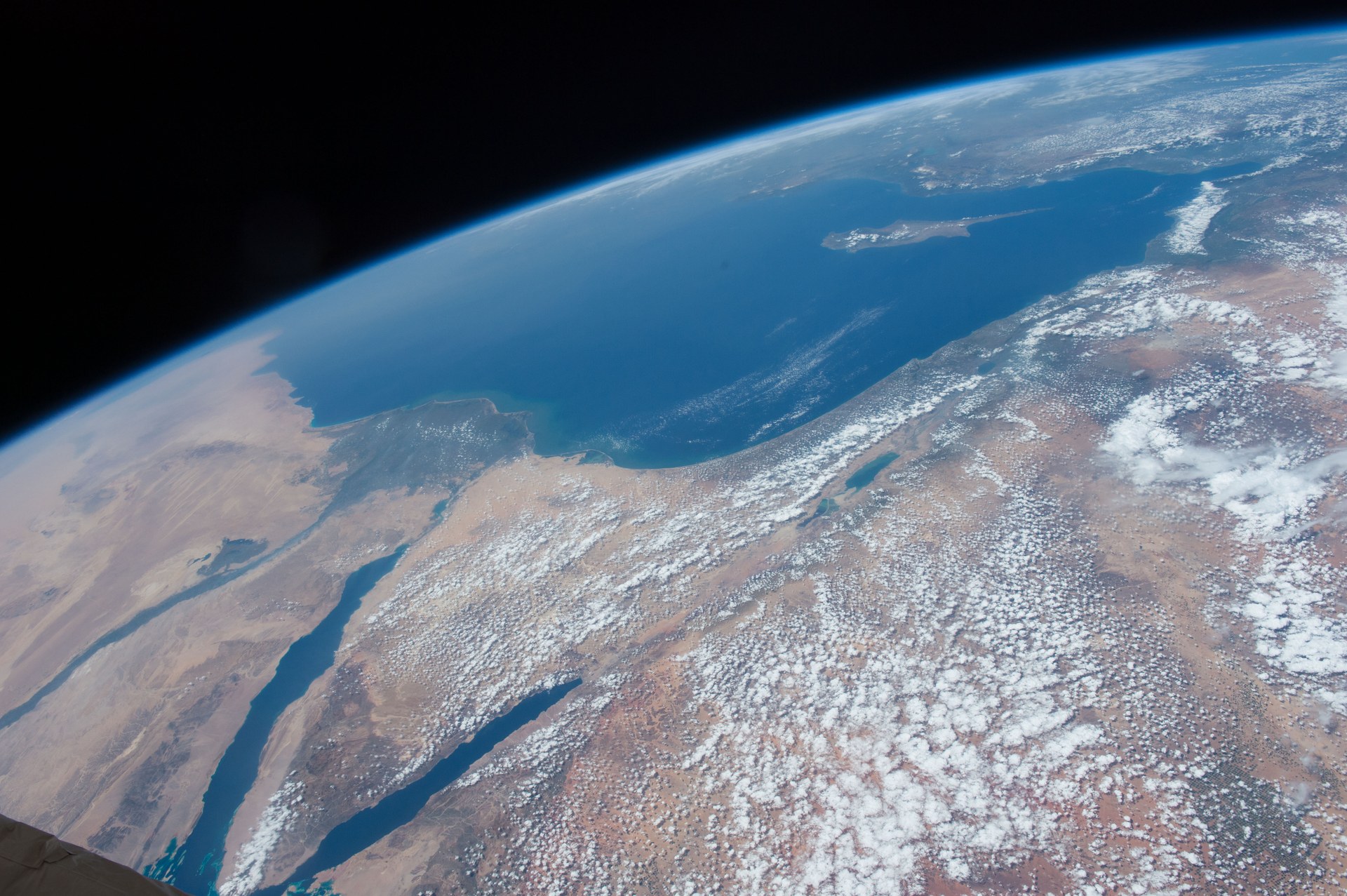
The East-West Pipeline to Yanbu is the centrepiece of Saudi Arabia’s Hormuz contingency, and its limitations define the gap between planning and wartime reality. The pipeline’s nameplate capacity is 7 million bpd. Yanbu’s effective wartime loading capacity, according to Vortexa estimates, is approximately 3 to 4 million bpd. Pre-war Hormuz throughput was approximately 20 million bpd. The bypass covers, at best, 20 percent of total strait flow — and that figure assumes the pipeline itself remains undamaged, which it has not. An IRGC strike hit a pumping station on April 8, after the ceasefire’s nominal start, following an IRGC commander’s declaration that “all restraint” had been removed.
The Yanbu ceiling creates a structural dependency that no bilateral US-Iran deal addresses. Even a successful agreement that reopens Hormuz under IRGC coordination authority leaves Saudi Arabia routing exports through a regime administered by the force that struck its pipeline, fired on commercial shipping the day its own foreign minister declared the strait open, and whose spokesperson described the new transit authority as permanent. The alternative — routing through Yanbu permanently — caps Saudi export capacity well below pre-war levels and leaves the Red Sea route exposed to Bab el-Mandeb disruption, a second chokepoint where Iran maintains proxy capability through the Houthis.
Saudi Arabia’s March production of 7.25 million bpd against an OPEC+ quota of 10.2 million bpd — a gap of nearly 3 million bpd — is not solely a Hormuz problem. But it is a Hormuz-shaped problem, and the bilateral framework at Islamabad treats Hormuz governance as a US-Iran issue to be resolved between the blockading navy and the claimant state, not as a multilateral maritime regime affecting every economy that depends on Gulf energy exports.
The Antalya Alternative
On April 18-19, while Iran was firing on commercial vessels in the strait and the Islamabad process was collapsing, Saudi Arabia did what excluded powers do: it built a parallel track. The Antalya Diplomacy Forum produced a quadrilateral statement from Pakistan, Saudi Arabia, Turkey, and Egypt — four states that share a common condition of being directly affected by the war’s outcome and absent from the room where the outcome is being negotiated. The communiqué called for de-escalation ahead of the April 22 ceasefire deadline.
The Antalya four are not a replacement for US-Iran talks. They are evidence that the bilateral architecture has generated its own opposition — not through hostility to Washington but through the rational self-interest of states that have concluded they cannot afford to outsource their security environment to a negotiation they do not control. Pakistan is simultaneously Iran’s interlocutor, Saudi Arabia’s treaty ally under the September 2025 SMDA, and the country hosting the talks from which Saudi Arabia is excluded. Turkey chairs NATO’s eastern flank and has its own Iran border. Egypt manages the Suez Canal, the other end of the energy transit chain that Hormuz disruption reroutes.
The Antalya track is nascent, and the data on its likely effectiveness is thin. A four-state communiqué is not a security architecture. But it represents something the Islamabad bilateral does not: a framework in which the states bearing the consequences of a Hormuz regime, an enrichment deal, and a proxy funding arrangement have a structural role in shaping those outcomes rather than receiving them as accomplished facts.
The US blockade declared effective April 13 — applying to Iranian ports and toll-collecting vessels, not all Hormuz transit — added a layer of coercive pressure that further compressed the negotiating timeline. But coercion without a multilateral framework produces bilateral outcomes. The Touska boarding on April 19 is a US-Iran confrontation. Its consequences — insurance rates, rerouting costs, production constraints — fall disproportionately on Gulf producers who had no voice in the decision to board, just as they had no voice in the decision to negotiate.
The Kingdom of Saudi Arabia does not set its policies based on the interests of others, but rather on its own interests. We pursue our interests — whether in the West or the East — and wherever we find them, we will work to achieve them.
Saudi Foreign Minister Faisal bin Farhan
That statement — verified, not fabricated, and worth reading twice for its careful omission of any named ally — is the diplomatic articulation of what the Antalya quadrilateral represents in practice. Saudi Arabia is not breaking with Washington. It is building redundancy into a security architecture that Washington’s bilateral instincts have repeatedly shown cannot accommodate Gulf interests as anything other than externalities. The OFAC GL U expiry on April 19, with no renewal, while Russia’s equivalent waiver was quietly extended, confirmed what the Islamabad exclusion already demonstrated: that Washington calibrates its bilateral instruments for bilateral objectives, and the Gulf’s position in that calibration is a variable, not a constant.
With 36 hours until the ceasefire expires, no Iranian delegation en route to round two, and an IRGC that has declared its Hormuz authority permanent regardless of any diplomatic text, Saudi Arabia faces the structural outcome that bilateral US-Iran frameworks have produced twice in eleven years: a security environment shaped by others, for others, with the kingdom left to manage the consequences with depleted interceptors, constrained exports, and the quiet knowledge that the 123 Agreement sitting in a drawer in Riyadh does not forbid what the deal being negotiated in Islamabad is trying to prevent Tehran from doing. The Antalya four may be the first architectural response to a pattern that is no longer deniable.
Frequently Asked Questions
Why was Saudi Arabia excluded from the Islamabad talks if it is the most affected regional party?
The Islamabad format followed the same bilateral logic as the secret Oman channel that preceded the 2015 JCPOA — the US prefers to negotiate with Iran directly to avoid the complexity of multilateral positions and the risk of Gulf states introducing demands (particularly on proxy funding and Hormuz governance) that would make an already difficult negotiation impossible. Pakistan, as host, offered Saudi Arabia a pre-meeting role on March 29 alongside Egypt and Turkey, but the negotiating sessions on April 11-12 were exclusively US-Iran with Pakistani mediation. The Trump administration’s negotiating team — Vance, Witkoff, and Kushner — was structured for speed and executive flexibility, not regional consensus-building.
Could Saudi Arabia unilaterally challenge IRGC authority over Hormuz at the International Maritime Organization or UN?
Riyadh could file a formal challenge under UNCLOS Article 26, which prohibits charges on foreign ships for transit passage, and under Article 38, which guarantees transit passage rights through international straits. The IMO Secretary-General, Arsenio Dominguez, has already declared Iran’s toll regime “illegal.” However, IMO resolutions are non-binding, UNCLOS dispute resolution through the International Tribunal for the Law of the Sea takes years, and enforcement depends on naval capability that the US is currently providing through its blockade — which Washington could withdraw at any point as a bilateral concession to Tehran. The legal pathway exists but depends entirely on the same US security umbrella whose reliability is in question.
What is the UAE 123 loophole and why does it matter for Saudi proliferation risk?
The 2009 US-UAE 123 Agreement — considered the “gold standard” for civilian nuclear cooperation — includes a clause permitting the UAE to pursue enrichment and reprocessing “if other regional states receive that right” under their own 123 agreements. This was designed as a fairness provision but functions as an automatic trigger: any US-Iran deal that concedes enrichment rights to Tehran at any level activates the UAE clause, which in turn removes the political constraint on Saudi Arabia’s own enrichment ambitions under its less restrictive November 2025 123 framework. The cascade is contractual, not speculative — it is written into the treaty text.
How does the Pakistan enforcement problem affect any deal’s credibility for Saudi Arabia?
Pakistan occupies an impossible structural position: it is simultaneously Iran’s diplomatic interlocutor at Islamabad, Saudi Arabia’s defence treaty ally under the September 2025 Saudi-Pakistan Mutual Defence Agreement, the host of negotiations from which Riyadh is excluded, and the only party with a direct channel to IRGC-linked commanders. Pakistan’s COAS Munir visited Khatam al-Anbiya headquarters — commanded by Abdollahi, one of the two IRGC figures Pezeshkian publicly accused of wrecking the ceasefire — on April 16. The Islamabad Accord contains no enforcement clause, and Pakistan cannot adjudicate IRGC violations of agreements the IRGC’s own president says the IRGC ignores. For Riyadh, any deal enforced solely through Pakistani good offices is a deal with no enforcement mechanism at all.
What is the most likely Saudi response if the ceasefire collapses on April 22?
The Antalya quadrilateral communiqué suggests Saudi Arabia is preparing a diplomatic track that does not depend on the Islamabad bilateral, positioning Riyadh alongside Pakistan, Turkey, and Egypt as a collective voice of affected-but-excluded states. Militarily, the 400 remaining PAC-3 interceptors constrain Saudi options severely — the kingdom cannot sustain the current interception rate beyond weeks without resupply that is physically years away. The most likely posture is accelerated diplomatic diversification (the “West or East, wherever we find them” doctrine articulated by FM Faisal bin Farhan), combined with quiet pressure on Washington through the 123 Agreement channel, where the implicit message is straightforward: exclude us from the enrichment conversation, and we will have our own. That quadrilateral positioning — Saudi Arabia, Turkey, Egypt, and Pakistan operating as a coherent bloc without a formal treaty — is the subject of a detailed analysis of the STEP quartet’s wartime architecture and whether Riyadh can afford to anchor it.
Even if the exclusion ends and Gulf states are brought to the table, the deal that emerges may carry its own risks. The Deal Saudi Arabia Can’t Afford to Win argues that a US-Iran agreement formalizing IRGC authority over Hormuz transit could permanently subordinate Saudi export sovereignty to Iranian discretion — making a “successful” deal worse for Riyadh than no deal at all.