TEHRAN — Iran cannot produce the “unified proposal” that President Trump’s ceasefire extension demands because the institution empowered to produce it — the elected presidency — has been stripped of the authority to staff its own government. The IRGC’s formal seizure of ministerial appointments, disclosed by Iran International on April 21, converts what Western capitals have treated as a political standoff into something more structurally disabling: a treaty-incapacity event, in which the sovereign counterpart at the negotiating table lacks the constitutional machinery to bind itself to any agreement it might sign.
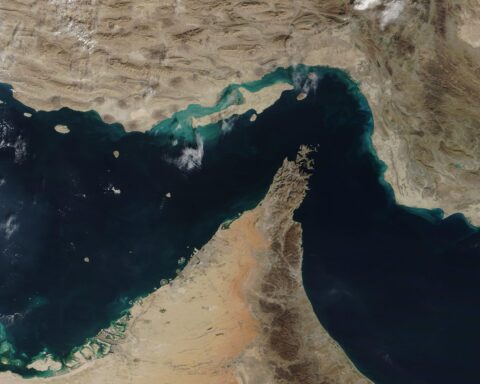
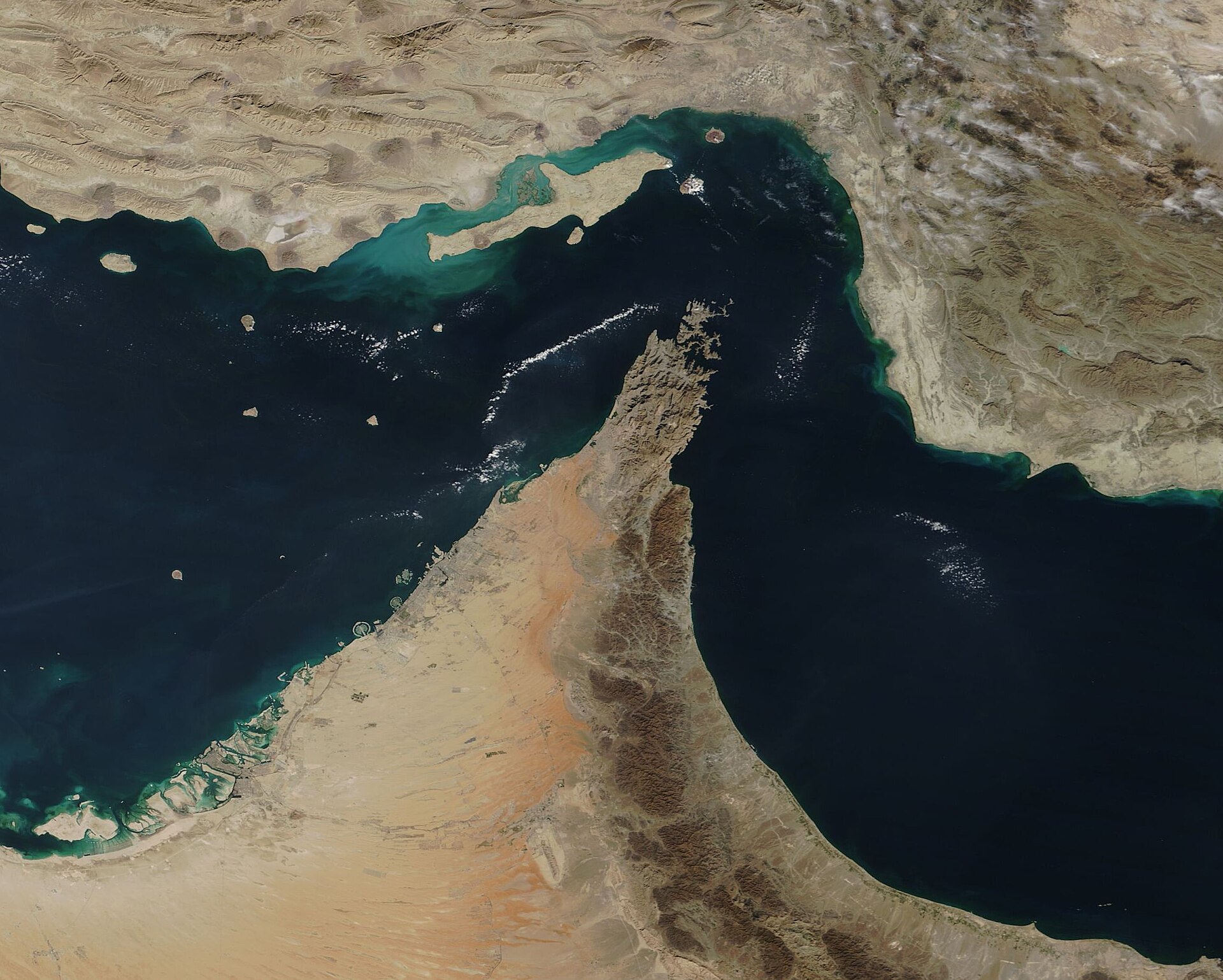
Commander Ahmad Vahidi’s declaration that “all critical and sensitive leadership positions must be selected and managed directly by the IRGC until further notice” does not describe a power struggle. It describes the dismantling of the civilian chain of command that Article 110 of Iran’s constitution requires for the Supreme Leader’s authority to flow into executable policy. President Pezeshkian cannot appoint an intelligence minister. He cannot reach Supreme Leader Mojtaba Khamenei, who governs audio-only from an undisclosed location in Qom, cordoned by the same military council that controls Hormuz, the SNSC, and now the cabinet formation process. The ceasefire extension window is open. The door behind it leads nowhere.
For Saudi Arabia — excluded from the Iran-US table but staring at a fiscal break-even that Brent is failing to meet — the constitutional incapacity inside Tehran is not an abstraction. Every week without Hormuz reopening widens a deficit that has already been revised far beyond official projections. Riyadh has no diplomatic channel to the military council that holds the keys.
Table of Contents
The Appointment Seizure
The mechanics are specific. Pezeshkian proposed multiple candidates for intelligence minister in mid-April, including Hossein Dehghan, a former defense minister with establishment credentials stretching back to the Iran-Iraq War. Vahidi rejected every name. Not through the constitutional process — Article 133 gives the president the right to appoint ministers subject to a Majlis confidence vote — but through direct IRGC command authority that has no basis in the written constitution and no precedent in the Islamic Republic’s 47-year history.
Vahidi’s justification, relayed through IRGC-affiliated channels and reported by Iran International on April 21, frames the seizure as a wartime necessity. “Under wartime conditions,” the paraphrase runs, “all critical and sensitive leadership positions must be selected and managed directly by the IRGC until further notice.” The phrase “until further notice” does the real work. It establishes no timeline, no trigger for reversal, no institutional mechanism through which civilian authority might be restored. Andreas Krieg of King’s College London described the resulting arrangement plainly: “The IRGC increasingly calls the shots in all matters of statecraft and government. The rest of the state is a façade at most.”
This is not the first time the IRGC has constrained a president’s appointments — the Guardian Council’s candidate vetting has functioned as a soft filter for decades. But vetoing a president’s ministerial nominees after they have been proposed, through direct military command rather than constitutional process, crosses a line that even the 2009 post-election crackdown did not cross. Ahmadinejad fought with Khamenei over his intelligence minister in 2011. He lost — but he lost through the Supreme Leader’s constitutional authority under Article 110, not through a military council operating outside the document entirely.
The Middle East briefing 3,000+ readers start their day with.
One email. Every weekday morning. Free.
Who Controls Access to Mojtaba Khamenei?
A “military council” composed of senior IRGC officers now screens all access to the Supreme Leader. Pezeshkian has been unable to establish contact with Mojtaba Khamenei, according to informed sources cited by Iran International on April 21. Civilian government situation reports are blocked before they reach Qom.
The physical reality compounds the constitutional problem. Reuters confirmed approximately April 11 that Mojtaba is “mentally sharp but severely disfigured, likely missing a leg, and governing exclusively through audio conferencing from an undisclosed location in Qom.” He holds no formal constitutional office beyond the Supreme Leadership itself — a position the Assembly of Experts conferred on March 9 in a vote of approximately 59 out of 88, orchestrated by the IRGC after Ali Khamenei’s assassination on February 28. The most senior cleric who publicly opposed the appointment, Ali Asghar Hejazi — the elder Khamenei’s acting chief of staff — was killed in overnight airstrikes on downtown Tehran during the succession crisis. He had warned the Assembly that Mojtaba “lacks the necessary qualifications for leadership.”
Those qualifications are written into Article 109 of Iran’s constitution: the Supreme Leader must hold the rank of Mojtahed, a level of Islamic jurisprudential authority that requires decades of recognized scholarship. Mojtaba reportedly entered formal religious schooling only in his thirties and has never published recognized Islamic jurisprudence, according to analysis by Verfassungsblog and the Carnegie Endowment. The legitimacy gap would matter in peacetime. In wartime, with the only person who can constitutionally ratify SNSC decisions physically inaccessible to the government meant to execute those decisions, the gap becomes operational.
The cordon serves the IRGC’s pro-conflict faction — Vahidi, SNSC Secretary Mohammad Bagher Zolghadr, and Ali Akbar Ahmadian — with structural precision: as long as Mojtaba cannot be reached by civilian officials, he cannot issue instructions that contradict IRGC operational preferences. He cannot confirm a ceasefire. He cannot dismiss a commander. The public accusation Pezeshkian leveled on April 4, naming Vahidi and IRGC Khatam al-Anbiya commander Abdollahi as ceasefire wreckers, was the most authoritative confirmation that the authorization ceiling is not a matter of political disagreement but of physical access.
The Constitutional Chain That Broke
Iran’s constitution concentrates military authority in a single office. Article 110 vests supreme command of the armed forces — including appointment and dismissal of IRGC commanders — exclusively in the Supreme Leader. The president has zero IRGC authority. This is not ambiguous language requiring interpretation. The text is explicit, and the Council of Guardians has enforced it for four decades.
Below Article 110 sits Article 176, which establishes the Supreme National Security Council as the coordinating body for defense, intelligence, and foreign policy under wartime conditions. The SNSC’s decisions carry binding legal force — but only after the Supreme Leader confirms them. Without that confirmation, SNSC outputs remain contested, their authority dependent on whether the relevant institutional actors choose to treat them as binding.
Zolghadr, the SNSC secretary, is an IRGC loyalist inserted into the post under IRGC pressure. Iran International reported on April 10 that he filed a formal complaint to senior IRGC leaders accusing Foreign Minister Araghchi of having “surpassed his mandate” by expressing flexibility on Iran’s support for the Axis of Resistance and signaling openness on nuclear enrichment. Vahidi then demanded Zolghadr be added to the Islamabad negotiating team. The existing team — Araghchi and Parliament Speaker Ghalibaf — opposed this, calling Zolghadr “too inexperienced for strategic negotiations,” according to Iran International and the Jerusalem Post.
The chain of events that followed reveals the authorization architecture in operation. Hossein Taeb, former IRGC Intelligence Organization chief and a member of Mojtaba Khamenei’s inner circle, issued the order for the Islamabad delegation’s immediate return to Tehran after Zolghadr’s complaint. Vahidi and IRGC Aerospace Force commanders instructed the delegation to “refuse to negotiate on Iran’s missile program.” The delegation returned. The talks collapsed. The Vance-Ghalibaf face-to-face in Islamabad — the first direct US-Iran talks since 1979 — had already exposed the structural problem: Ghalibaf could negotiate but could not authorize, and Vahidi could authorize but would not negotiate.
Can Araghchi Sign Anything That Binds?
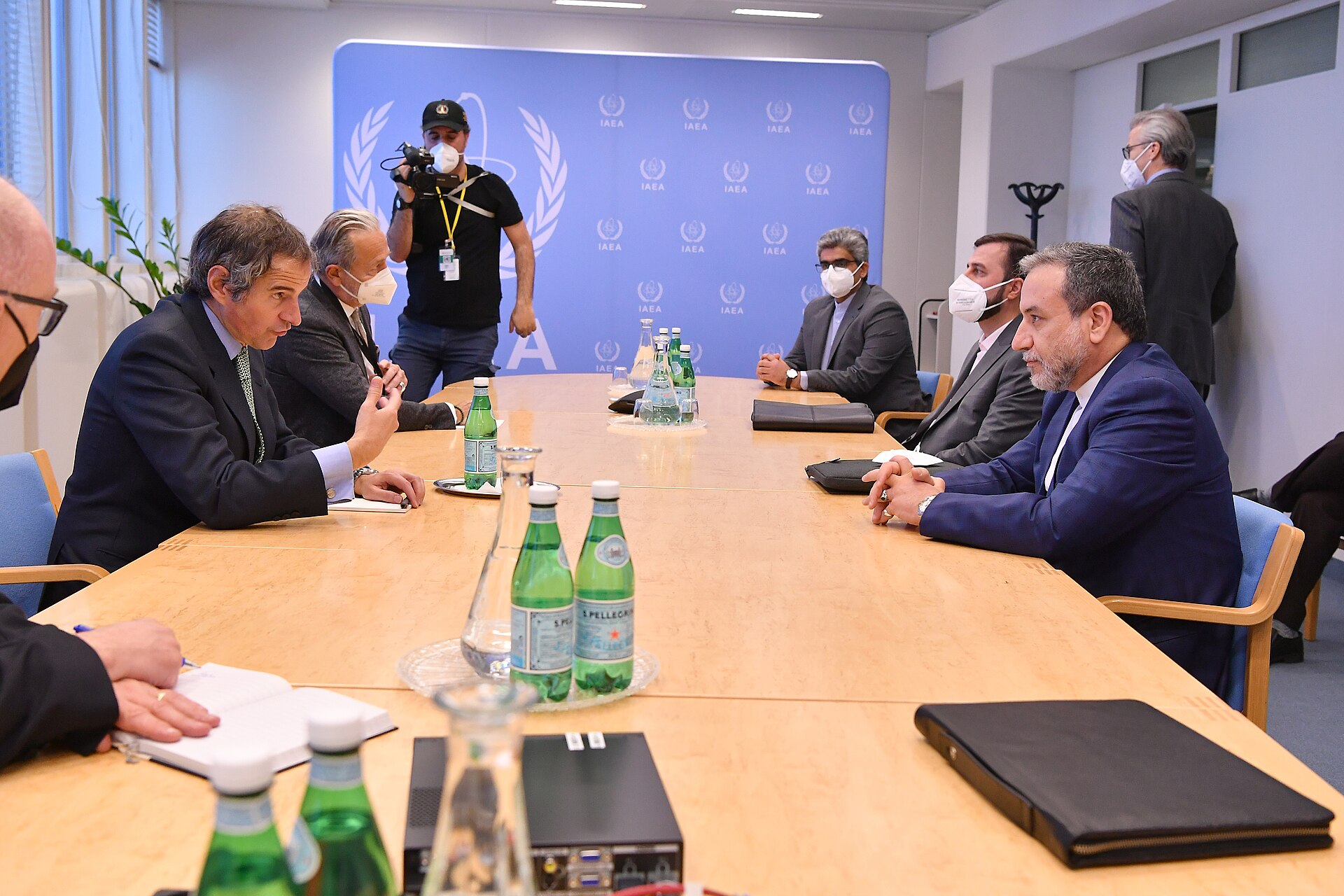
No. Araghchi can initial a document, but he cannot bind the SNSC without Supreme Leader confirmation under Article 176. Mojtaba is accessible only to the IRGC military council, not to the foreign ministry. Even a jointly signed ceasefire text would be constitutionally unratifiable under the current access architecture.
Foreign Minister Abbas Araghchi retains the formal title. He exchanged direct text messages with US envoy Steve Witkoff during the Islamabad process. He was described as “inches away” from a memorandum of understanding before Vance walked out, according to Axios. He called Saudi Foreign Minister Prince Faisal bin Farhan and French Foreign Minister on April 13, the day the US blockade took effect — behavioral evidence that the diplomatic channel from the foreign ministry remains active.
None of this matters constitutionally. Even if Araghchi and Ghalibaf jointly signed a ceasefire text in Islamabad or any successor venue, no confirmation pathway currently exists. The SNSC cannot ratify without Mojtaba, and Mojtaba cannot be reached.
The Zolghadr complaint formalized this. By accusing Araghchi of exceeding his mandate on two specific points — Axis of Resistance support and enrichment flexibility — Zolghadr established IRGC red lines that the foreign ministry is not permitted to cross. Vahidi then reinforced the constraint: no missile program negotiation, no enrichment concessions, no Axis of Resistance withdrawal. These are not starting positions in a bargaining process. They are categorical vetoes backed by the military authority that controls the Supreme Leader’s physical person.
Araghchi’s predicament mirrors a pattern familiar from the late Soviet Union, where Foreign Minister Eduard Shevardnadze could negotiate arms control frameworks with James Baker only to discover that the military establishment in Moscow had the institutional power to prevent implementation. The difference in Iran’s case is that the military establishment has not merely obstructed implementation — it has seized the appointment authority needed to staff the institutions that would carry out any deal.
The Ghalibaf Paradox
Mohammad Bagher Ghalibaf, the Parliament Speaker who led Iran’s Islamabad delegation, is the pragmatic faction’s most plausible interlocutor. His biography cuts both ways: he commanded the IRGC Aerospace Force from 1997 to 2000, giving him institutional standing with the military establishment, and he has publicly validated IRGC operational authority — his “seven lies” Trump quote and his insistence that decisions belong to “the field, not social media” demonstrated fluency in IRGC language.
But Ghalibaf cannot authorize. The IRGC’s reversal of Araghchi’s Hormuz declaration on April 17-18 illustrated the constraint precisely. Araghchi declared Hormuz “completely open” in line with the Lebanon ceasefire terms. Within hours, IRGC joint command reversed the declaration through Tasnim News Agency, returning the Strait to “strict management and control.” Ghalibaf publicly validated the override. He could not have done otherwise.
The 71-member delegation Ghalibaf brought to Islamabad represented the scale of the effort. The number reflected the complexity of intra-Iranian coordination required merely to show up, not optimism about the outcome. Vahidi was not in the room. Zolghadr was not on the original team. The people with operational authority over the issues being discussed — Hormuz transit, missile deployments, enrichment — were absent, and the people present lacked the authority to commit on those issues.
Ghalibaf’s value to the IRGC is precisely his inability to close a deal. He can absorb international diplomatic pressure, demonstrate Iranian “willingness” to engage, and buy time — all without conceding anything the military council has not pre-approved. If the talks fail, failure attaches to Ghalibaf’s civilian diplomatic effort, not to the IRGC’s refusal to authorize. The arrangement insulates the military council from the political cost of its own intransigence.
What Is Trump Waiting For?
Trump extended the ceasefire on April 21, citing Iran’s government as “seriously fractured” — a characterization that, for once, understates the situation. The extension will last “until such time as” Iran’s leaders submit a “unified proposal” to end the war, according to statements reported by Al Jazeera, NBC News, and Axios.
The constitutional architecture described above makes this condition impossible to satisfy during the current configuration of Iranian power. A “unified proposal” requires the presidency (Pezeshkian), the foreign ministry (Araghchi), the SNSC (Zolghadr), and the Supreme Leader (Mojtaba) to align on a single negotiating position. Pezeshkian cannot appoint the officials he needs. Araghchi cannot exceed the mandate Zolghadr has defined. The SNSC cannot produce binding decisions without Mojtaba’s confirmation. Mojtaba cannot be reached by anyone outside the military council.
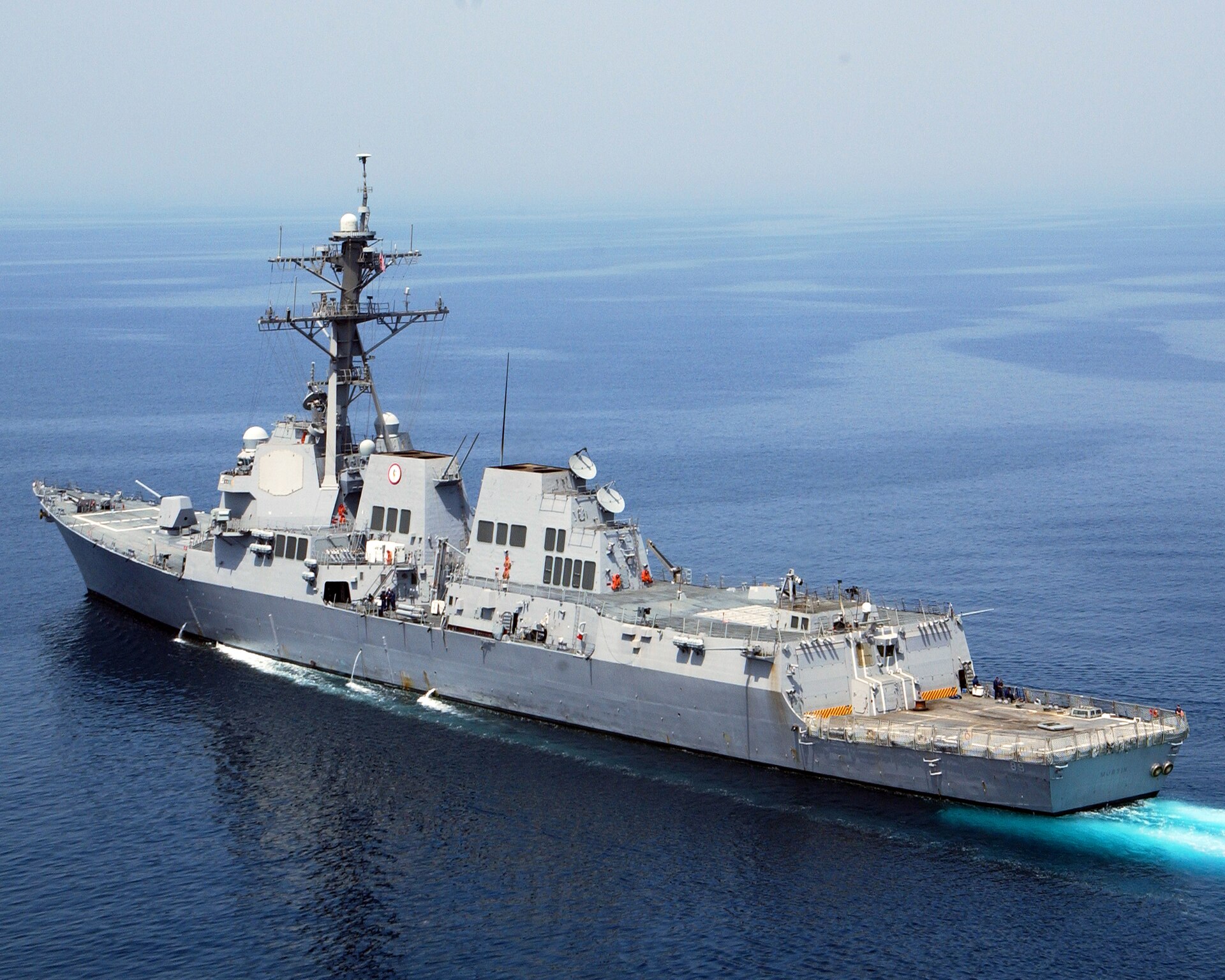
Vance’s Islamabad trip was postponed indefinitely on April 21-22 after Tasnim — the IRGC-affiliated news agency — reported that Tehran’s delegation would not attend and “sees no prospect for participation in the talks.” The stated precondition: the United States must lift the naval blockade declared effective April 13 before Iran will return to negotiations. The USS Spruance seized the Iranian vessel Touska on April 19; Iran called it “piracy.”
The blockade as coercive diplomacy was designed to compress Iran’s decision window. Its architects assumed the existence of a decision-maker on the other end — someone who could weigh the cost of continued isolation against the cost of concession and choose. The IRGC appointment seizure eliminates that decision-maker. The blockade’s pressure accumulates, but it accumulates against an entity that has been stripped of the personnel authority to respond to it.
Trump’s condition — a “unified proposal” — may function as a de facto indefinite extension, whether or not that was the intention. The ceasefire holds while the condition remains unmet. The condition cannot be met while the military council controls appointments, SNSC access, and physical access to Mojtaba. Unless one of those three variables changes, the extension is open-ended.
Why Does Saudi Arabia Have No Leverage Over This?
Saudi Arabia’s fiscal exposure to the Iranian constitutional crisis is direct and worsening. March production fell to 7.25 million barrels per day, according to the IEA — down from 10.4 million bpd pre-war, a 30 percent drop. The Yanbu loading ceiling through the East-West Pipeline bypass operates at 4-5.9 million bpd against a 7 million bpd pipeline capacity, leaving a structural gap of at least 1.1 million bpd at peak throughput — a shortfall that cannot be closed without Hormuz reopening.
The fiscal arithmetic is punishing. Bloomberg’s PIF-inclusive estimate puts Saudi Arabia’s break-even at $108-111 per barrel. Brent trades near $96-98. Goldman Sachs has revised the war-adjusted deficit to 6.6 percent of GDP against the official 3.3 percent projection. The June OSP reset of +$3.50 per barrel — a $16 reduction from May’s +$19.50 war-premium — reflects Aramco’s acknowledgment that the premium structure built at $109 Brent is unsustainable at current prices.
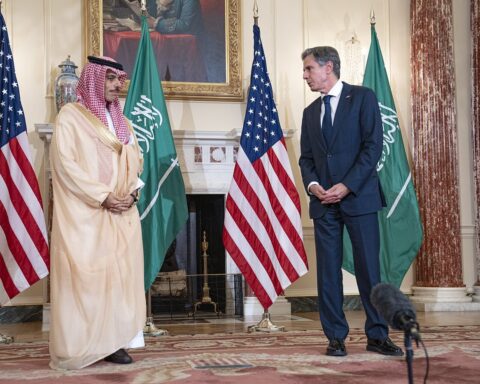
Riyadh has no seat at the Iran-US negotiating table. Saudi Foreign Minister Prince Faisal bin Farhan spoke with Araghchi on April 13 — the day the blockade took effect — evidence of a parallel channel. But that channel connects to the foreign ministry, the institution whose authority the IRGC has just dismantled. The military council that controls Hormuz, the appointment process, and access to Mojtaba has no diplomatic interface with Saudi Arabia. Vahidi, who holds an INTERPOL red notice for the 1994 AMIA bombing in Buenos Aires, cannot travel internationally and operates exclusively from inside Iran.
Pakistan, the ceasefire’s sole enforcement mechanism, operates under its own constraints. The September 2025 Saudi-Pakistan Mutual Defense Agreement makes Pakistan simultaneously Iran’s interlocutor and Saudi Arabia’s treaty ally — a structural tension that Pakistani army chief Munir has managed through compartmentalization rather than resolution. But Pakistan’s leverage over the IRGC military council is no greater than Saudi Arabia’s. Munir visited Khatam al-Anbiya headquarters on April 16, appealing directly to Abdollahi’s command. The appeal assumed an interlocutor willing to be persuaded. The appointment seizure five days later suggests the assumption was wrong.
Tehran’s Counter-Narrative
The IRGC’s preferred framing, disseminated through Tasnim and Fars News, attributes Iran’s withdrawal from negotiations entirely to the US naval blockade. The precondition is externally directed: lift the blockade, and Iran will return. The constitutional crisis — the appointment seizure, the cordoning of Mojtaba, the Zolghadr complaint, the Taeb recall order — does not appear in IRGC-affiliated coverage.
This framing serves the military council’s interests precisely. If the obstacle is the blockade, then the United States bears responsibility for the impasse. If the obstacle is Iran’s internal authority structure, then the IRGC bears responsibility — a conclusion that would validate Pezeshkian’s April 4 accusation and undermine the military council’s claim to be defending national sovereignty. The blockade precondition is structurally useful regardless of whether the IRGC would negotiate if the blockade were lifted, because the condition’s existence makes the counterfactual untestable.
Pezeshkian’s own public statements provide the most authoritative Iranian source on the real obstacle. His April 4 accusation — naming Vahidi and Abdollahi specifically as having caused a “deviation from the delegation’s mandate” — was an extraordinary admission from a sitting president. Iran’s Central Bank memo, circulated internally, projects 180 percent inflation and a 12-year recovery timeline. Arash Azizi, author of What Iranians Want: Women, Life, Freedom, has argued in recent commentary that the regime “understands that they have to give up on this Islamist ideology” — a characterization that describes the pragmatic faction’s private conclusion, not its public position.
The factional divide is real. Ghalibaf and Araghchi represent a survival-oriented wing that recognizes the economic trajectory as unsustainable. Vahidi, Zolghadr, and Ahmadian represent a conflict-continuation wing that treats any concession as regime-threatening. The appointment seizure is the latter faction’s answer to the former faction’s willingness to negotiate: not a counterargument, but a structural veto executed through personnel control. The IRGC Navy’s “full authority” declaration over Hormuz on April 5 and April 10 — issued while Araghchi was in Islamabad — established the pattern. The appointment seizure on April 21 completed it.
Iran’s 440.9 kilograms of uranium enriched to 60 percent — enough to produce weapons-grade material in approximately 25 days per device using IR-6 cascades, according to IAEA estimates from June 2025 before access was terminated on February 28 — sits in the background of every calculation. Vahidi’s instruction to the Islamabad delegation was categorical: “refuse to negotiate on Iran’s missile program.” The enrichment portfolio, the missile program, the Axis of Resistance support network, and Hormuz transit control represent the four assets the IRGC military council will not place on any table. A “unified proposal” that excludes all four is not a proposal the United States would accept. A “unified proposal” that includes any of them is not one the military council would authorize. The arithmetic does not close.
For Riyadh, the question is not whether the ceasefire extension holds — Trump’s framing makes that likely for the near term — but what happens when the extension’s open-ended condition meets the closed architecture of Iranian decision-making. Saudi March production at 7.25 million bpd and Brent below the fiscal break-even impose a timeline that the constitutional crisis in Tehran does not share. The IRGC military council can sustain the current configuration indefinitely. The Saudi treasury cannot. That asymmetry, not the blockade and not the ceasefire text, is the structural fact that will determine what comes next.
Frequently Asked Questions
Has the IRGC ever seized cabinet appointment authority before?
The Guardian Council has vetted candidates for elected office since 1979, and the Supreme Leader has occasionally pressured presidents on specific ministerial choices — most visibly in Ahmadinejad’s 2011 intelligence minister dispute with Ali Khamenei. But a direct IRGC command declaring authority over “all critical and sensitive leadership positions” without constitutional basis represents a qualitative escalation. Iran’s 1989 constitutional revision explicitly transferred certain Supreme Leader powers to elected institutions; the April 21 seizure reverses that transfer through military fiat rather than constitutional amendment.
Could the Assembly of Experts remove Mojtaba and resolve the crisis?
Article 111 grants the Assembly of Experts the authority to dismiss a Supreme Leader who becomes “incapable of fulfilling his constitutional duties.” Mojtaba’s physical condition — disfigured, governing audio-only, physically cordoned by the IRGC — could arguably trigger that clause. In practice, the same IRGC apparatus that orchestrated Mojtaba’s 59-out-of-88 selection vote controls the security environment in which the Assembly operates. Ahmad Jannati, the Assembly’s 99-year-old chairman, has not convened a session since the March 9 vote. No mechanism exists to convene one against IRGC wishes.
What would a credible Iranian “unified proposal” actually require?
At minimum: a presidential mandate from Pezeshkian authorizing specific concessions, SNSC ratification of those concessions as national policy under Article 176, Supreme Leader confirmation making the SNSC decision binding, and IRGC operational compliance with the confirmed decision — particularly regarding Hormuz transit, missile deployments, and enrichment. Each step requires the cooperation of at least one actor who currently has the authority and the incentive to block it. The US side’s 20-year enrichment moratorium proposal and Iran’s counter-offer of monitored down-blending both require SNSC confirmation that cannot currently be obtained.
Does the US blockade actually affect Iranian oil revenue?
The Foundation for Defense of Democracies estimates blockade-related damage at $435 million per day. The OFAC General License U — which had permitted limited Iranian oil transactions — expired at 12:01 AM EDT on April 19 with no renewal, while Treasury quietly extended Russia’s General License 134A on April 18. Indian refiners, rather than reverting to rupee settlement through UCO Bank, have been settling Iranian crude purchases in yuan through ICICI Bank’s Shanghai branch, according to Reuters. Five Shandong province “teapot” refineries stopped purchasing Iranian crude in April. China’s strategic petroleum reserve of 1.2 billion barrels provides 109 days of import cover, reducing Beijing’s urgency to broker continued Iranian exports.
What options does Saudi Arabia have if Hormuz remains restricted indefinitely?
The East-West Pipeline bypass to Yanbu covers 80-85 percent of pre-war export volumes, but the loading ceiling of 4-5.9 million bpd leaves a structural gap. Saudi Arabia could theoretically redirect additional volumes through the Trans-Arabian Pipeline (Tapline) to Lebanon’s Sidon terminal, but that infrastructure has been inactive since 1990 and would require years of rehabilitation. OPEC+ quotas allocate Saudi Arabia 10.2 million bpd — roughly 3 million above current actual output — meaning Riyadh holds paper capacity it cannot physically export. The kingdom’s $400 billion-plus sovereign reserves provide a fiscal buffer, but Goldman’s 6.6 percent deficit projection assumes current oil prices persist, and every dollar below the $108-111 break-even accelerates drawdown.