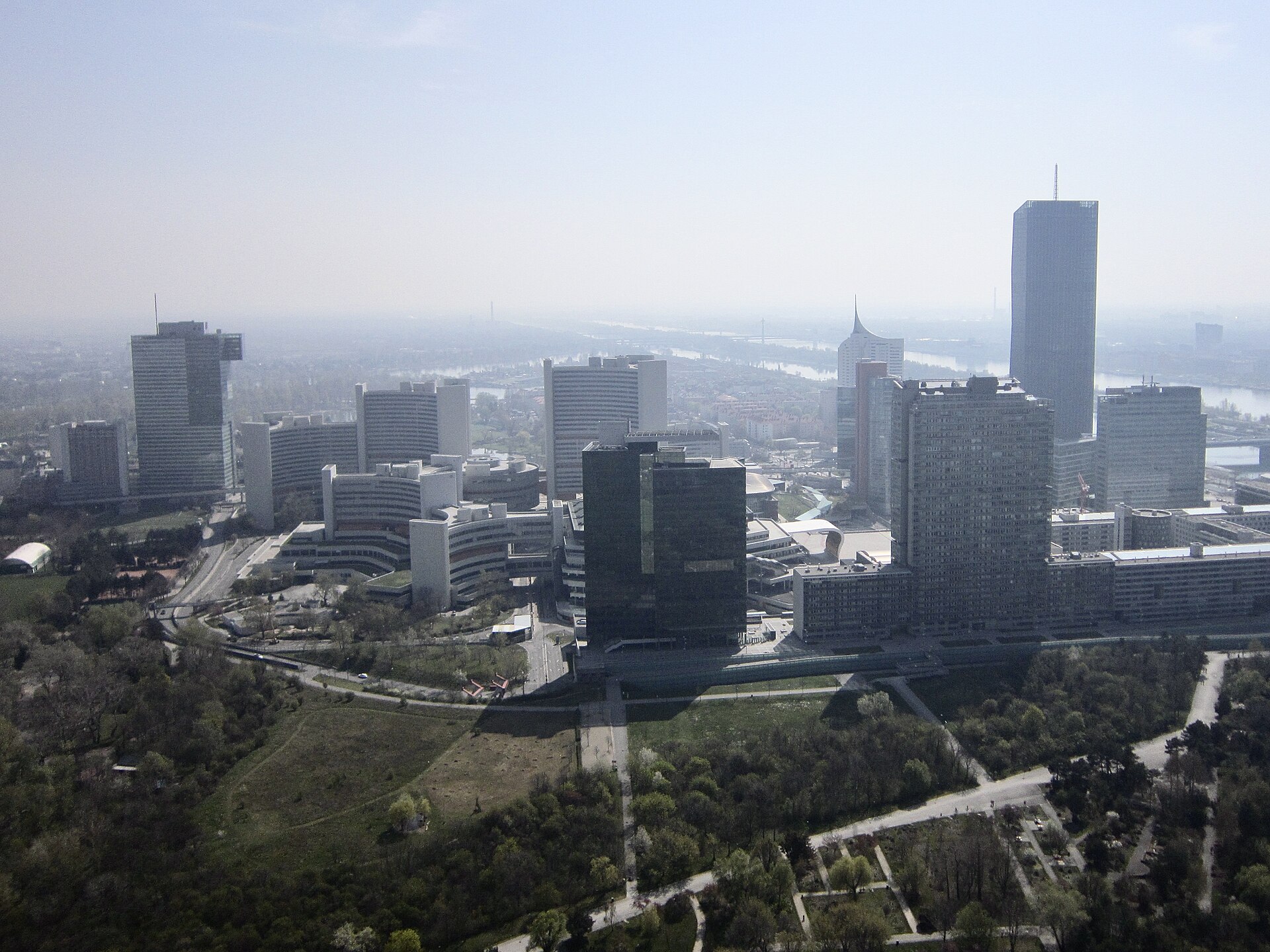
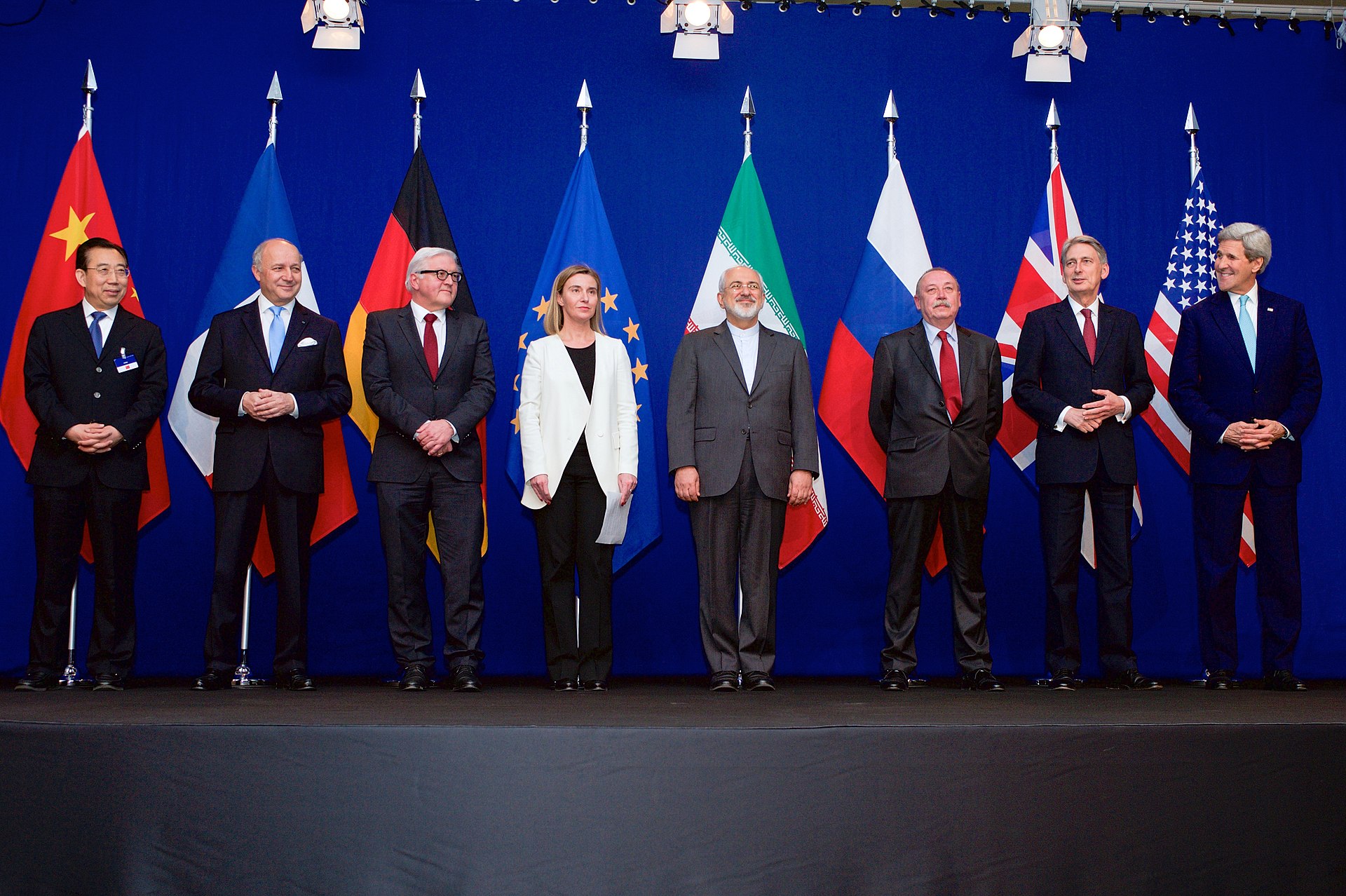
VIENNA — China, Russia, and Iran jointly met IAEA Director General Rafael Grossi in Vienna on April 24 — the third trilateral meeting of its kind since October 2025 — in what amounts to a coordinated effort by Beijing and Moscow to insert themselves as co-authors of any nuclear framework before Washington can close a bilateral deal with Tehran in Muscat two days later. The meeting, which brought together China’s permanent representative to the IAEA Li Song, Russia’s Mikhail Ulyanov, and Iran’s Reza Najafi, was timed with the same precision as the previous two trilateral sessions: each held days before a US-Iran negotiating round, each designed to set the boundaries of what Grossi’s agency can demand before American and Iranian negotiators sit down.
The pattern is no longer coincidence — it is institutional choreography, and it leaves Saudi Arabia locked out of every room where its nuclear future is being shaped. Riyadh is excluded from the US-Iran bilateral track running through Muscat, where Pakistan serves as the sole mediator, and absent from the Russia-China-Iran trilateral track running through Vienna, where the three signatories of a January 29, 2026 strategic pact have declared that “UN Security Council considerations of the nuclear deal are terminated.” The only nuclear-adjacent card Saudi Arabia holds — a US-Saudi 123 agreement whose enrichment ambiguity Tehran is already weaponising as evidence of American double standards — is on a 90-day congressional review clock that expires in late May, roughly five weeks from now.
Table of Contents
- The Trilateral Pattern: Three Meetings, One Message
- What Can Grossi Actually Verify?
- Muscat Round Three: “Much More Serious” but Still Deadlocked
- Why Is Saudi Arabia Absent from Both Nuclear Tracks?
- The 123 Agreement and the Enrichment Question
- Grossi’s 20-Country Arms Race Warning
- Frequently Asked Questions
The Trilateral Pattern: Three Meetings, One Message
The April 24 meeting was, according to the Chinese Ministry of Foreign Affairs readout, convened to discuss “how the IAEA can play a constructive role in supporting the political and diplomatic settlement of issues pertaining to the Iranian nuclear programme.” That language — “constructive role” rather than “verification mandate,” “political settlement” rather than “compliance” — is doing a specific kind of diplomatic work, and it has been doing it consistently across all three trilateral sessions since October 2025. Beijing and Moscow are not asking Grossi to verify Iran’s nuclear programme; they are asking him to subordinate verification to diplomacy, which is a fundamentally different proposition.
The trilateral joint statement reinforced the framing: “Political and diplomatic engagement and dialogue based on the principle of mutual respect remains the only viable and practical option.” This is the language of a bloc that has already decided inspections are a bargaining chip, not a prerequisite — a position that sits in direct tension with Grossi’s own public stance. The IAEA director general said on April 21, three days before the trilateral meeting, that “without verification, any agreement is not an agreement, but rather an illusion of agreement or a promise that you don’t know whether it will be kept.”
The timing pattern across the three meetings is worth stating plainly. The October 2025 trilateral preceded the first exploratory US-Iran channel. The February 2026 meeting came days before the second Muscat round. And the April 24 session landed 48 hours before the third round — each one a pre-negotiation negotiation, establishing what Beijing and Moscow will and will not accept before Washington sits down with Tehran. The January 29, 2026 trilateral strategic pact between China, Russia, and Iran, which includes nuclear provisions and a unified stance against JCPOA-linked sanctions reimposition, provides the institutional backbone for this coordination.
What Can Grossi Actually Verify?
The honest answer, as of April 24, 2026, is very little. The IAEA has been unable to verify Iran’s stockpile or enrichment activities since February 28, 2026, when Tehran terminated inspector access. The last verified data point is from June 2025: 440.9 kilograms of uranium enriched to 60 per cent — enough, by most non-proliferation estimates, for roughly ten nuclear devices. The gap between 60 per cent enrichment and weapons-grade material is estimated at approximately 25 days using Iran’s IR-6 cascade, and no international body has had eyes on the programme for nearly two months.
The Middle East briefing 3,000+ readers start their day with.
One email. Every weekday morning. Free.
Grossi has been candid about the stakes. On April 15, he told Euronews that “Iran has a very ambitious, wide nuclear programme — so all of that will require the presence of IAEA inspectors; otherwise you will not have an agreement, you will have an illusion of an agreement.” That phrase — “illusion of an agreement” — appeared again six days later, which suggests Grossi is no longer treating the verification deficit as a technical problem to be resolved but as a structural feature of the negotiation that Beijing and Moscow are content to leave in place. The trilateral’s emphasis on “political settlement” over verification is, in effect, an argument for accepting the illusion.
The snap-back mechanism that was supposed to provide leverage against exactly this scenario is already spent. The E3 — Britain, France, and Germany — triggered it on August 28, 2025, UN sanctions were reimposed on September 27–28, 2025, and the mechanism itself expired on October 18, 2025. China and Russia rejected the reimposition as illegitimate. There is no second trigger, no reserve clause, no procedural mechanism left to compel Iranian compliance through the Security Council.
Muscat Round Three: “Much More Serious” but Still Deadlocked
The third round of US-Iran nuclear talks opened in Muscat on April 26, two days after the Vienna trilateral, with technical discussions led by US Director of Policy Planning Michael Anton and Iran’s Deputy Foreign Minister Majid Takht-Ravanchi — a veteran of the 2015 JCPOA negotiations whose presence signals that Tehran is at least engaging the substance, even if the outcomes remain elusive. The higher-level Witkoff-Araghchi channel continued in parallel, and Iran’s Foreign Minister Abbas Araghchi described the round as “much more serious” with “more detailed discussions,” while acknowledging that “disagreements remain.”
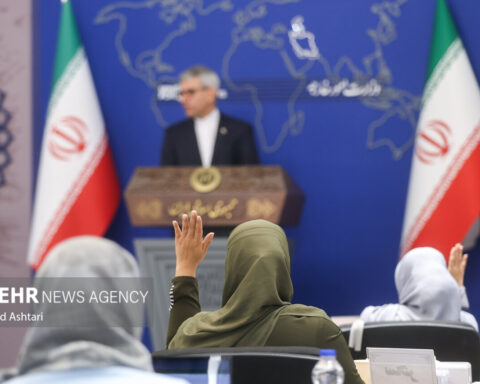
Iran’s foreign ministry spokesperson Esmail Baghaei called the talks “difficult but useful” — a formulation that diplomats use when there has been enough movement to justify continuing but not enough to announce anything. The US side, by contrast, left “disappointed,” according to reporting by RFE/RL and the Council on Foreign Relations. Omani Foreign Minister Badr al-Busaidi confirmed a fourth round scheduled for May 3, which at minimum indicates that neither side has walked away.
The Arms Control Association flagged a deeper problem with the American negotiating posture as early as March 2026, noting that US envoy Steve Witkoff “did not have sufficient technical expertise” — he reportedly called Natanz, Fordow, and Esfahan “industrial reactors” and expressed surprise that Iran produces its own centrifuges. The ACA called it “a diplomatic disservice to US and international nonproliferation goals.” Whether the addition of Anton, a policy planning director rather than a nuclear specialist, addresses this deficit is an open question, but the fact that the trilateral bloc — China, Russia, and Iran — arrived at the Muscat round having already coordinated their position with the IAEA director general suggests the technical asymmetry may matter less than the strategic one.
Why Is Saudi Arabia Absent from Both Nuclear Tracks?
The structural exclusion of Saudi Arabia from Iran’s nuclear diplomacy is not an oversight — it is a design feature of both tracks, and it has been one since the JCPOA. The US-Iran bilateral runs through Muscat with Oman as host and Pakistan as the sole mediator on the broader conflict, a role that has itself frayed under the weight of the IRGC’s authorization ceiling. The Russia-China-Iran trilateral runs through Vienna and operates under a strategic pact that treats the nuclear file as a matter for the three signatories and the IAEA alone. Saudi Arabia’s only documented diplomatic touchpoint with Iran’s nuclear negotiating apparatus during this entire period is a single phone call — Saudi Foreign Minister Prince Faisal bin Farhan’s conversation with Araghchi on April 13, the day the US naval blockade of Iranian ports began.
This exclusion is not symmetrical. Saudi Arabia is the state most directly affected by any nuclear outcome — its eastern oil infrastructure sits within ballistic missile range of Iran, its fiscal survival depends on energy exports that Iran’s Hormuz posture has already cut by 30 per cent, and its own nuclear ambitions are explicitly tethered to whatever deal Washington makes with Tehran. Prince Abdulaziz bin Salman, the Saudi energy minister, said in Dhahran in January 2025: “We will enrich it and we will sell it and we will do a yellowcake.” Saudi Foreign Minister Faisal bin Farhan was more direct in December 2025: “If Iran gets an operational nuclear weapon, all bets are off.”
Bill Emmott, the former editor of The Economist, wrote in Asia Times in April 2026 that China “could be asked to lead a consortium to handle the stock of enriched uranium” — the first mainstream Western commentary to position Beijing as a potential custodian of Iranian fissile material. The proposal omits Saudi Arabia entirely, which is consistent with the trilateral’s operating assumption that the Gulf states are objects of the nuclear arrangement rather than participants in it.
The 123 Agreement and the Enrichment Question
The US-Saudi 123 civil nuclear cooperation agreement, submitted to Congress around February 22, 2026, is on a 90-day review timeline that expires in late May — a window that overlaps almost exactly with the fourth and likely fifth rounds of US-Iran talks. Unlike the UAE’s “gold standard” 123 agreement, which explicitly forbids domestic enrichment and reprocessing and requires the Additional Protocol, the Saudi draft does not contain an enrichment prohibition. This ambiguity is not accidental; it reflects a negotiating position that Riyadh has maintained since the Crown Prince first stated publicly that Saudi Arabia would match whatever nuclear capability Iran achieves.
The problem is that Tehran is already using it. Iran’s negotiators have pointed to the Saudi 123 draft’s enrichment ambiguity as evidence that Washington applies different nonproliferation standards to its allies and its adversaries — an argument that gains force every time the US demands Iran cap enrichment while simultaneously negotiating a framework that leaves Saudi enrichment as an open question. Simon Henderson of the Washington Institute has noted that the UAE’s 123 agreement contains a “most favored nation” clause: if any regional non-nuclear state gains enrichment rights, the UAE may claim the same. A Saudi path to enrichment does not end at the Saudi border.
The congressional review timeline creates a collision. If the 123 agreement clears Congress in late May without an enrichment prohibition, it hands Tehran a talking point at the negotiating table in Muscat. If Congress blocks it or demands a “gold standard” amendment, it signals to Riyadh that Washington will constrain Saudi nuclear development regardless of what Iran does — which is precisely the outcome that prompted Prince Abdulaziz’s “yellowcake” declaration and Prince Faisal’s “all bets are off” warning.
Grossi’s 20-Country Arms Race Warning
On April 22, two days before the Vienna trilateral, Grossi warned publicly that conflicts in the Middle East and Ukraine could trigger a nuclear arms race involving up to 20 countries — and he specifically named Saudi Arabia. The warning was not hypothetical; it was a description of a cascade that the IAEA director general believes is already underway, driven by the collapse of verification regimes, the exhaustion of enforcement mechanisms, and the proliferation of civil nuclear programmes whose enrichment provisions are deliberately ambiguous.
The JINSA report from March 2026 documented a related dynamic: China and Russia have been bolstering Iran’s conventional air defences — Iran received Chinese HQ-9B batteries in July 2025, and Russia delivered S-300 systems deployed in February 2026 — while publicly opposing weaponisation. The trilateral bloc’s position is, in practice, that Iran should be defended against military strikes on its nuclear facilities while the question of what those facilities are producing remains unanswered. A $9 billion PAC-3 MSE foreign military sale to Saudi Arabia — 730 missiles, approved January 30, 2026 — represents one side of an arms equation whose other side is being negotiated in rooms where Riyadh has no seat.
If the trilateral pattern holds, Beijing and Moscow will convene with Grossi again before the May 3 Muscat round — a fourth pre-negotiation that further entrenches their role as co-authors of whatever framework emerges. Araghchi called the third round “much more serious.” Grossi called anything without verification “an illusion.” The distance between those two positions is the space in which Saudi Arabia’s nuclear future is being decided, by others, on a clock that Riyadh cannot stop.
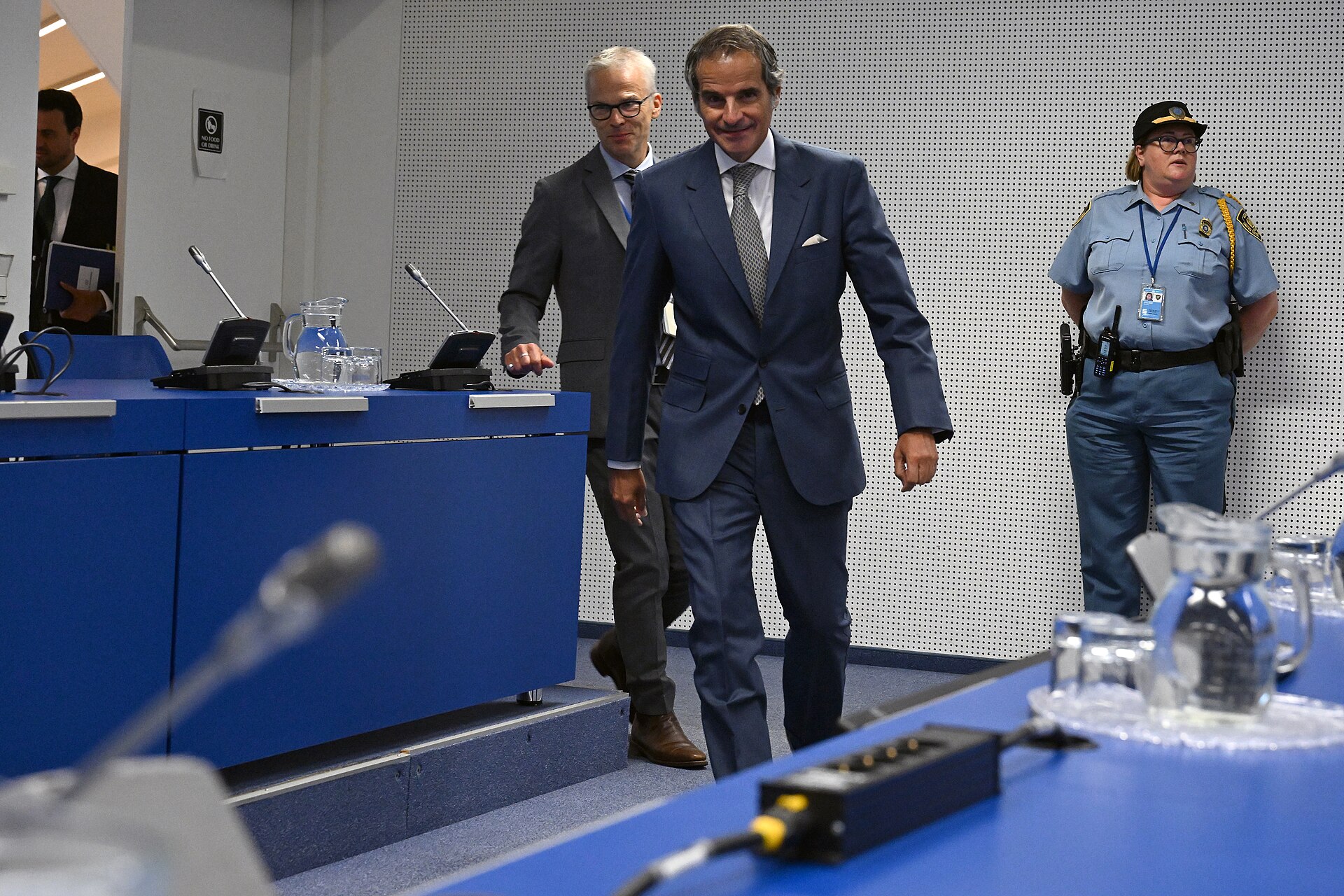
“Without verification, any agreement is not an agreement, but rather an illusion of agreement or a promise that you don’t know whether it will be kept.” — IAEA Director General Rafael Grossi, April 21, 2026
Frequently Asked Questions
What is the trilateral strategic pact signed on January 29, 2026?
China, Russia, and Iran signed a formal trilateral strategic agreement that includes nuclear provisions, a unified stance against the reimposition of JCPOA-linked sanctions, and a declaration that UN Security Council considerations of the nuclear deal are “terminated.” The pact was reported by Middle East Monitor and provides the institutional framework for the coordinated IAEA meetings. It builds on the bilateral Sino-Iranian 25-year strategic partnership signed in 2021 and the Russia-Iran comprehensive strategic partnership signed in January 2025, effectively merging those bilateral arrangements into a three-way structure with explicit nuclear dimensions.
Why can’t the IAEA simply demand access to Iran’s nuclear sites?
The IAEA’s inspection mandate relies on safeguards agreements and additional protocols that require the cooperation of the inspected state. Iran terminated IAEA access on February 28, 2026, and the agency has no enforcement mechanism of its own — it can refer matters to the UN Security Council, but with China and Russia holding vetoes and the snap-back mechanism having expired on October 18, 2025, the Security Council route is effectively closed. The Board of Governors can pass resolutions, but these are non-binding without Security Council backing. Grossi’s repeated references to “illusion” reflect an institutional reality: the IAEA can verify, but it cannot compel.
What is the “most favored nation” clause in the UAE 123 agreement?
The UAE’s 2009 nuclear cooperation agreement with the United States includes a provision — identified by Simon Henderson of the Washington Institute — that allows the UAE to claim equivalent rights if any other non-nuclear state in the region receives more permissive terms. If the US-Saudi 123 agreement passes Congress without an explicit enrichment prohibition, the UAE could invoke this clause to seek its own enrichment rights, potentially triggering a cascade of nuclear capability demands across the Gulf. Bahrain, Kuwait, and Jordan have all expressed interest in civil nuclear programmes, each of which would be shaped by the Saudi-UAE precedent.
Has China previously served as a custodian of nuclear material?
China has not served as an international custodian of fissile material in the manner proposed by Bill Emmott, but it does operate the largest civilian enrichment programme outside of Russia and the United States, with enrichment capacity at facilities in Lanzhou and Hanzhong. Beijing has participated in IAEA fuel bank discussions and contributed to the low-enriched uranium reserve in Kazakhstan. The Emmott proposal — that China could lead a consortium to handle Iran’s enriched uranium stockpile — would represent a new category of nuclear stewardship with no direct precedent, and would place a UNSC veto-holding power in the role of both guarantor and custodian, a dual function that no international framework currently addresses.
What happens if the US-Iran talks fail before the Saudi 123 review expires?
If the Muscat talks collapse before the 90-day congressional review of the US-Saudi 123 agreement concludes in late May, Congress faces a decision without the context of a functioning Iran deal. A failed negotiation would strengthen Saudi Arabia’s argument that it needs enrichment flexibility to hedge against an unconstrained Iranian programme — but it would also intensify opposition from nonproliferation advocates who argue that approving ambiguous enrichment terms in the absence of a regional framework accelerates precisely the arms race Grossi warned about. The $9 billion PAC-3 missile sale, already approved, signals that Washington is hedging on both sides: selling defensive capability to Riyadh while negotiating limits on Iran’s offensive potential. The full mechanics of Saudi Arabia’s 123 agreement and why Washington can no longer walk it back — including the UAE renegotiation clause and the friendly proliferation problem — are examined in detail.